Connect with us

NewsBeat

What if we stopped treating social care like a service? A small village community in Yorkshire showed me another way

Published

on

What if we stopped treating social care like a service? A small village community in Yorkshire showed me another way

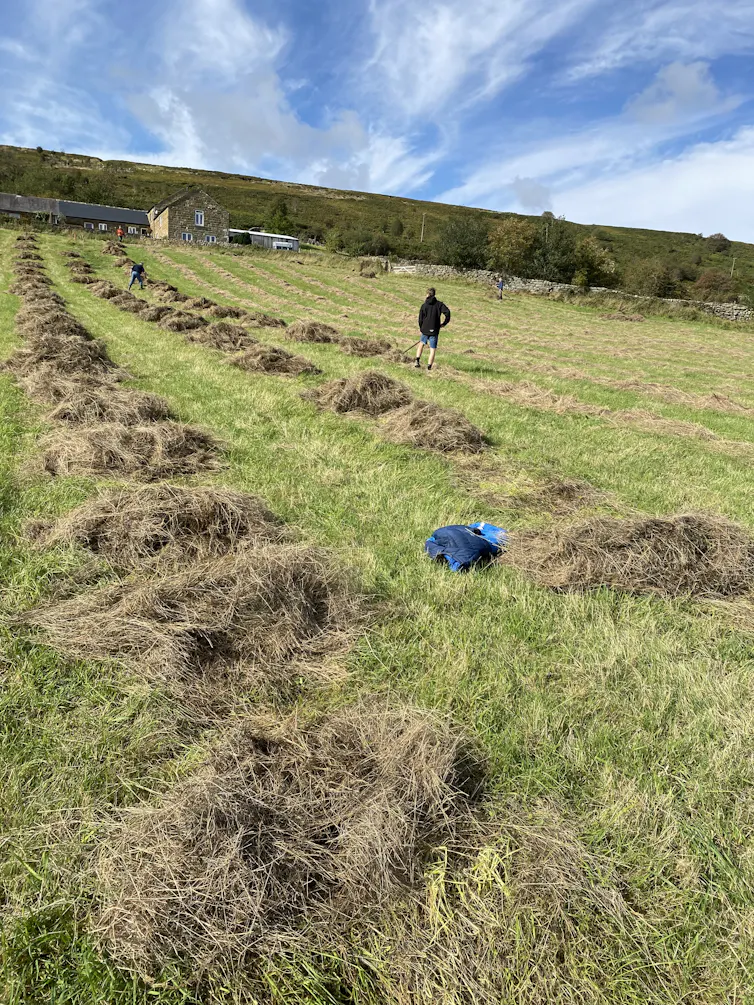
Within an hour of arriving in Botton, a small, picturesque village in the UK’s North Yorkshire moors, I was standing in a farm field shovelling hay.

Alongside me were my friend Max*, his father, a co-worker named Richard, two volunteers and several learning-disabled residents of the Esk Valley Camphill Community. We spent the next few hours on a conservation project, moving hay, stopping regularly to lean on our tools and talk, and at one point gathering on a picnic bench beside the cars for a tea and biscuit break.

Officially Richard was “providing care” and the learning-disabled residents of the community (often referred to as villagers) were “receiving care”, with volunteers helping the co-workers along the way. On the ground, though, I could already see that the structure of the community served to sideline this distinction rather than reinforce it.

I had driven into the North Yorkshire moors expecting something resembling a care institution. This was something else.

Advertisement
The Entrance to Botton Village in the North Yorkshire Moors National Park.
Thomas Moore

While I was there, I would observe two radically different interpretations of social care side by side.

On the side where I stayed: care as long-term communal life, in which support grows out of relationships rather than being delivered through them.

On the other: care as professional service delivery. My time here would completely change the way I thought about social care.


The Insights section is committed to high-quality longform journalism. Our editors work with academics from many different backgrounds who are tackling a wide range of societal and scientific challenges.

Advertisement

The Esk Valley Camphill Community, based at Botton Village, is part of the Camphill movement – an international network of communities built on the belief that people with and without learning disabilities can live and work together as genuine community members, rather than as service users and service providers.

The Camphill community in Botton was founded in 1955 by Karl König, the Austrian paediatrician who had established the Camphill movement in rural Scotland 16 years earlier, inspired by the educational philosophy of Rudolf Steiner.

The land at Botton was acquired from W.F. Macmillan and his family (the publishing family behind Macmillan Publishers, as well as local landowners and philanthropists). One of the family members, Alistair Macmillan, had a learning disability and later lived in Botton as a resident.

Over the following decades it grew into a community of around three to 400 people at its peak. Today, around 120 residents continue this way of life across 19 households, now operating as Esk Valley Camphill Community, one of two organisations based in the village, alongside the Camphill Village Trust.

Advertisement

My friend Max

I had known Max since we were children. We went to the same primary school, then the same secondary school, and then (the usual thing) our lives gradually went their separate ways. When his father invited me to visit him for the day, I agreed without quite knowing what I was agreeing to.

Max had tried different forms of support after school: a special needs school instead of sixth form and a service-based care arrangement that had struggled to accommodate him. Some of it worked better than others, but none of it seemed to fit him particularly well. Like many people with learning disabilities, his needs weren’t well met by standard service-based care.

That is why it was Max himself who surprised me most that day. I had always known him as intensely sociable, the kind of person who greeted everyone he passed, genuinely and entirely without edge. What I found in Esk Valley felt different though. He moved through the community with a settled ease I hadn’t seen in him before, introducing me to people as we walked, explaining who worked where, updating me on the latest community news.

As he showed me around, I didn’t get more than a few seconds’ break between enthusiastic comments, news and updates. Before he was part of Esk Valley, leaving the house unsupervised had often been difficult. Here, he had become part of an intentional community: a place where people choose to build a shared life together, not just live near each other. This had given him a rhythm and structure that allowed his individuality to flourish and his independence to grow.

Advertisement

At some point in the afternoon, during a pause in an otherwise ordinary conversation, he said something that stayed with me.

It’s been the best two years of my life. Much better than anything before.

I nodded and carried on. But long after I had returned home at the end of the day, I found myself returning to those words. What had this place managed that others hadn’t? And why did Esk Valley feel so unlike most models of care?

Becoming part of the community

I am a philosophy PhD researcher at the University of Sheffield, working on the question of what it means to be a person and how individuality and community relate. After visiting Max, I became fascinated by the Esk Valley community. When an opportunity came up to volunteer for three months in a non-academic organisation as part of a researcher employability project, the choice felt obvious.

For three months I lived in one of the community’s 19 houses, shared meals with the household and took part in community life. Each house is home to two or three co-workers, a similar number of villagers and usually one volunteer. What gives the community its texture, though, is the structure of daily life.
Advertisement
Man working in a field.
The author doing conservation work with the community.
Thomas Moore

Life in Esk Valley follows a shared daily rhythm: communal breakfast in each household at around 7.30am, a morning workshop from 9am until noon, then back to the houses for lunch until 1.30pm, a second workshop in the afternoon, and communal dinner around 6.30pm.

Importantly, people don’t only eat meals in the household they live in. People rotate between houses for lunches and dinners throughout the week, meaning that roughly half your meals are eaten in other households. It is a simple arrangement, but its effect runs through everything. It stops the 19 houses from becoming 19 separate nuclear units. Instead, a web of daily relationships runs across the whole village because people are sitting down together at other people’s tables, several times a week, as a matter of routine.

The workshops themselves cover a wide range of work: there is a garden workshop, a wood workshop, a craft workshop, a cooking club and a forestry team, among others.

Most weeks during my stay I worked four half-days in the garden workshop, enough time to become part of its rhythms. I had expected the experience in Esk Valley to inform my research. I hadn’t expected it to fundamentally change how I thought about social care and community life.
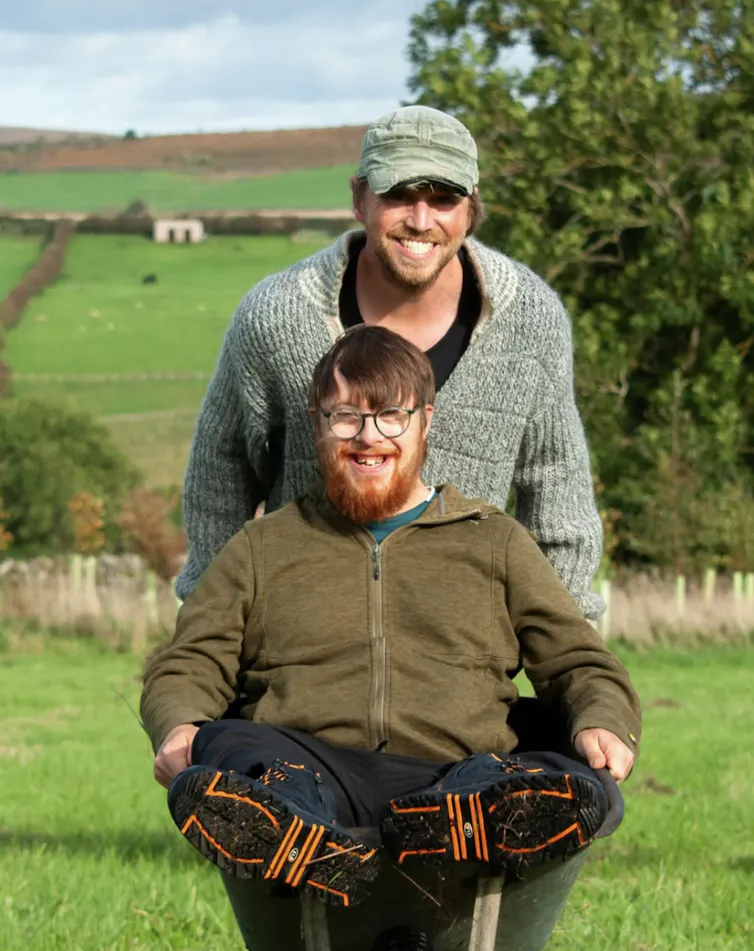
Man pushing another man in a wheelbarrow.
Members of Esk Valley Community having fun in the fields.
Esk Valley Community/Ikuko Tsuchiya

The moments that changed my thinking were rarely dramatic. They were usually small interactions that quietly revealed assumptions I hadn’t realised I was carrying.

One of the first came during my first working day. Claire, one of the co-workers who was living in the same shared house I was, casually asked Linda (who was officially someone “receiving care” in the village) to show me how the transport arrangements worked. Linda took charge enthusiastically, walking me over to what villagers called the transport depot: a small hay shed where cars arrived each morning and afternoon to take people between the village and Homefield Garden, a collection of fields the community owned nearby. She showed me where people gathered and explained how the whole system operated. She knew every detail of it.

Advertisement

What interests me now is my own reaction at the time. I remember feeling mildly surprised that Linda had been given this responsibility. I now realise this was because I had arrived with an assumption I hadn’t consciously examined: that in care organisations, responsibilities belonged to staff providing care.

Without thinking about it, I had sorted the world into two columns. “Explaining how things work” sat in the staff column. “Having things explained to me” sat in the resident column. Yet here was someone officially classified as receiving support quietly helping to ensure the smooth running of village life and doing it perfectly well.

The longer I stayed, the more I noticed people slipping between categories that mainstream social care often treats as fixed. People receiving support were also providing it. People being cared for were also contributing to the care of others. Responsibilities were shared in ways that felt, at first, unfamiliar, and then, gradually, completely obvious.

Britain’s social care system faces well-documented pressures. By the end of my first few weeks in Esk Valley, I had started to wonder whether there was a deeper problem sitting beneath all of those – the largely unquestioned assumption that social care is a service to be provided by people formally employed to supply it.

Advertisement

That question became sharper the more I compared Esk Valley with the logic underlying mainstream social care.

A broken system and another new prime minister

Social care is in crisis. Roughly one in ten posts in adult social care is unfilled at any given time, pay is low, and burnout and stress are widely recognised as problems.

Turnover is very high, around 23.7% in 2025, declining from a high of 31.4% in 2020 primarily due to a large rise in international recruitment.

Care workers, who would ideally develop close relationships with the people they support, leave before those relationships have had time to develop into anything. The people they support start again with someone new. As a 2022 report for the Health and Social Care Select Committee put it:

Advertisement

The National Health Service and the social care sector are facing the greatest workforce crisis in their history … The situation is regrettably worse in social care. One in three care workers left their job in 2020–21, a serious setback to the continuity of care which is so essential to those who receive social care. In December 2021, Care England reported that 95% of care providers were struggling to recruit staff, and 75% were struggling to retain their existing staff. Care workers often find themselves in underpaid roles which do not reflect the value to society of the service they provide.

The crisis has not gone unaddressed for want of political attention. There have been 22 attempts to reform adult social care in England over the past 30 years, and none has succeeded. Commissions have been established, proposals published and timelines set – and then, repeatedly, the moment has passed, usually because of arguments about how reform would be paid for.

Now, the new prime minister, Andy Burnham, has vowed to put whatever political capital he has into fixing what he calls a broken system saying that carers “should be the best paid people in society, not the worst”.

What if we stopped treating care like a service?

But something slightly different was nagging at me as I settled into life in Esk Valley. The crisis I kept reading about was real and care workers are certainly underpaid. Many people would agree that the scale of the crisis should merit a radical rethink of social care. Yet mainstream debates about social care increasingly seemed to me to be a debate about how to fix a system whose assumptions remained largely unquestioned.

Advertisement

There has been little serious questioning of the idea that care should be organised around shifts, that strong professional boundaries rather than friendships should separate carer from cared-for, or that the quality of care is fully or best measurable through standardised outcomes.

Most people probably share these assumptions implicitly without noticing them.

  • Professional carers support people with learning disabilities.

  • Support is arranged by agencies, managed by co-ordinators and delivered according to care plans.

This model has become common sense. But it is also, historically speaking, very new.

Until relatively recently, care for people with disabilities and support needs was primarily organised through families, local communities, charities and religious institutions, rather than through professionalised care services.

Advertisement

The idea that care should be organised as a specialised professional service, delivered by paid staff and governed through formal systems of regulation and inspection, emerged comparatively recently, during the 20th century, and particularly from the late 20th century onwards. In England, this shift coincided with the growing marketisation of social care, including the expansion of outsourced provision, contractual commissioning and individualised funding arrangements.

What we now think of as standard social care is, in large part, the product of that marketisation. It is not the only way care has ever been organised, in fact it is a historical aberration. Yet it is now the way we have gradually come to naturally assume care must be.

Esk Valley offered something different. There, people with and without learning disabilities depended on each other in ordinary, practical ways: cooking together, working alongside one another, navigating disagreements and making decisions as a community.

Advertisement

One afternoon this became vivid in a way I hadn’t expected.

I was being given a lift to a workshop when David, a co-worker who had been at the village for decades, mentioned to the group that he was exhausted due to juggling young children and the demands of community life. Mike, one of the villagers, listened quietly while David spoke. Then, when there was a pause, he looked at him directly.

“You need to slow down,” Mike said. “Take more time off. You’re doing too much. I felt tired yesterday, so I had the day off.”

David nodded. Mike was right, and everyone in the car seemed to know it.

Advertisement

I found myself sitting with the strangeness of that moment for a while afterwards. Mike was officially someone receiving care. David was officially someone providing it. But what I had just watched looked less like a care relationship than a friendship, the kind where you tell someone an uncomfortable truth because you have known them long enough, and care about them enough, to say it out loud.

That kind of familiarity does not emerge quickly. What made it possible in Esk Valley was, in part, the sheer length of time people had spent there together. Many co-workers and villagers had been part of the community for decades.

Margaret and Ruth, a co-worker and a villager, had supported each other for more than 50 years. They had watched fellow co-workers and villagers arrive as young people then slowly grow old in the village alongside them, sometimes starting families along the way. The relationship they had built across that time could not be replicated by a well-intentioned support worker who had been assigned the previous week and would likely move on within the year.

For people with learning disabilities who rely on carers, sometimes for help with the most intimate aspects of daily life, a constant cycle of new faces is not just inconvenient. It is a barrier to the kind of trust that makes good support possible in the first place.

Advertisement

Which made me wonder: what if some of what people with learning disabilities most need cannot be delivered through a service at all? What if it can only grow, slowly, out of the kind of long-term relationships and shared community life that conventional social care so rarely has the time or stability to build?

That tension now sits at the centre of Botton Village, because since 2014 it has contained two very different understandings of care living side by side.

Two ideas of care side-by-side

For most of its history, Botton Village was one unified community. The Camphill Village Trust managed roughly 30 households, five farms, a café, a shop and various workshops, all operating on the founding principles of the worldwide Camphill movement: no employment contracts, pooled income, shared meals and shared seasons. The boundary between work and home life was deliberately blurred. The point was not efficiency. The point was that support should be embedded in something that actually resembled a life.

In 2014, the Camphill Village Trust announced a restructuring, telling all co-workers they must become paid employees or leave. The Trust cited a combination of regulatory pressures. The Care Quality Commission had raised concerns in 2011, and in February 2014 the Charity Commission concluded that co-worker benefits lacked proper oversight, instructing the trustees to introduce clearer governance.

Advertisement

Co-workers did not dispute the need for some changes, but argued that the changes would lead to the complete dismantling of the founding Camphill principles of shared life. They pointed out that the Care Quality Commission’s follow up inspections in 2012 and 2013 had found the issues raised in 2011 had been adequately addressed and care in Botton was now working well. They also pointed out that HMRC itself had long recognised the co-worker model as a distinct and legitimate arrangement, with its own agreed tax treatment, rather than conventional employment.

As a result of the restructure, around half of Botton was converted into a more conventional professional service. Employment contracts were introduced. Shift patterns replaced the open-ended rhythms of communal life. Co-workers who had previously lived alongside residents were replaced with carers, most often commuting in from Middlesbrough or Whitby every day (over an hour’s round trip).

But not everyone accepted this. Around 80% of the co-workers broke away to form a new organisation, Esk Valley Camphill Community, and after a protracted legal battle gained the right to operate 19 of Botton’s households on the original principles of the Camphill movement. They have done so ever since, and are now formally recognised as a Shared Lives scheme.

Shared Lives is a model in UK social care policy in which people with learning disabilities, or older people who need support, live as part of an ordinary household or community, rather than being placed in residential care or supported living arrangements where paid carers provide support to people living independently.

Advertisement

By registering as a Shared Lives scheme, they found a model that could accommodate their communal way of life, and partners more aligned to their ideals to oversee the provision of care in the community (first the Avalon Group, now PSS).
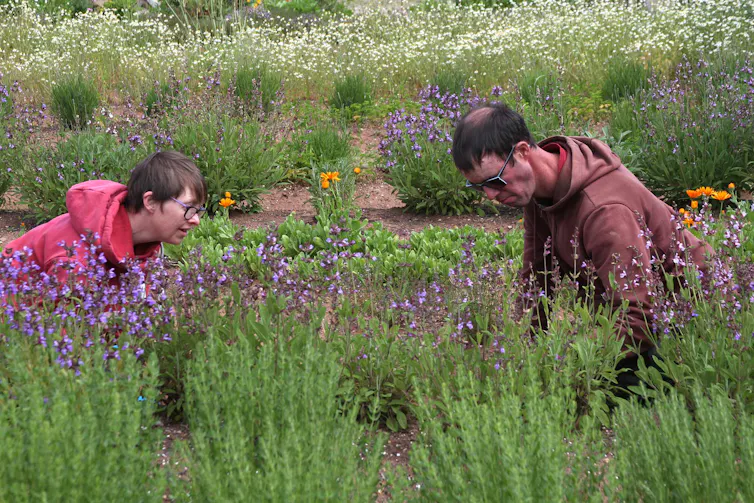
Two people gardening
Working in the community gardens.
Esk Valley Community

Shared Lives schemes exist across the country, and the evidence behind them is quietly compelling.

Both an independent report from Social Finance and research by Shared Lives Plus have concluded that it would cost on average £26,000 less per person per year for a learning disabled person to be in shared lives arrangements (compared with more conventional supported living arrangements).

Based on this figure, Shared Lives Plus have calculated that if shared lives services were delivering 10% of social care support to 130,000 people with a learning disability, it would save the taxpayer £2.6 billion per year. A more realistic goal of 5% is calculated to save £1.3 billion per year.

People using them also report lower levels of loneliness and higher levels of satisfaction. They tend to produce the kind of stable, long-term relationships that the mainstream care market consistently struggles to sustain. This suggests that Shared Lives deserves far more attention than it currently receives and has the potential to play a key role in responding to the social care crisis.

Advertisement

Botton Village today therefore contains two organisations, one operating on a type of shared lives model and the other operating on a conventional service model.

In one half there is Esk Valley, pooling the income each household receives into a communal budget, with households drawing from it based on need, and embedding care in the routines and relationships of shared community life.

In the other half there is the Village Trust, providing care as a more standardised professional service. What makes this so striking is that almost every variable that might explain differences in outcomes is held constant. The setting is the same. The history before 2014 is the same. The founding tradition is the same. Only the model of care differs. Over time I came to see the split not primarily as a local management dispute (though it was also that), but as two philosophical visions of care made concrete.

The difference was never more visible to me than at Michaelmas.

Advertisement

Michaelmas, the feast of St Michael, celebrated in late September, had historically been one of the village’s most significant community occasions. The turn of the seasons was marked as a shared event when villagers, co-workers and volunteers gathered together at a large meal. When I was there, that celebration continued as it always had in the Esk Valley half of the village.

But in the Village Trust half, there were no celebrations. That year the festival fell on a Sunday. Participation was not part of anyone’s contracted working hours. So, it did not happen.

It is, on the surface, a small thing. But it points to something large: when care is organised as a professional service, the moments of familial and community life that fall outside the job description simply disappear.

The inspection data now recognises the benefits of communal life for people with learning disabilities. The shared lives arrangement that includes Esk Valley Camphill Community (then Avalon Scarborough Services) received a “Good” rating in its most recent report from the Care Quality Commission in 2023.

Advertisement

More broadly, across the UK in 2023, the Care Quality Commission rated 97% of Shared Lives schemes in England as good or outstanding, compared with just 78% of the wider social care sector.

Meanwhile, the Village Trust half of Botton, despite sharing the same location as Esk Valley, received a “Requires Improvement” rating. Care Quality Commission inspections capture certain things well and others less so, and no single report is the whole picture. But taken alongside everything else it contributes to an overall case that is hard to dismiss. Indeed, Esk Valley’s own GP, Dr Marcus Van Dam, has arrived at a similar picture through a clinical audit of residents’ health records across both halves of the village, findings he presented at a public lecture in Ireland.

To me, these differences were not just abstract. They were visible in everyday life across the village.

What daily life revealed about care

One of the sharpest observations I heard during my time in Botton came from Maisie, a co-worker who had been at the village since long before the 2014 split.

Advertisement

We were talking about the period prior to the split when regulators had begun to look more closely at Botton and at how work was structured within it. Their concern, as Maisie described it, was that villagers had little genuine choice about whether to participate in workshops.

“The social workers kept wanting residents to have ‘choice’,” Maisie said. “They said they didn’t have to work if they didn’t want to. But whenever you talked to anyone, they were so proud they had a job, just like their parents and their siblings.”

The anxiety behind the intervention was not inherently unreasonable. In the past there have been instances of those with learning disabilities being put to work in ways that exploited rather than supported them.

But Maisie’s point cut in a different direction. The regulatory framework was applying the logic of conventional employment, where work is something that you do in exchange for money, and would most likely not freely choose to do full-time otherwise.

Advertisement

As the Care Quality Commission framed it in its 2011 report concerning the pre-split Botton Village:

Each villager has a timetable of activities, which covers the working day with little flexibility. If someone wanted to spend the day doing something different or have a lie in on a morning, they are not aware that they can do this.

But the formerly unified Camphill community at Botton operated on a different logic entirely, and the Esk Valley half continues to do so. The villagers who tended the gardens, ran the workshops and helped maintain the farms were not working in the conventional sense. They were contributing to a community they were part of, and that contribution was visible and meaningful to the people around them. Besides, many villagers also spent some time each week volunteering outside the community, for example for the North York Moors National Park Authority or the nearby Cycle Hub Cafe.

Stripping out the expectation of participation in community life, in the name of protecting choice, risked stripping out something the villagers genuinely valued about their own lives.

It is a tension that the Harvard divinity professor Dan McKanan has also identified in his extensive studies of Camphill communities. In his research, he found that regulators had begun evaluating Camphill communities as if the villagers living in them were customers, with the criteria for good care being the range of individual choices on offer. McKanan recalls someone telling him: “The Care Inspectorate came in and said, where’s the choice of food on the menu?  I said, we are trying to emulate family life. How many families have a menu?”

Advertisement

It is a good question. When we sit down to eat at a family table, even as adults returning to visit our parents, we don’t expect a restaurant menu. We understand that family life doesn’t operate like a market. We accept shared meals, shared routines, the ordinary small negotiations of living alongside other people. Most of us would think something had gone badly wrong if choice from a formalised menu became part of family life. The puzzle is why we don’t bring the same intuition to how we organise social care.

Community Members Working Outside the Community with North York Moors National Park Authority.

The forum

Importantly, Esk Valley did have structures to ensure villagers had a genuine say in how they lived their lives together in community, including their work.

Once a month, the whole community, split into four groups of nearby households, gathered for a forum. Villagers, co-workers and volunteers sat together in a circle, and anyone could raise anything they wanted discussed: a concern about a workshop rota, a suggestion for a community event, a complaint about how something had been handled. The chair moved around the circle. Everyone was given the chance to speak.

Advertisement

I attended several of these sessions during my time in Esk Valley. What struck me was less the content of what was discussed, which ranged from the practical to the personal, and more the quality of the listening. People waited. They responded to what had actually been said. Villagers with learning disabilities that meant they found verbal communication or social cues difficult were given the time and space they needed and gave it back to others in turn.

Decisions that affected the whole community were made, in a meaningful sense, by the whole community. This kind of collective voice, in which the people being supported have a real say in how their care is organised, is almost entirely absent from mainstream social care.

By the end of my fieldwork, Esk Valley no longer felt like simply an unconventional care model. It felt like evidence that community itself may be part of what good care actually is. Not a backdrop to care. Not an optional extra. Part of the thing itself.

Perhaps care wasn’t supposed to be a service

Britain’s social care crisis is usually framed in terms of what we don’t have enough of: staff, funding, capacity. Those shortages are real, and they matter. But after three months in Esk Valley, I found myself wondering whether social care would be in such a state if we were more willing to question our assumptions about what good care is supposed to look like in the first place.

Advertisement

Esk Valley is not a simple national blueprint. A valley community in North Yorkshire, organised around decades of shared life and a specific philosophical tradition, cannot quickly and easily be replicated to serve hundreds of thousands of people nationally.

There should be greater recognition and support for existing intentional communities, and a concerted effort to help establish new ones. Yet communities cannot be built overnight. They depend on relationships, shared commitments and a culture that develops over years rather than months.

Creating more intentional social care communities similar to Esk Valley would therefore be part of a long-term response to the social care crisis, offering an alternative model of support centred on belonging, contribution and community life.

But the most important thing Esk Valley vividly reveals is not an easily scalable national solution to the social care crisis. It is that our current social care models are not inevitable, but the product of a particular history and of broader assumptions about how we live together. By embodying a radically different model of social care – and of social life – that not only works but thrives in practice, it invites us to question our assumptions about what good care is in the first place, and, more broadly, what it means to live a good life.

Advertisement

In particular, it raises the possibility that some of what people with learning disabilities most need may be what our current conventional model is structurally least able to provide: the experience of belonging to a community, of contributing to shared life, and of being genuinely part of something over time.

I often think about Max and what he said that afternoon in the valley: “It’s been the best two years of my life.”

What Max had found in Esk Valley was not just better support. It was a place where he belonged. Before moving to Esk Valley, Max had more formal freedom: at home, his family would have done anything within their means to accommodate him, and in a supported living arrangement he could have had money and more individual options.

What he didn’t have was a community structured firmly enough to give him genuine belonging, and within which his particular individuality could actually develop and take shape. It was the structure of the community itself, the workshops, the shared mealtimes, the rhythm of communal life, which gave him the ground to become himself. He wasn’t less free for being expected to show up. He became the best version of himself because of it.

Advertisement

Whether a care system organised primarily as a professional service can ever fully provide that or whether something essential is lost in the translation of community into contract, is a question we have not begun to ask seriously enough.

*All names have been changed to protect the anonymity of study participants


For you: more from our Insights series:

To hear about new Insights articles, join the hundreds of thousands of people who value The Conversation’s evidence-based news. Subscribe to our newsletter.


Advertisement

Source link

Continue Reading
Click to comment

You must be logged in to post a comment Login

Leave a Reply

NewsBeat

Cabin crew at greater risk of radiation-based cancer than nuclear technologists, new study suggests

Published

on

Cabin crew at greater risk of radiation-based cancer than nuclear technologists, new study suggests

What jobs are most associated with deaths from radiation-related cancer? Surprisingly, the answer is cabin crew and pilots – ahead of nuclear technologists, whose work involves handling radioactive materials used in medical imaging and treatment.

That’s the finding of a new study that analysed more than 12.7 million death records from 2020 to 2024, covering more than 500 occupations. The researchers ranked the occupations by the proportion of deaths in which a radiation-related cancer was listed as a cause.

For the analysis, the researchers concentrated on cancers that previous research had suggested is associated with radiation, including breast cancer, leukaemia, brain tumours, prostate cancer and melanoma. About 6.9% of deaths among cabin crew and 6.7% among pilots were from these cancers.

The pattern was particularly interesting because it was not seen for cancers that were not considered radiation-related, nor among aircraft mechanics and engineers who spend their careers around aeroplanes but remain on the ground.

Advertisement

The obvious question is why working on an aircraft should expose anyone to much radiation at all. The answer has nothing to do with the aircraft itself. It comes from above it.

Cosmic radiation

The Earth is continuously struck by cosmic radiation, consisting primarily of extraordinarily energetic particles originating from outside the solar system. Many are thought to have been accelerated by violent events, such as exploding stars.

We are exposed to some of this radiation even while sitting at home, but there is an enormous difference between living at sea level and travelling at 35,000 feet.

As well as supplying the air we breathe, the atmosphere protects us from much of the radiation arriving from space. At ground level there is a huge mass of atmosphere above us, and cosmic particles must pass through it before reaching our bodies. During that journey, they collide repeatedly with atoms in the air and lose energy.

Advertisement

An airliner climbs above a substantial part of this protective blanket. At typical commercial aviation altitudes, measurements suggest that the radiation dose approximately doubles for each additional 1,830 metres, or 6,000 feet, of altitude. The metal skin of an aircraft provides comparatively little protection from these very energetic particles.

The body of an aircraft provides very little protection.
EB Adventure Photography/Shutterstock.com

Altitude is only part of the story. The Earth has another remarkably effective radiation shield: its magnetic field.

Charged cosmic particles are deflected by this field, but the protection varies across the planet. It is greater near the equator and weaker towards the magnetic poles, which is why a long flight at high northern latitudes can produce a greater radiation dose than a similar flight nearer the equator.

Solar activity influences radiation levels too, meaning cosmic radiation exposure is not simply determined by how many hours someone spends in an aircraft. A short, relatively low-altitude flight near the equator is different from a long flight at 40,000 feet across the far north.

Advertisement

Measurements on commercial aircraft have found doses ranging from less than one microsievert on some flights to more than 60 microsieverts on others.

One calculation estimated an effective dose of about 67 microsieverts for a nine-hour flight from Athens to New York. These are small doses individually, but pilots and cabin crew repeat the exposure hundreds of times over many years.

That cumulative exposure is what makes cabin crew different from regular passengers.

The authors of the new study estimate that pilots and cabin crew receive around 3-6 millisieverts of cosmic radiation each year. Someone taking ten return cross-country flights annually in the US, by comparison, would receive around 0.4 millisieverts from flying. In other words, being an airline pilot or cabin crew is, from the point of view of radiation exposure, a genuine radiation occupation.

Advertisement

Why might that matter for cancer? Ionising radiation has enough energy to remove electrons from atoms and molecules. When that happens inside a cell, it can damage important biological molecules, including DNA.

Cells have sophisticated machinery for repairing DNA damage, and most damage is either successfully repaired or the damaged cell dies. Occasionally, however, the repair is imperfect and a mutation survives.

Cancer develops through the accumulation of such alterations in cells, which is why exposure to ionising radiation has long been known to increase cancer risk.

What about frequent flyers?

The new study doesn’t prove that cosmic radiation caused the cancers recorded among pilots and cabin crew.

Advertisement

The researchers knew people’s occupations from their death certificates, but not how many years they had spent flying, how many hours they flew each year, the routes and altitudes involved, or the radiation dose each individual had accumulated. There is nevertheless something intriguing about the pattern they found, and an interesting question is at what point a passenger becomes a genuinely frequent flyer.

Radiation does not know whether the person sitting in an aircraft is wearing a pilot’s uniform, serving drinks or answering emails. What matters is accumulated dose.

Someone taking dozens of long-haul flights each year, particularly on high-latitude routes, will inevitably receive more cosmic radiation than someone who flies twice a year.

There is no particular number of flights at which this suddenly becomes dangerous, and for most passengers cosmic radiation is not a reason to avoid flying. But for people whose lives involve exceptionally frequent long-haul travel, it is reasonable to recognise cosmic radiation as one of the less obvious consequences of spending so much time at altitude.

Advertisement

That is perhaps the clearest message from the new research. We usually think of radiation exposure as something associated with X-ray machines, nuclear reactors or radioactive materials, and therefore something that occurs in places where radiation is carefully controlled. But every passenger aircraft routinely enters a radiation environment quite different from the one in which we live on the ground.

For an occasional traveller, the additional exposure is small. For pilots and cabin crew, repeated flight after flight over an entire career, those small doses accumulate – and the new study suggests we should take that occupational exposure more seriously.

Source link

Advertisement
Continue Reading

NewsBeat

Ludwig filming locations as cast talk ‘beautiful’ season two scenes

Published

on

Wales Online

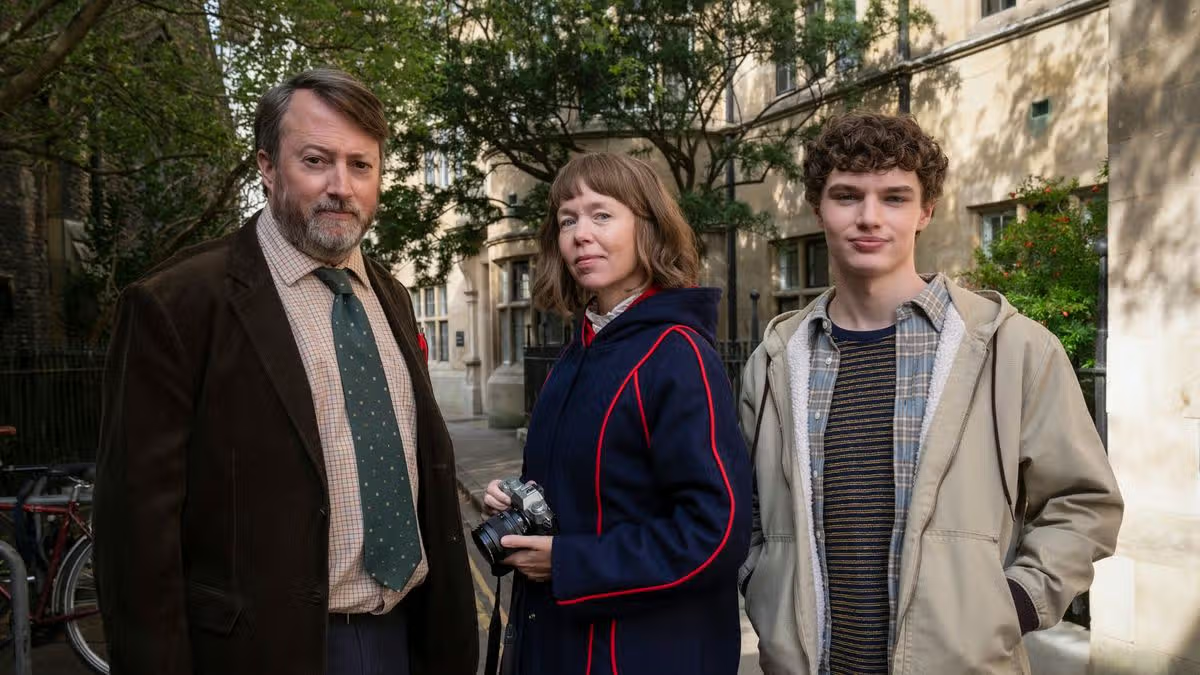
David Mitchell stars as puzzle-setter John ‘Ludwig’ Taylor in the hit BBC detective series returning for season two

Ludwig has returned for its second series, and devotees of the popular detective programme are delighted.

Advertisement

Featuring comedian David Mitchell as master puzzle-setter John ‘Ludwig’ Taylor and Anna Maxwell Martin as his sister-in-law Lucy, the British mystery drama has been hailed as the “ultimate comfort food” in a crime format.

Series two will continue from where the first concluded, with Ludwig now serving as a Crime Scene Consultant, collaborating with DCI Russell Carter (Dipo Ola) on ‘impossible’ crimes for the Cambridge Police Authority.

While the second series boasts an impressive ensemble cast, featuring guest appearances from Stephen Merchant and Sian Clifford, Cambridge, where the programme is both set and shot, assumes a significant role, reports Cambridgeshire Live.

Discussing this, producer Georgie Fallon explained: “Cambridge, as a setting, is important to the show. We didn’t want to set it in London because so much is set in London, but Cambridge feels like a big enough, cosmopolitan enough city to justify the horrendous number of murders that they have there.”

“It’s also beautiful on camera and feels recognisable to viewers, but it hasn’t been seen loads. I think Cambridge has a nice mix of the beautiful old architecture, but also this really modern side with the science parks and all the research and that’s very interesting for us to set our world in.”

While lead actor David commented on Cambridge: “I went to university there, and I love it. You want people to enjoy slipping into this world like a pair of slippers, but with a dead body in them. Cambridge is obviously a great candidate for that.

“Inspector Morse is one of my favourite shows, but that was set in Oxford. That’s where people want to escape to in this kind of program. I think you’ve got to have a beautiful setting to juxtapose with the nature of the crimes.”

Advertisement

In a diary he maintained during Ludwig’s production, which he shared with Radio Times, the comedian also disclosed the challenges of shooting in Cambridge.

He noted: “Cambridge is an absolute nightmare to film in. It looks great, but you have to bring in a lot of vehicles full of lights and cameras and actors and make-up artists, and this city wasn’t built for traffic.

“So they set up a ‘unit base’ on the outskirts of Cambridge, and baffled drivers who don’t know the area try to negotiate their way through with the aid of Google Maps until they reach some bollards and a Cyclists Only sign and I say, ‘I can get out, I think I know the way from here.’”.

Advertisement

Executive producer Kenton Allen also discussed Cambridge’s significance. He remarked: “I think the setting is critical for any crime drama. When you think of Inspector Morse, you think of Oxford. When you think of Broadchurch, you think of the Dorset coast and the beach and cliff setting.

“I think Cambridge gives us another layer of specificity and a visual language. I think the more specific you can be about where you are, the stronger flavour your show can have.

“It’s a lot of period shows that feature Cambridge, but there’s not that much contemporary drama that’s been shot there. I think it feels fresh to a British audience.”

Series two of Ludwig will premiere on Thursday, August 20 at 9pm on BBC One. The first three episodes will drop on iPlayer at the same time.

Advertisement

Source link

Continue Reading

NewsBeat

Free 6-pack of Marmite Crisps or Cheese & Marmite Puffs for every reader

Published

on

Daily Record

Simply cut out the voucher from your newspaper to get your free 6-pack from participating supermarkets

Treat your taste buds to the unmistakable taste of Marmite with this exclusive offer! Redeem this voucher in participating Morrisons, Sainsbury’s or Waitrose stores and enjoy either a pack of Marmite Crisps 6 pack or Cheese & Marmite Puffs 6 pack, COMPLETELY FREE.

Whether you’re a lifelong Marmite lover or looking to try something new, these irresistible snacks deliver the iconic Marmite flavour in every bite. Marmite Crisps are a deliciously crunchy snack with the bold, savoury taste you know and love, while Cheese & Marmite Puffs combine light, crispy corn puffs with the perfect blend of rich cheese and distinctive Marmite flavour. Perfect for sharing with family and friends!

Advertisement

To claim your free 6-pack, simply cut out the voucher printed inside your Daily Record or Sunday Mail between Friday, August 21 and Tuesday, August 25, 2026. Take it to your nearest participating Morrisons, Sainsbury’s or Waitrose stores to pick up your free 6-pack of either Marmite Crisps OR Cheese & Marmite Puffs. Voucher is valid until close of stores on October 21, 2026, while stocks last. Please read the terms and conditions on the voucher before redemption.

Source link

Continue Reading

NewsBeat

Keffe D told detectives his nephew shot Tupac Shakur in 1996

Published

on

Keffe D told detectives his nephew shot Tupac Shakur in 1996

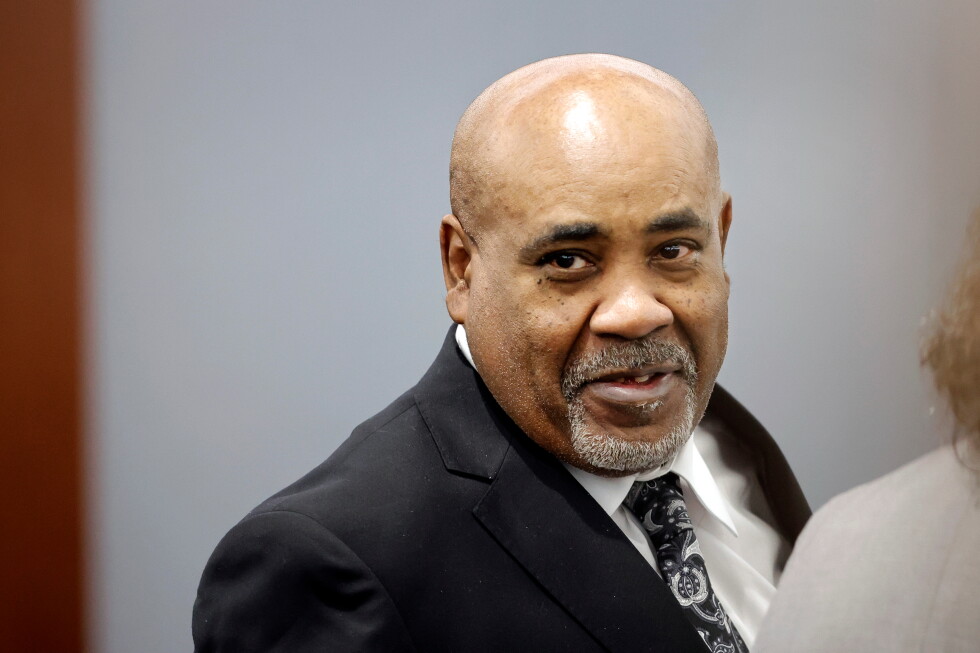
LAS VEGAS (AP) — Jurors on Thursday heard Duane “Keffe D” Davis tell detectives in 2008 that his nephew Orlando “Baby Lane” Anderson fired the shots that killed Tupac Shakur.

Davis, who said in the interview that he was also in the car with Anderson is accused of orchestrating the 1996 killing of the 25-year-old hip-hop superstar in Las Vegas. At the time of the interview, his nephew had been dead for a decade.

Davis said the white Cadillac he and Anderson were riding in with two other men pulled up alongside a car with Shakur inside, along with hip-hop mogul and Death Row Records head Marion “Suge” Knight.

“If we would have been on my side, I would have blasted,” Davis said. Instead, Knight’s car was on the other side, so Davis passed his gun back to Deandre “Big Dre” Smith. But Smith didn’t want it, Davis said.

Advertisement

Anderson, who was also in the back seat, took the weapon and started firing, Davis said.

Jurors watched the screen as the transcript of the audio recording rolled. Some occasionally took notes. At the beginning of the audio interview, Davis and his attorney whispered to each other. Shakur’s family sat still, occasionally looking at the screen or looking down to the floor. The room was quiet as Davis described the shooting.

It was the first time Davis directly discussed his involvement in the killing with authorities. The interview is essential evidence in the state’s case against the 63-year-old Davis. Prosecutors told jurors in opening statements that they would lean heavily on Davis’ own admissions in interviews with police and on podcasts, as well as the 2019 memoir he co-wrote, “Compton Street Legend.”

He also previously told the FBI that his nephew was not involved in the 1996 shooting of Shakur, and speculated that Knight or Combs were involved.

Advertisement

Davis has pleaded not guilty. His lawyer has called the prosecution’s narrative “fiction” and said Davis was “full of crap” when he told stories of his involvement, and that authorities knew it.

The Los Angeles police detectives had actually brought Davis in to talk about the 1997 shooting death of Shakur’s archrival, the Notorious B.I.G.

Davis had briefly been one of the suspects in that still unsolved killing, but he was later discounted.

“Everybody was a suspect at that time,” Daryn Dupree, one of the detectives in the interview, said in court testimony Thursday.

The detectives tell Davis that their discussion is confidential.

“Nothing you say today can be used against you,” said Greg Kading, the other detective conducting the interview who described it in a book a few years later.

Advertisement

Some in the audience shook their heads when someone in the audio tells Davis that “nothing leaves this room.”

Dupree adds, “If you don’t say nothing, it’s cool, but if you go out there and start talking …”

Prosecutors say Davis did in fact “go out there and start talking” a decade later when he told stories about the shooting in interviews and the memoir. They said that nullifies any agreement he had with law enforcement over this and other recorded conversations.

Prosecutors allege Shakur was killed to avenge Shakur’s entourage attacking Davis’ nephew Anderson a few hours earlier at the MGM Grand after a Mike Tyson fight. Davis was at the fight but not the brawl.

Advertisement

Later in the evening, they were in the Cadillac and saw Shakur hanging out of a black BMW with people calling out “Tupac!”

He said that after Lane fired the shots, he thought Knight was dead.

Decades after his death, Shakur remains a cultural icon, and one of the most influential and versatile rappers of all time. He died as his popularity was peaking and his film career as an actor was taking off. His legend has only grown in the years since.

____

Advertisement

Associated Press Writer Rebecca Boone contributed from Boise, Idaho and AP Entertainment Writer Andrew Dalton contributed from Los Angeles.

Source link

Advertisement
Continue Reading

NewsBeat

All Creatures Great and Small stars touching gesture to fans

Published

on

All Creatures Great and Small stars touching gesture to fans

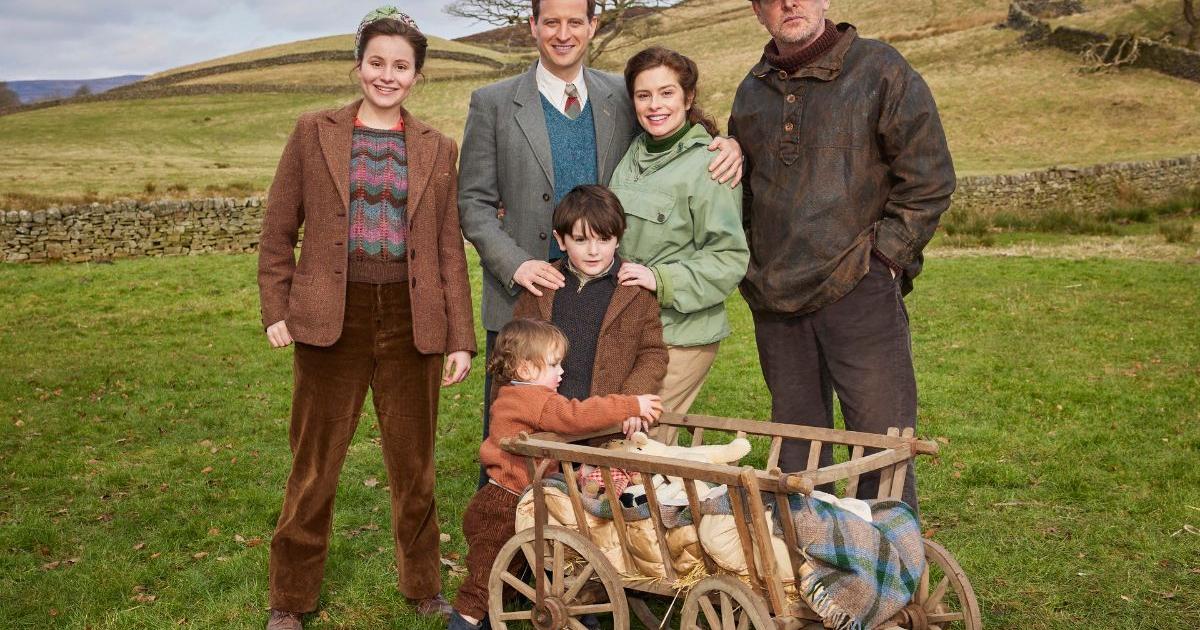
For two of the show’s stars, Rachel Shenton and Nicholas Ralph, who plays vet James Herriot, read out letters from the fans.

Producers of the Channel 5 series have previously said they frequently receive letters from viewers about how the ‘ show has brought joy, comfort and relief in challenging times.’

Earlier this year, fans were invited to write a letter to the favourite cast member to be read out, with the first ‘reading’ taking place today.

Advertisement

Today, the two stars, who play onscreen husband and wife, took time out from filming to read out some of the letters to the delight of fans.

The letter stated: “You are all my friends on the other side of the screen”, prompting Rachel to say, ‘Aww, that is very sweet’.

The letter continues: “Watching All Creatures Great & Small is like wrapping yourself in a blanket, with a big cup of tea. A little every day escape and something that gives me breathing space in a world that is upside down.”

Nicholas responded: “We do have a lovely time making the show.

“I hadn’t come across All Creatures Great and Small before, and I think in the earlier auditions it actually worked in my favour, because I think if I knew how big it was, I would maybe be slightly more nervous.

Advertisement

“The overriding feeling was just one of excitement. It’s just been an incredibly rollercoaster since then, and its still incredibly joyful to do.”

The writer of the letter commented on the show’s Instagram page: “Yay!! That’s my letter. And Rachel holding it in her hands. Thank you for your answer. Made my day, or week, or year.”


More letters will be read out in the near future.

READ MORE: Exploring beautiful Grassington where All Creatures is filmed

Advertisement

The drama is filmed just over an hour away from Bolton in the beautiful village of Grassington, just over the border in Yorkshire and for fans who cannot wait, a trip to the village, which is transformed into Darrowby, maybe the next best thing, or to re-watch the series on Channel 5 catch-up.

As well as the new six episode series, there will be Christmas specials.

The series is inspired by Herriot’s timeless books, which have sold over 60 million copies globally and remain a cherished part of literary and television heritage. 

Advertisement

Source link

Continue Reading

NewsBeat

Hayden Panettiere’s Ex Was At Her Apartment When She Died, Police Say

Published

on

Hayden Panettiere’s Ex Was At Her Apartment When She Died, Police Say

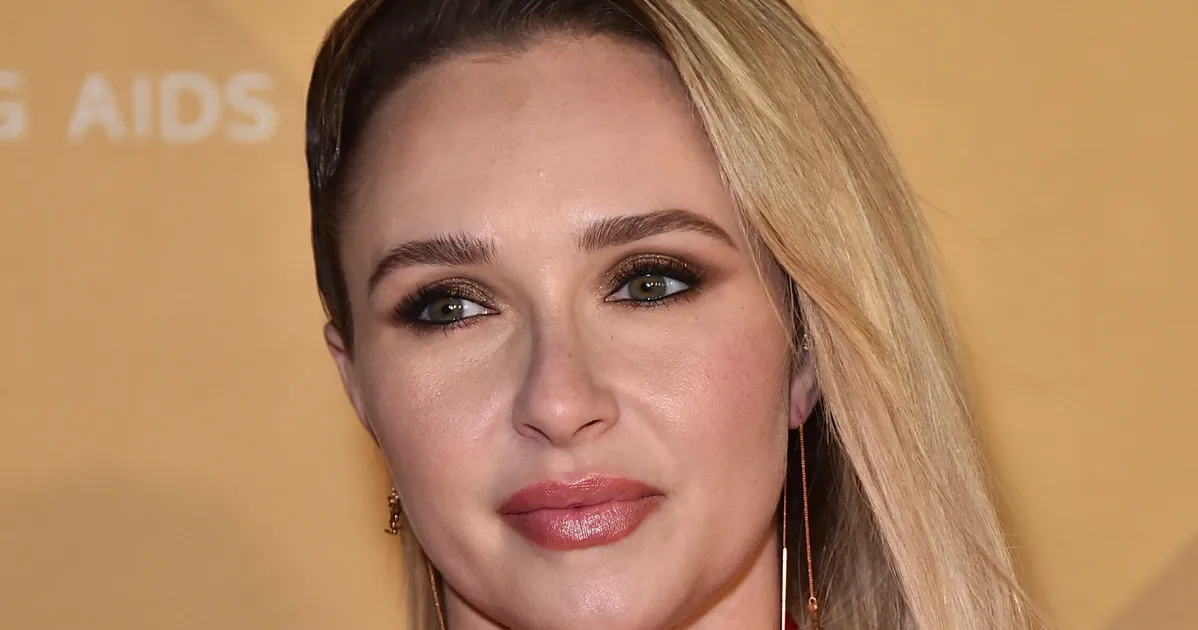
Hayden Panettiere’s ex-boyfriend, Brian Hickerson, and his brother, Zach, were both at the late actor’s apartment when she died over the weekend, according to a newly-released – and heavily-redacted – incident report by the Greenville Police Department.

The responding officer was on scene at 1:58 pm on Sunday, about 30 minutes before Hayden was pronounced deceased at 2:32 pm, at the age of 36.

“I spoke with Zach Hickerson first,” reads the report.

Zach reportedly told the officer that his brother and Hayden were dating. A large section of the incident presumably about Zach’s recollection of the afternoon is redacted, ending with the text: “They then called 911.”

Advertisement

Brian’s interview with the officer is also similarly heavily redacted, with the report reading: “I spoke with Brian and he advised me [redacted]. He advised [redacted]. They then called 911.”

The police report described Zach as “very emotional” while emergency medical technicians were working on Hayden, while “Brian did not become emotional until EMS declared her officially deceased”.

On Monday, the Greenville County Coroner’s Office said that Hayden’s autopsy showed no signs of trauma that would have contributed to her death, but didn’t speculate about the cause of death.

“The cause and manner of death remain pending further investigation and the completion of additional studies,” the office said. “This investigation remains active and ongoing. No further details are available for release at this time.”

Advertisement

Hayden was best known for her work in the TV series Nashville and Heroes, as well as her performance in two films in the Scream franchise.

Following the news of her death, several of her co-stars and those who knew her have been paying their respects in emotional tributes, remembering her as an “amazing talent” and “an incredible light and force of nature”.

She is survived by her 11-year-old daughter, Kaya.

Advertisement

Source link

Continue Reading

NewsBeat

World’s oldest person celebrates her 117th birthday after shaking hands with the king

Published

on

Daily Mirror

Ethel Caterham has marked her 117th birthday surrounded by friends and family after a remarkable year which included meeting the king and becoming the world’s oldest living person

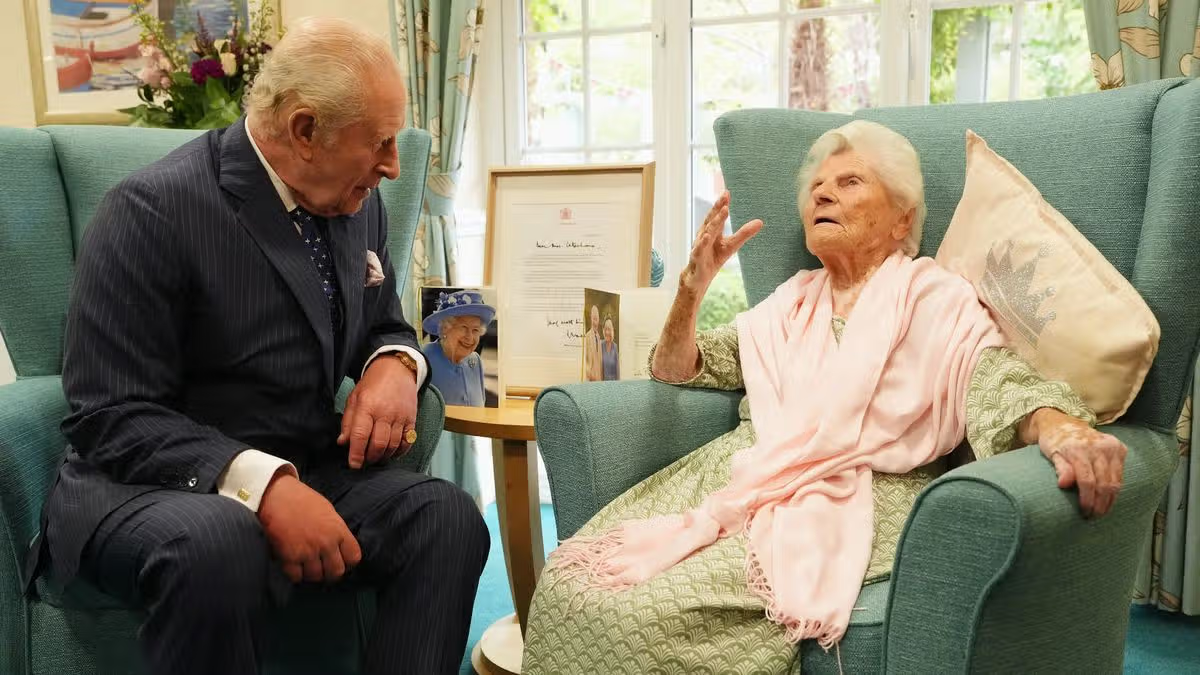
The world’s oldest person is celebrating her 117th birthday after a year of “many firsts”, including meeting the King and holding his hand.

Advertisement

Ethel Caterham, who lives at Hallmark Lakeview Care Home in Lightwater, Surrey, is spending the day with her family and friends to mark the occasion on Friday.

In a statement, she said: “Thank-you for all of the kind birthday wishes. Even at 117, I’ve had many firsts this year, from stroking a llama to holding hands with the King. I’ve had a lovely day celebrating with my family and friends, and I look forward to seeing what next year brings.”

Mrs Caterham was visited by Charles, who held her hand as he introduced himself, in September last year just after her 116th birthday. She became the oldest living person in April 2025 after the death of Brazilian nun Sister Inah Canabarro Lucas at 116.

During the meeting with Charles, she recollected his 1969 investiture as the Prince of Wales when he was 21, adding: “All the girls were in love with you and wanted to marry you.”

Mrs Caterham was born on August 21, 1909 in Shipton Bellinger, Hampshire, five years before the start of the First World War, as the second youngest of eight siblings. She is the last surviving subject of Edward VII, who died in May 1910. In 1927, aged 18 she travelled to India and worked as an au pair to a military family until she was 21. She met her husband Norman, who was a lieutenant colonel in the British Army and died in 1976, at a dinner party in the UK in 1931.

They lived in Salisbury before being stationed in Gibraltar and Hong Kong. Mrs Caterham set up a nursery school while in Hong Kong and raised two daughters, both of whom died before her. One of her sisters, Gladys, lived to be 104.

Mrs Caterham drove until she was 97 and enjoyed playing contract bridge in her centenarian years. She survived Covid in 2020 aged 110.

Advertisement

The title of the oldest person ever is held by French woman Jeanne Calment, who lived to 122 years 164 days, according to Guinness World Records.

Source link

Continue Reading

NewsBeat

What to know about former Tiananmen vigil organizers on trial in Hong Kong

Published

on

What to know about former Tiananmen vigil organizers on trial in Hong Kong

HONG KONG (AP) — Lee Cheuk-yan and Chow Hang-tung are two prominent Hong Kong activists who helped lead the group behind the city’s massive annual vigils commemorating the 1989 Tiananmen Square crackdown. They were charged in 2021 with inciting subversion under Hong Kong’s national security law.

The former leaders of the now-disbanded Hong Kong Alliance in Support of Patriotic Democratic Movements of China are awaiting a verdict in a case that has drawn international attention, with critics saying it highlights the erosion of freedoms in the territory under the law imposed by Beijing.

Here’s a brief look at the two activists:

Lee Cheuk-yan

Lee, 69, was the former chair of the Hong Kong Alliance. During the 1989 student-led Tiananmen Square pro-democracy movement, he brought donations from Hong Kongers to Beijing in late May. When troops and tanks entered the heart of Beijing and opened fire to end the protests in June, he was at a hotel that night hearing the gunshots, he said in his testimony at court. The crackdown killed hundreds, possibly thousands.

Advertisement

Lee later boarded a plane to return to Hong Kong but was asked to leave the plane by police before it took off. He was detained. He was allowed to go back to Hong Kong on June 8 after being questioned and signing a letter of repentance, he said.

His experience made him devote himself to letting the world know about what happened. Beyond his Tiananmen activism, Lee is also a veteran labor activist in the city and a former lawmaker.

The national security trial has focused on the alliance’s core demand of “ending one-party rule.” The prosecution alleged that the group’s advocacy was about inciting others to use unlawful means to overthrow the leadership of China’s ruling Communist Party. Lee denied he held enmity toward the party leading the country, saying his desire to see it reform stemmed from his love for the people.

“I have no enmity in my heart, only love,” he said.

Advertisement

Chow Hang-tung

Chow, 41, began going to the vigils when she was just a primary school student. A natural sciences graduate of the University of Cambridge, she later studied law and became a vice-chair of the alliance.

Before the alliance voted to dissolve in September 2021, police had sought details about its operations and finances in connection with alleged links to pro-democracy groups overseas, accusing the group of being a foreign agent. But the group refused to cooperate, insisting it was not.

Chow, alongside two other core members of the group, was convicted in 2023 over their refusal and received a sentence of 4 1/2 months each. But last year, the trio overturned their convictions at the city’s top court.

While Chow was behind bars, she became one of the first people to be arrested under a newer, homegrown national security law in 2024. Authorities alleged she and several others had used a Facebook page to publish seditious posts, saying they were targeting a “sensitive date.”

Advertisement

The authorities have not detailed the content of the posts. But the page published a series of posts to mark the anniversary of the 1989 crackdown.

Despite limited resources in prison, Chow represented herself in the national security trial and stood firm in her defense.

Advertisement

“Speaking the truth has become inciting hatred, seeking justice has become exploiting suffering, accountability and limiting power have become violating the constitution, and returning power to the people has become subverting the state,” she argued in her closing statement.

Source link

Advertisement
Continue Reading

NewsBeat

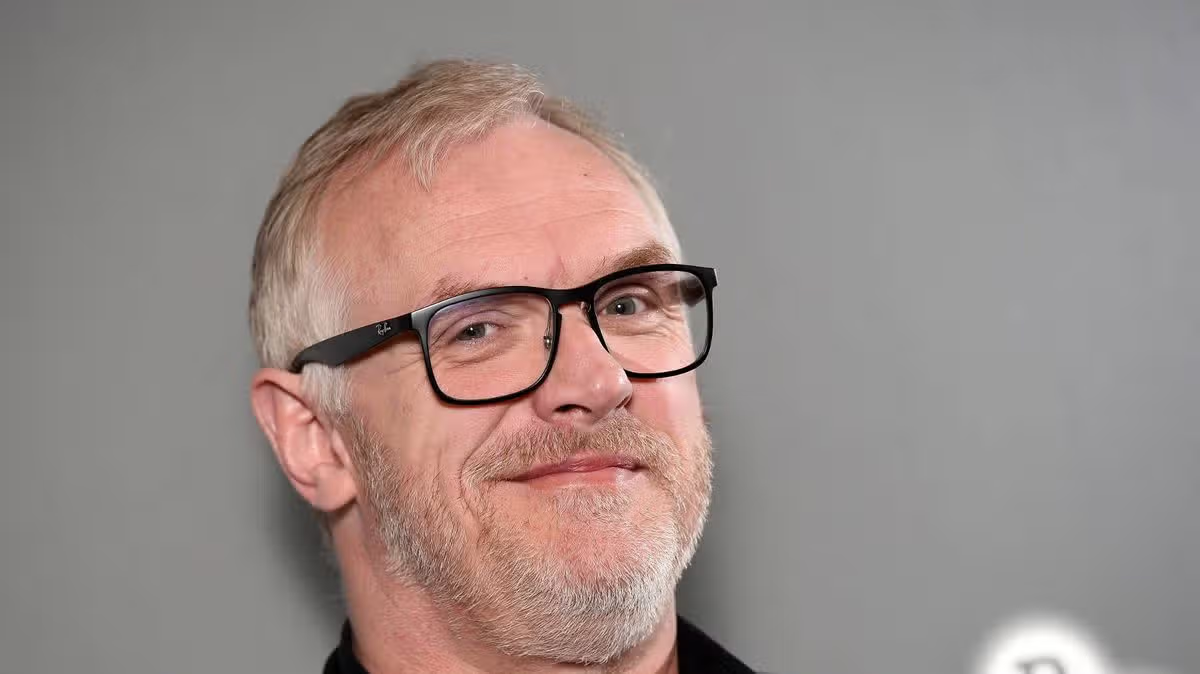
Taskmaster start date confirmed after Greg Davies admitted co-host ‘annoys’ him

Published

on

Wales Online

Channel 4’s Taskmaster is back with Greg Davies and Alex Horne in the hotseats

Channel 4 ‘s Taskmaster is returning for a new series in a matter of weeks and the confirmation comes after Greg Davies admitted how his co-host “genuinely annoys” him.

Welshman Greg, who is from St Asaph, will return to Channel 4 alongside Alex Horne on Thursday, September 3 for series 22.

But recently, the 58-year-old stand-up comedian admitted there are things his co-host does that “genuinely annoys” him.

Advertisement

Greg told Metro: “I think he deliberately sits down and thinks: ‘I know how to get Greg into character, and it’s to properly wind him up.’ He says things that have no structure, punchline [or] comic premise, and it genuinely annoys me.

“[The scoring] is my revenge. It’s the little things he doesn’t like. When I give two contestants the same score, if you look into his eyes, his little brain is on fire with rage because he wants things put into boxes.”

But hopefully there won’t be too much squabbling between them when the series returns with a number of famous names among the cast including Peep Show’s Isy Suttie, Doctor Who’s Matt Lucas, ventriloquist comedian Nina Conti, stand-up comedian Chloe Petts and The Bad Guys’ Richard Ayoade.

Advertisement

The tasks this time around will see the celebs “crawl through secret tunnels, look for faces on toast, go on holiday with shoes and make interesting use of their armpits”, reports Digital Spy.

In an interview with Polygon in June, Greg said their “roles have become organically defined, rather than in those first few seasons — sorry, series — when we sat down and decided what the dynamics should be and how we should respond”.

He added: “They were almost ‘eggy’ in comparison to where we are now, which is that we both know the limits of our roles and what the dynamic is. It feels a lot more fun now, to be honest, because we know the [Taskmaster] world and the limitations to the world.”

Advertisement

Taskmaster has been expanding across the globe in recent years, with the YouTube channel almost doubling its views across 2025.

Earlier this year, it was announced that a Polish version is on the way, which is the 14th international version.

The upcoming season of Taskmaster UK will return to the UK on Thursday, September 3 at 9pm – its usual time slot – and will then drop an hour later on the Taskmaster YouTube channel around the world.

Taskmaster returns to Channel 4 on September 3

Advertisement

Source link

Continue Reading

NewsBeat

Jailed Pakistan ex-PM Imran Khan taken to hospital for treatment

Published

on

Former Pakistani Prime Minister Imran Khan speaks with Reuters during an interview, in Lahore, Pakistan March 17, 2023. He can be seen seated with his hand outstretched and speaking. Two Pakistani flags are behind him

Former Pakistani Prime Minister Imran Khan has been taken to a hospital in the capital, Islamabad, following complaints about his poor health.

Khan was taken from Adiala jail and sent to Shifa International Hospital under heavy security, according to his party. There is yet to be official confirmation he has been transferred.

The move complied with a ruling by a three-judge panel of the Supreme Court which had ordered that the cricketer-turned-politician be taken to the hospital within 48 hours to be examined by physicians.

This is the most significant relief Khan has received from the courts since he was imprisoned in 2023 on corruption charges, which he says were politically motivated.

Advertisement

As well as being transferred to hospital, this court order also specified Khan should be allowed to see his family, which he has not been able to do in months. On Tuesday night, his sister visited him in prison.

Khan’s political party, Tehreek-e-Insaf (PTI), is normally quick to claim court decisions that go against him are politically motivated. It has not publicly been drawn on speculation that the Supreme Court’s decision indicates political manoeuvring behind the scenes.

The area around Shifa International Hospital has been sealed off by police with barriers, officers and police vans in place. Outside the hospital the BBC saw cars being moved with a truck to clear the street while police cars and armoured vehicles patrolled.

The Supreme Court told Khan’s party not to conduct press conferences outside the hospital. This is a warning not to politicise his hospital stay.

Advertisement

The 73-year-old’s lawyers have said he’s suffering from various health conditions, including poor eyesight, and has been unable to access specialist medical care.

In February, Khan’s lawyer said his client had 15% vision left in his right eye after prison authorities failed to take action – an allegation the government disputed.

In Tuesday’s court order, the panel wrote: “We are mindful of the constitutional and legal obligation… to safeguard the life, health, dignity and security of the prisoner.”

Judges said an eye specialist would be involved in Khan’s hospital treatment.

Advertisement

The judges and members of PTI issued warnings to supporters not to gather outside the hospital – that would be a breach of the court order.

Khan, who previously captained the Pakistan national cricket team, served as the country’s prime minister from 2018 to 2022.

He was imprisoned in August 2023 and has faced charges in more than 100 cases, ranging from leaking state secrets to selling state gifts – all of which he decried as politically motivated.

Khan and his wife Bushra Bibi were both sentenced to 17 years late last year.

Advertisement

His jailing triggered large-scale protests by supporters, which were met with a crackdown by authorities.

Despite his jailing, Khan remains a significant presence in Pakistani politics with a large number of supporters.

Source link

Advertisement
Continue Reading

Trending

Copyright © 2025