When I was growing up there were three channels on the telly, which seems quaint now. You watched what was on, like it or lump it. But I have only good memories of children’s TV in the 1970s. Hiding behind a cushion as we watched Dr Who, singing along to Sesame Street, lots of excellent dramas, and a surprising array of weird trippy stop-motion animation that featured stoned rabbits and talking TVs.
But my favourite was a wonderful art show aimed primarily at deaf children called Vision On. (For anyone who’d like a walk down memory lane, listen to the groovy theme tune below and transport yourself back to your 1970s living room.)
Vision On.
A lovely man called Tony Hart shared simple art techniques, and later got his own spin-off show called Take Hart. It was here in 1977 that I first encountered a charming little Plasticine character called Morph who persisted in interrupting Tony has he tried to make art, generally making a mess and causing chaos. But always in the most endearing way.
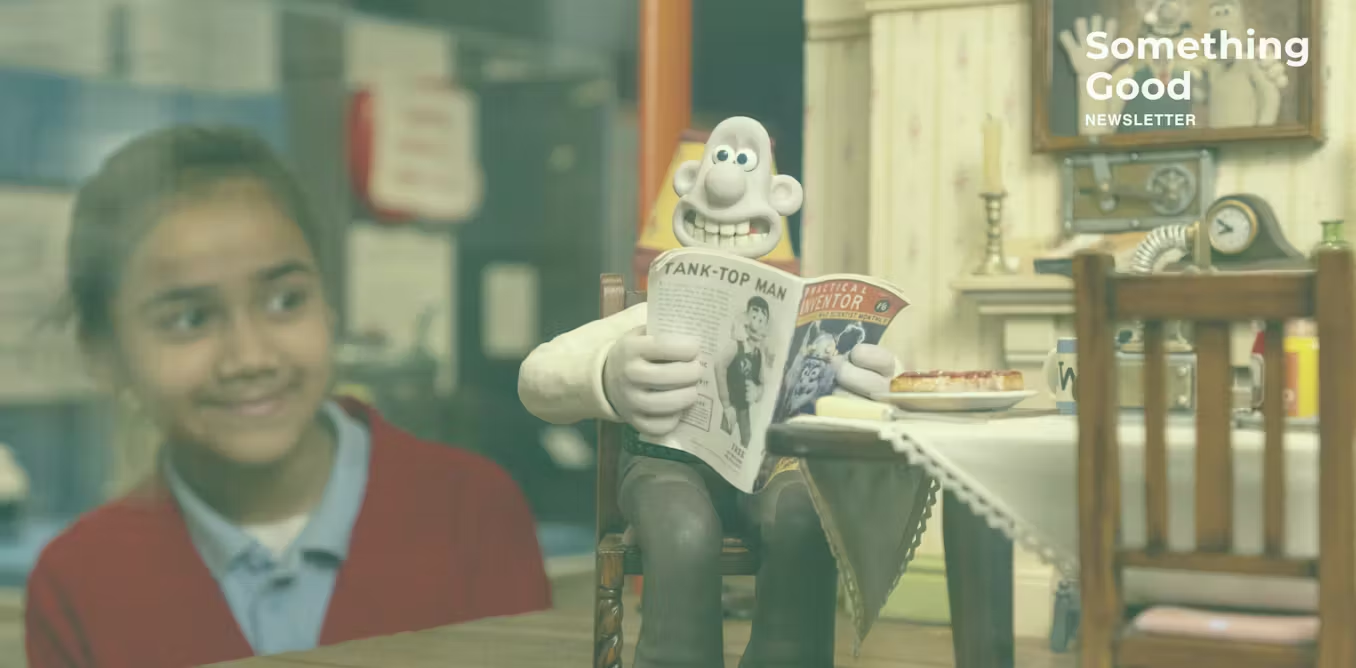
It was groundbreaking stuff in those days, watching a ball of plasticine unfurl into this funny little figure with big eyes and a bigger heart. Who would have guessed Morph was the beginning of Aardman, one of the most successful stop-motion animation studios in the world? One that would go on to create beloved characters like Wallace & Gromit and even win Oscars?
That success is surely down to a very British sensibility that celebrates quirk and eccentricity, chewy regional accents, DIY and a heroic sweetness that remains untainted by cynicism. I still marvel at the genius of the long-suffering Gromit’s scowl, conveyed only by two indented thumbprints for eyebrows.
Aardman’s work is now rightly being celebrated in an exhibition at the Young V&A in London. We sent along animation expert Christopher Holliday to give us his take as the studio celebrates almost half a century of hi-octane slapstick, unlikely heroes and comical villains.
Two national treasures
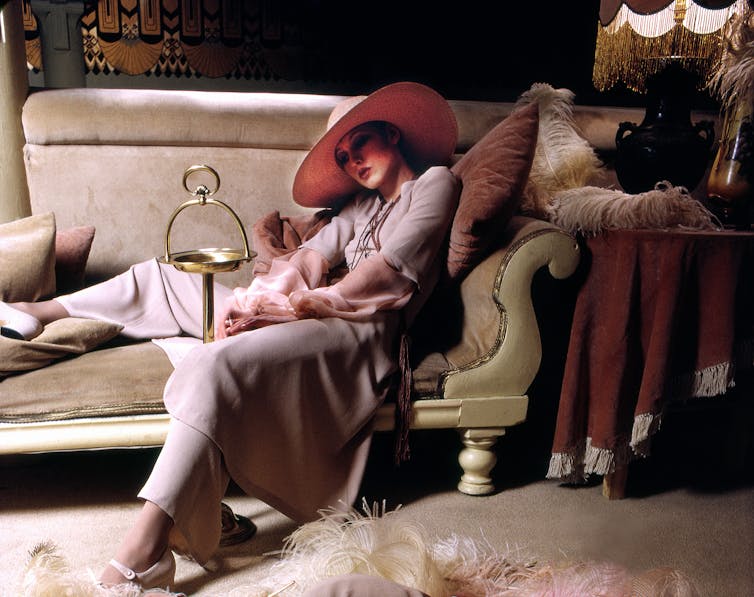
It’s a great week for celebrating quintessential Britishness in film, art and fashion. In Edinburgh The Biba Story has just begun at the wonderful Dovecot tapestry studio. The show is a warm, inclusive and affectionate look at the impact of Barbara Hulanicki’s groundbreaking Biba fashion and lifestyle label that brought a splash of excitement to drab postwar Britain in the mid-1960s. Best of all are the vivid memories of women now in their eighties describing the thrill of high fashion at low prices in their teens.
Advertisement
Ingrid Boulting modelling Biba in 1970. Duffy Archive
At the Tate Modern in London, the irrepressible Tracey Emin is back with a restrospective called, appropriately, Tracey Emin: A Second Life after she rose like a phoenix from the ashes of her grim encounter with cancer and the life-changing surgery that followed. I adore Emin (even though I don’t always like her work) because she makes art utterly on her own terms. Complicated, contradictory, uncompromising and fearless, many people find that altogether too much in one woman. But Emin mines her life and experience in ways that make her vulnerable which I find brave, honest and admirable.
Films heading for the Oscars
Wagner Moura and Rose Byrne are each nominated for best actor/actress gongs at this year’s Oscars, and both, according to our reviewers, would be worthy winners.
Set in 1977 during Brazil’s two-decade dictatorship, The Secret Agent is a gripping thriller that features an outstanding performance from Moura. The Brazilian actor plays Armando, an academic forced into hiding after clashing with big business interests aligned with the regime who want to get their hands on his research. Kleber Mendonça Filho’s film makes clear that authoritarianism attacks society not only through violence and repression of civilians, but through the silencing of knowledge and learning. This timely and important film reminds us why academic freedom must be protected.
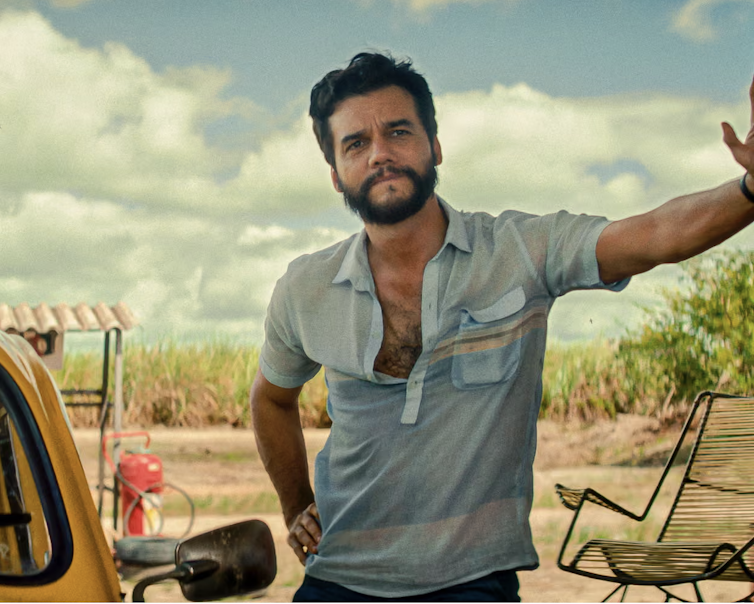
Wagner Moura as Armando in The Secret Agent. CinemaSco’pio / MK Production
Rose Byrne gives a relentless performance as Linda, an exhausted resentful mother quickly unravelling in If I Had Legs I’d Kick You. Her husband who works away is unconcerned that she is looking after their seriously ill daughter solo. Her unfulfilling but demanding work as a therapist piles on more pressure and her own therapist is deeply unsympathetic. Unsupported and drowning in despair, she is unable to find respite. This dark and unsettling film, says our reviewer Laura O’Flanagan, “is an example of how cinema has become less interested in saccharine, idealised depictions of mothers and more concerned with their inner lives, however messy”.

More than half of the UK’s electrical power was supplied by renewable energy on February 25 2026.
That consisted mainly of solar, wind and hydroelectric sources. The next day, a new source of electricity started feeding into the grid for the first time – geothermal power.
At a site near Redruth called United Downs, in Cornwall, a company called Geothermal Engineering Ltd has started producing geothermal electricity.
To generate power (electricity), this project is using two of the deepest wells ever drilled in the UK – down to three miles beneath the surface. A considerable feat of engineering.
Advertisement
To understand why the Cornish landscape is so suitable for geothermal power, imagine life on Earth roughly 300 million years ago, when magma from deep beneath the Earth’s surface cooled to formed large bodies of granite. This igneous rock with a crystalline structure contains small amounts of naturally radioactive elements, such as uranium, thorium and potassium.
Over a long geological timescale, these give off heat. Geologists call this a “granite‑hosted geothermal system”. Fractures throughout this granite provide pathways for fluids to flow. This is key to harnessing the thermal energy (heat) from within these rocks.

To exploit the heat in the rocks, Geothermal Engineering Ltd has drilled two angled wells. The production well reaches a depth of approximately three miles, intersecting an area known as the Porthtowan fault zone. This well produces hot fluid, at over 150°C. The vapour from this fluid is used to turn a turbine to produce electricity. The second well, drilled to a depth of almost 1.5 miles is used to inject the slightly cooled fluid back into the ground after it has passed through the turbine.
Unlike wind and solar which are weather-dependent sources of renewable energy, geothermal is always “on”. Geothermal heat is not susceptible to changes at the surface – and this means it can produce power steadily, day and night, all year round.
Advertisement
The deep geothermal power plant at United Downs will produce approximately 3 megawatts (MW) of electricity, the equivalent of enough power for 10,000 homes. This will meet only around 0.01% of the UK’s electricity demand. But capacity isn’t the only consideration. We need to look beyond the capacity to understand the full picture and future opportunity.
First, there is the cost of generation. Geothermal, like other renewable sources, has lower operating costs compared with traditional gas power, however the upfront costs for developers and investors are high. The cost of electricity from wind and solar has fallen significantly over the past decade. Geothermal is just at the start of its cost reduction journey. As the potential for reduced drilling time and costs increases, the scale up of geothermal could become more affordable.
Then there is the wider grid benefits. As the UK grid will rely more heavily on wind and solar in the future, it will require much more flexibility. Any source that is less susceptible to variability in energy generation can better match supply to demand. This makes it easier to incorporate other less consistent renewable sources into the grid.
While the capacity of some geothermal power plants such as United Downs is not comparable to the scale of an offshore wind development or a nuclear plant, they can deliver meaningful grid support, resilience and, in particular, benefits for consumers. For example, the UK government’s planned expansion of AI and data centres could further increase electricity demand; cooling them alone currently accounts for about 40% of a data centre’s electricity use, so matching them with local sources of energy makes sense.
Advertisement
While electricity production is the primary goal, United Downs will also produce lithium, a critical mineral that is essential for batteries. Fluids at depth contain relatively high concentrations of lithium. Locally sourced lithium can help reduce the UK’s reliance on importing sources.
The future outlook
Geothermal Engineering Ltd is currently developing two other sites in Cornwall. These could deliver a further 10MW of geothermal power in the UK by 2030. Recent estimates suggest that the eventual resource potential for electricity from geothermal is around 25GW nationally – roughly 2.5 times the contribution that wind currently provides.
However, it took wind more than 25 years to scale to 30GW of installed capacity in the UK. So perhaps the most pertinent question isn’t a geological one, but rather a question of economic feasibility: can geothermal electricity compete on the same scale and cost as other options for low-carbon electricity?
Looking beyond power generation, several recent reports, including work commissioned by Department of Energy Security and Net Zero shows that geothermal can be a significant low-carbon source of heating and cooling. Resource estimates for heating and cooling are more than 100 times greater than the estimated electricity generation potential. Geothermal heating can help address the cost of heating and greenhouse gas emissions associated with natural gas.
Advertisement
This single development in Cornwall, or even a small number of other projects, probably won’t change household electricity bills in the near future. However with gas still setting the price for electricity in the UK, the cumulative potential for geothermal energy to complement other renewable energy sources and deliver energy that could reduce this reliance is considerable.
Don’t have time to read about climate change as much as you’d like?
The Pilgrim Way, written by Nick and Becky Drake of Songs for School, invites children to reflect on life as a pilgrimage and explore their journey of faith.
The pair said: “We’re delighted to share our new song, The Pilgrim Way, with everyone.
“It’s all about life and the journey of faith, with its highs and lows.
Advertisement
“It’s about how our story fits within the broader story of God’s people who have gone before and those who go ahead of us.
“We hope The Pilgrim Way inspires children to see their place in this story, and journey on through life knowing God is with them.”
A free resource pack has been released alongside the song to support use in schools and churches.
It includes a lyric video, singalong video, backing track, printable lyric sheet, and sheet music.
Advertisement
Makaton and British Sign Language (BSL) video resources will also be made available soon.
The Pilgrim Way is part of a wider collection of materials from Faith in the North, which includes ‘Pilgrim Pathways’ collective worship resource and materials that explore the stories of the Northern Saints.
What’s in store for you today? (Picture: Metro.co.uk)
Mercury blends with Venus today, offering a welcome break from a tense start to the planet in retrograde. Romance will flow easily through the day ahead.
Aries, Taurus and Gemini, allow yourself to soften today. Whether around others, or towards your own inner goals, letting your guard down will serve you well.
Focus on watering connections today. Whether it’s a new bond or a long-term commitment, go that extra mile today.
Ahead, you’ll find all star signs’ horoscopes for today: Saturday February 28, 2026.
Advertisement
Like checking your horoscope every morning?You can now sign up to our free daily newsletter to get a personalised reading for your star sign delivered straight to your inbox.
Your sharp edges soften into graceful charm, and you might surprise yourself with how sweetly you’re speaking. Your inner romantic, artist and empath are invited to the conversation, making this a perfect time to express love, beauty or emotions with a soft touch. Say what you feel, not just what you think. Your heart has something wise to share, and others are ready to listen.
Your words can flow like honey, and your presence feels like a warm hug in a cold world. Today’s special blend lights up your social and dream zones, making it a good time to connect with friends, revisit big goals or express your creativity. Conversations flow easily and whether you’re inspiring a group chat or doodling your next big idea, use warmth and imagination.
As Mercury merges with Venus, this celestial duet lights up your career and public image, helping you charm bosses, clients or anyone within range. You’ll blend logic with feeling, making your ideas not just smart, but poignant. It’s a golden moment to share, present or upgrade your professional presence. Just don’t over promise anything in the haze of inspiration.
Head and heart are swimming in the same gentle sea and it’s truly special. This means your zone of travel, wisdom and big thinking is activated, making it the perfect time to express your beliefs. Whether you’re planning a trip, writing something heartfelt or having a deep conversation, your words can heal. Share your story, send that message or dream out loud.
Today’s celestial line-up stirs your intimacy zone, making emotional healing or soul-level bonding feel natural and irresistible. You’re almost telepathic too. It’s a good time to mend fences, share secrets or write something that peels back the layers. Finances and shared resources may also benefit from a wise approach. Let your guard down and prepare to be enchanted.
Your relationships get wrapped in a soft, sparkly glow. Communication with partners, whether romantic, platonic or professional, takes on a tender, sensitive tone. You’re usually the master of details, but now it’s all about reading between the lines and speaking from the heart. This is a beautiful time to heal rifts or write love notes. Logic takes a back seat and it’s enjoying the ride.
Cosmic messages for Cosmic messages for Virgo today
Libra
September 24 to October 23
Your daily life is touched by charisma and even mundane moments shimmer. Work, wellness and routines feel softer, sweeter and more inspired. You’ll blend instinct with intention, making it a great time to beautify your workspace or approach health with gentleness over force. If it feels good and does good, you’re on the right path. Even your to-do list deserves a little pampering.
As Mercury ties with Venus, it lights up your romance, fun and artistic expression zone, making it the perfect time to flirt and create. Your creative side is humming a love song and the universe is listening. Your words have charm and mystery, and your sixth sense is on fire. Lovers and creative muses may bring unexpected delight. Today pleasure is a powerful form of alchemy.
Sentimental conversations, artistic redecorating urges or a sudden craving for comfort food and connection may sweep in. You’re thinking and feeling your way through memories and meanings. This is a lovely time to write openly, heal old emotional patterns or make peace with your past. Get friendly with creativity, kindness and those you call family, chosen or otherwise.
Today’s charming blend lights up your communication zone, turning everyday chats into meaningful moments. Whether you’re writing, speaking or sending a text, your message reaches others in the best way. It’s a great time to express affection, share a lovely idea or soften your stance. Today, diplomacy isn’t weakness, it may be your most eloquent power move.
Money, values, self-worth and your relationship with them get a gentle upgrade. This isn’t about spreadsheets, it’s about soul-aligned abundance. You’re thinking about what really matters and how to speak, spend and save with wisdom. This is a lovely time to make peace with your finances, gift yourself something beautiful or share kind words that feel like healing currency.
You are the universe’s favourite muse right now, radiating charm, creativity and sweetness. Your words sparkle with warmth, your presence feels like poetry and people are drawn to your special qualities. As Mercury blends with Venus, this is the moment to speak your truth, share your vision or bathe in the beauty of being you. Your natural grace makes everything feel delightful.
Your daily Metro.co.uk horoscope is here every morning, seven days a week (yes, including weekends!). To check your forecast, head to our dedicated horoscopes page.
As a loyal Metro reader, we want to make sure you never miss our stories when searching for your news. Whether it is the latest politics news explained, live football coverage or a showbiz scoop.
Click here and tick Metro.co.uk to ensure you see stories from us first in Google Search.
Our journalists work hard to deliver the most important stories from around the world
Health and Human Services Secretary Robert F. Kennedy Jr. has been mocked online, with some comparing him to the last Queen of France, Marie Antoinette, after suggesting Americans eat liver over beef to save on groceries.
Speaking at an event for MAHA Action, an advocacy group aimed at advancing the Make America Health Again movement, Kennedy said, “Most of the cheap cuts of meat are very inexpensive.”
“If you buy a Porterhouse steak or a strip steak, it is gonna set you back,” the health secretary said. “You can buy liver or the cheaper cuts of steak that are very, very affordable.”
A clip of Kennedy’s comments was shared on X Friday and was met with a series of mocking posts, suggesting the secretary was out of touch.
Advertisement
Health and Human Services Secretary Robert F. Kennedy Jr. has been mocked online, with some comparing him to the last Queen of France, Marie Antoinette, after suggesting Americans eat liver over beef to save on groceries (Andrew Harnik/Getty Images)
Democratic Representatives Ted Lieu of California and Nikki Budzinski of Illinois shared photos of Kennedy’s face edited onto the body of Marie Antoinette, who became a symbol of selfish luxury as her people went hungry.
As the story goes, the French queen was told the public had no bread, so she said, “Let them eat cake.” While there is no evidence Marie Antoinette actually said those words, the quote stuck and is now being used to call out the Trump administration’s response to Americans’ cost-of-living concerns.
“Let them eat liver,” Lieu and Budzinski jokingly quoted Kennedy as saying.
Advertisement
Senate Minority Leader Chuck Schumer asked President Donald Trump in an X post, “Is liver on the menu tonight at the Mar-a-Lago dining room? Or is that just for the rest of America?”
‘You can buy liver or the cheaper cuts of steak that are very, very affordable,’ the Health and Human Services secretary said at a MAHA event (Oliver Contreras/AFP via Getty Images)
Representative Jimmy Gomez shared an ad from the president’s former “Trump Steaks” business venture with a photo of a platter of steaks and the tagline “The World’s Greatest Steaks.” Next to that photo was an edited image of the same ad but with the words “Trump Liver,” a platter of the iron-rich organ meat and the tagline “The World’s Cheapest Liver.”
“What Trump promised vs what we got,” the California Democrat said.
Advertisement
Comedian Jay Black wrote: “For the masses: liver and cheap cuts. For the rich: steak and zero consequences. For RFK Jr.: bear carcass and toilet seat cocaine. It’s not a fair world.”
X user Jamie Bonkiewicz wrote, “We could afford beef when [former President Joe] Biden was president. Now RFK Jr. says, ‘Just eat liver, peasants’ Are we great yet?”
The Independent has reached out to the Health and Human Services Department for comment.
Advertisement
High beef prices make it harder for Americans to follow the Department of Agriculture’s new dietary guidelines, which suggest Americans eat more protein and less whole grains (Anna Moneymaker/Getty Images)
Uncooked ground beef was up 17.2 percent and uncooked beef steaks were up 12.9 percent last month compared to the same time the year before, according to the Bureau of Labor Statistics’ Consumer Price Index.
These beef prices make it harder for Americans to follow the Department of Agriculture’s new dietary guidelines, which suggest Americans eat more protein and less whole grains.
Agriculture Secretary Brooke Rollins was also mocked online last month for suggesting an affordable, but dull meal of “a piece of chicken, a piece of broccoli, corn tortilla and one other thing” during a NewsNation interview.
Advertisement
Rollins’ suggestion was called a “depression meal” and compared to prison food.
“Private jets and tax breaks for them and their rich friends, and one piece of broccoli *AND* a tortilla for you!” Chasten Glezman Buttigieg, the husband of former Transportation Secretary Pete Buttigieg, wrote on X.
More than 8.4 million Universal Credit claimants must report nearly 20 changes of circumstances to the DWP
Linda Howard Money and Consumer Writer and Lauren Haughey Lifestyle and Money Reporter
04:01, 28 Feb 2026
Recent data from the Department for Work and Pensions (DWP) reveals that by December’s end, approximately 8.4 million people throughout England, Scotland and Wales were claiming financial assistance via Universal Credit, whether employed or unemployed.
Yet many recipients might be unaware that certain changes in circumstances require notification to the DWP, as failure to do so could affect their eligibility or payment amounts and, in certain instances, result in penalty charges or court proceedings.
Advertisement
Almost 20 different changes require reporting, including acquiring a new mobile telephone number or email address, transferring to another bank account, relocating home, and fluctuations in rental costs.
According to the Daily Record, DWP guidance on GOV.UK warns: “You could be taken to court or have to pay a penalty if you give wrong information or do not report a change in your circumstances.”
Change of circumstance you need to report to DWP
DWP guidance on GOV.UK advises that you must report any changes in your circumstances promptly to ensure you receive the correct monthly amount. It emphasises reporting changes ‘as soon as they happen’ because delays ‘may result in receiving too much money and the need to repay it’.
DWP adds: “Changes in your circumstances can affect how much you’re paid for your whole assessment period – not just from the date you report them.”
Advertisement
Changes can include:
Finding a job
Finishing a job
Having a child
Moving in with your partner
Starting to care for a child
Starting to care for a disabled person
Your child stopping or restarting education or training, if they’re aged 16 to 19
Changing your mobile number
Changing your email address
Moving to a new address
Going outside Great Britain for any length of time, if you live there
Going outside Northern Ireland for any length of time, if you live there
Changing your bank details
Your rent going up or down
Changes to your health condition
Becoming too ill to work or meet your work coach
Changes to your earnings (only if you’re self-employed)
Changes to your savings, investments and how much money you have
Changes to your immigration status, if you’re not a British citizen
Reporting a change
DWP states that claimants can notify a change of circumstances by logging into their online Universal Credit account.
If you get a job or increase the hours you work
Use a benefits calculator or consult your work coach to understand how gaining employment or a higher income could impact your Universal Credit claim.
Most employers will handle reporting your earnings. You typically only need to report your monthly income if you’re self-employed.
If you have been paid too much by DWP
You may have to repay the money if you:
Advertisement
did not report a change straight away
gave wrong information
were overpaid by mistake
Additional details about benefit overpayments can be found on GOV.UK here.
Ensure our latest headlines always appear at the top of your Google Search by making us a Preferred Source.Click here to activate or add us as your Preferred Source in your Google search settings.
Among those calling for a change in direction from Labour’s leadership in the wake of the defeat is former deputy prime minister Angela Rayner, who said the result should be a “wake-up call” for the party, and called for her colleagues to “rededicate” themselves to “a Labour agenda that puts people first”.
WASHINGTON (AP) — The Pentagon has made a deal with Scouting America that Defense Secretary Pete Hegseth said Friday would maintain their century-old partnership but refocus the organization away from diversity initiatives and other “woke” policies he accused it of embracing in recent years.
Hegseth put heavy emphasis on Scouting America’s acceptance of transgender youth, saying the organization will require members to use their “biological sex at birth and not gender identity.” But Scouting America, formerly known as the Boy Scouts of America, said the agreement does not change existing policies regarding transgender youth and that they are welcome.
“We have transgender people in our program and we’ll have transgender people in our program going forward,” Scouting America President and CEO Roger Krone told The Associated Press.
Several of the negotiated changes mirror what the organization suggested to the Pentagon in January, including discontinuing its Citizenship in Society merit badge, introducing a Military Service merit badge and waiving registration fees for the children of military personnel.
Advertisement
Under Hegseth, the Pentagon has taken aim at the military’s partnership with Scouting America, decrying its historic rebrand in 2024 and other changes in recent years that he sees as part of “woke culture” efforts that he wants to root out.
What Hegseth and Scouting America say about transgender scouts
Hegseth said in a video posted on X that Scouting America’s applications will list only options for male and female and the one checked must match the applicant’s birth certificate. He didn’t say how that would be enforced. The group would clarify that youths of opposite genders assigned at birth cannot share bathrooms, tents or other similar spaces, he said.
Krone said the group’s application already has only two boxes — one for boy and one for girl — and that they were already asking about sex assigned at birth. He didn’t offer clarity on how that was reviewed or enforced.
“We do not put boys and girls together in intimate spaces and in order to do that we need to have some knowledge of who they are,” he said.
Advertisement
Krone said “structures” in the organization accommodate transgender youth, noting that there are family troops that include both genders but offering no more details. He said there was nothing in discussions with the Pentagon that changes the way the programs are run.
Hegseth, meanwhile, said in his video that the Pentagon will “vigorously review” the changes Scouting America has made in six months and cease its support of the organization if it fails to comply.
“We hope that doesn’t happen, but it could,” Hegseth said. “Ideally, I believe the Boy Scouts should go back to being the Boy Scouts as originally founded, a group that develops boys into men. Maybe someday.”
Scouts keep new name and female membership
In a statement Friday, Scouting America noted its need to comply with an executive order from President Donald Trump targeting DEI programs.
Advertisement
The Irving, Texas-based organization also pointed out that it maintained its new name and “preserved our service to the more than 200,000 girls who participate in our programs.”
Scouting America said the policy changes deepen the organization’s partnership with the military, which has included Scouts meeting on or near military installations in the U.S. and abroad.
“Scouting America is one of the most reliable pipelines to the United States Armed Forces our country has ever known,” the organization added. “Scouts are significantly more likely to serve in uniform than the general population. Eagle Scouts are heavily represented in ROTC programs, service academies and military leadership tracks.”
The Pentagon said earlier this month that it was reviewing its relationship with Scouting America, claiming it had “lost its way” in many ways and calling the organization’s DEI efforts “unacceptable.”
“Scouting America’s leadership has made decisions that run counter to the values of this administration,” the Feb. 6 statement said, “including an embrace of DEI and other social justice, gender-fluid ideological stances.”
The U.S. military and the Boy Scouts have had longtime ties, including the military providing logistical support for the National Boy Scout Jamboree since its inception in 1937. The military also has maintained a strong relationship with the Eagle Scouts, whose members often enlist.
Advertisement
In a statement last year, Scouting America raised concerns following a report from NPR that the Pentagon planned to cut support for Scouting programs on military bases as well as for the National Jamboree and would eliminate increases in pay grade for Eagle Scouts who enlist.
The group told Hegseth last month that after hearing his suggestions, it had come up with a plan, which, besides the badge changes, included holding a ceremony to rededicate itself to leadership, duty to God, duty to country and service, as well as dissolving its DEI board committee.
Krone said there are about 900,000 youths participating in scouting programs, down from just over 1 million a year ago.
Cultural forces and significant changes
Founded in 1910, the Boy Scouts of America achieved a vaunted status in the U.S. over the decades, with pinewood derbies, the Scout Oath and Eagle Scouts becoming part of the lexicon.
Advertisement
Since then, the organization has faced controversies and significant changes.
Its ban on gay scouts ended in 2013. Two years later, it ended its blanket ban on gay adult leaders while allowing church-sponsored Scout units to maintain the exclusion for religious reasons. In 2017, the Boy Scouts announced that they would allow transgender children who identify as boys to enroll in their boys-only programs.
The Boy Scouts also faced a flood of sexual abuse claims and sought bankruptcy protection in the 2020s. In 2023, a judge upheld the $2.4 billion bankruptcy plan, allowing the organization to keep operating while compensating more than 80,000 men who filed claims saying they were sexually abused while in scouting.
___
Advertisement
Stengle reported from Dallas. Associated Press writers Konstantin Toropin in Washington and Ed White in Detroit contributed to this report.
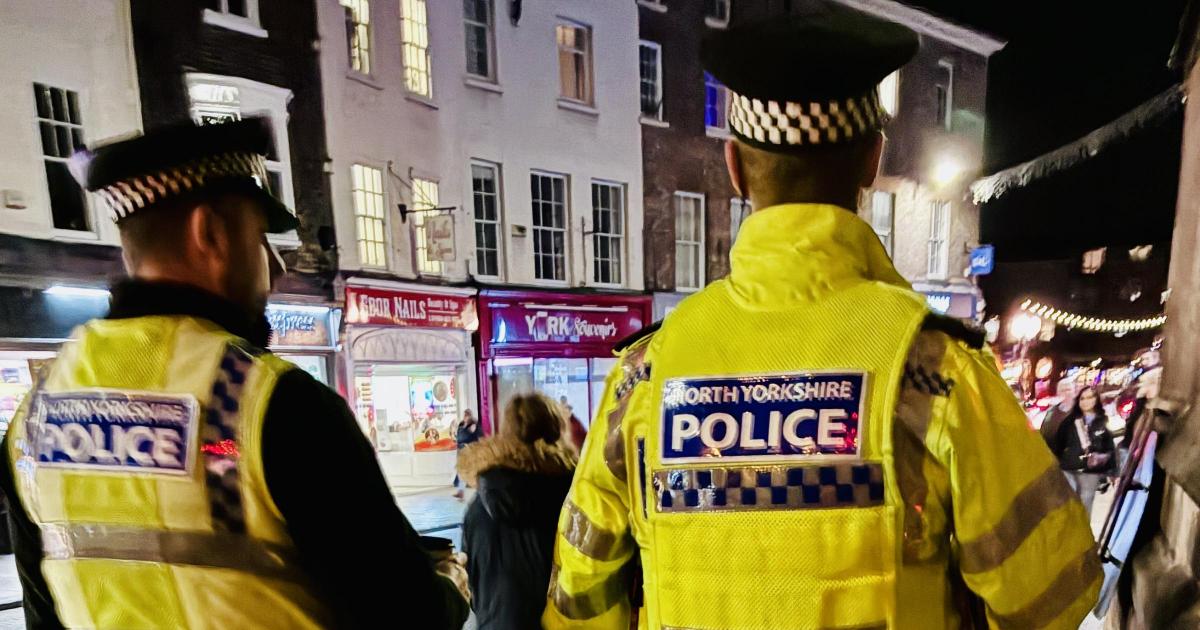
North Yorkshire Police is appealing for help in identifying a vehicle that was spotted driving erratically in Acomb earlier this month.
The car was seen driving erratically in Jute Road, York between 5.45pm and 6.45pm on February 16.
RECOMMENDED READING:
“It has lost control after hitting a speed bump and has mounted the pavement striking a stationary unattended vehicle. The vehicle has then left the scene leaving no details for the vehicle owner,” said a spokesperson for the force.
Advertisement
Police are appealing for any person or businesses in Jute Road to check their CCTV, doorbell, or dash cams to see if they have captured footage of the vehicle or its licence plate.
Police have released two images of the vehicle (Image: North Yorkshire Police)
If you can help the appeal, please email peter.henderson@northyorkshire.police.uk, call 101 and ask for PC1668 Henderson, or if you wish to remain anonymous, you can pass information to Crimestoppers on 0800 555 111.
Please quote reference 12260032296 when passing on information
Founded in 2007, BrewDog could reportedly be sold next week after a difficult 2025 featuring job cuts and losses of £37 million announced.
21:16, 27 Feb 2026Updated 21:17, 27 Feb 2026
Scottish craft beer producer BrewDog is reportedly expected to be sold next week according to an email from the company’s chief executive seen by the BBC. Founded by James Watt and Martin Dickie in Aberdeenshire in 2007, BrewDog produces millions of litres of craft beer a year with products available in almost 60 countries.
Two weeks ago, the company brought in consultancy firm AlixPartners after failing to make a profit and employees this week protested about being left in the dark over the sale. According to the BBC, boss James Taylor apologised to staff “for the uncertainty this creates”.
It is understood that Brewdog’s German arm – which includes a brewery and bar in Berlin – is set to be liquidated and won’t be included in the sale. Online sales have temporarily been suspended but the firm’s bars will continue to operate as normal over the weekend.
Advertisement
Mr Taylor said there had been “a great deal of interest” and an update could be forthcoming next week. It is unknown how the sale will affect investors in the firm’s Equity for Punks crowdfunding scheme which launched in 2009.
After the scheme closed in 2021, US equity firm TSG Consumer Partners acquired a 22 per cent stake in the firm which included “preferential shares” rather than the “ordinary” shares offered to Equity for Punks investors. In January, BrewDog halted production of gin and vodka at it’s headquarters in Ellon citing a need to “sharpen” the business’s focus.
That came just three months after job cuts were announced following a loss of £37 million last year. The company also closed 10 bars across the UK including its Aberdeen flagship in 2025. Around 1,400 people are employed by BrewDog which has breweries in the US, Australia and Germany.
It is understood BrewDog are not commenting on the possible sale of the company at this stage.
Advertisement
Get more Daily Record exclusives by signing up for free to Google’s preferred sources. Click HERE
As Ukraine marks the fourth anniversary of the full-scale Russian invasion, Sky News has partnered with Voices of Children, a Ukrainian charity, to tell the stories of teenagers living through war.
They speak of a childhood stolen, and the pain left behind by losses and sacrifices.
Kateryna
Advertisement
Image: Kateryna. Pic: Voices of Children
I am 14 and I live in Chernihiv, a city in the north of Ukraine near the border with Belarus. In February 2022, I was 10 and couldn’t imagine what war really meant, yet by 22 February my emergency suitcase was packed.
Within days Ukrainian tanks were driving down our street. I had never seen them before. For the first three nights, we slept in the basement. During the day, we counted explosions, and at night, we tried to sleep.
On 4 March, my birthday, we had to leave the city, because Chernihiv was under constant attack from Russian bombers. We travelled for three days, spending the first night with kind people in Brovary, who had taken in the cats and dogs left behind by fleeing families.
Image: Kateryna. Pic: Voices of Children
The next night was near Khmelnytskyi, where at a checkpoint we were told to stop only in dark places because Russian helicopters might be flying overhead. On the third night, we slept in a kindergarten building on the other side of the country. My family and I stayed there for 40 days before we could go home. It was the hardest time of my life.
Today, the most important thing in my life is creativity, especially writing poetry. I fell in love with literature thanks to my literature teacher, who I can always turn to for help. Writing has become a form of therapy for me.
Advertisement
I do not have many close friends, but I know there are people who help me stay strong, with whom I can talk about everything that worries me. I believe that is important.
Hanna
Image: Hanna. Pic: Voices of Children
I’m 17 and I’m from Zaporizhzhia.
In September 2022, a missile hit my building. It was deeply traumatic for me. Everyone survived, but coming to terms with it was extremely hard. The experience pushed me to act because the threat should not destroy my sense of purpose.
Over these four years, I discovered volunteering, civic engagement, various projects and the cultural life of our city. Most importantly, I’ve met an incredible number of amazing people who inspire me every day.
Advertisement
Perhaps, without that terrible shock and the acute awareness of my own mortality, my life would have taken a completely different direction. Would I want Russia’s full-scale invasion never to have happened, never to have touched my life? Of course. But I am learning to live in the reality we face and not to let it stand in my way.
Despite all the difficulties, the celebration must go on.
Image: Hanna. Pic: Voices of Children
My Valentine’s Day, for example, was bright and eventful. In the morning, I got on a bus and read a message: my friend wouldn’t be coming to the event because her parents wouldn’t let her go due to the security situation. Drones were buzzing in the background, but I hardly reacted. I’m used to it.
At a modern venue that also serves as a bomb shelter, I immersed myself in an educational training session. I was surrounded by young people full of ideas, eager to change the system, launch their own initiatives and move the city forward.
Time flew and soon I had to rush off. I was one of the organisers of an art exhibition, and that day was the opening. I caught up with my friend Yasia, and we hurried towards the gallery. Even in our haste, we noticed the contrasts of Zaporizhzhia’s streets: a clinic destroyed by a strike, buildings nearly reduced to ruins, memorials to the fallen… And right beside them, a cafe was open. Its owners needed only a week to rebuild after a horrific attack.
I am 16. I lived under Russian occupation for two years in my hometown of Melitopol after the full-scale invasion before my family managed to escape.
The first month under occupation was especially hard. Food was scarce, and what little there was became extremely expensive. It was impossible to buy even basics like bread. My parents and I decided I would not attend a Russian school. My mother, a teacher, also refused to work for the occupation authorities. Because of that, we had to hide. I secretly continued studying at a Ukrainian school online.
We also had to hide every trace at home of my brother, who had gone to fight for Ukraine on the first day of the war.
Advertisement
I don’t have many memories left from the occupation, but I can picture the Russian soldiers, their military vehicles and the aircraft, so many aircraft. My grandparents’ cottage is near an airfield, and throughout my childhood, I loved watching planes arrive. All the helicopters that landed during the occupation had the letter “Z” painted on the side.
The chance to leave Melitopol came through carriers who gathered people in groups and took them across Russia. Before we left, we erased almost everything from our phones – messages in Ukrainian, any mention of my brother.
Image: Veronika. Pic: Voices of Children
Half of our group came from Mariupol, so the vehicle stopped to pick them up. It was 2023. I had never seen anything worse in my life than the destroyed Azovstal plant and the Mariupol Drama Theatre, which the Russians were rebuilding. That was the same theatre they had bombed, killing so many people.
At the border, our phones were taken away. My mother was led in for questioning, and I, a child, was left waiting alone in the middle of the customs hall. Finally, at the Latvian border, I remember hearing my native Ukrainian language and feeling a sense of calm.
We moved to Zaporizhzhia. This is where my brother stays when he is on leave. Before the war, the journey here from my hometown took two hours. Now it takes four days and involves crossing three European countries.
Advertisement
Advertisement
Olena’s harrowing rescue mission – and how it almost killed her
I hate how we’ve got used to war. How I have grown used to explosions and air raid alerts that can last for 10 hours. It has become the background of life, a new reality in which we try to make plans for the future. But at the same time, I have realised that there is one thing I cannot get used to: loss.
Today, I was returning home when I saw yet another convoy carrying fallen soldiers. People who passed by stopped and bowed their heads. In that moment, I felt not only pain, but gratitude. Gratitude that we still care. That we do not just drive past. That even as we adapt to war, we do not become indifferent to human grief.
Liza
Advertisement
Image: Liza. Pic: Voices of Children
I’m 18 and I’ve lived in Kyiv for the past two years.
I’m trying to build my life here, but my real home is Oleshky, a small town in the south of Ukraine, in the Kherson region, that is now occupied by Russians. We left to survive. Our neighbours were killed by a shell, and back then, in January 2024, there was no one left in the town to help – no firefighters, no doctors.
We travelled for four days through 20 Russian checkpoints. At a checkpoint in the town of Novoazovsk, my mother and I were taken off the bus for “filtration”. Russians questioned us for four hours.
We started our lives in Kyiv from scratch. We arrived with nothing – just three bags between my sister, my mother and me. But in Kyiv, I met people from my hometown and made new friends. I was able to continue my studies.
Image: Liza. Pic: Voices of Children
Advertisement
Yet I still can’t quite get used to this big city. The first thing I do when I wake up is open the news to check what happened overnight. Then I wash my face. If I’m lucky, there’s warm water and electricity. I have breakfast and log into my lectures. I’m studying psychology. I pay for my education myself. After classes, I work as a cashier, because I already know that nothing comes easily.
During my first year in Kyiv, I felt a sense of relief. Here, I’m not scared to walk outside. You can wear make-up and dress the way you want without fearing Russians would target you just because you’re a girl. Back home, when we went to the store, we put on old clothes and hats so we wouldn’t appear attractive to them. Here, there’s no need to hide in a closet as we did in Oleshky when we heard strangers approaching our home. We continued studying online at a Ukrainian school at our own risk, knowing that at any moment we could be forced to attend a Russian one.
In Kyiv, I still have to hide from Russians – in bomb shelters during their attacks. I’ve grown used to the explosions, so I try to fall asleep before the air raid sirens go off, just to avoid hearing them and get some rest. What’s harder to get used to is what comes after the strikes. When the electricity and heating are cut off, it feels like deja vu. In the last months of our life under occupation, in the cold winter of 2024, we also had no power, gas or water.
No matter how hard it was there, leaving home was unbearably painful. I cried and kept repeating that I just wanted the war to end. That is still my greatest wish. I just want to go home.