A new vision for urban living is taking shape, driven by an urgent need to make our cities more liveable, sustainable and resilient. Here’s what the metropolitan areas of tomorrow will look like
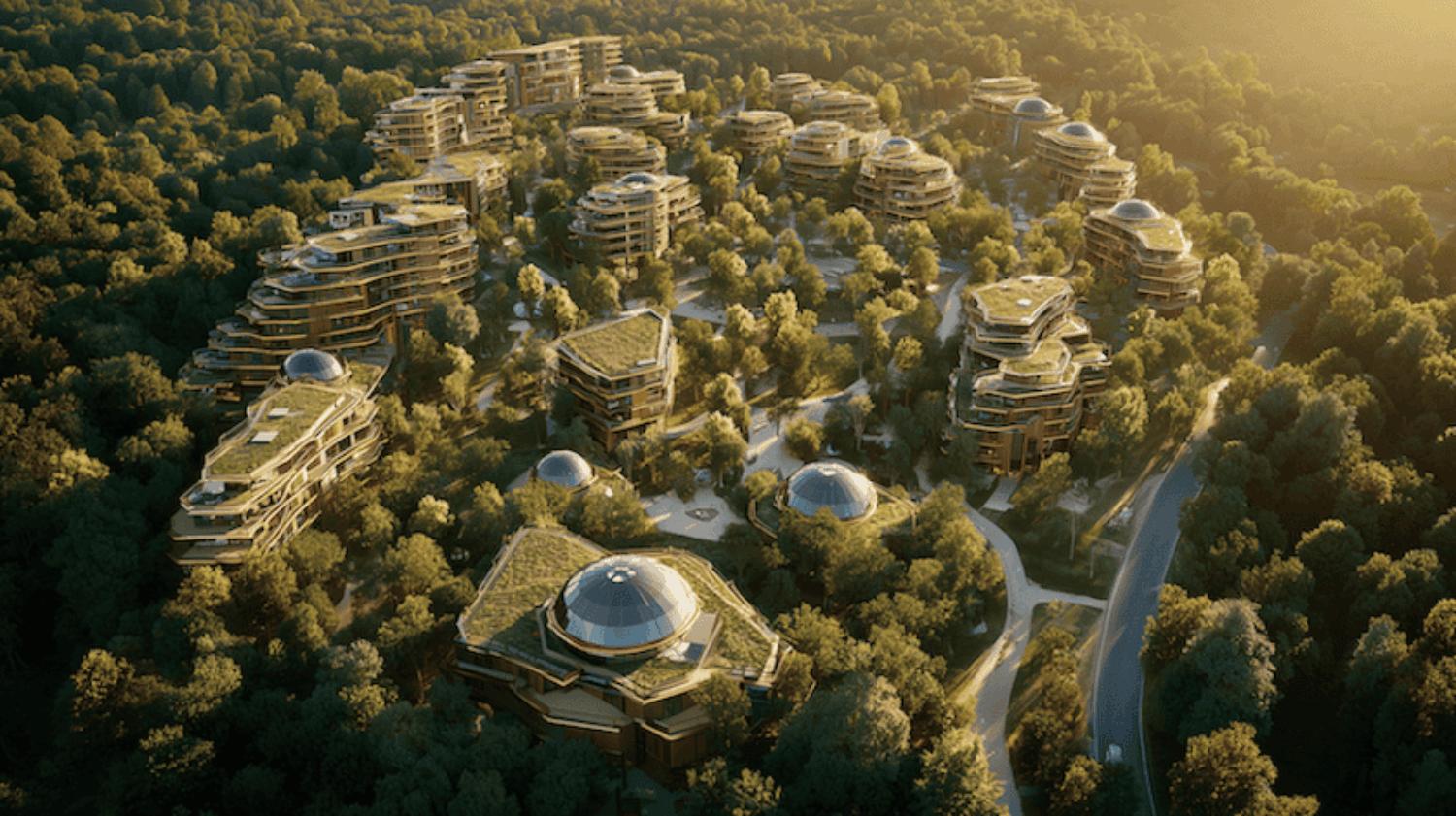
Wooden towers rise above the tree canopy, their facades alive with plants and shimmering solar cladding. The hum of traffic is gone. Instead, a quiet feet of autonomous robovans glides along dedicated lanes, linking neighbourhoods in smooth, predictable loops.
It’s a warm summer afternoon in 2037, and shoppers wander under covered walkways inspired by the porticoes of Bologna. Woodland weaves through housing districts, workplaces and civic squares. Streets smell of pine after rain. The skyline is timber and green rather than glass and glare.
Advertisement
Every building generates its own energy through integrated solar and micro wind systems, and collects and recycles water. Lighting, heating and ventilation respond automatically to occupancy and weather, guided by embedded IoT (Internet of Things) sensors. Temperature, humidity, air quality and movement are monitored constantly, optimising everything without residents lifting a finger.
Solutions every Saturday Uplift your inbox with our weekly newsletter. Positive News editors select the week’s top stories of progress, bringing you the essential briefing about what’s going right. Sign up
For the one million residents who have called Forest City 1 home since it opened in 2032, this is normal life. The young professionals priced out of the housing market and bored of identikit commuter estates found opportunities and something fresh in this trailblazing city. A Community Land Trust model ensured affordability, separating land ownership from property ownership, giving local residents control over how their community’s assets are managed. The 350,000 homes that have been built here softened prices nationally, pulling the average UK house price down by 4%.
New energy systems built around solar, small modular reactors and advanced district loops give households energy security. Waste, utilities and much of the transport infrastructure run below ground – all planned and buried before the first flagstone was laid. AI quietly manages water, traffic and energy flows, balancing them across this smart city.
Advertisement
This may sound like science fiction, but Forest City 1 is not a pipedream. It could be built in years not decades. The concept comes from Joe Reeve, founder of the non-partisan political movement Looking for Growth (LFG), and former journalist Shiv Malik. Their vision is anchored in a real site: avast plot on the Cambridgeshire-Suffolk border near Newmarket and Haverhill. The project is gathering support from investors, central government and even local residents.
Artist impression of what Forest City 1 might look like. Image: Forest City 1
Advertisement
Cambridge has the highest density of talent inEurope, and its proximity to London and to Stansted airport makes it an ideal location for the UK’s first new city in more than half a century. “We want a brand new city that is a place that people want to live in, not just commute to and from,” Reeve tells Positive News, from his home in London.
“Cambridge is criminally constrained from growing due to the green belt, and businesses are crying out for more lab space and places for workers to live. We chose this location because half the land is owned by three Lords and a Sheik.”
Private landowners without generational attachments, he explains, are more open to large-scale change. The population density is extremely low. Just 8,000 people live across the site’s 45,000 acres, much of it currently used as farmland.
Advertisement
The model sees new energy systems built around solar, small modular reactors and advanced district loops giving households energy security. Image: Forest City 1
Reeve describes the UK planning system as one that “sucks”. In his view, the current pattern produces ugly new build estates around beautiful villages, without the supporting infrastructure. “Trains and roads get busier but nothing gets upgraded,” he says.
That angers existing residents, disappoints new ones and harms wildlife and local ecology. Meanwhile, local businesses see little benefit because commuters continue to shop and socialise in London. And small-scale development does nothing meaningful for national affordability.
Advertisement
Forest City 1 allocates 12,000 acres – more than a quarter of its total site – to forest alone. Biodiversity would leap thanks to monocultural farmland being replaced with a natural environment that includes plans to create one of the largest redwood forests in the world. But above all, Reeve says, it would create a place where people genuinely want to live.
AI manages water, traffic and energy flows across the smart city
Momentum is real. Investors are circling, government interest is rising, and Reeve is bullish. “We want shovels in the ground before the end of this government,” he says.
But critics such as Jon Reeds, of the campaign group Smart Growth UK, argues that the location of it is wrong. “If they could find a large brownfield site close to major conurbations, so it had good public transport and could make use of existing infrastructure it could be a possibility,” he says. But building on agricultural land, when the UK only produces 60% of what it consumes domestically, is not the right answer, he suggests. Reeds explains that food and water security during times of climate change and global insecurity means we should be expanding our domestic food production land rather than building on it.
“It is fascinating that their proposal uses ‘green’ arguments for building on green land,” says Prof Tony Travers, an expert in local government at the London School of Economics. However, he says “the need for new homes is such that any idea is well worth considering”.
Advertisement
NEOM’s The Line has been put on hold indefinitely. Image: NEOM, The Line
New cities are seductive, but they bring their own complications. NEOM’s The Line in Saudi Arabia is the most extreme example: a 100-mile long, glass-fronted, car-free city initially intended to house 9m people sounded like something out of a sci-fi movie. Although construction began in 2021 promising a fully sustainable, fully digital, fully smart city, the project has been cancelled.
Advertisement
Building a hyper-dense megacity in one of the planet’s hottest, driest regions proved to be extraordinarily complex. Water must be brought in from the Red Sea through colossal desalination plants. Vertical farms must be powered to grow food where nothing grows naturally. The ventilation, cooling and waste systems required for millions of people pressed into a narrow corridor are vast. Now, with delays and budget overruns stacking up, the project has been shelved.
Smartly repurposing existing urban spaces
For most of the world, the future will not be built from scratch. It will emerge from transforming the cities we already inhabit. The shift is already underway.
On Rue de l’Arbalete in Paris, the first thing you notice is the quiet. Gone are the horns and fumes that once defined this narrow street. Now birdsong echoes between buildings, children cycle through planters and benches, and parents chat in dappled shade. A few years ago, this was a choked through-road. Today, it feels like a village square.
Advertisement
Paris has been a global leader in cleaning up and reclaiming its urban spaces. Not only has the Seine become swimmable again thanks to a major clean-up, but more than 300 ‘school streets’ have been pedestrianised and planted since 2020. The results – cleaner air, safer routes, more exercise for children – have landed well with residents. “School streets are a unique way to reclaim public space, and the health and environmental effects are well established,” Mathieu Chassignet, an engineer in sustainable mobility at the French environmental agency ADEME, tells Positive News.
School streets mean cleaner air, safer routes and more exercise for children
Voters agreed. In 2024 they backed the expansion of the model to another 500 streets. Other cities have taken note. “Paris shows how transformative it can be when cities prioritise youth,” says Sabina Sethi Unni, an urban planner at Open Plans, an advocacy group promoting the implementation of ‘school streets’ in New York.
Vienna now has around 140 parklets, low-cost communal areas turning parking bays into mini public squares. Stockholm doubled its summer pedestrian streets in 2018, opening space to cafes, public seating and art. Oslo and Copenhagen have pulled cars out of their centres too. Whilst initially business owners fear removing cars from city centres will dent profits the opposite proves to be true time and again. London, prompted by Covid, witnessed the transformation of nightlife area Soho into an open-air district. Although Soho didn’t remain pedestrianised it inspired many other parts of the capital to become low-traffic neighbourhoods– no longer prioritising cars – and the city’s famous Oxford Street will become fully pedestrianised after overwhelming public and business support.
Advertisement
More than 300 school streets have been created in Paris, removing cars, planting trees and reclaiming public spaces outside schools. Image: Joséphine Brueder/Ville de Paris
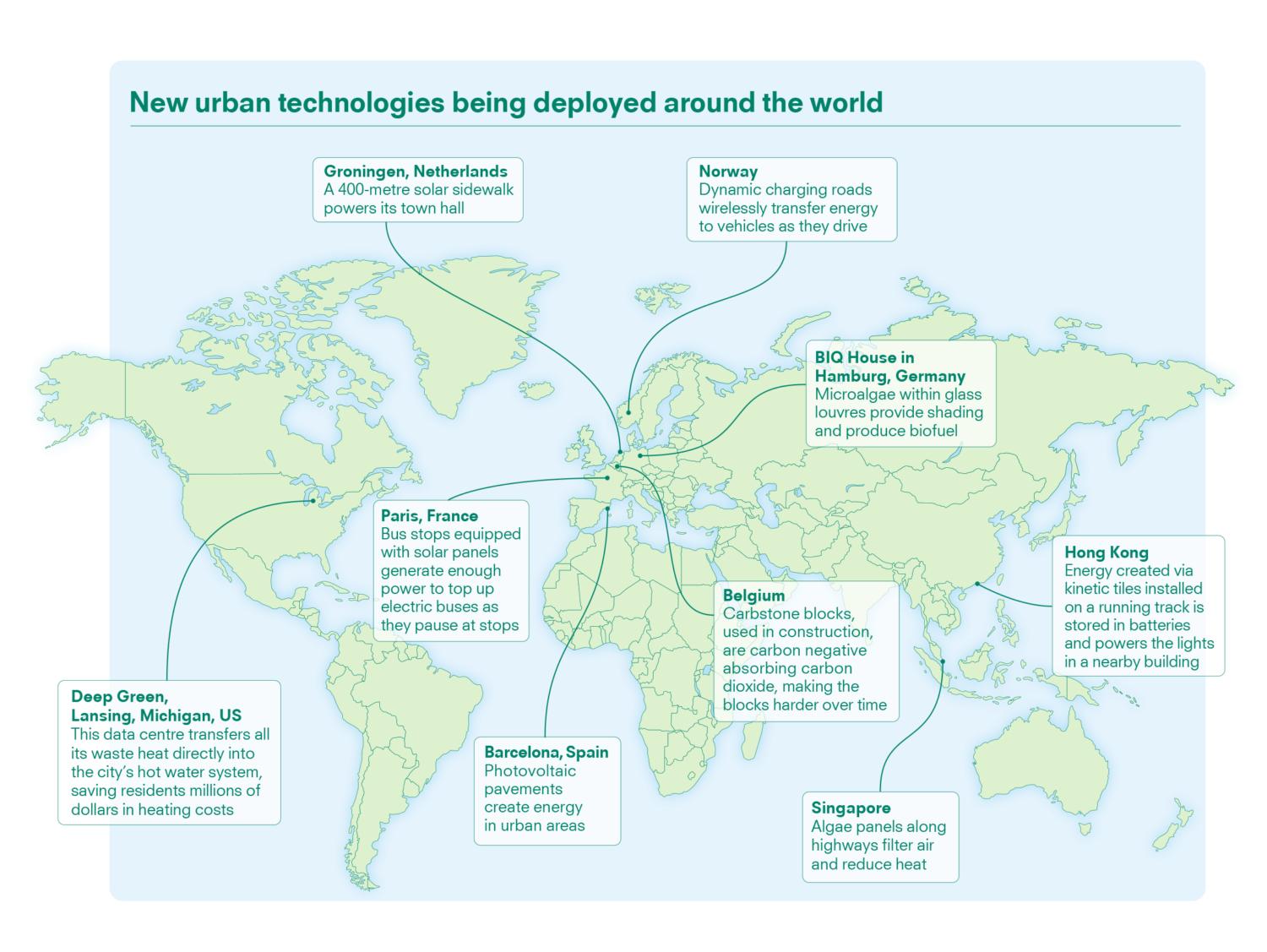
City evolution is not only about surface-level change. It is about the systems that keep everything running. Heat that once spewed wastefully from energy-hungry data centres is now captured and channelled into district heating. Public transport systems are electrifying at pace with dynamic charging roads, which wirelessly transfer energy to vehicles as they drive.
Solar-embedded infrastructure is moving from experiment to norm as the buildings of the future will not simply consume fewer resources they will generate and recycle them. Carbon-eating concrete and living-algae walls remove carbon from the air, while vertical forests and vertical farms clean air, regulate temperatures and, most importantly, produce much needed food.
Advertisement
Get spongy
None of this matters if cities cannot cope with water. By 2050, the number of properties in England exposed to fooding is projected to rise from 6.3m to 8m. Flash foods could increase by up to 66%. A climate-driven surge in short, violent rainstorms, combined with decades of paving over natural ground, has turned many cities into hard-shelled drainage machines. That model is failing. A new one is emerging in its place.
“Climate change brings us more extreme weather, and in this case, more extreme rain events within a very short period of time,” says Dutch architect Dirk van Peijpe of De Urbanisten. “We need to be ready for that kind of cloudburst that isn’t just increasing the capacity of our technical infrastructures, as so many cities have.”
Instead of pouring more money into deeper pipes and bigger sewers that will still be overwhelmed, van Peijpe argues for a shift in mindset. “Spend the same sums on creating a public space that can temporarily hold that rainwater,” he says. Because the water never mixes with sewage, it remains clean and usable.
Advertisement
It is combining water management in an urban environment with improving public spaces
“The rain water that we harvest from roofs and parking places and streets and squares around them… can be temporarily stored in this public space, and then, after 24 hours, the water square is emptied into the natural aquifers, in the soil infiltration, and you can actively use it again for other purposes,” he says.
Rotterdam has taken this thinking further than almost anywhere. The old port city, long accustomed to living with water rather than fighting it, has been getting spongier year by year. Across its neighbourhoods, hundreds of new water-absorbing parks, basins and nature-based defences have been completed or are underway. They look like everyday public spaces: skate bowls, sunken lawns, stepped amphitheatres, bright playgrounds. But they have a double life. In a cloudburst, they quietly swallow thousands of cubic metres of water. Some of the largest can hold around 1,700 cubic metres before slowly releasing it back into the ground, boosting groundwater rather than flushing it out to sea.
Van Peijpe has been central to this reimagining of the city. One of De Urbanisten’s flagship projects sits a short walk from the emerging Hofbogen park. “The water square is the first in the world that combined water storage with designing a fine public space,” he says. “It is combining water management in an urban environment with improving public spaces.”
In Rotterdam, the rain captured in the square is filtered, dropped into a closed aquifer system beneath the park, then used to feed vegetation and power fountains and streams. The city gets a public realm feature on dry days and a protective basin on wet ones.
Advertisement
That experimentation continues above street level. The disused Hofplein railway line is becoming an elevated linear park reminiscent of New York’s High Line. Here too, the water cycles through the network. Rain gathered on the roof level is cleaned and channelled back down into an aquifer to create a closed system for Hofbogen park. “The water system feeds the vegetation in the park with rainwater so we don’t need to waste drinking water for the plants,” van Peijpe says.
China – the pioneer in creating sponge cities– has rolled out projects nationwide, integrating wetlands, permeable pavements and green corridors. And New York is also taking note. The Department of Environmental Protection has begun installing seven miles of permeable pavement along curbs in the city’s Borough Park district, to allow water to seep rather than surge during storms.
Cities are evolving fast and are being forced to respond to the same pressures: climate, population, inequality, affordability and the need for healthier lives. It may well be that all new cities are built among forests with timber skylines and streets shaded by trees. Where food is grown vertically, and transport is silent and clean.
Advertisement
Whether it’s retrofitting the medieval cities of Europe with integrated smart tech or building a new city from the ground up, the future city is not a fantasy. It is already under construction. The only question is how quickly we choose to build it.
Additional reporting Alice Kantor and Gavin Haines
Illustration by Andrea Manzati
Advertisement
Be part of the solution
At Positive News, we’re not chasing clicks or profits for media moguls – we’re here to serve you and have a positive social impact. We can’t do this unless enough people like you choose to support our journalism.
Give once from just £1, or join 1,800+ others who contribute an average of £3 or more per month. Together, we can build a healthier form of media – one that focuses on solutions, progress and possibilities, and empowers people to create positive change.
Some days it can seem as if the whole of the tech world is hanging on the latest update to one graph.
The graph in question is made by a non-profit research institute called METR and it assesses the software development capacities of different AI models.
For many months now, this chart has been provoking excitement and unease in anyone who watches artificial intelligence because it shows a striking exponential trend – that is, a doubling in growth.
According to METR, or Model Evaluation and Threat Research, AI is getting twice as good at the startling rate of roughly every seven months.
Advertisement
The latest results turned the dial from feverish to panicked, because it showed the trend not just continuing, but actually speeding up.
METR tests AIs by assessing their ability to complete longer and longer human software tasks.
Many in tech compare the situation to the COVID pandemic because of the deceptive way doubling turns from apparently small increases to monstrous leaps.
“Nothing, nothing, nothing, everything,” was how a UK tech entrepreneur and AI researcher described the situation to me a few months ago, at a time when the METR chart was already looking fairly vertiginous (although, in retrospect, it feels as if we were barely approaching the foothills).
The progress since then makes many feel like we are rapidly approaching “everything”.
After the chart’s release, one METR researcher sent a note to his old college friends, which he posted on social media, saying: “I feel very confident now that it’s going to be totally insane and chaotic, like many orders of magnitude more chaotic than anything the world has experienced in our lifetimes.”
Advertisement
This isn’t even an unusual sentiment in tech right now. The chief executives of leading AI companies make similar statements all the time.
‘Ten times the impact of Industrial Revolution’
Even Demis Hassabis, the most measured of the AI leaders, regularly says that AI will have 10 times the impact of the Industrial Revolution, in a tenth of the timespan.
A widely-shared newsletter responding to the METR chart put it more simply: “When must I start kicking and screaming at you that it is… happening.”
Advertisement
But what exactly is “it”? On closer inspection, it becomes harder to tell.
For a start, look at what the METR chart actually measures.
The graph that shows why AI is going to be so huge
Advertisement
The details are technical, but roughly speaking it measures the length of a task that an AI can complete 50% of the time – meaning they fail as often as they succeed.
Some way off full automation
A business which turned its operations over to an AI which could complete a task half the time wouldn’t last very long.
Even 80% success – which METR also measures – wouldn’t be close enough for anything approaching full automation in a corporate environment.
Advertisement
Then there is the precise location of the dots on the chart, which even METR researchers admit they are unsure about.
Advertisement
Why you shouldn’t ask AI to generate your passwords
“We’re increasingly nervous about the measurements that we’re putting out there,” said Joel Becker, a member of METR’s technical staff, referring to the extremely large range of possible values – the confidence interval – on the group’s Claude Opus 4.6 evaluation.
“We don’t want to hide behind that. I think that’s real uncertainty.”
Advertisement
A key reason behind the uncertainty is that it is increasingly difficult for organisations like METR to find tasks that are hard enough to test the AI properly.
That, in itself, tells a story.
Nevertheless, with markets moving based on small changes in AI assessments, it is important to remember that a few small tweaks in METR’s tests might have changed the result in a meaningful way.
AI researchers are resigning – what does that mean?
Advertisement
The rate of AI progress might be speeding up, but it could just as easily be slowing down.
Becker, who said he had stopped paying into a pension since understanding the trend in AI development, told Sky News he believed that AI was not yet able to improve itself, triggering the science fiction fear of an explosion of AI capabilities.
Nevertheless, he said that “it probably is the case today that AI tools are meaningfully speeding up the degree to which AI professionals are able to make progress on building better and better AIs”, which is significant in its own right.
“I want to communicate that the situation is serious, that it’s fast-moving, that it appears not to be slowing down, that it is accelerating,” Becker told Sky News.
Advertisement
“It could be associated with extraordinarily positive possibilities… and on the other side, there may be extraordinary, dangerous things that might follow.”
How is AI affecting employment?
At present, employment statistics in the UK and the US show little sign of any impact from AI.
Adverts for software engineering jobs on the job search platform Indeed are actually rising.
Advertisement
Becker said he thought coders had a future, for a while at least.
“There’s all these AI professionals inside the labs, you know, they’re doing real work. I imagine they’ll keep doing not so similar work for the next year to maybe many more years than that.”
But he cautioned: “Economic statistics are referring to what happens some number of months ago and not what’s happening exactly today.
“And I think some of the extraordinary progress that we’ve seen, especially in software engineering, but also in other fields, from AIs becoming more capable, has happened only in the past few months.”
Advertisement
The speed of development in AI is so fast now it’s becoming extremely hard to measure.
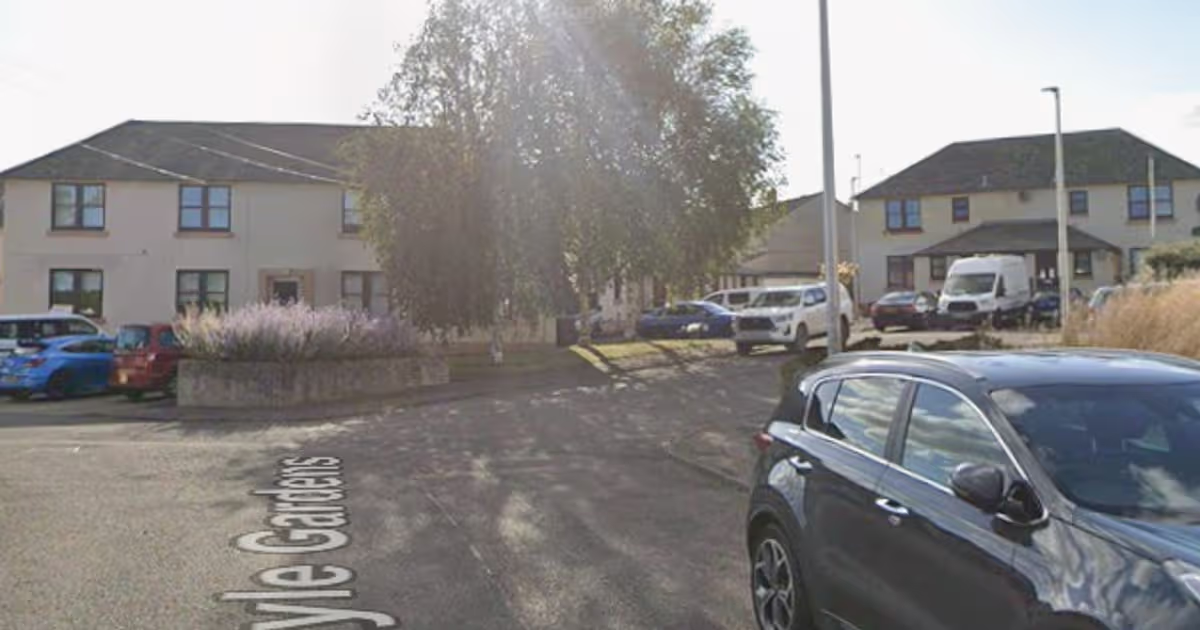
Emergency services were called to Carlyle Gardens in Haddington on Tuesday, February 10.
A man has appeared in court charged with murder following the death of a man in East Lothian.
Advertisement
Emergency services were called to Carlyle Gardens in Haddington on Tuesday February 10.
A 54-year-old man was found injured in a property and was taken to hospital. Sadly, he died on Wednesday, February 18.
On Tuesday, February 24, Police Scotland confirmed a 41-year-old man had been arrested and charged.
Mark Ingle appeared at Edinburgh Sheriff Court on Wednesday charged with murder.
Advertisement
He made no plea and was remanded in custody to appear again at the court within the next eight days.
Senior Investigating Officer Detective Inspector Ross Duthie, of the Major Investigation Team, previously said: “My thoughts are with the man’s family and friends at this difficult time. We have a dedicated team of officers carrying out extensive enquiries and a police presence remains in Haddington as part of this.”
Get more Daily Record exclusives by signing up for free to Google’s preferred sources. Click HERE.
She is also arrested on suspicion of assisting offenders, withholding information and preventing a lawful and decent burial
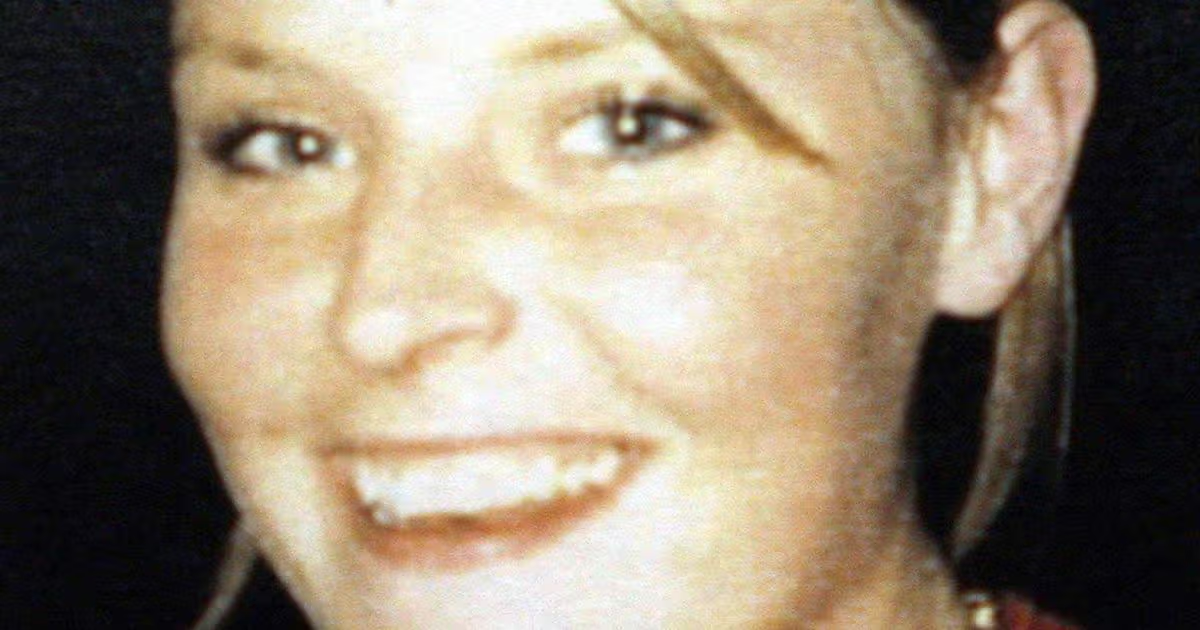
A woman has been arrested on suspicion of the murder of Lisa Dorrian.
Advertisement
Lisa Dorrian was last seen on Sunday, February 27, 2005, in Ballyhalbert, Co Down, at a party in Ballyhalbert Caravan Park, with police believing she was murdered that night or in the early hours of the morning.
A PSNI spokesperson said detectives from the Major Investigation Team, investigating the disappearance and murder the 25-year-old arrested a 40-year-old woman.
The woman was arrested in Bangor earlier today, Wednesday, February 25, on suspicion of murder, assisting offenders, withholding information and preventing a lawful and decent burial.
Advertisement
She remains in police custody at this time.
Detective Chief Inspector Kerrie Foreman said: “The arrest comes just days before the 21st anniversary of Lisa’s disappearance and murder.
“Lisa was last seen alive on the night of Sunday 27 February 2005 in Ballyhalbert in County Down, and we believe she was murdered that night or in the early hours of the following morning.
“We remain determined to provide justice for Lisa’s family, and I would appeal to anyone with information about her disappearance and murder to contact detectives on 101.”
Advertisement
Alternatively, information can be provided to the independent charity Crimestoppers, anonymously, on 0800 555 111 or online at www.crimestoppers-uk.org
The man was also staying in the country illegally.
A man who told police he was forced to sell drugs has been jailed. Abdulrahman Hassani, 24, contacted Cambridgeshire Police last month and claimed he “feared for his life” after being exploited by Albanian gangs and was being forced to sell drugs.
Advertisement
However, when Hassani was interviewed by officers, his story fell apart. He was unwilling to give officers access to his phone and unable to tell them who was exploiting him.
He would also often change the subject, and requested free accommodation from police. Hassani was arrested and officers discovered £750 in cash, 19 bags of cocaine and two mobile phones on him while at the police station. Messages on his phone also revealed evidence of drug dealing and no signs of exploitation.
Further investigations revealed Hassani was in the country illegally, having failed several bids for asylum under various names. Evidence also showed he had told the same story in another county.
After later pleading guilty to being concerned in the supply of cocaine, Hassani, of Jopling Way, Hauxton, near Cambridge, was sentenced to one year and eight months in prison at Peterborough Crown Court last Thursday (February 19).
Advertisement
Detective Constable Sam Andrews, who investigated, said: “Hassani clearly thought he could pull the wool over our eyes and secure himself some free accommodation, despite his clear intention and willingness to make money from dealing drugs.
“We take incidents of exploitation incredibly seriously and will always look to support and safeguard genuine victims and bring perpetrators to justice.
“In this instance, Hassani was not a victim, but a perpetrator, and the knowledge and expertise of officers left his story lacking and evidence mounting against him. I’m glad justice has been done, with more drugs and another dealer taken off our streets.”
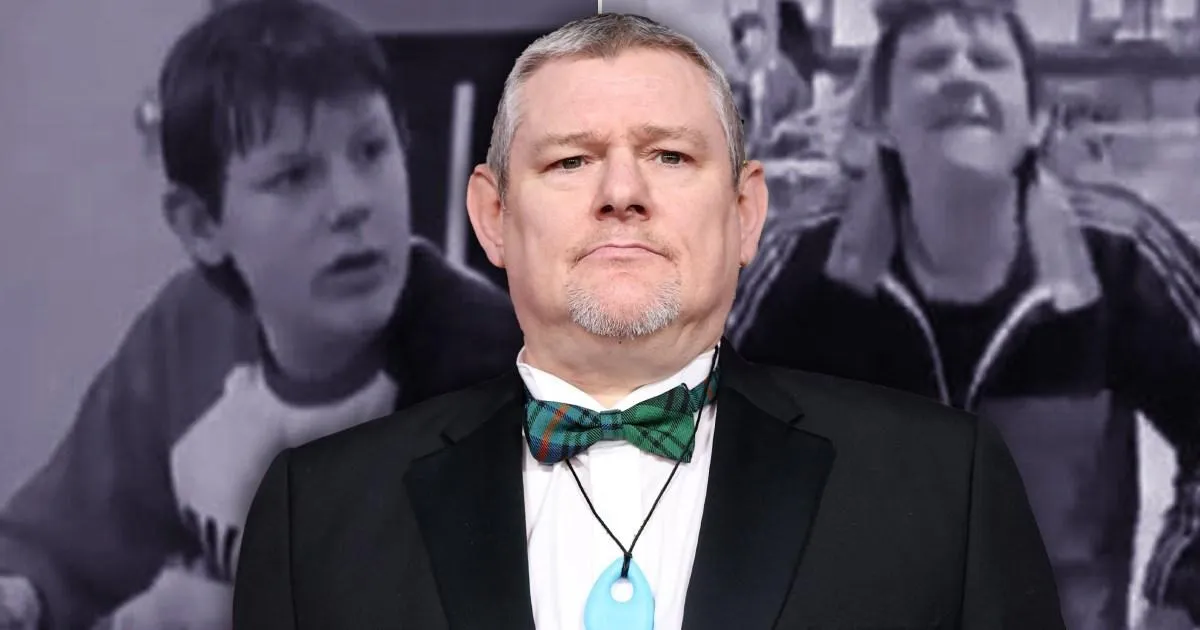
The 1989 documentary John’s Not Mad adds important context to John Davidson’s Bafta outburst (Picture: Getty / BBC)
John Davidson’s life was changed for the better when, at 16-years-old, the BBC first pointed a camera at him for the half-hour documentary John’s Not Mad, which explored his life living with severe Tourette’s syndrome in a small Scottish town.
More than three decades of relentless advocacy work later, at this year’s Baftas, the country looked again — and this time, the spotlight offered a harsh glare.
Davidson was attending the ceremony where biographical drama, I Swear, about his life and diagnosis had been nominated for six awards, including Best Actor, which Robert Aramayo won for his portrayal of Davidson.
During the evening, John experienced a series of tics, including coprolalia, echolalia and sudden physical movements. Among them was the N-word, shouted while Michael B. Jordan and Delroy Lindo were on stage presenting.
Advertisement
The BBC did not cut the language from the broadcast, despite the show being pre-recorded.
The fallout was immediate, with many arguing that the outburst reflects John’s beliefs, while others blamed the broadcaster for failing in their duty of care.
Advertisement
Davidson apologised the next day, saying he was ‘deeply mortified if anyone considers my involuntary tics to be intentional or to carry any meaning.’
He described a ‘wave of shame’ and stressed that the most offensive word he uttered was one he would ‘never use’ and would ‘completely condemn’ if he did not have Tourette’s. ‘It’s the last thing in the world I believe,’ he said, emphasising that his tics are ‘not an intention, not a choice and not a reflection of my values’.
Lindo later said he and Jordan ‘did what we had to do’ on stage, but added that he wished ‘someone from Bafta spoke to us afterward’.
Advertisement
Bafta has since issued an ‘unreserved apology’ for the ‘very offensive language’ broadcast, acknowledging the trauma such words carry and accepting responsibility for putting guests in a difficult position.
Robert Aramayo plays John Davidson in the biopic of his life, I Swear (Picture: Karwai Tang/WireImage)
There are no easy answers to an incident like this, and it goes without saying that no presenter should have to hear a racial slur directed from the auditorium and no viewer should be blindsided by it at home.
But there is also the question Davidson has posed himself: why, given his well-documented symptoms, was he seated near an active microphone, and why, in a pre-recorded ceremony, was the footage not edited? Could the ceremony have done more to ensure the comfort and safety of all involved?
These are all meaningful questions, but regardless of the conclusions, watching the 1989 documentary John’s Not Mad makes it clear that the Bafta’s moment is painfully cyclical.
Advertisement
When it aired in 1989 as part of the BBC’s Q.E.D. strand, it introduced viewers to a teenager from Galashiels whose Tourette’s syndrome was so severe he was often too frightened to leave the house.
The programme opened by noting that the condition had once been mistaken for a kind of madness. Spend time with John, it promised, and you would see that John was not mad.
What they saw was a boy in visible torment. ‘Sometimes it’s so bad I just want to kill myself,’ he says early in the film. ‘It’s like someone’s forcing it out of me.’
In one of the most distressing sequences, he presses his hands tightly over his mouth in an attempt to stop the obscenities escaping. The narrator explains that he ‘buttons his lip, almost literally, in an attempt to keep the offending words private instead of public’. The effort is exhausting to watch.
Advertisement
The documentary reveals what its like for John to live as a teenager with Tourettes (Picture: John’s Not Mad)
John apologised profusely for his outburst at the Baftas (Picture: Matt Baron/BEI/Shutterstock)
The film makes clear that while the jerks and shouts are clearly involuntary to passerby, the content of his vocal outbursts often appears linked to whatever is happening around him, in a way that makes people question if its truly out of John’s control.
As an adolescent, much of it is sexual; in one scene he struggles not to call his mother a slut. Later, he reacts to a teacher’s mistake with an insult he cannot hold back, and he is essentially unable to be around young girls without using distressing language.
But as the documentary makes clear, the taboo nature of the outbursts is symptomatic of the disorder, and is by no means a reflection on John’s character.
An eminent neurologist, Oliver Sacks, observes that Davidson’s manifestation of Tourette’s is particularly socially disruptive, which distresses John, thereby making the tics worse because the disorder feeds on sufferers’ agitation.
The documentary reveals the toll the condition took on John’s family (Picture: John’s Not Mad)
The film also documents the collateral damage of living around so much ignorance about the disorder. He is teased at school, locked in a cupboard by a teacher for disrupting class, and sometimes left to eat lunch alone.
‘Sometimes it feels like everyone hates you because you got this,’ he says quietly in one moment. ‘You feel like everyone hates you.’
Advertisement
The documentary reveals that John’s father refuses to sit at a dinner table with his son. His mother absorbs the strain as relatives suggest that maybe demonic possession is to blame.
In one truly haunting sequence, John’s mother, a stoic, soft-spoken woman who is a professional nurse, says of John’s disorder’s effect on her marriage: ‘It put a great strain on us to the point where we were ready to break up because of my husband’s attitude to it.
‘He tended to go and drink instead of deal with this. And I don’t blame him if I could have done something like that, you know, to escape it.’
In 1989, that hour of television transformed John’s life. According to a BBC News article from 2009, neighbours who had shunned him began congratulating him on his bravery, and he later said it felt as if he had proved he ‘wasn’t mad’ and ‘wasn’t a freak’, but someone with a medical condition. Overnight, he became a spokesman for Tourette’s – effectively its public face in the UK.
Advertisement
In recent years, however, he has expressed concern that the documentary also helped entrench a misconception: that Tourette’s is primarily about swearing, when coprolalia affects only a minority.
Advertisement
The Baftas controversy cruelly reinforces that anxiety. After decades spent widening understanding of a complex neurological disorder, he is again reduced to the most taboo word his brain could produce.
None of this erases the harm of racist or homophobic language, nor the right of presenters and guests to feel protected from hearing it. Bafta has issued an unreserved apology for the ‘very offensive language’ broadcast, but the damage is already done.
Indeed, it’s impossible not to wonder why the broadcaster felt it was necessary to edit the director of My Father’s Shadow, Akinola Davies Jr, acceptance speech, in which he said ‘Free Palestine,’ but not necessary to edit out the shouted slur.
But regardless of which failures led to this controversy, the Baftas incident is particularly tragic because it lands on old fault lines outlined in John’s Not Mad.
Advertisement
The shame John lives with every day is on full display in John’s Not Mad (Picture: BBC)
Davidson has explained that his tics are often triggered by what he sees or hears, meaning they can latch onto whatever is most charged in the environment, and explained to Variety that at the ceremony, he uttered ‘perhaps 10 different offensive words’.
The most taboo word in the room – the one carrying the greatest historical weight – is, neurologically, precisely the kind of word Tourette’s may seize upon.
For decades, Davidson has tried to separate himself from the content of his tics. ‘It’s like someone’s forcing it out of me,’ he said as a teenager. This week, he said his tics have ‘absolutely nothing to do with what I think, feel or believe’. The throughline is consistent.
What has changed is the scale of amplification. In 1989, the BBC used a camera to help Britain see that Tourette’s was a neurological disorder, not a moral failing. In 2026, the BBC broadcast his most offensive tic, unedited, to millions – effectively reigniting the very conflation he has spent his life resisting: that the word equals the man.
The tragedy is not only that presenters were placed in an unacceptable position, nor only that viewers heard language that should have been caught.
Advertisement
It is that a man who once held his own mouth shut in desperation is, once again, defined by words he has spent a lifetime insisting are not who he is.
Got a story?
If you’ve got a celebrity story, video or pictures get in touch with the Metro.co.uk entertainment team by emailing us celebtips@metro.co.uk, calling 020 3615 2145 or by visiting our Submit Stuff page – we’d love to hear from you.
All that stomping around made a trip to the hotel’s luxurious spa, with its 13-metre swimming pool, steam room and sauna (and a well-equipped gym saved for another time), all the more rewarding. Designed to offer opulence, it has a gold ceiling, beautiful lighting and an hour down there made me feel refreshed and ready to socialise. After drinks at the hotel’s incredibly chic bar – which locals evidently come to, dressed up to the nines, dinner was served beneath a striking glass ceiling in the hotel’s all day dining Atelier 7 Brasserie. The menu focuses on seafood, but weaves in Asian and Austrian influences — I had oysters, followed by steak and chips – before a waiter wheels over a dessert trolley with the most incredible-looking (and tasting) delicately handmade puddings. Afterwards, I fell into a crisply made king-size bed and, for the first time in weeks, slept nine silent hours.
It might have been more than a decade since the last episode of Scrubs aired, but fans are as excited to watch the new reboot which got announced last year.
Advertisement
To make matters even better, UK viewers can binge every single episode ahead of its release on Disney Plus tomorrow..
Given it’s been 25 years since the first series aired, you’d be forgiven for forgetting how the series started and then developed.
Advertisement
Thankfully, viewers in the UK can watch the show that premiered on NBC in 2001 for free, after all nine series were added to the streamer ITVX.
Most of the iconic cast look set to return for the revival (Picture: ITV)
Fans spotted a clue which they think means the janitor isn’t coming back (Picture: Danny Feld/Disney General Entertainment Content via Getty Images)
Together, they start as medical interns at the hospital. Through the years we see them develop personally and professionally against a backdrop of hilarious plotlines and emotionally charged moments.
The ninth season still features the iconic cast, but the focus shifts to med school and its students in a move which wasn’t popular with the show’s following.
In a Reddit discussion titled ‘Why is season nine so hated?’, users posted their grievances.
Sal101 said: ‘Scrubs had a fantastic ending, better by far than every sitcom I’ve ever watched.
Advertisement
‘But they reversed so much character development and progression with the majority of the OG cast.’
Viewers like Kakashi168 admitted it would’ve been better if it was a spin-off. He said: ‘There’s not that big of a connection to the original show.’
The show ran from 2001 – 2010 (Picture: Paul Drinkwater/NBCU Photo Bank/NBCUniversal via Getty Images)
Elliot, J.D. and Turk all began as interns on the show (Picture: NBC/Getty Images)
Metfan722 defended it in part: ‘It’s definitely not as bad as people say but it’s not the Scrubs we had all known and loved for 8 seasons up to that point.’
Although the revival series will feature new talent, Scrubs veterans Aseem Batra and Tim Hobert will serve as showrunners and executive producers.
Top five American sitcoms to binge after Scrubs
If you’re searching for more comedy with a similar feel to Scrubs, we’ve got you covered with these five shows…
Advertisement
St. Denis Medical, BBC iPlayer
Shrinking, Apple TV
Community, NOW
Brooklyn 99, Netflix
Arrested Development, Netflix and Disney+
When is the new season of Scrubs out in the UK?
The highly anticipated new season of Scrubs will be available to watch for viewers in the UK with a Disney+ subscription from February 26.
It will air via ABC on February 25 in the US, before being added to the streamer the following day.
Chalke, who plays Dr Elliot Reid, told the Independent before the show’s release: ‘We were new and we were scared as interns and scared in this new element of medicine and insecure and unsure of what we were doing.
‘So to get to come back, we really have grown and really become great leaders and great teachers.’
Advertisement
Meanwhile, Braff, noted that the aim of the new reboot was ‘to ground it again and start back with the based-in-reality thing that we had in the first couple years of the show’.
Discussing the cast, Ted Lasso creator Lawrence also added: ‘They’re still 12 years old every time they’re together, but they’re also still both leading very big, responsible adult lives. It just felt like it was time to revisit the old gang.’
This article was originally published on February 13, 2026.
The revival of Scrubs will be available to watch from February 26 on Disney+.
Advertisement
Got a story?
If you’ve got a celebrity story, video or pictures get in touch with the Metro.co.uk entertainment team by emailing us celebtips@metro.co.uk, calling 020 3615 2145 or by visiting our Submit Stuff page – we’d love to hear from you.
At a glance, the parties of Nigel Farage and Zack Polanski seem polar opposites and have little in common.
The Greens are anti-capitalist, anti-war and would ramp up the drive to net zero if they had the chance.
Reform are pro-capitalist, pro-Trump and hostile to action to reduce the UK’s carbon footprint.
But the Greens and Reform have more in common than their supporters would ever dare admit, with both proposing simple solutions to complex problems.
Farage ultimately blames immigration for society’s problems, scapegoating minorities for everything from the housing crisis to pressures on public services.
Advertisement
Polanski turns his guns on “billionaires” – a tiny group of powerful people apparently causing havoc around the globe.
The real problems facing democracies – ageing populations, low productivity – barely get a look in.
Their divisive rhetoric – uploaded and shared on social media – fuels the dissatisfaction many feel with twenty first century politics.
It is a recipe for Labour getting hammered in 2029 and falling to below 20pc of the vote.
Advertisement
The shift to the Greens and Reform also has huge implications for the Holyrood election.
An opinion poll on Tuesday showed the SNP – after nineteen years in power – on the cusp of securing an outright majority.
This is in spite of the Nationalist vote share falling markedly compared to the 2021 election.
Reform would be in second place on twenty five seats, with Labour a distant third and returning only fifteen MSPs.
Advertisement
For Labour to stand any chance in May, they need to make inroads into the dozens of first-past-the-post constituencies held by the SNP.
With Reform running rampant, Farage’s party is fracturing the pro-UK vote and handing these seats to the SNP by default.
Reform and Green support on the regional lists – where Labour are strongest – is another blow for Anas Sarwar, a double whammy that guarantees electoral failure.
Labour has to take a large amount of responsibility for the rise of Reform and the Greens.
Advertisement
Despite winning by a landslide in 2024, their vote was soft and voters gave them a conditional mandate.
It was incumbent on Starmer to start well, reflect the public’s desire for change and produce a positive vision of the future.
He instead backed a series of politically disastrous cuts and warned the public of tougher times ahead – the last thing voters wanted to hear.
Gorton and Denton is a glimpse of a bleak future and parties on the centre-left need to wake up.
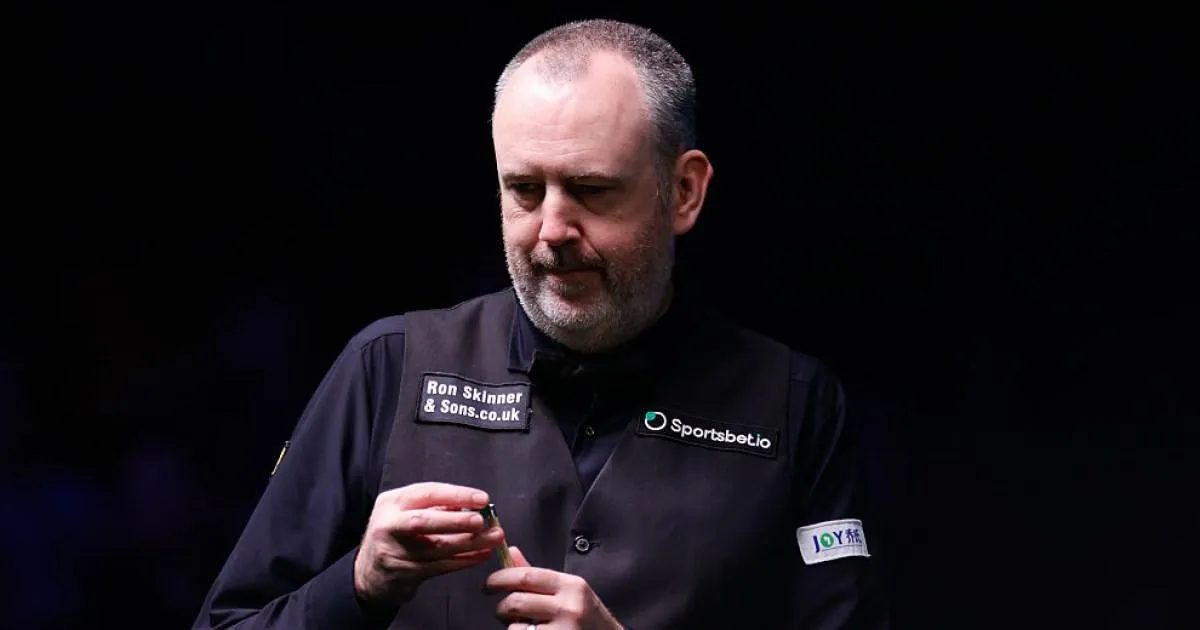
Mark Williams is bidding to break his own record as oldest ranking event winner Getty Images)
Mark Williams was the last Welshman to win the Welsh Open and he is hoping to be the next, 27 years on.
All the way back in 1999, Williams beat Stephen Hendry in the final in Cardiff to win the Welsh Open for a second time.
It was an incredible run to the title from Williams, which also dates the triumph, as he beat Neal Foulds, Chris Small, Alan McManus, Steve Davis and Ronnie O’Sullivan before downing Hendry 9-8 in the final.
Hendry won a rematch in the 2003 final, but that was the last time a Welshman made it to the final of the Welsh Open.
Advertisement
Now 50 years old, Williams is still going strong and is into the last 16 of the tournament after a 4-1 win over Martin O’Donnell on Wednesday afternoon.
He would love to see a Welsh triumph again, whether it is him or either of the other remaining local heroes: Jackson Page, Jak Jones.
‘I’m still in, last 32 is it? Oh last 16! First I’ve done for a while,’ a briefly confused Williams told BBC Wales. ‘I’m potting a couple.
Williams in 1999, a year he also won the UK Championship (Picture:: Getty Images)
‘It’s a great place to play and hopefully, if it’s not me, then one of the Welsh boys can get to the final because that’s all we’re missing in this tournament. A Welshman picking the trophy up.’
Ranked number four in the world and with the Xi’an Grand Prix to his name this season, Williams is in contention for the title in Llandudno this week.
Advertisement
‘Possibly,’ he said of his chances. ‘I never would have thought I would have won in Xi’an, in China, that was a tough one to win.
Williams became the oldest ranking event winner by beating Shaun Murphy at the Xi’an Grand Prix in October (Picture: Getty Images)
‘If I can get on a run, I can start playing some good stuff. I either seem to go on a little bit of a run or lose first round and go back on the golf course.’
On his near three decade wait for another Welsh Open title, he said: ‘I can’t believe it, it’s so long ago. I had a bit of hair then, now I’m old and going blind.’
Williams was close to getting lens replacement surgery in the summer as his eyesight has been deteriorating in recent years, but after a run to the World Championship final he put the operation off.
Advertisement
With results and performances still good, he continues to kick the can down the road on the eye op.
‘They’re the same. They’re getting worse,’ he said at the recent Players Championship. ‘They’re getting more blurry every year, but I’m still in the same position. While I’m still in the top of the rankings, what do I do? Do I take the chance and have them done or not? I don’t know.
‘They keep phoning me every other week to say, you know, I’m top of the priority list to get it done. If I phone them and say, can I get in? I probably can get it done within a week.’
The eyes will be tested against Barry Hawkins in the last 16 on Thursday atVenue Cymru, which Williams has hailed as one of the best places to play on tour.
Advertisement
‘The crowd is fantastic, great arena,’ he said. ‘It’s one of the best venues we play in and it’s always supported. Even 10 o’clock in the morning there’s 400-500 people in here, you don’t get that in many comps.’
Poppins’ advice is never to buy a pram or pushchair without trying it out first in-store: “Mamas and Papas or John Lewis have an incredible selection of all the leading brands and styles,” she says.
So, what should new parents look for when hands-on testing a new pram or stroller?
“Consider how easy it is to fold down, for putting in the back of the car or storing at home,” she says. “Compact options are great for lifting in and out of a vehicle, but they can feel harder to push, especially on your wrists and when navigating rough terrain. There is also the risk of the system tipping if you hang a bag or some shopping onto the handlebars. If you know you will be carrying more gear, I would opt for something much sturdier with bigger wheels and a larger base to attachment ratio.”
Advertisement
Taking all these factors into account, my fellow Telegraph Recommended testers and I, all new parents, trialled the latest models. This involved assessing how easy the units were to assemble and switch between formats, how well they folded away for storage and how they performed in different settings: on pavement, grass, gravel and up and down stairs.