Netflix’s true crime series follows the actions of a cult’s new self-proclaimed “prophet”
Hayley Anderson Screen Time TV Reporter
09:15, 08 Apr 2026
Trust Me: The False Prophet arrived on Netflix today, Wednesday, April 8, a four-part series made possible by cult researcher Christine Marie and her husband and videographer Tolga Katas. The pair relocated to the Utah-Arizona border community, also known as Short Creek.
This was following the 2011 life imprisonment of Warren Jeffs, the former FLDS (Fundamentalist Church of Jesus Christ of Latter-Day Saints) leader, who remains behind bars for child sex abuse. What they soon uncovered was that Samuel Bateman had emerged as the leader of a breakaway faction of the FLDS, declaring himself the new radical “prophet” in 2019.
Advertisement
Christine and Tolga managed to earn Bateman’s trust and began capturing his deeply troubling behaviour on camera, documenting abuse involving underage “spiritual wives”. After watching the documentary, viewers want to know where Bateman is now.
Where is Samuel Bateman now?
Samuel Rappylee Bateman was handed a 50-year prison sentence in 2024 after pleading guilty to conspiracy to transport a minor for sex and conspiracy to commit kidnapping.
Federal investigators revealed that Bateman had more than 20 “spiritual wives”, including minors, some of them as young as nine-years-old.
Advertisement
In an FBI affidavit obtained by People, he coerced girls into sexual activities with him as well as other men. The BBC reported that the FBI disclosed how Bateman claimed it was “God’s will” for him to engage in sexual acts with his “wives”.
Authorities had previously removed nine children from his home into protective custody, but eight of them subsequently vanished from foster care.
They were later discovered hundreds of miles away in Washington state in a vehicle driven by one of his adult “wives”, with Bateman admitting his involvement in the abduction.
During sentencing, US District Judge Susan Brnovich told him: “The amount of harm you caused is nothing short of unmeasurable.”
Having gathered evidence of Bateman’s abuse, Christine handed her footage over to law enforcement, which ultimately led to his imprisonment.”
Despite achieving justice, Christine did voice some misgivings about infiltrating the group in the Netflix trailer, sharing: “I was so trusted.
“I wanted to help them before they found out I was a mole. I’m not betraying them – I’m helping them, right?”
Advertisement
Trust Me: The False Prophet is available to watch on Netflix.
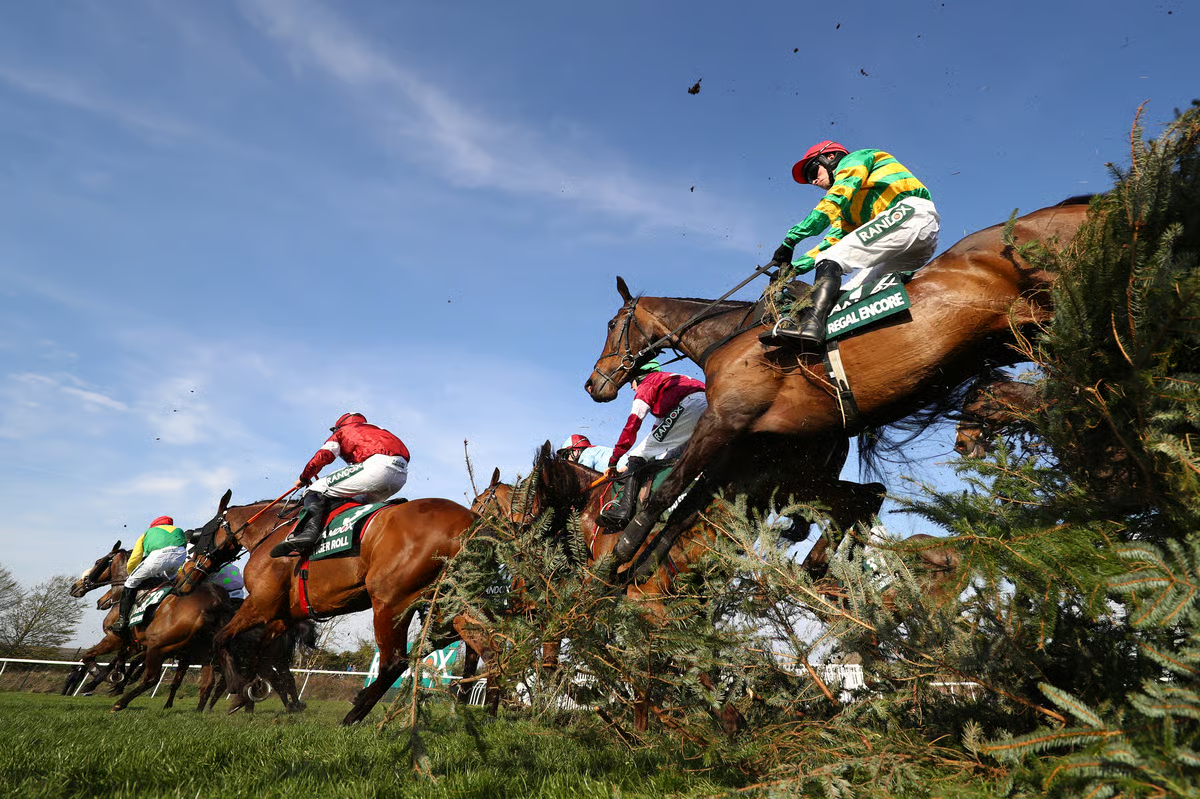
The pinnacle of the National Hunt racing season is upon us, with the Grand National taking place at Aintree.
Only three weeks on from the Cheltenham Festival comes another highlight of the British sporting calendar as Liverpool plays host to the world’s most famous steeplechase.
The three-day meeting is headlined by the feature race, which will include I Am Maximus and Nick Rockett, the past two winners.
Last year’s winner Nick Rockett is attempting to become the first back-to-back winner since Tiger Roll in 2019.
Advertisement
The action at Aintree begins on Thursday, followed by Ladies’ Day on Friday and then the showpiece on Saturday.
Here’s everything you need to know…
When is the Grand National 2026?
The 2026 Grand National meeting runs from Thursday, April 9, to Saturday, April 11, with the Grand National steepchase itself taking place at 4pm BST on the third day.
Advertisement
A new, earlier time for the feature race of the meeting was introduced in 2024, bringing the race forward by 75 minutes, and remains in place for the 2026 edition.
As ever, the famous Aintree Racecourse near Liverpool will host the race.
Nick Rockett won last year’s race
Peter Byrne/PA Wire
Advertisement
How to watch the Grand National 2026?
TV channel: In the UK, the Grand National meeting is being shown live and free-to-air on ITV1, with coverage starting at 1.30pm on Thursday and Friday and 12.45pm on Saturday.
ITV will broadcast every race bar the final of the day, with subscription channel Racing TV the only place to watch all the action across the three days.
Coverage of the National itself is from 3:15pm on Saturday, with the race getting underway at 4pm.
Advertisement
Live stream: The race will also be available to watch live and for free online via the ITVX app and website.
Live blog: You can follow every race live from Grand National Day at Aintree with Standard Sport’s live blog.
Grand National 2026 weather forecast
The UK has been blessed with sunshine of late, but there is expected to be showers across all three days of the meeting.
Advertisement
Hitting a high of just 12C, expect overcast conditions with occasional sun at Aintree.
Grand National 2026 prize money
The total prize fund for the race is £1 million, the highest amount of money that any race over obstacles is contested for, and it breaks down as follows:
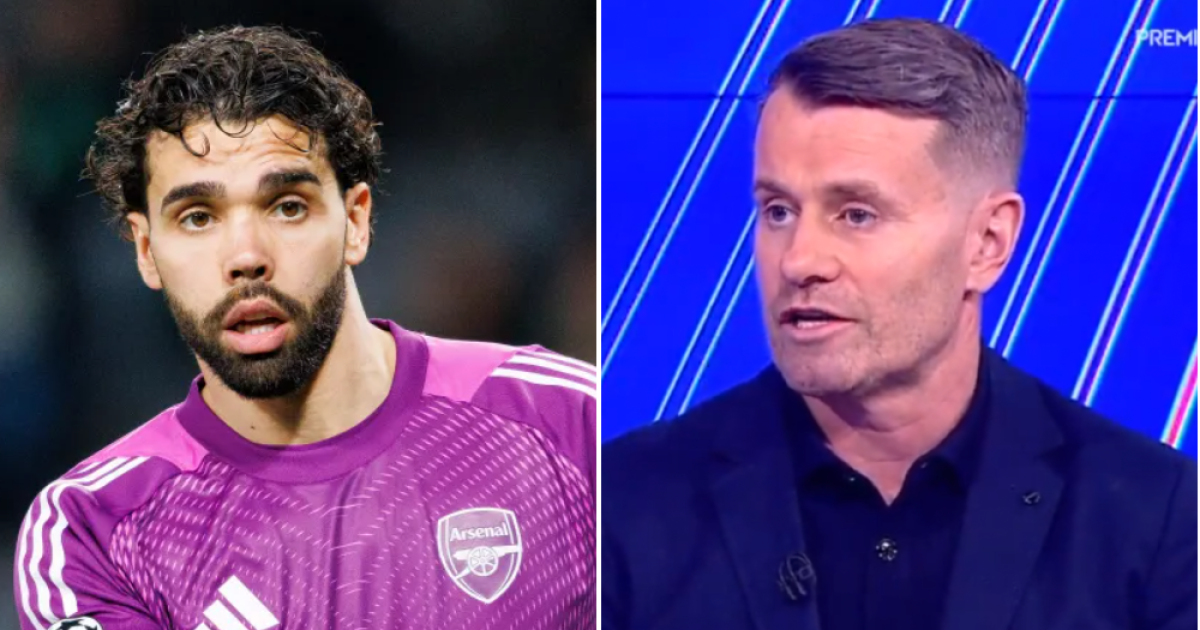
David Raya produced a fine goalkeeping display in Arsenal’s win over Sporting (Picture: Getty)
Shay Given was quick to shut down criticism of David Raya following Arsenal’s victory over Sporting, with his fellow pundit claiming Caoimhin Kelleher was the superior goalkeeper of the two.
Raya is widely considered to have been the standout goalkeeper in the Premier League this season, producing a string of decisive performances to help the Gunners take a nine-point lead at the top.
The Gunners have shipped just 22 goals in the English top flight and the Spain international has been central to the side’s defensive rigidity, playing every single minute with only seven matches remaining of the campaign.
Mikel Arteta decided to rest Raya for two major setbacks in the Carabao Cup and FA Cup prior to Arsenal’s trip to Lisbon – and his absence was felt as the north Londoners’ quadruple hopes went up in smoke.
Advertisement
But the 30-year-old was restored to Arteta’s starting XI for Arsenal’s Champions League quarter-final first leg on Tuesday night and produced three important saves to keep the scoreline level before Kai Havertz’s breakthrough in the first minute of stoppage time.
‘It’s unbelievable,’ the German told Amazon Prime when asked about Raya’s showing between the sticks.
Raya is ‘the best in the world’, according to Arsenal forward Havertz (Picture: Getty)
Havertz came on and scored the winner for the Gunners in Lisbon (Picture: Getty)
‘I think still underestimated in the world of football but, for me, the last two seasons, the best ‘keeper in the world.
‘He’s outstanding, he’s saved us so many times and we’re very glad to have him.’
Advertisement
Arteta was also glowing with his praise, admitting Arsenal were ‘very lucky’ to have such an ‘extraordinary’ goalkeeper in their ranks.
‘He had two moments where he made two big saves. And that’s the Champions League, the Champions League is always decided in the boxes and because there’s so much quality here,’ Arteta said.
‘At the moment he’s phenomenal and extraordinary since he joined us. We are very lucky to have him.’
However, it appears Raya is still yet to completely win over all fans and pundits, with Kenny Cunningham picking out what he felt was a ‘small weakness’ in the Spaniard’s game on Premier Sports Ireland.
The ex-Republic of Ireland, Wimbledon and Birmingham defender raised eyebrows with his bold assertion that Brentford’s Kelleher was the better goalkeeper.
Advertisement
‘In terms shot-stopping: very good, athletic. Does he make a fair number of good quality saves? Yeah, absolutely,’ Cunninham said shortly after Arsenal’s 1-0 win.
‘Decent with the ball at his feet, yeah. I think Caoimhin Kelleher is better in terms of his ball distribution.
Kelleher is a better all-round ‘keeper than Raya, says Cunningham (Picture: Getty)
‘In terms of coming off his line and dominating the box, the six-yard box and beyond, and really imposing himself, I don’t think he does it often enough.
‘I think he goes into his shell a little bit when the opposition put players into the six-yard box and I don’t think he dominates. I think that’s the small weakness in his game.
‘That’s why I don’t put him up with the likes of [Gianluigi] Donnarumma, [Thibaut] Courtois… Alisson we know is on the slide a little bit, to an extent.
Advertisement
‘Caoimhin Kelleher, for me, is the better goalkeeper. You need to tell me what attribute in his [Raya] game is better than Caoimhin Kelleher in terms of his shot-stopping, his distribution and his ability to command his box.
‘Where does he get the advantage on Caoimhin Kelleher? Those three facets.’
Cunningham was joined in the studio by former Newcastle goalkeeper Given (Picture: Premier Sports Ireland)
Shay Given, sat alongside Cunningham in the Premier Sports Ireland studio, made it clear he disagreed with his fellow countryman’s remarks about Raya.
‘I’m not sure you can compare Caoimhin Kelleher and David Raya. I’m here to talk about David Raya because he played tonight,’ the former Newcastle goalkeeper responded.
‘I said this before the game and I’m not saying I’m right and he’s [Cunningham] is wrong, I’m just saying the performance tonight was absolutely brilliant.
Advertisement
‘We talk about the save in the first half…’
Given hit back at Cunningham’s ‘harsh’ criticism of Raya (Picture: Premier Sports Ireland)
Before Given could finish his sentence, Cunningham cut in: ‘One save, one very good save in the first half! That’s it. That [the praise from Kai Havertz] is his team-mate there, blowing smoke.’
But according to Given, Raya’s contribution this season is undoubtedly one of the key factors in Arsenal finding themselves in such a strong position in both the Premier League and Champions League.
‘You speak to people who know about goalkeepers and ask them… I think he’s one of the reasons they’re nine points clear at the top of the Premier League,’ Given explained.
‘One of the reasons why they’re probably one foot in the semi-finals of the Champions League is because of David Raya as well.
Advertisement
‘There are big games coming up around the corner over the next seven weeks and he’ll play a huge part in what they’re going to succeed with.’
Raya went home with the Player Of The Match award (Picture: Getty)
On Cunningham’s claims that dominating the box was a ‘weakness’ for Raya, Given added: ‘I disagree with that as well. He’s one of the springiest, he picks crosses up from lots of stuff that other goalkeepers don’t come for.
‘I disagree with that totally. There was one at the start of the second half, he was on the halfway line, out for a header.
‘He’s a sweeper ‘keeper, he’s on the front foot and he reads the game so well. It’s not just about shot-stopping, it’s about decision-making, setting the tone of the game.
‘As a goalkeeper, he does everything.’
Advertisement
Cunningham was capped 72 times by the Republic of Ireland (Picture: Getty)
Cunningham was not done there, though, insisting Raya remained a level below the likes of Donnarumma and Courtois due to a lack of ‘aura’ and ‘personality’.
‘I think it is just in terms of the confidence. I think it’s an aura, a personality, a presence,’ he went on.
‘It’s difficult to put your finger on it. Hopefully I’m giving you an understanding of what I’m talking about.
‘I’m talking particularly in terms of crosses coming into the box, corner kicks, long throw-ins, it’s such an important part of the game.
‘Those other goalkeepers that you’re speaking about [Donnarumma and Courtois], for me, are ones who take responsibility.’
Advertisement
But again, Given hit back, pointing out how Donnarumma was a poor example to use based on some of the Italian’s performances for Manchester City this season.
‘I think Donnarumma has struggled this year, at times, with balls into the box and crosses into the box,’ he said.
‘He’s getting involved in fighting people and punching at stuff, flapping at things when balls are in the box and the physicality of it so I don’t think that’s a good example.
‘I think Donnarumma is a brilliant goalkeeper, I just think you’re being extremely harsh [on Raya], to say the least.’
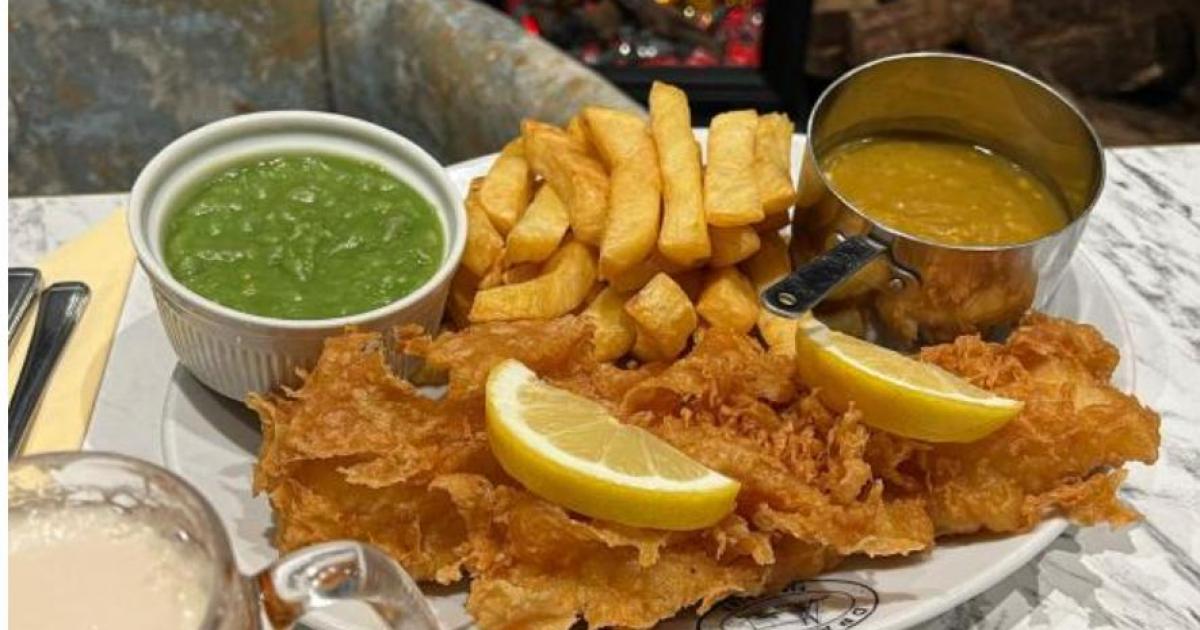
Drake’s Fisheries at 3-5 Silver Street, Knaresborough, re-opened on Thursday with a new pink-themed interior.
The popular restaurant and take-away closed last September, with the former manager Jaime Wilson, blaming rising costs and rents. He had run the business for 25 years.
Now, it will be run by Karley Thompson-Drake, along with sister Sara Drake.
The fish and chip shop is well-regarded, with it receiving 4.3 stars out of five on Tripadvisor, based on 1,322 reviews, ranking it 8th out of 60 restaurants in Knaresborough.
Google awards Drakes in Knaresborough 4.1 stars out of five, based on 828 Google reviews.
Customers have welcomed the re-opening.
Advertisement
One posted on Drake’s Knaresborough Facebook page: “Just had fish from the newly opened Drakes. Really good.”
Drakes has other restaurants and take-aways in York and Leeds.
Last September, the Drakes branch in Ripon also closed and the property has since been put on the market.
A spokesperson for the broadcaster said on Wednesday morning: “Having carefully considered the circumstances, we’ve taken the decision not to air the final episode of the 2026 series of The Great Celebrity Bake Off for Stand Up to Cancer, featuring Scott Mills.
“Acknowledging the seriousness of the accusations that have been made against Scott we don’t believe it would be appropriate to air the episode at this time.”
They added that an “alternative episode” of Celebrity Bake Off would “go out in its place”.
Advertisement
Last week, the BBC announced that the former Radio 2 breakfast show host had been fired from the broadcast, effective immediately.
A BBC rep later said: “We also recognise there’s been much speculation in the media and online since Monday. We hope people understand that there is a limit to what we can say because we have to be mindful of the rights of those involved.
“What we can confirm is that in recent weeks, we obtained new information relating to Scott and we spoke directly with him. As a result, the BBC acted decisively in line with our culture and values and terminated his contracts on Friday 27 March.
Advertisement
“Separately, we can confirm the BBC was made aware in 2017 of the existence of an ongoing police investigation, which was subsequently closed in 2019 with no arrest or charge being made. We are doing more work to understand the detail of what was known by the BBC at this time.”
The BBC had previously apologised publicly for failing to “follow up on” an additional allegation about Mills that was raised by a freelance journalist in 2025.
Mills said last week, in a statement issued by his team to HuffPost UK: “The recent announcement that I am no longer contracted to the BBC has led to the publication of rumour and speculation. In response to this, the Metropolitan Police has made a statement, which I confirm relates to me.
“An allegation was made against me in 2016 of a historic sexual offence which was the subject of a police investigation in which I fully cooperated and responded to in 2018. As the police have stated, a file of evidence was submitted to the Crown Prosecution Service, which determined that the evidential threshold had not been met to bring charges.
Advertisement
“Since the investigation related to an allegation that dates back nearly 30 years and the police investigation was closed seven years ago, I hope that the public and the media will understand and respect my wish not to make any further public comment on this matter.”
Bolton Museum’s Egypt Study Day, dedicated to ‘Animals in Ancient Egyptian Religion,’ was fully booked within three days of tickets being released.
In response to popular demand, organisers have announced a second date for the event, which will now also take place on Saturday, June 6.
A children’s ceramic rattle in the shape of a hedgehog (Image: Zoopla)
Ian Trumble, a curator at Bolton Museum, said: “Since the first one in 2024, our study days have been going from strength to strength.
“There are so many aspects of ancient Egyptian history that we are keen to explore, and we were sure that the theme of animals would have a wide appeal.
Advertisement
“We are delighted that the first date has sold out and are very pleased to be able to run a second date.
“Once again, we have attendees coming from all over the UK, a great testament to the importance of Bolton’s Egyptology collection and the quality of events that Bolton has to offer.”
The study day will feature lectures and workshops delivered by leading Egyptologists, drawing on items from Bolton’s acclaimed Egypt collection – the largest held by any local authority museum in the UK.
Confirmed speakers include Professor Joann Fletcher, who will open the day with a lecture on the animal kingdom of ancient Egypt.
Advertisement
Dr Campbell Price, curator of Egypt and Sudan at Manchester Museum, will discuss ‘the pharaoh as animal hybrid’ in his talk examining the symbolism and identity of Egypt’s rulers.
Other sessions will include practical workshops on animal mummification, object handling, and gallery tours comparing ancient artefacts with natural history specimens.
The event will conclude with a live demonstration of how animal mummies were wrapped, led by Dr Price and Dr Lidija McKnight.
Professor Fletcher said: “We so love being part of Bolton’s very special study days, which are always such a fantastic opportunity to work with colleagues and share knowledge.
Advertisement
“They’re a perfect showcase for Bolton’s world-class Egyptology collection, and a chance to meet up with people from right across the UK who come to Bolton to attend, many of whom have become good friends.”
3500-year-old votive plaque of a cat from Serabit el-Khadim, Sinai, Egypt (Image: Zoopla)
Full-day tickets cost £50 for adults and £40 for children, with individual lecture tickets also available.
Tickets can be purchased in person at the Bolton Museum Shop or online via Eventbrite.
While the event does not focus on human remains, organisers advise that discussions may include references to death, burial, and the process of mummification.
Channel 4 has confirmed whether it will air an episode of The Great Celebrity Bake Off featuring Scott Mills following his dismissal from the BBC
Channel 4 has released a statement confirming whether it will air an episode of Celebrity Bake Off featuring Scott Mills in the wake of allegations made against him.
He filmed the special last year, with other celebrities appearing throughout the series including Ambika Mod, Molly-Mae Hague and JoJo Siwa.
There had been uncertainty surrounding whether the episode would still go ahead following Mills’ dismissal from the BBC.
Channel 4 has now confirmed: “Having carefully considered the circumstances, we’ve taken the decision not to air the final episode of the 2026 series of The Great Celebrity Bake Off for Stand Up to Cancer, featuring Scott Mills,” reports the Mirror.
“Acknowledging the seriousness of the accusations that have been made against Scott, we don’t believe it would be appropriate to air the episode at this time. An alternative episode of Celebrity GBBO will go out in its place.”
This follows reports that Mills was let go by the BBC amid an allegation of personal conduct. It is further understood that the allegation relates to a relationship stretching back over a decade.
Advertisement
It has since come to light that the BBC’s decision to sack Mills is connected to a 2016 police investigation into “serious sexual offences” against a teenage boy.
Mills was questioned by police under caution, though the case was subsequently dropped owing to insufficient evidence. It is understood, however, that his dismissal is connected to this particular matter.
The 53-year-old DJ was suddenly removed from his Radio 2 programme last week while the BBC evaluated the information.
Advertisement
The BBC said in a statement: “While we do not comment on matters relating to individuals, we can confirm Scott Mills is no longer contracted to work with the BBC.”
Mills later broke his silence, saying: “: “The recent announcement that I am no longer contracted to the BBC has led to the publication of rumour and speculation.”
The statement continued: “An allegation was made against me in 2016 of a historic sexual offence which was the subject of a police investigation in which I fully cooperated and responded to in 2018.
“As the police have stated, a file of evidence was submitted to the Crown Prosecution Service, which determined that the evidential threshold had not been met to bring charges.
“Since the investigation related to an allegation that dates back nearly 30 years and the police investigation was closed 7 years ago, I hope that the public and the media will understand and respect my wish not to make any further public comment on this matter.
“I wish to thank from the bottom of my heart all those who have reached out to me with kindness, my former colleagues, and my beloved listeners, who I greatly miss.”
Earlier this year, Mills had expressed his excitement about joining The Great Celebrity Bake Off when the line-up was revealed.
Advertisement
He posted on social media: “Putting my baking skills to the test. Honoured to be part of the new series of The Great Celebrity Bake Off for Stand Up To Cancer.”
“Coming soon to Channel 4 | To find out more about Stand Up To Cancer and how you can donate, visit su2c.org.uk.”
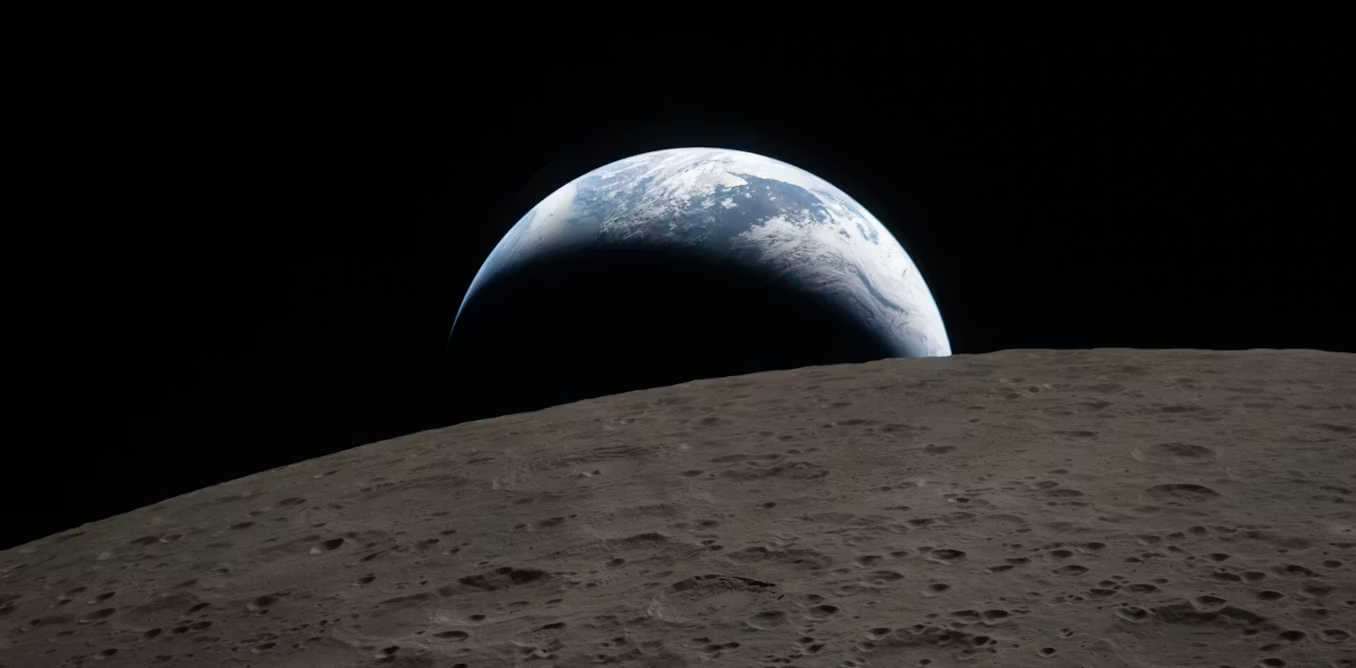
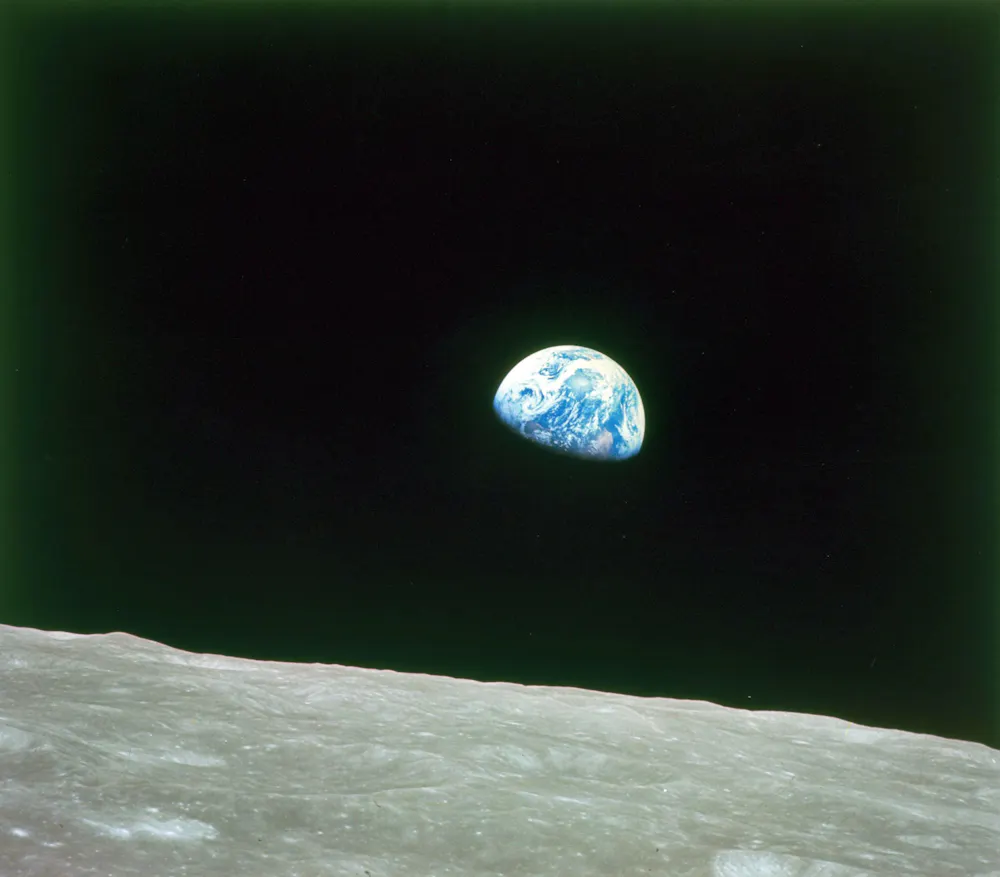
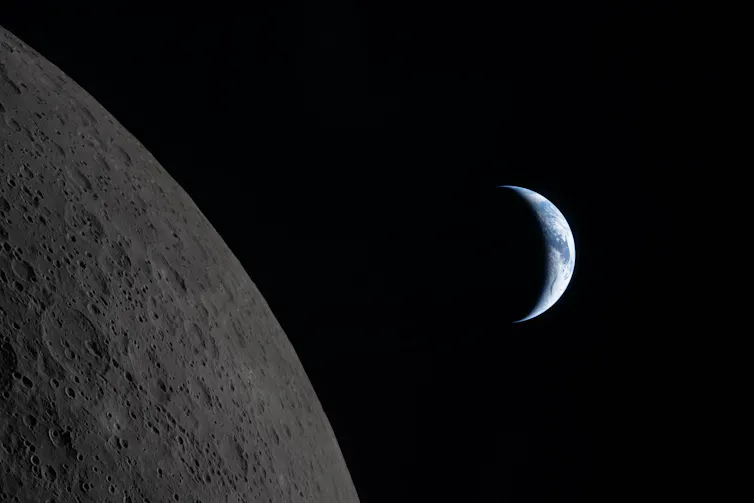
As Nasa’s Artemis II mission completed its lunar flyby, the astronauts sent back a stunning image of the colourful Earth setting behind the Moon. This breathtaking photo, called Earthset, draws inevitable comparisons with the original Earthrise photo from the Apollo 8 flight in 1968.
The Apollo-era photo showed our planet climbing above the lunar horizon. It revealed Earth as a bright blue oasis, standing out against the vast blackness of space and the barren Moon.
As I described in my book, Earthrise: a Short History of the Whole Earth, the effect of this image (actually part of a set) was profound. It caused a sensation on its release and helped inspire the burgeoning environmental movement.
The polished image from Artemis II and the slightly askew picture from Apollo 8 are, however, the product of entirely different approaches to photography from space.
“I don’t want to see you guys looking out the window,” Apollo 8 commander Frank Borman warned his colleagues Jim Lovell and Bill Anders during the 1968 mission to orbit the Moon.
Astronauts back then were discouraged from wasting film on touristy snapshots of the Earth. The Apollo 8 mission plan listed Earth images as mere “targets of opportunity”, the lowest priority of all.
The way the two missions kicked off underline the differences between 1968 and 2026. The crew of Apollo 8 took no still photos of Earth on the way out, but had reluctantly agreed to take a black-and-white TV camera for live transmissions.
Advertisement
Photography is a high priority for the Artemis II crew, but things were different when the Earthrise image was taken in 1968. Nasa
They were unable to fit the telephoto lens to the camera in time for the first transmission, so viewers saw only a fuzzy blob of light. Once the lens was fitted, the Moon bounced around the screen while mission control tried to issue “up a bit, down a bit” instructions with a 1.3-second delay.
Despite this more haphazard approach to photography during some of the Apollo missions, the imagery from that era looms large in the public imagination. Earthrise is one icon from that era; another is the whole-Earth image known as Blue Marble – taken in 1972 during the Apollo 17 mission.
One of the earliest images released by Nasa from the Artemis II flight was a crystal-clear image of our planet taken on a tablet computer by the mission’s commander, Reid Wiseman. The image of Earth’s full disk, initially dubbed “Hello, World” but later changed to “mother Earth”, clearly recalls the iconic Blue Marble photo.
Advertisement
Unlike that famous daytime image from 1972, it shows the Earth at night – but has been enhanced to look like daylight. In the new photo, auroras can be seen at the poles and a thin crescent of sunlight is visible, glowing through the atmosphere. Both photos show a predominance of southern ocean and cloud, with Europe just visible near the rim.
Left: Earth as captured by Artemis II astronaut Reid Wiseman in 2026; right: Earth captured aboard the Apollo 17 mission in 1972. Nasa
The Earthrise image from 1968 came about largely due to the initiative of Anders. On the mission’s fourth orbit around the Moon, the three crew members were busy photographing it in black and white when Anders noticed some unexpected colour out of the corner of his eye. “Oh my God! Look at that picture over there! Here’s the Earth coming up,” he exclaimed.
After a brief tussle over cameras and colour film, he snapped Earthrise using a mechanical Hasselblad camera with no viewfinder. No-one would see any of their pictures until after they returned to Earth and the film could be developed and printed.
As well as its impact on environmentalists, the image also inspired a young David Bowie in London. Shortly afterwards, he wrote the song Space Oddity about a stranded astronaut gazing upon an Earth to which he can never return.
The Earthrise photo taken by Apollo 8 astronaut Bill Anders in 1968. Nasa
Earthset, taken on April 6 aboard Artemis II. Nasa
As Artemis II swung round the Moon on April 6, anticipation grew for a modern counterpart to Apollo 8’s legendary image. Before the flyby, Nasa had released simulations of what the Artemis astronauts would see. The simulations showed a half-lit Moon with the distant crescent Earth at its side and clear black space between – like twin planets.
Earthset is different from Earthrise because the Moon is farther away, and because the Earth is only partially sunlit. While Artemis II swept round the Moon in a leisurely, gravity powered slingshot five thousand miles away, Apollo 8 orbited the Moon ten time from just 70 miles up. This gives us a small crescent Earth rising and setting behind an almost full lunar disc.
Nasa seems to have chosen to showcase the Earthset image because it feels more like the familiar 1968 Earthrise. The Artemis images of the Earth rising show a small crescent Earth with its back to the lunar horizon, like the new Moon as seen from Earth.
Advertisement
An Artemis II image of the Moon coming into view along the terminator, the boundary between lunar day and night, where low-angle sunlight casts long, dramatic shadows across the surface. Nasa
Environmental awakening
Apollo 8’s Earthrise, released two days after splashdown, was not seen in colour until the weekly magazines appeared. Space enthusiasts had expected Earth to appear relatively insignificant in the vastness of space. The phrase “Earth is man’s cradle, but one cannot live in the cradle forever” was a familiar quote at the time.
But viewed from the vicinity of the barren lunar landscape, the Earth looked even more like home. Borman thought “this is what God sees”, while Anders mused: “We came all this way to the Moon … and yet the most significant thing we’re seeing is our own home planet, the Earth.”
Our planet draws closer to passing behind the Moon in this image by the Artemis II crew. Nasa
The image’s link to the environmental movement is unsurprising when viewed in this light. The Apollo 8 image was used in the logo for the first Earth Day in 1970 and, as the Apollo programme was ending, Earth sciences – the study of our home planet – began to take off.
The 1972 Blue Marble image also resonated among environmentalists. It was replicated by Nasa’s deep space telescope DSCOVR 50 years later. A side-by-side comparison between the 2022 DSCOVR image and the 1972 photo highlights the effects of environmental degradation.
In the intervening years, much of Madagascar had turned from tropical green to brown from deforestation, the Sahara had expanded, the Antarctic ice had retreated, and ancient snows had disappeared from the mountains of Iran.
Advertisement
Left: the 1972 Blue Marble image from Apollo 17; right: the 2022 image from DSCOVR. The comparison reveals the effects of deforestation in Madagascar and desertification in the Sahara. Nasa
It remains to be seen whether the images from Artemis II will have a comparable impact on the global environmental consciousness. However, the title of Earthset is perhaps the perfect name in an era where societies are threatened by climate change.
The crew of Artemis II have made clear where the priorities still lie. “It is so great to hear from Earth again,” said mission specialist Christina Koch as the craft regained radio contact after a brief blackout as the spacecraft passed behind the Moon.
“We do not leave Earth but we choose it … We will inspire, but ultimately we will always choose Earth.”
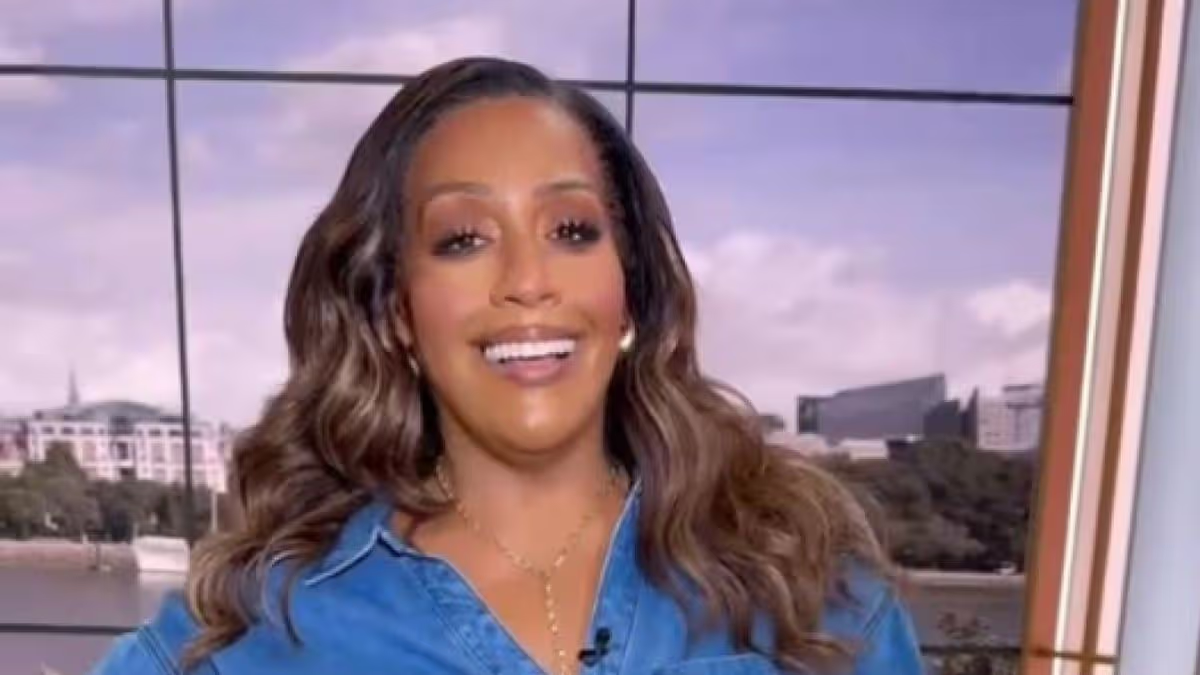
The This Morning presenter, 51, previously told how she was shocked into action when it came to her health
Alison Hammond has addressed the secret to her weight loss as she admitted she had a ‘childish mentality’ when it come to the food she ate.
Advertisement
The This Morning presenter, 51, was shocked into action following a pre-diabetic health warning and has spent the past five years transforming her health and wellbeing, with her reported to have dropped 11 stone.
Previously speaking to Women’s Health, she said: “My mum had Type 2 diabetes and she was worried for me, so when I then found out that I was pre-diabetic, that was frightening. I thought ‘I have to be an adult about this’. The sweets had to stop, and the fatty foods.’
Alison’s now told how she started working with a personal trainer and she’s also been seen taking up Reformer Pilates and boxing, sharing videos of herself exercising online.
Speaking to the Radio Times about her improved lifestyle, Alison said: “I’ve had a personal trainer for five years, even when I was at my biggest. But I had a childish mentality with regards to food, especially toffees – but now I’ll only have a couple a day.
Advertisement
“We’re not getting any younger, are we, babes? You realise at some point you’ve got to look after yourself. I’ve got a speaker under my pillow to play relaxing music, and a sleep tracker.”
It comes as Alison also opened up about her love life. The presneter has spoken out about the age difference in her relationship with Russian model and masseur David Putman.
“I completely understand why people are interested when there’s a 22-year gap,” she told the Daily Mail. “But what I find interesting is that it’s not as interesting when it’s the man who is older. Why is that? I just want people to be happy for us. We are absolutely in love.”
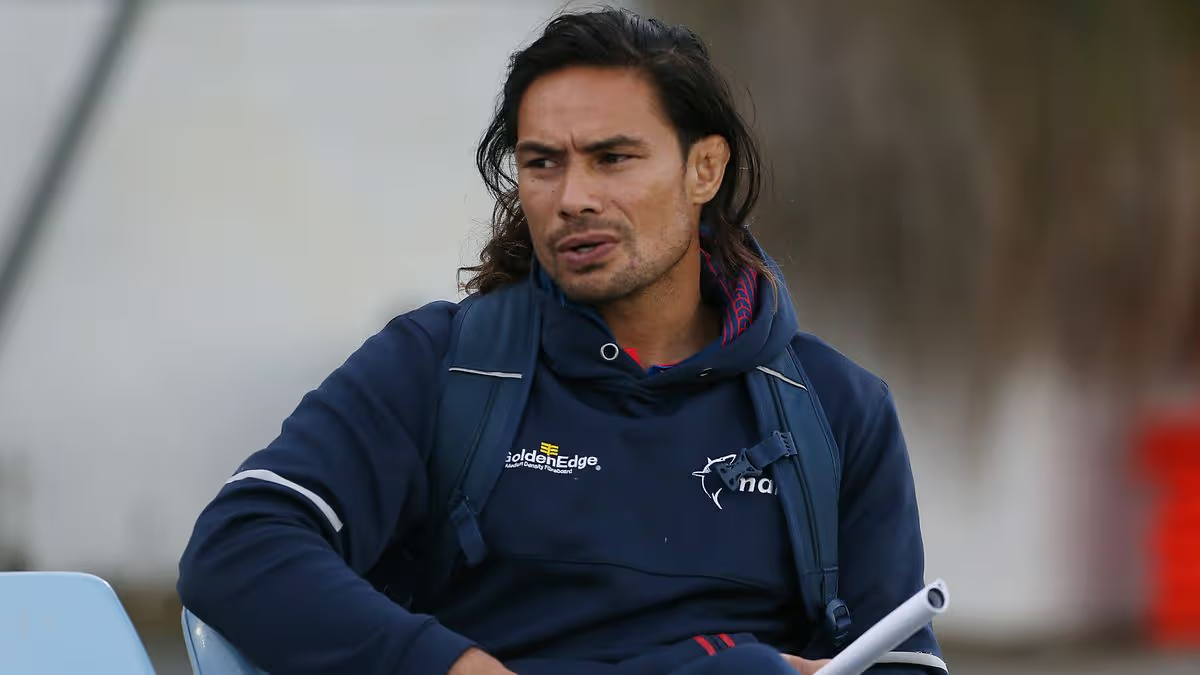
The former Highlanders co-captain was found dead at his home in New Zealand last August
The partner of deceased rugby player Shane Christie has opened up on the extent of his suffering in the final years of his life due to the symptoms of chronic traumatic encephalopathy (CTE).
Advertisement
The Maori All Blacks back-row died of suspected suicide last August, following a nine-year struggle with his mental health. The former Highlanders flanker was found dead at his home in Nelson, New Zealand, just a day before his 40th birthday.
Christie, who also played for the Crusaders and the All Blacks’ sevens team before retiring from rugby in 2018 at the age of 32, was discovered by police, with his death treated as a suspected suicide.
After his retirement from the game, Christie had publicly announced that he believed he was suffering from CTE – a neurodegenerative brain condition caused by repeated head injuries – after experiencing symptoms including headaches, speech and memory issues, depression and mood swings.
Christie has since been diagnosed, by a pathologist at the University of Auckland’s brain bank, as having “high stage” CTE at the time of his death.
Advertisement
Now, his partner Holly Parkes has spoken about the challenge Christie encountered – saying he had become unrecognisable compared to the man he was before he sustained multiple serious concussions.
Christie battled to manage what was suspected to be CTE at the time, yet he remained committed to staying involved in the game.
“When concussions ended his playing career, he transitioned to coaching alongside me,” Parkes told Stuff NZ.
“I still remember how often he needed sleep breaks throughout the day or had to sit in a blacked-out office with noise-cancelling earmuffs on.”
Advertisement
The severity of Christie’s concussions intensified over time, with the most serious taking place in 2016.
“These were very, very big hits,” added Parkes. “After one of his last ones in 2016, his eyes were rolling to the back of his head, and he was having difficulty breathing.”
As the long-term effects of his head injuries began to manifest, every facet of Christie’s life altered.
According to Parkes, his personality transformed and he struggled to adjust to life while enduring constant, overwhelming pain.
Advertisement
Christie, who co-captained the Highlanders during his playing days, found it nearly impossible to manage the daily pain and pursued ways to ease his symptoms.
“He was selling his house to pay for treatment in America so that he could try and get his head right,” Parkes added.
“He took so many trips looking for ‘the best’ overseas, but I think it was just a bit too late or not comprehensive enough.
“When he became stressed, he didn’t seem to be able to handle it as well as he used to.
Advertisement
“He would lose things and sometimes had to ask people in public to help him because he was confused or overwhelmed.
“Privacy had always been one of his key values, but even that changed a lot when he became much more open to letting strangers into our lives.”














































You must be logged in to post a comment Login