At any given point there are hundreds of thousands of people in the skies travelling by air. For many, these journeys will pass by without consequence. But for some, a routine flight may trigger a health emergency.
Although these events are rare, with the demand and availability of air travel increasing, so too is the likelihood of an in-flight emergency occurring. A study last year showed that one in every 212 flights experiences some kind of in-flight emergency, while in 2013 it only occurred on an estimated one in every 604 flights. In-flight emergencies cover everything from bumps, cuts and minor injuries through to heart attacks.
While air travel is one of the safest modes of transport, it places many unique challenges on the human body – which is why it can sometimes trigger sudden health problems.
One of the key reasons air travel is so hard on the body is due to the cabin pressure.
Advertisement
The aircraft cabin is pressurised at a level of up to 8,000 feet above sea-level. This pressure change has a significant impact on many body systems, especially those containing gases (such as the respiratory and gastrointestinal systems).
As the pressure in the cabin decreases, the amount of available oxygen decreases because the molecules are further apart. At sea-level, the air contains approximately 21% oxygen. But when flying at altitude, the air only contains the equivalent of 15% oxygen. To compensate, the body increases the number of breaths it takes. It also increases heart rate to better pump oxygen to tissues.
A healthy person probably won’t notice these changes. But for someone who has a cardiopulmonary disease (such as chronic obstructive pulmonary disease or hypertension), these changes in cabin pressure and oxygen levels may be dangerous.
This is because the reduction in oxygen and pressure changes all effect how well the heart and lungs can do their job. For someone whose heart and lung function are already impaired, the aircraft’s unique environment can therefore have an even greater impact on these systems.
Advertisement
Fluid loss and dehydration are another big challenge when it comes to air travel.
Humidity is often very low in-cabin, which dries out the skin, eyes, nose and throat. It also increases water loss from the body – with passengers losing up to 360ml an hour.
This dehydration often makes our blood thicker and reinforces the extra work the heart is having to do to pump blood round our bodies. This sticky blood also increases the risk of clotting-related conditions arising, such as deep vein thrombosis.
In-flight emergencies
Fainting is common on flights. It’s seen in at least one in three airline emergencies. Most are caused by postural hypotension, where going from sitting to standing causes blood to pool in the legs, resulting in reduced blood flow to the brain.
Advertisement
Alcohol and dehydration, combined with the atmospheric conditions onboard the aircraft, make a perfect cocktail for fainting as well. The food we eat onboard can feed into this, too. At altitude, your tastebuds are about 30% less sensitive so foods often have additional salt added for flavour. This further contributes to dehydration.
Some passengers may experience air sickness or jet belly. Melnikov Dmitriy/ Shutterstock
Many complaints and emergencies on aircraft are the result of gastrointestinal issues. This can include airsickness – a specific form of motion sickness – but more commonly they’re issues at the other end of the body.
When the gut breaks down food, it produces gas – which, on a plane, expands in the gut. This is why everyone finds they’re more flatulent on a plane – a phenomenon aptly termed high altitude flatus expulsion. Certain foods, such as beans, broccoli, kale, onions, red meat, lentils and gluten may make things worse.
When airborne, the gas in the intestines may expand to four times the normal volume. This gas is typically harmless and doesn’t cause an emergency – though their impact on other passengers might.
Advertisement
But in rare instances, upset stomachs – termed “jet belly” – have forced flights to turnaround. For example, a 2023 flight from Atlanta to Spain had to return to the States after a passenger left a trail of diarrhoea along the aircraft.
Although mid-air cardiac emergencies are rare, they have far poorer outcomes than when they happen on land. In fact, the vast majority of in-flight deaths are due to cardiac events.
Other vascular events, such as strokes, are also rare on aircraft, but they can have a particularly poor outcome for similar reasons.
Advertisement
Safe travels
As you jet off on your travels, consider drinking plenty of water before and during the flight. Set a schedule of when you need to take your medication so that you don’t fall behind on taking them.
Try to move around at least once every couple of hours if you can to ensure adequate blood circulation and prevent muscle stiffness. Avoid or limit alcohol intake as its effects at altitude are increased and it exacerbates many of the bodily issues that are brought on by flying.
People who have recently had dental work, surgery or been diving in the days prior to flying may all be at increased risk of complications due to changes in pressure and the potential gases that may have been introduced to the body. Depending on the type of diving, at least 48 hours between diving and flying may be recommended.
Not every emergency onboard a flight will necessitate landing. Ultimately, that decision rests with the captain. But behind it is a calculated decision based on input from crew, medical professionals on the ground (and sometimes onboard), as well as many other factors.
Advertisement
Correction: An earlier version of this article stated: “As the pressure in the cabin increases, the amount of available oxygen decreases”. It should have said “As the pressure in the cabin decreases”.
Summer 2001. Tony Blair had just won a second thumping election victory, promising opportunity for all. The new census showed a nation losing its religion, more inclined to live alone and more ethnically diverse. The maximum temperature was a tepid 32°C in west London in late June, while the twin towers rose tall and proud as always over the New York skyline.
Twenty five years on, we wanted to look at how the UK has changed. Welcome to the first of a six-part report from a group of 35 specialists, exploring all of the key developments in the intervening period.
Domestic politics
Martin Farr, Senior Lecturer in Contemporary British History, Newcastle University
2001: A Political Odyssey is one way of framing how Britain has changed in the first quarter of the 21st century. When that year arrived, it turned out to be rather less advanced than the world of moon bases and video calls that Arthur C. Clarke and Stanley Kubrick had imagined (even in 2026, the test launch for the latest moon rocket recently exploded on the launchpad).
Advertisement
Tony Blair’s Labour government had been re-elected in June 2001 in a second landslide, its last untarnished victory. By 2005 Labour would be mired in war, and coming to terms with a reduced – though still substantial – parliamentary majority on only 35% of the vote.
Populism was certainly a word in 2001, but its usage in Britain was rare – it derived from America, along with much else in our cultural life. In Britain, the same two parties had been in government since 1924, and power alternated between them. When in opposition, Labour or Conservative had only to wait for their next opportunity.
Advertisement
How has the UK changed since the start of the century? From Blair to Burnham, from the dotcom era to AI agents, time has certainly not stood still. In this six-part series, a team of some 35 experts look at everything from defence spending to species populations to the rise of populism to try and make sense of the intervening years.
The Britain of 2001 was much simpler – only one of the two legacy parties ever in office, their longevity lubricated by economic growth – though complications were in train. Devolution had become institutionalised three years earlier. Those who had advocated for self-government for Wales and Scotland did so for one of two reasons (Northern Ireland being a quite different matter).
Either they saw devolution as a staging post to independence, or they thought the opposite: that desire for independence could only be addressed by devolving – repatriating, as a nationalist might see it – powers from London to Cardiff and Edinburgh. Who was right? Too soon to say, but the First Ministers of both Scotland and Wales are nationalists who advocate independence for their nations.
Brexit
Advertisement
In one very limited sense things actually got simpler. In 2001 Britain had for 28 years been part of the European Economic Community, which had become the European Community, and then the European Union. For those who supported Brexit, the implication of those changes in title were of more than semantic interest: they helped explain the vote to leave. Brexit wasn’t even a word in 2001, of course. “Eurosceptic” was the nearest equivalent, in consequence of Margaret Thatcher’s landmark 1988 Bruges speech, warning of the dangers of a “European super-state”. From such acorns do mighty oaks rise.
The simplification of not having to be part of the 27-country assemblage, however, is dwarfed by the complications spawned by Britain’s departure, not least politically. To effect withdrawal from the EU, a culture of party political insurgency developed, usually promulgated by – one might say requiring – a charismatic individual.
James Goldsmith’s Referendum Party came fourth at the 1997 general election, with nearly a million new voters. A million also voted for Nick Griffin’s almost explicitly racist British National Party in the 2009 local elections. Yet by the 2015 general election, Nigel Farage’s Ukip, effectively the successor to Goldsmith’s party, received almost 4 million votes. Both the Ukip and BNP votes collapsed later that year with the Conservative offer of an EU referendum; Goldsmith died, but Farage would be back.
Brexit was a process as much as an event, but there were several others that were epochal: the 2003 Iraq war and the 2010 political “expenses scandal” shattered much of what public trust remained in Westminster. The SNP winning power in Scotland in 2007 led to the 2014 independence referendum. The nationalists lost, but in doing so created national faultines that could no longer be ignored.
Advertisement
Most of all, the 2008 financial crash defined the period. Stagnant living standards provide fertile grounds for grievances – catnip to populists. And so, in part, the appeal of Alex Salmond and Nicola Sturgeon in Scotland, of Jeremy Corbyn and Farage, and now the Green party’s Zack Polanski; charismatic individuals that characterise an increasingly individualistic society (curious how – conventionally – tainted so many of them became).
The new divisions
The greatest complication is voter fragmentation. In the 1950s more than 90% of voters voted Labour or Conservative (more often than not for the same party as their parents). It would have been inconceivable that there could be comparable standings for five parties in England, and six in Scotland and Wales. Multi-party politics is the new normal.
But the Westminster voting system wasn’t created to deal with such an array. Keir Starmer’s Labour government was elected on 33% of the vote, not only the most disproportionate outcome in British electoral history but the fourth most disproportionate in the world. Proportional voting could become a clarion under Andy Burnham (a longstanding supporter). As advocates see it, this would allow voters to vote for what they actually want, rather than for what they want to prevent.
Advertisement
Today, the new is helping revive the old in the sense that the 1970s question is being asked again: is Britain governable? Then, successive Conservative and Labour governments were both forced from office, effectively by trade union power. Nationalism and populism, in their different forms, have taken its place.
It is increasingly challenging for those who seek to explain and interpret, even predict, this uniquely fractured and fluid British political scene. In 2001 the Green Party managed 0.6% of votes in the general election. In 2026 they are on around 15%, run councils and have elected mayors.
In Reform UK polling suggests that Britain may have its first new party of government for over a century. Between 1979 and 2007 there were three prime ministers; since 2016 there have been seven.
In Clarke’s and Kubrick’s 2001 conception, a monolith had been left behind by an alien civilisation to help guide the evolution of intelligent life on Earth. If only, one may be forgiven for thinking, there was something similar in British politics.
Advertisement
Geopolitics and defence
Geraint Hughes, Reader in Diplomatic and Military History, King’s College London
In July 1998, the then-Labour defence secretary, George Robertson, presented the new government’s strategic defence review to parliament, with one of its conclusions being that Britain faced no real threat of attack by a major state adversary.
In April 2026 the now Baron Robertson of Port Ellen publicly berated the current Labour government for its “corrosive complacency” over defence. Robertson had co-authored the 2025 strategic defence review, which stated that the UK has to prepare for a possible war between Nato and a resurgent Russia.
He has clearly become frustrated that the review’s recommendations are being slowly (if at all) implemented, because of costs. And he’s not the only one: John Healey resigned as defence secretary for the same reason, telling the prime minister that the government’s spending plan “falls well short” of what is required to keep the country safe.
Keir Starmer finally responded on June 30, rushing out his long-delayed defence investment plan. It offers a £15 billion top-up focused heavily on drone warfare, yet still leaves the military well short of the funding Robertson and Healey believe is needed.
The new geopolitics
It is of course a constant challenge for the government to ensure that British armed forces have sufficient troops, firepower, ships and planes. Even at the time of the 1998 review there were fierce quarrels between Robertson and the Chancellor of the Exchequer, Gordon Brown, over defence costs. In 2010 the then-coalition government imposed swingeing cuts on the armed forces’ capabilities on the front line and the so-called rear echelon, which includes things like supply lines, logistics and medical care. The Royal Navy, British Army and Royal Air Force are still suffering as a result.
However, the strategic backdrop for British defence policy was very different in previous decades. Ten years after the cold war ended, Europe was largely at peace. Closer to home, the Good Friday agreement of April 1998 ended 30 years of British military operations in Northern Ireland.
Advertisement
At that time, the UK’s armed forces were involved in peace support operations in the former Yugoslavia. In retrospect, the 1999 stand-off between Russian and British paratroopers at Pristina airport, Kosovo, at the end of the war in that country should have warned us that great power rivalries hadn’t disappeared.
After 9/11, Tony Blair’s government committed British forces to fight alongside the US in Afghanistan and – far more controversially – Iraq. These conflicts led to the deaths of 636 British servicemen and women, and undermined public support for military interventionism.
Blair justified both wars by arguing that the UK needed to pay a “blood price” to bolster ties with its most important ally. President Donald Trump’s denigration of the sacrifice Britain and other Nato allies made in Afghanistan raises the question of whether this price was worth it.
Today, Britain and its European allies face the threat of a major war in Europe. Russia’s all-out invasion of Ukraine in February 2022 may have been a miscalculation, but Vladimir Putin has overseen a process of rapid military expansion, which means that the Russians could still potentially attack a Nato member state.
Advertisement
More alarmingly, the foundation of British defence policy – US membership and support for Nato – is being undermined by the Americans themselves. Trump and his officials blame the lack of European support for Operation Epic Fury against Iran for undermining the Atlantic alliance.
In reality, the current US president has long been a Nato sceptic, and his administration’s 2025 national security strategy had harsher language for America’s European allies than it had for Russia. Although US-European relations have rarely been trouble-free, previous presidents did not threaten to seize territory from their allies by force, as Trump has done with Denmark and Greenland.
It is true that it is very hard for any democracy to spend money on military power when there are other pressing requirements in the form of health, policing, education or welfare. The main political parties will accuse each other of running down Britain’s armed forces, but the uncomfortable truth is that in peacetime defence is never a priority for the British public.
Britons generally respect their servicemen and women. But at this moment of rising geopolitical tensions, they are split over whether to cut other public services to fund them, as well as generally unwilling to join up themselves.
Advertisement
Whether these attitudes will change in the event of another 1914 or 1939 moment is a matter for speculation and debate both inside and outside the UK’s defence establishment.
Constitutional challenges
Stephen Clear, Lecturer in Constitutional, Administrative and Public Procurement Law, Bangor University
Following the September 11 attacks, the UK government moved to expand its powers through measures such as the Anti-terrorism, Crime and Security Act 2001. While intended to strengthen national security, it created tension with civil liberties by permitting extended detention, surveillance and restrictions on the rights of suspected terrorists.
This was tested at the European Court of Human Rights (ECHR) in 2009 in a case about a group of 11 foreign nationals in the UK, who had been detained without charge on the grounds that they had links to al-Qaeda and posed a threat to UK national security. Their lawyers argued that the power to indefinitely detain individuals without a formal charge ran contrary to human rights obligations, and the court found in their favour, forcing the UK government to revise the 2001 legislation.
Advertisement
These events highlighted the struggle to balance security concerns with human rights. It demonstrated the power of the ECHR to intervene in matters concerning individuals’ liberties and the rule of law (in this case the principles that the law applies equally to everyone and no one can be indefinitely imprisoned without a fair trial).
This resulted in the UK’s most senior judges no longer sitting in the House of Lords. The head of the judiciary is now the Lord Chief Justice (rather than the Lord Chancellor) and is therefore no longer a cabinet minister and politician.
Advertisement
The UK’s supreme court justices are no longer linked to the House of Lords. PA Images
This strengthened the separation of powers by formally separating the judiciary from parliament and enhancing judicial independence, as well as incorporating elements of separation of powers in modern legislation for the first time.
The court also moved to a new publicly accessible building and began live-streaming most open-court proceedings, which improved transparency.
These tensions exposed weaknesses in the UK’s unwritten constitutional model and raised questions about Westminster’s parliamentary sovereignty and the future of the union. Meanwhile, devolved governments increasingly shaped their own domestic policies, particularly during the pandemic, demonstrating both the flexibility and fragility of the current constitutional arrangements.
Over the Brexit period, the supreme court ruled on the limits of government power in several cases brought by business leader Gina Miller. It reaffirmed parliamentary sovereignty by requiring the UK parliament’s approval for the government to trigger article 50 of the Treaty on European Union (to start the legal process of leaving the EU). It also confirmed the limits on the government’s power to suspend (prorogue) parliament at a strategic point during the negotiations to force through what it wanted.
Advertisement
Gina Miller (centre) rose to prominence as an anti-Brexit campaigner. Alamy/Jenny Matthews
The initial high-court ruling in the Miller cases in 2016 earned judges newspaper headlines branding them “enemies of the people”. This highlighted constitutional concerns about judicial independence and attempts to undermine their ability to make decisions in such circumstances.
Nine prime ministers since 2001 represents a high turnover by the UK’s historic standards. Frequent leadership changes, including prime ministers assuming office mid-parliament, raise concerns about their democratic legitimacy to govern.
The Insights section is committed to high-quality longform journalism. Our editors work with academics from many different backgrounds who are tackling a wide range of societal and scientific challenges.
Advertisement
There are also questions about broader executive accountability, since they can’t properly be held to account by parliament for the mistakes of their predecessor.
Frequent elections and party leadership challenges have led to concerns that the UK system has become constitutionally unstable, and shouldn’t be so flexible as to permit things like changes of prime minister without elections.
The Fixed-term Parliaments Act 2011 was a move in a different direction, mandating general elections every five years and removing the prime minister’s power to unilaterally call them earlier. However, the act’s repeal in 2022 restored the prime minister’s discretion to call elections.
Coronavirus lockdowns
Advertisement
COVID-19 emergency powers expanded government authority to impose lockdowns and restrictions. These developments raised constitutional concerns about the balance between civil liberties, ministerial power and parliamentary scrutiny through extensive secondary legislation which isn’t required to go through the full parliamentary legislative process.
At the same time, we saw rows over perceptions of inequality in how the lockdown rules were applied to elected officials, including through the “partygate” scandal over social gatherings at the heart of government.
Graffiti of Boris Johnson related to the partygate scandal. Paul Appleyard
The pandemic tested the ability of judicial review to act as an effective check amid a national crisis, in relation to government procurement of personal protective equipment. It also tested how the devolved governments could work with Westminster in such a period.
The immediate transfer of the crown demonstrated the UK constitution’s principle that sovereignty is continuous, with no vacancy in the head of state.
Despite national mourning, the king was formally proclaimed without disruption. It represented a notable “first” for citizens witnessing a modern accession and coronation under contemporary constitutional and media conditions.
These pressures, alongside the rise of the Reform and Restore parties, have created a major constitutional battleground. They expose a deep clash between what the government can achieve politically, and the strict legal rules around human rights that currently limit what they can do.
The UK’s constitution has become more complex over the past 25 years. While Westminster parliamentary sovereignty remains fundamental to the UK model, it is increasingly balanced with judicial interpretation, devolved power, and stronger rights protections.
The events since the turn of the century confirm that the UK constitution is a living breathing instrument. Whereas it was largely about continuity in the past, where things were done in a certain way out of tradition, the constitution has increasingly been defined by its ability to adapt to major changes like devolution or react fast to developments like the pandemic.
To hear about new Insights articles, join the hundreds of thousands of people who value The Conversation’s evidence-based news. Subscribe to our newsletter.
Youngest children are often thought of as the lucky ones – the babies of the family who skated through childhood with fewer rules, more freedom and all the attention.
But therapists who work with youngest siblings hear a very different story.
“The youngest child sits in a fascinating and often painful paradox,” Erin Pash, a licensed marriage and family therapist and founder of Pash Co., told HuffPost. “They grew up surrounded by people who loved them and people who consistently underestimated them.”
Although the youngest sibling may face different challenges compared to the forgotten middle child or the “parentified” eldest, their psychological wounds are no less valid. It’s also important to acknowledge the wide range of experiences that youngest siblings can have.
Advertisement
“The research on birth order and its impact on personality and mental health is pretty limited and quite mixed,” said Caitlyn Oscarson, a licensed marriage and family therapist.
“Birth order is only one piece of someone’s story. The family dynamics, relationships and life experiences, along with genetic dispositions, are likely much more important than simply being the youngest.”
Things like culture, parenting style and sibling age gaps can play an important role as well.
“I encourage people to use birth order as a starting point for curiosity rather than a diagnosis,” said Priya Tahim, a licensed professional counsellor and the founder of Kaur Counseling.
Advertisement
“The question isn’t, ’What does it mean to be the youngest?” but rather, “How did being the youngest shape the beliefs I developed about myself, my relationships, and my place in the world?” When we explore those questions in therapy, we often uncover patterns that no longer serve us and that’s where meaningful growth begins.”
There are some general themes that tend to emerge on that journey as well. Below, therapists share the most common issues youngest children bring up in therapy.
Not being taken seriously
“One of the most common themes I see is the struggle to be taken seriously,” said Altheresa Clark, a licensed clinical social worker and founder of Inspire4Purpose. “Many youngest siblings describe growing up being viewed as ‘the baby’ of the family, even well into adulthood. As a result, they often feel their opinions are dismissed or that they have to work harder to prove they are capable, responsible and independent.”
Advertisement
She added that many youngest children feel underestimated, as though their family can only view them through the lens of who they were as a child.
“If your older siblings changed your diapers and wiped away your spit up, it may be hard for them to truly picture you now as a full-fledged adult,” said Natalie Moore, a licensed marriage and family therapist. “Even if you’re competent in professional and personal areas of your life, your older siblings or parents may still treat you as though you’re ‘still figuring it out’ or that you need extra help – even if you don’t.”
Family patterns and roles are well-established by the time the youngest child arrives.
“Youngest children are often the last to be consulted, the last to be believed and the last to have their emotional experiences validated,” Pash said. “That early experience of not mattering as much becomes a deeply internalised belief that follows them into adulthood, their relationships and their workplaces.”
Advertisement
Chronic comparison to older siblings
“Growing up in the shadow of older siblings creates a relentless internal measuring stick,” Pash said. “Youngest children often spend enormous psychological energy either trying to differentiate themselves from their siblings or quietly wondering if they’ll ever measure up. Both directions are exhausting. Therapy often uncovers how much of their identity was built in reaction to who came before them, rather than from the inside out.”
From academic and career success to relationships and life milestones, older siblings can set a standard of measurement that makes it difficult to chart your own path.
“Many youngest siblings describe feeling pressure to live up to their older siblings’ accomplishments or, conversely, feeling responsible for ‘doing better’ after an older sibling’s disappointments,” Tahim said. “While these comparisons are often unconscious and rarely come from a place of harm, they can still have a lasting emotional impact. Over time, this can contribute to perfectionism, people-pleasing, self-doubt or a persistent feeling that they have something to prove.”
Advertisement
Furthermore, this dynamic of comparison can minimise the satisfaction and joy of personal achievement.
“There will always be someone who got there first – whether it’s a milestone, a graduation or just age itself,” said Chloë Bean, a licensed marriage and family therapist. “When every milestone has already been reached by someone else, youngest children can struggle to feel a sense of ownership over their own accomplishments.”
The myth of the carefree ‘fun one’
“The myth that youngest children are carefree is perhaps the cruelest one because it’s so cheerfully delivered,” Pash said.
Advertisement
“People say it like it’s a gift. What they don’t see is that ‘carefree’ is often the mask that gets assigned when no one is paying close enough attention to the care that’s actually needed. The youngest child learned early that the family’s emotional bandwidth was already stretched, so they adapted. They became easy. They became fun. They made people laugh.”
Underneath that mask, however, there might be a child managing big feelings alone because asking for help felt like too much of an imposition. In this sense, being fun or easygoing is more of a survival strategy than a personality trait.
“Behind the ‘fun one’ label, there can be anxiety, people-pleasing, perfectionism or a fear that if they stop keeping the peace, they’ll disappoint those around them,” Tahim said.
Thus, many youngest siblings opt to “go with the flow” and give off an appearance of “floating through life,” despite the emotional weight they actually carry but don’t necessarily have the skills to identify and communicate.
Advertisement
SDI Productions via Getty Images
A common theme among youngest siblings is wanting to be taken seriously as an adult.
The ‘spoiled’ and ‘favourite’ labels
“The ‘favourite’ label carries its own particular sting,” Pash said. “Many youngest children tell me they felt simultaneously favoured and overlooked, given treats and flexibility while being denied depth and seriousness. Being the favourite doesn’t mean being the most important. It often just means being the most manageable.”
The youngest sibling might experience less strict versions of their parents and have fewer responsibilities, but that comes at a cost.
Advertisement
“The idea that the youngest sibling is always spoiled or the favourite is often much more complicated than people realise,” Clark said. “Many of my clients describe feeling overlooked rather than overindulged. Others explain that while they may have had certain freedoms growing up, those freedoms also came with assumptions that they didn’t need as much guidance or emotional support because their parents were more experienced by that point.”
And don’t forget the burden of an older sibling’s jealousy or resentment – which can create additional pressure to prove your worth and chip away at self-confidence.
“Maybe the older sibling envied the youngest’s freedom, slack and less rules,” Bean said. “The younger sibling grew up resented simply for existing and splitting the parents’ attention. This is common because the youngest sibling had no say in the family structure they were born into, but they absorb the blame for it. Children internalise that kind of resentment as ‘something is wrong with me’ way before they understand where it actually comes from.”
Difficulty setting boundaries
Advertisement
“Because older siblings or parents may have been accustomed to looking after them, youngest siblings sometimes struggle to separate their own identity from family expectations,” Clark said. “This can show up in people-pleasing, avoiding conflict or feeling guilty when making decisions that differ from what their family wants.”
As they get older, youngest children may struggle with taking up space, expressing needs and setting (and enforcing) boundaries.
“Learning that their needs are legitimate – not an inconvenience – is frequently the central work,” Pash said. “The family peacekeeper often becomes an adult who struggles to say no.”
They might feel particularly deferential to older siblings who took on a caretaking role in their childhood.
Advertisement
“You may find that when discussing personal stressors or decisions, that they jump in with advice or opinions even if you didn’t ask for them,” Moore said. “This can cause friction between siblings, where it’s more appropriate to have a peer-to-peer relationship, versus one with a parental-style hierarchy.”
Mabel Yiu, a licensed marriage and family therapist and founder of the Women’s Therapy Institute, pointed to another dynamic that can stem from difficulty setting boundaries and asserting needs.
“Some youngest often feel they don’t have the power to say no or the safety to express anger as a kid, so they develop conflict-avoidant behaviours such as passive aggression as adult,” she explained. “Some behaviours include saying yes but not doing the thing, backhanded comments or sarcasm. In those situations, the work is around building tolerance for discomfort, expressing ‘no’ or anger in a meaningful way and discerning the humor and anger in sarcasm.”
Learned helplessness
“When older siblings, parents and even extended family consistently swoop in to solve your problems, tie your shoes and finish your sentences, you don’t develop the same tolerance for discomfort and struggle that builds confidence,” Pash said.
Advertisement
“Many youngest children arrive in adulthood with a quiet but persistent belief that they can’t fully trust themselves because they were rarely given the chance to find out.”
It’s a kind of learned helplessness that leads to adults who second-guess themselves, defer to others, struggle with confidence in their own judgment and feel extreme anxiety around being wrong.
“When you’re the youngest sibling, your older siblings are likely to be more developmentally advanced in almost every area,” Moore said. “As an adult, this seems obvious – of course an 8-year-old is better at jump rope than a 5-year-old. But young children don’t necessarily understand that it’s not that their older sibling is ‘better’ at everything than them inherently, it’s just that they’ve had more time to develop their skills and talents.”
As a result, they may feel chronically behind and incapable.
Advertisement
“Because early childhood experiences shape our adult lives to a great degree, a youngest sibling could maintain this ‘trying to catch up’ internal blueprint long after it’s no longer relevant,” Moore added.
Feeling overlooked and unseen
While youngest children are often assumed to be the centre of attention, many carry a quieter wound – a feeling of having been overlooked in ways that are hard to articulate.
“By the time they were born, their parents had already raised the older kids, so the youngest one tends to receive less attention, fewer photos, fewer ‘first-times’ that anyone made a fuss over,” Bean said.
Advertisement
“Youngest siblings can also feel left behind, like the caboose of the whole train. The rest of the family shares memories the youngest was never part of, and that shared history is something they can never catch up to. If the household was chaotic as they were growing up, or if the parents were spread thin, the youngest one learned to regulate by staying small, agreeable and low-maintenance.”
Bonfanti Diego via Getty Images
Youngest siblings can struggle to establish a strong sense of self.
Yiu explained that youngest children may feel less important or like they were given the most tired and least structured version of their parents.
“Novelty fades with each child, which shows up as less documentation, not less love,” she noted. “Reframing this as a lack of novelty rather than a lack of importance tends to take the sting out of it. Knowing this intellectually doesn’t always undo the feeling, and part of the work is sitting with the fact that something can be true and still hurt.”
Pash described a related paradox of “invisibility within visibility.”
Advertisement
“The youngest child often walks into therapy half-convinced they don’t have a real reason to be there,” she said. “They weren’t abused, they weren’t neglected in the obvious ways, and someone always thought they were delightful. But delight is not the same as being known. Warmth is not the same as being witnessed and genuinely understood.”
A need for a stronger sense of self
“At the core, most youngest children are working toward the same thing – being taken seriously by others, and eventually by themselves,” Pash said. “More specifically, this often looks like developing a self that belongs to them. So much of the youngest child’s identity was shaped by reaction – to older siblings, to parents’ exhaustion and distraction, to family narratives already in motion before they could speak.”
This leaves the youngest siblings wondering who they really are when they aren’t performing the role they were born into.
Advertisement
“They might want to develop a stronger sense of identity, be taken more seriously and taking themselves more seriously, maybe limiting unsolicited advice from other family members and changing the baby role dynamic with their parents and siblings,” said licensed clinical marriage and family therapist Robin Hamilton.
Learning self-reliance and understanding their own personal values are key goals as well.
“Some younger siblings may struggle with trusting their intuition because they grew up hearing, ‘You don’t really understand’ or ‘You’re too young to know what’s going on,’” Oscarson said.
With time and effort, however, youngest children can cultivate that stronger sense of self and instinct.
Advertisement
“They can work on increasing confidence in their own decisions, communicating boundaries more effectively, trusting their voice and recognising that they do not need external validation to prove their competence,” Clark said. “Many are learning to embrace adulthood without feeling like they have to continually convince others that they are capable.”
Russia’s war against Ukraine is not going according to Vladimir Putin’s original plan. The Russian president’s initial strategy called for the war to be won within ten days, but Ukraine’s spirited defence in the first months of the war robbed Russia of the initiative. Now, four and a half years later, the frontline inside Ukraine has remained largely static for months.
Meanwhile, the human cost continues to mount, particularly for the invaders. British intelligence estimates suggest that the number of Russian soldiers killed during the conflict is approaching half a million since the full-scale invasion began in February 2022. Rumours are growing about a new round of mobilisation.
Ukraine has also intensified drone strikes against Russian energy infrastructure, targeting both occupied Crimea and locations deep inside Russia, including Moscow and St Petersburg.
Fuel shortages and internet outages are now affecting much of the country, and public frustration appears to be growing. The Russian president himself has publicly acknowledged that Russia is facing difficult circumstances.
Advertisement
There has been a great deal of speculation that Putin’s position is increasingly tenuous. The most recent survey by Russia’s state pollster, VCIOM, for June 22-28, found that Putin’s job approval rating fell to 66.9%, down from 70.4% the previous week. The percentage saying they disapprove of his performance rose from 19.7% to 21.3%. His trust rating, meanwhile, fell from 76.7% to 73.3% over the same period.
It’s Putin’s lowest rating since the beginning of the full-scale invasion in 2022. But this still doesn’t indicate that his presidency is in particular peril. The Russian president remains by far the most popular political leader according to the VCIOM poll, and his party, United Russia, sits at the top of the list when it comes to people’s voting intentions.
But there are certainly some indications that Putin himself may feel increasingly vulnerable. His decision to massively scale down the annual Victory Day parade on Moscow’s Red Square on May 9 suggested heightened concerns about the danger of drone attacks from Ukraine. Putin has also become increasingly secretive about his whereabouts. Reports of his use of multiple identical offices, combined with longstanding speculation about body doubles, have reinforced an image of a leader preoccupied with security.
Such precautions may be intended to counter external threats. But they may also reflect anxiety about potential challenges from within the Russian elite.
Advertisement
Recent events have highlighted this possibility. Earlier this month, prominent blogger Ilya Remeslo, once a staunch supporter of the Russian president, was remanded in custody for two months on suspicion of spreading false information against the military. In March 2026, he published a blog post under the headline: “Five reasons why I stopped supporting Vladimir Putin”.
Similarly, on June 25, Aleksandr Lunin, a veteran of the war in Ukraine who has become a prominent “milblogger” – online commentators of military affairs, often, like Lunin, ex-military – posted a video warning of possible mutiny, demanding a televised conversation with Putin about Russia’s military failures. He has also been detained, which effectively ended his public campaign. Nevertheless, the incident revealed signs of discontent in parts of the military and invited comparisons with the time preceding Yevgeny Prigozhin’s mutiny in June 2023.
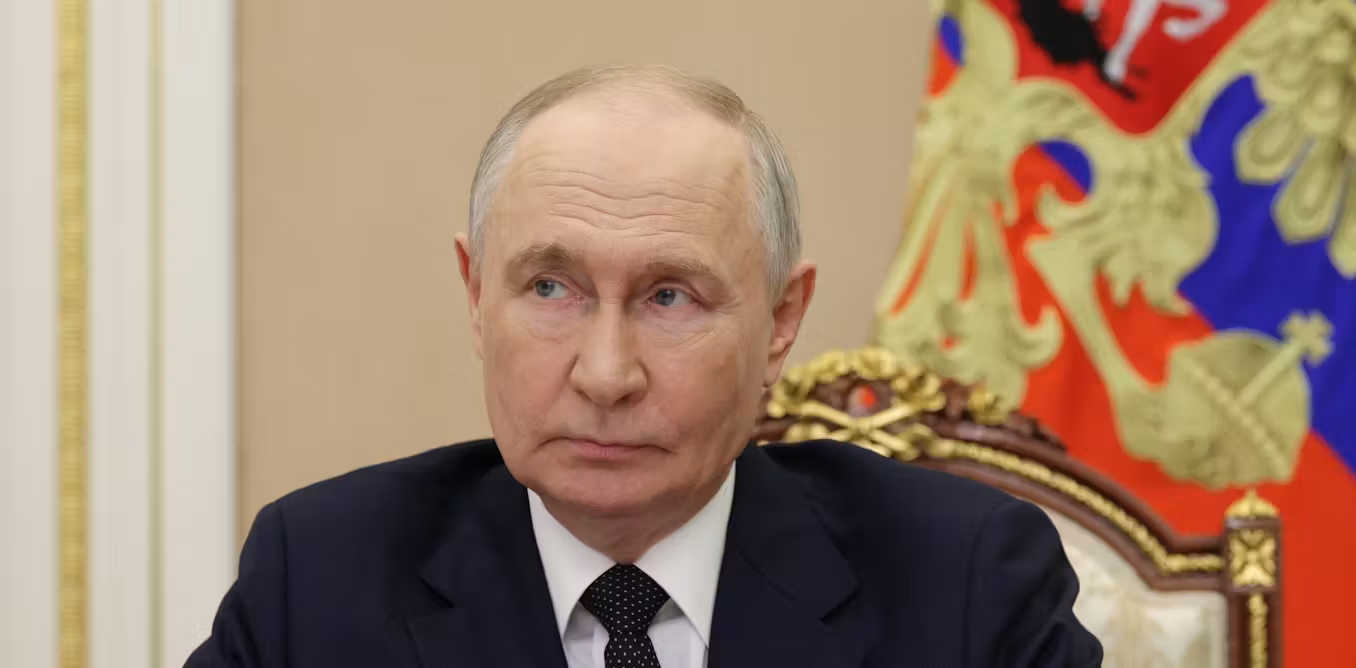
The Russian president, Vladimir Putin, at the funeral of former defence minister Sergei Ivanov, June 2026. EPA/Gavril Grigorov/Sputnik/Kremin pool
Job for life
But history tells us how hard it is to unseat a Russian (or Soviet) leader. Since the revolution in 1917, many have died in office – and the likeliest scenario is still that Putin will follow this pattern. After the constitutional amendments of 2020, there is nothing, save physical health issues, stopping him from remaining in office until the year 2036, at which point he will be 84.
With the exception of the short-term interim leader Georgy Malenkov, who took power after the death of Josef Stalin in 1953, only to be outmanoeuvred and replaced by Nikita Khrushchev within two years, only two leaders have faced outright coup attempts. The only one who was ousted was Nikita Khrushchev. He narrowly escaped a coup attempt already in 1957 but was finally ousted in 1964 .
Advertisement
Then there was Mikhail Gorbachev in 1991. Like Khrushchev, he faced considerable opposition from hardliners in the Soviet power structure and was forced to resign only months after an attempted military coup by conservatives opposed to his programme of reforms, which they believed threatened the cohesion of the Soviet Union.
However, his downfall was inseparable from the dissolution of the Soviet Union itself. The Soviet system collapsed immediately after his resignation on December 25, leaving the way clear for Boris Yeltsin to assume control of an independent Russia.
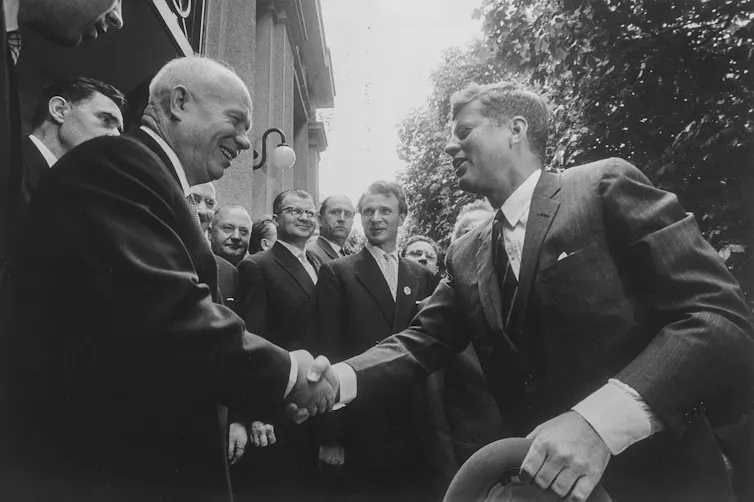
The ousting of Khrushchev may, therefore, offer more relevant parallels, happening as it did in a period of considerable international tension at the height of the cold war. Krushchev had been badly damaged in the eyes of Kremlin hardliners by the failures of his Berlin policy and during the Cuban missile crisis in 1962.
Regarding the former, he had twice demanded in 1958 and 1961 that western powers leave West Berlin within six months and turn it into a “free city”. Both Dwight D. Eisenhower and his successor, John F. Kennedy, refused to comply. It was a very public embarrassment for the Soviet leader.
Advertisement
Nikita Krushchev with John F Kennedy in Vienna, 1961. The Soviet leader’s handling of foreign affairs is believed to be one of the factors in his overthrow in 1964. Stanley Tretick/US National Archives and Records Administration
On top of this, the Cuban missile crisis, during which the Soviet Union installed medium-range nuclear missiles on the Caribbean island within 100 miles of the US mainland, only to back down under intense diplomatic pressure, was seen as another huge blow to Soviet prestige.
And here’s a similarity between Khruschev and Putin. Rather than the Russian president coming under pressure from powerful players wanting to end the war in Ukraine, any palace coup in Putin’s Russia would probably come from hardliners dissatisfied with what they see as insufficiently aggressive policies. Any plotting successor emerging from the security establishment would probably be even more committed to continuing the war than Putin himself.
But this remains unlikely. Since coming to power on New Year’s Eve in 1999, the Russian president has entrenched himself in a political system centred on himself as leader. As a result, the strongest historical precedent may be the simplest one: like most Kremlin leaders before him, Vladimir Putin is most likely to die with his boots on.
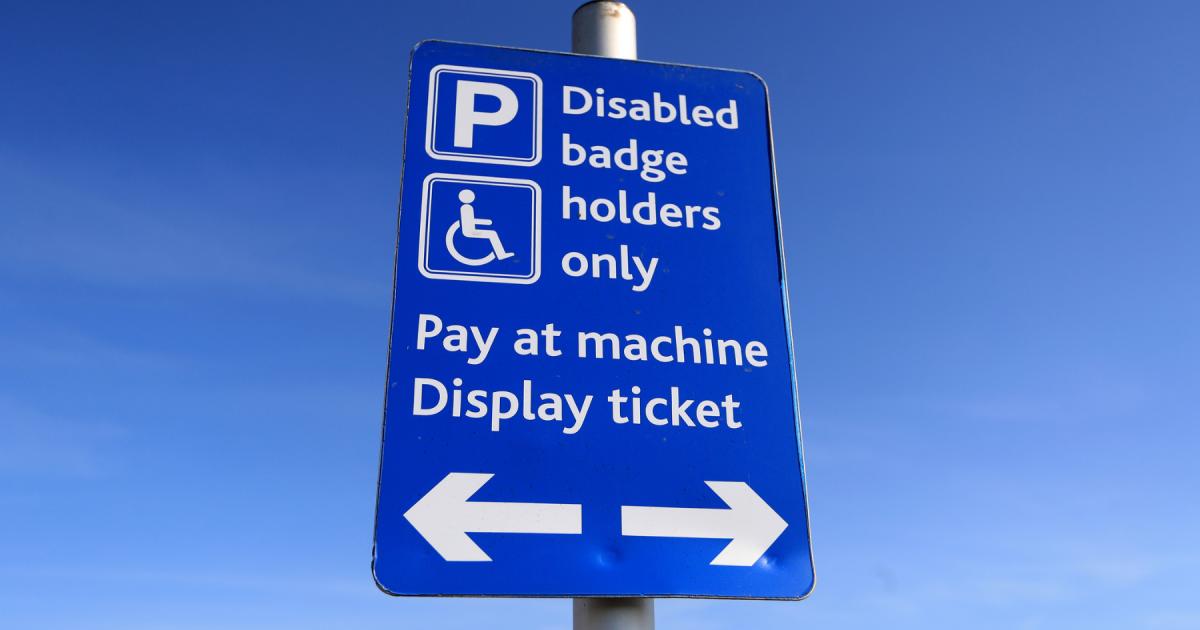
The scheme is designed to help people with disabilities or health conditions park closer to their destination.
Additionally, it allows people to park in specified Blue Badge parking spaces at supermarkets and other places.
The Blue Badge is linked to a person rather than a specific vehicle, so it can be used with any car.
Advertisement
If you’re using a Blue Badge to park on the street, you may need to use a clock alongside it.
When do you need to use a clock for a Blue Badge?
When you park on yellow lines or in other places where there is a time restriction, you need to display the blue parking clock to show your time of arrival.
“The clock should be set to show the quarter hour period during which you arrived,” the Government website shares.
“If you need to use a parking clock, you must display it on the vehicle’s dashboard or facia panel, so that the time can be seen clearly through the front windscreen.
Advertisement
“If there is no dashboard or facia panel in your vehicle, you must still display the clock in a place where it can be clearly read from outside the vehicle.”
If you don’t have the clock displayed, you may receive a parking ticket.
The parking clock is usually sent with the Blue Badge.
If not, you can request one from the same council that issued the badge.
Where can Blue Badge holders park?
A valid Blue Badge can provide a range of parking concessions, including:
Advertisement
Parking in designated disabled bays.
Free parking at many on-street pay-and-display bays – those on public roads administered by the council, not private companies.
Parking on single or double yellow lines for up to three hours where loading restrictions do not apply – although check with your local council as this can vary.
Access to council-operated disabled parking concessions, depending on local rules.
These concessions generally do not automatically extend to private supermarket or retail park car parks.
Recommended reading:
Who can use a Blue Badge?
“The badge is for your use and benefit only,” the Government website shares.
“It must only be displayed if you are travelling in the vehicle as a driver or passenger, or if someone is collecting you or dropping you off and needs to park at the place where you are being collected or dropped.”
Advertisement
It is important you don’t allow other people to use the badge to do something on your behalf, such as shopping or collecting something for you.
Have you used a parking clock alongside a Blue Badge? Let us know in the comments.
The driver and passenger in the car were uninjured
Gráinne Ní Aodha, Press Association
10:22, 26 Jul 2026
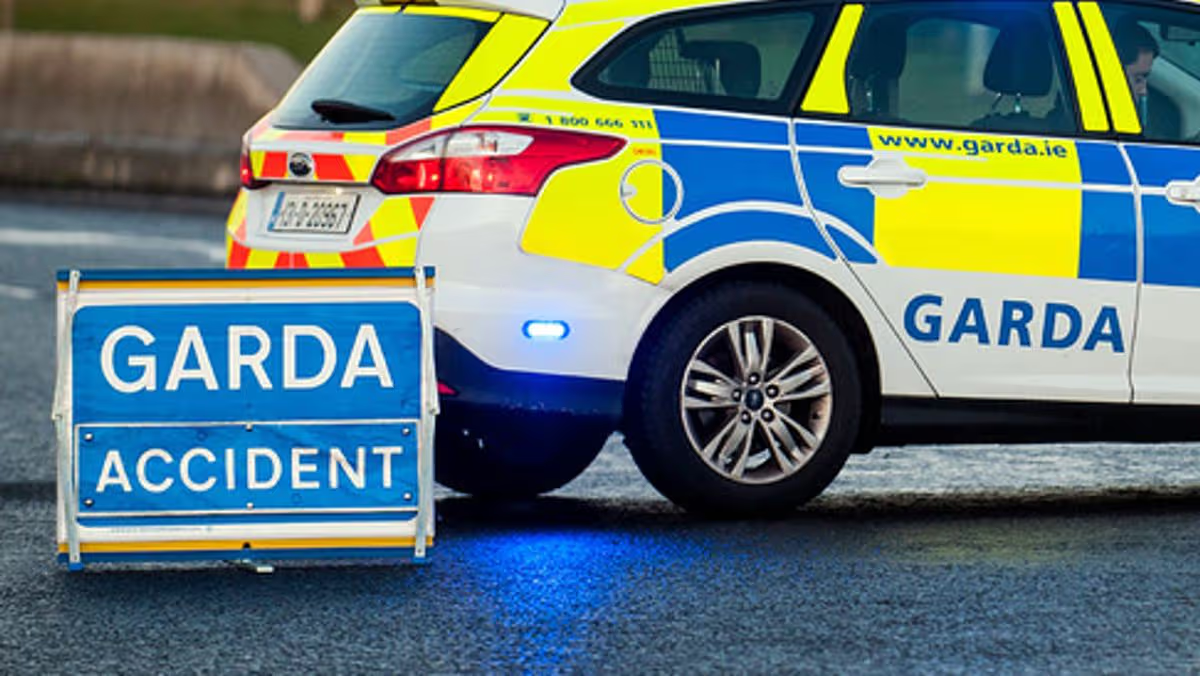
A man has died in a crash involving an e-scooter and a car in Co Meath.
The rider of the e-scooter, an unidentified male, was pronounced dead at the scene on the Kentstown Road in Navan at about 1.45am on Sunday. His body has been taken to the mortuary at Our Lady’s Hospital, Navan.
Advertisement
The driver and passenger in the car, a man in his 60s and a man in his 20s respectively, were both uninjured.
The road was closed for a forensic examination and local diversions are in place.
Gardaí are appealing to any witnesses to come forward.
In a separate incident, a teenage man died in a single-vehicle crash in Co Tipperary in the early hours of Sunday morning.
Advertisement
The incident took place on the L4101 at Lanespark, Ballynonty, Thurles, and gardaí are also appealing for witnesses.
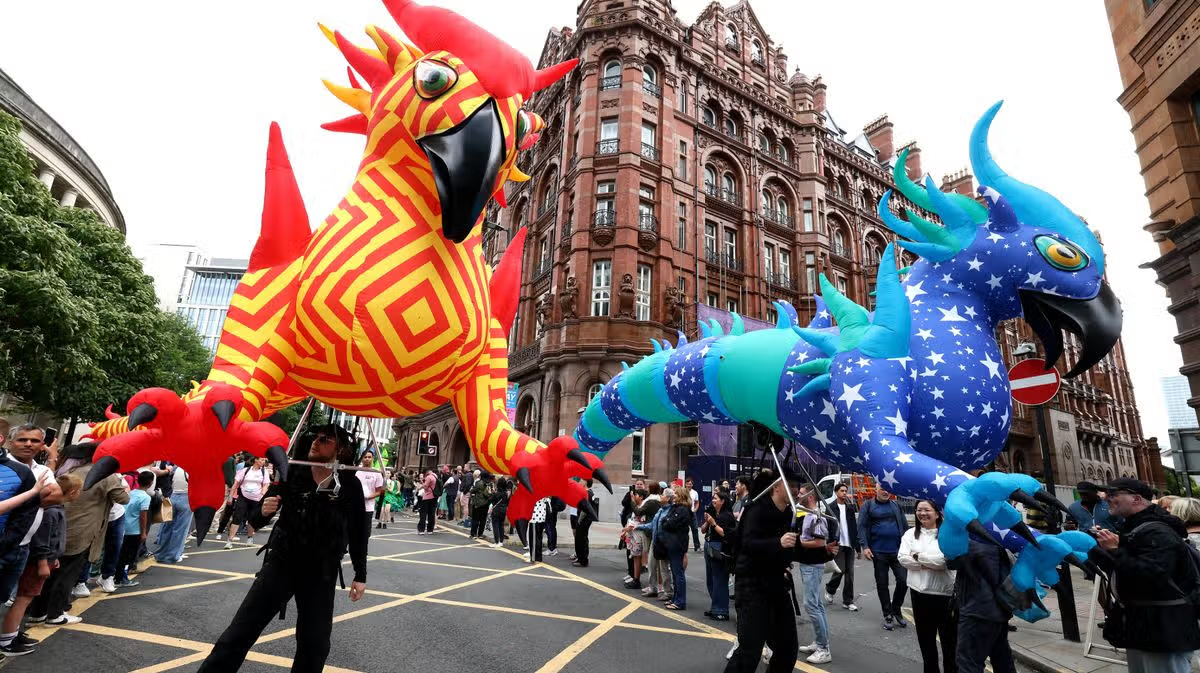
Manchester Day returns today in a colourful celebration of the city with a host of free family-friendly events taking place. Events kick off from 12 noon across Manchester’s civic squares, before the grand parade which will snake through the city centre’s streets from 1pm.
This year there will be a Catalan twist, to celebrate the city’s cultural ties with Barcelona. Manchester Day has become a huge event in the city ever since it was first launched in 2010.
The parade may be the centrepiece of the day, but there’s lots more happening to with roaming performers, musical performances and free activities across Sunday in the city centre. The main focus of activities will be on St Peter’s Square, Albert Square, St Ann’s Square, Exchange Square, Brazennose Street and Lincoln Square.
Advertisement
Click here for the latest on Manchester’s food & drink scene, gigs and more in our CityLife newsletter
Indeed, the event will be the first time Albert Square has been in use for Manchester Day since the Grade I Town Hall was closed for restoration in 2018. The square will also host the all-singing and dancing finale taking place here at 4.35pm to 5pm.
We will be bringing you live updates from the events across the city, including a full live stream of the event’s centrepiece – the grand parade at 1pm.
The parade will include a host of performers from Spain, in a collaboration follows Manchester’s role as guest city at last year’s iconic La Mercè festival in Barcelona, the first-ever English guest city chosen by Barcelona officials to take part in the annual event.
Advertisement
There will be over 550 performers on the parade, which will feature 25 community groups from across the city and beyond all celebrating Manchester’s rich cultural heritage.
Led by Manchester’s giant-sized Queen Bee and Worker Bee, the parade will also include giant puppets – the gegants – on their first ever trip outside of Spain, as well as bold costumes inspired by Catalan tradition.
Inspired also by this year’s National Year of Reading, expect plenty of nods to famous books in the parade too.
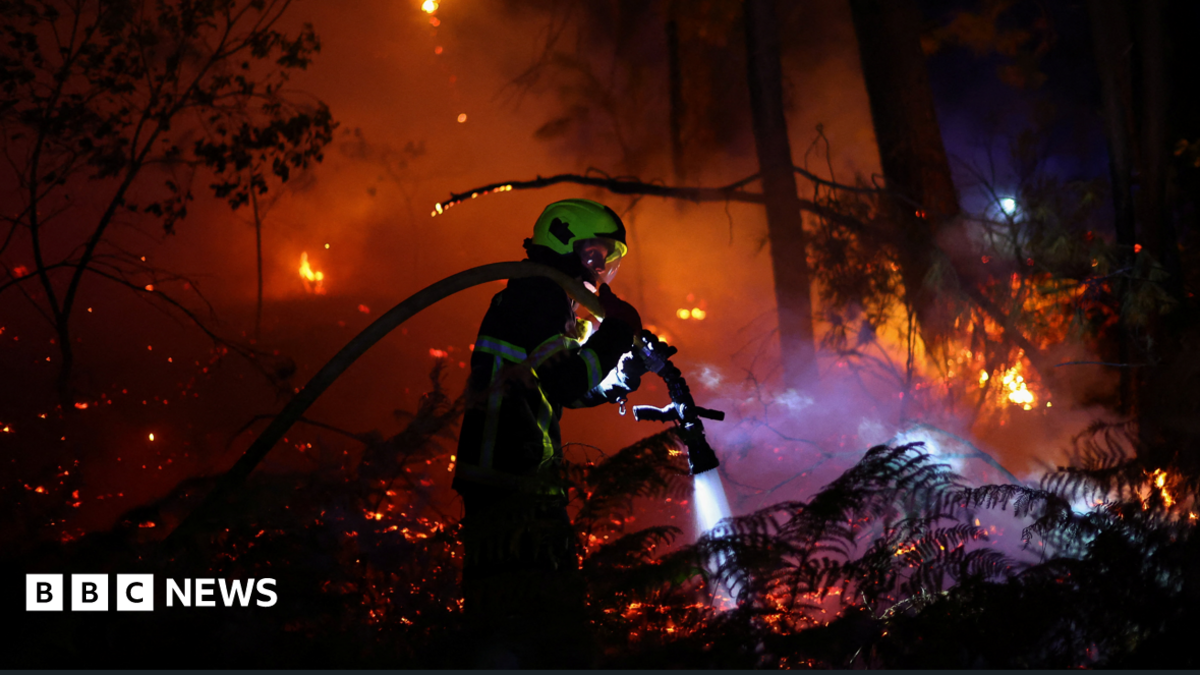
A further 55,000 people have been evacuated from six towns in France, as wildfires which have caused devastation across the country pick up pace.
The most recent evacuations took place in towns to the south of Bordeaux, in the Gironde region.
Wildfires have raged across Europe over the past week, primarily France and Spain, where more than 330,000 people have been evacuated.
France has been worst-affected, with an area of 42,000 hectares burnt, making it one of the largest forest fires since World War Two. About 98,000 hectares have burnt across the country since the start of the year.
Advertisement
Captain Nicolas Braz, one of the leaders of the firefighting operation, said the fire had created “its own winds – complete with whirlwinds”, adding it was “erratic and unmanageable”.
France’s Interior Minister Laurent Nunez said on Sunday the situation in the region remained “very unfavourable” and the wildfire was “moving erratically towards the Bordeaux metropolitan area”.
Dry vegetation and brisk winds are causing the fire to spread, with 60km (37 miles) of the A63 motorway, which leads to Spain, having been closed.
In an interview published on Sunday by La Tribune, Nunez said it “will take a long time to bring under control” and until it is contained “there will be no return” for evacuated residents and tourists.
Advertisement
France has mobilised its military to help with the response and extra reinforcements from the army have been sent to help firefighters by clearing brush and creating fire breaks.
President Emmanuel Macron said France would “rebuild” and his government would “be there for as long as is needed”.
Meanwhile in Spain, fires continue to spread, with more than 90,000 evacuated from the regions around Madrid and Ávila.
Late on Saturday, at least eight municipalities near Toledo were also ordered to evacuate, though it was unclear how many people were involved.
Advertisement
Sunday is expected to bring high temperatures and low humidity, potentially allowing the fire to spread further.
Madrid’s regional president Isabel Díaz Ayuso described the situation as the “worst fire in the history of the region”.
Spanish PM Pedro Sánchez admitted there were “complex times ahead”. Meanwhile, authorities in València confirmed the death of a man in a fire.
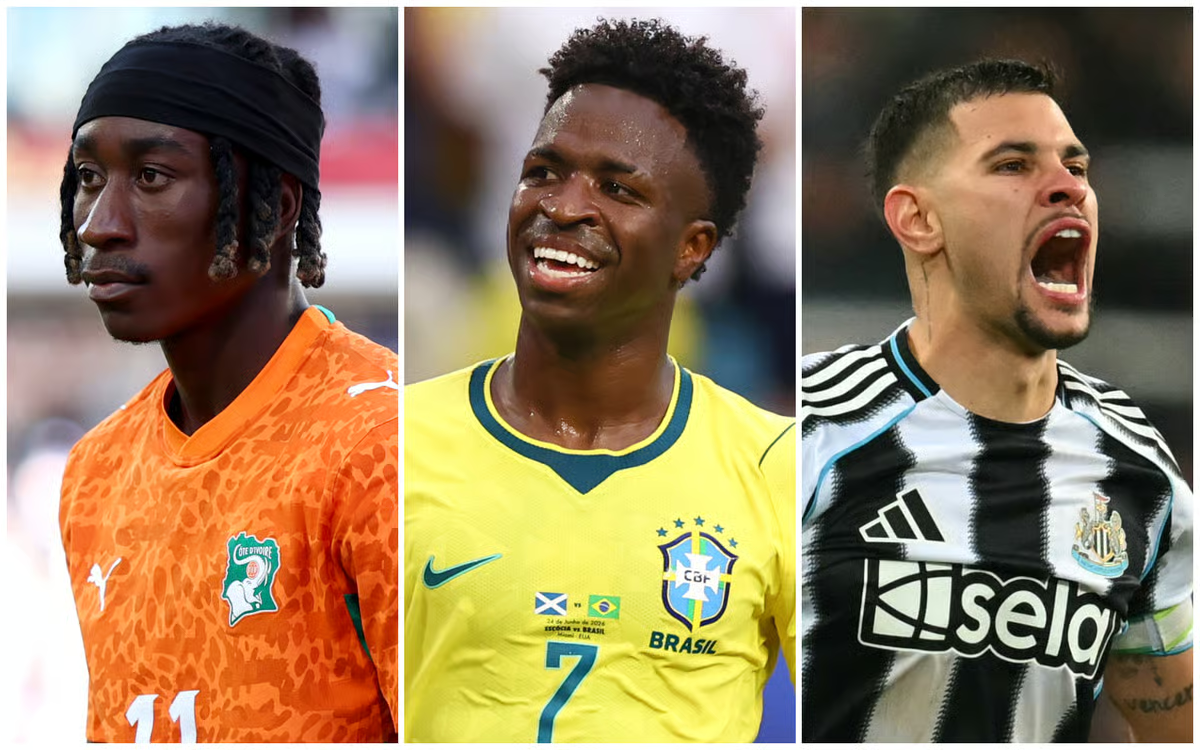
They have also confirmed the signing of Christos Tzolis and are set to make a £70million bid for Bruno Guimaraes after agreeing personal terms with the Newcastle captain. Defenders Ezri Konsa, John Stones and Jacobo Ramon are of interest too, amid ongoing links to the likes of Julian Alvarez, Bradley Barcola and Marcus Rashford. Man United have been boosted in their pursuit of Aurelien Tchouameni, with Real Madrid team-mate Eduardo Camavinga also on their midfield radar alongside Carlos Baleba, Manu Kone, Sander Berge, Danilo and Tyler Adams.
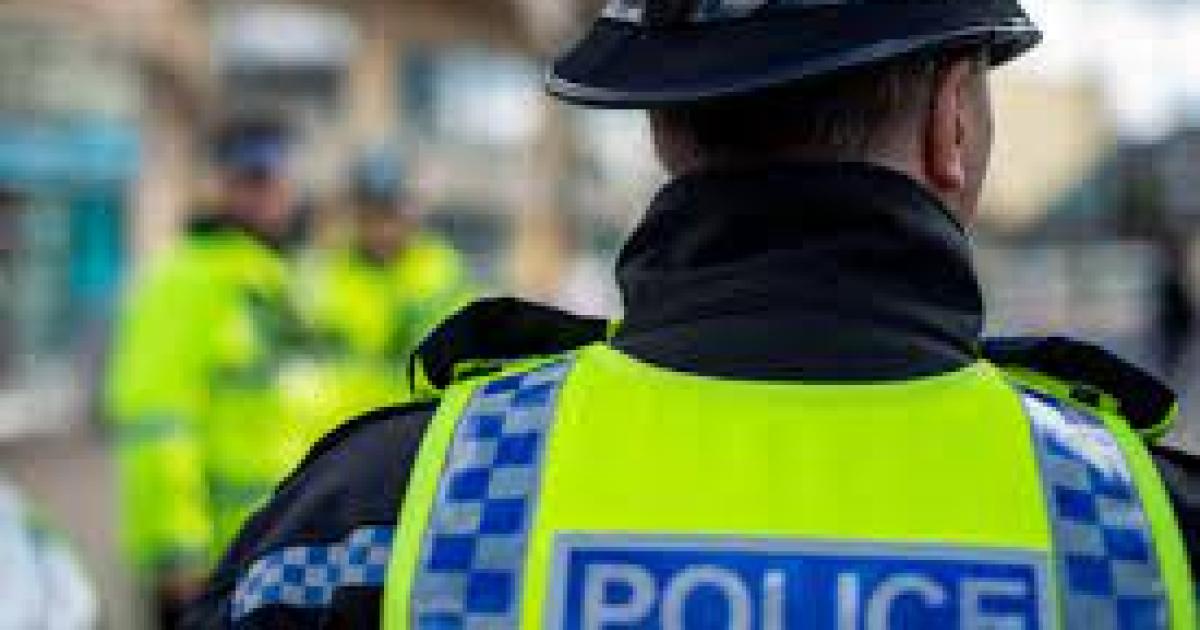
Midazolam and morphine, both injectable end-of-life medication, were reported stolen from a property on Charles Street in Redcar on Saturday afternoon, July 25.
Cleveland Police said the drugs could cause serious harm in the wrong hands and urged anyone who may have taken them to attend A&E immediately.
A spokesperson for Cleveland Police said: “We’re appealing for information after potentially lethal medication was stolen from an address in Redcar.
Advertisement
“The midazolam and morphine, which were reported as stolen from the property on Charles Street in Redcar this afternoon, Saturday, July 25, are both injectable end-of-life medication.
“They could cause serious harm in the wrong hands and anyone who may have taken it should report to A&E immediately.”
Anyone with information about the incident has been asked to call 101, quoting reference SE26147136.
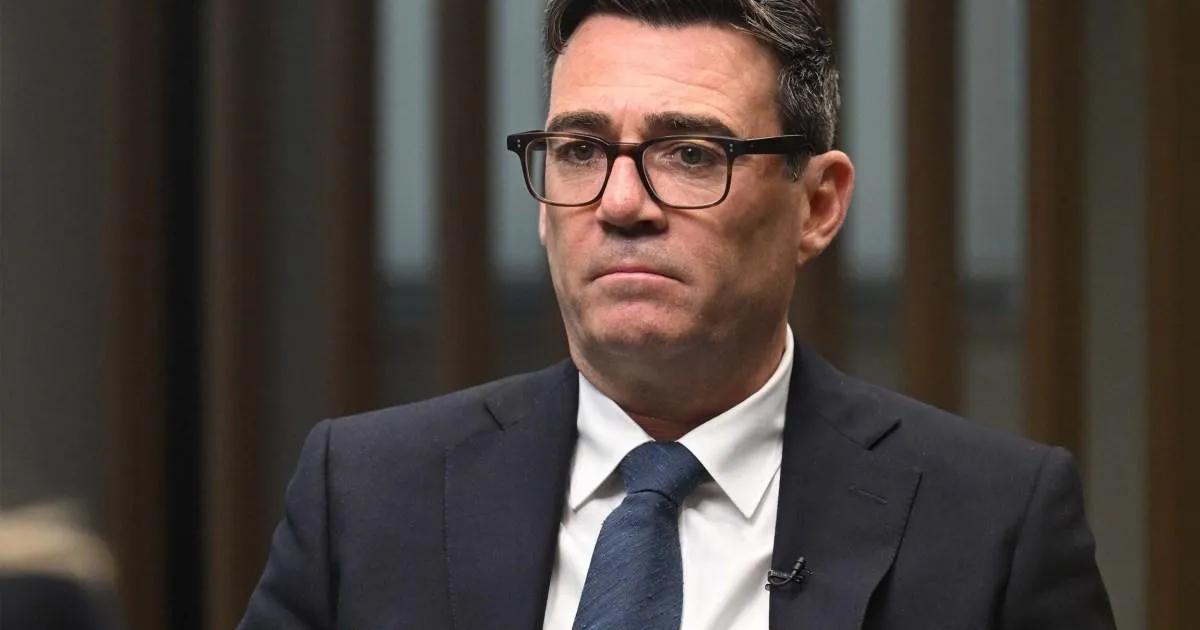
Andy Burnham has ruled out calling an early general election and said he will ‘honour’ Keir Starmer’s manifesto.
Advertisement
The new Prime Minister insisted he ‘faced the public’ in the Makerfield by-election and had a mandate for his sweeping changes to the country.
Burnham was speaking after a busy first week in the top job, during which he pledged to roll out the biggest changes the UK has seen in four years.
He has already announced a nationwide single fare bus cap at £2 and plans to scrap VAT on household electricity bills.
The BBC’s Laura Kuenssberg put it to Burnham that 48 million people in the electorate had not had a say on his ideas.
Advertisement
Burnham was speaking from No 10 North in Manchester (Picture: Jeff Overs/BBC/PA Wire)
Make sense of the mad world of British politics
Get analysis of the latest stories – including Andy Burnham’s rise to Number 10 – direct to your inbox from Metro’s Senior Politics Reporter Craig Munro. Sign up here.
Asked if he would rule out an early general election, the new PM replied: ‘There is no general election.
Advertisement
‘People voted for a manifesto. We are in a parliamentary democracy. That is what people voted for and I will honour that manifesto.
‘I have faced the public in Makerfield. At the time I stood forward in the by-election, people said “oh my goodness, that constituency voted Reform in May, that is a risk.”
‘I went and faced the public and I went out onto those doorsteps. I have done that I have got the support of colleagues in Parliament.’
Asked for a second time if he would rule it out, he said: ‘I am going to rule it out. There’s no early general election. I do not think people want it.
Advertisement
‘Well, the opinion polls might say some people do, some people don’t. What I need to do is get Britain focused on getting the country back where it should be.’
Burnham’s vow means the country should not face a general election until 2029, five years after Keir Starmer swept to power in 2024.
There had been speculation that the new PM would want to go to the polls after he wiped out Reform’s poll leader almost immediately after entering No 10.
Theresa May called a general election in 2017 despite ruling out a poll before 2020 on numerous occasions (PIcture: REUTERS)
However it could now be politically tricky for Burnham to break his promise not to hold an early ballot.
Advertisement
Theresa May repeatedly ruled out an early election after she became leader in 2016, and then faced backlash when she called one a year later.
During his interview, Burnham was also grilled on his relationship with Donald Trump.
He twice refused to answer the question whether he trusted the US president.
Instead, he answered: ‘It’s a changing world isn’t it, and you just obviously have to call things as they develop.’
Advertisement
Burnham added: ‘I can’t at any point say that I won’t take a different opinion from him [Trump], that I will need to voice a different idea that is right for Britain.’
Advertisement
Speaking from No 10 North, Burnham would also not commit to a date when the government would spend 3% of GDP on defence.
His new Chancellor, John Healey, resigned from Starmer’s government over their refusal to hit the benchmark.
Burnham said: ‘I appointed my new chancellor very aware of what he had said about the critical importance of defence spending and the position that he had taken about that.
‘The first challenge facing us both is to ensure that the defence investment plan is fully funded and that’s the thing that’s right in front of us and we need to work that through as we go towards the budget later this year.’
















































You must be logged in to post a comment Login