Connect with us

NewsBeat

York Postern Tower exhibition explores city’s Irish heritage

Published

on

York Postern Tower exhibition explores city's Irish heritage

Recently I made the journey to York to meet Bill Hill, the chair of The Friends of York Walls, along with Sarah Shields who is a historian of Irish history in York. I was given a tour and guided to associated places around the city by Mr Hill, who said it had taken the Friends over a year to put it all together.

Bill Hill, of The Friends of York Walls, by the Postern Tower (Image: Dylan Connell)

The annals of York’s connection with Ireland has not had the prominence of other cities and towns of Britain; it has largely been unknown – some would say secret.

York is well known for its Roman legacy, architecture and archaeology. One of the main features of this are the city walls. York’s walls at just over two miles (3.4 kilometres); they are also the longest town walls in the UK.


Recommended reads:

Advertisement

Photo stirs memories of Scarborough holidays when a giant tunny was star attraction

York Races fashion front-runners through the years – in photos

Rain forecast for Leeds Festival? These photos show fans have seen it all before

Can you spot yourself in these GCSE results day photos from 2015 to 2025?

Advertisement

Built in Roman times, they’ve been added to and rebuilt over time and now have parts from across the centuries.

Fishergate Poster Tower in York.Fishergate Postern Tower in York. (Image: Dylan Connell)

The Friends of York Walls was formed in early 2011 by a group of five of York’s residents who felt that “The Walls” needed more support and promotion. The Friends now number over 600. Walls have eyes that have seen over the centuries what history has been made.

It is these walls that gave rise to the research into the story of York’s Irish population.

Fishergate Poster Tower in York.The exhibition at Fishergate Postern Tower in York. (Image: Dylan Connell)

Sarah Shields, the historian of York’s Irish history, said some of the first people came in the 1830s when workers came from Ireland to help with the harvest within the agricultural areas around York. Known as the July reapers, they came to Liverpool and would walk to York gathering the harvest and go back home to Ireland afterwards.

Advertisement

When the potato famine began in the 1840s, the Quakers in York, the Tuke family, were already inter-married to an Irish family.

Samuel Tuke, who lived in Walmgate in York, visited Ireland and was appalled by what he saw. Samuel then sent his son James to do further investigations and it was then through the Quakers that the first famine population started coming to York.

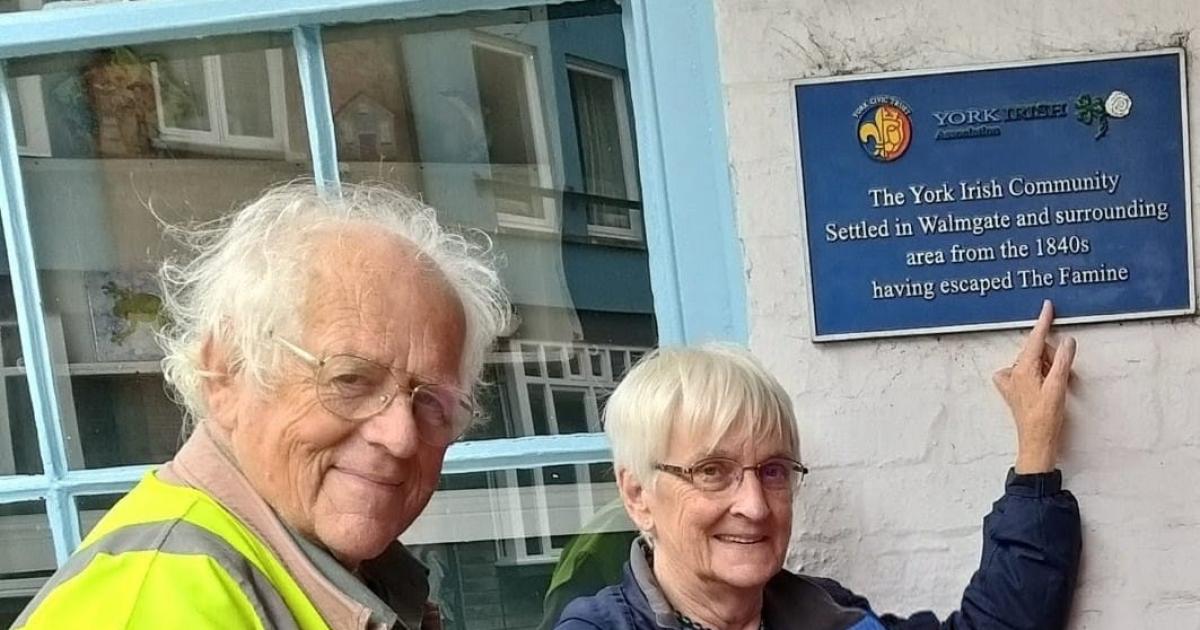
Familiar in York as seasonal agricultural workers, Irish migrants came to the city in larger numbers to escape the Great Famine of the 1840s. They lived in squalid, unsanitary closes and yards, mainly in the Walmgate area, just off the city centre towards the walls.

A winding staircase inside the Postern Tower, Fishergate, York. (Image: Dylan Connell)

The national census of 1841 shows that, out of York’s 28,842 inhabitants, 430 had been born in Ireland and a further 351 people were either children of the Irish born or married to them. The majority of them lived in the poorer, south-eastern quarter of the city, between the Foss and Ouse rivers.

Advertisement

A number of migrant Irish workers used to come every year to work on the corn harvest on the Wolds’ farms east of York.

The following census shows the increase in numbers of ‘Irish born’ recorded in York in 1851. Their numbers had increased from 781 in 1841 to 2,618 in 1851 making them 7.2 per cent of the city’s population. Their numbers rose to 3,248 in 1861 and 3,380 in 1871, partly because of the reputation of the York Quakers for attempting to bring relief and to influence the British Government.

In 1847, the York authorities noted that about 45 destitute Irish were arriving every day, many of them suffering from fevers, smallpox or measles.

The Irish population settled in housing in areas alongside the walls of York in what is known as Walmgate. The research put together by the Friends of York Walls is now the subject of the exhibition that will run for the whole of 2026.

Advertisement

The exhibition gives details of the names of the Irish and what counties in Ireland they came from, their age on arrival and occupation.

For £20, you can sponsor a stone in your name or for someone else; you choose a stone on an external wall of the tower, then a certificate and book entries link that stone uniquely to the name you give.

The exhibition is being held in the ancient Fishergate Postern Tower (c 1505), which is on the city walls. Entry is free on the open days. For further inforamtion, contact friendsofyorkwalls@yorkwalls.org.uk

Fishergate Postern Tower Open Days in September and October include:

Advertisement

Saturday, August 29

Saturday, September 12 & 19 = Heritage Open Days

Saturday, September 26 = York Unlocked

Sunday, September 27 = York Unlocked

Advertisement

Saturday, October 31 = Halloween Saturday

Plus other possible dates – check the website for details. Free entry. Open 10am to 4pm.

Source link

Advertisement
Continue Reading
Click to comment

You must be logged in to post a comment Login

Leave a Reply

NewsBeat

Tim Curry dies aged 80: Rocky Horror Picture Show and It star dead

Published

on

Wales Online

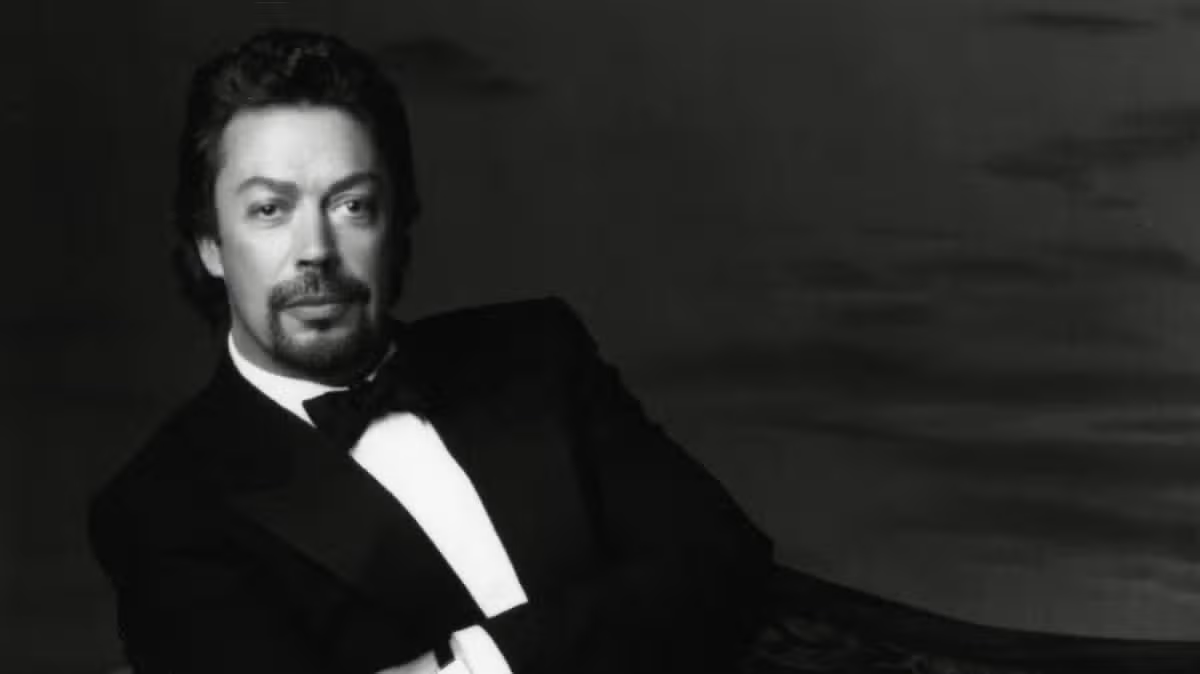
British actor Tim Curry, best known for his iconic performances as Dr Frank-N-Furter in The Rocky Horror Picture Show and Pennywise the Clown in Stephen King’s It, has died at the age of 80, according to US reports

The British actor, renowned for his legendary portrayals of Dr Frank-N-Furter in The Rocky Horror Picture Show and Pennywise the Clown in It, has passed away aged 80.

The distinguished performer, whose career encompassed more than five decades across cinema, television and stage, died on Tuesday night, according to reports from America. Circumstances surrounding his passing have yet to be formally disclosed, TMZ reported.

Advertisement

Curry achieved cult status following his portrayal of the exuberant Dr Frank-N-Furter in the 1975 film The Rocky Horror Picture Show, having first taken on the character during its London stage run.

His show-stopping performance contributed to transforming the musical into one of cinema’s most lasting cult classics, with devotees worldwide still flocking to interactive midnight showings more than half a century since its debut.

Born in Grappenhall, Cheshire, in 1946, Curry launched his professional life on stage before achieving recognition in cinema and television. His other notable characters included the spine-chilling Pennywise in the 1990 adaptation of Stephen King’s It, Wadsworth in Clue, Rooster in Annie and Long John Silver in Muppet Treasure Island, reports Dublin Live.

His filmography also featured appearances in Legend, The Hunt for Red October, Home Alone 2: Lost in New York and The Three Musketeers, while his unmistakable vocal talents established him as a sought-after contributor to animation and gaming projects.

Curry experienced a severe stroke in 2012 which impacted his movement, though he persevered with voice acting work and made sporadic public appearances in subsequent years. Tributes are anticipated to flood in for the performer, whose remarkable career established him as one of Britain’s most distinctive and adaptable talents.

Advertisement

His interpretation of Dr Frank-N-Furter endures as one of cinema’s most iconic cult performances, while countless horror enthusiasts recall his terrifying portrayal of Pennywise.

Curry’s passing represents the loss of a unique talent whose contributions across theatre, film and television cemented his status as an enduring cultural figure.

Source link

Advertisement
Continue Reading

NewsBeat

PETER HITCHENS: Why I now rejoice when my trains are late. There’s an unexpected upside

Published

on

Hasn’t the time come, in decrepit Britain, to accept that not much is ever going to get better, and just demand compensation?

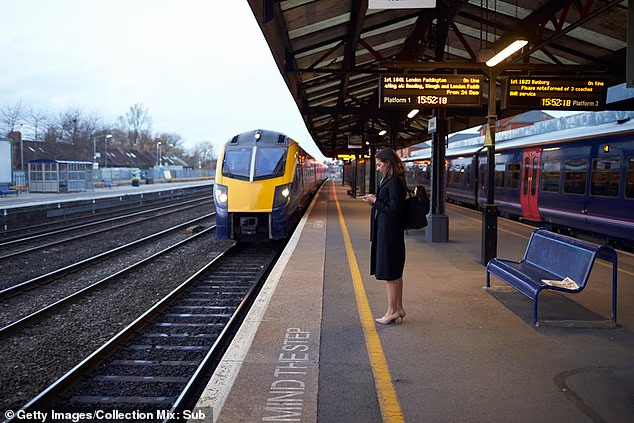
I now rejoice when my trains are late, which is often. You might even have seen me muttering ‘Yes!’ and thrusting a clenched fist into the air as my belated so-called express crawls into Oxford or Paddington stations, more than 15 minutes late.

After nearly 50 years of being towed daily up and down this decrepit piece of track, inefficiently and often slowly, it is a major change in my life.

Why is this? It is very simple. A system called ‘Delay Repay’ means that I can apply for compensation every time my Hitachi ‘high-speed’ train is more than a quarter of an hour behind its timetable.

I am thinking of fitting a small, cheery bell to my home computer, so that I can make it go ‘Kerching!’ as I file each report. So far, the system has paid without quibble over a fiver each time, and, as I own a season ticket so expensive that I am too embarrassed to tell you what it cost, I have already been handed enough cash to pay for several decent bottles of wine.

Advertisement

What an alteration this is. The journey is only 63 miles each way, but there are so many excuses for lateness: Either someone has driven a lorry into a bridge at Slough or Langley. Or there is a ‘signal failure’, which used to mean that Balkan gangsters had stolen the cables.

Or there is a ‘points failure’. Isn’t it amazing that signals and points, invented by the Victorians more than a century ago, should fail so much?

Or we have a ‘track circuit failure’ whatever that is. Or there are ‘trespassers on the line’. I have also experienced ‘cows on the line’ (I did actually see these, so I know it was true).

Or the amazingly frequent decision of the signal box, many miles away, to cause the hugely expensive Japanese-designed machine in which I am travelling, capable in theory of 140mph, to crawl behind some flatulent 1970s rail bus that stops at every station. I am surprised, in retrospect, that I have never had an actual apoplexy.

Advertisement

Hasn’t the time come, in decrepit Britain, to accept that not much is ever going to get better, and just demand compensation?

I have more than once been tempted to leap from the train and walk home, but of course the doors are now locked and there is no way to do this. Anyway, that would probably make me a ‘trespasser on the line’.

Still, the muttered curses, pounding pulses, grinding teeth and furrowed brows of the past are forgotten. I no longer scowl and snarl at the pathetic announcements and useless apologies that bray from the loudspeakers.

Advertisement

What was the use, I would retort to nobody in particular, of an apology with no intention to mend their ways. If I could bank their apologies, I said, I would eventually become rich.

Well, now I can, in effect, bank them, because as the train once again begins to grow late, I smile complacently at the slowly passing countryside and start to calculate how much I might benefit. Now, this does nothing to make the service better. I confidently expect it to get even worse soon. All my friends on the line tell me it is inevitable, given the way the railways are run. But hasn’t the time come, in decrepit Britain, to accept that not much is ever going to get better, and just demand compensation?

Let us extend the ‘Delay Repay’ scheme to all other aspects of life. Held up at the passport queue on the way back from your holiday? If the Home Office had to shell out an instant tenner to everyone who waited more than 20 minutes, a family of four would get £40. Think of it. I promise you that you’d immediately care less. Spend it on a pizza when you eventually get home.

Forced to hang on for an hour to speak to a government official or a bank? Get 50p for every minute above five that you have to wait (which is coincidently Reform’s position, having announced today a £30 rebate for each caller kept on hold by HMRC for longer than 30 minutes).

Advertisement

That degree they encouraged you to get was useless? Get 25 per cent of your loan refunded. I’d personally like some way of stinging film and TV reviewers for telling me some rubbish is ‘riveting’ or ‘unmissable’ when missing it would actually have improved my life, but I can see that might be hard to calculate.

As for political manifestoes, where do we begin? I suspect that if the government had to give each taxpayer £10 back for every illegal migrant who came ashore in a rubber dinghy, His Majesty’s Treasury – by far the most powerful government department – would make a real effort to stop the boats.

Let us extend the ‘Delay Repay’ scheme to all other aspects of life, writes Peter HItchens

Let us extend the ‘Delay Repay’ scheme to all other aspects of life, writes Peter HItchens 

There I will be, three-quarters of the way home, and the train is running 14 minutes late. Rather than urging it on to make up time, I long for a quick cow on the line. And then ‘Kerching!’

There I will be, three-quarters of the way home, and the train is running 14 minutes late. Rather than urging it on to make up time, I long for a quick cow on the line. And then ‘Kerching!’

Advertisement

Apply ‘Delay Repay’, to potholes in the road, or to the failure of the police to pursue drug possession, burglary and vandalism, and you might also get a change of heart at your local police HQ.

I think I could also devise a formula that would allow us to get cash back for every BBC outbreak of partiality.

Something also has to be done about all those super-cautious weather forecasts that predict great gouts of rain and flashes of lightning for days and nights which end up being clear and dry.

The problem, of course, is that people – and I might be one of them – could become so fond of all this extra tax-free cash flowing ceaselessly into their bank accounts that they would get complacent about the problems that cause the delays and failures in the first place. They might even start wanting the problems. This has certainly happened to me.

Advertisement

There I will be, three-quarters of the way home, and the train is running 14 minutes late. Rather than urging it on to make up time, I long for a quick cow on the line, or perhaps to be jammed once more behind that ever-present slow-running service, to bring the delay safely past the 15-minute mark. And then ‘Kerching!’

For really long delays, the payments can be even bigger, and thanks to this a friend of mine has been travelling almost free for some months on an especially troubled route. She seems remarkably cheerful about it, considering the hours she has wasted on contemplating the buttercups growing beside the line.

This is the choice that lies before us. Sort out the country, or demand money off because nothing works. I am sorry to say that it is pretty easy to work out which is more likely.

Source link

Advertisement
Continue Reading

NewsBeat

Dolly Parton through the ages: How the late ‘Queen of Country’ embraced ‘more is more’ fashion, wearing huge wigs, high heels and rhinestones for seven decades

Published

on

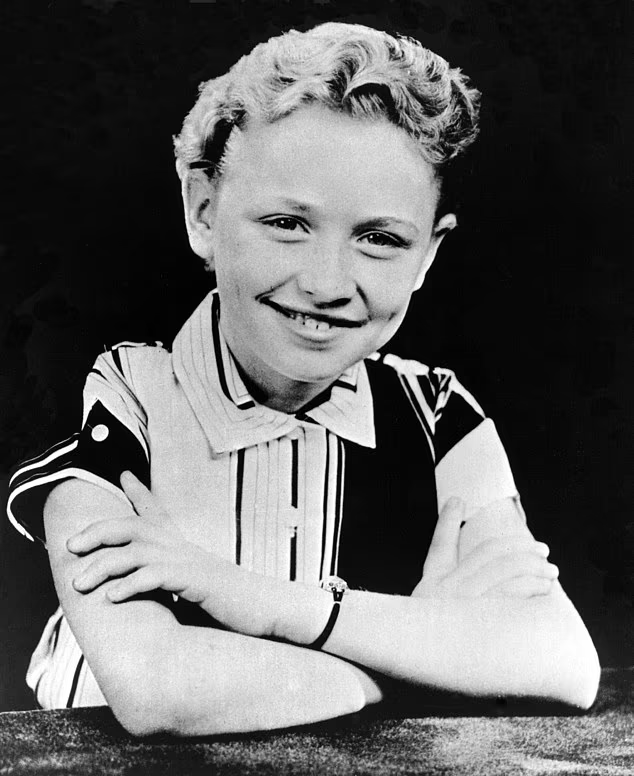
1955: Growing up in what she has called 'extreme poverty' in rural Tennessee, Dolly said she had to get creative when it came to her cosmetics as a young girl

A striking blonde wig, perfectly done acrylic nails and thousands of glistening rhinestones – Dolly Parton‘s visual legacy is perhaps as memorable as her incredible country voice.

The late singer passed away aged 80 yesterday after a battle with cancer, triggering an outpouring of tributes from across the world.

As famous faces of all ages – including Sabrina Carpenter, Jane Fonda, Eminem and Reba McEntire – remembered her kindness and ardent efforts in philanthropy, many also fondly looked back on her lifelong commitment to ‘more is more’ flamboyancy.

Dolly had always famously quipped that ‘it costs a lot of money to look this cheap!’ and called herself a ‘Backwoods Barbie’.

Advertisement

‘I make jokes about it, but it’s the truth that I kind of patterned my look after the town tramp,’ she once freely admitted.

‘I didn’t know what she was, just this woman who was blond and piled her hair up, wore high heels and tight skirts, and, boy, she was the prettiest thing I’d ever seen. 

‘Momma used to say, “Aw, she’s just trash”, and I thought, “That’s what I want to be when I grow up. Trash.”‘ 

Growing up in what she has called ‘extreme poverty’ in rural Tennessee, Dolly confessed she had to get creative when it came to her cosmetics as a young girl growing into a woman.

Advertisement

1955: Growing up in what she has called ‘extreme poverty’ in rural Tennessee, Dolly said she had to get creative when it came to her cosmetics as a young girl

‘I’d find ways to create my own makeup with pokeberries and stuff that grew wild in the fields,’ she wrote in her book, Behind The Seams: My Life In Rhinestones.

‘I think all people that grow up in the mountains learn how to improvise with what you don’t have. I would strike Mama’s old kitchen matches to make eyebrows and my beauty mark.

Advertisement

‘Still, I find myself mixing and matching different makeups for different colours.’

While Dolly began performing as a child – having appeared on local television shows by 10 years old and already recording singles aged only 13 – it wasn’t until the 1960s, after she signed with Monument Records at 19, that she began curating her signature stage style.

‘When I moved to Nashville in 1964, I already had some ideas about what I wanted to look like onstage – and off,’ she wrote in her 2023 book.

‘Country stars had to have big hair and some sparkles, and you had to have a Cadillac. I had the big hair but not yet the Cadillac – or enough sparkles.’ 

Advertisement

Even though her label attempted to ‘flatten’ her big hair, she ‘hated everything about it’ – and ‘felt naked’.

Over the years, it became clear that any attempts to dilute Dolly’s image would be for nought.

1965: When Dolly signed with Monument Records at 19, that she began curating her iconic stage style

1965: When Dolly signed with Monument Records at 19, that she began curating her iconic stage style

1975: Dolly poses for a portrait in Los Angeles, California. Even though her label attempted to 'flatten' her hair, she hated it and felt 'naked'

1975: Dolly poses for a portrait in Los Angeles, California. Even though her label attempted to ‘flatten’ her hair, she hated it and felt ‘naked’

Advertisement
1977: Dolly always made sure to add an element of country-Western to her ensembles

1977: Dolly always made sure to add an element of country-Western to her ensembles

Each stage look was every inch as glam as the one before, but some memorable ensembles stand out, including a 1977 hot pink spandex jumpsuit, which she wore to the Grammy Awards.

True to her Southern roots, it was adorned with a white vest and sequins. 

However, her memorable looks could sometimes also be more understated.  

Advertisement

In the 80s, as her wigs got bigger and her presence got bolder, Dolly also starred in the comedy film titled after her hit song, 9 to 5.

Playing a secretary who wants to get revenge on her egoistical, sexist boss, the star won over audiences in a peach knitted dress, golden hoops and stunning platinum curls.

Elsewhere, in her more laid back looks Dolly was also fond of cowboy-style plaid shirts, hats and denims. 

Her ensembles did not calm down with age.

Advertisement

If anything, they only ramped up as Dolly enjoyed cinched waist lines, short skirts, high heels and low-cut tops well into the 90s, 2000s and beyond. 

1980: Dolly at the premiere of Nine to Five, in which she played a secretary who wants to get revenge on her egoistical, sexist boss

1980: Dolly at the premiere of Nine to Five, in which she played a secretary who wants to get revenge on her egoistical, sexist boss

1977: Dolly wore a hot pink spandex jumpsuit to the Grammy Awards, adorned with a white vest and sequins

1977: Dolly wore a hot pink spandex jumpsuit to the Grammy Awards, adorned with a white vest and sequins

1978: Dolly was a fan of bold colours, always incorporating them into her ensembles

1978: Dolly was a fan of bold colours, always incorporating them into her ensembles

Advertisement

At 52, while performing on the Tonight Show in 1998, she oozed glamour in a figure-hugging glittering silver mini dress – and two years later, wore a bright yellow embroidered skirt and blazer to a White House luncheon. 

Dolly also refused to shy away from candid conversations about beauty and ageing. 

‘If something is bagging, sagging or dragging, I’ll tuck it, suck it or pluck it,’ she told the Guardian in 2011.

‘I’m not trying to be fashionable. Never was! I got some clothes that I’ve had for 25 years. People say, oh, that’s Dolly, Dolly does what Dolly does – and Dolly does!’

Advertisement

In 2019, Dolly also admitted that she didn’t mind if people thought she looked ‘artificial’.

‘It is true that I look artificial, but I believe that I’m totally real,’ she told CBS Sunday Morning.

1987: Dolly Parton in Dolly, a variety show with guest stars including Tom Selleck and Oprah Winfrey

1987: Dolly Parton in Dolly, a variety show with guest stars including Tom Selleck and Oprah Winfrey

1989: Dolly at the Steel Magnolias New York City Premiere at Ziegfeld Theatre

1989: Dolly at the Steel Magnolias New York City Premiere at Ziegfeld Theatre

Advertisement

‘My look is really based on a country girl’s idea of glam. I wasn’t naturally pretty, so I make the most of anything I’ve got.’

It comes as Dolly’s private cancer battle has been revealed following the heartbreaking news of her death.

The legendary country singer’s death shocked the world and came after months of health woes that saw her pull out of a string of public appearances, fueling fan fears for her wellbeing. 

Those close to the singer said she had both become increasingly reclusive and secretive about her ill health in recent months. 

Advertisement

And now, Parton’s representatives revealed she died following a ‘brief battle with cancer‘ in a statement to People, though they did not disclose what type of cancer it was.

‘Our beloved Dolly Parton spent her life and career bringing joy, laughter, hope and integrity into everything she touched,’ the statement read.

‘After bravely facing a brief battle with cancer, Dolly departed her Earthly life today at the Vanderbilt-Ingram Cancer Center surrounded by loved ones.’

Her representatives also highlighted the extraordinary reach of Parton’s ‘unmatched generosity,’ noting she touched the lives of countless people she would never meet and was always ready to ‘offer a helping hand.’ 

Advertisement
1993: As Dolly grew older, she refused to tone down her aesthetic, instead leaning into it more

1993: As Dolly grew older, she refused to tone down her aesthetic, instead leaning into it more

1996: If anything, they only ramped up as Dolly enjoyed cinched waist lines, short skirts, high heels and low-cut tops well into the 90s, 2000s and beyond

1996: If anything, they only ramped up as Dolly enjoyed cinched waist lines, short skirts, high heels and low-cut tops well into the 90s, 2000s and beyond

‘Whether it be the hundreds of millions of books donated through her invaluable Imagination Library or funding research that helped create a lifesaving vaccine used around the world, Dolly’s unconditional love for all people was the guiding force for her lasting impact.’

Despite her cancer battle, Parton remained optimistic and leaned on her deep Christian faith for strength in the last few months.

Advertisement

‘From the time that Dolly Parton was born, she was surrounded by faith, by God, by Jesus. Her grandfather was a preacher. Even in her Broadway show, she shows how much faith means to her,’ a source told People.

‘And so it’s natural for people of faith to believe that God is in control. It doesn’t matter what doctors may say, people may say. It’s not over until God says it’s over. I think she lived every day working and as long as God hadn’t called her home, she was here and she had more work to do.’

Parton previously told the outlet that she prayed every day in a 2020 interview: ‘To me, it’s my salvation. It helps me through everything.’ 

2004: Dolly sporting a glittering mini dress at The Theatre at Madison Square Garden

2004: Dolly sporting a glittering mini dress at The Theatre at Madison Square Garden

Advertisement
2011: Dolly has never shied away from figure-hugging ensembles

2011: Dolly has never shied away from figure-hugging ensembles

2015: Dolly has always had a stunning set of nails on - and was rarely seen without high heels

2015: Dolly has always had a stunning set of nails on – and was rarely seen without high heels

2018: She always added a touch of glitz with rhinestones and sequins

2018: She always added a touch of glitz with rhinestones and sequins

2019: Bold patterns and cuts were on the par for Dolly's stage style

2019: Bold patterns and cuts were on the par for Dolly’s stage style

Advertisement
2022: Four years ago, Dolly showed she is a true rockstar in a figure hugging leather outfit

2022: Four years ago, Dolly showed she is a true rockstar in a figure hugging leather outfit

2023: Dolly joined the Dallas Cowboy Cheerleaders in a performance at half-time during a game between the Dallas Cowboys and Washington Commanders

2023: Dolly joined the Dallas Cowboy Cheerleaders in a performance at half-time during a game between the Dallas Cowboys and Washington Commanders

2025: The singer was sporting her signature looks well into the last years of her life

2025: The singer was sporting her signature looks well into the last years of her life

The star’s death was confirmed Tuesday in an Instagram video posted by her nephew Bryan Seaver, who also acted as her head of security.

Advertisement

She died on Tuesday morning after being hospitalised on Friday at Nashville’s Vanderbilt University Medical Center with autoimmune and kidney problems, according to TMZ.

As news of Parton’s rapidly deteriorating condition spread, her loved ones raced to Nashville to be by her side, but not all were able to reach her while she was alive. 

‘This video announcement is something Dolly asked of me years ago before I fully absorbed it as a future reality,’ Seaver said.

He hailed his aunt for having ‘lived in the light’ and said she was now ‘in the arms of Jesus’ and the company of her late husband Carl Dean, as well as her parents and ‘countless others who have watched her and longed to meet her in the heavens.’

Advertisement

Source link

Continue Reading

NewsBeat

Why the air ambulance landed in Bishop Auckland today

Published

on

Why the air ambulance landed in Bishop Auckland today

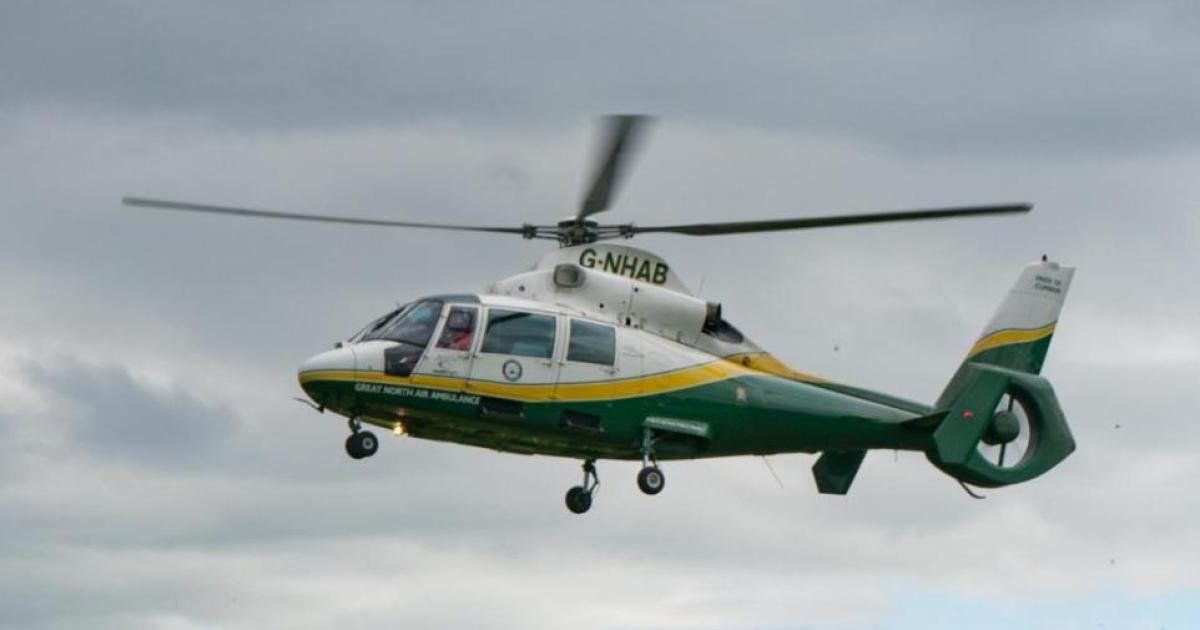
The helicopter was seen landing in the County Durham town after 12.30pm on Wednesday (August 26).

A Great North Air Ambulance spokesperson said: “Our critical care team was activated at 12.33pm to reports of a medical incident in Bishop Auckland.

“We had a paramedic and doctor on board our aircraft and they arrived on scene at 12.43pm.

Advertisement

“Our team worked alongside NEAS to assess and treat a patient.

“The patient was taken to hospital by a NEAS road crew, accompanied by our team.”

A North East Ambulance Service spokesperson said: “We were called to a medical incident at a private address in Bishop Auckland.

“We dispatched two ambulance crews and were supported by Great North Air Ambulance Service.

Advertisement

“One patient was taken to Darlington Memorial Hospital by road.”

Source link

Advertisement
Continue Reading

NewsBeat

Harwood Dolly Parton tribute act remembers the legend

Published

on

Harwood Dolly Parton tribute act remembers the legend

Kennedy Caitlin, a Dolly Parton tribute act, was lucky enough to meet the music superstar and paid tribute to the singer.

Visibly emotional Kennedy, who lives in Harwood, said that generations contacted with Dolly because “she’s always been authentically her.”

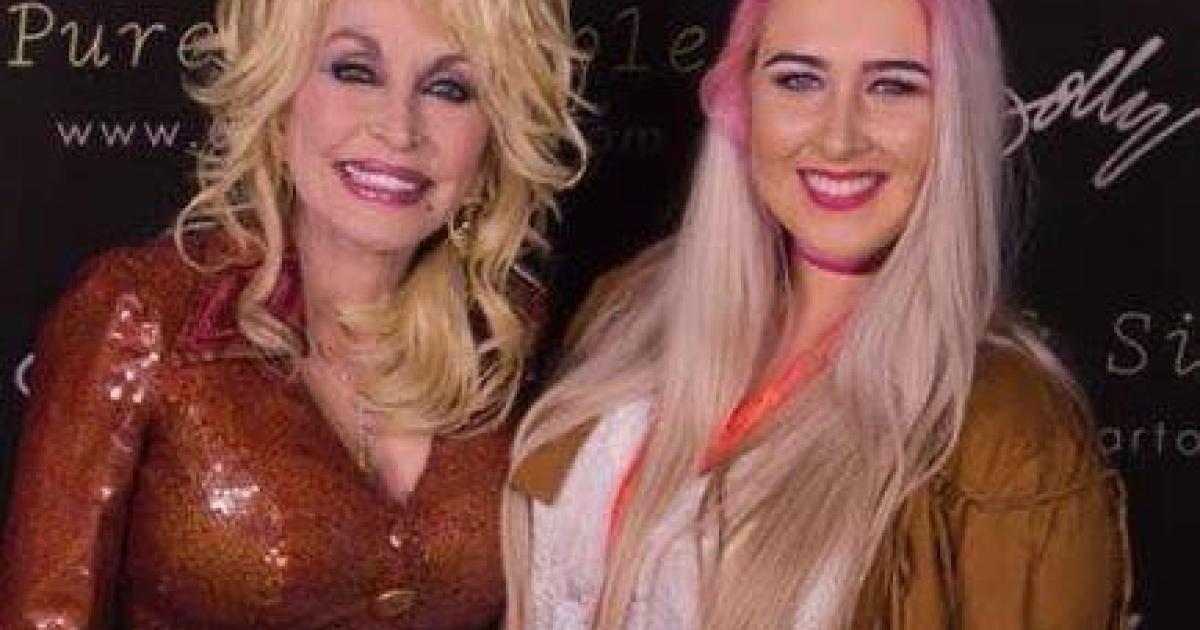
Kennedy remembers Dolly Parton (Image: Kennedy Caitlin)

Kennedy who has performed at Bolton Food and Drink Festival, met Dolly in 2016 during the singer’s Pure and Simple tour across North America and Canada, describing her as “funny and quick-witted.”

She said her inspiration came from Dolly’s famous quote: “Don’t get so busy making a living that you forget to make a life.”

Advertisement

She became emotional while explaining her own interpretation of the quote:

Kennedy said:“She made my life worth living and she gave me the living to make a life.”

Recalling when she met Dolly, Kennedy, 30, said: “I told her that I was a tribute to herself, and she said, ‘I wish I was as beautiful as you.”

Fans often tell her that her performances feel uncannily close to the real thing.

Advertisement

Kennedy remembers Dolly Parton (Image: Kennedy Caitlin)

Kennedy said: “A lot of people say to me after that I closed my eyes and felt like I was back there with Dolly”

In her own tribute shows, Kennedy often recreates Dolly’s iconic 2014 Glastonbury performance.

She calls it one of the singer’s “biggest moments” in the UK.

Dolly famously drew the largest crowd that Glastonbury had ever seen.

Advertisement

Her work as a tribute artist has taken her across the UK, as well as to Spain, Portugal, Cyprus, and she has even received offers to perform in Dubai.

Kennedy’s favourite song to perform is the legendary “I Will Always Love You.”

She said that people often “don’t realise that [Dolly] wrote it.” When she sings the ballad, she said you can hear a “pin drop”.

The Bolton News previously featured Kennedy Caitlin in 2015 following her appearance as Dolly Parton on the Stars in Their Eyes revival series.

Advertisement

Kennedy performs as Dolly Parton on Manchester River Cruises every month and will be singing at Grosvenor Casino Bolton on the 2 October as part of “A Night in Vegas.”

Source link

Advertisement
Continue Reading

NewsBeat

Tom Byabagamba, former head of Rwanda’s presidential guard, dies in prison, his brother says

Published

on

Tom Byabagamba, former head of Rwanda's presidential guard, dies in prison, his brother says

KIGALI, Rwanda (AP) — Tom Byabagamba, a former commander of President Paul Kagame’s elite presidential guard who later was convicted of inciting insurrection, has died in prison after spending a dozen years behind bars, his brother said. He was 59.

Byabagamba, who held the rank of colonel before he was stripped of it, was the brother of former presidential adviser and now-exiled dissident David Himbara, who announced Byabagamba’s death Tuesday in a statement on X.

“It is with profound sadness that we announce the death of our beloved brother, Colonel Tom Byabagamba, who passed away while in prison in Rwanda,” Himbara said. He did not give a cause of death.

There was no immediate comment from authorities in Rwanda, where the subject of Byabagamba is taboo. He was commander of the presidential guard until he apparently had a falling out with the president and was removed from his post in 2010, with no reason given.

Advertisement

Rwandan authorities detained Byabagamba in August 2014 along with another officer, Brig. Frank Rusagara. In 2016, the Military High Court sentenced them to several years in prison over charges including inciting insurrection and tarnishing the government’s image. Rusagara died in prison last year.

Many critics saw the trial as flawed, and Human Rights Watch said the case followed a pattern of silencing government critics at home and abroad.

In 2019, the Court of Appeal reduced Byabagamba’s initial 21-year sentence to 15 years.

Advertisement

Rwanda’s government denies targeting its opponents, even as Kagame’s critics say his authoritarian stance leaves no room for internal dissent. Many senior army officers have fallen out with Kagame, with some fleeing into exile because they believed their lives had been threatened.

Kagame is credited for transforming Rwanda from a country in shambles after the 1994 genocide. But he also faces persistent criticism for what human rights groups say are widespread abuses, a muzzling of independent media and suppression of political opposition. He denies the accusations.

Advertisement

Source link

Continue Reading

NewsBeat

Stan Wawrinka handed US Open 2026 wild card to mark one last Grand Slam appearance

Published

on

Stan Wawrinka handed US Open 2026 wild card to mark one last Grand Slam appearance

Stan Wawrinka will play at this year’s US Open after all after a withdrawal opened up a wild card spot for the 2016 champion.

The USTA initially confirmed at the start of the week that Wawrinka, the three-time Grand Slam winner who is retiring at the end of the season, was not on their list of eight wild-card spots.

The 41-year-old had even penned an emotional message on social media, marking the end of his Grand Slam and US Open career, but the withdrawal due to injury of Patrick Kypson on Wednesday, previously awarded a wild card, has handed Wawrinka and the USTA a reprieve.

Advertisement

Wawrinka said: “I’m incredibly excited to accept the wild card for the 2026 US Open and look forward to competing in front of the fans in New York once again.”

It means Wawrinka will make one last major appearance in the main draw at Flushing Meadows in New York. The tournament starts on Sunday, with the draw taking place on Thursday at 5pm (BST).

The initial decision not to award Wawrinka a wild card was much-criticised across tennis circles, particularly given the Swiss player had featured at every other major this year – and impressed in a run to the third round at the Australian Open.

Wawrinka’s world ranking has dropped to 127, putting him just outside the window for direct main draw entry. He could have played in qualifying, as Grigor Dimitrov has opted to do, but he has now been vindicated by his choice.

Advertisement

Wawrinka won the last of his three Grand Slams in New York, after triumphing at the Australian Open in 2014 and the French Open in 2015.

The Swiss player has already confirmed that he plans to bow out at his home tournament, the Swiss Indoors event in Basel, in October.

Source link

Advertisement
Continue Reading

NewsBeat

Bill Gates warns ‘insane’ AI wave could create ‘bioterror weapon’ and destroy human jobs | News Tech

Published

on

Bill Gates warns 'insane' AI wave could create 'bioterror weapon' and destroy human jobs | News Tech
Bill Gates has called for ‘human reserves’ so jobs are protected (Picture: AFP)

Bill Gates is hitting the panic button on the ‘insane’ AI wave that could dream up new bio-weapons, bombs, create pandemics and unleash them on the human race.

In a 6,000-word essay titled ‘The Turbulent AI Era Is Here – The Choices We Make Are Critical’, the former Microsoft boss warned AI is developing far faster than humans can control.

He insists people will need to protect global economies by ring-fencing ‘human reserved’ jobs like doctors and carers before robots take over everything.

‘AI will either be the greatest equaliser ever invented, or the worst source of injustice,’ Mr Gates wrote.

Advertisement

‘Even under the best circumstances, the transition to this new AI era will be one of the most turbulent times in human history.’

To view this video please enable JavaScript, and consider upgrading to a web
browser that
supports HTML5
video

Advertisement

He claims AI has all the tools it needs to create bombs, bioweapons and computer viruses and could become capable of using that information without human permission.

‘Although AI will lead to lifesaving advances in drugs and vaccines, it will also make it easier to design a deadly new disease,’ he said. 

‘Again, the positive capabilities are hard to separate from the dangerous ones. This is a global problem.

Advertisement

‘The risks I’ve just mentioned are all about how AI will empower bad actors who have relatively little power now. The same tools will also concentrate power in places where it already exists.’ 

‘Autonomous weapons, for example, will make governments even more capable of using deadly force without a human being part of the decision,’ Mr Gates added.

‘Monitoring and manipulating public opinion will be easier and cheaper, and more effective too.’

‘Because it can see, listen, speak, and reason and will eventually do physical work just as smoothly as any human, it will not just affect one sector,’ the tech leader said.

Advertisement

‘AI will take on work in law, customer service, medicine, software, and manufacturing. It will hit these industries rapidly, over the course of a decade rather than a few generations.’

He urged the adoption of ‘human reserved’ jobs protected from AI, fearing huge numbers of jobs vanishing forever.

He continued: ‘I like the phrase human reserved because it makes me think of nature reserves – places where we could put buildings and roads, but we choose not to because the loss would be too great.’

He referred to the doctors who cared for his father as he died of Alzheimer’s disease six years ago.

Advertisement

‘Something in the care they gave my dad was irreplaceably human, no robot could or should have done it,’ he said. 

‘Imagine a robot giving you the awful news that you have an incurable disease. There’s no technical reason why it couldn’t. Yet it shouldn’t.’

After publishing the blog, he told Semafor he had changed his mind on the benefits of AI to the human race.

He added: ‘I am in a state of shock that I’m sort of the first one saying, “This is crazy. This is insane,” he said. ‘I’m just deafened by the silence.’

Advertisement

Gates had been a proponent on the positives AI can bring to medicine and global food production.

15513445 Jeffrey Epstein sent himself email claiming Bill Gates gave ex-wife Melinda an STI by cheating on her and that he wanted to slip her antibiotics to cure it 15515007
Jeffrey Epstein had sent himself an unverified email claiming Bill Gates gave ex-wife Melinda an STI and wanted to slip her antibiotics to cure it

Gates had become entangled in the Jeffrrey Epstein scandal after appearing in Epstein files after the paedophile billionaire presented himself as someone who could connect wealthy donors to global health causes. An affair was revealed and ultimately his association with Epstein led to his divorce from Melinda Gates.

Gates told 9News: ‘You know, in retrospect, that was a dead end and I was foolish to spend time with him. I am one of many people who regret ever knowing him.’

The Microsoft co-founder added: ‘I was only at dinners… I never went to the island, I never met any women, and so, you know, the more that comes out, the more clear it’ll be, that although the time was a mistake, it had nothing to do with that kind of behavior.’

In late February, Gates admitted to having extramarital affairs with two Russian women but denied any involvement with the financier’s activities.

Advertisement

Source link

Advertisement
Continue Reading

NewsBeat

Lloyds and Halifax banking apps suffer outages in UK

Published

on

Daily Mirror

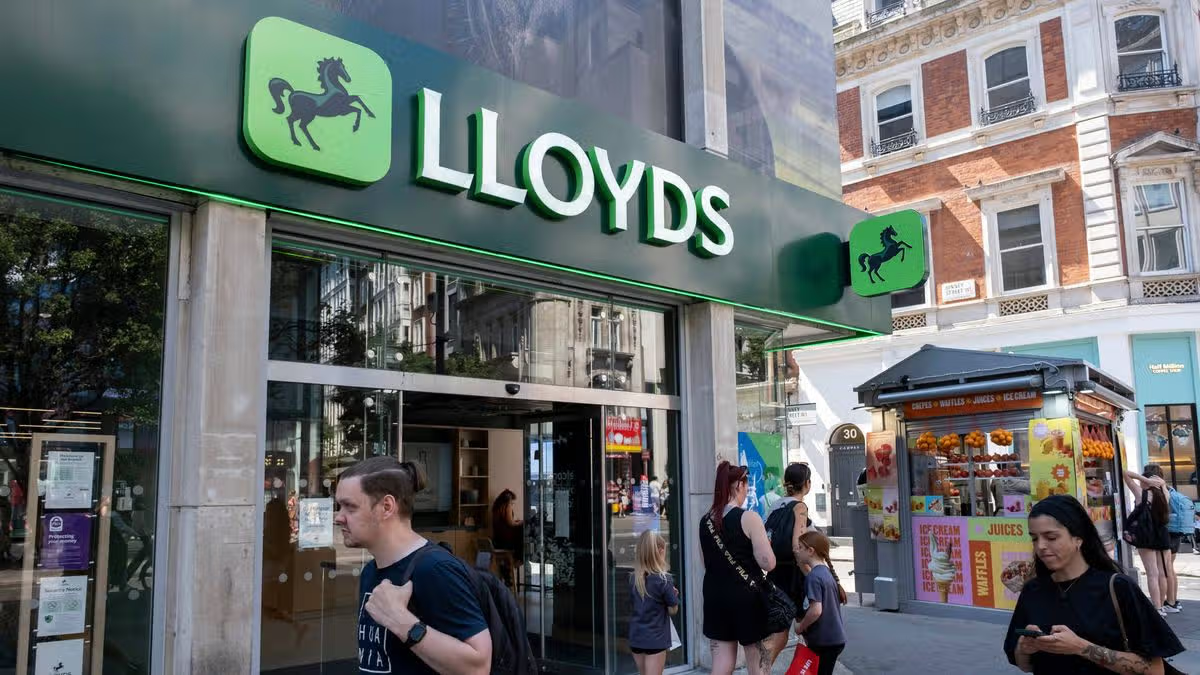
The Lloyds banking app went down for some users in the UK this afternoon, with hundreds reporting issues on DownDetector – there were also issues reported with Halifax

The Lloyds app went down today (file)(Image: Mike Kemp, In Pictures via Getty Images)

Source link

Continue Reading

NewsBeat

Meta will impose daily limits on child Instagram users and pay $17 BILLION to settle claims it deliberately got youngsters hooked on its social media platforms

Published

on

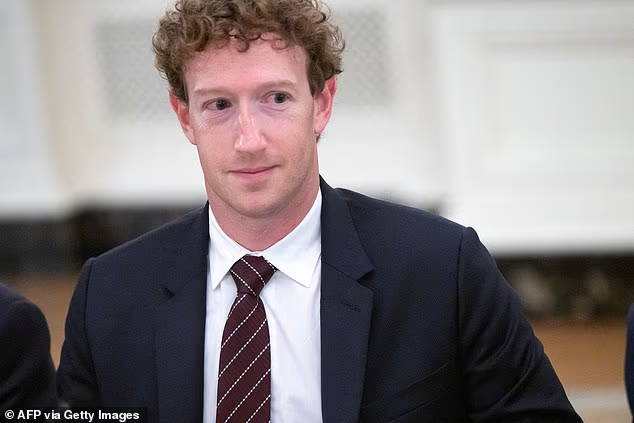
Meta boss Mark Zuckerberg, pictured in the White House in September 2025

Social media giant Meta will pay almost $17 billion to settle a lawsuit that claimed its products Instagram and Facebook harmed young users.

Wednesday’s settlement resolves a lawsuit brought against Meta by 29 states over claims Instagram and Facebook were deliberately designed to get children hooked.

Meta was also accused of misleading users about how safe minors were on its platforms, and of improperly collecting personal data of children under 13 while they used its platforms.

As part of the settlement, Meta will impose daily usage limits on users under the age of 18, and also make it harder for minors to access its platforms at night.

Advertisement

‘Today, we have secured a settlement with Meta that will make social media less dangerous for our kids and make a world of a difference for children and their families,’ California Attorney General Rob Bonta said in a statement celebrating the development.

He maintained that Meta will enact the ‘massive transformations’ on its platforms ‘within months.’

The trial was co-led by Bonta and AGs from Colorado, New Jersey and Kentucky. 

Meta owns and operates Facebook, Instagram, and Threads.

Advertisement

Meta boss Mark Zuckerberg, pictured in the White House in September 2025

California Attorney General Rob Bonta, who co-led the 29-state effort to sue the social media company, said in a statement that changes would be seen on platforms like Facebook and Instagram 'within months'

California Attorney General Rob Bonta, who co-led the 29-state effort to sue the social media company, said in a statement that changes would be seen on platforms like Facebook and Instagram ‘within months’

Proceedings for the landmark federal trial began in Oakland, California, last week. It had originally been scheduled to run through early October. 

Advertisement

‘I am proud to deliver this settlement that addresses the concerns at the core of our lawsuit and institutes real change, real transparency, and real enforceable protections for children on Facebook and Instagram – right now, no more waiting,’ Bonta’s office said in its statement.

The AG specifically said Meta had agreed to install a default time limit of two hours for users under the age of 18, as well as a nighttime block between the hours of midnight and 6am. Parents can lift both settings.

Other mandated defaults include restrictions on the notifications youngsters and teens receive during school and nighttime hours, and a ban on showing the numbers of ‘likes’ or reactions to posts published by minors.

A ban on cosmetic surgery image filters for young users was agreed upon as well, Bonta said.

Advertisement

Also included in the settlement but not required is an option for young users to elect for a ‘non-personalized feed,’ rather than one fueled by an algorithm.

Meta must also hire an independent auditor to ensure the company adheres to another provision- that the company no longer peddles ‘further false, misleading, or deceptive statements around its safety features,’ Bonta said.

The settlement is set to be paid to the states who participated in the 2023 lawsuit over the next ten years.

Proceedings began last week at  the Oakland federal courthouse in California and had been scheduled to run another few months

Proceedings began last week at  the Oakland federal courthouse in California and had been scheduled to run another few months

Advertisement
Key testimony came from former Meta staffers like Arturo Béjar, a former Meta and Facebook safety engineer and Instagram consultant who said his job often included briefing Meta's CEO, Mark Zuckerberg, personally

Key testimony came from former Meta staffers like Arturo Béjar, a former Meta and Facebook safety engineer and Instagram consultant who said his job often included briefing Meta’s CEO, Mark Zuckerberg, personally

The amount is one of the highest ever to be paid by a tech firm to US states. Meta said that ‘participating states’ will receive about $12.7 billion in a statement after the states filed their agreement Wednesday morning in the US Northern District of California.

The state of California is set to receive somewhere between $1.5 billion and $2.1 billion when the settlement is officially approved, according to Bonta’s office.

The state and other ‘participating states’ represented by the AGs will receive about $12.7 billion, or 70 percent, of the total settlement over the next decade according to Meta – with the other $5.3 billion hinging on whether its rivals, namely Google’s YouTube and TikTok, implement certain app changes as well.

Advertisement

This includes daily time limits for youth and a ‘night mode.’
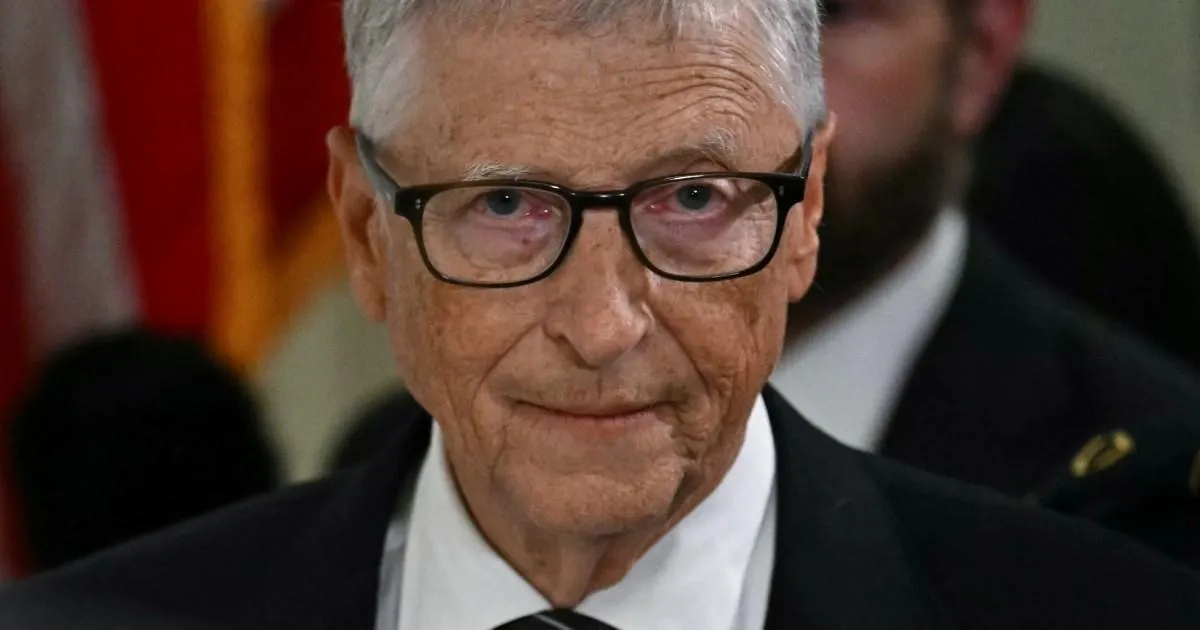
Key testimony came from former Meta staffers like Arturo Béjar, a longtime Facebook safety engineer and Instagram consultant who said his job often included briefing Meta’s CEO, Mark Zuckerberg.

In his testimony, Béjar said he repeatedly raised issues about the type of content being pushed on to Zuckerberg and other Facebook and Instagram executive, but was rebuffed due to a culture obsessed with increasing user numbers at any cost.

Meta’s internal studies showed young users were exposed to harmful experiences at much higher rates than what the company acknowledged publicly, Béjar said.

Advertisement

Instagram head Adam Mosseri was also brought to the stand to speak about the effectiveness of some features that have been added to Instagram over the years to address those concerns.

Meta's internal studies showed young users were exposed to harmful experiences at much higher rates than what the company acknowledged publicly, Béjar - seen here outside the Oakland court last Wednesday - said during his bombshell testimony

Meta’s internal studies showed young users were exposed to harmful experiences at much higher rates than what the company acknowledged publicly, Béjar – seen here outside the Oakland court last Wednesday – said during his bombshell testimony 

Instagram head Adam Mosseri was grilled about the effectiveness of recent features added to Instagram meant to address those concerns

Instagram head Adam Mosseri was grilled about the effectiveness of recent features added to Instagram meant to address those concerns

‘Most people don’t turn it on, but I don’t think we knew that yet because this was still under development,’ Mosseri admitted last week, referring to the platform’s ‘Take a Break’ feature.

Advertisement

‘Actually, we found out that a lot of people didn’t turn it on, and we’ve had to make a lot of changes over the last few years in order to have it be more adopted. This was back in 2021.’

Instagram Director of Product Design ​Francesco Fogu ​testified that Instagram knew that fewer people would use ‘Take a Break’ by not making it a default setting.

He also acknowledged the company allowed the removal of data from a presentation slide that showed that teenage Instagram users saw 1.5 times the rate of bullying-, suicide-, nudity- and violence-related content than their adult counterparts.

Brian Schwalb, the attorney general of the District of Columbia, said in a statement: ‘This is a monumental public health victory for young people in DC and across the country, and the safety features Meta is required to install will fundamentally and immediately change how young people use Instagram and Facebook.’

Advertisement

Schwalb added that while Meta was the first social media outfit to settle ‘but it will not be the last,’ with Snap, TikTok and YouTube also facing state enforcement actions and investigations from the consortium of states.

The Mata settlement is still subject to the approval of United States District Court Judge Yvonne Gonzalez Rogers. She is expected to sign off on the agreement.

‘Meta wouldn’t settle unless it sees the writing on the wall and feels really exposed,’ Standford law progressor Nora Freeman Engstrom told the New York Times on Wednesday.

Source link

Advertisement
Continue Reading

Trending

Copyright © 2025