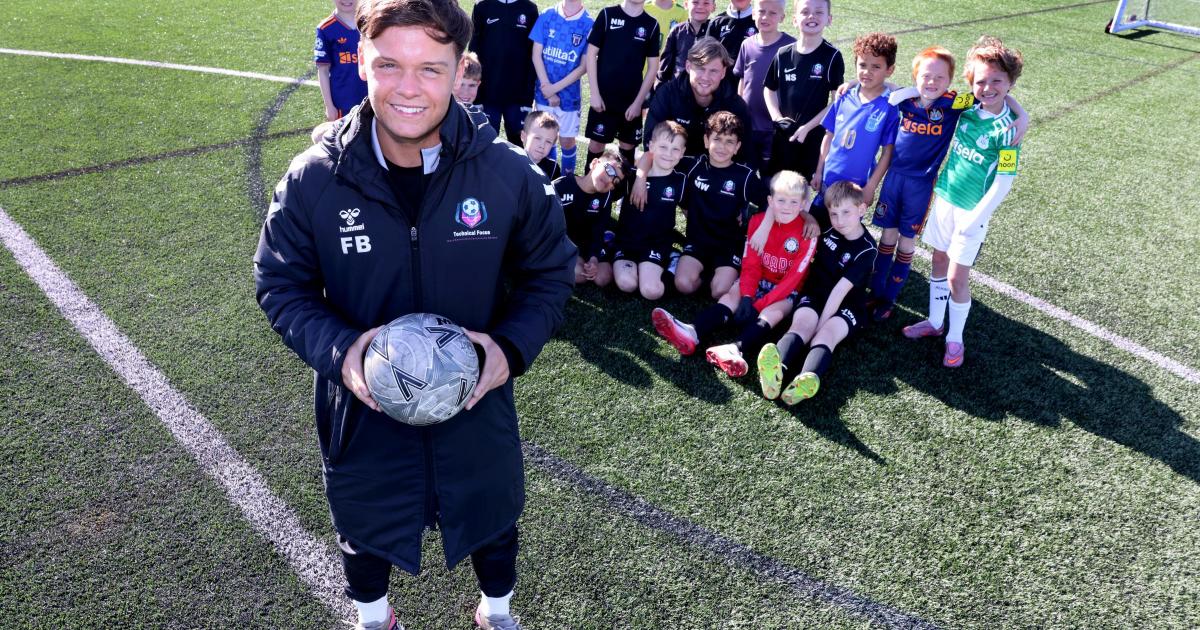
Frazer Barker, 19, from Washington, launched Technical Focus with help from the North East BIC to take his first steps into entrepreneurship.
The coaching business offers group and one-to-one football training for individuals aged six and above, and now supports more than 40 young people each week.
Frazer Barker has launched football coaching business Technical Focus (Image: Helen Smith Photography)
Mr Barker said: “It was quite daunting setting up on my own, but I’ve been blown away by the response it’s received.
“It started off with me delivering one group session a week but that has quickly grown to four, with up to 12 people in each.
Advertisement
“I am also delivering one-to-one training outside of the classes which is proving really popular.
Frazer Barker (Image: Helen Smith Photography)
“So much so, I am now working with two other coaches to help me cater for the demand.”
Before launching the business, Mr Barker worked for another coaching company but was inspired to go it alone.
He said: “Being only 19, I didn’t think I had anything to lose and thankfully it’s all worked out.”
Advertisement
Sessions currently take place at The Millenium Centre and The Hub in Washington, with prices starting from £15 per session.
Frazer Barker has launched football coaching business Technical Focus (Image: Helen Smith Photography)
In addition to running the business, Mr Barker plays Northern League football and aims to use his coaching to help young people stay active and build confidence.
He said: “I enjoy playing football and working with children so that was really what inspired me to get into coaching.
“I personally think playing football from an early age has shaped who I am today and given me the drive to do it.
Advertisement
“Football has a whole host of benefits, from improving your mental wellbeing to learning vital life skills and staying physically fit.
“Hopefully the work we are doing can help inspire more young people to get involved in the game.”
With no prior business experience, Mr Barker turned to the North East BIC for guidance.
He worked with business adviser Helen Wardropper, who helped him register the business with HMRC and is now supporting him as he explores funding opportunities for further growth.
Advertisement
He said: “Helen has been a huge help.
“Not only has she helped me register the business and make sure I’ve done everything right, but she also assisted me with my business plan and has helped me network and widen my business circles.
“I am still working with her now as I explore grant funding to help support the purchase of equipment and securing more venues to deliver sessions from.
“I can’t thank her enough for her support.”
Advertisement
Ms Wardropper praised his drive and determination.
She said: “Frazer is a remarkably motivated and driven young man, who has studied hard to qualify in his chosen career path and then used this, alongside his natural ability to work with young people, to set up a thriving business.
“The services he provides are invaluable and great for young people seeking to improve their football skills and also their confidence.
“I would like to wish him the very best and look forward to supporting him on his entrepreneurial journey as the business continues to go from strength-to-strength.”
Advertisement
Peter McIntyre, executive director of economy and place at Sunderland City Council, said: “We’re really proud to be directing funding into programmes like Enterprising Sunderland that help entrepreneurial talent to begin their business journey.
“SMEs are a critical part of our economy in Sunderland, and through support like this, we are seeing the city increasingly recognised as a great location to start-up and grow a business.”
Northern Rail has confirmed that trains running between the two stations are not running, with emergency services currently en route.
The incident is affecting stations across the North West, and disruption is expected until 4.15pm today, June 7.
The affected stations are as follows:
Advertisement
– Corkickle
– St Bees
– Nethertown
– Braystones
Advertisement
– Sellafield
– Seascale
– Drigg
– Ravenglass For Eskdale
Advertisement
– Bootle
– Silecroft
– Millom
– Green Road
Advertisement
– Foxfield
– Kirkby-In-Furness
– Askam
– Barrow-In-Furness
Advertisement
– Roose
– Dalton
– Ulverston
– Cark & Cartmel
Advertisement
– Kents Bank
– Grange-Over-Sand
– Arnside
– Silverdale
Advertisement
– Carnforth
– Lancaster
– Preston
– Chorley
Advertisement
– Bolton
– Manchester Oxford Road
– Manchester Piccadilly
– East Didsbury
Advertisement
– Heald Green
– Manchester Airport
Services between Manchester Victoria and Blackburn are not affected by the incident.
Routes between Manchester Airport and Blackpool North are affected, as well as services to Barrow in Furness and Windermere.
Advertisement
Rail replacement buses will be running from Preston and Bolton stations.
The details are as follows:
A coach operated by S Line will depart Preston at 15:10 calling at Leyland, Buckshaw Parkway, Chorley, Adlington, Blackrod, Horwich Parkway and Lostock to Bolton.
A coach operated by Ocean Travel will depart Bolton at 15:10 calling at Lostock, Horwich Parkway, Blackrod, Adlington, Chorley, Buckshaw Parkway and Leyland to Preston.
Advertisement
Commuters are also able to use Transport for Greater Manchester services as follows: 8, V1, V2, 100, 607, 608, 609, 35, 132, 615, 575, 576, 516
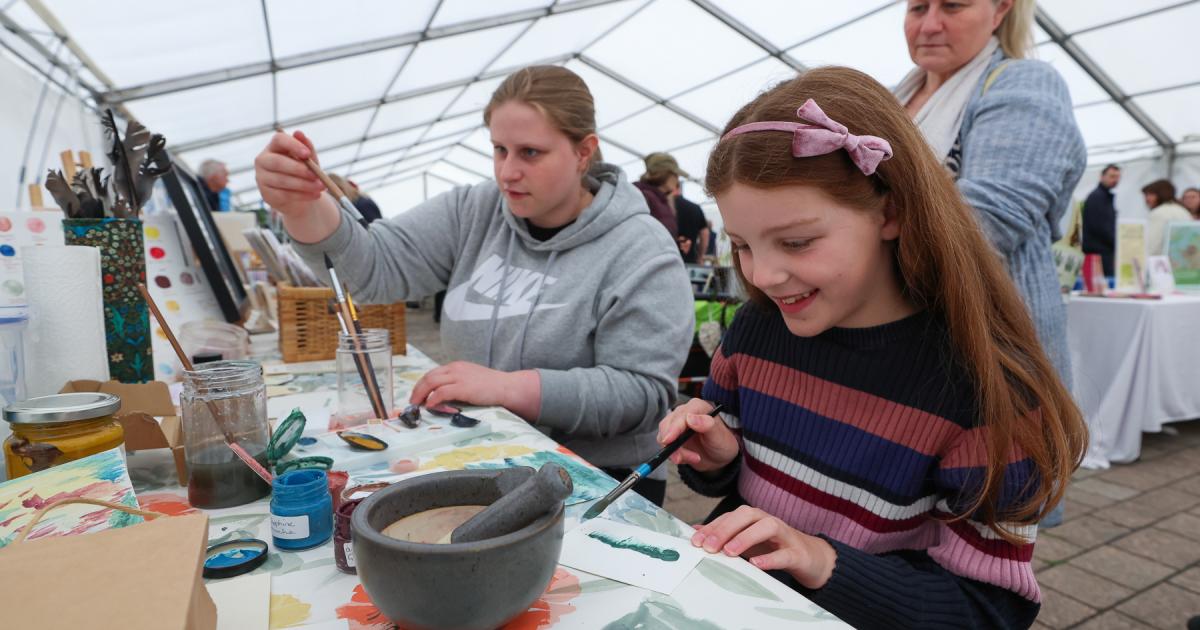
The Market Square event drew in hundreds of visitors interested in climate, nature, and environmentally friendly products.
And there were plenty of fun activities to keep children interested, including arts, crafts and go-carts.
Suzanne Thomas, of community interest company, Mud and More, was one of the stall-holders delighted with the interest.
Darlington Eco Fair takes place in the town’s market square. Picture: CHRIS BOOTH (Image: Chris BOOTH)
She said: “We use things like pottery and woodworking to bring people together, especially vulnerable people in the Teesdale area and an event like this is great to raise our profile and let people know what we do.
Advertisement
“I thoroughly enjoyed it.”
Hils Harrison of Durham Wildlife Trust said the event was an important fundraiser, as well as an awareness-raising event.
“It’s great to have an event that is specifically devoted to those interested in the environment and we’re grateful for the chance to get the message across about what the Trust does, but also to allow people to buy our merchandise because all the money that we raise in purchases and donations goes directly to the charity and helps support its work.”
Outside the marquee, Friends of the Earth created a pop-up allotment about the size of a terraced house backyard to show the variety and range of vegetables and plants that could be cultivated to provide food for the family.
Advertisement
Darlington Eco Fair takes place in the town’s market square. (Image: Chris BOOTH)
The Fair coincided with the launch of Great Big Green Week, which this year runs from Saturday, June 6th, to Sunday, June 14th and is expected to involve up to two million people in events across the country.
Abbie Rodger, who was exhibiting for the North East and Yorkshire Net Zero hub, said: “It’s really good that the Eco Fair ties in with Great Big Green Week because it’s important to show how much the public cares about the environment and climate change and wants action on looking after nature and tackling environmental issues.”
Alex Nicholson, Darlington Borough Council’s town centre partnership and events manager, who co-ordinated the Eco Fair, said: “It was a great event for highlighting how much is going on in terms of the community working towards sustainability and environmental protection and awareness.
“It was particularly pleasing to see so many people of all ages coming along to enjoy the Eco Fair and there really was something for everyone.
Advertisement
Darlington Eco Fair takes place in the town’s market square. (Image: Chris BOOTH)
“Doing our bit to help the planet is on a lot of people’s minds, and seeing ways that we can live a more environmentally-friendly lifestyle seems to be something that people enjoy and welcome.
“The fashion show organised by Oxfam Darlington and the QE sixth form pupils went down well but people just seemed to enjoy browsing around the stalls and having conversations.
As well as household-name groups like the RSPB, the World Wildlife Fund and Oxfam, there were plenty of local exhibitors like Darlington Beekeepers’ Association, Jamporium and Respect Soaps.
The age of criminal responsibility in the region is currently 10 – the same as in England and Wales. It is 12 in Scotland and the Republic of Ireland.
13:38, 07 Jun 2026Updated 13:45, 07 Jun 2026
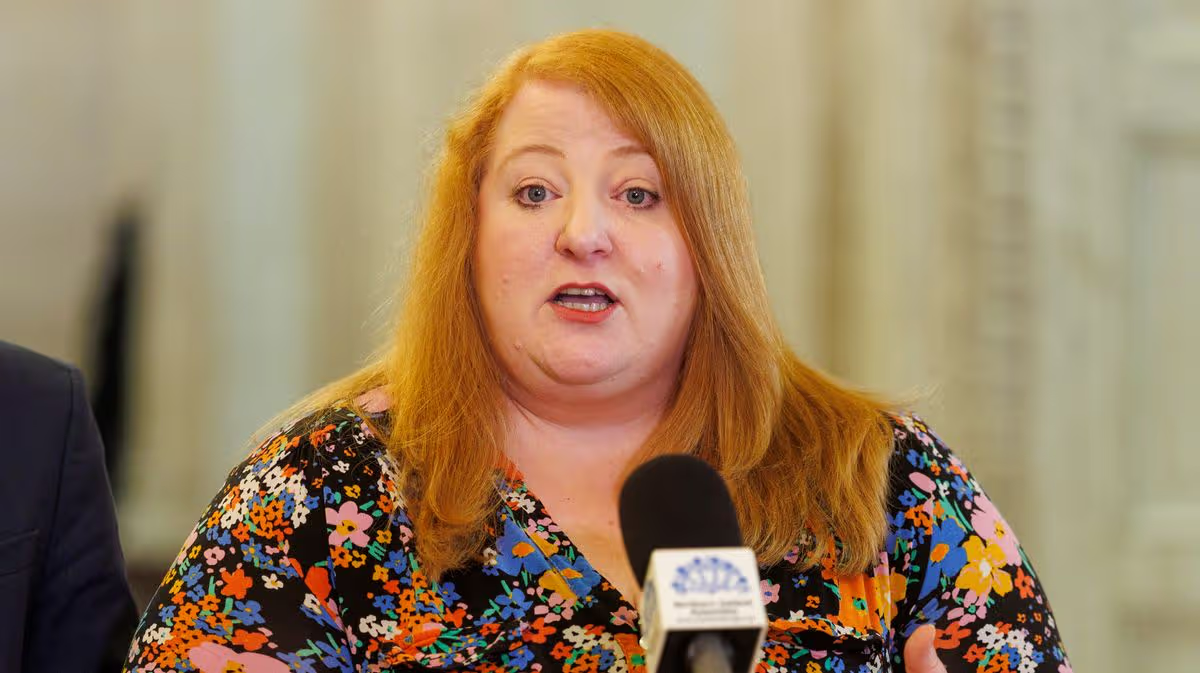
Alliance and the DUP have set out opposing positions on the minimum age of criminal responsibility in Northern Ireland ahead of a debate in the Assembly on raising it.
The age of criminal responsibility in the region is currently 10 – the same as in England and Wales. It is 12 in Scotland and the Republic of Ireland.
The issue will be discussed in the Assembly this week as part of the consideration stage of the proposed new Justice Bill.
Advertisement
Alliance MLA Sian Mulholland has proposed an amendment to the Bill to raise the minimum age to 14, with exceptions for the most serious offences of murder, manslaughter and rape.
The proposal has been backed by Sinn Féin and the SDLP but opposed by the DUP, UUP leader Jon Burrows and the TUV.
The Northern Ireland Commissioner for Children and Young People Chris Quinn has called for the minimum age to rise to 16.
Justice Committee chairman and DUP MLA Paul Frew said there is consideration of the use of a petition of concern, a cross-community veto mechanism at Stormont, to block the bid.
Advertisement
He argued it is appropriate for “something so fundamental as law and order”.
Appearing on BBC Northern Ireland’s Sunday Politics show, Mr Frew said the status quo should be maintained.
“Victims must come first and they must be heard, it’s going to be very hard if a young person can’t commit a crime, how then do you have a victim, and how do you support that victim,” he said.
“But also the young person committing the crime needs to be supported, and there also has to be a proportionate and appropriate response with regards the criminal justice system, so the police and the courts should be armed with as many tools as they possibly can in order to bring people to justice and make sure that victims receive justice.”
Advertisement
He said the criminal justice system requires reform to make sure it becomes more sensitive to young people, but he argued that can be done within the Youth Justice Agency.
Ms Mulholland, meanwhile, said research backs raising the age of criminal responsibility.
“This is something that has been talked about for quite some time,” she said.
“The raising of the age of criminal responsibility was first recommended in a review of the youth justice system 15 years ago, so this has been a long time coming.
Advertisement
“There are over 70 organisations who have been working on this very thing for nearly 20 years.
“Northern Ireland is an outlier across the world, we have one of the lowest ages of minimum criminal responsibility, and we are the lowest in the Europe.
“What I am saying is not to diminish victims, in fact victims are at the heart, we want to create fewer victims, and when we look at what we now know after decades of research about child brain development, and what actually interrupts offending behaviour cycles is that early criminalisation and bringing a young person into the criminal justice system at an early age does not work.”
A court heard allegations that on one occasion the accused grabbed the woman by the throat and lifted her off the floor, choking her until she lost consciousness
15:02, 07 Jun 2026
Advertisement
A Co Down man allegedly subjected his heavily-pregnant former partner to months of assaults and coercive control, a court has heard.
Newtownards Magistrates Court also heard a claim that in one attack, Frazer Pike grabbed the woman by the throat and lifted her off the floor, choking her until she lost consciousness.
“The injured party was six months pregnant when she was strangled,” a detective constable told the court.
Standing handcuffed in the dock on Friday, Pike, with an address at a caravan in Kilmore Village, Crossgar, confirmed his identity and that he understood the 11 charges against him, all alleged to be aggravated by reason of domestic abuse.
Advertisement
On a charge sheet covering the period from December 5 last year to 2 May this year, the 31-year-old faces charges of domestic abuse, non-fatal strangulation, making threats to kill, making threats to damage property, false imprisonment, possessing a weapon, namely a golf club and causing actual bodily harm.
Giving evidence during a contested application for bail, the detective told the court she believed she could connect Pike to each of the offences.
Adding that police were objecting to Pike being released due to concerns about further offending and witness interference, the officer outlined how the complainant reported to police on June 3 that she had allegedly been subjected to domestic abuse by her ex-partner.
The detective said that according to the complainant, the alleged abuse began late last year after she told Pike she was pregnant and he threatened to spray-paint her name around her home town.
Advertisement
The court heard allegations that in January, Pike damaged her window when he punched it and that he “tripped her up, causing an injury to her ankle.”
In February following a hospital visit, Pike is alleged to have spat in her car but later that month, he is alleged to have assaulted her in his caravan.
During that alleged incident, the detective told the court Pike “trailed her about the caravan by the hair” and when she tried to leave, he is alleged to have blocked the door and “pinned her to the bathroom door and bit her hand… shouting that ‘I’m going to kill you’.”
The court heard that in an incident in March, Pike allegedly “threatened to slice her throat and bite the face off her.”
Advertisement
It was during that assault, the officer claimed, that Pike is alleged to have “grabbed her by the throat and lifted her off the floor, causing her to lose consciousness and faint.”
“It was witnessed by a neighbour,” the court heard, and further that at the time, “the injured party was six months pregnant when she was strangled.”
Turning to her objections to bail, the officer told the court that Pike has “a domestic violence history, albeit with a different person,” adding that the latest complainant has been deemed as “high risk.”
The detective told District Judge Amanda Brady although it is not a recent complaint, the woman had not alerted police sooner because Pike allegedly “threatened to kill himself or report her to Social Services” if she did.
Advertisement
Defence counsel Conan Rea emphasised that “these are not contemporaneous complaints” and that when Pike was interviewed by police, he denied the allegations.
“He strenuously denies these incidents and there is no domestic violence between them,” the barrister contended.
Mr Rea argued that as Pike’s address is a 45-minute drive away from the complainant’s address, with additional strict conditions, bail could be granted.
Judge Brady said however, despite the barrister “making all of the points that he possibly could,” she was concerned about further offending and Pike not adhering to bail conditions.
Advertisement
She revealed that the 31-year-old has five previous convictions for breaching bail, “so in all the circumstance, I cannot have any confidence that he would not reoffend or breach the conditions.”
Pike was remanded in custody and will appear again on July 1.
United States gymnast Simone Biles has revealed she suffered a serious health scare, describing the experience as “almost dying”.
The 29-year-old American did not reveal any details about what happened but said it was one of the “scariest experiences” of her life as she updated supporters in a series of Instagram posts.
The seven-time Olympic gold medallist posted pictures on her story which included her wrist covered in hospital bands, flowers and a screenshot of a heart rate monitor, adding she will explain what has happened later.
Simone Biles during the women’s balance beam in Paris two years ago (Mike Egerton/PA) (PA Archive)
Biles also replied to a fan on X to say it had been a “health” scare.
In her post on Saturday, she said: “I’m not one to normally share things like this because I value privacy in today’s age.
Advertisement
“But almost dying wasn’t on my bingo card earlier this week.
“This was one of, if not the scariest experience of my life, especially since Jonathan (Owens, her husband and Indianapolis Colts NFL player) was in Indy for his practices.
“I’ve been in bed resting this week. I’ll explain sooner or later, but s/o (shoutout) to my close circle who reached out, checked in, visited & or sent flowers.”
Biles has won seven Olympic gold medals (Mike Egerton/PA) (PA Archive)
At Paris 2024, Biles won a total of four medals including three golds which took her overall tally to 11 Olympics medals since making her debut at just 19 years of age in Rio in 2016.
She has also previously stated that she is unsure whether she will compete at the 2028 Games in Los Angeles.
Advertisement
Press Association has contacted Biles’ representatives for comment.
You probably already know that eating a healthy diet rich in fruits and vegetables is great for your heart and mind.
And some research suggests that if you want to benefit both at once, eating a humble plum might go a long way.
Rich in vitamins C, A, and K, they also contain manganese, copper, and magnesium.
Here’s how they could help your health…
Advertisement
1) Plums might slow brain ageing
In one animal study, plum juice was linked to reduced cognitive ageing – but not plum powder. The research suggested that this might be because plum juice had more antioxidant phenols.
2) Plums may be good for your heart
Plums and other dark purple fruits can benefit our hearts because they contain anthocyanins, which may help to keep the level of fats in our blood healthy and reduce the risk of heart disease and stroke.
Advertisement
Additionally, plums are rich in calcium, which helps our blood to clot normally.
3) Plums could help to control blood sugar
They contain chlorogenic acid, which some studies suggest could help to regulate our blood sugar and appetite. It’s also found in olive oil, spices, vegetables, wine, and coffee.
4) Prunes could help to protect our bones
Advertisement
Prunes, or dried plums, have been linked to better bone health among postmenopausal women at greater risk of hip fractures. Eating 50g a day seemed to be the “sweet spot” of effective and easy to maintain.
5) Plums could help to reduce inflammation
Though some inflammation is normal and even healthy, uncontrolled inflammation – sometimes called “inflammaging” – can damage our cells. Because plums contain antioxidants like anti-inflammatory quercetin, they may help to mop up some of these free radicals.
6) Plums might help to reduce some cancer risks
Advertisement
A systematic review of 54 studies found that consuming plums appeared to reduce the risk of certain cancers, like bowel and breast cancer.
The case involving the former DUP Leader has now entered its second week at Newry Crown Court
14:55, 07 Jun 2026
Advertisement
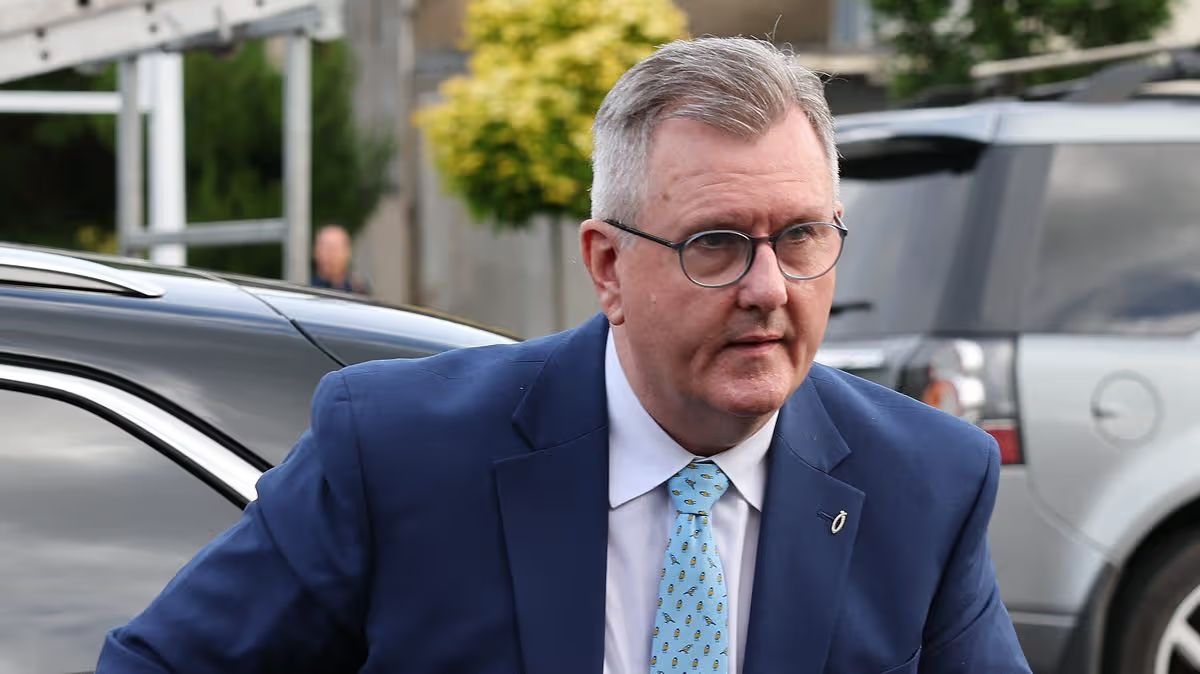
The trial of Jeffrey Donaldson has now entered its second week where the court heard from the alleged victims of the former DUP leader.
Sir Jeffrey Donaldson faces 18 historical sexual offences, including one count of rape, alongside allegations of indecent assault and gross indecency. He has pleaded not guilty to all the charges which involve two alleged victims and span a 23-year period between 1985 and 2008.
His wife, Lady Eleanor Donaldson was declared medically unfit to stand a standard criminal trial and will instead undergo a “trial of the facts”.
Day 5 – Monday, June 1
A woman who says she was sexually abused as a child by Sir Jeffrey Donaldson, known as Complainant A, took to the witness stand for a third day as she was cross examined by Ian Turkington KC, barrister for Eleanor Donaldson.
He questioned her about why she did not mention all of the counselling sessions she had received following the alleged abuse in police interviews in 2024. The witness said she had “nothing to hide” and had forgotten to mention some of the counselling.
The witness was also questioned about her memory following the alleged abuse with her responding “Many people know with childhood abuse there is an issue with memory.”
“I have tried to remember these events and convey them to the best of my ability.”
Advertisement
Complainant A was also asked about how she had told Eleanor Donaldson about an alleged incident of abuse and that this was “laughed off”.
She was accused by the barrister of “making this up as you go along?” which she refuted.
He said: “You are making this up as you go along.”
She said: “That is your assumption… I am here to tell the truth.”
Advertisement
Complainant A concluded giving her evidence to the trial on Monday afternoon.
The second alleged victim, Complainant B, was not in the courtroom on Tuesday but appeared via a video link. Her ABE (achieving best evidence) interview with police was played to the jury of seven men and five women.
Advertisement
Jeffrey Donaldson sat in the dock at the rear of the courtroom, while the interview, which was recorded in March 2024, was played. In the interview, Complainant B said that growing up, she was “sexually abused by an adult” and she particularly remembered two incidents. The woman frequently became emotional during the interview.
In the first, she claimed, Donaldson had put his hands down her underwear, pulled her legs apart and then sexually assaulted her. She said the second incident occurred when she was slightly older when, she said, Donaldson “lifted up my top” and touched her breasts.
When asked by a police officer if there were other incidents, she said she remembered “his hands down my pants a lot”.
When she was asked about the first incident, she said it occurred when she was of primary school age, saying: “I remember being really still and all I could hear was his breath.”
Advertisement
Complainant B said the second incident occurred when she was of secondary school age. She said: “He lifted up my top and started playing with my breasts.”
The complainant said that Eleanor Donaldson had witnessed part of the alleged incident and “walked away”.
Complainant B later said Donaldson had apologised to her at a meeting arranged at a Christian centre years later.
The witness was then cross-examined by Kieran Vaughan KC, barrister for Jeffrey Donaldson. He accused her of making up allegations pointing to an inconsistency in the age she told a counsellor the abuse had happened and what she later told police, claiming “none of it happened”.
Advertisement
Complainant B responded to this saying “It is quite naive for you to say that. Everything I am saying is the truth … no matter how many questions people ask me it will never change that.”
The barrister pointed out that she could not remember what age she was at the time of the alleged rape incident.
She said: “The actions that night I will never forget, what happened that night will live with me forever.”
Mr Vaughan suggested the incident “did not happen” and asked her why she did not tell anyone about it at the time.
Advertisement
She said: “It was my biggest mistake not telling anybody back then … I regret that every day.
Complainant B continued to give evidence in Newry Crown Court where she said she should have brought the alleged abuse to police years earlier, but had “tried not to be a victim”.
Advertisement
Barrister for Jeffrey Donaldson, Kieran Vaughan KC, resumed his cross-examination of the alleged victim in the morning and said she had been sent to the Christian Family Centre in Armoy after she had started to take drugs in her teenage years.
She told the court that she had taken ecstasy and marijuana, but denied that she was addicted to the substances. Complainant B added that she originally thought her issues could have been “dealt with at home”, but said going there “turned out probably one of the best things that ever happened to me”.
The barrister said while at the centre, complainant B had spoken to a woman at the facility. The witness confirmed she had told her about alleged abuse by Donaldson, but did not go into details.
The barrister said she told the woman this in an effort to leave Armoy.
Advertisement
The barrister said she had then spoken to a pastor at the centre about the allegations and asked why the conversation with the pastor was not in her statement to police.
The barrister asked her if she had told the pastor not to go to police, and that if he did, she would say it was “all a lie”.
She said: “I don’t remember that … if I did it would have been the stupidest thing I ever said.”
In the afternoon, Complainant B was cross-examined by Ian Turkington KC, who represents Eleanor Donaldson in the proceedings.
Advertisement
He referred to two alleged incidents of abuse, the first where Complainant B said she was raped by Jeffrey Donaldson and the second where she claimed that he had touched her breasts. She alleges that Eleanor Donaldson witnessed part of the second incident.
Concerning the first incident, Mr Turkington suggested it was a “figment of your imagination”. She responded: “You are suggesting that, but that is not true. My account is the truth.”
Turning to the second incident, the barrister suggested “at no stage” did Eleanor Donaldson “ever see anybody touching your breasts”.
The woman said: “She looked directly at me.”
Advertisement
Complainant B said Eleanor Donaldson should have “stood up and defended me”.
The barrister then questioned her about how her memory of the alleged incidents had “evolved” since counselling sessions in 2008. She said: “I locked them [memories] away, there is a reason why I did drugs and all those stupid things when I was a teenager.”
The court had previously been told that Complainant B had received a text message from a third party in 2023 suggesting Eleanor Donaldson wanted to apologise.
Mr Turkington suggested it was only when the witness received the message that she believed Eleanor Donaldson had seen the incident where Jeffrey Donaldson is alleged to have touched her breasts.
The husband of of Complainant A took to the witness stand and gave evidence and became emotional when he described the moment that his wife told him about the alleged abuse.
He told the court: “She said that when she was younger, Jeffrey had abused her on a number of occasions.”
Advertisement
The witness said his partner had “gone into detail”, stating that Donaldson had inappropriately touched her “on a number of occasions” and that he kissed her and “put his tongue down her mouth”.
He said she also told him about an alleged incident where she was “woken by a light” and Donaldson was looking at her “private parts”.
The witness was cross-examined by Jeffrey Donaldson’s barrister Kieran Vaughan and Eleanor Donaldson’s barrister, Ian Turkington KC.
Later the court heard evidence from a Presbyterian minister and his wife who had provided “pastoral support” to Complainant A and her husband after they had disclosed an allegation of abuse.
Advertisement
He said he had contacted the church’s head of safeguarding as he “wanted to know what the boundaries were regarding our responsibilities”.
He said the first meeting took place in 2022.
The witness said when he was on holiday in the summer of 2023 he received a message from Jeffrey Donaldson.
The court heard that Donaldson asked for the message to be kept “in confidence” and said he did not know “where else to turn and would truly appreciate the opportunity for a private conversation”.
Advertisement
The minister said he responded the following day that it would be “inappropriate” to have the meeting.
The court heard that Donaldson then sent a reply which said: “I do understand entirely. I don’t want to cause them further upset.
“I just want to find a way to say how sorry I am and repent before them as I have before the Lord.”
On Friday, the trial heard evidence from Laura Claire Selfridge, who is the daughter of David and Linda Hoy, who founded the Christian Family Centre in Armoy, Co Antrim.
Ms Selfridge told the court she had a conversation with Complainant B in her bedroom in Armoy. She told the court: “She literally just said she had been abused.”
Asked about the atmosphere, Ms Selfridge said: “Very shocking, almost like a bomb went off, that is what it felt like for me.”
Advertisement
The witness said they had never spoken again about the alleged abuse.
Asked if she had spoken to anyone else about the alleged abuse, she said: “Never, not to this day.”
Jeffrey Donaldson’s barrister Kieran Vaughan KC asked the witness if Complainant B had used the word “sexual” in relation to the alleged abuse. She replied “No”.
The court was then played a police video interview from Pastor Stephen Matthews, who had met Complainant B at the Christian Family Centre in Co Antrim. He is not well enough to give evidence to the trial.
Advertisement
He said: “I listened to her and she made very, very serious allegations.”
The pastor said she told him she had been abused when “very young”. He said he had asked her why she did not “come out with this and get help”. He added: “She said she can’t because it would destroy their political reputation, I don’t want that.”
Mr Matthews said he could not remember if B had named her alleged abuser but said it “became obvious” who it was.
Mr Hoy gave evidence at the trial and spoke of meetings between himself, his wife, complainant B and Jeffrey Donaldson.
Advertisement
Mr Hoy said Complainant B was looking to meet Donaldson and “wanted a safe place to do that”.
The court was then told about a meeting between Donaldson, Complainant B and the Hoys in their home in Armoy the following day.
Mr Hoy said: “Mr Donaldson spoke first, he said I know what this is about, he said I am sorry and can you please forgive me.”
The witness said that Complainant B was upset but she “did say she forgave him”.
Advertisement
Mr Hoy said he asked B if she wanted to “take this any further and she said no”.
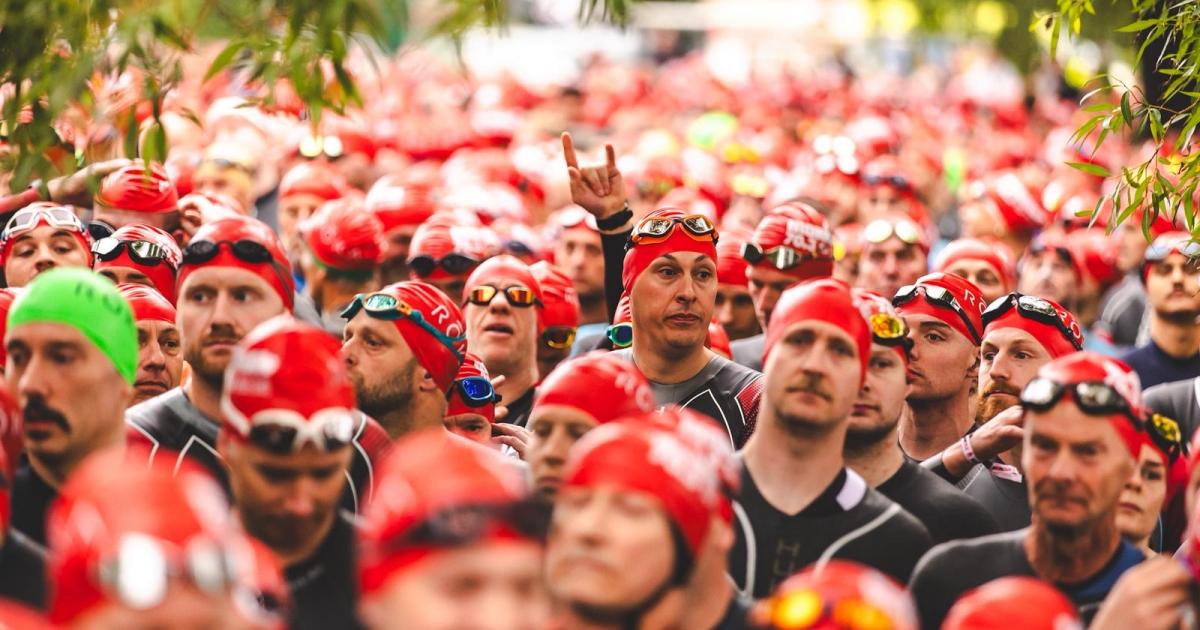
Pennington Flash in Leigh saw thousands of people in wetsuits and red swimming hats congregate on its shores at 6am before taking the brave plunge into the freezing waters to carry out a 1.9km swim.
Spirits were high as thumping music and an MC got the energy levels high before the competitors began their swim, with the first person exiting the water in under 25 minutes.
(Image: Jack Schofield/Ironman)
From there, it was on to the bikes, with the athletes taking on a 56-mile bike ride through Leigh, Atherton, Westhoughton, Horwich, and Bolton.
Despite it still being early in the morning, many people lined the streets to cheer on those taking part, with creative signs, bells, and screams of support to push on the athletes.
Advertisement
(Image: Henry Lisowski)
After the gruelling bike ride came the half-marathon run in Bolton, with the Ironmen and Ironwomen running through the town centre, Queen’s Park, and Chorley New Road.
Levin Veale, who was the first competitor to cross the finish line, said he found the run tough, saying: “Running in the park is pretty horrible.
(Image: Henry Lisowski)
“Running up some of them ridiculously steep hils, that blew me.”
Nonetheless, Levin was able to speed through the course, recording a sub-four-hour time as he was cheered on by the ever-supportive spectators.
Advertisement
(Image: Phil Taylor)
While the town centre was quiet as the first runners made their way through the streets, the crowds grew and so did the noise, with friends, families, and locals coming out in large numbers to create a fantastic atmosphere.
Katie Walker, who was the first female to cross the line for the second consecutive year, was full of praise for the Bolton crowds, saying: “The support here is always incredible, there’s nothing like it, not in any other race.”
(Image: Phil Taylor)
This was showcased outside Bolton Town Hall, as runners crossed the finish line to loud cheers from all sides as they completed their stunning feats.
The thrilling race closed the curtain on a remarkable weekend, which saw a record-breaking 10,000 people compete in the Night Run, IRONKIDS and IRONMAN 70.3 events.
Advertisement
With the record-setting number of competitors and the brilliant crowds lining the streets, it’s clear that IRONMAN 70.3 Bolton is one of the best dates in the competition’s calendar as well as the town’s.
The 2026 World Cup is just days away and the best players in the world will compete on the biggest stage for football’s most coveted trophy.
Other than the tournament winner, one of the other topics of intrigue is who will take home the Golden Boot as the most clinical finisher.
In 2022, it was France’s Kylian Mbappe who walked away with the trophy, scoring eight goals, pipping Lionel Messi courtesy of a hat-trick in the final and is the favourite to do it again as he hopes to repair the heartbreak of the loss on penalties to Argentina in the previous instalment.
With that said, here is a rundown of the players who are all vying to take top spot this summer.
Advertisement
After another blistering season with Bayern Munich, scoring 61 goals in 51 appearances in all competitions, Harry Kane is arguably the best striker in the world right now.
Kane took home the Golden Boot as favourite to do so in 2018, scoring six goals, and now comfortably sits as England’s all-time top goal scorer.
Harry Kane enjoyed another superb Bundesliga campaign
Getty
Advertisement
It is finally time for the Premier League’s best striker of the last four seasons to make his debut on the biggest stage in world football. Haaland has been dominant as a striker for Manchester City, scoring 112 goals in only 132 appearances in the Premier League.
Haaland, alongside his compatriot Martin Odegaard, were the driving force behind Norway’s qualification and, while they are not tipped for a deep run in the tournament, their talisman will hope to secure an individual honour on the way.
Four years on from what was supposed to be Messi’s World Cup swansong – walking away with the trophy that had eluded him for his whole career – arguably the greatest player of all time once again readies himself to lace up his boots for a record sixth time and attempt to defend his World Cup title.
Messi was one goal off the Golden Boot in 2022, but Argentina’s squad has faded, leaving the little magician up against it if he is to go one better this time.
Advertisement
AFP via Getty Images
At just 18 years old, Barcelona phenom Lamine Yamal’s striking rise to stardom saw him finish second in last season’s Ballon d’Or standings.
Yamal has been the spark for Barcelona all season, notching 16 goals and 11 assists as the Blaugrana won La Liga.
He is also a key part of the national setup, helping Spain to the European title in 2024. Yamal will now enter his first World Cup with a genuine chance at both the overall trophy and the Golden Boot.
Lamine Yamal heads to the World Cup off the back of an impressive individual campaign despite struggling with injuries
PA
Advertisement
If there is a football list with Lionel Messi on it, you can probably bet that Cristiano Ronaldo will be on it too. The most prolific international goal scorer of all time will enter his sixth World Cup with nothing but victory on his mind.
Now 41, his goalscoring record for Portugal has been slightly off the boil of late, but with this being his last trip to a World Cup, it would be prudent to expect him to come out firing on all cylinders.
World Cup 2026 Golden Boot winner latest odds
We aim to offer every online gambler and reader of The Standard a safe and fair platform through unbiased reviews and offers from the UK’s best online gambling companies.
Advertisement
Gambling can be addictive, always play responsibly and only bet what you can afford to lose. Gambling sites have a number of tools to assist you to stay in control, including deposit limits and time outs. If you think you have a problem, advice and support is available for you now from BeGambleAware or Gamcare.
Any offers or odds listed in this article are correct at the time of publication but are subject to change. Terms & Conditions apply to all offers.






















































You must be logged in to post a comment Login