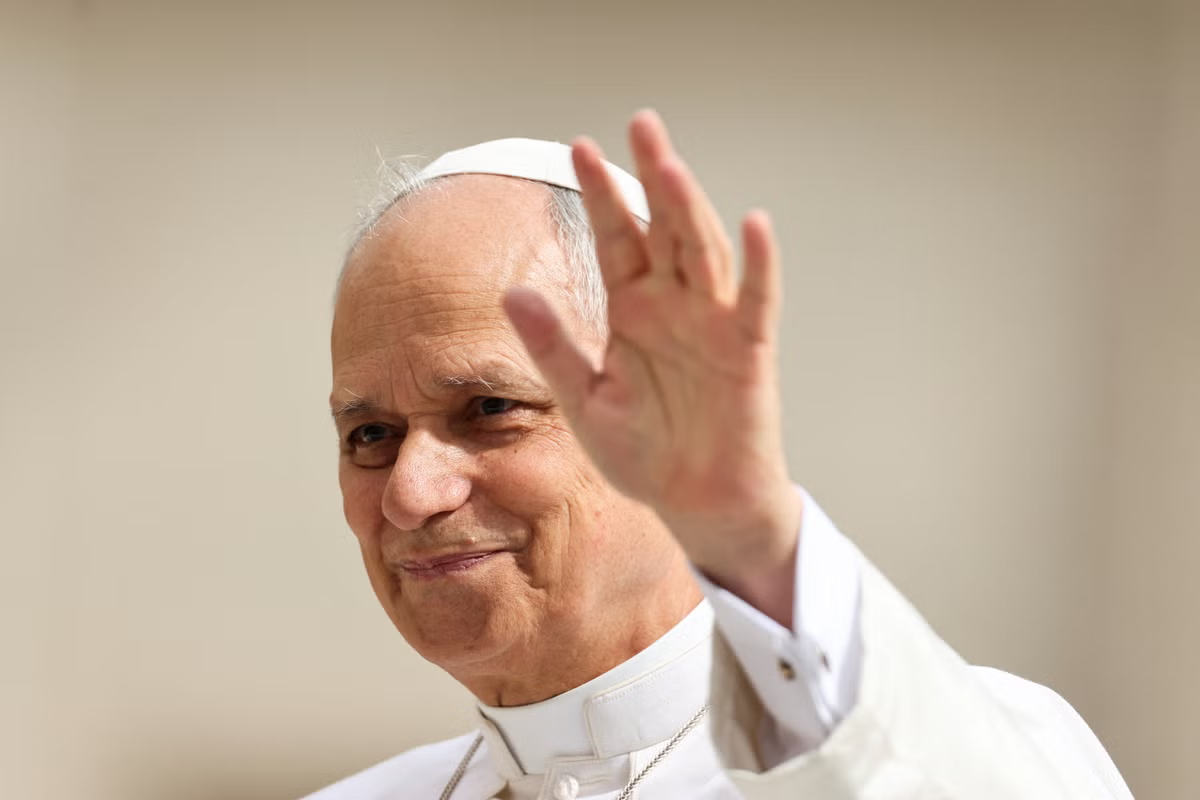

Pope Leo marks his first anniversary leading the Catholic Church this Friday, having significantly elevated his public profile and intensified his schedule, drawing the disapproval of US President Donald Trump. The first US-born pontiff recently concluded a four-nation African tour where he sharply condemned war and despotism.
His increasingly vocal stance follows a period of a relatively low profile during his initial ten months, before he attracted criticism from Mr Trump after speaking out against the U.S.-Israeli war on Iran. Pope Leo is now expected to release his inaugural in-depth teaching document this month, prepare for a week-long visit to Spain in June, and undertake five trips across Italy through July.
Experts suggest this accelerated pace and forceful tone, first observed in Africa, will likely continue, reflecting the Vatican’s growing concern over the direction of global leadership. Washington Cardinal Robert McElroy, a close ally of the Pope, told Reuters: “Pope Leo has become the singular clarion voice in our global community about the need for peace and safeguarding human dignity.”
“(Leo) has shown an ever-growing willingness to apply the Gospel with specificity to the glaring violations of human rights that surround us,” said McElroy, referring to the Bible chapters describing the life of Jesus. The pope is due to meet on Thursday with U.S. Secretary of State Marco Rubio, in his first known in-person meeting with a Trump cabinet member in nearly a year.
Advertisement
Rubio expects a “frank conversation” with Leo to discuss Trump administration policies, the U.S. ambassador to the Holy See said on Tuesday, as Trump `again criticized the pope on Hugh Hewitt’s right-wing radio talk show.
Began Papacy as largely unknown figure
Leo, the former Cardinal Robert Prevost, was selected by the world’s cardinals on May 8, 2025, to lead the 1.4-billion-member Church after a two-day secret conclave in the Vatican’s Sistine Chapel.
He succeeded Pope Francis, who largely sought over a 12-year tenure to open the often-staid institution to the modern world. Prevost, who spent decades as a missionary and bishop in Peru before becoming a senior Vatican official in 2023, was a quiet supporter of Francis’ papacy but a relative unknown on the world stage. He was on some lists of possible new popes but not widely seen as a front-runner.
Advertisement
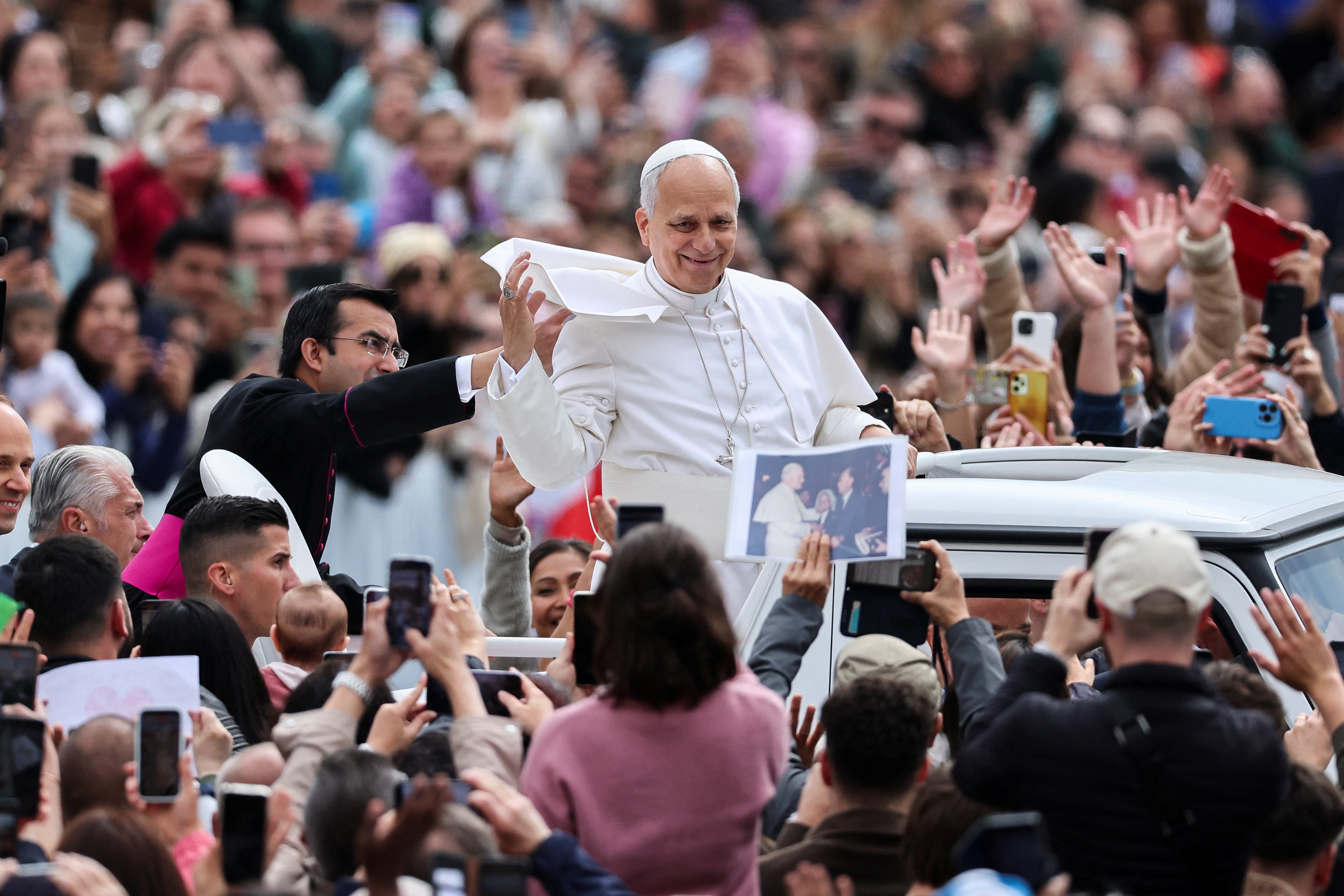
Pope Leo XIV arrives for the weekly general audience in St. Peter’s Square at the Vatican. (Reuters)
In his first months, Leo largely steered clear of hot-button issues. But he began criticizing Trump’s hard-line immigration policies in September, drawing backlash from conservative U.S. Catholics. After he criticised the war in Iran, Trump bombarded him with insults on social media, calling him “weak” and “terrible”.
On his 10-day Africa trip in April, the pope warned that the whims of the world’s richest threaten peace, decried violations of international law by “neocolonial” global powers, and said the world was “being ravaged by a handful of tyrants”. Leo later clarified to reporters that the speeches for the tour were written weeks ahead of the trip and not aimed directly at Trump.
Visiting Lampedusa, but not the US
Leo will spend his first anniversary visiting the Italian cities of Pompei and Naples, about 250 km (155 miles) south of Rome, where he will pay homage at a Catholic shrine and lead several events.
“If a particular leader feels attacked by Leo’s words, maybe that is their problem and not the pope’s,” said Gibson.
Advertisement
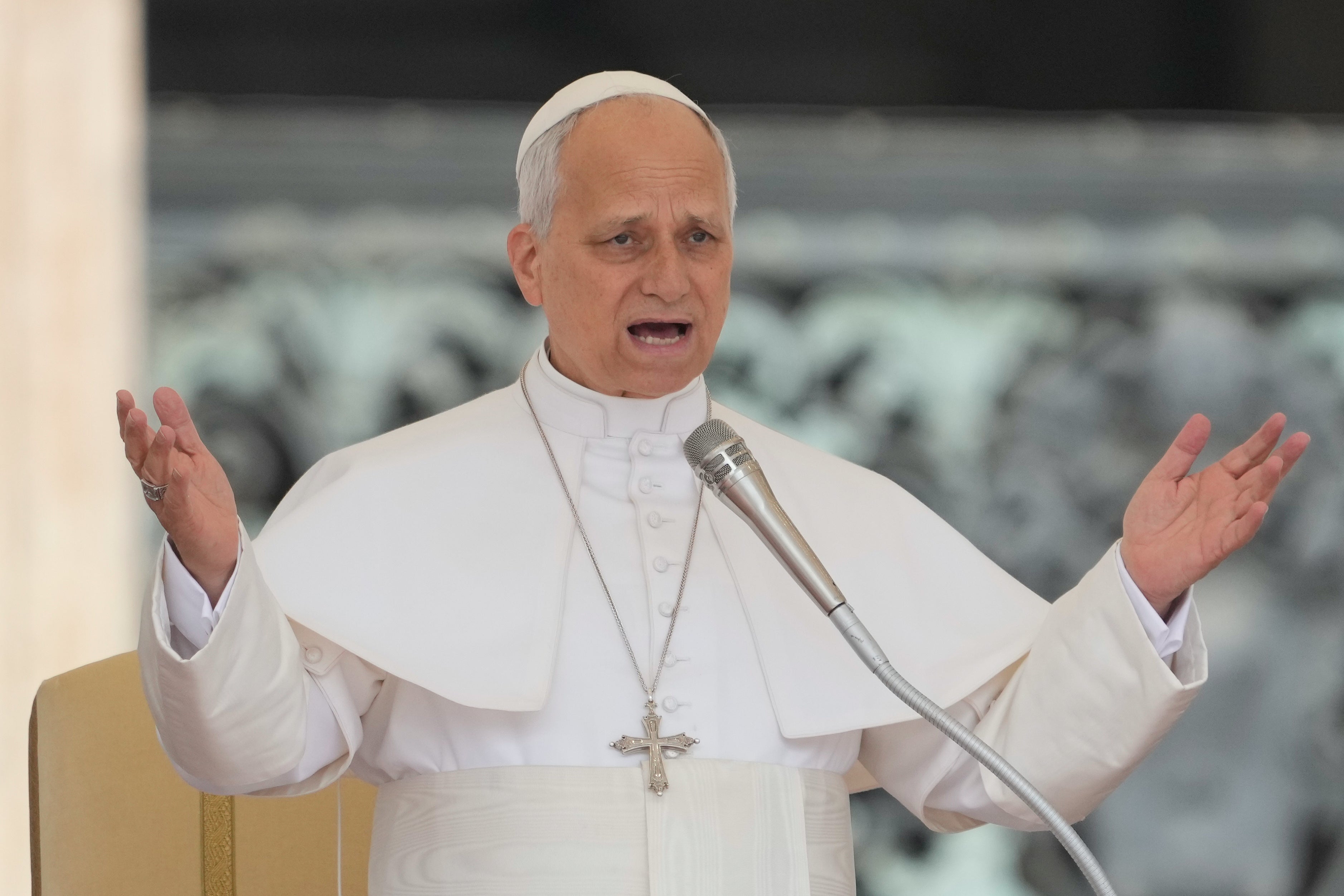
Leo will spend his first anniversary visiting the Italian cities of Pompei and Naples. (AP)
The trip is the first of five inside Italy culminating on July 4 with a visit to Lampedusa, an island south of Sicily lately known as the first port of call for desperate migrants making the perilous voyage from North Africa to Europe. The choice to visit the island on the day the U.S. celebrates the 250th anniversary of its independence has drawn attention, at a time when the Trump administration says Europe faces “civilisational erasure” from allowing immigration. The visit was announced in February, shortly after the Vatican said Leo would not travel to his home country this year.
Chicago Cardinal Blase Cupich told CBS News in April that by going to the island, the pope is “sending a message that his top priority right now is to be with those who are downcast and marginalised.” The Vatican has not announced the publishing date for the pope’s first in-depth teaching document, known as an encyclical, but it is widely expected to come out before the end of May.
The text is expected to address a number of ethical challenges facing the world, including the rise of artificial intelligence. The pope will likely also speak about the world’s ongoing conflicts and its leadership. David Gibson, a Vatican expert and academic at Fordham University, said Leo will address universal values and not just Trump or any other specific leader.
Stansted Airport has issued a warning to passengers about train disruptions this weekend
Antonio Scancariello and Kirstie McCrum Deputy Head of News, Live News Network
08:48, 06 May 2026Updated 08:52, 06 May 2026
One of the UK’s most heavily used airports has issued a warning that rail services to and from the major travel hub will be disrupted this weekend owing to “major engineering works”.
Stansted Airport has confirmed there will be no direct train service to and from London Liverpool Street on 9 and 10 May, with travellers advised to use an alternative route.
The airport, in a post shared on X, stated that “due to planned engineering works” only limited rail replacement services will be in operation.
Advertisement
“There will be no direct train service to and from London Liverpool Street during this time, and passengers travelling to London will be advised to travel via Cambridge and London King’s Cross,” the airport’s message added.
Stansted Express passengers will be directed to travel via Cambridge and King’s Cross, reports the Express.
A notice on the airport’s website read: “Due to engineering work between Waltham Cross and Stansted Airport, direct train services to and from the airport will not operate on Saturday 9 May and Sunday 10 May. You will need to travel via London Kings Cross and Cambridge.
“We strongly recommend visiting the National Rail website for the latest updates to help you plan your journey in advance and avoid disruption.” Greater Anglia stated: “Network Rail carries out essential engineering works across the Greater Anglia network to maintain and improve the railway, helping ensure your journeys run smoothly and reliably. The easiest way to check if your journey is impacted by engineering works is through our booking engine and app.”
Advertisement
Further disruption is expected at additional locations on Saturday, 9 May, including Bury St Edmunds and Cambridge North to Thetford/ Peterborough. On Sunday, 10 May, services between Bishops Stortford/Hertford East and Waltham Cross will also be affected.
Oliver Foran was 16 when his mother died of brain cancer. Too young to process the grief, he says he internalised everything and for eight years did not shed a tear.
“I didn’t really deal with it… I didn’t cry… I didn’t show any emotion about it,” he tells The Independent. On the outside, everything was fine. He launched a business in real estate and his life had structure and direction. “But I felt empty inside,” he recalls. Finally, he decided to do something about it.
Foran is speaking to The Independent from a cafe located at an altitude of around 3,450m in Namche Bazaar in Nepal, halfway through a monumental challenge to break the sea-to-summit speed record for climbing Mount Everest. In order to achieve a Guinness World Record, he must complete the feat without motorised transport – cycling over 1,000km through India from the seaside town of Digha on the Bay of Bengal, and then trekking to Everest’s 8,848.86m summit.
The previous record was set by South Korean national Kim Chang-ho, who completed the challenge in 67 days in the spring of 2013. Foran has set himself the challenge of completing his journey in just 60 days, reaching the summit before 31 May.
Advertisement
But the real goal, Foran says, is to raise as much money as possible for the youth mental health programme YouTurn, so that young people struggling with similar issues to those he has faced can get the help they need.
The Australian is relatively new to high-altitude climbing but has quickly built experience, climbing peaks like the Island Peak and Ama Dablam in the Khumbu region of eastern Nepal in the past two years. This will be his first attempt at an 8,000-metre-high mountain.
At every stage so far, Foran has had to fight adversity.
In India, when he was attempting to cycle 1,150km, it was the heat. “I was not ready for 42 degrees Celsius,” he says laughing.
Advertisement
Day after day, he cycled up to 135km, often riding for 10 to 12 hours at a stretch. “We were still putting in these massive shifts.” To cope, he broke the days down into fragments. “Every 20km, I would pull over… maybe talk to a vendor. Reset.”
Oliver Foran is attempting a record sea-to-summit journey to Mount Everest, cycling over 1,000 km from India before trekking and climbing to the top (Oliver Foran)
But along the way he has also built connections. One afternoon, he recalls, a gang of schoolchildren gathered around him when he was taking a break at a roadside. It was a hot day and he bought fruit juice from a nearby vendor for all of them. Soon, more children appeared. “I ended up buying all of his (vendors’) juices,” he says, laughing.
Added to India’s early-summer heat was the chaos of its road network. The mountaineer says struggled at first with all “the trucks and cows”, then adds: “But I got used to them.”
After cycling more than 1,000km and battling several setbacks, Oliver Foran is climbing Everest in memory of his mother and for those struggling in silence (Oliver Foran)
On his Instagram page, he writes: “I struggled with my mental health. For a long time, I felt lost. Like I was searching for something, but didn’t know what it was. “I remember when I was that age… how much that would have helped me. I don’t want people to get to that point.”
He recalls the exact moment he decided to climb Everest.
“I was standing on the summit (of Ama Dablam) and I remember looking at it (Mount Everest), and I was like, Yes, that’s it. That’s my goal.”
Advertisement
The scheduled route through Nepal also hasn’t gone exactly to plan. While attempting to acclimatise himself en route to Mera Peak, which is on the way to Everest base camp, his blood oxygen levels dropped sharply overnight. “I checked it three times, and it was low every time. I remember starting to become a little bit delirious.”
At that point his team made the difficult decision to turn back and descend. “Safety was number one. We just went. There was no questions asked.”
Foran describes the moment not as failure, but of clarity. “What is the goal here? The goal is to get to Mount Everest… We’d figure everything else out once I was healthier.”
They’ve now planned a new route: a faster push along the usual Everest base camp trail, cutting a journey that normally takes over a week down to just four days. “So it definitely has been a bit of a stinger. But we’re not out of the park, and we can make this happen.”
Advertisement
The 27-year-old Australian is over 30 days into his bid to break the 67-day Everest sea-to-summit record (Oliver Foran)
He knows the physical toll the expedition would take on him. But he says: “I think mental toughness is the key to an expedition like this.”
“I believe, through a lot of hardship, mental resilience is built in our lives. And personally, I faced, unfortunately, a bunch of it at a very young age. I was very, very close with my mom, and to watch her decline so dramatically and then pass away right in front of me. It was brutal, and that’s something that I definitely draw back on.”
He knows he will need the mental resilience for the next stage, which is the most dangerous: the climb from Everest base camp to the summit, through icefalls and the notorious “death zone” – a term used by mountaineers to refer to heights above 8000m.
“My mum has given me an opportunity here to keep going and hopefully inspire other people.
“It’s okay to speak about it… it’s okay to show emotion.
Advertisement
“The cause is the most important thing for me. Like, what we’re doing with (YouTurn).. I believe can save lives.”
Lewis Rudd viciously attacked the woman after she made late-night crumpets for herself following a night out – instead of first doing some cheese on toast for him
Kirstie McCrum and Mark Naylor
10:00, 06 May 2026
A ‘nasty’ boyfriend strangled and stamped on his terrified partner during a ‘huge argument’ while on a make-or-break caravan holiday. Lewis Rudd was in “a big ball of anger” when he launched a vicious attack on the woman after she made herself late-night crumpets following a night out – rather than first preparing cheese on toast for him.
The Middlesbrough man “came storming into” the bedroom, woke her up, dragged her out of bed and subjected her to a brutal assault, Hull Crown Court heard. Rudd, 36, denied charges of intentional strangulation and causing actual bodily harm to the woman on October 31, 2022, but was found guilty by a jury following a trial, reports Teesside Live.
Advertisement
The court was told the couple, who had been together for more than five years, were locked in a “very toxic relationship”. They travelled to Thornwick Bay holiday village at Flamborough, near Bridlington, for a make-or-break weekend away.
Upon returning to the caravan after a night out on the Sunday, the woman began making crumpets for herself and cheese on toast for him. Rudd took exception to her cooking the crumpets first, and she happened to be holding a bread knife at the time.
He “made a big fuss” about the bread knife, which sparked a “massive, huge argument”.
The woman told Rudd: “I don’t want to be with you. This isn’t how I want it to be.”
Advertisement
She firmly denied threatening him with the knife, lunging towards him with it, or threatening to cut his throat.
The woman claimed: “He was screaming and shouting to me. He was saying I was worthless. I knew he was seeing someone else.”
She told Rudd she was heading to bed, and said she had fallen asleep when Rudd “came storming into the room” and roused her.
Rudd told her: “I’m going home. I’m sick of this.” She recalled: “All of a sudden, he just started attacking me. I was all tangled up in the bed sheets.”
Advertisement
The pair were “screaming and shouting” at one another.
“I remember him charging at me and he wrapped his hands around my neck,” she said.
Rudd hauled her out of bed and pinned her to the floor. She desperately tried to free herself, digging her nails into him in an attempt to “shock him” into loosening his grip.
She mouthed “I can’t breathe” to which Rudd replied “F***ing good!”
Advertisement
She screamed that he was going to kill her before losing consciousness. The final thing she recalled before blacking out was catching sight of Rudd’s foot.
The woman managed to flee by going to the bathroom and leaping from the window, crashing onto the concrete below.
She then contacted the security office, where staff members alerted the police. Paramedics rushed to the scene and the woman was taken to Scarborough Hospital, where she was found to have a cut to her head, abrasions on her neck and tenderness across her chest and spine.
She later stated: “When he gets drunk, he gets nasty.”
Advertisement
Rudd drove away from the holiday park in his vehicle but was subsequently arrested by officers at a petrol station. He later pleaded guilty to drink driving and received a driving ban, the court was told.
During his defence testimony, Rudd informed the court that he and his partner had travelled to the caravan that weekend for “some us time” together.
“It was just nice to get away,” he said.
They visited the holiday village’s clubhouse on the Saturday evening, with him in a Dracula costume and her dressed as Edward Scissorhands, and enjoyed a ‘good night’. However, following another evening out drinking on the Sunday, they returned to the caravan around midnight.
Advertisement
“Everything just changed just like that,” he maintained.
Rudd, from Birkall Road, Thorntree, Middlesbrough, stated that his partner served him his cheese on toast but then held the bread knife against his throat.
He alleged she told him: “I would love to cut your throat.”
He insisted he “definitely” didn’t regard it as a joke.
Advertisement
“It’s not really something you joke about, to be honest,” he said.
“I was more scared than anything. I retaliated. We had a heated argument. She still had the knife in her hand. She came at me so I put my hands up to push her away.
“That’s when she attacked my face. I defended myself. She tried to grab my face. I went to the bedroom and started packing my belongings. I just wanted to get out of there.”
He refuted claims that he strangled, punched or stamped on his partner and disputed causing any of the injuries she sustained. The jury, however, dismissed his account and found him guilty.
Advertisement
Recorder Nick Worsley KC told Rudd that the woman believed she was going to die. “The last thing that she saw was your shod foot coming towards her,” said Recorder Worsley.
“You punched her, stamped on her and strangled her into unconsciousness. You claimed at trial that you acted in self-defence. You denied causing any injuries or bruising and said she was lying.
“None of it was true. You told the jury a pack of lies. The jury saw through them and through you.”
Rudd was handed a three-and-half year prison sentence and given an indefinite restraining order. He had remained on bail throughout the trial and during the sentencing hearing.
Advertisement
Ensure our latest stories always appear at the top of your Google Search by making us a Preferred Source. Click here to activate or add us as your Preferred Source in your Google search settings.
Eligible voters now have their say on every single seat throughout Gateshead in this year’s all-out election on May 7.
Gateshead Council is one of a number of local authorities predicted to be claimed by Reform UK. If this comes to pass, it will be the first time since 1973 that Labour has not governed the local authority.
How many councillors are up for election?
Like several neighbouring councils, Gateshead will see an all-out election this time around, meaning all 66 seats are up for contention.
Advertisement
What is the current make-up of the council?
Gateshead Council is currently composed of 46 Labour councillors, 18 Liberal Democrats, and two independents.
Who is the leader of the council?
Deckham councillor Martin Gannon has been the leader of Gateshead Council since 2016 after taking over from Mick Henry. Coun Gannon was first elected to the local authority in 1984 and had served as deputy leader for six years before he was promoted.
When are the polls open and when will the results be announced?
Polling stations will be open from 7am until 10pm on May 7. Alongside neighbouring authorities this year, the count will not begin until 10am the following day. It is estimated results will come through by 4pm.
Which are the most interesting seats to watch?
Given the all-out nature of this year’s election in Gateshead, every seat is being fought over – so it is all to play for. Previous reporting by the Local Democracy Reporting Service found that AI-supported polling predicted a strong Reform UK majority in Gateshead.
Advertisement
However, certain wards have already made headlines, including Saltwell. Reporting from Jewish News in April revealed a Reform UK candidate for Saltwell David Robert Prior’s historical membership to the British National Party.
Reform UK expelled Mr Prior from the party and withdrew its support for his candidacy dubbing past or present membership to the BNP as “incompatible”. There is the potential for Bridges ward to see Gateshead Council’s first-ever Green councillor or councillors.
What issues are getting people talking?
Regeneration is the hot-topic on Gateshead residents’ lips with the current Labour administration having been accused of not acting quick enough. The demolition of the A167 flyover is now ongoing and once it is fully removed it is hoped major rejuvenation of the area can be achieved.
However, the flyover has been a long headache for Gateshead Council. The road was closed in December 2024 over safety concerns and at the height of the issue split the Metro in two.
Advertisement
The long-awaited revamp of the Quayside has also seen multiple delays over the years. In March, North East Mayor Kim McGuinness signed off £24m to boost the stalled development of a world-class arena on Gateshead’s Quayside, but plans for a proposed neighbouring conference centre had to be shelved.
Gateshead Council bosses also sent plans for a major housing project around the Metrocentre off to the government for an independent review last month. While Labour defended the plans as a “serious priority” rival parties raised their questions about the scheme, ranging from sustainability to calls for in-depth feasibility studies.
Who is standing for election?
Birtley North and Lamesley:
Abbie Jayne Batey – Liberal Democrat
Andrew Philip Bex – Liberal Democrat
Robin Christopher Costello – Labour Party
John Nigel Dawson- Conservative Party
Andrea Jane Graham- Reform UK
David Robert Lowes- Labour Party
Steven John Mullins- Reform UK
Joe Painter – Green Party
Jason Price- Green Party
Michael Robert Robinson – Reform UK
Judith Turner – Labour Party
Cameron Mathew Wallace- Liberal Democrat
Birtley South:
Stephen Brownless – Green Party
Paul Thomas Elliott – Liberal Democrat
John Gardiner- Conservative Party
Michael Alan Hall – Labour Party
Michelle Mabel Hepburn – Independent
Kenneth Charles Jamieson – Labour Party
William Alfred Pay – Reform UK
Sandra Myra Pickering – Reform UK
Joe William Kenneth Sowerby – Liberal Democrat
Lauran Sowerby- Liberal Democrat
Shaun Tumelty – Labour Party
Martin Turnbull – Reform UK
Blaydon:
Malcolm Alfred Brain – Labour Party
Steve Campion – Reform UK
Gillian Susan Jackson – Reform UK
Margaret Kelly – Liberal Democrat
Alexander Mackay – Green Party
Lee-Ann Moir – Labour Party
Stephen Christopher Ronchetti – Labour Party
Pedro Santos – Reform UK
Emma Short – Green Party
Joanne Stanton – Liberal Democrat
Neil Wilde – Liberal Democrat
Isa Mackie Wilson – Green Party
Bridges:
Jonathan Shlomo Aibi – Liberal Democrat
Alistair James Carr Bassett – Labour Party
Chris Beer – Labour Party
Rachel Mary Cabral – Green Party
Peter Charlton – Reform UK
Linda Carolyn Cook – Labour Party
Leon Lesley Dobie – Reform UK
Mark Andrew Gorman – Green Party
Zahra Hakim – Liberal Democrat
Melissa Amity Harker – Green Party
Shane Lee Irwin – Reform UK
Luisa Scott – Liberal Democrat
Chopwell and Rowlands Gill:
Victoria Louise Anderson – Liberal Democrat
Lynne Caffrey – Labour Party
Jean Margaret Callender – Liberal Democrat
Matthew Davies – Conservative Party
Majead Farsi – Reform UK
Linda McFarlane – Reform UK
Michael McNestry – Labour Party
Josh Morland – Green Party
Jamie Joe Park – Labour Party
Howard Stephen Schofield – Green Party
Lee Spencer Wood – Reform UK
Jennifer Young – Green Party
Chowdene:
Roy Alexander – Liberal Democrat
Neil Carpenter – Reform UK
Ruth Christina Grant – Green Party
Josh Kemp – Labour Party
Catherine Mary Knell – Liberal Democrat
Caitlin McIsaac – Labour Party
Sam Morden – Trade Unionist and Socialist Coalition
Dev Patel – Green Party
Emma Jane Robinson – Liberal Democrat
Edwin Snaith – Reform UK
Andrew David Wallace – Reform UK
Perry Wilson – Conservative Party
Keith Wood – Labour Party
Crawcrook and Greenside:
John Clifford Barron – Reform UK
Keith Blackett – Reform UK
Pat Chanse – Green Party
Christopher Anthony Coxon – Conservative Party
Shaun Lloyd Edge – Labour Party
Hugo Fearnley – Green Party
Peter Gray – Reform UK
Jemma Louise Healey – Green Party
Kathryn Alexandra Henderson – Labour Party
Kathleen McCartney – Labour Party
Amelia Louise Ord – Liberal Democrat
David Graham Randall – Liberal Democrat
Deckham:
Alan John Brown – Reform UK
Barry Malcolm Flux – Conservative Party
Martin Gannon – Labour Party
Sam Grinsell – Green Party
Norman Hall – Trade Unionist and Socialist Coalition
Craig Heathcote – Reform UK
Leigh Kirton – Labour Party
Michaela McCaugherty – Liberal Democrat
Stephen McCaugherty – Liberal Democrat
Bernadette Teresa Oliphant – Labour Party
Patricia Ann Shield – Reform UK
Paul Stewart – Green Party
Roisin Taylor – Green Party
Dunston Hill and Whickham East:
Nick Allan – Reform UK
Mary Blanchflower – Green Party
Yvonne Dodds – Labour Party
Lynne Henderson-Lowe – Liberal Democrat
Sarah-Jane Homer – Green Party
Ronnie Jackson – Reform UK
Jackie Kinnaird – Reform UK
Joseph March – Labour Party
Peter James Maughan – Liberal Democrat
Matthew McManus – Green Party
Jason Mark Meecham – Liberal Democrat
Aidan Smith – Conservative Party
Graham Steele – Save Us Now
James Frank Watson – Labour Party
Dunston Teams and Riverside:
Gosia Balwierz – Green Party
Dot Burnett – Labour Party
Diane Cadman – Green Party
Brenda Clelland – Labour Party
Shadrach Esene – Conservative Party
Gary Haley – Labour Party
Frank Hindle – Liberal Democrat
Andrew Christopher Jay – Green Party
Graham Keating – Reform UK
Roger James Lee – Liberal Democrat
Ronald Roger Maraj – Reform UK
Zoë Frances Meecham – Liberal Democrat
Alison Christina Porritt – Reform UK
Felling:
Sophia Elizabeth Beadle – Liberal Democrat
Gareth Cooper – Liberal Democrat
Sonya Dickie – Labour Party
Andy Dine – Reform UK
David Gilson Fawcett – Liberal Democrat
Derek Finch – Reform UK
George Kasfikis – Labour Party
Hugh Kelly – Labour Party
Ash Mclean – Green Party
Chrystian Rengifo – Conservative Party
Liam Snowball – Green Party
Garry Thompson – Reform UK
High Fell:
Joseph Anyanwu – Green Party
Shakuntala Beadle – Liberal Democrat
Leonard Bell – Liberal Democrat
Arthur Boylin – Reform UK
Elaine Brunskill – Trade Unionist and Socialist Coalition
Danielle Cavanagh – Reform UK
Judith Francesca Therese Gibson – Labour Party
Sidney Laws – Reform UK
Catherine O Donovan – Green Party
Gabriel Rubinstein – Green Party
Barry Robert Turnbull – Labour Party
Kathryn Dorothea Walker – Labour Party
Andrew Welsh – Liberal Democrat
Lobley Hill and Bensham:
Kevin Michael Dodds – Labour Party
Harry Farncombe – Green Party
Crystal Hicks – Labour Party
Michael Lamport – Reform UK
Michelle Susan Merrin – Reform UK
Corrina Mulholland – Liberal Democrat
Andy Redfern – Green Party
Michael George Ruddy – Liberal Democrat
David Simpson – Reform UK
Tom Whyman – Green Party
Jonny Witts – Liberal Democrat Focus Team
Shinu Yohannan – Labour Party
Low Fell:
John Atkinson – Reform UK
Ron Beadle – Liberal Democrat
Jonathan Dawson – Conservative Party
Daniel Stephen Duggan – Liberal Democrat
Shaun Alexander Dunlop – Labour Party
Neil Campbell Grant – Green Party
Iain Henderson – Reform UK
Simon James Modern – Trade Unionist and Socialist Coalition
Arthur Murray – Reform UK
George James Poxon – Green Party
Deacon Edward Robson – Green Party
Jerome Ruddick – Labour Party
Robert Taylor – Labour Party
Dawn Elizabeth Welsh – Liberal Democrat
Pelaw, Heworth and Bill Quay:
Nicholas Boldrini – Green Party
Joel Cartwright – Green Party
James Edward Charlton – Reform UK
John Paul Diston – Liberal Democrat
Sam Daniel Grist – Labour Party
Emma Harrison – Labour Party
Amy Lowes – Labour Party
Daniel Edward McFadyen – Conservative Party
Caroline Murray – Reform UK
Nick Ng – Green Party
Ian Patterson – Liberal Democrat
Michael Vinton – Reform UK
Amanda Renee Wintcher – Liberal Democrat
Ryton Crookhill and Stella:
Eleanor Louise Craigan Baggaley – Labour Party
Christopher William Buckley – Labour Party
Ros Cooper – Trade Unionist and Socialist Coalition
Passengers are trapped aboard the vessel following a hantavirus outbreak, with three people already dead
Ella Pickover, Harry Taylor and Kirstie McCrum Deputy Head of News, Live News Network
09:52, 06 May 2026Updated 09:54, 06 May 2026
The cruise ship which has been hit by a deadly virus will not be allowed to dock in the Canary Islands, an official has said. Passengers are trapped aboard the MV Hondius following an outbreak of hantavirus, which has already claimed the lives of three.
Plans had been mooted to dock at the Canary Islands after days at sea. But regional leader Fernando Clavijo has hit back at the idea, saying he wants an urgent meeting with Spanish Prime Minister Pedro Sanchez.
The Spanish government had said that the “moral and legal obligation” is to allow passengers to go ashore in the Canary Islands.
Advertisement
But Clavijo said: “This decision is not based on any technical criteria, nor is there sufficient information to reassure the public or guarantee their safety. I cannot allow it to enter the Canary Islands.”
Britons are among those stuck on the cruise ship. A British passenger and a British crew member were among those taken ill in the suspected outbreak on the Dutch-flagged ship.
Prime Minister Sir Keir Starmer said yesterday that plans were being made for the “safe onward travel” of Britons on the ship. The vessel is currently off the coast of Cape Verde, where it was hoped the medical evacuation of a British crew member, along with a Dutch colleague and a passenger, will take place.
In an update on Tuesday evening, the country’s health ministry said the evacuation of three patients would take place in the coming hours using two air ambulance planes.
Advertisement
“One of the air ambulance planes is already in Cape Verde, and a second aircraft is expected to arrive soon,” they said in a statement.
“A medical specialist will also arrive in the country to assist the occupants on board the ship. Once the evacuation process is complete, the ship should resume its journey.”
The ship is expected to move on once the evacuation has taken place, but tour operator Oceanwide Expeditions will likely have to amend plans after the Canary Islands said they could not dock there.
Advertisement
One expert said that once the ship docks it is likely the remaining passengers and crew will be assessed and then “be taken into a period of quarantine”. It comes as health authorities investigate the source of the virus, with some suggesting there could be a “mixture” of transmission, including close contact between passengers.
Experts said it is likely that initial infections were acquired off the ship with suspected human-to-human transmission among those with “really” close contact such as people who have shared a cabin.
Sir Keir said: “My thoughts are with those affected by the hantavirus outbreak onboard the MV Hondius. We are working closely with international partners to support British nationals on board and we’re putting plans in place for their safe onward travel.
“The risk to the wider public remains very low – protecting the British people is our number one priority.”
Advertisement
Some 19 British nationals were listed as passengers on the ship, which was sailing from Argentina to Cape Verde, with four British crew members. Passengers are confined to their cabins while “disinfection and other public health measures are carried out”, the World Health Organisation (WHO) said.
The crew members are said to need “urgent medical care” after having acute respiratory symptoms, according to Oceanwide Expeditions. Meanwhile the British passenger struck down by hantavirus is “understood to be improving” but remains in intensive care in Johannesburg after being medically evacuated on April 27.
A total of seven suspected cases have been identified – including three deaths. Two of these cases have been confirmed as hantavirus.
Dr Maria Van Kerkhove, from the WHO, said: “As of today, seven individuals of the 147 passengers and crew have been reported ill, sadly, three have died. One patient is in intensive care in South Africa, although we understand that this patient is improving while two patients are still on board the ship and are being prepared for medical evacuation to the Netherlands for treatment.”
Medical teams from Cape Verde are providing support to the ship and have taken personal protective equipment (PPE) on board while health authorities investigate the source of the outbreak.
Dr Van Kerkhove: “The initial patient and his wife joined the boat in Argentina. And with the timing of the incubation period of hantavirus, which can be anywhere from one to six weeks, our assumption is that they were infected off the ship, perhaps doing some activities there.
“This was an expedition boat, and many of the people on board were doing bird watching, they were doing a lot of things with wildlife. So our assumption is they were infected off the boat and then joined the cruise.
Advertisement
“However, we do believe that there may be some human-to-human transmission that’s happening among the really close contacts – the husband and wife, people who have shared cabins, etc. So again, our assumption is that has happened, and that’s why we are operating and working with the ship to make sure that anyone who is symptomatic, anyone caring for patients, is wearing full personal protective equipment.
“The medical personnel who have boarded the boat have brought additional PPE as well. But hantaviruses don’t typically transmit that way – it’s really a rodent infection.”
A Dutch passenger died on board the ship on April 11. On April 27, the wife of the passenger died, and authorities confirmed a variant of hantavirus.
On May 2, a German passenger on board died, though the cause has not yet been confirmed. Hantavirus infections, which are usually spread by infected rodents’ urine or faeces, can lead to severe respiratory illness and can sometimes be fatal.
While it is rare, hantavirus infections can spread between people, according to the WHO. There is no specific treatment or cure, but patients have a better chance of survival if they receive medical attention early.
Mark Fielder, professor in medical microbiology at Kingston University London, said: “With the current understanding of the ongoing infection and the likelihood that stringent infection control measures are being implemented on board the vessel, it is likely that further ongoing transmission will be limited.
“The isolation of infected patients, regular handwashing, monitoring of close contacts, and the application of infection control measures will all be critical to limiting and halting onward spread of the disease.
Advertisement
“Once the ship docks it is likely that arrangements will be made for the remaining passengers and crew to be medically assessed and then be taken into a period of quarantine and monitoring to ensure the control of any infection and provide early medical intervention where needed.”
Ensure our latest news and sport headlines always appear at the top of your Google Search by making us a Preferred Source. Click here to activate or add us as Preferred Source.
Pope Leo has hit back at Donald Trump over his baseless claim that the pontiff is “endangering Catholics” by supporting Iran’s nuclear programme.
In his latest attack on the Pope, the US President claimed over the weekend that the pontiff “thinks it’s fine for Iran to have a nuclear weapon” without providing evidence.
Speaking outside the papal residence in Castel Gandolfo, the Pope did not directly respond to Trump by name but said that the Catholic Church had always been opposed to nuclear weapons.
“The mission of the Church is to proclaim the Gospel, to preach peace,” he said. “If someone wants to criticise me for proclaiming the Gospel, let them do so truthfully.
Advertisement
“For years, the Church has spoken out against all nuclear weapons, so there is no doubt on that point.”
Across the UK, working‑class boys are navigating an unprecedented convergence of pressures. There are entrenched gaps between working-class boys and their peers in their levels of attainment at every stage of education.
Often, however, the solutions for addressing this gap in attainment have roots in assumptions and stereotypes. These tend towards positioning working-class boys as somehow suffering from an innate deficiency: apathy, laziness or a lack of ambition for their future careers and employment. The evidence does not back these stereotypes up.
Our research has focused on understanding the experiences of these boys. In 2023, we carried out research that used creative activities to explore what being a young man meant for them. We found that some of the young men felt the need to create protective identities linked to aggression, emotional suppression and educational disinterest at school to avoid harm. For them, being a boy who expressed themselves was a risky enterprise. One boy said:
I feel like you know the bullying and torment would definitely go up quite a bit for, I guess, you know, something stupid like writing how I feel on a page.
We worked with young men who were open and able to engage in challenging and complex discussions, but who made it clear to us that doing this in their own educational environments would potentially lead to social, emotional and potentially even physical harm.
Advertisement
We saw young men with deep rooted aspirations they were often afraid to express. We did not see problematic boys in need of disciplining, but a need to understand and address the relational and structural conditions which shape their behaviour.
Lacking resources – and evidence
In almost every public debate about boys, whether it be attainment gaps, misogyny or youth violence, teachers are positioned as society’s key defence. The government’s recent violence against women and girls strategy, for instance, foregrounds the role of educators in shaping boys’ attitudes and preventing future harm.
But it assumes that schools possess the frameworks, training, and relational bandwidth to meet these challenges. Crucially, it also assumes that we truly understand the daily dynamics between teachers and working‑class boys.
Teachers are under pressure to take responsibility for shaping boys’ attitudes. Dean Drobot/Shutterstock
The reality is that we don’t. The last major study of teacher perceptions was over 20 years ago. This decades-wide gap in evidence and understanding is a void which, our findings demonstrate, has been filled by stereotype and assumption. Rather than a focus on what boys need to achieve at school, there’s a risk that they are seen, both within schools and by the general public, as perpetrators of misogyny and violent behaviour in waiting – that they are an issue that needs to be targeted.
Advertisement
We’ve recently carried out a national survey of over 500 teachers, exploring their perceptions of boys and young men in the classroom. It was followed up with in-depth focus groups with 40 working-class boys aged from 12 to 16, as well as 17 teachers.
We found that teachers showed a high level of confidence in their ability to model dignity, respect and active listening in the classroom. However, the perspectives of young men painted a far more inconsistent picture. It pointed toward two significant disconnects.
First, that respect is defined very differently by educators and the boys and young men they taught. Around 90% of teachers reported that they consistently modelled dignity and respect in the classroom. But when speaking with the boys, often they described the respect they received from teachers as conditional, inconsistent or transactional. The expectation was that respect for teachers came from their position of authority and respect was only paid to the young men in return for theirs.
Second, that masculinity, emotion and online influence are poorly understood and rarely discussed. When asked, just a third of the educators we surveyed could recall a meaningful conversation with a male student about masculinity. Many felt uncomfortable and unprepared to have conversations like this. From the boys’ side, they described significant emotional needs which were often unmet, limited safe spaces to discuss feelings, and punitive responses to distress.
Advertisement
How teachers perceive working-class boys, and the opportunities they have to discuss masculinity at school, aren’t the only factors affecting academic attainment for these young men. Poverty, for instance, has a significant impact on early attainment and a lasting impact on educational success. But our research showed that when reflective, safe, judgement-free conversations occurred, the boys and young men responded positively. It demonstrates that working‑class boys engage, reflect and thrive in educational contexts where they feel respected, listened to and understood.
On the other hand, though, the research suggests that teachers are influenced by wider societal narratives. Within the study many educators defaulted to talking about misogyny or Andrew Tate even when not asked directly. This suggests a narrow lens of focus on issues related to masculinity, shaped by wider social anxieties.
The boys and young men consistently faced contradictory expectations about who they should be. They reported being told to “open up”, yet faced being penalised or ridiculed when they did. They were told to avoid harmful online content, yet weren’t provided any space to engage in critical, deliberate conversations about what they had seen.
Without that space for conversation on which to build, it is our fear that efforts to tackle misogyny, disengagement or disparities in educational outcomes will continue to fall short.
Busy Bees at Doxford in Sunderland was recognised in the rankings by the childcare review site daynurseries.co.uk, which is based on reviews and feedback from parents and carers.
Natalie Moore, centre director at Busy Bees, said: “Receiving the DayNursery Award for Top 20 in the North East is a proud moment for our entire team – it recognises the dedication, care and professionalism that goes in to giving our children the best start in life.
“We are committed to providing safe, nurturing and inspiring environments and this achievement reflects the passion and teamwork of our staff as well as the trust and support of our families.”
Advertisement
The nursery, located on Glanville Road in Sunderland, cares for more than 200 children aged between three months and five years.
It is designed to offer a home-like setting that encourages learning, curiosity, and independence, while preparing children for school and life beyond.
The nursery is led by Ms Moore, who has more than 10 years of experience in early years education.
She works alongside a long-standing team with more than 200 years of combined service.
Passengers are asked to pay an additional cost to ensure that their journeys are as smooth and as trouble-free as possible.
This includes paying for a larger carry-on bag.
But for those who are budget-conscious – who can blame you – and want to save as much as possible, you’ll want to keep an eye out at the gate.
Advertisement
A little-known regulation might see your bag refused entry, even when you’re prepared to settle the additional costs with airport personnel.
This occurs because Ryanair departure gates do not accept cash, requiring any gate bag charges to be paid via card.
A Ryanair representative stated: “Our bag policy is simple; if it fits in our bag sizer, which is bigger than our agreed dimensions, it gets on free of charge.
Advertisement
“If it doesn’t fit within our sizers, it will get charged for.
“There is a very simple solution to this issue, which is that passengers comply with their agreement of the time of booking, and travel with bags that fit or are smaller than our agreed bag dimensions,” they added.
Travellers lacking a card or who cannot otherwise settle payment for an oversized bag will be barred from bringing the bag onto the plane.
What’s your favourite airline? Let us know in the comments
The documentary series remains a firm favourite with BBC viewers
09:08, 06 May 2026Updated 09:14, 06 May 2026
An “edge of your seat” TV show will return with a brand new series – and the first episode airs tonight.
First released in 2018, Surgeons: At the End of Life is a BBC documentary series that plunges viewers into the heart of the NHS, following surgeons and staff at hospitals across the UK.
Viewers witness surgeons performing high risk operations, showcasing life saving surgeries and pushing the boundaries of medical science. It has been dubbed one of the “best” on TV through its “uncensored” approach and unprecedented access.
Advertisement
An official synopsis reads: “Transforming patients’ lives, at the cutting edge of medicine. Meet the world-leading surgeons pushing science – and the human body – to its limits.”
Now, the show has returned with a brand new season, following surgeons in Scotland, as a fresh episode airs tonight (Wednesday, May 6). Viewers can tune in to the new episode at 9pm on BBC Two.
Tonight’s instalment will see one patient seeking help for a rare penis cancer as well as another needing surgery for severe endometriosis as viewers are taken to Scotland.
Advertisement
The BBC has teased: “One patient’s rare penis cancer requires a partial amputation, and another patient with severe endometriosis must have a huge cyst and a damaged kidney removed.”
Previously confirming they were back on the show, NHS Lothian wrote on Facebook: “Exciting News! The hit show Surgeons: At the Edge of Life returns to BBC Two on Wednesday 6 May at 9pm bringing audiences back to NHS Lothian.
“Watch as our surgeons perform complex and life-saving operations. This series showcases the incredible work of NHS Lothian staff and the inspiring stories of our patients. Don’t miss it!”
One viewer commented: “Wonderful programme absolutely captivating”, as another echoed: “Brilliant programme.”
Since its first release in 2018, Surgeons: At the End of Life became a firm favourite amongst fans, with viewers eagerly awaiting new episodes. One IMDb user previously wrote: “…this show is a moving and informative to anyone who watches and is a great tribute to these incredible human’s who hold the chance of so many peoples lives in their talented hands.”
Another said: “This is an astonishing series that reveals the true complexity of what surgeons can actually do nowadays. It’s also a great example of exactly what the BBC was created to do…. Every episode makes you gasp in amazement.”
A third added: “Just amazing series about people who save life’s on daily basis! It’s breathtaking and impressive to watch.”
Advertisement
It was described by the Guardian as “edge of your seat stuff, if you can stomach it”, as one viewer said on X: “Fascinating programme.” Another penned: “#SurgeonsAtTheEndOfLife ‘s uncensored detail is incredible.”
A third stated it was the “best” medical programme on TV.
Surgeons: At the End of Life returns tonight at 9pm on BBC Two.
You must be logged in to post a comment Login