
Politics
6 Health Issues Eye Doctors Can Spot At Your Appointment

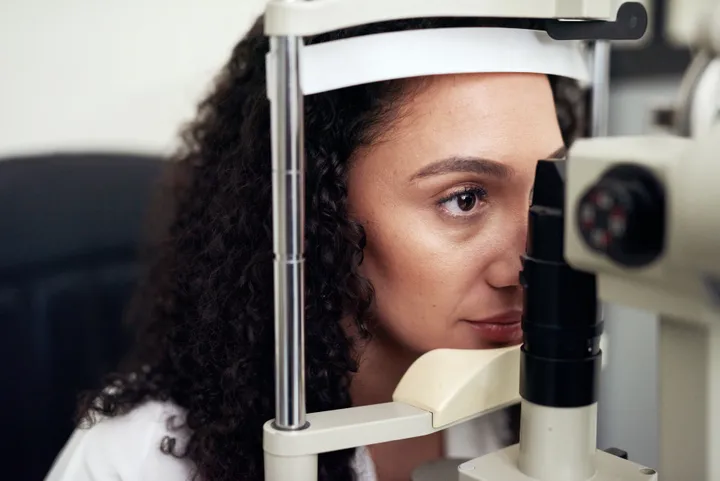
Unfortunately, many diseases aren’t always straightforward and simple like we want them to be.
For starters, certain health conditions don’t always present with symptoms. Even COVID-19, for example, can be asymptomatic, causing the number of cases to rise. Plus, illnesses can share symptoms. If you’ve ever googled “how to tell if you have a cold, allergies or COVID,” you’re familiar with that.
Along those lines, you might be surprised to hear that symptoms of certain health problems can be spotted in your eye, of all places — even if they aren’t eye diseases.
“Your eyes can reveal a lot about your overall health, often before you notice any changes yourself,” said Dr. Yuna Rapoport, a board-certified ophthalmologist and the founder and director of Manhattan Eye.
Ahead, she and another ophthalmologist share health concerns they can see in your eye, what treatment looks like, how often to see an ophthalmologist and when further medical attention is needed.
High Blood Pressure
While a health care provider typically uses your arm to check your blood pressure, your eyes provide information about it, too.
In fact, “the blood vessels that help to serve the retina are the only microvasculature that can be observed in the body in a non-invasive fashion,” according to Dr. Benjamin Bert, a board-certified ophthalmologist at MemorialCare Orange Coast Medical Center in Fountain Valley, California. But how?
Basically, consistently high blood pressure can make the walls of the small arteries thick and stiff, leading to pinching and squeezing of the veins.
“In severe cases, the arteries can squeeze against the veins so strongly that it causes a blockage, leading to a retinal vein occlusion,” Bert continued. “Hypertension can also be observed in the retina by the tortuosity, or the curving of the branches of the retinal microvasculature.”
In layman’s terms, that might look like having blurry vision or noticing sharper curves in the eye’s blood vessels.
What treatment entails: The treatment here is pretty obvious: lowering and stabilising blood pressure. “Normalising the blood pressure prevents further damage to the blood vessels and can help stop the progression of the disease,” Bert said.
Some helpful habits for lowering blood pressure include exercising, eating more potassium, limiting alcohol, getting enough sleep, scheduling regular checkups and engaging in stress-reducing activities.
Glaucoma
Glaucoma, an eye condition that affects the optic nerve, is sneaky. “Glaucoma is often referred to as a ‘silent thief of sight’ because in early stages, patients don’t typically notice any symptoms,” Rapaport said.
It develops slowly, she continued, and by the time a person notices changes, permanent damage may have already occurred.
However, early signs can be detected through eye exams, particularly when there’s extra pressure, changes in the eye’s color and shape, a thinning cornea or blind spots.
What treatment entails: “Unfortunately, vision loss from glaucoma cannot be reversed, but early detection allows us to slow or stop the progression,” Rapaport said. “This is why regular eye exams (even when your eyes appear/feel healthy!) are so important.”
Diabetes
Remember talking about the eye’s “retinal microvasculature” (basically, the blood vessels)? Diabetes — or more specifically, elevated blood sugar — can affect it, too.
“The elevated blood sugar can damage pericytes, the little cells that are responsible for the integrity of the microvasculature in the retina,” Bert explained. “When these cells are damaged by elevated blood glucose, they disappear, leading to incompetence of the blood vessels.”
That can lead to microaneurysms and “outpouching” from the blood vessels, he continued, which look like red dots on the eyes.
In more severe cases, the blood vessels can leak, making even bigger dots and affecting vision.
What treatment entails: Controlling blood sugar and blood pressure is needed to prevent the progression of diabetes.
If vision changes have occurred, know they aren’t always a sign of “normal aging.” Eye treatments may be necessary, Bert said, such as special injections containing a medicine that can make blood vessels less leaky, preventing the growth of new abnormal blood vessels.

LaylaBird via Getty Images
Demodex Blepharitis
Prepare yourself: This one is pretty gross.
“Demodex blepharitis (DB) is an eyelid disease that is caused by an overgrowth of Demodex mites — microscopic parasites that live in eyelash follicles,” Rapaport said.
Even something as “innocent” and everyday as applying mascara can lead to it.
While you may experience symptoms that look like allergies, know that DB can be asymptomatic. Further, the disease won’t “just go away” on its own.
“Eye crust” is a red flag. “I can spot a patient with DB by analyzing the upper eyelid margin during an eye exam for the presence of crusties, otherwise known as collarettes,” Rapaport said.
What treatment entails: Good news: There’s a Food and Drug Administration-approved prescription eye drop that can treat and kill those pesky mites. Consider asking your ophthalmologist about it.
Brain Tumors Or Masses
This is clearly one of the most dangerous health concerns an ophthalmologist can spot. The mass can increase cerebrospinal fluid pressure, Bert said, causing papilledema, or a swelling of the optic nerve.
To be clear, papilledema doesn’t automatically mean a person has a brain tumor or mass, but it’s something to check regardless.
What treatment entails: Ophthalmologists can test for this with an automated visual field test, which helps locate the abnormality. Then, after a diagnosis, your provider will order an MRI to assess the possible risk of a mass.
“This can often help to get patients earlier care and intervention with an oncology/neurosurgery/neurology team,” Bert said.
Inflammation That Could Signal An Autoimmune Disease
Inflammation in the eye — whether the front or the back — can be a sign of various autoimmune diseases, such as rheumatoid arthritis, lupus, syphilis or even lymphoma, according to Rapaport.
It can present with eye-related symptoms, for better or for worse, such as light sensitivity, eye pain, redness and decreased vision, that may be benign.
Again, routine visits to the eye doctor are vital, even for conditions that don’t seemingly have to do with the eyes.
What treatment entails: Rapaport said she starts with topical steroid drops and, if needed, oral steroids. She also orders an autoimmune workup to see if there’s an underlying condition, and coordinates care with an appropriate specialist if needed.
When Further Medical Attention Is Needed
As illustrated by those examples, and according to Rapoport, seeing an eye doctor can be valuable even if you don’t have eye concerns. Not just once, either.
“It is advisable for everyone to see an eye doctor or surgeon once a year for routine monitoring, so that these issues can be identified in a timely fashion,” Bert said.
Any extra regularity depends on each person’s individual needs and health profile.
“For example, if someone has the start of signs of diabetic retinopathy, they may need to be seen monthly,” Bert continued. “However, someone who has a known diagnosis of diabetes and has their blood sugar controlled with no signs of diabetic retinopathy may be able to be seen annually.”
Experiencing eye or eyelid irritation, redness, swelling, inflammation or vision changes are other reasons to make an eye appointment ASAP, Rapaport added.
And of course, you may need to see other doctors if the ophthalmologist detects a non-eye concern. For example, a cardiologist for high blood pressure or an endocrinologist for signs of diabetes.
Don’t wait, just go. Protect your body before any potential problem worsens.



Two years after young voters swung to the right in 2024, helping return Republicans to unified control of Washington, economic concerns are pushing 18- to 34-year-olds back to the left for the midterms, according to a new national survey of more than 1,000 young Americans.
The poll from nonpartisan outfit Generation Lab, shared exclusively with POLITICO, amounts to a flashing warning sign for Republicans. It shows young Americans planning to vote Democratic in November by a margin of 52 percent to 19 percent. Broken down by party, the data indicates that the GOP has a significant base problem: Just 58 percent of young Republicans say they’ll vote GOP — with nearly a third selecting “neither” or “won’t vote.” By contrast, 85 percent of young Democrats intend to show up for their party at the ballot box.
Just as in 2024, deep discontent with the state of the economy is driving anger at the party in power. Now, 81 percent of young Americans rate U.S. economic conditions as bad or terrible — including 68 percent of Republicans. The younger the age bracket, the more optimism diminishes.
President Donald Trump shoulders most of the blame among respondents, with 41 percent who rate the economy negatively naming him as the top culprit, plus 9 percent who select congressional Republicans. But it’s not just the GOP: Another 31 percent finger corporate greed/large companies. Just 6 percent blame Joe Biden or congressional Democrats.
In many ways, the polling looks like an inverse of Democrats’ struggles in the 2024 cycle, when surveys showed that voters didn’t personally experience the positive economic image projected by the Biden administration.
“We tie this really closely to what people can see and feel and touch in terms of their own personal economic situation,” Cyrus Beschloss, Generation Lab’s founder and CEO, told POLITICO. “Saying that affordability is a ‘line of bullshit’ is definitely not helping — to the extent that young people are clued into that.”
But a caveat remains. “Young people are voting at just obscenely low rates,” Beschloss said. Insofar as this demographic might swing to or from Republicans, “their power’s a lot more concentrated in social force” — as cultural barometers and pace-setters — “than it is electoral force.”
Young people’s social force on GOP politics looks highly negative right now, and not just over concerns about inflation, housing, jobs and gas prices. The survey also finds mass blowback to the U.S.-Israel war with Iran: Seventy-seven percent of young Americans say the U.S. made the wrong decision in striking Iran, and 75 percent say they disapprove or strongly disapprove of Trump’s handling of the military action.
Republicans are keenly aware of voters’ cost-of-living and economic concerns — but they argue that they’re positioned to sway Americans here with a message focused on lower government spending, new tax breaks and blaming Democrats.
The GOP is also addressing bad economic feelings head on by telling voters that they’re cleaning up messes created by Democrats. And following on Trump’s 2024 strategy, Republicans have doubled down on TikTok and other social-media content/branding that reaches young people where they are. Candidates speaking to voters directly works well, the party has found, as does pro-America content that can go viral organically — think Artemis II or the semiquincentennial.
“After years of skyrocketing costs and economic uncertainty under Joe Biden and Democrats, combined with the left’s alienating, out-of-touch rhetoric, young Americans are fed up with empty promises,” said RNC national press secretary Kiersten Pels. “They want real results, and Republicans are speaking directly to them in a way that resonates.”
The strong GOP push could yet pay dividends. “I really … would not discount how much the Republican world has been focused on running a really tight operation in terms of not only getting more young men into their camp but keeping them there,” Beschloss said.
But Democrats have built out their own infrastructure to compete, including creator networks for candidates to work with and new resources devoted to communicating via YouTube, podcasts, social media, influencers and Substacks.
And the economic concerns are a lay-up for Democrats’ midterms messaging writ large, they say, which puts affordability front and center — the kind of laser-focused approach that scored the party big wins in 2025. “Young voters’ top concern is affordability, and we’ve been beating the drum on that issue all cycle,” said DCCC spokesperson Aidan Johnson. “Many don’t think they will ever be able to buy a home, or are graduating out of high school and college with not nearly the same kind of opportunities that their parents had.”
Looking beyond the midterms: The Generation Lab also asked young Americans about the 2028 presidential race — and at this early stage, name recognition seems to be paramount.
Democrats like Kamala Harris and Rep. Alexandria Ocasio-Cortez (D-N.Y.) best, at 31 and 23 percent respectively. Republicans pick Vice President JD Vance (25 percent) and then HHS Secretary Robert F. Kennedy Jr. (13 percent). And tied for seventh overall, at 4 percent each among all young Americans: Jon Stewart, Mark Cuban and Tucker Carlson.
Like this content? Consider signing up for POLITICO’s Playbook PM newsletter.
For a country that prides itself on hating the Tories, this is very odd.

And if you don’t see how, let us illustrate.

If you simply combined the Tory and Reform votes from the latest poll, the election would be on a knife-edge, with the right-wing alliance just three points behind the SNP on the constituency vote and six points AHEAD on the list. On that basis it would likely win the election as the biggest party, though it would need Labour and Lib Dem backing to form a government.
(It would be genuinely unpredictable and interesting to see who could win the vote to be First Minister in this scenario.)
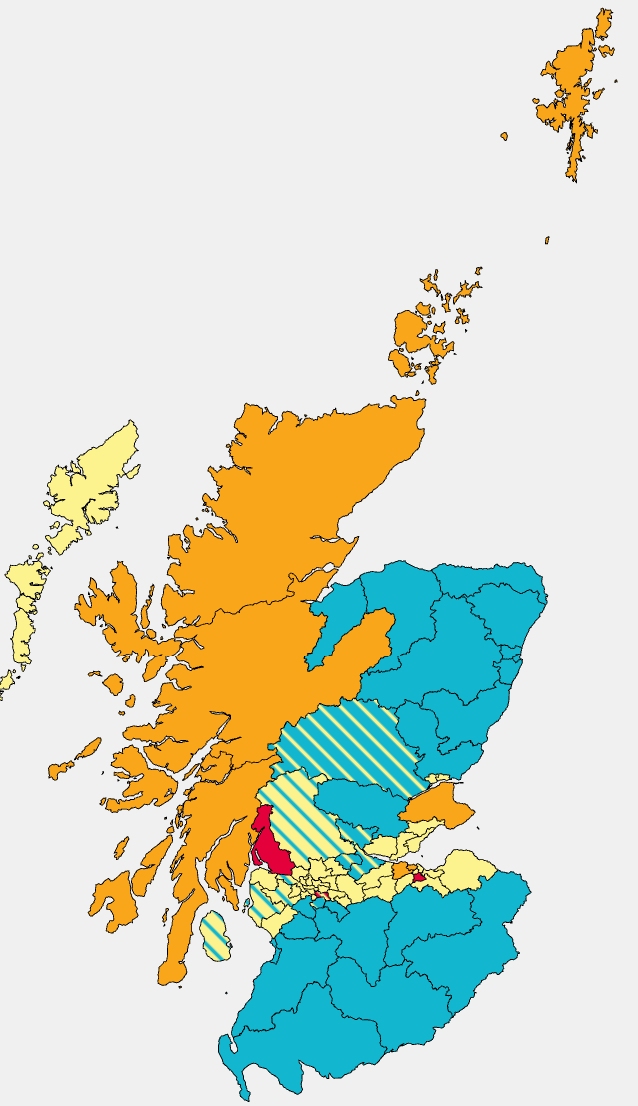
This is the Devolved Elections projection, showing Reform edging it by a single seat over the SNP, with a comfortable Unionist majority of 21, compared to the 11-seat “pro-indy” majority projected by More In Common on the actual poll numbers:

The map would look like this, with the right-wing alliance sweeping the traditional strong Tory areas of the Borders and the north-east and encroaching towards the middle, with the Lib Dems taking a huge chunk of the Highlands and Islands and the SNP reduced to the Central Belt, with Labour clinging to their existing pockets.
Considering that a right-wing party (the Unionist Party, forerunner of the modern Scottish Conservatives) last won an election in Scotland in 1955, that’s an extraordinary stat. If Tory voters switched en masse to Reform on Thursday, according to this poll there would be an earthquake of utterly transformative impact on Scottish politics which would make the SNP’s 2007 victory, and 2011 majority, seem like a fieldmouse farting by comparison.
(If you count the SNP, Labour and Greens as all representing various degrees of “the left”, with the Lib Dems on the soft right it’s close, about 53-45 in favour of the left.)
And there’s another thing. More In Common didn’t ask about independence, but a poll for the Sunday Times at the weekend put support at Yes 55 No 45. Yet just 37% of people voting in the election are going to vote for ostensibly pro-independence parties.
That means that one out of every three independence supporters is refusing to vote SNP or Green in order to try to achieve it, and more than two out of every five are refusing to vote SNP. Just 57% of indy supporters say they’ll vote SNP on Thursday, and another 10% will vote Green.
(We suspect that once turnout is factored in those numbers will fall further.)
It really is quite hard to overstate how surreal all this is. On just over 30% of the vote, the SNP look set to either win an absolute majority or come close to it, while a combined Tory/Reform vote of over 32% will get them less than a quarter of the seats in the chamber.
Despite John Swinney offering a “100% guarantee” of a second referendum if he gets that majority, barely more than half of indy supporters look like they’ll bother to go out and vote for his party to get it. Meanwhile Tory voters will pass up a no-brainer chance to kick the SNP out and definitively end any threat of independence for the foreseeable future, despite being by far the party most obsessed with the constitution.
(Labour voters at least have the excuse that their party is still clutching at the comically absurd notion that they can win the election themselves, and the Lib Dems just want to carve out a few more seats, but Tories know full well that they’re looking at an epic humiliation AND a thumping SNP win unless they decide to throw their lot in with Malcolm Offord’s motley crew at the last minute.)
This, then, is an election in which both indy supporters and Unionists seem to be locked on a suicidally self-destructive course, each doing their best to throw it. The SNP is urging Yessers to waste their second vote and maximise the number of Unionist MSPs, while the Unionist parties are so engrossed in fighting among themselves that they’re going to get 61% of the vote yet still find themselves sitting irrelevantly in an indy-majority Parliament for another five years.
(Neither side much cares, they’ll get the gravy either way.)
As for the voters, nobody expects even half of them to turn out at all, so scunnered at they at the rotten catalogue of options being presented to them.

Our wee country’s gotten itself in a right old pickle, folks.


Lately, it feels almost impossible to scroll through social media without coming across someone talking about the dangers of inflammation or the benefits of an anti-inflammatory diet.
But what is inflammation, how do we know if we have it, and what can we do about it?
That’s what we — Raj Punjabi-Johnson and Noah Michelson, co-hosts of HuffPost’s “Am I Doing It Wrong?” podcast — asked Tamiko Katsumoto, MD, a clinical associate professor in the division of immunology and rheumatology at Stanford University and a board-certified lifestyle medicine physician.
“I think the best way to define it is it represents the body’s response to a danger signal or to a damaging signal, and then it’s followed by a repair process,” Katsumoto told us. ”[It’s] this whole process by which our immune system is helping to defend us and it helps them to resolve that insult that we are faced with.”
That means that inflammation isn’t always a bad thing. Acute inflammation, which occurs when our bodies are trying to fight an infection or heal a wound, is short-term, beneficial and absolutely necessary to our health. It is a “knee-jerk response,” Katsumoto said, that involves a “very robust kind of activation of the immune system.”
“Without inflammation, we would be dead — it keeps us alive,” she emphasised.
However chronic inflammation is often “subtler.”
“Sometimes that flies a little bit below the radar, and we may not fully be aware that it’s happening,” Katsumoto said, but there is one symptom she hears in her client from her patients more than anything else: fatigue.
“People that say, oh, I’m just so tired. I have no energy.”
This kind of long-term inflammation, which can be caused by environmental exposures, our diets, and other lifestyle factors, is to blame for “a lot of the diseases that we’re dealing with in the Western world.”
“It’s little bit more insidious. It’s not as obvious. It’s not like when you have the flu, but it’s like some people kind of get more of a chronic ongoing low level of inflammation that can then lead to the development of a lot of these diseases,” Katsumoto noted.
Everything from Alzheimer’s to heart disease to depression can be caused by chronic inflammation.
“And then, of course, what I deal with in my clinic is maybe a higher level of that inflammation — things like rheumatoid arthritis, things like lupus, these are autoimmune conditions,” she said, adding that “the vast majority of our diseases are driven by inflammation, maybe like 80% or so.”
Katsumoto told us that those 80% of diseases caused by inflammation are believed to be “driven by lifestyle-related factors that we can have some control over.”
“We can’t control everything about what we’re exposed to, but we can control lifestyle factors that can be very, very protective of this inflammation and really can dampen it so that we don’t end up with a lot of these chronic diseases,” she said.
The first thing we should do to ward off harmful inflammation, according to Katsumoto, is ensure we have a healthy gut microbiome.
“It turns out that probably about 70% of our immune system resides in the gut,” she said. “To keep the microbiome happy, we’ve got to feed it fibre, and fibre, guess what? It’s only found in plants. Animal products do not have fibre. So we need to have plants to feed that gut … to create a very happy, healthy, diverse group of bugs that are going to keep what’s called immune homeostasis.”
Katsumoto noted that 95% of Americans are deficient in fiber, so we should concentrate on consuming 30 — the “magic number” for gut health — different kinds of plants each week, including fruits, vegetables, legumes, herbs and nuts.
“Fibre gets fermented by these microbes in our gut, and they produce these molecules that are called short-chain fatty acids. These short-chain fatty acids are really important in keeping our immune system in check and dampening it so it doesn’t overreact.”
Though Katsumoto tells her patients to avoid eating ultra-processed foods whenever possible because they can harm our gut microbiomes, she acknowledged that practicing moderation is our best bet.
“It’s really focusing on the whole food plants as much as possible, [but], you know, it doesn’t mean you have to be a saint,” she told us.
“I never draw lines in the sand. I think that’s not helpful … We don’t demonise anything. Yes, we all will eat some of those ultra-processed foods sometimes, and that’s okay,” Katsumoto said. “I think the bottom line is, if we can really try to keep our gut as happy as possible by really loading up with a lot of diverse plants, right? And, occasionally, some animal [products] are OK. But I just want to say, really, the plants are where the money is. And the plants are what are anti-inflammatory … and there’s been so much data suggesting that plants are super important for health and longevity.”
We also spoke with Katsumoto about other ways to fight chronic inflammation, the number one anti-inflammatory thing she is working on in her own life and much more, so click above to hear the full episode or listen wherever you get your podcasts.
Make sure to subscribe to “Am I Doing It Wrong?” on whatever podcast platform you prefer so you don’t miss a single episode from our brand-new third season. You can also watch the full episode on YouTube.
For more from Dr. Tamiko Katsumoto, head here.
Have a question or need some help with something you’ve been doing wrong? Email us at AmIDoingItWrong@HuffPost.com, and we might investigate the topic in an upcoming episode.
George Pickering is a researcher at the think tank Bright Blue. He holds a doctorate in Economic History from the University of Oxford.
“I am not a Nazi or an antisemite. I love Jewish people. … It’s not just me who ruins their entire life once a year despite taking meds every day and being told by the so-called best doctors in the world that I am not bipolar, but merely experiencing ‘symptoms of autism.’”
These touching words greeted readers of The Wall Street Journal earlier this year, in the form of a full-page apology by Kanye West for offensive remarks made between 2022 and 2025. However, the rapper’s heartfelt contrition was apparently not enough to spare him from recently being blocked from entering the UK, touching off widespread debate about whether the government ought to have such power over those whose opinions it finds intolerable.
This controversy could not have been better timed to draw attention to a recently drafted billwhich would enshrine free speech in UK law, similar to the First Amendment in the United States. The proposed Freedom of Speech Bill was described by one of its authors as being “designed to teach English politicians and English activists, listen, there is a way within your constitutional system that you can replicate American free speech protections … It gets the Government out of the business of policing the opinions of the British people.”
While it is not clear whether the proposed bill is likely to be introduced to Parliament soon, there is no denying the seriousness of the issue it is designed to address. Last year it was revealedthat police in England and Wales were making more than 30 arrests per day for social media posts and other messages which were deemed to have caused “annoyance,” “inconvenience” or “anxiety”. This heavy-handed and costly policing of online speech, alongside other high-profile cases such as the upcoming trial of a woman accused of silently praying near an abortion clinic, highlight the extensive powers the government already has to punish those whose opinions it deems unacceptable.
But would a Freedom of Speech Bill actually be able to prevent such overreach? The example of the First Amendment to the US Constitution does little to suggest the effectiveness of on-paper protections. Less than a decade after the First Amendment was ratified, congress passed the Sedition Act of 1798, which enabled the government of President John Adams to successfully convict leading opposition newspaper editors. Later, during the First World War, the US Supreme Court unanimously decided that Charles Schenck’s right to free speech had not been violated when he was arrested for distributing leaflets arguing against military conscription. And as recently as the 1960s, the comedian Lenny Bruce was routinely arrested for ‘obscene’ jokes which seem mild by today’s standards, including implying that some people are cross-dressers and using the Yiddish word “schmuck”.
How were US government officials able to curtail these forms of expression, despite the explicit protection of free speech by the supreme law of the land? Surprisingly, the answer to this question was provided more than two centuries before the founding of the United States, by an obscure, provincial French magistrate.
Étienne de la Boétie may be most widely remembered today as the subject of Michel de Montaigne’s famous writings on friendship.
However, in the mid-sixteenth century La Boétie wrote one of the most strikingly original and influential works in the history of political thought: The Discourse on Voluntary Servitude. The central argument of The Discourse was that even undemocratic governments require the consent — or at least the acquiescence — of the people, who always vastly outnumber their rulers. “He who thus domineers over you has only two eyes, only two hands, only one body … Where has he acquired enough eyes to spy upon you, if you do not provide them yourselves? How can he have so many arms to beat you with, if he does not borrow them from you?”
Violations of the First Amendment in the US would have been no mystery to La Boétie: officials were able to effectively break the law because they knew the public, at the time, lacked the will to insist that they be held to account. The same reasoning explains how the British government was able, for example, to enforce restrictions of uncertain legality during the COVID-19 pandemic.
Unfortunately, the British public simply does not value free speech.
A YouGov poll found last year that only 28 per cent of people believe that one should be able to speak one’s mind on social media, while 61 per cent felt it was more important that online abuse and threats should be prevented.
Until the public ceases to tolerate violations of free expression the government would continue to limit free speech, either directly or by pressuring private companies to do so, regardless of whether a Freedom of Speech Bill were passed.

Keir Starmer has alluded to his ongoing tensions with Donald Trump after the US president threatened to withdraw American troops from Europe.
The prime minister spoke his EU allies during a meeting with the European Political Community in Armenia about increasing defence spending.
Starmer announced that the UK is currently in discussions to be joining the EU’s £78 billion loan scheme for Ukraine.
The PM said the scheme will help increase jobs in the UK, improve UK-EU relations and help Ukraine as the war against Russia rumbles on.
Starmer is hoping to reset relations with the EU just as Trump continues to cause upset with his Nato allies.
The White House has decided to withdraw 5,000 US troops from Germany amid Trump’s ongoing feud with German chancellor Friedrich Merz.
The president has also attacked Starmer personally in recent months over the UK’s refusal to get involved with the Iran war.
The prime minister then gave a nod with this ongoing friction with Trump while discussing the new scheme with his European allies.
He said: “We cannot deny that some of the alliances that we have come to rely on are not in the place we would want them to be.
“There is more tension in the alliances than there should be, and it’s very important that we therefore face up to this.”
He urged Europe to spend more on defence because the continent has fallen “behind over many years” and so there must be a “stronger European element in Nato”.
But the PM also noted how the international conflicts – in Ukraine and Iran – are having a knock-on effect for Britons.
“In the United Kingdom, if you look at the economic forecast now and compare it to the economic forecast just three or four months ago, they are in materially different places,” he said.
A Downing Street spokesperson also said: “The prime minister met the president of France, Emmanuel Macron, and Nato secretary general, Mark Rutte, at the European Political Community Summit earlier today.
“The leaders reflected on their recent diplomatic discussions, including on the situation in Ukraine.
“On the situation in the Middle East and the need for an end to the war in Iran, the leaders agreed on the need to reopen of the Strait of Hormuz to restore freedom of navigation and the free flow of global trade.
“They discussed European support already positioned in the region to reinforce security, and welcomed the close coordination between European allies.”
Starmer sent King Charles on a state visit to Washington last week in the hope that the monarch could help patch up relations with Trump.
While the president seemed enamoured by the royals, and dropped all whisky tariffs on Scotland, he continued to take aim at the PM over Iran.
Subscribe to Commons People, the podcast that makes politics easy. Every week, Kevin Schofield and Kate Nicholson unpack the week’s biggest stories to keep you informed. Join us for straightforward analysis of what’s going on at Westminster.
Politics
Stop Rewarding Drama: Why Being ‘Polite But Uninvested’ Is The New Way To Handle Toxic People

Therapist comment provided by BACP-certified therapists Matt Wotton and Clare Patterson.
You might already be familiar with “grey rocking,” or responding to a narcissistic or high-conflict person with a wall of boring, impersonal responses that provide a sort of armour.
But recently, I read about “yellow rocking,” a more polite version of the practice. Some say it can also help those handling inconsiderate and high-conflict people; others even recommend it in acrimonious custody cases.
So, we spoke to therapists Matt Wotton and Clare Patterson about the benefits of “yellow rocking” and how to use it.
What is “yellow rocking”?
It involves responding cordially, but not in an emotionally invested way, to someone who typically upsets you.
You can speak to them lightheartedly, without sharing any information you want to share or getting trapped in lines of thought or discussion you don’t want to.
The therapists said it’s about boundaries. Some techniques like CBT help people to “notice triggers, regulate their reactions, and respond deliberately rather than reactively”, like “yellow rocking,” said Wotton.
“The BIFF method used in divorce mediation – brief, informative, friendly and firm – follows the same principle. Keep responses short, factual and calm.”
Staying present and remembering you’re in control of the conversation is key.
Both experts agree that the method is grounded in existing techniques
“Yellow rocking basically repackages existing therapeutic ideas that have been around for decades – it’s broadly sensible stuff,” said Wotton.
“Both grey and yellow rocking are built on the idea that behaviour fades when it stops being rewarded.”
He added that while going no-contact is often the best solution, “yellow-rocking” can help in scenarios, like co-parenting, that make that impossible.
Patterson said, “I think when we feel confident and have good boundaries in ourselves, ‘yellow rocking’ comes naturally. It’s a place where the so-called ’narcissist’s behaviour simply cannot affect us in the same way it might if we experienced self-doubt or insecurity.
“By ‘not affect’, of course I don’t mean we won’t feel hurt, irritated or saddened by the behaviour at times. But when we no longer take it personally, we can respond with humour and lightness, rather than a place of defensiveness or an attempt to change or fix them.”
She ended, “Essentially, it’s about bringing power back to ourselves. It can be easy to want to fix the world ‘out there’ to feel safe and content, but perhaps in starting with feeling safe and content within ourselves, we may be surprised at what our external reality starts to reflect back.”
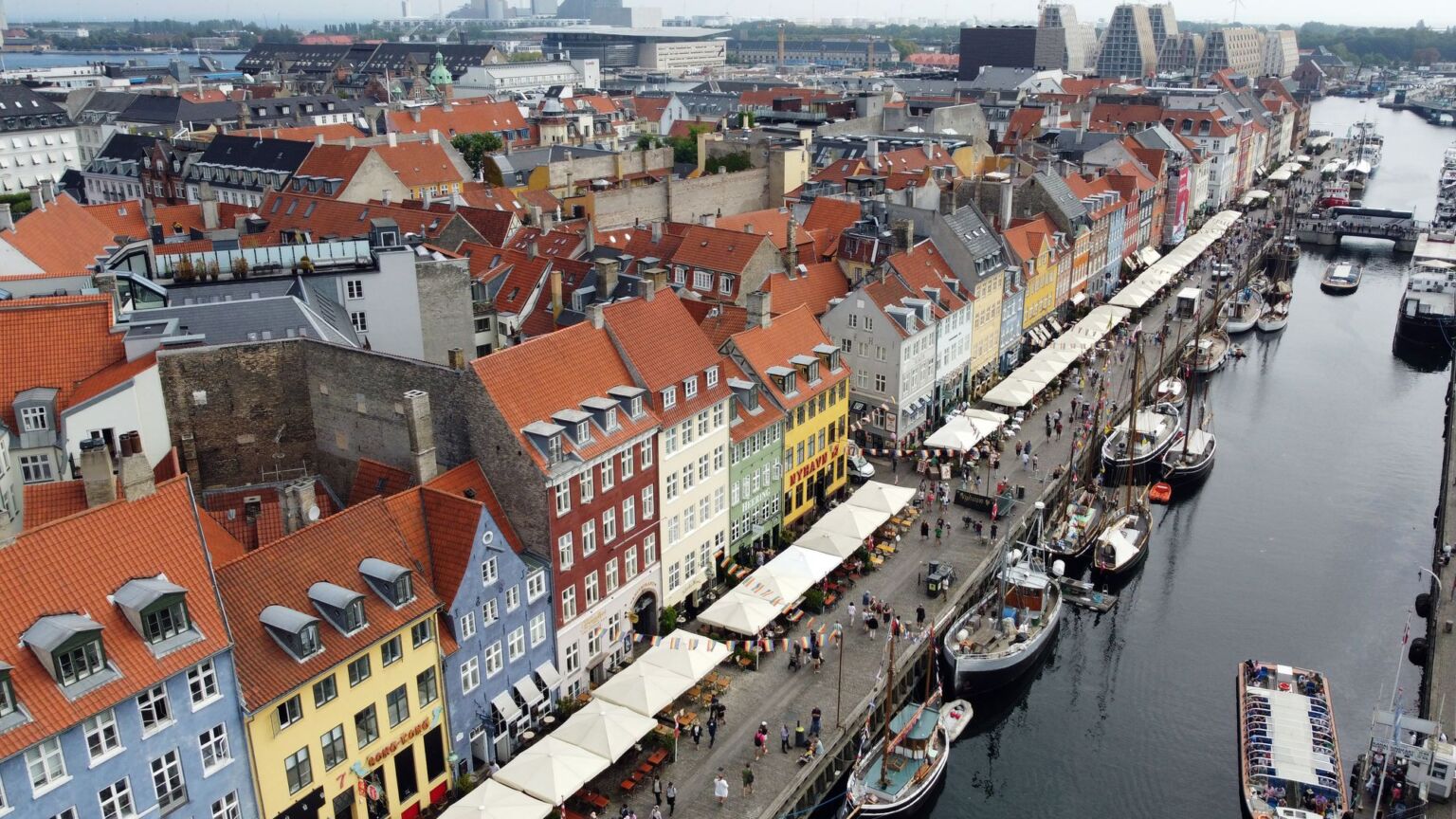
I spent a good while living in Denmark last year, and something struck me pretty much straight away. I would see it in cafés, in museums, in swing parks with my daughter, on the trains, even queuing at a supermarket checkout… everywhere. They carry themselves differently, the Danes. They seem to glide about, elf-like, tall and composed and utterly at ease with themselves. They speak plainly, and if they laugh, it is without checking themselves. They didn’t seem to be performing a version of who they thought they should be. They simply were, and it was beautiful to see.
Obviously, this is a generalisation. But it’s one that holds up. I spent ages looking for exceptions and didn’t find much at all to dissuade me from my thesis.
The contrast was sharp when we came back to the UK. Danes dress better, keep themselves trim and fit, and all seem to glow with good health. But there’s more to it than aesthetics. Here in the UK, we lack confidence. We suffer from a habit of apology that goes beyond politeness into something deeper – a cringing self-abasement. People hedge their statements. They second-guess their right to speak. Identity – whether national, cultural or even personal – is often handled as though it were something faintly embarrassing.
We have a cultural reflex towards self-abnegation. It’s not humility in the classical sense, which can be virtuous. Rather, it’s an ingrained reluctance to stand squarely as oneself. We are wary of appearing too certain, too rooted, too at ease in our own skin. And that wariness, repeated across millions of small interactions, becomes a national mood. We are collectively ashamed of ourselves.
There is a moral framework underpinning all of this. I like to speak of it in terms of original sin – a moral stain passed down irrespective of individual action. Today, our tendency towards taking on original sin persists in a different form, unwittingly peddled by (predominantly) atheistic, humanistic leftists. As a humanistic lefty type, I’ve often suffered with it myself.
Original sin, these days, appears in the language of white guilt, of masculine guilt, of colonial guilt, of middle-class embarrassment – categories of responsibility that are pretty much entirely inherited.
History is far from irrelevant and I’m not arguing that past injustices should be ignored. It’s just that the burden has shifted into the realm of identity. We are embarrassed to be ourselves because we are made to be ashamed of our culture. And now this shame, this guilt, has become a part of us. The result is a culture in which people feel obliged to justify themselves (or, worse, apologise for themselves) above and before anything else.
Denmark, by contrast, seems largely free of this kind of collective shame. It’s far from a flawless society, of course, and the Vikings weren’t exactly progressive. It has its own tensions and its own historical dark points. But there is a noticeable absence of this constant moral self-interrogation at the level of the individual. Self-abnegation as a form of penance is entirely lacking.
A couple of things rise out of this. Firstly (and no doubt fuelled by a relatively homogenous culture), there is a great sense of community in Denmark. There, you can belong to a culture without needing to apologise for it.
Secondly, you have the self-possession I fell in love with almost instantly. They do not anxiously scan their own words for hidden transgressions; nor do they cringe away from anything. They are rarely preoccupied with how they might be seen. As a result, they are happier (Copenhagen, where I was staying, was voted the happiest city in the world while I was out there), more stable, and more at ease in the world.
Material conditions matter, of course. Denmark has high taxation but good public provision; things are expensive, but people are well paid. They have a good work-life balance and a healthy approach to things like leisure activities, diet and exercise. However, the psychological atmosphere in which people live is also important.
In the UK, the whiter, more middle class, more male, more straight and cisgendered and all of that you are, the weightier the pressure of inherited moral debt. In progressive intellectual parlance, it’s sort of the inverse of intersectionality: the fewer things that make you appear disadvantaged, the more you must cringe and apologise for just existing. Public discourse is often paralysed by fear of saying the wrong thing. Identity fractures along lines of suspicion and defensiveness. Even once-ordinary and historically and geographically normal expressions of belonging – pride in place, in culture and shared history – are often fraught and frowned upon. We are always somehow compromised and must all live under a cloud of shame.
None of this is an argument for amnesia. History matters and moral seriousness certainly matters. If they didn’t, I wouldn’t have bothered writing this piece. But there is a difference between understanding the past and internalising it as a permanent condition of guilt. There is a difference between seeing distant forebears’ crimes and being punished for them yourself. The former can lead to wisdom, while the latter tends only to erode confidence and distort relationships between people.
Danes, in their unassuming, self-confident way, show that a society does not need to organise itself around inherited guilt in order to be decent, fair or humane. Self-possession is not arrogance. It isn’t denial or the elevation of oneself over ones’ neighbours. It is simply the necessary condition of being able to live among others, to do so standing as yourself – and for your group to do so standing as itself – without apology.
James Dixon is a Glasgow-based novelist, poet and playwright.

Labour’s deputy leader Lucy Powell has refused to say if she thinks Keir Starmer should continue as prime minister.
The party are expected to endure heavy losses in England’s local elections on Thursday after a gruelling two years in office.
Labour are also likely to lose control of the devolved Welsh government for the first time since devolution was introduced 30 years ago, and unlikely to beat the SNP in Scotland.
Pressure is mounting on Starmer to take the fall for the anticipated bloodbath, though the PM has insisted he will not be stepping down any time soon.
Even so, reports continue to suggest that his rivals – former deputy PM Angela Rayner, health secretary Wes Streeting and Greater Manchester mayor Andy Burnham – are preparing to challenge him for No.10.
Powell, who was sacked as the Commons leader by Starmer last year, refused to give the PM clear backing in an interview on Sunday.
While sending a message to unhappy Labour MPs that “no one change” would help the party get back on the right track, she said: “I strongly believe that we’ve got the right agenda to start turning that around. To give people hope, an opportunity and see the change in their communities.”
Asked if Starmer was the correct person to deliver on those promises, the MP for Manchester Central said: “I’m not going to get into that.
“I think there’s no one change that [will affect] all of these situations. We’ve still got to tackle these big issues, and we’ve got to do it in the right way with the right values. Having some side order conversation about personnel and people, I think misses the point.”
She said: “If we get that wrong, then Nigel Farage is walking into Downing Street. We can all pretend that one switch over here would magically transform that. I just don’t believe that.”
Powell also told the Guardian there is “huge anger and despondency” within the party over the scandal surrounding Peter Mandelson.
Starmer’s decision to appoint the ex-Labour peer as the UK’s ambassador to the US, despite his links to convicted paedophile Jeffrey Epstein, caused fury within the party.
Mandelson has since been sacked but new details – including questions about his failed vetting status – continue to haunt the PM.
Powell is known to be a close friend to Burnham, who tried to run for the Gorton and Denton by-election but was blocked by Labour’s executive body.
Subscribe to Commons People, the podcast that makes politics easy. Every week, Kevin Schofield and Kate Nicholson unpack the week’s biggest stories to keep you informed. Join us for straightforward analysis of what’s going on at Westminster.
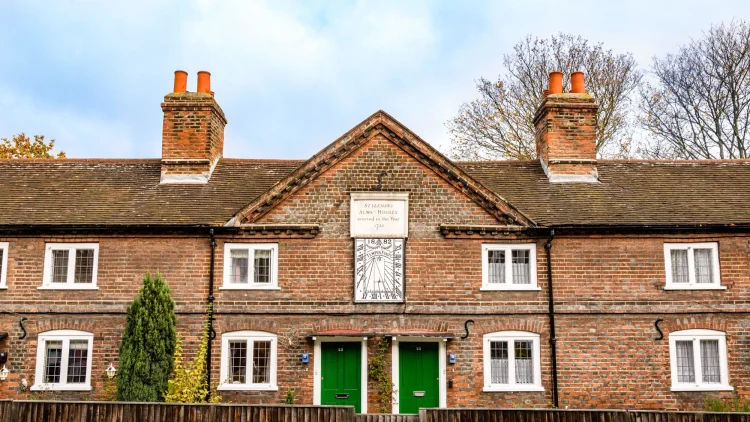

Stylemans Almshouses, Bexley, Kent (Mark Summerfield/Alamy)

4 min read
Charity housing adds so much to society – in many cases providing a life-changing environment for residents – yet charity housing remains heavily influenced by the whims of government. And not just by the decisions made in SW1 but also by those in different branches of local government across the country.
In the case of charity housing, it’s often local councils who are the powerbrokers for the sector, as they decide local budgets and funding priorities. This power is most significantly used through Selective Licensing, a regulatory tool impacting the private rented sector by requiring landlords to meet specific conditions and pay significant levies.
This legislation is vital as councils use these schemes to address issues such as poor living conditions, anti-social behaviour and housing inequality, which often disproportionately affect vulnerable populations.
As CEO of The Almshouse Association, the body representing 1,600 independent almshouse charities across the UK, I know that there is tension between the charity housing sector and government when it comes to this legislation.
Almshouses have been offering affordable housing to the community for over a thousand years but are often overlooked or misunderstood by local councils. Almshouses are often mistakenly classified as part of the private rented sector and included in the Selective Licensing programme – overlooking a crucial distinction: unlike private landlords, almshouse charities are already subject to robust oversight by the Charity Commission and supply a beneficial service to the community.
Almshouses operate under a clear set of Standards of Almshouse Management, which ensure that properties are properly maintained, responsibly managed, and used in line with the charity’s purpose.
In addition, our member charities already operate on extremely tight financial margins. The cost of additional charges, such as selective licensing, is not merely a minor administrative burden but a significant financial strain – amounting to tens of thousands of pounds, in some cases.
This is money that could otherwise be used to maintain or expand properties for those in most need, but is instead diverted into these regulatory costs.
But in certain areas, councils have chosen to waive licensing fees for charitable providers – acknowledging their social value and limited resources.
However more still needs to be done. The underlying legislation does not allow for a straightforward exemption, meaning that charity housing still faces these additional fees, even if – as in a few cases – the cost is absorbed by the council rather than the charity. This creates administrative complexity without addressing the root issue.
Therefore, it’s now paramount for local government across the country to exempt non-profit housing charities – recognising their distinct role and alleviating the unnecessary financial pressure. The number of such properties is relatively small, meaning the impact on licensing revenues would be minimal. At the same time, councils would retain the ability to intervene where necessary. Existing powers already allow local authorities to inspect properties and address substandard conditions, ensuring exemptions do not come at the expense of tenant safety.
I’ve heard arguments that any exemptions would risk creating blind spots, particularly for those local authorities facing a significant housing crisis. However this underestimates both the accountability mechanisms already in place and the practical realities of selective licensing.
Treating charitable housing providers as indistinguishable from private landlords is counterproductive
Designation areas are typically drawn based on broad geographic data, making it difficult to carve out exceptions at the level of individual properties. Moreover, councils themselves often lack comprehensive information about all housing providers within their boundaries, further complicating enforcement.
Treating charitable housing providers as indistinguishable from private landlords is counterproductive. Almshouse charities are part of the solution – not the problem that selective licensing is designed to solve. Burdening our members with disproportionate costs risks weakening a sector that plays a vital role in supporting vulnerable communities.
If policymakers are serious about improving housing outcomes, regulation must be targeted, proportionate, and informed by the realities on the ground. Charity housing deserves a framework that reflects its unique contribution and is one that supports local authorities and councils’ ability to serve those who need it most.
Nick Phillips is CEO of The Almshouse Association

“I’ve written a list,” my mother said as our session began in her therapist’s San Francisco office. “It’s called ‘the 40 most unforgivable things I’ve ever done to my daughters.’”
Fog flowed above the skylights as she fidgeted in her seat, twirling her blue chiffon scarf. I cringed. I hated the idea of therapy, but Mom loved it. She’d convinced me to go, even though I protested, telling her, “I don’t need any apologies.”
At 30, I was still frozen in fright as if I were 7 years old and hiding under my bed because I feared my next beating.
I sat opposite my mom while she smoothed her light powder pink matching skirt and jacket so no wrinkles would show, as if that would somehow help in ironing out our own.
My parents, who were Russian Jewish second cousins, met at a bar mitzvah and married at 19. Mom was 20 when I was born. She got addicted to speed trying to lose the baby weight and used barbiturates to sleep. When I was 7, my parents divorced. My father moved to Mexico while my mom, sister and I remained in New York City.
Mom had been seeing her psychoanalyst weekly for decades to process her pain of having been an abuser for the first 13 years of my life. Focused only on becoming a college professor and starting my own family, I’d spent those same decades pretending I wasn’t damaged in any way. Denial protected me and I had never seen a mental health specialist.
Twenty years after she got sober, she set up this time to formally ask for forgiveness. Until then, we’d often gotten together and had perfectly pleasant times by never talking about the past.
My lower back ached as I settled into the stiff beige leather chair, wishing I wasn’t there.

Courtesy of Leslie Mancillas
“Today’s session is for your mom,” the therapist, Terry, said. “She wants to tell you how sorry she is about the abuse that took place when you were young. She’s been plagued with guilt.”
I looked over at my 50-year-old mother, whose hazel green eyes I had inherited along with her petite frame and dimples. I also have the same thick wavy brown hair, and perhaps the propensity to fidget, since I couldn’t stop nervously twisting a strand as she spoke that day. In every other way, though, I felt nothing like her.
“The fact that your mom is about to apologise for specific acts of violence and neglect in no way excuses her past behaviour,” Terry said.
I sat motionless and muted, staring at Mom. I knew what she was going to say and I didn’t want to hear it.
“When Leslie was 5, I repeatedly closed her in the garbage room and told her I didn’t want her anymore,” Mom read aloud. “Each time she tried to come out, I slammed the door shut and told her she was being thrown away.”
I quivered as if she were still locking me in that rubbish room in our swanky Manhattan apartment building. I shrank back to being tiny and helpless.
Mom continued, “I know I can’t undo the past. I feel so much pain, I don’t want to die without saying how sorry I am for everything on my list.”
She read aloud from her categorised maltreatments, among them: strangling me, pulling my sisters and I around the apartment by our hair, hitting us at midnight when her speed kicked in, forcing us to clean at 2 a.m., telling us repeatedly she wished we were dead and had never had been born, regretting the drug dealers she brought home, and holding primal scream groups at the house where we had to hear adults yell obscenities several nights a week.
Mom made it only partially through her list before I could barely stand it. My mouth was ajar and my breathing jagged, as if gasping for air in a room that had been lit on fire.
Ribbons of red streaked across the skyline as the sun set. The session ended with an eerie silence. Still pulled by a primal force to please her, I finally spoke.
“Mom, I forgive you.”
I had not gotten over any of it —I’d just gotten good at saying I had. Mom’s description of each act she regretted reminded me of everything I tried to ignore. It was both re-traumatising and validating to hear her voice these truths in the presence of her analyst. Though I remembered it all, hearing her recount the details woke me up to my deep and unprocessed pain.
Mom’s face went pale and her limbs went limp. Perspiration surrounded her hairline as she tilted her head down and said softly, “I can’t believe how mercilessly I hurt my own babies.”

Courtesy of Leslie Mancillas
A late lunch at the Thai restaurant directly below her therapist’s office had always been the plan, but after the session I had no appetite. The scent of lemongrass and garlic wafted around the room, but did nothing to return me to my senses.
Mom must have known. Before I scanned the menu, she said, “I don’t know how you can sit near me after hearing all that. You must think I’m a monster. How can you even stand to look at me?”
I tried again to casually dismiss her anxiety.
“Oh, of course I can look at you and have lunch with you because I love you,” I said. “That was all so long ago. We can move on now.”
There were multicoloured Christmas lights and twinkling mini-Buddhas surrounding our booth, but I felt anything but festive. As a child who was abused, I always craved my mother’s love and professed my own for her often in hopes of getting more. Over the years that followed, I learned my behavior was typical for kids who went through what I did.
The menu blurred as I blinked back tears. I knew I was lying to myself and I wasn’t ready to move on. I still harboured unresolved resentment and anger toward my mom. Faking feelings was my jam, though, so I blurted out, “What great flavors!” after my first bite of pad Thai, even though I didn’t taste anything except bitterness.
Though I was upset, I realised that Mom’s bravery to say how sorry she was for each of her specific offences enabled me to understand that I would need to begin my own therapy at some point, but I wasn’t ready yet. My fierce focus on forgetting my past continued for years.
No one close to me could understand why I still had a relationship with my mom after the abuse ended.
Therapy, which I finally did begin 10 years after that session, and Buddhism helped to create loving emotional connections for us. We began practicing Buddhism when I was in the seventh grade. My mother had planned to kill herself, but instead tried an ancient meditation chant, Nam Myoho Renge Kyo, based on Mahayana Buddhist teachings. She dared me to try it with her for 100 days as one last attempt at happiness. I tried it, initially to prove her wrong, but as we chanted day after day, I felt hope and noticed mom becoming kinder.
Within that year, she stopped using drugs and hitting us. This motivated me to stay connected to her. The Sanskrit word myo means to revive. Through the visceral vibration of chanting with her daily, I started sensing maternal love from Mom. Her actions to transform our destiny started with our shared spiritual journey when I was a teenager, enabling me to enjoy time with her even though the trauma of the unspeakable things she did was still locked in my cells. Before I finished that school year, she began seeing her therapist.
I was 32 when I received her formal apology. It became a positive pivot in our relationship, but I still couldn’t entirely move forward. Eight years later, I became so sick, I ended up on the floor in a faetal position unable to walk my kids to school. I was diagnosed with severe, chronic, ulcerative colitis — an autoimmune disease.
A Reiki practitioner I started seeing at the time asked me, “Did you ever experience any trauma?” I laughed nervously and said, “My mom used to smack, hit, and yell at me most days for over a decade, but that was so long ago, that can’t be why I’m sick.”
She looked at me and said, “That’s exactly why you’re sick.”
That’s when I finally started therapy and began to understand why it had been so life-changing for my mom.

Courtesy of Leslie Mancillas
Our braided spiritual journey and her atonement initiated the reconciliation of our family, but I had a lot of work to do if I truly wanted to heal. While we never had a second therapeutic hour together, I continued the work Mom set in motion on my own.
My mother passed away from diabetes 10 years after I began processing my terrifying childhood. She was only 69.
I find comfort in having been able to experience joy with her during her lifetime, which is something I once never thought would be possible.
On her deathbed, she looked up at me and said, “How can you truly love me?”
Unlike the lie I’d told in the Thai restaurant years earlier, this time I meant it when I told her, “Mom, I do love you. You can let go and go to your next life. I will be OK.”
After her death, I found nine of her diaries while clearing out her office. She recounted the abusive years in each journal. I learned she was consumed by self-hatred for her entire life — that’s why she thought suicide was her only way out when I was in middle school.
I also found the original atonement list in one of her notebooks. It spanned 10 pages. I discovered that her therapist had encouraged her to create that formal session to make amends.
Reading her words line by line, I was overwhelmed not only by her regret for hurting me, but also by how she desperately wanted my happiness.
Mom halted generational trauma in its tracks by changing her behavior, which led to my ability to break the cycle. She continues to propel my healing even after her death. My daughters marvel at the transformation from one generation to another, and on more than one occasion, they have told me they’re proud of me for changing our family patterns.
I continue practicing the Buddhism my mother and I began when I was 13. I still go to therapy to process my painful past. But now, instead of only her wrath, I feel my mother’s courage to transform her life and repent. Remembering the words she said to me so long ago helps me heal as I continue to hear her apology in my head. I forgive her again and again. She showed me how darkness can turn into light. What greater love is there than that?
Leslie Mancillas is a writing professor in California working on her memoir about surviving childhood abuse, My Bipolar Mom Almost Killed Me: How A 100-Day Bet Saved Us. Follow her on Instagram @lesliemancillas.author. You can learn more about her at www.lesliemancillas.com.
This piece was previously published on HuffPost and is being shared again now as part of HuffPost Personal’s “Best Of” series.
Do you have a compelling personal story you’d like to see published on HuffPost? Find out what we’re looking for here and send us a pitch at pitch@huffpost.com.
Help and support:
- Mind, open Monday to Friday, 9am-6pm on 0300 123 3393.
- Samaritans offers a listening service which is open 24 hours a day, on 116 123 (UK and ROI – this number is FREE to call and will not appear on your phone bill).
- CALM (the Campaign Against Living Miserably) offer a helpline open 5pm-midnight, 365 days a year, on 0800 58 58 58, and a webchat service.
- The Mix is a free support service for people under 25. Call 0808 808 4994 or email help@themix.org.uk
- Rethink Mental Illness offers practical help through its advice line which can be reached on 0808 801 0525 (Monday to Friday 10am-4pm). More info can be found on rethink.org.

Thierry Henry urges Mikel Arteta to start Arsenal star against Atletico Madrid: ‘Outstanding’ | Football

QYLG: Rotation Into QQQ During The Bull Market

How AI Was Tricked Into Stealing $150,000 From Grok Wallet

Manchester United reach agreement with Casemiro over contract clause amid transfer speculation

US brings back mandatory military draft registration

Steven Gerrard disagrees with Gary Neville over ‘shock’ Chelsea and Arsenal claim | Football


-

 Politics7 days ago
Drax board avoid their own AGM, accused of greenwashing & environmental racism
-

 Fashion6 days ago
Kylie Jenner’s KHY Enters a New Era with ‘Born in LA’
-

 NewsBeat1 day ago
Channel 5 – All Creatures Great and Small series 7 new post
-

 Business6 days ago
Most Commercial Energy Audits Miss the Real Losses
-
 Tech3 days ago
Trump’s 25% EU auto tariff breaches Turnberry Agreement that also covers semiconductors and digital trade
-

 Crypto World6 days ago
CFTC’s AI will review U.S. crypto registration applications, chairman tells CoinDesk
-
 Sports3 days ago
Paul Scholes issues Marcus Rashford reality check as agreement emerges over Man United star
-

 Business5 days ago
Barclay Brothers Avoid Bankruptcy: HSBC Drops High Court Petitions After IVA Deal
-
 Business5 days ago
Tesla Officially Registers Elon Musk’s Stock: What Investors Need to Know
-

 Tech6 days ago
Get Ready for More Brain-Scanning Consumer Gadgets
-
 Crypto World7 days ago
Robinhood Phishing Scam Exploits Gmail Dot Feature to Bypass Security
-

 Crypto World7 days ago
Gmail Dot Trick Underpins Robinhood Phishing, Sending Real-Looking Emails
-

 Entertainment7 days ago
Michael Jackson’s Biopic Excluded Abuse Allegations For $25M
-

 Business4 days ago
Two Powerball Tickets Split $143 Million Jackpot in Indiana and Kansas
-

 Business7 days ago
Superdry co-founder accused of raping woman
-
 Crypto World4 days ago
CoreWeave (CRWV) Stock Climbs 8% Despite $45M Insider Share Dump
-
Business7 days ago
Opus Genetics president Benjamin Yerxa sells $39,121 in stock
-
 Politics7 days ago
Starmer to whip MPs to vote against probe into himself
-
 Crypto World7 days ago
ETH Triple Top Rejects $2.4K As Analysts Flag Weakness Against BTC
-

 Crypto World7 days ago
Will Ethereum hold $2,300 or slip lower from here?
You must be logged in to post a comment Login