
Politics
Adam Kent: Worcestershire’s nine per cent Council Tax rise was Reform UK’s choice. It could have been avoided.


Cllr Adam Kent is the Leader of the Conservative Group on Worcestershire County Council.
Worcestershire residents are now facing a confirmed 8.98 per cent council tax increase.
At the same time, the County Council has committed £500,000 to consultants from PwC to deliver “transformational change.”
That combination alone should raise eyebrows. Together, it demands scrutiny.
Because this is not speculation. The Council’s own budget papers confirm that the Strategic Leadership Team has been working with PwC to produce a transformation plan, grounded in activity and spend analysis, to deliver savings at scale.
Half a million pounds. On advice.
In an organisation where senior management is already paid millions collectively, the obvious question is:
What exactly are we paying them for?
The justification offered in the same report is stark:
“Limited capacity to deliver change alongside growing day-to-day pressures.”
This is not just an explanation. It is an admission.
An admission that:
- The organisation lacks internal capacity.
- Senior leadership cannot deliver change at pace.
- Consultants are required to fill the gap.
That is not transformation.
That is dependency.
And it goes to the heart of a serious issue: if those paid to lead cannot deliver, outsourcing their responsibilities is not a solution—it is a symptom.
Against this backdrop, the Conservative Group put forward a £14.4 million recurring savings programme, focused on:
- Reducing organisational overhead
- Management rationalisation
- Recruitment control
- Procurement efficiency
- Cutting reliance on consultancy itself
Crucially, it protected statutory frontline services, targeting inefficiency rather than delivery.
It offered a route to:
- Limit the tax rise to 4.98 per cent instead of 8.98 per cent
- Restore financial discipline
- Refocus the organisation on delivery
It was dismissed.
The official reason was that the proposal was “not detailed enough.”
But what does that actually mean?
It means elected members are now expected to:
- Identify specific roles for deletion
- Design staffing structures
- Produce operational delivery plans
That is not scrutiny.
That is management by councillors.
And if councillors are expected to do the job of senior officers, then a very obvious question follows:
Why aren’t they being paid like them?
Because the current reality is this:
- Senior officers are paid six-figure salaries to manage and deliver
- Consultants are paid £500,000 to design transformation
- Councillors are told to produce operational detail—or be ignored
That is not accountability.
It is institutional confusion.
Responsibility for this sits squarely with Reform UK.
They came to power promising:
- To cut waste
- To reduce bureaucracy
- To deliver better value
Instead, they have overseen:
- A £500,000 consultancy contract.
- A confirmed 8.98 per cent council tax increase
- A political arrangement that raises serious questions
Because the budget was secured at a £21.2 million price of abstention paid to the Liberal Democrats.
If £14.4 million of savings could have limited the tax rise to under five per cent, why was £21.2 million committed instead?
Why was more spent than necessary?
Why was this about political arithmetic rather than financial discipline?
And why, having secured that outcome, did the Liberal Democrats abstain, walk out of the chamber, and then proceed to call for the heads of those who had just paid that price?
Residents are entitled to draw their own conclusions.
What has unfolded in Worcestershire is not a single mistake.
It is a three-part failure:
- Senior officers, unable—or unwilling—to deliver transformation without external consultants
- Reform leadership, abandoning its own principles on waste and tax
- Liberal Democrats, accepting the price of abstention and then distancing themselves from the consequences
Each has played a role.
Each shares responsibility.
Strip everything back, and the position is clear.
The Council’s own documents confirm:
- Transformation is essential
- Capacity is lacking
- Consultants have been brought in
At the same time:
- A credible savings plan was rejected
- Council Tax has risen sharply
- Millions have been committed to secure political support
This is not reform.
It is a failure of leadership—managerial and political—funded by residents.
Six-figure salaries are not symbolic.
They are paid in exchange for delivery.
And after £500,000 on consultants, a £21.2 million price of abstention, and an 8.98 per cent tax rise, Worcestershire residents are entitled to ask:
If those in charge cannot deliver—why are they still in charge?


The West is attempting to manufacture consent for a ground invasion of Iran, just like it did with Iraq in 2001.
From supporting Israel’s genocide in Palestine, to funding the arms industry, it is clear that the West has only one goal for the Middle East: unrelenting destabilisation founded on neo-colonialism.
This is no different to Iraq in 2003. At the time, journalists failed to challenge the US government’s narratives about weapons of mass destruction and Saddam Hussein’s links to al-Qaeda. Essentially, this failure is what created public support for the US to invade Iraq.
Iran war: how does the manufacture of consent work?
Manufacturing consent describes how a ‘free media’ – one without government censorship or fear of prison for journalists, and staffed by people who genuinely see themselves as holding power to account – still ends up producing systemic propaganda with a single, consistent message.
This can be inadvertent or intentional, and is usually done by letting the accounts of Western governments go unchallenged,
For example, in Gaza, instead of challenging statements from the Israeli government and military, or the US government, Western journalists just print the statements. They may as well be stenographers for state-run media.
Similarly, outlets like the BBC, Sky News, ITV, and Reuters frame Israeli attacks as ‘Palestinians killed’. They do this without mentioning who or what killed them. Did Darth Vader kill them?
Alternatively, when reporting on Palestinian deaths, they use the line ‘according to the Hamas-run Health Ministry’. This casts doubt on how many Palestinians Israel actually murdered.
Now, Israelis are dying from Iranian attacks. However, Western media do not report the deaths ‘according to the Likud-run Health Ministry’. They are presented as unquestioned facts. The tiny differences in language go a long way in shaping public opinion.
Additionally, the Israeli government has continuously told the world that it only targets Hamas in Gaza, despite carpet bombing the whole strip into oblivion. Western media have not challenged that narrative. This means that now Israel is getting away with the same lines about Hezbollah and the Iranian ‘regime’.
Media monopoly
Three companies control 90% of the UK’s newspaper circulation. These three companies are all owned by the ultra-wealthy.
And one man – Rupert Murdoch – owns around one-third of British newspapers. However, he also owns over 50% of Australian news outlets and some of the biggest news organisations in the US.
Murdoch is a staunch Zionist.
Benjamin Netanyahu once said:
Rupert Murdoch became a close friend to both me and Israel. He was always a staunch supporter of Israel and viewed it as the foundation stone of the free world in the Middle East. Israel has not had a better friend.
So, of course, when a billionaire and friend of Netanyahu, who also happens to be mentioned in the Epstein files, controls so much of the West’s media, how can we expect anything but a system which unequivocally supports the bullshit that comes out of our leaders’ mouths?
Deigo Garcia
Now, we have a situation where the Wall Street Journal have published an article stating that Iran fired two intercontinental ballistic missiles (ICBMs) at Diego Garcia, a UK/US base in the indian ocean.
Of course, it is typical of a corporate, Zionist-owned media outlet to put out that headline and then use a paywall to prevent people from reading who the actual sources are behind the claims.
Importantly, Iranian officials have denied that Iran was behind the attacks. Even NATO has said it “cannot confirm” Israel’s claim that the missiles were Iranian.
Yet, despite this, almost every news outlet between the UK and Mars published the same story, with no additional evidence, verification, or proof.
In the original article, the ‘sources’ are ‘multiple US officials’ – who are, of course, unnamed.
The article then quotes Iran Watch, which is part of the Wisconsin Project on Nuclear Arms Control.
It claims that:
Iran has operational missiles that can reach 2,500 miles. Israel’s Alma Research and Education Centre put the top range for Iranian missiles at around 1,900 miles, but said there are reports of their weapons being developed with longer ranges.
In 2015, Middle East Eye wrote:
WINEP is part of a vibrant “Iran watch” industry. Many of this industry’s players whipped up fear about Saddam Hussein’s non-existent chemical and biological weapons before the invasion of Iraq. Without displaying any signs of embarrassment about their past blunders, they are now posing as experts on the “threat” from neighbouring Iran.
The founder is Gary Milhollin. He is one of the same ‘experts’ who warned about Iraq’s non-existent weapons of mass destruction.
In 2002, he said:
every Western intelligence service believes Saddam Hussein possessed a mass destruction arsenal.
So now, the Wall Street Journal has chosen to repeat the unverified claims of a man who we know lied about weapons of mass destruction. And they’ve done it behind a paywall, knowing most people will not be able to access the whole article. I don’t think I need to say anymore.
Editorial oversight?
The media has learnt no lessons in over 20 years. Outlets on both sides of the Atlantic have spent two and a half years whitewashing Israel’s crimes and ultimately created the exact conditions the terrorist state needed to further its Greater Israel project and invade both Lebanon and Iran.
Is the editorial oversight coming from Israel itself? Were the headlines promised to Israel 3000 years ago? Or are most Western journalists just lazy and publishing information without checking sources?
There is no surprise that in the last 24 hours, Israel has suddenly lifted its media censorship. And there can only be one reason for it – using the destruction in the videos as a tool to manufacture consent for whatever hell they’re planning next.
There is no justification for genocide, and every single time they repeat Israel’s claims, they further obscure and justify Israel’s and the US’s war crimes, and repeat the travesties of the Iraq war.
Featured image via The Independent/YouTube
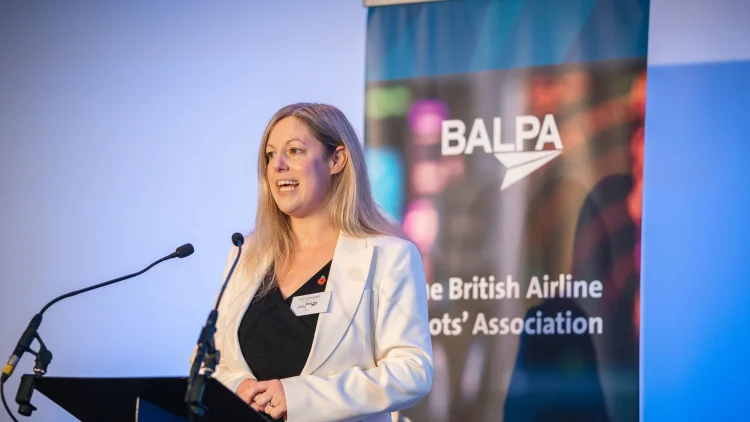
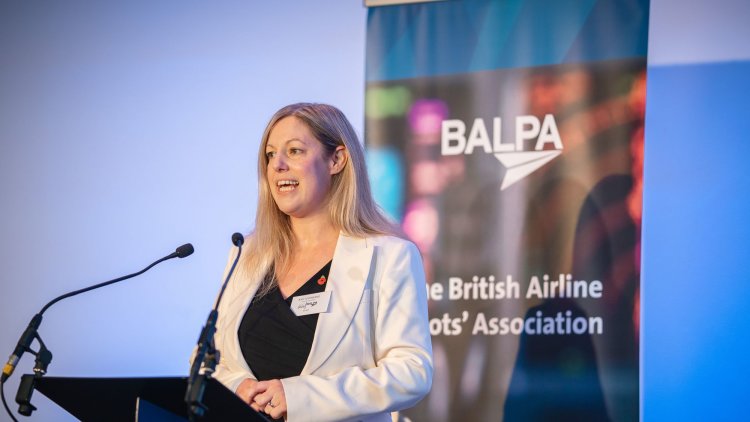
Amy Leversidge, General Secretary of the British Airlines Pilots’ Association (BALPA)
Britain’s aviation sector is expanding, but the six-figure upfront cost of pilot training is locking out talented candidates. BALPA General Secretary Amy Leversidge argues that without funding reform, the economy will pay the price
Every flight is a promise of something new. A deal struck, a market opened, a well-deserved holiday. Britain’s aviation sector is expanding, and the government’s ambition is for it to expand still further. More connections. More opportunity. More of what aviation, at its best, has always delivered.
Amy Leversidge, General Secretary of the British Airline Pilots’ Association (BALPA), does not dispute any of that. What she wants parliamentarians to understand, however, is a problem hiding in plain sight: the profession that will power that future is, for many, simply out of reach.
Leversidge, who took over as General Secretary in January 2024, has a clear-eyed view of how pilot training in the UK currently works, and how badly it needs to change.
The problem begins with cost. Becoming a commercial airline pilot requires completing a demanding training programme that can cost well over £100,000. Doctors, solicitors and civil engineers all face significant training costs, but have mechanisms to pay that sum back over years. For pilots, no such mechanism exists. Applicants must find the money themselves, largely in full and upfront.
An aspiring pilot has no access to the student loan system and high street banks have withdrawn career development loans for pilot training. What remains are a couple of airline-funded cadet schemes, massively oversubscribed.
“The largest cadet scheme gets 100 applications for every place. That is not a queue of people who should all be pilots, but among them are people who absolutely should be,” Leversidge says. “Unfortunately, there will be many great potential pilots among the 99 per cent who fail to secure a place on a cadet scheme, but they will be out of options, at the end of the road. They are simply priced out of being a pilot. Right now, we are forcing too many to take their talents elsewhere.”
If the sector that connects us to the world can’t draw on the full range of talent in this country, both growth and opportunity suffer
Some assume this is a problem of standards, that the profession is rightly exclusive. Leversidge addresses this directly.
“When you are six or seven miles up in the air, you need absolute confidence in the pilots flying the plane. The training to become a commercial airline pilot is demanding and exacting, as it should be. Every pilot in the sky today has earned their licence, that must never change. The only hurdle we want to remove is the six-figure paywall.”
“Aspiring pilots must have the skills, strengths, talent and determination to train and work as a pilot and have enthusiasm for aviation,” Leversidge continued. “Let’s not keep on that list of demands that they also need to have access to over £100,000 for their training. We don’t want to lose potential talent from our profession, and decision-makers shouldn’t want that either, given the core air transport sector’s £14bn annual contribution to the UK economy.”
It hasn’t always been this way. Cadet schemes were once far more commonplace. Banks lent money for pilot training. There were routes in for able, ambitious people who needed a little help to pay their way. Those routes have narrowed dramatically, leaving the profession accessible largely only to those who can self-fund.
“This isn’t a pathway, it’s a paywall,” Leversidge asserts.
The timing of this matters. Airport expansion will substantially increase demand for pilots in the years ahead. At the same time, the number of BALPA members reaching the mandatory pilot retirement age of 65 will double by 2030. With the vast majority of UK commercial airline pilots holding BALPA membership, that seems a reliable measure of the looming wave of retirements.
“I want MPs and peers to understand the scale of the opportunity we are missing,” Leversidge says. “The ambition the government has for aviation and the contribution it can make to greater economic growth in the future requires a skilled aviation workforce to deliver it. We need to be working together – BALPA, industry, the government – to ensure we are training the right number of pilots for the future, and that those training spots are secured on talent alone.”
A solution is ready and waiting. An apprenticeship for pilots has been designed, developed, and approved. It would allow airlines to train pilots through the apprenticeship system, making the profession accessible in the same way apprenticeships have broadened access across other skilled sectors. Some refinements will be needed to make it work for industry and pilots alike, and those conversations are happening, confirms Leversidge.
“The apprenticeship could genuinely prove a breakthrough, and we back it,” Leversidge says, “but BALPA is not wedded to one particular mechanism. Pilots are practical people, and BALPA just wants something that works. Whether that is the apprenticeship, access to student loans, more airline-funded schemes, or a return of bank lending, we are open-minded.”
The apprenticeship is currently on pause, though the aviation minister has stated to parliament that restarting it is a cross-government priority. “We know the goodwill is there,” Leversidge acknowledges, “but goodwill needs to turn into action, and soon.”
This issue cuts across two of the government’s central priorities: economic growth and widening opportunity. Aviation is one of the UK’s most powerful drivers of growth, but its ability to deliver that growth relies on a steady supply of skilled pilots. Right now, talented young people are being priced out of that profession altogether. Leversidge sums it up, “If the sector that connects us to the world can’t draw on the full range of talent in this country, both growth and opportunity suffer. That should worry everyone in parliament.”
“We are not asking for anything that doesn’t already exist for other professions,” Leversidge makes clear. “We are asking to be treated the same.”
Aviation is full of promises, to the businesses that depend on it, the families it connects, the young people who dream of a career at its heart. Pilots stitch the world together, and BALPA believes that the profession deserves a funding system that reflects that. “Keeping those promises depends on whether we are willing to open the doors that funding reform would unlock,” says Leversidge, “and that is a choice that parliament and government can help make happen.”
For more information please email Stuart Bonar, Head of Public Affairs, at [email protected].
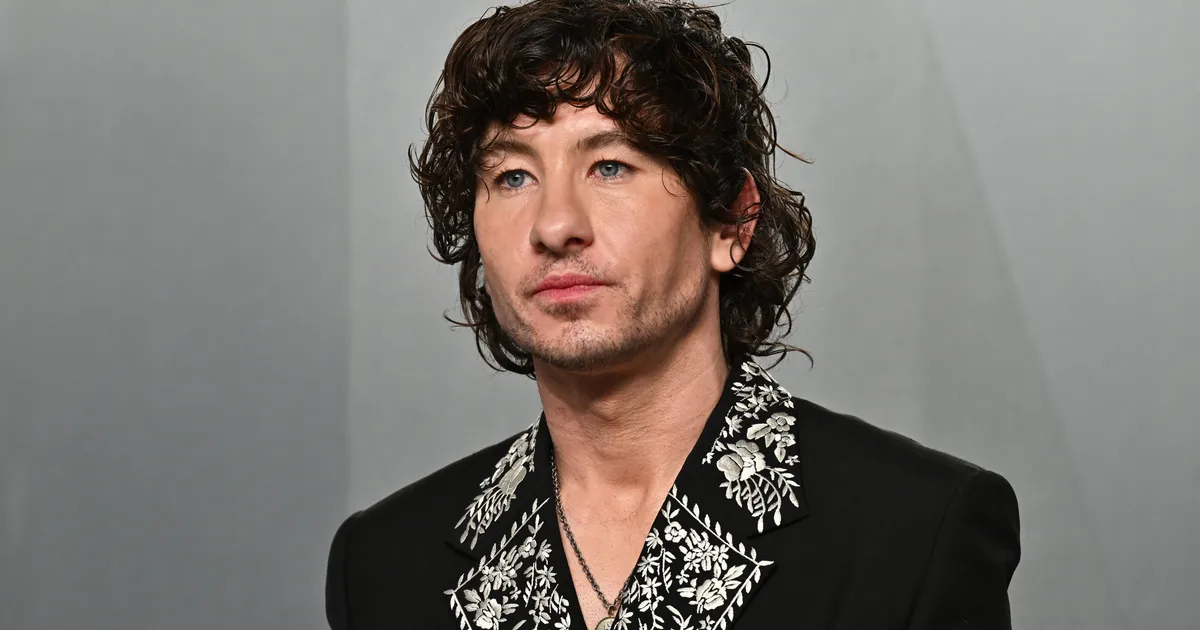
Barry Keoghan has claimed that online abuse about his looks is beginning to take a toll.
The Oscar nominee recently made an appearance on SiriusXM, where he was asked how he copes with the global fame he’s achieved in recent years, and the scrutiny that comes with it.
While he acknowledged that he has an “incredible fanbase” who are “so lovely” towards him, he added that there’s also a “nasty side” to being in the public eye.
Barry explained that while he “removed” himself from much of that by deleting his social media, he still finds it tough not to check what’s being said about him online.
“I’m still a curious being that wants to go on – if I attend an event or if I go somewhere – to see how it was received,” he said. “And it’s not nice, you know?
“There’s a lot of hate online, a lot of abuse of how I look, and it’s kind of passed a point of, you know, ‘everyone goes through that’.”
He admitted: “It’s made me shy away. It’s made me really go inside myself, not want to attend places, not want to go outside. And I say this being absolutely pure and honest here, it’s becoming a problem.
“So, I don’t have to hide away, because I am hiding away. I don’t have to go to places, because I actually don’t go to places, because of these things. But when that starts leaking into your art, it becomes a problem, because then you don’t even want to be on screen anymore.”
Back in 2024, Barry announced he was deleting his Instagram page as a result of the barrage of abuse he’d received.
“I deactivated my account because I can no longer let this stuff distract from my family and my work,” he wrote on X. “The messages I have received no person should ever have to read […] absolute lies, hatred, disgusting commentary about my appearance, character, how I am as a parent and every other inhumane thing you can imagine.
“Dragging my character and everything I worked extremely hard for and stand for. Talking about how I was a ‘heroin baby’ and how I grew up, and dragging my dear mother into it, also knocking on my granny’s door, sitting outside my baby boy’s house, intimidating them. That’s crossing a line.”
Prior to that, the Saltburn star had already spoken candidly about the “absolutely disgusting” things that are said about him online, specifically calling out those who comment on his appearance and skills as a father.
Barry deleting his Instagram page came just days after it was reported that he and pop singer Sabrina Carpenter had parted ways after around a year of dating, which seemingly exacerbated the abuse he was describing.
Politics
The House | As former London Fire Brigade Chief, I believe we must choose the safest restoration option: full decant


4 min read
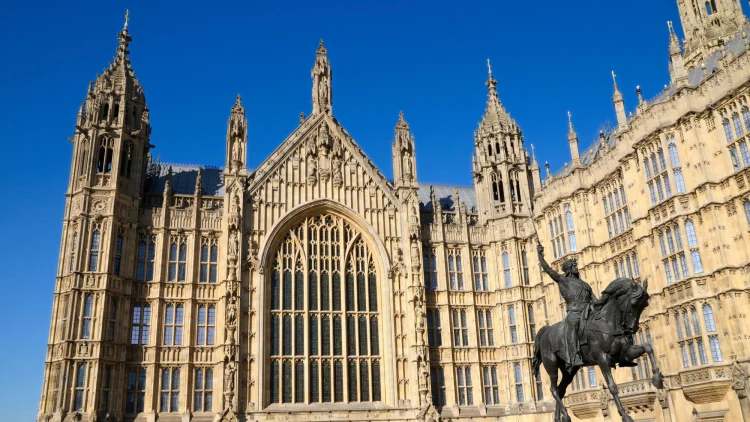
A relatively recent addition to the House of Lords, I have found it fascinating to experience the Palace of Westminster as an occupant rather than in my previous capacity as London Fire Commissioner (LFC) – when I held the legal duty to protect it.
In my current roles as Chair of the National Building Safety Regulator and strategic safety advisor to Transport for London, I continue to have a direct involvement in construction, public, and workplace safety. The restoration and renewal of Parliament is therefore a matter of particular interest.
As we approach a critical decision about how to repair and preserve this magnificent building for the nation, I offer a perspective shaped by decades of experience in safety and risk management, including as a frontline firefighter.
The first point to acknowledge is my newfound understanding of why the building is such a difficult place to leave, even temporarily. Its history and role in our democracy render the decision before us both practical and, for some, existential in nature.
After a career responding to major incidents and addressing the aftermath of tragedies both large and small, I am convinced of the case for choosing a full decant of Parliament during restoration. Safety in ageing buildings never stands still and without significant further intervention, the risks escalate alongside the decaying fabric.
The cost of merely maintaining the status quo and remaining compliant with safety legislation could easily exceed the current annual expenditure of approximately £70 million. Especially if phase one works do not commence and a rational restoration choice is not made.
It is understandable that people compare this project to renovating a home while still living there. But that comparison is simply not reliable. This major restoration requires a large workforce, complex procurement and contracting models, and materials far beyond domestic scale. The standards for a heritage building that is also a heavily used workplace are significantly higher than a family home.
Parliamentarians insisting on robust change control and an accurate budget for the delivery process is both necessary and justified. Based on my experience of some of the largest infrastructure projects, this is set to be among the most complex and large-scale work sites in Europe – making such controls essential.
Furthermore, the work required to bring Westminster up to even basic legal compliance with building regulations is considerably more challenging and expensive than starting from a vacant plot.
Some have argued that if the Palace were truly unsafe, it would have been closed already, thereby casting doubt on the safety case for a decant. This oversimplifies how proportionate regulation operates in a heritage building of this size and occupancy. Regulation involves making almost daily informed decisions by weighing risks and accounting for the building’s ongoing deterioration. It also fails to factor in the increased risk during any chosen renovation programme.
As London’s Fire Commissioner, I oversaw the safety of 20,000 listed buildings. Westminster was the highest risk of all, due to its current state of repair and high occupancy – and all despite it being exceptionally well managed.
The fire loading in the Palace – the amount of combustible material – is extraordinary. Almost no other building in London compares; and its art, architectural features, and collections are priceless. On top of that, it is populated daily by thousands of staff and visitors, including disabled people and others who require additional support to evacuate.
In the event of a major incident, the London Fire Brigade would face difficult choices. Depending on the time of day the safe evacuation of many, many people would almost certainly take precedence over the preservation of the building. Just think about the scale and complexity of that task.
Compounding the fire loading risks are ageing electrical and other utility systems, ongoing hot cutting work as part of maintenance, frequent fire incidents, and access and layout challenges. Its continued safe operation is only made possible by regularly updated fire plans, engineering solutions such as sprinklers and mist sprays, and the outstanding daily work of dedicated safety professionals.
All these challenges come before the arrival of one of the largest renovation projects in the world, which will introduce additional access challenges for firefighting. My extensive experience of safety on construction sites leads me to the firm conclusion that I would not wish to remain on site when major works gets fully underway.
Some will likely disagree or view my concerns as excessive. As a professional firefighter who joined the London Fire Brigade out of a willingness to take risks rather than avoid them, my perspective is grounded in what I’ve experienced rather than caution for its own sake.
Sadly, things can and do go wrong – even in buildings or systems long considered safe enough. I have witnessed too many tragedies and counted out too many bodies to believe the unthinkable cannot happen.
In that spirit, I urge all colleagues across the Palace to make the rational decision: begin enabling works now, regardless of which final option is chosen, and make way gracefully for the renovations to proceed when the time comes.
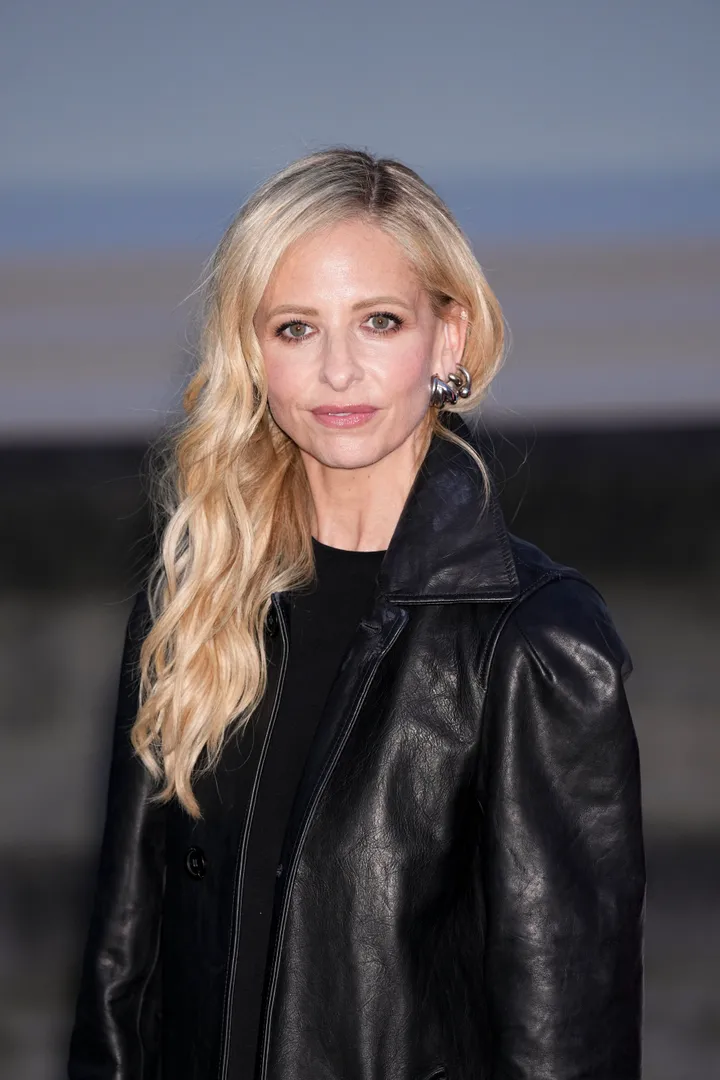
The stars of Buffy The Vampire Slayer have been paying their respects following the death of cast member Nicholas Brendon.
Over the weekend, it was announced that Nicholas – best known to Buffy fans for his portrayal of Xander Harris in the supernatural series – had died at the age of 54.
His family told CNN that the actor had died in his sleep, of natural causes.
In a statement, they said: “Most people know Nicky for his work as an actor and for the characters he brought to life over the years. In recent years Nicky has found his passion in painting and art.
“Nicky loved to share his enthusiastic talent with his family, friends and fans. He was passionate, sensitive, and endlessly driven to create. Those who truly knew him understood that his art was one of the purest reflections of who he was.”
His spokesperson later clarified: “While it’s no secret that Nicholas had struggles in the past, he was on medications and treatment to manage his diagnosis, and he was optimistic about the future at the time of his passing.”
Following the news, his Buffy co-stars paid tribute, with Sarah Michelle Gellar sharing a quote from the show alongside the message: “I saw you Nicky. I know you are at peace, in that big rocking chair in the sky.”

David Boreanaz wrote: “There are people you work with and then there are people you share time with. Nick was the latter.
“Some moments stay small on paper, a laugh between takes, a look that says ‘we got this’, the quiet understanding of showing up and doing the work together. But those are the things that last.
“He carried something real, not perfect, not polished, just real. And in this business that matters more than most things.”
Alyson Hannigan also thanked her late co-star for “years of laughter, love and Dodgers”, while Charisma Carpenter said: “I will miss the version of the man I once knew – someone who was so warm and loving. He was cuddly, funny, silly, self-deprecating, and supremely talented. I loved every scene we had together back in the day.”
Outside of Buffy, Nicholas played Kevin Lynch in Criminal Minds, as well as appearing in shows like Private Practice and Faking It.
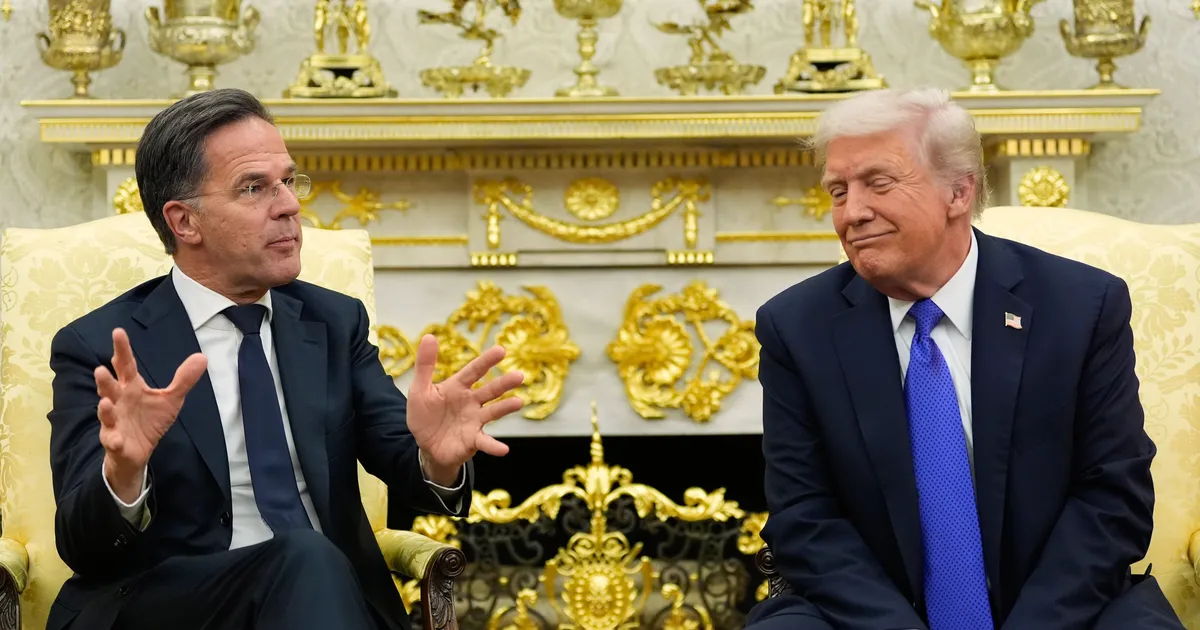
Nato’s secretary-general refused to push back against Donald Trump after the US president described the alliance as a “paper tiger” made up of “cowards”.
Trump lashed out at the defensive organisation over the weekend for refusing to support for his ongoing attacks on Iran.
But, when asked for his response to Trump’s attack, Mark Rutte seemed to offer little rebuttal – and even justified the US’s controversial decision not to warn their allies about the initial strikes on Tehran ahead of time.
He told CBS’s Face The Nation: “I’ve been in several conversations this week with the president and the good news is that, look, we had the US for weeks planning for Epic Fury.
“For reasons of security and safety, they could not share with European allies and allies around the world and partner countries, because that would have jeopardised the effect of the first attack.”
He claimed: “It’s only logical that European countries take a couple of weeks to come together.
“Since Thursday, 22 countries – most of them Nato but also Japan, Korea, Australia, New Zealand, Bahrain, the UAE – have come together to answer three questions: what do we need, when do we need it and where do we need it?
“These three questions we are going to work through to answer the president’s call to make sure that we secure the free-sailing through the Strait of Hormuz.”
On Friday, Trump wrote on TruthSocial: “Without the U.S.A., NATO IS A PAPER TIGER! They didn’t want to join the fight to stop a Nuclear Powered Iran.
“Now that fight is Militarily WON, with very little danger for them, they complain about the high oil prices they are forced to pay, but don’t want to help open the Strait of Hormuz, a simple military maneuver that is the single reason for the high oil prices.
“So easy for them to do, with so little risk. COWARDS, and we will REMEMBER!”
This is not the first time Rutte has gone overboard to praise Trump – he famously called the president “daddy” in June last year.
Pressure on the White House is rising as oil prices continue to climb following Iran’s effective closure of the major oil shipping lane, the Strait of Hormuz.
Trump has called on his allies to send warships to help keep the waterway open, but so far none have leapt to support his aggression.
The US president also appeared to openly mock Keir Starmer by sharing a skit from SNL UK where the prime minister was terrified of speaking to Trump.
The two spoke on the phone hours later about the reopening of the Strait of Hormuz, though it’s unclear if the sketch was mentioned.
Housing minister Matthew Pennycook played down the implicit criticism, telling Good Morning Britain on Monday: “If our prime minister had time to watch that skit, I think he’d see it in the light it’s intended. It’s a piece of comedy.”
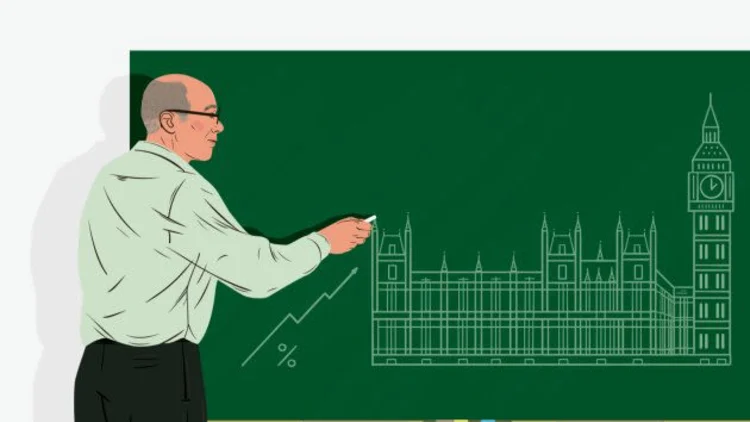

Illustration by Tracy Worrall
4 min read
Lessons in political science. This week: signatures
Marking student work recently, I came across the claim that most Early Day Motions (EDMs) attract only one or two signatures. How can students get it so badly wrong? I blame the teacher.
Then I noticed that they had sourced the claim to the House of Commons website. They must be misquoting? But no. There it is in black and white: “In an average session, only six or seven EDMs reach over 200 signatures. Around 70 or 80 get over 100 signatures. The majority will attract only one or two signatures.”
Now the poor teacher really was confused. Had things changed recently? Because I know how to enjoy myself, I went to the online EDM database and checked. So far this session, around 10 per cent of EDMs have garnered just one or two signatures. Given its length, perhaps this isn’t an average session, but the EDM database goes back to 1989, and contains 59,000 EDMs; of those around 4,500 (eight per cent) had just one or two signatories. Whether it’s eight or 10 per cent, then, it’s not a majority.
The source of the error, I think, is that older library briefings used to say that “quite a number will attract only one or a couple of signatures”, and at some point this has been mangled, with “quite a number” becoming “the majority”. See me after class.
What I wasn’t aware of until I looked into this – and this is a sign of things changing – was that that quote above is now also wrong at the top end. Of the 3,000 or so EDMs this session, how many have attracted over 200 signatures? Answer: none. There were also none in the whole of the last parliament.
It used to be true. Between 1989 and 2019, 452 EDMs attracted more than 200 signatories; that’s roughly 15 a year. But since 2019: nada. I am not entirely sure why.
The record-breaker, with 503 signatures, came in 2001-2. It urged the governments of India and Pakistan to seek to resolve their differences peacefully and to reduce the risks of nuclear conflict. Which is nice.
The EDM database is another example of Kids These Days Having It So Good. When I first started out, you had to code this stuff by hand; now, you can get the data with a click or two of a button. The ground-breaking 1961 book by Finer et al that looked at EDMs as a measure of backbench opinion, an early attempt to treat parliamentary behaviour quantitatively, studied just one parliament – at a time when EDMs were far less numerous than today – and still took two years to produce.
That book was the subject of a very sniffy review by Richard Crossman in the Guardian, dismissing it as “statistical gamesmanship” and “pretentious pedantry”. Anthony Howard in the New Statesman similarly put the boot in (“academic naivete can surely never have been taken further”). It was an early example of political practitioners meeting political science and not being overly impressed; it was sadly not to be the last.
Yet reading their reviews now, more than 60 years on, it’s difficult not to conclude they hadn’t slightly missed the point – and were just terrified of anything involving numbers.
Of course, MPs sign (or don’t) EDMs for all sorts of reasons, many of them trivial, and on their own they don’t tell you very much about political opinions. But the patterns displayed en masse can still be revealing. More recent studies of EDMs, for example, have found links to gender, religion, marginality and so on. An individual EDM can sometimes be just noise; collectively however they are a signal. EDMs are often dismissed as parliamentary graffiti, but even graffiti can sometimes be revealing.
One of the authors of that study, the late great Hugh Berrington, mischievously began the follow up volume with a quotation from Crossman, taken from a debate in the Commons: “We have to be numerate as well as literate.”
A coda – Berrington is also the source of a much-loved quote on the psychology of top politicians: “If it is lonely at the top, it is because it is the lonely who seek to climb there.” Discuss.
Further reading: S Finer et al, Backbench Opinion in the House of Commons 1955-1959 (1961); H Berrington, Backbench Opinion in the House of Commons 1945-55 (1973)

The first episode of Saturday Night Live UK went down a storm with both viewers and critics.
Over the weekend, SNL launched its UK counterpart with Tina Fey as the inaugural guest host.
While there may have initially been questions raised about how well the format would translate across the Atlantic, the episode has received a wave of praise – and pulled in some impressive viewing figures.
According to BARB data, SNL UK had a 3.2% share, with just shy of a quarter of a million people watching live on Saturday night.
While at first glance, this figure (226,000 viewers) might seem a little on the low side, it’s important to keep in mind that these are big numbers for a pay-TV channel like Sky.
Impressively, SNL UK also managed to pull in a bigger audience than Channel 4’s offering in the same timeslot, the Mission: Impossible movie Rogue Nation.
Critical reception to the episode has also been pretty positive.
The Guardian gave it three stars, as did The Independent, with the former calling the broadcast promising for the rest of the series and “refreshing” in its ambitiousness, while the latter praised its “willingness to push the envelope” and “notes of new ingredients that could offer something fresh”.
Meanwhile, The Telegraph was even more impressed, calling the show “shockingly competent” in its own four-star review, while Metro claimed that SNL UK was an “astonishing achievement” that “might just mark the beginning of a new era in British comedy”.
A slightly more critical piece in The Times said: “This show’s success could only ever be a good thing. That day might come, and there are small signs in this first outing that it might. I do not want to condemn this whole endeavour outright. But the spark is not there yet.”
This piece also argued that if the show leans more into its British sensibilities, “we could be in business here”. “SNL UK needs work, but I’m not giving up on it yet,” its critic concluded.
However, reviews from US outlets seemed less enthused with the British spin-off.
Deadline called it “painful” and “beyond seriously unfunny”, while Variety, like The Times, pointed out the show was at its best when it “took the basics of what makes the US version successful – sketch comedy, rotating guest hosts and the unpredictability of live television – and left the Brits to it”.
Before episode one had even aired, it was announced that the first season of SNL UK had been extended by an additional two episodes.
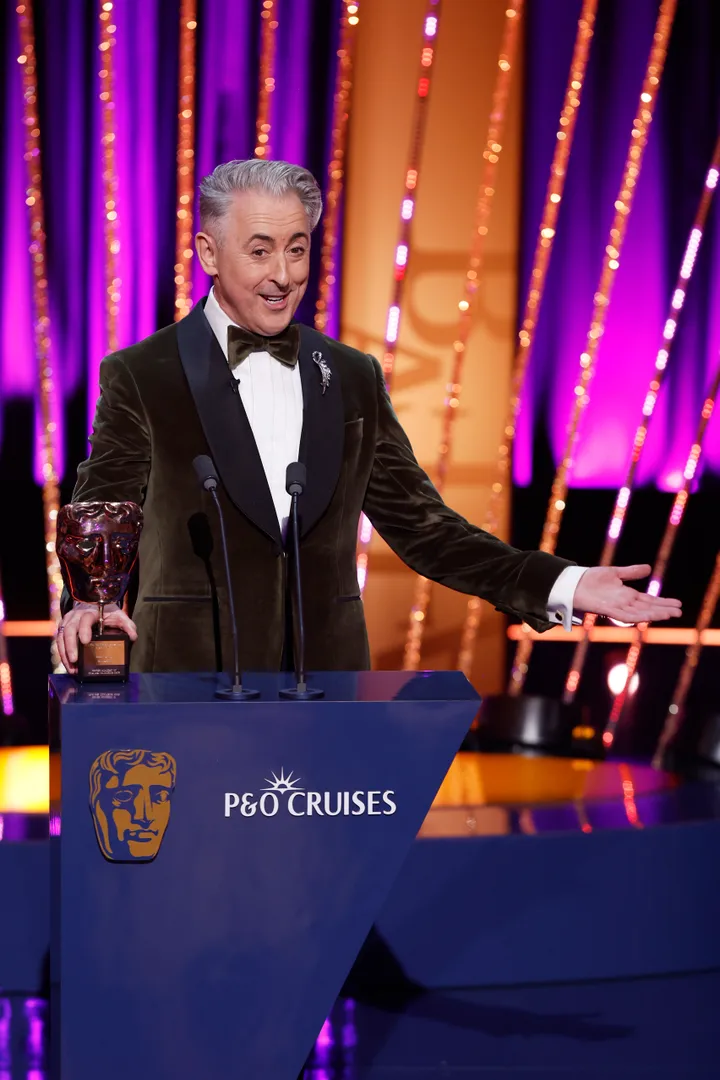
Greg Davies has been unveiled as the new presenter of the TV Baftas, following the departure of outgoing host Alan Cumming.
On Monday morning, it was confirmed that Greg would front the TV Baftas when they take place in May at London’s Royal Festival Hall.
“I see the whole event as an opportunity to wave a flag for this beloved medium and, with the exception of one commissioner, two execs and a co-star that I have personal beef with, I will do everything I can to ensure it’s a night of warm celebration for all,” the Taskmaster host joked.
Alan previously hosted last year’s TV Baftas, and later took over from David Tennant as the presenter of the awards show’s film counterpart earlier this year.

John Phillips via Getty Images for BAFTA
However, it’s not clear whether he will return after branding the most recent Baftas a “trauma-triggering shitshow”.
Responding to the much-publicised incident from this year’s Baftas, in which Tourette’s campaigner John Davidson experienced involuntary tics resulting in him shouting the N-word while Sinners actors Michael B Jordan and Delroy Lindo were presenting an award, Alan wrote: “What should have been an evening celebrating creativity as well as diversity and inclusion turned into a trauma-triggering shitshow.
“I’m so sorry for all the pain Black people have felt at hearing that word echoed round the world. I’m so sorry the Tourette’s community has been reminded of the lack of understanding and tolerance that abounds regarding their condition.
“The only possible good that could come of this is a reminder that words matter, that rushing to judgement about things of which we are not fully cognisant is folly, that all trauma must be recognised and honoured.”
“We were all let down by decisions made to both broadcast slurs and censor free speech,” he concluded, referring to the fact that the BBC failed to censor the slur despite the awards show airing on a two-hour time delay, while cutting short one politically-charged acceptance speech.
“Congratulations to all the artists whose work was overshadowed by the night’s events.”
The nominees at the 2026 TV Baftas will be announced on Tuesday at 12pm.
Last week, the contenders for the Memorable TV Moment category, as voted for by the public, were unveiled.

Strictly Come Dancing professional Karen Hauer has confirmed rumours that she has quit the show after 14 seasons.
Earlier this month, Karen was one of five Strictly pros reported to be leaving the show in a shake-up ahead of this year’s season, with Nadiya Bychkova, Gorka Márquez, Luba Mushtuk and Michelle Tsiakkas also tipped to not be returning.
While Nadiya, Gorka, Luba and Michelle have all remained tight-lipped on the rumours, Karen announced over the weekend that that she would not be back on the BBC dance show in 2026.
Posting on Sunday, the Venezuelan-American performer – who had been the longest-serving dancer in the show’s current troupe, and the longest-serving female dancer in its history – told her Instagram followers: “After 14 years on Strictly Come Dancing, I’ve decided this is the right time for me to close this chapter and take on new projects in other areas that I’m passionate about.
“Strictly completely changed my life, not only as a performer and a teacher, but as a human being. I’ve had the privilege of meeting so many incredible people, and brilliant celebrity partners who have become close friends and people I admire so much.
“None of this would have been possible without the amazing fans. You’ve been there since day one, when I’d just moved to the UK and had no idea what I was getting myself into. I’m so grateful. You watched me grow over the years, and witnessed all of my different hairstyles!
“I’m going to miss everyone who makes the show possible, from hair, makeup, wardrobe, the crew behind the cameras, lighting, production and staging, the runners, Dave Arch and the band, the singers, and the producers and welfare team who take such good care of us. It’s an incredible machine powered by brilliant people. To my fellow professional dancers who I adore, I will always be cheering you on. You truly are the best in the business.”

She continued: “I’ll never forget joining the show 14 years ago with Sir Bruce Forsyth and Len Goodman and learning from such incredible legends along the way. And to the brilliant Tess [Daly] and Claudia [Winkleman], maybe now we can finally be ladies who lunch in the autumn.
“I’ll even miss standing in front of the judges, can you believe that? Smiling politely while sometimes secretly disagreeing. It’s been an honour to share the ballroom with them.”
“Now, this isn’t a goodbye,” she insisted. “It’s simply ‘see you later’. Because I will never stop dancing.
“Who would have thought that a young girl from the Bronx would end up becoming the longest-serving female professional dancer on a British TV institution? Strictly will always be in my heart. I love you all.”
A number of Karen’s Strictly colleagues, including Nadiya Bychkova, Luba Mushtuk, Nancy Xu, Vito Coppola, Jowita Pryztal and Lauren Oakley have been sharing their love in the comments.
“There’s no one like you K, we love you mamasita!” Johannes Radebe wrote, while Dianne Buswell told her she was “always a star”.
Over the course of her time on Strictly, Karen was paired with Westlife singer Nicky Byrne, TV chef Dave Myers, reality star Mark Wright, broadcaster Jeremy Vine, pop singer Will Young, daytime presenter Simon Rimmer and actor Charles Venn.
More recently, she’s danced with comedian Chris Ramsey, reality-TV-personality-turned-podcaster Jamie Laing, performer Greg Wise, stand-up comics Jayde Adams and Eddie Kadi, football legend Paul Merson and Gladiators fave Harry “Nitro” Aikines-Aryeetey.
She made it to the Strictly final twice, with Mark Wright and Jamie Laing.

‘Hidden gem’ in Lancaster, North Lancs, to reopen in April

Will 2026 World Cup Be Cristiano Ronaldo’s Last?

Crypto market rattled by $400 million liquidations as bitcoin dips to $68,000: Crypto Markets Today


-

 Fashion3 days ago
Weekend Open Thread: Adidas – Corporette.com
-
 Crypto World2 days ago
NIO (NIO) Stock Plunges 6.5% as Shelf Registration Sparks Dilution Worries
-

 Politics3 days ago
Jenni Murray, Long-Serving Woman’s Hour Presenter, Dies Aged 75
-
 Tech6 days ago
Are Split Spacebars the Next Big Gaming Keyboard Trend?
-

 Crypto World1 day ago
Best Crypto to Buy Now: Strategy Just Spent $1.57 Billion on Bitcoin During Fear While Early Investors Quietly Enter Pepeto for 150x Potential
-

 News Videos5 days ago
RBA board divided on rate cut, unusually buoyant share market | Finance Report | ABC NEWS
-

 Crypto World2 days ago
Bitcoin Price News: Bhutan Sells $72 Million in BTC Under Fiscal Pressure, but the Smart Money Entering Pepeto Sees What the Market Does Not
-

 Politics5 days ago
The House | The new register to protect children from their abusers shows Parliament at its best
-

 Fashion7 days ago
25 Celebrities with Curly Hair That Are Naturally Beautiful
-

 Tech3 days ago
inKONBINI Lets You Spend Summer Days Behind the Register
-
 Politics6 days ago
Real-time pollution monitoring calls after boy nearly dies
-

 Crypto World5 days ago
Canada’s FINTRAC revokes registrations of 23 crypto MSBs in AML crackdown
-
 NewsBeat5 days ago
Residents in North Lanarkshire reminded to register to vote in Scottish Parliament Election
-

 Business7 days ago
Meta planning major layoffs as AI spending and automation reshape workforce
-
 Business7 days ago
How the UK and China Trade Agreement Could Shape UK Businesses in 2026
-

 News Videos5 days ago
PARLIAMENT OF MALAWI – PAC MEETING WITH REGISTRAR OF FINANCIAL ON AMARYLLIS HOTEL – INQUIRY LIVE
-

 Politics4 days ago
Gender equality discussions at UN face pushbacks and US resistance
-

 Business19 hours ago
No Winner in March 21 Drawing as Prize Rolls to $133 Million for Next
-

 Business5 days ago
Who Was Alex Pretti? 5 Key Facts About the ICU Nurse Killed by Federal Agents in Minneapolis
-

 Tech14 hours ago
Give Your Phone a Huge (and Free) Upgrade by Switching to Another Keyboard
You must be logged in to post a comment Login