

Politics
AI firm in Israel uses deepfake rape survivor videos ‘for good’, it claims

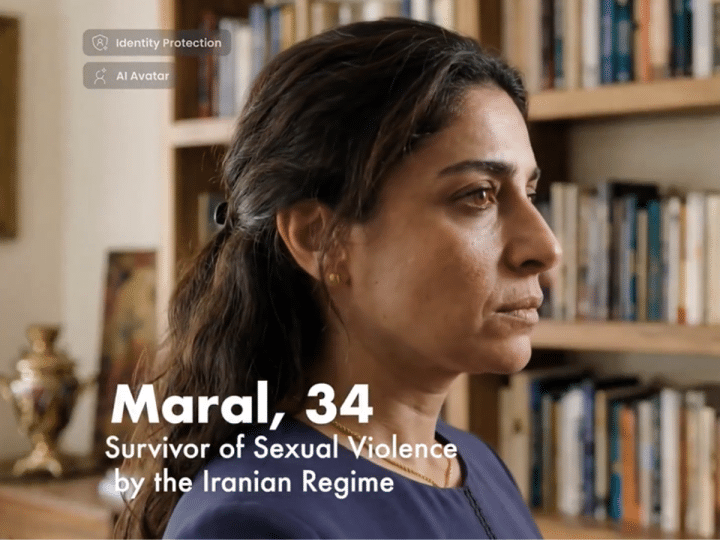

An Israel-based AI firm, Generative AI for Good, claims to be using deepfake technologies for positive ends. ‘Positive’ appears to mean creating deepfake videos to help the illegal US-Israel war on Iran.
Like this clip that the company showed recently at an UN event in New York. The film is intended to show women who claim to have been raped by Iranian security forces during the CIA/Mossad-coordinated riots in Iran in January 2026.
Generative AI for Good claims that it uses AI to “help survivors testify safely — in their real voice, without revealing their identity”. But Israel and its mouthpieces have been shown to have used false allegations of rapes and other atrocities on 7 October 2023 to justify its genocide in Gaza.
The claims have been repeatedly exposed as fiction, yet continue to be quoted by politicians and media as grounds for supporting Israel’s crimes.
One of the firm’s handful of employees, ‘creative director’ Tal Harari, still has a post on her Instagram profile repeating those claims of rape and beheaded babies which are complete fiction.
View this post on Instagram
‘AI impact leader’ Mlamdovsky Somech founded the tech company
The post mentions Noa Argamani. Israel has attempted to use Argamani as a poster child for its genocide propaganda, but she has refuted the occupation’s claims of her supposed mistreatment in Gaza. Likewise, she debunked its claims that Palestinians had killed one of her friends, when in fact the IOF killed him.
Harari does not list her military service on her LinkedIn profile though like any Israeli, she will almost certainly have been in the IOF. However, her colleague, marketing manager Noa Rosenberg, speaks on hers.
Rosenberg talks about her pride in leading an event for military veterans and includes in her list of jobs her service in the IOF’s ‘Psychotechnical Headquarter’. No doubt useful in her current company.
The firm’s founder, Shiran Mlamdovsky Somech, doesn’t list her military record either. But she did tell the Jewish Post and News in early 2024 that “Artificial intelligence is a secret weapon of ours” in what the paper described as “using the revolutionary technology to bolster [the military’s] efforts both online and on the ground” in the “information war being waged alongside the military battlefields in Gaza”.
More links with Israeli military
In 2023 — before 7 October — Mlamdovsky Somech also claimed that Jews are pitted against “two billion Muslims”.
We are only 15 million Jews around the world, versus 2 billion Muslims…Our slingshot is technology.
Mlamdovsky Somech made that comment at an event she organised in cooperation with the IOF’s notorious Unit 8200. Unit 8200 is the cyberspy outfit whose operatives mark their headsets for each Palestinian they help kill and which played a key role in the murder of Iran’s leader in its war of aggression.
Nonetheless, just as with Israel’s atrocity propaganda against the Palestinians and its denials of its own atrocities, we’re supposed to believe that its AI videos of ‘Iranian women’ depict reality. That AI is only being used to protect identities and not because, yet again, it’s all made up and Israel is trying to bolster support for its crimes.
If you’re even tempted to believe that, there might be a bridge or two for sale.
Featured image via the Canary
By Skwawkbox

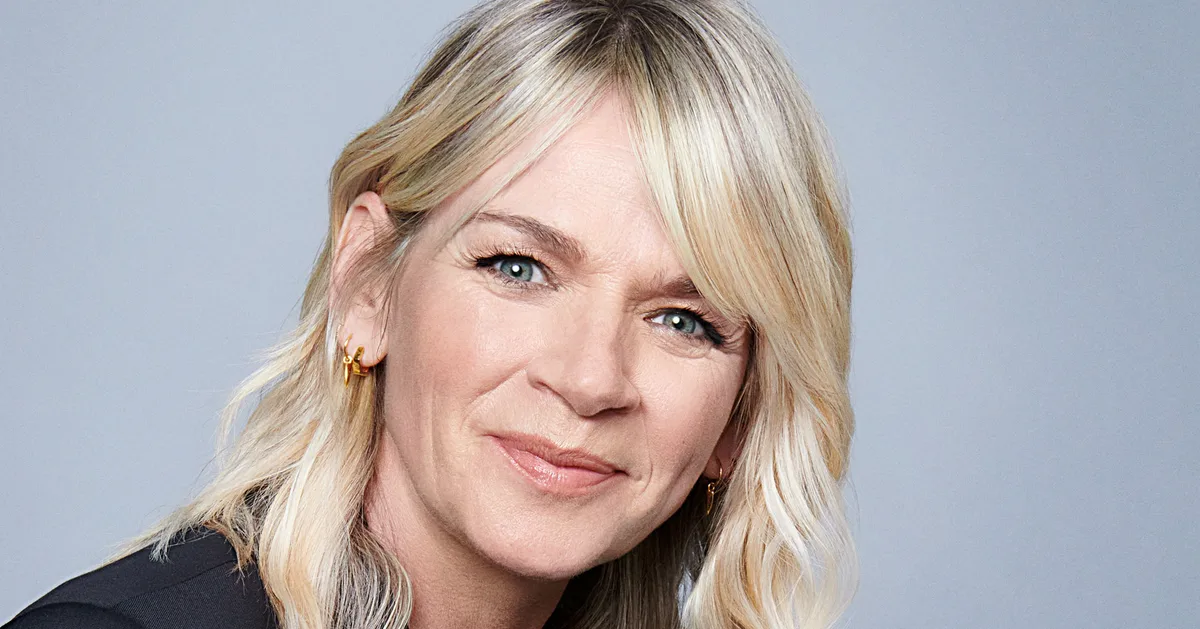
Zoe Ball has admitted that she has been working through “the seven stages of grief and rejection” after losing out on the job of presenting Strictly Come Dancing.
Last month, she dropped a major hint that she was through to the last stages of auditions on her podcast Dig It, but confirmed during the latest instalment that she “didn’t get it”.
“But it’s OK!” she insisted. “I have worked through the seven stages of grief and rejection over the last couple of days.
“I didn’t get it, but I tell you what, if who I think has got it, we’re in safe hands and our new hosts are going to be fabulous.”
She added: “I’m so thrilled for them, and hopefully at a later date, we’ll be able to talk about them in more detail. I was so chuffed to even be in the mix.”
On Monday, The Sun reported that Emma Willis – known for hosting reality shows including Big Brother, The Voice, The Circle and Love Is Blind UK – had been chosen as one half of Strictly’s new presenting duo.
HuffPost UK has contacted the BBC for additional comment.
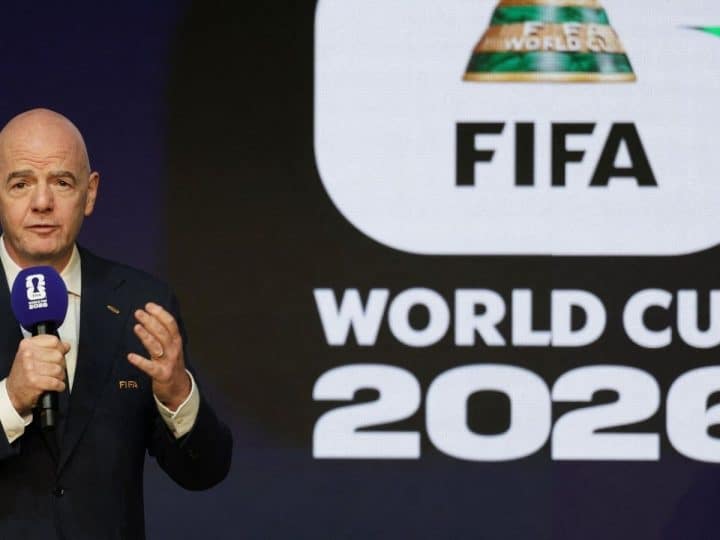

Less than 30 days before the 2026 World Cup kicks off, political tensions are simmering, ticket prices are soaring, and a broadcasting dispute threatening to shut out billions is brewing. The tournament—set to begin on 11 June—promises to be the biggest ever. However, it remains dogged by three major crises which continue to dominate the headlines.
Iran and Trump’s political hokey cokey
Questions continue to swirl around Iran’s participation as US president Donald Trump’s search to find off-ramps have repeatedly failed to subdue Tehran.
FIFA president Gianni Infantino has insisted there are no plans to exclude Iran from the tournament. However, conflicting statements from Trump have left audiences befuddled — will they withdraw as he has suggested or are Iranian players welcome as Trump has also previously said?
The lack of clarity has spawned speculations left, right, and centre. Trump’s associates floated the idea that Iran could be replaced by Italy. This suggestion came after Italy failed to qualify for three consecutive World Cups. Only Italy’s government had said there’s no chance of that happening, and described the suggestion “shameful.”
Back in March, the same month Trump launched unprovoked strikes on Tehran. It was reported that the Iranian consulate in Mexico had been in talks with FIFA to move Iran’s matches from the US to Mexico. Mexican president Claudia Sheinbaum signalled openness to the idea. However, FIFA rejected the plan over logistical and commercial concerns.
Meanwhile, Iran has said it will not relent, demanding guarantees over security, freedom of movement, and respect for the Iranian flag and anthem during the tournament.
Fans revolt over sky-high ticket prices
Eye-watering ticket prices are another sticking point, contradicting FIFA claims of an accessible ticketing policy for the 2026 World Cup, and sparking widespread backlash.
One such example, as reported by the Guardian, is the cost of tickets for the World Cup Final. These range from USD 8,970 to USD 11,499,998.85, as per listings on FIFA’s Resale/Exchange Marketplace — wild!
By contrast, during the 2022 World Cup hosted by Qatar, tickets for the finals retailed at USD 1,600. For this year’s tournament, premium packages for the final have reportedly climbed to nearly USD 33,000.
Infantino has defended the pricing, arguing that the US sports market already operates on inflated costs — even for college games. FIFA also says demand remains enormous. In fact, they claim more than 500 million ticket requests have already been submitted.
But many fans are being priced out. According to reports in the British press, some England supporters are already considering staying home. They are faced with paying massive travel, accommodation, and ticket costs to attend the tournament in North America.
Even Trump weighed in, saying he personally would not spend that kind of money to attend a World Cup match after prices for the US opener against Paraguay approached USD 1,000.
A broadcasting dispute could shut out billions
Another crisis is unfolding off the pitch — and it could seriously damage the tournament’s global reach.
With only weeks remaining before kickoff, FIFA still has not finalised broadcast rights agreements in either China or India. These two countries are among the world’s largest television markets.
No official broadcaster has yet been announced in China. In India, reports say FIFA rejected a joint bid worth around USD 20 million from two companies, demanding a significantly higher fee.
If no deals are reached, huge audiences across both countries could be left without access to the tournament.
Combined, China and India account for nearly three billion people — roughly a third of the global population. Losing viewers on that scale would be a major commercial and reputational blow for FIFA, especially for a tournament already billed as the most global sporting event in football history.
No matter which way you slice it, uncertainty is growing With less than a month to go, as the triple crisis shows no sign of easing.
Featured image via the Canary
By Alaa Shamali
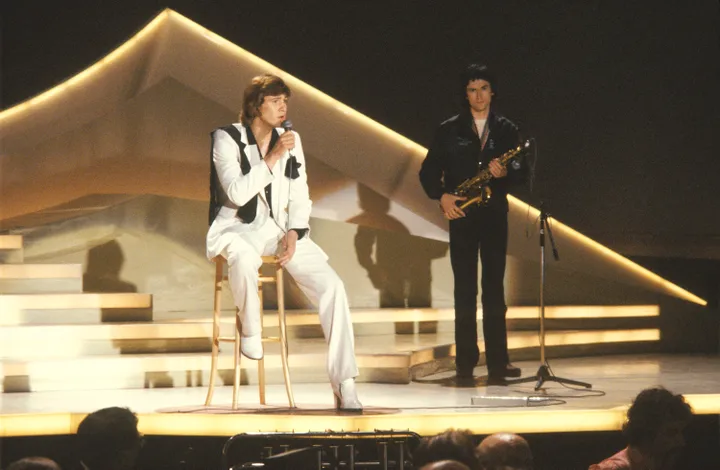
Eurovision icon Johnny Logan has backed his home country’s decision to withdraw from the competition.
Johnny earned himself the moniker the “King Of Eurovision” when he became the first act to win the song contest on three different occasions, as Ireland’s representative in 1980 and 1987, and as the writer of Linda Martin’s winning entry in 1992.
Last year, he backed calls for Israel to be removed from the Eurovision Song Contest in light of the ongoing conflict in the Middle East, similar to how Russia was banned in 2022 after its invasion of Ukraine.
“I really feel that in this case, RTÉ definitely made the right decision,” he told The Week in December 2025, after Ireland’s broadcaster withdrew from Eurovision in solidarity with Palestine.
He continued: “I don’t think that Israel should be allowed to hide under the umbrella of the Eurovision [and] make it look as though, everything’s okay, business as usual, because it’s not. I think most people in Ireland would agree with that.”

ullstein bild Dtl. via ullstein bild via Getty Images
Since then, Johnny has revealed he has repeatedly turned down offers to perform at Eurovision in light of the controversy.
“I’ve been asked three times, four times to be involved with the Eurovision Song Contest, the actual show this year, and I’ve had to say no because of my support,” he told Ireland AM at the end of April.
Noting that he’s “not antisemitic [nor] pro-Hamas or anything like that”, he continued: “I was asked to make my decision. My decision is to support the Irish Government and the Irish television position on this.
“I just wanted to make that clear because I get all these people I see on Facebook saying, ‘Johnny Logan says you can’t watch the Eurovision’. That’s not something I ever said.”
At the end of last year, Ireland was the first nation to pull out of Eurovision 2026 due to Israel’s involvement, followed quickly by Spain, The Netherlands, Slovenia and Iceland.
Eurovision 2026 officially gets underway in Basel, Austria this week, with the first semi-final airing on Tuesday, following singer JJ’s victory last year.
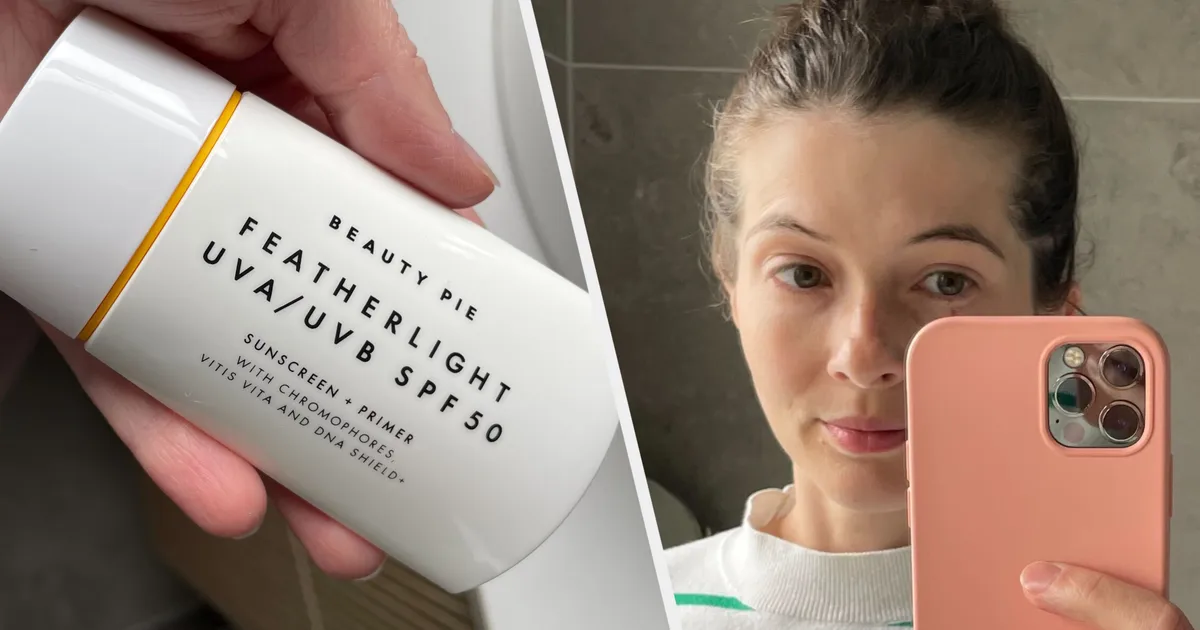
We hope you love the products we recommend! All of them were independently selected by our editors. Just so you know, HuffPost UK may collect a share of sales or other compensation from the links on this page if you decide to shop from them. Oh, and FYI – prices are accurate and items in stock as of time of publication.
In my twenties, I applied SPF on holidays and if it was a particularly hot day back home. But when my partner, then in his early 30s, was diagnosed with basal cell carcinoma and needed surgery to remove it, I knew I needed to wake up and wear the damn sun cream every single day.
After trying many different products – lots of which triggered breakouts, some of which dried my skin – I finally took a punt on Beauty Pie’s Featherlight SPF 50/Primer hybrid (£25, or £15 for members). And I haven’t looked back since.
The product, made in Switzerland, contains ingredients to “help fight inflammation and sun damage”. It’s known as a non-comedogenic SPF, meaning the lightweight formula shouldn’t clog pores. I can confirm it doesn’t.
I’ve also never had sunburn on my face while wearing it, so I’m guessing (/hoping) it’s doing the trick in the sun damage department.
I tend to apply the SPF after Beauty Pie’s triple hyaluronic acid deep moisture miracle cream (£45, or £22 for members) and the result is lusciously luminous skin that feels silky smooth.
The primer adds a bit of a glow that no other skincare product seems to offer me and my typically dull skin. It’s not greasy, or streaky. Makeup goes on a treat, too.
There is not a day that goes by when I don’t use it – even those days when I’m sat at home, makeup free, I make sure that I slather this on my face after showering.
It’s pretty watery – so be careful when you squeeze the bottle – but it glides onto the skin wonderfully, leaving your face feeling hydrated and glowy.
There are 3,102 reviews (and counting) on Beauty Pie’s site. Here’s a snippet of what people are saying about the Featherlight SPF:
“Lovely product, non greasy and perfect under make up. Thoroughly recommend this product.”
“This was first given to me as a gift a few years ago and I have used it ever since. I golf and have had no sun damage since using this lovely, light cream.”
“This is my second purchase of this item. I love that it properly hydrates my skin and most importantly, it doesn’t leave white streaky marks!”
“Spent ages looking for a SPF that I’m not allergic to and isn’t greasy, this one is perfect.”
If there was only one product I was allowed to take on a desert island, this would be it – not even the Collection eyeliner I’ve been buying and wearing on repeat since the early 2000s could rival it.
And at £15 for a bottle that lasts roughly six months (maybe longer, depending on how liberally you apply it), I’m wondering why you’re still reading this article and not buying a basket full for yourself…
Politics
NatureScot accused of “fobbing off” public after refusing record petition against guga hunt
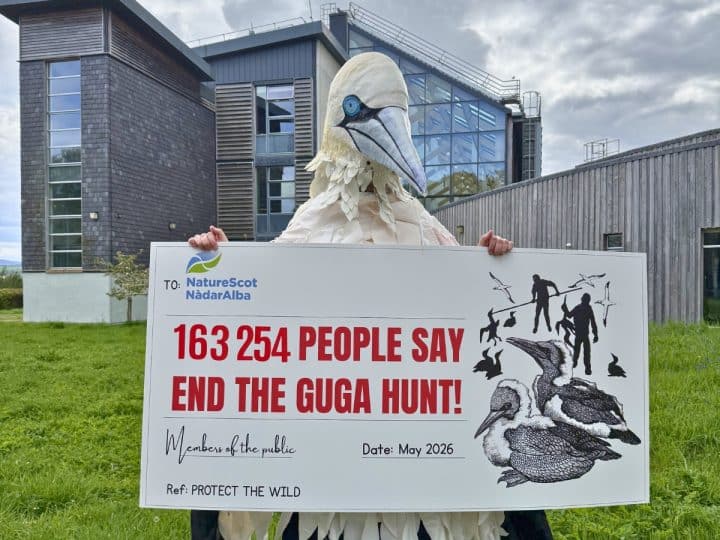

Campaigners opposing the annual guga hunt say they were “fobbed off” after attempting to deliver what is believed to be the largest petition in the history of NatureScot ahead of its upcoming board meeting on Thursday.
Protect the Wild’s petition – now signed by more than 163,000 people – was brought to NatureScot headquarters by the now-infamous six-foot gannet that recently went viral during Scotland’s election coverage, alongside a giant cheque ‘signed’ by members of the public.
The gannet costume became widely recognised after Protect the Wild founder Rob Pownall wore it while standing as an independent candidate in Edinburgh Central to force the guga hunt into the political spotlight.
The guga hunt is the UK’s last remaining legal seabird hunt, in which young gannets are taken from the remote island of Sula Sgeir, killed, and sold as a traditional delicacy on the Isle of Lewis under licence from Scotland’s nature agency, NatureScot.
Protect the Wild argues that continuing to license the hunt is incompatible with NatureScot’s duties to conserve biodiversity and act in the public interest.
Campaigners also say they were left disappointed after NatureScot declined to physically accept the giant cheque and instead instructed them to submit the petition via email.
Devon Docherty, Protect the Wild’s Scottish campaigns manager, said:
This is the largest petition NatureScot has ever received, and it deserved more than to be fobbed off with an email.
For a taxpayer-funded public body, refusing to physically accept such a significant expression of public concern is disappointing and does not reflect meaningful engagement with the public it exists to serve.
NatureScot is effectively ignoring the voices of hundreds of thousands of people who believe protecting wildlife should come before the vested interests of a tiny minority.
Protect the Wild says it’s urging the NatureScot board not to license this year’s guga hunt ahead of the board meeting on Thursday 14 May.
Featured image via Protect the Wild
By The Canary
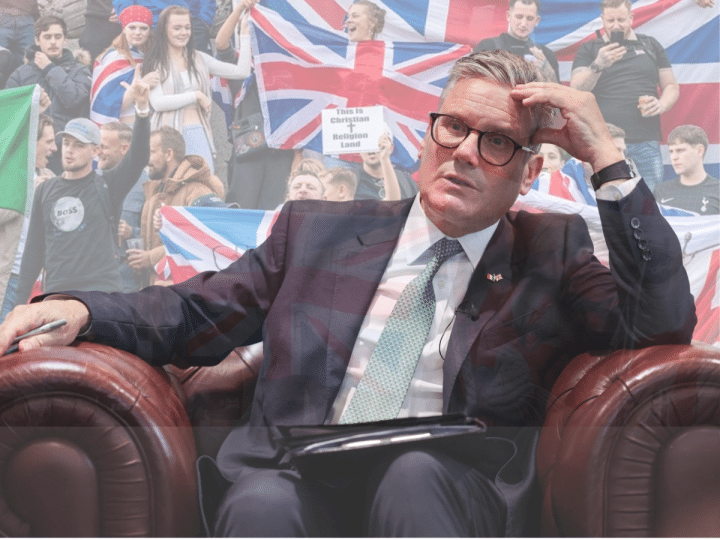

During a speech on 11 May, Keir Starmer (PM-for-now) boasted about blocking “far right agitators” from entering the country. Labour has in fact blocked the visas of seven individuals who were planning to attend ‘Unite the Kingdom,’ a far-right rally happening on 16 May. Among them are two prominent MAGA figures. Criticising his political opponents for spreading “more division” and “pointing at Britain’s problems,” Starmer stated:
That politics is with us now. And you’ll see it again on Saturday at a march designed to confront and intimidate this diverse city [London] and this diverse country. That is why this labour government will block far right agitators from travelling to Britain for that event.
Because we will not allow people to come to the UK… and spread hate on our streets. This is nothing less than a battle for the soul of our nation.
Don’t mind the hypocrisy
When the Canary reported on Starmer’s speech yesterday, we couldn’t help but point out the glaring hypocrisy. First and foremost, Labour has been cribbing its immigration policy from the far-right handbook. As such, the party is clearly happy to stoke division when it’s politically expedient for Starmer.
Likewise, boasting about blocking far-right agitators was rich, coming from a man who actively fought to get racist, Islamophobic Maccabees fans into the country. Again, the deciding factor is purely whether or not Starmer thinks fighting the far right will help its image. Absolute chancers, the lot of them.
But we digress. The ‘Unite the Kingdom’ march Starmer’s referring to is another event organised by Tommy (the-fascist) Robinson. For last year’s version of the rally, an estimated 100,000 racist scum took to London’s streets, hurling bigoted profanities.
Joey Mannarino
So, who exactly is it that Starmer and home secretary Mahmood have chosen to block this year? So far, we know that the Home Office has blocked seven visas. Five of the names remain unknown to the public. However, the two known figures are Joey Mannarino and Valentina Gomez, both MAGA talking heads. A government spokesperson stated that their right of entry was revoked because their presence isn’t “conducive to the public good”.
And looking at the track records of the two named far-right agitators, we’re inclined to agree.
At a Britain First ‘March for Remigration’ in 2025, Mannario gave a rambling speech in front of a backdrop image of himself and Donald Trump. When he later tweeted a recording, he urged viewers to:
deport the parasites who are raping their way through America, Europe and the United Kingdom.
Obviously, he didn’t include Trump among those rapists. Instead, as Hope Not Hate has reported:
Donald Trump was held civilly liable for the sexual abuse of journalist E. Jean Carrol. In response, Mannarino chose not to stand with victims of abuse, and instead wrote in a since-deleted tweet that he “will never believe a victim of rape again in my life no matter the verdict in court” and that “all rape cases have just become fake to me”.
Yeah, that’s not conductive to the public good, right there.
Valentina Gomez
Meanwhile, Gomez has a similarly charming track record. Speaking at last September’s Unite the Kingdom march, the Islamophobic influencer said:
England, they took your guns, they took your swords, and they raped your women. You have nothing else to lose, but there’s still hope. You are still the majority. So you either fight for this nation or you let all of these rapist Muslims and corrupt politicians take over.
She told the attending police officers that:
I need you to stop following orders because you know you are being told to look the other way while your country is being raped into submission.
Obviously Gomez wasn’t aware the Met were already way ahead of her. In fact, they didn’t even bother to use facial recognition software at the far-right rally. By way of contrast, they did deploy that same tech at Notting Hill Carnival. We wonder what the difference might be?
The Home Office actually made the decision to block Gomez from entering the UK on May 16 back in April. At the time, a government source said that:
While we recognise the democratic right that people must be free to peacefully express their views, this does not include promoting hatred and extremist views.
After finding out about the ban, Gomez took to Twitter, posting:
I’m coming to England on a boat. They can try to ban me, but they cannot ban the TRUTH. See you May 16th.
Funny how they do mind arriving illegally on a boat when it’s the far right, isn’t it?
Don’t get us wrong — we’re absolutely thrilled that scum like Joey Mannarino and Valentina Gomez are barred from entering the UK. However, it’d be lovely if Starmer could manage to carry that same sentiment through all of his decisions, rather than merely when he thinks it’ll look good for his (absolute rock-bottom) image.
Featured image via the Canary
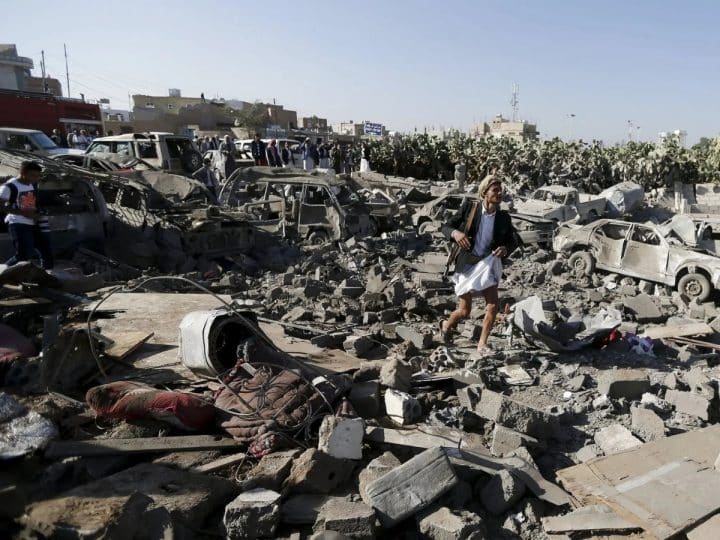

As top arms companies BAE Systems and Rheinmetall announce record sales, civilians in Yemen have faced a setback in their pursuit of international justice yet again.
After more than 6 years of preliminary examinations, the Office of the Prosecutor of the International Criminal Court (ICC) has confirmed that it will not open an investigation into the legal responsibility of European governments and arms companies in alleged war crimes in Yemen.
Radya Almutawakel, chairperson Mwatana for Human Rights, said:
The entrenchment of impunity over a decade of conflict has not only deepened the humanitarian catastrophe but has also fueled the persistence and escalation of hostilities.
The absence of international accountability has effectively granted a ‘green light’ to all parties, including the Ansar Allah armed group (Houthis), to persist in committing grave violations that exacerbate human suffering and undermine any prospects for stability in Yemen.
The ICC decision comes in response to a joint article 15 Communication requesting that the ICC investigate if European corporate and government actors aided and abetted alleged war crimes committed by Saudi Arabia and the UAE in Yemen through the sale of arms.
It was submitted in 2019 by:
- The European Centre for Constitutional and Human Rights (ECCHR).
- Mwatana for Human Rights.
- Amnesty International.
- Campaign Against Arms Trade.
- Centre Delàs.
- Rete Italiana Pace Disarmo.
Arms trade accountability
The 350-page Communication was the first of its kind to call for the ICC to address the issue of arms trade accountability.
It details factual information on 26 airstrikes by the Saudi-UAE coalition, which may amount to war crimes under the Rome Statute. These included attacks on residential buildings, schools, hospitals, a museum and world heritage sites.
Despite clearly documented instances of indiscriminate and disproportionate attacks, arms companies from Germany, France, the UK, Italy and Spain continued to supply the coalition members with weapons, ammunition and logistical support. Government ministers and officials facilitated these exports by granting export licenses.
The Office of the Prosecutor did not provide any specific legal reasoning for its decision not to open a preliminary investigation. This is despite increasing calls for the international community to hold arms companies to account, where arms sales enable the commission of international crimes.
The cycle of impunity remains, perpetuated by the failure of the international justice system to hold powerful defence industry actors to account. Efforts to seek accountability have continued through strategic litigation at the national level against the actors named in the Communication.
Cases in Italy and the UK did not result in findings of liability. But a criminal complaint against arms traders is pending in France. And there are two submissions before the European Court of Human Rights.
Chloé Bailey, senior legal advisor ECCHR, said:
We regret the decision from the ICC not to examine the complicity of European arms companies in violations of international humanitarian law during the conflict in Yemen. In the face of ongoing geopolitical instability and conflicts fuelled by the arms trade, the ICC has an essential role to play in seeking the accountability of all conflict actors, including corporations.
Sam Perlo-Freeman, research coordinator at Campaign Against Arms Trade, explained:
European arms companies like BAE Systems and Rheinmetall, and government ministers including Boris Johnson, actively enabled and supported the brutal Saudi-led war in Yemen through the supply of arms and ongoing support and maintenance.
The Yemeni people deserve justice and accountability for these crimes, as well as those of the warring parties themselves. This ICC decision is yet another failure, maintaining the wall of impunity for western actors supporting war crimes.
Amnesty International’s Patrick Wilcken added:
While the ICC has failed to take this case forward, the principles outlined in the Communication still hold: both state officials and company executives bear responsibility when knowingly supplying arms used to commit war crimes.
And campaigns coordinator at Rete Italiana Pace Disarmo Francesco Vignarca said:
Even though the Italian criminal complaint started by civil society groups over bombs sold to Saudi Arabia used to kill civilians in Yemen did not result in a trial, the preliminary Judge’s decision to archive the case nonetheless acknowledged a violation of the Arms Trade Treaty.
That is why we pursued a Communication to the European Court of Human Rights in Strasbourg and why an ICC action would have been essential.
Victims and their families deserve justice, and arms sales that endanger innocent civilian lives must be stopped.
Featured image via the Canary
By The Canary
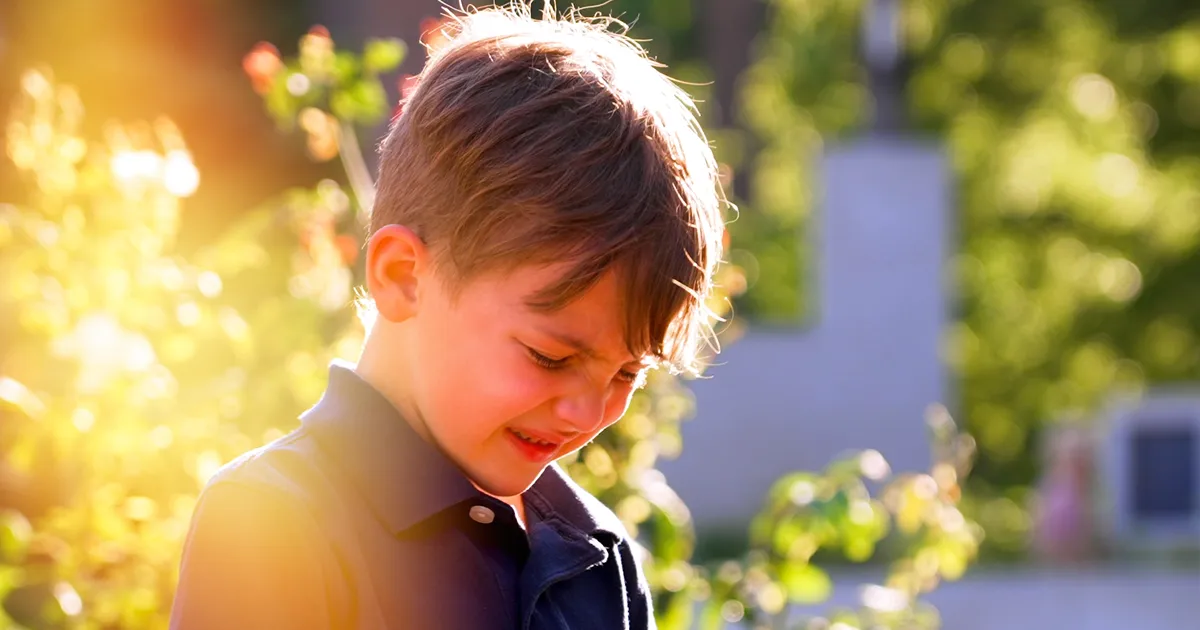
What Kids Are Carrying is a HuffPost UK series focusing on how the nation’s youngest generation is *really* feeling right now – and how parents and caregivers can support them.
When I reached out to therapists and counsellors about the themes that cropped up most in therapy among kids in 2025, one common thread was the impact of being neurodivergent.
If someone is neurodivergent, their brain “diverges from what is considered typical”, according to SEN psychotherapist Gee Eltringham. This can encompass ADHD, autism, dyslexia, dyspraxia and Tourette’s syndrome.
Belinda Gidman-Rowse, a mental health practitioner and school counsellor in a primary school in Devon, sees around 50 children between the ages of eight and 11 each school term. She notes that a “significant proportion” are navigating either diagnosed or undiagnosed ADHD and/or autism.
Counselling Directory member and therapist Debbie Keenan is also supporting neurodivergent children while they await diagnosis – “this period is often filled with uncertainty, anxiety, and confusion,” she explains.
“Many children already experience challenges such as feeling different, struggling with emotions, or finding school and social situations overwhelming.”
NHS waiting times for diagnosis can vary massively – kids may have to wait months or even years for support from specialist services, forcing parents to find strategies to help their child cope in the meantime, or pay to go private.
In schools, special educational needs (SEN) support can be patchy and hard-won.
Therapists are noticing two key themes in particular when neurodivergent children need mental health support.
1. A lot of neurodivergent children are dealing with low self-esteem
While there can be a range of specific issues brought to therapy by neurodivergent children, Counselling Directory member Belinda Gidman-Rowse, has noticed a recurring theme.
“With all the children I see, there is often a pervasive narrative of being either ‘too much’ or ‘not enough’ which really impacts their self-esteem and sense of belonging in the world,” she says, “which is really sad to see.”
Some children will come to her wanting to make sense of their diagnosis – what it means for them, how others see them, and how they fit in to their school and home life.
“There can be a real sensitivity to feeling ‘different’ along with fears of being judged, excluded, or labelled in ways that don’t feel kind or accurate,” she explains.
On top of this, children can get stuck in cycles where their distress is expressed through behaviour, which is then met with punishment or frustration from adults – it’s something Gidman-Rowse notes can deepen the underlying overwhelm rather than resolve it.
“Over time, if these experiences aren’t understood, they can affect self-esteem quite deeply and, in more serious cases, increase vulnerability to things like self-harm as a coping strategy for dealing with overwhelming feelings,” she adds.
2. They might need extra support with keeping focused, managing emotions or navigating social situations
Another major element of what brings these children to therapy is the day-to-day impact of being neurodivergent.
Gidman-Rowse says for children with ADHD, this might look like difficulties focusing in class, frustration with learning, or challenges managing big emotions – “particularly anger, which can be heightened when they feel misunderstood or frequently corrected”.
Children might have explosive anger outbursts which caregivers describe as “coming out of nowhere”, and “going from 0-60”, says the counsellor.
“This can be incredibly challenging for families and teachers alike, and for the child themselves, who often feels out of control, and then ashamed or confused afterwards – they are aware that it is damaging their relationships but they feel unable to manage it.”
For children with autism, themes in therapy often centre around friendships and social situations, as there can be challenges in reading social cues and difficulties communicating their feelings and needs to others.
What can parents do to help?
The key advice seems to be: remain present, calm, caring and essentially become your child’s anchor to help them weather the various storms they may encounter.
Curiosity is key. “Approaching a child with curiosity rather than correction – for example, asking, ‘What’s feeling hard right now?’– can open up the conversation,” says Gidman-Rowse, while validating their emotions (for example, saying “that sounds really overwhelming!”) helps a child feel seen.
Gently helping them name what they’re feeling can also support regulation, says the counsellor, though some children might also need visual tools to do this (a feelings chart which you can print out and stick to your fridge might help).
If your child is awaiting a diagnosis, offering support and small changes at home can help steady them in the meantime. These include:
- Reducing demands on your child’s already stretched system by breaking tasks into smaller steps.
- Understanding triggers, such as sensory overload, changes in routine, or social demands, so you can anticipate them and reduce distress.
- Offering consistent, calm guidance in times of transition during the day.
- Giving them time and space to decompress after the school day to help reduce the intensity of meltdowns.
- Engaging in co-operative, two-way communication with your school teachers and SENCo.
- Seeking therapeutic support with a neurodiversity-affirming therapist.
Therapist Debbie Keenan says it’s “important to recognise and celebrate a child’s strengths while also acknowledging their challenges without judgement”.
For kids with ADHD, offering simple instructions followed by praise can help build “I can do it” feelings, instead of negative self-talk. Recognising your child’s efforts, even if things don’t go to plan, and prioritising one-to-one time together can also help boost self-esteem, according to Connect children’s services.
Social rejection, bullying and communication challenges are just some of the factors which can contribute towards low self-esteem in autistic kids, notes Autism Parenting Magazine.
As such, for parents, focusing on a child’s strengths, encouraging special interests, using positive reinforcement and providing opportunities for success can all help improve how they feel about themselves.
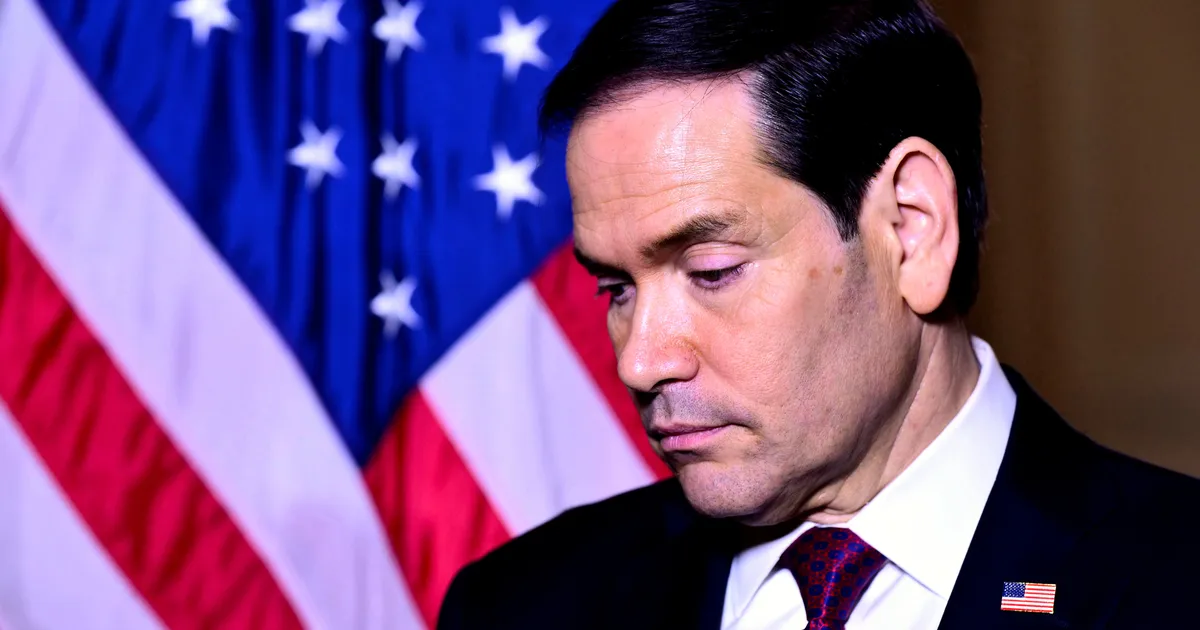
Marco Rubio has revealed Donald Trump’s latest goal for the Iran war is to effectively undo the last three months of chaos.
The US president chose to work with Israel to bomb Iran at the end of February after international negotiations over capping Tehran’s ability to build a nuclear weapon stalled.
Iran hit back by targeting US military bases across the Middle East and effectively closing the major oil shipping lane, the Strait of Hormuz.
That has sent the price of oil up, increasing the cost of living around the world.
The US tried to impose its own blockade on the Strait in retaliation, while also continuing to bomb Iran, but to no avail.
Tehran also claims to have collected tolls from commercial vessels who want free travel through the waterway, though the US denies it.
Iran previously suggested tankers would have to pay $2 million to cross the Middle Eastern waterway – a huge cost which would trickle down to consumers.
Meanwhile, questions over exactly what America is trying to achieve with the war continues.
As the cost of the war continues to grow, the White House is desperately looking for an off-ramp.
US secretary of state Rubio tried to explain what Washington was doing to the press this week – but only added to the confusion as to why the war even started.
He said: “As President Trump said and as the facts clearly bear out, the United States holds all the cards.
“There is no scenario here where if they decide to join a ladder of escalation, they end up getting the last say.
“It’s for the Strait to be open, back to the way it was. It’s for anyone to use it, no mines in the water, nobody paying tolls.
“That’s what we have to get back to and that’s the goal here.”
Subscribe to Commons People, the podcast that makes politics easy. Every week, Kevin Schofield and Kate Nicholson unpack the week’s biggest stories to keep you informed. Join us for straightforward analysis of what’s going on at Westminster.
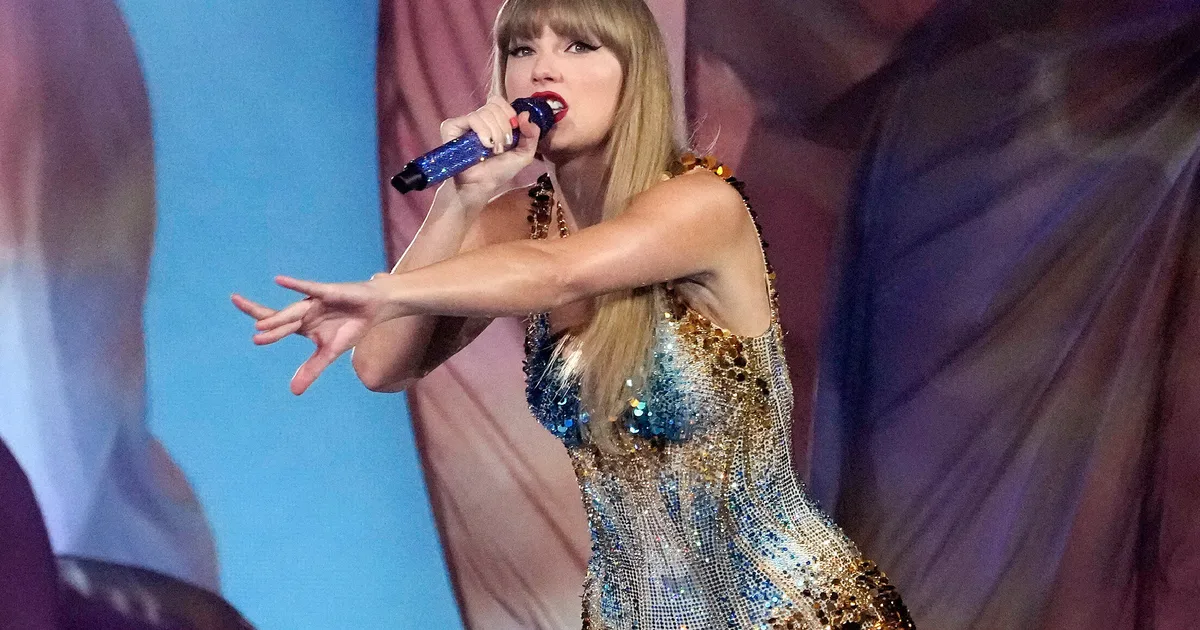
We’ve written before about how the sounds singers hear in their earpieces differ from what you’d expect.
But the rockstar revelations don’t stop there ― if (like me) you’ve always wondered what a singer is meant to do if they feel the urge to go mid-show, unfortunately, we’ve found some answers.
In a revolting but riveting video, TikTokker and pop culture lover John Joseph revealed how celebs handle the “if you gotta go…” problem.
Responding to another TikTokker’s comment which read “If Taylor can hold it, so can I,” the creator said, “Well, that’s because Taylor [Swift] is most likely not holding it during her three-hour show.”
They went on to explain that the singer’s Era’s tour set was three hours long, and while he “doesn’t know if this is Taylor’s tactic, there is such a thing called a pee bucket.”
A what now?
I regret to inform you that it’s exactly what you think it is. Again, there’s no proof Taylor uses one ― but other celebs and singers have gone on record for having used one in the past.
“You see, at most concerts, there are two different dressing rooms for the artist,” Joseph shared. There’s “the one that they get ready in,” which “usually has a bathroom connected to it.”
But then, there’s the second makeshift dressing room (also known as a trap) which is “usually under the stage so that artists can do their quick change” and refresh their hair and makeup without being seen.
This is usually closer to the action than the singers’ fully-kitted dressing rooms, so, Joseph warns, it’s a likely spot for a pee bucket.
Who’s admitted to using these?
Katy Perry, the Jonas brothers, Kelly Clarkson, and even Kendall Jenner have admitted to using the makeshift loo.
“You walk on stage feeling like Mary Poppins but really you’ve just had your skin zipped, peed in a bucket and been dry-heaving over the trash can,” Katy told The Sun.
While in Kelly’s case, the bucket was actually a trash can backstage rather than a bucket under the stage, it was used for even more ~nefarious~ purposes than peeing after she ate some dodgy food.
“Well, I’ll tell you right now, there was one time – it wasn’t pee, my friend,” she revealed on The Kelly Clarkson Show
“I got some kind of wrecked up from some kind of food. We were in an arena – and I shouldn’t tell this story, but like I said, my man, I don’t have a filter. I had to run backstage to my quick-change. I grabbed this poor trash can, and boy, I destroyed it. It was bad,” she shared.
Well, that’s changed how I view concerts forever…

EWY: South Korea ETF Plunges – Why More Downside Is Likely (Rating Downgrade) (EWY)
Roaring Kitty’s Deleted X Post Triggers 90% Crash in RKC Meme Coin

Ranking The 15 Best One-Season Sci-Fi Shows

Manchester United reach agreement with Casemiro over contract clause amid transfer speculation

US brings back mandatory military draft registration

Steven Gerrard disagrees with Gary Neville over ‘shock’ Chelsea and Arsenal claim | Football


-
 Crypto World4 days ago
HarrisX Poll Found 52% of Registered Voters Support the CLARITY Act
-

 Fashion4 days ago
Weekend Open Thread: Marianne Dress
-

 Crypto World5 days ago
Upbit adds B3 Korean won pair as Base token gains Korea access
-
 NewsBeat5 days ago
NCP car park operator enters administration putting 340 UK sites at risk of closure
-

 Fashion1 day ago
Coffee Break: Travel Steam Iron
-

 Fashion2 days ago
What to Know Before Buying a Curling Wand or Curling Iron
-

 Tech3 days ago
Auto Enthusiast Carves Functional Two-Stroke Engine from Solid Metal
-

 Politics20 hours ago
What to expect when you’re expecting a budget
-

 Politics3 days ago
Politics Home Article | Starmer Enters The Danger Zone
-
 Business3 days ago
Ignore market noise, India’s long-term story intact, say D-Street bulls Ramesh Damani and Sunil Singhania
-

 Tech1 day ago
GM Agrees To Pay $12.75 Million To Settle California Lawsuit Over Misuse Of Customers’ Driving Data
-

 Crypto World6 days ago
BlackRock CEO Larry Fink Discusses a New Asset Class
-

 Entertainment6 days ago
Sarah Paulson Called Out For Met Gala ‘Hypocrisy’
-

 Entertainment5 days ago
General Hospital: Ric & Ava Bombshell – Ric’s Massive Secret Exposed!
-
 Sports6 days ago
NBA playoff winners and losers: Austin Reaves is not loving Lakers vs. Thunder matchup, but Chet Holmgren is
-

 Entertainment6 days ago
Bold and Beautiful Early Spoilers May 11-15: Steffy Revolted & Liam Overjoyed!
-

 Politics5 days ago
Simon Cowell Says He Was ‘Horrible’ To Susan Boyle During BGT Audition
-

 Sports5 days ago
UEFA Champions League final schedule, teams, venue, live time and streaming | Football News
-

 Crypto World6 days ago
Robinhood says Wall Street is building onchain
-

 Tech7 days ago
Apple and Samsung are dominating smartphone sales so thoroughly that only one other company makes the top 10
You must be logged in to post a comment Login