
Politics
Albert Ward: Reform UK refute suggestions they’ve ‘hit a ceiling’ but they have and here’s why

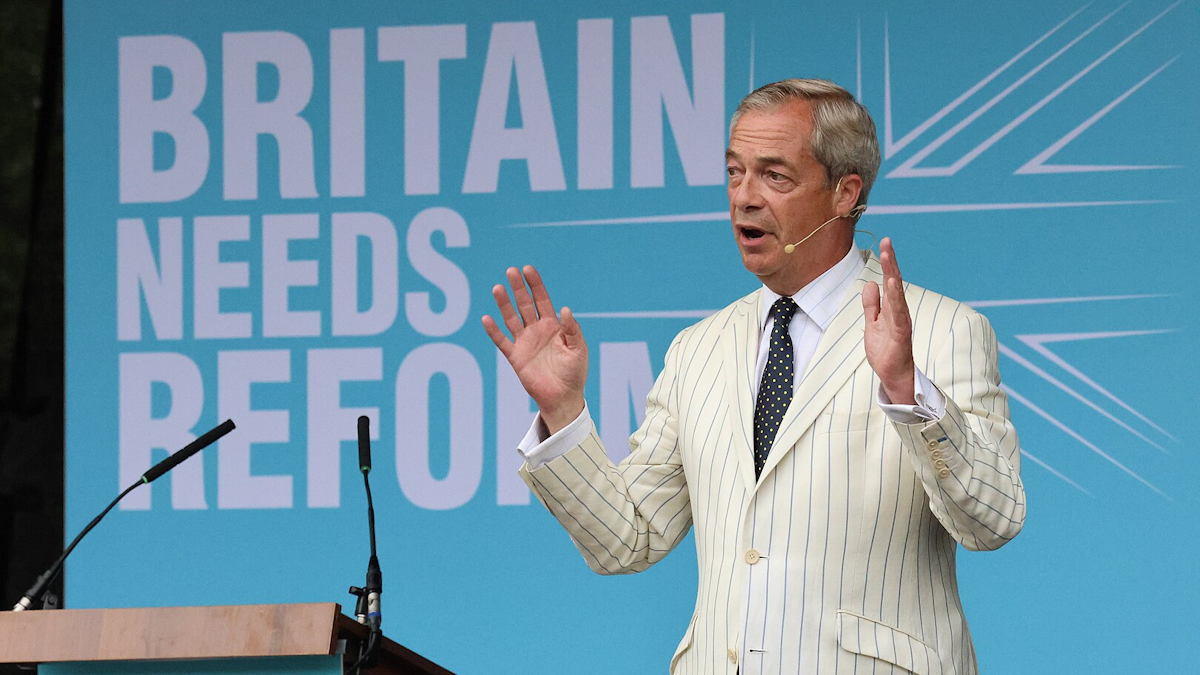
Albert Ward is a Senior Research Fellow at More in Common.
Reform’s recent polling has led many to ask whether the party has already gone as far as it can.
The recent defections of Robert Jenrick and Andrew Rosindell have actually come at a moment when the party’s position is far weaker than its poll lead suggests. Indeed, it has even dipped in recent polls.
In More in Common’s latest poll, Reform is ahead on roughly 30 per cent, nearly 10 points clear of Labour. That is a serious level of support for a party that is still young. But mid-term polls tend to reward parties that serve as vehicles for dissatisfaction. Staying there, month after month, all the way to a general election, will be far harder than getting there, let alone making further gains.
Why is this? Firstly, there is a limited pool of voters left for Reform to win. Beyond those who already vote for the party, only around one in five say they would even consider doing so. That does not mean Reform cannot grow, but it does suggest that the party is already drawing from a fairly defined constituency.
Most importantly, the group Reform needs to win over next does not look like its core constituency. The voters who say they might be open to Reform tend to be more moderate in their instincts and, on some issues, closer to the centre (or centre-right) of public opinion. For instance, while 52 per cent of Reform’s 2024 voters oppose Britain’s net zero target, only 39 per cent of their new supporters are opposed to it.
And Reform’s voters are not as lost to the Conservatives as you might think. Only 29 per cent of Reform supporters rule out voting Conservative in future, compared with 75 per cent who rule out voting Labour. Among those who have switched from the Conservatives to Reform since the 2024 election, only eight per cent say they would rule out voting Conservative again. These voters could well drift back to the Conservatives.
Perhaps most worryingly for the party, Reform’s headline vote share masks much weaker scores on trust and governing credibility. In the group of voters who might consider voting Reform but do not currently do so, the most common reason for hesitation is the party’s lack of government experience, with over a third saying so. The second most common reason is Nigel Farage’s association with Donald Trump, a deeply unpopular figure in Britain, even among new Reform supporters, where he has a -13 per cent approval rating.
One Conservative supporter put it bluntly to us in a focus group: ‘They don’t have experience, and I think you can see that. All the silly infighting; they’ve just made themselves look fools.’ A Reform supporter suggested the party needed time to prove itself: ‘I’d be concerned if we had a general election tomorrow. I don’t think they’re ready.’
Reform may also have trouble in presenting its policies. When presented without context, they are popular among their supporters. But when these supporters are prompted with common criticisms, their enthusiasm drops off a cliff. Take, for instance, Reform’s flagship ‘Britannia Card’ policy: When we asked voters who currently back the party about it, 75 per cent were in favour. When they were then given a standard criticism (that it would be a tax cut for foreign billionaires and that the sums don’t add up, according to Rachel Reeves), support fell to 46 per cent. It also reduced support among those considering Reform by 19 points.
The challenge is particularly acute because Reform’s supporters are divided on what they want. In our focus groups, some see the party as a necessary disruptor. One potential supporter compared Reform to budget supermarkets: ‘Well, I look at Reform a bit like Aldi and Lidl really. Because they get Sainsbury’s and Tesco to lower all their prices… Reform brings up subjects when no one else will talk about it.’ But others want not just pressure on the system, but a transformation of it. ‘I think we’ll probably have to follow somebody like Trump to smash the whole lot up and start again’, said one supporter.
While it may breeze through the coming local elections in May, as we get closer to a general election, Reform will be judged more harshly. If it has a strong answer to its biggest vulnerabilities, it will find it easier to keep its newer supporters. If it cannot, then holding a high polling position for the rest of this parliament will be difficult, and expanding beyond it will be harder still.
A fair objection is that Reform does not need many more voters to win power under first-past-the-post. If its vote is efficiently distributed, a party can win a majority on a relatively low national share of the vote, particularly given how fragmented politics has now become. Our latest MRP model finds Reform winning a majority on just 31 per cent of the vote. But that cuts both ways. Reform would only have to cede a few percentage points of support to Labour or the Conservatives for that logic to flip.
Reform is unlikely to fade away, but its continued dominance in the polls is not inevitable.
The party has already absorbed much of the support that comes easily to it. From here, the task is different: persuading voters to stay, winning over the remaining considerers who are wary of competence and judgement and Nigel Farage, and doing all of that for a long time under growing scrutiny.
That will be hard.


We hope you love the products we recommend! All of them were independently selected by our editors. Just so you know, HuffPost UK may collect a share of sales or other compensation from the links on this page if you decide to shop from them. Oh, and FYI – prices are accurate and items in stock as of time of publication.
After a long, dreary winter, it’s finally spring, which means one very important thing – that’s right, it’s time to cycle out our cold-weather wardrobes at last.
Sure, it’s not exactly tropical outside right now, but the height of spring is looming, and with that comes an influx of springtime-friendly dresses.
And I, for one, have been on the edge of my seat waiting to say goodbye to my big coat and thermals for another year.
From florals to LBDs to leopard print, if you’re looking for some shopping inspo to get you started for the new season, here’s a list of the best spring dresses you can buy right now.

As a psychologist working with children and families, I often meet parents at a moment of both clarity and uncertainty.
They may have started to notice that their toddler experiences the world a little differently. Perhaps their child becomes overwhelmed in busy environments, struggles with communication or finds social interaction more difficult than other children their age.
For many families, recognising neurodivergence brings a sense of relief. But it is usually followed by a daunting question: how do we get the right support for our child?
In the UK, that journey can be particularly complex during the early years.
According to the Department for Education, around 1.6 million pupils in England are identified as having special educational needs, representing roughly 18% of the school population. Yet families with preschool children often face long waiting lists for assessments and limited access to early support.
This delay matters. Early childhood is a critical period for brain development. Evidence shows that early support programmes for neurodivergent children, particularly those on the autism spectrum, can significantly improve communication, social skills and everyday functioning.
When support arrives early, it does not change who a child is, nor should it. What it can do is help children develop strategies that make learning and taking part in daily life much more manageable.
The early years can be very difficult for families
The period after recognising that a child may be neurodivergent can be one of the most stressful times for parents.
Families are often required to navigate complex systems across health, education and social care, while also supporting their child’s day-to-day needs.
Research has shown that parents of neurodivergent children report significantly higher levels of stress during the early stages of seeking support, particularly when services are delayed or fragmented.
In practice, many parents become the main coordinator of their child’s support: they research therapies, push for assessments and adapt their home routines to help their child manage emotions and sensory challenges.
Yet this expertise is not always recognised by the professionals they encounter.
Challenging outdated advice
In my clinical work, I still hear well-intentioned but outdated advice offered to parents of neurodivergent toddlers. Comments such as “they will grow out of it” or “they simply need firmer discipline” reflect a misunderstanding of how neurodivergent children develop.
Research increasingly shows that behaviours often described as disruptive are more accurately understood as a child trying to express sensory, emotional or communication needs.
When a child struggles to join in with group activities or becomes overwhelmed in a busy environment, it is rarely deliberate defiance. It is often a sign that the environment does not yet suit the way their brain works.
A more helpful approach shifts the focus away from controlling the behaviour and towards understanding what is behind it.
What early years settings could do differently
Nurseries and early years settings are well placed to support neurodivergent children before formal schooling begins.
However, according to the Department for Education, many staff feel underprepared to recognise and respond to the different ways children develop and learn.
Inclusion means more than simply allowing neurodivergent children into mainstream settings. It means adapting those environments with calmer spaces, flexible routines, visual aids and genuine collaboration with families.
When these changes are made, the benefits extend to all children. Every young learner does better in an environment that feels predictable and safe.
One young child I worked with struggled to join in at nursery and was frequently described as disruptive. Staff were unsure how best to respond.
After introducing a simple visual timetable and a quiet space where the child could go when feeling overwhelmed, the difference in their participation was remarkable.
What changed was not the child but the environment. This reflects a broader principle: when we adjust our surroundings to meet a child’s needs, their ability to engage often grows considerably.
Dr Marguerita Magennis is a psychologist, educational consultant, counsellor and psychology tutor at FindTutors.

Rock icon Bruce Springsteen had a blunt message for US leader Donald Trump and his administration on Tuesday night, during a politically-charged tour opener in Minneapolis.
“The America that I love, the America that I’ve written about for 50 years, that’s been a beacon of hope and liberty around the world, is currently in the hands of a corrupt, incompetent, racist, reckless and treasonous administration,” Springsteen told fans at the start of the show, to cheers from the audience.
The singer then called on the crowd to choose “resistance over complacency, unity over division and peace over war”, with that last word signaling the start of a rousing cover of The Temptations’ War, followed by his own 1984 hit, Born In The USA.
Later in the show, Springsteen accused Trump and his “corrupt White House” of turning the United States into a “reckless, unpredictable, predatory rogue nation”.
“This is happening now,” he repeated throughout his comments.
Variety reported that Springsteen slammed Trump for waging an “unconstitutional and illegal war”, for “abandoning NATO” and for threatening “our neighbours and our allies”.
He added: “Our museums are being told to whitewash American history of any unpleasant or inconvenient facts like the full history of the brutality of slavery. You want to talk about snowflakes? We have a president who can’t handle the truth.”

Kevin Mazur via Getty Images
Springsteen also lashed out at Attorney General Pam Bondi, claiming she “prosecutes our president’s perceived enemies, covers up for his misdeeds and protects his powerful friends”.
He and his E Street Band were joined by Rage Against the Machine guitarist Tom Morello for the show, which was nearly three hours long.

Kevin Mazur via Getty Images
Springsteen has a habit of getting under Trump’s skin.
Last year, he spoke out against Trump during a tour of Europe, which triggered a social media meltdown, prompting the president to verbally attack Springsteen, branding him “a pushy, obnoxious JERK” and “dried out ‘prune.’”
Trump also told Springsteen to “KEEP HIS MOUTH SHUT”. Springsteen has done just the opposite.
Earlier this year, he released the anthemic protest song, Streets Of Minneapolis, after federal agents shot and killed Alex Pretti and Renee Good – two Americans who were protesting against Trump and his violent immigration crackdown in the city.
Soon after, Springsteen announced his Land Of Hope And Dreams American Tour, which he will bring to Trump’s doorstep when it wraps up in Washington, D.C., in May.

Israel’s invasion and attempted annexation of southern Lebanon has been portrayed as a sideshow to the war in Iran. And legacy media coverage has tended to miss out details of stubborn resistance to the Israeli military campaign.
Israel is struggling
In reality, the Israeli Occupation Forces (IOF) have not had an easy time at all. Met with determined local resistance, they’ve failed to achieve key goals.
Photojournalist Guy Smallman, recently on the ground in the south, reported on an Israeli mission to take the town of Nabi Chit:
This story of a failed Israeli ground mission explains why occupying Lebanon will never be an option for them. There is a multi-layered culture of resistance that is many decades old and constantly evolving.
Detailing a raid on 6 March, mayor Sayyed Hani el Moussawi said:
the Israeli raid failed in its mission. Despite their massive firepower, they were forced into a hasty retreat.
He explained that until the Israelis invaded the town:
local resistance fighters had been taking shelter from the airstrikes. But once we discovered that the Israelis were in the village, the fighters appeared and fought an epic gun battle.
Eventually, the Israelis fled:
under the cover of airstrikes. Some 40 to 50 airstrikes hit the village and surrounding roads. They fired artillery, dropped bombs, used helicopter gunships and quad-drones.
Israeli encirclement plans
Other sources in the south sketched a picture of Israel’s plans:
From the very first day in southern Lebanon, the enemy has relied on a tactic of encirclement and isolation rather than storming and seizing villages, in order to avoid attrition and heavy casualties, and to hasten its advance to points that would give it the appearance of a swift victory.
Adding:
The enemy is seeking to implement a geographical separation operation stretching across the southern Litani, fragmenting the resistance lines into separate pockets. It has been noted that the enemy deliberately began the invasion through crossings within non-Shiite villages, where there are no resistance elements.
Communications seen by the Canary suggest that Israel been trying to cut supply lines and encircle troublesome population centres in the western, central and eastern sectors of southern Lebanon.
Sources also indicated:
that the morale of the resistance fighters is very high, and that the management of the battle is cohesive, flexible and determined to sustainably wear down the enemy, and that the enemy lacks a great deal of intelligence, as evidenced by its operations and raids.
Multi-stage war of attrition
They said this implies:
that the resistance has carried out a significant portion of its work since the last war in complete secrecy, which complicates the enemy’s mission. All of this points to the extent of the lessons and insights the resistance has drawn, and is applying creatively in the current battle.
The aim of local resistance forces seems to be determined to bog down in:
a multi-stage war of attrition, beginning by raising the cost of its advance, then preventing it from establishing a foothold, and finally attacking its forces and rear lines.
They have also deployed new technologies to do so:
The resistance is making use of the Sariq anti-armour system and the drone and unmanned aerial vehicle systems, in addition to small units engaging in mobile ambushes with fire support.
They claim that:
To date, the enemy has suffered the damage and destruction of more than 100 Merkava tanks.
In theory, Hezbollah, a Lebanese Shia paramilitary group and political party, breached a US-brokered ‘ceasefire’ with Israel in early March which had held up since their last war in 2024. In practice, the US gave Israel carte blanche to strike Lebanon, which it has done constantly since the deal was struck. During the intervening period, Israel attacked southern Lebanon about 15,400 times.
Israel remains determined to enforce it colonial ambitions on Lebanon. But while the nuclear-armed, US backed state remains the most powerful country in region on paper, it will not have an easy ride if it wishes to annex its neighbour.
Featured image via the Canary

WASHINGTON – A quarter century after retired general and then-Secretary of State Colin Powell warned against invading Iraq by citing what became known as the Pottery Barn rule of “you break it, you own it,” President Donald Trump is unveiling his own motto for his war on Iran: I broke it, someone else can fix it.
In a social media post on Tuesday, followed up with statements to reporters, Trump is walking away from any responsibility for the global energy crisis he created when he attacked Iran 32 days ago, particularly Iran’s effective closure of the Strait of Hormuz, through which a full fifth of the world’s oil flows.
“All of those countries that can’t get jet fuel because of the Strait of Hormuz, like the United Kingdom, which refused to get involved in the decapitation of Iran, I have a suggestion for you: Number 1, buy from the U.S., we have plenty, and Number 2, build up some delayed courage, go to the Strait, and just TAKE IT,” Trump wrote in a morning social media post. “You’ll have to start learning how to fight for yourself, the U.S.A. won’t be there to help you anymore, just like you weren’t there for us. Iran has been, essentially, decimated. The hard part is done. Go get your own oil!”
He subsequently told the New York Post that “the strait will automatically open” when the US leaves the area and told CBS News that if other countries want the oil, they should just go get it. “Let them come up and take it. They didn’t want to give a hand to anybody. NATO is terrible, and they’re all terrible. So if they want oil, come up and grab it,” he said.
And in an Oval Office photo opportunity later in the afternoon, he said he would likely end the attacks in “two or three weeks” after destroying all the targets he wants to hit. “In a fairly short period of time, we’ll be finished,” he said.
The suggestion that he is ready to wash his hands of opening the strait to unfettered navigation contradicts what he promised on March 3 — “the United States Navy will begin escorting tankers through the Strait of Hormuz, as soon as possible. No matter what, the United States will ensure the FREE FLOW of ENERGY to the WORLD” — and again on Monday, when he demanded that Iran open the strait “immediately.”
“It’s a major geopolitical failure,” said Robert Kagan, once a senior State Department official in the Reagan administration and now with the Brookings Institution.
“If Trump TACOs now, the net effect of the war will be to give China unprecedented influence in the Gulf, and therefore over the world economy,” he added, using the shorthand for “Trump Always Chickens Out” coined by Wall Street traders when he backed down from his massive tariffs a year ago. “Substantially worse than the status quo ante.”
While Powell specifically denied calling his advice the “Pottery Barn rule,” pointing to New York Times columnist Thomas Friedman as the originator of the phrase, he admitted to warning former President George W. Bush about the responsibility for nation-building after an invasion. (Pottery Barn does not actually have a “you break it, you buy it” policy.)
Trump, who campaigned as a critic of the war in Iraq and American nation-building efforts there and in Afghanistan, has largely avoided talking about improving the lives of everyday Iranians and has instead claimed that Iran was an imminent threat to the United States while pushing a might-makes-right goal of confiscating that country’s oil.
His decision to start a major war without consulting any of America’s traditional allies has inflamed the nation’s relations with much of the world. In recent days, Spain and Italy have refused to let the US use air bases on their soil for attacks on Iran, while France has forbidden the use of its airspace for military flights to assist Israel, which is also attacking Iran.
While Americans have seen gasoline prices jump a dollar a gallon and truck drivers are seeing increases of about twice that for diesel fuel, Trump’s war is wreaking even worse havoc around the planet. Egypt has ordered earlier closing hours for businesses. China has stopped exporting refined petroleum products. Sri Lanka has declared Wednesdays national holidays, while Slovenia has become the first member of the European Union to impose fuel rationing.
It’s unclear whether Trump knows or much cares about the effects on other countries. Thus far, he has claimed that he expected fuel prices to rise much higher and the stock market to fall much lower in the United States and that he expects gasoline prices to fall “like a rock” when the war is over.
Still, with air attacks likely to produce diminishing returns and with the only remaining alternative to escalate further by deploying ground troops, Trump may finally decide to declare victory.
“I think Trump is looking for a way out, not for strategic reasons, but for domestic political reasons,” said John Bolton, a longtime advocate of forcing regime change in Iran and one of Trump’s first-term national security advisers. “That’s always a mistake.”
“I anticipate he walks claiming victory and says the Europeans and the Gulf states have to sort out the strait,” agreed Jim Townsend, an analyst with the Center for a New American Security and a former staffer at the Pentagon and NATO.
At this point, Kagan believes, an unwarranted declaration of victory may well be the least bad of the options available.
“Because he could also go in on the ground, lose lots of Americans, commit war crimes, and still end up with that result,” Kagan said. “On top of destroying the alliances.”
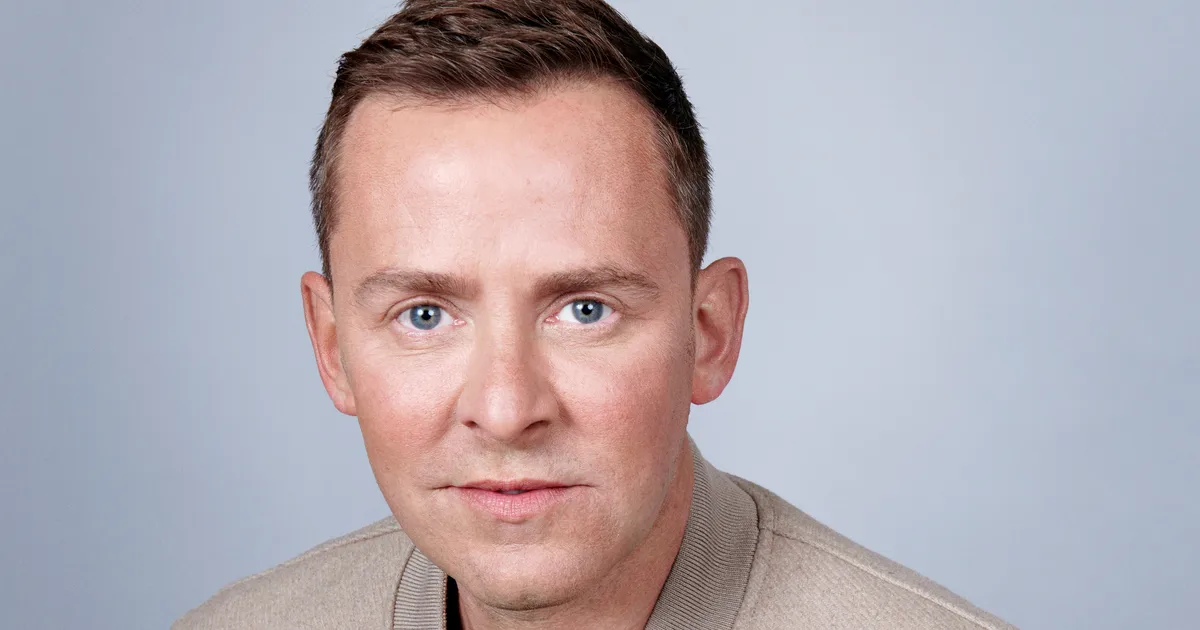
The BBC has issued an apology for its response to an allegation raised with the broadcaster last year about former Radio 2 host Scott Mills.
On Monday morning, it was announced that Mills had been abruptly fired by the BBC due to an allegation about his personal conduct.
It later emerged that he’d previously been questioned by the police as part of an investigation into “allegations of serious sexual offences against a teenage boy”, who was under 16 at the time.
The Mirror claimed that Mills’ firing came following a complaint made about this police investigation, though this remains unconfirmed by the BBC.
Since then, The Telegraph reported that a separate allegation about “inappropriate communications” involving Mills had been raised with the BBC by a freelance journalist last year.
According to the journalist, they questioned the BBC about whether they were “aware of or involved in any related matters” or had ever received “formal or informal complaints” about Mills “relating to safeguarding, inappropriate conduct or harassment”, but did not receive a response.
The BBC then apologised as part of a statement (as reported by The Guardian) on Tuesday, which read: “We received a press query in 2025 which included limited information. This should have been followed up and we should have asked further questions. We apologise for this and will look into why this did not happen.
“More broadly, we would always urge anyone who has concerns or information to raise it with us.”
A Metropolitan Police spokesperson told The Mirror earlier this week: “In December 2016, the Met began an investigation following a referral from another police force.
“The investigation related to allegations of serious sexual offences against a teenage boy. These were reported to taken place between 1997 and 2000. As part of these enquiries, a man who was in his 40s at the time of the interview, was questioned by police under caution in July 2018.
“A full file of evidence was submitted to the Crown Prosecution Service, who determined the evidential threshold had not been met to bring charges. Following this advice, the investigation was closed in May 2019.”
In response to this, a BBC spokesperson told HuffPost UK they had no further comment, other than to reiterate a previous statement, which read: “While we do not comment on matters relating to individuals, we can confirm Scott Mills is no longer contracted to work with the BBC.”
HuffPost UK also contacted Scott Mills’ team for further comment but did not receive a response.
Before his sudden firing, MIlls had worked with the BBC for almost 30 years, joining the corporation in 1998 as a presenter on Radio 1, before making the jump to Radio 5 Live and Radio 2.
Last year, he took over at the helm of Radio 2’s flagship breakfast show from outgoing host Zoe Ball.
Over the years, he has also helped present coverage of the Eurovision Song Contest and competed in the BBC reality shows Strictly Come Dancing and Celebrity Race Across The World, winning the latter in 2024.

In one of the most critical moments that raises questions about crowd culture in European football stadiums, the RCDE Stadium in Barcelona witnessed a series of racist, anti-Muslim chants during Tuesday 31 March night’s friendly match between Spain and Egypt. The chants sparked outrage from players, officials, and fans alike. Specifically, racists targeted Lamine Yamal.
Lamine Yamal targeted by racists
The match, which ended in a 0-0 draw, turned sour in the first half when racist chants against Muslims, including the slogan “If you don’t jump, you’re a Muslim,” were heard from the stands. This provoked strong reactions both inside and outside the stadium, prompting the Catalan police to open an official investigation into the chants, which they described as “Islamophobic and xenophobic,” according to Spanish security services.
At the heart of this controversy was the young Spanish player of Moroccan origin and rising star at Barcelona, Lamine Yamal, who responded with a clear, mature statement on his official Instagram account, rejecting these chants in the strongest terms.
Addressing those criticising the chants, he said:
I am a Muslim, thank God. Yesterday at the stadium, I heard chants like these. I know I was heading towards the opposing team and the chants weren’t directed at me, but as a Muslim, this behaviour remains disrespectful and intolerable.
Yamal added in his statement:
I understand that not all fans are like this, but to those who chant such things: using religion to mock people in a football stadium makes you ignorant and racist. Football should be enjoyed and cheered on, not used to insult people for who they are or what they believe.
Lamine Yamal thanked the fans who attended the match, expressing his anticipation for upcoming games, saying: “Thank you to everyone who came to support us… See you at the World Cup.”
In response to the incident, criticism wasn’t limited to the player. In its first official reaction, the Spanish Football Federation condemned the incident, emphasizing in a statement published on its official social media accounts its categorical rejection of such behavior.
The statement read:
The Spanish Football Federation stands against racism in football and condemns any act of violence within stadiums.

Megan Thee Stallion is in hospital after falling ill on stage in New York on Tuesday night.
The Grammy winner recently took over the role of Zidler in the Broadway production of the musical Moulin Rouge!.
During her latest performance, Megan was forced to leave the stage mid-show, and was subsequently rushed to hospital due to an undisclosed illness.
The Hot Girl Summer rapper’s representative told Variety: “During Tuesday night’s production, Megan started feeling very ill and was promptly transported to a local hospital, where her symptoms are currently being evaluated.
“We will share additional updates as more information becomes available.”
The Texas-born musician began performing as Zidler last week, taking over the role from RuPaul’s Drag Race winner Bob The Drag Queen.
She previously enthused: “Stepping onto the Broadway stage and joining the Moulin Rouge! The Musical team is an absolute honour.
“I’ve always believed in pushing myself creatively and theatre is definitely a new opportunity that I’m excited to embrace.
“Broadway demands a different level of discipline, preparation and storytelling, but I’m up for the challenge and can’t wait for the Hotties [Megan’s name for her fans] to see a new side of me.”
Megan’s breakthrough moment came in 2019 with the Nicki Minaj and Ty Dolla Sign collaboration Hot Girl Summer.
The following year, Beyoncé recorded a guest feature on her hit Savage, with Megan and Cardi B later teaming up on the hit WAP, which reached number one on both sides of the Atlantic and generated a lot of conversation due to the song’s sexually-charged lyrics and music video.
In 2021, Megan was awarded Best New Artist at the Grammys – beating stiff competition from the likes of Doja Cat and Phoebe Bridgers – as well as picking up Best Rap Song and Best Rap Performance for the Beyoncé mix of Savage.

The Palestine Solidarity Campaign (PSC) and Stop the War (StW) formed a coalition in shared opposition to the genocide in Gaza. Since then, more than 20 national protests across the UK have demonstrated that the British public does not support the mass killing of Palestinians.
However, authorities convicted PSC director Ben Jamal and StW vice-chair Chris Nineham on two counts under the authoritarian Public Order Act introduced by Suella Braverman.
This ruling has sent shockwaves through the pro-Palestinian community, as repressive police powers actively undermine and curtail the ability to protest.
Refusing to be deterred, the PSC has published a statement on behalf of the coalition, condemning the verdicts as:
extraordinary and shocking and a huge setback for civil liberties.
We spoke to Chris Nineham following his conviction under this draconian law:
Stop the War and Palestine Solidarity Campaign activists Chris Nineham and Ben Jamal have been found guilty of “breaching protest conditions” – we spoke to Chris Nineham@STWuk pic.twitter.com/zDr6JxRDeJ
— Canary (@TheCanaryUK) April 1, 2026
“A seismic threat to democratic freedoms” say pro-Palestine coalition
In this statement, it is made clear that Nineham and Jamal intend to appeal their verdicts. Helping them with that appeal, they will have full support of the pro-Palestine coalition behind them. Undoubtedly, they will have support of the wider British public in which a majority oppose Israel’s bloodthirsty actions.
They then go further by highlighting “significant concerns” about how the six-day trial was conducted. These concerns will be subsequently raised in their imminent appeal.
Arguably pointing to a stitch up, the statement reads:
The substantive issues at the heart of the case were clear. From the stage that day, Ben Jamal explained that a delegation of leaders of the coalition, plus MPs, trade union leaders and members of the Jewish bloc, would walk peacefully in a symbolic protest towards the BBC to lay flowers to mark the Corporation’s failures to report the truth of genocide in Gaza.
Ben made clear that, if stopped by the police, the flowers would be laid at the police line. In the event, as copious video evidence shows, police officers invited the delegation to pass though.
They also argue that the claims of public disorder made by the police were categorically untrue.
In fact, they underscore the violence that they did see that day:
The only moment of violence was when Chis Nineham was brutally pulled to the ground and hauled away by police officers.
Contradicting Police Commander Adam Slonecki’s adamant insistence that the imposed late restrictions did not follow political pressure from pro-Israel groups, they added:
The logs of the Police Gold Commander Adam Slonecki reveal that enormous political pressure was placed on the police by pro-Israel groups to prevent a protest at the BBC.
Islington MP Jeremy Corbyn has condemned the judge’s verdict, saying he is “appalled”:
I am appalled by today’s verdict against Ben Jamal and Chris Nineham.
In January 2025, we held an entirely peaceful demonstration in support of Palestinian people. At all times, they — and we — followed all police instructions. We ended the demonstration by laying down flowers… https://t.co/A8bCsKOJ9X
— Jeremy Corbyn (@jeremycorbyn) April 1, 2026
Defending the actions of Jamal and Nineham at the protest, which Corbyn was also taking part in, he wrote:
In January 2025, we held an entirely peaceful demonstration in support of Palestinian people. At all times, they — and we — followed all police instructions. We ended the demonstration by laying down flowers at their feet to mourn the deaths of Palestinian children.
Today’s verdict is a dark day for civil liberties in this country — and is a disgraceful assault on the right to protest.
We wrote earlier today after the court’s judgement:
It is clear that the government are refusing to back down in its attempts to intimidate and bully British citizens into no longer standing by our Palestinian comrades. Heavily funded by the Israel Lobby, Starmer’s government have long ignored and diminished rising islamophobia, whilst unduly declaring anti-Zionist positions as antisemitic.
Crime and Policing Bill
The statement goes on to draw attention to the Crime and Policing Bill which is making its way through Parliament:
It confirms the view, widely held across civil society, that these proposed increased powers represent a seismic threat to democratic freedoms.
They raise alarm at the chilling impact this is clearly intended to have on people supporting Palestinians:
The unprecedented charging and now conviction of leaders of a movement that has brought millions to the streets in support of the people of Palestine is designed to chill ongoing opposition to genocide, apartheid and illegal occupation.
It finishes with a typical show of dogged resistance to state oppression and repression:
It will not succeed.
That it most certainly won’t, as a call to action is heard for the upcoming protest on the 16 May in London:
So, Ben Jamal and I have been convicted for organising a peaceful protest against genocide in a bizarre decision by one judge.
This is a big attack on civil liberties.
We will appeal. We call for a massive mobilisation in support of the Palestinian people for Nakba on 16 May. https://t.co/ftX7S069Bl
— Chris Nineham (@ChrisNineham) April 1, 2026
Featured image via the Canary
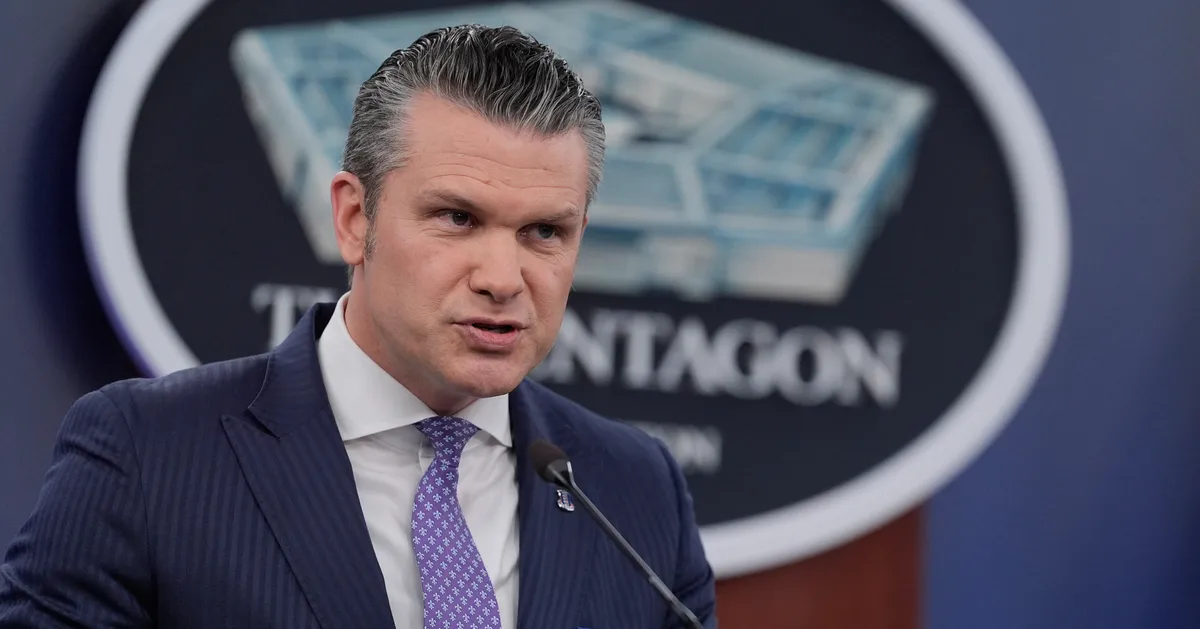
The US secretary of defence has mocked the “big, bad Royal Navy” for not joining America in its war against Iran.
Speaking from the Pentagon on Tuesday, Pete Hegseth said: “There are countries around the world who ought to be prepared to step up on this critical waterway as well.
“Last time I checked, there was supposed to be a big, bad Royal Navy that could be prepared to do things like that as well.”
He added: “This is an international waterway that we use less than most. In fact, dramatically less than most.
“The world ought to pay attention, be prepared to stand up.”
His remarks come after Keir Starmer’s government refused the US request’s to use British military bases for preemptive strikes on Iran last month.
The UK did allow American troops to use their sites for defensive and limited strikes, though Donald Trump has continued to attack Britain for its perceived lack of support.
He compared UK aircraft carriers to “toys” and told the prime minister “not to bother” sending ships to the Gulf.
On Tuesday, he told allies “you’ll have to start learning how to fight for yourself”, urging Britain to “go get your own oil” from the Strait of Hormuz as Iran continues its blockade.
Writing on TruthSocial, the president said the UK should either buy jet fuel from the US or “build up some delayed courage, go to the Strait and just TAKE IT”.
Meanwhile, the UK’s First Sea Lord has warned that the Royal Navy is not ready for war and that it “had work to do”.
Gen Sir Gwyn Jenkins told Swedish newspaper Svensky Dagbladet on Monday that the Navy could still fight with what it had and that “if we were told to go to war, of course we would”.
But he added: “Are we are ready as we should be? I don’t think are. We have work to do and I am completely dedicated to the mission.”
UK defence secretary John Healey also announced on Tuesday that the UK would be deploying dozens of troops and its most advanced air defence missile system to Saudi Arabia as the Middle East conflict continues to escalate.
Subscribe to Commons People, the podcast that makes politics easy. Every week, Kevin Schofield and Kate Nicholson unpack the week’s biggest stories to keep you informed. Join us for straightforward analysis of what’s going on at Westminster.

Why Market Cap Won’t Matter For XRP

Chelsea ‘keeping close eye’ on Barcelona star after joining Liverpool in transfer race | Football
Black Hawk Acquisition receives Nasdaq notice for market value non-compliance


-

 News Videos7 days ago
Parliament publishes latest register of MPs’ financial interests
-

 Business6 days ago
Instagram, YouTube Found Responsible for Teen’s Mental Health Struggle in Historic Ruling
-
 Tech6 days ago
Intercom’s new post-trained Fin Apex 1.0 beats GPT-5.4 and Claude Sonnet 4.6 at customer service resolutions
-

 NewsBeat5 days ago
The Story hosts event on Durham’s historic registers
-

 Sports5 days ago
Sweet Sixteen Game Thread: Tide vs Michigan
-
Entertainment2 days ago
Fans slam 'heartbreaking' Barbie Dream Fest convention debacle with 'cardboard cutout' experience
-
 Entertainment4 days ago
Lana Del Rey Celebrates Her Husband’s 51st Birthday In New Post
-
Crypto World1 day ago
Dems press CFTC, ethics board on prediction-market insider trades
-

 Sports1 day ago
Tallest college basketball player ever, standing at 7-foot-9, entering transfer portal
-

 Crypto World39 minutes ago
Gold Price Prediction: Worst Month in 17 Years fo Save Haven Rock
-

 Tech3 days ago
The Pixel 10a doesn’t have a camera bump, and it’s great
-

 Entertainment7 days ago
HBO’s Harry Potter Series Will Definitely Fail For One Big Reason, And It’s Not J.K. Rowling Or Snape
-

 Tech2 days ago
EE TV is using AI to help you find something to watch
-

 Crypto World2 days ago
U.S. rule change may open trillions in 401(k) funds to crypto
-

 Tech1 day ago
How to back up your iPhone & iPad to your Mac before something goes wrong
-

 Fashion6 days ago
En Vogue in Brown Leather and Tailored Neutrals by Atelier Savoir, Styled by J Bolin
-

 Tech2 days ago
Apple will hide your email address from apps and websites, but not cops
-

 Politics2 days ago
Should Trump Be Scared Strait?
-

 Tech2 days ago
Flipsnack and the shift toward motion-first business content with living visuals
-

 Fashion6 days ago
What Are Your Favorite T-Shirts for the Weekend?
You must be logged in to post a comment Login