
Politics
Amnesty International: Russian anti-war politician’s sentencing is ‘arbitrary prosecution’

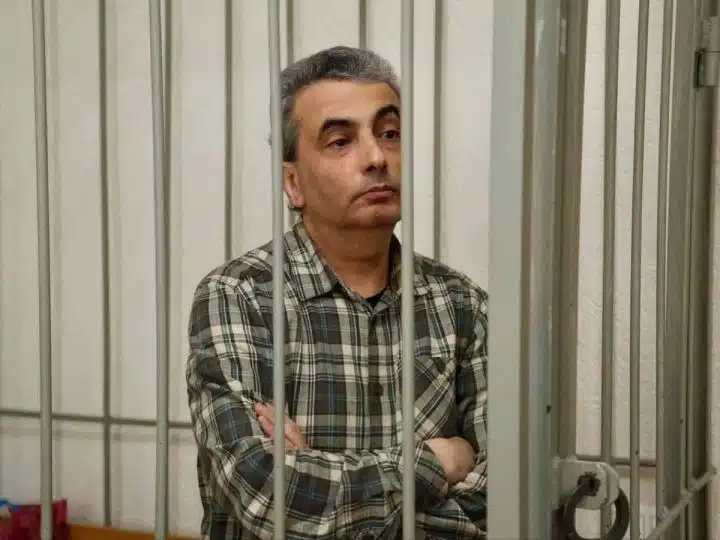

Amnesty International has highlighted the recent conviction of Russian anti-war politician, journalist and human-rights activist Lev Sholsberg. On 17 August 2026, the Pskov City Court sentenced Shlosberg to over 11 years in a penal colony for spreading false information and discrediting the Russian Armed Forces.
Shlosberg is the deputy chair of the Yabloko Party. Amnesty described Yabloko as:
the only registered Russian political party which has consistently opposed Russia’s war of aggression against Ukraine and campaigned for a ceasefire.
Sholsberg — ‘I am the Russian Federation’
In particular, the Pskov City Court sentenced Shlosberg under Article 280.3(1) of the Russian Criminal Code for “repeated discreditation” of Russia’s armed forces, and Article 207.3(2)(d) for “dissemination of deliberately false information” regarding the armed forces.
Shlosberg previously participated in an online debate centering on Russia’s war on Ukraine. He then shared a publication that included a Daily Mirror front page via social media. That front page depicted both a Ukrainian woman covered in blood, along with an image of Russian president Vladimir Putin.
In the trial itself, Shlosberg stated that Russia is persecuting “thousands and thousands” of people for their “peaceful, non-violent, and humanistic beliefs”. He went on to say:
In reality, in this courtroom I am the Russian Federation, which has been put in a cage and which they want to force into silence.
The anti-war politician rejected all of the charges against him. Whilst the prosecution demanded a sentence of 12 years, the court sentenced Shlosberg to 11 years and one month in a penal colony.
‘Blatant reprisals’
However, it’s not just Sholsberg that the Russian state is targeting — they’re going after his opposition party, too. On 10 August 2026, the Russian Supreme Court barred Yabloko from running in the next State Duma election.
Whilst the party tried to appeal the decision in court on 17 August, Russian law enforcement arrested over 30 supporters outside the Moscow courthouse.
Amnesty International’s director for Eastern Europe and Central Asia, Marie Struthers, said:
For nothing more than taking part in an anti-war debate and sharing a social media post, Lev Shlosberg faces more than 11 years behind bars. His arbitrary prosecution and sentencing are blatant reprisals for exercising his right to freedom of expression to call for peace.
The Yabloko party’s disqualification from running in the September State Duma election is further proof that political pluralism and anti-war expression have no place in Russia today.
The Russian authorities must immediately and unconditionally release Lev Shlosberg and quash his conviction. They must repeal legislation criminalizing peaceful anti-war expression, end the persecution of Yabloko members and supporters, and respect the rights to freedom of expression, association, peaceful assembly and political participation for all Russians.
Featured image via the Canary
By Grace

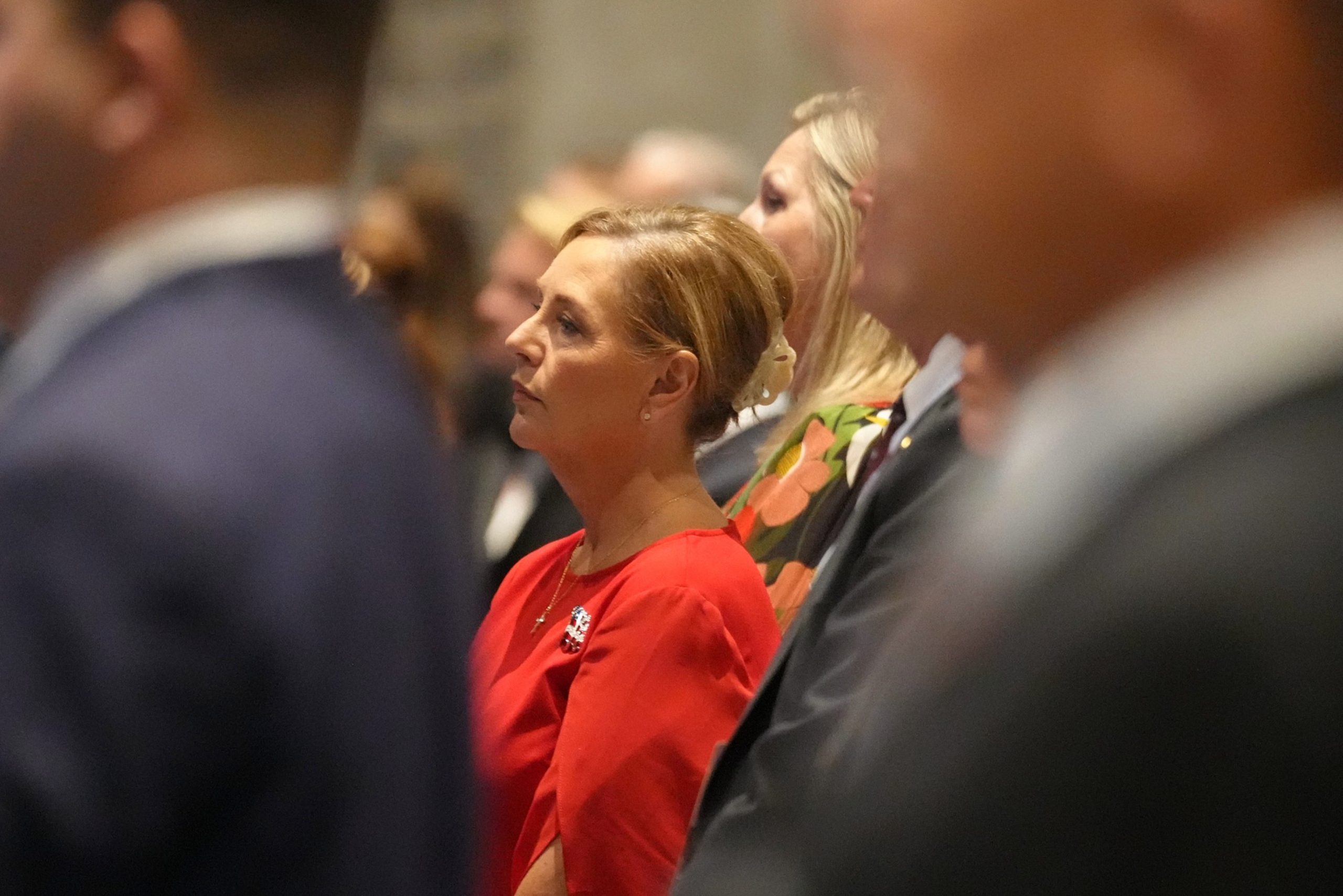

South Carolina Sen. Darline Graham has given opponents fresh ammunition to attack her on her biggest vulnerability: her inexperience.
She revealed a major blindspot in her understanding of a critical foreign policy issue, U.S.-Taiwan relations, during Tuesday’s debate for the Aug. 25 snap Senate primary runoff to replace her late brother Lindsey Graham. Her response spread like wildfire on social media, with critics saying it proves she is “unprepared” to take office.
Asked whether Taiwan and the South China Sea are relevant national security priorities, Graham responded: “I’m just going to be honest here … I’m not that informed on national security, so.” She added that “national security is not my thing, not my area of expertise, but I do support the military.”
It was a notable acknowledgement from a sitting senator, as tensions rise between China and Taiwan — and as the U.S. preoccupation with the Iran war calls into question how reliable a supporter it might be amid fears of a possible future invasion of Taiwan.
The gaffe exposed the exact weakness that her runoff opponent, GOP Rep. Ralph Norman, has been eager to highlight: the senator’s lack of tenure.
His allies immediately piled on.
Norman supporter and former U.N. Ambassador Nikki Haley wrote in a post on X that foreign policy experience is “not something you inherit” — a swipe at Graham’s appointment to fulfill her brother’s current term. Ken Cuccinelli, a former Trump administration official, expressed support for Norman, writing that Graham has “worked hard to hide any firm positions, and here she is at least being honest.”
“It very much confirmed many of our suspicions that while she might be a very nice lady, she is woefully underprepared or unprepared to be one of the 100 U.S. Senators in the Senate,” state Rep. Jordan Pace, who is supporting Norman in the runoff, said in an interview.
Norman said in a statement that South Carolinians deserve a senator with “know-how” on foreign policy: “Whether it’s spy balloons flying overhead or buying up land near South Carolina military bases, China continues to prove that it is a threat to the United States.”
Graham’s campaign, asked to clarify her response on U.S.-Taiwanese relations and her critics’ attacks over her misstep, pointed toward comments she made in the spin room after the debate: “What’s important are the people of South Carolina. They’re worried about their pocketbooks more than they’re worried about the South China Sea, quite honestly.”
Graham’s answer is also raising eyebrows among some of her own allies, with less than a week before next Tuesday’s election. And it increases the pressure on President Donald Trump, who had championed Graham’s appointment in July, encouraged her to run for a full term and is even planning to rally with her on Friday to boost her election chances.
“[Darline] just doesn’t have the experience of executing, you have to be able to deliver a story about herself and right now her story is that she’s Lindsey Graham’s sister,” said a former Trump administration official, granted anonymity to speak openly about private conversations.
The White House is still backing Graham, this person said, because the president had a close relationship with the late senator but also sees her as a better alternative to Norman, who endorsed Haley over Trump in the 2024 Republican presidential primary.
A second person familiar with the White House’s thinking, granted anonymity to speak candidly, said, “POTUS is still all in on the endorsement.”
The White House declined to comment on Trump’s support for Graham.
Still, the flub highlighted the danger for Trump, as he seeks to propel a political novice into a six-year term in the Senate and avoid yet another stain on his endorsement record. His high-profile rally for Graham in Myrtle Beach later this week is a particularly notable step in a year otherwise marked by a decrease in his explicit campaign travel.
Norman, for his part, said during the debate that Taiwan is a “definite ally” and that Trump is right to enable them to “defend themselves against China.” He declined to take a swipe at Graham over her comment in real time, but that hasn’t stopped his supporters from hammering the newcomer for the embarrassing misstep.
Graham’s stumble was a far cry from her late brother’s hawkish defenses of Taiwan, in which Lindsey Graham had openly criticized the expansionist aims of Chinese President Xi Jinping, called allies of China “dirtbags” and stressed the need to maintain the status quo between Beijing and Taipei to protect U.S. national security interests.
“Anyone running for a seat in Congress should be able to explain to the American people why Taiwan is important to American interests. Taiwan is a vibrant democracy of 23 million people and the source of over 90 percent of the world’s advanced semiconductors,” said Bonnie Glaser, managing director of the German Marshall Fund’s Indo-Pacific program. “A Chinese takeover by force would shatter U.S. credibility with its allies across the Indo-Pacific.”
American intelligence has long suggested that China’s People’s Liberation Army will be sufficiently capable of seizing the island starting in 2027.
Trump in June said he was open to speaking with Taiwan’s President Lai Ching-te, despite China’s warnings against doing so, in what would be the first direct dialogue between American and Taiwanese leaders in decades.
But the U.S.’ war with Iran is casting doubt on how effective an ally the Trump administration will be if China does invade Taiwan. Extended naval deployments to support airstrikes against Iran and a corresponding blockade of its ports have left the U.S. without a deployed aircraft carrier in the Indo-Pacific, as the USS George Washington steams toward the Middle East to relieve the extended Abraham Lincoln carrier, for instance.
The heightened risks and the rapid race to replace Lindsey Graham have left some in South Carolina’s GOP circles feeling less than optimistic about the choice they have to make to select a key proxy in Washington.
“It was shocking how we’re gonna give someone who was on stage last night six years in the U.S. Senate, and I think that’s the overall impression people are having today” said one South Carolina-based Republican operative who has stayed neutral in the Senate race and was granted anonymity to speak candidly. “One of these two is gonna get six years in the Senate? Like, big hanging question mark.”


The chair of the Conservative party has called for the failed, racist Rwanda scheme to be reinstated. Kevin Hollinrake was quoted in the press arguing it was a better option than housing asylum seekers in a Yorkshire RAF base.
The Tory Rwanda scheme would have seen asylum seekers relocated to the African state. One of former PM Keir Starmer’s first moves upon taking power in 2024 was to scrap the scheme.
Hollinrake said:
We, in a previous government, decided where to put them, we said they should be detained and deported back to their home country, or if they couldn’t go to their home country they should go to Rwanda.
His comments followed an alleged Home Office attempt to apply:
for planning permission to house asylum seekers at former RAF Linton-on-Ouse near York, and two other Ministry of Defence sites.
They say this will help them close asylum hotels. The Yorkshire Post reported:
locals have reacted in uproar at the prospect of 1,300 men being housed in a small village of 650 people.
Rwanda scheme redux?
Hollinrake said:
Illegal migrants should not be in anybody’s community. That’s the reality. Whether it’s in hotels, houses of multiple occupation or air bases or military bases.
I set about a campaign with others in the local community in a village near me in my constituency in the last Parliament, because I think it’s totally wrong they should be in these communities.
Hollinrake, who is the current MP for Thirsk and Malton, said:
These people coming across the Channel should be detained in detention centres pending their immediate deportation back to their home country or a safe third country.
He invited the new Labour PM to work with the group:
That’s what should happen — Andy Burnham could work with us tomorrow to do exactly that.
As the Canary reported way back in 2022:
This scheme comes alongside the inhumane and discriminatory Nationality and Borders Bill, which seeks to criminalise vulnerable people seeking refuge in the UK. The European Court of Human Rights is questioning the lawfulness of plans to ship asylum seekers to Rwanda, a country with a poor human rights record.
For the Tories, violent deportations and a general love for anything carceral are eternal brain-worms. These kinds of dog-whistles allow them to appear relevant and appeal to the very worst tendencies in British public life. The Rwanda scheme encapsulated the current reactionary state of UK politics. And it completely failed to address the global instability which drives desperate refugees to come to the UK.
Featured image via the Canary
By Joe Glenton

The post The lethal folly of the early prisoner release appeared first on spiked.

In 2011, with the glass barely swept up after the London riots, the think-tank Demos measured Britain’s pride in itself and found it obstinately intact. A net 74 per cent of us were proud to be British. Last week, Demos ran the ruler over us again. The figure is 47 per cent. Pride in Britain’s role in the world stands at 13 per cent. The BBC, which 15 years ago enjoyed a net pride score of 48 per cent, now sits at minus-11, meaning more Britons are ashamed of the corporation than proud of it. That last number is, I suppose, at least evidence that the public can still see straight.
The Times called the findings sobering. Miserable they certainly are, but nobody who has spent a working life in and around our institutions has any business being surprised. Shame on this scale is a harvest. The sowing took the better part of half a century, and the crop is now coming in.
Look where the collapse runs deepest. Not among the poor, and not among the old, but among the prosperous middle aged of the upper classes – the cohort that passed through our universities in precisely the years when those universities stopped transmitting our civilisation and began apologising for it. Their children now report a fresh distaste for British history, the Union Jack and the armed forces, which are the three things you would teach a nation’s young to despise if despising the nation was the point of the lesson. The old still love England. It is the people who govern her they no longer trust.
French philosopher Julien Benda named the problem in his 1927 book, La Trahison des Clercs – ‘The Treason of the Intellectuals’. He referred to the treason the learned class committed when it abandoned truth for political theory. Our intellectuals went further than Benda imagined. They kept the gowns, the chairs, the studios and the grants, and turned the whole apparatus of cultural transmission into an apparatus of cultural repudiation.
George Orwell observed the seedling of our current woes during the Blitz. ‘It is a strange fact’, he wrote in 1941, ‘but it is unquestionably true that almost any English intellectual would feel more ashamed of standing to attention during “God Save the King” than of stealing from a poor box’. He also described what he believed they could never reach. English patriotism was not the shouting kind. It lived in the texture of ordinary life – in the bitterness of the beer and the weight of the coins, in solid breakfasts and gloomy Sundays. What Orwell did not reckon with was patience. A quiet patriotism can be quietly starved. It takes decades, but decades were available.
Roger Scruton gave the disease its clinical name: ‘oikophobia’, the repudiation of home as a badge of sophistication. In his 2001 book, England: An Elegy, he wrote up the patient’s notes with a breaking heart. The long march that Antonio Gramsci imagined never needed to seize a parliament. Instead, it targeted the institutions where real meaning was found: the schools, the broadcasters, the churches, the museums, the law. The curriculum was to be decolonised and the family problematised, while the faith of Thomas Cranmer and George Herbert dwindled into a heritage asset with a safeguarding policy. No conspiracy in a cellar was needed, only a class with a shared sneer – the nowhere people, at home in Brussels and Davos and nowhere else. The same class that gave us the EU, mass immigration without consent, the failed experiment of multiculturalism, an armed forces cut to the bone and then investigated and pilloried for winning.
The Church of England’s own hierarchy has joined in the work. For decades, the bishops have been quietly dismantling the parish system that built England, amalgamating benefices until one exhausted priest serves 10 villages, while the bureaucracies swelled with advisers for everything except the cure of souls. The commissioners sit on a fortune of some £10 billion while bleeding the pews dry. In the midst of this, the Church is also determined to pay £100million in slavery reparations, for the sin of existing in the 18th century. There now exists a movement called Save the Parish, a name that would have been unintelligible to any previous generation. Imagine needing to save the parish from the Church.
And yet. One line on the Demos chart rises. Pride in the local community is higher than it was in 2011. We trust our neighbours more even as we trust the national institutions less. The Times reads this as a curiosity. I read it as hope. The nation is not dead, only withdrawn to the parish, where England began. This country was assembled out of parishes, out of vestries and benches and lifeboat crews, long before Whitehall existed to be ashamed of it. What was assembled once can be assembled again.
Which is why winning an election is only the start of the work. Four hundred MPs and a Lords willing to pass the government’s legislation give you a bridgehead, nothing more. The real territory is the institutions themselves, the quangos and commissions through which the clercs have ruled for decades without once standing for office. They marched through the institutions. We must now fan out through them – patiently, lawfully, cheerfully, and hand the meanings of England back to the people who never stopped believing in them.
It will take discipline and hard work, and it must be done with joy in our hearts, because sourness is their patrimony and cannot be ours. Britain has not fallen out of love with herself. She has been talked out of love, and what has been talked out can be talked back in, and sung back in. There is no greater cause than this.
Except, perhaps, romantic love. But a man who will not fight for his country was never much use fighting for his beloved, and the two loyalties have always kept each other’s company.
Gawain Towler is a commentator and an elected board member of Reform UK. This is an edited version of an article that originally appeared on his Substack.
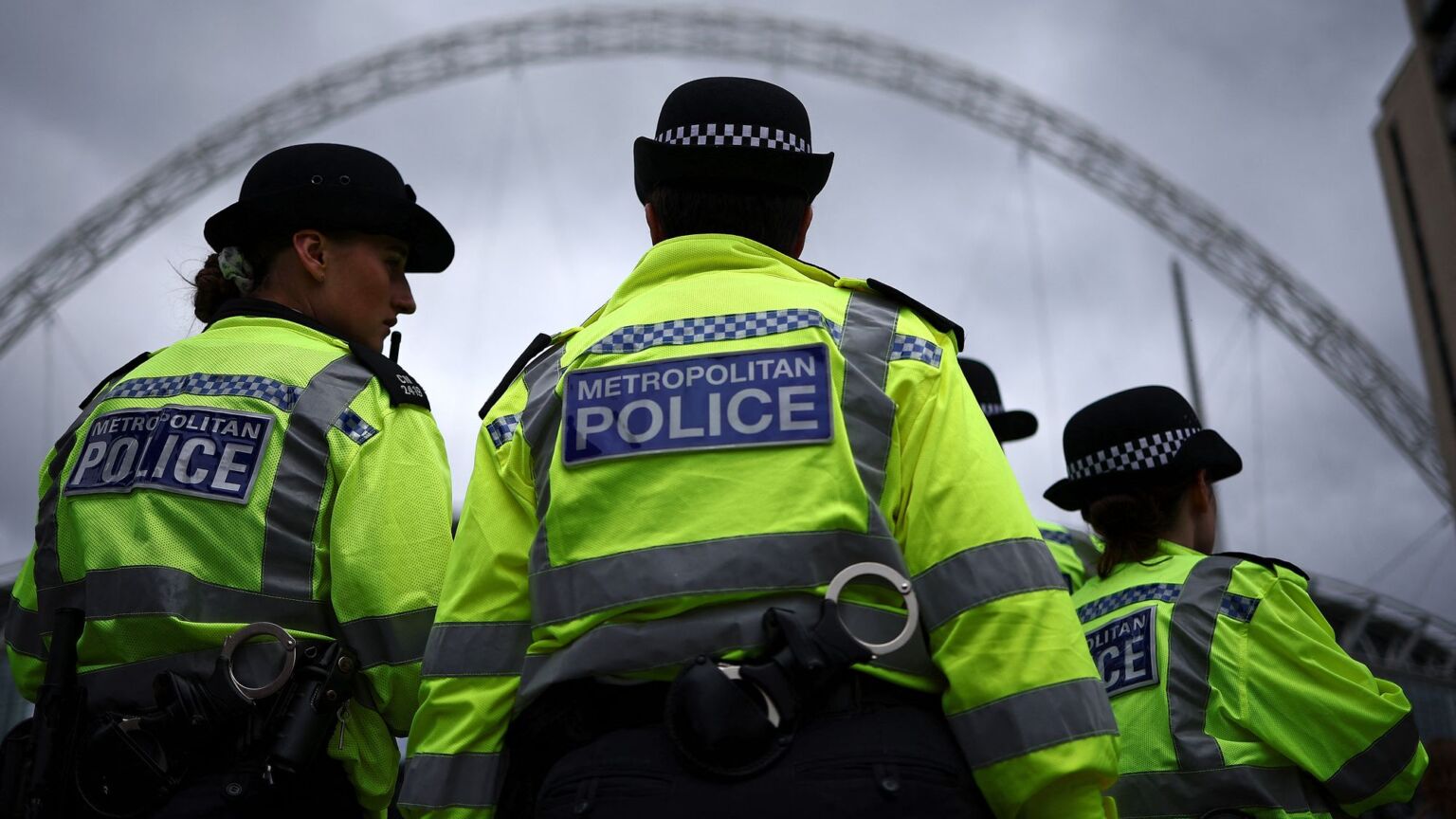
In January, the British government published its policing white paper, From Local to National: A New Model for Policing. This promises the biggest shake-up of policing in England and Wales since Sir Robert Peel invented local police forces in 1829. And yet nearly half the population has no idea it is even happening.
The government plans to scrap our existing 43 local police forces and replace them with potentially as few as 12 regional ‘mega’ forces alongside a new souped-up National Police Service. At the same time, it promises to give the home secretary unprecedented powers over policing priorities and senior police leadership.
This looks like a very bad idea. Trying to police vast areas just doesn’t work. Scotland amalgamated its local police forces just over a decade ago, and the resulting Police Scotland now suffers from deep financial deficits, falling public confidence, fewer police officers and decreased community visibility.
The government has consulted neither the public nor even the police themselves about its plans. So earlier this month, I organised a public meeting in Leigh-on-Sea, alongside Essex Police, Fire and Crime Commissioner Roger Hirst, to give the public the thing they have been denied so far: a voice. The prime minister would do well to listen.
Nobody seriously believes that British policing is perfect. There are forces that are too small and need to improve, and serious organised crime does not stop at county borders. A greater degree of national coordination makes obvious sense. The question is whether abolishing local forces and creating giant regional ones is actually the answer. There is remarkably little evidence that it is.
Consider the scale being contemplated. In the East of England, Essex is likely to be merged with Norfolk, Suffolk, Cambridgeshire, Bedfordshire and Hertfordshire, creating a police organisation serving more than six million people. A chief constable responsible for six million people cannot have the same knowledge of the communities under his charge as one responsible for a county of two million. Local priorities inevitably become regional priorities. The further decision-making moves from the community, the harder it becomes for residents to influence what their police force does.
This isn’t an abstract constitutional argument. Local knowledge can save lives. Police officers know the roads, estates, businesses, schools, coastline and communities they patrol. They know where tensions are building and which local organisations can help solve problems. A former Southend chief superintendent at the meeting described how knowing local businesses, residents and officers creates a sense of personal responsibility and accountability. That relationship is impossible to replicate from a regional headquarters potentially hundreds of miles away.
There is an irony to the government’s plans. It appears to be trying to solve the perceived problems of policing by creating organisations so large that they risk reproducing the very management problem it has identified in the Metropolitan Police – that it is too large an organisation for too large a population. The performance of Essex Police relative to that of the Met illustrates the problem. As Hirst explained at the meeting, the much smaller Essex Police has a crime-solving rate around twice the national average and more than three times that of the Met.
As the saying goes, if it ain’t broke, don’t fix it. If a particular force is failing, deal with that force. If a particular function would benefit from national coordination, nationalise that function. But don’t use a sledgehammer to crack a nut.
There are obvious areas where greater collaboration makes sense. Terrorism, cybercrime and ‘county lines’ drug dealing traverse borders. Essex already works closely with Kent and regional organised-crime colleagues. Last year, Essex’s own units disrupted around 220 county-lines operations.
That demonstrates the importance not of amalgamation, but of collaboration between police forces. The same applies to back-office functions. Forces already work together on procurement, training and technology. If a genuinely national function makes sense – policing aviation, for example – there is an obvious case for bringing it together nationally. But bigger organisations are not automatically more efficient.
The Association of Police and Crime Commissioners has estimated the government’s proposals could cost around £500million. As Hirst suggests, this is not new money for policing. It is being taken from the existing policing budget. Imagine what that could be spent on: more neighbourhood officers, more detectives, greater forensic capability and so on.
In other words, that half-a-billion pounds could be spent on tackling crime. After all, residents don’t wake up in the morning worrying about whether their police force has the optimum organisational structure. They worry about car theft, burglary, drug dealing, anti-social behaviour, shoplifting and whether anyone will come when they call the police.
Then there is the problem of political control. The proposed reforms would give the home secretary powers to direct the commissioner of a National Police Service, who could then direct local chief constables. Local policing could therefore be directed from the centre of government. That should concern everyone, irrespective of party.
British policing has traditionally operated on the fundamental Peelian principle that police officers enforce the law on behalf of all of us, independently of the government of the day – ‘The police are the public and the public are the police’. Ministers set the legal framework and police leaders decide how policing is operationally delivered.
The distinction between government and the police protects both the police and the public. Giving a home secretary greater powers to direct policing priorities – alongside greater influence over the appointment and removal of senior police leaders – risks changing that constitutional settlement. Today’s home secretary may be responsible. Tomorrow’s might not be.
Incredibly, there has been no meaningful national public debate about any of this. If there were, it is likely the majority would be arguing against the proposed changes. An Essex-wide survey of around 1,700 residents delivered a striking verdict: nearly 70 per cent opposed regional police forces and 85 per cent regarded visible local policing responding to Essex’s particular problems as extremely important.
That is not proof that the public overwhelmingly opposes police reform. But it does show that people need to be properly consulted.
The government should pause its plans. It should be making policing more visible and more accountable to communities – not creating vast bureaucracies and a state-controlled police force. A police force serving six million people may look efficient on a Whitehall spreadsheet. It could prove disastrous on the ground.


Cameroon claimed their first Women’s Africa Cup of Nations title with a composed 3–0 victory over Malawi, completing a tournament run defined by organisation, efficiency and a clear attacking edge. The result, achieved in the final against a Malawi side making their debut at this stage of the competition, marked a significant moment for Cameroonian women’s football and underlined the team’s steady rise across the past cycle. The scoreline reflected the balance of the contest: Cameroon were sharper in midfield, more decisive in the final third and rarely troubled defensively.
Marie Ngah Manga struck twice, each finish illustrating her instinct and timing, while Naomi Eto added the third to close out a performance that never drifted from Cameroon’s control. The win also confirmed qualification for next year’s Women’s World Cup in Brazil, with Cameroon and Malawi joining Morocco and Algeria as the continent’s representatives. For Cameroon, the trophy itself was the central achievement, but the broader significance of reaching the global stage added further weight to the afternoon.
Cameroon’s route built on consistency
Across the tournament, Cameroon’s approach remained stable: disciplined defensive structure, quick transitions and a forward line capable of converting pressure into goals. Their progression through the group stage showed the same traits visible in the final. The midfield unit, anchored by players comfortable receiving under pressure, allowed Cameroon to dictate tempo in most matches. When possession broke down, the defensive recovery was immediate, limiting opponents to half-chances and isolated breaks.
In knockout rounds, Cameroon’s composure became more evident. They managed game states effectively, avoided unnecessary risks and maintained control even when matches tightened. By the time they reached the final, their rhythm was established. Malawi, energetic and ambitious, attempted to disrupt that rhythm early, but Cameroon’s structure held firm. Once the opening goal arrived, the momentum shifted decisively.
Marie Ngah’s class shines
Marie Ngah Manga’s two goals in the final capped a tournament in which she consistently provided Cameroon’s attacking edge. Her movement between lines created problems for Malawi’s defence, and her ability to finish from both central and wide positions gave Cameroon flexibility in their build-up. The first goal came from a well‑timed run that met a precise pass, finished with calm assurance. The second, arriving after sustained pressure, demonstrated her awareness inside the box and her capacity to react quickly in crowded situations.
Ngah Manga’s contribution extended beyond scoring. She linked play effectively, pressed intelligently and offered an outlet whenever Cameroon needed to relieve pressure. Her performances across the competition placed her among the standout players, and the final served as a fitting conclusion to her tournament.
Significance of Cameroon’s achievement
Winning a first Women’s Africa Cup of Nations title carries weight beyond the immediate celebration. It reflects years of incremental progress, investment in development pathways and the emergence of players capable of performing consistently at international level. Cameroon’s victory also strengthens their position within African women’s football, placing them alongside established contenders and reinforcing their trajectory.
The manner of the win. Which was controlled, measured and built on collective clarity. Has now added further credibility. Cameroon avoided unnecessary drama, maintained discipline and executed their plan with precision. In doing so, they delivered a performance aligned with the identity they have shaped across recent tournaments.
Looking ahead to global competition
Preparation for the Women’s World Cup will now intensify. Cameroon’s coaching staff will assess the tournament, identify areas for refinement and build a programme designed to elevate performance levels. The step up to global competition demands adjustments in tempo, physicality and tactical flexibility. Cameroon’s core strengths, defensive structure, midfield control and attacking sharpness. All will provide a solid base.
Ngah Manga and Eto will remain central to Cameroon’s attacking plans, but depth across the squad will be crucial. The experience gained in this tournament, particularly in managing knockout matches, will support their transition to the global stage. Cameroon’s ability to maintain composure under pressure, evident throughout the competition, will be essential in Brazil.
Malawi’s run still a breakthrough moment
Although defeated in the final, Malawi’s campaign represented a significant step forward. Reaching the final in their first appearance at this stage of the competition highlighted the progress made within their programme. Their performances across the tournament were marked by energy, commitment and a clear tactical identity. While Cameroon’s experience and structure proved decisive, Malawi’s presence in the final added a fresh dimension to the competition and signalled their potential for future tournaments.
Malawi also secured qualification for the Women’s World Cup in Brazil, a milestone that will shape their development over the coming year. Their ability to compete against established sides throughout the tournament demonstrated resilience and adaptability. The final itself may have exposed areas requiring refinement, but the broader achievement remained intact.
Cameroon’s 3–0 win over Malawi delivered a clear, deserved and historic first Women’s Africa Cup of Nations title. The performance reflected consistency, structure and attacking quality, with Ngah Manga and Eto providing decisive contributions. Malawi’s breakthrough run added significance to the final, while both teams secured their place at next year’s Women’s World Cup alongside Morocco and Algeria. For Cameroon, the trophy marks a defining moment and sets the stage for their next challenge on the global platform. Malawi will take this is a huge step in the right direction and prepare for the Women’s World Cup.
Featured Image courtesy of Al Jazeera
By Faz Ali


Numerous UK police forces are now using Palantir technology for surveillance and tracking. The far-right genocide-linked tech firm has been capturing UK public bodies at pace – and shows no signs of slowing down. The new Good Law Project and Computer Weekly investigation claims:
that these projects involve, “tracking, monitoring or surveillance”, as well as data on “racial or ethnic origin, political opinions” and even people’s “sex life”.
As the Canary has repeatedly warned, Palantir’s close relations with the Labour government have assured the firm’s foothold in Britain:
The UK military is currently locked into a multi-billion pound contract with Palantir. The statement makes no mention of Palantir, despite the genocide-linked firm’s role being the source of most controversy.
The UK military, police, NHS and, allegedly, the Telegraph have started using Palantir technology. The firm maintains a permanent desk in southern Israel, and is deeply involved in Israel’s genocide in Gaza, as well as Trump’s paramilitary immigration operations, ICE, whose officers use the firm’s gear.
And it doesn’t end there:
On 2 June, the Canary reported that UK officials have even been using Palantir software to decide what Palantir technology to buy to fight future wars. On 4 June, we also heard how former spy chief David Omand had been promoting the idea that integrating AI into warfare is somehow be ethical.
During the same week, we reported that Palantir had won a contract to manage UK firearms, explosives, and related stockpiles.
The Good Law Project, a legal NGO, reported on 13 August:
six police forces have processed data with Palantir software, spending £7.8m since 2023.
County forces in Lancashire, Bedfordshire, Hertfordshire, Cambridgeshire and others have all been implicated. But the problem is even deeper than that:
According to a data protection impact assessment (DPIA) seen by Good Law Project and Computer Weekly, one of the data sources integrated into Bedfordshire’s Palantir project is Athena – a data sharing system which covers nine forces: Kent, Essex, Bedfordshire, Cambridgeshire, Hertfordshire, Norfolk, Suffolk, Warwickshire, and West Mercia police.
The NGO added:
The DPIA declares that data “recorded on existing platforms like Athena” will be used to “populate content in applications developed on the Foundry platform”.
Foundry is Palantir’s data integration platform. It unifies data from many sources so the user can wield that data for their own ends.
Tracking and surveillance via Palantir
The DPIA also declared:
the project processes personal data “on a large scale” and will “involve tracking, monitoring or surveillance of individuals in areas accessible to the public”.
It will include a wide range of sensitive data, including “racial or ethnic origin, political opinions, religious or philosophical beliefs, trade union membership, health data, data relating to a person’s sex life, data relating to a person’s sexual orientation, and criminal convictions or offences”.
The negative implications for civil liberties, especially in a period of spiralling state repression in the UK, are clear.
Good Law’s tech lead Duncan McCann said:
Palantir’s systems depend on bringing together vast quantities of data and unless great care is taken in cleaning that data, biases which put people at risk are baked in
Gathering different datasets into one place paves the way for authoritarian surveillance and control.
The steady match of Palantir through British public bodies is worrying indeed. And Labour’s brazen collusion is unforgivable. In a moment already shaped by increased state surveillance and crackdowns on basic rights, it is essential we expose and oppose this firm’s presence in Britain.
Featured image via the Canary
By Joe Glenton
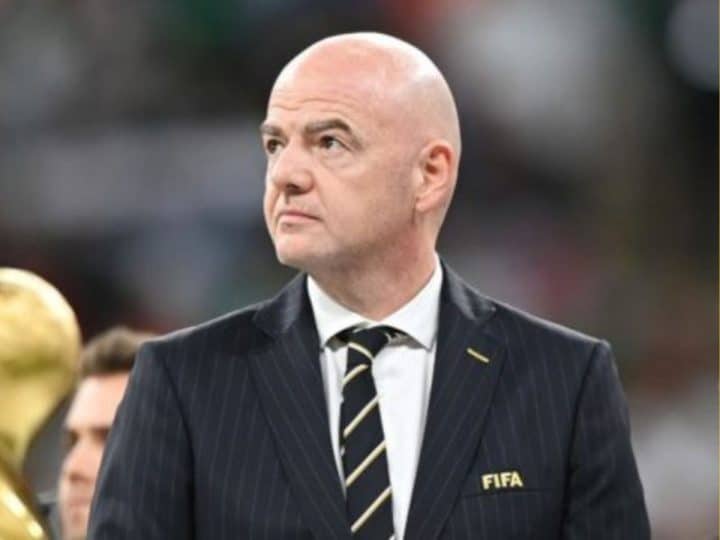

Richard Masters, the chief executive of the Premier League, has accused FIFA president Gianni Infantino of creating the crisis currently engulfing the international governing body, following a proposal to privatize the commercial rights of World Cup tournaments and sell stakes to investors.
Masters told the BBC, “FIFA is the cause of this problem,” suggesting that the fallout from the proposal is a direct result of decisions made by FIFA officials themselves.
He added:
It is a self-inflicted wound. FIFA officials have pressed the self-destruct button, and we are now seeing the consequences as they scramble to find a solution.
Privatising the World Cup
The Premier League chief executive criticized the concept of selling or privatising the commercial rights to the World Cup, emphasizing that the tournament is a public asset for global football and should not be treated as a mere investment opportunity.
Masters said:
FIFA shouldn’t be thinking about privatising World Cup rights because it is a non-profit organisation. Instead, it should have managed this tournament with integrity for the future of football.
He described the proposal as a “terrible idea” while praising the English FA’s decision to withdraw its support for Infantino, stating that he believes the association “took the right stance.”
Infantino under pressure
Masters’ comments come as Infantino faces mounting pressure over his plan to restructure and market FIFA’s commercial rights, amid objections from European football bodies and national associations regarding the proposal’s nature and its potential impact on global football governance.
UEFA has been among the most vocal critics of Infantino’s policies. The English FA’s decision to withdraw its support for the FIFA president further signals a widening circle of opposition within the football system.
The 2027 battle looms
Masters did not rule out strong competition for Infantino’s position in the 2027 FIFA presidential elections, urging any potential candidate to prioritize reform of the international body.
When asked about a candidate capable of challenging Infantino, he replied:
Any candidate must prioritise reforming FIFA, which may include defining the president’s powers and how they handle various matters.
Masters’ remarks reflect the growing controversy over the future of FIFA’s governance, with demands to rethink how decisions are made within the international body and to limit the president’s authority. All eyes are now on the coming phase to see if the current crisis will impact Infantino’s future in the upcoming elections
Featured image via the Canary
By Alaa Shamali


Rescue organisations found at least fourteen bodies in the Mediterranean last weekend as European governments wage a ‘hard border’ war on desperate refugees. Search and rescue organisation SOS Méditerranée discovered 11 bodies in international waters of the Med on Friday 14 August 2026. The group also reported at least two “violent interceptions” of refugee boats.
The following day, a Sea-Watch monitoring aircraft Seabird 1 and the rescue organisation RESQSHIP spotted three more bodies floating in the water.
Hunted alive, forgotten when dead
After reaching the bodies, the rescue vessels Sea-Watch 5 and Nadir found that the extent of decomposition and the limited recovery capacities of the civilian vessels meant that the bodies could not be recovered. According to Sea-Watch, European authorities have not yet attempted any recovery operation.
Sea-Watch spokesperson Giulia Messmer said:
These are the people behind [EU policy] ‘fewer arrivals’- hunted while alive, forgotten once dead. Behind each of these bodies is a person with a life of their own and loved ones who may never know what happened. The responsibility lies with European politicians who prioritize border violence over human lives.
Horrific toll in the Med
The organisation says that since the beginning of the year more than 1,600 people have died or gone missing while attempting to cross the Mediterranean. These victims are a horrific reminder of the inevitable consequences of policies, pushed by governments either run by, or pandering to, racists. These policies flout international law by denying people safe routes while restricting, obstructing or failing to provide necessary maritime rescue operations.
Sea-Watch is calling for safe passages and a comprehensive, state-run search and rescue operation to prevent further deaths in the Mediterranean. The organisation has been repeatedly fired upon by Libyan vessels since the EU began paying Libya to intercept and block refugee boats. Libya is accused of torturing and even murdering abducted refugees.
Featured image via the Canary
By Skwawkbox


Moroccan star Hakim Ziyech has responded to comments made by Israeli National Security Minister Itamar Ben-Gvir, in which the minister called for the killing of dozens of Palestinians in the Gaza Strip every night. Ziyech shared a sharp message on his Instagram stories.
Ziyech posted Ben-Gvir’s remarks—in which the minister called for targeted assassinations in Gaza and the elimination of 30 to 40 people nightly—and captioned it: “Palestinian lives are more valuable than yours.” This marks a new instance where the Moroccan player has declared his solidarity with Palestinians and rejected Israeli rhetoric inciting violence against them.
Ben-Gvir made these comments during a podcast conversation with Rom Braslavsky, an Israeli previously held in Gaza, while criticizing the slowing pace of Israeli strikes on the territory. The minister stated he believed in the necessity of carrying out targeted assassinations and killing 30 to 40 people every night, adding that this should not be limited to those posing an immediate threat. He described Palestinians as “not deserving of life” and “not human.”
International condemnation
Ben-Gvir’s comments have provoked international reactions. German opposition leader Friedrich Merz described the call as “inhumane” and contrary to international law, while French Foreign Minister Jean-Noël Barrot labeled the statements “unacceptable and inhumane.” Discussions have since begun in Europe regarding the possibility of imposing sanctions on the Israeli minister.
These remarks coincided with Ben-Gvir’s public calls for the displacement of Palestinians from the Gaza Strip, the encouragement of mass emigration, and the establishment of Israeli settlements within the territory. In the same interview, he asserted that he views all of Gaza as belonging to Israel and argued that settlements should not be limited to the Gush Katif area, which was evacuated in 2005.
Long-standing standoff between Ziyech and Ben-Gvir
Ziyech’s recent message is not an isolated event. The confrontation between the Moroccan player and the Israeli minister dates back to last April, when Ziyech posted a photo on Instagram of Ben-Gvir celebrating the Knesset’s approval of a law related to the execution of Palestinian prisoners.
At that time, Ziyech questioned whether Ben-Gvir would justify the law’s passage as “self-defense.” This prompted the Israeli minister to attack the player, labeling him “antisemitic” and issuing a direct threat, vowing that Ziyech and those he called “antisemites” would not get away with it.
Al Jazeera later reported on the escalating confrontation between the two, noting that Ziyech has become a prominent voice supporting the Palestinian cause, while his positions have continued to draw sharp rebukes from Ben-Gvir.
Ziyech repeatedly pro-Palestine
Over the years, Ziyech has been known for his public support of Palestinians. His advocacy has extended beyond statements and social media posts; he has previously appeared at sporting events carrying the Palestinian flag and has consistently expressed support for the Palestinian cause while playing for clubs in Europe, Turkey, and Morocco.
In recent months, Ziyech has returned to the forefront due to his outspoken views on issues related to Palestine, particularly following his direct confrontation with Ben-Gvir regarding the legislation on executing Palestinian prisoners. His stances have generated widespread engagement in Morocco and across the Arab world. The confrontation has become one of the most prominent examples of a footballer moving beyond the boundaries of the stadium to engage in direct political and human rights debates.
Ziyech’s latest response comes amid rising international pressure regarding Ben-Gvir’s rhetoric. After his call to kill dozens of Palestinians daily sparked official condemnations in Germany and France, the minister continues to push for intensified military operations, displacement, and settlement in the Gaza Strip.
Featured image via the Canary
By Alaa Shamali

England vs Pakistan, 1st Test Day 1 Highlights: Ollie Robinson, Josh Tongue Put England On Top

Marion County, Kansas Has Racked Up $4 Million In Settlements Since It Raided A Local Paper’s Office

Prince Harry and Meghan Markle to move back to the UK





-

 Fashion5 days ago
Weekend Open Thread: Ann Taylor
-
 Sports6 days ago
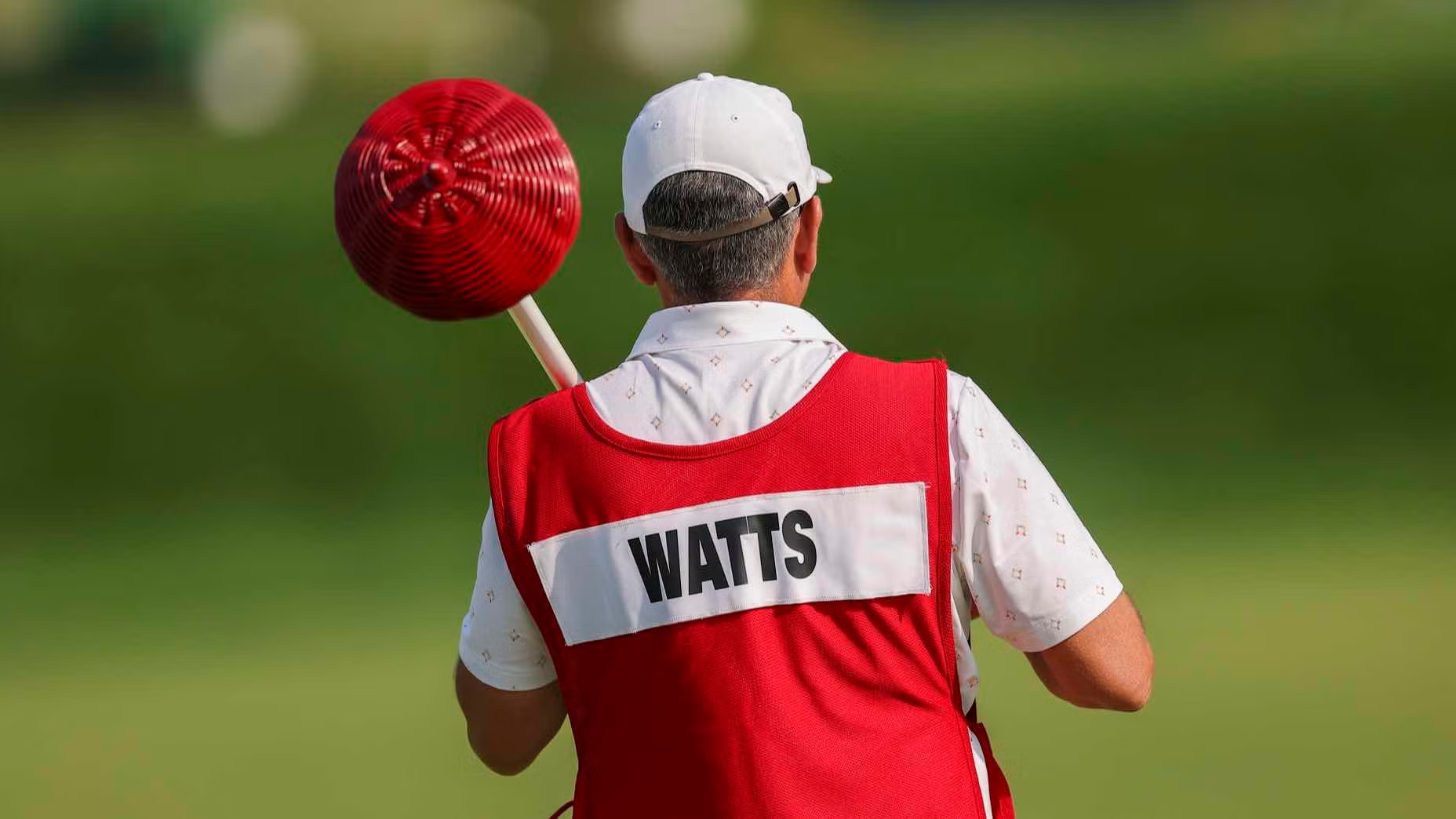
This U.S. Amateur is a glimpse into golf’s future in more ways than you think
-

 Tech5 days ago
11 Ways to Rank Your Videos
-
 NewsBeat5 days ago
Myanmar says over 300,000 Rohingya refugees verified for repatriation as exodus enters ninth year
-

 Sports5 days ago
Birmingham 2026: Day 6 Timetable for Irish Athletes
-

 Politics4 days ago
SEQ Code: The Three Letter Boarding Pass Code That Could Give You The Worst Seat
-

 Tech6 days ago
DeepSeek Harness launches as open source rival to Claude Code, alongside V4-Pro on API with higher prices
-

 Crypto World2 days ago
OCC Greenlights Trump Family Crypto Firm for Trust Charter
-

 Tech2 days ago
Qwen3.8-27B runs frontier-class coding agents and reasoning locally, no cloud API required
-
 Entertainment5 days ago
10 Netflix Shows That Quietly Became Modern Classics
-

 Fashion5 days ago
Weekly News Update, 8.14.26 – Corporette.com
-

 Tech4 days ago
Every fusion startup that has raised over $100M
-
 Entertainment5 days ago
Marvel Studios Reveals New X-Men Cast Including Adam Driver and Sadie Sink
-

 Fashion7 days ago
The Details Do the Dressing
-

 Business5 days ago
Facebook Down Now? Users Report Login And Loading Problems As Outage Trackers Monitor Ongoing Issues
-

 Crypto World6 days ago
Robinhood Chain Approaches $1B TVL as Uniswap Integration Boosts Liquidity
-

 Fashion5 days ago
Cart Confidential Vol. 44 – Julia Berolzheimer
-
 Business4 days ago
Monarch Mutual Fund set to enter MF space with maiden overnight fund; files draft with Sebi
-

 Politics6 days ago
The migrant mega-dinghy – spiked
-

 Tech6 days ago
Troubleshooting Video Delay On The Raspberry Pi
You must be logged in to post a comment Login