

Politics
Andoni Iraola’s Liverpool era begins

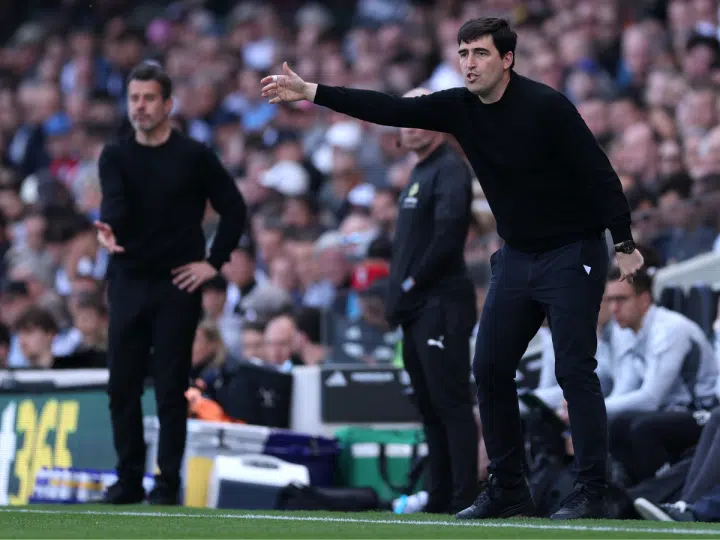

Liverpool’s search for Arne Slot’s successor is over, with the club moving quickly. Andoni Iraola is expected on Merseyside to sign his contract. This completes a process driven by sporting director Richard Hughes, accelerated by urgency following Slot’s departure.
Hughes leads appointment
Liverpool reached a verbal agreement with Iraola on Tuesday, clearing the final hurdle in that process which Slot’s dismissal set in motion.
Iraola will arrive to complete formalities, with a club announcement expected shortly after. The 43‑year‑old Spaniard has been the leading candidate throughout. Hughes identified early as a strong fit for Liverpool’s preferred tactical style and vision.
The appointment has Hughes’ fingerprints all over it. The sporting director previously hired Iraola at Bournemouth in 2023. That move was transformative for the Cherries. When Hughes moved to Anfield the following year, Iraola remained a name to watch. Once Slot was removed, he quickly became the frontrunner.
Liverpool followed a structured process helped by the alignment between Hughes and Iraola. The talks which began earlier this week have progressed quickly.
Style and identity
Iraola is expected to bring several key figures with him. He wants Pablo de la Torre, Tommy Elphick, Shaun Cooper and Tom Webber to join his staff at Anfield. This group helped underpin Bournemouth’s rise under his leadership.
Liverpool have not yet approached individuals directly, with the club working to finalise negotiations before formalising staff decisions.
Liverpool’s priority throughout this process has been clear — find a coach whose football aligns with the club’s identity.
Iraola’s Bournemouth side delivered exactly that; a high‑energy, front‑foot, aggressive style, producing one of the Premier League’s stronger runs last season.
The Cherries went 18 games unbeaten in the second half of the 2025/26 campaign. They finished sixth and secured Europa League football. They also ended the season just three points behind Liverpool.
That form was no fluke, but the product of a clear tactical blueprint Liverpool believes will translate to a bigger stage.
From Bournemouth to Anfield
The challenge awaiting Iraola is enormous. The shift from Bournemouth to Liverpool is a different scale of scrutiny. The expectations will be of another level entirely. The reality is he will be expected to make an immediate impact and hit the ground running.
At Bournemouth, a Friday press conference might draw four or five journalists. At Liverpool, he will face dozens, and that is before Champions League nights, global media cycles, and the relentless pressure of competing for titles.
This is not just a managerial appointment, it is a strategic alignment. Hughes and Iraola share a footballing philosophy built on structure and adaptability. Their past success at Bournemouth gives Liverpool confidence in a smooth transition.
The club’s goal has been to recruit the individual who best suits their preferred playing style. Iraola is seen as that fit.
Liverpool turns the page
With the contract signing imminent, Liverpool will move quickly into phase two. This includes finalising coaching staff, ensuring alignment on summer transfers, preparing for pre‑season, and communicating the club’s direction to supporters hungry for clarity.
Liverpool’s decision to move decisively for Iraola signals a commitment to continuity of style, modern coaching principles and long‑term planning. The club believes his energy, tactical intelligence and proven ability to elevate players will translate to success at Anfield.
The expectations are bigger, but Liverpool are convinced they’ve found the right man, and today the next chapter begins.
Featured image via Justin Setterfield / Getty Images
By Faz Ali

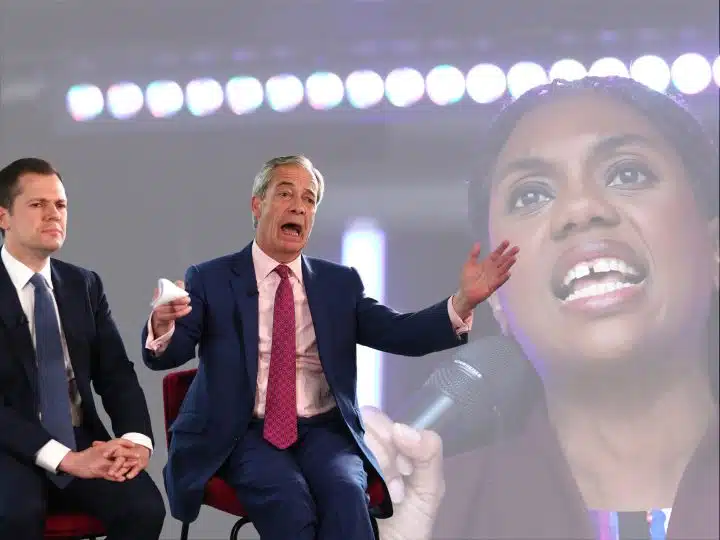
On 2 June, Nigel Farage released a ‘special announcement’ in which he sought to stoke racial tensions on the back of a horrific murder. This was something he did against the wishes of the murdered man’s parents. Farage, the leader of Reform, made these comments which were followed by a riot, which was carried out by white supremacists who argued the exact same things as Farage.
Kemi Badenoch also commented on the situation, but did so marginally less divisively than Farage. Reform UK responded by misquoting what she said:
Kemi Badenoch, just like Starmer, doesn’t care.
Only Reform UK will openly say that white lives matter too. pic.twitter.com/dAUd7FRUvR — Reform UK (@reformparty_uk) June 2, 2026
Since then, Robert Jenrick has struggled to defend his party’s attack.
Jenrick rattled
Jenrick struggled to defend Reform’s blatant dishonesty in an interview with Robert Peston:
.@Peston: That is a travesty of Kemi Badenoch’s position!@RobertJenrick: No it isn’t.
Reform UK’s Robert Jenrick is shown @KemiBadenoch’s GMB interview and denies ‘manipulating’ a tragedy to score ‘petty political points’ #Peston pic.twitter.com/ypt80BjgA3
— Peston (@itvpeston) June 3, 2026
The interview went like this:
Peston: That is a travesty of Kemi Badenoch’s position.
Jenrick: No, it isn’t.
Peston: It is a travesty because this is what she actually said. Can you play what she said please?
Peston then played a clip in which Badenoch said:
Okay, well let me answer the question. I don’t want to hear about Black Lives Matter. I don’t want to hear about White Lives Matter. We all matter. Enough of this nonsense where we keep separating everybody and splitting people into different groups. We are descending into tribalism.
As we’ll get into, there are problems with what Badenoch said; just not the problems Reform made up.
Peston: So just to be absolutely clear, there is no world in which she is endorsing Black Lives Matter
Jenrick: These are her words, Robert.
Peston: The first lot was in 2020 and totally out of context. Totally out of context. Even Rupert Lowe has said about that ad that you are manipulating the death of an innocent man to score petty party points.
Jenrick would later say:
Jenrick: Kemi Badenoch, when the Black Lives Matter issue arose, said, “Black lives do matter.” Then she went on to the media and said, I don’t want to hear about White Lives Matter.
As Peston noted, she said this in the context of saying that she doesn’t want to hear about Black Lives Matter either. So basically, Farage whipped up a white riot in Southampton, and then his party made up a load of lies when they got challenged.
Dozens of bricks being thrown pic.twitter.com/VwPXkfZlmR
— Taj Ali (@Taj_Ali1) June 2, 2026
Grim stuff.
And in response, Farage and Jenrick should crawl under the nearest rock.
But Reform isn’t the only party talking nonsense.
Just as Bad(enoch)
In a new video which is part of a paid advertising campaign, Badenoch has said she’s tired of people arguing about ‘whether Black or white lives matter more’.
Important video from @KemiBadenoch — Conservatives (@Conservatives) June 3, 2026

pic.twitter.com/ErcWzUaNe5
Of course, this was never the message of the Black Lives Matter movement. Badenoch is suggesting otherwise because she — like Farage — is a liar and an opportunist.
The Black Lives Matter movement sprung up in response to racist policing in the US. These police officers were responsible for a disproportionate number of Black deaths, giving the impression that Black lives were less important than white lives in the eye of the American state. The slogan, then, was created to state that Black people’s lives do matter – not that they matter more than anyone else’s.
Figures like Badenoch and Farage flipped the slogan to suggest it meant white lives don’t matter, because they’re conniving chancers whose political movement is reliant on white rage.
In other words, Badenoch, like Farage and Jenrick of Reform, should crawl back under the same rock.
Featured image via Peter Nicholls and Alishia Abodunde / Getty Images
By Willem Moore

The US House of Representatives has passed a measure which attempts to stop Donald Trump from taking any further military action against Iran.
This was the fourth attempt by the House to adopt the War Powers Resolution.
The bill requires Trump to withdraw US forces or seek congressional approval for strikes in Iran.
The vote passed 215-208, and was successful after four Republicans joined the Democrats in their public show of disapproval of Trump’s illegal strikes. The rebel Republicans were Thomas Massie of Kentucky, Brian Fitzpatrick of Pennsylvania, Warren Davidson of Ohio, and Tom Barrett of Michigan.
The White House has dismissed the resolution’s value, calling it an unconstitutional attempt to restrict presidential power.
However, its passing does mean additional pressure on the White House to find a way to end the US and Israel’s illegal strikes on Iran.
If the Republican-controlled Senate also passes the bill, it would not require the president’s signature. However, it could still be subject to a legal challenge.
Trump exceeding authority
The supporters of the resolution say that Trump “exceeded his constitutional authority” by launching war alongside Israel.
Under Article II of the US Constitution, presidents can only launch attacks in self-defence in response to an immediate threat. Otherwise, Congress has the sole power to declare war.
And as we have already established, there was no immediate threat to either the US or Israel.
Additionally, as the Canary has previously reported, even former senior US military officials have said that Trump’s war on Iran is illegal. Even the Pentagon has since stated there was no imminent threat from Iran.
Senator Tim Kaine argued that:
even in a classified setting, the Trump administration could produce no evidence, none that the US was under an imminent threat of attack from Iran.
Trump has claimed that Iran was aiming to rebuild its nuclear programme. But, he also said Israel and the US “obliterated” this same programme in strikes last year. However, there was no evidence of any nuclear programme, this year or last.
The director general of the International Atomic Energy Agency has told NBC News the organisation does not believe Iran has nuclear weapons and:
had not seen elements of a systematic and structured program to manufacture nuclear weapons there.
Trump also claimed that Iran was seeking to develop a long-range missile to attack the US, whilst Marco Rubio told reporters that Israel was planning to attack Iran, which would have consequences for US assets in the region.
Again, Trump contradicted this. He said Iran was the one planning an imminent attack on Israel.
Trump cannot make up his mind or decide which lie to stick to.
The bottom line is there have been attempts from successive US administrations to claim Iran’s military and nuclear-energy programs since the Islamic revolution in 1979 as an imminent threat to the world.
Iran had been in talks with the US to scale down its nuclear programme in the lead-up to the US and Israel’s illegal attacks. As usual, Israel bombed Iran during the peace talks.
What ceasefire?
The US and Iran reached an initial ceasefire agreement on 8 April. However, since the very beginning, Israel has blatantly ignored the agreement. And in recent days, the US has also struck radar sites.
Before the vote, Trump claimed that negotiations to end the war are going “very well” and could be finalised by the weekend. Of course, Trump has claimed this over and over, and each time, nothing comes of it.
But only yesterday, Trump claimed that:
In that part of the world, ceasefire is when you’re shooting in a more moderate manner.
Essentially, in Trump’s eyes, a ceasefire is when everyone except the US and Israel stops firing.
Trump and Netanyahu’s unprovoked attacks on Iran were illegal – but that’s Western colonialism for you. Because when Zionists bear arms, murder children and carpet bomb civilian infrastructure, it’s absolutely okay. But when Iranians, Lebanese people, or Palestinians attempt to defend themselves, it’s terrorism, and it must be stopped.
Now, Trump has bitten off more than he can chew. The reality is, he has no exit strategy without looking weak or upsetting Israel.
Featured image via Kevin Dietsch/Getty Images
By HG


3 min read
The new Australian law has shifted the Overton window.
A week before Australia’s social media ban took effect, a year 10 student told Sky News: “When I’m on social media, and I’m feeling sad, my whole feed turns sad, and then I just feel more sad… It feels like so much more effort to go tell my parents something than to pick up my phone.”
This is an issue not just faced by Australian children, but by young people all over the world, including those in Britain.
When Australia legislated a social media minimum age, the expert community was divided. Some argued platforms were a lifeline for lonely teenagers. Others insisted there was no ‘causal’ proof of harm. Parliament acted anyway, treating this as a public-health and child-development issue rather than a question of teenage willpower or parental failure.
That reframing is what the UK now urgently needs. Harmful design – algorithmic amplification of emotion, infinite scroll, engagement-maximising feeds – is a central driver of distress, self-preoccupation and loneliness during critical windows of adolescent brain development. The problem lies in systems built to maximise engagement, not in a lack of self-control among 13- and 14-year-olds.
Australia’s Social Media Minimum Age Act requires age-restricted platforms to take reasonable steps to prevent under-16s from holding accounts. Crucially, penalties fall on platforms, not children or parents. By early 2026, millions of under-16 accounts had been deactivated or restricted, confirming that platforms can detect and act on child users when legally compelled to do so.
Independent polling of 12–15-year-olds by the Molly Rose Foundation tells a sobering story: three in five who previously held accounts still have access, and most describe sidestepping the ban as ‘easy’. This is not evidence that minimum-age laws are a mistake. It is evidence that the platforms are not complying with the law. It is a failure of industry implementation, not policy.
Even so, the law has catalysed real system change. Schools have stopped automatically providing YouTube accounts through school Google setups. Parents are beginning to delay access. Medical practitioners report modest improvements in sleep, physical activity and mental health concerns. Children are being redirected toward helplines, school-moderated communities and sports facilities. This is exactly the kind of systemic shift the law was designed to encourage, a shift that is happening despite imperfect enforcement, not because of perfect enforcement.
There are three lessons that the UK can learn from Westminster. First, legislate despite expert disagreement. Australia’s law shifted the global Overton window, and platforms’ internal documents are now catching up with what parents and young people already felt.
Second, treat enforcement as a separate, sustained project. If platforms under-deliver, that is not an argument against minimum-age protections, but an argument for stronger sanctions, better-resourced regulators, and independent audits.
Third, plan from day one for a multi-layered public-health strategy, not a single silver bullet. That means clear platform duties of care, independent evaluation of school-based programmes, professional development for educators, and public campaigns that speak to adolescents in their own language using autonomy, authenticity, and real connection. It also means supporting parents to change their own habits, so that phone calls and direct messages remain the default while addictive design is pushed further out of early adolescence.
Digital environments that amplify emotions, erode face-to-face relationships, and deepen loneliness in youth should not be an acceptable norm. Australia has shown that law can pull the pendulum back. Britain now has the opportunity to go further, but only if it pairs legislation with the cultural change and enforcement muscle to make it stick.
Dr Danielle Einstein is a clinical psychologist and author who helped shape Australia’s under-16 social media ban


Bristol Labour MP Darren Jones is a Starmer clone, heavily funded by discredited sabotage group ‘Labour Together.’ Jones, currently Keir Starmer’s ‘chief secretary,’ reportedly hopes to replace his boss. But he has now been exposed as no better than his current party leader on the disgraced Peter Mandelson.
Mandelson was finally sacked as UK ambassador to the US in late 2025 over his closeness to Israeli spy and serial child rapist Jeffrey Epstein. He has since been shown to have repeatedly sent lucrative confidential ‘insider trading’ information to Epstein. Mandelson’s disgrace has brought Starmer to the brink of downfall.
Jones had claimed he had nothing to disclose because he no longer had the phone containing the messages. However, the government has held some of these. The Starmer government initially withheld them from the public alongside similar messages from Starmer. However, it has now released some of Jones’s messages as part of a partial release in response to a parliamentary motion.
Jones had claimed he had nothing to disclose because he no longer had the phone containing the messages. However, the government has held some of these. The Starmer governmentinitially withheld them from the public alongside similar messages from Starmer. However, it has now released some of Jones’s messages as part of a partial release in response to a parliamentary motion.
Gushing and hiding
Jones’s messages reveal a fanboyish effusiveness to Mandelson. This is reminiscent of Mandelson’s own ardour for the US paedophile that triggered his downfall. When Mandelson was appointed, Jones gushed:
You’ll be brilliant in challenging circumstances. And after many years of discussions, we get to work side by side. I really look forward to that.
And after Mandelson’s removal, “You’ve been doing such a great job,” he oozed, “and you worked wonders with Trump. I’m so sorry about today.” Jones also insulted other government figures and listed an array of top government jobs he was eyeing for himself in Starmer’s reshuffle – including business and defence.
But on Wednesday 3 June 2026, Jones opted to hide behind Mandelson’s refusal to disclose his own messages, telling MPs:
The only person who could release those messages, if they had them, would be Peter Mandelson, who has refused to disclose his phone to the process.
The dire Jones has a long record of weasel-like behaviour on top of his closeness to the now-rebranded Labour Together. He made plans in 2018 to stand against Labour rather than face deselection by disgusted party members. He told Wales to be more grateful for the pittance it receives from Westminster. And, of course, despite his supposed loyalty to Starmer he was caught canvassing support for his own leadership bid.
MPs have complained that many other Mandelson-linked messages are still being unnecessarily withheld. In keeping with his evasion tactics, Jones blamed an ongoing police investigation for the secrecy. But he admitted that he had cosied up to Mandelson “at best” because Mandelson was “influential”. But he still couldn’t talk straight, constantly trying to qualify and dilute his involvement:
Did I at best treat Peter Mandelson differently because I perceived him to have influence and power in the Labour party? I think the answer to that is yes, I did. Have I benefited from that relationship? I think in part the answer to that is yes. And for that I would like to apologise to the house, the [Epstein] victims … and commit to doing something about it.
Featured image via the Canary
By Skwawkbox
Huh.

Well, that’s nice, isn’t it?
The SNP are hoping to make out like bandits from Peter Murrell’s conviction.

Despite Swinney’s admission yesterday that the party stole £700,000 from donors to two “ring-fenced” fundraisers, it stands to pocket a surprise bonus of £400,000 from recovering his criminal proceeds (on top of Swinney’s boasted “significant increase” in donations from gullible idiot members since Murrell’s conviction).
It is not currently known whether that will include the retrieval from Nicola Sturgeon of the gifts Murrell bought her with embezzled money – a suggestion Sturgeon was mortified by in her Laura Kuenssberg interview on Sunday.
But keeping goods you know were bought with stolen money is a crime in Scotland, whether or not you knew at the time you received them.


It seems clear from the above clip that Sturgeon has not “immediately take[n] steps to hand the property over to the police”, and has no apparent intention of doing so.
Murrell’s lawyer told the court this week that his client “had enough funds to repay the sum he embezzled from the party”.

That’s an extremely interesting revelation in itself, in several ways. For one, we don’t know whether it means only the £400,000 he was convicted for, or also the extra £60,000 that the Crown dropped from the charge sheet in his plea deal.


The former case would create an extraordinary situation where the SNP was being paid back for stuff Murrell stole for himself, but not for stuff he stole for Sturgeon.
The second startling thing is that since no recovery process has yet begun and nothing has been sold, the lawyer’s statement means that Murrell must CURRENTLY have at least £400,000 in liquid funds, despite having a take-home pay of only around £57,000 during his time as CEO and having lent £107,000 to the SNP. That’s quite a feat of squirrelling. (And also means he’ll still be quite wealthy when he comes out of prison.)
So the SNP plans to keep everything that rightfully belongs to it and its members, but also to keep everything that doesn’t, including donations that were solicited and obtained from members of other parties EXPRESSLY because they were NOT to be used for everyday SNP operations.


And seemingly means to let Nicola Sturgeon enjoy the fruits of Murrell’s theft to boot.
We can therefore forgive anyone who treats John Swinney’s assertions in his email to members today – that the party is a new, reformed moral entity that conducts itself with the greatest moral probity and is now above all suspicion – with extreme scepticism.
Under “Honest John” Swinney the SNP appears to be the same unprincipled, grasping, crooked, cynical and greedy bunch of shysters and snakes that it’s been since 2015, and the slow-learning cretins still throwing their money at it thoroughly deserve to – and doubtless will – be robbed again.


Israeli occupation forces (IOF) have destroyed part of the central fruit and vegetable market in the West Bank town of Beita, South of Nablus. The market holds significant economical importance, with Palestinians from all over the West Bank coming to Beita to buy and sell produce.
West Bank – Israel carries out destruction
The demolition, carried out by a military bulldozer, took place on 1 June at around 2am.
Bassem Al Jaghoub is a member of Beita Village Council. He told the Canary:
Maybe 35 percent of the market has been destroyed this time. Six big shops were demolished, and they warn they will demolish another 15 percent in the next days. This is just a vicious action against the Palestinians and our economy. They do everything to make our lives miserable.
Al Hisba, as the market is known, is the main market for Palestinians in the West Bank. It provides employment for hundreds of Palestinians. And it also plays a key role in supporting the agricultural sector and enhancing food security of the West Bank.
Al Jaghoub says more than 50 families have now lost their livelihoods. It was not only the six commercial structures which were destroyed. Also demolished were the municipality’s office within the market, an office belonging to the Palestinian Ministry of Agriculture, sanitary facilities, and a cafe. Significant portions of the market’s infrastructure and public services have also been destroyed.
A bridge has been built on the road West of Beita market. Its purpose is to allow settlers to travel freely, without entering Palestinian villages. According to al Jaghoub this is the reason the Israeli occupation demolished the market.
He said:
The bridge was built two years ago, while the market has been here for more than 20 years. They say the market is near the bridge, and threatens the settlers, but this is not true. The market is more than 50 metres away, and is lower than the bridge. Cars using the bridge belong to both Arabs and settlers, the bridge is for everyone. It’s like a big punishment for Beita. The Israelis are masters of collective punishment.
Constant destruction
This is not the first time the Israeli occupation has demolished the market. The same thing happened in September 2025, less than a year ago. The Israeli occupation ordered shop owners to remove their produce and leave the market. Clashes resulted, and the IOF then used tear gas and stun grenades against Palestinians. They then proceeded to block ambulance access to the injured. The municipality of Beita again rebuilt the market.
The market is rented to the farmers and traders by Beita municipality, and the money it earns is then used for the people of Beita. But, according to al Jaghoub, the municipality has now lost five or six million shekels due to the most recent demolitions. On top of this figure, there is then the cost to loss of earnings and livelihoods.
The timing of the demolition could not have come at a worse time. The economic crisis is affecting everyone in the West Bank and, says al Jaghoub, “all people are suffering.”
Beita not only has to cope with violent IOF raids. It is also constantly targeted by what al Jaghoub describes as “some of the most vicious settlers in the West Bank”. They are “armed to the teeth” and totally protected by the army.
He says:
All the West is talking about Hamas attacking Israel but no one talks about the daily attacks here on farmers and homes. Everyday these settlers attack, but go unpunished and feel they are totally protected. We have lost 25 guys in the last five years to violence, and the attacks continue.
Freelance journalist and cameraman Abed Khabeisa lives in Beita. He tells us things have become much worse since the genocide in Gaza. He agrees that the occupation is inflicting collective punishment on the population.
Settlers have gained confidence and protection since October 2023
Residents of Beita are renowned for their persistent, organised civil resistance against illegal colonial settlers. But Khabeisa says since October 2023, these armed settlers have become extremely violent. Now dozens of settlers are living at Evyatar outpost, on Mount Sabih, in North Beita.
Khabeisa explains:
During the first intifada, for a few years, Evyatar used to be an Israeli security point. When it was evacuated, they didn’t allow the Palestinians to access their land. Every time someone went there, the military told them it’s a military area. So in 2018, settlers started trying to control the area.
But when they put up some tents, people in Beita held demonstrations. Two days later the IOF arrived and evacuated the settlers. They returned again in 2019 and were again evacuated.
When the Gaza genocide started, settlers again turned up on the land. This time there were 10 mobile homes and tents. Beita residents and people from all over the West Bank demonstrated there day and night. Eventually the settlers from the mobile homes were again evacuated.
It is now for the high court to decide if the land belongs to Palestinians, or the “state of Israel”, although the decision is continually being postponed. The settlers have returned anyway, and are expanding the settlement by erecting tents on the mountains behind Evyatar.
Homes in this area are constantly attacked, property is damaged and cars burnt. Every night the settlers cause problems, with the full protection of the Israeli occupation army. The violence also affected the olive harvest last year. Most people didn’t manage to harvest anything, because they were repeatedly attacked. I know a 72 year old woman who had her legs broken by these settlers. She was one of 20 people who got wounded from the settlers during the last harvest.
76 seriously injured Palestinians in Beita in 2025
76 people in Beita were attacked and had broken bones last year, according to al Jaghoub. And during the month of May, 12 were viciously attacked and hospitalised. Two are still in hospital with bullets in their legs.
People in the West Bank have no idea what awaits them each day, as the army and settlers are free to terrorise whenever and wherever they please. Khabeisa says people in Beita often cannot sleep at night, as one of the family stays awake incase settlers attack the area. And he is not alone when he tells us he worries constantly about the safety of his grown-up children, whenever they leave the house.
But despite immense hardship and violence, most Palestinians feel the same way. They refuse to leave the land their ancestors have been on for thousands of years.
Khabeisa says:
The people of Palestine have decided not to leave their homes, even if they are killed. The Israelis want us to leave our homes and land, and go to Jordan. But now we are aware of what happened in 1948 and 1967 and they will not do the same thing again.
And even though the rubble is piled high at al Hisba, part of the market is still there. So people will return to their work.
Al Jaghoub sums up:
We are optimists. We hope always for peace. Always we seek freedom, peace and good times for our generations to come. However long this takes, we will stay on this land. We will raise our kids to stay here, and will never let them forget.
Featured image via the Canary
By Charlie Jaay
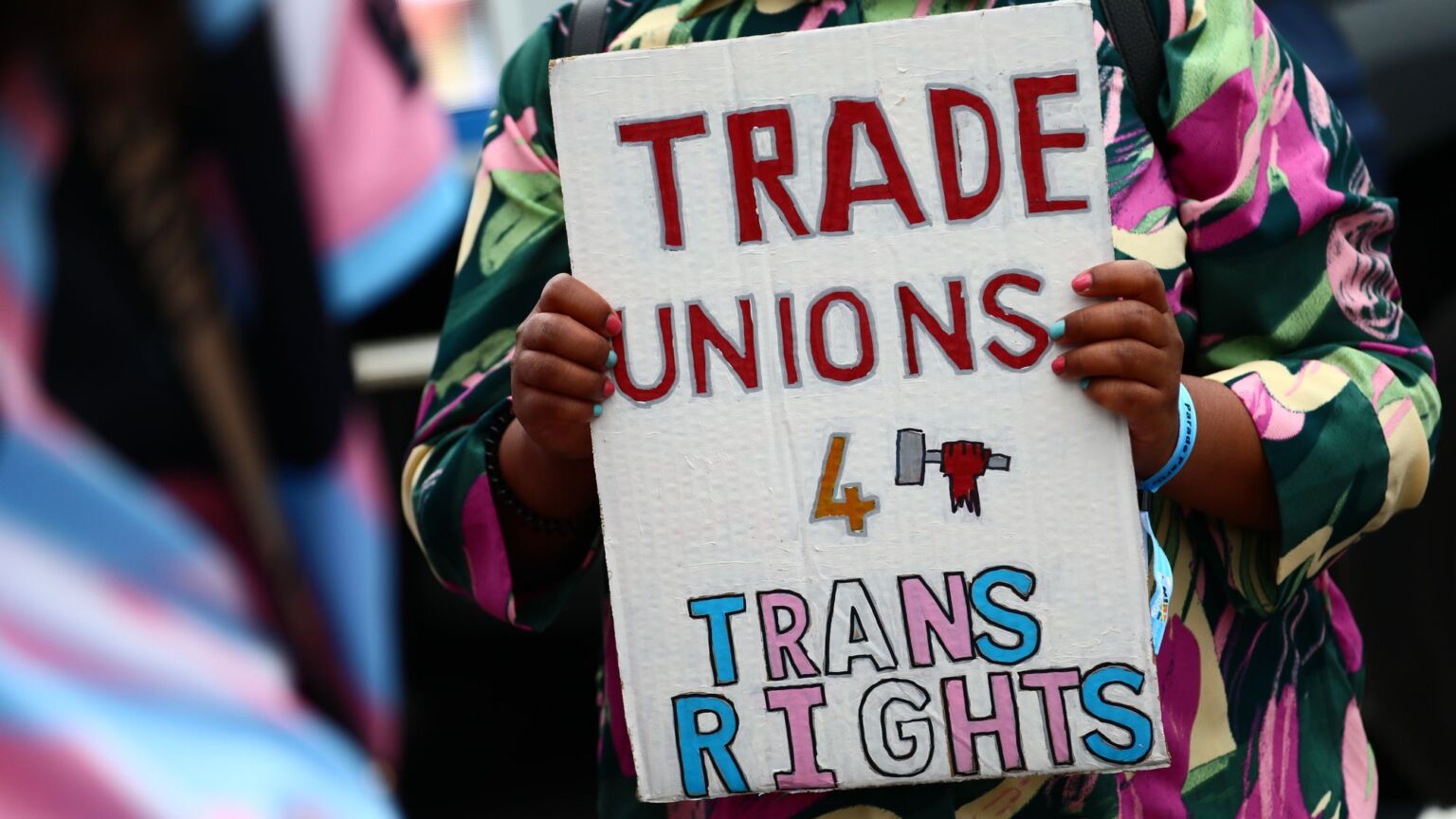
Since women first joined the fire service in the 1970s, they’ve fought an ongoing battle for single-sex facilities – including showers – in stations built for all-male crews.
So it’s hardly surprising that the Fire Brigades Union’s (FBU) response to the updated guidance from the Equality and Human Rights Commission (EHRC) on single-sex facilities has attracted backlash. In a statement published on social media, the FBU said it stands ‘firmly in solidarity with trans, nonbinary and gender-diverse members’ and spoke of their right to access facilities ‘without fear’ and with ‘respect and dignity’ at work. There was no mention of female firefighters, and the FBU was not alone.
Unison – the UK’s largest trade union – announced its intention to oppose the EHRC guidance. The Universities and Colleges Union (UCU) published a statement that said it would continue to ‘fight for the rights of trans and nonbinary people’. So that’s three trade union statements on a landmark ruling about women’s rights to privacy, dignity and single-sex spaces – and women are not mentioned in any of them.
Perhaps the most extraordinary thing is how under the radar this seems to be. So why aren’t union members protesting publicly against this? Why aren’t they leaving in droves? I suspect they simply don’t know that this is happening.
After all, most trade-union members are not political activists. They are customers who think they’re buying an employment-protection policy – a bit like breakdown cover for their car. They join a trade union because they want protection if something goes wrong at work. And someone to represent them if they’re disciplined, treated unfairly or facing redundancy. Yet, unlike car insurance, there are no comparison websites helping people weigh up the relative merits of the National Association of Schoolmasters Union of Women Teachers vs the National Education Union – or Unison vs the GMB.
Most don’t spend hours researching competing unions and comparing policy positions. They join a particular union because a colleague recommends it. Or because it offers a good deal to newly qualified staff. Or simply because it’s the union that’s already established in their workplace.
In other words, it’s a consumer choice rather than a political one. Which means many members are completely unaware they’re supporting one of the most powerful political campaigning movements in Britain. And that their subscriptions don’t just fund workplace representation – they also fund lobbying, political campaigns, conference motions, public statements and interventions on some of the most contentious social issues of our time.
When challenged on controversial positions – like ‘trans rights’ – trade unions will often say that this is what members have voted for. Technically, that’s true. Policies are passed through democratic structures. Leaders are elected. Conferences vote on motions.
But this defence assumes a level of member engagement that simply doesn’t exist. The reality is that most union members never attend conferences. They don’t submit motions. They don’t stand for election. Many don’t vote in internal ballots. Most couldn’t even tell you what policies their union adopted last year.
Take Unison, which has around 1.3million members, the majority of them women. Its current general secretary, Andrea Egan, was elected with just 58,579 votes – around 4.2 per cent of eligible voters. Which means many women will be unaware that their current union leader is actively campaigning against their sex-based rights.
That doesn’t mean the election was illegitimate. All members were invited to participate. But only a small number did. It’s not that the other members don’t care, but they have other priorities. Which makes it a pretty good business model for unions, allowing a relatively small number of highly engaged activists to shape policy – using funds from a much larger membership.
This is a bit embarrassing to admit, but despite being a National Union of Journalists (NUJ) member for around 25 years, until I sat down to write this article, I had no idea whether it had issued a statement on the EHRC guidance. It hadn’t.
What I did find, however, was a report from last year’s Trades Union Congress LGBT+ Conference celebrating motions on ‘trans solidarity’ and highlighting speeches condemning the Supreme Court ruling, and expressing support for trans and non-binary people.
The report also highlighted contributions from NUJ delegates, who described trans and nonbinary people as having been ‘stripped of their rights’, ‘vilified and marginalised’, and called for solidarity with ‘trans and nonbinary comrades’ – much of which I disagree with, but since I had been so busy getting on with my job, I hadn’t even known that this had been said in my name.
How many women will never discover that the trade union they’ve paid thousands of pounds into – thinking they were buying employment protection – was also funding campaigns to remove their hard-won rights? Including their right not to be forced to share changing rooms or showers with men at work? These campaigns focus, almost exclusively, on the interests and rights of men.
The real question isn’t whether trade unions should be allowed to campaign. It’s whether members understand what they are actually paying for.
Janet Murray is a freelance journalist and director of SEEN in Journalism.

Come what may, we’re here to stay: The story of South Asian resistance in Britain is the debut book from historian and journalist Taj Ali.
As British South Asians reel from the riots of summer 2024, this book tells the inspirational story of how the community organised against racism in the past and how it continues to fight in the present.
A long history of British South Asian activism
British South Asians have a long tradition of radical political activism. The 1970s and 1980s saw the community grappling with prejudice in the workplace and violence in the streets.
But this history is deeper than you might think. It runs from students agitating for independence at the heart of the British Empire to seafarers organising global strikes on the eve of the Second World War.
In Come what may, we’re here to stay, Taj Ali reveals how successive generations fought for rights, dignity and a sense of belonging while actively shaping the country they now call home.
He shows that British South Asian political life has often been defined less by religious difference than by shared commitments to anti-imperialism and anti-racism. In pursuit of these goals, alliances have been forged with other movements, from Irish republicanism to Black Power.
As racism rears its ugly head again, Come what may, we’re here to stay asks: are we are doomed to repeat the past or will we learn from our mistakes and build a better world together?
About the author
Taj Ali is a journalist and historian. He is the former editor of Tribune and regularly appears as a commentator on the BBC. He also contributes to the Guardian, Al Jazeera English and others.
In 2025 he set up Anti-Racist RADAR, an organisation that monitors and reports on racist attacks in the UK. This is his first book. He has won an RSL Giles St Aubyn Award and is a finalist for The Orwell Foundation 2026 Exposing Britain’s Social Evils Prize.
Featured image via the Canary
By The Canary
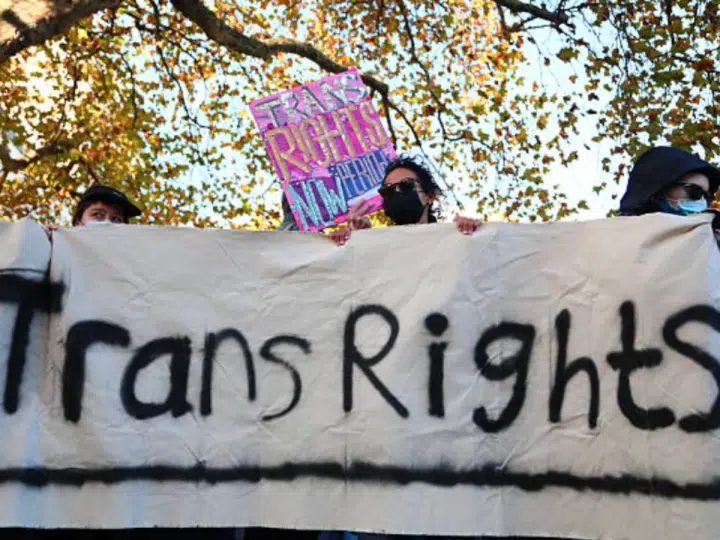
On Monday 1 June, the first day of Pride, the UK government held a debate on the Equality and Human Rights Commission’s (EHRC) latest attempt at a draft code of conduct to further exclude trans people from daily life.
Over recent years, Labour party stalwarts including PM Kier Starmer, leadership hopeful Andy Burnham, and newly minted health secretary James Murray have abandoned trans people at their earliest political convenience.
However, the queer community across the country may be pleased to find that not of their political representatives have turned their backs.
At Monday’s debate, several Labour backbenchers, Lib Dems, Scottish National Party (SNP), and Plaid Cymru MPs stood up and made their voices heard as allies of the trans and queer community.
‘Trans-exclusionary at its core’
Sarah Owen, Labour MP for Luton North, highlighted the dire timing of the debate:
I really wish that there was a better beginning to Pride Month than what we are discussing. Although the code is marginally different from its draft, it is still a trans-exclusionary one at its core, and unfortunately not inclusive. Moves like this from the EHRC and the Government have seen the UK slip from third in 2019 to 22nd in the European rankings for LGBT+ people to live and feel safe.
The SNP’s Peter Wishart later built on the same point, adding that:
Not only have we fallen to No. 22 in the rainbow index, but we are now 45th out of 49 European nations for the service of transgender people across Europe.
This is completely true. It remains true for all that equalities minister Seema Malhotra insists the government are “treating trans people with dignity”.
We can look to the International Lesbian, Gay, Bisexual, Trans and Intersex Association’s (ILGA) Rainbow Map as an example. The UK now ranks 22nd among all European countries for LGBT+ rights. That’s the lowest among all Western European countries.
How far they have fallen
Tom Gordon, Lib Dem MP for Harrogate and Knaresborough, also got in a jab at the two-faced politicians who’ve orchestrated that fall. He highlighted that:
Just a few Prime Ministers ago, Theresa May said: “Indeed when it comes to rights and protections for trans people, there is still a long way to go.” Well, how far the Tory party has fallen from those words. As a member of the Joint Committee on Human Rights, I attended the evidence session when we interviewed the new chair of the EHRC, and for the Minister to say that that was an independent process when the Government rammed it through despite cross-party consensus that the new chair was not fit for the role is, quite frankly, surprising.
That EHRC chair would be Mary-Ann Stephenson. Both the Women and Equalities Committee and the Joint Committee on Human Rights refused to endorse her due to a lack of experience in advocacy work beyond a narrow, and distinctly transphobic, focus on women’s rights.
However, she didn’t exactly have a high bar to clear. Stephenson took over from Kishwer Falkner, who instituted an “anti-LGBT” culture to the extent that current and former staff members branded her an “enemy of human rights”.
‘Ill-defined and highly subjective’
Labour’s Rupa Huq voiced her constituents’ dismay that:
under this guidance, the vague, ill-defined and highly subjective term “discomfort of service users” becomes the litmus test for excluding people from essential services.
As the Canary previously highlighted, that vague “discomfort” is a very low bar. There’s no way to verify whether or not someone is trans by official documentation. As such, a service provider is expected to question anybody’s sex — cis or trans — according to how they and other service-users feel.
Likewise, the fact that the draft trans code is an unworkable mess came up frequently. Plaid Cymru’s Liz Saville Roberts, for example, offered solidarity to trans people, but said her party would “uphold the rule of law”. However, how to actually uphold the law is another matter entirely:
as we have heard on numerous occasions today, in this guidance it appears that there is a lack of clear, workable guidance for services supporting transgender people, which is causing huge concerns.
‘Legitimising exclusion’
On that note, several MPs stressed that it’s not just trans people that this code impacts. Labour Co-op MP Stella Creasy asked:
Does the Minister accept that, to prevent being people’s gender being judged by their appearance—which we know will harm many more people than, I suspect, even those people who wish to see harm through this guidance would like—the safest option for most businesses will be getting rid of women’s toilets altogether? Will that not be an inevitable consequence of this guidance?
Likewise, Labour’s Nadia Whittome stated that the draft code opens up all women to “gender policing based on stereotypes”. Cat Eccles, Labour MP for Stourbridge, said:
A number of LGBTQ+ charities and equality organisations have warned that the guidance risks legitimising exclusion and increasing harassment of both trans people and gender non-conforming cis people.
In fact, the government’s own impact assessment shares the position that . The Lib Dems’ Josh Babarinde pointed out:
The Government’s own equality impact assessment has said of the draft code that “Women who are considered masculine may face greater scrutiny about their sex as a result of the changes. This will likely have a negative impact on this group”. In what way does this enhance the privacy, dignity and safety of women?
Gender policing
This gender-policing problem is not a hypothetical. Gender non-conforming women have already reported increased hostility following the Supreme Court’s anti-trans ruling. As the Lib Dems’ Marie Goldman stated:
There have already been stories of women with mastectomies being challenged when accessing women-only spaces because they do not look like women.
Mary-Ann Stephenson insisted that there would be no “toilet police” due to the draft code. The Canary, instead, highlighted that we would see (were already seeing) a toilet militia.
Both the government and the transphobic movement at large know this. At best, they view gender-non-conforming individuals as acceptable sacrifices. At worst, attacks against butches and queer presentation in general only sweeten the deal.
Goldman also went on to add that:
For trans, non-binary and intersex people, the code operates from a position of exclusion. It risks driving those small minorities away from public life, as leading mental health charities have since warned. The guidance conflicts with our core British values of tolerance, decency, respect for individual liberty and the rule of law. That is why I urge the Minister to withdraw it and to accept that this issue needs to be resolved by Parliament as law makers.
Here, we get to the crux of the matter. The EHRC’s draft code remains a draft for a 40-day period of parliamentary scrutiny. Crucially, if either house disapproves, the government doesn’t have to pass it.
‘Why not instead withdraw the guidance’?
Nadia Whittome stated same the issue clearly:
The EHRC code of practice fails everyone. It effectively pushes trans people out of public life, it subjects all women to gender policing based on stereotypes, and it does not provide clarity to organisations that want to be trans-inclusive. […] Why are the Government pushing ahead with this? Why not instead withdraw the guidance, and legislate to clarify that the Equality Act 2010 was always intended to be trans inclusive? For goodness’ sake, it was passed after the last Labour Government passed the Gender Recognition Act in 2004.
The Supreme Court ruled that the 2010 Equality Act treats the category ‘women’ as excluding trans women. However, it was ruling on the letter of the law, not its spirit or intent. The Gender Recognition Act, by the way, reads:
Where a full gender recognition certificate is issued to a person, the person’s gender becomes for all purposes the acquired gender (so that, if the acquired gender is the male gender, the person’s sex becomes that of a man and, if it is the female gender, the person’s sex becomes that of a woman).
That act hasn’t gone anywhere. It’s still in effect, for all that the government may try to ignore it.
The draft code has already gone back to the drawing board once over its sheer unworkability. As multiple MPs across several parties highlighted, the new attempt remains a discriminatory, opaque, unrealistic mess. It remains entirely within Parliament’s power to reject it on those grounds.
Nevertheless, it seems likely to pass. Remember this: the government’s current, visciously hostile attitude to trans people is a choice. The damage they are doing to intersex people, gender non-conforming people, and all women is entirely optional.
As queer and women’s rights continue to erode in the UK, day by day, we must remember precisely who did this to us.
Happy Pride to those MPs who stood up for trans and intersex people, for the queer community, non-conformists, and all women.
Featured image via Alishia Abodunde / Getty Images
For the past few years, billionaires and their media lackeys have told us that the AI revolution is inevitable. Opposing this narrative, some are warning that the ‘generative AI’ technology in question lacks the competence or cost-effectiveness for such a transition. And the emerging signs are proving those naysayers correct:
NEW: Uber is reportedly capping employee use of AI vibe-coding tools at $1,500 per month after blowing through its AI budget.
— Polymarket (@Polymarket) June 2, 2026
Why now?
Over the past few weeks, anyone who follows the AI industry will have noticed a big increase in stories like this:
Microsoft Bans Claude Code After AI Costs More Than The Humans It Replaced
— NewsWire (@NewsWire_US) June 1, 2026
Uber handed its 5,000 engineers an AI coding assistant in December. By April, the company had blown through its entire AI budget for all of 2026, with two thirds of the year still to go.
Cheap, basic AI has gotten almost free over the past few years. But almost no company builds… https://t.co/rTlWgZECa7
— Anish Moonka (@anishmoonka) May 24, 2026
Why is it happening now? It’s because AI companies have switched from a subscription-based offering to a pay-per-token model. The ‘tokens’ in question are what AI models use whenever they process a request, with more tokens used depending on the complexity of what’s asked.
As it turns out, many of these companies were burning through an unfathomable quantity of tokens:
NEW: AI consultant reveals a client accidentally spent $500,000,000.00 in a single month after failing to set employee limits on Claude usage.
— Polymarket (@Polymarket) May 28, 2026
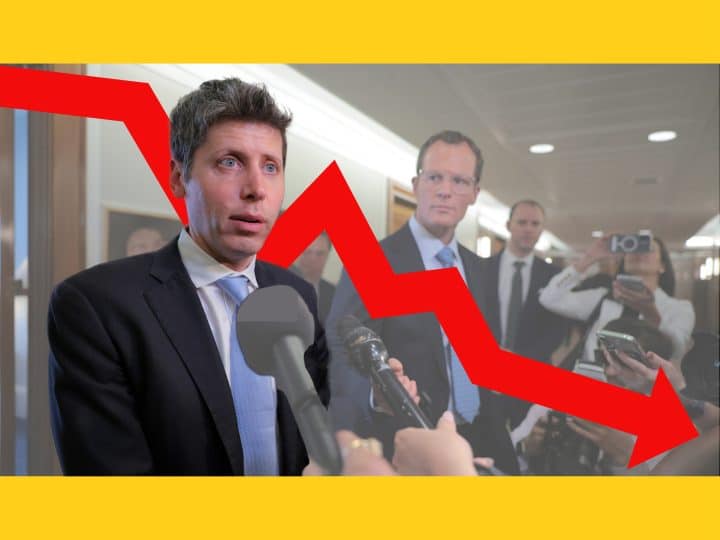
As the sky falls in, OpenAI CEO Sam Altman is pretending to not understand what’s happening:
Sam Altman said AI budgeting has recently become a "huge issue" for some companies, something that "never came up" earlier this year. https://t.co/P2zODBNmDp
— Business Insider (@BusinessInsider) June 3, 2026
Altman does have to say something to reassure investors, but we’re not sure this is it.
OpenAI is absolutely cooked. This is loser language. You can’t be four years into the bubble saying “yeah our customers have a huge issue with how expensive our business is.” You just raised $122 billion! You can’t say shit like this!https://t.co/1uKEEpSS03 pic.twitter.com/HWMuy3TQX8
— Ed Zitron (@edzitron) June 4, 2026
Ed Zitron is one of generative AI’s most vocal critics. Responding to the latest developments, he highlighted a case in which one AI user used 50% of their token credits with just one prompt. This is a problem, because some users like coders had grown accustomed to making hundreds or thousands of prompts a day.
If you want to see what happens when people have to pay the actual costs of AI, the day is finally here. It’s obvious that every customer sees the deep, meaningful value and isn’t angry at all pic.twitter.com/Z8xzyYOFH7
— Ed Zitron (@edzitron) June 1, 2026
As Zitron highlights, companies are now paying the “actual price” of AI.
Up until now, AI companies used multi-billion pounds cash injections from wealthy investors to subsidise their technology. They hoped AI would prove to be so useful that when they switched to a more realistic pricing point, companies would have no option but to carry on paying.
Yeah, so about that …
Expensive? Yes. Useful? No.
To make things worse, companies already weren’t making money:
First it was MIT and McKinsey. Now Bain finds that returns to corporate AI investments are disappointing. pic.twitter.com/sXqXQVSMH0
— John Cassidy (@JohnCassidy) June 3, 2026
The artificial intelligence industry has a big problem: 95% of companies that try AI aren’t making any money from it, according to a report from the Massachusetts Institute of Technology last month.
The same article carried multiple quotes from supposed experts who promised AI would be very profitable as soon as these businesses pulled their fingers out and implemented it correctly. A year later, the technology is no more useful yet considerably more expensive.
Many companies laid off employees hoping they could replace them with AI. Many companies have since realised the error of their ways:
Friend works for REDACTED tech company. They fired 30 people because the CEO insisted AI could do their jobs. Now they’ve spent 6 months making unusable code and have had to hire more people. How the turns table
— Madelaine Hanson (@MadelaineLucyH) June 3, 2026
Not yet, not this
While it does seem likely the world will one day be run by smart, automated systems, the generative AI that’s being sold to us isn’t ‘smart’. Functionally, it’s little more than a juiced-up auto-type, but the tech chancers claimed it was a digital god that would perform our menial tasks for us.
The problem now is that the global economy is propped up by the over-inflated AI bubble. And when that bubble pops, it won’t be the billionaire tech bros who suffer.
Featured image via Chip Somodevilla (Getty Images)
By Willem Moore

Jenrick struggles to defend Reform’s latest smear campaign
Stupid Justin Jefferson Trade Theory Makes the Rounds

5 Best Smart Speakers (2026): Alexa, Google Assistant, Siri

HarrisX Poll Found 52% of Registered Voters Support the CLARITY Act

BloFin War of Whales 2026 Grand Prix opens registration for $5M trading championship

Blockchain.com files with SEC for U.S. IPO

How to DIY a money lei for graduates #dollarbillorigami #diy #graduationgift #lei

Ishga kirgandan keyingi holat #work #bazar #market #pulligap #money #rek #uzbekistan

Financial Planning in 35 seconds! | Ankur Warikoo #shorts
-

 Tech6 days ago
Waymo dominates autonomous vehicle registrations as Tesla trails behind
-

 News Videos6 days ago
This is BROKEN! INSANE 5x MONEY CAR WASH WEEK! The NEW GTA Online UPDATE Today! (GTA5 New Update)
-
 Tech5 days ago
SpaceX just won a second Golden Dome contract. This one is $4.16 billion.
-

 Business3 days ago
Jade Biosciences, Inc. (JBIO) Discusses Positive Interim Results From JADE101 Phase I Healthy Volunteer Study and Development Plans Transcript
-

 News Videos6 days ago
SHE IS KILLING XRP!!! WATCH URGENT AND ACT FAST
-
 NewsBeat6 days ago
FIRST NIGHT REVIEW: Take That bring the Circus back to life in spectacular sun-soaked style
-

 Business5 days ago
Is the Spurs Phenom Already Better Than Prime Diesel?
-
 Crypto World6 days ago
CFTC Has Approved the First Regulated Bitcoin Perpetual Contract in the U.S.
-

 Politics5 days ago
The House | Inside Andy Burnham’s Makerfield Campaign: “Nobody Thinks This Is In The Bag”
-

 Sports2 days ago
French Open 2026 results: Alexander Zverev beats Rafael Jodar and will play Jakub Mensik in semi-finals
-
 NewsBeat6 days ago
Novak Djokovic v Joao Fonseca LIVE: French Open latest scores and results after Jannik Sinner’s shocking collapse
-
 Entertainment6 days ago
Weak ‘Supergirl’ Box Office Tracking Amid Milly Alcock Backlash
-
 Crypto World6 days ago
Snowflake (SNOW) Stock Rallies on Strong Q1 Results and AI Product Growth
-

 Tech2 days ago
CryZENx Releases Fresh Playable Content Deep Inside Jabu-Jabu for His Ocarina of Time Remake
-

 Entertainment6 days ago
Maddox Jolie-Pitt Legally Requests to Drop Brad’s Surname
-

 Business5 days ago
Demand Conditions Improve In Chemicals Sector In April 2026
-
 Entertainment5 days ago
One of the Greatest Sitcoms of All Time Shoots Up Apple TV’s Charts 11 Years Later
-

 Tech6 days ago
This Week In Security: Ubiquiti Fixes, And FreeBSD Joins The Club You Don’t Want To Join
-

 Crypto World6 days ago
MicroStrategy Moves $30 Million in BTC to Coinbase Prime: Is the Bitcoin Sell-Off Already Here?
-
 Entertainment6 days ago
Bruce Willis’ Generosity Resurfaces Amid His Dementia
You must be logged in to post a comment Login