Connect with us

Politics

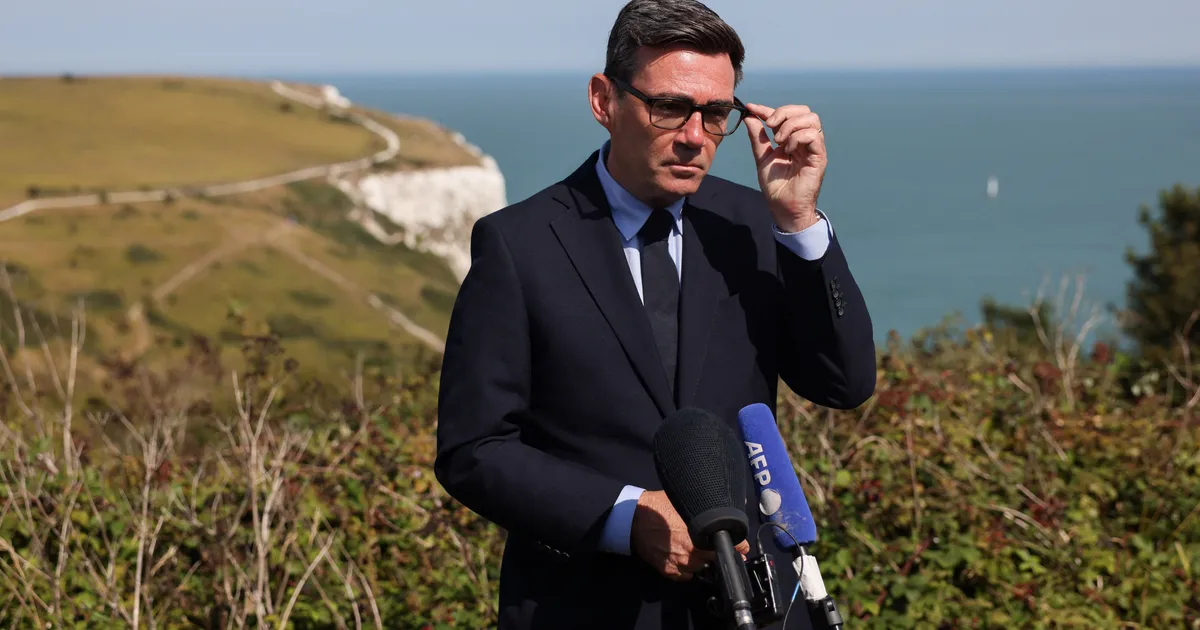
Andy Burnham Condemns Anti Migrant Protests

Published

on

Andy Burnham Condemns Anti Migrant Protests

Andy Burnham has accused anti-migrant protesters who took to the streets of Dover and Portsmouth at the weekend of representing “the politics of poison”.

The prime minister told a meeting of Labour MPs and peers that the party must “bring hope to a divided country”.

His comments are the strongest yet in response to the demonstrations against asylum seekers crossing the English Channel from France.

Large crowds of masked, black-clad men blocked road access to the Port of Dover on Saturday, in scenes which have been condemned by politicians, including Reform UK leader Nigel Farage.

Advertisement

On Sunday night, another protest took place after around 140 migrants in a single dinghy were rescued in the English Channel as it headed for the Hampshire coast.

The protesters, many of them wearing masks, said they were determined to prevent authorities from transporting the migrants to the Manston processing centre in Kent.

They blocked traffic along the road leading away from Eastney Marina, with photos showing police carrying riot shields forming a line and protecting a number of coaches that were parked up.

Addressing a meeting of the Parliamentary Labour Party (PLP), Burnham said: “There’s a lot at stake and it requires us to counter fear with positivity and hope. We have a responsibility in the times that we’re living in. It’s a solemn responsibility to prevent the politics of poison seeping into our streets.

Advertisement

“We are here to speak to the politics of hope and of positivity.”

He added: “We have to fulfil our historic mission all over again and bring hope to a divided country. To lift people and make them feel that things are possible. That we can make people’s lives better. Make them feel that politics can work.

“We can give people a sense of positivity again. We can change this country for the better. Never accept the narrative that there’s nothing we can do.”

Listen to Commons People, the podcast that makes politics easy. Every week, Kevin Schofield and Kate Nicholson unpack the week’s biggest stories to keep you informed. Join us for straightforward analysis of what’s going on at Westminster.

Advertisement

Source link

Continue Reading
Click to comment

You must be logged in to post a comment Login

Leave a Reply

Politics

Great British Bake Off 2026 Cast: Everything You Need To Know

Published

on

Great British Bake Off 2026 Cast: Everything You Need To Know

The Great British Bake Off casting team has knocked it out of the park once again.

With just two weeks to go until the tent reopens for another season – with new judge Nigella Lawson at the helm for the first time – Channel 4 has introduced us to the 12 new contestants, and they’re as eclectic a bunch as ever.

Among them are a Bhangra-dancing paediatric doctor, a former-podium-dancer-turned-advertising-exec, an aspiring competitive sprinter and a polyamorous drag king.

In other words, yes, there are plenty of different flavours in the mix this time around.

Advertisement

Get to know the 12 new bakers being put through their paces by Paul and Nigella, ahead of the show’s return later this month…

Clara

Occupation: Marketing graduate

Interesting fact: Originally hailing from Aveiro, Portugal, Clara is an animal lover, who says she’s happiest around her pets Gigi the spaniel and Pecan the hedgehog.

Connie

Advertisement

Occupation: NHS hospital discharge lead

Interesting fact: In addition to her decades-spanning career in the NHS, Connie and her music teacher husband run a music centre in London.

Danni

Danni

Occupation: HGB service centre administrator

Interesting fact: Danni is a tech enthusiast who tinkers with web design and game development, and says their bakes are often inspired by the worlds of video games, fantasy and animation.

Gabe

Advertisement

Occupation: Artist and drag king

Interesting fact: Those on the Birmingham drag scene might be familiar with Gabe’s drag king alter-ego Blü Romantic. A creative force, they’re also a costume designer, theatre producer and keen gardener, who moved from Grimsby to the West Midlands, where they now live with partners Ellis and Tyler, and their two sausage dogs, Dill and Sage.

Gary

Occupation: Retired garment technologist

Interesting fact: Gary discovered baking late in life, just five years ago, and is another animal lover, who looks after sheep, horses, chickens and miniature pygmy goats and Shetland ponies, among others. A prostate cancer survivor, he is keen to raise awareness of the condition, as well as taking part in fundraising.

Molly

Advertisement

Occupation: Accessibility co-ordinator

Interesting fact: Molly says her love of baking helped her through a difficult period in her health back in 2020. A cross-stitcher and F1 lover, she is currently mixing these two hobbies with a 350,000-stich landscape of Rivendell.

Moyin

Occupation: Political economy student

Interesting fact: Moyin has been baking since the age of five, and is a competitive sprinter, having previously been crowned the under-20s County Champion in the 100m.

Mo

Advertisement

Interesting fact: Mo says we need to prepare ourselves for his “chaotic and random” personality when he steps into the tent, and has been fascinated by baking ever since discovering Play-Doh at the age of three.

Nikki

Occupation: Advertising post-producer

Interesting fact: A former podium dancer at Basingstone’s Ziggy’s Night Club in the 90s, Nikki says her bakes are often inspired by the music she’s listening to at the time, whether that’s “nostalgic R&B” or more classical pieces.

Shannon

Occupation: Project planner

Interesting fact: Shannon’s biggest love is the great outdoors and nature, which includes her two dogs and pet tortoise. She says she wants to bring “forest magic” to the tent – and once rode a horse through a fast food drive-through.

Advertisement

Tom

Interesting fact: Tom fell in love with baking at a child, preferring to spend time honing his skills with his Nan while the rest of his family were at football matches. He recently completed a seven-month travelling stint around South-East Asia, and describes himself as a bit of an over-sharer. Consider us sat.

Yannis

Interesting fact: Born in Vienna before moving to the UK as a child, he says watching Bake Off helped him hone his English skills, and is also a Bhangra dancer.

The Great British Bake Off returns on Tuesday 22 September at 8pm.

Advertisement

Source link

Continue Reading

Politics

Menopause Bladder Leaks: The Natural Supplement Helping Stop Bladder Incontinence

Published

on

Menopause Bladder Control: Jude Bladder Health Supplement Review

Finally, we’re starting to get real about menopause. It might have happened to women and people with vulvas for, well, ever but it’s only been over the last few decades that we’ve started to open up about what that actually means.

There’s still one criminally under-discussed aspect of menopause we think is due for a revisiting: bladder leaks.

It might be embarrassing, but around half of women experience urinary incontinence during menopause.

During this time, a decrease in oestrogen results in thinning of the urethra wall, as well as your pelvic floor muscles becoming weaker.

Advertisement

At the same time, bladder elasticity declines as you might gain weight, which could cause the pelvic floor muscles to become weaker, and you to need to pee more regularly.

No one wants to be caught short, and while there are exercises you can do if you want to reduce the likelihood of having to run to the nearest toilet at a moment’s notice (see: my round-up of the best pelvic floor trainers) we don’t need another form of exercise to add to ours lives that we won’t do.

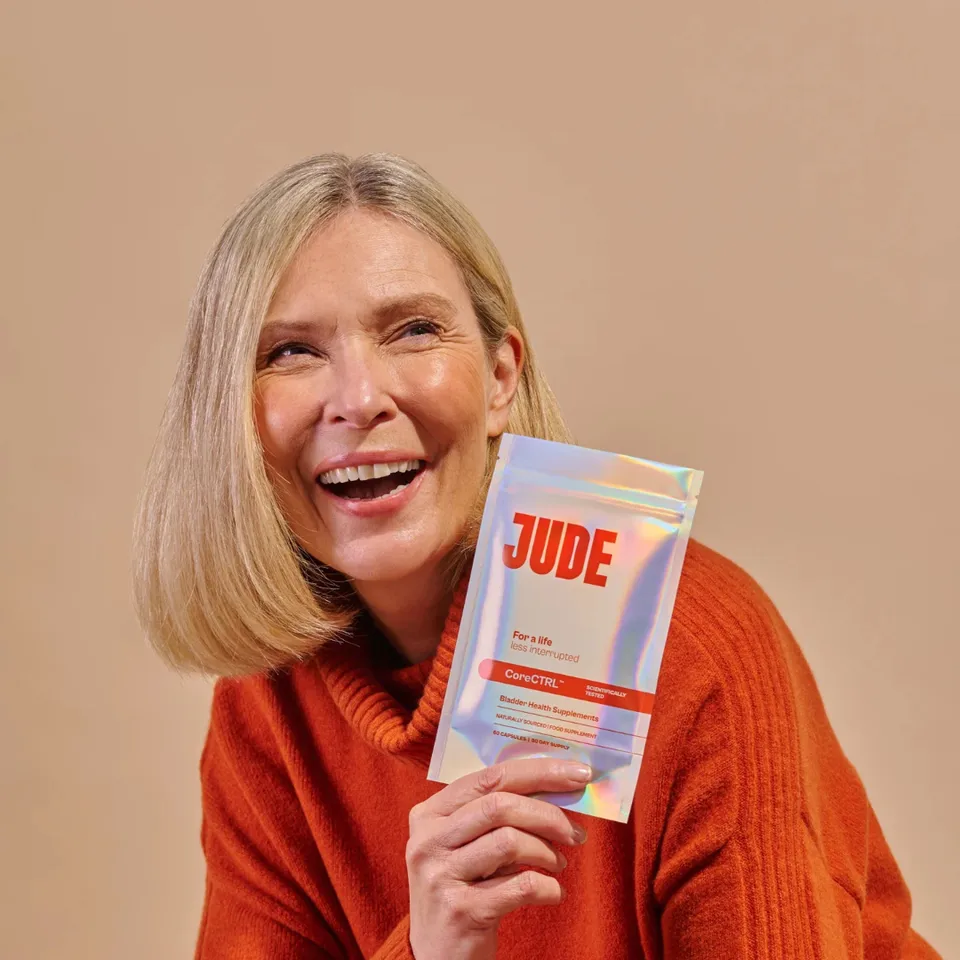
So I’ve found an easier solution: Jude Bladder Care Supplements.

Say goodbye to bulky menopause pads forever, because this supplement is designed specifically to improve bladder health for women going through menopause.

Formulated with pumpkin seed extract, soy germ extract, vitamins B and D, and rosemary and sage extract, the supplements are a research-backed solution to improved bladder confidence.

Advertisement

And it’s not just another supplement that won’t work: after just 12 weeks of taking the supplement, 77% say they feel more in control, while 90% say they feel less held back by their bladder.

Emma Skeates, author of Confessions of The Menopausal Mayhem Mother, tried Jude. She says: “For about three years into my menopause I was wearing big bulky pads, because every time I laughed or I sneezed, there was leakage.

“Since taking Jude, I don’t have to worry about that anymore. I can now laugh, wherever I want, worry free!”

But she’s not the only one: Jude currently has over 3,500 five-star Trustpilot reviews, as well as 1,200 on its website – and we can see why.

Advertisement

A 12-week subscription comes in at £75, or less than £0.83 per day (which is nothing when you really think about it). That’s not all: we’ve bagged HuffPost readers 20% off with the code BABY20.

That means better bladder health in 12 weeks for just £60. Run, don’t walk!

Source link

Advertisement
Continue Reading

Politics

The ICONIC '90s rom-com Nicole Kidman was rejected for

Published

on

The ICONIC '90s rom-com Nicole Kidman was rejected for

!function(n){if(!window.cnx){window.cnx={},window.cnx.cmd=[];var t=n.createElement(‘iframe’);t.display=’none’,t.onload=function(){var n=t.contentWindow.document,c=n.createElement(‘script’);c.src=”//cd.connatix.com/connatix.player.js”,c.setAttribute(‘async’,’1′),c.setAttribute(‘type’,’text/javascript’),n.body.appendChild(c)},n.head.appendChild(t)}}(document);(new Image()).src=”https://capi.connatix.com/tr/si?token=19654b65-409c-4b38-90db-80cbdea02cf4″;cnx.cmd.push(function(){cnx({“playerId”:”19654b65-409c-4b38-90db-80cbdea02cf4″,”mediaId”:”bf11b992-719c-4c1d-8731-e813f0ff5b6b”}).render(“6a9efe13e4b03901c958f309”);});

Source link

Continue Reading

Politics

Holborn and St Pancras By-Election Set for 8th October

Published

on

The day after Tory conference wraps up. Mark the calendar… ICYMI: Who Will Win in Holborn and St Pancras?

Source link

Continue Reading

Politics

Strong Vaginal Smell And Brown Discharge? It Could Be A Retained Tampon

Published

on

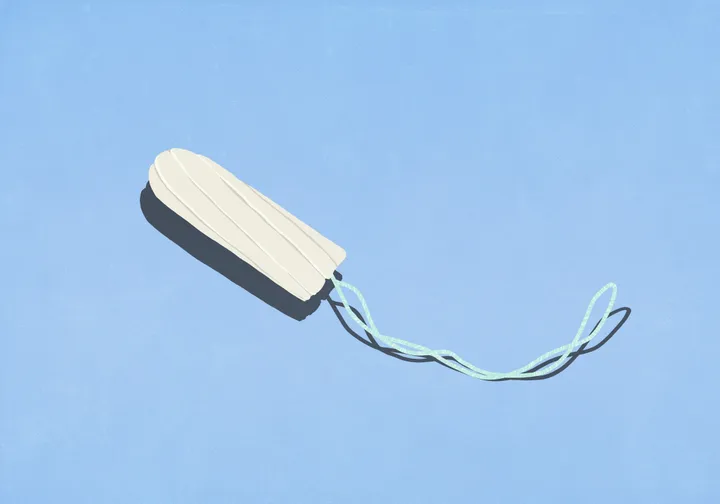
Retained tampons can leave a particularly grim odour.

A GP has opened up about how a strong vaginal odour could signal a fairly common tampon error.

In an Instagram post, Dr Nada Hassan spoke of “the smell every GP recognises instantly” – the strong odour emitted from a retained tampon.

A retained tampon is pretty much what you’d expect it to be: a tampon which isn’t removed from the body and either gets stuck or seemingly gets forgotten about. Per the Women’s Health Practice, retained tampons are “fairly common”.

Dr Hassan noted that sometimes she can tell if a patient has a retained tampon as soon as they’ve walked into the consulting room.

Advertisement

“It’s more common to forget it than people think. Tampons shrink down with moisture, they migrate higher than expected, and it’s genuinely easy to forget one is there,” she said.

“I’ve had to remove one (sometimes multiple) many a time from patients who had no idea it was in there.”

Retained tampons can leave a particularly grim odour.

Malte Mueller via Getty Images/fStop

Retained tampons can leave a particularly grim odour.

According to NHS Inform, tampons can’t get lost inside the body. That said, sometimes the tampon can move high up in the vagina or become squashed sideways or the string can end up inside the vagina, too.

Some people might forget they’ve got a tampon in and then insert another one or have sex, which can push the original further up. consigning it to ancient history.

Advertisement

The internet is full of horror stories from women who hadn’t noticed they’d retained tampons – some for months – and noticed unpleasant symptoms as a result, namely foul smells and grey or brown discharge.

Tampons should typically be changed every four to six hours. If they aren’t, there’s a risk of rare tampon-related toxic shock syndrome (TSS) developing, which can be fatal.

“The risk increases the longer a tampon is left in, and research has found it rises significantly after six or more hours, especially with overnight use,” said Dr Hassan.

Toxic shock syndrome requires urgent treatment as it can prove life-threatening. Symptoms include: a high temperature; muscle aches; a raised skin rash that feels like sandpaper and flu-like symptoms. It can also trigger dizziness, confusion, swollen or peeling skin, and vomiting.

Advertisement

How to remove a retained tampon

If you think you might have a retained tampon, NHS Inform advises the following steps to try removing it at home:

  1. Wash your hands.
  2. Squat and bear down (like you would if you had to poo or give birth). This can help bring the tampon towards the vaginal opening, making it easier to remove.
  3. Insert your finger into your vagina.
  4. Move your finger around in a circle. You’ll probably be able to feel the tampon. Try to remove the tampon.
  5. If you cant remove the tampon using one finger, try inserting two fingers into your vagina to grip the tampon instead.

If this doesn’t work, you notice sudden foul-smelling discharge or you think you might have a tampon that’s MIA, book in to see your GP who can help to locate and remove it.

And if you experience symptoms of TSS, call NHS 111.

Advertisement

Source link

Continue Reading

Politics

Expert Advice On Defending Gardens From Autumn Rain

Published

on

Expert Advice On Defending Gardens From Autumn Rain

According to the Met Office, the UK has a rainy week ahead with showers set to start tonight across England and Wales. Additionally, the largest El Niño event is heading our way in Autumn, bringing with it heavy showers and storms.

Now, experts are urging homeowners to ensure that garden drainage is in place ahead of the coming months to prevent waterlogged lawns, pooling driveways and damage to plant life.

We spoke with Andy McLaughlin, Sales & Operations Director at RF Paving to learn more about the best drainage solutions for gardens in the UK.

The best drainage solutions for UK gardens

Advertisement

For water pooling too close to your home: French drain

McLaughlin explains: “A French drain is a sloped, trench-like drain that combines gravel and a drainage pipe to distribute surface water elsewhere, such as a soakaway. This method is best for large areas of oversaturated soil or water which is pooling too close to your home.

“First, plan and mark the area where water accumulates and mark the path for the drain, ensuring it slopes away from your patio. Then, dig a trench approximately 15-25 cm wide and 60 cm deep along the marked path.”

Then, he explains, you need to lay a 5-10cm layer of coarse gravel at the bottom of the trench and position a perforated pipe on top of the gravel, ensuring the perforations face downwards.

Advertisement

Finally, cover the pipe with more gravel, filling the trench up to ground level and cover with decorative stones or turf for a seamless finish.

For dense soil and landscaped gardens: Aggregate drainage

McLaughlin says: “Aggregate drainage is best for garden spaces with dense, clay-heavy soil or landscaped gardens with patios and paths, which prevent water from naturally soaking beneath the surface.

“Aggregate drainage, such as crushed stone or pea gravel, allows water to percolate through the soil and away from critical areas, providing excellent natural drainage to maintain soil health, prevent erosion and ensure a slip-free environment.”

Advertisement

As aggregates aren’t compact, the gaps between the stones allow water to flow through easily, reducing the risk of flooding or waterlogging.

For poorly draining driveways and patios: Channel drainage

McLaughlin says: “Sometimes referred to as linear drains, channel drains are sleek and discreet, seamlessly integrating with your paving. They efficiently collect and divert surface water to an appropriate outlet to prevent pooling, especially around driveways and patios.

“You’ll require a space wide enough for your channel drain, plus 100mm of concrete is required on either side. Excavate the marked trench to the depth of the channel drain, allowing an additional 50mm for the compacted mortar base and a 2mm clearance at the top.”

Advertisement

If this all sounds a little out of your scope, McLaughlin recommends hiring a professional.

He adds: “Assemble the channel as a dry run and make any necessary cuts at the end opposite the outlet, then install it from the lowest point upwards, fit the end caps, connect it to the main drain or soakaway with a 110mm pipe, and test the flow with water before protecting the grating with masking tape, pouring the concrete and allowing it to set for 72 hours.”

Source link

Advertisement
Continue Reading

Politics

Miriam Margolyes Addresses Andi Peters This Morning Controversy

Published

on

Miriam Margolyes Addresses Andi Peters This Morning Controversy

Miriam Margolyes has shared her take on her recent controversial appearance on This Morning.

Last week, Miriam faced criticism over an interview with This Morning host Andi Peters, during which she made numerous comments about the presenter’s race and complexion.

First imitating Christine Lampard’s Northern Irish accent, Miriam went on to ask Andi: “What accent would be normal for you? What are you? You’re a mix, aren’t you? You’ve got a Black daddy and a white mummy?”

When Andi clarified that both of his parents are Black, and tried to make light of the situation by questioning if the show’s make-up team had made him a “lighter shade than normal”, Miriam continued: “I think you’re what I would call ‘high yella’. That’s what they call it in America when someone isn’t deeply Black.”

Advertisement

“High yellow” – described by the Merriam Webster dictionary as a “dated” and “often offensive” term – was an expression historically used to refer to Black people with a light complexion.

After Andi interrupted to say that the producers in his earpiece were “getting nervous now”, Miriam responded: “Don’t be nervous. We [in Britain] welcome everybody. And that’s what I want to write about in my book!”

On Sunday night, Miriam gave a Q&A in Southend on Sunday to promote her new book Miriam’s Full English, in which she reflects on modern British society.

During the conversation – footage from which later made its way onto TikTok – Miriam insisted it was never her intention to “embarrass or hurt Andi, because he seems very nice”.

Advertisement

“I’d never met him before. I didn’t know who he was,” she said. “And I didn’t know he was Black until I saw him.

“When you see someone, of course, you know they’re Black. But I wanted to know what he thought about it… because that’s more interesting.”

Going on to use a pejorative term for disabled people, Miriam continued: “How do Black people feel? How do brown people feel? How do cripples feel? How do fat people feel? You see what I mean?

“All of us feel something about who we are, and how people see us, and what they think of us.”

Advertisement

When the moderator clarified that Miriam had wanted to “discuss [Andi’s identity with him”, she added: “Yes, I am fascinated by other people. They are the people that interest me, not the celebrities so much – it’s everybody, what their story is, what made them who they are? Why you are the way you are.”

Andi also addressed the matter for the first time last week, after fellow broadcaster Jeremy Vine shared footage of the exchange on Instagram, praising Andi for how he “deal with” the situation.

“Thanks JV,” Andi later commented. “As you know we have to be ready for ANYTHING!!!”

HuffPost UK contacted reps for Miriam Margolyes, Andi Peters and This Morning last week, but did not receive a response.

Advertisement

Source link

Continue Reading

Politics

Explained: How Poo Was Key In The Cambrian Explosion

Published

on

Explained: How Poo Was Key In The Cambrian Explosion

If there was ever a time to destigmatise talking about poo… This is it. After all, how can we exist as complex life on Earth without understanding the key role that poo plays not only in our lives but, actually, in our very existence?

A new study published in Trends in Ecology and Evolution has revealed that a giant ‘poop explosion’ may have influenced the period of time when most major animal groups emerged on Earth.

Researchers from Flinders University in Australia have suggested that a build-up of poo from primitive sea creatures was a likely trigger for the Cambrian explosion – which marked a rapid expansion of different forms of life on our planet – around 450 million years ago.

Advertisement

How poo played a role in evolution

Russell Bicknell, an evolutionary biologist at Flinders University, said: “Next to rising oxygen levels and other contributing factors, the importance of faeces in ancient ecosystems is often overlooked.”

Researchers believe prehistoric poo encouraged the evolution and diversification of marine life – and that ancient diets and “increasingly sophisticated digestive systems” can help explain “how more organic matter and nutrients poured into the ancient oceans to accelerate ecosystem development” during the early Cambrian period.

What was the Cambrian explosion?

Advertisement

The Natural History Museum explains that the Cambrian explosion happened more than 500 million years ago and “was when most of the major animal groups started to appear in the fossil record, a time of rapid expansion of different forms of life on Earth”.

Dr Greg Edgecombe, merit researcher at the museum, said: “It’s when most of the few dozen major animal body plans first appear in the fossil record and diversify, but it’s actually more than that.

“It is a time of body plan innovation and of diversification, but it is also an ecological phenomenon as life responded to changing environmental conditions.”

And how life responded to a wealth of poo, apparently.

Advertisement

Source link

Continue Reading

Politics

Madonna And Charli XCX Hint That New Collab Could Be Coming

Published

on

Madonna And Charli XCX Hint That New Collab Could Be Coming

But it seems the Queen of Pop is not done yet.

Over the weekend, the Grammy winner posted a TikTok video of herself pensively listening to the Confessions II cut L.E.S. Girl, which brings the album to a melancholic ending.

“Thinking about Charli…” she captioned the post, with Charli XCX then popping up in the comments section shortly afterwards.

Wait… I got something I wanna talk about,” the British singer-songwriter wrote, in a nod to the lyrics of Madonna’s recent Sabrina Carpenter duet Bring Your Love, which has become something of a meme in recent weeks.

Advertisement

The two singers’ exchange has led many fans to speculate that they might be about to cross musical paths, potentially on a new remixed version of L.E.S. Girl.

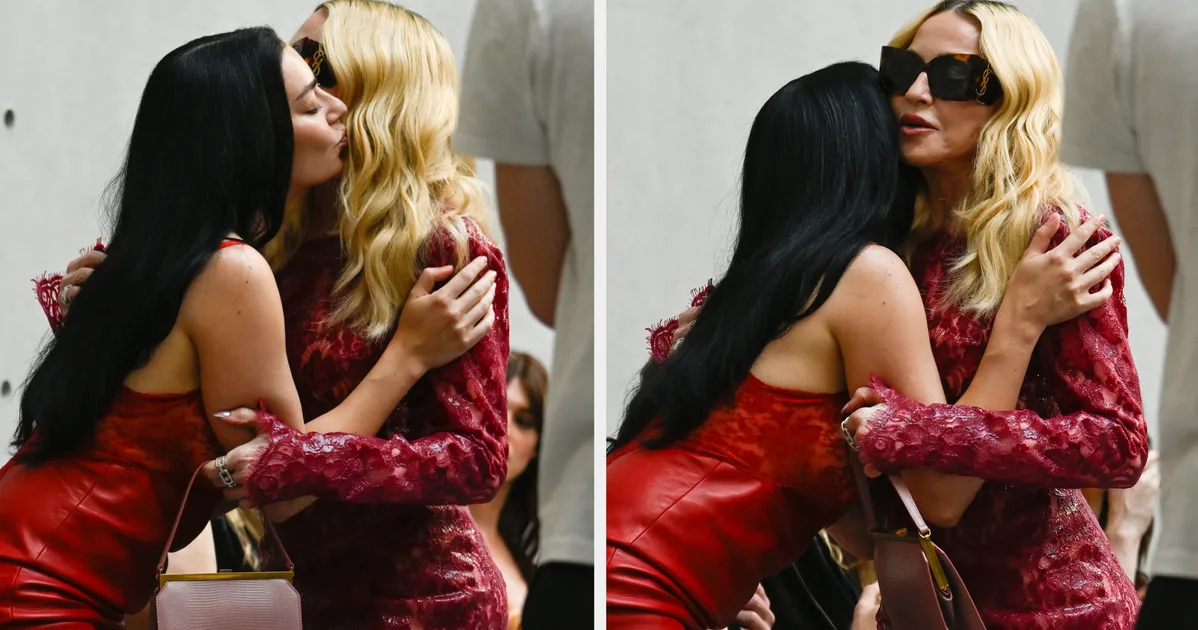
Over the summer, Charli and Madonna were both pictured on the front row of Saint Laurent’s show at Paris Fashion Week, where they were seen laughing and smoking together.

After that, Charli told Nick Grimshaw for Radio 6 Music that she and the Like A Prayer singer kept running into each other, to the point their Paris trip felt like a “mini break together”.

Advertisement

Charli enthused: “She’s fab. She’s just so cool, and so interested in really talking about the music that she makes, and how, and why. I found it very inspiring to hang out with her.”

She also praised Madonna’s “wealth of songs” and “high” taste level, revealing the first Madonna song she “fell in love with” was the 2003 single Hollywood, taken from the album American Life.

Interestingly, earlier in the year, it looked like there may have been some mild beef between Charli and Madonna, after the Von Dutch singer claimed during a now-infamous British Vogue interview (and, subsequently, on her divisive single Rock Music) that she thinks the “dance floor is dead”.

“If your dance floor feels dead, maybe you’re playing the wrong music,” Madonna cryptically wrote on Instagram shortly afterwards.

Advertisement

Source link

Continue Reading

Politics

Not one inch: keeping Russia at bay

Published

on

Not one inch: keeping Russia at bay

Sten Rynning and Anne Ingemann Johansen look at the day-to-day work being done in Norway as a frontline state to counter the threat posed by Russia and how this contributes to European security.

What a difference a few decades make. In 1990, “not one inch” reflected an idea, most famously tried by Secretary of State James Baker to soothe Soviet sensibilities, that European stability depended on Western restraint. Today, the tables have turned: stability will follow to the extent Western countries can impose restraint on Russia.

The geopolitical enormity of the shift is obvious. Less obvious is the burden this has placed on frontline governments busy fighting a shadow war with Russia. We recently concluded a three-year research project on Norwegian and Danish NATO policy with a research visit to Norway’s Finnmark. It confirmed what we had learned from many conversations in the Ministry of Foreign Affairs in Oslo: that concerted action between Norway and allies is key, that it increasingly happens to warn off Russia, but that the bread and butter of “not one inch” rests on comprehensive and agile strategic thinking at home. And this is by no means easy. Four conclusions stood out.

First, the effort to counter Russia must rest on a solid military foundation that once was allowed to wither but which now in haste must be reconstituted. Thus, Norway is standing up a Finnmark Brigade located to the rear, in Porsangmoen near Lakselv, with a forward-deployed battalion at the border. This brigade is placed to block Russian incursions into the national territory and, more importantly perhaps, to counter a Russian land offensive through the more geographically permissible Finnish and Swedish Finnmark.

Advertisement

The new brigade is a type of frontend bulwark backed by Norway’s main land force, the Northern Brigade, headquartered further south. It is likewise backed by intense cooperation with US and UK forces. When we visited, the brigade was about to inaugurate its artillery battalion equipped with self-propelled Howitzers, alongside new air defence and signal units. To speak softly, the Norwegians have realised, they must carry a big stick.

Second, from this foundation, Norway engages a broad set of policies to prevent societal discontent and thus societal divisions that Russia will exploit. This is not straightforward, as Norway’s Sami (indigenous) population has historically had a strained relationship with the central government. Norwegian Sami have a type of parliament in Karasjok, which articulates Sami interests and distributes funds. However, decades of assimilation policy run out of Oslo have taken a toll: the Norwegian parliament issued a formal apology in 2024 in the wake of a painful truth and reconciliation commission report. Thus, even if current relations are manageable, history remains alive.

The main cleavages in the region now seem to turn on wind power (many Sami are opposed to it, believing it infringes on their territorial rights and pastures) and electricity. The region simply does not have enough grid and transmission capacity, making electricity a sore point of distributive politics. When the government decided in 2023 to privilege transmission to a large LNG (liquid natural gas) plant on Melkøya, next to Hammerfest, it was being environmentally astute (the plant emits large amounts of greenhouse gas) but regionally reckless (local governments strongly objected to being sidelined). The governing Labour party suffered in ensuing local elections and since fast-tracked legislation to accelerate the regional expansion of the grid. At this point, arguments over regional energy policy seem contained, but the potential for disruptive regional and identity politics remains significant.

Third, Russian minorities reside in Norway, mostly in and around Kirkenes, right next to the only functioning border post, Storskog. There are about 400 Russians in Kirkenes, a city of 3,400 people, with 1-200 additional Russians in the wider area. The authorities do not seem unduly worried by their presence, perhaps because the authorities feel well informed of where local loyalties lie.

Advertisement

History is the battle space, though. Norway and Russia have never been at war with each other, and Russia (the Soviet Union) liberated Northern Norway from Germany in 1945—and then retreated to Soviet territory. But there is a rub: there are memorials dedicated to these events, and today, their significance is disputed. The “liberation memorial”—aka, Russian memorial—in central Kirkenes is a case in point. Supposedly depicting a Soviet solider liberating Norway, it is today portrayed variously as an occupier or, tongue in cheek, a Ukrainian fighting for freedom.

Fourth, Russian diplomats continue to enter Kirkenes and to operate freely in the region. Norway has not closed Russia’s consulate in the city, granting diplomats an opportunity to go about their business (it is centrally located and contains residential facilities for a group of diplomats). Since they have very little to do in terms of issuing visas, they are more likely mapping the human terrain and, among other things, stoking local Russian concern with memorial politics.

Understanding and tracking Russian authorities—inside Norway or along the border—thus remains an acute task. From their watch towers, Norwegian troops can observe training and firing ranges where Russia prepares newly recruited units for war in Ukraine. In the air, they observe Russia’s sometimes erratic behavior in terms of GPS jamming. Some of this behavior is driven by fear, the Norwegian authorities believe: fear that Ukraine will manage to sneak drones past Russian defenses and strike at their strategic (nuclear) forces on the Kola peninsula (the Russian nuclear submarine base, Zapadnaja Litsa, is a mere 45 km from the border).

Much Western attention has recently been devoted to the haze of US strategic thinking and Trump’s anger with NATO. Much less to the day-to-day hard work being done in Norway and other frontline states to keep Russia at bay. This is a pity. These states are living an experiment in rethinking societal security and in retooling government for an environment of competitive geopolitics. It is from their hard work that Europe—Norway and its partners—can reach agreement on where Russia’s political mindset lies between the outer bounds of paranoiac and aggressive. If they can agree on this, they can determine what to do about it and, in time, hope to wrestle a degree of geopolitical control from its capricious flanks.

Advertisement

By Sten Rynning, Professor, University of Southern Denmark and Anne Ingemann Johansen, Assistant Professor, University of Southern Denmark.

Source link

Advertisement
Continue Reading

Trending

Copyright © 2025