Connect with us
DAPA Banner
DAPA Coin
DAPA
COIN PAYMENT ASSET
PRIVACY · BLOCKDAG · HOMOMORPHIC ENCRYPTION · RUST
ElGamal Encrypted MINE DAPA
🚫 GENESIS SOLD OUT
DAPAPAY COMING

Politics

BlackCore: Inside an Israeli foreign influence operation

Published

on

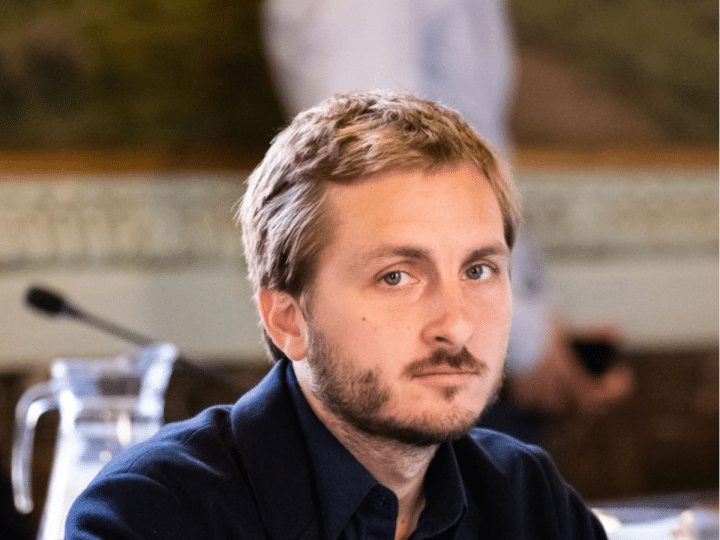
François Piquemal pictured in 2022. BlackCore is accused of orchestrating a smear campaign against him

François Piquemal pictured in 2022. BlackCore is accused of orchestrating a smear campaign against him

An Israeli influence operation run by a private intelligence firm branded two left wing French mayoral candidates as “pro-Palestinian”, “pro-Muslim” and “rapists”.

A joint investigation by liberal-leaning Israeli newspaper Haaretz and French outlet Liberacion exposed details of BlackCore, a shadowy disinformation operation. This is just the latest so-called ‘psy-op‘ to be exposed.

The targets were current Marseille and Toulouse mayoral candidates, Sébastien Delogu and François Piquemal.

Haaretz explained on Monday:

Advertisement

The French operation was first exposed by Le Monde on March 9, a week before the country’s local elections. The target was France Unbowed, the party of left-wing presidential candidate Jean-Luc Mélenchon.

The outlet said:

The first to be hit was Sébastien Delogu, the party’s mayoral candidate in Marseille; “Sophie,” a woman calling herself a blogger, accused him of rape and violence.

Adding:

A separate site published phony AI-generated photos that purported to be nude pictures of Delogu, presented as part of an alleged Gaza fundraising campaign.

A third website went after Toulouse mayoral candidate François Piquemal, while another “claimed to ‘help Muslim voters choose well’ and steered them toward Mélenchon’s hard-left slate”.

The whole package was amplified by a small army of fake accounts on social media.

BlackCore’s influencer operation

Haaretz said that once discovered, whoever was running the operation tried “to scrub their tracks, deleting avatars and websites, but digital traces remained online”.

Advertisement

French state security even stepped in.

A special investigative team from France’s General Secretariat for Defense and National Security, the Interior Ministry, the election commission and Viginum, the agency tasked with detecting foreign manipulation and disinformation on social media, picked up the trail and identified BlackCore as the main suspect. BlackCore’s name was first reported this weekend by Reuters.

The Haaretz/Liberacion expose revealed even more details about BlackCore.

Haaretz and Libération conducted an extensive analysis of BlackCore’s online digital footprint, including its website and other sites that seem to be part of the wider effort. For example, there is the company’s marketing website – a mini-site in Hebrew and English showcasing BlackCore’s alleged flagship product, “political campaign management.”

Adding:

It is built around the deployment of 1,600 avatars and fake social media accounts for the purposes of “infiltrating Facebook groups, manipulating trends, and skewing polls on TikTok and Instagram.”

Israeli business and intelligence links

A deeper look trawled up strange details and substantial inconsistencies about BlackCore.

Advertisement

The investigation could find no legal entity called BlackCore registered in any country. Its website contained no identifying details about owners or executives, or a physical address.

The domain blackcore.online was registered in an Icelandic registrar that allows owners to remain anonymous. The address was purchased only last August – by a company that presents itself as long-established.

Additionally, investigators identified “eight subdomains tied to BlackCore”.

One was active on a London-based server run by a Finnish cloud provider that hosted only a small handful of other websites that all had shared characteristics.

That server, which was “active until a few weeks ago” had “hosted a collection of different systems that required a username and password to log in to, tools through which an influence campaign could be conducted”.

For example, one login page was called “Galacticos AI Avatar Generator Login Page.”

A source told Haaretz that Galacticos “had developed a product that generates avatars that can be deployed both for influence operations and the monitoring of social media – as both require active accounts”.

Galacticos incorporated as a firm “in Tel Aviv in April 2022 under the name Pagecorn Ltd”.

Advertisement

 A year later it changed its name to Mycelium Intelligence Networks, and then to Galacticos in 2024.

The investigators discovered connections to two Israeli businessmen. One, Guy Geyor, is a “tech entrepreneur and former contestant on the Israeli versions of Survivor and The Bachelor“.

The other is lawyer Doron Afik. Both claimed when questioned to have no knowledge of BlackCore and denied “political activity in France”.

Less than two hours after they were asked for comment, the remaining digital infrastructure of both BlackCore and Galacticos was pulled offline.

Haaretz and Liberacion traced the various firms involved and found links to Israeli intelligence unit 8200 and to Yigal Unna, the former head of Israel’s National Cyber Directorate. Unna also denied any link to the operation.

It is rare — though not unknown — to get a glimpse inside a state influence operation. What is also remarkable is how quickly this one was shut down and traces of it scrubbed once it was exposed.

Advertisement

It is not exactly a secret that the settler-colonial state seeks to influence democratic outcomes in foreign states. But it is still fascinating when details of subterfuge and deception emerge.

Featured image via La Dépêche/ Adrien Nowak 

By Joe Glenton

Source link

Advertisement
Continue Reading
Click to comment

You must be logged in to post a comment Login

Leave a Reply

Politics

The Only Notes That Really Count

Published

on

The Only Notes That Really Count

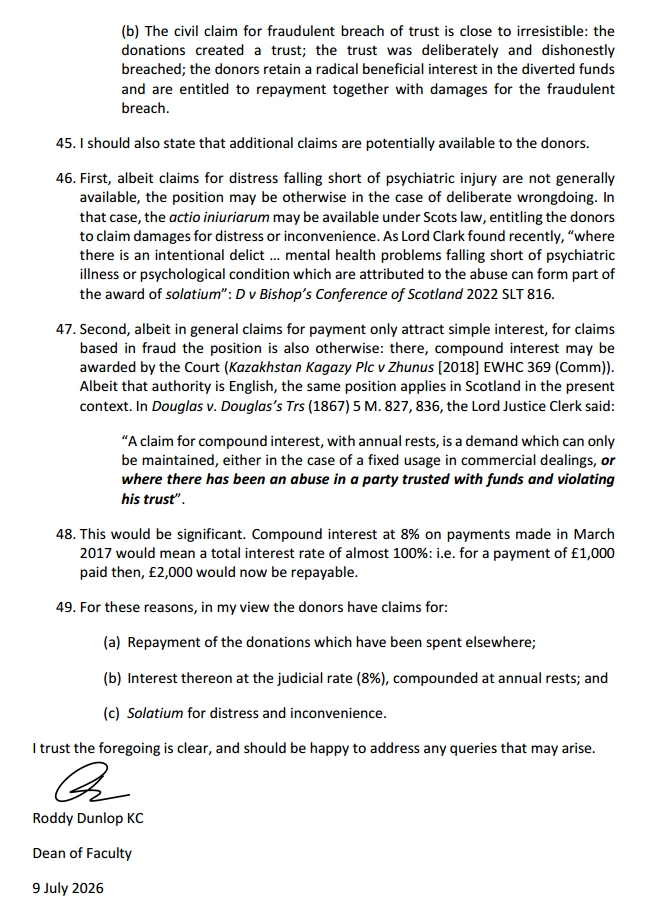
Wings has this evening received a formal legal opinion from Roddy Dunlop KC with regard to the prospects of success of a claim of fraudulent breach of trust by the SNP against donors to the “ringfenced” referendum campaign fundraisers. We attach it below. We continue to seek more people to join the group – if […]

Source link

Continue Reading

Politics

The banal truth about the Posh George ‘scandal’

Published

on

The banal truth about the Posh George ‘scandal’

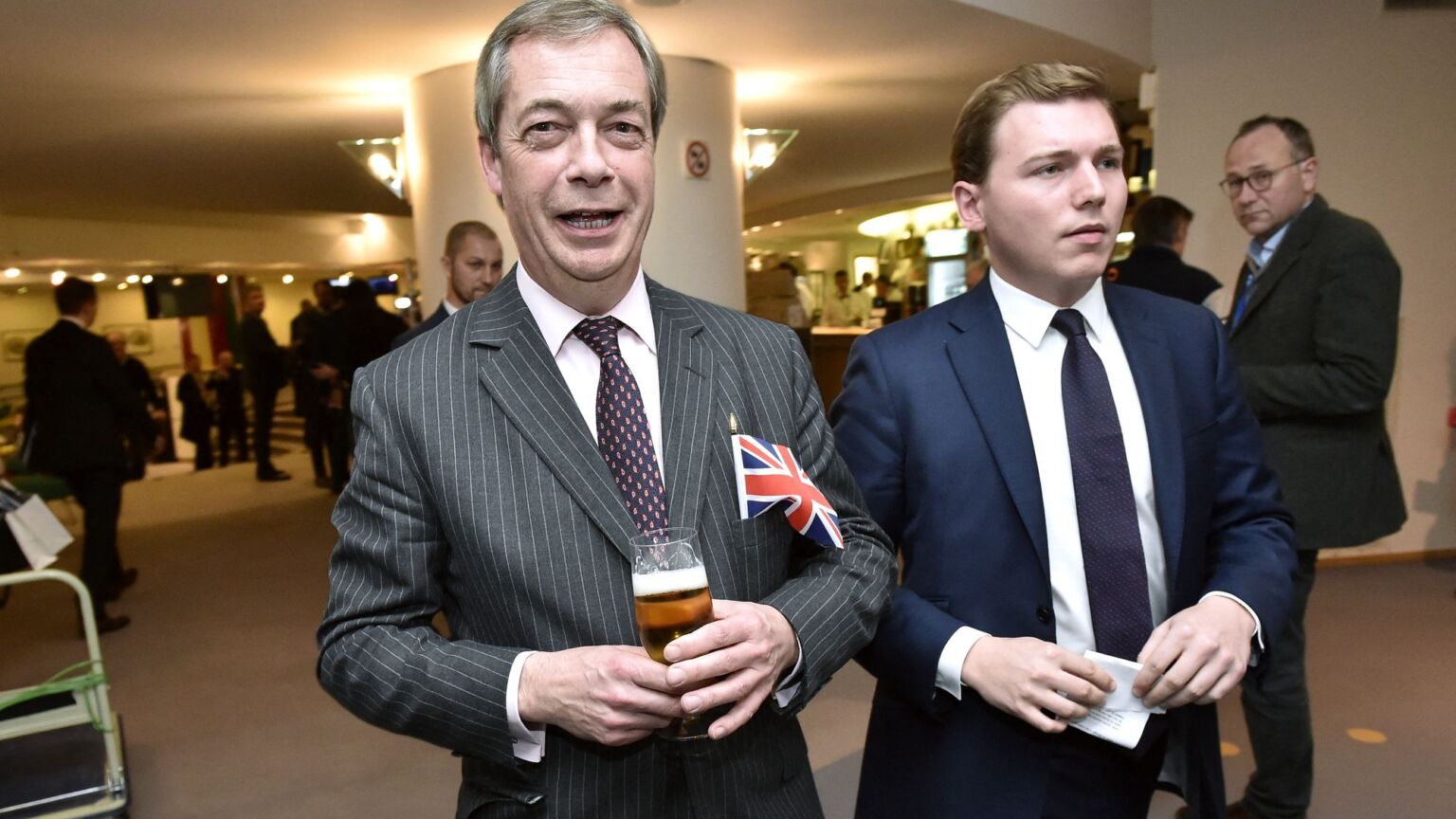
An insurgent populist politician. A young, wayward aristocrat with a criminal past. Undeclared donations. A setting that includes the Adriatic coastline, the Carribean, Westminster and America. The Sunday Times’ recent investigation into the relationship between Nigel Farage and George Cottrell might have formed the plot of a Jeffrey Archer novel. But is the truth quite so interesting?

The story’s ramifications have certainly been profound. Alongside the Parliamentary Commissioner for Standards inquiry into the £5million gift Farage received from billionaire Christopher Harborne, the George Cottrell story also formed the backdrop this week to the Reform UK leader resigning his seat of Clacton, which he will now re-contest at a by-election. He wants voters to decide his fate. Farage insists that he has done nothing wrong, and that he is the subject of a hit-job from the mainstream media and the political establishment. He might have a point.

Let’s take a closer look at the Cottrell ‘scandal’. According to The Sunday Times, in 2024, before he had decided to run for the seat of Clacton as a candidate for Reform UK, Farage was provided with security, three paid social-media experts and occasional accommodation in London by George ‘Posh George’ Cottrell. The article posits that, because this gift was made to Farage within 12 months of the General Election, his failure to declare it as a donation ‘appears’ to have breached transparency guidelines.

Advertisement

That is a pretty tepid conclusion to what was published as a front-page scoop. There is no suggestion in the piece that Farage broke the law, or misused public funds or otherwise benefitted from fraudulently obtained money. And it seems that the editors of The Sunday Times didn’t find the ‘transparency’ angle that riveting either. This is why most of the article is in fact a biography of Cottrell. No doubt, it is also why the piece’s accompanying podcast is titled ‘Posh George: the Criminal Behind Farage’.

Posh George is the kind of figure journalists find irresistible. He is a relic of the British aristocracy, with little to recommend him beyond a supposedly distinguished surname. We are told by The Sunday Times that his mother inherited a ‘soap empire’, briefly dated then Prince Charles in the 1970s, and once posed nude for Penthouse. His father, apparently, is a ‘Gatsby-esque’ figure. Cottrell grew up on the Caribbean island of Mustique, before attending boarding school in Worcestershire.

Advertisement

Enjoying spiked?

Why not make an instant, one-off donation?

We are funded by you. Thank you!

Advertisement


Please wait…

Advertisement
Advertisement

Cottrell, now 32, comes across as a work-shy and possibly not the sharpest tool in the shed. In his early twenties, the then deputy treasurer of
UKIP was staying in Las Vegas. There he tried to launder money for people he thought were drug dealers, but who were in fact US federal agents. He was arrested in 2016, having just attended the Republican National Convention with UKIP leader Farage. Cottrell immediately ratted on the criminal connections he had made, and spent eight months in an Arizona prison for wire fraud.

He is a disreputable figure. Yet Farage seemed to like him. Posh George is said to have an innate understanding of the now Reform leader. He knows intuitively when Nige needs a pint, a cigarette or a ‘proper fucking lunch’. Once Cottrell had re-made himself as (you guessed it) a cryptocurrency guru in Montenegro after his prison stint, he re-entered the fold at Reform. And Farage, foolishly, was all too happy to accept his help.

Advertisement

Unsurprisingly, The Sunday Times’ story was enthusiastically jumped on by other mainstream media outlets. Farage accused Sky News of ‘hounding’ his daughter by sending reporters and cameras to her house (Sky insists it was the property Farage was registered to vote at at the last election). In any event, things reached a head on Tuesday, when Farage delivered a combative speech at Reform’s London headquarters.

It is worth paying close attention to Farage’s defence – for the majority of it has been largely ignored by the media who provoked it. Farage said the £5million donation made to him by Christopher Harborne, like Cottrell’s donations, did not need to be declared because it was made before Farage was an MP. Farage also said it was necessary to pay for his security, the cost of which he claimed to have been cut by Labour by as much as 70 per cent.

Farage is right to be angry. He is right to assert the simple point that appears to have been missed by The Sunday Times and much of the media – that he has not, as far as anyone can tell, broken the law ‘in any way’. Not only has he not misused public money, he also hasn’t made a single claim for expenses in his first two years as an MP.

Advertisement

But far more revealing is how the political establishment has responded to Farage’s decision to fight a by-election in Clacton. Every mainstream party has refused to stand a candidate against him. They have described the upcoming ballot as a ‘circus’ and a ‘stunt’.

Those words might be far better applied to their own actions. After all, if Farage is ‘up to his neck in sleaze’, as Keir Starmer has said, then surely Labour should seize the chance to defeat him in a by-election as soon as possible. Both Labour and the Tories insist that Farage should face ‘scrutiny’ and ‘consequences’ for his actions – yet they’re shying away from a clear opportunity to do precisely that. For all their self-righteous hyperbole, for all their talk of how ‘scandalous’ and ‘immoral’ the donations supposedly are, they are cynically backing away from a chance to challenge Farage in the court of public opinion.

No politician should be beyond scrutiny. Farage’s links to Cottrell and Harborne certainly deserve attention. But to present the Reform leader as uniquely crooked, despite no suggestions he has engaged in serious wrongdoing, is farcical. This is an attempt to do with scandal-mongering what the establishment seems unable, perhaps even hesitant, to do at the ballot box.

Advertisement

Hugo Timms is a staff writer at spiked.

Advertisement

Source link

Continue Reading

Politics

Wings Over Scotland | Your Call Is Important To Us

Published

on

We’ve had TWO emails from the Crown Office already this week, neither of which says anything except “Please hold”.

We’ve added them to our “in due course” collection, also featuring Police Scotland.

We’re sure that the answers, whenever they eventually arrive, are going to be absolute bangers. Everyone’s certainly taking the time to have a really good hard think about it. We continue to wait with bated breath, while also pursuing other avenues of justice.

Advertisement

Source link

Continue Reading

Politics

The House Opinion Article | Space is the sovereignty we can’t afford to ignore

Published

on

Space is the sovereignty we can't afford to ignore


3 min read

Our military chiefs have warned that Russia is already stalking British satellites.

Advertisement

The UK space sector is currently worth around £18.6bn to the economy, supporting more than 55,000 jobs directly. It continues to grow, innovate, and punch well above its weight on the global stage.

But we mustn’t undervalue space, not just for innovation, but in a defence context. As Paul Tedman, the outgoing Commander of UK Space Command, has put it: “Space literally fuels our way of life and underpins our way of war.”

In the opening hours of a conflict, as our adversaries continue to upgrade their anti-satellite technology, a Russian or Chinese attack on NATO’s satellites could be catastrophic. By knocking out our systems in orbit, troops could be paralysed before they reach the battlefield, ships left drifting, planes grounded instantly.

Space is no longer a benign backdrop to events on Earth. It is a contested domain that rivals are already attempting to control. We’ve watched the steady rise of close-approach manoeuvres and so-called “inspection” satellites designed to shadow, nudge, or disable another spacecraft. Heads of the military have warned publicly that Russia is stalking British satellites, and that UK assets face jamming attempts weekly.

Advertisement

That is precisely why the government’s decision to bring the Borealis space domain awareness system into service, six months ahead of schedule, matters. Built on a £65m contract and tracking objects from debris to adversary satellites in real time, it is an example of what sovereign investment in space can deliver. It will not be the last capability we need.

We already have a world-leading space capability and industrial base. The government has committed to a next-generation MilSatCom constellation: our Skynet programme will remain the hardened geostationary capability that has been the backbone of our Armed Forces for decades. Skynet 6A – designed, built and tested end-to-end in the UK – will provide secure, global communications for our forces later this decade, and already supports operations for NATO partners and allied governments across the world. Sovereign UK capability is not a niche offering; it is the backbone of allied communications.

We have already seen the risks of relying on systems we do not control. In Ukraine, satellite communications provided by a private foreign company became core battlefield infrastructure, used for drone operations and command and control. The consequences have been grave, and there have been instances where access was limited in key areas, with real effects on ground-based operations. When capability sits with a foreign provider, even an ally, access can never be fully guaranteed.

Advertisement

The global space economy is expected to be worth around $1 trillion by 2030. The UK has long sought to increase its share. To get there, we need to back where Britain already leads. We are not going to outspend the United States or China, but we do not need to. The UK is already a world leader in military satellite communications, space services, and the research and development driving the next generation of space technologies.

Too often in the past, Britain has failed to support its own capabilities. Investing in space means backing thousands of secure, skilled jobs in hubs like Stevenage, rather than chasing speculative promises that can be turned off as quickly as they are turned on. Get it right, and we create economic growth and train the next generation of engineers here at home. Get it wrong, and the industries that will define our future move elsewhere.

The choice is clear: back British capability, invest in our sovereign strength, and build the future here. Across the UK, from established hubs like Stevenage to our growing supply chains, the foundation is already there.


Advertisement

Kevin Bonavia is Labour MP for Stevenage

Source link

Continue Reading

Politics

Nirav Shah, governor primary runner-up, jumps into race to replace Platner

Published

on

Nirav Shah, governor primary runner-up, jumps into race to replace Platner

Nirav Shah, the former Maine Center for Disease Control and Prevention director who recently lost in the Democratic primary for governor, officially threw his name into the race to succeed Graham Platner on Thursday morning.

Like many other Democrats who are jumping in officially following Platner’s exit Wednesday evening, Shah was essentially already in the race. On Tuesday, he was doing interviews and calling for debates and an open process.

But Thursday’s comments, which were posted to social media, cemented his status as a candidate.

“Establishment politicians have failed us,” Shah said on X. “To defeat Susan Collins, we need an outsider who is not afraid to take on the broken system she has spent decades upholding.”

Advertisement

Before running for governor, Shah led Maine through the Covid-19 pandemic, something that has given him an incredibly high name ID statewide. He’s branded himself as a progressive, but he also has distance from Platner, who did not endorse Shah as one of his ranked-choice candidates in the gubernatorial primary.

“I’m proud to have dedicated my career to public service, and to have delivered for Mainers in our darkest times,” Shah said in his post. “Now, in this unprecedented moment, I’m ready to unite our party and fight for you once again.”

Source link

Advertisement
Continue Reading

Politics

Politics Home | Rupert Lowe Criticised For Describing Dunblane School Massacre As “One Murder”

Published

on

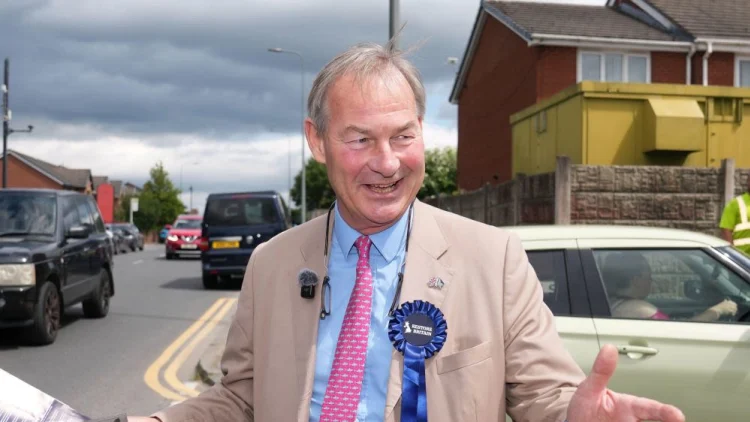
Rupert Lowe Criticised For Describing Dunblane School Massacre As 'One Murder'


3 min read

Rupert Lowe has sparked anger after referring to the Dunblane school massacre as “one murder”.

Advertisement

The leader of Restore Britain made the remark during an appearance on the Joe Rogan Experience podcast.  

His comments have been described as “insulting” and “despicable” by local politicians.

In March 1996, 16 children, aged five and six, and their teacher Gwen Mayor were shot dead by Thomas Hamilton in the gym hall of Dunblane Primary School, in what is still the deadliest mass shooting ever in the UK. A further 15 children and three adults were wounded, and Hamilton turned the gun on himself.  

The MP for Great Yarmouth made the comment when speaking on legislation to ban handguns that was introduced following the massacre.

Advertisement

He said: “They don’t want the public to have guns, and they are doing their very best to damage the shooters who perfectly and legitimately like to go and shoot clay pigeons, who like to go and shoot game, who like to go and hunt.

“Effectively, they are trying to make that very difficult through the licensing laws for guns.

“As you probably know, they banned handguns in the late 90s because there was a murder up in Dunblane.”

Advertisement

Joe Rogan asked: “One murder?”

Lowe replied: “One murder.”

He added: “My father used to shoot pistols for Oxford University, he’s dead now, bless him, but he had all his pistols taken away, the pistols he used to shoot with at Oxford University. I mean, we now have a society that needs radical change.”

Conservative MSP Stephen Kerr has described Lowe’s comments as “genuinely shocking” and that “to reduce that atrocity to ‘one murder’ is deeply insulting”.

Advertisement

Posting on X, he said his children’s school, which was “about 15 minutes from Dunblane”, was locked down that day.  

“They’ll never forget being kept in the gym hall until everyone learned the gunman was dead. They’ll never forget the teachers trying to hold themselves together while reassuring frightened children,” he said.

Kerr added: “It wasn’t a single murder. It was a mass murder. In a primary school.  

“Almost as disturbing was the tone – one of disbelief, even mockery, that anyone could respond by tightening gun laws.  

Advertisement

“This wasn’t some obscure historical event. It happened in 1996, when Lowe was 38 years old. He should have known what happened on that terrifying day in Dunblane.  

“For anyone who remembers that day, hearing it dismissed so casually is genuinely shocking.”

The SNP depute leader and MSP for Dunblane, Keith Brown, described Lowe’s comments as “beyond despicable”.

He added: “Despite these hideous remarks from Rupert Lowe, the Snowdrop Campaign that followed that terrible day ensured a ban on the private ownership of most handguns – that is the proud legacy of the bereaved families and the local community.  

Advertisement

“Their courage and determination in the aftermath of the attack is something we should never betray and our community will never let the likes of Rupert Lowe do exactly that.”

The Snowdrop Petition calling for tighter gun laws that followed the massacre was signed more than 750,000 times, and along with the Cullen Inquiry, led to the ban on private ownership of higher-calibre handguns in 1997. The ban was then extended to .22 handguns later that year.


This article originally appeared on Holyrood

Advertisement

Source link

Advertisement
Continue Reading

Politics

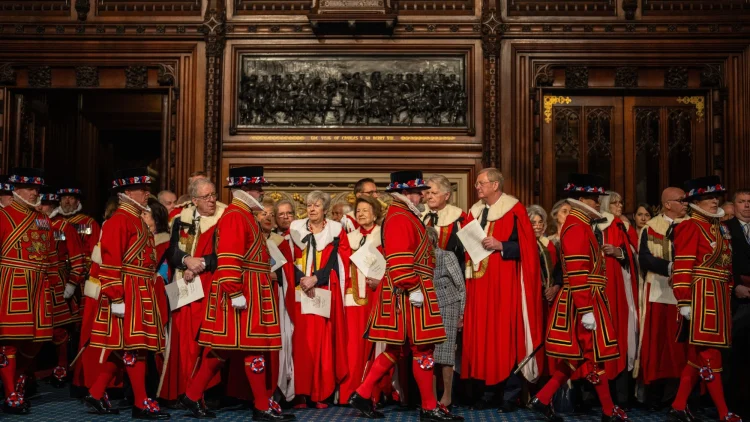
The House | Burnham’s on his way to No.10. Could I be on my way out of the House of Lords?

Published

on

Burnham’s on his way to No.10. Could I be on my way out of the House of Lords?


4 min read

“Scandalous”. This was the word used by Keir Starmer’s successor to describe the House of Lords just a few short weeks ago when referring to the fact that “half” of the UK’s legislature is unelected.’

Advertisement

I agree with him. It is scandalous, especially when the actual number is more than half. We have 650 Members of the House of Commons, chosen by voters, but at the time of writing, we have 791 Members of the House of Lords, many of whom reach the Lords through systems of patronage and personal networks. A world most people will never be privy to.

To be fair to the outgoing Prime Minister, he did at least attempt to reduce the number of hereditary peers – all male, all born with the opportunity to make laws that affect us all.

Eighty-Five lost their seats. Twenty-nine promptly regained them. A third returned. The system regenerates itself faster than anyone is willing to reform it.

It is no secret that I want to see the House of Lords abolished and replaced with a democratic second chamber. But it is also no secret how the incoming Prime Minister feels either.

Back in 2001, he said the case for Lords reform was “urgent”. If it was urgent twenty-five years ago, then surely it is overdue today. His recent comments on the Makerfield by-election campaign trail reinforced that urgency when he said that reform “cannot be delayed any longer” and that the Lords is the first place to look when “cutting the cost of politics”. He has long supported a Senate of the Nations and Regions, which is a model that would finally give Wales, Scotland, Northern Ireland and the English regions a meaningful voice.

Advertisement

As a woman representing Wales – one of very few Welsh voices in the Lords – this is music to my ears. How can a legislature dominated by a handful of London and South-East England postcodes genuinely represent communities hundreds of miles away, whose lives and experiences many peers have never known the likes of?

So, given that we seem to see eye to eye on this, I thought I would set out how I think he can best go about it.

In the 2024 manifesto, the Labour Party committed to consult on proposals to replace the House of Lords with an alternative second Chamber, seeking the input of the British public on how politics can best serve them. The argument I hear time and again is that such reform is impossible – too big of a beast, too complex, and too much resistance from within the Lords itself.

Advertisement

But that simply isn’t true.

The Salisbury Convention is a constitutional convention that means that the House of Lords should not block legislation that implements a clear manifesto commitment. While the convention is not legally binding, it has mostly been respected for over 80 years and provides a strong foundation for delivering what voters were promised.

And if the Lords did attempt to obstruct it, the Parliament Acts provide a statutory route to ensure the elected House prevails. A Bill passed by the Commons in two successive sessions – with at least a year between its first and final passage – can be sent for Royal Assent without the Lords’ consent. Reform may be a bit of a bumpy ride, but it is not impossible, and it certainly shouldn’t be a reason for us to shy away from transforming the institutions that underpin our very lives to better serve the people of these nations.

Given the current UK Government’s sluggish approach to their 2024 manifesto commitment, I recently introduced a Private Member’s Bill to establish a framework for consulting stakeholders on replacing the Lords with a democratic second chamber. This is exactly what the Labour Party promised in its manifesto, so I thought I would give them a helpful nudge.

Advertisement

Some may think – when people are struggling with the cost of living and public services in need of support – why would this be the next Prime Minister’s priority? But as the ‘King of the North’ said himself, the “constitutional stuff” and the wiring of the country is part of the problem. For that reason, I sincerely hope he may be bolder still. After all, nothing says ‘man of the people’ quite like dismantling an ancient institution that was designed by and for the elite.

I would be delighted to work with anyone who shares this vision. So, Andy, my door is open – as I hope yours will be too.

Source link

Continue Reading

Politics

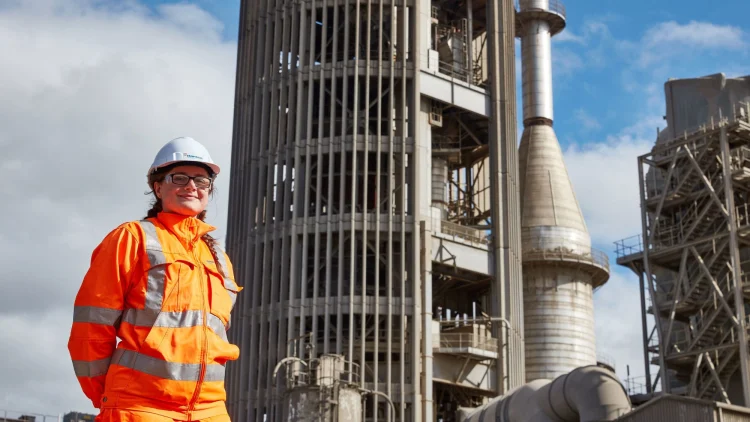
Politics Home Article | Manchesterism and industry: reversing deindustrialisation?

Published

on

Manchesterism and industry: reversing deindustrialisation?

Robert McIlveen, Senior Director, Communications and Public Affairs

As UK cement and concrete plants close and sales fall for a fourth consecutive year, Robert McIlveen, Senior Director, Communications and Public Affairs, Mineral Products Association, explores what Andy Burnham’s reindustrialisation drive must do to halt the decline of Britain’s foundational industries before it can build new ones

Advertisement
“…a concrete plan to reindustrialise the birthplace of the industrial revolution, bringing high-value employment to all parts of Greater Manchester.” – Andy Burnham launching his plan for Greater Manchester’s economy in January 2026

As the trade body for mineral products, we always welcome a concrete plan, cementing our place, in aggregate. There is always mortar do (say it out loud). But that’s usually where the political attention paid to the materials that build everything usually ends – a turn of phrase.

Andy Burnham’s emerging vision for Britain has included a very welcome focus on re-industrialisation.  A big part of that needs to be stopping the drift to deindustruialisation we are experiencing right now. UK industry has faced a tough few years and getting policy right in this area could save thousands of good jobs that exist now, as well as help grow those of the future.

New industrial strategy?

Burnham’s victory speech the morning after the Makerfield by-election referred to “a new drive of reindustrialisation across the North of England and indeed the rest of the country” before highlighting procurement as an area where Government can make a difference. 

Advertisement

This could be a welcome evolution from the existing Industrial Strategy, which paid scant attention to preventing the decline of existing industries on which that growth rests. In our sector, cement and concrete were ultimately included in the list of foundational materials, but are still facing serious threats to competitiveness that are not being tackled at the pace or with the seriousness they need. Other parts of the sector were ignored entirely – including the aggregates that go into asphalt for roads, ballast for rail and are combined with cement to make the concrete that forms the houses, workplaces and infrastructure we all need.

“For too long, UK public procurement policy has been based on chasing cut-price deals around the world, rather than helping our own British-based suppliers become more stable and competitive.” – Burnham’s speech on 29 June

The public sector represents about 40 per cent of the market for mineral products, so procurement is a powerful lever to pull. Making sure that local and national government are not undermining jobs in the UK to save fractions on cost is an obvious place to start, from an absurd recent story of a Scottish council buying Angolan granite after rejecting a quarry a few miles away, to tackling the uneven playing field on carbon costs that is driving a surge in cement imports.

A fresh start?

Advertisement

But before we get to long-term growth, we need short-term survival – the first rule of growth is not to shrink. Sales in our sector have fallen for four consecutive years, with no sign of improvement this year. This has a real impact on jobs, as plants are mothballed. Among MPA members we have seen closures of concrete batching plants – where cement and aggregates are mixed into the back of a concrete mixer truck before being delivered to local sites. These are down from nearly 900 pre-pandemic to just over 700 today.

To be clear, these are not old-fashioned jobs that we have evolved past as the economy becomes ever more high-tech. To build the gigafactories, data centres, and the infrastructure for defence, energy and water that we clearly need, we need secure, domestic, sovereign supply of essential materials.

There are things Burnham could announce that would help. An updated set of national guidelines for essential minerals – the last guidance for local authorities expired in 2020 – and requiring major projects to declare their material needs would help bolster confidence to invest. Making sure the new Carbon Border Adjustment Mechanism is watertight – and in particular, doesn’t offer plants that don’t declare their emissions a generously low default option – can help secure the UK’s cement capacity from fast-rising imports from countries with no carbon price and weak regulation. None of these would cost any money.

High value jobs

Advertisement

High-value jobs already in the economy are under threat from the UK’s lack of competitiveness. This is particularly acute in energy intensive industries such as cement and lime, where the UK’s much higher industrial energy costs are driving production to lower-cost competitors overseas. But it is also true throughout the sector, where investment drives jobs and confidence to invest is low.  

There are 89,000 jobs in our whole sector, largely concentrated outside the Southeast of England, ranging from quarry workers to concrete pre-casters and cement technicians to truck drivers delivering ready-mixed concrete, crushed rock, mortar or any number of products. The sector provides above-average wages and has productivity 35% above the national average, generating £75,000 per job. These are good jobs, providing essential materials for the whole economy; they should be supported through tough times.

Talk of reindustrialisation needs to not just be starry-eyed about growth in new sectors. The first rule should be to halt deindustrialisation in key sectors that everything else relies on, securing jobs and the UK’s sovereign capacity in essential materials. A real success for Manchesterism would see new industries springing up all over the country, on the literal foundations of our existing essential industries.

Source link

Continue Reading

Politics

Sadik Al-Hassan MP: ‘Why the upcoming Health Bill must close the regulatory gap’

Published

on

MDU logo

A decade after the Brexit vote, new arrangements for the regulation of medical devices are finally taking shape. Medical devices, including diagnostic and digital health technologies, are essential to the delivery of modern healthcare, and are relied upon by millions of people across the UK every day.

Products are, necessarily, highly regulated and undergo close scrutiny once in use. The future regime will offer a blended approach, maintaining CE recognition alongside the consideration of approvals from other, trusted jurisdictions such as the US, Canada, and Australia.

A key component will also be a bespoke route to the UK market, and one which could help make our country an attractive destination for innovative technologies, such as those currently being considered by the National Commission into the regulation of AI in healthcare. Yet, for any of these pathways to function effectively, we must address the fundamental legal omission at the heart of our domestic regulator.

To make this new era successful, protect the supply of life-saving and life-enhancing technologies to NHS patients, and offer global manufacturers long-term confidence in the UK, it is important that the MHRA now has the necessary powers to approve products in its own name. We cannot rely on a patchwork of international workarounds without giving our sovereign regulator the baseline legal authority to make independent product determinations.

Advertisement

The upcoming Health Bill, announced in the king’s speech, provides the perfect legislative vehicle to fix this problem. The bill will be slim, and the government will be anxious that it passes quickly, such that the abolition of NHS England can be completed by next April. However, the government has not steered away from addressing tricky issues in this legislation, such as those around data sharing to create a unified single patient record.

Whilst those data-sharing clauses may prove contentious during parliamentary scrutiny, using the legislation to give our regulator the powers most people believe it already has, would not. The bill presents an immediate opportunity to secure supply continuity, elevate patient safety, and restore global industry confidence in the UK.

This vital correction could be achieved smoothly through a short, completely uncontroversial amendment. We must seize this moment to build a resilient, modern regulatory framework that protects British patients and accelerates NHS innovation.

Advertisement

Source link

Continue Reading

Politics

Politics Home Article | A more active nation is within reach if we focus where it matters most

Published

on

A more active nation is within reach if we focus where it matters most

Simon Hayes, CEO

Britain cannot afford the cost of inactivity. Every day we delay helping the least active people to move more, we pay for it through rising NHS demand, lower productivity and widening inequality

Advertisement

A more active nation is not just healthier; it is more productive, resilient, happier and wealthier. In a period of constrained public finances, physical activity is not a luxury – but a strategic necessity. Every £1 invested in community sport and physical activity generates more than £4 in social value through improved health, wellbeing, productivity and stronger communities.

It sounds simple enough: just get inactive people moving and unlock incredible social and economic benefits.

But an inactive adult or child is usually the result of a range of complex, interconnected factors such as income, location, ability and access. As a result, simple, ‘one size fits all’ approached will not work.

If you live in a lower-income area with high social need, the places and spaces that many wealthier communities enjoy – large parks, safe walking or cycling routes, local leisure facilities and a range of community sports clubs – are much less likely to be available to you.

Advertisement

This is why, since 2020, Sport England has pioneered the development of Place-based partnerships all over the country. We have established over 90 of these in the most deprived communities, where people are the least active. Alongside our partners in each place and supported by critical funding from the National Lottery we have delivered bespoke solutions to tackling inactivity with outstanding results.

A great example is in Penzance and St Austell in Cornwall, where local residents and community organisations identified active play as a way to help more people move and connect with one another. Together they developed the Beat the Street programme, transforming everyday walking and cycling into a community-wide game rather than a formal intervention. In under a month, more than 3,200 adults took part, 40 per cent of whom had previously been inactive. That’s 1,280 people becoming more active, helping to prevent illness, improve mental wellbeing and strengthen connections across the community.

We have seen similar success through more traditional sports-based approaches. In Birmingham, community partners have worked with local clubs and organisations to create more inclusive opportunities for people to take part in activities such as football, cricket and netball, helping residents who previously faced barriers to participation to become active and stay active. Together, initiatives like these contribute to the £123 billion of social value generated by physical activity each year.

Advertisement

We are proud of what we have achieved in recent times, but since 2020, the context in which we operate has shifted profoundly. The pandemic exposed the underlying inequalities in who gets to be active; the changing cost of living entrenched them. Global instability has driven multiple economic shockwaves, which means some people have less money to spend on sport and activity than ever.

Sport England is working on the next phase of our long-term strategy in response to this: a plan to accelerate impact by laser-focusing our efforts where they can make the greatest difference.

We will focus on the people and places where inactivity is highest and where the benefits of being active are most transformational. We’ll prioritise children from low-income families who are missing out on the joy of sport and the chance to building lifelong healthy habits. We’ll focus on supporting older adults, particularly those with long-term health conditions, to stay active. And we will continue to invest in the places facing the greatest social and economic challenges.

At the same time, we will strengthen the foundations of the community sport sector itself. Across the country, the organisations, volunteers and facilities that enable community sport are under growing pressure. Volunteer numbers are declining, infrastructure is ageing and many facilities no longer meet the needs of modern communities. If we want to expand participation, we must first ensure the system supporting it – from modern, accessible facilities, to seamless digital services that help people find, join and stay involved in sport – is fit for the future.

Advertisement

None of this can be achieved by Sport England, or by the sporting sector alone. Lasting change depends on building connections: between the government, local authorities, health services, schools, community organisations and the private sector We will continue to develop the partnerships and create the conditions for that to happen, at every level: local, regional, and national.

The consequences of inactivity are visible everywhere: in our NHS, in our communities and in the unequal life chances of too many people. But the opportunity is everywhere too.

Sport and physical activity are amongst the most powerful, underused forces we have to improve our nation’s health, wealth and happiness. We know what works. We know where the need is greatest. The question now isn’t whether we can build a more active nation.  It’s whether we have the determination to do so.

Source link

Continue Reading

Trending

Copyright © 2025