
Politics
Boris Johnson tells Merkel EU must abandon backstop if it wants Brexit deal – live news | Politics


Key events
Afternoon summary
That’s all from me for today.
Thanks for the comments.
Earlier, in response to a question from a reader, I posted a paragraph explaining why Boris Johnson might not be quite as fearful of an early general election as people generally think he should be. (See 2.37pm.) But my colleague Severin Carrell, the Guardian’s Scotland editor, points out (fairly) that I left out the Scottish dimension. He’s sent me this.
Amidst all the talk of a snap election this autumn, it is unwise to ignore the likely scale of an Scottish National party “win” in Scotland. All the recent polls show the SNP will romp home with a larger number of seats: not quite as high as the 56 out of 59 seats they won in 2015 but they’re on course to easily surpass 40, leaving the other parties trailing.
Those numbers will have significant impact on the prospects of both the Tories and Labour of winning a majority in the Commons, where the SNP is currently the third largest party.
The SNP are currently polling at around 40% for a Westminster election. Scottish Labour is in freefall under Richard Leonard’s lacklustre leadership, and is now below 20% – as are the Scottish Tories. That makes it impossible for Labour to win the 20 seats in Scotland it needs to gain a Commons majority; indeed it will struggle to hold the seven it won in 2017.
Now, we don’t know how many centrist and anti-Boris pro-UK voters will switch to the Lib Dems (which did very well in Scotland in the European elections and now have a young, female Scottish leader) but it’s quite possible the LDs will win a couple of more seats, more likely from the Tories in rural areas where farming will be heavily hit by a no deal Brexit.
And with those polling numbers, it is hard to see the Scottish Tories holding onto their current tally of 13 Scottish seats: the conflicts and contradictions between Ruth Davidson, a strong soft-Brexiteer who has built the Tory renaissance by appealing to centrist voters, and Johnson are too significant.
While there are pockets of strong pro-Brexit sentiment in Scotland, there are not enough pro-Brexit votes here to make the difference in first past the post seats other than in north east Scotland and, potentially, in the rural south west – areas where the Tories already have MPs. (It is also the case that with Johnson as Tory leader, the Brexit party has no chance of winning a Westminster seat in Scotland.)
And if the SNP clean-up north of the border, the constitutional crisis over Brexit will be amplified by a constitutional crisis over Scottish independence.

Kate Connolly
Angela Merkel has wished Boris Johnson “a sure hand” in his new role as British prime minister inviting him to visit Berlin in a telephone call.
The German chancellor interrupted her summer break to speak to Johnson today, in a conversation which a spokeswoman said focussed on Brexit as well as future bilateral relations.
The spokeswoman, Ulrike Demmer said Merkel “congratulated him on assuming his new office and wished him a sure hand in exercising the duties of this responsible task.”
Demmer said the leaders’ conversation centred “around the UK’s withdrawal from the European Union as well as efforts to deepen bilateral relations”.
She added that Johnson had accepted the invitation to visit Berlin. He is expected to combine it with a visit to French president Emmanuel Macron. Political insiders in Berlin say the visit could take place as early as next week but no date has been announced.
The arrival of Johnson in Downing Street has been met with a mix of bewilderment and defiance in Berlin, where he is often referred to, particularly in the boulevard press, as ‘Brexit Boris’.
Berlin has repeatedly ruled out reopening Britain’s withdrawal agreement with the EU, putting particular emphasis on its refusal to renegotiate the Northern Ireland back-stop unless a viable alternative is found.
Here are some pictures from Boris Johnson’s visit to West Midlands Police’s learning and development centre. I have not found any pictures of people posing for selfies with him yet.
This is from Sky’s Sam Coates, who has obviously seen TV footage of Boris Johnson’s walkabout this afternoon that has not been broadcast yet.
Interesting watching pictures of Boris Johnson doing a walkabout. Public coming up and doing selfies with the PM, without the police intervening. Not very Theresa May.
— Sam Coates Sky (@SamCoatesSky) July 26, 2019
This is from the Mail on Sunday’s Harry Cole.
Ohhh… Sunday Times journalist Andrew Gilligan is the Prime Minister’s new adviser on Transport.
— Harry Cole (@MrHarryCole) July 26, 2019
My colleague Peter Walker, author of the excellent Bike Nation, approves.
Downing Street has announced that six junior ministers (all parliamentary under secretaries of state) are saying in post. They are:
Kevin Foster, a Welsh Office minister and Cabinet Office minister, and government whip
Chloe Smith, a Cabinet Office minister
Rebecca Pow, a culture minister
Guy Opperman, a work and pensions minister
Will Quince, another work and pensions minister
Nusrat Ghani, a transport minister and government whip
Boris Johnson to visit Berlin soon for talks with Merkel, Germany government announces
And here is the German read-out from the Boris Johnson/Angela Merkel call. This is from Ulrike Demmer, a German government spokeswoman.
Boris Johnson tells Merkel EU must abandon backstop if it wants Brexit deal
Boris Johnson has had a telephone call with Angela Merkel, the German chancellor. According to the Downing Street read-out, Merkel got exactly the same message about how the backstop must go that Emmanuel Macron received. (See 12.38pm.) A Number 10 spokesman said:
The PM today received a call of congratulations from German chancellor Angela Merkel. They agreed to continue to strengthen our bilateral relationship, and to work together closely on foreign policy and security issues.
On Brexit, the PM said that he would be energetic in reaching out as much as possible to try to achieve a deal, but he reiterated the message he delivered in the House of Commons yesterday: parliament has rejected the withdrawal agreement three times and so the UK must fully prepare for the alternative – which is to leave without a deal on October 31.
He said the only solution that would allow us to make progress on a deal is to abolish the backstop. The PM and chancellor agreed to stay in contact.
The pound has been falling in value this afternoon in the light of Simon Coveney’s comments about Brexit (see 1.08pm), the BBC’s Faisal Islam reports.
Sterling now dipping below 1.24 to $1.2395 this afternoon, after comments such as this from Ireland’s Tanaiste Coveney that PM Johnson “deliberately” put UK “on collision course” with EU and Ireland, and No 10 saying EU needs to drop backstop for talkshttps://t.co/xSgR7yOK8q
— Faisal Islam (@faisalislam) July 26, 2019
Defence minister Tobias Ellwood sacked in reshuffle
It looks like Tobias Ellwood has been sacked. Ellwood, a defence minister, said at the weekend that a no deal Brexit could plunge the Tories into opposition for an awfully long period of time. But two days later he said he would not be resigning from government.
Now he is out. He has posted this on Twitter.
It’s been a privilege.
I return to the backbenches with ever more passion, respect and humility for our amazing Armed Forces. And will continue to make the case for further defence spending.
Si vis pacem, para bellum pic.twitter.com/j535Go7Ui1
— Tobias Ellwood MP (@Tobias_Ellwood) July 26, 2019
The final line of his tweet, “Si vis pacem, para bellum”, means “If you want peace, prepare for war”. Whether that is a comment on defence spending, or on relations with Downing Street, remains to be seen.
Ellwood was honoured for his bravery after he intervened to try to save the life of PC Keith Palmer, the police officer killed in the Westminster terror attack in 2017.
Julian Smith, the new Northern Ireland secretary, has been visiting Derry.
As the BBC reports, Smith was greeted by protesters from the Bloody Sunday Justice Campaign, as well as activists in favour of same-sex marriage and Irish language legislation.
No 10 starts announcing junior ministerial appointments
We’ve had another instalment of the reshuffle.
These are all parliamentary under secretary of state appointments, or the equivalent, which is the most junior level of minister.
Sideway move
Nadhim Zahawi moves from education to business.
Staying put
Kelly Tolhurst remains a business minister.
John Glen remains economic secretary to the Treasury.
Graham Stuart remains an international trade secretary.
Victoria Atkins remains a Home Office minister and minister for women.

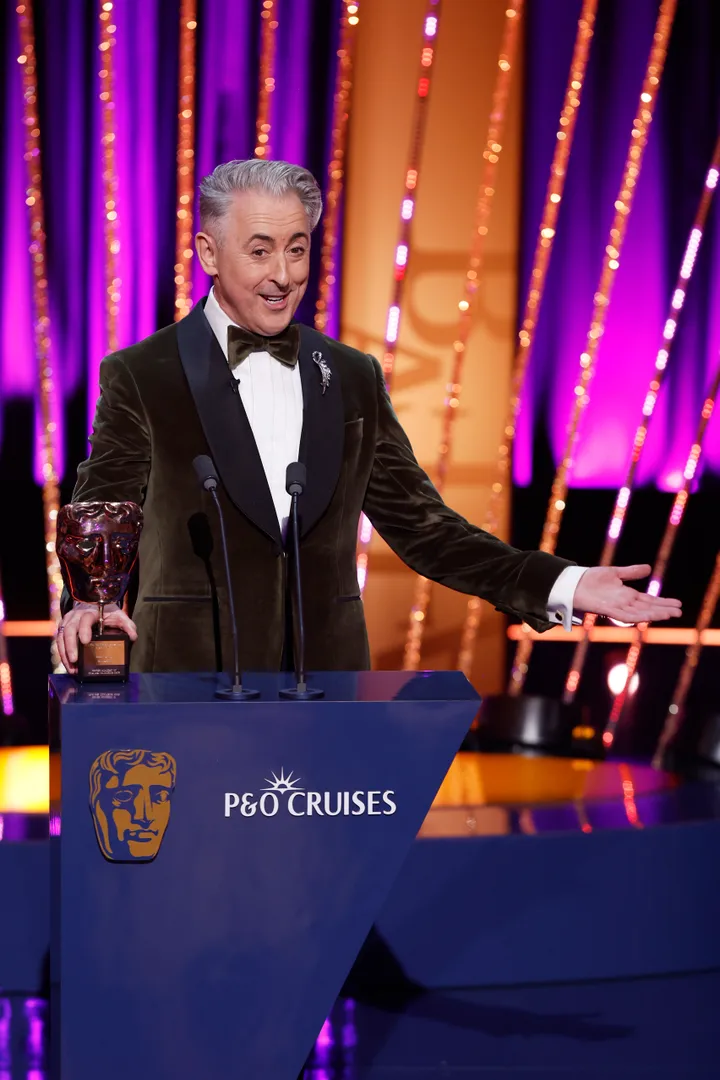
Greg Davies has been unveiled as the new presenter of the TV Baftas, following the departure of outgoing host Alan Cumming.
On Monday morning, it was confirmed that Greg would front the TV Baftas when they take place in May at London’s Royal Festival Hall.
“I see the whole event as an opportunity to wave a flag for this beloved medium and, with the exception of one commissioner, two execs and a co-star that I have personal beef with, I will do everything I can to ensure it’s a night of warm celebration for all,” the Taskmaster host joked.
Alan previously hosted last year’s TV Baftas, and later took over from David Tennant as the presenter of the awards show’s film counterpart earlier this year.

John Phillips via Getty Images for BAFTA
However, it’s not clear whether he will return after branding the most recent Baftas a “trauma-triggering shitshow”.
Responding to the much-publicised incident from this year’s Baftas, in which Tourette’s campaigner John Davidson experienced involuntary tics resulting in him shouting the N-word while Sinners actors Michael B Jordan and Delroy Lindo were presenting an award, Alan wrote: “What should have been an evening celebrating creativity as well as diversity and inclusion turned into a trauma-triggering shitshow.
“I’m so sorry for all the pain Black people have felt at hearing that word echoed round the world. I’m so sorry the Tourette’s community has been reminded of the lack of understanding and tolerance that abounds regarding their condition.
“The only possible good that could come of this is a reminder that words matter, that rushing to judgement about things of which we are not fully cognisant is folly, that all trauma must be recognised and honoured.”
“We were all let down by decisions made to both broadcast slurs and censor free speech,” he concluded, referring to the fact that the BBC failed to censor the slur despite the awards show airing on a two-hour time delay, while cutting short one politically-charged acceptance speech.
“Congratulations to all the artists whose work was overshadowed by the night’s events.”
The nominees at the 2026 TV Baftas will be announced on Tuesday at 12pm.
Last week, the contenders for the Memorable TV Moment category, as voted for by the public, were unveiled.

Strictly Come Dancing professional Karen Hauer has confirmed rumours that she has quit the show after 14 seasons.
Earlier this month, Karen was one of five Strictly pros reported to be leaving the show in a shake-up ahead of this year’s season, with Nadiya Bychkova, Gorka Márquez, Luba Mushtuk and Michelle Tsiakkas also tipped to not be returning.
While Nadiya, Gorka, Luba and Michelle have all remained tight-lipped on the rumours, Karen announced over the weekend that that she would not be back on the BBC dance show in 2026.
Posting on Sunday, the Venezuelan-American performer – who had been the longest-serving dancer in the show’s current troupe, and the longest-serving female dancer in its history – told her Instagram followers: “After 14 years on Strictly Come Dancing, I’ve decided this is the right time for me to close this chapter and take on new projects in other areas that I’m passionate about.
“Strictly completely changed my life, not only as a performer and a teacher, but as a human being. I’ve had the privilege of meeting so many incredible people, and brilliant celebrity partners who have become close friends and people I admire so much.
“None of this would have been possible without the amazing fans. You’ve been there since day one, when I’d just moved to the UK and had no idea what I was getting myself into. I’m so grateful. You watched me grow over the years, and witnessed all of my different hairstyles!
“I’m going to miss everyone who makes the show possible, from hair, makeup, wardrobe, the crew behind the cameras, lighting, production and staging, the runners, Dave Arch and the band, the singers, and the producers and welfare team who take such good care of us. It’s an incredible machine powered by brilliant people. To my fellow professional dancers who I adore, I will always be cheering you on. You truly are the best in the business.”

She continued: “I’ll never forget joining the show 14 years ago with Sir Bruce Forsyth and Len Goodman and learning from such incredible legends along the way. And to the brilliant Tess [Daly] and Claudia [Winkleman], maybe now we can finally be ladies who lunch in the autumn.
“I’ll even miss standing in front of the judges, can you believe that? Smiling politely while sometimes secretly disagreeing. It’s been an honour to share the ballroom with them.”
“Now, this isn’t a goodbye,” she insisted. “It’s simply ‘see you later’. Because I will never stop dancing.
“Who would have thought that a young girl from the Bronx would end up becoming the longest-serving female professional dancer on a British TV institution? Strictly will always be in my heart. I love you all.”
A number of Karen’s Strictly colleagues, including Nadiya Bychkova, Luba Mushtuk, Nancy Xu, Vito Coppola, Jowita Pryztal and Lauren Oakley have been sharing their love in the comments.
“There’s no one like you K, we love you mamasita!” Johannes Radebe wrote, while Dianne Buswell told her she was “always a star”.
Over the course of her time on Strictly, Karen was paired with Westlife singer Nicky Byrne, TV chef Dave Myers, reality star Mark Wright, broadcaster Jeremy Vine, pop singer Will Young, daytime presenter Simon Rimmer and actor Charles Venn.
More recently, she’s danced with comedian Chris Ramsey, reality-TV-personality-turned-podcaster Jamie Laing, performer Greg Wise, stand-up comics Jayde Adams and Eddie Kadi, football legend Paul Merson and Gladiators fave Harry “Nitro” Aikines-Aryeetey.
She made it to the Strictly final twice, with Mark Wright and Jamie Laing.

Chappell Roan has spoken out for the first time after finding herself in the centre of a media storm when Brazilian footballer Jorginho accused her security team of making his 11-year-old stepdaughter cry.
On Saturday, the Pink Pony Club singer was the subject of a lengthy post shared on Jorghino’s Instagram story about a “very upsetting” incident.
“I went through a very upsetting situation with my family earlier today,” the post began. “My wife is in São Paulo for [Lollapallooza Brazil, where Chappell was headlining]. This morning, my daughter woke up incredibly excited, she even made a sign because she was so happy to see an artist she really admires, or used to admire. By coincidence, they’re staying at the same hotel as this artist.
“During breakfast, the artist walked past their table. My daughter, like any child, recognised her, got excited, and just wanted to make sure it was really her. And the worst part is she didn’t even approach her. She simply walked past the singer’s table, looked to confirm it was her, smiled, and went back to sit with her mum. She didn’t say anything, didn’t ask for anything.
“What happened next was completely disproportionate.”

The footballer continued: “A large security guard came over to their table while they were still having breakfast and began speaking in an extremely aggressive manner to both my wife and my daughter, saying that she shouldn’t allow my daughter to ‘disrespect’ or ‘harass’ other people.
“Honestly, I don’t know at what point simply walking past a table and looking to see if someone is there can be considered harassment. He even said he would file a complaint against them with the hotel, while my 11-year-old daughter was sitting there in tears. My daughter was extremely shaken and cried a lot.
“I’ve lived with football, public exposure, and well-known people for many years, and I understand very well what respect and boundaries are. What happened there was not that. It was just a child admiring someone.”
He added: “It’s sad to see this kind of treatment coming from those who should understand the importance of fans. At the end of the day, they are the ones who build all of this.
“I sincerely hope this serves as a moment of reflection. No one should have to go through this, especially not a child.”
Addressing Chappell directly, he said that “without your fans, you would be nothing”, before telling Chappell’s supporters “she does not deserve your affection”.
Jorghino’s post subsequently blew up on social media, with even the mayor of Rio de Janeiro claiming that he’d banned Chappell from every headlining at the Todo Mundo No Rio music festival in the future.
Responding later in the weekend, the Grammy winner insisted in her own Instagram story posts that she had been oblivious about the incident until she read about it online.
“I didn’t even see,” Chappell claimed. “I didn’t even see a woman and a child. Like, I did not.
“No one came up to me. No one bothered me. Like, I was just sitting at breakfast in my hotel. I think these people were staying at the hotel as well.”
She continued “I did not ask the security guard to go up and talk to this mother and child. I did not – they did not come up to me! They weren’t doing anything! It’s unfair for security to just assume someone doesn’t have good intentions when they have no reason to believe because there’s no action even taken…
“I do not hate people who are fans of my music. I do not hate children. Like, that is crazy. And I’m sorry to the mother and child that someone was assuming something, that you would do something and that if you felt uncomfortable, that makes me really sad. You did not deserve that.”
The girl in question’s mother, Catherine Harding, has since shared her own six-minute statement on the matter, insisting that the security guard who confronted her 11-year-old “100% was not a security guard of the hotel” and “looks after artists”.
“I don’t know that it was her personal security guard, but he was with her, so that is all I know,” she claimed.
Jorginho is the stepfather to Catherine’s 11-year-old daughter, whose father is the actor Jude Law.
The sports icon has been married to Catherine since last year, with the pair also welcoming a son in 2020.

A BBC expert has warned that Iran “is not defeated yet” despite Donald Trump’s repeated claims that America has already won the war.
Security correspondent Frank Gardner said the regime in Tehran is “playing the long game” in the face of the US president’s latest threats.
At the weekend, Trump gave Iran 48 hours to re-open the Strait of Hormuz or face it’s power plants being “obliterated” by US missiles.
With that deadline set to expire at around midnight UK time, there is no sign of Tehran acceding to the president’s request.
Instead, Gardner said Iran was prepared to respond in kind against other Gulf nations, thereby prolonging the war.
Speaking to Radio 4′s Today programme from Doha, he said: “I don’t think anyone doubts that if Donald Trump goes through with this ultimatum – and he doesn’t always do that – there is a real concern that if power plants were hit by Iran here on this side of the Gulf, potentially that could effect things like desalination, which provides the drinking water for the Gulf.
“Millions of people depend on these plants to have their daily drinking water. Summer is approaching, daytime temperatures are above 30 degrees, that would be a crisis. And Iran knows that. It’s played a very clever strategic game.
“It may have lost tactically, huge amounts of hardware and commanders. But it’s playing the long game and it’s not defeated yet.”
Gardner also said that Iranian retaliatory attacks were shaking the confidence of Americas allies in the region.
“Governments here have to worry whether their strategic alliance with the United States is making them more vulnerable, not less,” he said.
Politics
Unlike McSweeney’s mobile phone, there’s no mystery to the disappearance of Starmer’s ‘popularity’

“How did Liz Truss make this job look so easy?!”
Saturday Night Live UK – ‘Starmer and Lammy discuss calling Trump’ sketch
A sharp line, in a clever sketch, in a better than expect launch show, seems to have tickled President Trump so much he actually posted it online. He’s gone from liking, to lambasting, to laughing at Keir Starmer.
As you read this, the PM is about to chair a meeting of COBRA – or more accurately in Cabinet Office Briefing Room A – where whether involved or not war comes to bite you at home, on your latest ‘number one commitment’, the cost of living.
This page is too small to count the times over the years Trump has embarrassed his country, himself, and his own family so I’m not blowing the trumpet for him here, but it’s not good for either when a US President is laughing at a UK PM.
It’s particularly awkward because after twenty months of demonstrating – as the skit has him saying, with a savagely accurate parody of his grating nasal tones – “I’m out of my depth here” he’d actually been clawing back some modicum of credibility for not ‘giving in to Trump’ a man more unpopular here than our most unpopular PM and astonishingly it would seem less popular that an actual despotic Ayatollah.
There was a stirring of what’s left of life-in-the-left-for-Stamer last night as some argued it was simply disrespectful of Trump to belittle Britain. Unhappily I suspect this defence sits solidly in Kemi Badenoch’s response some months ago when Starmer said she was running the country down: “I’m not talking the country down; I’m talking him down”
His life raft idea of trying, at every single opportunity to pretend Badenoch is some missile riding warmonger who just can’t wait to get stuck into Iran is undermined not just because it wilfully bends what she actually said but more importantly, our service men and women are involved and in harms way whether our PM likes it or not, and most of all “not being involved” has had no dividend whatsoever in the eyes of the Iranian regime.
Season 5 of the Chagos Islands – where the story is surely getting more and more surreal on the future of the deal itself – has seen Yvette Cooper acknowledge an Iranian attempt to strike the Diego Garcia base but keep broadcasting how we are not involved and won’t be involved to all our allies.
Those allies in the Gulf and elsewhwere are definitely watching, and I can tell you they aren’t impressed. The incident creating as big a target for more satire as the airbase ownership saga has become. A former Tory MP quipping:
“The PM is probably consulting Lord Hermer on the correct level of compensation to offer Iran for the loss of their missile”
One of which that we did not deal with but the US did.
As one of our non-political yet very highly qualified and peer acknowledged defence and strategic minds pointed out to me
“Healey has disappeared. Cooper is transparent. And Starmer cannot say a sentence without contradicting himself. Good grief. It’s like they’re systematically failing not just at reading the international room. They’re systematically failing at any basic political instinct about it”
Of course looking at their polling – and no I’m not ignoring Conservative numbers – and Labour’s predicted results in May, a lot of their comments are not about an international room but domestic voters. But the compromise won’t work. The dividend of ‘not being involved’ won’t stop Labour votes going elsewhere especially the Greens.
So I understand. This is ConservativeHome, maybe I would say all this wouldn’t I? But such an observation would be to ignore the signs and issues coming from inside Labour itself.
There’s a satire to be done on the hunt for Morgan McSweeney’s mobile. One wag on X asking if anyone had looked in Louise Haigh’s handbag. But it means the stink about the way the PM appointed Mandelson and gamed the process just won’t go away.
A political Poirot has ensued; when was it stolen? in what circumstances? where is the record of it being reported to police – The PM’s Chief of Staff’s phone gets stolen? Trust me that would be a big red klaxon to all so some record should exist, and anyway why aren’t the McSweeney-Mandelson WhatsApps recoverable or in the cloud.
If everything is rosy in the red rose brigade why is Al Cairns talking about where he learned leadership, and Angela Rayner being helped by a Labour donor (who once tried and utterly failed to have yours truly ejected from a London hotel for ‘being a Tory’) to rain fire on the Starmer project and programme? Why is whatever Starmerism is getting systematically targeted by increasingly transparent attempts to bring it down from within.
I’m going to talk more about my weekend at the Freedom Festival at the Margaret Thatcher Centre at the University of Buckingham in my next piece – but to conclude this one I was struck by something a close friend of Lady Thatcher discussed with me there.
Our starting point was that if Starmerism is really dead, it should be no more mourned than the ‘Blairite settlement’ that is also definitively dead. Part of that settlement was an assumption that you build a broad coalition of voters piece by piece, issue by issue, focus group by focus group, with promises for almost all to get that landslide.
In less than two years we’ve seen those groups peel away as the conceit unravelled on first contact with reality. They had won in 2024 because people were extremely fed up with the Conservatives and argued they simply didn’t know what they stood for anymore.
And there was where we discussed that bit of Thatcherism very much worth still keeping in mind, like Hayek’s Constitution of Liberty being thrown on the table and the silencing of the room with “This is what we believe!”
Today that means, no lawyerly language to seem present but not involved, but say our alliance is with America not one man.
To probe, how and why, because it genuinely matters, a man who remained friends with the world’s most infamous paedophile and sex trafficker was sent to be ‘our bridge’ to that ally, and wasn’t an instant principled driven ‘no’.
To say to her party, once Thatcher’s now Badenoch’s, with clarity and conviction: “this is what I believe in, this is what I’m going to do. It will be honest and direct. It may not always be easy to hear but it will be the right thing to do. This is what we believe and if you do too, vote for it”
Starmer tried to be the more moral, more principled, more straight, more genuine, to get to be Prime Minister but it was a façade built to appeal to the widest possible section of an ultimately fragmented network of niche wishes. Be honest and authentic – where the voter goes away and doesn’t have to like you but respects you – because they know exactly who you are and what you believe.
I’d take that path any day and it limits the amount they’ll ever end up laughing at you.

As the US-Israel war on Iran enters its fourth week and President Donald Trump orders the deployment of thousands of additional sailors and Marines to the Middle East, the troops he is counting on appear increasingly wary of the conflict.
Interviews with active duty soldiers, reservists, and advocacy groups focused on service members found some US troops who are caught up in the war are reporting vulnerability, overwhelming stress, frustration and disillusionment to the degree they may leave the military.
The reservists and active duty soldiers spoke on condition of anonymity for fear of retaliation or because they were not authorised to speak to the press.
A military official who is treating service members evacuated from the Middle East to Landstuhl Regional Medical Centre in Germany amid Iran’s retaliation said troops are suffering from “inadequate force protection and planning” and already reporting a severe, destabilising toll from Iranian ballistic missiles and drones that have been repeatedly striking American military facilities.
Thirteen troops have been killed amid the war so far, seven due to strikes, and at least 232 have been wounded.
A ground operation would be “an absolute disaster… we don’t have a plan for that,” the official said earlier this week. “We can’t even fully defend a single land base in the theatre”
A veteran and reservist who mentors younger officers told HuffPost her contacts are expressing a loss of faith to a new degree.
“I’m hearing out of service members’ mouths the words, ’We do not want to die for Israel — we don’t want to be political pawns,” she said. Another reservist in touch with current troops separately reported hearing similar comments.
“I’ve shared conscientious objector information six times in the past two weeks and I’ve been in the military almost 20 years — I’ve never had people reach out this way,” the first reservist continued.

Illustration: Kelly Caminero/HuffPost; Photo: Getty Images
Mike Prysner, the executive director of the Centre on Conscience and War, said his group would in past years hear from between 50 and 80 troops annually. The month of March has seen a 1,000% increase, he added, saying at least one new service member now contacts the organisation daily.
On Friday, he wrote on X that his group is handling “expedited” objector applications by Army, Navy and Marines personnel who were told they will be deploying this weekend.
And Matt Howard, the co-director of the group About Face: Veterans Against The War, said his organisation has been helping more active duty troops understand their options for dissent.
“Folks have more options than they think they do. The military makes it seem like there is only one route, its through their contract and that the consequences otherwise are devastating,” Howard said. “Folks have the right to options, including conscientious objector status. My understanding is more and more folks are going that particular route. We’re definitely finding ourselves having more of those conversations than we have in a long time.”
There is no indication of a mass exodus from the United States’ 1.3 million-person military over Trump’s campaign. Sources described anger, but also a sense of resignation among many troops.
Many service members have long anticipated and prepared for a US war against Iran, with some more senior personnel seeing that as justified given the country’s role in deadly attacks on American troops, particularly after the 2003 invasion of Iraq.
But dissatisfaction and morale problems could make Trump’s campaign less likely to succeed — and hint at a lasting shift among troops that could have implications for America’s national security establishment.
The lack of a clear, consistent narrative justifying the Iran war is a key source of discontent among troops, the reservists said, demoralising those who believe a poorly planned conflict is placing them in unnecessary danger for no identifiable strategic benefit.
Iran’s retaliation has pummelled wealthy countries in the Persian Gulf that host US forces and have for decades been largely spared large-scale conflicts unlike their regional neighbours, which include Kuwait, the United Arab Emirates, Qatar, Bahrain and Saudi Arabia. Deployments to the Gulf States were, until last month, considered low-risk and, according to former Army Major Harrison Mann, almost laughable.
“It does not enter your mind that that becomes a warzone,” Mann, now at Win Without War, told HuffPost.
Since those facilities started facing fire, military commanders have struggled to address troops’ heightened sense of exposure, the service member said, noting worrying patterns among some personnel, like refusing to answer calls to go to a bunker amid attacks.
Troops now seeking to leave the area are reporting different concerns from those who sought to do so in the recent past, even as tensions were heightened in the region, the service member added: “Getting random indirect fire is not the same as watching the entire gym and coffee shop and some dorms get blown up from a door less than 50 meters away.”
Broader concerns about the U.S. strategy also appear to be affecting troops.
Most service members now exploring registration as conscientious objectors point to the February 28 strike on a school in the Iranian town of Minab as a breaking point, Prysner said.
The strike killed at least 175 people, including dozens of schoolgirls. Sources familiar with the Pentagon’s investigation of the horrifying incident have told HuffPost the US likely bears responsibility.
Additionally, concerns about military service and the Iran campaign appear to reflect shifting attitudes on the US role in the Middle East, particularly relating to Israel. Troops are mentioning reservations about participating in a US-Israeli operation based on their observation of the devastation wrought by the American-backed Israeli offensive in Gaza since 2023, and younger Americans — core to the military — have become far more skeptical of Tel Aviv. An NBC News poll this month found 63% percent of voters under 34 now view Israel negatively, compared to 37% in 2023.
Meanwhile, many veterans are publicly and privately warning that Washington appears to be on the cusp of a costly quagmire akin to the Iraq and Afghanistan wars. One reservist noted that such a portrayal can reach younger troops more easily now than when service members were deployed for those campaigns 20 years ago, given the more honest discussions of failures in those wars and the spread of social media.
Even prior to the recent tumult, the Trump administration’s broader handling of troops and the Defence Department has also fuelled alarm among military personnel.
“It’s not just Iran. Prior to this, it’s been National Guard deployments [in American cities], the possibility of being used against their own neighbours and collaborating with ICE,” Howard said. “This moment is so destabilising in the way the military is being used as essentially a plaything for the administration to further an authoritarian agenda.”
Experts on civil-military relations and the law of war have condemned those deployments as well as apparent violations of international law in ongoing US military strikes on alleged drug boats in the Caribbean and Pacific.
A reservist in regular contact with service members noted Defence Secretary Pete Hegseth’s crackdown on efforts to promote diversity in the armed forces and moves to cancel military partnerships with think tanks and universities: “I’m getting this impression he doesn’t want us to learn or get smart — he just wants us to fight.”
“We’re seeing the direction of this,” the second reservist said, noting that Trump had, despite his campaign trail of avoiding wars, now shown a willingness to act forcefully against Iran, Venezuela and potentially Cuba. “If this doesn’t align with your intent or your career goals, I would get out.”
Politics
Alexander Bowen: Why does Starmer think the ‘faithist’ place for Bishops is staying in the House of Lords?
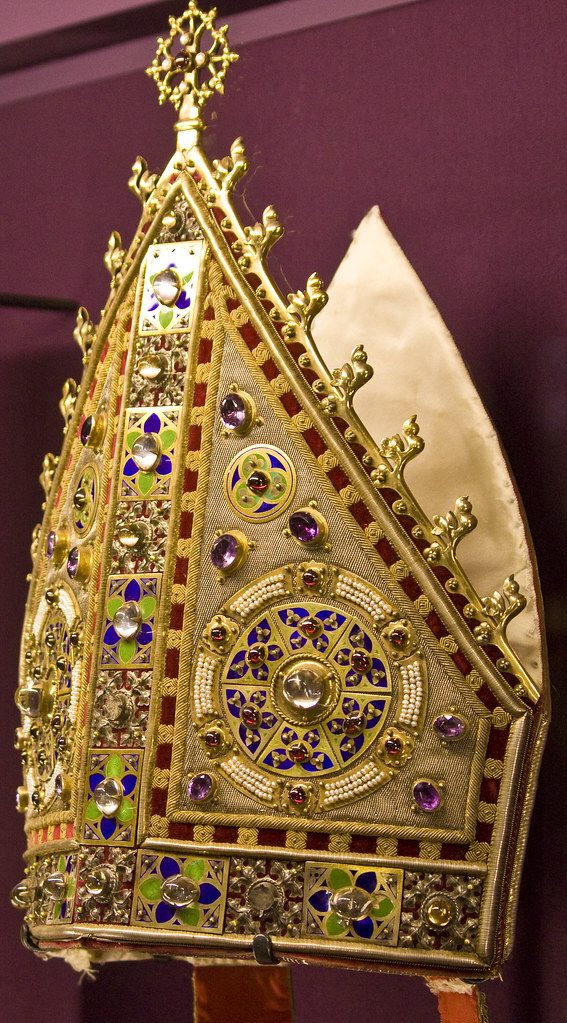
Alexander Bowen is a trainee economist based in Belgium, specialising in public policy assessment, and a policy fellow at a British think tank.
The Hereditataries are no more – or at least in a month and a half, when this sitting closes, they will be no more. Gone with these hereditary peers then is the last of our living link with 1341 – the first Parliament to meet with the Church and the Peerage separated from the rest.
These peers had survived five religious settlements, four civil wars, one in which the other chamber disbanded it for being “useless and dangerous” and executed its de facto leader, the transition from farm to factory, however many ‘people’s budgets’, and even, unlike for example Saddam-Hussein, Tony Blair, but they could not survive Keir Starmer. After one thousand years it would be Keir Starmer who would stand up for the working man’s right to be quasi-useful in a quasi-useful body – so long as said working man had furnished him with quasi-tailored suits or quasi-effective comms advice.
I, for what it’s worth largely agree with these governing crusaders, in outcome if not in spirit, the presence of hereditary peers was indeed largely bizarre. Appeals to the ‘living embodiments of one-thousand years of history’ and tales of the Norman Conquest are pleasant enough, when the Bayeux Tapestry arrives in London I shall be one of the first in the egregiously long queue, but the legitimacy and purpose of a governing system is defined by the outcomes it delivers for the era in which it operates not by the symbols it once devised. Those outcomes are, as I think we can clearly see, in the category of ‘not good’ at best.
Where I object however to Keir’s culling is in its inconsistency. If our great modernisers are to commit to their own long march through the House of Lords, removing the 92 hereditary peers, then ought they not on their own principles – that these Lords were unrepresentive, unelected, appointed elites with little merit – turn their weapons to the Lords Spiritual? Do they really serve any greater purpose? Why then do they remain?
On any historic basis they ought to be a perfect target for a Labour government committed to symbolic scalps – fox hunters, hereditaries, private schools, farmers with excessively large landholdings. Do Bishops in their Palaces not warrant the same treatment? Was the Church of England not once said to be the Conservative Party at prayer? If for Sieyès Starmer the third estate is everything then why only dismantle the second?
It is, I think, largely because the Church of England has for its part adopted a kind of ecclesiastical Starmerism – doing much to win over those with little interest in it, and little to keep those who have been its demographic. As a shadow for Starmer’s 12 per cent approval, the Church enjoys its 2 per cent attendance.
It is an idea mostly clearly embodied in the concept of ‘Faithism’, that is the belief that faith underpins communities, and their religious practices are, if not identical, largely interchangeable with history condensed into peculiarities.
It is a vision of religion I find slightly bizarre, not least because it seems to be underpinned by assuming your own view of religion is the view of religion, but it is a position that is at least rational. That we have special privileges that we would like to keep and that we can only reasonably defend them amongst our sort if we also extend them to sufficiently docile ‘co-religionists’. It is a kind of spiritual rent seeking – collaboration, potentially sincere, but nonetheless defined by a common attempt to ward off secularism. Like all cartels however, it is not one designed to serve the public interest.
Now I would not presume to know what is in the public’s interest as far as religion is concerned, faith cannot be measured nor evidenced, that is after all the point of faith, but it is at least worth looking at what the alternative to ecclesiastical Starmerism looks like. France and Québec offer that alternative – an alternative where instead of all faiths being privileged, none are.
France for its part defines itself as a secular country and actually means it. The Jules Ferry Laws remove religion from state schools – applied to Britain it means no more lying to nuns to try and get into a better school through the religious quota and no more Trojan Horses. The 1905 Law on Separation of Church and State – apply it to Britain and it means no more religious symbols in the public place, no more religious organisations for civil servants, no more voting in Churches or campaigning in mosques, and it means religious figures being as accountable as anyone else for inciting hatred.
Keep going further to 2004’s law banning conspicuous religious symbols in schools or 2021’s separatism law letting the government supervise and shutter religious groups that attack the basic values of France. Québec for its part has Bill 21 – preventing public religious affiliation by state employees, Bill 94 – preventing public religious affiliation by anyone who interacts with schoolchildren, and now Bill 9 banning public prayer.
That latter bill may be one well worth taking note of given the most discussed subject of the last week – Nick Timothy’s call to ban the public iftar in Trafalgar Square, a position that was naturally criticised by the Church of England’s faithist leaders. Nick Timothy, whatever one thinks of his specific conclusion and whatever wants to propose as a speculative motivation, though I don’t frankly think it particularly matters, is at least asking the right question. If the public square is our collective good, can it be privatised for one faith even temporarily?
The Church of England in preserving its privileges may say yes, but the rest of us needn’t.

James Cartlidge is Shadow Defence Secretary and MP for South Suffolk.
When I shared my policy plans for Defence with Conhome’s Tali Fraser last week, I stressed that we would learn the lessons from Labour’s big mistake – that is, do our Strategic Defence Review (SDR) in opposition, instead of paralysing the MOD as it waits for yet another policy document that will supposedly have all the answers.
I cannot emphasise this point enough: on coming to power Labour made a very specific choice on Defence. In essence, they put urgent rearmament on hold in order to boil the ocean, with all decisions subject to the SDR, which then came forward last June with no actual hard procurement choices – those were punted into yet another review, the Defence Investment Plan (DIP), promised for autumn 2025 but now months overdue.
Rearmament on hold, as war grips multiple fronts – that intolerable scenario has consequences, and causes.
On consequences, at a time when there is alarm at our apparent lack of warfighting readiness, Labour are burning through the months in which they could have seized a great opportunity to truly transform our military – learning the lessons from Ukraine to deliver a potent step change in lethality, which in the summer of 2024 we were uniquely placed to orchestrate.
By April 2024 the drone capability we were supplying to Ukraine was starting to show seriously impressive results on a real battlefield, against Europe’s peer military threat. Most importantly, this was not via the ‘business as usual’ of big primes taking years to produce over-budget, overdue capability; this was happening because of British SMEs delivering cheap, rapid, constantly adjusted drone and counter-drone tech.
And in February 2024 I’d published two strategies to take advantage of this – the MOD’s first Defence Drone Strategy, committing to adopt in parallel for our own armed forces the drone tech we were supplying into Ukraine; and a new procurement model, making the pursuit of ‘Minimum Deployable Capability’ the default for acquisition – not waiting an age to achieve perfection, but getting capability into use as soon as possible, and with most development occurring after adoption by the warfighter.
If this sounds theoretical, in April 2024 HMS Diamond was attacked in the Red Sea by Iranian-supplied Houthi drones and ballistic missiles. We were seeing then the same problem so visible in the Middle East today – relying on a limited stock of expensive missiles to intercept cheap drones. Our ground-breaking anti-drone naval laser weapon DragonFire will enable our warships to intercept drones for 10p a shot, protecting precious missiles stocks, so I ordered it to be procured via this fast-track Minimum Deployable Capability route – and the in-service date was slashed from 2032 to next year.
So this really matters to the here and now. The Defence Drone Strategy promised to learn the lessons from Ukraine’s extraordinary success against the Russian fleet in the Black Sea, by delivering “maritime strike uncrewed systems” for the Royal Navy. Just imagine if Labour had stuck at it, instead of putting procurement on hold, and we now had drone arsenal barges ready for deployment.
That said, such uncrewed warships would still need missiles.
As we reflect that reportedly we have relied on a US destroyer to intercept one of the Iranian ballistic missiles headed for Diego Garcia, I recall how Labour also parked the Munitions Strategy that I had developed with MOD officials – and which was the top priority for the fully funded plans contained in our July 2024 manifesto.
Replenishment of munitions shouldn’t be controversial – we have a strong consensus with the Government on supporting Ukraine, but we can all see that the entirely justified scale of our support has left major gaps in our own arsenal. Again, this matters now – our Munitions Strategy would have supported major procurement of air defence capability.
Take Sea Viper, the system our own Type 45 destroyers rely on to intercept incoming missiles. I’ve repeatedly called for the Government to accelerate its upgrade, known as ‘Sea Viper Evolution’, to enable interception of the most advanced ballistic missile threats.
In January I received the inevitable response via written answer. Yes, the Government sees how important Sea Viper Evolution is, especially in the context of “the Royal Navy’s pivot to a Hybrid Fleet”, with “new and novel approaches to ballistic missile defence”, i.e. arsenal barge drones as envisioned above. But then the killer sign-off – continued progress “remains subject to the Defence Investment Plan”.
So what of the cause for all this paralysis?
In their heart of the hearts, the Labour Government has never truly prioritised defence spending where it matters – in HMT, Cabinet Office and Number ten. The Budget red book detailed exactly how much Labour would spend u-turning to scrap the two child benefit limit, right out to 2031 – but there was no such information for Defence spending; no such certainty for an MOD desperate to know where it stands.
That’s where Kemi’s bold leadership comes in; a leader willing to take tough decisions to make our country stronger. Thus, as our spring conference was opening earlier this month, I joined Kemi at a factory making the British Army’s Boxer armoured vehicles in Stockport, to confirm just how serious we are about reversing the trend of defence spending trailing behind welfare.
Kemi confirmed that a future Conservative Government would restore the two child benefit cap and spend the savings on our armed forces – specifically, delivering 20,000 more troops over the next Parliament. That is, 6,000 extra regular soldiers and14,000 reservists, totalling 80k and 40k respectively – and what would amount to the biggest net increase in the size of the Army under any Prime Minister since 1945.
Importantly, the plan would include the cash needed for training, basic equipment and upgrades to Single Living Accommodation, i.e. barracks – but those new soldiers would also have the drones and counter-drone tech critical to modern combat. This follows the announcement of our Sovereign Defence Fund in December, ringfencing £17bn of public funding for Defence – including by repurposing billions from Ed Miliband’s costly net zero projects – to procure drone tech at massive scale, ultimately ensuring every part of the British armed forces could be trained as war is actually fought today.
I don’t pretend these extra soldiers would deliver infantry ‘mass’. As I wrote in the Defence Drone Strategy, mass in future will be found “in the uncrewed space”. Rather, it would be about delivering an Army that was credible and deployable, with regiments up to strength, filling key positions that deliver deployability – e.g. engineers and logistics.
Nor do I pretend that recruiting such numbers would be easy. As part of our ongoing policy work, recruitment will be a key focus – and that starts with recognising the challenge of holding on to those personnel we already have. That’s why in Government I took the decision to buy back the Defence estate, and in Opposition have committed to an Armed Forces Housing Association to ensure that restoring the MOD’s power to rebuild service accommodation actually delivers ‘homes for heroes’.
Above all, it’s why we’ve fought tooth and nail to stop Labour putting our veterans back in the dock and trashing Army morale; and why at last year’s Party Conference I confirmed that a future Conservative Government would restore full legal protections for our veterans.
Cutting welfare; investing in Defence; focusing on actions that can boost our military readiness right now – this is how we start to deliver a stronger country, with a stronger armed forces.
Politics
Adam Kent: Worcestershire’s nine per cent Council Tax rise was Reform UK’s choice. It could have been avoided.

Cllr Adam Kent is the Leader of the Conservative Group on Worcestershire County Council.
Worcestershire residents are now facing a confirmed 8.98 per cent council tax increase.
At the same time, the County Council has committed £500,000 to consultants from PwC to deliver “transformational change.”
That combination alone should raise eyebrows. Together, it demands scrutiny.
Because this is not speculation. The Council’s own budget papers confirm that the Strategic Leadership Team has been working with PwC to produce a transformation plan, grounded in activity and spend analysis, to deliver savings at scale.
Half a million pounds. On advice.
In an organisation where senior management is already paid millions collectively, the obvious question is:
What exactly are we paying them for?
The justification offered in the same report is stark:
“Limited capacity to deliver change alongside growing day-to-day pressures.”
This is not just an explanation. It is an admission.
An admission that:
- The organisation lacks internal capacity.
- Senior leadership cannot deliver change at pace.
- Consultants are required to fill the gap.
That is not transformation.
That is dependency.
And it goes to the heart of a serious issue: if those paid to lead cannot deliver, outsourcing their responsibilities is not a solution—it is a symptom.
Against this backdrop, the Conservative Group put forward a £14.4 million recurring savings programme, focused on:
- Reducing organisational overhead
- Management rationalisation
- Recruitment control
- Procurement efficiency
- Cutting reliance on consultancy itself
Crucially, it protected statutory frontline services, targeting inefficiency rather than delivery.
It offered a route to:
- Limit the tax rise to 4.98 per cent instead of 8.98 per cent
- Restore financial discipline
- Refocus the organisation on delivery
It was dismissed.
The official reason was that the proposal was “not detailed enough.”
But what does that actually mean?
It means elected members are now expected to:
- Identify specific roles for deletion
- Design staffing structures
- Produce operational delivery plans
That is not scrutiny.
That is management by councillors.
And if councillors are expected to do the job of senior officers, then a very obvious question follows:
Why aren’t they being paid like them?
Because the current reality is this:
- Senior officers are paid six-figure salaries to manage and deliver
- Consultants are paid £500,000 to design transformation
- Councillors are told to produce operational detail—or be ignored
That is not accountability.
It is institutional confusion.
Responsibility for this sits squarely with Reform UK.
They came to power promising:
- To cut waste
- To reduce bureaucracy
- To deliver better value
Instead, they have overseen:
- A £500,000 consultancy contract.
- A confirmed 8.98 per cent council tax increase
- A political arrangement that raises serious questions
Because the budget was secured at a £21.2 million price of abstention paid to the Liberal Democrats.
If £14.4 million of savings could have limited the tax rise to under five per cent, why was £21.2 million committed instead?
Why was more spent than necessary?
Why was this about political arithmetic rather than financial discipline?
And why, having secured that outcome, did the Liberal Democrats abstain, walk out of the chamber, and then proceed to call for the heads of those who had just paid that price?
Residents are entitled to draw their own conclusions.
What has unfolded in Worcestershire is not a single mistake.
It is a three-part failure:
- Senior officers, unable—or unwilling—to deliver transformation without external consultants
- Reform leadership, abandoning its own principles on waste and tax
- Liberal Democrats, accepting the price of abstention and then distancing themselves from the consequences
Each has played a role.
Each shares responsibility.
Strip everything back, and the position is clear.
The Council’s own documents confirm:
- Transformation is essential
- Capacity is lacking
- Consultants have been brought in
At the same time:
- A credible savings plan was rejected
- Council Tax has risen sharply
- Millions have been committed to secure political support
This is not reform.
It is a failure of leadership—managerial and political—funded by residents.
Six-figure salaries are not symbolic.
They are paid in exchange for delivery.
And after £500,000 on consultants, a £21.2 million price of abstention, and an 8.98 per cent tax rise, Worcestershire residents are entitled to ask:
If those in charge cannot deliver—why are they still in charge?

Donald Trump has signalled that he deserves another prize: a so-called “reward” in the form of a third presidential term.
In a post on his Truth Social platform, he shared a user’s image of him with the caption, “3RD TERM FOR TRUMP AS A REWARD FROM STOLEN ELECTION.” The image appears to be a nod to the president’s false claims surrounding the 2020 election.
Those same claims served as a beat his supporters marched to as they stormed the US Capitol during the violent January 6, 2021, insurrection.
Trump’s recent post marks the latest instance that he’s openly toyed with running for a third term, which is barred under the Constitution’s 22nd Amendment. But the law hasn’t stopped the president from selling “Trump 2028” merchandise, nor has it barred him from talking about seeking a third, or even a fourth, term.
Trump has floated the idea of a “president for life” since at least 2018, and last year he told NBC News that he was “not joking” about serving a third term.
“A lot of people want me to do it,” Trump told NBC News in March 2025. “But, I mean, I basically tell them we have a long way to go, you know, it’s very early in the administration.”
That same month, Trump ally Steve Bannon said he and others were “working” to get Trump a third term.
“I’m a firm believer that President Trump will run and win again in 2028,” Bannon told NewsNation in March 2025. “We’ve had greater long shots than Trump 2028.”
Just last month, Trump claimed that he was “entitled” to a third term. However, according to The New York Times on Sunday, Trump’s approval rating averaged about 41%.

Scaramucci Predicts Bitcoin Bull Run Returns by Late 2026 Amid Market Downturn

Lookman Scores in Madrid Derby as Atletico Fall Short Against Real Madrid

Crime blotter: Chinese national sentenced in Apple counterfeiting case


-

 Fashion3 days ago
Weekend Open Thread: Adidas – Corporette.com
-

 Politics3 days ago
Jenni Murray, Long-Serving Woman’s Hour Presenter, Dies Aged 75
-
 Crypto World2 days ago
NIO (NIO) Stock Plunges 6.5% as Shelf Registration Sparks Dilution Worries
-
 Tech6 days ago
Are Split Spacebars the Next Big Gaming Keyboard Trend?
-

 Crypto World1 day ago
Best Crypto to Buy Now: Strategy Just Spent $1.57 Billion on Bitcoin During Fear While Early Investors Quietly Enter Pepeto for 150x Potential
-

 News Videos5 days ago
RBA board divided on rate cut, unusually buoyant share market | Finance Report | ABC NEWS
-

 Crypto World1 day ago
Bitcoin Price News: Bhutan Sells $72 Million in BTC Under Fiscal Pressure, but the Smart Money Entering Pepeto Sees What the Market Does Not
-

 Business7 days ago
Australian shares drop as Iran war enters third week
-

 Crypto World7 days ago
Crypto Lender BlockFills Enters Chapter 11 with Up to $500M in Liabilities
-

 Politics5 days ago
The House | The new register to protect children from their abusers shows Parliament at its best
-

 Fashion7 days ago
25 Celebrities with Curly Hair That Are Naturally Beautiful
-

 Tech3 days ago
inKONBINI Lets You Spend Summer Days Behind the Register
-
 Politics6 days ago
Real-time pollution monitoring calls after boy nearly dies
-

 Crypto World5 days ago
Canada’s FINTRAC revokes registrations of 23 crypto MSBs in AML crackdown
-
 NewsBeat4 days ago
Residents in North Lanarkshire reminded to register to vote in Scottish Parliament Election
-

 Business7 days ago
Meta planning major layoffs as AI spending and automation reshape workforce
-

 News Videos5 days ago
PARLIAMENT OF MALAWI – PAC MEETING WITH REGISTRAR OF FINANCIAL ON AMARYLLIS HOTEL – INQUIRY LIVE
-

 Business17 hours ago
No Winner in March 21 Drawing as Prize Rolls to $133 Million for Next
-

 Politics4 days ago
Gender equality discussions at UN face pushbacks and US resistance
-
Entertainment7 days ago
Oscars reunite Rob Reiner supergroup of 17 stars for emotional tribute: Here's who appeared on stage
You must be logged in to post a comment Login