

Politics
Britain’s universities are sewers of anti-Semitism

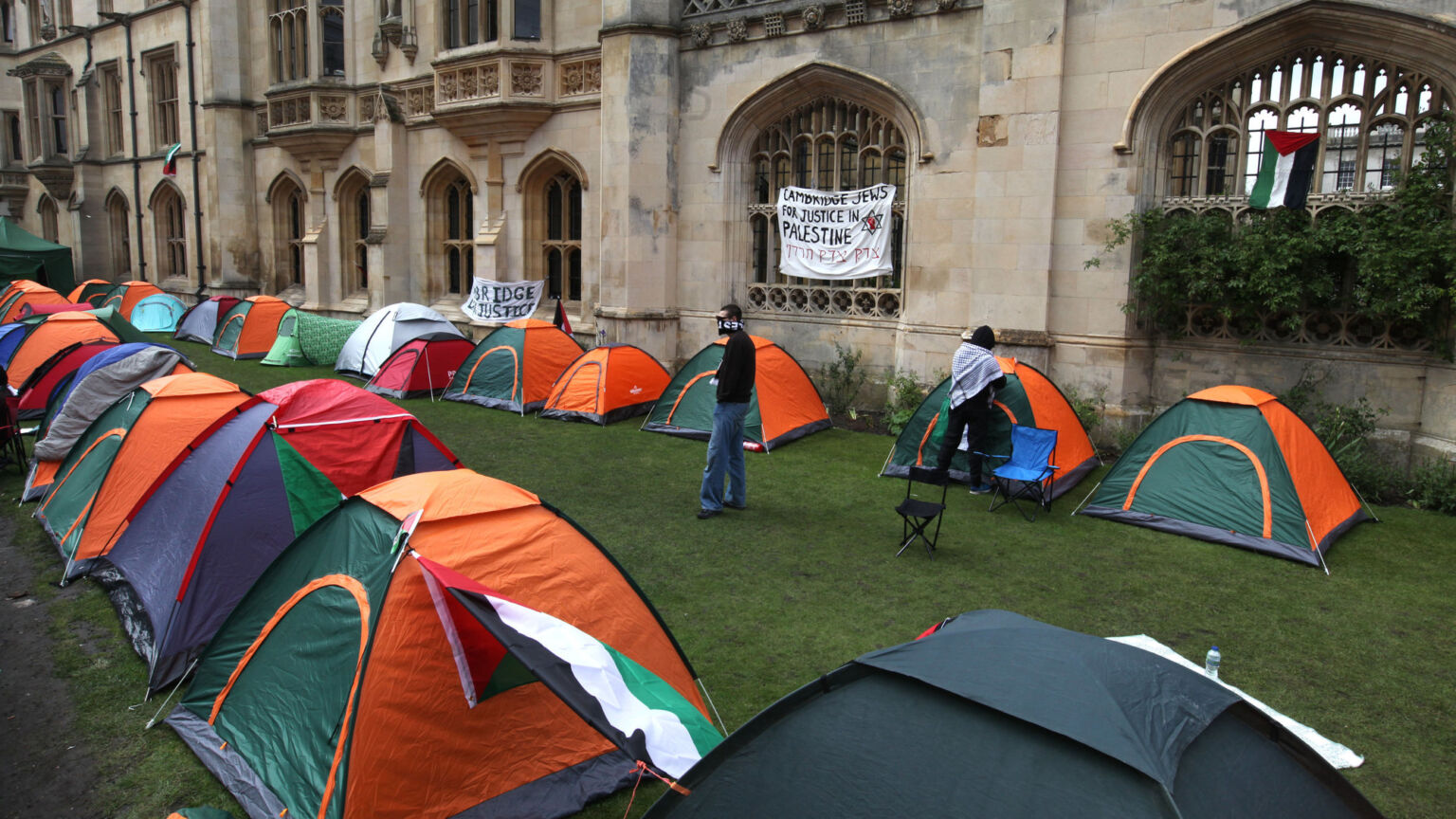
Finally, anti-Semitism on campus is beginning to get the attention it deserves. For too long, the vile abuse experienced by Jewish students at some of the UK’s leading universities has been ignored or, worse, condoned as just criticism of Israel. But following last week’s horrific attack on two men in Golders Green, and – before that – the killing of two people at a Manchester synagogue, the prime minister has had to do more than offer thoughts and prayers to the Jewish community. This week, Starmer announced that ‘every part of society’ has a responsibility to tackle anti-Semitism, including universities where it has been allowed to fester unchecked.
From now on, universities will be required to monitor and publish data exposing the scale of anti-Semitism, along with specific details of how they plan to respond to it. Starmer warned that there will be ‘zero tolerance for inaction’, although he did not spell out the consequences for universities that do fail to act. In addition, the government wants to see increased efforts to protect Jewish university staff and students, and will provide a £7million budget for anti-Semitism training for staff in schools, colleges and universities.
At the same time, Vivienne Stern, chief executive of Universities UK, also decided the time was right for universities to be expected to do more to tackle anti-Semitism. She said she had written to vice-chancellors to ask them to ‘review security arrangements in light of evidence of escalating violence’ and announced she was working with the Union of Jewish Students to promote its anti-Semitism training.
What’s astonishing is that such measures are not already in place. Jewish students have been raising the alarm about anti-Semitic abuse on campus for more than two years now. Every twist and turn of the war in Gaza became an excuse either to target Jewish students directly or to create a climate of hostility on campus where any expression of sympathy to Israel could prompt vitriol.
In March this year, the Union of Jewish Students published findings from a survey showing that anti-Semitism has ‘become normalised’ on British university campuses. It revealed that almost a quarter of students ‘of all faiths and none’ had witnessed behaviour targeting Jewish students because of their religion or ethnicity, and nearly half had encountered people justifying the 7 October attacks by Hamas. Half of the students questioned said they had heard slogans or chants glorifying Hamas or Hezbollah, and almost two-thirds said they had had their learning disrupted by protests. Perhaps most shocking of all was the revelation that one in five students would either be reluctant to, or would never, share a house with a Jewish student.
Why did these findings not prompt a government announcement about tackling anti-Semitism? It is impossible to imagine a survey showing that one in five students would refuse to share a house with a black or transgender student being met with such a muted response. Why did Universities UK not step up anti-Semitism training at this point?
Repeated failure to tackle anti-Semitism on campus has meant the problem has been allowed to escalate. This week, it emerged that a student at Cambridge University, Bradley Smart, received death threats after he returned from a think-tank-organised visit to Israel designed to help people better understand the Gaza conflict. Smart, who is not Jewish, posted photos of his trip on Instagram and, in response, became party to a group chat in which identifiable individuals from within his own college wrote, ‘I’m going to kill him’, ‘kill him’, and ‘he needs to die’. The chat included anti-Semitic slurs and degrading language, including people drawing comparisons between Israel and the Nazis.
Smart reported the threats against him to college officials, but was told to speak to welfare staff or consider moving rooms. Again, it is completely inconceivable that a student from any other minority group would be advised to move rooms if they had been the target of death threats. He writes: ‘For 31 nights after I saw the threats, I remained living in a room where the person who stated directly that I needed to die had unrestricted lift access to my room.’ Eventually, concerns for his own safety prompted Smart to move out of Homerton College.
Cambridge University has said it issued ‘formal warnings’ and ‘made it clear’ that ‘the behaviour in question’ – that is, sending death threats – ‘was entirely unacceptable’. As Smart says, this response is, ‘polite and procedural’ but shows the university was far more concerned with managing reputational risk than genuinely safeguarding its students.
We need to ask why it took the stabbing of two Jewish men on the streets of London for anti-Semitism on campus to be taken seriously. And while Starmer’s decision to act now is better than nothing, there is a real risk that his announced crackdown is too little, too late. Indeed, students and commentators are already mounting their defence, complaining that they are being blamed for attacks that did not happen on campus and that anti-Zionism is being conflated with anti-Semitism. That these criticisms are even getting airtime suggests there is a lot further to go to turn the tide on anti-Semitism in higher education.
Starmer can bluster about ‘zero tolerance’ all he likes. But having been allowed to fester for so long, tackling endemic Jew hatred on campus will take more than tracking and publishing data.
Joanna Williams is a spiked columnist and author of How Woke Won. Follow her on Substack: cieo.substack.com.


When your child with ADHD argues back, you might find yourself getting stuck in a frustration-fuelled cycle that goes from 0-60 in the blink of an eye.
But if you find it becoming a pattern, it’s not because they are ‘bad’, manipulative or deliberately trying to provoke you. Far from it.
Underneath the surface, children are often struggling to regulate their emotions, trying to seek connection, or attempting to make sense of a situation that feels overwhelming or unpredictable.
To try and break the cycle, Allison Solomon, a parent coach who has inattentive ADHD and has three neurodivergent children, said in a TikTok video that her number one ADHD parenting tip is to “stop engaging” in arguments with your children.
Solomon explained that “the ADHD brain doesn’t have enough dopamine – and your child needs dopamine in order to access their thinking part of the brain or the prefrontal cortex”. She suggested parents arguing back become their children’s “negative source of dopamine”.
What’s going on in the ADHD brain during an argument?
Dr Chris Abbott, chief medical officer at Care ADHD, tells HuffPost UK there is some evidence that the reward-seeking tendencies of the ADHD brain mean that a strong emotional response – including conflict – can feel stimulating in the moment.
But he caveated that this doesn’t mean children actively seek out and use conflict with their parents or others as a source of dopamine.
“ADHD is linked to differences in dopamine regulation. High-intensity interactions, like arguments, can briefly increase arousal and dopamine, making the child feel more alert, engaged, or switched on,” he explains.
“In this regard, conflict can feel rewarding – irrespective of the circumstances in which it first arose.”
Arguments are emotionally charged. So, for a child who often feels under-stimulated, “strong emotions – even negative ones like frustration or anger – can feel energising and hard to disengage from,” explains the ADHD expert.
Arguing can also be a way of externalising internal difficulties. “Instead of managing frustration, transitions, or demands internally – which can be a significant challenge with ADHD – this struggle can sometimes be channelled into conflict with others,” he adds.
Other times, an argument might not be about stimulation but more about avoidance or escape, for example, if your child wants to avoid or delay doing their homework or going to bed.
Arguments can also occur as a result of children struggling to deal with big feelings. “Dysregulation in ADHD is often driven by factors such as rejection sensitivity, frustration, and a genuine difficulty with emotional transitions – not a desire to start an argument,” says Dr Abbott.
“These aren’t calculated choices; they’re about children responding to big feelings – feelings they’re still developing the ability to manage.
“What looks like arguing on the surface is often something else entirely: a child struggling to regulate emotion, seeking connection, or trying to make sense of a situation that feels difficult, overwhelming or unpredictable.”
Advice for parents on limiting arguments
Solomon said her “best parenting advice” is to “cut off the source of dopamine” by not reacting to your child’s behaviour.
Dr Abbott agrees with this approach. “Reduce emotional intensity: calm, brief responses help to avoid an argument,” he says.
And if you do find yourself getting pulled back-and-forth into arguments, try to respond to the feeling underneath rather than the content of it.
“Ask: ‘what does my child need to feel understood right now?’ That question tends to lead somewhere in a way that ‘how do I stop this behaviour’ doesn’t,” he says.
Saying something like “You seem really frustrated right now” can also help to elicit a more meaningful response than engaging with whatever’s being debated.
Dr Abbott also advises parents to use clear, consistent boundaries (to help reduce negotiation) and pre-empt triggers (particularly transitions or demands).
“Encourage the use of alternative strategies for managing frustration, such as taking a pause before expressing feelings,” he advises.
When your child does engage in a non-disruptive or non-argumentative way, catch it and reward it.
Similarly, increase positive attention elsewhere. “This helps make sure that arguing isn’t the main route to connection,” ends Dr Abbott.

If you’ve heard your kids talk about looksmaxxing, mewing, jestermaxxing, or more recently, frame mogging, it might be time to gently explore where all this is coming from.
For those who aren’t chronically online and have absolutely no knowledge of these terms, I’ll quickly help fill you in on what they mean – and why you should keep a closer eye on your teen’s behaviour if you hear them discussing these terms.
What is looksmaxxing?
‘Looksmaxxing’ describes the improvement of physical appearance, commonly through a number of practices which range in intensity – from using skincare to undergoing surgery.
While there’s nothing wrong in wanting to take pride in your appearance – indeed, having a skincare routine and using SPF, staying hydrated, eating a balanced diet and exercising are all great ways to look after yourself – looksmaxxing can take things to the extremes.
It’s a phenomenon that’s been catapulted from the manosphere – a collection of websites and forums that typically promote masculinity, some of which amplify misogynistic views – to the mainstream.
One online streamer known as Clavicular claims to have “looksmaxxed” himself from the age of 14 through a combination of exercise, steroids, surgery and taking a hammer to his face (also referred to as “bonesmashing”).
But experts have concerns over how the quest to looksmaxx impacts teens during a crucial period in development – and a time when self-esteem is typically pretty low.
Dr Candice O’Neil, psychologist at Ontic Psychology, previously told Patient looksmaxxing has the potential to “influence young people’s feelings about themselves and behaviours both implicitly and overtly”.
She explained: “This becomes unhealthy when it moves from general self-improvement and wellbeing practices into a preoccupation with their appearance – particularly when that involves constant comparison with others or extreme adjustments to food and exercise. This can also lead to deep feelings of poor self-worth and self-concept.”
Over time, this might begin to impact a person’s mental health and potentially lead to disordered eating, body dysmorphia, obsessive and compulsive behaviours, or self-harm.
What is mewing?
Mewing is one of the practices some are trying in the pursuit of looksmaxxing. It involves pressing the tongue firmly against the roof of your mouth, with a view to reshape the jawline.
Does it work? Dr Baldeep Farmah, aesthetic doctor at Dr Aesthetica, said “no credible research supports the jaw restructuring looksmaxxing communities promise”.
What is jestermaxxing?
Similar to looksmaxxing, but the focus is on being funny or hilarious, rather than physical self improvement. While there’s nothing wrong with having a laugh and joking around, some parents are noticing their teens are, once again, taking it to the extremes.
One parent shared on Reddit that their 16-year-old son was ‘jestermaxxing’ at home non-stop: “He’ll just interrupt us at dinner with some loud random joke or impression then stare at everyone waiting for a huge reaction … Family time is exhausting because it’s like he’s performing all the time instead of just talking normally.”
They added: “He used to talk about girls like a normal teenager but now he says things like ‘foids [a derogatory term for women] only respect you if you jestermaxx correctly’ which I had to search and it made me feel sick.”
What is frame mogging?
More recently, kids have been talking about frame mogging, but to understand the meaning of that one, we need to first define mogging, which means outperforming or dominating over someone.
He added frame mogging “comes from a really toxic thought process that is good [for parents] to be aware of”.
When Clavicular was approached to take a photo with a fraternity leader, and the photo was posted online, his followers joked he’d been “frame mogged” as the fraternity leader was bigger built.
So, in short: frame mogging means you’re showing someone up by being more muscular. And in these communities, muscle apparently equals ‘alpha male’.
Much of this stems from incel communities
A lot of these terms stem from incel (involuntary celibate) communities online, made up of men who forge a sense of identity around their perceived inability to form sexual or romantic relationships.
They might say this is because of how they look or because they’re “low status”. Either way, much of their anger is directed at women.
According to Educate Against Hate, boys are drawn to this kind of content because it offers a sense of belonging, simple answers to complex societal problems, and an element of control or empowerment.
Nearly 70% of boys aged 11-14 years old have been exposed to misogynistic content online, per Ofcom, and most primary and secondary school teachers are “extremely concerned” about the influence of the manosphere on children and young people.
While there will be plenty of boys who shun these narratives, over time this content can – and does – subtly shift perceptions.
Talk to your kids about it
If you notice your son using these terms, your best bet is to stay curious and keep the lines of communication open.
Staying non-judgemental and asking open-ended questions, like “What do you like about that content?” or “How did you come across that idea?”, is key.
Fiona Yassin, a family psychotherapist and founder and clinical director of The Wave Clinic, previously told HuffPost UK: “It’s important for parents to name what’s happening. For example, acknowledging that there are online spaces where relationships are framed transactionally – where worth is tied to wealth, appearance, or sexual history.”
Parents can show awareness, and therefore signal understanding, without endorsement, she said. You could say something like: “I understand this is something people are talking about right now.”
Teaching and encouraging critical thinking is important, as is reinforcing your family values.
Check out more tips on speaking to kids about misogyny here.
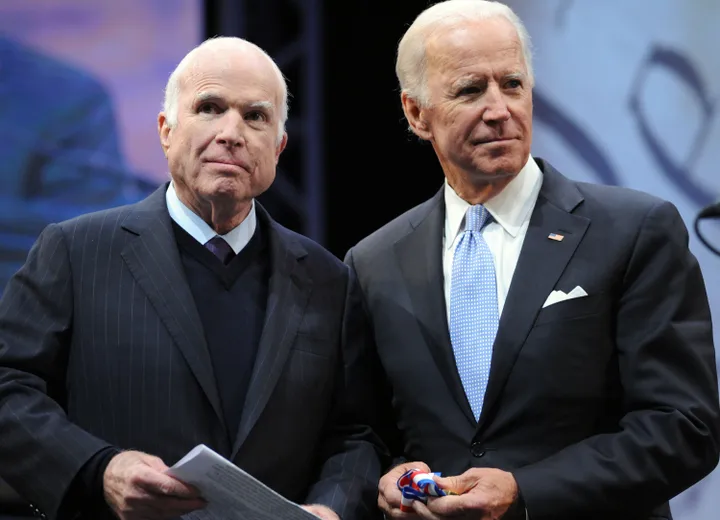
Former President Barack Obama has had enough with the poppycock and balderdash … and Republicans as well.
On Tuesday night’s episode of “The Late Show,” host Stephen Colbert asked the former president about a certain clash going down within the Democratic party that the late-night host described as “liberals vs. the left.”
“As my children say to me, ‘Dad, you’re a liberal. We’re leftists,’” Colbert began to explain. “Because, they’re like, ‘Liberals are people who think things should basically stay the same, you know what I mean? And the next generation really wants things to change.’”
Colbert then asked Obama how he thinks the Democratic party could “actually achieve change.”
Obama responded by noting that the two were currently sitting in his nearly completed Barack Obama Presidential Center in Chicago, which the former president stressed was “nonpartisan.”
“The reason why I want to mention that is because I’m worried about the Republican party, not just the Democratic party,” Obama said.
“When I was president, people would ask me, ‘What changes would you like to see in Washington?’ I’d say, ‘I’d love a loyal opposition.’ I’d love a Republican party that was conservative in some ways — that didn’t agree with me on a whole bunch of stuff — but believed in the rule of law, and judicial independence, and … empirical evidence, science, and wasn’t constantly tapping into our worst impulses.”

William Thomas Cain via Getty Images
Obama said there “has been a Republican party like that in the past” and thinks it would be wise for the GOP to embrace its less extreme roots because America needs “to have two healthy parties.”
As for Democrats, Obama wasn’t exactly buying the idea there is some “so-called rift between the left and liberals.”
He noted that most Democrats, “independents and even some Republicans” share overlapping beliefs, like “equality, fairness;” that all Americans “should be able to make a living wage” and “be able to support a family and retire;” and that companies should not be allowed “to just run roughshod over the rights of workers.”
Democrat’s real problem, as Obama sees it, is their terrible communication style.
“What I’m more interested in Democrats is, do you know how to talk to regular people like we are not at a college seminar? Can you talk plain English to folks?”
Obama said the left should take notes from New York City Mayor Zohran Mamdani, who Obama called “an extraordinary talent,” thanks to his ability to pinpoint a specific issue and explain it in everyday language.
“Not only does he talk like a normal person, but he lives a normal life,” Colbert said. “He names what is obviously wrong, and he goes, ‘We should change that thing.’”

ANGELA WEISS via Getty Images
“Yes!” Obama enthusiastically said, adding: “And not have a bunch of gobbledygook around it.”
Colbert was clearly tickled by Obama using the word “gobbledygook,” and suggested Obama etch the word somewhere in his new presidential library.
“The building is not completed, I think I’m going to put that somewhere,” an amused Obama joked. “I’m going to carve it into some of the granite out here: ‘No gobbledygook, just talk like normal people talk!’ You know? Like, the rent’s too high, we need to make the rent lower for people.”
Elsewhere in his lengthy interview with Colbert, Obama also managed to slyly call out President Donald Trump without even using his name. Check out that bit of the conversation here.
Subscribe to Commons People, the podcast that makes politics easy. Every week, Kevin Schofield and Kate Nicholson unpack the week’s biggest stories to keep you informed. Join us for straightforward analysis of what’s going on at Westminster.

Donald Trump shared on his Truth Social platform Tuesday what appeared to be a mock logo for “National Immigration & Customs Enforcement” — or “NICE” — the trolling nickname he has recently used for US Immigration and Customs Enforcement (ICE).
The logo features a bald eagle with its wings spread wide in gold, black and white tones. It clutches an olive branch in one talon and arrows in the other, with a stars-and-stripes shield across its chest, over the acronym and agency name.
The Department of Homeland Security later shared Trump’s post on X.
The White House account then amplified the post with a second image showing what appeared to be an embroidered-style patch version of the logo.
Critics from across the political spectrum slammed the post on X:
Subscribe to Commons People, the podcast that makes politics easy. Every week, Kevin Schofield and Kate Nicholson unpack the week’s biggest stories to keep you informed. Join us for straightforward analysis of what’s going on at Westminster.
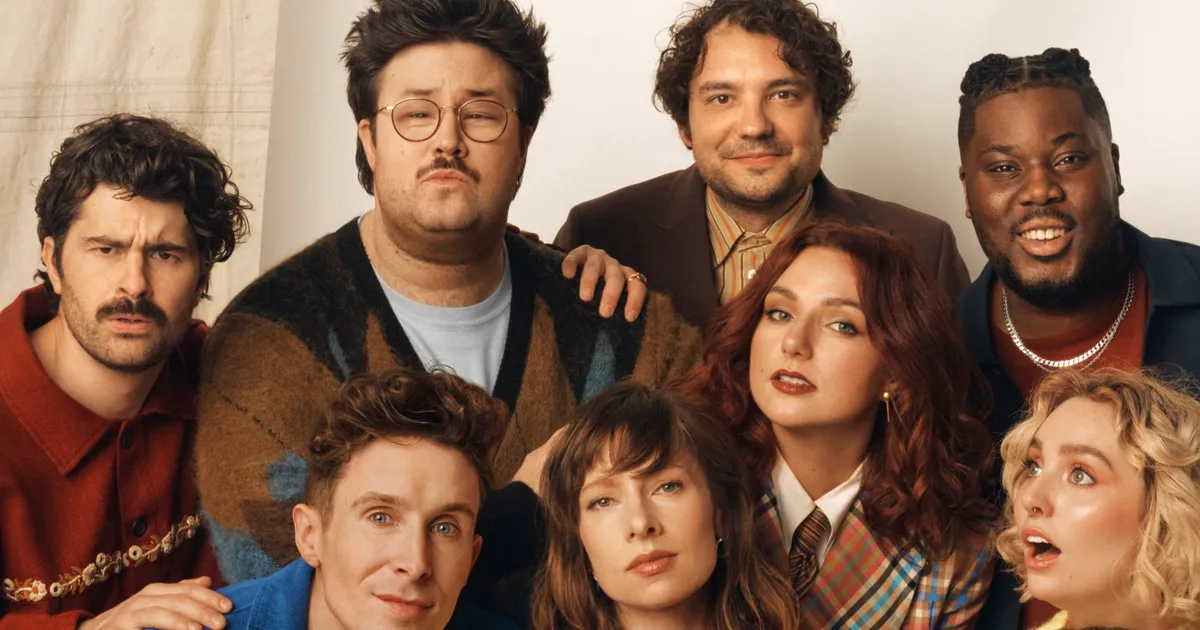
With just two more weeks left on the inaugural run of Saturday Night Live UK, speculation is now mounting about whether another season could be on the cards.
After premiering in March, the UK edition of SNL got off to a flying start, with strong ratings for an original Sky show and a positive reaction from viewers and critics.
Now the end of the season is in sight, lead producer James Longman has spoken to IndieWire about whether another is in the pipeline.
“Definitely not for sure,” he responded, cryptically. “But I stay away from these discussions, I’m just trying to make a funny show.”
“It’s the classic British angle, essentially, we thought it was going to be shit and it’s actually alright,” Longman quipped, noting that this is something he considers a compliment.
SNL UK continues on Saturday night at 10pm on Sky and Now.
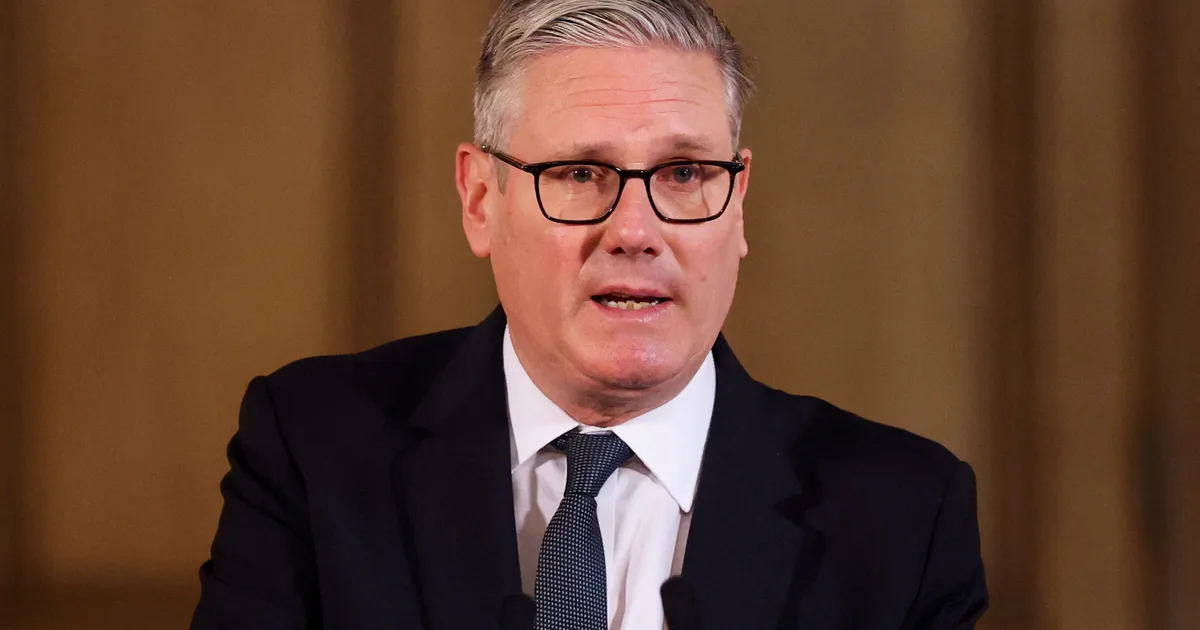
Keir Starmer has attempted to rebuild trust with Whitehall by sending civil servants in an email the night before polling stations opened.
The prime minister admitted “the events of the last recent weeks have felt unsettling”, alluding to his controversial decision to sack the top civil servant in the Foreign Office.
Starmer blamed Olly Robbins for giving Peter Mandelson security clearance so he could become ambassador to the US, even after the disgraced Labour peer failed vetting.
The PM claimed he was not aware security officials had advised against giving Mandelson a clean bill of health and blamed Robbins for keeping it secret.
But, in a box-office appearance before MPs, Robbins insisted the vetting process is independent of ministers and the details are not typically shared.
Clearly trying to extend an olive branch in the letter, Starmer told Whitehall officials their work is the “backbone of this country”, and that “we are one team”.
But, while writing to the half a million civil servants in the UK, the PM called on them to offer “total transparency” to ministers.
He said: “I value the ‘speaking truth to power’ that is the hallmark of our system.
“I want a culture where information flows freely, where risks are flagged early, and where we work together to solve problems before they become crises.
“The relationship between a minister and their officials relies on a bedrock of total transparency.
“Without that trust, the partnership that sits at the heart of our constitution cannot function. We are fixing the processes that have failed, but we are not changing the fundamental value we place on your role.”
His email went out hours before polls opened on Thursday.
More than 100 local councils are up for election in England, while voters in Scotland and Wales will also go to the polls for elections to Holyrood and the Senedd.
Labour are expected to fare particularly badly, as pollsters agree the central government will likely be punished for a gruelling 22 months in office.
Starmer has had a rocky relationship with Whitehall since winning the 2024 general election.
He previously shocked officials by accusing them of being “comfortable in the tepid bath of managed decline”.
He later claimed he meant that the problem was not with officials themselves but that they faced “too many obstacles”.
Starmer’s pick as cabinet secretary – Chris Wormald – was also forced out as head of the civil service earlier this year and replaced by Antonia Romeo who is expected to reform the entire system.
Subscribe to Commons People, the podcast that makes politics easy. Every week, Kevin Schofield and Kate Nicholson unpack the week’s biggest stories to keep you informed. Join us for straightforward analysis of what’s going on at Westminster.
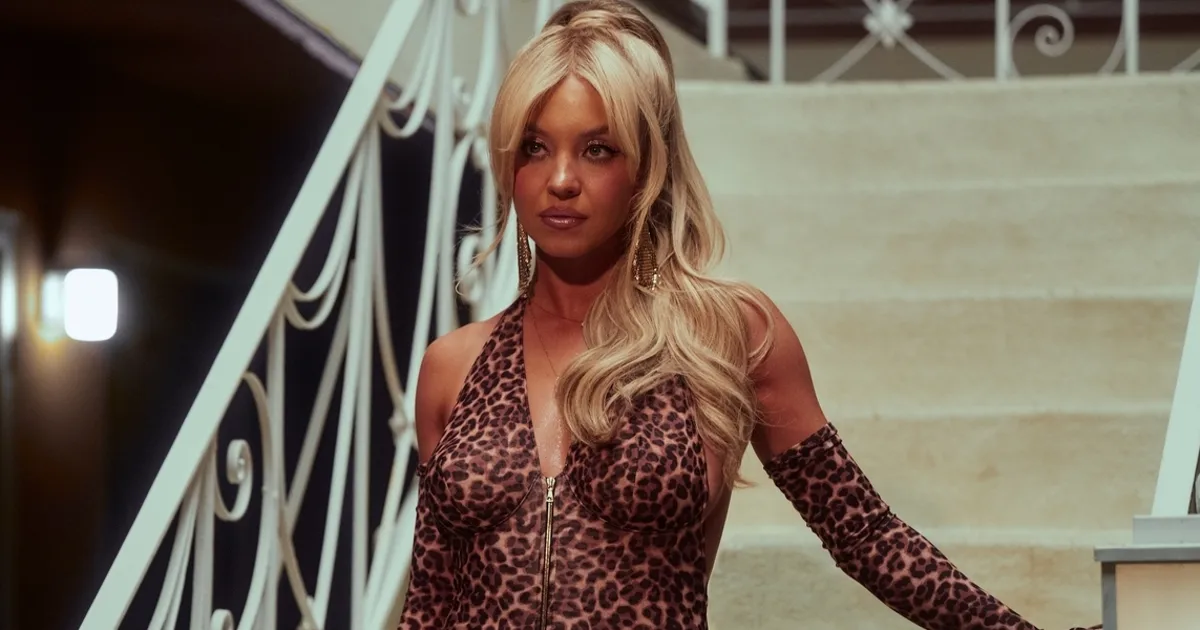
Sydney Sweeney is lifting the lid on shooting one of Euphoria season three’s most memorable sequences.
In the most recent episode of the divisive drama, Sydney’s character Cassie was seen embracing a different sort of lifestyle afforded to her by her new OnlyFans career, including a lavish influencer party.
While this party eventually descended into more of the extreme scenes that has seen Euphoria’s third iteration prove divisive among viewers, the Emmy nominee has made it clear that she had a blast filming the episode.
“Maddy transforms Cassie back into Cassie’s most glorious self, and she takes it from there,” she explained in a behind-the-scenes video posted on HBO’s YouTube page.
“There is nothing like a Euphoria party. Every season, Sam [Levinson, Euphoria’s creator] always writes in one.”
Admitting that she uses these scenes to live vicariously through her character, Sydney continued: “I don’t really go to parties, so this is my time where I get to have fun through Cassie. And she lets loose! This girl knows how to party, she’s having the time of her life.”
Interspersed with shots of Sydney and hundreds of extras partying, she added: “I was like, ‘are we ever going to call cut?’. I didn’t know what to do! I don’t know how to dance. I thought my wig was going to fly off, I’m whipping my hair all over the place. It was crazy.”
Over the last few weeks, Cassie’s Euphoria storyline has continued to raise eyebrows, with many critics describing some of Sydney’s scenes as “degrading”, “horrible” and comparable to a “humiliation ritual” for the actor.
Sam Levinson said earlier this week: “What’s interesting is if you push it a little bit, [Sydney] becomes brilliant. You just do a few more takes, and she can reach these levels that are very honest emotionally, but also deeply funny.”
He added: “She’s able to anchor the scene with this kind of madness and chaos going on around her.”
Euphoria airs weekly on Sky and Now in the UK.
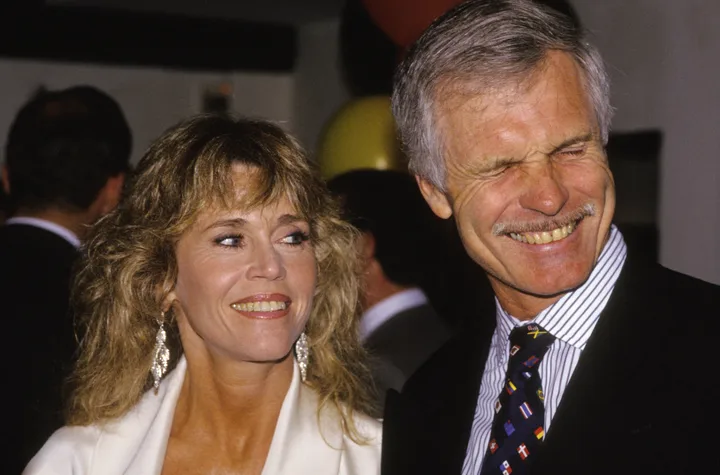
Jane Fonda has shared her thoughts on her “complicated” marriage to media mogul Ted Turner in an exceptionally earnest tribute following the news of his death at the age of 87.
Offering her “immediate thoughts about Ted” in a Wednesday afternoon Instagram post, the Hollywood veteran and lifelong activist looked back on their relationship as “challenging”, while adding that she had “always been up for a challenge, and with Ted it was almost always worth it”.
“He swept into my life, a gloriously handsome, deeply romantic, swashbuckling pirate and I’ve never been the same,” she said of Turner, who was her husband from 1991 until their divorce in 2001.
Explaining how it felt for the multifaceted billionaire to need her love, Fonda wrote: “No one had ever let me know they needed me, and this wasn’t your average human being that needed me, this was the creator of CNN, and Turner Classic Movies, who had won the America’s Cup as the world’s greatest sailor.
“He had a big life, a brilliant mind and a soaring sense of humour.”

Jean-Pierre REY via Getty Images
She also acknowledged his ability to care for her, writing: “To be needed and cared for simultaneously is transformative.”
“Ted Turner helped me believe in myself. He gave me confidence. I think I did the same for him, but that’s what women are raised to do,” the Oscar winner went on to say, calling Turner’s ability to be vulnerable one of his “greatest strengths”.
Fonda said she learned more from Turner than “more than any other person or school classes” could teach before remarking how he was the “most competitive person” she had ever met – besides storied actor Katharine Hepburn – and how “fascinating” that was “to witness”.
“Whether it was who’d made the most ski runs at the end of the day, to acres of land owned (stewarded is the more fitting word for his relationship to land), who had the most billions, how many countries he’d made love to his prior lover in and could I match that, it was challenging,” she said.
Continuing her lengthy homage in the comments, the Barbarella star said: “I loved Ted with all my heart.”

Ben Rose via Getty Images
“I see him in heaven now with all the wildlife he helped bring back from extinction,” Fonda went on. “
The black footed ferrets, the prairie dogs, Big Horned sheep, Mexican Gray Wolf, the Yellowstone wolf pack, bison, the red cockaded woodpecker and so many more, they’re all gathered at the pearly gates applauding and thanking him for saving their species.”
Addressing the five offspring that now survive Turner, she called them, “five talented, complex kids who I had the privilege of becoming stepmother to”.
“I love them to this day,” she went on. “If it was complicated to be married to him, think how complicated it was being his child. And they are all doing fine.”
“Rest in Peace, dearest Ted,” her message ended. “You are loved and you will be remembered.”
Though the couple split in 2001, they remained friends after.
Less than a week before his death, Fonda had called the television trailblazer her “favourite ex-husband” during the opening of this year’s TCM Classic Film Festival in Hollywood, adding that founding the festival’s namesake network, Turner Classic Movies, is just one of the “great things that he did”.
Turner will also be remembered as the creator of CNN, the world’s first 24-hour cable news channel, as well as WTBS and TNT.

Graham Norton’s reality show The Neighbourhood has been pulled from its primetime TV slot just weeks after its big launch.
According to this week’s ITV schedule, The Neighbourhood has been bumped from its regular 9pm slot on Thursdays and Fridays back to 10.45 pm, in a huge blow for the struggling series.
The competition show sees real-life friends and families move into a community to compete against each other for a life-changing amount of money.
In Thursday’s schedule, it’s been replaced by an old episode of Davina McCall‘s Long Lost Family, which originally aired two years ago.
On Friday, meanwhile, the 9pm slot is now occupied by an episode of Beat The Chasers, which was first shown in 2021.
An ITV rep told The Sun: “The full box set of The Neighbourhood is now available to stream on ITVX. Additionally, the show will continue to air in an evening slot on ITV.”

Despite its starry presenter, a huge promotional push by ITV and prime-time slot, The Neighbour was met with poor reviews when it premiered towards the end of April, and had reportedly only pulled in 500k viewers by its third episode.
This follows a trend of poor ratings for recent ITV shows they hoped would rival the success of The Traitors, with Genius Game and The Fortune Hotel also suffering from disappointing viewing figures, and both having since been cancelled by the channel.
Despite its poor performance, Graham had previously spoken enthusiastically about The Neighbourhood, insisting: “It leans into our curiosity about what’s behind closed doors and there’s something really compelling and addictive about seeing the way the existing households interact with each other.
“I thought, ‘I’d watch that’ – and I’d never want to work on something I wouldn’t watch. I thought, ‘this show would hook me!’.”
The Neighbourhood continues at 10.45pm on Thursday and Friday on ITV1, with the full series available to stream on ITVX now.
Just when you think you’ve got it all figured out – a fact comes along that changes everything for you. It blows your mind completely.
First, came the news that in most cases, it doesn’t matter too much whether you choose white or brown rice. And now, in another bit of chromatic trivia, it turns out that tennis balls used to be black or white until the ’70s (and Wimbledon held out until 1986).
Their colour was dictated by the colour of the court (a light ball for a dark court and vice versa, so spectators can see it).
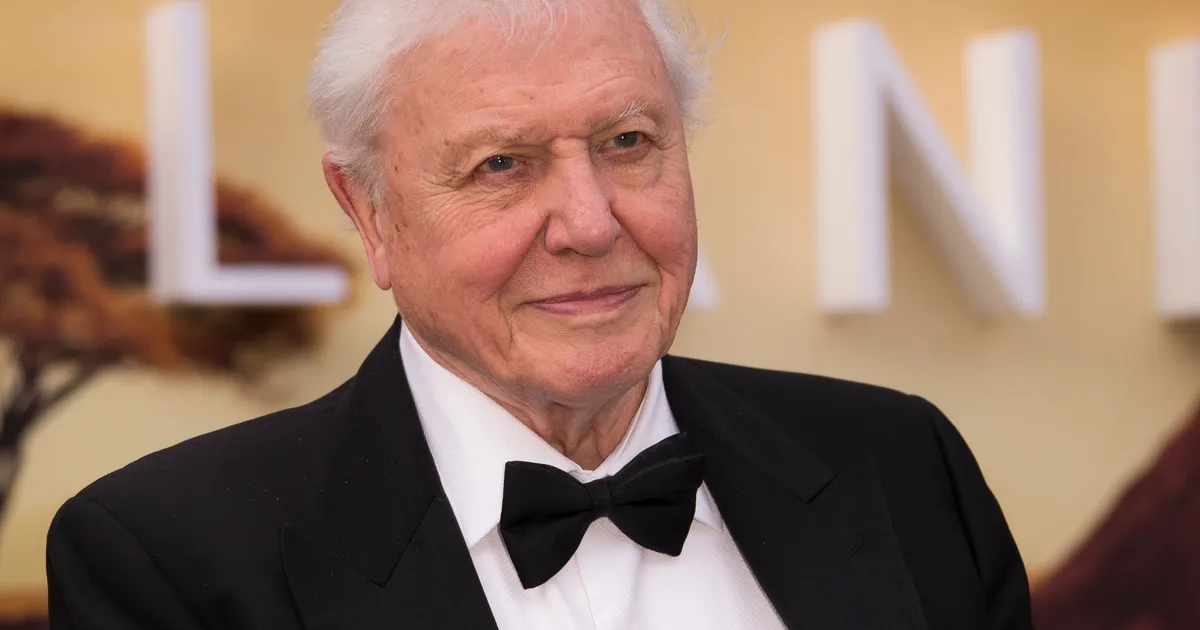
’Twas ever thus ― until a certain David Attenborough came along.
What? Why?
The Planet Earth presenter started working at the BBC in 1952 (having only watched one TV show).
In an article with RadioTimes, David revealed that he was responsible for bringing colour to BBC2 for the first time in 1968. And he decided to focus on Wimbledon for the crowning episode of the transformation.
“We had been asking the government over and over again and they wouldn’t allow us, until suddenly they said, ‘Yes, OK, you can have [the colour TV technology], and what’s more you’re going to have it in nine months’ time,’ or whatever it was,” he told RadioTimes.
He added that he wanted to beat West Germany to full-colour broadcast ― the US and Japan had already done it by that time.
But, according to the book 2,024 QI Facts To Stop You In Your Tracks, at some point, David Attenborough noticed that the tennis balls weren’t vibrant and visible enough on screen.
So, in 1972, the International Tennis Federation made optic yellow tennis balls ― side note, they’re officially optic yellow and not green (though in my mind, they’re definitely lime).
Who knew a simple ball could have so much lore?

How ether.fi Moved $220M to OP Mainnet Without Pausing a Single Card Payment

Attacker who firebombed a Jewish gathering in Colorado pleads guilty to murder

ECB’s Schnabel sees rising inflation risk from Iran war

Manchester United reach agreement with Casemiro over contract clause amid transfer speculation

US brings back mandatory military draft registration

Steven Gerrard disagrees with Gary Neville over ‘shock’ Chelsea and Arsenal claim | Football


-

 NewsBeat4 days ago
Channel 5 – All Creatures Great and Small series 7 new post
-

 Crypto World8 hours ago
Upbit adds B3 Korean won pair as Base token gains Korea access
-
 Tech6 days ago
Trump’s 25% EU auto tariff breaches Turnberry Agreement that also covers semiconductors and digital trade
-
 NewsBeat10 hours ago
NCP car park operator enters administration putting 340 UK sites at risk of closure
-
 Sports6 days ago
Paul Scholes issues Marcus Rashford reality check as agreement emerges over Man United star
-

 Entertainment6 days ago
Met Gala 2026 Rumored Guest List Is Turning Heads
-

 Business6 days ago
Strait of Hormuz Blockade Persists Amid US-Iran Standoff, Sending Oil Prices Soaring
-
Entertainment6 days ago
New on Prime Video in May 2026 — Full List of Movies and Shows
-

 Sports6 days ago
Cavaliers vs. Raptors Game 6 live score, updates, highlights from 2026 NBA playoffs first-round series
-

 Entertainment6 days ago
Kylie Jenner Hit With Second Lawsuit From Ex-Housekeeper
-
 Sports6 days ago
David Benavidez responds to team Canelo saying the fight will never happen
-
Entertainment5 days ago
New Netflix Movies in May 2026 — My Top 3 Picks to Stream
-

 Tech6 days ago
Meta ends Sama contract after Kenyan workers report seeing intimate footage from Ray-Ban smart glasses users
-

 Entertainment6 days ago
Young and the Restless Next Week: Cane Arrested & Matt’s Deadly New Scheme!
-
 Sports6 days ago
IPL 2026: ‘Love you darling’- Hardik Pandya’s reaction to MS Dhoni steals the show |Watch | Cricket News
-

 Business4 days ago
Luka Doncic Injury Update: Doncic’s Hamstring Recovery Slows Lakers’ Hopes Against Thunder: Can He Run Yet?
-
Crypto World5 days ago
Pi Network Mandates Protocol 23 Upgrade for All Mainnet Nodes Before May 15 Deadline
-

 Entertainment5 days ago
Melissa Joan Hart and More Stars Attend 2026 Kentucky Derby
-

 Sports6 days ago
Bayern won’t hand bottom side Heidenheim ‘gifts’ despite PSG game
-

 Sports6 days ago
What Preity Zinta Said After Punjab Kings’ First Defeat Of IPL 2026
You must be logged in to post a comment Login