
Politics
Calum Davies: What do Reform UK stand for, in Wales?


Calum Davies is a Conservative councillor in Cardiff and a candidate for the Senedd in May.
A great deal has been written about Reform UK’s potential electoral performance in May’s devolved elections, but what do they actually stand for? There is much cause for concern.
Reform’s rise has come too quickly for its own good.
Polling suggests it will be the second largest party in both the Welsh and Scottish parliaments in two months’ time, and the most popular (and unpopular) party in the wider country. This has required a rapid and large scale-up not just in terms of its operations, but its philosophy. With so many new people and a general anti-establishment message, the party is courting a range of views from a variety of political hinterlands. This leads to intellectual inconsistency and a vibes-over-policy mindset.
This is quite handy for campaigning, being all things to all people, but it sows the seeds for an early demise as voters are led to believe they are for one thing when they are not. Once unravelled, it would be a particularly devastating charge for Reform who explicitly position themselves as more trustworthy than the traditional parties who they (not unfairly) claim have a poor record of keeping promises and delivering results.
The tightrope has been walked over the last two years as its more libertarian, tax-cutting desires clash with its more interventionist, statist approach. Only one can win and voters deserve to know which. Such an obvious misstep was its fluid position on the two-child benefit cap which, at the last vote, led to its MPs voting in different directions. A party confident in its guiding values would not have made a mistake like this.
Indeed, what does it tell us about their values? It has been suggested to me more than once that I defect to Reform – but what would I be joining? I know both the triumphs and shortcomings of the Conservative Party. It is imperfect, but I know where I stand. Can the Reform member say the same without reverting to the general lines of the anti-establishment protest voter?
What concerns me, in particular in these elections, is how Reform’s self-defining image as a party that is against so much and for so little will impact on the most important faultline of all.
In January, a piece in The Times highlighted Reform’s ambivalence towards the Union under its new Scottish leader, Lord Offord. One might think a party often caricatured as an English nationalist one and led by an ex-Tory would not be flirting with Scottish independence. Yet, Offord claimed, “rational nationalists” could find common ground with “moderate unionists,” and they could “deal with the constitution later”. He was not “ruling [a referendum] out in the future” when a decision on independence could be based on “strength, not just emotion”.
Those of us who place the preservation of the United Kingdom and recognise the dangers of enabling separatist rhetoric know that there is no such thing as a “rational nationalist” and understand that all their actions are designed to lead to an end goal. Reform may want to win pro-independence voters, but it should be through persuasion of the merits of their agenda (for what it is), not by humouring that of the separatist. It should oppose another referendum.
Something similar is happening in Wales too. The Welsh Conservatives produced a great montage of Reform figures, including Nigel Farage and his new Welsh frontman, saying they want more devolution and more powers in Cardiff Bay. Have they not learnt the lesson of the British Conservative Government who did that and the Welsh Labour Government who abused those powers, all in turn servicing Plaid Cymru’s nationalist agenda time and time again? They claim to hate the world Blair made, yet here they are building on his legacy, not demolishing it.
Reform supports the expansion of the Senedd from 60 to 96 members at a cost of £120m. On both enlarging and empowering the Senedd, Reform is on the same page as Labour, Plaid, the Lib Dems, and the Greens. Only the Welsh Conservatives have opposed this expansion from the start and want to reverse it. As a candidate, I have spoken with many people who are considering Reform believing they are anti-establishment. Once they are made aware of this enabling agenda, they reconsider and will look at the Conservatives again.
Reform councillors are not even living up to some of the party’s supposedly reliable positions, with their sole Cardiff councillor failing to back my motion to close the illegal migrant hotel in the city. If Reform councillors cannot back even this, then what can we expect of them?
It is this ongoing inability to pick a lane – as well as the feuds with Farage – that inspired the founding of Advance UK and Restore. It is noticeable that the Lowe outfit is established on the basis that Reform is too mainstream. Whilst this has mainly centred on immigration, given its closeness to establishment policy in Wales and Scotland, it does give credence to an emerging pattern – that Reform is not a radical break from the norm. It is just another flawed political party destined to repeat the mistakes all others make. Its new branding, but politics as usual.
However, Reform’s youth coupled with its sudden popularity is a recipe for these mistakes to become catastrophes. With less than two months until the Senedd election, Reform has announced no candidates. It is not just to avoid scrutiny – it has a serious problem in finding quality people to stand. My fear is a large group of Reform MSs will be elected but will fall under the spell of the devocratic establishment and go native, which correlates with its devocratic calls for more powers and politicians in Cardiff Bay. We need serious anti-establishment politicians to challenge the devolved system of government that has failed Wales for three decades, not easily bored rabble-rousers who don’t recognise the dangerous of separatism.
I assert that Reform is actually to the political left of the Conservatives. Faragists may talk in more forceful terms, but Kemi Badenoch’s policy programme does outflank Farage from the right. The Conservatives are notching up a lot of wins and doing much of the legwork of the Opposition but, frustratingly, the scars of government run deep, and other are the beneficiaries.
Convincing evidence of this is the volume of Conservative defectors, another source of anger for those who choose Restore but also those within Reform. Its Scottish and Welsh leader as well as all its MSPs and MSs are ex-Tories. Most Reform MPs used to be Conservative MPs. Whilst I consider Robert Jenrick and Danny Kruger to be losses to our party (in terms of their ability, not loyalty), Reform have also done us a favour in taking off our hands the mediocre and the mad.
Reform just being an outfit for the dregs of the Conservatives was further compounded at the launch of its Welsh manifesto earlier this month – a blatant rip-off of the Welsh Conservative programme of the last decade. Seriously, there was little difference in its contents – other than Reform’s suggestion to put tolls on the M4 relief road. Not sure how much traffic that will relieve.
With less than seven weeks to go until polling day, much remains uncertain. What we do need to know is for what does Reform actually stand and can it be trusted to protect the Union?


Arsenal comes under scrutiny once again for the way the club chose to handle instances of political expression inside its ecosystem. Whilst their approach has never been consistent, the overwhelming contrast between the treatment of academy kit man Mark Bonnick and influencer Matthew “PapaPincus” Pincus and their corresponding political affirmations exposes a deeper structural imbalance in how modern football institutions outreach duties to police speech, manage risk, and protect commercial interests.
Bonnick, a 61‑year‑old associated with the club for more than two decades, was dismissed subsequent to posting pro‑Palestine comments during the early stages of the Gaza genocide.
Arsenal defended this decision by claiming that Bonnick’s posts “could be perceived as inflammatory or offensive” and as a result, he had “brought the club into disrepute,” citing the media attention that followed. After recourse to appeal was rejected, Bonnick is now pursuing legal action for unlawful dismissal.
Arsenal allow Zionism
Despite this, Pincus’ political stance comes unchallenged as he continues to appear pitch‑side, collaborate with club‑adjacent media, and present for TNT Sports. Witnessing a clear differential treatment prompts an obvious question from many supporters – many of whom are now wondering how opposing views of the same conflict can cause a man to lose his job while another remains part of the club’s media orbit?
Money over morals
Any explanation must account for one technical but important point: Bonnick was an Arsenal employee, meaning that his conduct was subject to the club’s internal disciplinary rules. As his posts drew attention and were reported in the national media, the club moved to protect its reputation.
By contrast, Pincus does not work for Arsenal. He is an independent creator who operates within the club’s broader influencer network. A club cannot formally discipline someone it does not employ. It can limit access, but that is a choice, not an obligation under contract. This difference creates an uneven playing field even before politics enters the discussion. However, there is much more to this situation.
Media bias
Bonnick’s posts were discussed in the national media through the lens of antisemitism debates in British football. Pincus’ posts, while clearly supportive of Israel’s military campaign lacked scrutiny as perhaps they align with a broadly accepted pro‑Israel narrative that many public figures embraced in relation the war.
In practice, the message for the fans and wider audience seems to be, express support for Israel and you will be spared any consequences; express support for Palestine and your life can be derailed.
That contrast makes institutional behaviour hard to ignore. Many have stayed silent, often pointing to reputational risk, which is not a defensible position. Football clubs tend to react to headlines, not principles. Bonnick’s posts became a story; Pincus’ did not.
The commercial value of influencers
One must also assess the hard commercial truth behind this: it is about money, no matter how tainted the money may be. Influencers like Pincus deliver reach, engagement, and access to younger audiences, assets, clubs and broadcasters increasingly rely on. Arsenal’s approach reflects a wider Premier League trend.
Pushing a creator out of that ecosystem is not as straightforward as disciplining an employee. It can mean lost revenue, strained partnerships, and damage to the club’s digital strategy. Bonnick, by contrast, had no commercial leverage. His job was operational, not public‑facing—so he was easier to remove.
The imbalance is grim, and it is unlikely to change soon.
The illusion of apolitical football
Clubs often present themselves as “apolitical,” yet the Bonnick–Pincus contrast makes clear that football is not apolitical. It is political in selective, self-serving ways.
That isn’t neutrality. It’s risk management, and it’s ultimately self-defeating: people will see through the pretence and lose trust in clubs that fail to take a morally defensible stand.
The result is a system where the same kind of political expression leads to very different consequences, depending on which side it supports.
That is the uncomfortable truth at the heart of this contrast, and it leaves football with an unanswered question: why is support for Palestine so often punished, while support for Israel is so quickly shielded?
Featured image via the Canary

You can always tell that a political party is in trouble, because its MPs start using different branding: in the past, we’ve witnessed Tories using Labour red; now, we’re seeing Labour using green – a colour most commonly associated with the Green Party:
Now why would a Labour MP be using Green branding eh? https://t.co/9oLEIfjExK
— Gyll King Post Skip Diplomacy (@GyllKing) April 12, 2026
Labour is a lean, green, election losing machine
We’ve been through this before, and we know what the excuse is:
‘It’s not Green Party green – it’s House of Commons green‘.
The problem with this argument is that we’re not that gullible, and we know exactly what these politicians are doing.
When an MP puts out promotional materials, it should be clear what party they’re promoting. The reason parties have colours in the first place is to aid in this.
It goes without saying that Lucy Rigby is a House of Commons MP; what her constituents want to know is which party she represents and what values she seeks to uphold.
As Ed Sykes reported for the Canary on 8 December:
After a year and a half in charge of Britain, Keir Starmer’s Labour has clearly become a toxic brand. Starmer is the least popular prime minister ever, and a 3 December poll had the party at just 14%, four whole points behind a surging Green Party. So it’s no wonder many Labour MPs – even on Starmer’s top team – seem to have been distancing themselves from Labour branding.
The problem, of course, is that switching colours will only get you so far. People’s issue with Starmer’s Labour Party isn’t the brash, rose red of their branding; it’s the fact that the government is tinkering around the edges while the floor keeps falling out from under us.
Sykes added:
As Labour MPs and others attacked Green Party leader Zack Polanski in recent days, some people highlighted that one attack came from an MP consistently avoiding Labour branding and using neutral House of Commons-style branding instead:
If you saw this, what party would you think the MP was from? https://t.co/WxE6QD0218 pic.twitter.com/CC4AMcYJLF
— Saul Staniforth (@SaulStaniforth) December 7, 2025
Sykes also noted:
In 2010, Labour and the Tories both tried some rebranding to secure power, with the Tories going for a green tree to make them look a bit friendlier. And after 14 years proving they were anything but friendly, Conservative candidates started avoiding the Tory blue, using purple, green, and even red in campaign leaflets instead. They seemed positively desperate to distance themselves from what the party has done to the country since 2010.
It’s not a positive sign that UK politicians frequently feel a need to distance themselves from their own parties.
The future is Green
Until the past 12 months, the Greens were never serious contenders. Now, it’s clear Labour MPs are taking them deathly seriously.
And as they say, imitation is the sincerest form of flattery.
Featured image via Lucy Rigby
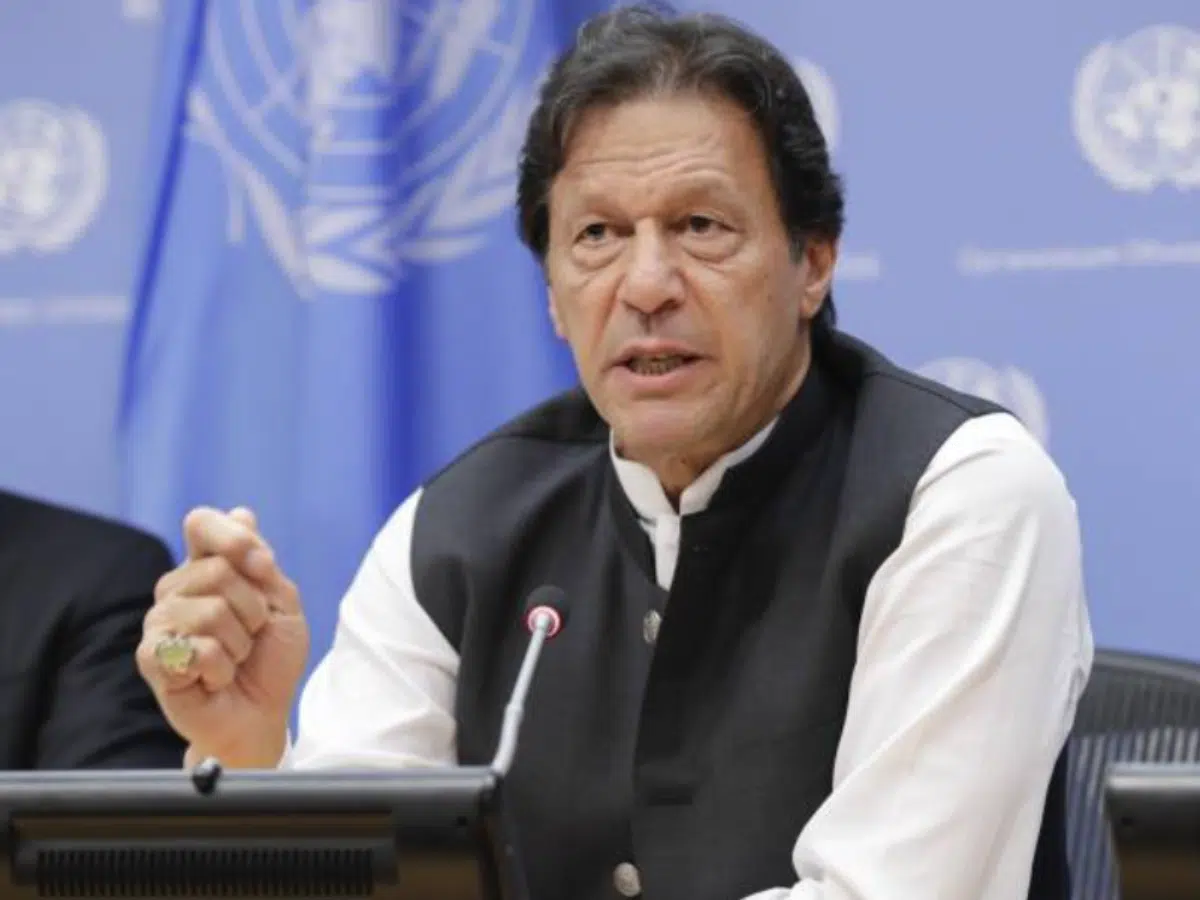
Pakistan’s recent role as a mediator on the world stage – trusted by the US, Iran, and the Gulf Cooperation Council Countries (GCC), according to the BBC – is shadowed by Imran Khan’s imprisonment.
Ever ready to muscle in where he doesn’t belong, Keir Starmer shared that he spoke to the Prime Minister of Pakistan, Shehbaz Sharif, and thanked him for Pakistan’s critical role.
However, it was pointed out by Declassified that the UK has had a ” muted at best and complicit at worst” reaction to Pakistan’s incarceration of Khan. Khan has been imprisoned since 2023 on corruption charges he rejects. The UK says Pakistan’s courts are responsible for the legal process, but Khan should receive humane treatment.
Keir Starmer spoke to Pakistani PM Sharif, but there’s no record he raised the ongoing imprisonment of Imran Khan, who has been held largely in solitary confinement, in “inhumane” detention conditions (UN) and denied family visits.
👉 https://t.co/CIb1oWSv5o pic.twitter.com/TA0Onf4f9G
— Declassified UK (@declassifiedUK) April 13, 2026
Imran Khan question
Political commentator Ben Norton posted a claim on X that the US backed a coup against Imran Khan to put the current ‘puppet’ Prime Minister Sharif, in power. He implied that Sharif had allowed the White House to write his public statements for him, sharing a New York Times story on the previously agreed, now nulled ceasefire between Iran and the USA.
This is why the US backed a coup against Pakistan’s independent Prime Minister Imran Khan and helped put in power Shehbaz Sharif, a corrupt US puppet from an oligarchic dynasty.
Sharif is such a shameless puppet that the US writes his public statements.https://t.co/y1Ddyg4hqk pic.twitter.com/70ZSwyO1oB
— Ben Norton (@BenjaminNorton) April 10, 2026
Just before the failed talks between Iran and the US in Islamabad over the weekend, Haqooq-e-Khalq Party (HKP) of Pakistan, along with 40 popular movements from around the globe, issued a statement condemning Western supremacy. The group said they:
Condemn the escalating war of aggression waged by the United States, Zionism, and its allies against the Islamic Republic of Iran. This hot war was prepared over decades through “cold” yet deadly sanctions, covert sabotage, targeted assassinations, military encirclement, and cognitive warfare. Its aim is to collapse the Iranian state — an agenda of balkanization through ethnic strife and de-develoment through bombardment that has become a hallmark of contemporary imperialist war.
The HKP is part of the Tehreek-e-Tahafuz-e-Ayeen-e-Pakistan (Movement to Protect the Constitution of Pakistan or TTAP), which is a coalition of several political formations and is headed by Pakistan Tehreek-Insaaf (PTI), Pakistan’s main opposition party, and founded by Khan himself
In February, PTI called a general strike in Pakistan amid Imran Khan’s incarceration, the second anniversary of the “rigged elections”, and Pakistan’s participation in Trump’s Board of Peace for Gaza, according to People’s Dispatch. The outlet reported:
February 8 marks the anniversary of the 2024 Pakistani general elections, which were held two years after the removal of Imran Khan, of Pakistan Tehreek-e-Insaf (PTI), from the office of prime minister in a vote of no confidence. The 2024 elections were marred with irregularities, seemingly aimed at preventing the victory of the PTI and Imran Khan who was already in prison.
Implications
Khan’s imprisonment leaves an obvious question. Had he not been ousted in questionable circumstances, perhaps Pakistan would not have been on the colonial sham of Trump’s Board of Peace. Pakistan’s Ministers would also not be deleting X posts criticizing Israel.
We Pakistanis stand by every word of the tweet by @KhawajaMAsif. We wish and pray our country will play an important role, INSHALLAH, in annihilating and obliterating the illegitimate, illegal, terrorist and genocidal state of Israel. pic.twitter.com/d1O2ykWzkT
— Haider Ali Butt (@HaiderSalma_) April 10, 2026
A lawyer and Vice President of Pakistan’s HKP reshared the current Pakistani Defence Minister Khawaja Asif’s post, criticizing Israel. Asif deleted the post after Zionist pressure.
However, Butt said:
We Pakistanis stand by every word of the tweet by @KhawajaMAsif.
It is, again, unlikely Asif would have had to delete such a post under Khan. And, neither would Pakistan have found itself the lapdog of the US and Israel even as it stretches to host negotiations with Iran.
Featured image via the Canary
Politics
My Husband Killed Himself Just Hours After I Asked For A Divorce. Here’s What I Wish I’d Known Then.

It was a night in October of 2004 when everything changed. I still remember the metallic click of my key in the door. It was late, clients had run long, traffic even longer — and all I wanted was to get out of my work clothes and lie down.
Instead, the house felt … wrong. Though my husband’s truck was in the driveway, everything was dark. The porch light wasn’t even on.
I called out his name as I stepped into the foyer — once, twice, then louder a third time. No answer. It was too quiet, like someone had pressed mute on a life that usually hummed with stereo music and my husband’s booming voice.
I heard the wind chimes tinkling in the breeze on the deck. There was not even a sign of our cat. “Hello?” I called, more hesitantly. My chest tightened as I walked through the dark house, then spotted a dim light shining under the closed dining room door. I sensed there was something wrong as I pushed the door open. That’s when I saw him.
He’d positioned a spotlight to shine on his body. He’d always had a flair for the theatrical.
In one breath, my world imploded. My husband of 17 years had hanged himself there, in our shared home, just hours after I’d told him, “I’m done. I want a divorce.”
I sobbed, I shook, I retched. I had trouble calling 911; it took me three tries to hit the right combination of numbers. By the time the police arrived, I was on my knees out front, screaming in the driveway. I couldn’t believe what was happening; it felt like a part of me hovered above the scene, watching.
And there was irony here. I am a psychotherapist. How could I not have predicted this?
The detectives and the coroner spent hours at my home, questioning me. I made tearful calls to friends who came immediately to sit with me but felt powerless to help.
The guilt crushed me. Look what I’d made him do. I’d told him I wanted a divorce. “I killed him,” I told everyone. I was emotionally and mentally shattered.
People always ask if I’d noticed warning signs — sadness, substance abuse, talk of wanting to die. But he wasn’t the clichéd portrait of depression. He was an angry man — quick to shout, quick to slam doors and break things and never reticent to physically threaten me. I had asked for a divorce because I was done living with his rage. Still, suicide? Nowhere on my radar.
The following weeks were nightmarish as I struggled to make sense of what had happened and my role in it.
Back then, I was specializing in trauma. I should have had language for what happened. But the term “revenge suicide” wasn’t in my textbooks. Eventually, after conference calls with domestic violence researchers and my own seasoned therapist, the puzzle pieces started to snap into place.
A revenge suicide happens when taking one’s life becomes the final weapon in an abusive relationship. It’s less “I can’t go on” and more “I’ll make sure you can’t go on.” The note — if there is one — rarely says, “Goodbye.” It says, “This is on you.”
That was the message waiting for me in my dining room — wordless but crystal clear: You will carry this forever.
If you think the scariest time in an abusive relationship is when fists fly, sit with this statistic: Up to 75 % of women killed by an intimate partner die while trying to leave or just after they’ve left. Sometimes it’s a murder-suicide. Sometimes they kill the kids. And sometimes, the man kills themselves in front of her, or stages a scene where she will find their body.
We see it in the headlines: A man murders his ex, sometimes their kids, sometimes the family dog, and then turns the weapon on himself. Reporters call it a “domestic dispute” or a “tragedy nobody could have predicted.” There is usually a history of inter-partner abuse, though others may not realize it.
The pattern is chillingly predictable when you understand one core truth: Abusive partners crave control. When control slips away, some will burn the whole house down — literally or metaphorically — before letting go.
Take “Dana,” a client whose angry husband threatened, “If you leave, I’ll shoot myself in the living room so you’ll see what you did.” She knew he wasn’t bluffing. We worked out a safety plan, stashed go-bags at a neighbor’s and coordinated with police. She got out safely, but she still jumps whenever her phone goes off at night.
Or “Marianne,” whose husband posted a suicide note on Facebook blaming her before he did it. In group therapy, she confided, “Half the town thinks I killed him.” That shame can be as lethal as any weapon.
I don’t want this to happen to any other woman. There are some red flags of escalating violence that we can recognize. So, here’s the short list I share with clients, friends, anyone who’ll listen:
“If you leave me, I’ll kill myself.” Threats tied to control are not idle.
Unexplained surveillance. Checking your mileage, tracking your phone, planting Air Tags in your purse.
Sudden access to weapons or talk of “no reason to live.”
Escalating possessiveness or rage — the tidy neighbor who starts kicking holes in drywall.
A history of choking (the strongest predictor of future homicide).
If these sound familiar, loop in a domestic violence hotline or counselor sooner, not later. Safety planning can be difficult — you’ll have to plan a place to go, allies who will help, save funds that you can access — but it may save your life.
I was lucky that he didn’t kill me or any other members of our family.
None of my friends or his family members blamed me for his death. In fact, they continually reinforced that I was not responsible. Many recognized his volatility and instability, and I had consistent emotional support. Still, it took me months to regain my footing. Not all women are fortunate enough to have the kind of support that I had.
Two decades later, I’m still talking about the issue. I believe it makes a difference. Now I’m remarried to a gentle man who never raises his voice. I’ve written four books, one on this topic. But every October, when Domestic Violence Awareness Month banners pop up, I’m yanked back to that eerily quiet house and the memories of my desperate struggle to call 911.
So, here’s my plea, sprinkled with the hard-earned wisdom of someone who’s walked barefoot through the glass:
Believe women who say they’re afraid. It doesn’t matter if she’s being abused physically; abuse takes many forms, including coercive control.
Stop asking “Why did she stay?” Start asking, “What barriers kept her from leaving safely?”
Teach teens that love is not possession. The earlier we unlearn toxic scripts, the better.
Remember that some suicides are homicides in disguise. Death certificates don’t capture intent; stories do.
And if you’re reading this as someone dangling on the edge — wondering if leaving will push him over it — realise you need support. You deserve a life where you’re not walking on eggshells, a prisoner of an erratic, dangerous partner. Be strategic. Reach out. Tell a wise friend, a therapist, or call a local hotline/charity. Secrets are the soil where violence grows; speaking is the sunlight that withers it. Your voice is your power.
When people learn my story, they sometimes tilt their heads in pity and say, “I can’t imagine.” But here’s the scary part: It is imaginable, because it happens every day in neighbourhoods that look like yours and mine. These things can happen to anyone.
I don’t share these memories to haunt anyone. I share them to offer a flashlight. If even one person spots the warning signs and steps off the path my husband forced me onto, the telling is worth it.
Leaving should be liberating, not lethal. And love — real love — never demands you pay for your freedom with your own or someone else’s life.
Shavaun Scott is a psychotherapist specialising in trauma recovery. Her memoir, “Nightbird,” explores personal and professional journeys through suicide, abuse and healing.
Help and support:
If you, or someone you know, is in immediate danger, call 999 and ask for the police. If you are not in immediate danger, you can contact:
- The Freephone 24 hour National Domestic Violence Helpline, run by Refuge: 0808 2000 247
- In Scotland, contact Scotland’s 24 hour Domestic Abuse and Forced Marriage Helpline: 0800 027 1234
- In Northern Ireland, contact the 24 hour Domestic & Sexual Violence Helpline: 0808 802 1414
- In Wales, contact the 24 hour Life Fear Free Helpline on 0808 80 10 800.
- National LGBT+ Domestic Abuse Helpline: 0800 999 5428
- Men’s Advice Line: 0808 801 0327
- Respect helpline (for anyone worried about their own behaviour): 0808 802 0321
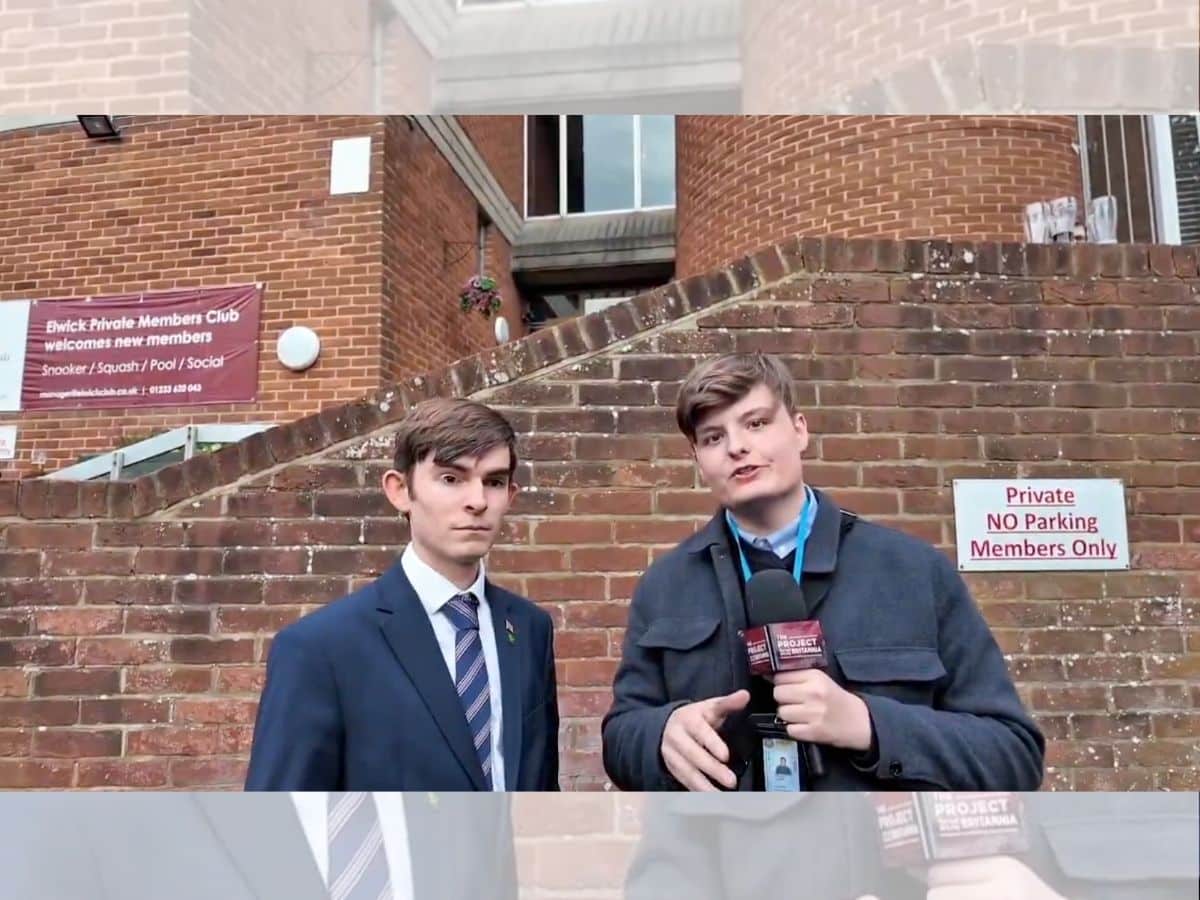
‘Young Bob’ is a Gen-Z British activist who was previously in the pocket of the American right. While he’s most famous for being repeatedly beaten up, he’s also known for talking complete and utter shite.
His most recent example of this was seen here:
“Why are young people flocking to Restore Britain?”
I spoke to Britain’s youngest elected councillor, who recently defected to Restore Britain, on why young people are moving towards this new right-wing political party. pic.twitter.com/y9j1zne2BL
— Young Bob (@YoungBobRB) April 12, 2026
The problem with the above is that young people aren’t flocking right; they’re demonstrably moving left, and in numbers too big to ignore.
Oh, and don’t punch Young Bob if you see him on the street.
If nothing else, it will only give him another month’s worth of content.
Gen-Z aren’t ‘flocking’ anywhere
For those who are unfamiliar, Restore Britain is a Reform UK breakaway party. It exists because the Reform guys with the least agreeable personalities decided that the party wasn’t anti-social enough.
While the new party claims to have over 100,000 members, this is disputed:
It’s been a few months now since Restore started, and there’s still no official membership portal.
They have 120,000 donations which could be anywhere around the world, but they don’t have members. https://t.co/kuPU11Zkrm pic.twitter.com/fQNcxIaKH7
— Curtis Daly (@CurtisDaly_) April 11, 2026
In the video at the top, Young Bob is interviewing Kieran Mishchuk. We covered Mishchuk when he was still with Reform, and we did so because he was a brazen bullshitter who got caught in a lie:
GBNews speaking to “random residents”.
Only he’s actually a Reform UK councillor (Kieran Mishchuk, representing 20 mins down the road) being platformed like they’re a random resident.
No one has a problem with the flag, give it a rest.
It doesn’t belong to Reform UK and… https://t.co/gihgI4tlQr pic.twitter.com/7HuFbTWxMl
— Reform Party UK Exposed 🇬🇧 (@reformexposed) October 14, 2025
He’s also – much like Young Bob – the sort of young person that you’d describe as a ‘briefcase wanker’.
Appealing or appalling?
In the video, Young Bob asks:
Why do you think Restore is appealing to so many young people?
Mishchuk answers:
I think it’s common sense really and pride as well, patriotism, hope, stuff that the left the left wing parties that they don’t really clamp on is the history. When you come from a working town like Sittingbourne… you’ve got hundreds of years of history, and you’ve got generations of family members that have done the same thing, and over the last hundred years that industry that was there is gone.
In Sittingbourne, it was paper, bricks, and barges that were built. On my granddad’s side of the family, it was barges. They used to build and design barges. That industry, that boat industry is gone. It’s just completely gone.
Okay, but in the time that all happened, we had a procession of right-wing neoliberal governments.
What do you think Thatcherism was?
Thatcher said her greatest legacy was Tony Blair.
And now we’ve got Keir Starmer and Rachel Reeves doing an even worse tribute act.@TheGreenParty say tax the super rich, nationalise our public services and strengthen workers rights.
— Zack Polanski (@ZackPolanski) March 19, 2024
If you don’t know, Thatcherism was the ideology of selling off everything that wasn’t nailed down and handing off sovereignty to the City of London.
It wasn’t a left-wing project.
What the fuck are you talking about, Kieran?
Leftwards shift
All that aside, young people aren’t interested in Restore anyway:
Young people (18-24s) are 22x more likely to support Zack Polanski’s Green Party than Rupert Lowe’s Restore Britain.
The British youth are the most progressive in the history of this country.
Do not let anyone convince you otherwise. https://t.co/JJyUiZ0LHS pic.twitter.com/UkghCql9Jt
— thelefttake (@thelefttake) April 12, 2026
Other than that, though, lads – good work.
We can see why young people are flocking towards your movement.
Featured image via Young Bob
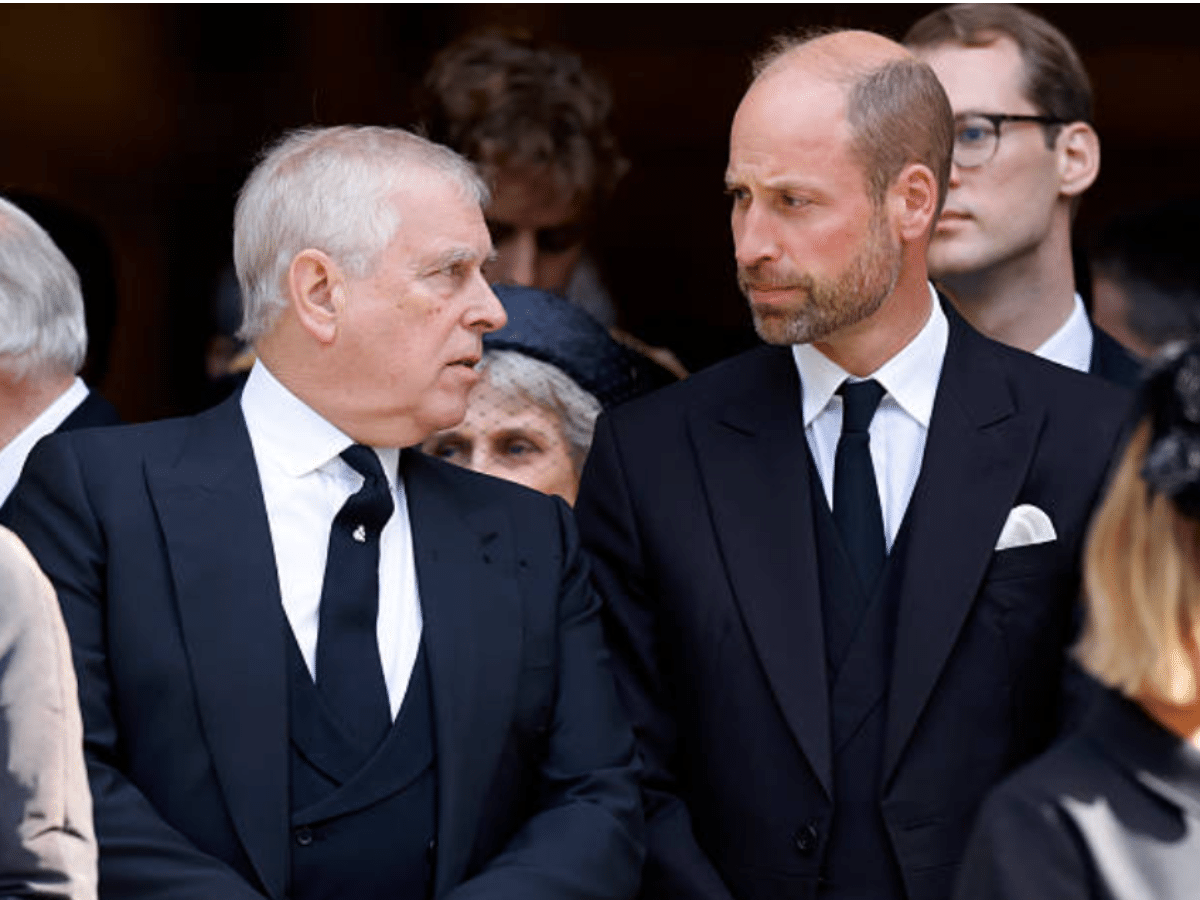
Prince William makes £1.5m a year in taxpayers’ money renting Dartmoor prison to the HM Prison and Probation Service (HMPPS). Whilst this in itself is a bloody outrage, it gets worse. HMP Dartmoor is utterly unusable – a wildlife-infested pit filled with radon gas.
HMP Dartmoor was forced to close its doors due to dangerous levels of the radioactive gas back in July 2024. In both 2020 and 2023, parts of the prison showed radon levels ten-times the legal limit.
Radon is the UK’s second-highest cause of lung cancer, after smoking. Since being left empty the property has become infested with “rats, birds, bats and insects”, according to the Times.
However, the rental agreement is apparently locked-in until 2033. As such, the public looks set to pay up to £68m leasing the useless building over the course of the contract. Over the 2024/25 financial year, William made around £23m from the Duchy of Cornwall portfolio, of which HMP Dartmoor is just one part.
Prince William: The Duchy Files
Back on 2 November 2024, the Times and Channel 4’s Dispatches broke a story on the massive property empire making Charles and William millions a year. The extent of the portfolio was a closely guarded secret, even from Parliament. The Times reported that:
In a five-month investigation, we used the royal addresses to uncover their business contracts and discovered how the duchies are making millions of pounds each year by charging government departments, councils, businesses, mining companies and the general public via a series of commercial rents and feudal levies on land largely seized by medieval monarchs.
The Duchy Files show the royals charge for the right to cross rivers; offload cargo onto the shore; run cables under their beaches; operate schools and charities; and even dig graves. They earn revenue from toll bridges, ferries, sewage pipes, churches, village halls, pubs, distilleries, gas pipelines, boat moorings, opencast and underground mines, car parks, rental homes and wind turbines.
At the time, the Canary commented that a large portion of the land was originally seized by medieval monarchs. This shatters the notion that royal privilege is a thing of the past. In very real ways, the Royal Family is still living in the Medieval Ages, and we’re all paying the price.
Likewise, we also reacted with fury at the fact the monarchy was actively draining money from charities. This included charging massive amounts of rent to Macmillan and Marie Curie. Damningly, the royals are patrons and notable donors to both institutions.
‘Blind panic’
Since the Duchy Files exposé, William has stopped charging rent for village halls, school playing fields, the fire service, and lifeboat stations. However, he’s still raking in the cash from HMP Dartmoor. That’s in spite of the fact the property’s even more unfit for human habitation than the average prison.
Since its closure some 23 months ago, the public has paid prince William at least £2.5m for the defunct prison. The Duchy of Cornwall has refused to comment on whether it will review the rent contract. Instead, the Duchy stated that:
The lease of HMP Dartmoor reflects long-standing arrangements governing the site and was negotiated on a standard commercial basis with both parties taking independent advice. We remain in regular contact with the Ministry of Justice, as it determines the future of the prison.
Public accounts committee MPs stated back in January that senior civil servants renewed the HMP Dartmoor lease in 2023 “in a blind panic”. Reportedly, the responsible parties knew about the prison’s radon levels, but wanted to secure prison places.
Nevertheless, the prison has since had to relocate its 682 inmates. It’s also reportedly hemorrhaging a further £4m a year in an attempt to secure the empty building and improve its ventilation. Geoffrey Clifton-Brown, the Tory chair of the accounts committee, called the MoJ’s handling of the affair “an absolute disgrace”:
We heard claims that the leasing of this unusable building, known for years by HMPPS to be choked with radon gas with all the health risks that entailed, was sensible, driven by the need for prison places. […]
Our committee rejects this excuse outright. Dartmoor appears to the committee [to be] a perfect example of a department reaching for a solution, any solution, in a blind panic and under pressure.
‘Highest possible value for taxpayer money’
At the same time, over 100 staff and prisoners held at Dartmoor have since taken legal action against the Ministry of Justice over radon-induced illness. They join a total of 750 similar legal claimants from 42 prisons and probation facilities across the country with dangerous radon levels.
HMPPS said:
We continue to assess safety and feasibility at HMP Dartmoor, and will make a decision on the site in due course that prioritises the highest possible value for taxpayer money.
As there is an ongoing [Health and Safety Executive] investigation and live legal proceedings, it would be inappropriate to comment further, but we have strengthened radon management across the prison estate in line with regulatory requirements.
A fine demonstration of completely avoiding the issue there.
So, just to recap – prince William is making more than a million a year renting an unlivable prison to HMPPS. The civil servants who signed the contract knew it had illegal levels of radon. However, they were in a panic to find prison spaces. The contract won’t run out until 2033.
In the meantime, the MoJ has still had to relocate the inmates, after having endangered their lives by knowingly locking them in a building full of radioactive gas. Now, the public is also on the hook for the lawsuit, as well as the ongoing bill to try to make HMP Dartmoor useable again.
This utter farce has exposed two things more than any others. First, our absurd rush for prison places is putting lives at risk. Alongside this, it’s acting as a black hole for public money.
And second, for all that we pretend our monarchy is a defunct fossil, they’re clearly still reaping the benefits of a ancient feudal land system. It’s long past time we ended this ridiculous rulership by blood rights for good – starting with the crown’s ownership of 52,000 hectares of UK land.
Featured image via the Canary
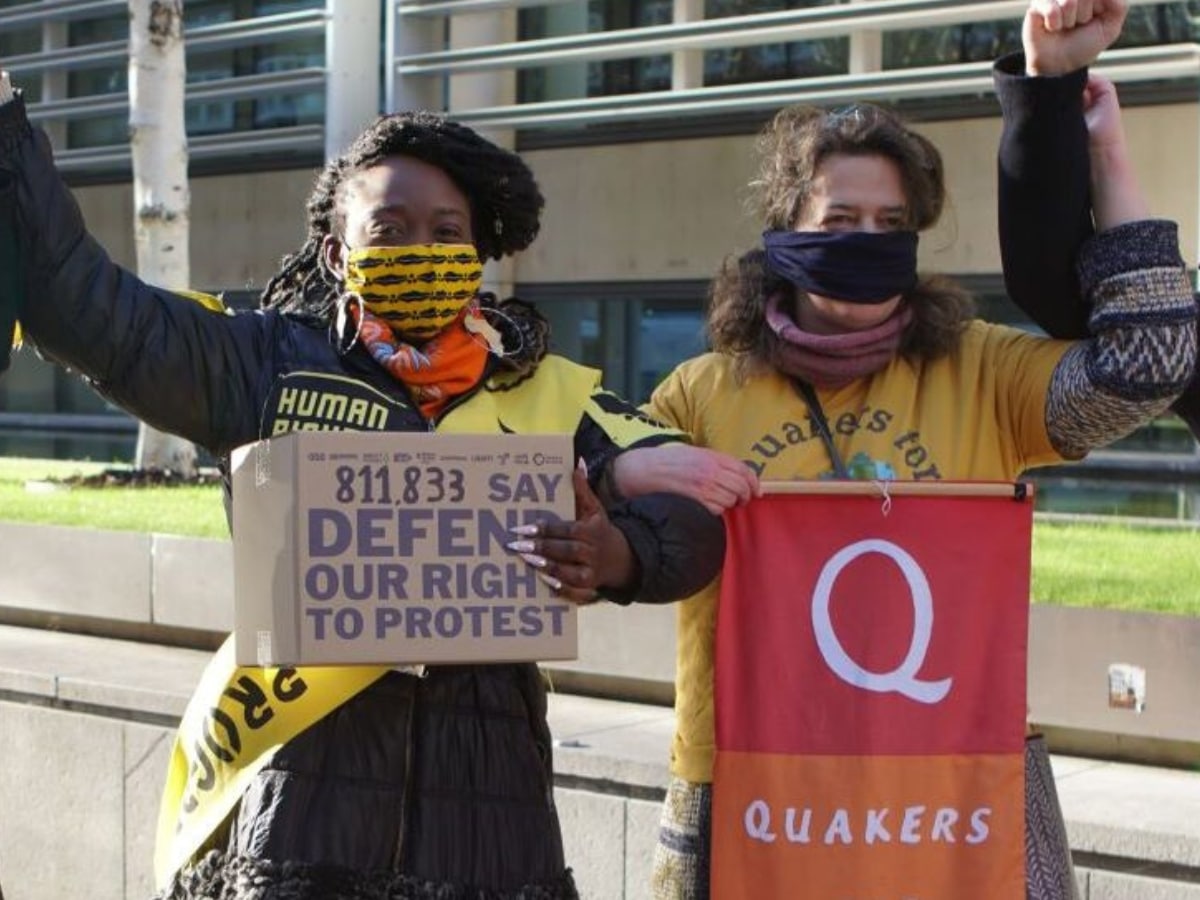
Leaders from across the UK’s faith spectrum have come together to urge MPs to remove a clause from the Crime and Policing Bill that could shut down lawful, conscience-led protest.
Quakers in Britain coordinated the joint letter. Signatories include Bishop Mike Royal, Rabbi Gabriel Kanter-Webber, Indarjit Singh and 16 other faith and belief leaders. The letter warns that the Bill’s new ‘cumulative disruption’ clause is too vague and too broad.
The clause requires police to consider previous and planned protests in the same area when deciding whether to impose conditions on a demonstration. As the letter states:
It could mean that we are stopped from demonstrating because another protest previously took place in the same area, even if it was on a completely different issue.
The letter comes as the Bill returns to the House of Commons on 14 April. This follows its third reading in the Lords on 25 March.
The Christian, Jewish, Muslim, Hindu, Sikh, and Buddhist leaders say that despite their differences, they share a common commitment to love and justice. Members of all their faith communities follow their conscience to protest peacefully on issues that matter to them, they said.
And they point out that peaceful protest has often involved cumulative action. Campaigns that changed the world, from the suffragettes to communities standing up against fracking, built up through repeated, sustained demonstration.
Their concern resonates widely. The Equality and Human Rights Commission has called the clause too broadly drafted. The UN Special Rapporteur on the Right to Freedom of Peaceful Assembly recently met UK civil society organisations and MPs. And she expressed serious concern about these repressive new laws and the clause on cumulative disruption in particular.
This Bill is the third piece of anti-protest legislation in recent years. The faith leaders’ letter says:
Peaceful protest motivated by faith, belief and love should be celebrated, not criminalised. We urge the government and MPs to drop the clause on cumulative disruption.
Featured image via the Canary

Iran has proven to be incredibly resilient in their ability to defend themselves against the US and Israel’s war. Their resistance hasn’t been limited to the battlefield either. Surprising many, Iran has deployed wartime propaganda that’s even proving popular with their supposed enemies.
This is no mean feat.
And out of all the propaganda they’ve pumped out, none has been more effective than the Lego videos.
Given the success of this content, it’s unsurprising to see US tech companies closing ranks with the US war machine:
YouTube bans Explosive Media channel (the one creating a lot of Iran Lego propaganda videos). More proof of the systemic moderation bias of US Silicon Valley companies, magnified when it comes to US foreign policy interests https://t.co/mdIbmdGJ7g
— Marc Owen Jones (@marcowenjones) April 11, 2026
Iran channel: legone but not forgotten
The suspension came hours after the group’s latest video, a rap animation linking Trump to the Epstein files, went viral, garnering millions of views.
Our YouTube channel just got taken down again for “violent content.”
Seriously! are our LEGO-style animations actually violent?
— Explosive Media (@ExplosiveMediaa) April 9, 2026
We’re not sure why YouTube chose to blame “violent content” when they could have said Explosive Media are using:
- The Lego company’s intellectual property.
- AI (which in most circumstances is dogshit).
Equally, however, there are two clear reasons for allowing the videos:
- They’re very, very funny.
- They’re allowing global citizens to bond over their hatred of US imperialism.
Marc Owen Jones noted that while YouTube banned Explosive Media, they’ve left more reprehensible accounts standing:
If you want to know how absurd and biased the banning of the anti-US/Israel war Lego AI Youtube channel for violent content is, look at official accounts belonging to the IDF and the Whitehouse across all platforms. It’s literally videos of real people getting blown up.
Clearly, YouTube takes Lego rights more seriously than human rights.
These videos have proven so effective, by the way, that even right-wingers like Tim Dillon are acknowledging that Iran is winning the propaganda war:
LMAO literally LMAO 😭😂🤣 pic.twitter.com/lLP5G14fJw
— Furkan Gözükara (@FurkanGozukara) April 11, 2026
In the clip above, Dillon says:
So we’ve lost. There’s nowhere to go. It’s checkmate. We can’t do the things we think we can.
We’re tweeting. We’re Truth Socialing… We’re trying to win the war on social media. And we’re not even doing that because – can you, do you have the Lego thing up? Can you get that Lego video?
We’re not even winning the shit talking war.
We’re not even winning that.
The shit talk?
You’d think America would win that, at least.
If we’re going to win one thing, we’re getting bodied by Iranian AI in the war of shit talk.
Truly, how embarrassing.
We’re the country that invented shit talk, and we’re getting lit up.
Explosive Media
The BBC spoke to the creator behind Explosive Media, who described Iran as a “customer”. The piece noted:
The overriding message of these videos is that Iran is resisting what it sees as an almighty global oppressor: the United States.
This isn’t really up for dispute at this point, given that Trump keeps openly threatening countries around the globe, and also threatening to wipe out entire civilisations. We know the BBC is supposed to be impartial, but saying the sky is blue isn’t bias.
The BBC continued:
The clips are garish and not subtle at all – but that hasn’t put a dent in how vigorously people are sharing and commenting on them.
If the BBC wants sophisticated and subtle, maybe they should resume greenlighting shows like The Thick of It.
The next part was a fair description anyway:
In one of the videos, Donald Trump falls through a whirlwind of “Epstein file” documents as rap lyrics tell us “the secrets are leaking, the pressure is rising”.
In another, George Floyd can be seen under a policeman’s boot as we hear Iran is “standing here for everyone your system ever wronged”.
The next bit was just asinine:
The videos are also littered with factual inaccuracies – so we ask Mr Explosive about them.
In one clip, the Iranian military is shown capturing a downed US fighter-jet pilot. US officials have confirmed the downed airman – who was stranded in a remote, mountainous region of Iran after his aircraft was shot down – was rescued by US special forces on 4 April.
Oh my gosh! You’re telling me the Lego propaganda video contained factual inaccuracies?
Goodness gracious, does this mean president Trump isn’t actually a 1 inch tall plastic doodad?
Good lord.
The interesting question to ask is this: why are people in the West so disgusted with their governments that they share the propaganda of their supposed enemies?
The answer is because our Western governments are disgusting, bloodthirsty capitalists.
The BBC are choosing to treat this phenomenon as a ‘fake news’ problem, anyway, rather than as a symptom of an empire in collapse:
Social media platforms have been shutting down accounts with the Lego-style videos, but new ones seem to pop up just as quickly.
Yes, if only we could stop the AI Lego accounts popping up; then the public would just love all the endless genocide.
So-called ‘cyber warfare expert’ Tine Munk told the BBC:
Traditional diplomacy doesn’t exist here. And it blurs our understanding of what is happening. But it also increases the risk of misinterpretation and escalation.
I don’t know, Tine, I feel like the real risk of escalation comes from Donald Trump and Benjamin Netanyahu constantly escalating the actual war.
The Military Industrial Slopfest
Munk is correct that these accounts keep popping up:
NEW 🇮🇷: Lego Style Music Video from Iran via PersiaBoi Studios
Titled: Hormuz Hustle
They are SO FAST. This is in respone to Trump’s new blockaid on the Strait of Hormuz, starting tomorrow. https://t.co/xNKu7NZRwj pic.twitter.com/XkOWEAElj1
— Ryan Rozbiani (@RyanRozbiani) April 13, 2026
The Americans have worked tirelessly for 80 years to embed a global system of greed and individualism. What that looks like in 2026 is a reality in which the people of the world find novel ways to extract profit from the US’s imperial activity – in this instance through the creation of satirical slop videos.
Recognising that this is all bad doesn’t change the fact that these videos are capturing certain truths. The US is a decadent plastic republic run by a would-be king, and its values are as phony as the videos making fun of it.
Featured image via Explosive Media

Expert comment provided by Prof Adam Hart, professor of conservation ecology at the University of Gloucestershire.
In the UK, hospitalisations from false widow spiders reached 100 in 2025.
That’s significantly higher than the figure from a decade before (47 hospitalisations in 2015).
Some have called the false widow spider the UK’s most “dangerous,” though speaking to HuffPost UK, Prof Adam Hart, professor and entomologist, said “serious reactions are rare”.
We asked him why these numbers are rising, how to spot false widow spiders, and what to do if we see them.
Why are more people getting hospitalised by false widow bites?
False widows are so called because they look like the more dangerous black widow spiders. They were probably introduced to the UK in the 1800s from the Canary Islands.
But their population has been growing here since the 80s, which the expert told us might be why we’re hearing a lot more about their bite.
“Reports of rising hospitalisations from false widow bites perhaps need a bit of context,” he explained.
“The noble false widow has spread widely across the UK in recent decades, so people are encountering them more often. At the same time, media coverage has raised awareness, meaning more people notice them and are more likely to seek medical advice. That could make the issue seem bigger than it really is.”
Additionally, they stay relatively close to humans: “They tend to live around buildings, in sheds, window frames, and sheltered outdoor spaces.”
That makes contact likelier as their numbers grow.
Though noble false widow spiders do bite, Prof Hart clarified that this is very rare and, in most cases, relatively harmless.
“Most bites, where they happen at all, are mild, causing local pain and swelling similar to a wasp sting. It’s also worth remembering that, often, suspected ‘spider bites’ turn out to be something else, such as skin infections or insect bites”.
How can I tell if a spider is a false widow?
“False widows are glossy, dark spiders with a rounded abdomen and long legs, often with pale cream markings on the back,” said Prof Hart.
They are usually 7-14mm in length, and the females are generally bigger than the males.
The Natural History Museum describes the pattern on their bodies as “skull-shaped”.
What do I do if I see a false widow spider?
“If you see one, the best advice is simple: leave it alone. If needed, they can be moved with a glass and card,” Prof Hart told us.
“If someone is bitten, basic first aid is usually enough: clean the area, apply a cold compress, and keep an eye on it. Seek medical advice if symptoms worsen or don’t improve.”
And remember, if you can, that while false widows are “now a familiar part of UK wildlife… they really pose a very low risk to most people.”

A paper published in the Journal of Intelligence has found that people who listen to music with less emotionally positive lyrics appear to have slightly higher levels of projected intelligence.
Scientists tracked the smartphone activity of 185 participants over five months, creating a custom app to check the kinds of music they listened to.
The researchers also asked the people involved to take a test, which measured their fluid reasoning, vocabulary comprehension, and math knowledge. Combined, these gave the study authors a way to measure their cognitive ability.
By the end of the analysis, which involved advanced machine learning tasked with finding links between participants’ music taste and their cognitive test scores, they found “small but reliable associations”.
Lyrics seemed to matter most
The participants listened to 58,247 songs overall.
Speaking to PsyPost, study author Larissa Susst said: “When we looked more closely at how our prediction models worked and which aspects of music listening were most informative, one finding surprised us.
“The lyrics of the songs people listened to were more useful for predicting cognitive ability than the musical features… In other words, the themes and language used in the lyrics seemed to matter more than aspects like tempo or musical key.”
She added that this finding went against previous research, which suggested genre might be a better predictor of predicted intelligence.
While the difference wasn’t huge, lyrics with a “less positive emotional tone” were more strongly linked to higher intelligence in this study. The study authors point out that other papers have linked this to introspection and self-reflection.
And songs whose lyrics focused on the present, those which seemed honest, and those which related to home were also associated with higher cognitive ability.
Those who liked lyrics with more social words and less certain language were likelier to have lower cognitive scores, meanwhile.
Bear in mind, though, that the paper said their “predictive performance was modest”, and that the variance in predicted intelligence was relatively small.
Live vs studio-recorded music may matter too
Another surprising finding was that those who listened to studio-recorded music tended to have higher cognitive scores than people who listened to live recordings.
Listening to more music, and lyrics not in German (this was a German study), was also associated with higher cognitive scores.
“In our study, patterns in people’s music listening contained small but detectable signals related to their cognitive ability, suggesting that the digital traces we leave behind in daily life could potentially help approximate intelligence,” Sust said.
But the differences were so small that she cautioned, “On their own, these effects are therefore likely not strong enough to be practically useful,” and were more likely to become “meaningful if combined with many other types of behavioural data”.

Anthropic’s Claude AI on Track for $100B Revenue Run Rate by Late 2026

Arsenal show Zionist double standards

Shakur Stevenson predicts Xander Zayas vs Jaron Ennis: “He’s the hardest at 154”

Why Israel is blocking foreign journalists from entering

Bitcoin: We’re Entering The Most Dangerous Phase

Alan Cumming Brands Baftas Ceremony A ‘Triggering S**tshow’

#cryptocurrency #youtubeshorts #xrpcrypto #crypto #xrp #cryptocurrencynews #xrparmy #viral

Live Crypto & Gold Analysis and trading || #btc #crypto #gold #forex

Budaya tip Netizen Amerika bikin ketar ketir, mereka kelewat baik atau gimana?!..
-

 Politics3 days ago
US brings back mandatory military draft registration
-

 Fashion3 days ago
Weekend Open Thread: Veronica Beard
-
 Sports3 days ago
Man United discover Nico Schlotterbeck transfer fee as defender reaches Dortmund agreement
-

 Tech6 days ago
How Long Can You Drive With Expired Registration? What Florida Law Says
-

 Politics1 day ago
World Cup exit makes Italy enter crisis mode
-

 Crypto World4 days ago
Canary Capital Files SEC Registration for PEPE ETF
-

 Business3 days ago
Tesla Model Y Tops China Auto Sales in March 2026 With 39,827 Registrations, Beating Cheaper EVs and Gas Cars
-

 Politics3 days ago
Malcolm In The Middle OG Turned Down ‘Buckets Of Money’ To Appear In Reboot
-

 Crypto World5 days ago
Bitcoin recovers as US and Iran Agree a Ceasefire Deal
-

 Fashion6 days ago
Let’s Discuss: DEI in 2026
-
 NewsBeat18 hours ago
Pep Guardiola and Gary Neville agree over Arsenal title problem that benefits Man City
-

 Business3 days ago
OpenAI Halts Stargate UK Data Centre Project Over Energy Costs and Copyright Row
-

 Business2 days ago
Ireland Fuel Protests Enter Day 5 as Blockades Spark Shortages and Government Prepares Support Package
-

 Politics3 days ago
LBC Presenter Mocks Trump Over Iran War Failures
-

 Crypto World3 days ago
Federal judge blocks Arizona from bringing criminal charges against Kalshi
-

 Tech4 days ago
A version of Windows 10 released a decade ago is now eligible for additional security patches
-
 NewsBeat1 day ago
JD Vance announces ‘no agreement’ with Iran over nuclear weapons fear
-

 Business3 days ago
IMF retains floor for precautionary balances at SDR 20 billion
-
 Entertainment5 days ago
Alfred Hitchcock’s 10 Most Suspenseful Masterpieces, Ranked
-
 Entertainment3 days ago
A ‘Bridgerton’ Star’s New Survival Thriller Is a Must-Watch on Netflix This Weekend
You must be logged in to post a comment Login