
Politics
Chappell Roan’s Grammy Awards Look Explained By Prosthetics Artist

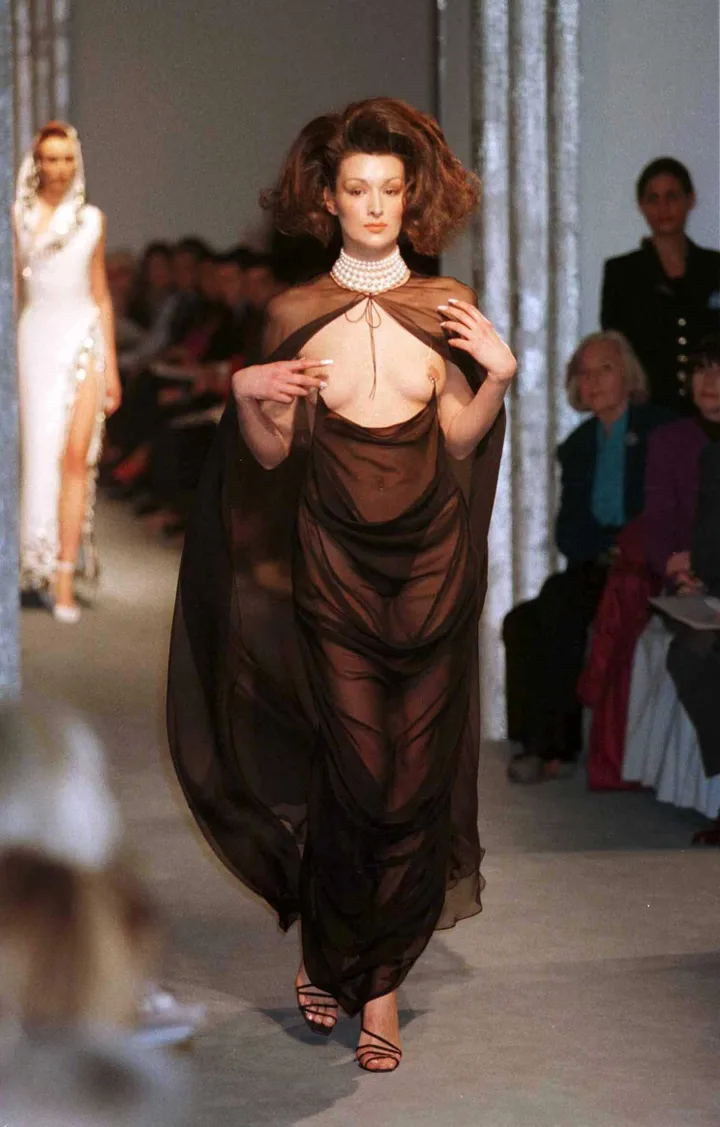
The makeup artist responsible for Chappell Roan’s headline-grabbing Grammy Awards outfit has opened up about all of the work that went into creating the show-stopping look.
On Sunday night, the Pink Pony Club singer undoubtedly stole the show as she made her way into the Grammys, where she was pictured on the red carpet in a sheer maroon dress that appeared to be held up by two nipple piercings.
In fact, the “piercings” were created with the use of prosthetics, which makeup artist and prosthetics expert Sasha Glasser discussed at length during a new interview with Allure.
The idea behind Chappell’s prosthetics, Sasha explained, “was for her to not be so naked”, echoing Popsugar’s previous claim that the intention was to create a “Barbie-like illusion”.
Sasha told Allure that these were created in collaboration with Out Of Kit, and had to be reinforced to make sure they could support the weight of the Grammy winner’s dress without coming off on the red carpet (in what would surely have been a wardrobe malfunction for the ages).
“It’s not like any other type of prosthetic because it has a sticky backing, like a Band-Aid, so you don’t have to glue it down,” she noted.
As a result, Telesis glue was used to secure the prosthetic pasties in place, although further problems arose when trying to pierce these fake nipples.
“Genesis [Webb, Chappell’s stylist] and I tested it,” she recalled. “We’d put the ring in the prosthetic and tug, and it would rip out, so that was scary.”
To stop this from happening, Sasha and Genesis applied power mesh – yes, the fabric used in gymwear – to the back of the prosthetics to reinforce them.
“I cut a dime-size piece, glued it to the back of the prosthetic, and then we stuck the earring through both the prosthetic and the mesh,” she revealed.
After that, they had to be painted to perfectly match Chappell’s skin tone, so Sasha applied bubblegum wrappers to the newly-added piercings to protect them from the paint, before completing the look with the dress.
Chappell’s red carpet look was inspired by a design previously showcased by Thierry Mugler at a fashion show in the late 1990s.

Miquel Benitez/Shutterstock
While Chappell may have come away empty-handed at Sunday night’s Grammys, she did get her moment in the spotlight when she appeared on stage to present the Best New Artist prize to Olivia Dean, a year on from her own win in the same category.

In the UK, the clocks have just sprung forward (meaning it feels like we’ve lost an hour’s sleep).
That shift has consequences. It’s been linked to higher heart attack risk, “social jet lag”, and misaligned body clocks. The British Sleep Society has previously called for clock changes to be dismissed altogether because of how much they mess up our circadian rhythms, which can take weeks to reset.
And no matter what time of year it happens, longer-lasting “chronic circadian misalignment” is linked to a higher risk of diabetes and heart disease.
But some research has found that “zeitgebers” can help to get your body clock back on track.
What are “zeitgebers”?
The term comes from two German words: “Zeit,” meaning “time,” and “geber,” meaning “giver”.
It’s any part of your environment, be it morning light or mealtimes, that acts as a way to “set” or give cues to your body clock.
These are important because our natural circadian rhythm doesn’t run on an exact 24-hour schedule. We need zeitgebers to help match our body clocks to the demands of our social and professional schedules, and to prevent “social jet lag” and other body clock misalignments.
Why do zeitgebers help with our circadian rhythm?
One paper found that mealtimes, physical activity, and light exposure seemed to influence our body clocks the most.
Those who got up later (after 6:30-7:45am) and saw later light (after 11pm), as well as eating later (having their first meal after 7:45-9:45am and last meal after 8-9pm) tended to go to bed anywhere from half an hour to about an hour and 20 minutes later.
And those who didn’t get outside light until after 9:30am seemed to sleep about half an hour longer.
Meanwhile, those who did over a third of their physical activity in the morning tended to fall asleep and wake up earlier. That stood regardless of how much physical activity people did.
This might suggest that doing your workout in the mornings, getting some morning light, and having your latest meal before 8pm could make the post-clock change period (which demands earlier wake-ups) a little easier to manage.
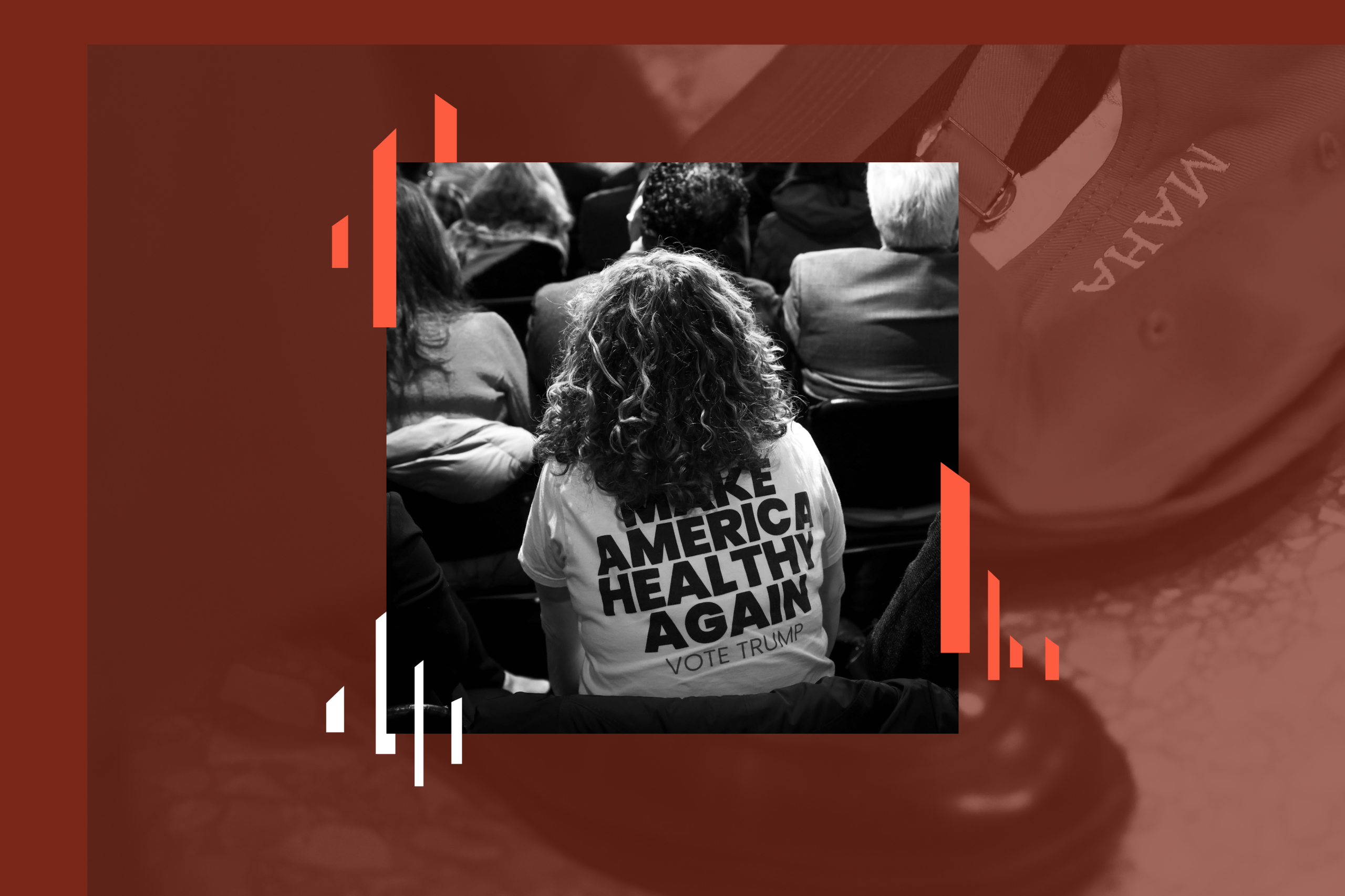

Republicans hope the Make America Healthy Again movement becomes a permanent fixture of a big GOP tent. But the party can’t count on its support heading into midterm elections this November.
New results from The POLITICO Poll show both broad frustration and dissatisfaction with the Trump administration on health priorities and opportunities for Democrats to make inroads with Health Secretary Robert F. Kennedy Jr.’s MAHA supporters.
A majority of Americans associate MAHA with the Republican Party, but not overwhelmingly, and most believe the Trump administration has not done enough to “Make America Healthy Again” — including a 41 percent plurality of Trump’s own 2024 voters.
The burgeoning political movement that officials in both parties credit with helping President Donald Trump win in 2024 has already begun to reshape how the GOP approaches health policy — driving everything from a redesign of the food pyramid to a rollback in vaccine recommendations.
At the same time, however, many poll respondents view Democrats as better positioned on the movement’s key health priorities. They were more likely, for example, to say the Democratic Party can be trusted to make the country healthier and are more eager to improve health in America, while fewer said the same of Republicans. The GOP, on the other hand, is seen as more likely to be influenced than Democrats by lobbyists for the food and pesticide industries, who rank among the MAHA movement’s top enemies.
These views could have real consequences in a midterm election year when razor-thin differences in turnout could determine control of Congress. And Democrats are bullish about channeling voters’ frustration with the Trump administration’s policies into a blue wave this cycle.
“The MAHA movement in the [2024] campaign cycle started with a lot of energy, and did create more energy for these types of issues that previously wouldn’t have been associated with the GOP,” said Abby McCloskey, a GOP policy adviser who has warned that Republicans are “squandering their MAHA moment.”
“Since then, I think the energy has trickled off from the perspective of, what is the federal government going to do about this?” she said.
Overall, 47 percent of poll respondents say they support the MAHA movement, including roughly a third of voters who backed former Vice President Kamala Harris in 2024 and about a third of Americans who plan to vote for Democrats this November. By comparison, 70 percent of Trump 2024 voters say they support the MAHA movement.
However, Americans don’t consider the nation’s health a top issue; It saw the same level of prioritization as “wokeism” and opioid abuse. When asked to choose between priorities for the U.S. government, a majority placed improving Americans’ health above stopping illegal immigration or cutting down on crime — but below affordability and concerns with cost of living.
And there are still widespread misconceptions about what MAHA is and what it does — even among people who self-identify with the movement. Just a third of Americans say they have heard of the MAHA movement and could explain what it is. Another third say they have heard of MAHA but could not explain it, including 31 percent of people who identify as part of the movement. One in four Americans had not heard of the movement at all.
The poll points to an opening for Democrats if they can effectively speak to the movement’s most popular issues and highlights that Republicans’ advantage with MAHA is far from guaranteed.
“People that we would call a ‘MAHA’ voter, they’re not partisans. They really are up for grabs,” Rep. Lauren Underwood (D-Ill.) told reporters on a recent call organized by the progressive advocacy group 314 Action, which is working to elect people with a health and science background to public office. “[Republicans] have really taken actions to alienate those folks, to break the promises that they made. They are no longer focusing on the core tenets of that Make America Healthy Again platform in order to continue to please Donald Trump, and also to advance their policy agenda.”
The Trump administration has largely pushed a deregulatory agenda, despite pressure from its MAHA supporters to crack down on pesticide companies, food manufacturers and drugmakers. Its recent choice to make it easier for Bayer to increase production of its weed killer Roundup has especially enraged MAHA supporters, who have said the move made it harder for them to continue supporting GOP candidates in the November midterms.
Kennedy’s own allies have warned Republicans that they cannot take MAHA voters for granted heading into November. Tony Lyons, the president of the MAHA Action, a political advocacy group that supports Kennedy’s agenda, said last month in a memo obtained by POLITICO that the GOP is merely “renting MAHA voters” but hasn’t been able to “purchase” them.
The POLITICO Poll also finds that the issues self-identified MAHA supporters rank as most important are ones Democrats have championed more often than Republicans, such as halting the spread of infectious diseases, stricter regulation of “forever chemicals,” and expanding access to reproductive health care.
This is not necessarily surprising, since many voters who support MAHA’s goals have typically been Democrats, said Rodney Whitlock, a longtime GOP congressional aide turned health care strategist.
Some of the policies less popular among MAHA respondents, meanwhile, are ones the GOP has embraced: restricting abortion access and reducing the number of vaccines Americans receive.
Yet the movement still lines up with, and supports, some Republican food policies and initiatives. For example, 80 percent of MAHA respondents support removing artificial dyes from food and 72 percent support restricting junk food purchases in federal nutrition programs, both priorities the Trump administration has tackled.
Lyons has urged Republicans to talk more about Kennedy’s policy goals, including discouraging Americans from eating ultraprocessed food, on the campaign trail. If they fail to do so and disgruntled MAHA voters peel off or stay home in November, he has warned, Democrats could take control of Congress, subject Kennedy to oversight hearings, and block his policy and regulatory efforts from going forward.
Lyons did not respond to a request for comment for this story.
The POLITICO Poll results — along with other recent polling showing declining trust in the Trump administration’s health recommendations — reveal a potential vulnerability for Republicans.
House Majority Forward, a nonprofit allied with House Democratic leadership, surveyed voters in February and March across several battleground districts the party is hoping to flip this fall. The group’s polls, shared first with POLITICO, found that more voters in Colorado, Iowa, New Jersey and Pennsylvania disapprove of Kennedy and his performance as health secretary than view him favorably.
“There’s this opportunity for Democrats to just start talking about making foods healthier and reducing the chemicals in the food that we’re giving them, … you know, limiting pesticide use, getting physical activity, removing artificial dyes,” said Carly Cooperman, a Democratic pollster and CEO of Schoen Cooperman Research.
A growing number of House and Senate Democrats — challengers and incumbents — are taking this advice to heart.
They’re beginning by focusing on pesticide use, which has become a political tension point for Trump’s GOP coalition, pitting the MAHA movement against powerful farm industry interests that have long been loyal to Republicans and hold significant sway with the administration.
Democratic lawmakers have railed against the Trump administration in social media posts, floor speeches and hearings for signing an executive order boosting domestic production of the pesticide glyphosate and siding with Bayer in a case pending before the Supreme Court that could shield the company from liability for the health impacts of its products. Democratic lawmakers, joined by a handful of Republicans, are also introducing bills and amendments that would undo or overturn these actions.
The POLITICO Poll found that limiting pesticide use is broadly popular, with more than two-thirds of respondents in support of doing so. And MAHA’s dissatisfaction with the Trump administration’s stance has led to some leaders within the movement threatening to primary farm-state Republicans as early as August of last year — yet another opportunity Democrats can exploit.
“We’re not even sure that we even have a path forward in this administration when it comes to pesticides, because it’s very clear that they are entirely owned by Bayer and the chemical companies,” said Kelly Ryerson, a MAHA influencer who goes by the moniker Glyphosate Girl online and has publicly backed Kennedy.
Progressive advocates also say Democrats would be wise to seize on MAHA voters’ simmering frustration.
“There is a genuine concern that there is unhealthy food in our food supply, and this administration is making it worse,” said 314 Action President Shaughnessy Naughton, whose group is backing Democratic challengers around the country.
Yet even as a segment of MAHA appears to sour on the GOP — and Kennedy — some of his agenda garnered widespread support among poll respondents, from removing artificial food dyes to offering whole milk in schools. Though MAHA respondents didn’t rank Kennedy’s stances on vaccines high on their list of importance, a notable chunk of Americans are highly skeptical of existing requirements.
The POLITICO Poll found that 41 percent of respondents across party lines support reducing how many vaccines Americans receive, with Republicans significantly more likely to hold that view. Fifty-eight percent of Trump 2024 voters support reducing how many vaccines Americans receive, compared to 29 percent of Harris 2024 voters.
Broad support for some of the key positions of MAHA — especially among Trump 2024 voters — and approval of some of the administration’s actions on health, suggest that Republicans may still be able to leverage the popular elements of the platform to win over voters in November.
Because health ranks so far down the list of Americans’ concerns, it’s unlikely to be a decisive factor in how they vote this midterm. Still, that doesn’t mean Republicans should be complacent and assume MAHA priorities won’t matter at all, Republican strategist Whitlock warned.
“Republicans have to be working from the perspective of ‘everything matters,’” he said. “To do differently is political suicide.”

Donald Trump’s plan for a ground operation in Iran will make US troops “sitting ducks”, according to the BBC’s chief international correspondent.
The US president claims he is considering seizing Iran’s major fuel hub of Kharg Island as his war against Tehran escalates – though he insists a peace deal could still be made.
Meanwhile US officials say troops are preparing for a possible ground operation, and Iran has threatened to “rain fire upon” American soldiers who approach.
But the BBC’s Lyse Doucet has warned that sending troops into Kharg Island will make them incredibly vulnerable to Iranian attacks.
The specialist said this would be a “major and risky” operation with as many as 50,000 troops potentially facing fire from Iranian artillery and fast boats.
“And then what?” She told BBC Radio 4′s Today programme. “They’re sitting ducks. How do you control the island, how do you hold it, how do you resupply it?”
Doucet added: “There are hardline Islamic Revolutionary Guard Corps who are hoping that is what President Trump is going to do.
“Their whole strategy in this war is to increase the cost for the United States.
“Nothing increases the cost more than killing American soldiers.”
She said US Gulf allies would be vulnerable to any retaliatory attacks too, concluding: “This would be a major escalation and wouldn’t bring the war end.”
Taking the island would cut off one of Iran’s main lifelines as 90% of their oil went through that hub before the conflict began.
But it remains unclear just how much Tehran relies on it since the war escalated.
On Trump’s claims someone more “reasonable” is in charge in Iran right now, Doucet said: “It’s just not clear who is in charge in Iran.
“There is of course president Trump’s confusion between regime change and change in the regime.
“He used to separate them but now he sees them as one and the same. It’s not one and the same.”
She noted that the more hardline elements have been left in the wake of Trump’s strikes, even though major figure heads such as Iran’s supreme leader Ali Khamenei have been killed.
The president has said he could “take the oil In Iran”, and even joked about renaming the major oil shipping lane to the south of the country after himself.
On Friday, he said Iran has to “open up the Strait of Trump – I mean, Hormuz,” triggering laughter from the crowd.
Trump joked: “Excuse me. I’m so sorry. Such a terrible mistake. The fake news will say, ‘He accidentally said’ – no, there’s no accidents with me, not too many. If there were, we’d have a major story.”
Every day it seems like there’s a new slang term doing the rounds among Gen Alpha – in recent times, kids have been using bop, huzz and gyatt, all of which are typically used to describe girls in a sexualised way.
Government research suggests sexual harassment – which can include sexual comments, remarks and jokes – is widespread in schools in England. What’s more, data from the Youth Justice Board shows the number of children committing sexual offences is on the rise.
Yet when you search for parenting advice on sexual harassment and catcalling online, much of the focus is tailored to those who have girls, who are more likely to be on the receiving end of this harassment.
With Louis Theroux’s latest documentary exploring the ‘manosphere’ and the misogynistic views of those within it, conversation has once again turned to how we can help raise boys who shun this damaging ideology.
As a family, how often do you discuss values and respect?
If boys are seeing misogynistic content online, this kind of behaviour can become normalised in real life, too. So, how do we protect against it?
Ongoing conversations, says Lee Chambers, founder of Male Allies UK. Namely ones about values and respect.
According to Hilber Psychological Services, making boys aware of inappropriate behaviours at a young age can help prevent this behaviour as they grow up.
You can use pop culture or things you see in the media or on TV to show them what is inappropriate, and discuss how it makes other people feel.
Chambers said discussions should be honest and clear – remain curious, not shaming or blaming, but instead trying to connect with your child. Listening and asking questions is often more effective at communicating with teens than lecturing.
“Make it a regular conversation about values and respect, not a special case,” said Chambers.
It might be helpful to actually explain what sexual harassment is: unwanted behaviour of a sexual nature. It can include many things – from sexual assault to unwanted touching or gestures, sexual innuendos, catcalling, and making sexual comments about a person’s looks or clothing.
Per Hilber Psychological Services, you could ask your son why they think other men do this, and offer them examples of how to help stop it, “such as standing up for girls or refusing to laugh at inappropriate jokes”.
Encouraging them to put themselves in others’ shoes is key. Chambers urges parents: “Reflect questions toward them, ask them: how they would feel if this happened to women in their lives? What [do] they think when they see others doing it? What [do] people at school think?”
The male allyship specialist said you can then begin to explore the impact of this on women and girls, including how catcalling and sexual harassment can make them change their behaviour to stay safe.
Ultimately, it’s about teaching respect and consent throughout their upbringing – and this can start really early and continue right into their teens.
And parents need to be role models for this too, for example, when referring to others or watching television, etc. “Kids are always watching, learning and copying,” Chambers added.
While you should be prepared for defensiveness and responses that “the other lads do it” among teens, Chambers said it’s key to validate that it can be hard to challenge others – especially when their mates might just respond that “it’s a joke”.
He ends that boys should bring it back to the fact it’s not fun to make others feel unsafe. This way, they can “be part of the solution, not the problem”, he ended.

Robert De Niro has never been one to shy away from taking on Donald Trump, and let the president have it once again over the weekend.
On Saturday, De Niro slammed Trump for being an “existential threat to our freedoms and security”, before joining an estimated nine million people at a “No Kings” protests against the US leader and his administration.
“He must be stopped and he must be stopped now!” stressed the two-time Oscar nominee, a staunch Trump critic who has thrown his support behind the demonstrations.
“It’s time to say no to kings. It’s time to say no to Donald Trump, we’ve had enough!” he said during a press conference.
De Niro — just over a month after his emotional plea for Americans to resist the president — went on to decry Trump’s “unnecessary” Iran war before describing him as a “corrupt leader enriching himself” and his “Epstein class buddies”.
“No taking health care from our most vulnerable neighbours, no unaffordable groceries, no unaffordable energy, no unaffordable housing and no inflation at it’s highest level since Covid,” he emphasised. “No government masked thugs shooting down our neighbours in the streets.”

Andy Kropa/Invision/AP/Mark Schiefelbein/
He proceeded to take on “all the fucked up things” Trump has done “without the collusion of Congress and the goons in his administration”, adding that Republican party officials are bound to him in fear of losing their jobs.
De Niro was later spotted leading a march alongside the likes of Rev. Al Sharpton, New York Attorney General Letitia James, Padma Lakshmi and others protesting against the president in New York City.
In Washington DC, and St. Paul, Minnesota, music legends Joan Baez and Bruce Springsteen, respectively, performed for massive crowds as protesters called for a U.S. “regime change” as well as the arrests of Trump and members of his Cabinet.
De Niro, in remarks on Sharpton’s MS NOW program PoliticsNation, declared that Trump is a “crazy… damaged person” and will try anything while in power before calling on Americans to not let up in protesting him until the midterms are “resolved for the right reasons”.

The BBC’s new TV offering could well be about to become one of the year’s most talked-about dramas.
Emmy and Bafta-nominated I May Destroy You star Paapa Essiedu and Bodkin’s Siobhán Cullen take the lead in the new six-part series Babies, which centres around a young couple and their struggles to conceive.
Early reviews have heaped praise on the new drama’s performances, as well as its unflinching approach to themes of miscarriage and pregnancy loss, though critics have acknowledged that this makes Babies a difficult and potentially triggering watch for those affected by these topics.
However, many have also pointed out that the drama also features moments of “bittersweet” relief and scenes of hope to counterbalance its more “hard-hitting” moments.
Here’s a selection of what has been said about Babies so far…
“Although there are a lot of distressing, incredibly hard-hitting scenes in the six episodes of Babies, and it does go to some seriously dark, upsetting places, it is not a ubiquitously grim watch. In many ways, it is also hopeful, filled with some genuinely funny moments, some uplifting revelations and thoughts on how to cope during difficult times, and some keen observations about human behaviour.”
“A bittersweet drama […] Siobhán Cullen and Paapa Essiedu are achingly convincing as Lisa and Stephen, an ordinary London couple in their 30s trying to have a baby. The pair navigate the rollercoaster of pregnancy, loss and grief more than once, as they continue to get through life’s mundanities and special little moments.”

“All in all, Babies is as heartening as it is heartbreaking. Is it slow at times? Yes. But I came to realise that the stillness can be essential […] I didn’t find Babies easy to watch, but doing so touched me in ways I’ll be thinking about for a while.”
“Bafta-winning writer Stefan Golaszewski is a byword for thoughtful, exquisitely cast, contemporary TV drama […] This time, the intensity is sky-high again but laced here and there with humour as he takes on the emotionally freighted subject of a couple’s longing to have a child […] It’s a drama of silences, quiet moments, social awkwardnesses and deep yearnings, with Cullen and Essiedu hugely sympathetic in their portrayal of the intense ups and downs in otherwise ordinary lives.”
“Its low-key slow-burn style won’t be to everyone’s taste, and it will be difficult viewing for any woman who’s tragically lost a child in pregnancy.”
“A tender, moving exploration of love, loss and hope […] This is a drama that doesn’t shy away from the difficult moments, despite dark times of grief and loneliness, it’s also about resilience, connection and the small victories that keep hope alive.”

“Essiedu has easily given the best performance of his career so far in new BBC drama, Babies […] It’s one of the most gut-wrenching and honest portrayals of baby loss that I’ve ever seen, charting every possible emotion any person is capable of handling throughout. The grief is unimaginable, but somehow, there is always light and love at the end of the tunnel.”
“An incredibly accomplished piece of television in almost every regard. Essiedu and Cullen have extraordinary chemistry […] We don’t need to warn you any further about the subject matter. However, we can also say this: Babies may make you weep, but there will be happy tears, too.”
All six episodes of Babies are now streaming on BBC iPlayer.
- Sands works to support anyone affected by the death of a baby.
- Tommy’s fund research into miscarriage, stillbirth and premature birth, and provide pregnancy health information to parents.
- Saying Goodbye offers support for anyone who has suffered the loss of a baby during pregnancy, at birth or in infancy.
Politics
The House | “Every Movement Was Controlled”: The Quiet Rise In Children Under Deprivation Of Liberty Orders
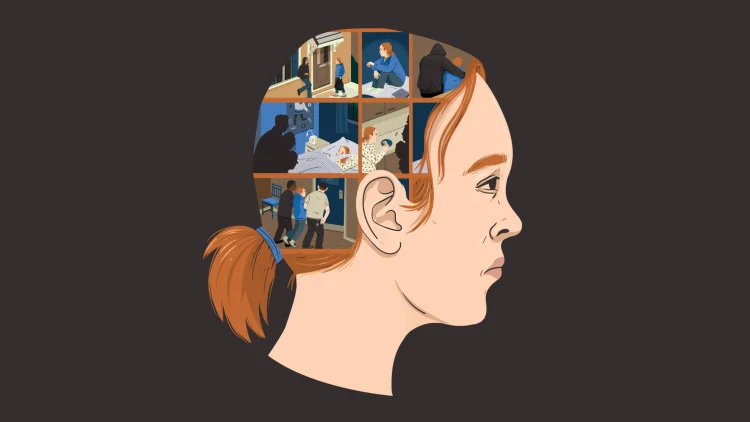
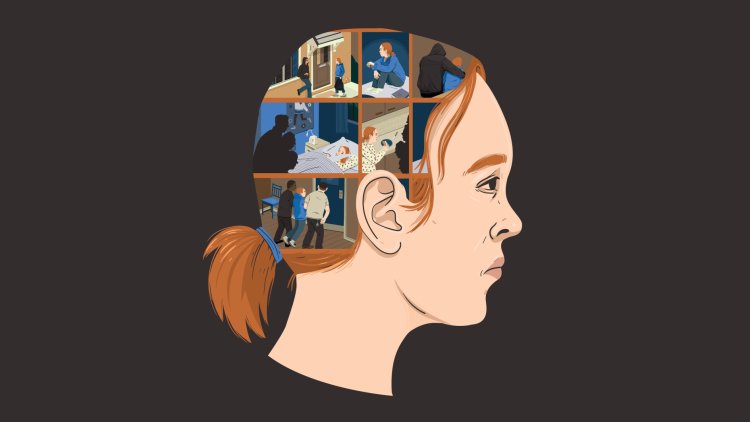
Illustration by Tracy Worrall
10 min read
There has been a 13-fold increase in the use of court orders that deny children freedom to move and associate in the last seven years. Justine Smith explores the reasons behind this huge increase in what are supposed to be emergency orders
Hundreds of children with the very highest level of need are being locked away from society, often in illegal, unregistered homes with a rolling rota of untrained staff, because of shortages in therapeutic care.
These children can be controlled through frequent physical restraint and denied basic rights such as contact with family and friends or an education, the ultimate victims of a care system in crisis. They are held under Deprivation of Liberty (DoL) orders, which were designed to give special legal powers to local authorities to restrict the freedom and rights of children and teenagers considered to be an extreme risk to themselves or others.
The orders are handed down through the inherent jurisdiction of the High Court, not criminal courts, but can be more repressive and open-ended than even Young Offender Institutions. Though they are meant to be an emergency, short-term response, critics say they are increasingly being used to plug gaps in health and social care services.
Since 2017, the number of orders has rocketed from just over 100 a year to around 1,300. There are now three times the number of children detained under them than there are in prison, and a fifth stay in place for at least a year. The Children’s Commissioner found that a third were placed in unregistered homes – which are not monitored by education regulator Ofsted – often because legal homes refuse to take them.
The rise can be largely attributed to an increase in older children entering care with complex issues, the collapse of mental health and early intervention services, the reduction of places in secure children’s homes and paediatric psychiatric wards and a shortage of foster carers and children’s homes with the acute expertise and experience needed to support them in the community.
Restrictions often include a ratio of between one and five adults around the child 24 hours a day, sometimes sat outside their bedrooms at night and with bars on windows and locks on every door and limits or bans on phone and internet use. Two thirds come with the right for staff to use physical restraint.
Children subjected to them are almost always in the care system and have complex and unmet needs, such as mental health issues, physical and learning disabilities, and the legacy of early life trauma, sexual and criminal exploitation and familial abuse or neglect.
Judges, campaigners and human rights advocates have all raised concerns about their inappropriate overuse for children who have already been let down by poor, fragmented health and social care services, often leading to an escalation of their challenges.
I was just contained like a wild animal for more than two years, not supported
When most teenagers her age were juggling busy social lives with the build-up to GCSEs, Roismi was being kept in a locked house and followed everywhere by five adults from a rolling rota of paid staff. At a time when she needed unconditional love and privacy during adolescence, her every movement was scrutinised; any change of mood or sign of emotion might lead to terrifying physical restraint.
She was not in trouble with the police or considered a risk to society – only to herself after a history of sexual, psychological and physical abuse, and failures of the services that were supposed to help her recover from her trauma.
After being sectioned hundreds of times and moved through countless foster homes and residential placements, Roismi, who is autistic and has ADHD and Post-Traumatic Stress Disorder, was put on a DoL Order in unregistered accommodation.
Roismi says she was made to feel like a “demon” by staff who appeared to fear rather than understand her.
“Every movement was controlled,” she explains. “I was watched all the time by people I didn’t know. I cannot cope with being in a room with lots of people. I would go to the kitchen and five people would follow me in so I would retreat to my room, the only place I had moments of privacy. I lost a significant amount of weight in two months.”
Even in her bedroom, staff checked on her every 15 minutes, 24 hours per day, adding insomnia to her problems.
“The damage done to me will last a lifetime,” she adds. “I was just contained like a wild animal for more than two years, not supported. I lost my friends. I only left the house for appointments. It was so much worse than being sectioned in a hospital, where at least I could associate with other young people like me. I wish I had stayed in my abusive family home because at least by now I might have an education and some kind of normal life.”
Anela Anwar, CEO of care charity Become, which has supported Roismi, says: “A society having to resort to depriving children in care of their liberty because there are no safe and suitable homes is one completely failing the children in its care.
“But it doesn’t have to be this way. Through proper investment, the government can create the right homes in the right places, especially those that offer more therapeutic support, to give children the care and stability they need.”
Roismi experienced 18 months of stability in a good, therapeutic children’s home with trauma-informed staff, but she was thrown back into chaos when her most trusted caregiver had to leave.
Latest quarterly figures show the majority on DoL orders are aged 13 to 15, but there was a 52 per cent rise in under-12s over just three months last year.
The orders severely restrict access to education, training or work, and disrupt important relationships and any medical or therapeutic interventions.
Carolyne Willow, a campaigning barrister specialising in children’s rights, says: “It is intolerable that highly vulnerable children continue to be deprived of their liberty in arrangements cobbled together in crisis and haste, often in unregistered children’s homes devoid of Ofsted scrutiny and other protections such as monthly independent safeguarding checks.”
She says the lack of specialist, skilled local authority provision is driving the increase in cases to the High Court for the last resort “safety net” of DoL orders.
“These children are being typically held in so-called ‘solo placements’ where they are under constant surveillance by staff who often have neither the training nor support to meet their considerable needs.”
Research led by the Nuffield Family Justice Observatory (FJO) into the risk factors and reasons for increases in orders, and the conditions and outcomes children on them face, found they were placed an average of 56 miles from home, and more than half were put in unregistered – therefore illegal – provision.
Roismi’s experiences were reflected in interviews with other young people for the project, who described the draconian orders as damaging, re-traumatising and exacerbating existing problems, leading to feelings of isolation, hopelessness, despondency, distrust and resentment. Some told of being repeatedly restrained by staff who had not been trained, in which they suffered injuries as well as psychological trauma.
Some said they had not been told why they were on one or how to get it removed, while others said they had not spoken to their families for months. Many, like Roismi, said they were completely unprepared when they were thrown back into the real world at 18, expecting to end up dead or in prison.
FJO director Lisa Harker says: “The reality is, they very rarely go to school, a few have learning at home. They often have complex mental health and trauma-related issues, however they do not get priority in CAMHS [Children and Adolescent Mental Health Services] even though they are often moved around a lot, meaning they never get to the front of any queue.
“Services may say they can only start treatment once settled. So they are denied the very help that might get them off a DoL, keeping them prolonged, and are then dumped when they are 18 with no education, having not developed social skills or been able to learn how to be independent and with mental health issues that have been allowed to escalate in the absence of any meaningful support.”
A spokesperson for the Department for Education said: “These reports of children’s experiences are shocking, and we recognise the concerns raised. We are making major changes to children’s social care to ensure that when, in the most serious cases, a child needs to be deprived of their liberty for their own safety, they are cared for in accommodation that is safe, appropriate and fit for purpose.
“Children should not be facing placements in unregistered homes when they need the highest levels of care and protection.”
They added that the government was spending £2.4bn on supporting families to stay together and £560m to create more places for children in high-quality, registered homes.
The Children’s Wellbeing and Schools Bill is proposing new DoLs accommodation in the community, as an alternative to secure children’s homes where they are unable to leave the premises, and would strengthen oversight and accountability where children are deprived of their liberty. However, the changes could take years to take effect and the rate of incarceration through DoL orders continues to rise.
Campaigners including the Children’s Commissioner are calling for the bill to go further, mandating national data recording and oversight of every DoL and legal representation for those affected, as well as a clear legal and regulatory framework safeguarding their rights and welfare.
There are alternative models, such as the multi-agency Myst (My Support Team) model in Wales, an intensive mental health service for children on the edge in the care system which works with their carers to provide holistic, long-term support before issues escalate to the point where a DoL might be needed.
As well as drastically improving their outcomes and wellbeing, such early, committed interventions, while costly in the short term, will undoubtedly reduce pressures on council resources down the line.
Secure children’s homes can cost £350,000 a year, but an intensive DoL order such as Roismi’s – which included four trained nurses at all times – can cost up to £3m.
Now 20, she is in supported living and has more freedom, but says she has lost years of her childhood and is now struggling to catch up before all support ends when she turns 25. She has been so institutionalised, she says, she still automatically asks for permission just to be able to go outside and has accumulated £28,000 of debt in unpaid rent and bills, having been unaware she needed to sign on for the housing element of Universal Credit.
Despite all the challenges she has faced, she has set up a not-for-profit organisation, My Trauma is Chronic but I’m Iconic, which mentors and supports other young people as they go into adulthood after care or other adverse early life experiences.
However, Roismi is an anomaly in a care system that is failing so badly that leavers are seven to eight times more likely to die before they reach the age of 21, five times more likely to die by suicide and make up around a quarter of the prison and homeless populations.

US President Donald Trump on Sunday night broke out some props as he spoke with reporters on Air Force One about one of his biggest obsessions.
With the war in Iran passing the one-month mark, the stock market plunging into correction territory, gas prices soaring by $1 a gallon or more over the past month, and the partial shutdown of the federal government entering its seventh week, the president showed off oversized renderings of the ballroom he is trying to have built at the White House.
“This is a view of the columns as they are going to be made, they’re gonna be hand-carved, isn’t that beautiful? Top of the line,” Trump said as he displayed the image below. “They’ll be Corinthian, which is considered the best, most beautiful, by far.”
As Trump displayed the images, he claimed that people were talking about “how beautiful” the ballroom was, and said it would be needed to host foreign leaders, such as Chinese President Xi Jinping. He also said the military was building a “massive complex” beneath the ballroom.
Over the weekend, The New York Times published a report that said the “rushed” project was full of design flaws, including stairs to nowhere and columns that would block the view. White House Press Secretary Karoline Leavitt pushed back on X, slamming the authors as people who had “never built anything” and defending the project as “a beautiful ballroom that’s been needed for decades.”
But critics pointed out that the 90,000-square-foot ballroom was far larger than the White House’s 55,000-square-foot main residence, and others slammed Trump for demolishing the East Wing to make way for the structure without first seeking public input. The National Trust for Historic Preservation in the United States, a nonprofit that oversees the preservation of historic structures, has also filed a lawsuit that could slow or even stop the project.
Trump’s lengthy aside about his ballroom left critics aghast, especially given everything else going on that would seem to require the president’s attention:

Donald Trump suddenly has “no problem” with allowing Russian oil into Cuba.
Just a month ago, before the US-Israeli strikes against Iran, America had aligned with its western allies by imposing strict sanctions on Vladimir Putin’s oil industry which fuels his war against Ukraine.
A fortnight ago, Trump eased those penalties against Moscow in response to the Iranian closure of a major oil shipping lane.
That meant countries could buy Russian oil which had previously been floating in the sea unable to be sold.
Now it appears Trump is even more relaxed about what Putin does, as he evidently does not mind if those tankers actively cross the Atlantic.
The president has blocked any attempts to send energy exports to Cuba since January in protest against the country’s leadership.
But overnight, the US president told the press: “If a country wants to send some oil into Cuba, I have no problem with that, whether it’s Russia or not.”
A reporter asked: “Do you worry that that helps Vladimir Putin?”
He replied: “It doesn’t help him. He loses one boatload of oil. That’s all it is. It’s fine. If he wants to do that, it doesn’t bother me.”
Trump went on to claim Cuba is “finished” with “bad and corrupted leadership”.
“Whether or not they get one boatload of oil, it’s not going to matter. I’d prefer letting it in, whether it’s Russia or anybody else, because the people need heat and cooling and all of the other things,” the president said.
Trump previously threatened to impose tariffs on any country that sends crude oil to Cuba.
However, the Kremlin has dismissed such threats, noting the US and Russia have not been trading much lately.

The BBC has responded to speculation about how much Question Time guests are paid to appear, following recent claims made by Thomas Skinner.
Last week, the divisive TV personality made his inaugural appearance on Question Time, alongside Labour, Conservative and Lib Dem MPs Jake Richards, Tom Tygendhat and Layla Moran.
In response to a comment from one viewer suggesting Thomas had been booked due to him being a “vocal supporter” of Nigel Farage’s Reform party, the former Strictly Come Dancing star wrote on X: “I’m not there representing any party. I’m there because it pays £2,000 and I like watching Question Time.”
He added: “I’ve been asked probably nine or 10 times to attend over the last four or five years. So I decided to give it a go. And I really enjoyed it.”
Shortly after this, Question Time clarified: “Question Time can confirm that panellists who are not politicians are offered an appearance fee of £150.”
Despite this, Thomas continued to maintain that he “agreed £2000 for me to go on” Question Time, as well as “agreeing” that “they pay [my] driver £400 on the night to take me and bring me back”.
He later told The Sun: “My understanding of the fee came directly from my management, who informed me that I would be paid £2,000 for attending.
“I’m a big fan of Question Time and really enjoyed being part of the show. At the same time, it is work for me, and with three kids, I have to treat these opportunities as part of my job”.
A BBC rep reiterated that non-politicians were paid £150 for their time on the panel show.
HuffPost UK has contacted the BBC for additional comment.
The most recent instalment of Question Time was filmed in Clacton-On-Sea, where Reform leader Nigel Farage is the current MP.
He said before the broadcast that he was “not able to take part” in the broadcast due to a BBC policy which forbids MPs from “appearing on the show in their own constituencies”.
“There is a longstanding policy on Question Time not to invite MPs on in their local constituencies unless it’s for a single-issue special programme,” a spokesperson for the broadcaster later confirmed.
The natural birth movement empowers many women but pressure can also work the other way

TxFlow L1 mainnet launch marks a new phase for multi-application on-chain finance

How To Get Your Body Clock Back On Track With ‘Zeitgebers’


-
 NewsBeat5 days ago
Manchester United reach agreement with Casemiro over contract clause amid transfer speculation
-

 News Videos4 days ago
Parliament publishes latest register of MPs’ financial interests
-

 Sports7 days ago
Gary Kirsten Accuses Pakistan Cricket Board Of ‘Interference’, Mohsin Naqvi Responds
-

 Sports7 days ago
Remo Stars and Kano Pillars Strengthen Survival Hopes in NPFL
-

 NewsBeat3 days ago
The Story hosts event on Durham’s historic registers
-

 Business4 days ago
Instagram, YouTube Found Responsible for Teen’s Mental Health Struggle in Historic Ruling
-

 News Videos7 days ago
Ch 9 Financial Management Part 1 | Detailed One Shot | Class 12 Business Studies Boards 2026
-
 NewsBeat5 days ago
Tesco is selling new Cadbury Dairy Milk bar and people can’t wait to try it
-
 Entertainment7 days ago
Cynthia Bailey Dishes on ‘RHOA’ Season 17, Discusses Kandi
-

 Tech7 days ago
Samsung will soon let you control smart home devices from your car’s dashboard
-
 Entertainment1 day ago
Lana Del Rey Celebrates Her Husband’s 51st Birthday In New Post
-

 Business6 days ago
More women enter wealth management, but few in advisory roles: study
-
 NewsBeat7 days ago
Colombian military plane with 110 soldiers onboard crashes following takeoff
-

 Fashion7 days ago
Fringe Bags for the Season
-

 Fashion6 days ago
Does It Matter What You Wear When You’re Laid Off and Looking?
-

 NewsBeat6 days ago
Entrepreneurs Forum survey reveals optimism in North East
-
 NewsBeat6 days ago
NASA Artemis II Astronauts enter 14-Day quarantine as moon rocket reaches launchpad
-

 Business6 days ago
Late-paying firms face multimillion-pound fines under new crackdown
-

 Politics7 days ago
How Media Platforms Balance Performance and Accessibility in Image Delivery
-

 Crypto World6 days ago
BTC gives up $70,000 level as markets mull higher interest rates
You must be logged in to post a comment Login