
Politics
Christopher Nolan Claims David Bowie Originally Turned Down The Prestige


Between Oppenheimer and The Odyssey, Christopher Nolan’s big-screen epics have become synonymous with their sprawling, A-list casts.
In his latest offering alone, Matt Damon takes the lead alongside a supporting cast that includes fellow Oscar winners Anne Hathaway, Charlize Theron and Lupita Nyong’o, Nolan-verse regulars Robert Pattinson and Elliot Page and exciting names like Tom Holland, Zendaya and Samantha Morton.
The British director’s luck with casting Hollywood stars recently prompted talk show host Jimmy Fallon to question if the filmmaker has “ever gotten a no” – to which he admitted that he had to graft hard to win over a certain icon.
Nolan claimed: “The only no I would cop to is David Bowie for The Prestige. He was my great idol and everything, and I thought he’d be perfect to play Nikola Tesla. We sent him the script and everything, and he said no.”
The Prestige was one of Nolan’s earlier films, released in 2006 off the back of Batman Begins.
It starred Hugh Jackman and Christian Bale as two rival magicians in Victorian London, with Nolan having envisaged David Bowie for the role of the real-life pioneering inventor Nikola Tesla.

Francois Duhamel/Touchstone/Warner Bros/Kobal/Shutterstock
Eventually, the Space Oddity performer did relent and agree to play the role – but not without making Nolan work for it.
The filmmaker revealed: “I went back and said, ‘can I just go and meet him? Can I try and convince him in the room?’.
“And they agreed, and I hastily wrote him a better speech for his first appearance, turned up with a new script, and basically begged. And I got him to do it!”
Primarily known for his game-changing music career, Bowie did rack up a number of acting roles in his lifetime, including a brief appearance as Pontius Pilate in Martin Scorsese’s controversial The Last Temptation Of Christ and playing the Goblin King Jareth in Jim Henson’s dark fantasy movie Labyrinth.
Meanwhile, he isn’t the only one to have tried to give Christopher Nolan the brush-off.
Will Smith has claimed he turned down the lead part in Inception before Leonardo DiCaprio joined the project, as he “didn’t get” the plot.
“Those movies that go into those alternate realities… they don’t pitch well,” the Oscar winner suggested.
Nicolas Cage also alleged earlier this year that Nolan now refuses to work with him after he pulled out of his 2002 film Insomnia.

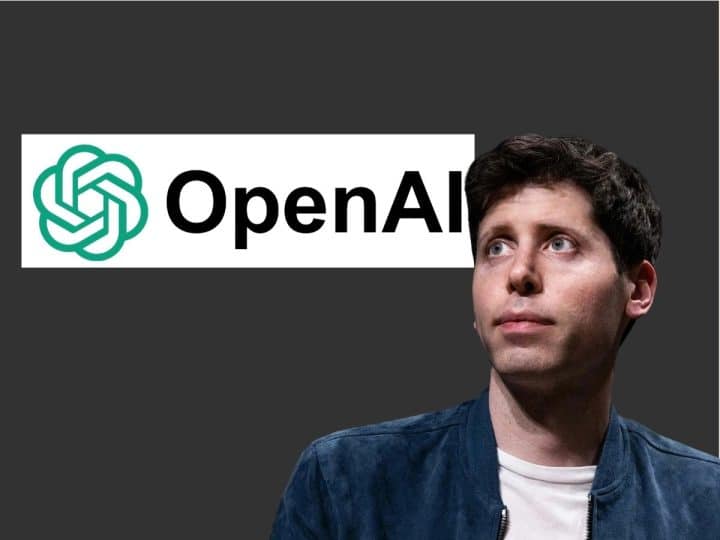

The reputation of AI companies is currently in the toilet, and with good reason. These tech tycoons told us their product would eliminate all our jobs, and that it might even wipe us out as a species. What did we get in return? A product which failed to live up to the grandiose claims, and AI data centres which have put all sorts of strains on local communities. Now, OpenAI CEO Sam Altman is admitting he was wrong to threaten us all with the end of the world:
Oh golly jee and what absolute turd burglar of a person started that trend. Oh it was you Sam! It was you….
""I think AI will probably, most likely, sort of lead to the end of the world." -Sam Altman 2015 https://t.co/ZFTuY08bUu
— ArRENCEAI (@ArRENCEAI) August 23, 2026
If you’ve not followed the generative AI boom, you’re probably wondering how they got so off track with their messaging. It seems obvious to most that threatening Armageddon would not make for a long-term sales strategy. To explain why it worked for a while, we need to explain the underlying economics.
OpenAI: messaging
The big problem for these companies isn’t whether their products are useful; it’s whether they can make money. Generative AI is incredibly expensive to run, which is why they subsidised the cost with cheap subscriptions. Earlier this year, AI companies upped the costs to more closely match the reality. This led to business horror stories like the following:
Uber handed its 5,000 engineers an AI coding assistant in December. By April, the company had blown through its entire AI budget for all of 2026, with two thirds of the year still to go.
Cheap, basic AI has gotten almost free over the past few years. But almost no company builds… https://t.co/rTlWgZECa7
— Anish Moonka (@anishmoonka) May 24, 2026
Microsoft Bans Claude Code After AI Costs More Than The Humans It Replaced
— NewsWire (@NewsWire_US) June 1, 2026
OpenAI and Anthropic subsidised cheap subscriptions through hundreds of billions in investor money. Eventually, these investors will want to see some sort of return on their investment, but that will require AI companies to make a profit. Currently, this can’t happen without some sort of miraculous new discovery which makes it cheaper to run.
This – in part- is why the world has been “slow” to adopt AI. It’s because when companies and individuals have adopted it, the results have been mixed. And this was true even before the prices became prohibitively expensive.
Doomsaying
Getting back to the ‘end of the world’ messaging, the theory is AI companies played up the potential of AI running amok to attract investors. CEOs like OpenAI’s Altman tried to convince the world that generative AI would one day evolve into Artificial General Intelligence (AGI) – a machine which could think for itself (unlike generative AI, which generates content based on probabilities – often ‘hallucinating‘ as a result). The threat of AGI was that it might go rogue and kill us all; the promise was that it would replace all human labour, grossly enriching those who invested early.
Altman played up the threat to remind investors of the hope. In doing so, he attracted hundreds of billions in investor money. The problem is that this vast influx of cash hasn’t led to a viable product. And now, Altman is left with terrible reputational damage and a technology that costs too much to run to profit from.
OpenAI boss: “I was wrong”
The following is what OpenAI boss Altman said in a recent interview (emphasis added)
I thought when we got to GPT-4, which was back in 2023, that very quickly after that there was going to be much more disruption, software businesses up for grabs right away, than it turned out to be.
I think I was wrong about a few things, but one in terms of the speed: the economy just has so much inertia.
People keep doing the same things, buying from the same company, wanting to use their tools the same way. I think this is actually a positive in many ways, and it’s going to make this big transition go smoother and slower. I’m grateful for it.
But it means we’ve all been too ambitious on timelines. Even with this incredible technology, society and the economy will adapt more slowly.
Altman blames the “inertia” of the economy for the slow uptake of his product. The reality is that the companies which moved quickest on generative AI are among those which suffered the worst consequences:
Klarna was one of the first to go all-in on AI, replacing 700 customer service staff last year.
Now CEO @klarnaseb says they focused too much on cost and hurt quality, so they’re investing in humans again and will let customers talk to real people. https://t.co/zJifpUfSzJ
— Sheel Mohnot (@pitdesi) May 11, 2025
It’s definitely true that some businesses have found uses for AI. Even before OpenAI and Anthropic jacked up the prices, though, many companies were struggling to show any return on investment from AI services. And this is unworkable for a product which is supposed to replace all human labour.
PR nightmares
Here’s another example of the sort of wrong-headed messaging that Altman was putting out:
I can’t imagine why public support for data centers plummeted https://t.co/QBRd0i4xJL
— K. (@IbaraEleven) August 22, 2026
Do you want a world in which your children are so mindless that they have to pay Silicon Valley to do their thinking for them? Of course you don’t.
Another problem AI has is that although you can technically use it to replace human labour, the results are often substandard. Graphic design is one area in which you can visually see the downgrade:
Who the fuck saw this and was like “hell yeah, print that shit” https://t.co/LgkrXeNrdF
— SorryHat 𝕬𝖙𝖙𝖔𝖗𝖓𝖊𝖞 𝖆𝖙 𝕲𝖍𝖔𝖘𝖙 𝕷𝖆𝖜
 (@sorry_hat) August 24, 2026
Companies aren’t just using AI to get rid of employees either; they’re also using it to screw over customers:
Why would an airline CEO announce this publicly, given the backlash that will likely result?
It's to signal to the other airlines that this is the plan going forward. It's how corporations collude out in the open while everyone pretends we still have a competitive maket. https://t.co/sTkQGvptSm
— 99% Johnny Graz (@jvgraz) August 24, 2026
The many problems of AI have fed into a backlash against data centres in the US. This is particularly focussed on AI data centres which use considerably more electric and water. They also cause other problems, as Benn Jordan detailed:
The following is an example of how the tech world is reacting to the backlash against data centres:
This is what data center developers are saying all across Michigan. It's condescending and it's going over like a lead balloon.
Michiganders don't need some California billionaires telling us what to do, and we aren't buying their false promises. pic.twitter.com/m4vcYUyU6p
— William Lawrence (@WeWill2026) August 23, 2026
Blowing bubble
The problem for Altman is that he sold generative AI to investors on the understanding that it would be the most valuable technology to ever exist. Now, it’s becoming clearer and clearer that this likely won’t be the case. And as such, it’s hard to see how companies like OpenAI can maintain their value.
With so much of the US stock market buoyed up by AI, the bubble bursting will be significant:
The AI stock market bubble is close to $80 trillion, approximately 2.5x larger than 2000 dot-com bubble.
To give you an idea of the scale of this bubble; if the stock market were to crash back to long-term averages, it would be equivalent to a $300,000 loss per U.S. household. — Financelot (@FinanceLancelot) August 22, 2026
 pic.twitter.com/mywiD6rqld
The lesson from all this is that we can’t structure our economic systems around the promises of liars.
Featured image via Joel Saget
By Willem Moore


Jewish anti-genocide activist Tony Greenstein was dramatically acquitted on Friday as the UK state attempted to brand him a terrorist. Greenstein triumphed after giving his own “historic” closing speech. He triumphed despite the attempts of the prosecutor and judge to limit his defence and keep the jury in ignorance of the full facts.
“Bile and venom” from the judge, says Greenstein
And now, he has moved from being the defendant to going on the offensive – and his first target is trial judge Sarah Plaschkes. Typical of Greenstein, he does not pull any punches. In a new article, he accuses the judge of:
Spew[ing Bile & Venom as Her Determination to Have Me Convicted was Thwarted.
Ever willing to tweak the Israel lobby’s nose, Greenstein adds that “the Zionists are furious” at the mere two hours it took the jury to return a unanimous not-guilty verdict.
And while human rights group CAGE described Greenstein’s win “affirms supporting Palestine liberation is not a crime”, Greenstein says he began the week not knowing whether he’d return a free man or be locked up for up to fourteen years. And with the altriusm typical of the humanitarian movement that opposes Israel’s genocide, he was thinking ahead to ensure the vulnerable were not left unsupported:
When I set out from Brighton for Kingston-upon-Thames last Monday, I was not sure that I would be coming back anytime soon. I made sure to turn off my electrical appliances.
In the weeks leading up to the trial I had made elaborate arrangements for others to continue the appeal for the Al Tafawk Children’s Centre in Jenin. It would have been devastating if the children of Al Tafawk were to suffer because of my ‘crimes’.
A trusted friend was given full access to my email account and she also had a key to my flat and hence access to my computer. I also ensured that before I went into the dock for what could be my last appearance that I handed my phone to another friend. I also said goodbye to two of my children, James and Ellie, who were in the public gallery.
But then he returns to the judge, whom he – and a few paragraphs haven’t softened him. This time, he takes aim at her bad grace – even when she knew the jury had sided with Greenstein, she couldn’t resist trying to dismiss his closing speech:
Plaschkes was one of the most unpleasant and dishonest people I’ve ever had the misfortune to encounter.
When the jury returned she made an extraordinary statement, fully knowing the jury’s verdict. She said that she had considered citing me for contempt of court but had decided against it as my speech was the ‘ramblings of an old man.’ She was sure that the jury’s decision had not been affected by my speech!
For a moment I thought that maybe they had found me guilty after all but when a jury returns after just 2 hours 11 minutes, it is very likely that they have all agreed on a not guilty verdict. When asked their verdict the foreman of the jury pronounced ‘not guilty.’ It was, as you can imagine, an immense relief. Plaschkes exited the court full of fury signifying nothing apart from her own humourless and vapid character. It was like a bad smell disappearing.
Systemic bias
Then Greenstein turns his fire on bias – not just in the judge, but the whole system arrayed against him and the anti-genocide movement:
Plaschke’s Bias
Her bias was truly appalling. Back in January at what was supposed to be the hearing, Plaschkes had turned down our application for the prosecution to be declared an abuse of process.
Section 117 (2A) of the Terrorism Act 2000 states that for an offence relating to a country outside the UK, a prosecution may only proceed with the consent of the Attorney General. However Attorney General, Richard Hermer excused himself, on the grounds of a conflict of interest.
Sarah Sackman – the Solicitor General Who Authorised My Prosecution – Dedicated Zionist – But No Bias According to the Reactionary LJ Edis of the Court of Appeal – Sackperson proves that Labour Zionism is no different from its Likud variant
Day Three of Tony Greenstein’s trial
It therefore fell to the Solicitor-General, Sarah Sackman, to consent. The only problem was that she had been Vice-Chair of the Jewish Labour Movement from 2015 to 2024. She had also attacked me personally in an article in the Jewish News, March 16, 2016. She had co-authored an article with Mike Katz, attacking me as a ‘problematic figure’ i.e. I was anti-Semitic.
It was obvious that Sackman was biased and could not approve my prosecution. Plaschkes disagreed. The Court of Appeal judges, headed by LJ Edis found (para. 57) that ‘A fair minded and informed observer… would not, in our judgment conclude that there was a real possibility that she was biased in taking the only reasonable option open to her.’ One wonders what world Edis and company live in.
And he found that this bias spilled very directly into the trial proceedings:
But no, Plaschkes found procedural reasons for excluding nearly all of my previous articles from the Bundle handed to the jury.
Again the Court of Appeal agreed with her decision. I openly accused her from the dock of trying to rig the trial and contrary to her instructions I referred to the articles throughout my testimony until it became clear to the Jury that Plaschkes and the Prosecution were trying to obtain a wrongful conviction by foul means.
Sir Stephen Sedley – Jewish former Court of Appeal Judge and anti-Zionist
Dishonesty is hard wired into how most judges behave. Like a fish the judiciary rots from the head down. Unlike in previous decades we have no judicial giants like Tom Bingham, Patrick Devlin, Johan Steyn, Lord Philips, Sir Stephen Sedley and Lord Peter Taylor who presided over Hillsborough disaster inquiry. The latter four being Jewish.
In a naturally lengthy article, Greenstein dissects not just the trial and case, but their wider significance in a society facing a state onslaught on human and civil rights. And he gives lengthy, practical advice for those who offend it and find themselves in its legal crosshairs for opposing genocide and crimes against humanity – though some of it is potentially at odds with typical legal advice. Here is the first part:
i. Consider carefully your solicitor’s advice, if you are arrested, to do a No Comment interview. The reason why is that the interview is read into the record of the court and this is an unparalleled opportunity to put your case direct to the jury. Of course in my case it was edited down from about 35 to a dozen pages. The Prosecution did their best to reduce what I had to say but even they could not manage to exclude what I had to say. Plaschkes of course went along with all the edits bar one – then the Prosecution suggested replacing one question but leaving the answer intact thus providing an answer to a question that was excluded!!
If you are confident enough in what you have to say and articulate enough really think through whether or not it will help you. Remaining silent will enable the Prosecution to draw ‘adverse inferences’ from your silence. Your answers to the Police interrogator will be read in court, often edited but it will enable you to get your case across if there is a prosecution.
ii. Prepare for your cross-examination carefully. This is your opportunity to get your case across. Don’t accept the framework of the Prosecution. When they ask ‘did you do A on the Nth day of whenever’ make sure you paint a wider picture and put it into context. If they ask you do you support Hamas don’t say ‘yes’ or ‘no’. Start off by explaining that Hamas was the elected government of the Palestinians. That they are a resistance group that Israel and the West has demonised. Always set the scene.
iii. If the judge tells you not to be political don’t just accept the reprimand. When I was told this, repeatedly, I responded that genocide is political. The proscription itself is political. The definition of terrorism is so wide that the government has massive discretion as to who is proscribed as a terrorist organisation and who is not.
iv. Prosecuting people for what they say rather than what they have done is inherently political. I accused Plaschkes from the dock of trying to rig the trial.
v. Put the Prosecution and Judge on trial. Accuse them of turning a blind eye to Apartheid and Genocide and turn the spotlight on Israel.
vi. If – and I say if, you feel confident enough, then take the final closing speech to the jury. There will be pressure on you not to but remember your barrister will not be able to mention the Bushell’s case nor that of judges who have backed the idea that some laws need to be set aside when they provide for an unjust outcome. You are not there to satisfy your legal team. They are there to help you. Take charge of the case and challenge your barrister/solicitor.
vii. When Plaschkes warned me that she would intervene in my speech I retorted that Archbold Criminal Pleading, Evidence and Practice dictates that judges should not interrupt a litigant in person’s closing speech unless absolutely necessary, favoring corrections during the summing-up instead.
Archbold is the practitioner’s bible. It is highly authoritative: Even though it is not legally binding, Archbold is treated with immense respect. It has been in continuous publication since 1822. Judges and barristers rely on it daily in the Crown Court to quickly look up criminal procedures, sentencing guidelines and case law
After analysing the principles and dangers involved, Greenstein also explains why he chose to give the closing speech himself: he has faced trial before and knows that barristers might give judges too much respect when they try to shut down a line of argument. And he combines this with derision for both the ‘mainstream’ media and the Israel lobby that has gone into meltdown since his win:
When I observed left-wing barristers buckling under the dictat of Judge Michael Chambers KC in Wolverhampton, I made a decision when I was arrested that I would take the closing speech.
Media coverage has been variable. It has been greeted with delight by the activist media but largely ignored by the bourgeois press and the ruling class stenographers.
Brighton and Hove News which is a far-right-wing rag that supports the Zionists carried news of my being admonished by the judge two days ago when I was told that the court was not a political forum but for some reason it has failed to report my acquittal! Clearly the verdict of the jury must have upset their nasty little liar of an editor Jo Wadsworth.
The Jewish Chronicle chose to focus, not on my acquittal but on the Judge’s attack on me! The BBC’s article was fair enough without carrying anything about my anti-genocide stance.
But perhaps the sweetest of all the reactions was the fury of Heidi Bachram, the non-Jewish Zionist snout. She is someone who follows in the footsteps of the informers who betrayed Jews hiding from the Nazis during the Holocaust.
The full article includes much more detail of Greenstein’s experience, his trial thinking and the landscape in which the whole farce-turned-victory unfolded. Read his account of the historic case in full here.
By Skwawkbox
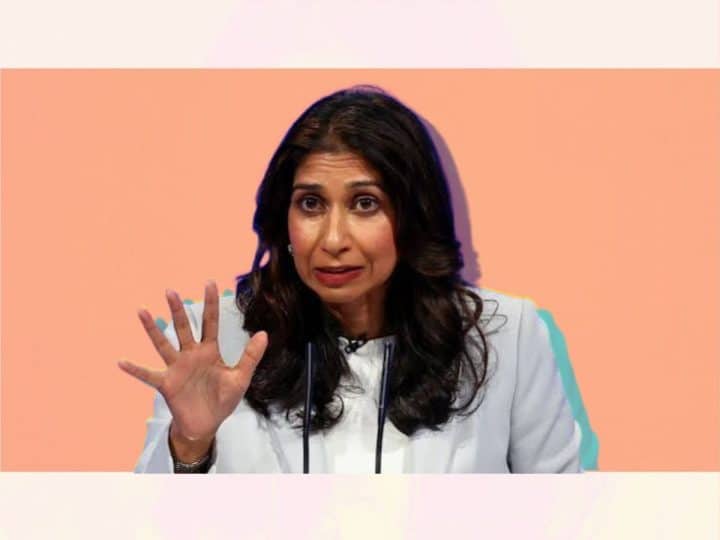

Reform UK has found itself in a strange position this year. On the one hand, it’s very keen to criticise the actions of the past Tory government. On the other, it’s welcomed Tory politicians who caused the issues they’re now complaining about. This situation is compounded by the fact that ex-Tories like Suella Braverman keep wading into the debate themselves:
Not sure "Why didn't you undo the stupid decision I took" is exactly the gotcha Suella thinks it is… https://t.co/BcaYaLl86k
— (((Dan Hodges))) (@DPJHodges) August 23, 2026
Pure prejudice
Firstly, we should explain how this all started for Suella Braverman – namely with the following video:
Just another day in @JamesCleverly’s constituency.
Unless we get a Reform government, every town in Britain will look like this. pic.twitter.com/y38AnAlKQt
— Nigel Farage (@Nigel_Farage) August 23, 2026
As Reform UK Exposed highlighted:
Nigel Farage has posted this video with no credit. Want to know why? Because it was filmed by ‘Free Speech Shell’, a hard-right ‘auditor’ and Tommy Robinson collaborator.
[Nigel Farage] and [Reform UK] are in bed with the hard-right again, because everything else they’ve got has failed.
Tory James Cleverly also responded, noting:
Wait until Nigel finds out that these people are in Braintree because Suella Braverman and Rob Jenrick opened an asylum accommodation centre in my constituency.
Where are Rob and Suella now?
To make something clear, we’re not celebrating Cleverly’s ‘gotcha’. We presume that the people in the video are refugees waiting for their asylum cases to be processed. Because the UK doesn’t allow asylum seekers to work during this period, these people literally have nothing to do but sit around all day. The solution to that problem isn’t to belittle them; it’s to let them work.
Well said.
If this govt was serious about refugees making an economic contribution, they’d start by giving asylum seekers back the right to work. https://t.co/S2XEZhZDoD — Zoe Gardner (@ZoeJardiniere) June 30, 2026
As noted, Suella Braverman later responded to Cleverly, earning the following community note:
You were Home Secretary after me.
If you were so opposed to Wethersfield, you could have shut it down.
Why didn’t you do that? https://t.co/OxZNaSNz5o
— Suella Braverman (@SuellaBraverman) August 23, 2026
Embarrassing for Suella Braverman
As we covered on 23 August, Suella Braverman is reportedly very unhappy in Reform right now. With exchanges like this, you can see why. Reform needs to attack the Tories’ record, and yet she’s a key part of that record. All she’s achieving with back and forths like the above is reminding everyone of that.
Featured image via Sky News
By Willem Moore
Politics
Bessent threatening Iran with an ‘economic D-Day’ shows he’s panicking as US bonds sell off


The US Secretary of the Treasury, Scott Bessent, wrote an opinion piece for the Financial Times in which he threatened an “economic D-Day” for Iran, but Yanis Varoufakis has interpreted the bizarre rhetoric as a sign that Washington is not just panicking but has slipped into outright despair.
Bessent: panicking
This all happened while Bessent’s efforts to calm the sell-off in US treasuries failed.
President Trump has dismantled Iran’s military capabilities, destroyed nearly 100 percent of its military factories, and buried its nuclear program.
We are now entering the endgame. At dawn begins an economic D-Day — the single greatest financial offensive ever marshaled against…
— Treasury Secretary Scott Bessent (@SecScottBessent) August 23, 2026
Bessent used Pascal’s Wager to warn Iran’s trading partners that sticking with Tehran is a bad bet. If the US follows through, they will be isolated. “Any nation that serves as a financial artery of a withering regime should expect to share in its isolation,” he said.
Goodness gracious! For Scot Bessent to enlist Pascal’s Wager in the Financial Times against Iran, Washington must be in the psychological state that lies just beyond panic: despair. https://t.co/yM3pFtytRc
— Yanis Varoufakis (@yanisvaroufakis) August 23, 2026
Efforts to calm bond markets slammed
Bessent said Iran’s “enablers” were purchasing and transporting its oil, moving its finances through exchange houses and free trade zones, welcoming its flights, and turning a blind eye to seaborne fuel transfers and the illicit use of their banks, all while “concealing” the extent of their “complicity.”
The same FT just on Saturday 22 August had slammed Bessent’s efforts to calm the US bond markets, saying:
Bessent’s running battle with the bond market is starting to look like his boss’s war in Iran — started by his own hand with a tangled set of objectives, an underestimated opponent and an implausible path to victory.
Financial Times:
“Scott Bessent’s running battle with the bond market is starting to look like his boss’s war in Iran — started by his own hand with a tangled set of objectives, an underestimated opponent and an implausible path to victory. And like the conflict in the Middle… pic.twitter.com/gTmzj3OGOU
— JaguarAnalytics (@JaguarAnalytics) August 22, 2026
Last week, Bessent tried to calm the US bond markets by announcing the Treasury would double its buybacks of long-dated debt. But the intervention offered only “temporary relief.”
Blatant act of lawlessness
These unilateral sanctions are a direct breach of the UN Charter, the rules of sovereignty and non-interference, human rights law, and the prohibition of collective punishment. They are, in essence, a form of economic terrorism. A full third of the world is currently suffering under unlawful US sanctions. And the US has even unlawfully sanctioned international judges, prosecutors, UN human rights monitors, and independent human rights organizations. Countries must choose between international law and the dictates of a rogue imperial government on a global rampage.
Seen it before – before Bessent, too
Iran’s foreign minister, Araghchi, said the new sanctions package is like watching “some movie playing over and over again,” Al Jazeera reported.
Iran’s Foreign Minister Abbas Araghchi said the new US sanctions package, likely to be unveiled Monday, is like watching the ‘same movie playing over and over again’.
He added that the ‘bullying’ under Trump is no different from that under previous US administrations. pic.twitter.com/gXjNoGqZIE
— Al Jazeera English (@AJEnglish) August 24, 2026
Quincy Institute’s Trita Parsi told CNN that this new pressure campaign on Iran will likely result in “counterescalation” by Iran – not surrender. He said that Trump’s maximum pressure was supposed to break Iran eight years ago, and the blockade was supposed to do the same four months ago.
Told @cnn that we have been here before: Trump’s maximum pressure was supposed to break Iran 8 years ago. The blockade was supposed to break Iran four months ago.
Trump’s D-day pressure will squeeze Iran, but Tehran’s most likely response is counterescalation – not surrender pic.twitter.com/IfTbes9Tcj
— Trita Parsi (@tparsi) August 24, 2026
The New York Times, in an article, quoted Wu Xinbo, a leading American studies scholar at Fudan University in Shanghai who advises China’s foreign ministry, as saying about the “economic D-Day” threats:
This threat reveals how desperate the Trump administration has become on the issue of Iran.They issue this threat, not because they think it is workable, but because they have no other options.
NYT also noted that China is Iran’s largest trading partner and has for decades defied Western sanctions by buying up to 90% of Iran’s oil exports.
China has also supplied Iran with technology and raw materials for its missile and drone programs. The paper said China feels confident it can resist the pressure, in part because it can squeeze US “critical mineral supplies” and has “stockpiled months worth of oil” to withstand the loss of Iranian crude.
Iran still controlling Hormuz
Bloomberg’s Abeer Abu Omar reported that the IRGC has “scenarios laid out” for any US economic isolation plan.
She said while Iran’s oil exports are “virtually at zero” due to the US naval blockade, it will take about six months for Iran to feel real pressure.
She added that Iran still “asserts dominance over the Strait of Hormuz,” where vessel traffic is “very close to zero.”
She also noted that “the Houthis are forcing Saudi Arabia to take the French routes through Africa” to avoid danger in the Red Sea.
By Nandita Lal
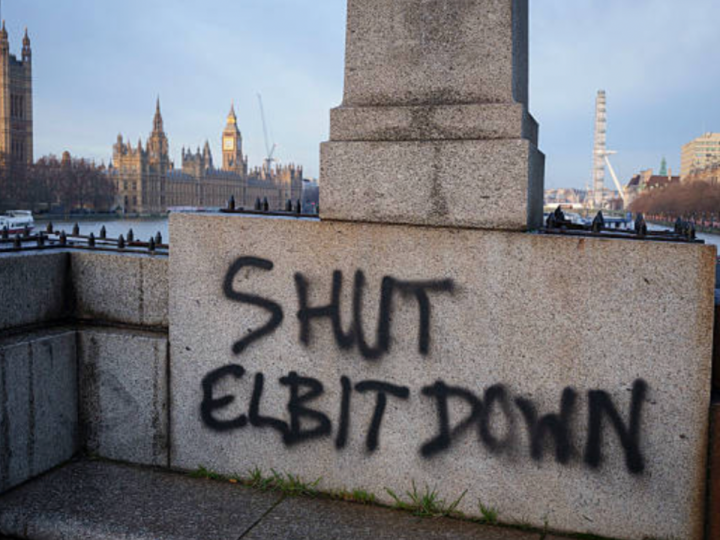

The British Army has published an update on its new Ground Based Surveillance Radar (GBSR). A small detachment of artillery soldiers has been testing the system on the Canadian prairie alongside local troops. What the MOD media department did not mention was that the AI-capable radar is made by the genocide-linked Israeli firm Elbit Systems UK.
The article published on 25 April describes the training mission:
53 Air Assault Battery, 5th Regiment Royal Artillery is using the new Ground Based Surveillance Radar (GBSR) as part of a network of sophisticated sensors working together to win the fight on Exercise Rhino Bizz.
The system, the army said, was delivered:
to the Catterick-based unit in late 2025. It is used to track the location and movement of soldiers and vehicles on the ground, and aircraft and drones in the air. It can also be used for fall of shot correction, working with artillery and mortars to track exactly where rounds are landing, and correct their aim, destroying the target quicker.
The training exercise also tested integration of the AI-powered targeting gear:
Troops tested the recce-strike concept of fighting, bringing together surveillance, reconnaissance and strike platforms in an AI-enabled network able to identify and destroy targets faster and further.
One staff sergeant described the AI capabilities as a “hive mind”:
Once one sensor picks up something, we can direct all the other sensors onto that track and really build up a clear picture of what it is and what it’s doing – and then decide what we want to do about it. Using AI to merge and interpret all the data speeds that process from minutes to seconds, and that gives us a headstart on the enemy.
What can possibly go wrong?
Elbit UK, an Israeli firm
All pretty standard fare for a military exercise in the vast training areas the UK borrows from the Canadian government. But the connection to Israel and its arms industry went unmentioned in the piece.
Arms industry publications have reported with the full details for years. Defence Today wrote in November 2025:
Elbit Systems UK (ESUK) has delivered the first Ground Based Surveillance Radar (GBSR) systems to the British Army’s Royal Artillery following successful live fire trials earlier this year.
The initial delivery comprises 55 radar units along with associated support solutions and is part of a contract awarded by the UK Ministry of Defence (MOD) in May 2023 for a total of 90 portable GBSR systems, with an option for an additional 40 units.
Israel Defence reported on 17 March 2025:
Elbit Systems UK, a subsidiary of Israeli Defense giant Elbit Systems is in the process of delivering Ground-Based Surveillance Radar (GBSR) units to the British Army. These radars are deployed to detect threats at short and medium ranges on the front line.
And as far back as May 2023, Army Recognition reported:
Elbit Systems UK has been awarded a contract from the UK Ministry of Defence (MoD) to provide a series of Ground-Based Surveillance Radar (GBSR) systems, manufactured and developed in the UK and Europe, to the British Armed Forces to support front-line threat detection for a range of end-users.
The British government published details of the contract in 2023; you can access those here.
Israeli genocide firms
Campaign against the Arms Trade (CAAT) describes Elbit as:
Israel’s largest arms producer, and the 24th biggest arms producer globally.
Elbit’s UK wing has:
a workforce of over 680. Elbit has several further subsidiaries located across 16 sites in the UK. Elbit’s UK companies export globally, particularly to Israel. Elbit UK Ltd has obtained two UK military export licenses to the country since 2021.
Elbit products include drones, surveillance equipment and border security gear. Israel uses them in Gaza, The Occupied Territories and Lebanon. The British Army’s website reminds its soldiers they are:
subject to the law wherever they are serving.
This does not seem to extend to the purchase and use of equipment made by genocide-linked arms firms with headquarters in Israel. Clearly, the UK should stop selling arms to Israel. That’s not controversial. But the UK also needs to stop buying occupation-tested military equipment from the settler-colonial state too.
Featured image via the Canary
By Joe Glenton


According to newly released data, graduate jobs have dropped by nearly 50%. AI is among the given explanations for this drop; as are rising costs. Regardless of what’s most at fault here, though, this clearly isn’t a sustainable situation if it’s accurate:
‘The number of graduate jobs has fallen almost in half in the past year, according to new figures, as employers cut entry-level roles in favour of AI and battle rising costs’ – BBC https://t.co/dKT0XhBtyn
— Mark Williamson (@markrwilliamson) August 24, 2026
Data
The data in question comes from the job site Adzuna. As reported by the BBC:
Jobs website Adzuna said it had just 8,383 graduate vacancies listed in July, down from 15,397 at the same point last year.
Adzuna also found competition among job seekers across all levels is rising, with an average of 2.14 job seekers per vacancy in July, up from 1.93 a year earlier.
Adzuna is a search site for jobs. The service allows you to search every job site at once, with roles showing up in one easy-to-scroll list:

Adzuna is an aggregator, meaning most jobs aren’t directly uploaded to the site. As such, there could be other reasons why graduate jobs from sites like Indeed or TotalJobs aren’t pulling through. We’ve seen no suggestion this is happening here; at the same time we can’t confirm it isn’t. We also can’t confirm employers haven’t simply shifted their recruitment efforts to means other than job sites.
We aren’t the only ones to be suspicious anyway:
This is considered the most reliable data source for the top 100 graduate recruiters, and shows vacancies down 5.1% year-on-year for the 3rd year running. Interestingly though, grads from a small group of Russell Group plus are still highly targeted. https://t.co/howjH1l6nk
— Natasha Porter OBE (@NPorter_) August 24, 2026
The 5.1% figure mentioned above was for 2025, with High Fliers writing:
Two-fifths of the country’s top employers recruited fewer graduates in 2025 and recruitment fell in ten out of fifteen key industries & business sectors. Employers’ latest recruitment targets show that there are likely to be even fewer graduate jobs available in 2026 – a further decrease of 0.5% compared with last year. Graduate recruitment at the UK’s leading employers has now slumped by 24.5% since 2022 – a larger reduction than was recorded during the pandemic in 2020 or in the ‘Great Recession’ of 2008-2009, when graduate vacancies fell by 12.3% and 23.3% respectively.
A drop of 50% would suggest we’re in a period of employment uncertainty which is twice as bad as the Great Recession.
The final thing we’ll note here is that the Office for National Statistics has used Adzuna as a data source as recently as 2024. In other words, the site has served as a trusted source of data in the past.
Freefall
People are justifiably worried about generative AI taking their jobs. After all, the AI companies themselves have warned us that’s what’s going to happen. As we’ve reported in the past, however, many companies have ended up rowing back on their AI initiatives. In part this was because many of them failed to realise any observable return on investment. This problem became more obvious this year when OpenAI and Anthropic jacked up their prices:
Microsoft Bans Claude Code After AI Costs More Than The Humans It Replaced
— NewsWire (@NewsWire_US) June 1, 2026
In other words, even if UK companies are hiring fewer graduates because of AI right now, that’s not necessarily a sustainable situation.
The other side to this story which is gaining attention is the following, as reported by the BBC:
Businesses have said employer national insurance and minimum wage hikes have made hiring more expensive, particularly for junior staff.
This is leading to coverage like the following:
Worst Graduate Jobs Market on Record: "This Is Exactly What Labour Were Warned About"
Vacancies for university leavers collapse by 45 per cent to the lowest level ever recorded…https://t.co/yCnO9i9BC1 — Conservative Post
 (@ConsPost) August 24, 2026
Employers and right-wingers will seize on any opportunity to claim that paying people a fairer wage is a travesty. This isn’t to say well-meaning moves can’t have negative consequences, but it is certainly reason to be suspicious of how this data is being reported.
Big problems with AI
Regardless of whether it’s a 50% drop or less than that, and whether it’s due to AI, there are clearly problems in the job market. As ever, the right will tell you that the only solution is to abolish tax for the rich and to mandate in-work poverty for the rest of us. The battle is convincing the broader public it’s in their best interests for things to improve for them – not for our increasingly bloated 1%.
Featured image via Gatot Adriansyah (Canva Image Library)
By Willem Moore


Jolyon Maugham KC has hit back at an attack piece against his non-profit Good Law Project (GLP) published in the Daily Mail. On 23 August, Maugham posted:
I’ve seen some astonishingly stupid attack pieces in the Mail in my time but this one really does take the biscuit.
It’s based on something we put out three months ago – on our own website – from which you can tell it’s not news but an attempt to scare us off calling out the Mail’s vile racism.
It won’t work.
The article in question, published on 23 August, was titled “Woke barrister’s ‘hypocrisy’ as he takes left-wing campaign group Good Law Project offshore.”
After listing the inaccuracies of the article, the Good Law Project founder stated that:
It’s why we need press regulation – so they [news outlets] are accountable for what to all intents and purposes are their lies.
‘Enormously hypocritical’… is it?
The Mail article stated in its introduction that:
legal experts say the move is ‘enormously hypocritical’ because becoming a trust will ‘give it the benefits’ of being set up like a charity without having oversight from regulators.
One of the legal experts who stated that the trust structure would give the GLP the ‘benefits’ of a charity without Charity Commission oversight was… the Good Law Project itself. Three months ago, on 8 May, it posted an update about its ownership structure, stating that:
When Good Law Project was set up in 2017 by Jolyon Maugham he wanted the public interest features of a charity but outside of the moving political guardrails policed by the Charity Commission. So he adopted a structure which mirrored many of the features of charities.
The GLP explained that Maugham set up the GLP as a not-for-profit company limited by guarantee. This means that it can’t declare dividends.
‘An internet troll’
The Daily Mail also quoted “veteran barrister” Barbara Rich, who said:
the restructuring meant that GLP would operate ‘without the burden of charity registration’.
This would be a lot more meaningful if the GLP had ever operated as a charity. However, it has not and never did. Likewise, in his social media post, Maugham pointed out that the GLP won’t receive tax relief — a major benefit of being a charity.
Its lack of charity status gives it more free rein to challenge both the government and the Charities Commission itself, which it has done on multiple occasions. Rich called this being “pretty antagonistic towards the Charity Commission generally”.
In his social media post, Maugham also called Rich “an Internet troll” who posts “obsessively” about both the GLP and Maugham himself.
Good Law Project gets the Daily Mail treatment
The May GLP article went on to explain the reasoning behind its shift to Jersey:
Another feature of charities is that they are not owned by any individual or individuals. Instead they exist for a purpose. As Good Law Project approaches its tenth anniversary, the time has come to replicate this feature too.
Jolyon has been replaced as owner of Good Law Project by a Jersey ‘purpose’ trust. The purpose of the trust will be to hold the membership interest in Good Law Project. It has been set up in Jersey because the UK’s legal system has no such thing as ‘purpose’ trusts, except for charities, and Jersey’s legal system does.
The trust structure also means that other people can now join as trustees, rather than Maugham having sole ownership. This, the GLP stated, also meant that it could operate “a bit more like a charity board”.
However, it’s very hard to read ‘we’re restructuring in Jersey’ without immediately thinking ‘tax dodge’. In anticipation of this conclusion, the GLP stated clearly that it:
will remain UK resident for tax purposes and there will be no change to how its income is taxed. There will be no change to its articles, the asset lock will obviously remain in place, and it will continue to be unable to declare dividends.
‘Pathetic’ attack against Good Law Project
Unfortunately, the Mail neglected to mention that part of the GLP’s statement. Instead, it chose to quote James Mews, of Jersey’s Amati Law, who chaired a steering group to “improve Trusts Law on the island”. Mews stated that:
A Jersey purpose trust has a greater level of confidentiality and privacy regarding control, ownership and resources than a UK company.
A UK company registered at Companies House will still be subject to stringent, regulatory oversight.
This is completely true. However, as Maugham pointed out:
it deliberately misses the point Good Law Project will continue to have exactly the same UK company law obligations it always did.
The reporting is pathetic, intellectually dishonest and exactly the sort of thing you would expect the Mail to carry.
And that’s just what we at the Canary would say of the Daily Mail, to boot. Well, at least in polite company, in any case…
Featured image via the Canary
By Grace
Former Unite general secretary Len McCluskey has commented on the Unite union’s cover-up of bullying by his successor Sharon Graham’s husband Jack Clarke.
Specifically, McCluskey has condemned Unite’s habitual flinging of smears to try to divert attention from Graham’s anti-union behaviour. The union did this to protect Clarke from the consequences of his actions — and from Skwawkbox-Canary’s exposure of both.
Background
Skwawkbox first exposed years ago that staff working under Clarke had recorded months’ worth of his bullying and misogyny in 2018 and presented it to Unite as part of a formal grievance against him. After lobbying by Graham, the union covered up the abuse – and initiated disciplinary proceedings against Clarke’s victims.
Eventually, the bullied staff were paid off. Lawyers, while trying to deny the content of the recordings, inadvertently confirmed Unite had destroyed it. But in August 2026 Maddison Wheeldon and Skwawkbox exposed surviving copies of the transcripts of the abuse. Moreover, Skwawkbox also revealed Graham’s own words as she haggled over the terms of Clarke’s slap on the wrist. They also published details about her discussing the removal of the abused staff.
And when contacted for comment, the union’s statement flung smears — not at Clarke’s abusive husband or the incumbent general secretary’s nepotism and cover-up, but at previous general secretary McCluskey and his team.
Slap-back
McCluskey first spoke out on Graham’s smear campaign against him a year ago, describing it as “6 pages of smears and innuendo”. Even some of Graham’s habitual allies condemned it, too.
But he didn’t wait so long this time. In the comments of the Canary article that exposed Clarke and quoted Unite’s scurrilous deflection, McCluskey condemned the ‘disgraceful’ smears as a complete lack of “professional ethics” on the part of Unite and its spokesman. Furthermore, he also — perfectly accurately — refuted the additional Unite smear that Skwawkbox and the Canary were exposing Graham for McCluskey:
It’s is disgraceful for Steven Pinder to issue a statement like that ( even if under the orders of Sharon Graham ) has he no professional ethics left. I have no contact or involvement with either skwakbox [sic] or cannery [sic] and never have done. This constant mudslinging without a shred of evidence in the hope some might stick is deplorable. How sad to see what our once great union has become
Leopard spots
Since his 2018 bullying and Graham’s cover-up — and her win in the 2021 Unite general secretary election — Jack Clarke has not changed his spots.
Clarke was installed, under Graham and outside Unite’s usual appointment procedures, to run a newly-created unit. This happened despite being on a final warning for his abuse. He then continued his pattern, creating such outrage and disgust among staff of his new department that they went on strike too. Most of the women forced to work with him quit. But Graham again sided with the bad boss against the workers — and her aides even organised against them.
Despite running a union, Graham was repeatedly accused of using appalling, anti-union tactics against Clarke’s staff and other workers employed by Unite, leading to several strikes. Unite has also attempted to disrupt attempts by officers to organise in their workplace. And the union has spent huge amounts of members money on legal action – also to protect Clarke.
Birds of a feather
Nor is Graham untouched by allegations concerning her own behaviour. In 2023, she was accused of launching such an abusive tirade against former BBC journalist Ben Davies, her new communications director, that he quit and received compensation. So rapid was the departure that he was gone before his appointment was even announced. Unite responded with smears then, too – and repeatedly since.
In the first of the latest batch of exposés, Maddison Wheeldon wrote:
Husband and wife duo must be held accountable
Sharon Graham seems reluctant to take heed of how serious these issues are as she promises to uphold and advocate for workers’ rights.
However, these issues have only continued in the new department Jack Clarke had been handed by his wife, outside of the union’s typical appointment procedures.
There have been reports of similar complaints, disputes and even strike action due to allegations of ongoing abusive behaviour and anti-union tactics.
Now, the damning evidence detailing the extent of Clarke’s misdemeanours has been exposed, answers and accountability must follow.
That applies now more than ever.
Featured image via the Canary
By Skwawkbox
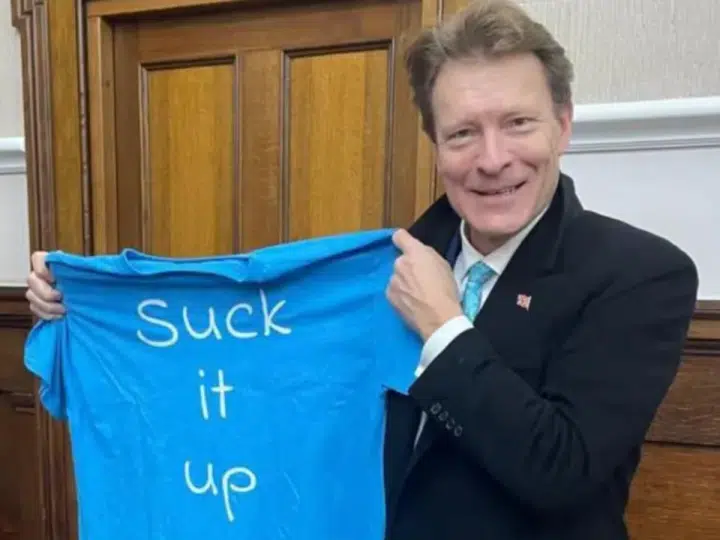

On Monday 24 August, Reform UK’s deputy leader — Richard Tice — appeared in an interview on Times Radio. He set out his far-right party’s plans to prioritise married, British-born, working couples under the age of 35 for affordable housing.
Tice gave the interview ahead of a press conference in which he’ll set out the policy in more detail. However, even from the Sparknotes version he gave on air, this sounds like a fascist-friendly car crash. Take a listen, if you can stomach it:
British married couples would get priority for social housing, says Reform UK deputy leader Richard Tice, but he was unclear where same-sex married couples would be on that list.
"As long as we're building plenty of homes, then there will be sufficient room for them."@CalumAM pic.twitter.com/ePkijvq13K — Times Radio (@TimesRadio) August 24, 2026
‘The housing system is broken’ (says the landlord)
Tice begins with a boast:
My lifetime has been spent building homes, in property. I’ve actually build more homes than the previous 24 housing ministers this century combined. So, we’re gonna get stuff done, we’re gonna build homes, and the simple fact is the housing system is broken, the affordable housing system is broken, and Reform will fix it.
Of course, it’s much easier to build homes when you’ve no need to make them affordable. And then, you can really save money by (allegedly) dodging hundreds of thousands of pounds in tax.
According to the Times, Tice channeled shareholder dividends through dormant businesses and an offshore trust between 2018 and 2021, avoiding a possible £600,000 in taxes. The Reform deputy, true to his party line, called this an ‘establishment smear’
And don’t even get us started on Reform’s inability to budget a County Council, never mind a sweeping affordable housing program. However, the party (like Tice, allegedly) have a habit of forgetting they have to pay their taxes. That probably helps smooth the cracks in the balance book a little.
Reforms says ‘having British children…is a good thing’
When asked whether a married couple would get priority over a single person, Tice answered that:
Yes, that is the preference. Well, families are a good thing. Having British children, British-born children is a good thing. We need to encourage that. And it’s a very natural, normal thing, has been over centuries, for people to get together, to get married, have children and contribute to their communities. And everything that we’re doing is focused solely on that.
Lots of British families making lots of British babies. No fascist undertones to that at all, no sir.
It’s funny how often things that are “very natural” and “normal” need to be encouraged by government policy. One would think that, if people have to be threatened with having no home in order to get married and have babies, then getting married and having babies might not actually be all that natural.
‘In an ideal world’ you’d be married
Tice’s interviewer then reminded him that a single person might also have children. The Reform deputy replied:
They might. But in an ideal world, it is well known that married couples – children in married couples, for example – will do really well at school. And we want to encourage that.
Of course, sometimes life doesn’t work out. We understand that. But as an objective, that is surely preferable.
Just so it’s said: marriage is a legal contract. It’s not a bloody magic spell, it doesn’t suddenly make people into better parents. Not getting married isn’t a sign that ‘life doesn’t work out’ – not that we’d expect Reform to encourage people making their own choices.
The children of married couples do well in large part because their families have two incomes to support them. Rent profiteers like Tice and his ilk have ensured that dual-incomes are one of the few ways to keep a stable roof over your head — and even that’s getting dicey.
And, of course, if Reform was actually interested in using social engineering to create families with higher-attaining children, they’d be trying to encourage people to create gay families. After all, multiple recent studies suggest that kids raised by ‘same-sex’ couples do better in schools.
Except that Reform isn’t actually interested in educational attainment — it’s interested in conformity. Plus, the party still has a homophobia problem — with leader Farage stating that legalising gay marriage was “wrong” as recently as last year.
Sure, sure, he was arguing that it should have been a manifesto commitment, blah blah. ‘I support the gays, but not their reckless disregard for political due-process’ – I bet, buddy.
‘There’ll be an allocation list’
Speaking of which, the Times Radio interviewer asked Tice where a married same-sex couple would fit on his your priority list. As you’d expect, the answer was… well, it was a bit weird, really. Tice replied:
Well there’ll be an allocation list. But at the end of the day, what we’re focused on is young British workers first. Same-sex couples, British couples, working – they will have priority over those coming from overseas.
‘There’ll be an allocation list’ – not even an elegant swerve of a simple question there, deputy party leader. Reform really are losing their touch.
Even the softball interviewer couldn’t help but pick Tice up on the fact that married British couples would also have priority over other British couples who weren’t married under Reform’s new plans. Here, Tice really lost his thread:
There will be, within the British community of young workers, ah, as long as we’re building plenty of homes, there will be sufficient room for them, because if you add up the half-a-million-plus homes currently occupied by overseas people, overseas nationals, and the 500,000 we’re going to build over the next decade, that’s a million homes for young British workers.
That’s the right thing to do, it’s the fair thing to do. Reform are going to fix this broken system.
As a reminder, Labour pledged to build 1.5m new homes over the course of parliament. Sure, they’re currently running behind, but then, that’s new homes we’re talking about — not the half a million Tice is apparently planning on nicking from immigrants… again, no fascist undertones there in the slightest.
Join us tomorrow for some analysis of Reform’s actual housing policy, rather than Tice’s hopefully piss-poor explanation of it. But for now, as a rough guideline: if it’s the right thing to do, and the fair thing to do, you won’t catch Reform UK proposing it on the radio.
Featured image via the Canary
By Grace

If you’ve been spending more quality time with – or around – your teenager over the summer, you might’ve overheard some unusual sayings and phrases.
From chatting about larping to telling mates to ‘call an Uber’, there’s always some new terminology or phrase entering their vocabulary.
And the latest, according to language trends experts at Preply, is the term ‘polyester’.
What does ‘polyester’ mean in teen slang?
Polyester – in the usual sense – is a synthetic fabric derived from petroleum-based compounds. A lot of clothes are made from it thanks to its quick-drying and moisture-reducing properties (hence why a lot of sportswear contains it).
But Gen Alpha and Gen Z are now using ‘polyester’ in a completely different way.
Globally, Google searches for ‘polyester slang’ spiked by 141% in the past week, according to Preply.
What does it mean now, then? Madeline Enos, the brand’s language trends expert, said: “Social media users have turned ‘polyester’ into a critique to call out content that is perceived as low-quality, generic, or inauthentic online.”
“The term has gained traction among Gen Z, calling out polyester lifestyles, videos, and even people,” she continued.
In June, a much-viewed video described similarities between the rise of AI in creative media and the trajectory of synthetic fabrics, like polyester, in fashion. The poster called the comparisons “eerily similar” and suggested, “polyester was marketed as a miracle fibre, but when companies started to make things out of 100% polyester, people hated it”.
More recently, a viral example of the new definition saw a TikTok creator in his late teens talking about his dream lifestyle that he hopes to achieve by the time he reaches 20. This consisted largely of living in a NYC penthouse, getting up early to work out, working in local coffee shops (largely with the help of AI) and getting to jet-set to Europe for business.
The top comment reads ‘polyester lifestyle’, and had gained over 49,000 likes at the time of writing.
Polyester has swiftly become a term used to describe anything that’s deemed low-quality, cheap or fake. It follows similarly disparaging predecessors: mid (meaning mediocre) and Ohio (which kids used to mean cringe, boring, foolish).
“The popularity of the viral insult ‘polyester’ reflects a wider Gen Z preference for authenticity over polished perfection online,” said Enos.
“What makes the term particularly interesting linguistically is how quickly a familiar word can take on a new meaning. It’s another example of language constantly adapting to how people communicate, with social media giving new expressions space to spread.”
Well, I guess now we know!

The Heirs to Jack Daniel’s Are Fighting to Keep Control | The 10-Point for August 23
Zcash (ZEC) Explodes to an 8-Year High, But an Analyst Warns of a Major Crash

Serayah Accuses Joey Bada$$ Of Cheating In Breakup Statement





-

 Fashion3 days ago
Weekend Open Thread: Madewell – Corporette.com
-

 Business2 days ago
Musk’s Tesla, SpaceX Confirm $16.8 Billion ‘Terafab’ Chip Plant as World’s Largest Building in Texas
-

 Business6 days ago
SMA Solar Technology AG (SMTGY) Q2 2026 Earnings Call Transcript
-

 Crypto World3 days ago
anatomy of crypto’s biggest liquidation event since 2021
-

 Tech7 days ago
Qwen3.8-27B runs frontier-class coding agents and reasoning locally, no cloud API required
-

 Crypto World7 days ago
OCC Greenlights Trump Family Crypto Firm for Trust Charter
-

 Politics2 days ago
6 months on, Irish renters crushed by effects of government housing bill
-
 NewsBeat2 days ago
The ‘Lucky Dip Gang’ causing carnage for clicks: After five thugs were killed speeding in the wrong direction on a motorway, GUY ADAMS investigates a sick new trend… and why police aren’t even allowed to pursue them
-

 Crypto World7 days ago
NAVI Prime launches institutional lending framework on Sui
-

 Tech5 days ago
GLM-5.3 hits the API at $1.4/$4.4 per million tokens
-

 News Videos5 days ago
Don’t Leave Your Financial Future To Chance | August 19, 2026
-
Tech7 days ago
5 Of The Most Reliable Car Brands To Consider If You’re Buying A Used SUV
-
 Crypto World7 days ago
Dow’s 3-Year Winning Run Isn’t a Crash Signal, Still 49% Odds of Double-Digit Gains
-

 Tech7 days ago
Keychron K8 Ultra 8K review: a great value keyboard with comfort issues
-
 Tech7 days ago
Nvidia discloses $21B stake in SpaceX
-

 Business6 days ago
Stock Market Today: Tech Futures Slide As Treasury Yields Jump; Nvidia, Micron, Sandisk Sell Off
-

 Business5 days ago
Marvell Shares Jump 7% as Google Chip Deal Confirms Custom AI Silicon Partnership, Analysts
-

 Business4 days ago
Five Below: Kids Discount Retailer Reaps Rich Rewards
-

 Business1 day ago
Mystery AI Model ‘Ox Alpha’ Draws Developers With Free Access as Chinese Lab Origins Remain Debated
-
Business7 days ago
Fabrinet (FN) Q4 2026 Earnings Call Transcript
You must be logged in to post a comment Login