
Politics
Ed Balls could face the sack following on-air meltdown



On Monday 27 April, we reported that Ed Balls had an embarrassing on-air meltdown. This happened after Zack Polanski dared to suggest Balls is a ‘Labour politician’. The fallout of that led to this:
"Now, sources are claiming producers think Ed Balls “lost his cool” during the row and are facing pressure to “distance” the show from him."https://t.co/JvEBu3b6jx
— Zack Polanski (@ZackPolanski) April 29, 2026
When is a politician not a politician?
Monday’s interview with Polanski quickly turned hostile.
Well done to @ZackPolanski for calling out the fact he was being interviewed by a former Lab minister & husband of the current foreign secretary!
Since the start of this year #GMB is produced by @itvnews. How can they think this is tenable?
Oh & Ed took it in good grace (not) pic.twitter.com/SJgDBAzkif — Saul Staniforth (@SaulStaniforth) April 27, 2026
As we reported, Polanski said:
Do you know what I’m enjoying? The fact that a Labour politician who’s married to a senior Labour minister is allowed to ask questions of a leader of the Green Party. This is not our manifesto and what you’re doing is an entire stitch up, and people will see it for this.
Mr Balls responded by dramatically asking:
Are you accusing me of being a Labour politician?
He also said:
Yeah. Look, unfortunately, Mr. Polanski, I lost my seat in 2015 and I’ve not been a Labour politician for 10 years.
It’s easy to show how heated Balls got, because his face did this:
Ed Balls does not like being reminded he is married to Yvette Cooper like Trump does not like being reminded he is a paedophile. pic.twitter.com/KlMd3NW6PP
— Dr Iain Darcy


 (@doctoriaindarcy) April 27, 2026
Was Balls right to take offence, though?
Let’s examine the facts:
- Ed Balls was a minister under Tony Blair.
- Ed Balls was the shadow chancellor.
- Ed Balls is married to the current foreign secretary, Yvette Cooper.
According to him, though, he’s not a politician.
No, no …
When he stood down as an MP, he magically cut that part of himself out and became an entirely new person.
It would be silly to suggest he’s actually pursuing Labour Party goals through his prominent position in the media.
The problem is ITV may not see it that way. As one insider said:
It’s an easy win for politicians on the show to give the impression Ed is being bias towards them because of who he’s married to.
Ed knows this, but lost his cool yesterday. There have been whispers behind the scenes about how it makes the programme look, but that’s been going on since he interviewed his own wife.
There’s probably never been a better example of how closely entwined our political and media spheres are than when Balls interviewed his wife — the then-home secretary. That interview wracked up 16,000 complaints, but ITV just couldn’t stop playing with their Balls.
Back to the insider, they added:
It’s clear there is growing pressure to distance Ed from the show but bosses keep backing him. They hope the backlash from yesterday calms down.
As we’ve seen, though, it’s pretty much guaranteed the issue will continue to resurface:
Officially, GMB are holding on to their Balls. As a spokesperson said:
Ed Balls remains a valued member of our presenting team. Any suggestions otherwise are categorically untrue.
Little ‘L’ labour
It really is a shame what people like Tony Blair, Ed Balls, and Keir Starmer have done to the Labour Party. If the party had remained true to its roots, maybe it would be much harder for GMB to dismiss Balls’s labour.
This is a joke, of course.
If Labour had stayed true to its roots, we wouldn’t have ex-politicians working in the media in the first place.
Featured image via the Canary
By Willem Moore

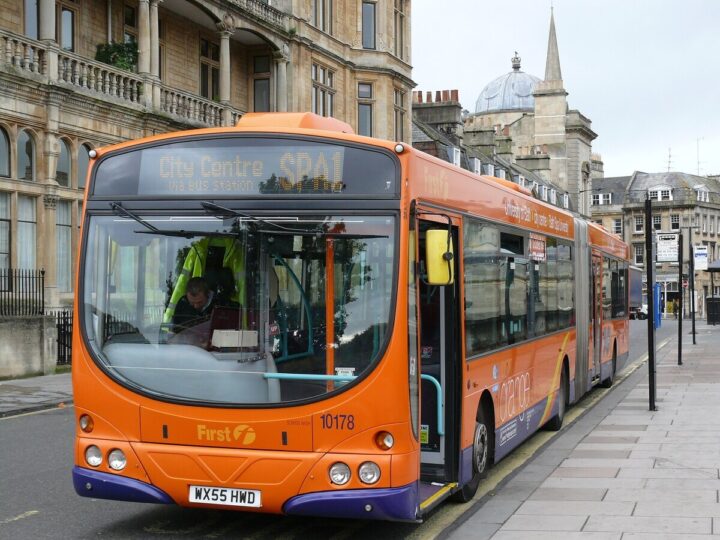

Transport underpins everything we do. It’s how we get food into the shops. How we get to work. It’s how we get to see our loved ones.
I recall talking to an 18-year-old from Blyth who’d been offered a job in Team Valley in Gateshead, but had to turn it down because he couldn’t get there on public transport. Car insurance would have cost him £3000.
We used to have pretty good networks. In Tyne & Wear, they were fully integrated with the Metro system, much as buses and tubes are integrated in London today.
Deregulation has worsened services
In 1986, Margaret Thatcher’s transport secretary, Nicholas Ridley, ‘deregulated’ buses outside of London. He prophesised that removing “the dead hand of regulation” would lower fares, improve services, and more people would travel.
The exact opposite happened. Research for Transport for the North shows that 3.3 million people in the North of England suffer from transport-related social exclusion. Across England, the figure is 11.2 million.
That’s 11.2 million people missing out on jobs. Missing out on education. Missing out on a full life because they can’t get around. Even if people do have a bus pass, there’s often no bus that goes where they need to be. If you’re disabled or a have a chronic health condition, using public transport can be an ordeal.
One 81-year-old gentleman from South Shields made the local news. Cuts to his bus service left him walking long distances up steep hills. Exhausted and carrying two bags of shopping, he had a fall and was injured:
If a car had come over the top of the bank, it would have run me over.
Franchising
After 30 years of failure, the law was changed to allow “bus franchising” in selected locations. I negotiated with government and won these powers for the North East, despite opposition from some local Labour politicians.
But even franchising is thin gruel. The transport authority doesn’t own the buses. It contracts a private provider to run them, according to a schedule set by the transport authority. It basically takes the risk off the private providers and transfers it to the transport authority. So without major investment, the network is still patchy and buses are still way slower than cars. The government is still spending 15 times more on new roads than on the bus services that could use them.
Buses are not “pleb-wagons”
Too many decisionmakers still think buses are “pleb-wagons”. We need to make a step change and see public transport for the critical infrastructure it is.
It pays for itself in the long term, many times over. Research shows that every £1 of investment in bus services generates £4.55 in economic activity. High streets revive. Social isolation falls. Health improves. But those economic returns go to the Treasury, not to the transport authority. So local authorities can’t reap the rewards of their investment.
The key is rethinking transport. We should stop thinking of moving vehicles, and instead think about moving people. We need to see mobility as a service that boosts long-term use and brings in more money. It costs the same to run a bus whether there’s one passenger on board or 50 passengers on board.
Making public transport free for young people is a long-term investment. Teenagers gain independence. If you’ve grown up getting around by public transport, you’ll keep that habit as an adult. And get a few more steps in and stay healthier as you age. At least if the service is good, you will. It’ll save you money, too.
Greens pledge free travel for under-22s
As Zack Polanski said on his recent visit to Newcastle, the Green Party will make travel free for all under-22s.
My 2024 manifesto made a similar commitment – make public transport free for all 18s and under, and everyone in full-time education. Pressed on the issue, Labour’s Kim McGuinness said she would match this, and provide free travel to all on means-tested benefits. She has not kept those election promises.
We need a Total Transport Network A single intelligent network covering the North East from Berwick to Barnard Castle. A network where every bus has a transponder so the passengers can see its location on an app, in real time, and be sure that it’s coming. A network where your account is keyed to your smartphone or smartcard and automatically charges you the lowest fare – so once you’ve hit a price cap, you get unlimited travel for free, whether you switch between bus, Metro, National Rail, or e-scooter.
We need a network where you can reserve a bike locker in town, so you no longer worry about theft. A network with investment in an accessible, zero-emissions fleet. A network with a dedicated fleet of highly-accessible on-demand vehicles for people whose age or disability makes bus travel untenable.
We need a network where every traffic hotspot has a bus gate, so when the bus approaches, the traffic lights change and give it priority while the cars wait. Once public transport is comparable to cars in speed and reliability, the lower cost will see people shift through choice. It takes cars off the road. Who likes cruising around looking for a parking space? Who likes sitting in traffic jams?
Fewer cars on the road means a plumber with a van full of tools or a doctor on call can spend their time doing their job instead of sitting in traffic. Better public transport is better for motorists, better for passengers, better for the economy, and better for the planet.
Featured image via the Canary


When Reform UK launched, the party styled itself as an alternative to the Tories and Labour. You could see why this would be popular with working class voters, because under the Tory-Labour duopoly many of them have only gotten poorer and poorer.
However, at some point along the way, Reform forgot who it wants to appeal to. This is why Reform’s Scottish leader was bragging about how many houses and boats he has in a televised debate:
I hadn't thought of a yacht tax before now, but it seems Lord Offord's fleet would raise enough to plug that hole in Scotland's finances. https://t.co/MBdjhw91iK
— Ross Greer (@Ross_Greer) April 28, 2026
Reform’s man in Scotland
Of course, it’s unsurprising that lord Malcolm Offord would act and sound like a Tory. As we reported, he’s the former Tory donor Boris Johnson elevated with a peerage:
Malcolm Ian Offord is also known as ‘baron Offord of Garvel’, which is a fun thing to say out loud because it sounds like you’re speaking with a mouth full of toffee. As noted above, Offord isn’t just a peer; he’s also a millionaire and an ex-Tory donor.
Fair play to Reform for convincing anyone they represent the British working class, because it can’t be easy to pull that off when your party is waist deep in wealthy donors.
In the clip at the top, Offal of Garble is debating the Scottish Greens’ Ross Greer. Here’s what the lord had to say:
I went to London 40 years ago with £2,000 in debt. And full of ambition, I worked hard and I was successful. Today, I own six houses, five cars, and six boats. And in a 40-year business career, I’ve employed hundreds of thousands of people and paid £45m in tax. I don’t say that to boast. I ask you this question. Mr Greer, in your Scotland… Do you want more people like me or fewer people like me?
When he says ‘more people like him,’ how many more is he talking about?
10?
100?
1,000?
Because there are 5.5 million people in Scotland, and no one is deluded enough to think every one of them could own six houses. This is the problem — if the wealthy are only ever going to be an ultra-minority, why should the majority of voters care?
The ultra-minority of rich people we’re talking about have obscene levels of power, influence, and spending power, allowing them to create a situation in which they get richer and richer on our hard work. They achieve this by buying the services and properties we rent back from them; they achieve it by buying the politicians we need to represent us; they achieve it by owning the land we need to live on.
What Offord is proposing would benefit no one besides him and the six guys he plays golf with.
Fewer, thanks
Greer wasted no time in responding, hitting back:
Fewer people like you. I’m glad you finally admitted how many homes that you have, Lord Offord. I think it’s worth at this point in the debate pointing out that there are three times as many holiday homes and empty properties in this country as there are homeless children.
You don’t need six homes. You don’t even need two homes. Everybody just needs a home to live in.
Surely, if we’re to tackle the housing crisis, the super-rich, elite individuals like you should be giving up some of those homes so that people who desperately need a roof over their head actually have somewhere to live.
Absolutely right.
Featured image via the Canary
By Willem Moore


Since taking power, Keir Starmer’s Labour government has gone to war with our ability to protest peacefully. Now, home secretary Shabana Mahmood is threatening a fresh clampdown following a knife attack in which Jewish residents of Golders Green were targeted:
"I have already changed the law and I won't hesitate to do so again"
The home secretary in response to being asked if she'll [further] restrict our right to march in support of Palestinians and against Israels genocide & our govts complicity in it pic.twitter.com/ZgHwYWYcC5
— Saul Staniforth (@SaulStaniforth) April 30, 2026
For clarity’s sake, this attack did not take place in the middle of or even on the edge of a protest.
Clampdown
On Wednesday 29 April, a man with a knife attacked random Jewish people in Golders Green. In response, the cynical figures who want you to believe that opposing Israel’s genocide is ‘antisemitism’ sought to blame pro-Palestinian activists.
In the clip at the top, the BBC put the following to Mahmood:
I want to put to you the comments of Jonathan Hall, who’s the former independent reviewer of terrorism legislation. And this is in relation to marches specifically, which have been talked about a lot and are again now. And he said it was currently impossible for such marches not to incubate antisemitism. He said, you might say this, the current situation is the biggest national emergency since Covid-19.
To give you an idea of who Jonathan Hall is:
Sure, but this guy also wants to crack down on “extreme” environmentalism, Scottish nationalism, presenting masculinity as toxic and “trying to make white people ashamed”, which suggests he isn’t a particularly rational thinker. https://t.co/JFDeGySK3a pic.twitter.com/zfPAh8xSZE
— Flying_Rodent (@flying_rodent) April 30, 2026
"So you'd stop the pro Palestine, anti-Israel marches in London every week?"
Jonathan Hall, the independent reviewer of terrorism legislation: "I think the govt needs to consider that"
Supporting Palestinians & opposing genocide & apartheid is not antisemitic pic.twitter.com/blsVJUFIYY
— Saul Staniforth (@SaulStaniforth) April 30, 2026
Addressing Mahmood, the BBC asked:
Do you agree with [Hall] about marches? What are you going to do about it? And is this a national emergency?
The home secretary responded:
Well, firstly, let me say that actually yesterday the Crime and Policing Bill became an act of Parliament. So we have now passed laws that do respond to the unique pressures of repeat protests. I made those announcements after the attack on Heaton Park Synagogue last year. We have now passed those laws that will give the police greater powers to deal with the cumulative impact of repeat protests and the unique pressure that they place upon communities.
You’ll note she isn’t saying ‘violent protests’ — she’s saying ‘repeat protests’. That’s because these protests weren’t violent.
There was good reason for these protests to repeat, and that was because the UK continued to support Israel despite its genocidal and expansionist actions. The point of protest is not simply to register displeasure; the point is to enact change.
In the face of these repeat protests, the government had three options:
- Stop backing a genocidal rogue state.
- Accept that people will continue to protest them.
- Clampdown on democracy.
This Labour government chose the third option.
“I won’t hesitate”
Later in the interview, Mahmood said:
I have recognised already that I think our public authorities order legislation insofar as it relates to protests and hate crime incidents at protests is potentially out of date and that legal framework needs a fresh look. Lord Ken Macdonald, the former director of public prosecutions, has been looking at that for me.
We’re not sure if Macdonald will agree with Mahmood, given that he also once said this:
Ken MacDonald former director of public prosecutions on Palestine Action.
“I always thought it was a good rule of thumb for the government that you shouldn’t bring in laws – especially terrorism laws – that are likely to result in the arrests of multiple elderly vicars” pic.twitter.com/vprGA6AmfE
— Wokerati Marty (@WokeratiMarty) August 21, 2025
Mahmood finished:
He will have his report available later in May and I will respond. I have already changed the law and I won’t hesitate to do so again.
And that’s the situation.
Brits must tolerate unlimited support for genocide and expansionism, and if they don’t the law will be changed to ensure compliance.
Wipeout
As we all know, Labour are about to get wiped out in the local elections:
Median estimate via @Moreincommon_, April '26 pic.twitter.com/OFxPMxmoUV
— Stats for Lefties
 Projected net changes for local elections:
 Ref +1,437
 Grn +926
 Lib +327
 Con -627
 Lab -1,738
 (@LeftieStats) April 21, 2026
Rightly or not, people will use local and by-elections as an opportunity to show their displeasure with the government. With authoritarian nightmares like Mahmood at the reins of power, there is much for people to find displeasure with.
Featured image via the Canary
By Willem Moore


Trade union Unite is calling on Ulster Unionist Party (UUP) health minister Mike Nesbitt to intervene in the growing childminding crisis in Northern Ireland.
The news comes after a Unite survey found that an eye-watering 95% of registered childminders said their businesses were becoming non-viable due to burdensome tax changes.
As such, the union is calling on Nesbitt to ensure the publication of the Department of Health’s consultation on minimal standards in childminding.
‘Devastating impact on working households’
Stormont’s Health Department launched its consultation on 24 March 2025, before closing it on 20 June of the same year. A callout explained that it was seeking to gather feedback on “two key areas of childcare regulation,” noting that:
The first key area is in relation to vetting — specifically the requirement for all prospective childcare workers to provide a health assessment, countersigned by their GPs, in advance of taking up employment. The second key area concerns the adult:child ratios set out in the Minimum Standards for Childminding and Day Care for Children under 12.
The self-employed registered childminders (RCMs) argue that their incomes have been restricted by Northern Ireland’s low childcare ratios. Currently, one childminder can care for up to six children under 12. However, only three of these can be under the age of 5, and only one under the age of 1.
For comparison, the Scottish system allows a childminder to care for eight children under the age of 16. Of these, six can be under 12, and three can be under primary school age. Meanwhile, in Wales, a single childminder can watch over ten children up to 12 years of age, including six under-8’s and three under-5’s.
However, in spite of consultation’s conclusion almost a year ago, the Health Department has failed to publish the findings. Unite’s regional women’s and equalities officer, Collette O’Hagan, stated that:
The department of health consulted on proposals to raise childminding ratios in Northern Ireland last June. The results of that consultation have never been published. Registered childminders deserve to know where they stand.
If this sector continues to shrink, it will have a devastating impact on working households. It is already difficult and costly to get a childcare place. Stormont needs to recognise the scale of the crisis in the childminding sector and act.
70% of childminders considering quitting
Unite represents most of Northern Ireland’s RCMs. As such, it recently sent out a survey on the current health of the profession, receiving 306 replies.
Shockingly, the union found that:
- 53% of the RCMs said the were ‘somewhat unlikely’ or ‘unlikely’ to remain in childminding for the coming two years. Worse still, 17% answered ‘very unlikely’ to the same question.
- 17 per cent said they were very unlikely and 53 per cent said they were either ‘unlikely’ or ‘somewhat unlikely’ to remain in the childminding profession over the next two years.
- 98% of the RCMs stated that recent tax changes would have a significant negative impact on their services.
- 95% were currently reconsidering the continuing viability of their business.
Those recent tax changes were part of the wider ‘Making Tax Digital’ transition. The switch removed a crucial 10% ‘wear and tear’ allowance for carers, and added significant administrative responsibilities
This being the case, Northern Ireland is in clear danger of losing up two 70 percent of its childminders in the near future. This could have a further knock-on effect for working parents, who could suddenly find themselves without childcare options.
Unite general secretary Sharon Graham, said:
The results of this survey are stark. Childminders in Northern Ireland are being squeezed to breaking point. The future of the profession is in doubt – raising concerns for workers with dependent children. Stormont needs to act now to protect childminders.
Featured image via Unsplash

Looking back at the events around my section 21 ‘no fault’ eviction, I can see how a random event led to the actions of my landlord of ten years.
I had become aware that the wall of my front yard had caved-in – probably the result of a car backing into it. Reluctantly, this was something I had to pass onto my landlord.
It took ages for anyone to come and fix the wall, but when they did, they didn’t finish it. Instead, they left some tools and a bag of sand in my neighbour’s driveway.
My neighbour complained to me, so again, I had to pass this onto my landlord. I also informed him that the wall hadn’t been finished.
This was approaching the time when my contract for the next rental period would be signed. As I waited for that email from my letting agent about my contract, I had a horrible feeling. I’d been hearing about no-fault evictions, and evictions using section 21 from disgruntled landlords not wanting to do repairs.
Section 21
I tried to push this out of my mind, but the email I usually got about my contract was late. Then, one day, I got an alert on my phone. My landlord of ten years now wanted me out in two months, under section 21.
Initially, I felt sick. I knew just how few properties were accessible and available for people under the age of 55. But it wasn’t just that. As someone with severe physical disabilities, I knew packing up a two-bedroom home would be impossible for me, and in that initial period, I had little support available.
As I panicked about the situation, I couldn’t eat. My weight plummeted. As bones started to protrude, they also got sore. As I have a lack of sensation below my waist, one sore positioned right at the bottom of my back (initially unseen and untreated) began to fester.
I spent every day for two months trying to find an accessible home, both through the council and privately, but everything that was accessible was sectioned-off for the elderly. My health became even more precarious with my mental health deteriorating just as much as my physical health. With nowhere to move to, I had to beg my landlord for another month.
It was only the kindness of my friends on social media, supporting me emotionally and practically, that got me through this time. This included one friend who, with her husband, helped me pack up my home. Another, a landlord, provided an accessible flat for me. This kindness was overwhelming and literally lifesaving.
Renters’ Rights Act 2026
Knowing that this flagship Labour policy will now be law will make such a difference, particularly for those with disabilities.
The Renters’ Rights Act should increase communication between tenants and landlords and help root out those unscrupulous landlords who just see their tenants as money in the bank. It doesn’t prevent evictions, but landlords will need a justified reason, such as anti-social behaviour or a tenant not paying rent.
There are other rights and responsibilities in this Act, and all renters and landlords should carefully look at what is going to change. The Shelter website is a good place to start.
The result of grassroots campaigning
This legislation – the result of a massive grassroots campaign – is something that should be celebrated, as it gives certainty and clarity for both renters and landlords. As Section 21 evictions are/were the leading cause of homelessness, it should also help lessen the load and cost on councils, in terms of having to provide temporary accommodation.
The Renters Reform Coalition (RRC) – an alliance of 16 leading housing and renters’ organisations – has campaigned for this legislation since its inception in 2020. The RRC Director said:
This Act will fundamentally rebalance the relationship between tenant and landlord, empowering England’s 11 million private renters to stand up for their rights without fear.
Sarah Elliott, chief executive of Shelter, posted back in October 2025:
The Renters Right act is the victory of a lifetime for renters who have fought for years for better protections. We are grateful to the government for making these landmark changes.
All for a bag of sand
As mentioned earlier, the weight-loss I suffered due to the stress of the eviction resulted in a very deep ‘grade four’ pressure sore on my lower back. When I moved, the district nurses swooped-in to deal with it. But even with their care and dedication, it took over three years for it to finally close.
It’s hard to fathom how a bag of sand, led to a section 21 eviction, and resulted in so much physical damage. But that’s what happened. I’m not alone, thousands of lives have been overturned with these ‘no fault’ evictions. Such horror stories will finally become a thing of the past and that’s worth celebrating.
By Ruth Hunt


Your Party MP Zarah Sultana has condemned reactionary author JK Rowling for what she called a “disgusting” attempt to exploit yesterday’s knife attack on two Jewish men in Golders Green.
Sultana had unequivocally condemned the attack by a man with a known history of mental health issues and violence:
The stabbing of two Jewish men in Golders Green today is deeply shocking and a stark reminder of the very real danger antisemitism poses on our streets.
My thoughts are with the victims, their loved ones, and the wider Jewish community.
No one should be targeted because of…
— Zarah Sultana MP (@zarahsultana) April 29, 2026
‘Shaking off chains’
However, Rowling claimed that supporting ‘intifada’ — which means ‘shaking off chains’ — is the same as supporting violence against Jews. And she decided to use this claim to smear Sultana and her 14m followers on X:
.@zarahsultana I assume this is a different Zarah Sultana MP to the one who was recently filmed clapping along to loudspeaker chants for intifada, on a street in Surrey.https://t.co/J9nLlYtw59 https://t.co/FUlo7Zg2rh
— J.K. Rowling (@jk_rowling) April 29, 2026
Unsurprisingly, Rowling appears to be talking out of an alternative orifice. The first Intifada (1987 — 1993) was a peaceful campaign of non-violent resistance to Israeli oppression. This puts beyond genuine question that the real meaning of the word is not what is presented by supporters of the ethno-supremacist colony. Israel mouthpieces ‘forget’ that, naturally.
Sultana took the smear head-on, pointing out Rowling’s complicity in Israel’s slaughter of innocent Palestinians:
I actually care about all human lives Joanne, but I’m wondering if you actually do? Have you mentioned the genocide of Palestinians even once or do their lives not matter to you?
Using today’s events to score political points is disgusting.
Shame on you. https://t.co/GYr2FsRMJN
— Zarah Sultana MP (@zarahsultana) April 29, 2026
Thousands of online users agreed with her. Here are just a few example.
Caution: Some content may be distressing or triggering.
There’s one thing that can be said in Joanne’s favour and that that she is consistent.
You know whatever dross falls out of her mouth it’s gonna be something disgusting.
There’s never any surprises with her.
— That Adam fellow #ActivistLawyer (@MuffinThrower) April 30, 2026
@jk_rowling typical expected disgusting comment by Rowling. People who march against injustice and genocide do not engender violence against innocent people. She’s silent about 20000 murdered children why I wonder!
— Aroup Chatterjee (@AroupChatterjee) April 29, 2026
Rowling has always licked zionist boot.
She’s selective about which women and girls are worthy of her shining principles, immense wit and general greatness.
This little girl, sadly, is excluded from JKR’s version of female rights. pic.twitter.com/SkgMeSVUtv— two flames
(@msjenniferjames) April 29, 2026

Where was she when Israel targeted maternity wards? Her feminism extends only to women living under govts NATO wants to overthrow-Afghanistan, Iran etc. She spread the 40 babies lie but her children’s charity @lumos said nothing as Israel slaughtered 20,000+ Palestinian children. pic.twitter.com/RKZVNQcxe5
— Sofia | சோபியா (@Red_Pastures) April 29, 2026
Featured image via the Canary
By Skwawkbox
It’s nearly over, readers. Just one more week of this to endure.

The most miserable election campaign of all time will end next Thursday with an election which will deliver Scotland’s most miserable devolved government of all time. Only the exact form, colour and shape of the misery remains to be determined.
So as the SNP promise through forked tongues to cut the cost of living with a pledge they know full well they have no chance of being able to actually implement, while using the powers they DO have to INCREASE the cost of everything that makes life WORTH living, let’s look at exactly what flavour of dog vomit we can expect to be choking down along with our state-approved organic broccoli and fat-free gruel for the next half-decade.
These are our own, purely plucked from thin air, estimates of the likelihood of each possible outcome of next week’s election.
(1) SNP majority: 18%
(2) SNP minority, indy majority: 65%
(3) SNP minority, Unionist majority: 16%
(4) Any other outcome: 1%
(We’ve rounded that last one up from 0.1%.)
The least desirable of those outcomes is also, sadly, the most likely. John Swinney is DESPERATE to avoid an SNP majority, because it leaves him with no excuses when he fails to deliver the “100% guaranteed” second referendum he’s been promising.
It would, however, provide him with an excuse for another coalition with the Greens, which also lets him pretend that his hands are tied about pushing through their “social justice” agenda of super-fringe extremist bigotry opposed by the vast majority of the Scottish electorate.
The second-worst outcome is the second-most likely. The upside of an SNP majority is that it starkly exposes the fraud of that referendum pledge. However, the effect of that exposure is likely to be pretty minimal. Most SNP voters now don’t prioritise independence, so they’ll just shrug as Swinney sticks it on the back burner for another five years.
There’ll be fewer insane Green policies enacted, but that’s about it for good news. As the SNP desks in the chamber are filled with the sort of brainless career drones the party cultivated in the Sturgeon era as she ruthlessly expelled anyone of talent as a potential threat, even the rank incompetence of the last 10 years will take a sharp turn for the worse, and as the looming £5bn deficit crisis takes hold over the course of the Parliament, public services will suffer catastrophic cuts and failures.
The government will rapidly become toxically unpopular in much the same way that Keir Starmer’s UK administration has, but there’ll be nothing anyone can do about it for half a decade.
Outcome (3) is theoretically the best we can even slightly realistically hope for, but even that is a proper grade-A mess. Everyone with even a crumb of intelligence (including the few sane people still in the SNP) recognises that the SNP need a spell in opposition to recover their purpose, but the chances of that happening are slim, even in the already unlikely event of Unionist MSPs being in the majority. (Something that’s only a possibility at all because of the “Both Votes SNP” strategy.)
Whether Reform or Labour were the second-largest party it’s highly doubtful that the Unionist parties could marshal enough votes to make either Malcolm Offord or Anas Sarwar FM. So the most likely upshot of outcome (3) is – may God have mercy on all of our souls – another election, and honest to God if that happens we’re closing down Wings forever and going to live in a cave.
So, y’know, good luck, folks. With the exception of Fergus Ewing in Inverness & Nairn, we’re struggling to think of a single constituency candidate we could bear to vote for. Anywhere else we’d be spoiling our paper in the most creatively offensive way we could think of, or casting a purely token vote for an independent.
When it comes to the list, there are at least options. There’s zero prospect of any minor pro-indy parties getting seats, but then that’s a self-fulfilling prophecy. There’s nothing to LOSE by voting for any of them, so you could give it a punt, hope for a miracle and at least have a clear conscience.
If you vote for Unionist parties on the list you’re doing the exact same thing as Both-Votes-SNP-ers (increasing the number of Unionist MSPs) but at least you’d be doing it for a better reason – the longterm benefit of the independence movement – and not lying to yourself about it.
But the true, grim reality is that it simply doesn’t matter. There is nothing you can do next Thursday to meaningfully change anything in Scotland, and certainly not for the better. (The least HARM you can do is simply to NOT vote SNP or Green.)
The long-range weather forecast currently suggests a chilly (11C) day with a high chance of rain across the whole country, making staying home with a nice bowl of soup and a sandwich an attractive prospect, and we suspect if we lived there it’s the option we’d be taking.
We used to think this was overly cynical:
But these days it’s the moral choice. The collection of useless gravy-chasers trying to get elected next week will take every vote cast, however reluctant, as an endorsement. Pretty much all you can do right now is keep your own hands clean.



Maine Democratic Gov. Janet Mills suspended her campaign for Senate on Thursday, as her progressive challenger, oyster farmer Graham Platner, continued to lead in the polls and in fundraising.
It’s a shocking fall off for the incumbent governor, who was once the preferred candidate of national Democrats in the race.
And it sets up a likely general election matchup between Platner and Sen. Susan Collins (R-Maine), a five-term incumbent with a formidable electoral track record who Democrats are nonetheless hopeful they can knock off amid backlash to Republicans and President Donald Trump.
“While I have the drive and passion, commitment and experience, and above all else – the fight – to continue on, I very simply do not have the one thing that political campaigns unfortunately require today: the financial resources,” Mills said in a statement Thursday morning.


Israel has illegally ordered 42 Palestinians to leave their homes in Batn al-Hawa, East Jerusalem, by May 17, so it can hand the homes to Israeli terrorist settlers.
Half of the people Israel is illegally evicting are children.
Israeli authorities ordered 42 Palestinians in Batn al-Hawa, half of them children, out by 17 May.
Properties are set to be handed to settler group Ateret Cohanim.
An occupying power cannot remove protected persons except in limited circumstances.
This is forcible transfer. https://t.co/aoxosL5ece pic.twitter.com/YJHjAcLnrv— Norwegian Refugee Council (@NRC_Norway) April 29, 2026
“Reclamation” — for who?
Israel is handing the properties to the illegal settler group Ateret Cohanim. The entity claims to be:
[a] leading urban land reclamation organization in Jerusalem, which has been working for over 40 years to restore Jewish life in the heart of ancient Jerusalem.
Of course, in this context, restoring Jewish life means the theft of more Palestinian land and homes — illegal under international law. Article 49 of the Geneva Convention prohibits:
Individual or mass forcible transfers, as well as deportations of protected persons from occupied territory […] The Occupying Power shall not deport or transfer parts of its own civilian population into the territory it occupies.
So not only is it illegal to forcibly evict Palestinians from their homes, but it is also illegal to then move Israeli’s into those homes.
Additionally, the Hague Regulations [1907] prohibit the seizure and destruction of private property. This means that both building and expanding settlements breach international humanitarian law.
5/6 Under international law, the forcible transfer of Palestinians under occupation is prohibited.
The confiscation of private property is also prohibited, except where absolutely necessary for military operations.
— Norwegian Refugee Council (@NRC_Norway) March 17, 2026
Similarly, the Rome Statute states that the forcible expulsion of a population is both a war crime and a crime against humanity.
Scores of Palestinians ordered out from their neighborhood in the old city of Jerusalem. Their homes are given to settlers.
This is forcible transfer, a war crime under both the Geneva Convention 4 and the Rome Statute. https://t.co/VQ5LZJSWFI— Abdel Aziz Hamad ALUWAISHEG (@abuhamad1) April 29, 2026
As the International Committee of the Red Cross said, the occupying power:
has a duty to ensure the protection, security, and welfare of the people living under occupation and to guarantee that they can live as normal a life as possible, in accordance with their own laws, culture, and traditions.
Not the first time
Israel issued a similar evacuation order in February, which evicted 80 individuals in the same neighbourhood. The properties went to the same illegal group. Illegal settlers evicted 11 of the 15 families by force.
3/6 Between December & January, Israeli authorities forcibly evicted 30 Palestinians in the neighbourhood.
The cases are driven by the settler organisation Ateret Cohanim, which seeks to take over the land through claims linked to a Jewish trust dating to the early 20th century.
— Norwegian Refugee Council (@NRC_Norway) March 17, 2026
So far, Israel has forcibly and illegally removed 37 families from the neighbourhood since 2015. This amounts to hundreds of people.
4/6 Israeli law permits Jewish claims to property in East Jerusalem from before 1948. Palestinians remain barred from reclaiming property they lost in the same period.
— Norwegian Refugee Council (@NRC_Norway) March 17, 2026
Ethnic cleansing
Israel is the modern day Nazi state. Just like the Nazi’s did to Jews in Europe during World War 2, Israel is forcibly expelling Palestinians from their land.
Israel may not be Nazi, but the methods used by Zionists seem like those used by the Nazis.
https://t.co/17cngttC1D
— Paolo (Poli) Bolpet (@Bolpet) April 30, 2026
There is a word for forcibly expelling people from their homes…
Ethnic cleansing house by house, neighborhood by neighborhood.
Palestinians in Jerusalem are being expelled from their homes in order to hand them over to Jewish settlers. https://t.co/WSm6gsaV89
— Khaled Elgindy (@elgindy_) April 29, 2026
Genocidal settler-colonists succeed in further ethnic cleansing with full impunity. DISGUSTING.
WHEN WILL WE SEE CONSEQUENCES??? https://t.co/rOFoW5RC7d
— Skwedaibagol


Yet, where is the Western media outrage? Where are the politicians calling out the war crimes?
This is a crime, yet another crime, committed by Israel without a murmer of protest from governments that trumpet the purported values of democracy at every other opportunity.
Thank you, @NRC_Norway, for being almost the last organisation on earth with any integrity. https://t.co/oQtNLGOns6
— John Kittridge (@JohnKittridge) April 29, 2026
It’s very naive of countries war criminal leaders & govs that allow/enable/aid/abet/fund/protect/support/give impunity 2 terrorist genocidal apartheid wanted war criminal Israel, 2 think they’ll get away with it.
The world & @IntlCrimCourt
won’t let them!https://t.co/Iw3oDUEWbh— Ange


#WeAreAllEqual (@Ange_Sandgrown) April 29, 2026


Two jews are stabbed in London, and understandably, the whole world is up in arms. Yet Jewish supremacists in Israel commit crimes like this every single day without fail, and there isn’t a single whimper from the mainstream media or politicians.
Israel is committing war crime after war crime, and let’s not pretend that stealing all of Palestine was not its plan all along.
Feature image via silwanic/YouTube
By HG


Nearly 20 Filipino workers in Newcastle are facing forced return in practice after being abruptly dismissed by Global Maritime Engineering Services (GME Services).
Recruited from the Philippines through Magsaysay Global Services, Inc., the workers were promised stable employment as skilled staff. Instead, they report discrepancies between contracts and payslips, unclear deductions, and sudden termination after being misled about a transfer abroad.
Workers have also raised concerns about a visa anomaly, having been recruited as skilled staff but later finding out they may have been issued dependant visas. This raises serious questions about deception in the recruitment and deployment process.
The company has instructed workers to return to the Philippines “with immediate effect”. While not a formal deportation, advocates warn this amounts to forced return, pressuring workers to leave before they can assert their rights.
Key concerns include:
- Possible wage discrepancies and underpayment.
- Deceptive recruitment and visa mismatch.
- Abrupt sacking of workers without fair process.
- Pressure to leave the UK immediately.
Advocates are calling for:
- A stop to any forced or premature return.
- Ensuring full payment of all wages owed.
- An investigation into GME Services and the labour supply chain.
- The clarification and securing of workers’ immigration status.
Advocates are calling for urgent action and solidarity. They’re warning that this case reflects a broader pattern of migrant worker exploitation in the UK and across Europe.
Featured image via the Canary
By The Canary

Shoplifting convictions and sentencings highest for nearly a decade

March PCE: Inflation remained elevated amid Iran war

ARK Invest Ditches $6 Million in Crypto ETFs For $39 Million HOOD Shares After Shaky Robinhood Earnings

Manchester United reach agreement with Casemiro over contract clause amid transfer speculation

US brings back mandatory military draft registration

Steven Gerrard disagrees with Gary Neville over ‘shock’ Chelsea and Arsenal claim | Football

Paids apps alternative #paid #alternative #savings #tech #finance #hacks #youtubeshorts #shortvideo

#bitcoins #bitcoinnews #crypto #cryptocurrency #podcastclips #podcastshorts #movie

Girl On Couch, Billen Ted – Man In Finance (Lyrics)
-

 Tech3 days ago
Register Renaming | Hackaday
-

 Fashion6 days ago
Weekend Open Thread – Corporette.com
-
 Crypto World5 days ago
Hyperliquid $HYPE Rally Builds Momentum as AI Sector Enters Prove-It Phase
-

 Business7 days ago
Patterson-UTI Energy, Inc. (PTEN) Q1 2026 Earnings Call Transcript
-

 Politics3 days ago
Drax board avoid their own AGM, accused of greenwashing & environmental racism
-
 Sports4 days ago
IPL 2026: Ruturaj Gaikwad registers slowest fifty of the season, enters all-time unwanted list | Cricket News
-

 NewsBeat4 days ago
LK Bennett closes all stores after entering administration
-

 Crypto World6 days ago
Michael Saylor says BTC winter is over. Market analyst disagrees, says bitcoin was in a pullback
-

 Fashion2 days ago
Kylie Jenner’s KHY Enters a New Era with ‘Born in LA’
-

 Tech3 days ago
Images of Samsung’s rumored smart glasses have leaked
-
 Entertainment5 days ago
Mariah Carey Slams Deposition Claims In Brother’s Lawsuit
-
Crypto World7 days ago
Is Algorand One of the Few Quantum-Resistant Blockchains? Here’s What the Data Shows
-

 Business2 days ago
Most Commercial Energy Audits Miss the Real Losses
-

 Tech3 days ago
Why Blue Badges Disappeared From Toyota Hybrids
-
 NewsBeat6 days ago
Trump threatens to review UK’s claim to Falkland Islands and punish Nato allies over Iran war disagreement
-

 Business6 days ago
Jeanine Pirro announces closure of Federal Reserve building cost probe
-

 Business3 days ago
(VIDEO) Charlize Theron Climbs Times Square Billboard to Promote New Netflix Thriller ‘Apex’
-

 Crypto World7 days ago
Kraken Builds Beyond Crypto With Futures, Tokenized Stocks, and Payments
-

 Tech5 days ago
Microsoft to roll out Entra passkeys on Windows in late April
-

 Crypto World2 days ago
CFTC’s AI will review U.S. crypto registration applications, chairman tells CoinDesk
You must be logged in to post a comment Login