
Politics
Ex-Tory MP Crispin Blunt Pleads Guilty to Possession of Cannabis and Crystal Meth


Blunt pleaded guilty at Westminster Magistrates’ Court to four charges of possession of drugs, including cannabis and crystal meth. Nominative determinism in action…

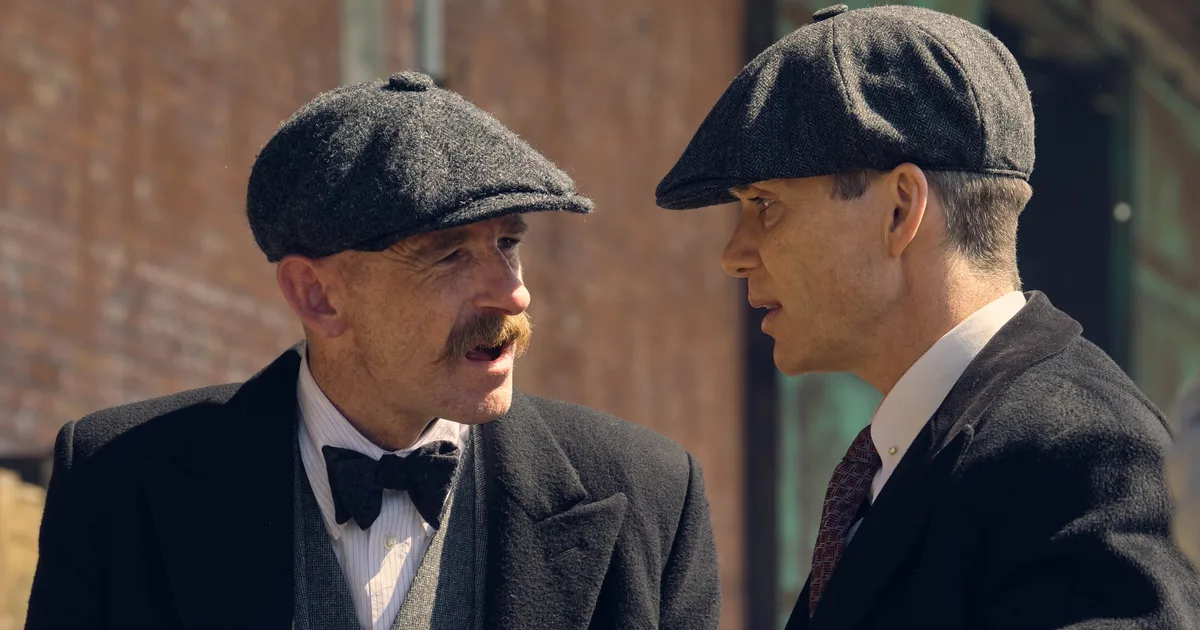
This article contains spoilers for Peaky Blinders: The Immortal Movie.
Peaky Blinders creator Steven Knight has opened up about a major absence from the recent spin-off movie The Immortal Man.
After a brief cinematic run, The Immortal Man arrived on Netflix last week, where it’s remained at the top of the platform’s chart of most-watched movies ever since.
While Cillian Murphy is joined by returnees including Sophie Rundle and Stephen Graham in the Peaky Blinders film, many fans were surprised to see that Paul Anderson did not reprise his role as Arthur Shelby in the movie.
It later emerged that Paul’s character was killed by Tommy Shelby, which Steven Knight has insisted was the only reason he was not part of Peaky Blinders’ feature-length instalment.
“The story determines the cast, and the story was set,” he told The Hollywood Reporter.
“I knew that Tommy needed to have done something that he couldn’t forgive himself for. Therefore, that’s why the plot went in that particular direction.”
“But in terms of Paul, all I’ll say is that he’s a fantastic actor,” he added, referring to the British performer, whose personal issues have been well-documented in recent years.
Following the success of The Immortal Man, Peaky Blinders fans have two more seasons of the TV show to look forward to, as was announced by the BBC last year.
While Steven Knight previously claimed it was the “plan from the beginning” to end the story “with a movie”, the new run of episodes will be set 20 years after the events of season one, focussing on a new generation of Peaky Blinders.
“I’m thrilled to be announcing this new chapter in the Peaky Blinders story,” he enthused at the time of the announcement. “Once again it will be rooted in Birmingham and will tell the story of a city rising from the ashes of the Birmingham blitz.
“The new generation of Shelbys have taken the wheel and it will be a hell of a ride.”

Nothing better illustrates the obsessive hatred of ‘anti-Zionists’ than how they react when Jews are attacked.
In north London on Monday morning, three masked individuals attacked four empty ambulances belonging to Hatzola, an emergency service that operates in Jewish areas but which serves all the members of the local community. An Iran-backed group, the Islamic Movement of the People of the Right Hand (Harakat Ashab al-Yamin al-Islamiya), a group with Islamist symbols similar to those of Hezbollah, quickly claimed responsibility. The group has already been associated with other violent incidents in Europe, including recent attacks on synagogues in Liège and Rotterdam. Two suspects have now been arrested, although no links to People of the Right Hand have yet been confirmed.
It is genuinely harder to imagine a more blatant violation of civic norms and humane values. This was a pure anti-Semitic crime, designed to intimidate and wound the local Jewish community at a time of rising Jew hatred. To its credit, the UK government offered swift condemnation and paid for new ambulances, and there was an outpouring of sympathy from many quarters.
But there was also a hysterical meltdown from every deranged anti-Israel hater, desperate to plumb new depths of irrationality, stupidity and disgrace. On X, the belief that this was a ‘false flag’ attack by Zionists, or the Israeli government, went viral.
These conspiracy theorists come in all shapes and sizes, arriving from various fringes of the political spectrum to meet on the common ground of ‘anti-Zionism’. A tweet rubbishing any possible Iranian motive for the Hatzola attack – and heavily hinting Israeli involvement – garnered tens of thousands of likes. Another claiming that People of the Right Hand is a front group for Mossad, the Israeli intelligence service, was also gleefully retweeted by anti-Israel zealots on the left and the right.
On her X account, Jayda Fransen, former deputy leader of the far-right Britain First movement, claimed that British Jews have ‘their own Hatzola ambulances’, as well as ‘their own police force’, meaning that ‘Jews run parallel emergency services for their own people in Britain’. She also shared a post that stated:
‘It is interesting that the torched ambulances were in the process of being replaced and no longer needed. That means they will get all the insurance money now as well plus the outpouring of sympathy. Wonder who would come up with such a scheme?’
It seems like you just can’t stop those devious, manipulative and downright avaricious Jews, can you? If they aren’t manufacturing stories of rape and murder on 7 October, then surely they must be busy setting fire to their own ambulances?
It is interesting how such a claim, though blatantly false, is designed to mitigate our horror and weaken our condemnation. A Jewish-only ambulance service, Fransen suggests, doesn’t belong in London. It is distinctly un-British, an alien intrusion in white Britain, rather like the Jews themselves. Hence, destroying these ambulances isn’t so bad after all because they are an affront to white, British values.
The pattern of responding to murderous attacks against Jews with conspiracy theories, deflections, evasions and denial is typical of everything we have seen since 7 October 2023. First, there were those who denied Hamas’s crimes, arguing that the savage pogrom was an Israeli assault on its own people – despite the fact Hamas had recorded the attacks themselves, and broadcast them to the world at the earliest opportunity. Then there were the rape deniers. The UN special rapporteur for the occupied Palestinian territories, Francesca Albanese, was among many who denied Hamas’s mass sexual assault on that dark day. And we all know about the volunteer army of poster-destroyers and ribbon-cutters who sought to remove any trace of Israeli victims and hostages from Western city centres.
Just as odious as those who seek to deny anti-Semitic attacks are those who try to dilute them with misleading comparisons. Increasingly, anti-Semitism is seen as ‘the other side of the coin’ to Palestinian suffering. Four burnt ambulances compared to a ‘genocide’ is barely a contest, is it? It is impossible to imagine this kind of relativism being used to diminish the suffering of any other minority group. If a crazed extremist desecrated a mosque and then a Jew suggested that this was nothing compared to 7 October, the outrage would be palpable. And rightly so.
Admitting that Jews could ever be victims of an attack sits uneasily with a ‘progressive’ narrative in which they are white oppressors guilty of backing apartheid, racism and colonialism. In this cartoonish view of the world, Jews are permanently on the wrong side of history until they renounce their parochial attachment to Israel (and their own faith) and embrace the religion of ‘anti-Zionism’.
Unless these warped conspiracy theories are called out, the scourge of poisonous anti-Semitism will continue to seep through the arteries of modern Britain. Indeed, if the response to Monday’s attack is anything to go by, we are already dangerously ill.
Jeremy Havardi is a journalist and historian.
Politics
The House | Social media has been harming children for some time. We must act now to stop it


4 min read
Raising the age limit to 16 for harmful social media is not about censorship. It is about safeguarding. We are already seeing what the consequences could be if we don’t act.
The House of Lords will again today (Wednesday) vote on a cross-party amendment, tabled by Lord Nash, on raising the age limit to 16 for harmful social media. The vote comes amid Louis Theroux’s recent documentary on the “manosphere”, which has brought into view what many of us working on the frontline have been witnessing for years. For doctors, teachers, and youth workers, this is not a sudden crisis. It is a predictable outcome.
We have watched, in real time, as young people’s understanding of relationships, identity, and self-worth has been shaped not by families or schools, but by algorithm-driven ecosystems that reward extremity, outrage, and division. At a recent education leadership conference, a teacher reflected that there had been a noticeable change in boys’ behaviour in just a single term. And in clinical and community settings, the impact is just as stark. A mother of a 14-year-old girl recently described sitting down with her daughter to talk about relationships, only to find that the way boys in her year were speaking about girls was, in her words, “heartbreaking.” These are not isolated observations; they are warning signs.
It is easy, in moments like this, to default to outrage or to dismiss the figures highlighted in Theroux’s documentary as caricatures: exaggerated, fringe, almost absurd. But that would be a serious mistake. What matters is not just the individuals at the centre, but the ecosystem around them. Their ideas do not stay contained at the extremes; they diffuse, soften, and normalise as they travel. What begins as overt misogyny at the top is repackaged into irony, “banter,” or pseudo-self-improvement further down the chain. By the time it reaches younger audiences, it is often unrecognisable as ideology and therefore far more difficult to challenge. This trickle-down effect must not be underestimated.
It is also uncomfortable, but necessary, to acknowledge that this culture does not emerge in isolation. When those in positions of political or social power express misogynistic attitudes, it confers legitimacy. The “manosphere” is not an aberration; it is, in part, an amplification of signals already present in the wider culture.
It is into this space, between glacially slow research, reactive policy, a rapidly evolving digital landscape, and, let’s face it, a generational identity crisis, that a highly organised, highly profitable industry has stepped, fronted by so-called “alpha male” influencers. But strip away the branding, and what remains is something far less aspirational. These figures do not model secure, grounded masculinity. What they often project, thinly veiled beneath performance, is insecurity, fragility, and unresolved attachment needs. The relentless emphasis on control, dominance, emotional detachment, and transactional relationships is not a sign of strength; it is a defence against vulnerability. And crucially, it is being monetised.
This is not simply ideology; it is exploitation. A pyramid-like system in which a small number of influencers profit from amplifying dissatisfaction and grievance. They sell certainty to the uncertain, status to the insecure, and belonging to the isolated. Courses, memberships, exclusive communities, all built on the promise that if you adopt this worldview, your discomfort will disappear. It will not. Instead, young men and boys, many already navigating loneliness and confusion, are drawn deeper into a system that depends on keeping them dissatisfied. Because resolution does not sell. Insecurity does.
Those engaging with this content are not the problem. They are the market. What they are offered is not genuine support or growth, but a script: that their struggles are caused by women, and that the solution lies in power, withdrawal, or contempt. It is a compelling narrative precisely because it simplifies complexity and because it externalises pain.
So yes, regulation matters. But we must be clear: this is not a space where light-touch measures will suffice. We do not allow children unrestricted access to gambling platforms, predatory financial schemes, or harmful substances. We recognise that certain environments are developmentally inappropriate and potentially dangerous. The same principle must apply here.
Raising the age limit to 16 for harmful social media is not about censorship. It is about safeguarding. Delaying exposure to highly polarised, adult ideological content gives young people the time to develop the cognitive and emotional capacity required to critically evaluate what they encounter. Without that foundation, they are not engaging freely; they are being shaped by individuals whose business model depends on influence, not truth.
I urge the Lords to once again vote for Lord Nash’s amendment. If they don’t, we are already seeing in some areas what the national consequences might be.
Dr Lauren Bull is safeguarding lead at Chelsea and Westminster NHS Foundation Trust and is a TedxNHS speaker
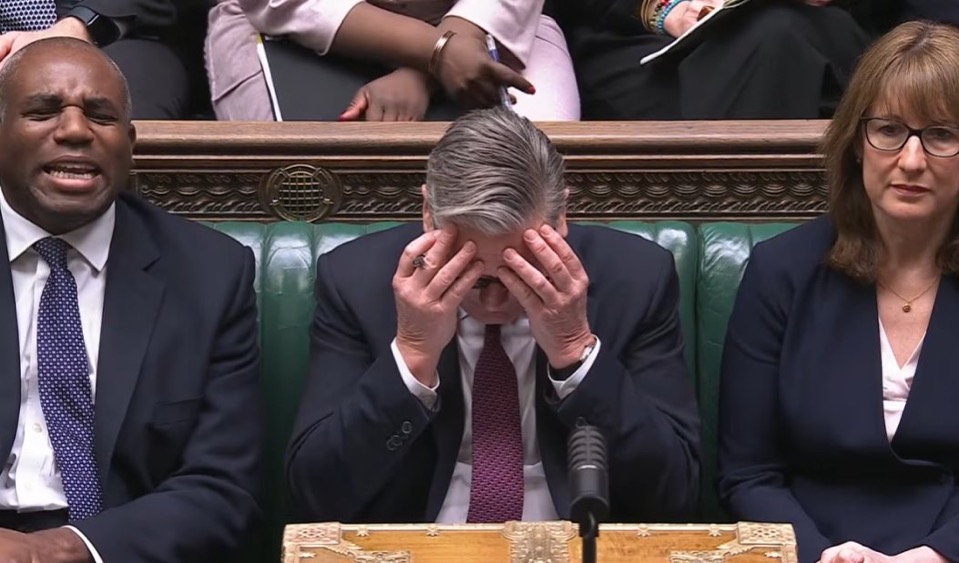
The post PMQs Badenoch accuses Labour of a ‘bailout for Benefits Street’ appeared first on Conservative Home.
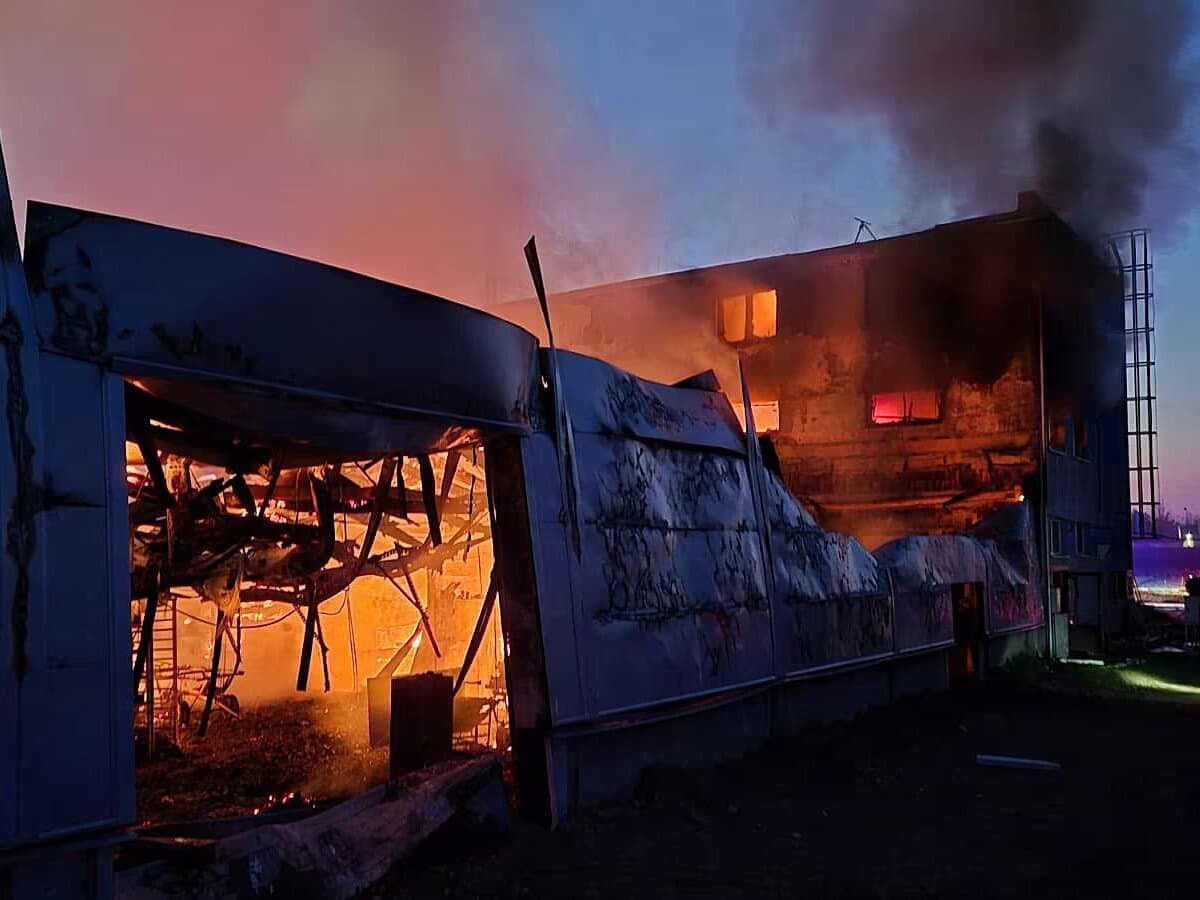
Following its operation to torch and destroy the joint venture between Elbit Systems and LPP Holding in the Czech Republic, a newly launched group has threatened to release restricted documents in an ultimatum.
The Earthquake Faction has released its second communiqué, where it threatens to release restricted documents taken from the site in Pardubice, Czech Republic. The group says it will do this unless LPP Holding releases a statement cutting ties with Elbit Systems and denouncing the occupation of Palestine.
The group gave a limited view of one of the documents, and set a deadline for 20 April for LPP Holding to respond.
LPP Holding has been publicly in partnership with the Israeli company since October 2023. Its COO stated, in relation to the Pardubice site, that:
one of the projects we are preparing with Elbit involves the Israeli army.
Elbit Systems is Israel’s largest weapons company. It manufactures 85% of Israel’s military drone fleet and land based equipment. And it describes its drones as the “backbone” of the Israeli military.
The Earthquake Faction also took aim at all companies that work with Elbit Systems, demanding public statements they have cut ties and threatening action at their sites.
The full communiqué:
Communiqué #2
As the roof of Elbit and LPP Holding’s facility collapsed, with it went their partnership.
LPP Holding has spent the length of a live streamed genocide boasting about their collaboration and support. They collaborated with Elbit Systems as our comrades in Palestine were murdered and maimed, while children were obliterated in fractions of a second by precision technologies made in factories like this Pardubice site, operated by cowards in air conditioned offices.
Underlining their sniveling cowardliness is the sudden public back-stepping, spin and panic only when they realize their power to take life can be shattered by a few people with conscience. Your panic and embarrassment flaps around in the wind for the world to see; after all what kind of “defense” company doesn’t have an alarm?
They know there is no safe corner of this earth for collaborators in the genocide of our comrades in Palestine. We live in the belly of this wretched beast, across continents, countries and cities that these companies operate in. Every company that works with Elbit Systems is a target, and we will target you where and when we choose.
To LPP Holding: we have taken your restricted documents and burned the rest to the ground. You have until 20th April 07:00 UTC to publicly cut all ties with Elbit Systems, and denounce the barbaric occupation of Palestine, or will we release these documents to the public.
For all others who work with Elbit you have two options: wait for us, or release a public statement with proof that you have cut ties with Elbit Systems.
About Elbit Systems and LPP Holding
Elbit Systems is Israel’s biggest weapons producer, which manufactures 85% of Israel’s military drone fleet and land based equipment. It also supplies the Israeli military with munitions, missiles and electronic warfare.
LPP Holding is “a proud weapons supplier to the Zionist state”, says the Earthquake Faction, marketing its array of companies as “powered by Artificial Intelligence”. The holding, and its subsidiaries, is a key strategic partner of Elbit Systems in the Czech Republic. It receives funding from the Czech government for the development of AI-guided unmanned aerial and ground vehicles.
About The Earthquake Faction
The Earthquake Faction describes itself as:
an internationalist underground network that targets key sites critical to the Zionist entity. We aim to destroy all limbs of the Empire from within, by any means effective.
Featured image via the Earthquake Faction

James Starkie is Founding Partner at communications consultancy 5654 & Co. He worked on Vote Leave in 2016 and was a Special Adviser in Government during Theresa May’s and Boris Johnson’s premierships.
Over the past few months more than one person has brought up the story of the Canadian right to me, specifically the rise of a party in the 90’s called Reform and the demise of their more longstanding party of the right, the Progressive Conservative’s.
It has been cited in various conversations, particularly ahead of the last Canadian election when the leader of the party created out of the merger of these two parties, Pierre Poilievre, went into the election as favourite but ended up losing, the election and his seat.
I was therefore interested to understand more about the history of the Canadian right, as well as what are the similarities and differences when it comes to UK politics given the rise of our own Reform Party. As well as speaking to several people who have worked in Canadian politics I found the book Full Circle: Death and Resurrection In Canadian Conservative Politics by Bob Plamondon incredibly insightful and a very good overview of the Canadian right and would highly recommend this book.
At this point I would also like to caveat this and set out my own view.
One of the differences, as a quick glance at Canadian politics will tell you, is that the history of the Canadian right is one of division and a terminal life in opposition. Whereas the British Conservatives can call themselves the party of Government in our sceptered Isle that role in Canada is occupied by the Liberal Party, which is a party of the centre left and one much more practical than our own Labour Party.
This is an important difference to me.
The Tories here in the UK have weathered many a storm and I personally believe they will endure, furthermore I do not therefore see a merger as inevitable, as some may do. This is not to ignore the challenges they face, nor ignore the reasons why some traditional Conservative voters may be unhappy or angry but rather to believe that trust can be rebuilt.
Division on the right is relatively new in the UK and historically the Tories have had to build out election winning coalitions from this point with little opposition to their right, combining traditional centre right voters with a broader coalition more often than not through hard economic competence and pragmatism.
In Canada meanwhile this has not been the case.
The rise of Reform in Canada arose around the end of a period of government for the Progressive Conservative’s [PC’s] although this was more in response to an anger over economic handling. Specifically the failure, in the eyes of Reform Canada founder, Preston Manning, to tackle the national debt.
Manning, seen as a charismatic populist leader, rode a wave of discontent among parts of the Canadian right hungry for real economic reform at a time when Mulroney’s PC government was failing to replicate major economic reforms of Reagan and Thatcher in the USA and UK respectively.
This was seen as a real missed opportunity and blew open a division in the PCs among the more economical liberal wing of the party, blue Conservatives, and those with a more social democratic bent, the red Conservatives.
This had been simmering for some time and as with any insurgent political movement, had hit upon the right time. Manning wrote in a thesis that ‘present national party leaders and federal politicians, especially those affiliated with the PC’s, should recognise that if the Canadian political situation continued to degenerate, and if the cause of conservatism continues to suffer and decline, not for the lack of merit or a willingness on the part of the Canadian people to support modern Conservative principles or policies, but rather because of unnecessary dissension among politicians and parties, the idea of establishing a wholly new political party committed to the social conservative positions will find an ever increasing number of advocates and supporters amongst concerned and aroused Canadian public.’
Written before the creation of the party, this is insightful as it lays the argument that Manning didn’t see the creation of a new party of the right desirable but rather necessary because of a lack of one in existence. That is the PC’s had become too much like the existing Liberal Party and therefore leaving a vacancy.
What’s more, and to some degree contradictory, according to the author of Full Circle: Death and Resurrection In Canadian Conservative Politics, Bob Plamadon, Manning though ‘did not accept that Reform was really another Conservative party, because he did not want to debate an inherent and obvious strategic floor flaw: that the Reform party was splitting voters with the Tories and thereby electing Liberals. This was to be a tension and live issue for the next decade.’
The Reform breakthrough came in the 1992 Canadian election, when from nowhere, they won 52 out of 295 seats leaving the Tories, who had been in Government, on just 2 seats. However while they improved on this performance in the subsequent election, gaining 60 seats and becoming the official opposition, the PCs came back winning 18 seats while also nearly matching the Reform vote share [19.3 per cent to 18.8 ]. The 2000 Federal elections saw this division repeat itself and, ultimately, led to the events under which the new Reform party, now called the Alliance, and the PC’s would join under Alliance leader Stephen Harper. Harper is the man who would go on to lead the right back into Government after more than a decade of Liberal power in 2006.
There are clear similarities to me in terms of the split on the right the Canadian’s experienced during this period and that which the UK is seeing now. Reform Canada picked up disaffected traditional Conservative voters, though these were very specifically located geographically in the west of the country. The PC’s struggled to cut through during this period and failed to recover from the 1992 election drubbing. However, even this party of the right that had experienced far more opposition than government historically could not be completely quashed. The ‘thin blue line’ of staunch PC voters refused to desert the party, and it was by no means inevitable that they had to join with Reform.
They also, largely, lacked quality leadership. Kim Campbel, who fought the disastrous 1992 election was ill-suited to leading a national party and almost certainly hastened the collapse in support. Meanwhile one of the last PC leaders was Joe Clark, who had failed at leading the party in the 80’s and likely didn’t demonstrate a party with fresh ideas by turning to a leader from two decades prior. Indeed this is where the admirable Stephen Harper stood out, the man who would eventually lead the right back into power. At heart a true Conservative, a deep thinker and man of principle he alone shows the importance of strong, principled and very clear leadership.
There are clearly reasons why you can compare the two situations however my own view is that there are fundamental differences in the situations. Many of the big issues in Canada differ from our own, the issue of free trade, particularly with the United States, how provinces with very specific identities are treated by the federal government as well as things like gun laws don’t apply here. Indeed geographic differences loom large and are crucial to gaining a majority in Canadian elections. What’s more, the Canadian Conservatives had nothing like the history their British counterparts do, and the Canadian right has been split far more often than it has been divided.
I would though recommend this book to anyone who is thinking about how the next few years of the British right might play out. It is a reminder that events and personalities often dictate what happens – making predictions a fools game.

The eighth edition of the Bristol Radical History Festival is just a month away. The event takes place over two days: at the M Shed on Saturday 25 April, before it moves on to The Cube Microplex on Sunday 26 April.
The two days will encompass talks, panel discussions, films, history walks, an exhibition and more.
One of the four themes of this year’s event is Propaganda. This is, of course, not a new phenomenon. From the Bayeux Tapestry to social media, one could argue that only the technology has changed to mould and shape public opinion.
The Saturday at the festival will see Steve Poole from Bristol UWE tell us how state propaganda played a crucial role in staving off the threat of revolution in Britain in the 1790s. Meanwhile Riley Linebaugh will bring things forward into the 20th Century and focus on the ways the UK government covered its back when the colonial administrations in East Africa systematically destroyed and removed documents from colonies in the run up to independence.
Dr Lucy Goodison and Colin Thomas will visit more recent history. Specifically, the 1970s when successive governments tried to stymie BBC criticism of policy, especially in relation to Ireland. Both Goodison and Thomas worked for the corporation at the time and give us the lowdown on what happened and how BBC journalists fought back.
And Nicholas Jones (a former BBC correspondent) and ex Head of Channel 4 News Dorothy Byrne will talk about propaganda in the media in today’s news and the increasing presence of journalistic self-censorship.
From history to the present day
Finally, Ghada Dimashk and Barney Cullum will bring us right up to date. They’ll look at how, in the recent Gaza conflict, citizens became the primary producers of historic record, though via social media that is ultimately controlled by US tech giants, and how ordinary Palestinian archivists have managed to preserve endangered digital records.
All of these events take place on the first day of the festival, Saturday 25 April, at the M Shed.
The Bristol Radical History Festival, like all Bristol Radical History Group events, is free and is organised by local people from Bristol. It doesn’t have funding from universities, political parties, business or local government.
To break even we rely on our members giving their labour for free and sales from our publications.
And most importantly: whether you are an academic or curious first timer, a lifelong Bristolian or just down for the day, all are welcome.
For more information and the full programme of the Radical History Festival go to the website at brh.org.uk
Featured image via the Canary

The UK’s online gambling black market has grown to 5% of all activity, up from 3.3% in 2021, according to PwC research published by the Betting and Gaming Council
Unlicensed operators sidestep UK consumer protection rules and can shift domains faster than enforcement reacts. The UK Government has also warned that offshore sites allow self-excluded players back in through GAMSTOP workarounds.
In that environment, the standard for publishing responsible UK casino advice has to be higher. Gambling.com positions itself not as a bonus aggregator, but as an information hub for players who want to verify a site before depositing.
A reviews hub built on process, not promotion
Gambling.com publishes detailed UK casino reviews using a structured 10-step evaluation model. Reviews are based on hands-on testing and analysis by casino experts, not operator-supplied copy.
Licensing is the first filter. If a casino isn’t licensed for the UK market, the review does not proceed and the site is not recommended. In a climate where offshore operators compete on bigger bonuses and fewer restrictions, that gate matters more than any star rating.
Casinos that meet the licensing standard are assessed across weighted categories including security, fair play testing, responsible gambling tools, bonus terms, game variety and customer support. These combine into an overall score out of 10. The site also publishes an explicit independence statement confirming that higher ratings cannot be bought.
The result is a transparent model readers can scrutinise. Even if someone disagrees with category weightings, they can see how a rating was reached.
Evidence you can verify
The review process focuses on areas where weaker review sites fall short.
Financial safety and payout practices: Evaluations cover licensing credentials, security protocols, payment methods and processing times. UK guides include concrete data such as average RTP figures and withdrawal timeframes, presented as measurable information rather than promotional claims.
Bonus analysis: Wagering requirements, expiry periods, maximum bet limits and game restrictions are examined in detail. The aim is to determine whether terms are fair and clearly explained, not simply headline-grabbing.
Game libraries and software quality: Reviews document slot inventories, table game depth, live dealer coverage and provider partnerships, focusing on actual content rather than vague volume claims.
Customer support testing: Reviewers contact support anonymously to assess response times, resolution quality and escalation processes. Clear complaint procedures are treated as a core trust signal.
Real player feedback informs the model
In addition to expert testing, Gambling.com incorporates on-site user reviews and moderated user-testing sessions. Player feedback helps refine evaluation criteria, particularly around payout disputes, complaint handling and customer service behaviour under pressure.
These are often the areas where risk becomes visible – not in feature lists, but in how an operator responds when something goes wrong.
Responsible gambling beyond a checkbox
Responsible gambling is treated as a core part of coverage rather than a footer disclaimer. Gambling.com maintains a dedicated section offering advice and linking to independent resources and professional support where needed.
This includes the NODS-SA, a clinically validated self-assessment tool developed to help individuals identify potential gambling problems via the National Council on Problem Gambling.
Global scale, UK focus
Operating across 23 countries and 10 languages, Gambling.com combines international reach with market-specific knowledge. UK players receive gambling guides aligned with UKGC requirements, locally relevant payment coverage and gambling news tracking regulatory and casino industry developments.
Alongside reviews, the site publishes strategy guides that explain RTP, bonus mechanics, and game rules. That positions Gambling.com as both a comparison resource and an educational platform.
The bottom line for UK casino players
When regulated markets face pressure from offshore competition, the safest starting point is a platform that verifies licensing before recommending any site and publishes the framework behind its ratings.
Gambling.com’s value is not simply that it asks for trust – it shows how its conclusions are reached and allows readers to assess the evidence for themselves.
For users aged 18+ only, T&Cs apply. Gambling can be addictive, always play responsibly and only bet what you can afford to lose. Gambling sites have a number of tools to assist you to stay in control, including deposit limits and time outs. If you think you have a problem, advice and support is available for you now from BeGambleAware or Gamcare.

Strictly Come Dancing professional Nadiya Bychkova has issued an intriguing statement amid rumours that she will not be returning to the show for this year’s series.
Earlier this month, Nadiya was one of five Strictly dancers reported to be facing the axe ahead of the 2026 series, alongside Luba Mushtuk, Gorka Marquez, Michelle Tsiakkas and Karen Hauer.
On Wednesday morning, the Ukrainian performer shared a post on Instagram, confirming that her role at Strictly will be changing, without sharing any additional specifics about what she meant.
“After nine wonderful years, this part of my journey with Strictly Come Dancing is evolving,” she began.
“There is something truly special about being part of a programme that plays such a big part in so many people’s lives and I want to thank all those who have sent beautiful messages over the last few weeks and those who have voted, shouted, supported, celebrated and cheered during every series.
“I also want to take a moment to appreciate all those who have helped me along the way: my partners, my fellow professionals, the judges and brilliant people behind the scenes.”
Nadiya continued: “I joined the show as an athlete and a double world champion. Along the way I have learned so much about myself and other people. I have grown, not only professionally, but personally and creatively.
“Strictly has allowed me to discover new sides of myself, develop new skills, and evolve as an artist in ways I will always be grateful for.”

“This isn’t the end,” she insisted. “I look forward to being part of the Strictly world for many years to come in ways I am beginning to explore.
“I’ve changed a lot since I first stepped onto that dance floor, not just as a performer, but as a person and I can honestly say I’ve never felt more like myself. I’m excited to have time to focus on new projects, and to spend more precious time with my beautiful daughter. Life feels full of possibilities.”
Nadiya concluded: “I danced before Strictly, I loved dancing on the show and I plan to keep dancing for many years to come. Thank you for all the love and support along the way.”
Since the initial reports about a Strictly mass exodus emerged, Karen has confirmed she has left the show after 14 seasons, while Michelle also appeared to suggest that reports about her being dropped from the show’s resident troupe of dancers were accurate.
The BBC also recently dismissed reports that Janette Manrara and Fleur East had been “axed” as the hosts of companion show It Takes Two.
Politics
Politics Home | Labour MPs Told To Block Amendments Giving Victims Right To Free Court Transcripts


The government is ordering its MPs to vote against changes that would enable victims to access court transcripts for free. (Alamy)

2 min read
Labour MPs have been told to vote down House of Lords amendments to the Victims and Courts bill which would allow people to have free access to transcripts of court proceedings in which they are the victims.
Three clauses were added to the legislation by the House of Lords, including “a clause that would enable victims to have access to free transcripts of court proceedings”. MPs are set to vote on them on Wednesday afternoon.
Costs for victims requesting transcripts of trials, including those who are victims of rape or sexual assault, can run into the tens of thousands, which critics say leaves many unable to pay the fees and therefore unable to access transcripts of trials in which they are the victim.
Last year, the government accepted an Independent Sentencing Review (ISR) recommendation to make permanent a pilot allowing victims of rape and sexual offences to apply for a transcript of the sentencing remarks free of charge, when the defendant has been found guilty.
PoliticsHome understands that while the government remains fully committed to implementing the ISR recommendation, it considers amendments tabled by peers to go far beyond that commitment.
In the letter to Labour MPs ahead of votes on Wednesday, seen by PoliticsHome, minister Alex Davies-Jones cites government concerns around preparedness and the affordability of what the amendment seeks to introduce, as well as warnings that it could affect reporting restrictions on trials.
A Ministry of Justice (MoJ) spokesperson told PoliticsHome: “No victim should ever be in the dark about decisions reached in their case.
“That’s why the government is working hard to improve victims’ access to information, and we remain committed to providing all victims with free Crown Court sentencing remarks on request by Spring 2027.
“We will carefully consider the implications of these amendments and set out next steps in due course.”
However, PoliticsHome understands that the instruction to oppose the amendments caused upset among some Labour MPs, with some having meetings with the MoJ to discuss the government’s position.
The push to make transcripts free was the subject of a Westminster Hall debate on Monday, after a petition seeking to “make all court and tribunal transcripts available free of charge” reached over 200,000 signatures.
Last year, now Victim’s Commissioner for England and Wales, Claire Waxman, told the BBC that victims being unable to access transcripts acted as a “real block to recovery”, and that victims had told her transcripts “should come as a part of them being able to see justice being done”.
“It’s really difficult for them to understand why there was an acquittal, especially if they haven’t come back into the court process, which many of them won’t have done,” said Waxman.

Netflix’s 10 most-watched movies this week as new hit amasses 25,300,000 views in three days

From the Suez Canal to the Culture Wars: How Military Experience Shaped Adam Milstein’s Philanthropic Vision

SK Hynix Shares Surge 5% Following Confidential SEC Filing for U.S. ADR Listing


-
 Crypto World5 days ago
NIO (NIO) Stock Plunges 6.5% as Shelf Registration Sparks Dilution Worries
-

 Fashion5 days ago
Weekend Open Thread: Adidas – Corporette.com
-

 Politics5 days ago
Jenni Murray, Long-Serving Woman’s Hour Presenter, Dies Aged 75
-

 Crypto World4 days ago
Best Crypto to Buy Now: Strategy Just Spent $1.57 Billion on Bitcoin During Fear While Early Investors Quietly Enter Pepeto for 150x Potential
-

 News Videos7 days ago
RBA board divided on rate cut, unusually buoyant share market | Finance Report | ABC NEWS
-
 NewsBeat5 hours ago
Manchester United reach agreement with Casemiro over contract clause amid transfer speculation
-

 Crypto World4 days ago
Bitcoin Price News: Bhutan Sells $72 Million in BTC Under Fiscal Pressure, but the Smart Money Entering Pepeto Sees What the Market Does Not
-

 Tech5 days ago
inKONBINI Lets You Spend Summer Days Behind the Register
-

 Crypto World7 days ago
Canada’s FINTRAC revokes registrations of 23 crypto MSBs in AML crackdown
-

 Sports2 days ago
Remo Stars and Kano Pillars Strengthen Survival Hopes in NPFL
-
 NewsBeat7 days ago
Residents in North Lanarkshire reminded to register to vote in Scottish Parliament Election
-

 Politics6 days ago
Gender equality discussions at UN face pushbacks and US resistance
-

 Business3 days ago
No Winner in March 21 Drawing as Prize Rolls to $133 Million for Next
-

 Business7 days ago
Who Was Alex Pretti? 5 Key Facts About the ICU Nurse Killed by Federal Agents in Minneapolis
-

 Sports2 days ago
Gary Kirsten Accuses Pakistan Cricket Board Of ‘Interference’, Mohsin Naqvi Responds
-

 Tech3 days ago
Give Your Phone a Huge (and Free) Upgrade by Switching to Another Keyboard
-

 Tech7 days ago
Inventec’s bizarre VeilBook laptop hides its touchpad under a sliding keyboard just to give cooling fans a little breathing room
-

 Sports5 days ago
2026 Kentucky Derby horses, odds, futures, preview, date: Expert who nailed 12 Derby-Oaks Doubles enters picks
-
Sports6 days ago
Vikings Free Agency Enters Phase 2 with Key Questions
-

 Tech3 days ago
AI enters the chat: New Seattle dating app relies on tech to facilitate meaningful human connections
You must be logged in to post a comment Login