
Politics
Farage reportedly called by-election on false information



Nigel Farage’s decision to call a by-election in Clacton confused everyone. People speculated that he forced the race to draw attention away from his many ongoing financial scandals. The problem with this theory is that the by-election actually drew more attention to Farage and his numerous controversies.
Now, according to the Times, there may actually be a good reason for why he called the by-election. The problem is this ‘good reason’ ended up being a very bad one because Farage reportedly called the by-election on the understanding that it would permanently halt a parliamentary investigation. This is not the case, and as everyone now knows, the investigation will resume once he returns as an MP (should he beat Count Binface).
Farage receives questionable advice
Reportedly, a “senior source” in Reform revealed that Farage received bad advice from his advisors. This is a problem for Farage, as it suggests the people he relies on for advice aren’t up to the task. The leak also provides further evidence that the party has competing factions which are working against one another.
The parliamentary investigation in question related to a £5 million ‘gift’ Farage accepted in 2024. As we previously reported:
Farage accepted the £5m gift from Harborne – a crypto billionaire – in 2024. At the time, he’d said he wouldn’t run in the general election, but this changed after he received the £5m. The problem is that after he became an MP, he was supposed to declare any ‘registrable benefits’ from the previous 12 months. Farage did not declare the £5m, and now it looks like he was purposefully trying to hide it.
Farage defended not declaring the gift because he wasn’t a politician at the time when he received it. As noted, this defence doesn’t hold up because incoming MPs have to declare all potentially relevant donations, benefits, and gifts from the previous 12 months. The gift does seem to be potentially relevant too, as Farage went on to shill for the crypto industry after taking money from crypto billionaire Harborne.
It also later emerged that Farage had seemingly agreed to return to politics before accepting the gift, adding to the evidence that the cash lump sum was political. Add to this the fact that Farage reportedly spoke about wanting £1 million a year to return to politics (and he then received a £5 million gift just before the start of a new five-year parliamentary period).
What will the future hold for Reform’s leader?
It’s pretty much certain that Farage will win in Clacton. However, should the parliamentary investigation find him guilty of misconduct, he could face a second Clacton by-election this year; one in which the other parties will definitely run against him.
Although Farage may cling on again, this pantomime has clearly damaged his national standing, even if he does remain Clacton’s politician of choice.
Featured image via Marcus Yam
By Willem Moore


Solar eclipses happen about twice a year. Visible meteor showers, meanwhile, occur up to 30 times annually.
But it’s a lot less common for the events to happen together. Happily, UK stargazers have just that combination to look forward to in the next few days.
The BBC suggested the “main UK [sky gazing] event” of 2026 is likely to be the coming solar eclipse. And as it turns out, it’ll happen within the same 24-hour stretch as the Perseid meteor shower in what’s been termed a “cosmic double whammy”.
When will a solar eclipse coincide with a meteor shower in 2026?
This is expected to happen on August 12, 2026.
The partial solar eclipse (90% of the sun will appear to be covered by the moon) will start at around 6:17pm London time (the exact minute will vary across the UK). The greatest coverage, meanwhile, will be seen at 7:12pm London time.
The eclipse will mark the greatest coverage of the sun seen in the UK since 1999.
The Perseid meteor shower, meanwhile, is expected to run from 17 July to 24 August.
But it’s going to “peak” the night of 12-13 August – just hours after the amazing eclipse.
That means the greatest number of meteors are expected to fall on that night, leading to an unusually dazzling display.
How can I see the solar eclipse and meteor shower combination?
Just how covered the sun will appear to be in 2026′s eclipse depends on your location. Spain might be the best place to catch it, but the UK’s in a pretty great spot this year, too.
Some particularly stunning views, with up to 90% coverage, are predicted in cities like:
- Glasgow,
- Belfast,
- Manchester,
- Liverpool,
- Birmingham.
If you’re considering travelling abroad for the event, the Republic of Ireland will have even better odds. Cork is going to see 96% coverage, while Dublin will get an impressive 94%.
Please don’t look directly at the sun during a solar eclipse. That can damage your vision.
Instead, wear certified solar eclipse glasses. Or, you can tune into Royal Museum Greenwich’s live stream of the event, which runs from 6:15-7:30pm on 12 August (it’s free!).
As for the Perseid meteor shower, you won’t need special equipment to watch it – just patience, clear skies, and a lack of light pollution.
The best, most “dramatic” views will probably come after midnight when the sky is darker.
Speaking to the Natural History Museum, planetary scientist Dr Ashley King said: “The darker the skies, the better your chances of seeing the really faint meteors as well… You could go to the coast or stand on a hill in the middle of the countryside somewhere.”
But don’t expect instant results, the expert continued.
“You might not be able to see anything for the first 10 minutes while your eyes adjust to the dark… Once you get used to the low light levels you’ll begin to notice more and more. So don’t give up too quickly.”

Until last week, I’d never heard of sudden arrhythmic death syndrome (SADS), sometimes called sudden adult death syndrome.
But the NHS suggests it’s the most common cause of death of under-35s in the UK. It’s believed to affect about 500 people annually in England, Scotland, Wales, and Northern Ireland.
The fatal condition leads to an “unexpected” and “sudden” death.
Here, HuffPost UK spoke to Dr Dominic Greenyer, private GP at The Health Suite, about what SADS is, why it might happen, and some possible warning signs.
What is SADS?
Despite its (less accurate, Dr Greenyer said) nickname, SADS is not confined to adults. It can affect children and young people too, the doctor explained.
The term is used when “someone dies suddenly and unexpectedly following a cardiac arrest, but a detailed post-mortem and toxicology investigation cannot identify a clear cause”.
“The heart may appear structurally normal, which can make these deaths particularly difficult for families to understand,” he added.
What causes SADS?
Dr Greenyer told us that the problem can lie in the electrical action of the heart, rather than a structural issue (like a blood clot during a heart attack).
“An abnormal electrical rhythm can cause the heart to beat dangerously fast or erratically, preventing it from pumping blood effectively and resulting in cardiac arrest,” he said.
Genes may be a factor here, too.
“Sometimes, [SADS] is linked to an undiagnosed inherited condition, such as long QT syndrome, Brugada syndrome or catecholaminergic polymorphic ventricular tachycardia, known as CPVT. These conditions can be very difficult to detect because a person may look healthy, exercise regularly and have no known heart disease,” he shared.
“The most important risk factor is a family history of sudden, unexplained death, particularly at a young age. People should also seek medical advice if a close relative has been diagnosed with an inherited heart rhythm disorder or cardiomyopathy.”
Are there any warning signs of SADS?
The NHS writes that “fatal arrhythmia may be the first presentation” of the condition. In other words, tragically, it might prove deadly before it shows any other signs.
But Dr Greenyer said there are some symptoms that you should get checked out if you experience them.
“Possible warning signs can include unexplained fainting, especially during exercise or emotional stress; recurrent palpitations; unusual dizziness or seizure-like episodes with no clear explanation,” he said, though the GP stressed that “most people experiencing occasional palpitations or dizziness will not have a dangerous inherited condition”.
Additionally, if you faint during exercise, develop chest pain or severe breathlessness while you’re active, or you have palpitations accompanied by fainting, you should be medically assessed by a doctor who can work out whether further scans and tests are needed.
“It is also important not to create the impression that exercise itself causes SADS,” said Dr Greenyer. “Regular physical activity is overwhelmingly beneficial for the heart. In a small number of people with an undiagnosed electrical condition, intense exercise or stress may act as a trigger, but the underlying condition is the real risk.”
People whose family members have died from SADS may be offered specialist cardiac and genetic assessment, which allows them to receive monitoring and treatment if needed, he ended.
“SADS is frightening precisely because it can affect someone who appears fit and well. However, awareness of family history and taking unexplained symptoms seriously can help doctors identify some of those at increased risk before a catastrophic event occurs.”
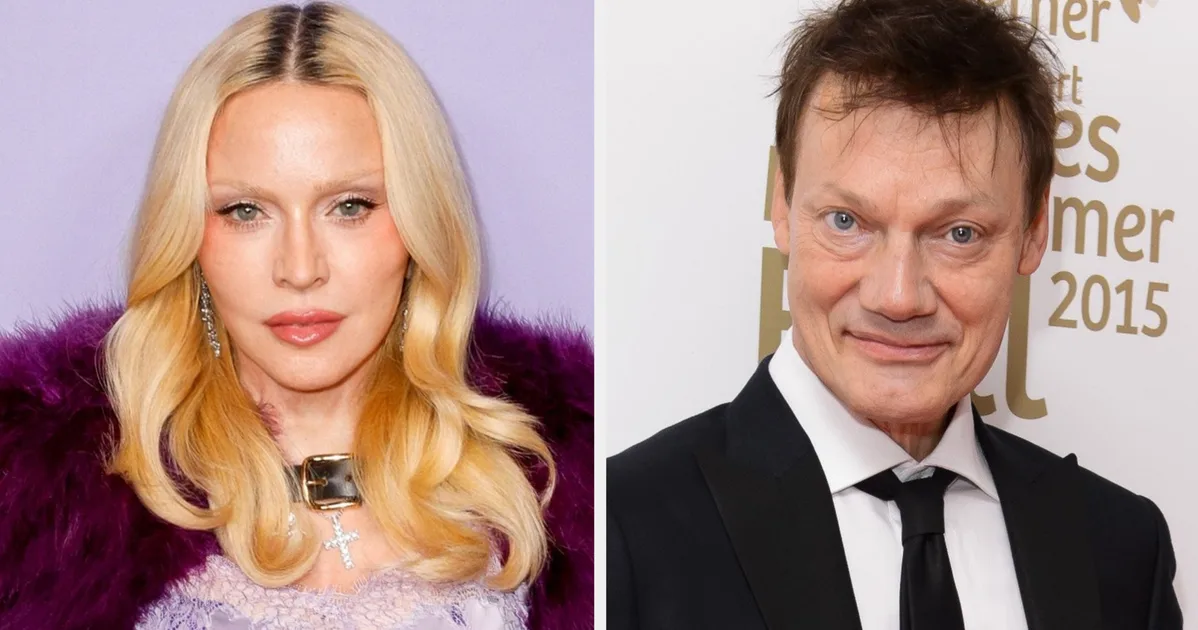
Madonna has remembered her former collaborator William Orbit as a musical “genius”.
Over the weekend, the Queen of Pop paid tribute to the British musician and producer, with whom she most notably worked on her Grammy-winning album Ray Of Light in the mid-1990s.
“Goodbye William Orbit,” she wrote on Instagram, following the news of his death at the age of 69, alongside footage of them accepting one of their Grammys.
“I had an epiphany when I met you and started working with you. I realised that music did not have to fit into categories or genres. So we created our own.
“You pressed a magic button inside of me and I fell into a galaxy of unrealised dreams. Your music gave me a magic carpet to fly on and I visited many places, sad and joyful. I sang in ways I’d never sung before. I used words without caring if they made sense or not.”
She recalled: “In many ways you were my Ray Of Light – as was my daughter Lola who was born around this time. I was starting a new chapter, I was choosing another road to walk down – and you were right by my side with your crooked teeth and your genius, way of hearing music.
“The studio was often church-like and I would sit in silence, waiting for your ideas to explode out of your keyboard or your guitar and then I would run with them…”
“I miss those days,” she admitted. “Only you could inspire me to write a song like Drowned World or Swim. You were so otherworldly. So singular.”
Madonna continued: “The years passed and I moved on to make music with other people, but I have never forgotten you or the magical time we spent together.
“Goodbye Billy Bubbles. I was so lucky to have known you and fallen down the rabbit hole with you.”
William co-wrote co-produced some of Madonna’s biggest hits of the 90s and 2000s, including the UK number one singles Frozen and American Pie, as well as Ray Of Light, Nothing Really Matters, Drowned World/Substitute For Love, The Power Of Good-Bye and Beautiful Stranger.
He also released 12 of his own studio albums, including the UK number two Pieces In The Modern Style, in addition to his work with All Saints, Blur and Robbie Williams, among others.
Since the news was confirmed last month that he’s died, many of the other singers and performers who worked with him in his lifetime have also been paying their respects on social media…
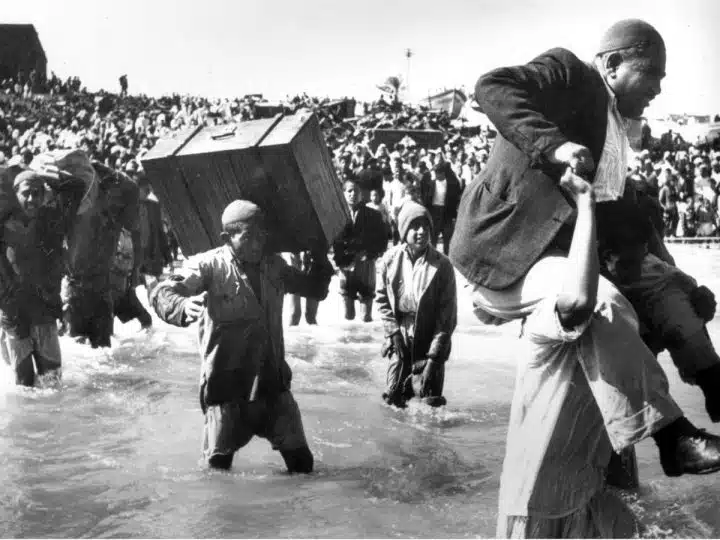

Israel’s initial expectation of rapidly concluding a formal peace treaty with its northern neighbour in the immediate aftermath of the 1948 Arab-Israeli War proved entirely illusory.
The Failed Diplomacy of Lausanne
In April 1949, the United Nations established the Conciliation Commission for Palestine (UNCCP), sponsoring multilateral Arab-Israeli peace negotiations in Lausanne, Switzerland. It was at Lausanne that Israeli diplomats discovered a sobering strategic reality: Tel Aviv had yielded its military toehold on the Litani River during the armistice negotiations in return for virtually nothing.
The Israeli proposal submitted to the Lebanese delegation at Lausanne was stark in its simplicity, yet exceptionally rich in its geopolitical implications. Tel Aviv suggested that the Armistice Demarcation Line (ADL) agreed upon between the two countries be transformed via a bilateral peace treaty into an official, internationally recognised permanent boundary.
The newly established Jewish state was fully prepared to formally renounce the traditional Zionist territorial claim to southern Lebanon. In exchange, Israel demanded a simple, binding declaration of peace – an act that would carry profound regional ramifications.
Firstly, it would signify Lebanon’s formal defection from the broader Arab coalition hostile to Israel. Secondly, it would establish a de facto strategic alliance between the Jewish and Catholic Christian minorities within the predominantly Muslim eastern Mediterranean coastal zone. Finally, it would pave the way for a cooperative, bilateral framework for the joint exploitation of southern Lebanon’s vital water resources. However, the allure of an official Israeli acknowledgment of Beirut’s territorial sovereignty over southern Lebanon proved to be an insufficient inducement for the Lebanese government.
Beirut’s counterproposals
Constrained by regional political dynamics and internal demographic realities, Lebanon submitted two uncompromising counterproposals.
First, Beirut demanded that the approximately 125,000 Palestinian Arab refugees who had fled from Palestine to Lebanon during the hostilities of 1948 be repatriated by Israel. Second, it insisted that the portion of Western Galilee set aside by the United Nations Partition Plan of 1947 for the proposed Arab state be ceded directly to Lebanon. The strategic logic behind the second condition was demographically driven: the vast majority of the refugees – roughly 90% of whom were Muslims – would be permanently settled within that annexed Palestinian territory. This would ensure that the narrow, fragile Christian political majority within Lebanon proper remained entirely preserved and unthreatened.
Predictably, Israel flatly rejected the Lebanese counterproposals, which, if accepted, would have expanded the borders of ‘southern Lebanon’ southward to incorporate the coastal city of Acre and the inland city of Nazareth. Consequently, the diplomatic proceedings at Lausanne dissolved without an agreement, and Lebanon settled into an official state policy of non-recognition towards Israel.
The Dual Strategy of Beirut
Although obliged by sister Arab states and a significant segment of its own citizenry to maintain a rigid, uncompromising diplomatic stance towards Tel Aviv, the Lebanese government remained acutely sensitive to the harsh military realities of the frontier zone.
As had been the case during the 1948 war, Beirut sought from 1949 onwards to enjoy the best of both worlds. By forfeiting the opportunity to obtain official Israeli recognition of its jurisdiction over southern Lebanon, Beirut reaped a lucrative financial harvest from the broader Arab economic boycott of the Jewish state, positioning itself as a primary financial transit hub. Simultaneously, the Lebanese state took substantive, rigorous measures to ensure that Israel would be deprived of any legitimate pretext or justification for seizing Lebanese territory. Diplomatic obduracy on the international stage was systematically offset by a pragmatic policy of local cooperation along the frontier – a policy that, at times, bordered on complete submission to Israeli security demands.
Article VII of the General Armistice Agreement (GAA), signed by Israel and Lebanon in March 1949, had established the Israeli-Lebanese Mixed Armistice Commission (ILMAC) under United Nations supervision. ILMAC was authorised to maintain two operational headquarters: one at the Israeli frontier post just north of Metulla, and the other at the Lebanese border facility at Ras an-Naqurah. The explicit mandate of ILMAC was to enforce the provisions of the GAA on the basis of unanimous consent between both parties.
Initially, both sides shared compelling incentives to ensure ILMAC functioned efficiently. Lebanon wished to suppress all forms of border provocation that might trigger a reintroduction of Israeli armed forces into southern Lebanon. Israel, on the other hand, sought Lebanese assistance in preventing the clandestine return of displaced Arab refugees while it consolidated a dense chain of fortified Jewish settlements directly along the demarcation line.
Redemarcation and Economic Disruption
In November 1949, ILMAC encountered its first severe operational test. The Lebanese government, alleging that armed cross-border raids were being launched from Israel against its southern villages, formally requested that ILMAC clearly demarcate the ADL on the ground. The explicit objective of this boundary-marking initiative was to put an end to recurring frontier incidents, thereby reducing the likelihood of a major Israeli military intervention.
Prior to the Lebanese request, the UNCCP at Lausanne had recommended that, where no competing territorial claims existed, Israel and its Arab neighbouring countries should move towards creating clearly defined boundaries. This suggestion focused immediate attention on the Lebanese-Israeli ADL because, notwithstanding historic Zionist interests in the Litani water basin, there were no active territorial disputes of a magnitude comparable to those existing between Israel and Syria, or Israel and Jordan. Nevertheless, Lebanon firmly rejected the concept of a formal, permanent boundary settlement, arguing that such an accord would imply legal recognition of the Zionist Jewish state.
Yet, Beirut desperately required the physical redemarcation of the ADL. Every time a Lebanese villager inadvertently strayed across the poorly marked boundary, the authorities in Beirut panicked, fearing a heavy-handed Israeli military retaliation. Lebanon had no intention of providing Israel with a casus belli to occupy southern territory, nor did it wish to grant the line permanent international legal status through a formal peace treaty. Disturbed by the border-crossing habits of its own rural populace, Lebanese officials essentially manufactured the narrative of Israeli raids to seize the diplomatic initiative and demand a clearer physical definition of the frontier.
Given that the original Anglo-French Boundary Commission of 1923 had published a detailed survey report, ILMAC’s technical task appeared straightforward: mark the line and erect warning notices for the local population. However, the 1923 boundary line had bisected land parcels belonging to single villages or individual families – a defect that had been successfully mitigated by the 1926 Good Neighbourly Relations Agreement. That earlier accord had institutionalised fluid cross-border movement, validating human interactions that predated the creation of modern Lebanon and Palestine.
In stark contrast, the 1949 GAA was a military instrument enacted between hostile states, authorising both governments to prohibit civilians from crossing the ADL entirely. While Jewish settlers occupying abandoned Arab villages along the border had neither the desire nor the incentive to cross into Lebanon, Arab villagers in southern Lebanon operated under the assumption that they could continue grazing cattle or cultivating tobacco on their ancestral lands, even if those lands now sat on the ‘wrong’ side of an invisible line. Because Israel took extreme exception to these civilian incursions, Beirut concluded that the requirement for absolute quiet along the frontier far outweighed the property rights and economic livelihoods of its own border populace.
The Price of Local Appeasement
ILMAC established a technical subcommittee on 16 November 1949 to study the 1923 agreement and post physical warning markers along the ADL. The subcommittee concluded its work on 27 January 1951, leaving the boundary unfenced but clearly defined, save for a six-kilometre stretch where both sides maintained conflicting interpretations of the original Franco-British survey.
Although some Jewish-owned land plots in southern Lebanon were lost in the process, the primary victims were the Arab farmers of southern Lebanon. They were not only permanently cut off from their agricultural lands, but were also deprived of access to traditional labor markets and trade hubs on the Israeli side of the line. A vital economic safety valve was permanently destroyed – ironically facilitated by Beirut’s own diplomatic initiative.
This boundary-marking exercise was supplemented by joint Israeli-Lebanese police investigations designed to eliminate cross-border smuggling and theft. Minor disputes involving stray livestock or straying fishing vessels were expeditiously resolved by joint police patrols operating under ILMAC auspices. Crucially, Lebanese police actively assisted Israeli security forces in capturing and expelling back into Lebanon several hundred Palestinian refugees who had infiltrated Israel attempting to return to their former homes.
According to Lieutenant-General E.L.M. Burns, Chief of Staff of the United Nations Truce Supervision Organization (UNTSO) from August 1954 to November 1956, UNTSO experienced remarkably few operational difficulties regarding the Israel-Lebanon GAA. Burns noted that ILMAC functioned precisely as armistice commissions were intended to operate, meeting periodically and rarely dealing with major violations, with most complaints restricted to cattle grazing across the ADL.
However, Burns explicitly highlighted that the Lebanese authorities were obliged to go to extraordinary lengths to placate Israeli sensitivities. In 1955, following an incident in which several Israelis were killed by Arab infiltrators originating from Lebanese territory, alarmed Lebanese authorities acted swiftly. They forcibly removed all refugees and non-established residents from a zone extending ten kilometres deep into Lebanese territory along the border.
By rigorously accommodating Israeli security demands, Lebanon purchased nearly two decades of relative stability. Yet, this policy of localized appeasement would ultimately prove futile when regional geopolitical shifts dismantled the armistice framework entirely in 1967.
Featured image via Wikimedia
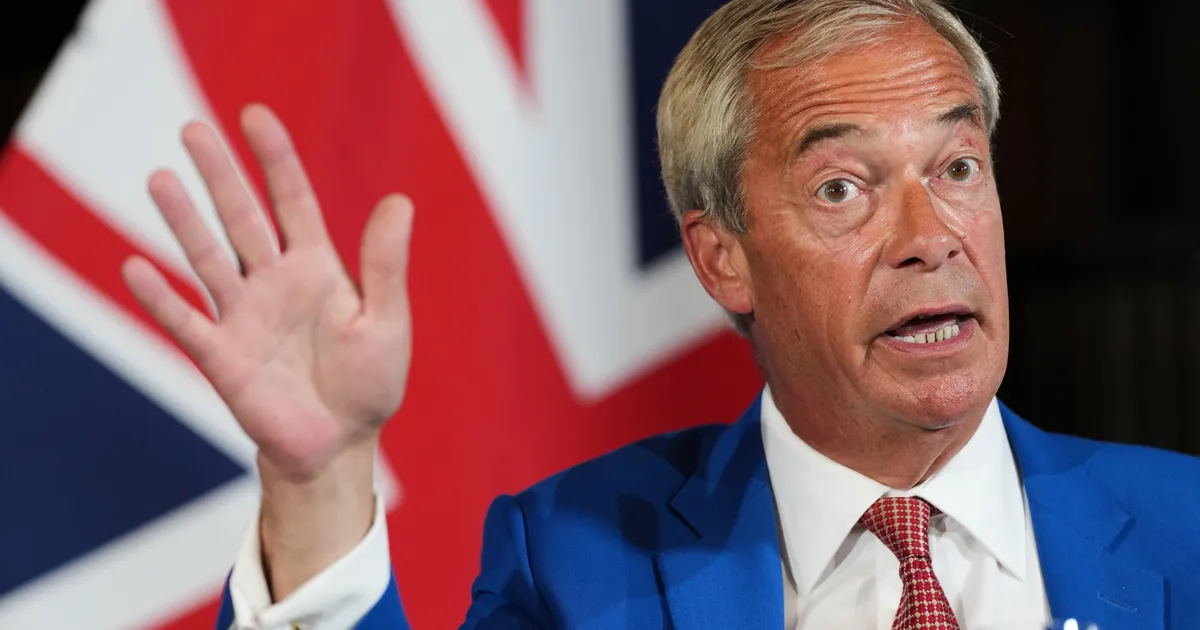
Nigel Farage has been accused of having “no serious answers” to the overcrowding prisons crisis.
The Reform UK leader has today announced a plan to free up space in jails in England and Wales by deporting all foreign offenders to “serve their sentences in countries like El Salvador and Kosovo”.
However, of the 10,000 foreign nationals in custody in England and Wales nearly a third are on remand – meaning they have not been convicted, and so would not be eligible for deportation under Reform’s plans.
During his press conference, Farage suggested his party was going on a trip to El Salvador for further discussions about renting prison spaces this year.
Donald Trump previously struck a similar deal with the central American country to deport migrants from the US despite concerns about the prison conditions.
The right-wing party is proposing building “Nightingale prisons” in the UK to create 12,000 more prison spaces, too.
Farage’s proposals were completely rinsed by Labour, though.
A Labour spokesperson said: “Keeping the public safe is and always will be Labour’s first priority.
“The government has already made clear we are working at pace to deport foreign criminals and we’re building more prison places to deliver justice for victims and keep criminals behind bars.
“Reform have no serious answers to the Tory prisons crisis and would lead the system to collapse.
“This would result in a free for all for dangerous and violent offenders, including murderers and rapists. Nigel Farage and Reform simply can’t be trusted to keep Britain safe.”
Prime minister Andy Burnham has been overseeing Labour’s early release scheme, which means thousands of inmates have been freed after serving only a third of their sentences.
However, there has been significant backlash after it emerged that two of police office Andy Harper’s killers being freed.
More than 800,000 Brits signed a petition to stop their release.
Listen to Commons People, the podcast that makes politics easy. Every week, Kevin Schofield and Kate Nicholson unpack the week’s biggest stories to keep you informed. Join us for straightforward analysis of what’s going on at Westminster.
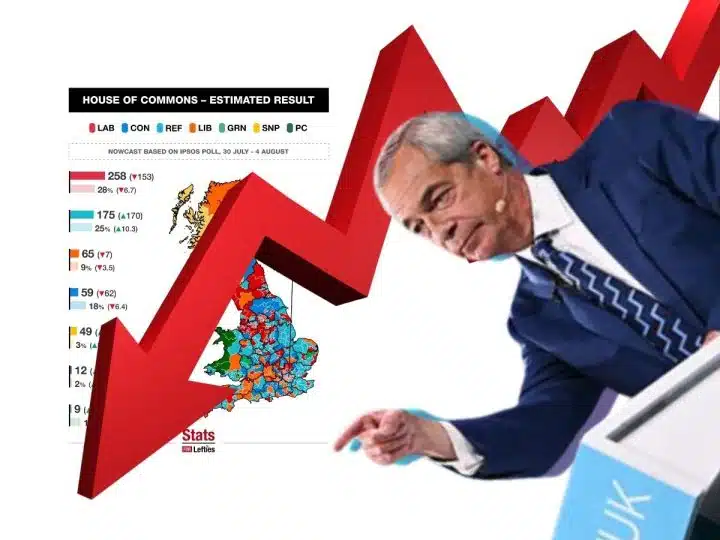

In the past few months, Reform UK has lost a lot of its sheen with UK voters. This problem is worsening too, with Reform now regularly skulking in second place in UK polls.
— Seats — Poll: Ipsos, 30 Jul-4 Aug (+/- vs 30 Jun) pic.twitter.com/biBLrowfWg
— Stats for Lefties
 NEW | Labour lead by 3pts
 Lab: 28% ( +4 )
 Ref: 25% ( -1 )
 Con: 18% ( – )
 Grn: 12% ( -1 )
 Lib: 9% ( -2 )
Lab: 258 Ref: 175 Lib: 65 Con: 59
Lib: 9% ( -2 )
Lab: 258 Ref: 175 Lib: 65 Con: 59 SNP: 49
 Plaid: 12 Grn: 9

 (@LeftieStats) August 9, 2026
As we’ll get to, this isn’t even the worst poll position that Reform has held in the past week.
Reform’s polling will go lower
Earlier this month, commentator Dan Hodges expressed a theory on why Reform is suffering. The three factors he pointed to were:
- The Burnham Bounce: “People being introduced to him for the first time tentatively like what they see”
- The Starmer Anti-Bounce: “People expressing relief he’s gone”
- The Farage Flounce: “Reform sleaze…is clearly cutting through negatively”
Hodges suggested that only the Farage Flounce was baked in. In other words, Prime Minister Andy Burnham will have to realise the sort of actual improvements which Starmer failed to deliver. While it’s certainly true Burnham is doing a lot of tinkering around the edges, the edges are now so far from the core that this may not achieve much in the long run.
As Hodges also noted, Farage’s sleaze problem is going to be harder to come back from. The lifecycle of a British politician usually involves a rise and a fall. The question is whether this current moment is a blip on Farage’s rise to becoming prime minister, or whether it’s the beginning of the end for him.
Popularity contest
As noted, the above poll isn’t even the worst that Reform has had; this is:
— Seats — Poll: Lord Ashcroft, 3 Aug (+/- vs 29 Jun) pic.twitter.com/OVMNyBW8Gw
— Stats for Lefties
NEW | Reform PLUNGES to third place  Lab: 27% ( +6 ) Con: 23% ( +2 ) Ref: 18% ( -3 ) Grn: 15% ( -2 ) Lib: 8% ( -1 )
Lab: 269 Con: 193 SNP: 49 Ref: 37 Lib: 36 Grn: 23 Plaid: 12
(@LeftieStats) August 9, 2026
Lab: 27% ( +6 ) Con: 23% ( +2 ) Ref: 18% ( -3 ) Grn: 15% ( -2 ) Lib: 8% ( -1 )
Lab: 269 Con: 193 SNP: 49 Ref: 37 Lib: 36 Grn: 23 Plaid: 12
(@LeftieStats) August 9, 2026
Lord Ashcroft is far from the most well-respected pollster but his outfit did previously have Reform leading the pack. In other words, they are seeing movement among the voters they poll — the same as other pollsters. The following poll is also from Lord Ashcroft:
Poll: Lord Ashcroft, 3 August pic.twitter.com/TSA2M1dYny
— Stats for Lefties
POLL | Who would you prefer as PM?
Andy Burnham: 71% Nigel Farage: 29%
(@LeftieStats) August 9, 2026
Embarrassingly, nearly a fifth of Reform voters said they’d prefer Burnham to Farage. This is endemic of the problems that Hodges described. The public has become favourable to Burnham just as they’ve become unfavourable to Farage. It’s hard to see how Farage can fully turn that ship around given his many ongoing financial controversies, which include:
- Multiple investigations into a £5m ‘gift’ Farage received from a crypto billionaire
- Accusations Farage is shilling for crypto on behalf of his donors
- Questions over three houses Farage seemingly failed to declare
- Failure to declare financial support from convicted fraudster ‘Posh George’ in the run-up to the 2024 election
Sliding polls
As Keir Starmer discovered as prime minister, polling can always get worse. The reality right now is that we don’t quite know how bad things will get for Farage and Reform UK. There is every chance they can eventually rebound if Burnham fails to deliver, though, and there is ample evidence suggesting that the man will not deliver.
Featured image via Times Higher Education
By Willem Moore
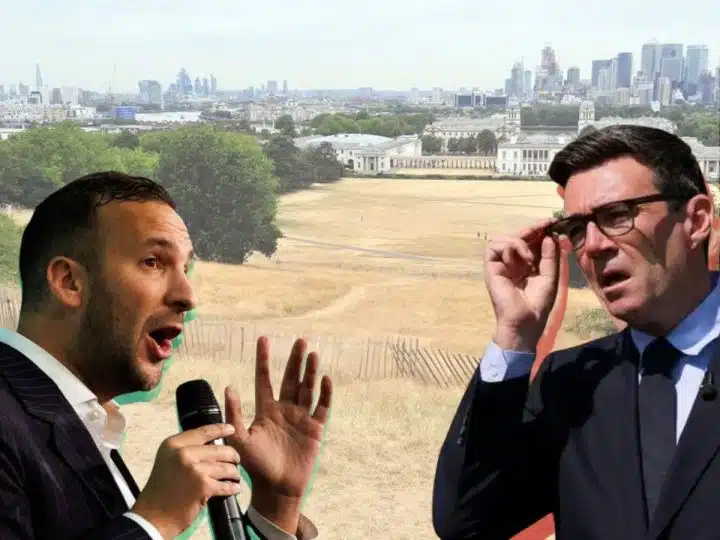

Green Party leader, Zack Polanski, has called out the government’s “gross negligence” on X over plans to press ahead with more oil and gas drilling in the North Sea.
In 2026, the UK has experienced record-breaking temperatures and droughts. These weather conditions have resulted in water shortages, wildfires and crop failures. Given this, you’d expect Andy Burnham to have prioritised the matter. Instead, he’s given a thumbs up for more oil drilling and gone on holiday.
The Labour Government have refused Green Party calls for a COBR meeting saying "supply chains are resilient."
This is gross negligence. We need to act now.https://t.co/v1D4mifqgF
— Zack Polanski (@ZackPolanski) August 9, 2026
Polanski unhappy with government’s inaction
The Sky News piece Polanski is responding to opens:
For all the talk of immigration and prisoner releases ending Andy Burnham’s honeymoon, there’s another row looming for the new prime minister.
Climate conscious Labour MPs are concerned there is a lack of urgency from the government as the UK battles extreme heatwaves, drought and wildfires.
While being reluctant to outwardly criticise their new boss, three backbenchers told Sky News this could spill into a “revolt” if he presses ahead with more oil and gas drilling in the North Sea.
At this point, it’s becoming very difficult for people to deny that something unprecedented is happening with the climate.
UK has become a giant desert without rain in less than 2 months. https://t.co/KT2cgcRu8w
— Ragıp Soylu (@ragipsoylu) August 9, 2026
People around the country are facing extreme localised impacts, whether it be water shortages, wildfires or crop failures.
Yes, as climate change progresses, yes this will become a big a threat as world war 2 https://t.co/h6xgZ1BYpv
— Matthew Todd

 (@MrMatthewTodd) August 9, 2026
The French media is increasingly, and correctly, linking wildfires to climate change – but sadly the British media generally still fails to do so. Poor journalism, I fear, apart from anything else….https://t.co/g2g5mS3Urb
— Geoffrey Lean (@GeoffreyLean) August 9, 2026
A 90% loss of corn for animal feed, with the situation repeated across much of northern Europe, will inevitably lead to food price spikes later in the year. UK also importing green veg from Spain at the height of growing season due to massive crop failure https://t.co/8ahyyXbaTI
— Nate Bear (@NateB_Panic) August 8, 2026
Given all this, it’s no wonder people, including Polanski, are demanding that Burnham afford this issue the respect it deserves.
as we gear up for our fifth heatwave of the summer has @andyburnham said a single thing about the rolling wild fires, thousands of deaths, droughts and devastation resulting from them? where is the leadership? where is the action?
— Ben Smoke (@bencsmoke) August 9, 2026
Climate change is a global emergency
If it feels like climate change has sped up recently, that’s not your brain tricking you; it has.
Global Warming Has Kicked Into Overdrive, Scientists Warn
No, it’s not “just summer.” Or people spraying shit into the sky. Nor is it naturally getting warmer. https://t.co/edPhZmeKFg
— Atlanta Rey
 (@areyoflight) August 9, 2026
It’s been a particularly apocalyptic summer. Relentless, record-shattering heatwaves, untamable wildfires, and deadly floods are just some of the disasters that have made global headlines in the past few months. In a warming world, these extreme events are beginning to feel commonplace. But according to a staggering analysis, it’s probably going to get much worse very soon.
Reportedly, research shows “with 98% statistical certainty” that the pace of global warming sped up in the past decade. Even worse, it hasn’t just accelerated; it’s continuing to accelerate. While we don’t fully understand why, it seems unlikely that burning more fossil fuels will improve the situation.
You can see this extreme new trend in the data:
The ocean just keeps getting hotter and hotter — GO GREEN (@ECOWARRIORSS) August 9, 2026
A hotter ocean is a death sentence not just for marine life but for all life on this planet
Why is this not headline news
This is a climate emergency
We are running out of time
Yet Economic growth is still the main priority of… https://t.co/biT8A2EyL6
While the climate has undergone extreme changes in the distant past, the important thing to remember is that we weren’t around to suffer such conditions. The same is not true today, obviously, as Dr JJ González Alemán noted:
Because the key detail lies in the scale. The last ~100 thousand to 2 million years—the glacial cycles—mark the temperature band within which the world as we know it has existed. And now we’re starting to step out of that band from above; if the trend holds, we’ll clearly exceed it.
And here’s what really matters: it took just ~10 thousand years of exceptionally stable climate—the Holocene—to build our entire way of organizing ourselves: agriculture, cities, the whole civilization. A blink on the graph.
Everything we are was built within that narrow and stable margin. And it’s exactly that margin we’re abandoning.
‘Unprecedented’
Last month, the Canary’s Grace wrote about the human cost of the changing weather:
The heatwaves in the UK over May and June are estimated to have caused over 2,700 excess deaths. Around 42% of those deaths are thought to be a consequence of climate change, which increased maximum temperatures by 3-4°C.
The UK is now bracing itself for a fifth heatwave. As commenter Ben Smoke wrote, we’re heading for a future in which this sort of extreme weather may be the baseline, not the extreme:
at what point does this become precedented (and thus extremely worrying?) pic.twitter.com/40XeY5Lju7
— Ben Smoke (@bencsmoke) August 8, 2026
This problem will require far more than a COBRA meeting to solve it. At the same time, it would be reassuring to see the government acknowledge the reality of what we’re facing.
Featured image via Getty/ Reuters/ Grant Falvey
By Willem Moore

Dwayne Johnson has shrugged off the lukewarm response to the recent live-action remake of Moana as “just the way it goes”.
The Rock originated the role of Maui in Disney’s modern animated classic Moana, a character he also portrayed in the live-action remake, which hit cinemas earlier in the summer.
However, it’s fair to say that the new take on the beloved film (on which he also served as an executive producer) didn’t quite grab critics or audiences the same way, with many reviews calling out the movie’s appearance and branding it a “soulless” cash-grab.
“Our first two reviews came out [and] I’ll never forget it… They were amazing,” Johnson recalled to People magazine. “I was like, ‘wow’.”
Then, he claimed, things “went another way… as sometimes happens”.
He then conceded: “That’s just the way it goes because we’re in this business.”
“If you love it, great. If you don’t, no problem,” Johnson added of his latest film, adding that, to him, “what really mattered” was that “the culture really stood up”.
At the time of writing, the 2026 take on Moana holds an unenviable 38% critical score on the reviews aggregation site Rotten Tomatoes, while it holds an average score of 2.7 stars from Letterboxd users.
One part of the new Moana movie that had people talking before the film had even been released was the long wig the usually-bald star wore in order to bring Maui to life in live-action form.
“I laughed so fucking hard, when we first came out and people saw me in a wig for the first time, and they memed me,” he claimed last month.
“The internet did the internet. It was very, very funny. I was like, ‘OK, it’s alright, just see the movie, wait till you see it’.”
Moana is still in cinemas now.
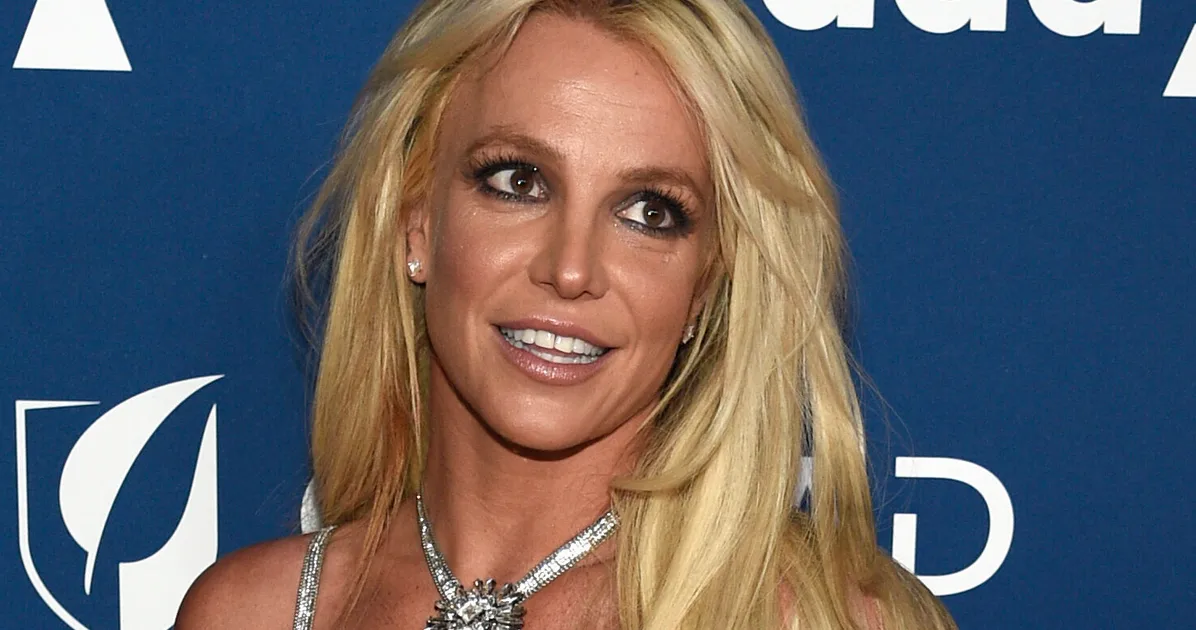
Britney Spears has reposted a video suggesting that her mother Lynne “failed” her.
On Sunday evening, a post on Britney’s X account linked out to a video from YouTube personality and pop culture commentator Julia Boateng, from what was described as her “‘stage mum’ series”.
“Really cool fans sent this to me… pretty interesting!” the …Baby One More Time singer’s post read, while seven hours later, a screenshot was shared from the same verified account, alongside the message: “Find the video!!!!! Extremely interesting words coming from this brilliant lady…”
In her introduction, Julia suggested: “I feel like Britney grew up in a family where performing well, keeping the peace and being useful was central and integral to her security. And Britney’s talent really became her family’s pathway to a better life, and I feel like Lynne repeatedly blurred the lines in supporting her daughter and depending on her.”
“This video is specifically taking a look at Lynne Spears, a figure in the Spears family that I feel like is talked about but not talked about nearly as much as [Britney’s dad] Jamie Spears, [sister] Jamie Lynne or any other family [member] or entity around them,” she continued.
Meanwhile, an official YouTube synopsis for the 27-minute video argued: “Lynne Spears has always been positioned as the ‘good parent’ in the Britney Spears story[. She’s thought of as] supportive, sidelined, sympathetic.
“But a closer look at her role in Britney Spears’ [conservatorship] tells a more complicated story. This video breaks down Lynne Spears’ relationship with Jamie Spears, her ties to [conservatorship] figures Lou Taylor and Sam Lutfi, her own memoir Through the Storm, and what her actions (and inactions) reveal once you follow the money and the timeline.”
Days earlier, Britney had shared another lengthy post on X criticising her parents, accusing them of keeping her from her two sons when she was still under the legal conservatorship put in place by her father in the late 2000s.
In the post, Britney also admitted that she felt she’d “failed as a mother” when one of her sons told her that he didn’t “personally believe in God”.
Following a high-profile legal battle, Britney’s conservatorship came to an end in 2021, with the Grammy winner having since spoken out against her mother, father and other family members on numerous occasions over their supposed part in the arrangement.
She also put forward her side of the story in her memoir The Woman In Me, which was released in 2023, chronicling her rise to fame, the many headline-grabbing moments she was part of during her time in the spotlight and, of course, the conservatorship that cast a shadow over the latter years of her career.
In 2022, Lynne wrote on Instagram: “Britney, your whole life I have tried my best to support your dreams and wishes! And also, I have tried my best to help you out of hardships. I have never and will never turn my back on you!”
“I hurt for you that you feel the people who love you the most betrayed you!” she previously said. “Let me come to you! I love you!”
A video posted by Lynne at the end of July saw her insisting that she loves “every bit of” her life, despite the “ups and downs” she and her family have faced.
Earlier this year, Britney checked into a rehab facility after being pulled over by the police and arrested while out driving in California, for which she was later convicted of dangerous driving.

Benjamin Netanyahu is in the “political fight of his life” right now, according to a former US ambassador.
The Israeli prime minister rejected Donald Trump’s 15-point Gaza peace plan on Sunday, delivering a major blow to the US president.
Netanyahu said his country’s troops will not withdraw from the Palestinian region until Hamas has been “genuinely” disarmed.
His remarks come weeks after Trump’s Board of Peace announced its pathway to finally end the conflict between Israel and the Palestinian militants.
David Satterfield, the ex-US special envoy for Middle East humanitarian issues, told BBC Radio 4 that Netanyahu had delayed his response to the proposals because he is stuck in a “dilemma” right now.
The American diplomat said the Israeli leader is torn between following domestic opinion and keeping the US president on side.
“He is in the political fight of his life. In many ways, it’s a personal fight as well, given the implications on the outcome of his court trial,” Satterfield told the Today programme.
A trial against Netanyahu began in 2020 over charges of bribery, fraud and breach of trust. He denies any wrongdoing.
Israel is facing a general election this October, too, and Netanyahu is running once again.
Satterfield continued: “He doesn’t want to do anything – whether it’s Gaza, Lebanon, Syria – that has any impact on his nationalist base, his right-wing coalition.
“He’s not going to support any kind of forward-leaning plan on Gaza.
“On the other hand, he doesn’t want to offend Donald Trump.”
The US is Israel’s strongest ally and Netanyahu called the American president a “great friend” on Sunday.
However, Netanyahu has also faced criticism from within Israel for supposedly allowing Trump to dictate what the country does.
Satterfield, previously the US ambassador to Turkey, continued: “Donald Trump – should he ever come out openly in opposition to prime minister Netanyahu that is beyond comments the president has made in the past – that in itself would have a very very negative impact on the prime minister’s political chances.
“He’s caught between the two. It was that dilemma that produced his long delay [in responding to the peace plan].”
A senior diplomat who is hoping to implement Trump’s peace proposals, Nickolay Mladenov, responded by saying discussions were ongoing in the hope of a “positive outcome”.
Satterfield also claimed that the White House has informally acknowledged Netanyahu is in a political campaign right now and was therefore offering up “rhetoric”.
He suggested the Israeli leader had offered some concessions to Trump by cutting back on his recent attacks in the hope of “mitigating displeasure from the president” – while simultaneously staking out a position which will please his nationalist base.
“Israel has to take credible and real steps to show they’re serious about the withdrawal from the 60-70% of Gaza they now control,” Satterfield said.
“It’s going to be very hard for the Israeli side. It’s going to be very hard for Hamas to accept as well.”
Listen to Commons People, the podcast that makes politics easy. Every week, Kevin Schofield and Kate Nicholson unpack the week’s biggest stories to keep you informed. Join us for straightforward analysis of what’s going on at Westminster.

UK Solar Eclipse And Meteor Shower: Where And When To Watch

Former Lady Vol leads Sparks in minutes against Golden State
11 Of The Most Reliable Electric Vehicles On The Market In 2026


-

 Fashion3 days ago
Weekend Open Thread: Mattifying Sunscreen
-

 Fashion3 days ago
Frugal Friday’s Workwear Report: Cap-Sleeve Pointelle Crewneck Sweater
-

 Sports4 days ago
Jordan Coyle & Cordiamo take Laya Arena Stakes at RDS
-

 News Videos2 days ago
Can Astrology Help Find Gold and Silver Trends? A Financial Astrology Guide
-
 Business5 days ago
US stocks: Dow closes at record on Mideast optimism; SpaceX, AMD drag Nasdaq
-
 Crypto World6 days ago
US Tech Stocks See Largest 5-Week Inflow in History: Can Nasdaq Break Its Downtrend?
-

 Politics4 days ago
Reform UK And Greens Sink To Lowest Favourability Ratings To Date
-

 Business5 days ago
Nvidia Stock Climbs 2.5% as Chip Sector Rally Builds Ahead of AMD Earnings, Nvidia’s Own Report Looms
-

 Crypto World6 days ago
Polymarket targets $20 billion valuation as competition heats up in prediction market sector
-

 Tech5 days ago
OpenAI, Anthropic AI agents targeted real people and systems in cyber tests
-

 Business5 days ago
Supply chain issues impact Ingredion
-
 Crypto World6 days ago
CLARITY Act Senate Vote Locked In, But 60-Vote Hurdle Looms Large
-

 Tech3 days ago
Rinn Pharma & Biopharma to join NordicPharmaTrain network
-

 Crypto World6 days ago
The Senate has one week: CLARITY’s last August window
-
 Crypto World5 days ago
Dow and S&P 500 Hit Records on AI Earnings: When Will the Bubble Burst?
-
 Crypto World7 days ago
California Wildfire Bets Expose Polymarket’s Dark Side
-

 Business1 day ago
How to Start a Cleaning Business: A Step-by-Step Guide
-

 Business1 day ago
Datadog: Best Of Breed For Multiple Reasons
-

 Business6 days ago
CNH Industrial Shares Jump Over 15% After Beating Estimates and Raising Full-Year Earnings Guidance
-

 Crypto World6 days ago
New York sued, who is next
You must be logged in to post a comment Login