Connect with us

Politics

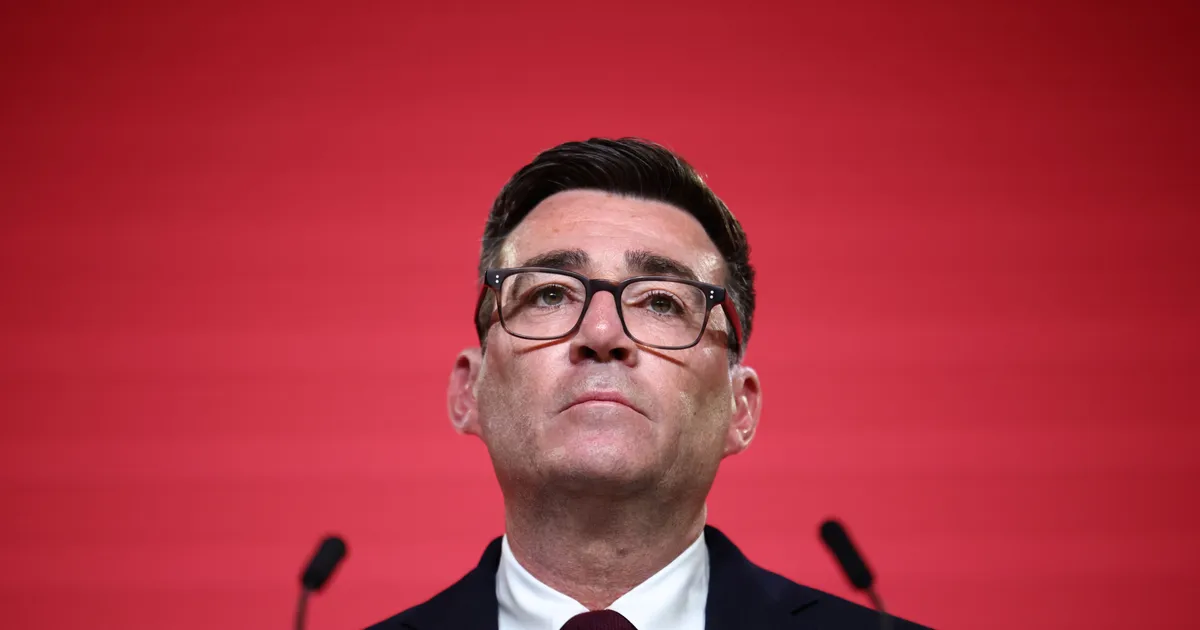
Andy Burnham Aims To Reduce Energy Bills For Voters

Published

on

Andy Burnham Aims To Reduce Energy Bills For Voters

Andy Burnham is set to unveil plans to bring down energy bills to give people “more breathing room” in their everyday lives.

The incoming prime minister has held talks with Treasury officials on how tackling the cost of living will be his number one priority in office.

Raising the threshold at which workers start paying income tax, as well as capping bus fares at £2, are other measures Burnham is considering as he seeks to hit the ground running in No.10.

Burnham, who became Labour leader on Friday, will become the UK’s seventh PM since 2016 when he takes over from Keir Starmer on Monday.

Advertisement

Starmer will formally tender his resignation to the King at Buckingham Palace before making his final address from the steps of Downing Street.

After his own meeting with the monarch, Burnham will then travel to Downing Street himself, where he will tell the nation that he is “acutely conscious” of the political turmoil which has engulfed the UK in recent years.

Burnham will say that he is “acutely conscious” of being the sixth prime minister to walk up Downing Street in just 10 years, and pledging to introduce a more stable and responsible politics.

He will describe the moment as one of “reflection and resolution”, saying Britain must be honest about the challenges it faces while demonstrating that it can once again be recognised around the world for effective government.

Advertisement

Burnham will say that political stability must deliver “tangible improvements in people’s lives”, and call for national unity to improve the country.

The new PM will then disappear behind the famous No.10 black door to put the finishing touches to his new cabinet.

Home secretary Shabana Mahmood is tipped to beat Ed Miliband to the crucial role of chancellor.

Miliband could become foreign secretary, while there will also be cabinet returns for Louise Haigh, Angela Rayner and Wes Streeting.

Advertisement

Listen to Commons People, the podcast that makes politics easy. Every week, Kevin Schofield and Kate Nicholson unpack the week’s biggest stories to keep you informed. Join us for straightforward analysis of what’s going on at Westminster.

Source link

Advertisement
Continue Reading
Click to comment

You must be logged in to post a comment Login

Leave a Reply

Politics

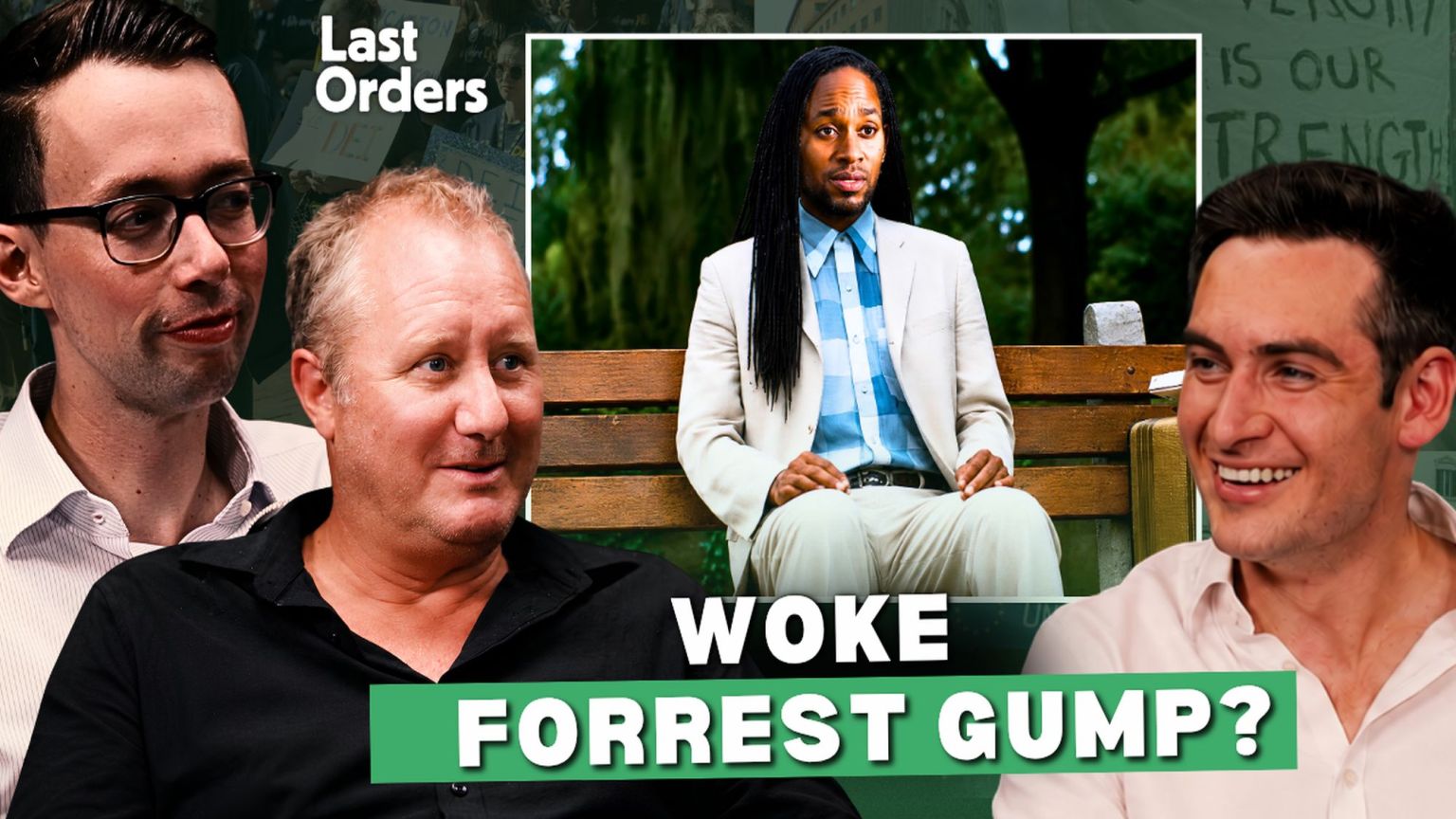
Jason Arday: the Forrest Gump of DEI?

Published

on

Jason Arday: the Forrest Gump of DEI?

The post Jason Arday: the Forrest Gump of DEI? appeared first on spiked.

Source link

Continue Reading

Politics

Allianz Ireland exec makes feeble attempt to defend funding genocide

Published

on

The Allianz sign erected on top of one of its premises

The Allianz sign erected on top of one of its premises

It is a question any parent with a conscience has no doubt asked themselves at this point: what will I tell my child when they one day ask what I did during the Gaza holocaust?

If he has any offspring, Allianz Ireland’s chief customer officer, Geoff Sparling, now has an answer he can give them: “I wrote a column in a national newspaper defending my company’s ongoing funding of the ‘Israeli’ war machine.”

Researchers have identified the Allianz crime family as the biggest foreign financier of the Zionist entity. Pro-Palestine campaigners in Ireland have placed particular focus on the company due to its sponsorship agreement with Ireland’s largest sporting body, the Gaelic Athletic Association (GAA).

Sparling might continue: “Not only that, kids, the column in question was an utterly shambolic effort, riddled with non sequiturs and facile nonsense.”

Advertisement

The primary target of Sparling’s ineptitude is the meticulous Economy of Genocide report from the brilliant UN special rapporteur, Francesca Albanese. Despite the man’s attempt to claim Allianz Irelands dealings with so-called ‘Israel’ are “legal”, Albanese made clear that pumping money into the apartheid settler-colony amounts to “joint criminal enterprise“.

Allianz Ireland can’t be separated from criminal parent company

Starling goes on to abdicate responsibility by saying:

Allianz is cited primarily through Allianz-owned asset manager PIMCO’s holdings of Israeli sovereign bonds and alleged investments in multinational companies identified in the report. Allianz Ireland has no investments or underwriting activities in the Middle East.

This pathetic attempt at sleight of hand won’t wash, however.

PIMCO might be the main player in funding the Tel Aviv terror regime, but as an Allianz-owned company, it is making money for Allianz. Furthermore, the fact that Allianz Ireland doesn’t invest in ‘Israel’ themselves is irrelevant. As part of the Allianz corporate entity, the insurance company benefits from the success of the entire company.

Advertisement

It promotes the Allianz brand, most notably through the GAA’s shameful partnership with the German finance behemoth.

Sparling proceeds to paint a rosy picture of Allianz’s role in Irish society. He said:

It is the claims handler helping a family rebuild after Storm Éowyn, the underwriter supporting local businesses and the volunteers coaching under-age GAA teams every weekend. That has been Allianz’s place in Irish life for almost a century.

Millions of people entrust Allianz with their savings, pensions and investments. Our responsibility is to manage them professionally, prudently and within the law.

Firstly, Allianz Ireland receives largely middling reviews from the Irish public. It is not the beloved institution outlined above. Furthermore, this is all utterly irrelevant to the matter at hand: Allianz’s funding of Zionist atrocities.

Advertisement

The company’s Irish arm could spend every millisecond of every day helping old ladies across the road and rescuing cats from trees; it wouldn’t make up for the fact that it is promoting, making money for, and receiving money from, a global corporate entity that is financially aiding the worst crimes imaginable.

Allianz executive misleads again and again

Sparling goes on to repeatedly frame campaigners’ primary grievance as being that Allianz is “responsible for” the actions of the ‘Israeli’ regime, as if Allianz executives are whispering prospective strategies into Benjamin Netanyahu’s ear. This is not the claim.

Once again, the argument made by experts like Albanese and Irish campaigners is that entities like Allianz are culpable by providing the funding to the settler-colony’s economy. Funding that can then be used to buy the bombs used to wreck Gaza, and pay the salaries of the Israeli Occupation Forces (IOF) — the murderers that drop those bombs.

A straightforward thought experiment proves the point — were the likes of Allianz, and all other companies not to pump money into the apartheid entity, would it have the financial means to continue its crimes?

Advertisement

A straightforward look at history confirms what one ought to conclude when doing the above — the collapse of apartheid South Africa stemming from boycotts. That effort really gained pace when previously complicit financial institutions like Barclays Bank pulled out of the racist state.

Govt inaction doesn’t excuse corporate criminality

Sparling went on to say:

None of the relevant institutions – including the United Nations, the European Union, the United States or the Government of Ireland – has prohibited the activities at the centre of this debate.

This shameful abdication of responsibility is precisely why grass-roots campaigners have focused attention on local complicity by the likes of the GAA. It is why they attempt to hold companies to account, in the hope that with enough low level pressure, eventually states will start to fulfil their responsibilities. That would mean enacting sweeping sanctions against the criminal pseudo-state squatting on historic Palestine.

Sparling might have thought finally breaking cover to defend Allianz Ireland was a smart move, but all this feeble effort has done is heap embarrassment upon the existing shame. That the Irish Independent was willing to publish this shit is a damning indictment of its editorial standards. Facilitating an attempt to whitewash holocaust funding is an indictment of its moral standards.

Advertisement

It is a disgrace it too will struggle to explain to future generations.

Featured image via Irish Times

By Robert Freeman

Source link

Advertisement
Continue Reading

Politics

Property and poverty dominate Manchester’s mayoral election politics

Published

on

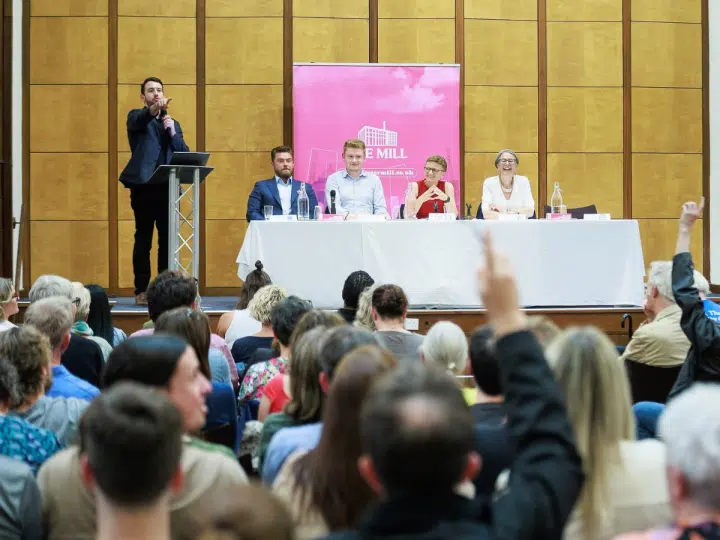
From behind the rows of people, the Manchester politicians are photographed on a long table with mics on the stage while a man, seemingly the host, points at the crowd with their hands up at Mill Media's hustings

From behind the rows of people, the Manchester politicians are photographed on a long table with mics on the stage while a man, seemingly the host, points at the crowd with their hands up at Mill Media's hustings

Two phrases — housing and affordability — sung out across Greater Manchester’s mayoral election. Perhaps unsurprisingly, they’ve dominated more than anything else in manifestos, hustings and social media alike.

In my view, these two terms are polished, neoliberal-era euphemisms for what we’re really talking about. These underlying, harder-hitting phenomena are actually: property (ownership) and poverty (often, lack of ownership). I think it’s time that we collectively note that point, first things first.

But even if there’s a hesitation to talk about property and poverty as such, they are still being discussed. One more remarkable aspect of my weeks covering this mayoral by-election is just how much different parties agree on this. It seems, no matter who you ask, politicians know this really matters to ordinary voters.

This year’s dramatic, fiery parliamentary by-elections clearly became proxies for national politics. Gorton and Denton became an outlet for dissatisfaction with Labour among younger, professional, urban and Muslim voters. Makerfield became a referendum on Keir Starmer, leading to his swift replacement. Both results, thankfully, showed far-right Reform UK and further-right splinter Restore/Advance where to go.

Advertisement

But unlike national or even local elections, or especially those by-elections, Greater Manchester apparently agrees on plenty in this mayoral race. All parties sing from similar hymn sheets on material issues.

Manchester-ism meets materialism

Imagine my pleasant surprise when Conservative mayoral candidate, Phil Eckersley, said at the Mill hustings we must “build affordable housing across Greater Manchester”.

And that Labour, in power and if given another mayoral term needs to do something about the housing crisis across the region.

Advertisement

Eckersley also said that we must keep community spaces and not just sell them off. This is somewhat rich, coming from a councillor of the party of Thatcher and Cameron, but it’s still a very welcome point.

Lib Dem candidate, councillor Richard Kilpatrick, likewise put “affordability” central in his opening pitch and “vulnerability” central in his closing speech. These are both proxy terms for poverty — the latter gets slightly closer to being on the money.

Again, for a representative of the party which used its only time in power under Nick Clegg to raise VAT and lower high earners’ taxes, this is a bit rich. Not to mention saddling a generation of young, educated workers with hefty student loan debts. But still, the point stands.

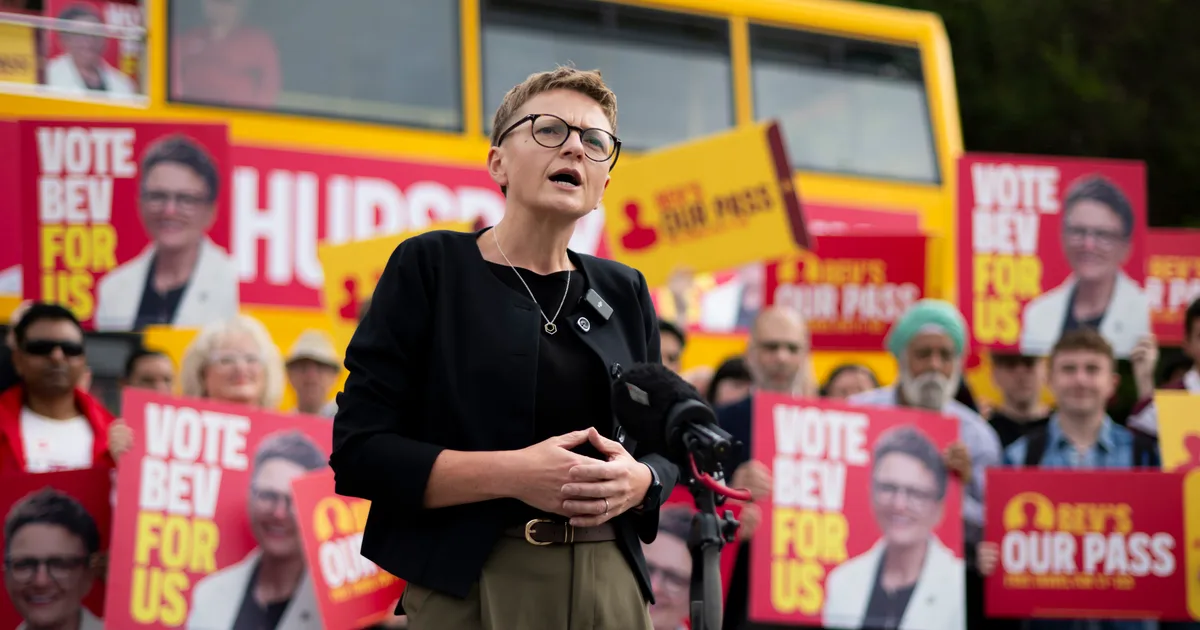
Labour mayoral hopeful Bev Craig, who began sharing her Belfast-area council estate credential recently, made similar points during the debate. In her opening speech, she presented a plan that is “ambitious [and] radical” which “puts money in people’s pockets”.

Advertisement

That phrase — “putting money in people’s pockets” — was used repeatedly throughout her campaign.

Unfortunately for Craig, her top pledge of a continued £2 bus fare cap was pinched by Andy Burnham for national rollout. This left Craig offering a less ambitious 11-18 year-old free bus policy, compared to the Green Party’s promise of free buses for all under-22s. Not sounding too “radical” then.

Speaking of Greens, candidate Geraldine Coggins was ahead of the others with their committed plans to put affordability central in the campaign and manifesto. This involved public transport policies, help for town centres, charities and small businesses, and most of all an affordable public housing scheme.

Reform’s landlord candidate, Sian Astley, dramatically dodged the Mill‘s hustings. However, Mill staff say that her policy platform centred around immigration policies which fall outside the mayor’s remit. Desperate though Reform is to wedge immigration into every debate, this one clearly missed the mark.

Advertisement

Labour and Reform dodge Manchester mayoral election community hustings

Labour’s pitiful property record

Where Bev Craig lacks ambition in her bus policy proposal, she appears to be trying to outdo the Greens on addressing housing. Craig has promised 50,000 new homes as mayor, with 10,000 “in the pipeline” by 2028.

By contrast, Coggins is promising 20,000 — 10,000 built over time, and 10,000 bought and retrofitted more immediately. Importantly, Coggins commits to keeping these as council homes. On the surface, it seems less ambitious, but if Labour’s record is anything to go off, that change could be needed.

Advertisement

Here’s the thing: Craig and Labour have a housing record in Manchester. It’s not good. Note that the Times has described Craig as the “brains behind Andy Burnham.” If it’s his record, then it’s hers — she “worked really closely” with Burnham since she was elected City Council leader in 2021. So it’s their joint Labour record which has given rise to Coggins’ repeated promise to “take Greater Manchester back from ‘big money’”.

Across Greater Manchester, and nowhere more than in the city centre, rent is the number one outgoing cost for many households. Rent costs an average of 38% of an average household’s salary in the region. That’s up from 29% just a decade ago, when Burnham took office.

In the city centre borough, that figure has risen from 39% to a whopping 44% in the same period. No other council area in England or Wales has been hit harder than Salford during that timeframe. It’s a shameful direction of travel: private landlords profit at ordinary people’s expense.

This is where relations of property — who owns and who doesn’t — creates conditions for poverty. It’s where housing and its possession creates ‘cost-of-living’ or ‘affordability’ crises of dispossession.

Advertisement

Zöe Bread shows us that ‘Manchesterism’ is neoliberalism

Who is Manchester’s development for?

Craig says that more affordable homes were built across the city in 2024 alone than in any other year in the previous 15. That’s not a particularly high bar as only a few hundred have been built in a decade.

As chair of Greater Manchester Combined Authority (GMCA), Burnham handed nearly £1 billion in loans to private developers. For that, the GMCA development fund has received only 500 affordable homes out of some 11,000 built. Relatedly, homelessness levels have risen to the same peak they were when Burnham took office.

Advertisement

Notoriously, Burnham’s close ally, Daren Whittaker of Renaker, was given more than £600 million and built nothing affordable. Not a single affordable home, only luxury flats. Even the Tory candidate picked this up:

Two-thirds of GMCA money has gone to luxury developments.

Something about the Tories’ £10 billion in VIP fast-track Covid contracts comes to mind, but even he is right on this. The centi-million-pound Renaker loan is now even facing a Supreme Court challenge from a competitor for how it was awarded. (In fairness, this means the challenge didn’t win at the Court of Appeal.) On top of that, one barrister has alleged that the No.10 North deal might be unlawful too.

Apparently, Craig’s team just “picked a big number” — 50,000 homes — “because it sets an ambition” (see circa 43 mins here). Not because she believes it’s achievable, or because it provides the necessary affordable housing, seemingly. Any hopes for much change are not looking promising either.

Asked how she would differ as mayor from a man who is synonymous with the role, Ms Craig told The Independent: “There will always be an element of continuity.”

So, between suspect contracts and a record of failure, it’s quite a lot to expect much change with Bev Craig. And we can be certain that landlord Sian Astley, whose Reform PLC boss Richard Tice is a property development mogul, isn’t coming to save Manchester either.

Advertisement

Coggins: ‘Equal societies are happier societies’

Property and poverty will continue to dominate Manchester’s politics until someone is willing to address them as they exist. Though she won’t be Manchester mayor, Coggins at least saw this clearly. As one of only two mayoral candidates to show up to a cost-of-living/ housing/ affordability hustings, she said:

We hear so much about period poverty, bed poverty, fuel poverty, or food poverty. But at what point do we admit that these are all just about poverty and inequality?…

Equal societies are happier societies…They work for us all.

Featured image via Joel Goodman/ the Mill 

Advertisement

By Cameron Baillie

Source link

Advertisement
Continue Reading

Politics

It might take ‘a lightning bolt from God’ to get these Senate Democratic hopefuls to bow for independents

Published

on

It might take ‘a lightning bolt from God’ to get these Senate Democratic hopefuls to bow for independents

Democrats vying for a pair of deep-red Senate seats are facing increasingly desperate calls from within their party to step aside for more promising independent candidates.

But they say they won’t drop out — unless there’s divine intervention.

Democrats Alani Bankhead of Montana and Julian Beaudion of South Dakota both told POLITICO they have no plans to exit the race, despite pressure from national — and even some state — Democrats to step aside. Numerouspolls, coupled with strongerfundraising and campaign operations, show independents Seth Bodnar and Brian Bengs have a stronger — if still muddied — path to victory in November.

If the Democrats stay on the ballot, it will be almost impossible to claw these seats away from Republicans in Mountain West states that President Donald Trump dominated in 2024.

Advertisement

“I’m a person of faith. If a lightning bolt from God struck me and was like, ‘Alani, get out of the race,’ sure,” Bankhead told POLITICO when asked if anything would change her mind. Otherwise, she said there’s “absolutely nothing.”

Beaudion has a similar resolve: “To be clear, we are not considering dropping out of the race,” he told POLITICO.

By digging in, the Democrats could imperil their party’s hopes of regaining Senate control in an already uphill cycle. There’s broad agreement across the many factions of the Democratic Party that a crowded race relinquishes any hope of victory. Bengs has argued that Beaudion remaining on the ballot jeopardizes his chance of winning this fall against GOP Sen. Mike Rounds. Bodnar has maintained he has a viable path either way, and he could be helped out if the Libertarian candidate in the race pulls votes from Republican Kurt Alme.

The deadline to withdraw in South Dakota is Tuesday, and Montana’s is shortly after, on Aug. 10. Democrats across the ideological spectrum in Washington and their home states are calling on Bankhead and Beaudion to step down to help their party bank-shot a Senate majority, with the idea that a victorious independent candidate could caucus with a future Democratic majority — or at least not party up with Republicans.

Advertisement

“The math is inescapable. If it’s impossible for a Democrat to win, it is vital that the Democrats step aside and give the independent at least a shot of beating the Republican,” said Matt Bennett, a co-founder of the centrist Democratic think tank Third Way. “Beating the MAGA Republicans is priorities one, two and three. Who we beat them with is pretty far down the list.”

Democrats have already had some luck setting up one-on-one independent vs. Republican matchups in other Trump-won states. The Democratic candidate in Nebraska withdrew to pave the way for independent Dan Osborn — though an ongoing court case from a Democratic anti-abortion pastor could complicate things. And Idaho’s Democratic nominee recently dropped out in favor of independent Todd Achilles.

“Knowing that your campaign is not gonna break through, and just being able to recognize that is probably the hardest thing of all,” Achilles said of Democrat David Roth’s decision to step down. “I do appreciate what David did in Idaho.”

Bankhead and Beaudion insist they can win, even despite the headwinds. Bankhead expects to ride the anti-incumbency and pro-outsider wave into office, and Beaudion credits his relationships with voters throughout the state.

Advertisement

“Nobody ever knows what’s actually going to happen in an election,” Bankhead said. “The people decide on November 3.”

But Idaho and Nebraska Democrats reached a conclusion that Bankhead and Beaudion did not: The party’s brand is so tarnished in their states that the “D” label on the ballot line provides no viable path to victory.

“I am a professional partisan Democrat, and I have every incentive to be on the Democrat’s side here,” said Pat Dennis, president of American Bridge 21st Century, an opposition-research firm. “But ultimately, the priority is to take the Senate majority away from Republicans. In some states, that path is very difficult to impossible for a Democrat. In those cases, it is both strategically and morally correct to take the path that is most likely to achieve the goal we’re going for.”

Faiz Shakir, a longtime adviser to Sen. Bernie Sanders (I-Vt.), did not go as far as to call for Bankhead and Beaudion to step aside. But he agreed that there’s real opportunity for independents who aren’t stuck with the Democratic brand’s baggage.

Advertisement

“Being someone who’s not associated with the two-party system right now helps you greatly in many parts of this country, particularly those that have much more rural and conservative tendencies,” said Shakir. “There’s frustration and anger with Trump, and there’s not as much of a love and appreciation for the Democratic Party.”

Shakir also said that competitive races in these red areas — even if the independents can’t pull off a win — could force Republicans to pull much-needed resources out of battleground races in order to defend their turf.

But he also offered a warning to his party: Talking too much about the independents’ strong fundraising and establishment backing risks tying them to the “donor class” and turning them “into a worse version of what people assumed of a Democrat.”

“You gotta give them the space to be both independent in mind and in spirit,” he said. “The argument for them is truly that they are building a movement in the state that people are hungry for, and that in the support of those people, they’re finding resonance. And that would be the argument for a Democrat to step aside.”

Advertisement

Republicans, meanwhile, are working to paint the independents and Democrats as one and the same. They’re also trying to elevate the Democrats in an attempt to stop the independents from gaining more traction: Trump on social media attacked Bankhead in July, ignoring Bodnar entirely.

“Democrat-backed independents all support the same socialist policies and middle-class tax hikes that made Democrats toxic across the country,” Joanna Rodriguez, the communications director for the National Republican Senatorial Committee, said in a statement. “Republicans will defeat them in November.”

The inside calls for Beaudion and Bankhead to step aside aren’t just coming from Washington. Many local Democrats in Montana and South Dakota have said publicly they should not continue their campaigns. Nancy Keenan, the former executive director of the Montana Democratic Party who has endorsed Bodnar, wrote in a June op-ed that “there is not a viable path for a Democratic victory in this race.”

Bennett, the Third Way co-founder, went further, saying if Democrats fail to flip the Senate in November, the blame would lie at the hands of Bankhead and Beaudion.

Advertisement

“If we fumble away a majority because these no hope candidates are too vain to get out of the race, that’ll be a political calamity,” he said. “These people need to understand that they will become pariahs.”

Bankhead doesn’t see it that way.

“I’m not swayed by it because I’m not here for power and money,” she said. “It’s still the old, rich D.C. powerful political circles that are trying to keep more progressive candidates out of the fight so they can maintain the status quo.”

Source link

Advertisement
Continue Reading

Politics

US mocked after mislabelling every country in Africa on AIDS conference map

Published

on

Black male's hand points to Africa on the world map as a black boy looks on from the side with his hand covering his mouth

Black male's hand points to Africa on the world map as a black boy looks on from the side with his hand covering his mouth

A US government delegation to an AIDS conference mislabelled every nation in Africa on a map it used during a presentation.

Audience members at the conference in Brazil naturally snapped the bizarre map and shared it online.

A Reuters analysis found:

The image of the map included ⁠in the presentation contained an artificial intelligence watermark that signals it was made with OpenAI tools. The ​company said it was investigating the report.

The state ‌department said it took “full responsibility” ‌for the confusion caused and that the map had been produced by a team member who hastily changed ‌the slide deck before the event.

Advertisement

While the Guardian said:

The map showed Nigeria, where the US currently has several hundred troops deployed, as landlocked in the Sahara desert. Mozambique, which is in south-eastern Africa, was relocated to the Horn of Africa, while Côte d’Ivoire in west Africa was placed on the other side of the continent.

Africa map created ‘confusion and misrepresentation’

The US State Department told reporters:

Advertisement

We take full responsibility for the confusion and misrepresentation it caused for attendees, including our African partners.

Democratic member of the US Foreign Relations Committee, Jeanne Shaheen, wrote:

What an embarrassment. This is what happens when [the State Department] fires career experts and tries to have AI conduct diplomacy.

The Atlantic Council’s Matt Petit, who was at the conference, added:

This is beyond embarrassing. It shows a profound lack of professionalism and care for the subject.

Problem is, none of these countries are right. In many places, they are comically wrong.

Petit continued:

Advertisement

I strongly suspect this is an AI-made slide. Whoever created and approved this slide did not know where countries in Africa are and did not care to check their work. That latter point means they also *did not care enough* about the subject matter to bother.

On a more serious note, Donald Trump’s administration cut aid to AIDS programmes in January 2025. A move which NGO workers described as seeing “progress slip backwards”.

Considering the US’ role as global hegemon, one might think it’d look at a map once in a while. And given that some of the nations misplaced on this AI map currently have US troops in them, Marco Rubio’s state department has questions to answer.

Featured image via Yan Krukau/ Pexels

By Joe Glenton

Advertisement

Source link

Continue Reading

Politics

FIFA scraps World Cup privatisation plan following international pressure

Published

on

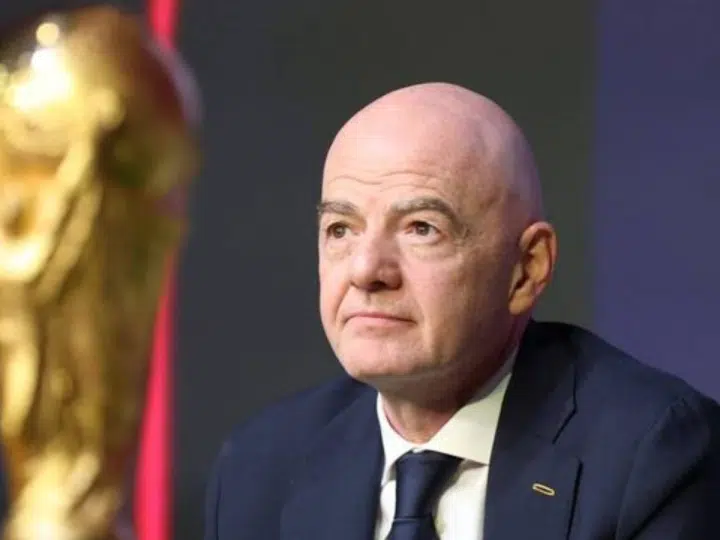
FIFA president Gianni Infantino with a neutral expression in suit and tie and in the foreground is a partially shown and blurred golden World Cup trophy

FIFA president Gianni Infantino with a neutral expression in suit and tie and in the foreground is a partially shown and blurred golden World Cup trophy

Gianni Infantino has officially announced he is scrapping the controversial FIFA Forward Enterprise (FFE) following widespread objections to the commercial project.

In an official statement attributed to Infantino, he confirmed that FIFA would not proceed with the project, noting that consultations with member associations and stakeholders had revealed a lack of sufficient consensus to support selling shares to private investors.

However, it emphasised that the dialogue would continue regarding any future initiatives aimed at boosting revenue and developing international football.

FIFA didn’t anticipate such backlash

The FFE project was one of the largest investment initiatives launched by Infantino, aimed at establishing a new commercial entity to manage the commercial rights of FIFA tournaments.

Foremost among them was the World Cup, with the possibility of selling up to a 20% stake in the company to external investors.

Opponents argued that bringing in external investors to manage the commercial rights of the sport’s most important tournament could pave the way for the privatisation of some of FIFA’s assets. There were also fears this would grant the private sector unprecedented influence over the future of international competitions.

Advertisement

UEFA led the opposition, arguing that it undermines the independence of the football governing body. Several national associations also raised similar objections, amid warnings that pressing ahead with the plan could lead to an unprecedented split within the football community.

Even Andy Burnham lent his voice to the opposition, claiming that Infantino “is not the right person to lead FIFA”.

The prime minister called for his resignation and emphasised that football “belongs to the fans and is not the property of investors”.

However, Infantino has always maintained that the FFE was not a plan to sell off the World Cup.

Advertisement

A blow for Infantino and his future

The decision to backtrack is seen as a major setback for the FIFA president and now there are doubts as to whether he will continue in this role after March 2027.

By scrapping the plan, FIFA has succeeded in containing a crisis that was on the verge of escalating. However, this U-turn has simultaneously exposed the limits of Infantino’s ability to push through strategic initiatives without securing broad consensus within the global football community.

Featured image via Central FM

By Alaa Shamali

Advertisement

Source link

Continue Reading

Politics

What Does ‘PDF’ Stand For?

Published

on

The origins of the PDF go back to the early 1990s.

You’ve probably sent and opened thousands of PDFs over the years. But if someone asked you right now what PDF actually stands for, would you know the answer?

You’re not alone if you don’t. The word has become so embedded in everyday language that most people use it the way they use terms like “Wi-Fi” and “pm” ― automatically and without any particular thought about what the letters mean.

But it’s never too late to learn the answer to that mystery, as well as the interesting history behind those three letters. (And no, it doesn’t stand for “Please Download Fast” or “Pretty Delightful File.”)

“PDF stands for ‘portable document format,’ though I’m not sure anyone knows or cares anymore,” said Lisa Gitelman, a media historian and professor at New York University. “’PDF’ stands as the name of a digital file format on its own.”

Advertisement

She has written extensively about the PDF as a cultural and technological artifact, including in her book Paper Knowledge: Toward a Media History of Documents.

“The keyword is ‘portable’ because the format was designed to keep a document looking exactly the same, no matter which computer, operating system or device it was opened on,” said Madeline Enos, a language trends expert at the language learning app Preply.

“Before PDFs became widespread, sharing documents could be frustrating because fonts, images and layouts often changed depending on the software being used. The PDF solved that problem by preserving the original formatting, which is why it’s still one of the most trusted file formats over 30 years later.”

The origins of the PDF go back to 1991, when Adobe Systems co-founder John Warnock proposed a project called “Camelot” with the goal of developing a simplified way to view and print any document across devices and platforms, regardless of the software or hardware used to create it.

Advertisement

“At the time, the web was far less standardised than it is today, so creating a document that looked identical everywhere was revolutionary,” Enos noted.

Warnock’s Camelot project culminated two years after his original proposal, with the release of PDF 1.0, bundled with the first version of Adobe Acrobat.

The origins of the PDF go back to the early 1990s.

merovingian via Getty Images

The origins of the PDF go back to the early 1990s.

“PDF first appeared in the marketplace in 1993,” said Duff Johnson, CEO of the PDF Association. “Adobe, which invented PDF, continued its development until 2007, at which point the specification for PDF was handed to ISO for international standardization as a vendor-neutral technology.”

As the online environment has evolved significantly since the ’90s, so too has the PDF, Gitelman noted. Still, the file format remains an important standard.

Advertisement

“I once wrote an essay laying out four reasons for its enormous success,” Gitelman said. “First, PDFs offer page images – like facsimiles, like xeroxes, like microfilm, unlike word processing files or most proprietary eBook formats. This means they feel stable. They retain layout as well as content. Second, as page images, they are handy in publication workflows. Every book, every analog publication, has been a PDF somewhere in its life history. Third, they are easily transmissible across digital networks, even in low-bandwidth environments.”

The fourth and final reason: PDFs are searchable, she added.

Today, people still use the term PDF in everyday conversation, particularly in the context of work.

“We’ve certainly noticed that ‘PDF’ is used synonymously with ‘document’ and ‘file,’ as in ‘I sent him a PDF’ and ‘The email includes three PDFs,’” Johnson noted. “But the industry accepts such usage as the price of ubiquity.”

Advertisement

Many people also say “PDF file,” which is not quite redundant, as in the case of “PIN number” or “ATM machine.” But the term PDF does stand alone.

“Most people don’t stop to mentally unpack what the letters stand for, so adding ‘file’ simply makes the meaning clearer,” Enos said.

Still, the meaning is quite clear to most people these days.

“Most acronyms stay within specialist industries, but PDF made the rare jump into everyday language. Today, people don’t just recognise the letters – they also use ‘PDF’ as a verb,” Enos said. “It’s increasingly common to hear someone say ‘Can you PDF it?’ or ‘Just PDF that document,’ showing how technical abbreviations can become everyday words over time.”

Advertisement

This is a process known as lexicalisation, as the abbreviation became so familiar that it was accepted as a normal standalone word in the English language.

“While countless digital buzzwords have come and gone over the past three decades, ‘PDF’ has remained relevant because it describes a format rather than a trend,” Enos said.

The meaning of PDF has hardly changed over time, and it has gone international as well.

“PDF is one of the few digital abbreviations that has become almost completely language-independent,” Enos said. “Whether you’re in the UK, Japan, Brazil or Germany, the acronym ‘PDF’ is almost always recognised and rarely translated.”

Advertisement

Thus, PDF has essentially become a universal language in some ways.

“It’s a good example of how technology creates a shared international vocabulary,” Enos said. “Even people who don’t speak the same language often understand terms like PDF, Wi-Fi, USB and GPS, making them some of the closest things we have to truly global words.”

Source link

Advertisement
Continue Reading

Politics

Five Tasty Spritz Alternative To Aperol And Campari And Where To Get Them Cheap

Published

on

Five Tasty Spritz Alternative To Aperol And Campari And Where To Get Them Cheap

We hope you love the products we recommend! All of them were independently selected by our editors. Just so you know, HuffPost UK may collect a share of sales or other compensation from the links on this page if you decide to shop from them. Oh, and FYI — prices are accurate and items in stock as of time of publication.

If you’re anything like me, the mark of summer arriving is that first urge to run to the pub and order an Aperol or Campari spritz.

Obviously, I’m not alone: the demand for aperitif has surged over the past year, so much so that Aperols account for 13.6% of all cocktails served in the UK.

Advertisement

It’s true: Aperols have dominated the spritz world for a while. And it makes complete sense, the sparkly drinks are a perfect blend of sweet and bitter.

But sometimes, you want something a little different. It just so happens to be National Spritz Day today, and if you’re wondering what to drink, here are five of the best alternatives to Aperol or Campari to celebrate this sunny weekend.

Masters of Malt

If you’ve not had a Hugo spritz, it’s time to come back down to earth. It’s in the running for drink of the summer, and is essentially an adult elderflower cordial – so it’s refreshing, too.

If you’re after something that a little more balanced than a bitter Campari or sweet Hugo, this pomelo and elderflower spritz falls right in the middle. While it’s perfectly delightful by itself over ice, adding a splash of prosecco and soda water turns it into a fresh and vibrant spritz.

Forget about the saying that good things don’t come easy. They do. Namely: this blackberry spritz in a can, that not only tastes delicious, but does good too. Turning your evening tipple into a functional drink, it’s loaded with vitamin B, vitamin C, magnesium and zinc. Who knew it was possible?

Not a fan of orange? This light and lemony take on a classic spritz is ideal for limoncello fans. But, made with dehydrated lemons, it’s much more savoury than an Aperol or Limoncello spritz. Not to mention, you don’t need to splash out on prosecco every time you want one – all it needs is a dash of soda water.

Masters of Malt

Caorunn Small Batch Gin

While a humble G&T might do the job just fine, for a more summery take on the tipple, mixing a pink lady cordial or cloudy apple juice and lime in, too. The crispness of the apple will bring out the juniper flavour, and you can also convince yourself it counts towards one of your five a day.

Advertisement

If you’re thinking: fuck that, I want my Aperol, we get it! To help you get your fix (drink responsibly, folks) we’ve rounded up the best spots to get cheap (or free) Aperols this summer.

Best spots for cheap and free Aperol and Campari spritz this summer

  • £5 Campari Spritzes throughout August at Bar Brasso
  • First 25 Spritz free plus 2 for £16 on all Spritzes all weekend of 1st August
  • Daily 2-for-1 Campari Spritzes at Lina Stores Broadgate Circle
  • A complimentary small plate with every Campari Spritz at Bar Termini
  • Campari terrace at Kimpton Fitzroy Terrace running until the end of September
  • Racks Bar & Kitchen (Bar & Restaurant) – 2 for £14 Aperol SpritzesRacks
  • Bar & Kitchen (Bar & Restaurant) – 2 for £14 Aperol Spritzes
  • Holywell Beach Bar (Beach Bar) – 2 for £15 Spritz
  • The Alchemist (Bar & Restaurant) – Brunch Menu & Happy Hour (2 for £10 Spritzes)
  • Comptoir Libanais – First 50 Aperol Spritzes free on arrival
  • Electric Shuffle – £7 Spritzes & reduced Spritz
  • Flight Club – £7 Spritzes & reduced Spritz

Source link

Advertisement
Continue Reading

Politics

Taking These Medications Abroad Could Land You In Hot Water

Published

on

Taking These Medications Abroad Could Land You In Hot Water

If you’re anything like me, you pack half your medicine cupboard before going away on holiday ‘just in case’.

But if you’re planning to venture abroad anytime soon, a pharmacist has warned that common prescription and over-the-counter medicines could result in confiscation, hefty fines, or even arrest in some countries.

So, make sure to do your homework before you travel.

Ian Budd, lead prescribing pharmacist at Chemist4U, said: “Most people don’t think twice about packing their regular medicines for a holiday, because they assume that if something is legal in the UK, it will be legal everywhere else.

Advertisement

“Unfortunately, that’s not always the case. Every year, travellers are caught out by medication restrictions they didn’t know existed.

“In some countries, medicines we consider completely routine in the UK can be treated as controlled substances, even when they have been legitimately prescribed by a doctor.”

Medicines to be wary of when packing your suitcase

1. Codeine, and any painkiller containing it (e.g. co-codamol).

Advertisement

This is considered a controlled substance in many countries. In the United Arab Emirates (UAE), it’s led to confiscation, detention and in some cases, prosecution, said Budd.

2. Diazepam and other benzodiazepines

The medication, used for anxiety and sleep, is restricted in several destinations.

Budd noted that in Singapore, bringing these in without a Controlled Drugs Permit from the Health Sciences Authority “is treated as a drug-import offence, and can carry fines or imprisonment, even with a valid UK prescription”.

Advertisement

3. Pregabalin and gabapentin

These are used for nerve pain and are controlled in the UAE. Without a prescription and a doctor’s letter, they can be confiscated and, in serious cases, lead to arrest.

4. ADHD medicines

Several countries, including Japan, ban amphetamine-based medicines outright, even with a valid foreign prescription.

Advertisement

5. Strong opioid painkillers (e.g. morphine, oxycodone)

Many countries treat these as controlled drugs – without the right documentation, they can be seized, and in some cases, lead to detention or prosecution.

6. Cold and flu remedies containing pseudoephedrine

Some of these are restricted or banned in a handful of countries, including Japan.

Advertisement

What to do before you go away

The pharmacist urged travellers to be aware of the extra steps needed so a routine prescription doesn’t turn into a stressful situation at the border.

“My advice is to check the rules for your destination as soon as you book your trip, rather than the night before you travel,” he said.

“That gives you enough time to speak to your GP or pharmacist, get any paperwork sorted, and travel with confidence.”

Advertisement

The UK government warns that people can be fined or even go to prison if they travel with medicine that is illegal in another country. It advises checking with the embassy of the country you’re going to before you travel – you might require a permit or supporting documentation to take your medication in with you.

For example, travellers must get approval in advance from the UAE Ministry of Health to bring medication – applications are generally processed within five working days.

Budd recommends asking your pharmacist for a short covering letter confirming your name, dosage and how much medicine you’re carrying. This, he said, “is often enough to avoid questions at customs, especially for controlled medicines such as codeine, tramadol or diazepam”.

The pharmacist also recommends keeping medicines in their original packaging when travelling, with the pharmacy label attached, as loose tablets in a pill organiser are hard to identify if you’re stopped at customs.

Advertisement

“Make sure to check any countries you’re passing through, not just your final stop,” added the expert. “These rules apply to layovers too, so check the requirements for any country you’ll pass through, even if you’re not leaving the airport.”

Source link

Advertisement
Continue Reading

Politics

Labour Wins Greater Manchester Mayoral By-Election

Published

on

Labour Wins Greater Manchester Mayoral By-Election

Labour’s Bev Craig has won the Greater Manchester mayoral race in a significant moment for the party.

After none of the candidates secured over 50% of the votes in the first round – though Craig came close with 47.1% – the second-preference votes were added.

Once all the other candidates had been knocked out, Craig beat Reform’s Sian Astley by 309,525 to 157,178.

In her victory speech, Craig said: “I will defend this city region with every bone in my body and I will fight for a better life for all of us.”

Advertisement

Craig’s victory means Labour has managed to hold onto the seat ever since it was established in 2017, though this contest marked the first time Andy Burnham’s name was not on the ballot paper.

He resigned as Greater Manchester mayor after winning the Makerfield by-election earlier this month.

The so-called “King of the North” was serving his third consecutive term as the regional mayor but was looking to win a seat in the Commons which would give him the chance to oust Keir Starmer.

Burnham’s success in the by-election meant he became an MP again after a nine-year absence from Westminster.

Advertisement

Within a month he had been chosen as the leader of the Labour Party and de facto prime minister.

The mayoral by-election was his first electoral test as prime minister.

It coincided with a boost in the polls driven by Burnham’s policy-blitz during his first fortnight in No.10.

However, turnout for the contest was surprisingly low as only one in four voters went to the polls.

Advertisement

Returning officer Andrew Lightfoot revealed there was a turnout of just 25.14% across the 10 boroughs, which is the third lowest recorded in a regional mayoral election.

The lowest was recorded in 2017, when Tory Ben Houchen was elected as mayor of Tees Valley.

Burnham’s friend Steve Rotherham takes second place when it comes to low turnout with 24% when he was re-elected as the Liverpool City Region mayor.

When Burnham was re-elected in 2024, turnout was 31.8%. In 2021 it was 34.7% and in 2017 it was 28.9%.

Advertisement

It’s the third time Greater Manchester has asked constituents to go to the polls this year.

The Gorton and Denton by-election in February saw Green MP Hannah Spencer secure a seat while Burnham won the Makerfield contest in June.

Listen to Commons People, the podcast that makes politics easy. Every week, Kevin Schofield and Kate Nicholson unpack the week’s biggest stories to keep you informed. Join us for straightforward analysis of what’s going on at Westminster.

Advertisement

Source link

Continue Reading

Trending

Copyright © 2025