
Politics
Global turmoil increases case for EU / UK alignment on medicines security

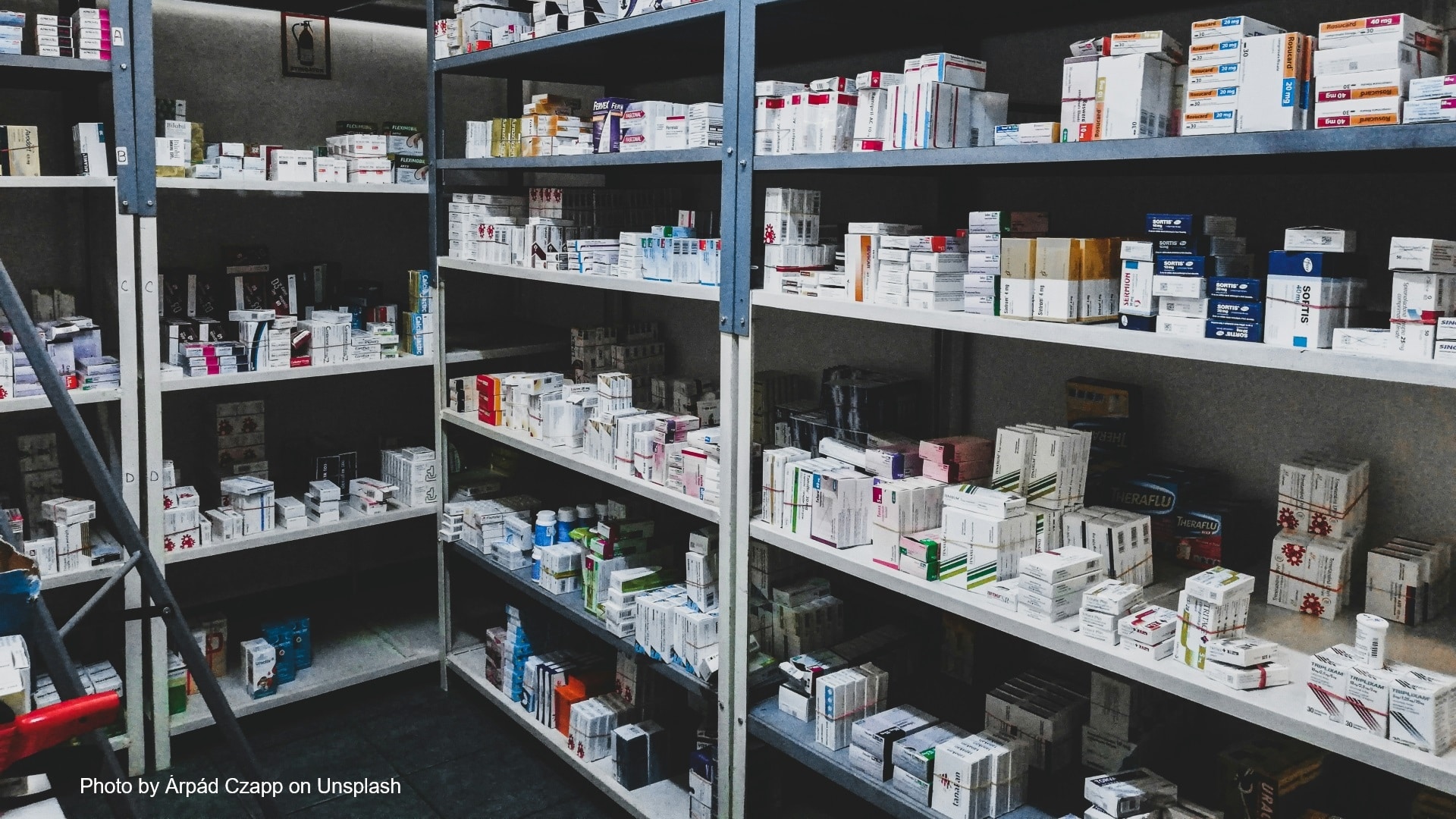
“Stability isn’t nearly so spectacular as instability,” pointed out Aldous Huxley. And, of course, global instability is no longer a distant geopolitical concern – it is now affecting NHS patients directly. Recent US foreign policy decisions, particularly those that have intensified tensions in Iran and across the Middle East, have sent shockwaves through global supply chains. Those ripples are now reaching the UK’s medicine cabinets, and the NHS is a few weeks away from potential shortages.
Off‑patent generic and biosimilar medicines are essential to the safety and sustainability of the NHS, accounting for 85% of all prescriptions in hospitals and community pharmacies. They are the everyday treatments that keep the health service running – from cancer and cardiac care to mental health and HRT.
These medicines only exist because, once patent protection ends, competition enters the market. Companies compete primarily on price, delivering more than £20 billion in annual savings and ensuring the UK continues to benefit from some of the lowest medicine prices in Europe.
But this model is built on high volumes and razor‑thin margins. Any disruption – whether political, economic or logistical – can quickly become difficult to absorb. The very efficiency that makes the system affordable also makes it fragile. Only a quarter of the medicines used by the NHS are manufactured in the UK; the rest come largely from Europe and India, supported by supply chains that stretch deep into China.
Record‑low UK prices have left almost no room for resilience. The volatility triggered by the Iran crisis has pushed up transport and energy costs dramatically. These pressures cannot be absorbed indefinitely. The result will be shortages, price rises – or both.
The uncomfortable truth is that the UK’s Life Sciences Sector Plan has not prepared us for this moment. The government’s plan lacks a serious strategy to secure the supply of essential medicines, and we are falling behind countries that have taken stronger action. The European Union is close to finalising its Critical Medicines Act, years in the making, to strengthen resilience across the continent.
Meanwhile, the UK has been drawn into a different kind of pressure from the United States. Tariff threats and investment stand‑offs have pushed the Government toward commitments that favour US pharmaceutical interests – potentially adding billions of pounds to the UK’s branded medicines bill. That money will almost certainly come from existing healthcare budgets. Yet almost nothing has been invested in securing the essential off‑patent medicines that patients depend on every day. Two new antibiotic manufacturing facilities could be built in the UK for a fraction of what is being committed elsewhere to appease US investors and shareholders. One of last remaining antibiotic manufacturing plants in England closed last year.
Sir Keir Starmer has emphasised the need for a closer relationship with the EU, and the next UK-EU summit, set for later this year, is the point on the horizon when new forms of cooperation could be committed to. Defence and security will be central to those talks – and medicines security must be part of that conversation.
There are clear areas of mutual benefit for both sides when it comes to medicines supply, and the EU and the UK are not just geographically closer than other potential allies. There is greater political alignment than with many other administrations.
Mutual recognition of batch testing needs to be addressed, and it is a clear example of where greater collaboration can take place. Products made in the EU can be imported to the UK, but not vice-versa. This is directing investment decisions and creating an unbalanced supply chain. In a crisis, EU countries could benefit significantly from UK-made products, and the region doesn’t have the capacity to produce all the medicines it needs.
The EU’s Critical Medicines Act is another area for review and potential partnership. The current version allows member states to preferentially purchase products made on the continent. For critical products in short supply, we believe the UK should be on the same footing as EFTA countries in being allowed to participate in and benefit from the provisions of the Critical Medicines Act. It makes mutual sense for countries to work together on this.
Elsewhere, via the Life Sciences Innovative Manufacturing Innovation Fund (LSIMF), the UK already has dedicated funding for medicines production, with resilience as one of its goals. But the fund suffers from competing objectives and oversight by three separate government departments, which reduces its focus on resilience.
Given the increasingly stretched nature of supply chains, the UK and EU should coordinate on or at least be aware of how this money is being allocated. There is little point in duplicating efforts to reshore key supply chain elements when partnering could create a more cohesive, powerful shared supply chain with greater capacity for both sides when needed most. The EU and UK could explore how UK packs could be supplied to Europe’s other English-speaking markets, including Ireland, Malta and Cyprus, thereby providing patients in these countries with more choice and greater stock capacity.
The UK and EU need a shared plan to ensure patients can access essential treatments in times of global turmoil. Without it, the next geopolitical shock will not just be a foreign policy crisis. It will be a public health one.
By Mark Samuels, chief executive, Medicines UK


Image by: Milo Chandler / Alamy

5 min read
Featuring original research and formidable big picture analysis, this book is the most intellectually serious thing a Labour politician has produced in years
Liam Byrne has always been two things at once: a campaigning pamphleteer and a pointy-headed wonk. He held the pen on Labour’s first 100 days grid in 1997, redesigned the pathway to British citizenship at the Home Office, and then, rather than sulk on the backbenches, took himself off to Oxford to spend a year dismantling the populist phenomenon with the intensity of a man defusing a bomb. This book is the most intellectually serious thing a Labour politician has produced in years.
The big-picture analysis is formidable. Byrne identifies three forces shattering the post-war democratic settlement: a great economic disillusion born of wage stagnation and the broken generational promise since 2008; a great digital division in which social media algorithms have turned public discourse into a giant online gang fight; and mass human movement, acting as a lightning rod for anxieties about identity, belonging and economic fairness.
None of this is entirely new, but Byrne’s synthesis is unusually rigorous, moving fluently between Washington think tanks, European polling data, and his own West Midlands doorsteps. He holds the global and the granular in his thesis.
What lifts the book is the original research. A 4,000-person survey with Best for Britain, King’s College London and YouGov, maps Reform UK’s electorate into five tribes. The strategically vital finding: roughly 40 per cent of Farage’s coalition, the ‘Melancholy Middle’ and ‘Civic Pragmatists’, are not hardliners. They are anxious, disappointed people who worry about bills, the NHS, and whether the system still rewards effort. They are reachable. If progressives cannot be bothered to reach them, they have only themselves to blame.
Byrne is equally sharp on the machinery of populism. A semantic analysis of hundreds of speeches reveals a three-chord trick: patriotism, threat and nostalgia, played with striking uniformity from Donald Trump to Giorgia Meloni to Nigel Farage. Combat language frames politics as high-stakes struggle, while bundles of time-words conjure a lost golden age only the strongman or woman can restore. The chapter following the money is revelatory: dark money flowing through crypto wallets, Kremlin-linked banks, and American Christian-right networks, alongside British mega-donors funnelling £153m into a populist media-political complex in four years.
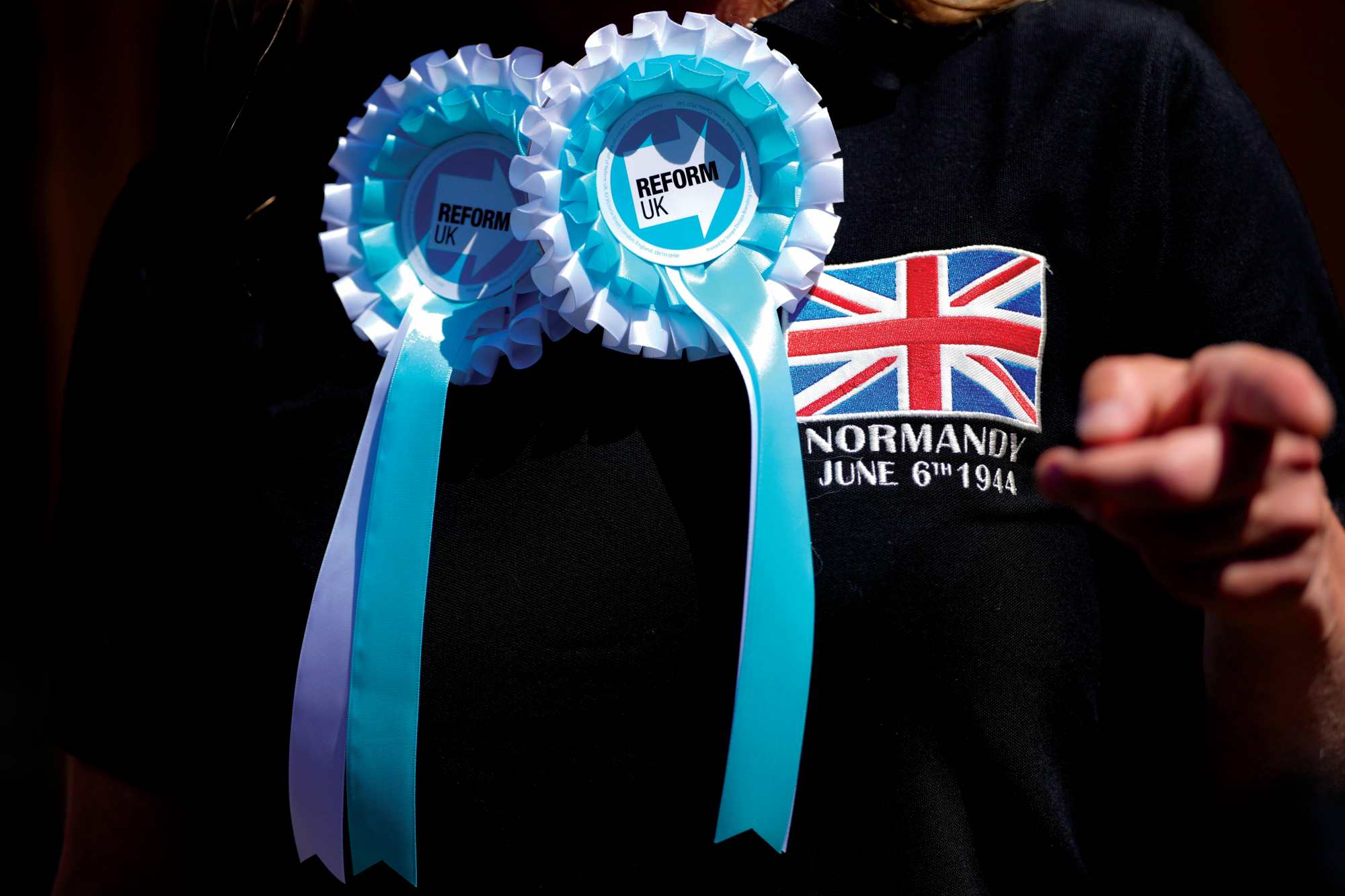
The remedies are where the book finds its real purpose. Byrne presents a Rooseveltian 10-point plan and the ambition is exhilarating.
The civic gospel – rebuilding high streets, restoring local policing, and investing in community infrastructure – is grounded in his finding that 80 per cent of hardcore Reform voters believe their area has declined.
The remedies are where the book finds its real purpose
The kleptocracy agenda is the most distinctive contribution: banning crypto donations to parties, outlawing paid media roles for sitting MPs, and enforcing transparency on offshore funding.
Populism, Byrne argues, is a business model built on patronage, and you cannot defeat the politics without disrupting the economics. The proposal for universal basic capital, a savings account for every young person, seeded by a sovereign wealth fund, deserves more detail, but the instinct is right: a fairness agenda must give people a stake in the future.
The call for progressive optimism – insisting the left offer a credible vision of technological abundance rather than defensive managerialism – is a rebuke to a politics that has forgotten how to inspire. John F Kennedy’s “new frontier” and Harold Wilson’s “white heat” are invoked not as nostalgia but as challenge.
Two passages carry political charge. On earned citizenship, Byrne argues that probationary citizenship linking rights to responsibilities is the foundation of a progressive immigration policy that commands public consent. At least two potential challengers to Keir Starmer have already pressed the Home Secretary Shabana Mahmood on this territory. They would do well to read this book before they say much more. Byrne’s framework is considerably more developed than the soundbites that have so far passed for a debate within Labour.
On media regulation, the book delivers a direct charge sheet. Byrne documents broadcast propagandists bending impartiality rules to destruction, building empires funded by opaque structures in the British Virgin Islands. He is withering about Silicon Valley algorithms doing to our towns what the enclosures once did to common land. The message to Ofcom and those responsible for the Online Safety Act could not be plainer: pull your finger out. The architecture exists. What is missing is the will to use it.
 The messages for the Labour Party are unmistakable. When he argues progressives must move beyond Bidenomics, he is telling Starmer’s team that fiscal caution is not enough if people cannot feel the difference. When he insists the antidote to populism is not another comms grid but deep listening, one senses an MP who knows the difference between a party that hears voters and one that merely surveys them. When he warns that Labour faces peril in over 80 seats where Reform runs second, it lands with the authority of someone who represents one of them.
Labour ministers should read this book. Those circling the leadership should study it. Regulators should act on its findings. And, while they are all at it, they might use its author to help implement them.
Lord Watson of Wyre Forest is a Labour peer
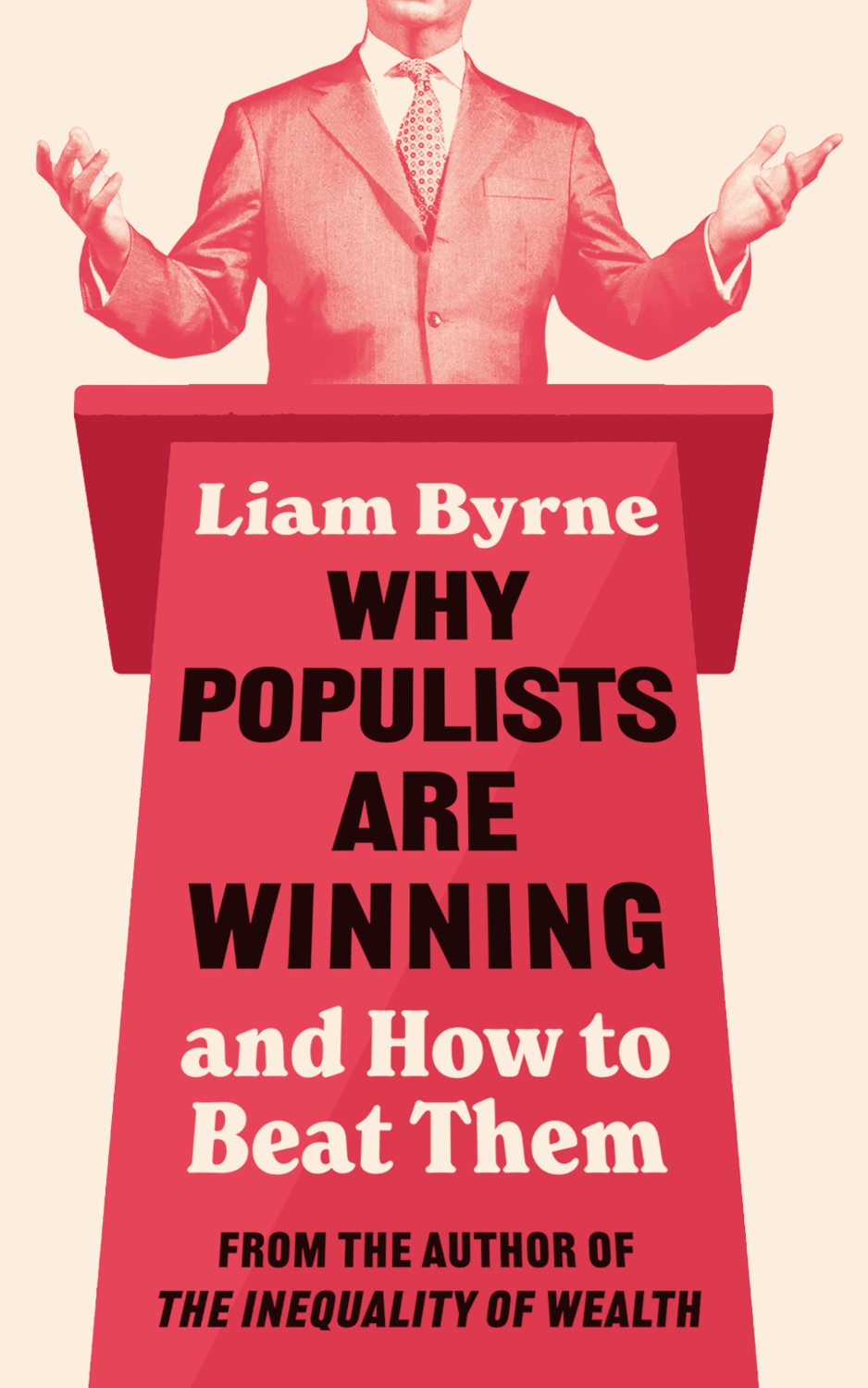
Why Populists Are Winning: and How to Beat Them
By: Liam Byrne
Publisher: Apollo
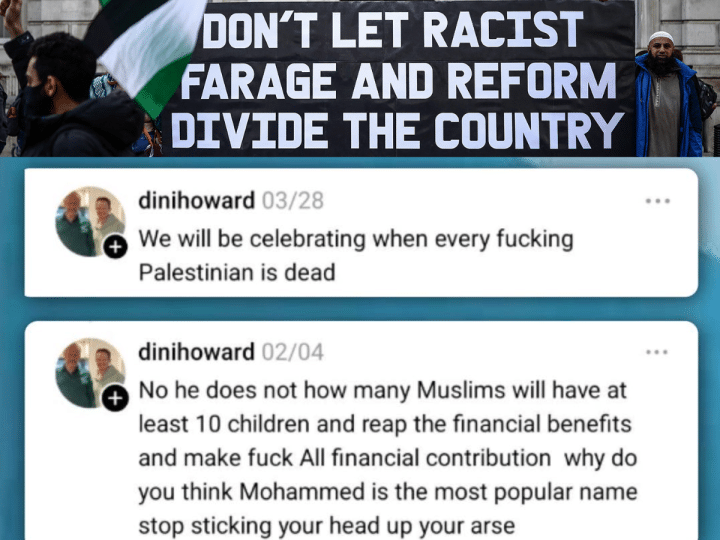

Colour me shocked … more evidence that Reform isn’t interested in candidate vetting has come to light. In the doghouse this time is Reform candidate, Howard Dini, standing for the Hillingdon local elections, shamelessly glorifying genocidal violence against Muslims and Palestinians.
Howard Raymond Dini……….You cant polish a turd pic.twitter.com/ii94i6WyPB
— Otis J Flywheel (@OFlywheel) April 16, 2026
Reform candidiate endorses genocide
Remarks the racist Reformer has been sharing on social media include:
We will be celebrating until every fucking palestinian is dead [and] May Israel destroy Allah and Islam and get rid of the stench.
Responding to Dini’s racist bile, Labour Friends of Israel-backed Labour MP, Danny Beales, described his social media posts as “extremely troubling,” and urged Reform to act.
I have written formally to Reform UK to address racism and hate from their Ickenham and South Harefield candidate, Howard Dini. The posts include explicit endorsements of violence and fall far below any acceptable standard for public office. pic.twitter.com/kN6SJxg5qU
— Danny Beales MP (@DannyBeales) April 29, 2026
Beales, the MP for Uxbridge and South Ruislip, wrote formally to Reform on 29 April demanding answers. Such condemnation from an MP affiliated to Labour Friends of Israel, shows you how far Dini has crossed the line, even beyond the accepted limits of mainstream Zionism.
Shamelessly racist
Other posts shamelessly shared by Dini include:
If you don’t stop lying, you’ll become a Palestinian [and] May Islam destroy itself or end up in hell.
The Islamophobia reporting and monitoring platform, Tell MAMA, said the following:
“A post from Howard Raymond Dini’s account made reference to celebrating ‘when every f***ing Palestinian is dead’.”
Utterly shameful comments that have no place in politics.https://t.co/SI47aCTYNK
— Tell MAMA UK (@TellMamaUK) April 16, 2026
According to the BBC, in Mid-April when asked about the posts, Dini told the Local Democracy Reporting Service:
You must be one of the few that enjoy our country being invaded and with no-go areas.
Dini has not yet responded to the BBC’s request for comment, and his party have so far remained tight-lipped. The Standard cited an unnamed Reform spokesperson as saying that the “party is looking into these allegations.”
These are the very men positioning themselves as the party best ‘suited’ to govern the UK — while spouting racist, antisemitic, or Islamophobic content?
Either Reform has no vetting process, or has belligerently sidestepped the requirement altogether — unwilling to carry out the most basic checks — treating candidate selection like a turnstile rather than a filter.
It’s entirely plausible that they just don’t care.
Featured image via the Canary
By The Canary
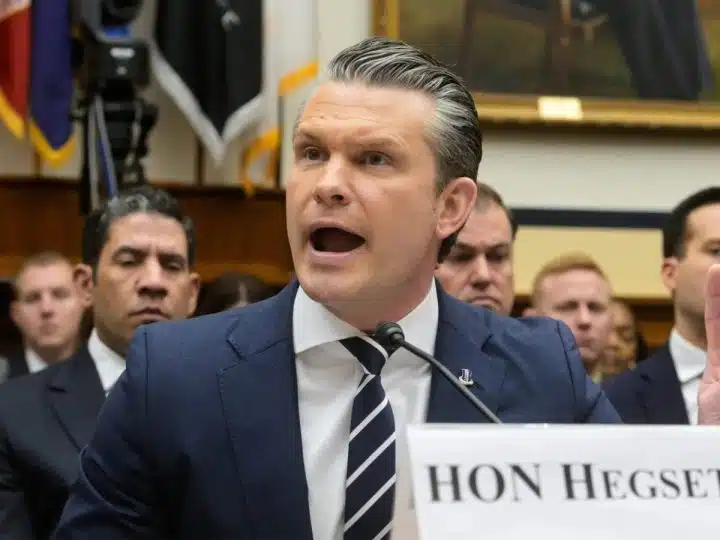

US troops have said that they were put into an unprepared position in Kuwait with ‘none’ protection against Iranian drones or missiles. Six were killed when Iran retaliated for unprovoked US attacks. Yet US ‘secretary of war’ Pete ‘Kegseth’ Hegseth has claimed they are lying.
Hegseth: our troops are liars
Survivors of the retaliatory attack have come forward as whistleblowers, describing the lack of preparedness or even rudimentary protections in their Port Shuaiba makeshift base. They described the buildings as completely vulnerable, air defences as “none” and “about as weak as you can get”.
Yet Hegseth lost his composure completely as he tried to bluster his way through, when congressman Pat Ryan challenged his lies about the Iranian drone somehow “squeaking” through “fortified defences”:
Hegseth’s contempt and lack of concern for the troops his and his boss’s delusions, greed and weakness put in harm’s way is as shameful as the war crimes he orders them to commit. His concern for the welfare of ships’ crews in the Strait of Hormuz is no better.
Featured image via the Canary
By Skwawkbox
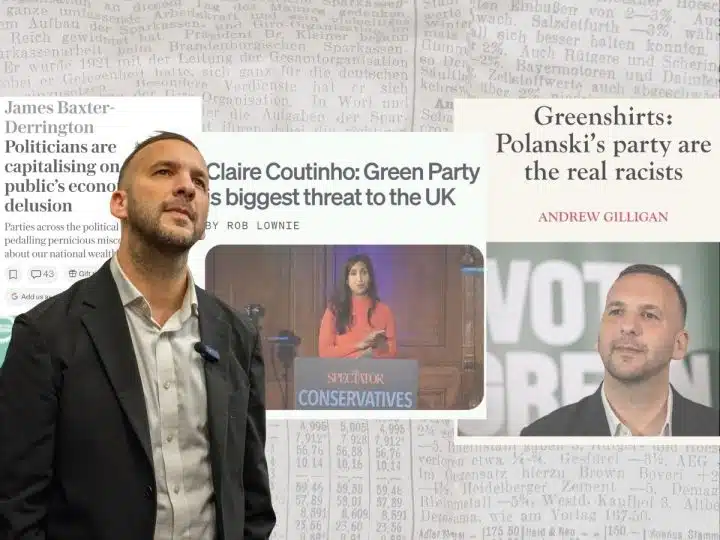

Because the Green Party has gone from strength to strength under his leadership, Zack Polanski faces daily attacks from the establishment. In the runup to the local elections, these attacks have intensified considerably. Because Polanski has the sense not to accept the narratives his rivals set out for him, this was how he responded:
The Green Party want to end Rip Off Britain.
This Thursday, vote for the party that wants to put wealth and power back into all our communities.
Meltdown headlines from billionaire press this morning alone show what we're up against. Vote Green.https://t.co/0qbagSvIYp pic.twitter.com/plD1t3i70h
— Zack Polanski (@ZackPolanski) April 30, 2026
In the aftermath of the Golders Green attack, Polanski also faced much worse than the above.
The British establishment, it seems, has decided the appropriate response to an attack on British Jews is to smear Britain’s only Jewish party political leader.
Hostile press
What is the purpose of the British media?
While you may be tempted to say ‘report on the news‘, this is a secondary function of the billionaire-owned press. Instead, these outlets exist to ensure the political climate guarantees the rich get richer.
In aid of this, the media is ruthless in their story selection to ensure readers have a limited understanding of the world. They also employ columnists who fervently attack any prominent person who questions this miserable status quo.
When war is on the cards, the media will circle the wagons to defend it. Even this comes back to money, because with war comes weapons, and with weapons come profit.
Over the past few decades, British politicians and media outlets have offered unlimited support to Israel and its oppressive actions against the Palestinians. This support has included not reporting on what Israel is doing; it’s also involved smearing Israel’s opponents as antisemites. We saw this under Jeremy Corbyn’s Labour and we’re seeing it now under Zack Polanski’s Green Party.
There are obvious reasons why the British establishment has sought to defend Israel at the expense of its own citizens:
- The UK profits from Israel’s actions through arms deals and partnerships.
- Israel is a key ally of America, and the UK is America’s foremost lapdog.
- The Israel lobby has proven to be very effective at influencing British politicians – particularly through the ‘Labour Friends of Israel‘ and ‘Conservative Friends of Israel‘ groups.
- Once enough people within the establishment hold an opinion, mirroring that opinion becomes the price of entry.
See the following for an example of this in action:
Hey @SkyNews, how come when you interviewed Lord Walney today you didn't mention he's a former chair of Labour Friends of Israel, like you've done previously when interviewing him about Palestine Action? https://t.co/ECsbmWcOPw pic.twitter.com/5gjKhLAQpR
— Saul Staniforth (@SaulStaniforth) February 13, 2026
Lord Walney is a vile arms lobbyist who’s openly representing the interests of a foreign power, and yet he’s able to appear on the telly with no mention of this.
Can you see how fucked this is?
Zack Polanski has criticised this status quo, which is why it’s open season on him.
Smear merchants against Polanski
On 29 April, a man with a knife attacked random Jewish people in Golders Green. After Polanski expressed his sympathy, media ghouls like Julia Hartley-Brewer responded as follows:
A gentile is accusing the only Jewish leader of a mainstream political party of stoking Antisemitism because he opposes genocide. — Sir Norman of Nowhere.
Outrage without analysis is the new normal. pic.twitter.com/26jV2NMMj5
 (@Normanjam67) April 29, 2026
The only reason you couldn’t describe Brewer’s radio show as ‘pure, unbroken hatred‘ is because she’s forced to run advert breaks. Despite that, she has the gall to say things like this.
As Polanski said:
Zack Polanski says that as Jewish political leader he will always call out antisemitism
But shouldn't conflate antisemitism with criticism of genocide pic.twitter.com/nGHRCfStcb — Farrukh (@implausibleblog) April 29, 2026
This isn’t the only thing Polanski has said, with one interview he gave being aggressively misquoted on 29 April. The following is from Labour’s David Taylor, who once described Israel’s genocide against the Palestinians as a ‘baseless antisemitic conspiracy‘:
The other day @ZackPolanski said there was a "conversation to be had about whether it’s a perception of unsafety or whether it’s actual unsafety” when it comes to Britain's Jewish community.
I think he has his answer now. https://t.co/PPVAMqrkep
— David Taylor MP (@DavidTaylor85) April 29, 2026
As researcher Adam Smith noted:
Zack Polanski’s full quote on Jews’ “perception of unsafety”
“I’m concerned about rising antisemitic attacks. We saw arson attacks on ambulances for instance and we know that increasingly Jewish communities are feeling unsafe. There’s a conversation to be had about whether it’s a perception of unsafety or whether it’s actual unsafety, but neither are acceptable”.
It seems that last line – “but neither are acceptable” – is getting missed out by people who would absolutely agree with this, if Polanski didn’t have different politics to them.
For further context, Polanski was referencing – among other things – how the British media portrays anti-genocide marches. Specifically, they’ve presented them as ‘antisemitic’, and as a threat to Jewish people.
These freaks are achingly desperate for things like this to happen, because it gives them an opportunity to trot out their favourite lines blaming Palestinian solidarity in the face of extermination by Israel. Completely ghoulish stuff. https://t.co/x1SeD1p3u9
— Marl Karx (@BareLeft) April 29, 2026
Polanski wasn’t suggesting a British minority group doesn’t face violence and racism. Britain is a violent and racist place, with that violence and racism trickling down from the top.
The problem is the establishment is seeking to portray antisemitism as the only form of bigotry which deserves their condemnation:
Remember that no politician gave a fuck about this terrorist attack that attempted to burn a bunch of queer people alive two days ago. No condemnation from any of them, not even Head F*ggot Wes Streeting, and no public money awarded to repair the damage. https://t.co/p77mSCEPcE
— cez (@cezthesocialist) April 29, 2026
No one in the establishment is arguing that far-right marches should be banned because of attacks on LGBTQ+ people or Muslims. They are, however, calling for a ban on anti-genocide marches:
Sure, but this guy also wants to crack down on “extreme” environmentalism, Scottish nationalism, presenting masculinity as toxic and “trying to make white people ashamed”, which suggests he isn’t a particularly rational thinker. https://t.co/JFDeGySK3a pic.twitter.com/zfPAh8xSZE
— Flying_Rodent (@flying_rodent) April 30, 2026
A genocide which Britain profits from, mind you.
A genocide which has been partly-funded by the taxes we pay, and through the military aid we’ve provided in the past and continue to provide today:
This afternoon, Keir Starmer sent a UK military A400M plane from RAF Akrotiri on Cyprus to Tel Aviv
It can carry 116 troops – and a 81,600 lbs payload
Israel’s PM Benjamin Netanyahu is indicted by the ICC for war crimes and crimes against humanity You are paying for all this pic.twitter.com/fJhwZ6giVC
— Matt Kennard (@kennardmatt) April 28, 2026
We all have blood on our hands over this.
But if you dare to criticise the politicians who made that true, they’ll smear you as a liar and an antisemite:
Tory Chris Philp wants to limit peoples right to march in support of Palestinians and against Israels genocide & our govts complicity in it.
In attempting to justify this he says "They were happening on a weekly basis past synagogues". This is a lie of course pic.twitter.com/ji200SVaZl
— Saul Staniforth (@SaulStaniforth) April 30, 2026
As Owen Jones said:
Israel is a foreign state.
Opposing its crimes, including the mass slaughter of innocent people, is not racism. It is insane that this needs to be said.
You should oppose antisemitism, and the crimes committed by a foreign state allied to this country.
— Owen Jones (@owenjonesjourno) April 29, 2026
Antisemitism
The British establishment has characterised pro-genocide intent as a core tenant of British Jewish identity.
Of course this would ultimately drive people towards antisemitism.
To be clear, we do not think all British Jewish people support the genocide. We also oppose antisemitism in the strongest terms possible. These two things are linked, because you cannot believe Jewish people are inherently genocidal without being a raging antisemite.
The only reason our politicians and media figures don’t see this is because they themselves are fervently genocidal.
Mahmood: "It is unacceptable.. that British Jews are being held to account for the action of a foreign govt"
Absolutely
Its also true that supporters of Israel conflate British Jews with Israel in order to smear people who oppose Israeli apartheid & genocide as antisemites pic.twitter.com/sTFnplfo19
— Saul Staniforth (@SaulStaniforth) April 30, 2026
This hypocrisy is obvious in how the media and political parties treat Jewish people who oppose Israel’s actions. In the case of anti-war Jews, maximum hostility and repression becomes not just acceptable but desirable:
Labour expels Jewish NEC member Naomi Wimborne-Idrissi https://t.co/TELmdm6FHp
— SKWAWKBOX (@skwawkbox) December 16, 2022
Additionally, as Phillip Proudfoot noted, antisemitism is more apparent in other parties – something the establishment never seem to mention, strangely:
“The Green Party is riddled with Antisemitism”
Reality: its membership is statistically LESS antisemitic than Labour, the Tories, or Reform. A staggering 17% of the Tories and 24% of Reform believe “Jewish people chase money” pic.twitter.com/nzl660ytEH
— Philip Proudfoot (@PhilipProudfoot) April 29, 2026
The British establishment does not oppose antisemitism; it opposes everyone who takes issue with its ability to sustain itself. Accusing others of antisemitism has proven to be a useful attack in aid of that, but people are awake to this reality now.
This is why the Green Party has risen despite the smears.
It’s also why the grimmest figures in British politics are now doubling down again and again.
Featured image via Barold
By Willem Moore


Israeli forces have reportedly kidnapped a British Green Party member from onboard the Global Sumud Flotilla that is heading for Gaza with emergency supplies. The incident came after far-right Zionists doxxed Zac Khan on social media.
Gaza flotilla intercepted
As the Canary previously reported, late on Wednesday, 29 April, the boats of the Global Sumud Flotilla were sailing in international waters. Then, self-identified Israeli attack boats intercepted them, cutting their communications.
The attackers pointed lasers and semi-automatic assault weapons at the boats and ordered participants to gather at the front of the boats on their hands and knees. According to flotilla organisers, an SOS was issued, but the flotilla’s communications were jammed. Drones circled and were ‘buzzing’ the vessels.
According to Global Sumud Flotilla organisers, at first Israeli broke the comms of 11 vessels, and intercepted seven of them. Then, it emerged that Israel had taken 15 of the Gaza flotilla vessels, including their crew and passengers:
View this post on Instagram
Following the pattern of previous Israeli piracy, the attackers ordered the crews to surrender and allow their humanitarian cargos to be taken to Israeli ports.
Then, in the early hours of 30 April, Israeli forces reportedly abducted dozens of members of the flotilla. Bear in mind, they did this in international waters off the coast of Crete – where they have no legal right to do this.
According to Zionist propaganda outlet the Jerusalem Post, as of 9am on 30 April “over twenty ships and around 175 activists” had been abducted by Israel.
Green Party member kidnapped
It is now emerging that there are British citizens on board – one of them being Green Party member Zac:
View this post on Instagram
As Greens for Palestine said on Instagram:
Mohammed Zakaria Khan, a British citizen participating in the Global Sumud Flotilla, has been illegally kidnapped by Israeli forces in international waters west of Crete.
This is not just an attack on one person – it’s an attack on:
✓ International maritime law
✓ Humanitarian aid to Gaza
✓ The right to peaceful protest
✓ British citizens abroadThe Global Sumud Flotilla was on a lawful humanitarian mission to deliver aid to besieged Gaza when Israeli forces:
• Jammed communications
• Deployed drones and military vessels
• Illegally intercepted civilian boats
• Abducted Zak KhanIsrael’s actions violate UNCLOS and international law.
People have rallied in support of Zac and the other people Israel has abducted. There will be an emergency demo outside Downing Street at 6pm tonight, 30 April:
View this post on Instagram
As of 11am on 30 April, Green Party leadership had not commented on Israel’s abduction of Zac from the Gaza flotilla. However, people who have been commenting are far-right Zionists like Heidi Bachram – who, just days before Israel abducted him, effectively doxxed his presence on the boat to her followers:
Here’s Green Party candidate Zak Khan currently en route to Gaza on the Flotilla and wearing a Palestine Action hoodie. A proscribed organisation in the UK that beats up police and has attacked our own RAF base. He says @TheGreenParty sent him on this vile mission. Shocking. pic.twitter.com/SSjQEt7kBK
— Heidi Bachram (@HeidiBachram) April 28, 2026
Notorious far-right Zionist account ‘Habibi’ did similar:
Zak Khan, a Green Party candidate in Hampshire, sets sail on the Hamas propaganda flotilla stunt. The party has made a point of backing him in this escapade. What is he waving? A banner of the convicted terrorist Marwan Barghouti. In a sweet touch, Mark Adderley saw him off. pic.twitter.com/YfCOtUPPO6
— habibi (@habibi_uk) April 27, 2026
Considering these Zionists are obsessed with weaponising the law against anti-genocide, pro-Palestine supporters – you’d think they’d respect the fact that Israel’s actions against the Gaza flotilla are illegal. However, international law is of no concern to Zionists – as 20,000 dead children in Gaza could attest to if they were still alive.
Disgraceful
As of 11am on 30 April, Zac’s location and wellbeing are unknown. Nor are that of the other Gaza flotilla members.
During the 2025 Gaza flotilla, Israel used this exact same playbook. its forces intercepted the boats in international waters. However, on that occasion it was not so soon after the ships set sail. Israel’s actions now set a worrying tone for what might be to come. Last year, Israeli forces beat, racially abused, sexually assaulted, and tortured flotilla members. Yet no action by governments has been taken.
The Canary will be monitoring the situation closely.
Featured image via the Canary
By The Canary
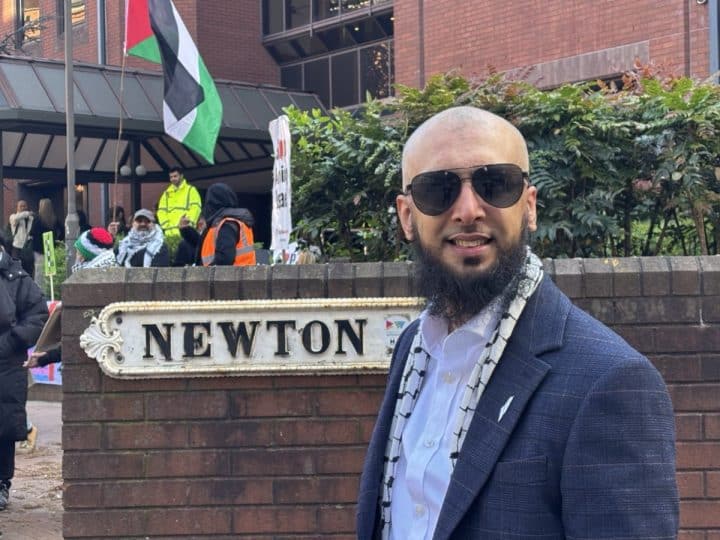

With the prosecution’s case completed, the third day of Majid Freeman’s trial was the story of two “expert witnesses”. Both barristers – Tom Williams for the Crown; Hossein Zahir KC for the defence – gave reminders that their duty was to the court rather than either party, but their backgrounds and their interpretations differed greatly.
The prosecution’s witness
After a short delay to explain that one member of the jury had been excused for personal reasons, the trial resumed at 11.20am.
The prosecution called Dr. Burcu Ozcelik as their expert. Ozcelik works for Royal United Services Institute (RUSI), a “defence and security think-tank”, which describes itself in the following terms:
A unique institution, founded in 1831 by the Duke of Wellington, RUSI embodies nearly two centuries of forward thinking, free discussion, and careful reflection on international affairs and defence and security matters.
Our heritage, bases in the heart of both Whitehall and Brussels, and extensive networks inside and outside governments, give RUSI a unique insight and authority.
Ozcelik answered broad questions on the history and two charters of Hamas. However, when she came to be questioned by defence barrister Hossein Zahir KC, questions about her knowledge on the issue were raised.
Zahir asked:
Your specialism is Kurdistan and Kurdish armed groups, is that correct?
After several objections, with Zahir reassuring the witness, “I’m not trying to trick you here”, Ozcelik finally accepted that this was the case. Zahir asked:
Have you written any books on Palestine?
“No”, Ozcelik replied.
Have you written any peer-reviewed articles on Palestine?
“No”, Ozcelik replied.
Bizarrely, Ozcelik repeatedly raised the issue of “Iranian influence” in the West Asia, which Zahir had to remind the jury was an entirely separate topic.
Nevertheless, Ozcelik did concede that the “red triangle” symbol – included in several social media posts, and which has been heavily relied on by the prosecution as evidence of Freeman’s support for a proscribed organisation – dates back to at least the Arab Revolt of 1917. She admitted:
It’s very difficult to get into the mind of someone using such symbols.
The defence’s witness
After a break for lunch, the defence called Professor Fawaz Gerges, a lecturer at the London School of Economics, as their expert witness.
Gerges confirmed his long history of publishing on militant groups. He had also travelled to Gaza and interviewed the leaders of Hamas as part of his research, and confirmed his fluency in the Arabic language.
Zahir took Gerges through the entire history of Palestinian displacement, from the rise of political Zionism at the end of the 19th century, to the Nakbah, or “Catastrophe”, of 1948, right through to the present day. During the 1948 Catastrophe, Gerges explained, armed Zionist gangs committed the Deir Yassin massacre. Women were raped, bodies were desecrated, and 30 babies were killed. Gerges stated:
This was not an isolated incident.
Importantly, Gerges informed the jury that the majority of Gaza’s citizens today are the descendants of refugees from 1948. He said:
Even today, they say ‘we are not from Gaza’.
At the end of the afternoon, Gerges was questioned by prosecution barrister Tom Williams. The focus returned to Freeman’s use of the “red triangle” symbol in social media posts. Gerges began:
Today, tens of thousands use the red triangle worldwide, including protestors on university campuses. If you want to tell me that they are all influenced by Hamas, I’m sorry, I just don’t believe you. It has become symbolic. Like the watermelon, or the keffiyah, the red triangle is a Palestinian symbol.
Williams asked:
But Hamas don’t use the watermelon or keffiyah to identify targets, do they?
Gerges responded:
Well, Hamas do use the keffiyah as a symbol. The Hamas spokesperson Abu Ubaydah was very famous for his speeches wearing the keffiyah. Hamas use these symbols because they already resonate deeply with Palestinian society. You cannot say it’s a “Hamas symbol”. It’s a Palestinian symbol!
At the back of the court, Freeman was wearing his own keffiyah, as he has been throughout his trial. Tomorrow, for the first time, he will take the stand.
Featured image via CAGE International
By The Canary


On 19 April, American naval pirates in the Sea of Oman— answerable to Trump — hijacked a full cargo of medical equipment onboard the Iranian cargo ship Touska hostage.
Unbridled US piracy in international waters
American guided-missile destroyer USS Spruance intercepted the vessel as it headed towards the Iranian port of Bandar Abbas. US forces have since released six of the crew but is still holding 22 crew members.
The equipment seized aboard the vessel included dialysis machines needed desperately by kidney failure patients.
Iran’s Red Crescent Society has described the so-called “interception” as a criminal act of priacy endangering, as it says, the lives of vulnerable Iranians dependent on the seized equipment.
Anticipating retaliatory strikes
The attempted US maritime blockade against Iran has leaked like a sieve, and the latest act of piracy exposes exactly that.
The US continues to build up forces in what Tehran believes is preparation for a new wave of attacks, despite knowing the grave global consequences it will trigger as Iran retaliates.
Featured image via the Canary
By Skwawkbox
Politics
Politics Home | Easing the cost of living crisis: how the government can restore consumer confidence



Rocio Concha, Director of Policy and Advocacy
| Which?
The UK is still reeling from the worst sustained increase in inflation since the 1970s, with the government realising the need to act on the cost of living even before the most recent conflict in the Middle East began
This latest conflict has already led to rises in fuel prices, the energy price cap will increase in July, and higher food production costs will pass through to consumers later in the year. It is unclear ultimately how much worse off households will be.
We are already seeing evidence of increased financial hardship. The Which? Consumer Insight Tracker, published today, reveals the proportion of households reporting that they missed an essential payment in the previous month increased by 1.7 percentage points between January and April to 7.5 per cent, or one in 13 households.
Energy price shocks are especially harmful for those on lower incomes, who spend a greater share of their expenditure on essentials. The missed payment rate among lower income, non-pensioner households is 13% (more than one in eight).
At the same time there have been sharp falls in consumer confidence. Our data shows consumer confidence in the future UK economy recently plummeted to -62, marking the lowest level since the height of the cost of living crisis. Less than one in ten adults believe the economy will improve over the next twelve months, and 71 per cent anticipate it will worsen.
Low consumer sentiment holds back the economy. It becomes self-fulfilling as those who could afford to spend tighten their purse strings and hold back on discretionary spending.
The political danger of this crisis is equally urgent. Our research shows that 82 per cent of adults feel they are constantly paying more but getting less, and almost three-quarters believe big businesses take advantage of ordinary people. More worryingly for parliamentarians, 68 per cent of adults feel the government is not doing enough to support their standard of living, and a similar proportion are fed up with being ripped off. Voters are rapidly losing faith in Westminster’s ability to change their lives for the better.
So what can the government do?
Which’s Cost of Living Manifesto, launched in Parliament this week, presents a pragmatic, affordable evidence-backed package of proposals that the government could implement quickly.
First, it has to focus on the affordability of essentials. Energy and food prices remain the primary concern for 85 per cent of consumers, and currently one in 13 households reports missing an essential payment every month. While the government cannot control global commodity markets, there are clear fiscal levers that can be pulled.
On energy, the government should build on the steps it took in the last Budget to move the cost of more environmental and social levies, like the remaining 25 per cent of the Renewables Obligation and the Warm Homes Discount, off bills and into general taxation. It’s been estimated this could save typical households between £55 and £145 a year.
At the supermarket checkout, the poorest fifth of households have been forced to cut their real-terms spending on food by 5 per cent. The Healthy Start scheme provides a nutritional safety net during pregnancy and early childhood through weekly payments that can be used to buy nutritious foods, such as fruit, vegetables, infant formula and milk. But despite some increases, the real terms value of these payments has fallen substantially. Uplifting the payments so they catch up with food price inflation and expanding eligibility to all families on Universal Credit would target support at those families that most need it.
Beyond essentials, the government should do more to stop consumer rip offs and to boost competition. There are a range of policies that the government can enact that could help consumers now and be good for the economic growth that is ultimately needed to boost incomes and fully tackle the cost of living in the longer term.
Top of the list should be action to stop deceptive pricing. Allowing dishonest businesses to get away with marketing misleading offers puts fair-dealing businesses at a disadvantage and it hits the public in their pocket because they buy a product thinking they have a good deal when a better option may be available. The Secretary of State for Business and Trade should explicitly ban firms from using false recommended retail prices (RRPs), ‘was/now’ offers and loyalty promotions using the powers granted in the Digital Markets, Competition and Consumers Act 2024 to make it significantly easier for the Competition and Markets Authority (CMA) and Trading Standards to protect the public.
Next the government needs to get a move on with legislation to sort out markets that are clearly failing consumers, such as the live events sector and the outdated regulatory framework governing the veterinary market. The government has committed to legislating to improve regulation in these markets, but the longer it takes the more consumers will lose out.
Regulators also need to step up. For example, Ofcom should ban discretionary price increases during the minimum term of a customer’s broadband and mobile contract and the FCA could go further on insurance premium finance to address more examples of businesses ripping off consumers.
Finally, some of the biggest failures of competition happen in digital markets. The CMA estimates that Google earned excess profits of at least £3-4bn in 2024 from its general search services in the UK. This means higher advertising costs that are passed through to consumers – some households may be paying hundreds of pounds extra every year because of Google’s market power. The UK has a world-leading, pro-competitive regime for regulating digital markets, but its implementation is too timid.
The government should be proud to stand up for consumers against monopolists and it should give public support to the CMA to use the powers parliament granted it to hold dominant businesses to account.
Which?’s proposals are practical, proportionate, and could be implemented quickly. Government, regulators and businesses all have a role to play in delivering change which consumers will feel in their wallets and restore faith in markets.
The UK has long been a global leader in tobacco control. The ambition to create a smoke-free future is the right one – and one that requires both urgency and pragmatism. The passage of the Tobacco and Vapes Act should have accelerated that progress. Instead, it risks falling short where it matters most
At its core, reducing smoking rates depends on one simple principle: helping adult smokers move away from combustible tobacco. The evidence is clear that a range of alternative, smokeless products can play an important role in that transition. But for that to happen at pace, smokers need access not only to these products, but to clear, responsible information about them.
Proposals to significantly restrict advertising around nicotine products risk undermining that objective. If adult smokers are less aware of the alternatives available to them, it stands to reason that fewer will make the switch. That is not a theoretical concern, but a practical barrier to progress. Regulation must strike a careful balance: protecting young people while ensuring that adult smokers are not left in the dark.
At the same time, regulation is only as effective as its enforcement. Across the UK, illicit products and underage sales remain a persistent challenge. Yet the current framework does not go far enough in ensuring that those who break the rules face meaningful consequences. Without strong, consistent enforcement, well-intentioned legislation risks being undermined in practice.
With the Act now passed, the focus turns to how it is implemented. The forthcoming consultations will be critical in shaping key elements of the regulatory framework – including how products are described, presented and made available to adult smokers.
This will be particularly important when it comes to flavours. For many adult smokers, non-tobacco flavours play a significant role in supporting switching away from cigarettes. Getting this balance right and ensuring products remain appealing to adult smokers while minimising youth appeal is essential if the UK is to sustain progress towards its smoke-free ambition.
Get it wrong, however, and the consequences are severe. Smokers may be left with fewer viable alternatives, switching rates could stall, and the illicit market – already a growing concern – may continue to expand. In that scenario, the UK risks not only slowing its progress but losing its position as a global leader in Tobacco Harm Reduction.
Politics
The House | The May elections face a threat from disinformation that can be generated more quickly than ever before

(amer ghazzal/Alamy)
3 min read
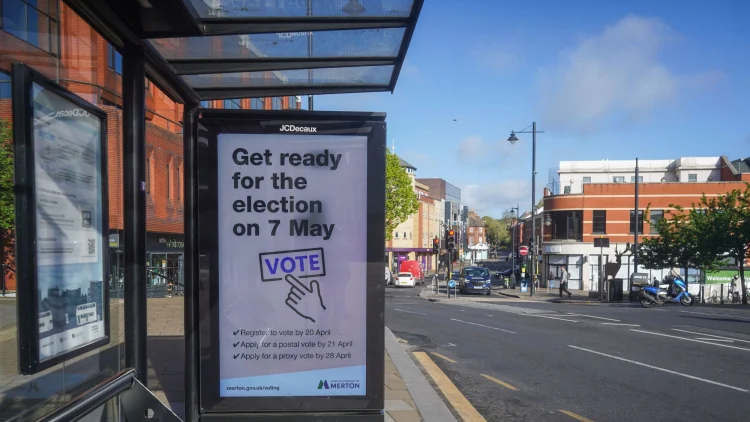
In a few weeks’ time 5,014 council seats, 96 Senedd seats and 129 Scottish Parliament seats will be up for election. As well as facing off against each other, candidates are facing another foe this election season, in the shape of disinformation.
Misinformation and disinformation were defining concerns for 2024’s bumper year of elections, where over half of the world’s population went to the polls. Indeed, a majority of UK voters claim to have encountered misinformation during the campaign.
The threat of false and misleading narratives are nothing new. What is different about the current environment is that the tools for the creation and spread of misinformation are cheaper, faster and more convincing than anything that has existed previously. And, as mis- and disinformation will tend to latch on to divisive or controversial issues, an election period – particularly one as hotly contested as the May polls are expected to be – is ripe for exploitation.
As part of our ongoing research into UK local news ecosystems, we found that the rate of misinformation in Gorton and Denton in the run up to the by-election was higher than we have observed in non-electoral areas. This included fake quotes attributed to Reform UK’s Matthew Goodwin, and claims that the Greens’ Hannah Spencer lived in a “massive house”, with AI generated images alongside this assertion. Concern over the extent of potential disinformation is such that the Electoral Commission has launched a pilot to detect deepfakes ahead of the May elections.
A good counterbalance to misinformation and disinformation is a well-informed and media literate electorate, supported by a healthy news and information ecosystem. Some of the crucial functions of journalism include keeping the public informed and holding figures in power to account – on a local level as well as a national one. However, news consumption in the UK has fallen dramatically – and local news outlets have been hit particularly hard. Fewer readers and financial pressures can lead to local media organisations folding, or at the very least cutting back on their staff, leaving a gap in reporting and giving space for misinformation to take a foothold that is difficult to shake or be corrected.
A good counterbalance to misinformation and disinformation is a well-informed and media literate electorate
Twisted quotes and doctored images not being called out by local media may not seem particularly problematic. After all, we’re well used to a certain amount of political spin: if it didn’t sway any votes, does it really matter? In the long term, the real world impact can be severe. This year’s Cambridge Disinformation Summit focused on “downstream harm”, making the case that disinformation narratives are often a precursor to harm and exploitation. This leaves us open to risks, including around electoral integrity. Sustained misinformation and disinformation can contribute to societal polarisation, social instability and lead to a breakdown of trust in institutions. Without local news systems to challenge misinformation, this could happen all the faster.
The question for policymakers, as we will lay out in our report in June, is what more can be done to buttress local journalism, rein in misinformation on social media platforms and improve the public’s resilience and critical thinking.
We at the SMF will be publishing a report in June, sponsored by the BBC and drawing on our manual analysis of over 150,000 social media posts, case studies of how local misinformation incidents have been handled by local media and institutions, as well as monitoring of social media in local election hotspots in May.
Niamh O Regan is senior researcher at the Social Market Foundation

Lord Tom Watson reviews Liam Byrne’s ‘Why Populists Are Winning’

Goal No. 1 for Renegade: Overcome fabled Kentucky Derby jinx

Why one outage can still take down half the internet

Manchester United reach agreement with Casemiro over contract clause amid transfer speculation

US brings back mandatory military draft registration

Steven Gerrard disagrees with Gary Neville over ‘shock’ Chelsea and Arsenal claim | Football


-

 Tech3 days ago
Register Renaming | Hackaday
-

 Fashion6 days ago
Weekend Open Thread – Corporette.com
-
 Crypto World5 days ago
Hyperliquid $HYPE Rally Builds Momentum as AI Sector Enters Prove-It Phase
-

 Business6 days ago
Patterson-UTI Energy, Inc. (PTEN) Q1 2026 Earnings Call Transcript
-
 Sports4 days ago
IPL 2026: Ruturaj Gaikwad registers slowest fifty of the season, enters all-time unwanted list | Cricket News
-

 Politics3 days ago
Drax board avoid their own AGM, accused of greenwashing & environmental racism
-

 NewsBeat4 days ago
LK Bennett closes all stores after entering administration
-

 Crypto World6 days ago
Michael Saylor says BTC winter is over. Market analyst disagrees, says bitcoin was in a pullback
-

 Fashion1 day ago
Kylie Jenner’s KHY Enters a New Era with ‘Born in LA’
-

 Tech3 days ago
Images of Samsung’s rumored smart glasses have leaked
-
 Entertainment5 days ago
Mariah Carey Slams Deposition Claims In Brother’s Lawsuit
-

 Business2 days ago
Most Commercial Energy Audits Miss the Real Losses
-
Crypto World7 days ago
Is Algorand One of the Few Quantum-Resistant Blockchains? Here’s What the Data Shows
-
 NewsBeat6 days ago
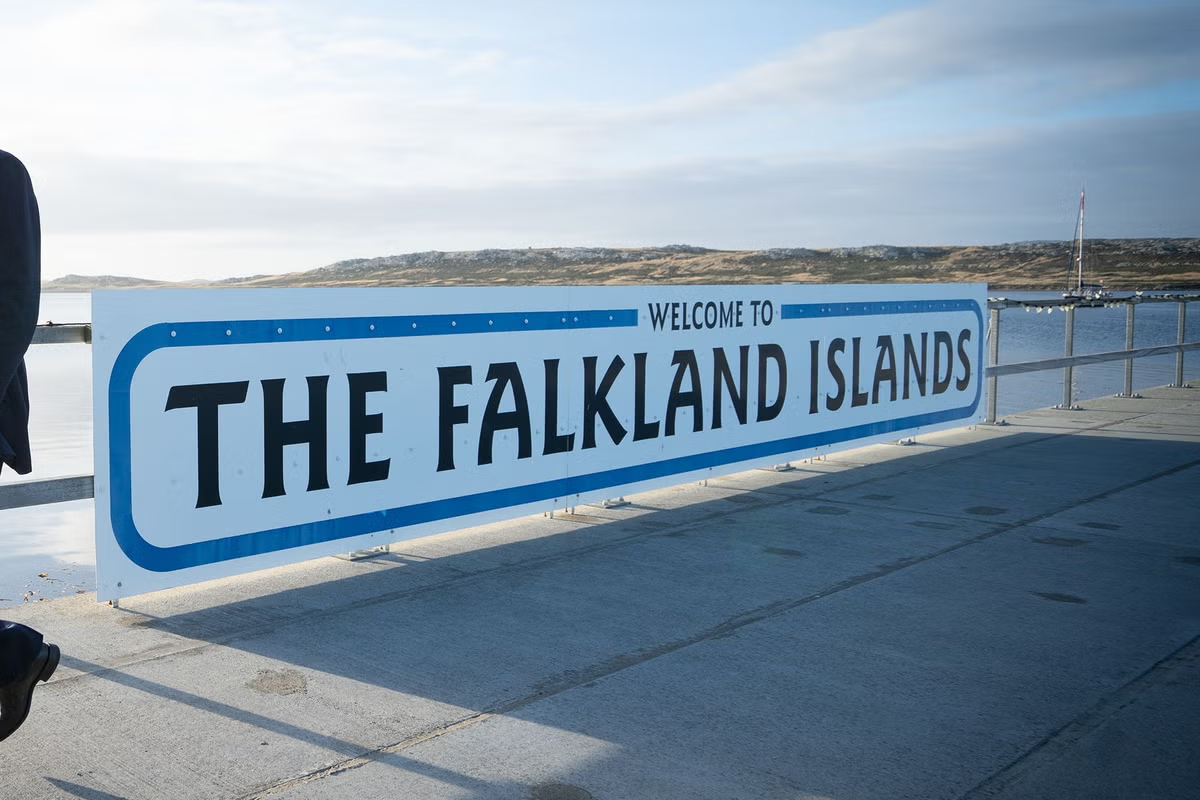
Trump threatens to review UK’s claim to Falkland Islands and punish Nato allies over Iran war disagreement
-

 Sports7 days ago
2026 NFL Draft tonight: Time, TV channel, where to watch, order
-
 Business6 days ago
Jeanine Pirro announces closure of Federal Reserve building cost probe
-

 Business3 days ago
(VIDEO) Charlize Theron Climbs Times Square Billboard to Promote New Netflix Thriller ‘Apex’
-

 Crypto World7 days ago
Kraken Builds Beyond Crypto With Futures, Tokenized Stocks, and Payments
-

 Tech4 days ago
Microsoft to roll out Entra passkeys on Windows in late April
-

 Tech3 days ago
Why Blue Badges Disappeared From Toyota Hybrids
You must be logged in to post a comment Login