Trump and his top officials have alternated between claiming their attacks were in the name of regime change, to reduce Iran’s nuclear capabilities and to deter a so-called “imminent threat”.
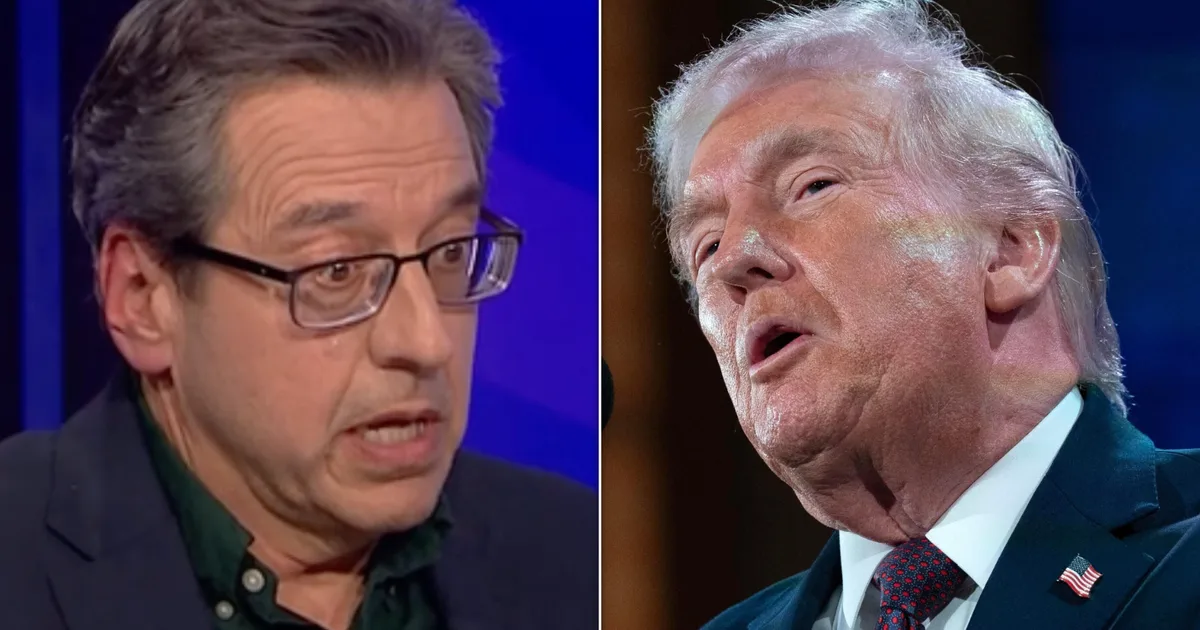
Monbiot said: “The real reason for this attack is spectacle – that’s what Trump trades in, that’s what he loves, he wants to be the centre of attention, he wants to be making global headlines. That’s his happy place.”
The writer said it would be both “criminal and foolish” for the UK to be “dragged into that”.
“This war has no basis in international law whatsoever,” he said. “What we see here is Donald Trump acting as he always does, as a global chaos generator.
Advertisement
“The further we stand away from that, the better off we will be.”
“The real reason for this attack is spectacle, that’s what Trump trades in”
Writer and activist George Monbiot says it would be “foolish” to be “dragged” into the US-Israel war with Iran with “no clear objectives”, saying US President Trump is a “global chaos generator” #bbcqtpic.twitter.com/wj2HcyxOD1
— BBC Question Time (@bbcquestiontime) March 5, 2026
Monbiot also warned against possible “imperial blowback”, pointing to Britain’s past actions in Iran.
Advertisement
“We think we’re being so clever and so brilliant in wading into countries about which our governments often seem to know very little, plunging in, firing missiles, staging coups and all the rest of it,” the writer said.
“But we don’t think of those long-term outcomes, those long-term consequences and the absolutely catastrophic effects they can have many decades down the line.”
“We think we’re being so clever… wading into countries about which our governments often seem to know very little”
Writer George Monbiot references the “imperial blowback” of Britain’s past interference in Iran, and warns against not considering “long term consequences”… pic.twitter.com/vatwLlPW7S
— BBC Question Time (@bbcquestiontime) March 5, 2026
— Reform Party UK Exposed 🇬🇧 (@reformexposed) March 29, 2026
Given Reform’s politics, this is entirely unsurprising.
Reform’s Victorian mindset
On 25 February, we reported that Reform have been talking about ending no-fault divorce. This would mean people can only get divorced if they’re able to cross the right government tick box. Obviously this would leave many — mostly women — vulnerable to abusive partners.
Advertisement
This is what Andrew Marr said to Reform’s Richard Tice:
Danny Kruger, you’ll have seen his speech today, and he wants to find government measures to oblige women or persuade women to have more children. And he’s also interested in getting rid of no-fault divorces. A lot of female voters around the country will look at this and say, there’s a lot of kind of quite posh white men telling us what to do, and we won’t like it.
Tice failed to provide any sort of answer:
‘We need more prosperous families which lead to a more prosperous country.’
On 28 October, we reported that Nigel Farage had inserted himself into the latest UK grooming gangs inquiry. In that piece, we covered that a former employee had accused him of opportunism. We also highlighted that Farage may not be the best person to speak out on this topic given his support for convicted rapist Donald Trump, or the fact that he refused to clearly condemn the alleged human trafficker Andrew Tate:
Since then, Farage’s involvement has further toxified the potential inquiry, with several abuse victims demanding an apology from the Reform leader:
EXCL: Five women have asked for an apology from Nigel Farage after he suggested they weren’t victims of grooming gangs.
They said that, while they had been abused by Asian men, they were “aware the inquiry is not just about us” and the comments were “degrading and humiliating”.
When Nigel Farage told a journalist this week she should “write some silly story … and we won’t bother to read it”, it provoked an instant – and divided – reaction. For some it was a “masterclass” in dealing with mainstream media, but for others it was “rude, dismissive, misogynistic, arrogant”.
Behind the scenes, Farage’s treatment of the Financial Times’s Anna Gross – which was met with mirth and applause among Reform diehards in the room – provoked disquiet and anger among lobby journalists across the political spectrum.
As the Reform UK leader was leaving the event, a Guardian political reporter suggested he had been rude and had upset the journalist. “Good,” Farage responded.
It is not the first time Farage has been accused of patronising a female journalist. When the former BBC Radio 4 Today presenter Mishal Husain asked him about the potential consequences of shooting down Russian planes last October, Farage responded: “Listen love, you’re trying ever so hard.” A month later he accused the Telegraph’s Camilla Tominey of playing a “silly little game” when she asked who his chancellor would be.
It’s also unsurprising to learn that they are struggling to attract female candidates.
Going forwards, it will be interesting to see if Reform try to appeal to women, or if they simply hope that legions of new, resentful men magically appear out of nowhere.
The turnout at the “independence march and rally” yesterday was so abysmally poor that it seems almost unfair to pick on any of the scores of SNP elected representatives who didn’t bother to show up.
But dear old Cosy Feet Pete Wishart had the most chef’s-kiss excuse of all.
The reason he didn’t fancy getting his wee Billy Whizz quiff blown about a chilly Calton Hill was that he had important business “taking on the far right” – who were of course nowhere to be seen – with “half a million” (50,000) of his British besties, a convenient short Tube ride away from his London residence, at an event called… UK Together.
Just like Mick McCann from Preacher guarding New York from the Kaiser in 1917, the MP for Perth and Kinross-shire has done a heroic job defending Britain from the far right and fighting for Scottish independence from the plush safety of the Palace Of Westminster for the last 25 years – even though we’re out of the EU, independence is nowhere in sight and Nigel Farage is set to be the next Prime Minister.
But time and tide waits for no man, and as Farage enters No.10 and Wishart walks off to retirement, (having handily reached the requisite age by the next election), Slippers will just have to wipe his tears over quarter of a century of total failure on his fat UK Parliament pension of around £50,000 a year for the rest of his life.
Last night, John and I sat down to watch the Huw Edwards drama which Channel 5 showed last week. It was that or Virgin River or the Hotel Inspector.
Watching a drama about someone you vaguely know was bound to be a strange experience. What I wasn’t expecting, but should have, was that it was a profoundly uncomfortable viewing experience.
I had lunch with Huw Edwards back in 2021, when all this woeful saga was going on. I can’t quite remember how it came about, as I had never met him before, but I dutifully turned up at the Langham hotel, opposite Broadcasting House in Portland Place, looking forward to having a chat with the man who was Britain’s premier news broadcaster. In all honesty, I was flattered to be asked.
While I never suspected him of doing anything like the things he has been found guilty of, the whole lunch was a profoundly weird experience. He seemed to be on edge the whole time. I knew he had had depression, but he was acting very oddly. Admittedly, at times he was quite funny and entertaining, but kept obsessing about various of his BBC news colleagues and how incompetent or ghastly they were. Jeremy Vine copped it more than most. When I left the Langham, I remember thinking ‘well that was weird’.
Advertisement
When The Sun story broke about a famous BBC personality, I just somehow knew it was him. I have a terrible Gaydar, but I do remember wondering about his sexuality, despite knowing he had five children. I also had a number of younger gay friends who told me how attractive they found him, way before the scandal became public.
In some ways. Martin Clunes played a blinder. He looked far more like him than I expected him to, and got his voice quite well too. I thought at times he ventured a little into caricature, and played up to dramatic necessity to make him appear monster-like. We could certainly have done without the w*****g scene, but overall the drama stayed just the right side of the taste line and didn’t go too far into prurience.
When the scandal first broke, I will admit to having some sympathy with Huw, but that soon disappeared when it was revealed that he had accepted and scene nearly 400 images of underage children, some of whom were under ten.
Huw had lived the secret of being gay, or bi, for all his life. He’s not alone in that. He came from a small Welsh village and inevitably led a closeted existence. By the time he acted on his feelings, he was well into middle age. He’s not alone in that. He was also clearly flattered by the attention of young men. He’s not alone in that. However, what he has done is enabled people who have a stereotypical view of dirty old gay men to be reenforced, and that is unforgiveable. Some people still assume all gay men are happy to sleep with anyone else that has a penis, including those who are underage. It is simply untrue. Gay people are no more susceptible to paedophilia than straight people are, yet the myth still persists. And Huw Edwards is partly responsible for that.
With the local elections fast approaching, Reform UK are gearing up for a fight. The problem is they keep punching themselves in the face — most notably by borrowing a Jimmy Saville catchphrase and by refusing to dismiss a would-be candidate who did a Nazi salute. Shockingly, however, it seems like things are even worse under the surface than they are on top:
Reform candidate for Swansea in the upcoming Welsh elections steps down.
Very strong statement.
“Politics is a dirty game, but Reform has sunk deep into the sewer when it should have been a beacon of decency.”
Having been an active member of Reform since it was founded, and the Brexit Party before that, it is with some sadness that I resign. In truth, Reform has left me.
The party I joined and helped build had a clear vision of how to solve our country’s problems: better politicians who care more about the people they serve than their careers. That’s how we fought the 2024 general election, winning 14.3% of the vote across the UK. In Swansea, I came in second, with 17.5% of the vote.
The “professionalisation” of the party has led it to take its members and candidates for granted. Communications that once began “Thank you” now more often start “You are required to…”. The party’s employees in Millbank forget that branch officers and candidates are unpaid volunteers.
Advertisement
Some will call my resignation petulance or sour grapes at my lowly placing on the list (fifth to an ex-Tory on the make and three novices). That rankles, but it has also confirmed to me what I feared; Reform is no longer open or honest. Politics is a dirty game, but Reform has sunk deep into the sewer when it should have been a beacon of decency.
Across Wales the candidate appointment does not reflect how people performed in the selection process; I know because I was there. In many constituencies those at the top of the list are not the best. Far too many are Tories – and the Reform vote will suffer.
Politics should be about openness, decency and serving the country, which it once was in Reform. Politics is (or should be) about people, not process. Principles, not opportunism. Passion, not career building.
The Reform Party has betrayed its early members’ vision, labour and achievements. I won’t be a party to that, so I resign.
Advertisement
As we’ve been saying for some time, Reform is morphing into the Conservative Party 2.0, and its early members can’t stomach it. The question is whether voters will realise this before or after they have the opportunity to vote in the 2029 election.
Candidate collapse
As reported by Reform Exposed, the above is just the tip of the iceberg when it comes to their candidate chaos.
In only a couple of weeks you’ve had 5 candidates suspended or quit! https://t.co/b406LfFNVA
— Reform Party UK Exposed 🇬🇧 (@reformexposed) March 28, 2026
David Barker is Reform UK’s candidate in the Sunderland local elections.
He set up a website and Facebook page called The Masked Truth, which claims to help members with social services and family… pic.twitter.com/btnH5N1cxL
— Reform Party UK Exposed 🇬🇧 (@reformexposed) March 28, 2026
If anyone was on the fence about the Reform UK #Senedd candidate Corey Edwards, that did the Hitler salute and resigned.
— Reform Party UK Exposed 🇬🇧 (@reformexposed) March 28, 2026
Advertisement
There was also this mess:
🚨 REFORM CAN’T EVEN GET THE BASICS RIGHT 🚨
In a rush to push out candidates, Reform UK now has a new NHS worker candidate posting campaign material in uniform — clearly against National Health Service rules on uniform use.
As we’ve covered extensively, Keir Starmer appointed Peter Mandelson to be our ambassador to the US despite knowing that the man enjoyed a weird friendship with the dead paedophile Jeffrey Epstein. Further revelations led to Mandelson being sacked; they also led to Starmer’s chief of staff and Mandelson protege Morgan McSweeney resigning in disgrace.
All of this is known and on the record.
And yet Labour politicians want you to believe that people who speculate on the finer details are ‘conspiracy theorists’:
Phillipson: the wider coverage around McSweeneys phone is drifting into conspiracy theory
Because the PMs chief of staff ringing the police like any ordinary person, not identifying himself, giving false details, no apparent govt security protocols, thats all perfectly normal! pic.twitter.com/hXlOcoSaUQ
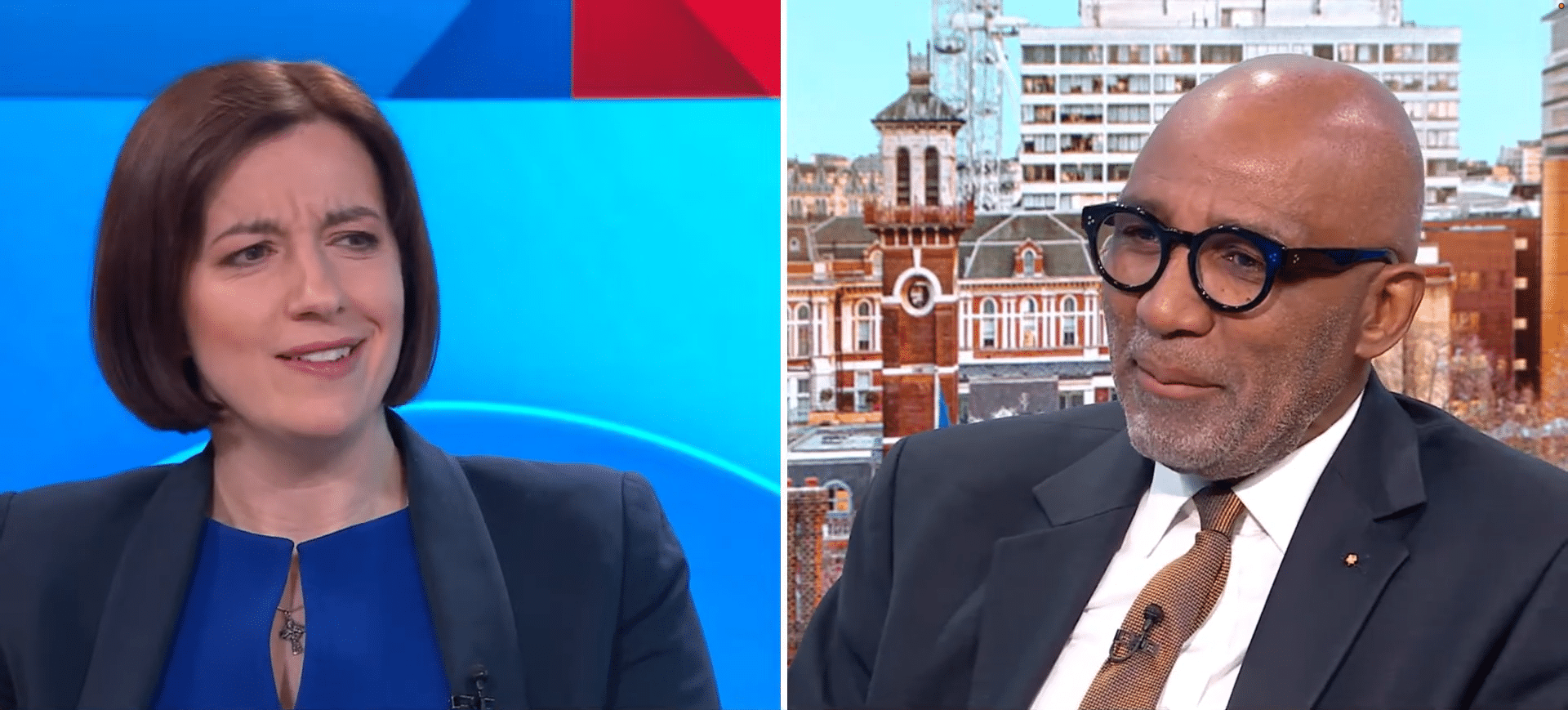
In the clip above, host Trevor Phillips said to Bridget Phillipson:
Advertisement
Let me ask you about the story of the week. Why is Morgan McSweeney the only person in the modern world who doesn’t have his messages automatically backed up to the cloud so that we can recover them and see what traffic there was between him and our former ambassador to the United States?
Smirking as ever, Phillipson responded:
I think your question’s a bit of a reach in terms of that.
When asked why, she said:
It’s hyperbole and you know it.
Oh, sorry — she’s right — some people don’t backup their messages. That’s the real issue here — somewhat exaggerated language.
After confirming that Phillipson’s messages were backed up in line with government guidelines, Phillips asked:
Advertisement
Why aren’t Morgan McSweeney’s?
Phillipson answered:
What happened here, which we all know, is that Morgan McSweeney was mugged
Oh yeah, we’re all 100% confident that the famously dishonest McSweeney was truthful about this ‘theft’ which happened at the maximum moment of benefit to himself.
She continued, noting that McSweeney:
reported that to the police, followed all of the processes that were asked of him.
“That were asked of him” — ignoring the fact that the police didn’t ask him to do more because they weren’t told he was the prime minister’s chief of staff.
Advertisement
Getting to the truly offensive part, Phillipson said:
And I do think some of this wider coverage is drifting into… conspiracy theory territory here.
Oh, is that right?
Do you think that’s because the official narrative is so full of holes that people need to use their imagination to make it make sense?
Phillipson got a similarly harsh response from Lewis Goodall on LBC:
Advertisement
‘He’s not some geezer down the pub – he’s the Prime Minister’s chief of staff!’ @Lewis_Goodall responds to Bridget Phillipson’s suggestion that coverage of Morgan McSweeney’s phone is ‘getting ridiculous’. pic.twitter.com/nkmluPxk7a
Interestingly, Phillips would later turn the conspiracy logic on Kemi Badenoch:
Absolutely wild scenes here as Peter Mandelson’s best friend insists there’s nothing weird about Peter Mandelson’s protege misplacing his phone at the height of a very serious scandal about Peter Mandelson passing information to a foreign agent. And he is *the host of the show*. https://t.co/4jx9MRhmsa
This isn’t a conspiracy; this is what it looks like when your political and media establishment are so firmly entwined that you can’t tell where one ends and the other begins.
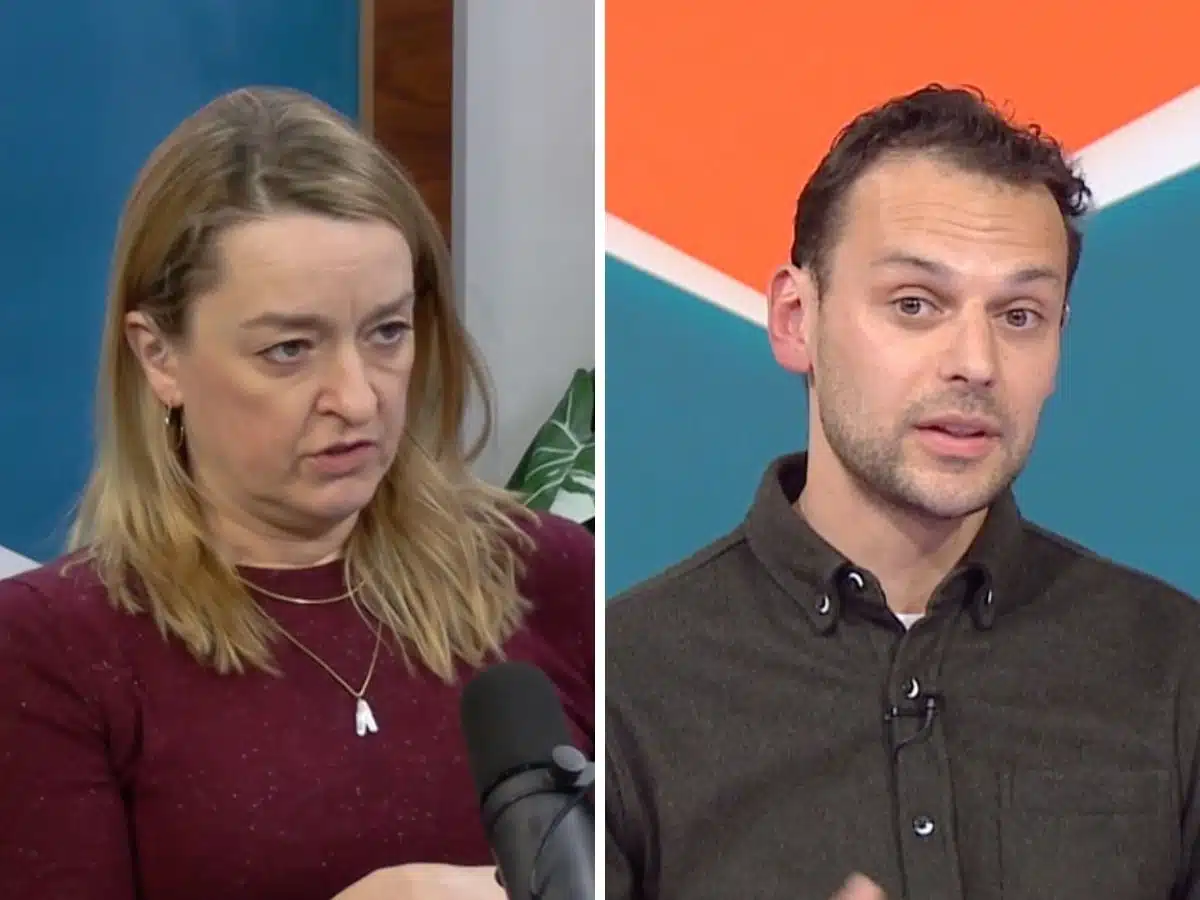
Josh Simons is the ex-cabinet minister who had to resign in disgrace because he’d been running a spying operation on UK journalists. Or, if you’re the BBC or in specific Laura Kuenssberg, he’s a naive young man who simply didn’t realise it was wrong to do blatantly bad things in secret:
What the above headline doesn’t convey is that Laura Kuenssberg raised the idea that Simons was simply “naive” and “foolish”. And she suggested it in one of those wretched moments in which an establishment journalist provides an answer and then asks the interviewee if they’d like to claim it as their own.
Just in case readers are unfamiliar with the case, or are tempted to take anything Simons says at face value, Labour Together were caught paying tens of thousands to a firm run by a fellow Labour right-winger’s wife to spy on independent journalists.
From 2022to 2024, Simons ran the sabotage outfit, Labour Togther. He took over after disgraced Morgan McSweeney moved on to become Keir Starmer’s (now former) chief of staff.
The following is the clip in which Kuenssberg furnished Simons with his excuses.
Advertisement
I am trying to imagine a universe in which an actually left-wing politician would spy on journalists, report them to the security services, belatedly get called out for doing so, and then Laura Kuenssberg would sympathetically ask “were you just a bit naive?” pic.twitter.com/GK1RT3ivMy
Do you now think that you were naive? Do you think you were foolish? You say you weren’t meaning to do anything wrong – it wasn’t what you intended for a journalist to be investigated. But, if you went to a PR firm saying, ‘please, can you find out about where this story came from?’ – surely, actually, it was inevitable they were going to look into what the journalists had been doing, if you’re asking where a story comes from.
So looking back now, do you think, were you naive? Were you foolish? Were you mistaken? How do you characterise it?
We’re going to write this in capitals so it’s clear:
Advertisement
THIS IS NOT HOW INTERVIEWS SHOULD WORK.
You can’t give someone a helpful answer and then ask if they want to claim it.
And of course he did want to claim it, because it presented him in the most flattering light possible.
This was how he answered:
Advertisement
Absolutely, I was naive. And there’s a lot I’ve learned from it. And there’s things that I would have done differently.
A Labour MP who resigned as a Cabinet Office minister has said he was “naive” and “so sorry” in his first full interview since leaving his role.
This should read ‘Laura Kuenssberg suggested he was naive, and Simons agreed‘.
Abysmal stuff.
Kuenssberg — Form
As academic Nicholas Guyatt added, Kuenssberg has a history of laundering the reputation of Britain’s worst politicians:
Advertisement
Laura Kuenssberg is the GOAT of rehabilitating disgraced Labour right figures: she also threw a lifeline to Peter Mandelson back in January, hailing his “unique perspective” on Trump and giving him twenty minutes to pose as a geopolitical expert before even mentioning Epstein pic.twitter.com/dZG2BqsKxn
I imagine that Paul Holden, author of The Fraud (@StarmertheFraud) and one of the journalists targeted by Josh Simons, will be looking very carefully at Simons’s remarks (transcript below); it’s quite the claim that you decided to investigate a journalist because of his publisher pic.twitter.com/80ndi9GgQO
You can read a serialisation of the first chapter of Paul Holden’s The Fraud here. It covers the dirty tactics that Labour Together used to maneuver Keir Starmer into Downing Street — tactics they sorely needed because Starmer has all the political competence of a quiche.
To be absolutely fair, though, when they did all the bad stuff, many of these career politicians could simply have been a bit naive.
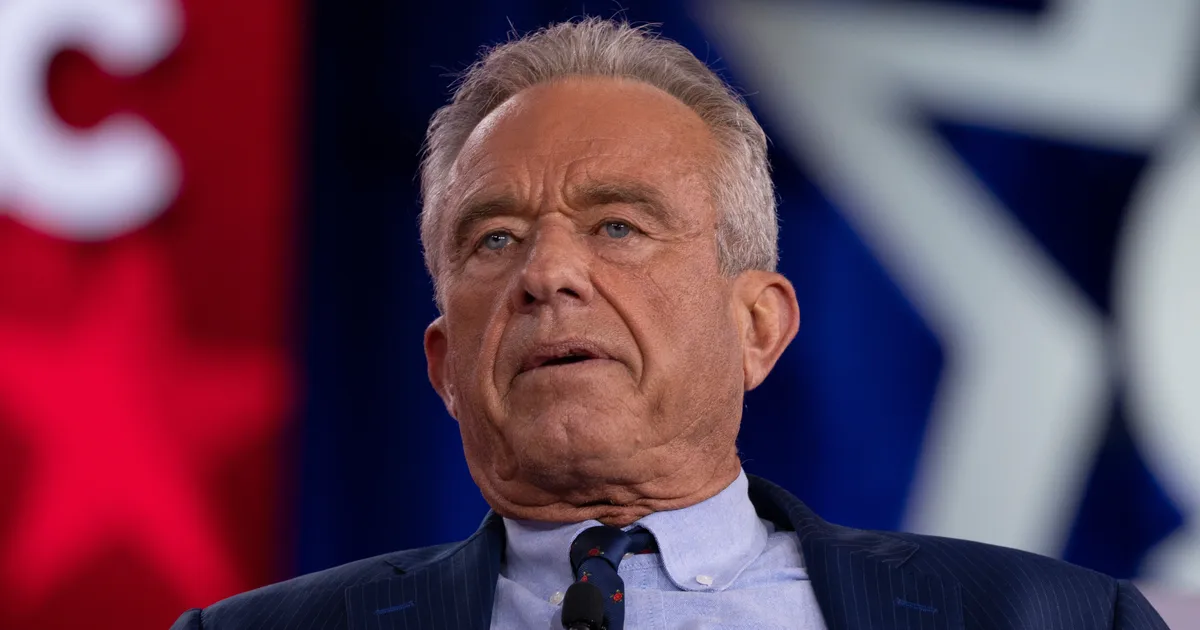
Health Secretary Robert F Kennedy Jr, who once flexed his disdain for Donald Trump and his base of “belligerent idiots,” stressed on Saturday that he “drank the Kool-Aid,” and the president wasn’t as “ill-informed” as he once believed.
In remarks at the Conservative Political Action Conference, Kennedy claimed Trump has “encyclopedic, molecular knowledge” across a “wide range of very, very eclectic interests” before recalling a time the two dined on McDonald’s aboard his plane during the 2024 campaign.
“We started talking about Syria and he got a placemat and he turned it on its back and then he took a Sharpie and drew a perfect map of the Mid East,” said Kennedy of Trump, who claimed that he “never wrote a picture” in his life last year while denying that he gave a racy 2003 birthday card to Jeffrey Epstein.
Kennedy continued, “Then he put the troop strength of every country on every border on that map. It challenged a lot of the assumptions that I had been told about him.”
Advertisement
He added that Trump has an “extraordinary depth of knowledge” about what’s happening in each agency alongside an “instinct for making good choices” before concluding that the president is better than his uncle, John F. Kennedy, at understanding the use of power in the White House.
Social media users swiftly clowned Kennedy over his Trump story, with one user on X calling out the health secretary over his “asinine BS” and another writing that it’s “genuinely crazy to watch the North Korean level hero worship manifest in real time.”
When you stay at a hotel, the rules are mostly clear: blasting music at 2am is not OK. Running through the halls is not OK. Someone at the front desk will intervene if things get out of hand.
Airbnbs and other holiday shares operate in more of a grey zone. You’re basically staying in someone else’s home, and it doesn’t have a concierge or staff on-site to set expectations or step in when guests cross a line.
“We never take a vacation from good manners,” said Jodi RR Smith, president of Mannersmith Etiquette Consulting. “Even when you are off and away, you still must take into consideration how your behaviours impact those around you.”
Even if no one is watching, the way you act can have real consequences – from negative reviews to cancelled bookings or fines. Here are the seven rudest things you can do in an Airbnb, according to etiquette experts.
Advertisement
Taking things that aren’t yours
“Towels, décor, kitchen tools, robes, or specialty products are not souvenirs,” explained Jacqueline Whitmore, etiquette expert in Palm Beach, Florida. “Even small items add up, and replacing them is costly and frustrating. If you are unsure whether something is complimentary, ask. When in doubt, leave it.”
You may be thinking: Is this even worth mentioning? Apparently, yes. Hosts routinely report stolen items – from pillows to utensils. At first, I optimistically wondered whether some of the confusion stems from hotel culture, where toiletries, slippers, and mini bottles are fair game. In a short-term rental, however, all items are simply part of someone’s home inventory.
Smoking (anywhere)
Advertisement
“Most rental properties are nonsmoking and most guests get that at this point,” Smith said. “But the guests think (hope?) that if they are outside, the no-smoking does not apply. However, unless otherwise noted, the entire property is nonsmoking.”
If that sounds overly strict, there’s a reason for it. Smoking on rental properties can cause lingering odours, damage furnishings, and create outdoor fire risks. Discarded cigarettes tossed into planters or mulch have ignited porch fires, leading to serious property damage.
Being noisy
On vacation, my everyday routine goes out the window. I sleep in, stay out later, and generally abandon the discipline required for a 9am conference call. But just because I’m on holiday doesn’t mean everyone else is.
Advertisement
“Late-night gatherings, screaming kids, drunken arguments, and loud music can disturb nearby neighbours,” Whitmore said. “Observe quiet hours and be mindful that your neighbours are not on vacation.”
And it’s not just the 1am DJ set that can get you in trouble – though most short-term rental agreements include no-party clauses, so that’s worth noting. It’s also the less conspicuous noises that add up: slamming doors in a shared hallway, dragging suitcases at dawn, speakerphone calls on a balcony, or kids racing up and down stairs in a multi-unit building.
Ghosting your host
Nobody likes to be ignored, especially when you’re staying on their property. “Prompt communication builds trust,” Whitmore said. “Be a considerate guest. Respect the host, the neighbours and the property, and you will always be welcomed back.”
Advertisement
That courtesy goes both ways. Whether you have a question about turning off a fire alarm or need to let the host know you’ve broken something, it’s better to speak up than stay silent.
“If there’s a problem, speak up,” said Nick Leighton, co-host of the Were You Raised by Wolves? podcast. “Hosts would much rather know about a problem during your stay and try to address it rather than just learn about something for the first time in your negative review.”
The Good Brigade via Getty Images
Leaving your rental reasonably tidy and respecting the space goes a long way with Airbnb hosts.
Treating your rental like a hotel
When I’m staying at a hotel, I regress a little to my teenage self: towels on the floor, bed unmade, room service tray lingering longer than it should. It feels like part of the perk. No disrespect intended, just the luxury of not having to reset the space before you leave.
Advertisement
But at a holiday rental, you don’t have those same perks.
“Treat the home as if you were staying with a friend or family member,” said Whitmore. “Follow house rules and leave it reasonably tidy. Don’t create excessive mess, move furniture, or break something without telling your host.”
Inviting friends or pets
It may feel harmless to have your mom stay the night before an early flight or let a friend crash on the couch after dinner. But in a short-term rental, occupancy limits aren’t just suggestions. They’re often tied to insurance policies, local regulations, homeowners association rules, and cleaning arrangements. Adding even one unapproved overnight guest can put hosts in a difficult position.
Advertisement
“Unannounced visitors raise safety and insurance concerns,” explained Whitmore. “If you plan to bring a guest or a pet, get approval first. Many hosts may charge an extra cleaning fee.”
While an extra overnight guest can create insurance or occupancy issues, pets raise even more concerns – even if you’re certain yours “wouldn’t do anything.”
“Your pup may be extraordinarily well-behaved, but if the property says no pets, you need to adhere to the agreement,” Smith said. “Whether it is cameras on the property, just nosy neighbours or the cleaning staff, most owners end up learning of a pet on the premises. (Certified service animals aside.)”
Ignoring the checkout procedure
Advertisement
You’re packed, you’ve called your car, and you’re mentally already at the airport. But before you shut the door, did you take out the trash? Is there still half a pint of milk in the fridge?
“Be sure to read and understand the checkout instructions before you book,” Leighton said. “Some can be quite onerous, but once you’ve agreed, you’ve agreed! So, be sure to follow the list before departure.”
Experts recommend leaving the rental as you found it. That can include tidying up messes, returning moved furniture to its original place, and taking care of smaller details like turning off lights and adjusting the heat.
“Be sure to understand how to strip the beds, where to put the wet towels, whether you need to empty the refrigerator, and how to handle the garbage and recycling,” Smith said.
Michael Walker of Reform UK and Jonathan Dulston of the Conservatives claim they want to protect ALL women. Yet the pair spent Thursday 26 March 2026 pushing a transphobic motion that would have stripped away rights from some of Darlington’s most vulnerable residents. This moment, the mask slipped, exposing their “safety” rhetoric as nothing but a thin veil for their politics of hate.
Walker, a new Reform UK councillor in the area, chose a targeted attack on trans people as his first ever motion. Fucking shocking, I know. Alongside ex-leader of the council and Tory-boy Dulston, Walker tabled a proposal to enforce “biological sex-based” exclusions from single-sex spaces across the borough. They used their shitty platform to champion their bullshit vision, but they didn’t count on a tactical masterclass from the Green Party.
And it was fucking stunning to behold.
A masterclass in inclusion
Local Green party leader Matthew Snedker refused to let the right-wingers set the terms of the debate. His amendment to the motion absolutely gutted the transphobic language, whilst keeping the title: ‘Women’s Privacy, Dignity and Safety Across Darlington’.
Advertisement
Snedker, who himself has a trans daughter, delivered a powerful defence of human dignity. He told the chamber:
“Gender is a symphony, not a harmony. It is complex, it is lived, and it is diverse. To suggest that protecting the rights of women must come at the expense of the dignity of transgender people is a false choice.”
The amendment affirmed that protecting women and protecting trans people are ‘compatible obligations’ under the Equality Act 2010. It commits the council to rejecting ‘blanket exclusions’ and ensuring that any restrictions are justified on a case-by-case basis.
Michael Walker spewing his division
By the time the vote was called, the Green party, backed up by local Labour councillors, had verbally battered both of Reform’s Walker and conservative Dulston. Dulston’s hateful proposal of the motion claimed to champion the voices of women, spoke of protection and the usual divisive drivel. We all knew Walker’s first motion would never be about trying to solve Darlington’s child poverty rate which currently stands at a fucking third. We all knew it wouldn’t be about helping with bills. Of course it was about fucking toilets. Even before he was councillor, Walker was obsessed with trans people and toilets, but to a weird degree.
But by the time the vote was called, the Greens had successfully ripped out the hateful core of the motion, and replaced it with a shield for trans rights. They had effectively turned the right-wingers own motion against them. Their failure proved that, in Darlington, the politics of hate could fuck off entirely.
Reform — A mask off meltdown
The hypocrisy was not limited to the wording of the motion. Dulston, Conservative councillor and former head of the council, pitched the proposal on a ticket of elevating women’s voices. His actions during the debate, however, told a different story.
Advertisement
During the debate, there had been cheers and jeers from the gallery. And for some reason this appeared to get right up Dulston’s nose. Weird, when public input annoys someone, isn’t it? Like, come on my guy, these are the people you’re meant to represent. Yet this offended him to such a degree that the little Tory turned and addressed the gallery directly. I believe the line was:
“No one has done more for the LGBTQ community than me”
And then, choosing to address those filming directly, he went on an increasingly angry rant of changes he had made to the town. At one point he directly pointed at me and I couldn’t help but laugh. And it went on, and on until the mayor herself asked him to be quiet as his rant was getting boring. Dulston turned to her and snapped:
“No, I won’t, I’ve listened to the opposition talk and I’ll carry on, thank you.”
After being asked a second time by the FEMALE mayor to stop talking, the lad snapped:
“No, you’ve let everyone whine on, I’ll continue.”
Advertisement
Jonathan Dulston after he finally shut up
Yeah, Dulston, nothing screams elevating women’s voices and safety than shouting over one when you’re having a tantrum. He was waffling on about all the changes he had made for the LGBTQ+ community, but here’s the thing. If you’re doing all that but also trying to target the T in the LGBTQ+, you never were true ally. You cannot pick and choose who you get to protect in our community, a strike on one is a strike on all. He was more than happy to stand in front of a trans-inclusive flag for photoshoots though, when it suited him.
Reform — aggression in the gallery
The hostile environment extended to the supporters of Reform UK and the Tories in the public gallery. At one point, a supporter was caught taking photos of the opposition in attendance. This included a number of trans people. When a member of the public politely asked if he had taken a picture, this lad flew off the handle in a big way. Like, explosive rage.
He reported shouted ‘nonces’ and ‘smelly’ at those on the opposite side. His aggression grew to the point that the Mayor had to ask him twice for silence. He was repeatedly asked to calm down by those who had seen him take the images. It later emerged that the angry dickhead had in fact taken some, which he posted on Facebook with the transphobic caption “I bet it was one of these smelly blokes’. Grow up, my guy.
One of the original motion’s supporters didn’t look too happy with the amendment
This aggression highlights the real-world consequences of this culture war Walker and Dulston are trying to stoke. When these councillors use their first motion to signal that a vulnerable minority is ‘other’ or ‘dangerous’, their followers feel empowered to harass them in public. It’s the real human cost of this absurd politics of hate.
A rejection of hate
The failure of the Reform-Tory motion was absolutely a stunning political play from the Greens. By adopting their inclusive amendment, the council rejected the politics of hate in Darlington.
As Snedker noted in his closing remarks:
Advertisement
“When they came for the trans community, I spoke out because I have heard the poem before.”
Stunning stats by Labour allies who backed the amendment sealed the deal in a stunning humiliation for the right. The council will now move forward with clarity and compassion, upholding dignity over hate.
And just to end on a weird note, the BBC coverage of this seems pretty hostile. Yet the coverage in the local Northern Echoseems pretty tame and more inclusive, but both written by authors called Bill Edgar. Wonder if it could be the same one? Because why would one post be more inclusive on a local level, yet wholly hostile on a national one, all from the same guy?
Oh wait, it is the same one… seeing propaganda and narrative control like that is fucking buck wild.
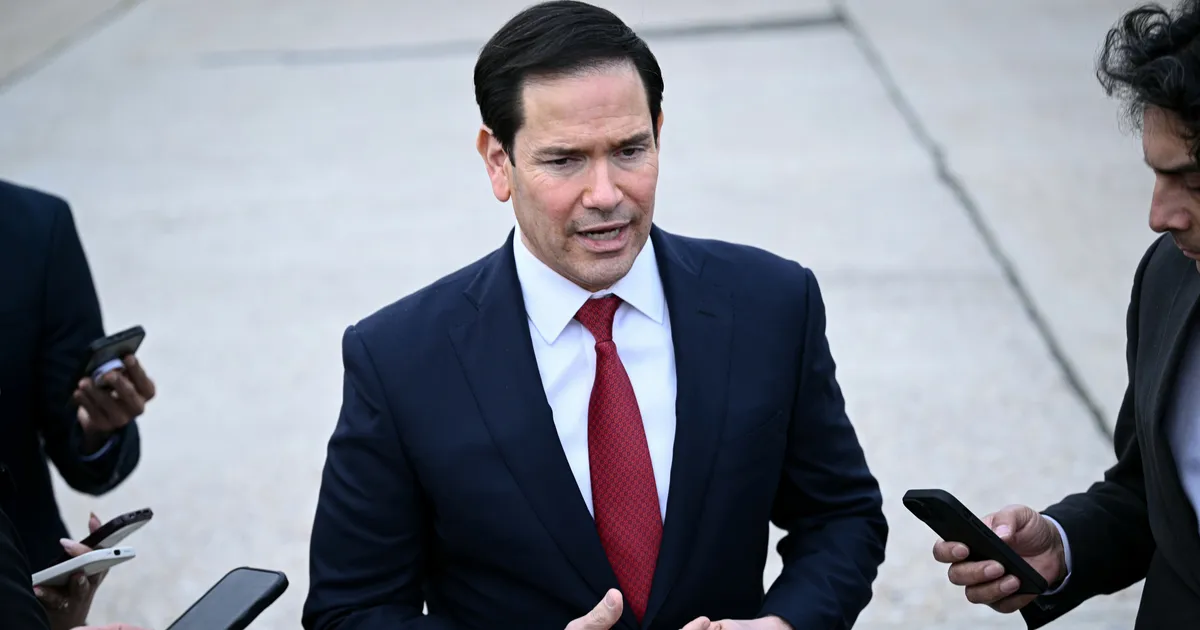
Marco Rubio perfectly demonstrated the US’s inconsistent messaging over Ukraine in a one-minute interview.
Donald Trump has vowed to end the Ukraine war as soon as possible and has frequently suggested Kyiv bow to Russia’s demands – even though Moscow started the conflict by invading its European neighbour.
Pressed over how the trilateral talks are going on Friday, the US’s top diplomat initially accused Volodymyr Zelenskyy of misrepresenting America’s stance in the ongoing negotiations.
In his next answer, he appeared to prove the Ukrainian president right.
Advertisement
Asked if American security guarantees for Ukraine after the war were dependent on the country giving up the eastern Donbas territory, Rubio immediately slapped it down.
He told reporters: “That’s a lie. I saw him [Zelenskyy] say that and it’s unfortunate that he would say that because he knows it’s not true and that’s not what he was told.”
“Security guarantees are not going to kick in until there’s an end to the war because otherwise you’re getting yourself involved in the war,” Rubio insisted.
“It’s a truce that you’re willing to step in and secure. If you’re putting that in place, that means you’re injecting yourself in the war.”
Advertisement
He said the guarantees were not attached to giving up the Donbas, adding: “I don’t know why he says these things, they’re just not true.”
Rubio said: “We’ve told the Ukrainian side what the Russians are insisting on.
“We’re not advocating for it, we explained it to them. It’s their choice to make. It’s not for us to make. We never told them to take it or leave it.
“The role we have played is to try and figure out what both sides want and to try and reach a middle ground.”
Advertisement
But, in the next breath, he suggests the war will only end – meaning, Ukraine will only get US security guarantees, if it concedes to Russian wishes.
Rubio said: “The decision ultimately is up to Ukraine, if they don’t want to make concessions, then the war keeps going.”
Zelenskyy told Reuters that questions remain around the security guarantees Ukraine could receive once the war ends, such as how allies would respond in the face of future Russian aggression and who would help to fund the country’s weapons purchase to sustain its military deterrent.
He added that the US will finalise questions “once Ukraine is ready to withdrawfrom Donbas”, which is one of Vladimir Putin’s maximalist demands – but that is a red line for Kyiv.
Advertisement
“I would very much like the American side to understand that the eastern part of our country is part of our security guarantees,” Zelenskyy said.
















 News Videos4 days ago
 Sports6 days ago
 Sports6 days ago
 Tech7 days ago
 Tech7 days ago
 Business3 days ago
 News Videos6 days ago
 NewsBeat2 days ago

 Tech6 days ago
 Sports7 days ago



 Fashion5 days ago
 Business5 days ago
 Business5 days ago
 Sports4 days ago
 Politics6 days ago
You must be logged in to post a comment Login