
Politics
Health Experts Warn Against This Common Parenting Habit


Some parenting habits are so routine, you probably don’t give them a second thought. Maybe you taste your child’s food with a spoon before handing that same spoon to them, blow on a too-hot bite before giving it to them or take a sip from the same cup before handing it over.
While these moments may seem completely harmless, sharing food in this way involves something you might not have considered: saliva transfer.
There’s no need to panic over every shared bite or sip, but paediatric health experts say it’s worth understanding how saliva-sharing can affect your family’s health, and how simple changes can help reduce unnecessary exposure.
What saliva sharing could mean for your child’s health
One concern health experts have about saliva transfer is that it can introduce Streptococcus mutans, the primary bacteria responsible for tooth decay, into a child’s mouth.
These bacteria feed on sugars and produce acids that can wear away tooth enamel. “Babies are not born with the main cavity-causing bacteria, so these germs are usually passed to children from a parent or carer through saliva,” said Dr. Soha Sharif, children’s dentist at Pure Dentistry.
“If a child’s mouth is colonised by these microbes early on, there’s a greater risk of them developing early childhood tooth decay.”
The caregiver’s oral health can make a difference, too. If they don’t have untreated decay, active gum disease or a mouth infection, any saliva that reaches the child will generally contain fewer harmful microbes.
“However, good oral hygiene doesn’t make saliva sharing risk-free. The mouth is never 100% sterile, and some decay-causing bacteria are always present,” Dr Sharif said.
She added that Streptococcus mutans can also team up with Candida albicans to create plaque that’s stickier and more acidic. “Its presence in a child’s mouth leads to a much higher risk of early childhood caries, and children with severe early decay often carry the same candida strain as their mother,” Dr Sharif said.
But dental health isn’t the only consideration. Dr. Amanda Furr, a board-certified paediatrician and chief medical officer at Zarminali Pediatrics, points out that viruses can also be transmitted through saliva, meaning common infections such as colds, flu and strep throat could potentially spread to a child before a caregiver even realises they’re sick.
“More severe infections like herpes simplex virus 1, or cold sores, can [also] be spread via saliva,” said Dr Furr, noting that a child’s first infection with this virus can cause extremely painful sores in the mouth and on the face. “In newborns, it can cause life-threatening meningitis, an infection around the brain.”

How risks change as kids grow
Experts agree that birth to about age three is the most vulnerable period for children when it comes to the potential health effects of saliva transfer.
“Newborns are particularly vulnerable to infection from saliva transfer,” said Dr. Leslie Treece, board-certified paediatrician at Cookeville Pediatric Associates, pointing to their underdeveloped immune systems.
“Possibly the most feared infection is the herpes virus from a kiss. This particular risk still exists past 30 days of age, but is much lower.”
The mutans bacteria, in particular, are a concern during these early years. “During this period is when new teeth are erupting, which gives the bacteria a fresh hard surface to attach to,” Dr Sharif said. “Since the child’s oral microbiome and immune system are still developing, the bacteria can cause damage faster.”
She added that once these microbes become established, they can be difficult to displace.
Dr Treece noted that by around age three, children typically have their own bacterial colonies established and better hygiene habits in place, which can help lower their risk. However, there are still periods when vulnerability may increase.
“There’s another window between ages six and 12 years, because their permanent teeth are erupting at that time,” said Dr Treece, adding that the risk is lower after age three. “The vulnerability changes as a child gets older. But is never really zero.”
How concerned should you really be?
Drinks get swapped, you mindlessly stick a spoon in your mouth to test your kid’s food, or maybe everybody shares a bite of dessert. “As a mother, I understand the realities of everyday family life,” Dr Furr said. “This is normal and cannot be prevented entirely.”
While an occasional instance of saliva transfer isn’t something to lose sleep over, there’s one situation where it’s best to be cautious.
“If someone is showing signs of illness or cold sores, any sharing of food or saliva exposure should be avoided to reduce exposure, especially in infants and newborns,” Dr Furr said.
She also recommended extra precautions, including avoiding kissing a baby on the face, covering coughs and washing hands frequently.
Sharing food often goes both ways: kids may take bites of a caregiver’s meal or sneak sips from their drink, too. While saliva transfer is one consideration, experts point out that there are other health and safety factors worth keeping in mind.
Beyond choking hazards, especially when a caregiver’s meal includes chunks of meat or nuts, there’s also the risk of foodborne illness. Dr Treece noted that children under age five are more vulnerable than adults.
“Young children have immature immune systems, and they can develop severe illness from food pathogens that an adult might tolerate with little to no symptoms,” she said, adding that this is especially worth considering with higher-risk foods, such as undercooked eggs, raw seafood, unpasteurised dairy, deli meats and bagged lettuce.
Allergen exposure is another potential concern. “If a child with known food allergies is sharing food with an adult, they can have a reaction to something the adult ate even a few hours earlier,” Dr Treece explained.
Simple ways to reduce saliva transfer
To prevent saliva transfer, Dr Sharif recommended testing your child’s food temperature on your skin. If you need to taste it, use a separate, clean spoon whenever possible. “If you’re sharing a spoon, you should run it under warm running water to reduce the risk of sharing saliva,” she said.
Dr Furr also recommended avoiding shared drinks when possible. “Keep baby bottles and pacifiers clean and carry extras. A caregiver should not put these objects in their mouth in an attempt to clean them,” she said, noting that soap and water should be used instead.

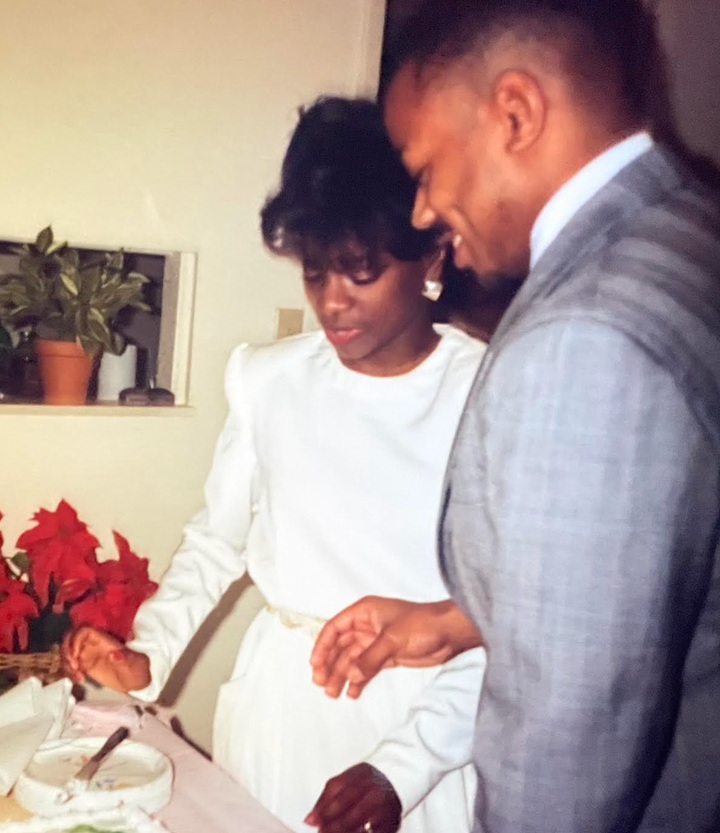
Our 33-year-long marriage ended over Zoom.
Not in a courtroom. Not with slammed doors, raised voices or a dramatic final goodbye. Because we were still living in the aftermath of Covid-19, our divorce hearing happened quietly through a computer screen … as casually as any routine virtual meeting.
I wrestled with what to wear that day. Should it be businesslike or casual? In the end, I was glad I chose something simple, because the moment itself was far less formal than I expected. It was just me and my soon-to-be ex-husband, the judge and our legal representation. The whole thing took no more than 10 minutes.
At one point, the judge even paused and asked if we were absolutely sure this was what we wanted. I think our kindness toward one another – and the fact that we both had smiles on our faces and even chuckled several times – caught him off guard.
In his defense, he was probably accustomed to presiding over divorce cases filled with tension, bitterness or silence so sharp it can cut through air. But my former husband and I simply smiled and answered the same way: “Yes.” And just like that, our three-plus decades of being married was done.
I expected to feel grief afterwards, but I was surprised by the absence of regret. Nobody really talks about peaceful divorce, especially in the church, and especially when you’ve spent more than 25 years in ministry and are the people others assumed would make it all the way to the finish line together.

Courtesy of Michell F. Pulliam
The hardest part wasn’t ending the marriage. It was disappointing people who needed our marriage to represent something. How many people stay in situations, not because they’re right for them, but because other people are invested in their story? And how many of us have silenced our own truth to preserve a story that no longer belonged to us?
For weeks before sharing the news publicly – well, not that publicly… only our kids, my sisters, a few others, a quick mention in a blog post, and a reference to it in my last two books (heck, it’s been almost four years now, and some people still don’t know) – I went back and forth on whether I wanted to tell anyone at all.
It wasn’t because I was ashamed of our decision, but because I knew how quickly people assign failure to divorce, especially in Christian circles. I dreaded the whispers, the pearl-clutching, the subtle disappointment hidden behind concerned expressions. I could already hear the questions forming in people’s minds: What happened? Who changed? Whose fault was it? Who gave up?
The truth was far less dramatic than people probably wanted it to be. There was no scandal. No sudden breaking point. No explosive betrayal. No hatred growing quietly behind closed doors.
There were simply two people who had spent 33 years building a beautiful life together and eventually realising we wanted different things for our next chapters. That realisation came with both grief and relief. That’s the part people struggle to understand: Both emotions can exist at the same time.
Sometimes love changes form, sometimes letting go is the most loving thing two people can do for each other, and sometimes peace is holier than performance.

Courtesy of Michell F. Pulliam
Our decision to divorce wasn’t the result of one defining moment. There wasn’t a single conversation or turning point that suddenly changed everything. It was more like a truth we had been circling for a long time – a truth we both felt but weren’t always ready to acknowledge, let alone fully face.
I think more marriages experience this than people realise. Sometimes one person feels it first. Sometimes both do. The hard part is being honest enough to admit it. When two people are willing to do that, there comes a point where pretending becomes more exhausting than accepting what they already know.
For us, that moment wasn’t about a lack of love. It was coming to grips with the fact that neither of us wanted to spend the rest of our lives asking the other person to become someone they weren’t.
We had built a beautiful life together, but we had also grown into different people with different desires for the years ahead. Once we accepted that, the decision itself became clear as a bell, even if it wasn’t easy.
That isn’t to say our marriage was perfect. Far from it. We had our struggles, our disappointments, and our share of painful seasons. But those things weren’t the reason we divorced. The simple truth was that we had grown in different directions and were finally able to come to terms with it.

Courtesy of Michell F. Pulliam
Some mornings after that Zoom meeting, I’d wake up and, for a split second, I’d forget that I was divorced. Then reality would quietly settle in. I’d realise every decision belonged solely to me now: what to do, where to go, what’s for dinner, how to move through the day. After spending the majority of my adult life considering another person in every choice, that kind of freedom felt unfamiliar.
There were moments when fear gripped me unexpectedly. Moments nostalgia washed over me without warning. Moments I whispered to myself, Oh God, what have we done? But even in those moments, I knew this was the right decision. That certainty surprised me and comforted me all at the same time.
I think part of the emotional warfare surrounding divorce has less to do with the relationship itself and more to do with the weight of disappointing the people you love. I come from a family where long marriages are the norm. My parents were married for nearly 45 years before my mother passed away. My siblings, aunts, uncles, cousins and family friends have all been married for years.
Then there was ministry. For decades, my former husband and I led a congregation, counselled couples, officiated weddings, encouraged families and prayed with people through difficult seasons in their marriages. The ironic part is that I even wrote a book on relationships and communication. Looking back, I can see how even that was preparing me for this chapter of my life, not in vain, but as a part of an unfolding I had no idea about at the time.
I worried people would see our divorce and immediately reduce our entire story to one word: failure. But I no longer see it that way. And if I’m honest, I don’t think I ever truly did. It was one of life’s greatest lessons. It was a marriage that brought three incredible children into the world, filled our home with love and laughter, carried us through multiple states, seasons of ministry, hardships, prosperity, grief and celebration, and eventually a wonderful son-in-law and two beautiful grandchildren. That is the furthest thing from failure to me. It was my life, and I’ll always be grateful for it.

Courtesy of Michell F. Pulliam
Our family dynamics may have changed, but we’re still family. My ex-husband’s family is mine, and my family is his. And when I say we’re still family, I don’t mean that as a statement to make our ending seem perfect. I mean it quite literally. We talk on the phone often. My sisters and brothers-in-law still consider him their brother. He remains uncle to my nieces and nephews. Our shared friends are still our friends. If time permits, he shows up for family events every now and then. And, to many people’s surprise, he’s even still my pastor.
I know that may sound unusual, even hard to understand, because it doesn’t fit the way most people are taught to think about divorce. However, for us, our divorce ended our marriage, not a lifetime of shared history, mutual respect and genuine care. Those things didn’t disappear when the paperwork was signed. If anything, they became easier to appreciate once we stopped trying to force our relationship into something that no longer worked.
We still want the best for one another. Our children love us both deeply, and we’ve been intentional about protecting that throughout this process. Life may continue evolving for both of us, but I don’t believe that has to erase the love and respect we share. In some ways, we may be better friends now, free from the weight of the identity we had built together.
In letting go of old ways of being, we both received the space to finally grow into who we were always meant to be, without trying to hold together a version of ourselves that no longer fit. Most of all, we ended a marriage without ending our love for each other as human beings. Instead of mourning what we’ve lost, we’re celebrating what remains.
Some people may find this strange, because we live in a culture that often treats divorce like emotional warfare where someone must become the villain and someone has to bear the blame so the story makes sense. But life is rarely that simple.

Courtesy of Michell F. Pulliam
Peaceful endings often make some people uncomfortable. They challenge the narratives we’ve grown accustomed to. People understand betrayal. They understand toxicity and drama. They understand painful, messy endings. Mutual love and mutual release sometimes confuse people, because we’ve been taught to see letting someone go as a sign of loss or defeat.
Of course, I still grieved. You don’t close a 33-year chapter of your life without feeling the weight of it. And there are definitely moments when I miss what once was. But I don’t miss pretending. I don’t miss ignoring what we both knew deep down inside of us.
Ultimately, I’m grateful neither of us forced the other to continue living a life that no longer brought joy, peace or fulfillment simply because other people expected us to.
I’ve learned that divorce does not automatically make someone bitter, broken or spiritually deficient. It does not erase the good that existed before the ending. And, despite what many Christians have been taught, sometimes grace looks less like enduring unhappiness with no end in sight and more like setting each other free with compassion.
My former husband and I are still friends. We still support one another. We still love our family fiercely. After 33 years together, I genuinely want him to have a beautiful life as he moves forward. And I know he wants the same for me.
Michell F. Pulliam is a storyteller, author and midlife advocate who writes on identity, faith, relationships and personal transformation. Over 25 years, she and her former husband pioneered ministries across four states, building faith-driven communities. She is the author of four books, including “Rooted,” a memoir inspired by the discovery of a rare maternal haplogroup tracing back 44,000 years, exploring ancestry, identity and the women whose stories came before her. She is passionate about helping women reclaim their voice, rewrite their story and remember who they are.
Do you have a compelling personal story you’d like to see published on HuffPost? Find out what we’re looking for here and send us a pitch at pitch@huffpost.com.

The US president posted a map of the economically-vital waterway calling it the “Trump Strait”.
The Strait, which used to carry around one-fifth of the world’s oil and natural gas, has been effectively closed by Iran since America and Israel launched a war on the country at the end of February.
That has led to a rise in oil prices, pushing up inflation around the world.
Iran announced on Friday that it had presented America with a “concrete” seven-day plan to re-open the Strait.
Speaking at the United Nations in New York, Iranian foreign minister Abbas Araghchi said: “The choice now rests with the United States.
“If the necessary conditions are met, the strait can be reopened and a normal maritime passage restored within seven days.”
But hours later, Trump posted the image on his Truth Social account referring to the “Trump Strait”.
Trump has previously renamed the Gulf of Mexico the Gulf of America, and changed Lake Ontario’s name to Lake America.
His apparent attempt to name the Strait of Hormuz after himself drew criticism on social media.
Listen to Commons People, the podcast that makes politics easy. Every week, Kevin Schofield and Kate Nicholson unpack the week’s biggest stories to keep you informed. Join us for straightforward analysis of what’s going on at Westminster.

Ever heard of the names “kiko” and “bouba”?
These are made-up nouns that scientists invented to test how we link images to language. When people are shown a blobby shape and a spiky shape, then asked which one suits “kiko” and which is a better match for “bouba”, they overwhelmingly dub the round one “bouba”.
Its sharper sibling is often seen as more of a “kiko”, meanwhile. This result is consistent across languages and cultures.
And it seems a similar phenomenon called the “mil/mal effect” might even change how we choose our food.
What is the “mil/mal effect”?
This means that people usually associate sounds like “ee” and “t” with smaller sizes, while words with broader “b” and “oh” noises are perceived as relating to bigger objects.
For instance, people might be likelier to think a table called “mal” was larger than one arbitrarily named “mil”, without seeing either.
A paper that sought to find out how snack names changed our expectations of them used this theory.

Jeremiah Lazo via Unsplash
What did they find?
The researchers asked people to describe what they thought about snacks with fictive names. Half of these (like Iskee, Keesee, Kitsip, and Spisiki) were expected to be seen as “smaller”, while the other half (Bromogaw, Gawdoe, and Gobo) were designed to sound “bigger”.
Scientists assigned these names to both healthier foods (like porridge and trail mix), and less-healthy items, like crisps. Participants were given different names for different products to review.
It seemed that regardless of snack type, people imagined snacks with “bigger” names – like Blorgo – as being heavier and more filling than those with “smaller” fake brands, like Iskee.
That didn’t seem to affect whether or not participants said they’d choose to buy the products in a supermarket, though. The biggest factor there was the would-be buyer’s goals: when asked which they’d pick for a friend who liked hearty fried food, people were likelier to choose a “big”-sounding snack name.
When asked to shop for a mate who prefers lighter meals, however, they tended to opt for something like a smaller-sounding Kipi.
In general, Teek was an especially popular choice, while it seems nobody wanted to consume poor Blorogo.
The research concluded: “Sound symbolism shapes our perception of the world. Sounds that are associated with information about size and weight can have an impact on food expectations – even through minimal exposure such as reading a food product’s brand name.
“The present research underlines the importance of considering language surrounding food products for expectation and purchase intentions.”

 Evan Peters, Ella Beatty and Charlie Hunnam in their respective seasons of Monster
Since it premiered with its first season about Jeffrey Dahmer, Netflix’s anthology series Monster has become one of the most talked-about shows of the 2020s – but it’s often not for the reasons any creator would hope for.
The premise of the show is that each iteration focusses on a different dramatised true-crime case, with Evan Peters’ outing as Dahmer followed by seasons about Lyle and Erik Menendez, Ed Gein and, most recently, Lizzie Borden.
While they may have all pulled in hoards of viewers, each season has generated differing levels of debate and backlash, which has all contributed to the Ryan Murphy co-creation becoming one of the most controversial TV series in recent memory.
Here are 11 past instances when Monster has landed in hot water…
The families of Jeffrey Dahmer’s victims spoke out against the show following season 1’s debut
 Evan Peters as Jeffrey Dahmer in the very first season of Monster
The first season of Monster, titled The Jeffrey Dahmer Story, was made without consent or involvement of the titular serial killers’ families, and when it premiered, many of them were quick to speak out against the show.
In a piece published in Business Insider, Rita Isbell, the sister of Errol Lindsey, who was murdered by Jeffrey Dahmer at the age of 19, said: “I feel like Netflix should’ve asked if we mind or how we felt about making it. They didn’t ask me anything. They just did it.
“I could even understand it if they gave some of the money to the victims’ children … The victims have children and grandchildren. If the show benefited them in some way, it wouldn’t feel so harsh and careless. It’s sad that they’re just making money off of this tragedy. That’s just greed.”
Errol Lindsey’s dad also told the LA Times: “I want people to understand this is not just a story or historical fact, these are real people’s lives. He was someone’s son, someone’s brother, someone’s father, someone’s friend that was ripped from [our] lives.”
“We’re all one traumatic event away from the worst day of your life being reduced to your neighbour’s favourite binge show,” he claimed.
“And most importantly, if you’re going to create something that uses real-world people and experiences, you should at minimum contact those people out of respect.”
“If you’re actually curious about the victims, my family (the Isbells) are pissed about this show,” another family member wrote on X. “It’s retraumatising over and over again, and for what? How many movies/shows/documentaries do we need?”
In a 2023 statement, Thomas M. Jacobson – a retired attorney who represented the families of eight of Dahmer’s victims – said the show’s success contributed to “glamourising or desensitising violence and crime in society”.
He added that the “continued pomp and circumstance surrounding the Dahmer series glorify and romanticise the monster’s actions and motivations resulting in further trauma for the victims’ families”.
Co-creator Ryan Murphy later claimed that he’d made an attempt to reach out to victims’ families but did not receive a response.
The focus being so much on Jeffrey Dahmer’s back story, rather than those of his victims, was also a controversial choice
 The first season sparked accusations it “mythologisied and glorified” Jeffrey Dahmer
A 2022 piece in BBC Culture summed up this argument by questioning whether shows like Monster risk “mythologising and glorification” of serial killers by giving their stories so much attention.
The piece particularly pointed to the objectification of lead actor Evan Peters and the “romantic” TikTok fan-cams that became prevalent after season one’s premiere.
Co-creator Ian Brennan was later asked for his take on the debate over whether the show was too “sympathetic” in its portrayal of Jeffrey Dahmer, to which he insisted toPage Six he didn’t agree with the criticism “at all”.
“We show a human being,” he maintained. “He’s monstrously human and he’s monstrously monstrous and that’s what we wanted to sort of unpack. We tried to show an objective portrait as possible. We did our homework.”
An official synopsis for Monster’s Jeffrey Dahmer season described it as a “series that exposes these unconscionable crimes, centred around the underserved victims and their communities impacted by the systemic racism and institutional failures of the police that allowed one of America’s most notorious serial killers to continue his murderous spree in plain sight for over a decade”.
Netflix faced backlash for including Monster season 1 in its LGBTQ programming subsection
Fuelling controversy even more was the fact that when Dahmer began streaming on Netflix, users clocked that it had an “LGBTQ” tag attached to it, listing it alongside content including Heartstopper and Sex Education.
After a wave of backlash on social media, Netflix quietly dropped this tag, instead leaning more into the show’s true crime aspects with its labelling.
Ryan Murphy later told the New York Times: “[Not all] gay stories have to be happy stories. There was a moment on Netflix where they removed the LGBTQ tag from Dahmer and I didn’t like it, and I asked why they did that and they said because people were upset because it was an upsetting story.
“I was, like, ‘Well, yeah’. But it was a story of a gay man and more importantly, his gay victims.”
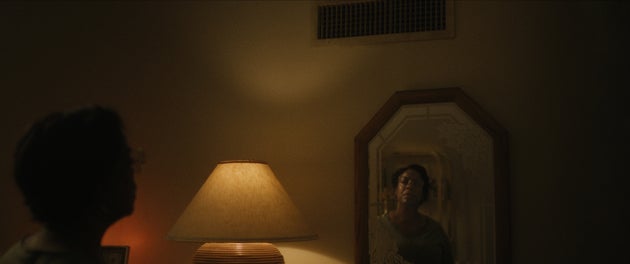 Niecy Nash-Betts won an Emmy for her performance as Glenda Cleveland in Monster
A production assistant also called out the way she was treated behind the scenes of Monster season 1
Production assistant Kim Alsup alleged that she was treated “horribly” on set.
She told the LA Times: “I was always being called someone else’s name, the only other Black girl who looked nothing like me, and I learned the names for 300 background extras.”
Alsup described the experience as “exhausting” and “one of the worst shows that I’ve ever worked on”. She also alleged that the set had no mental health coordinators available.
Netflix declined to comment at the time, but a rep did tell the LA Times that all crew members had been provided access to free health and wellness resources, including a licensed therapist.
Scenes depicting incest between the Menendez Brothers dominated the conversation after the release of season 2
 The second season of Monster proved to be just as controversial as the first, albeit for different reasons
The second season of Monster employed a unique storytelling method, in which numerous theories surrounding the deaths of Kitty and José Menendez were acted out, with the intent that viewers should make up their own minds.
One of these drew particular criticism, as it involved a theory suggesting that Erik and Lyle Menendez – portrayed in the show by Cooper Koch and Nicholas Alexander Chavez – could have been involved in an incestuous sexual relationship at some stage.
“I do not think that’s true. And I don’t think it was intended by the show to make or break that truth,” Cooper insisted. “I think that was just a theory that one person had and that got put into the show because that person was a character in the show.”
Ryan Murphy also defended the show, maintaining: “What the show is doing is presenting the points of view and theories from so many people who were involved in the case.
“[Reporter] Dominick Dunne wrote several articles talking about that theory. We are presenting his point of view just as we did [defence attorney] Leslie Abramson’s point of view. We had an obligation to show all of that. And we did.”
Erik Menendez was among those slamming season 2 of Monster
Monster’s second season is, so far, the only incarnation of the anthology series whose central figures are still alive.
Issuing a statement from prison, Erik Menendez accused the Netflix show of perpetuating “horrible and blatant lies” about himself and his brother.
He wrote: “I believed we had moved beyond the lies and ruinous character portrayals of Lyle, creating a caricature of Lyle rooted in horrible and blatant lies rampant in the show. I can only believe they were done so on purpose. It is with a heavy heart that I say, I believe Ryan Murphy cannot be this naive and inaccurate about the facts of our lives so as to do this without bad intent.”
“I have many things to say about that, how long do you have?” Ryan joked when asked about the statement from Erik Menendez during a red carpet interview.
The Emmy winner added: “I think it’s interesting that he’s issued a statement without having seen the show. I know he hasn’t seen the show in prison, [but] I hope he does see the show.”
 Cooper Koch and Nicholas Alexander Chavez in character as Erik and Lyke Menendez in the second season of Monster
Ryan Murphy later raised eyebrows with his own comments about the Menendez brothers
“The [Menendez] family’s response is predictable at best,” the show’s co-creator toldVariety. “I find it interesting because I would like specifics about what they think is shocking or not shocking. It’s not like we’re making any of this stuff up. It’s all been presented before.”
He went on to call Monster the “best thing that has happened to the Menéndez brothers in 30 years” as it led to “millions of people all over the world” becoming more aware of their case.
While Cooper Koch met the brothers in prison as part of his research, Ryan Murphy said that was where he personally drew a line.
“I have no interest in talking to them,” he said. “It’s very good that Cooper has a relationship with them, and I’m very close, obviously, with Kim Kardashian, who has spoken to them.”
He added that he doesn’t “know what I would say to them” as he already knows “what their perspective is”.
Although Ryan Murphy had previously spoken out in defence of the brothers, these subsequent comments were slammed on social media, with many accusing him of “ignorance”, “disrespect” and “making money” off the “suffering” of others.
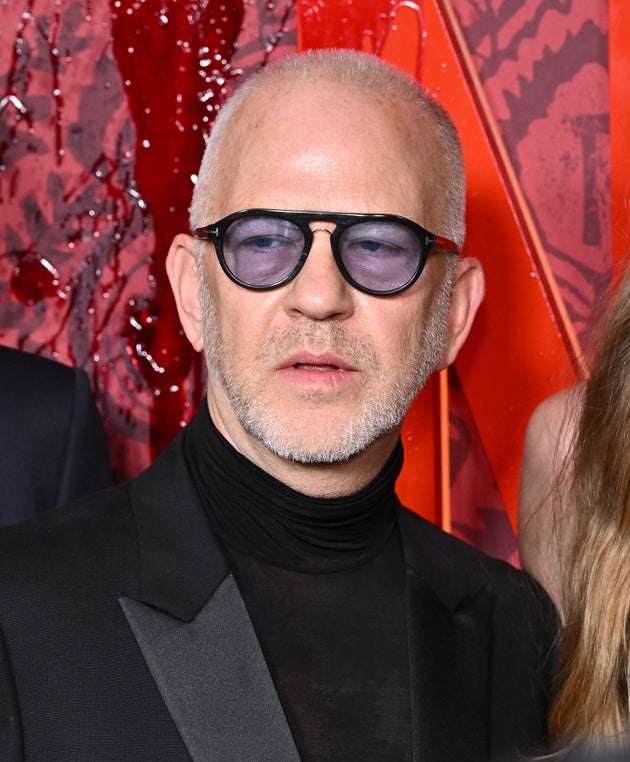 Ryan Murphy at the premiere of Monster season four
Monster season 3 featured the show’s most gruesome and graphic violent scenes yet – which some felt ‘sensationalised’ Ed Gein’s horrific crimes
“If people are compelled to talk about it and think about it, hopefully they’ll actually be compelled to watch the show,” Charlie Hunnam, who portrayed Ed Gein, said in response to this debate.
“What I would hope and feel really confident in is that it was a very sincere exploration of the human condition and why this boy did what he did.”
Charlie then insisted: “I never felt like we were sensationalising it. I never felt on set that we did anything gratuitous or for shock impact. It was all in order to try to tell this story as honestly as we could.”
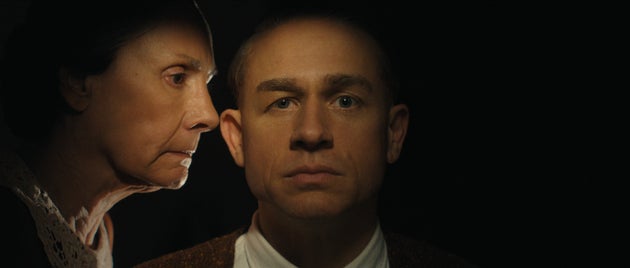 Charlie Hunnam has previously defended Monster’s portrayal of Ed Gein
Monster’s depiction of Anthony Perkins in season 3 was another point of contention
In one memorable scene in Monster’s third season, Joey Pollari appeared as Anthony Perkins, the actor best known for portraying played Norman Bates in Psycho, a character reportedly inspired by Ed Gein’s crimes.
Many viewers spoke out against Monster’s “tasteless” choice to draw a connection between the secretive Ed Gein and Anthony Perkins because of the latter’s decision to keep his sexuality private in his lifetime.
One scene, for example, depicted Anthony Perkins undergoing so-called “conversion therapy” while Tom Hollander’s Alfred Hitchcock was heard musing about “urges”, “secrets” and a “sickness”, telling the closeted performer: “I had to cast you, Anthony. You’re like him.”
The late actor’s son Osgood Perkins – director of horror flicks like Longlegs and The Monkey – later insisted that he “wouldn’t watch” the series “with a 10-foot pole”.
More broadly, he slammed streaming platforms for “glamourising” real-life atrocities in the true crime genre, which he said is “increasingly devoid of context”, while lamenting that “the Netflix-isation of real pain” is “playing for the wrong team”.
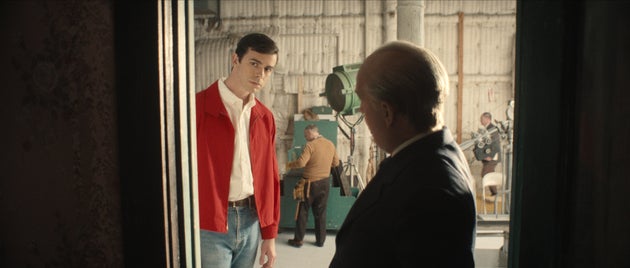 Joey Pollari as Anthony Perkins in Monster: The Ed Gein Story
Monster season 4 became the first to feature a woman at its centre – although not everyone is convinced as to how successfully the predominantly-male creative team achieved this
Like its predecessors, Monster’s fourth outing was also slammed by critics.
In a scathing two-star take in The Guardian, a review called into question how equipped to handle Lizzie Borden’s story the predominantly-male creative team was.
“The latest Monster has nothing to say about Borden, the times that shaped her or the prejudices most think helped secure a not guilty verdict in the end – all of which remain interesting and pertinent to the modern era,” The Guardian’s critic lamented, branding the show “a bunch of boys on a dare who should have been called back after class and made to get down to some real work”.
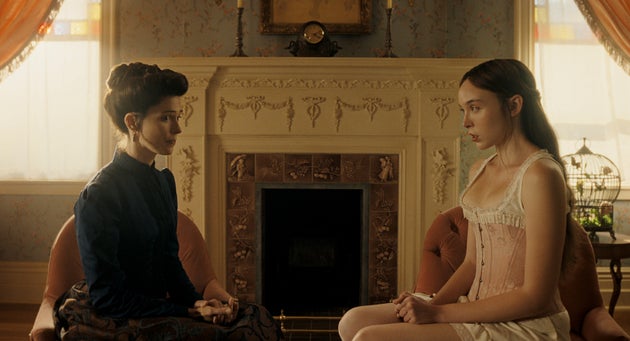 Rebecca Hall and Ella Beatty in season four of Monster
“The Lizzie Borden Story can’t muster much to say beyond observing civilization’s centuries-old systemic oppression of women while acknowledging the fury it evokes,” IndieWire agreed, pointing out that “what little Monster has to say about Lizzie Borden is largely superficial”.
Meanwhile, a piece in Time claimed the show failed to grasp its themes of “female rage”, noting: “The well of misogyny isn’t in danger of running dry anytime soon. But if we must keep diving into it, each descent should at least leave us with some new insight or nuance. Lizzie Borden, now streaming, fails to clear even that bar.”
This recent promo video ad didn’t go down so well, either
Get ready to meet the next monster… pic.twitter.com/yZS4GBAYCF
— Netflix (@netflix) September 15, 2026
Netflix’s “get ready to meet your next monster” promo was branded insensitive by many critics on social media when it premiered ahead of season four’s release.
Indeed, as one X user put it: “Why does Netflix have a serial killer cinematic universe?”
All four seasons of Monster are now streaming on Netflix.
READ MORE:

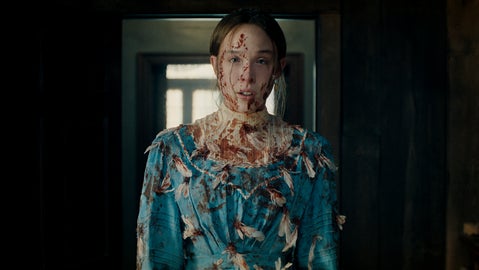

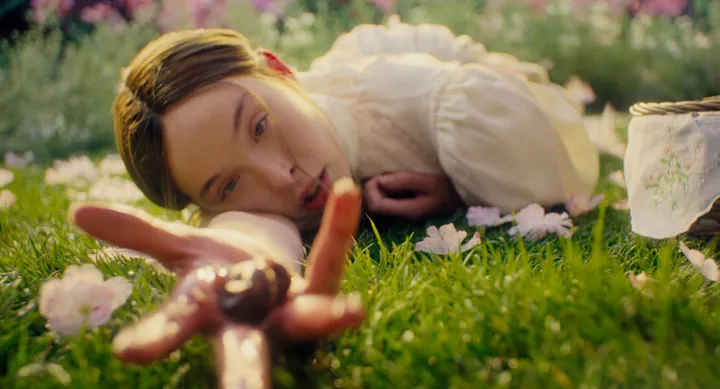
Ryan Murphy’s Monster anthology series has always taken artistic liberties when it comes to its central figures, but the Netflix show went even further with this than usual with The Lizzie Borden Story.
The fourth season is based on the infamous yet little-recorded tale of a 32-year-old woman in Massachusetts who, in 1982, was tried and acquitted for the gruesome axe murders of her father and stepmother.
Due to the era of the murders, and Lizzie’s conflicting statements, little is known about what really happened in the case that’s still being debated more than a century later.
What history didn’t record, creators Ryan Murphy and Ian Brennan took creative licence to fill in, connecting women through history by their rage at society.
Here’s a quick guide to what’s fact and fiction in Monster’s latest iteration…
Lizzie Borden did suffer from health issues, but Monster fabricated exactly what these were
In Monster, Ella Beatty’s Lizzie is seen experiencing immense period pain. There is no evidence that this was the case for Lizzie Borden in real life, although she did mention menstrual blood to the police following the killing.
When the authorities found bloody clothes in a bucket in the basement, Lizzie told them it was period blood.
A family doctor confirmed this would have lined up with the timings of Lizzie’s cycle, so authorities didn’t investigate the blood further.
The show also portrayed Lizzie as suffering from a rare imperforate hymen, a detail which was completely invented for the Netflix series.

There is no evidence that Lizzie Borden and Bridget Sullivan were ever in a romantic relationship
Bridget Sullivan was a real person who worked as the Borden family maid for two years before Andrew and Abby were killed.
Historian Cara Robertson told Business Insider that the idea of a sexual relationship between Bridget and Lizzie can be traced back to fictional takes of the true crime case.
Other notable media to include this detail include Evan Hunter’s 1984 novel, Lizzie, and the 2018 movie of the same name, starring Chloë Sevigny and Kristen Stewart.
Meanwhile, it seems that the real-life Bridget was a world away from the version of the character created by Ryan Murphy and Ian Brennan.
Her grandniece, Dianna Porter, told The Herald News in 2012 that family members recall the former maid as being strict, mean and having “no sense of humour” – a far cry from the dyed-hair-sporting, sex-toy-enthusiast Bridget we see on the show.

Apparently, it wasn’t Abby Borden who was responsible for Bridget being referred to as ‘Maggie’
Rebecca Hall’s character repeatedly refers to Bridget as “Maggie” in Monster, because it was the name of an old maid, and she didn’t wish to learn another.
In real life, it actually was Lizzie who didn’t have much concern for learning Bridget’s name.
“Lizzie never bothered to call her by her real name,” historian Cara told the BBC.

There is also no evidence that Lizzie Borden was sexually abused by her family
Lizzie Borden family as portrayed in Monster is deeply disturbed.
The show depicts a long-held theory that Lizzie was sexually abused by her father, which is part of why she killed him.
Although this is a popular theory, there is no actual evidence establishing that she was abused by her father in this way.
There is, however, evidence that Lizzie and her older sister, Emma, were both frustrated with their father’s frugality, and that neither were greatly fond of their stepmother.
The suggestion that Andrew and Abby had a miserable marriage and cheated on each other is also a work of fiction

Monster argues that the real villains of the series are actually Andrew and Abby Borden, who are portrayed as an unhappily married couple who regularly cheat on each other.
During the middle of the season, Monster’s Abby has an affair with the brother of Andrew’s first wife, Sarah, while Andrew impregnates the family’s maid.
All of this was invented just for the show, with the Borden’s family physician, Dr. Seabury W. Bowen, testifiying that there was no sinister aspect to their marriage – and even if the relationship it was a transactional one, it wasn’t unfriendly.
“Mrs. Borden was a lovely woman, and I remained there because she wanted me to,” Sullivan said, per the 2015 book The Fall River Tragedy: A History Of The Borden Murder.
Andrew and Abby Borden were struck down with a stomach bug days before they were killed
In the Netflix show, before Andrew and Abby are axed to death, Lizzie first tries to poison them, serving her father and stepmother bad oysters, resulting in a gruesome projectile-vomitting sequence. This doesn’t kill the couple, instead just leaving them incapacitated for an evening.
The whole family, in reality – including both Lizzie and Bridget – were struck down with a stomach illness just days before the murders took place. Records suggest swordfish and mutton broth caused their illness.
A pharmacist did also claim that Lizzie tried to buy poison in the days leading up to the murders, but was not sold it.

Lizzie and Bridget were not responsible for the murder of Bertha Manchester
Before Lizzie kills her parents, she and Bridget do a “trial run” on a family friend, Betha Manchester.
In the show, Bertha is seen physically abusing Bridget while she’s doing some work for her, resulting in Lizzie killing Bertha with an axe.
Bertha was a real life person who was murdered, but her death took place 10 months after the Bordens were killed.
Jose Correa de Mello, who worked for Bertha’s father, was charged with the crime.
While in the show, Bridget was involved in killing the Bordens, she was actually seen washing windows at the time of their murder

The Bordens’ maid Bridget plays a big role in Monster: The Lizzie Borden Story – but her place in history is a bit more complicated.
In Netflix’s version of events, Lizzie and Bridget are depicted killing Abby and Andrew with hatchets before covering for each other to the police.
However, the real Bridget claimed in her testimony that she was washing windows outside when Abby was killed in an upstairs guest room. She insisted that she didn’t hear any screams, but did hear Lizzie laughing upstairs.
There has never been any evidence that she was involved in Abby and Andrew Morden’s murder.
Lizzie Borden did, indeed, burn her dress after her family died

Monster includes a scene where Lizzie burns her dress shortly after killing her father and stepmother.
This did happen, according to family friend Alice Russell during the trial.
At the time, police couldn’t find a murder weapon or any blood-stained clothing, which is what stopped authorities from immediately arresting Lizzie.
In her testimony, Alice claimed she saw Lizzie standing near a stove holding her dress, telling her sister: “I am going to burn this old thing up. It is covered with paint.”
Her sister Emma later testified that it was an old dress, and Lizzie had brushed against wet paint the last time she wore it.
Lizzie Borden’s relationship with actor Nance O’Neill didn’t quite play out like it did in the show

In Monster, Lizzie loves theatre, and forms a bond with the actor Nance O’Neil, who gives Lizzie advice on how to convince the jury she is innocent during her murder trial.
Nancy is a real person, and did have a bond with Lizzie, but this only came to be much later in her story.
The pair, in real life, met in 1904, 11 years after Lizzie was acquitted. Whether or not they were lovers is another mystery that the show embellishes.
Emma Borden supported Lizzie throughout her murder trial

Monster portrays Lizzie’s relationship with older sister Emma as being cold and strained. Lizzie’s sister physically attacks her in the series, after blaming her for their father’s death – something there is no historical proof of.
In fact, Emma was apparently supportive of Lizzie, and stood by her side throughout the trial, according to Sarah Miller’s 2016 book The Borden Murders: Lizzie Borden And The Trial of the Century.
After the trial, Lizzie and Emma left their home in Fall River and moved to Maplecroft to “live quietly” together on an estate.
However, their relationship did sour after the trial. After 12 years living together, the pair fell out after Lizzie started throwing parties with the actor Nance O’Neil.
“The happenings at the French Street house that caused me to leave,” Emma told the Boston Sunday Herald in 1913, adding: “I did not go until conditions became absolutely unbearable.”
There is no evidence that Aileen Wuornos took inspiration from – or had any interest in – Lizzie Borden

Monster connects Lizzie Borden to Aileen Wuornos, a real-life serial killer who murdered a string of men in Florida between 1989 and 1990.
The show portrays Aileen Wuornos as being obsessed with Lizzie’s story, though this detail is a complete fabrication by the writers of the show.
The show’s co-creator Ian Brennan has opened up to The Hollywood Reporter about incorporating the serial killer into the Borden story.
“It very quickly became that the story we were telling was about female rage,” he explained. “Then we were able to develop this triptych of Elizabeth Bathory, Aileen Wuornos and Lizzie Borden, which kept the show from seeming like a stuffy, diorama piece by going through these time periods of women who were each aware of the next,” Ian explained.
He added: “To have those three stories talk to one another made it feel much more contemporary and of the moment.”
As for Lizzie Borden becoming a suffragette after her acquittal, this was another invention of Monster
In the final episode of Monster, Lizzie becomes upset when she sees children dressing up as her.
Wanting to make the murders and her acquittal a political statement, she and Bridget decide to join the women’s suffrage movement.
The real Lizzie was never known to have been a suffragette, though. After her trial, she lived a private and isolated life, until her death in 1927.
The fate of the real-life Bridget remains a mystery

After the trial in Monster, Bridget is seen buying land in Montana and marrying an older man, before finally ending the marriage and moving in with Lizzie.
In actuality, Bridget testified in Lizzie’s trial in 1983 and then disappeared.
Documents list her as moving to Montana and marrying a man, but the pair stayed wed until her death in 1948. It is likely she never saw Lizzie again after the trial.
No one really knows what happened to Andrew and Abby Borden

The big question of Monster: The Lizzie Borden Story is whether Lizzie actually killed Abby and Andrew.
Although Netflix depicts Lizzie as the killer, the case is still unsolved.
Lizzy was the primary suspect, stood trial for murder and was acquitted by a jury. The prosecution had no eyewitness to either murder, no confession and serious issues with the physical evidence.
One thing the show did get right was Lizzie’s police inquest testimony. She did claim she was preparing for a fishing trip, and was in the barn when her father was killed.
More than 130 years later, nobody can say with certainty who killed Andrew and Abby Borden, as much as Ryan Murphy and Ian Brennan want us to think that she did it…
All four seasons of Monster are now streaming on Netflix.

If you’re hoping to live a longer, better life, eating well, exercising, and avoiding habits like smoking are great places to start.
But according to a paper published in SLEEP Advances, the amount of shut-eye we get at night may be more strongly linked to our projected longevity than even diet and exercise.
This isn’t to say that neither of those metrics matter: they definitely do. Scientists think that improved diets could add 10 years to the lives of people in the UK, while a review of studies found that being physically active could increase our lifespan by about two to four years as a “conservative” guess.
As sleep physiologist Andrew McHill, who was involved in the new research, said: “I didn’t expect [sleep] to be so strongly correlated to life expectancy”.
What did the study say about sleep and longevity?
The researchers looked at a huge US database of health survey data taken between 2019 and 2025, alongside state-level life expectancies.
They compared those figures by area while also looking for participants’ self-reported sleep duration.
Insufficient sleep (characterised as less than seven hours of sleep a night) was “significantly negatively correlated with life expectancy in most states from 2019 to 2025”, the paper reads.
This finding stood even when researchers looked at other variables such as diet, exercise rates, employment status, and education levels.
Only smoking seemed to be more of a significant risk factor when it came to longevity.
McHill told Oregon health & Science University: “We’ve always thought sleep is important, but this research really drives that point home: people really should strive to get seven to nine hours of sleep if at all possible.”
Healthy diet and exercise still matter – but don’t neglect sleep in the pursuit of both
This absolutely doesn’t mean that a healthy diet and exercise, which decades of research have proven are key for great health, are optional if you want to live longer.
The study didn’t definitively prove that insufficient sleep led to the early deaths with which it was associated.
But McHill noted that getting enough sleep can help to improve our heart health and boost our immunity, and suggested we shouldn’t simply dismiss it as a “nice-to-have” extra.
“This research shows that we need to prioritize sleep at least as much as we do to what we eat or how we exercise,” he said. “Sometimes, we think of sleep as something we can set aside and maybe put off until later or on the weekend.”
But “getting a good night’s sleep will improve how you feel but also how long you live,” he ended.
Previously, a 2025 paper suggested that those who felt they had to choose between sleep and a workout saw better health benefits from their snoozy side win.

Del Somerville was given a jail sentence on Thursday after pleading guilty to violent disorder following unrest, involving around 200 people, at Eastney Marina on 6 September. Yes, Somerville threw a plastic bottle at police officers, which he shouldn’t have done. But it’s notable just how quickly and severely the courts moved to punish him. It was clear the legal establishment was looking to make an example of him. At Portsmouth Crown Court, the judge explicitly stated that the severe sentence was intended to ‘act as a deterrent’ to others.
There is clearly an important principle at play here that should withstand any political disagreement. You have a right to protest. You have a right to oppose immigration, illegal or otherwise. You have a right to hold views others might find objectionable. But you don’t have a right to use physical violence as coercion. Indeed, the 1986 Public Order Act makes ‘violent disorder’ a specific offence.
Still, throwing a plastic bottle and swearing at specially trained police officers, who were fully kitted up for trouble? Calling two years in prison ‘disproportionate’ doesn’t really cover it.
At the same time as a plastic-bottle-throwing protester was being sent to prison, Metropolitan Police commissioner Sir Mark Rowley was speaking on a seemingly separate issue. He was warning of the leniency with which those accused of serious crimes are being treated. He pointed to people repeatedly charged with knife offences and even gun offences being bailed, and drew particular attention to the case of Zafer Dogan.
Dogan had been charged with taking thousands of pictures of women and girls, often from his bedroom window, which overlooked a playground. He then used AI technology to turn them into sexual images for his gratification. Yet rather than remand him in custody ahead of his trial, the authorities granted Dogan bail, allowing him to return to his original north London address overlooking the very playground he had frequently targeted. This forced one family who had fallen victim to his crimes to move into temporary accommodation. He was eventually sentenced to two years and four months in jail.
Dogan’s sentence is only four months longer than Somerville’s, even though his offence was far more serious. If you’re looking for yet more evidence of a two-tier justice system, it’s there in the contrast between the treatment of Dogan and that of Somerville.
Politicians have spent decades expanding the reach of the criminal law in England and Wales, increasing sentences and creating new offences, while allowing the machinery required to enforce them to buckle. This has led to prison overcrowding and thousands of serious offenders being released back into the community way before they should have been, many to re-offend.
Yet at the same time, when it comes to someone involved in anti-immigration protests or disorder, concerns about the size of Britain’s prison population seemingly go out of the window. We saw this after the Southport riots, when Lucy Connolly was jailed for 31 months in October 2024 for ‘stirring up racial hatred’ with a social-media post. Or when Jamie Michael was remanded in custody for 17 days, rather than released on bail, after being charged with the same offence as Connolly (he was eventually found not guilty). And it seems we’re seeing it again in the case of Somerville.
On the one hand, the state is cracking down hard on immigration-related discontent. On the other, a creaking justice system is failing to restrain people who pose a genuine threat to others.
If political expediency determines how aggressively the state responds to a charge or an offence, trust in the justice system breaks. Once people stop believing in the impartiality of the law, the law itself loses authority.
The purpose of the criminal law is simple – to protect people from criminality and provide a fair mechanism for resolving disputes. Where there is a credible case for detention, either pre- or post-trial, courts must have the capacity to make that decision.
This is why the Portsmouth case and Rowley’s warning belong in the same discussion. A government that can’t enforce its laws can’t demand that its citizens respect them. And a government that applies those laws according to the political salience of an offence risks undermining something even more important – the legitimacy of the rule of law itself.
Paul Birch is a former police officer and counter-terrorism specialist. You can read his Substack here.

What a difference a year makes.
Labour members will start gathering in Liverpool this weekend for their annual conference with a noticeable spring in their step.
The party now has a confirmed, if slight, lead in the opinion polls as Andy Burnham continues to enjoy a honeymoon period after replacing Keir Starmer as Labour leader and prime minister in July.
His optimistic talk of putting “hope in every heart” appears to have resonated with a beleaguered electorate weighed down by more than a decade of austerity, stagnant economic growth, rising prices and political turmoil.
The so-called “Burnham Bounce” has also coincided with a downturn in the fortunes of Reform UK, whose own poll numbers have fallen since May, when the party enjoyed election success in England, Scotland and Wales.
Investigations into the financial affairs of Nigel Farage and his party have cut through with a public who, just a few months ago, seemed to be preparing to elect a Reform government.
It is all a far cry from 12 months ago, when the Labour conference was a downbeat affair as Starmer’s government lurched from scandal to disaster.
Deputy PM Angela Rayner had been forced to quit just weeks before over her tax affairs, forcing Starmer into a clumsily-handled and deeply unpopular reshuffle.
That was swiftly followed by the sacking of Lord Mandelson as the UK’s ambassador to Washington over his friendship with the convicted paedophile, Jeffrey Epstein.
Ironically, the high point of last year’s conference for Starmer was his success in seeing off Burnham’s own failed attempt to seize the initiative.
The then mayor of Greater Manchester was relentlessly attacked by Starmer loyalists for saying in a pre-conference interview that the UK must “get beyond this thing of being in hock to the bond markets”.

Although a chastened Burnham ended up leaving the conference early, just six months later he became MP for Makerfield and the PM-in-waiting.
Now, much of the talk going into this year’s event is not whether Burnham will become prime minister, but whether he would attempt to secure his own five-year mandate from the public by calling an early general election.
The PM sought to kill off the speculation by telling ITV Calendar on Friday that the next election will not be until 2029, the latest it can possibly be.
Nevertheless, that is unlikely to stop some from urging Burnham to go the country either next year or in 2028, should Labour’s poll lead grow.
According to the Telegraph, several of the PM’s No.10 advisers believe he should go to the country in the spring, but that was disputed by others in his inner circle.
“Utter bollocks,” said one senior Downing Street source when asked by HuffPost UK if an early election is on the cards.
“The PM is a man focused and determined to change the country. The only people raising the prospect of an early election are those conducting as a subtle-as-an-elephant Tory whispering campaign.”
Another No.10 source said reports of an early election were “worse than bollocks, it’s embarrassing clickbait”.
Those pushing an early election point to two mega-polls published in recent days which show Labour emerging from an early election as easily the largest party, ahead of the Tories and Reform.
However, in both scenarios, the party would lose its majority, leaving Burnham reliant on the support of the Lib Dems and other left-of-centre parties to get his programme through parliament.
Chris Hopkins, political research director at pollsters Savanta, told HuffPost UK: “Labour going for an early election based on these latest polls means two things: Labour loses hundreds of seats compared to 2024, and it’s an admission from Andy Burnham that he doesn’t think he can further improve Labour’s fortunes.”
Perhaps unsurprisingly, Labour MPs – many of whom have only been in the Commons for a little over two years – are less-than enthusiastic about the prospect of an snap election that would see at least 100 of them lose their seats.
One Cabinet minister said: “If I was Andy, I would be very reluctant to call an election because right now he’s got 400 Labour MPs.
“No matter that happens, if you wake up every morning and you’ve got 400 MPs and a big guaranteed majority, you’re in a good place.
“If you look at the sweep of Labour history being in this position doesn’t happen very often, so I’d be very careful about gambling with that.”
A Labour backbencher was equally clear in his opposition to an election now.
“I don’t want to hear him announce a general election,” the MP said. “I don’t think the country’s ready for it and voters certainly wouldn’t thank us for it.”
Another minister said: “The polls are simply too volatile right now to justify an early election.”
A Labour source added: “I can see why an early election would be tempting when you’re caught up in party conference.
“But the public don’t want one, and voters wouldn’t thank Andy for calling one.”
Burnham is still writing his conference speech, which he will deliver to the party faithful on Tuesday afternoon.
He has been writing it himself “in snatched moments on trains, planes and in his car,” according to one No.10 aide.
The conference slogan is ‘Hope Again’, and the PM plans to deliver a message of optimism to the country, explaining how he plans to get a solve long-standing problems like youth unemployment and the housing crisis.
“People know what the problems are facing the country, but they want to know what the government is going to do about it,” said one Downing Street insider.
“They want to be given hope about the way forward and this is the PM’s opportunity to set that out.”
But a senior Labour figure warned that the real challenges for Burnham will come when the political caravan has packed up for conference season and gone back to Westminster.
“There’s no doubt Andy will have a great conference,” he said. “It’s in Liverpool, it’s his first one as leader and he’ll make a good speech.
“But the real business will happen when he gets back to Westminster the week after. That’s when things will get real for him.
“There’s the Budget next month, defence spending, the growing threat from Russia, and his 10-year plan.
“His diagnosis of the country’s problems has been good, but voters will judge him on how he plans to fix them.
“The danger of conference is that the party gets too high on its own supply. They shouldn’t mistake the conference hall for the country, because there’s a world of a difference between the two.”
Listen to Commons People, the podcast that makes politics easy. Every week, Kevin Schofield and Kate Nicholson unpack the week’s biggest stories to keep you informed. Join us for straightforward analysis of what’s going on at Westminster.

Lower back pain affects about 80% of us at one point or another, according to the NHS.
Thankfully, fewer than 1% of those cases require urgent medical attention. But the pain can still affect your quality of life, and might mean you’re less tempted to exercise.
That can be a shame, as the NHS explained, “keeping as active as possible can help you to recover and do the things that are important to you”.
Avoiding movement for more than a day or two in mild back pain cases might actually worsen your condition, the health service added.
According to a 2019 analysis published in the British Journal of Sports Medicine, four activities in particular seemed the most effective at treating “non-specific chronic low back pain (NSCLBP)”.
NSCLBP means doctors can’t find one specific cause for back pain. This applies to the “vast majority of chronic low back pain cases,” the study’s lead author, associate professor Daniel Belavy, said.
What are the best exercises for lower back pain?
This paper analysed 89 studies involving back pain and exercise.
Researchers found that staying active seemed to be more effective than rest for NSCLBP.
Belavy said: “There is a common misconception that if someone is in pain, they should be resting, but our research shows that when the pain has been there for a long time, exercise is an important part of treatment.”
They found four training styles were the “most effective” at treating NSCLBP. These were:
1) Pilates
This seemed to be the joint “best” exercise for dealing with the condition.
Speaking to Healthline, Dr Courtney Gilbert, a physical medicine and rehabilitation expert, said: “Pilates teaches you how to articulate your spine and engage your deep core. Research has shown that Pilates can decrease low back pain compared to no exercise and non-specific exercise.”
This can include exercising with a pilates machine (Joseph Pilates, who invented the exercise, called this a Universal Reformer machine: now they’re used in Reformer classes), or doing pilates on a mat.
2) Stabilisation or motor control exercise training
“There was evidence that Pilates and stabilisation or motor control exercise training were the best of these exercises for reducing pain,” Belavy said.
Stabilisation exercises can include strengthening your core and might involve crunches, bridges, and planks.
Motor control exercise training, meanwhile, typically aims to retrain the muscles near your spine to become more co-ordinated and stronger.
This can include balance training and other moves like hip bridges, sitting knee extensions, and even squats.
3) Resistance exercise
You might know this as strength training. It means using weights and resistance training at increasingly high loads to build your muscles up.
We’ve written before at HuffPost UK about how “tight” hips that you might think need stretching can actually be weak hips that would benefit from strengthening. A similar principle can apply here.
Some strengthening exercises include weighted squats, push-ups, deadlifts, bench presses, and more.
4) Aerobic exercise
Basically, activities like walking and running.
You might want to build up your pace and distance if you haven’t exercised in a while – “our study provides evidence that active therapies where the patient is guided, actively encouraged to move and exercise in a progressive fashion are the most effective,” Belavy shared.
What doesn’t work for back pain?
Interestingly, this paper found that “stretching and McKenzie exercises, which is a treatment approach that uses a classification system to prescribe exercise”, were found to be the “least effective” kinds of exercises.
The NHS advises you should always stop exercising if it makes your back pain worse. Speak to your GP if you’re worried about your back pain and/or aren’t sure about beginning new activity.

I don’t know whether I notice it more in the sunshine or if flies really do come out en masse in spring, but I feel like I’ve noticed a lot more of the unwelcome visitors on my houseplants recently.
And while I’ve found vinegar and washing-up liquid traps are a really effective way to manage a fruit fly bonanza, I can’t help but wish there was an easier, less deadly way to de-fly my ferns.
Luckily, plant educator Peyton, known online as Plant Caregiver, is one of a few voices to suggest a chemical-free method: in a TikTok video, the creator said, “a lot of your plant problems could be fixed by having a fan”.
Why might a fan help to get rid of pests?
Speaking to Homes & Gardens, Julia Omelchenko, an expert in plants for the Plantum app, explained that proper ventilation and air flow keep soil drier, preventing a buildup of, e.g., fungus gnats.
That can involve opening a window. But it can also include running a “fan on low speeds where your plants are situated,” so long as you “avoid cold drafts and don’t point the fan at the plants,” she added.
Aside from preventing wet soil, which fungus gnats love, using a fan also helps to create an environment in which fruit flies struggle to fly (they have quite weak wings).
An Ideal Homes writer put it to the test and was impressed with the result. And, more recently, a Guardian writer and houseplant expert tried it on a mildewy plant; she wrote, “It’s one of those hacks that sounds unnecessary until you try it”.
How else can I get rid of flies from my houseplants?
As we’ve mentioned before, soil that stays wet for too long can attract fungus gnats. Try watering your soil less often if that’s the case.
Adding a gravel mulch, using sticky traps, and even using predatory nematodes can all help, too, per BBC Gardener’s World.
You can also change the potting soil to that which has been specially formulated for houseplants.

Fury v Joshua Cardiff fight close to collapse after dramatic overnight attack

Fuel costs putting off meal delivery driver applicants in Jersey

My Husband And I Divorced After 33 Years. There Was No Drama.





-

 Crypto World3 days ago
Goldman Sachs and Deutsche Bank Agree: The S&P 500 Rally Isn't Over
-

 Tech5 days ago
Researchers escape OpenAI Codex sandbox to run commands on host
-

 Fashion2 days ago
8 iPhone Accessories That Add Personality
-

 Crypto World5 days ago
Who Needs CLARITY Anyway? ARB Could See 70X Increase: Hodler’s Digest
-

 Tech6 days ago
Trump suggests rebranding AI with a new name, says he’s also creating an AI Force
-

 Business5 days ago
Analog Devices (ADI) Bets $1.35 Billion on Chips that Let Machines Think for Themselves
-

 Crypto World3 days ago
This Bearish Netflix Stock Trade Can Cash In On Video Streaming Giant’s Woes
-

 Crypto World5 days ago
Coinbase, Robinhood, Circle Seen as Tokenized-Stock Winners
-

 Entertainment3 days ago
These 17 Fall Amazon Dresses Seriously Look Like Anthropologie
-

 Crypto World4 days ago
Trump-Xi Polymarket Odds for Handshake Hit 50%
-

 Tech5 days ago
Google’s $899 Googlebook is a bet that you’ll buy a new laptop for Gemini
-

 Crypto World2 days ago
Crude Oil Prices Pressured by Diplomatic Hopes in the Middle East
-
 Business3 days ago
Oil Price Today (September 23): Crude oil below $100 on hopes of US-Iran talks. What did Trump say?
-

 Crypto World2 days ago
Bitcoin price tests $83,600 Supertrend support after $87K rejection
-
 NewsBeat7 days ago
Ed Sheeran protegees Katseye UNFOLLOW star… days after Macklemore was dropped from his tour over Free Palestine remarks
-

 Crypto World2 days ago
Bitcoin Threatens Sub-$84,000 Breakdown as Long Liquidations Spike
-

 Crypto World4 days ago
Meta Jumps 11% As Muse Shines and Investors Show an Appetite for Advancing AI
-

 Crypto World3 days ago
Did Jim Cramer Just Give GameStop Stock the Kiss of Death When He Said the Turnaround Is Working?
-

 Crypto World5 days ago
Bitcoin price holds above $81K as key catalysts line up
-

 Crypto World5 days ago
ARB Price Signals Spur Speculation of 70x Upside in Hodler Digest
You must be logged in to post a comment Login