Politics
House of Lords Employee Retires After 48 Years In Parliament


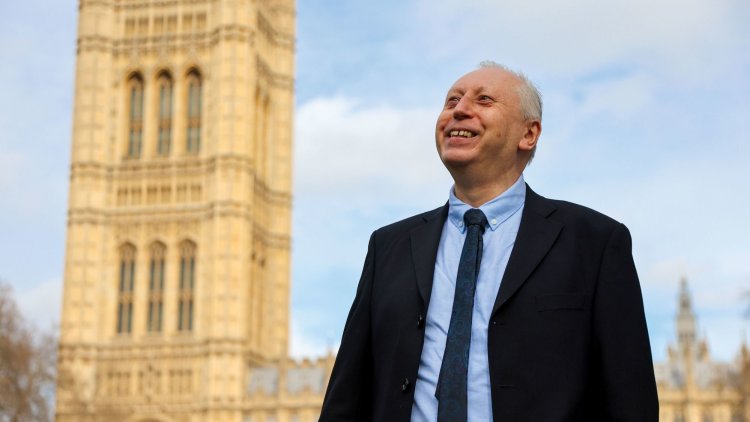
Shaun Connor (Photography by Dinendra Haria)


7 min read
The Printed Paper Office’s Shaun Connor is retiring after an extraordinary 48 years of service to Parliament. He tells Noah Vickers about his varied career and the ‘privilege’ of working in Westminster
Shaun Connor was just 18 when he landed his first job in the Palace of Westminster in January 1978, but his first day started with disappointment.
Born and raised on the Churchill Gardens estate in nearby Pimlico, Connor had never visited Parliament before. He had been hired only a few days previously, having spotted an advert in the labour exchange on Chadwick Street.
“They used to have cards with the vacancies on them,” he says. “I saw this card and all it said on it was ‘Clerical officer required in local SW1 area’.”
What he hadn’t been told was what exactly this work would involve. On his first day, his line manager explained he’d be working in the Records Office, spread across 12 floors in the Victoria Tower.
“I said to him, naively: ‘Records! I love records. I spend all my money buying records.’ He looked at me and said: ‘Not those kinds of records.’”
Far from bursting with all his favourite albums by T.Rex, David Bowie and Roxy Music, the Records Office in fact comprises a vast archive of manuscripts and parliamentary acts stretching back over the last 500 years. But that didn’t stop Connor finding ways to amuse himself.
“I used to run up from the ground floor to the very top to see how long it would take me, every day, and see if I could do a personal best. I couldn’t do one flight of stairs now, never mind all of them.”
That job would mark the start of almost half a century of service to Parliament. Connor, now aged 66, will retire at Easter after 48 years in five different roles.
Parliament, he says, had a different air about it in the 1970s: “In some ways, it was kind of a stuffier atmosphere, but at the same time, strangely enough, it was quite close-knit.
“Back then, the workforce was much smaller than it is now, and virtually everyone knew each other. Remember, there was no Portcullis House, there was no Millbank, it was just the main building.”
Within a couple of years, Connor had moved into a new role in Parliament’s sound archive – a post that seemed more attuned to the career he’d imagined as a boy.
“When I was at school, the thing I wanted to do was get into the music business,” he says. “I wanted to work in a recording studio, to be a sound engineer.”
It was only in 1978 that sound recording began in the Commons and Lords. Cameras in both Chambers were still another 11 years away but, for the first time, MPs’ and peers’ debates reached voters’ ears across the land.
Connor’s job involved retrieving audio excerpts from Parliament for the BBC and other news organisations, but also – for a charge of 50p – creating tapes for parliamentarians who wanted personal copies of their speeches. Among the most regular customers he remembers from that time were Tony Benn, never without his trademark pipe, and Lord Trefgarne, a minister in Margaret Thatcher’s government who is now the longest-serving peer.
This role was followed by jobs in the House of Lords Library and then in the Committee Office, before finally arriving in 2005 at the Printed Paper Office (PPO), where he has worked ever since.


The PPO is responsible for providing peers with documents, reports and copies of legislation, with its front desk serving as an information point about the day’s proceedings.
“I’d never had a front-facing job before, I’d always been behind the scenes,” says Connor. “It was a bit daunting because when you’re at the front desk, people come and ask you things and you’re expected to know the answers to them all.
“Even if you don’t, you’re expected to know things, because you’re representing not just the office, but the House of Lords.”
His nerves were soon settled, however, and he enjoyed getting to know peers – including Lord Sugar. The businessman and former Spurs chairman mentions Connor fondly in one of his books as someone he liked bantering with about football.
“He would never pick up anything, no material,” says Connor, a Chelsea fan. “He would just put his head round the door and say, ‘I see your lot were lucky again on Saturday.’”
If Sugar did come in, it would usually be to ask for a pen – and in return he later gifted Connor a pen of his own. Pressing a button on it played a recording of The Apprentice star saying: “You may be hired, or you may be fired – and you’re probably fired.”
Over his 48 years in Westminster, Connor has seen major changes to how Parliament works, including the arrival of the estate’s first computers in the 1980s. He recalls his older colleagues advising him at the time: “Don’t touch it. It’s a white elephant. It’s one of these here today, gone tomorrow, new toys.”
Connor has also borne witness to political history, from the 1979 vote of no confidence in James Callaghan’s government – which was decided by a single vote – through to the 2017 terror attack, where he was briefly held at gunpoint by a police officer.
“We were in lockdown – you weren’t allowed out of your office, and all of a sudden, there were swarms of armed police around,” he remembers.
Connor’s colleagues called him to say they’d been taken by police to a safe location, and that officers would probably come and take him there too. He decided to attempt a quick trip to the loo first.
“I went downstairs where our toilets are, and as I got out of the lift, I was walking down the corridor, and I heard a voice saying: ‘Identify yourself! Put your hands in the air.’ There was this guy and he was pointing his gun at me.
“I said to him: ‘I work here, I’m going to use the toilet.’ He said: ‘I’d rather you didn’t.’ I replied: ‘I’d rather I did!’” The officer relented and waited outside before escorting him to safety.
I feel proud and privileged to have been a part of this place
As Connor has aged, so has the Palace, with fires, leaks and falling stonemasonry becoming more regular occurrences. Having spent so much time in it, he feels strongly about the need to preserve the building and its heritage: “You’ve got to keep this building, because it’s so iconic. To me, it doesn’t matter how much it’s going to cost – you’ve just got to keep it.”
He is clearly devoted to Parliament and tells The House he expects his last day to be an emotional one.
“Every time I see it on the telly, and they’re talking about the Houses of Parliament… I feel proud and privileged to have been a part of this place,” he says.
“Especially where I am in the PPO, I feel as if I make a difference when I come into work. I’m not just coming into work for work’s sake. I actually feel as if I contribute and as if I’ve played a part in the day-to-day process of how Parliament works.
“That’s the kind of thing I’ll miss – being in day-to-day contact with people and actually feeling part of something.”
In retirement, Connor plans to pursue his interest in photography with his partner Julie, whom he met in Parliament. He also hopes to work the odd shift in his local independent record store, an “Aladdin’s cave” of a place with “loads of old records that need sorting out”.
While the Victoria Tower may not have entirely lived up to his imagination as a music-obsessed 18-year-old, Connor appears now to have found somewhere that will.

You must be logged in to post a comment Login