
Politics
House of Lords Employee Retires After 48 Years In Parliament

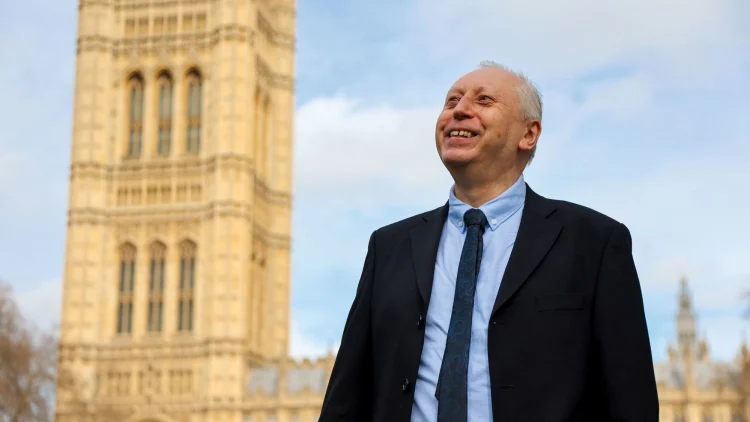
Shaun Connor (Photography by Dinendra Haria)

7 min read
The Printed Paper Office’s Shaun Connor is retiring after an extraordinary 48 years of service to Parliament. He tells Noah Vickers about his varied career and the ‘privilege’ of working in Westminster
Shaun Connor was just 18 when he landed his first job in the Palace of Westminster in January 1978, but his first day started with disappointment.
Born and raised on the Churchill Gardens estate in nearby Pimlico, Connor had never visited Parliament before. He had been hired only a few days previously, having spotted an advert in the labour exchange on Chadwick Street.
“They used to have cards with the vacancies on them,” he says. “I saw this card and all it said on it was ‘Clerical officer required in local SW1 area’.”
What he hadn’t been told was what exactly this work would involve. On his first day, his line manager explained he’d be working in the Records Office, spread across 12 floors in the Victoria Tower.
“I said to him, naively: ‘Records! I love records. I spend all my money buying records.’ He looked at me and said: ‘Not those kinds of records.’”
Far from bursting with all his favourite albums by T.Rex, David Bowie and Roxy Music, the Records Office in fact comprises a vast archive of manuscripts and parliamentary acts stretching back over the last 500 years. But that didn’t stop Connor finding ways to amuse himself.
“I used to run up from the ground floor to the very top to see how long it would take me, every day, and see if I could do a personal best. I couldn’t do one flight of stairs now, never mind all of them.”
That job would mark the start of almost half a century of service to Parliament. Connor, now aged 66, will retire at Easter after 48 years in five different roles.
Parliament, he says, had a different air about it in the 1970s: “In some ways, it was kind of a stuffier atmosphere, but at the same time, strangely enough, it was quite close-knit.
“Back then, the workforce was much smaller than it is now, and virtually everyone knew each other. Remember, there was no Portcullis House, there was no Millbank, it was just the main building.”
Within a couple of years, Connor had moved into a new role in Parliament’s sound archive – a post that seemed more attuned to the career he’d imagined as a boy.
“When I was at school, the thing I wanted to do was get into the music business,” he says. “I wanted to work in a recording studio, to be a sound engineer.”
It was only in 1978 that sound recording began in the Commons and Lords. Cameras in both Chambers were still another 11 years away but, for the first time, MPs’ and peers’ debates reached voters’ ears across the land.
Connor’s job involved retrieving audio excerpts from Parliament for the BBC and other news organisations, but also – for a charge of 50p – creating tapes for parliamentarians who wanted personal copies of their speeches. Among the most regular customers he remembers from that time were Tony Benn, never without his trademark pipe, and Lord Trefgarne, a minister in Margaret Thatcher’s government who is now the longest-serving peer.
This role was followed by jobs in the House of Lords Library and then in the Committee Office, before finally arriving in 2005 at the Printed Paper Office (PPO), where he has worked ever since.
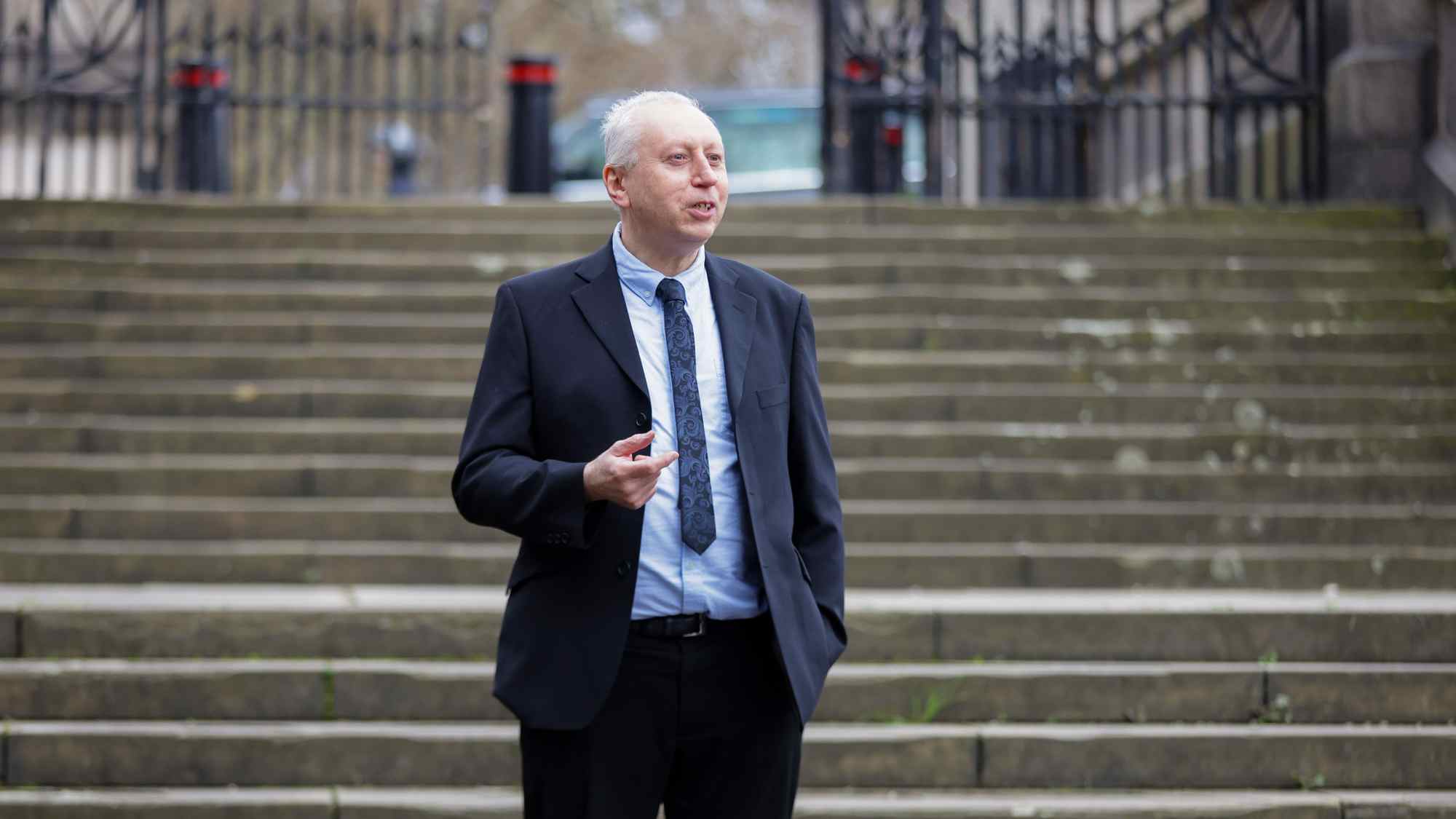
The PPO is responsible for providing peers with documents, reports and copies of legislation, with its front desk serving as an information point about the day’s proceedings.
“I’d never had a front-facing job before, I’d always been behind the scenes,” says Connor. “It was a bit daunting because when you’re at the front desk, people come and ask you things and you’re expected to know the answers to them all.
“Even if you don’t, you’re expected to know things, because you’re representing not just the office, but the House of Lords.”
His nerves were soon settled, however, and he enjoyed getting to know peers – including Lord Sugar. The businessman and former Spurs chairman mentions Connor fondly in one of his books as someone he liked bantering with about football.
“He would never pick up anything, no material,” says Connor, a Chelsea fan. “He would just put his head round the door and say, ‘I see your lot were lucky again on Saturday.’”
If Sugar did come in, it would usually be to ask for a pen – and in return he later gifted Connor a pen of his own. Pressing a button on it played a recording of The Apprentice star saying: “You may be hired, or you may be fired – and you’re probably fired.”
Over his 48 years in Westminster, Connor has seen major changes to how Parliament works, including the arrival of the estate’s first computers in the 1980s. He recalls his older colleagues advising him at the time: “Don’t touch it. It’s a white elephant. It’s one of these here today, gone tomorrow, new toys.”
Connor has also borne witness to political history, from the 1979 vote of no confidence in James Callaghan’s government – which was decided by a single vote – through to the 2017 terror attack, where he was briefly held at gunpoint by a police officer.
“We were in lockdown – you weren’t allowed out of your office, and all of a sudden, there were swarms of armed police around,” he remembers.
Connor’s colleagues called him to say they’d been taken by police to a safe location, and that officers would probably come and take him there too. He decided to attempt a quick trip to the loo first.
“I went downstairs where our toilets are, and as I got out of the lift, I was walking down the corridor, and I heard a voice saying: ‘Identify yourself! Put your hands in the air.’ There was this guy and he was pointing his gun at me.
“I said to him: ‘I work here, I’m going to use the toilet.’ He said: ‘I’d rather you didn’t.’ I replied: ‘I’d rather I did!’” The officer relented and waited outside before escorting him to safety.
I feel proud and privileged to have been a part of this place
As Connor has aged, so has the Palace, with fires, leaks and falling stonemasonry becoming more regular occurrences. Having spent so much time in it, he feels strongly about the need to preserve the building and its heritage: “You’ve got to keep this building, because it’s so iconic. To me, it doesn’t matter how much it’s going to cost – you’ve just got to keep it.”
He is clearly devoted to Parliament and tells The House he expects his last day to be an emotional one.
“Every time I see it on the telly, and they’re talking about the Houses of Parliament… I feel proud and privileged to have been a part of this place,” he says.
“Especially where I am in the PPO, I feel as if I make a difference when I come into work. I’m not just coming into work for work’s sake. I actually feel as if I contribute and as if I’ve played a part in the day-to-day process of how Parliament works.
“That’s the kind of thing I’ll miss – being in day-to-day contact with people and actually feeling part of something.”
In retirement, Connor plans to pursue his interest in photography with his partner Julie, whom he met in Parliament. He also hopes to work the odd shift in his local independent record store, an “Aladdin’s cave” of a place with “loads of old records that need sorting out”.
While the Victoria Tower may not have entirely lived up to his imagination as a music-obsessed 18-year-old, Connor appears now to have found somewhere that will.


Five years after the implementation of the Police Race Action Plan (PRAP), progress has been patchy, slow, and all-too-easily reversed. Worse still, it’s been overly dependant on “individual goodwill”, rather than a true commitment to change across the force.
That’s according to the final report from the Independent Scrutiny and Oversight Board (ISOB), whose job was to oversee the PRAP. It also marks the end of both the PRAP as a standalone programme, and the ISOB itself.
As ever when we write on police racism at the Canary, the report observed that forces used inquiries and action plans as a substitute for real change.
The report drew on 36 interviews with civil organisations, community leaders and policing professionals. It found that, in spite of everything, the very institutional racism of the police is still a point of contention. In fact, just 6 of the 44 individual forces covered by the PRAP had even deigned to acknowledge their institutional racism.
‘That commitment has not yet been met’
Abimbola Johnson, ISOB chair, said:
Five years ago, policing committed to improving outcomes for Black communities. That commitment has not been met. Progress has been slow, uneven and too dependent on individual effort rather than institutional change.
The National Police Chiefs’ Council (NPCC) and the College of Policing established the PRAP back in 2020. It followed the police murder of George Floyd in the US, and the consequential wave of international Black Lives Matter demonstrations.
Ostensibly, the PRAP aimed to improve policing for Black people — both the public and within the police. However, that promise has not materialised. Johnson went on to state that:
Without properly enforced legal obligations, a robust inspection framework and clear consequences for failure, progress on race equity within policing will remain partial and reversible. This mirrors the pattern of previous reforms, dating back to Scarman and Macpherson. Black communities now deserve structural accountability. Government and policing must decide whether to deliver it or allow reform to stall again.
Final findings
As these reports and inquiries have found repeatedly, the single most significant barrier to progress is the racist culture of the police. There’s no external framework or imposed solution that can fix a system that doesn’t want to change.
And make no mistake — this is a systemic problem. Whilst individual police show shocking and flagrant racism, that bigotry is also embedded within the structures of policing. As such, any framework that treats racism as an individual problem in the forces will inevitably fail to make meaningful impact.
Likewise, race and racism cannot be understood within a vacuum. Police understanding of intersectionality remains a “significant and under-addressed gap.” Failure to address this means that the greatest harms will inevitably fall on multiple marginalised individuals.
The report also found that the single biggest driver of real change was the commitment of police leadership. When senior leaders were visibly committed to anti-racism, the forces under them showed greater progress. Conversely, where leaders’ commitment was lacking or clearly performative, nothing improved.
Alongside this, the police have been far better at making plans to tackle racism than actually delivering change. However, and far too often, these plans are spoken about as if they are “the change.” Repeatedly and consistently, actual impact has fallen short of the stated aims.
As such, it’s both unsurprising and appalling that Black communities still can’t trust the police. The report stated plainly that forces can’t built this trust through words and gestures of goodwill. Rather, they must show a real and sustained change in their behaviour before community attitudes can improve.
Progress ‘is now being reversed’
Regarding the ISOB’s final findings, Andy George – leader of the National Black Police Association – stated that:
After more than £10m of investment, it has failed to deliver on its core aim: improving the experience of policing for Black people.
The reality is the environment is becoming more toxic and the progress made since the Macpherson report is now being reversed.
The report itself indicated that any lasting progress is undermined by the utter lack of statutory accountability in making change. It made clear that:
Without legal duties, enforceable standards and independent inspection, progress depends entirely on goodwill and voluntary programs, leading to the PRAP inevitably being de-prioritised and treated as an ‘add-on’.
Both illustrating and compounding this issue, the end of the PRAP and ISOB, leaves absolutely no independent oversight in place. As such, the report urged the Home Office to:
establish and fund independent scrutiny, mandate national data standards, and embed race equity within inspection and performance frameworks.
We at the Canary have lost count of the number of times that new reports, new reviews, independent external and internal enquiries, and public bodies have highlighted and exposed institutional police racism, and the utter lack of willingness to change.
Time and again, we’ve watch police trot out their plans to fix racism, then sit back and pretend that the plan was the work itself.
So, we sign off as just as we have before. How many times do we have to write this same article?
UK police are racist because racism is embedded in the very core of their mission. It’s not one bad apple. It’s not one bad barrel. Its root and branch, tree and orchard.
Featured image via NPCC

What Kids Are Carrying is a HuffPost UK series focusing on how the nation’s youngest generation is *really* feeling right now – and how parents and caregivers can support them.
Children are feeling increasingly lonely and unheard, according to therapists, who say it was one of the top issues brought up by kids in therapy in 2025.
Counselling Directory member Mandi Simons said her practice is seeing more children and young people describe “a sense of loneliness”, but it’s not always about being alone.
“Many are surrounded by people, yet still feel unheard and misunderstood,” she told HuffPost UK.
Similarly, therapist Debbie Keenan, also a Counselling Directory member, said there’s been “an increase of children not just feeling isolated, but feeling unheard”.
One in three young people say they do not feel part of their local community, and young people in Britain are more likely to report feelings of loneliness than any other age group, with 70% of 18- to 24-year-olds reporting they feel lonely at least some of the time.
What is driving loneliness among children?
“From our therapists’ experience, this rarely comes from a lack of care,” said Simons. “More often, it reflects the reality of modern day family life, with busy parents juggling multiple demands, alongside conversations that can feel rushed or move too quickly into fixing or reassuring.”
She noted “social media can add to this, creating pressure and comparison while reducing genuine connection”.
Keenan agrees social media usage is playing into this, as is social thinning, where everyday opportunities for meaningful interactions have greatly reduced.
Between 2010 and 2023, more than 1,200 council run youth centres closed across England and Wales, and local authority spending on youth services in England plummeted by just over 70%.
Meanwhile, between 2014 and 2024, the number of young people (aged 16-24) experiencing common mental health conditions rose from 19% to 26%.
Research suggests that today’s children have significantly less freedom to roam, play outdoors, or gather with friends than previous generations.
“Regular, meaningful and constant connections are the key to reducing isolation. Without these connections, children miss out on building the foundations of relationships, trust and a sense of belonging,” said Keenan.
“Years ago, there were youth clubs etc, where children could meet and socialise, they have now become a thing of the past.
“The world in general has got so busy, people are juggling many shifts of emotional, work and childcare needs.”
The issue is, when adults are busy or distracted, children can feel “dismissed”, said the therapist. “Over time, this can create a sense of ‘my voice doesn’t matter’. They then become quieter and withdraw.”
Supporting children who are lonely
“Don’t highlight the issue, start noticing behaviour,” advises Keenan. Have they become withdrawn? Are they spending longer periods of time isolated?
Both therapists advise carving out time to be emotionally available and present. “Pause distractions and give your child your full attention,” said Keenan. Create pockets of “special time” where you can spend quality time together.
They also both recommend active listening – giving your child your full attention, without interrupting, and repeating back what you have heard.
“What children need most is to feel properly listened to,” said Simons.
“That means slowing conversations down, showing genuine curiosity, and acknowledging feelings before offering solutions.”
Simple family mindfulness practices, even brief moments of being fully present together without distraction, can help create the space for this, she added.
Not only that but spending time together as a family – whether that’s playing board games or sitting down for dinner together, without interruptions from phones and devices – can provide an opportunity for kids to feel seen, heard, and connected.
“When a child says they feel unheard, we would encourage parents to see this not as criticism, but as an invitation to reconnect. Small shifts in how and when we listen can make a meaningful difference,” added Simons.
As well as carving out time for you to hang out as a family, Keenan advised organising play dates and offering your child support to build their social connections – for example, through extracurricular activities.
She concludes: “Don’t be hard on yourself, the world is evolving at a fast speed. Have compassion for yourself, parenting is hard.”
With connection, compassion, communication; all while being listened to, acknowledged, and valued; “children can naturally start to grow in confidence, feel less isolated and feel like their voice is being heard”.
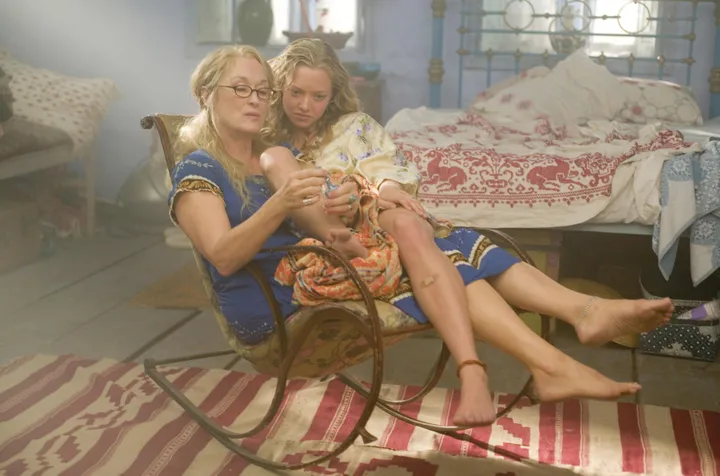
Meryl Streep is ready to don those famous blue overalls once again, hinting that she wants to reprise one of her most beloved film roles.
During an appearance on Wednesday’s edition of The Late Show With Stephen Colbert, the host asked the three-time Oscar winner if she would want to star in another Mamma Mia! film.
Without taking a second to think about it, an enthusiastic Meryl enthused: “Damn, yes!”
Speculation has been swirling since the second Mamma Mia! film came out in 2018 about whether another sequel could be on its way.
The rumour drill then went into overdrive in 2025, when several cast members revealed they’d been in talks with the producers about returning to the musical franchise.
Amanda Seyfried, who played Sophie Sheridan in both films, claimed in November 2025 that the wheels were in motion for the threequel, sharing with Entertainment Tonight: “Of course it’s not off the table, it’s searing a hole into the table.”
She added: “Maybe I should just be coy, or maybe I’m just naïve, but I’m pretty sure Mamma Mia! 3 is a done deal. I love portraying a mum, so I would love to see Sophie with her kids.”

Universal Pictures/Relativity Media/Littlestar/Playtone/Kobal/Shutterstock
Meryl’s latest comments are not the first time she has expressed her interest in reprising her role in another ABBA jukebox musical.
Speaking at the Cannes Film Festival in 2024, the Death Becomes Her actor said: “Of course I want to do it. I think folks love it.”
Of course, considering Meryl’s character, Donna, died off-screen in the second film, it’s unclear exactly how the Mamma Mia! team would go about bringing Donna back.
NBCUniversal Entertainment chairman Donna Langley told Deadline earlier this year that they would find a way around Donna’s death if Meryl wanted to return, insisting: “If Meryl Streep would like to come back, we’ll find a way to bring her back.”
Meanwhile, Stellan Skarsgård – who played Bill, one of Donna’s former flings, in the film – commented in January about how desperate people are to bring Meryl’s character back from the dead.
“Everybody can be brought back from the dead in the movies – and in the movies, she’s fantastic,” the Oscar nominee insisted. “A lot of people are working on it, to bring her back.”
Other cast members who have hinted at their return to Mamma Mia! 3 include Christine Baranski and Pierce Brosnan, who have both revealed that they had met with producer Judy Craymer to discuss the threequel.
Craymer has also hinted that Sabrina Carpenter could be involved in a potential third film, and that the team have their eye on adding the Grammy winner to the cast.
“She’d be a goddess or some relation who would look very much like Meryl Streep,” she told Deadline about the House Tour singer.
Before she (hopefully!) returns as Donna, Meryl is about to reprise another of her most iconic roles, starring in the upcoming The Devil Wears Prada sequel as Miranda Priestly.
Mamma Mia! and Mamma Mia! Here We Go Again are currently streaming on Netflix.

Since 2012, the UK’s fertility rate has dropped dramatically.
In 2023, it reached a new low of 1.6 children; thinktank The Resolution Foundation said in their recent “Bye Bye Baby” report that 2024 figures suggest it could “fall further still”.
Some are concerned we’re “unprepared” for the consequences of this trend, worrying that an ageing population might place enormous pressure on public services without a broad tax base to counterbalance that strain.
But the Bye Bye Baby report suggests that not all of this change comes down to choice.
They write that “preferences for family size have remained stable,” and that the “recent decline appears to be driven, in part, by financial constraints facing young non-graduates, rather than a shift in what people actually want”.
Housing and economic pressures matter
The research showed that the number of women who don’t have kids by 30 has risen in England and Wales from 48% for those born in the late 1980s to 58% for those born in the early 1990s.
Of course, they add, these women might go on to have kids. Still, the change is not seen equally across groups of women.
“Non-graduate women in their late 20s have seen the sharpest rise in childlessness,” they write.
“This has happened alongside falling partnership rates and a major shift away from homeownership towards costly private renting and living with parents, both of which make starting a family harder.”
In fact, added financial pressure seems to affect more than just fertility rates: it might impact the number of women who feel the desire to have children to begin with.
Among childless 32-year-old women, those in the lowest income quarter are almost twice as likely as those in the top income quarter to say they’ve permanently decided against having kids.
Overall, about 30% of women and 25% of men said they hadn’t had a child yet because of their financial situation.
So, while the report stresses that some people simply never wanted kids, the data suggest others’ hands are being somewhat forced.
These findings mirror those found in similar research
A 2025 global survey of over 14,000 people by the United Nations Population Fund (UNFPA) found similar results.
54% of respondents from 14 countries cited “economic concerns” as the top reason they didn’t have children, or couldn’t have as many as they wanted.
That made it the most common issue among those asked.
An anonymous Mexican woman who was a part of the survey said, “It is impossible to buy or have affordable rent in my city”.
The UNFPA said that the solution is not to pressure women into having children they don’t want, but for policymakers to consider that “Many people would choose to have children if they could be sure the world they are bringing them into offered a clean environment, a healthy economy and a safe place to live”.

The reviews for the new Super Mario Bros. Movie have been published and… it sounds like the film is anything but a level-up.
While we weren’t exactly expecting the follow-up to the animated video game adaptation to be the next Citizen Kane, it’s worth pointing out that the response to the first film was, at least, somewhat mixed, and it went on to gross more than a billion dollars at the global box office, making it the 20th biggest box office earner of all time at the time of writing.
Ahead of The Super Mario Galaxy Movie’s release at the end of this week, critics have been having their say, and they’ve certainly not been holding back, with a smattering of two- and one-star reviews (not to mention a zero-star take from one particularly unimpressed reviewer).
Here’s a selection of what’s been said so far about The Super Mario Galaxy Movie…
“Of course it’s intended for little kids, but it surely didn’t need to be such a visually dull screensaver of a movie, with even more of the cheesy, Euro-knockoff look of that first film. And, again, the paucity of funny lines is a real puzzle.”
“It’s a supremely vacuous anti-movie that climaxes with a sequence featuring full-screen Nintendo gameplay, as if to remind us of the levels of rancid commercial whoredom we’ve reached.
“The film is torturous to sit through and, for me, provoked periods of actual physical discomfort. I had to stab myself repeatedly in the hand with a pen to distract from the howling distress. It’s that bad, and that offensive.”

Nintendo/Illumination/Universal
“It’s testament to just how bad the original Super Mario Bros Movie was that this sequel can be a noticeable improvement in every respect – animation, storytelling, humour, vocal performances, you name it – while still comfortably qualifying as absolute rubbish.”
“The Super Mario Galaxy Movie” is frenetic in such an impersonal way that it feels like the entire film should be put on Ritalin […] The film treats its story as a threadbare adventure, a mere throwaway, because it’s so focused on those little pings of recognition for gamers. And that’s quite a comedown.”
“[The Super Mario Galaxy Movie] offers the adults a few pings of nostalgia, but otherwise it’s a humourless, hysterical trudge. […] The moments of fan service might keep the hardcore happy, but for everyone else over the age of five it’s just a succession of loud, bright things happening without any real point.”
“Relentlessly fast-paced and filled with hyperkinetic visuals, the sequel hits the sweet spot in terms of what its target audience wants, even if adult non-aficionados will find little of interest other than the starry vocal cast.”
“The Super Mario Galaxy Movie doubles down on its own blandness. There’s barely a plot here. Not a single memorable character. Not even another piano ditty for Jack Black to sing […] There is… one real, solid joke in this film? And it’s mostly just repeating a bit from Disney’s Zootopia.”

Nintendo/Illumination/Universal
“A movie like this will probably make a lot of money, because it doesn’t rock the boat. But a boat that never rocks is a boat that never goes anywhere. That’s how boats work. They’re supposed to take you on a journey.
“The Super Mario Galaxy Movie doesn’t take you anywhere you haven’t been before, and it’s not as fun, it’s not as exciting, and it’s not as challenging as literally any of the games it’s based on. This is not an adaptation of the Super Mario Bros., it’s just a reminder that the franchise exists.”
“A masterpiece of game design that provides endless levels of unique planets to roam and explore, 2007’s Super Mario Galaxy is filled with moments of pure euphoric joy […] yet somehow on screen, it all registers as flat, imagination packaged into the most cleanly corporate and focus-group approved form possible.”
“While it’s likely that retro gamers won’t find anything here that wasn’t in the first movie – Yoshi and one or two others aside – it’s no doubt got enough for kids to enjoy, which will surely come as a relief for parents looking to entertain their offspring over the Easter holidays.”
“This is not a movie to be scrutinised, but to allow beleaguered elder millennial dads to sit their tots down for a precious two hours (if you count the trailers) and get some much-needed rest. It’s cute, and breezy, and rock-stupid, and will probably make a billion dollars again. Such is the world in which we live.”
“This film is even more of a manic roller coaster ride compared to the first movie, with so many gaming references packed into every scene, it’s hard to keep up. There are also a lot more power-ups used this time around, and that results in some fun and interesting combat for Mario and Luigi.”
The Super Mario Galaxy Movie arrives in cinemas on Friday.
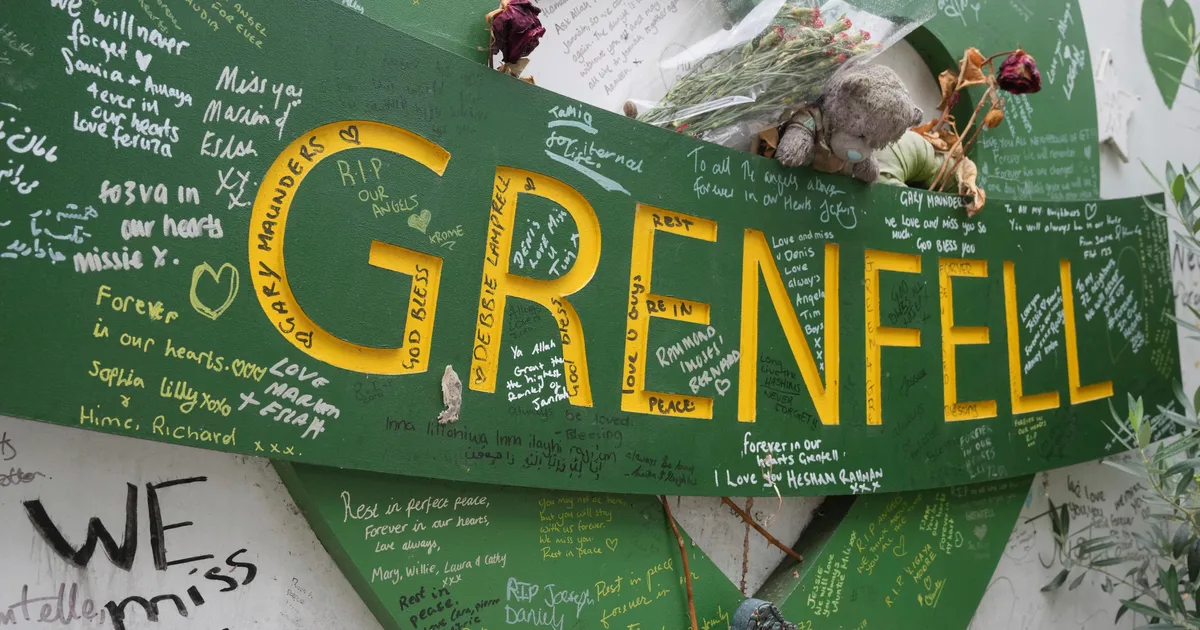
Reform UK has the party’s housing spokesman over his “disgraceful” comments about the Grenfell Tower tragedy.
Nigel Farage said Simon Dudley no longer speaks for the party on the issue following a furious backlash.
Dudley said “everyone dies in the end” and “fires happen” as he said there was now too much regulation in the building industry.
A huge fire at the 24-storey west London tower block killed 72 people in 2017.
The tragedy led to a major overhaul of building regulations to prevent it happening again.
But in an interview with the trade publication Inside Housing, Dudley said the pendulum had “swung too far the wrong way”.
He said the Grenfell fire was a “tragedy” but added: “Sadly, you know, everyone dies in the end. It’s just how you go, right?”
Dudley went on: “Extracting Grenfell from the statistics, actually people dying in house fires is rare.
“Many, many more people die on the roads driving cars, but we’re not making cars illegal, so why are we stopping houses being built?”
Keir Starmer called on Farage to sack Dudley over the “shameful” remarks, but Reform initially refused to do so.
But at a press conference on Thursday, the Reform leader said: “He’s no longer a spokesman for the party. That has been dealt with.”
Farage’s announcement was a surprise as the party had spent hours refusing to act, despite the mounting anger at Dudley’s comments.
Party officials directed journalists to a statement he posted on X in which he denied “belittling” the Grenfell tragedy.
He said: “It must never happen again. I reiterate that, and am sorry if it was not sufficiently clear.”
Farage later said Dudley had acted “in a pretty hurtful, insulting way to an awful lot of people”.

One in five boys know someone their age who is in a relationship with an AI chatbot, according to a new survey.
Male Allies UK caught up with over 1,000 boys aged 12-16 years old to dive into their behaviour and attitudes when it comes to engaging with AI chatbots.
The vast majority, eight in 10 boys (85%) have had a conversation with a chatbot, with 43% of boys saying they are talking to bots so they can ask questions that they have without feeling embarrassed.
Over a quarter (26%) said they like the attention and connection over real-life connections.
Robot romance is also on the rise, with over half of boys (58%) saying that AI relationships are easier because you can control the conversation.
Over one third (36%) of boys admitted they prefer speaking to AI chatbots over family and friends.
Lee Chambers, founder of Male Allies UK, said: “As parents we didn’t grow up with chatbots, and so we’re left in the dark on whether they are harmless or dangerous.
“What we do know is that spending time online can feel sociable but can actually be incredibly isolating. The main problem with developing a relationship with an AI chatbot is that it means that you are spending that time speaking to technology instead of building real-life connections.”

Concerns over AI chatbot relationships
Chambers noted that chatbots are, by default, submissive, and reassure and reaffirm people’s thoughts because “they want you to like them”.
“On top of this you can create your perfect ‘person’, moulding not only how they look but how they respond to you, how they treat you, and you can start and stop the relationship on a whim. This isn’t real life – and these instant gratification behaviours seeping into real life will have consequences.”
AI bots aren’t just being used as companions, either. Chambers noted they are enabling behaviour in boys that can cause irreparable damage with the rise of nudification apps.
Almost one in 10 (9% of) boys aged 12-16 years old have used AI to create sexual images of their friends, with 5% admitting to using AI to create sexual images of family members, according to Male Allies research.
Just under half (47%) of boys in this age bracket know of sexual AI images/videos being created whilst at school.
Why boys say they are spending more time online
New data from the Boys In Schools report from Male Allies explored reasons as to why boys might be spending more time online – and turning to AI chatbots for company.
Most (81% of) boys say they don’t think there are enough physical spaces for them.
Chambers suggested boys need “real-life connection and conversation” and “to know that they are supported and that they can speak up about what they are doing online without being judged”.
“We can’t just remove every new trend online, instead we need to bridge the gap between boys who are growing up with social media and AI and parents who are worried about the unknown,” he said.
Politics
Politics Home | Rail And Bus Fares Should Be Cut To Protect Public From Iran Petrol Spike, Says Ed Davey
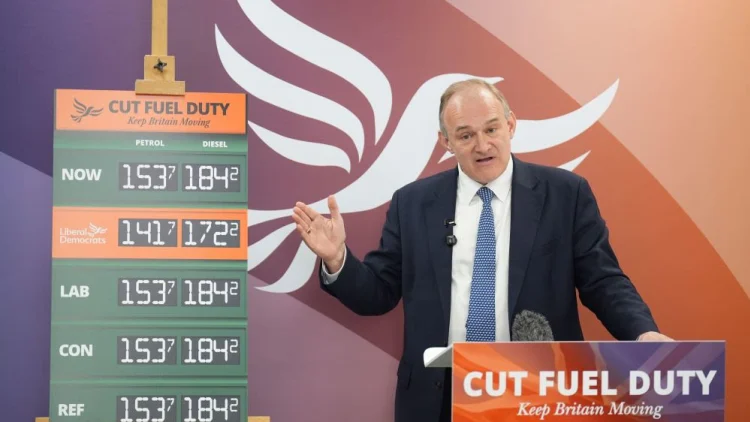

Ed Davey called for emergency 10p fuel duty cut (Alamy)
3 min read
Ed Davey has called for the government to reduce public transport fares to protect people from cost-of-living pressures triggered by the Iran war.
Speaking at a press conference in London on Thursday morning, the Liberal Democrat leader said: “The people of Britain didn’t start this war. They didn’t cheer it on, but they are paying the price for it every single day.”
Davey called for rail fares to be reduced by 10 per cent and the cap on bus fares to be lowered from £3 to £1 in a bid to “keep people moving”.
The ongoing war in Iran is putting major pressure on global energy prices. This is largely down to a sharp fall in traffic through the Strait of Hormuz, one of the world’s most important trading routes, as a result of Iranian threats to attack passing ships. This shipping lane is responsible for a large share of the world’s oil and gas.
The European Commission has this week encouraged people to drive and fly less and work from home, while some states in Australia have made public transport free.
Up to now, however, the UK government has not asked people to change their behaviour.
Davey today called for the Labour government to “look at” what other countries are doing to support the public with rising costs.
“We are looking at other countries; we can’t do exactly what they do. There’s different issues, there’s different situations, but we’re really being bold about encouraging people to use public transport.”
Davey said the reduction in public transport fares urged by his party today would encourage people “if they can, to shift”.
“But of course, in many parts of the country, many people who can’t shift onto public transport, rural areas, for example, they’ve got no alternative. So we’ve got to help those people. They literally have no alternative.”
The Lib Dem leader also called for the Labour government to cut fuel duty by 10p, to help people who are more reliant on cars.
The average price for a litre of unleaded petrol rose by 20p over March, while diesel prices were up 40p.
Davey said: “People who were already struggling with the cost of living already having real problems making ends meet, now they’re having to find even more money, cut back even more, worry about the cost of driving to the shops or the daily commute, or the school run, and all those self employed and small business owners who have to travel to work, whose vans are their offices already hit by higher tax rises and red tape.”
The Lib Dem leader reiterated his party’s strong opposition to the US decision to attack Iran, and criticised the Conservatives and Reform UK over their calls for the UK to join President Donald Trump’s initial strikes on Tehran, referring to the “Trump, Farage, Badenoch tax”.
On Wednesday, several government measures aimed at tackling the cost of living came into force, including increases to the national living wage and the national minimum wage, support for households using heating oil, and money off energy bills.
The government is also expected to announce further support for households most exposed to rising energy prices in the coming weeks.
Foreign Secretary Yvette Cooper will today meet with 35 nations, including France, Germany and Canada, to discuss the reopening of the Strait of Hormuz.
In a Downing Street press conference on Wednesday, Prime Minister Keir Starmer acknowledged that resuming trade through the vital shipping lane would “not be easy”.
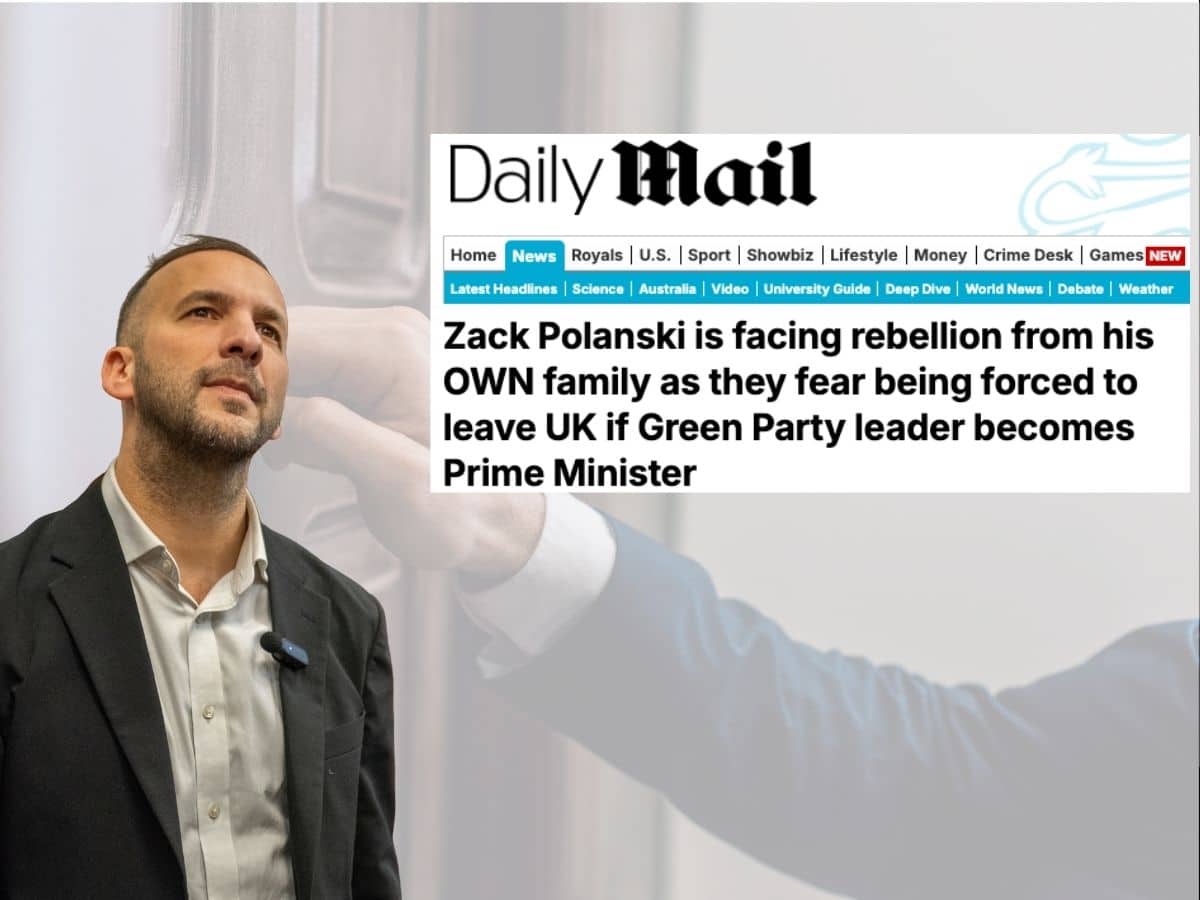
As we reported, freelance journalist Nicole Lampert has been bothering Zack Polanski’s family.
According to her, she’s been doing so as part of her efforts to conduct what she calls ‘journalism’. Defending herself, Lampert claimed that Polanski’s family went to her. Now, it’s claimed that the Green leader’s family have complained to the Independent Press Standards Organisation (IPSO):
Zack Polanski’s mum, dad, brother, and sister have formally complained to IPSO after journalists turned up at their family homes. But I’m confused. I thought the Daily Mail “journalist” said his family approached her.
— Mukhtar (@I_amMukhtar) April 1, 2026
Standards
We first learned that the gutter press were looking into Polanski’s family via this tweet:
This is why Daily Mail journalists are going after my family now.
The right wing propaganda machine will not work on the Green Party.
We’re ready to end Rip Off Britain, end the cost of living crisis and make hope normal again. https://t.co/w9uyGh8mfP
— Zack Polanski (@ZackPolanski) March 28, 2026
We later learned this was being conducted by independent journalist Nicole Lampert on behalf of the Daily Mail. Lampert posted the following online:
I’m a freelance journalist who spoke to your family members who are frightened by the Jew hate in your party. They are frightened by what you have given the green light to.
This is the British media we’re talking about, so the “Jew hate” in question was actually legitimate criticism of the genocidal state of Israel.
The ‘family’ she spoke to ended up being distant relatives. As such, her piece proved nothing besides the fact that everyone has a third cousin or step auntie who’s thick enough to get taken in by the Daily Mail.
Lampert would later say:
I didn’t hound anyone. They came to me.
Since then, the Guido Fawkes blog has reported the following notice which was sent to regulated media organisations:
IPSO has today been contacted by a representative acting on behalf of the immediate family of Zack Polanski.
Mr Polanski’s mother, father, brother, and sister ask that the press do not attend their homes and do not approach them by phone or email, as they do not wish to give comment to the media. For any media enquiries, please contact the Green Party press office at [REDACTED] or on [REDACTED].
We are happy to make editors aware of his request. We note the terms of Clause 2 (Privacy) and 3 (Harassment) of the Editors’ Code.
Notably, this notice doesn’t explicitly confirm that journalists approached members of the Polanski family, nor how.
Polanski has previously claimed they were indeed contacted, though:
Spoke to my family today – all refused to talk to you.
You then started hunting down random “anon” relatives.
People are holding your shit rag accountable.
You’ve not just “touched a nerve.”
You’ve absolutely spurred on a movement ready to take on the Daily Mail. Congrats. https://t.co/95Oq3SUxAf
— Zack Polanski (@ZackPolanski) March 29, 2026
Form
As people have highlighted, this is far from the only accusation of shoddy journalism that Lampert is currently defending against. The following is Independent reporting from March this year:
Former Daily Mail showbiz editor accused of using private investigators ‘who engaged in unlawful acts’
Nicole Lampert was giving evidence in the trial of claims of unlawful information gathering brought by a group of household names against Associated Newspapers Limited (ANL)
As the BBC reported on 3 March:
A former Daily Mail showbusiness editor has denied listening to voicemails between actors Jude Law and Sadie Frost Law and said stories she wrote about their relationship came from an “amazing source”.
Nicole Lampert said the source was close to Frost and that information had been passed to the newspaper through a “trusted freelance journalist”.
Frost spoke about how the stories led to her mistrusting close friends. Now, however, she is convinced her voicemails were hacked.
Speaking about a specific article, the BBC wrote:
One article in October 2004 referred to discussions about a £10m divorce settlement. Law’s solicitors later complained that it was wrong to suggest he had accepted the settlement, and the Daily Mail published an apology.
Sherborne suggested the newspaper had been unable to challenge the complaint because the information had been obtained through phone hacking and the true source could not be revealed. Lampert rejected the claim.
Responding to an article in which the Mail reported on Frost’s sleeping pill prescription, Lampert said:
We wouldn’t ever report that sort of information now, but that was par for the course then.
It makes you wonder what villainous acts are simply “par for the course” today.
Featured image Barold

Italy’s exclusion from a third straight World Cup has shifted from a sporting failure to a national plight. Players born after 1990, many now in their prime, have never performed at football’s grandest stage. This absence is undoubtedly reshaping selection, development, and the public’s connection to the Azzurri.
What went wrong on the field
Italy has not participated in the World Cup since 2014. This decade long gap denies emerging skilled performers global exposure and the pressures that define international careers. After the latest elimination, head coach Gennaro Gattuso captured the mood bluntly:
It hurts, it really hurts… More than hurting me, it hurts to see this group which has really given everything in these months.
In another interview, Gattuso added:
Today the boys didn’t deserve a beating like this… It hurts, because we needed it for us, for all of Italy and for our movement.
Those comments aren’t merely the result of post-match emotion. Gattuso’s words reflect the realty of a federation, so far, unable to translate domestic strengths into consistent success on the international stage.
The wider consequences
Missing consecutive World Cups changes more than rosters. The tournament has been Italy’s showcase, the even which transformed Paolo Rossi, Roberto Baggio and Fabio Cannavaro into global football icons. Without that stage, Italian players are less visible to the world, and young fans without the World Cup memories over which past generations bonded.
Former Italy coach Fabio Capello warned of the scale of the problem, calling recent results:
a sporting tragedy, a shame. It’s one of the worst things that has happened to Italian football in its recent history.
Leadership, development, and identity
FIGC president Gabriele Gravina offered measured support while acknowledging the depth of the crisis:
Let me congratulate the lads… they’ve shown incredible growth. I also want to congratulate Rino Gattuso. He’s a great coach.
That tone—encouraging yet defensive—sums up the federation’s position: protect current personnel while promising review.
Veteran Gianluigi Buffon, part of the national delegation, urged patience and careful assessment:
This is a delicate moment, and we need to take the necessary time to make the right evaluations.
Experts point to systemic issues behind the headlines: gaps in youth coaching and scouting, tactical stagnation at senior levels, and Serie A’s declining pull compared with other European leagues. Capello argued for accountability and grassroots rebuild:
No one resigns here, and that’s the most worrying thing […] We have to sit down as experts, analyse what is happening and start a reconstruction from the base.
What comes next
This is not a short-term slump—it’s a multi-year shift that requires structural fixes. If Italy qualifies for the 2030 World Cup, it will be more than a sporting rebound. It will be a reconnection with fans and a chance to rebuild an international identity for a generation starved of World Cup experience.
Until then the Azzurri remain a major footballing nation without its primary stage. The challenge for coaches, clubs and the FIGC is to convert criticism into a clear, long-term plan that rebuilds pathways from youth academies to the national team.
Featured image via the Italian Football Federation

Iga Swiatek appoints Francisco Roig, Rafael Nadal and Emma Raducanu’s former coach

BITCOIN SUPERCYCLE CONFIRMED BY GOLD

The cheapest petrol and diesel prices in Scotland – check your postcode


-

 Business7 days ago
Instagram, YouTube Found Responsible for Teen’s Mental Health Struggle in Historic Ruling
-

 NewsBeat6 days ago
The Story hosts event on Durham’s historic registers
-
 Tech7 days ago
Intercom’s new post-trained Fin Apex 1.0 beats GPT-5.4 and Claude Sonnet 4.6 at customer service resolutions
-

 Sports6 days ago
Sweet Sixteen Game Thread: Tide vs Michigan
-
Entertainment3 days ago
Fans slam 'heartbreaking' Barbie Dream Fest convention debacle with 'cardboard cutout' experience
-
 Entertainment5 days ago
Lana Del Rey Celebrates Her Husband’s 51st Birthday In New Post
-
Crypto World2 days ago
Dems press CFTC, ethics board on prediction-market insider trades
-

 Crypto World16 hours ago
Gold Price Prediction: Worst Month in 17 Years fo Save Haven Rock
-

 Tech3 days ago
The Pixel 10a doesn’t have a camera bump, and it’s great
-

 Sports2 days ago
Tallest college basketball player ever, standing at 7-foot-9, entering transfer portal
-

 Tech2 days ago
EE TV is using AI to help you find something to watch
-

 Fashion4 days ago
Amazon Sundays: Soft Spring Layers
-

 Tech3 days ago
Apple will hide your email address from apps and websites, but not cops
-

 Tech2 days ago
How to back up your iPhone & iPad to your Mac before something goes wrong
-

 Crypto World3 days ago
U.S. rule change may open trillions in 401(k) funds to crypto
-

 Tech2 days ago
Flipsnack and the shift toward motion-first business content with living visuals
-

 Fashion7 days ago
En Vogue in Brown Leather and Tailored Neutrals by Atelier Savoir, Styled by J Bolin
-

 Politics3 days ago
Should Trump Be Scared Strait?
-

 Fashion7 days ago
What Are Your Favorite T-Shirts for the Weekend?
-

 Business6 days ago
Chinese universities with military links bought Super Micro servers with restricted AI chips
You must be logged in to post a comment Login