Connect with us
DAPA Banner
DAPA Coin
DAPA
COIN PAYMENT ASSET
PRIVACY · BLOCKDAG · HOMOMORPHIC ENCRYPTION · RUST
ElGamal Encrypted MINE DAPA
🚫 GENESIS SOLD OUT
DAPAPAY COMING

Politics

How soccer eclipsed separatist politics in Spain

Published

on

How soccer eclipsed separatist politics in Spain

MADRID — The last time Spain reached the final of the World Cup it had a team heavy with players from the region of Catalonia, where the all-conquering FC Barcelona had refined a possession-based attacking style that laid the template for the entire country’s soccer identity.

Barcelona stars Xavi Hernández, Carles Puyol, Gerard Piqué and Sergio Busquets — Catalans, all — were key players in the side that defeated the Netherlands in the 2010 final in Johannesburg.

That historic summer for Spanish soccer was also a seismic moment for the country’s relationship with Catalonia. The day before the final, hundreds of thousands of Catalans took to the streets of Barcelona to voice their anger at a judicial decision which reversed some of the powers devolved to their northeastern region. It was the beginning of several years of territorial tensions which would culminate in a full-blown constitutional crisis, after Catalan political leaders staged a disputed independence referendum.

Sixteen years later, the challenge to Spain’s territorial unity from Catalonia and its other restive region, the Basque Country, has faded — now no more than a subplot to more urgent political battles over corruption and immigration.

Advertisement

Yet the Catalan and Basque presence in the World Cup squad is stronger than ever, with players from those two regions outnumbering representation from Spain’s other 15 in the squad that will face Argentina in today’s final. With no players from Real Madrid, the historic club from Spain’s capital, in the squad — although one did sign for the team in the off-season — this Spanish side relies particularly heavily on the country’s so-called periphery, those regions far from the capital’s power base.

Soccer has eclipsed politics as the vehicle for Spain’s most prominent separatist strongholds to project their identities.

“It’s not that pro-independence feeling has disappeared, but nobody sees it as a priority right now,” Lola García, a columnist at Catalonia’s centrist La Vanguardia newspaper, told POLITICO. “This government inherited one of the worst crises Spanish democracy has seen,” added Justice Minister Félix Bolaños, saying that “normalcy and co-existence have returned.”

‘The Premier League speaks Basque’

The Catalan influence on Spain’s soccer psyche began in earnest with the tenure of Dutch coach Johan Cruyff at Barcelona, between the late 80s and the mid-90s. He introduced a model of play that emphasized cool, triangular passing rather than the more physical, passionate style previously been in vogue.

Advertisement

A decade later, Pep Guardiola would use Cruyff’s blueprint for his own revolution, which prioritized passing and pressing — and saw his Barcelona side of 2008 between 2012 dominate all it faced. Guardiola went on to win further honors and spread his philosophy during coaching stints in Germany and England. Catalan soccer’s stock has remained high since and his former club, Barcelona, has continued to produce world-class players, many graduating from its La Masia academy, with a style that ESPN describes as “the most pressing- and possession-intensive […] on the continent.” The style is now emulated around the world.

While Catalan soccer prowess has become something of a given, expanded Basque influence in the game has been more striking in recent years. Two Basque players — Mikel Oyarzabal and Nico Williams — scored the Spanish goals that defeated England in the 2024 European Championship final.

A generation of coaches from the region have made their name both domestically and abroad. Four Basques will lead English teams at the start of this coming season, including Mikel Arteta at reigning champions Arsenal and Andoni Iraola at Liverpool.

“The Premier League speaks Basque,” the Crónica Vasca news site wrote of the richest and most powerful soccer league in the world.

Advertisement
Catalan separatists split

The last two decades may have witnessed the Spanish soccer team’s greatest achievements — four men’s European and world titles and a women’s world title since 2008 — but they have also seen Spain’s national unity pushed to the brink.

The brewing Catalan unrest of 2010 eventually exploded in 2017, with the separatist regional government staging a referendum on independence deemed unlawful by the conservative central administration in Madrid. The ballot went ahead amid chaotic scenes, as police baton-charged voters and the country plunged into its deepest constitutional crisis since the post-fascist return to democracy in the late 1970s.

Pro-independence politicians were jailed, direct rule was temporarily introduced from Madrid and the president of Catalonia, Carles Puigdemont, fled to Belgium.

Nine years on, Catalonia is a different place. Those jailed are now free, while other legal action taken against Catalan nationalists has been lifted thanks to an amnesty introduced by the Socialist-led central government of Pedro Sánchez, who has been in power since 2018. On Thursday, the Court of Justice of the European Union ruled in favor of Puigdemont after a Spanish court had sought to prevent him from benefiting from the amnesty. The decision could, finally, pave the way for him to return to Spain without facing jail time.

Advertisement

“The previous independence attempt failed and so there’s not going to be another one in the short or medium term,” said García, author of two books about the Catalan crisis. “Insisting on it doesn’t make political sense” for nationalist politicians, she added.

She said Catalans are more concerned about housing, where a rental crisis is pricing out many in the region — and more widely across Spain — from the market. Immigration is also a growing worry, providing fertile ground for a relatively new far-right party, Aliança Catalana. It preaches a unique blend of anti-immigration policies and Catalan nationalism. But while advocating independence for the region, it is not promising to lead another secessionist bid.

Meanwhile, the disparate pro-independence parties that buried their economic and social differences in order to defy the government in Madrid a decade ago are once again divided.

“Since the independence drive what we have seen is a deepening of the left-right ideological differences” between separatist forces, Francesc-Marc Álvaro, a member of the Spanish Congress for the separatist Catalan Republican Left, told POLITICO.

Advertisement

That party now takes a more moderate approach to the independence issue than Puigdemont’s conservative Together for Catalonia and the far-left Popular Unity Candidacy.

“Not enough time has passed to embark on another [independence bid],” Álvaro said. “We’re in a phase of what you might call reconstruction and building up of strength.”

Terror and violence

Basques have their own long-standing independence movement, with some mainstream parties supporting that aim. But, as in Catalonia, the issue has been pushed into the background.

In 2011, the armed Basque separatist group ETA announced a permanent ceasefire. In 2018, it disbanded. Compared to Catalonia, the sovereignty issue in the Basque Country had literally been a matter of life and death: ETA killed 853 people over a four-decade campaign of violence, during which government-sponsored death squads also operated.

Advertisement

“Basque society is still in a phase of wanting to move on from what happened,” said García. “It was a lot of years of terrorism and people prefer to forget about it altogether.”

The moderate Basque Nationalist Party leads a coalition government in the region, while the more stridently separatist EH Bildu is the main opposition. With polls showing support for Basque independence at just 23 percent, and memories of the failure of the Catalan secession bid still fresh, neither party is focusing on the territorial issue.

However, nationalists in both the Basque and Catalan regions continue to demand their own national soccer teams. In the former case, they want to see players from the French-Basque region eligible.

“I’m not supporting either side,” nationalist party leader Aitor Esteban said when asked in a radio interview ahead of the Spain vs. France semifinal earlier this week. “My team is the Basque national team, and neither of these sides [France or Spain] has my support because the governments of both countries knowingly prevent us from having an official national team.”

Advertisement

Santiago Segurola, a sports journalist and editor of a book of essays exploring soccer’s relationship to politics, describes an “Asterix village” mentality in Spain’s Basque Country, which has a population of just over two million and a passion for soccer that verges on the religious.

“The Basque Country is small, so they look for space for pitches wherever they can find it because soccer’s so important there,” he told POLITICO.

Second-division club SD Eibar’s Ipurua stadium, for example, is on the side of a mountain, built on top of the rubble left by the bombing of the city by German and Italian aircraft during the Spanish civil war.

The region’s most successful club, Athletic Bilbao, has arguably been a proxy for nationalist dreams of a Basque national team. It only signs players who have either come through its junior ranks or represented other teams in the Spanish and French Basque Country, or Navarre. (The French-born Aymeric Laporte, who plays in defense for Spain, qualified to play for the club through Basque family links.)

Advertisement

Despite its strict signings policy, Athletic is one of only three clubs — along with Real Madrid and FC Barcelona — never to be been relegated from the top division.

“In a globalized world where borders don’t exist, Athletic has maintained its borders,” said Segurola. “Athletic has made a virtue of this policy. This shows that soccer is more than a business.”

‘A propaganda strategy’

With its heavy reliance on Catalan and Basque players, the Spanish team poses a conundrum for nationalists from those regions: Should they support it in the World Cup?

Those who remember the febrile atmosphere in Catalonia during the height of the independence drive say support for Spain was muted. That has changed.

Advertisement

“Now there’s more willingness to celebrate the success of the national team and do so more freely,” said García, the columnist from La Vanguardia. “It’s not that you weren’t allowed to before, but it was frowned upon.”

Álvaro, the lawmaker from the pro-separatist Catalan party, says he has pro-independence friends who support the Spanish team despite their political opinions, because they enjoy watching Dani Olmo, Marc Cucurella, Pau Cubarsí and Lamine Yamal and other Catalan players on the biggest stage. However, he takes a different view.

“The Spanish team wants to convey a positive idea of Spain — it’s saying to Catalan and Basque nationalists: ‘This team can be your team too,’” Álvaro says. “As far as I’m concerned, it’s a propaganda strategy. And there’s a problem with that, because those who are telling you that won’t let you have a Catalan team that competes on an international level, like Scotland does.”

Sixteen years ago, as the Spanish team disembarked in Madrid from the aircraft that had brought it home from its World Cup victory in South Africa, the bags of Xavi Hernández and Carles Puyol were each wrapped in the Catalan Senyera flag, in a subtle assertion of regional pride that stirred debate. Three years earlier, many claimed the duo had made a more provocative gesture by wearing their socks in such a way that the red-and-gold Spanish colors were hidden throughout an international game against Latvia.

Advertisement

But, with Catalan and Basque influence on the national team greater than ever and separatist tensions slackening off, such controversies are much less frequent.

Soccer, rather than independence, is now the talking point in Spain.

Source link

Advertisement
Continue Reading
Click to comment

You must be logged in to post a comment Login

Leave a Reply

Politics

Burnham to promise ‘more breathing space’ in first speech as prime minister

Published

on

MDU logo

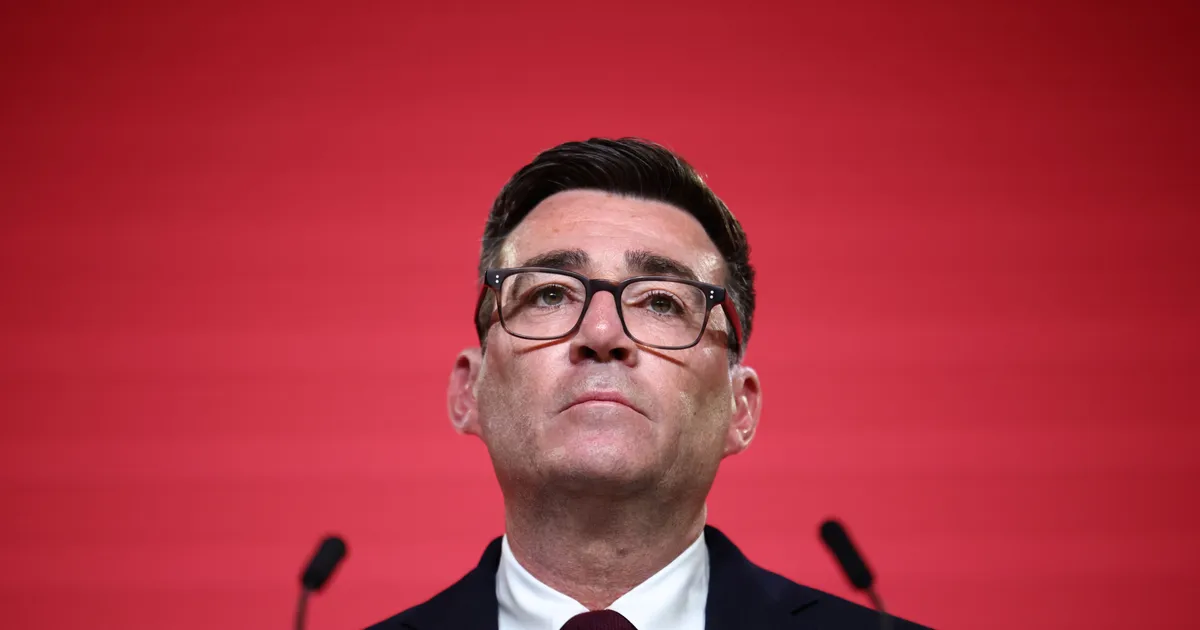
Andy Burnham will vow to give Britain “more breathing space” in his first speech outside 10 Downing Street as he takes office as prime minister. 

The former mayor of Greater Manchester, who will become the seventh prime minister in just 10 years, is expected to call for honesty and reflection. Burnham’s address is set to focus on his priorities for restoring confidence in government.

The new prime minister will say that he is “acutely conscious” of being the seventh person to walk up Downing Street in the space of just 10 years, as part of a call for more stable and responsible politics.

Burnham will describe the moment as one of “reflection and resolution”, insisting Britain must be honest about the challenges.

Advertisement

Setting out his domestic priorities, Burnham will argue that political stability must deliver improvements in people’s lives.

Keir Starmer will give a final speech as prime minister at around 11:15am before his visit to the Buckingham Palace to formally tender his resignation. Burnham is then expected to address the nation outside No 10 before 1:00pm.

Starmer shared a three-minute video on social media over the weekend claiming he had left Britain in a better state than he found it. The outgoing prime minister pointed to achievements including his ongoing support for Ukraine, the Hillsborough Law, a social media ban for under-16s and action to save British Steel.

Starmer said: “I am so proud that we leave the country in a much better state than we found it two years ago, on the economy, on public services, on protection for children, on defence and security, and on our international reputation in particular.

Advertisement

“That’s the test for any prime minister: do you leave your country in a better place than you found it? And that test, and that answer, is a yes.”

Burnham was elected as Labour leader unopposed last week after a short contest confined to the parliamentary Labour Party (PLP) failed to produce a challenger. In the end, he secured a total 379 nominations out of a total 403 Labour MPs.

In his first speech as Labour leader, Burnham pledged to serve “people and places who have been waiting too long for politics to let them hope again.”

Addressing an audience of MPs, activists, trade union leaders and party grandees, Burnham further vowed to end Labour’s factional disputes, saying “we won’t beat Britain’s new right if we are consumed by infighting and pulling in different directions.” He referred to a “generation of politicians” who had failed to challenge “an economic model that simply doesn’t work well enough for ordinary people.”

Advertisement

Burnham declared: “Four decades of the neoliberalism that began in the 1980s have not been kind to the places that built our party, nor to the communities across the UK in rural and coastal areas. So we pledge today to them to be better.”

He added: “Political power was centralised and economic power was privatised. The country surrendered control of the essentials – housing, water, energy, transport – and left people exposed to higher costs…

“The right used the phrase ‘take back control’ – but they are the ones who gave it away in the first place.

“If we want an economy and a country that works for all people and places – which to me should always be at the very core of Labourism – then it requires a new path to the one we’ve been on for the last 40 years.”

Advertisement

Source link

Continue Reading

Politics

Politics Home Article | How does your gambling grow, Prime Minister?

Published

on

How does your gambling grow, Prime Minister?

Derek Webb


Derek Webb
| Campaign for Fairer Gambling

Advertisement

The Starmer administration thought that growing gambling was good economic policy. It is odds on that the Burnham team will not make the same mistake

The Labour Government has made economic growth its central mission, calling it “the only route to improving the prosperity of our country and the living standards of more people.” It has also launched a multi-billion pound Pride in Place strategy to create “safer, healthier neighbourhoods” by working with local communities. This commitment to localism has since been reinforced by the pledge of our new Prime Minister, Andy Burnham, for further devolution across the UK.

The gambling sector regularly claims that it benefits the economy. The Starmer administration often shared this narrative, for instance when gambling minister Baroness Twycross recently told the Lords Liaison Committee that the Government wanted to see the regulated sector grow. When Lord Filkin countered that there would no doubt be strong public support for tougher action on gambling advertising, the Baroness said: “I am not sure it is really my role to do just what the public thinks.” Public, take note.  

Advertisement

However, Department for Culture, Media and Sport (DCMS) data shows gambling’s Gross Value Added (GVA) has fallen by 40 per cent in real terms since 2019, while the other sectors the department oversees have grown. Indeed, the evidence shows that the gambling sector adds relatively little to the economy, thereby limiting growth and productivity. This is particularly true for online gambling, with many sites offshore, which also imposes significant costs through gambling harm.

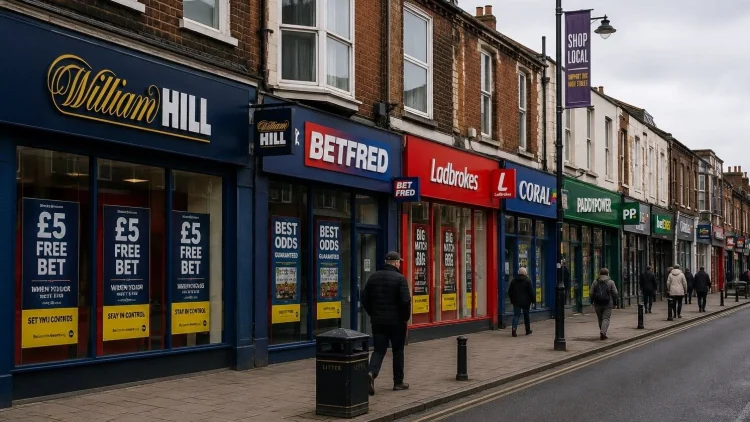
Venues with only gambling machines, commonly known as Adult Gaming Centres (AGCs), are spread unevenly across Britain and are concentrated in the most deprived areas. They often deceptively display the title “Casino” despite not holding casino licences.

Some AGCs and Bingo operations are in breach of the “80/20 rule”, whereby only 20 per cent of machines should be of the highest stakes category B machines, rather than the less dangerous category C and D ones. Some AGCs appear to inflate machine numbers by counting stacks of tablets (see below image) as gaming machines, allowing more Category B machines on site.

Advertisement
high street betting shop
Campaigners argue tablets are being used in slot machines venues as a loophole to allow them to have more of the most harmful slot machines

The Gambling Commission’s new rules, which take effect on 29 July, require “non-compliant” gaming machines to be “removed from premises quickly”. Yet they were announced six months earlier, allowing venues to continue to make millions of pounds from the 80/20 loophole in the meantime.

By contrast, the Commission has dedicated a large amount of time, effort and money into prosecuting gamblers who bet on the 2024 general election date with alleged inside information, where the gain was just hundreds of pounds.

The Commission will seemingly come down hard on anyone who gets one over on the bookie, no matter how small the amount, but it is much less hard on the bookies themselves. In recent years the Commission has not removed a licence from a big gambling operator, despite repeated failures.

In the 1980s, Ladbrokes Casinos and Playboy Casinos did have their licences revoked after the Gaming Board was willing to invoke the spirit of the 1968 Act under the Home Office. The move from Home Office to DCMS, from the Board to the Commission, and the 2005 Gambling Act, have all contributed to the current incompetence and complacency of gambling oversight.

The Commission has this year been given £26 million by the Treasury to crack down on the illicit gambling market. This month the Gambling Reform APPG held a hearing dedicated to growing concerns around this illicit market. Multiple experts spoke but neither the Gambling Commission nor DCMS attended. 

Advertisement

Representatives from both bodies did attend the Lords Liaison hearing into gambling advertising, where they repeatedly argued that restricting legal advertising would strengthen the illicit market. But there is strong evidence that widespread advertising normalises gambling, and therefore grows the whole market, including the illicit side. The logical response is to tackle all gambling advertising while blocking illicit sites.

The Whitehall and Westminster machine appears to have made a few late moves in favour of the gambling sector. The English Devolution and Community Empowerment Act 2026 includes “Gambling Impact Assessments” that give councils more powers to challenge gambling premises appearing in their communities. But a late amendment, by persons unknown, seriously weakens those powers.

A recent appointment by DCMS of the government’s first Music Champion was bestowed upon Michael Dugher, the former CEO and Chair of the gambling trade lobbying body. The odds of gambling friendly Parliamentarians being invited to concerts may have just shortened.

Also, the CMS committee made public a letter to the Commission on the controversial matter of Financial Risk Assessments. It uses the term “recreational bettors” rather than “gamblers” and seems inappropriately close to one that the bookies themselves would write.

Advertisement

This is all in stark contrast to the reality of gambling harm. This month, the coroner at the inquest of Gareth Evans, who took his own life after becoming addicted to gambling, determined that William Hill had failed to assess the risk and intervene. Extracts from the last letter Gareth wrote describe the anguish of living with extreme gambling harm, and in interviews his mother, father, and sister were so eloquent in telling their story. The family, supported by the charity Gambling with Lives, called for an end to gambling advertising. Each marketing message is an invasive trigger towards harm for many.

Andy Burnham has spoken passionately about the need to tackle gambling harm. Tackling Whitehall and Westminster will be part of that agenda.

Over to you, Prime Minister.

Source link

Continue Reading

Politics

Politics Home Article | Sovereignty should be measured by capability, not ownership

Published

on

Sovereignty should be measured by capability, not ownership

Image credit: Ministry of Defence

Illy Andrews, Vice President – Defence International


Illy Andrews, Vice President – Defence International
| Amentum

Advertisement

What matters are the industrial capacities, skills, supply chains and trusted partnerships that give Britain the freedom to act independently

The UK Strategic Defence Review stressed the need to maintain sovereign capability, citing nuclear warheads, munitions factories and submarine production as critical areas. The focus on sovereign capability for national prosperity is essential, but manufacturing is only part of the national prosperity and resilience needed to deter the threats we face.

Advertisement

The Good Growth Foundation recently made an important contribution to this debate, arguing that defence investment must strengthen British businesses, support SMEs and deliver visible benefits for communities across the UK. But the reality of sovereignty is more complex than where a company is headquartered. The question is whether Britain retains the skills, industrial capacity, supply chain resilience and operational freedom required to act independently. That means buying British where it delivers the best capability, value and resilience. It also means working with trusted allies, at government and industry level, to access the best technology and innovation available.

Amentum’s UK scientists, technicians, programme managers and engineers are an essential part of the knowledge and skills base that underpins the defence enterprise, working at our offices and laboratories or on client sites critical to the UK’s nuclear deterrent. Our heritage in the UK defence sector stretches back more than 70 years, including involvement in every British nuclear submarine that has gone to sea and a key role in supporting procurement of facilities and equipment essential to the UK’s sovereign capability in all domains. To sustain our skilled workforce, we invest heavily in training graduates and apprentices. Our links with academia keep us at the forefront of technology.

Ukraine has shown that an adaptive, ingenious, homegrowndefence industry is critical to repelling an aggressor. The Strait of Hormuz has shown how conflict can disrupt long-distance supply chains. Sovereignty therefore depends not only on what Britain can build, but also on whether it can sustain, move and adapt capability under pressure.

Advertisement

That is why Amentum has formed the Torus Defence Supply Chain alliance with Accenture, GXO and Maersk: bringing together logistics scale, military expertise and defence-grade digital insights to strengthen supply chain resilience and sovereign operational capability.

In today’s interconnected world, sovereignty requires making the most of collaboration with allies. Amentum’s work on the UK’s hypersonics programme is reliant on two-way transfer of technology and intellectual property, requiring advanced systems engineering, propulsion integration, modelling and simulation, test design and operational understanding. It combines a UK delivery base with access to allied experience, reducing risk while keeping the programme focused on British sovereign requirements.

The UK participates in more US-led, military-related technology projects than any other country, while also seeking to do more with Nato allies. That should not be viewed as a compromise of sovereignty, it is one of its enablers.

As government develops its Defence Investment Plan, industry will look for a framework that aligns security with growth. With 6,000 people in the UK and a commitment to create 3,000 new highly skilled jobs by 2030, Amentum sees how defence investment can strengthen readiness while creating opportunity across the country.

Advertisement

Ultimately, sovereignty should be measured not simply by what is built in Britain, but by whether Britain has the skills, industrial capacity, resilient supply chains and trusted partnerships necessary to act independently when required. If we get that balance right, defence investment can strengthen our national security and prosperity while ensuring that we can overcome emerging challenges in a radically changing world.

Meet the Amentum team at Farnborough International Airshow 2026 from 20th – 24th July, Hall 3, Stand 3931.

Source link

Continue Reading

Politics

World Cup 2026 Halftime Show Slammed By BBC Pundit Wayne Rooney

Published

on

World Cup 2026 Halftime Show Slammed By BBC Pundit Wayne Rooney

When the BBC booked Wayne Rooney as part of their coverage of the 2026 World Cup final, they probably didn’t realise they were getting an impromptu showbiz correspondent, as well as a football pundit.

However, on Sunday night, the former England captain summed up what many viewers were thinking when it came to the tournament’s first ever halftime show performance.

During the live final, Fifa assembled a team of some of the biggest global musicians in the world to perform during halftime.

Things got off to a promising start with a classic hit from Madonna and a cameo from The Muppets, but in the end, many were left unimpressed with the way the rest of the show was put together.

Advertisement

Among them was Rooney, who pulled no punches when asked for his take on the performance moments afterwards, live on the BBC.

Despite his fellow pundits’ positive reviews, Rooney said simply: “I thought the best part was when it finished. I like a lot of them artists, but I thought it was crap.”

“I did, honestly,” as his fellow presenters did little to hide their shock at his assessment.

Still, many viewers watching the BBC’s broadcast said that Rooney’s take on the show was definitely meme-worthy, and one of the stand-out moments of the night…

Advertisement

It can’t just be us who suddenly wants a debrief from Wayne Rooney after every music awards show, right…?

The World Cup’s first ever Halftime Show also saw Ted Lasso himself introducing an acoustic ballad from Justin Bieber, Shakira bringing her World Cup anthem Dai Dai to life and a finale that included a children’s choir, a reunion between Sesame Street and The Muppets and co-organiser Chris Martin bringing back all of the performers onto the pitch (apart from Madonna, seemingly, who we’re guessing was already halfway home by that point).

Advertisement

Source link

Continue Reading

Politics

World Cup Final 2026: 11 Celebrity Moments You Might Have Missed

Published

on

World Cup Final 2026: 11 Celebrity Moments You Might Have Missed

After almost six weeks of ups and downs, this year’s World Cup came to an end over the weekend with a tense match that saw Spain triumphing over Argentina.

The 2026 World Cup final delivered plenty of stand-out moments – and we’re definitely not just talking about the football.

From unexpected celebrity appearances to a first-of-its-kind halftime show (which, it has to be said, received a bit of a lukewarm reception), the last night of the global football tournament gave us plenty of big moments from the world of entertainment that really got people talking.

Advertisement

Here are just 11 of those celeb moments from the 2026 World Cup final that you might have missed…

1. With the final taking place on US soil, things kicked off with a rendition of America’s National Anthem performed by the always–note-perfect EGOT recipient Jennifer Hudson

3. Tom Cruise warms up the crowd before the game gets underway because… hey, why not?

4. The much-hyped star-studded Halftime Show started with a (mostly pre-recorded) performance of a Madonna classic – and the briefest of snippets of her latest hit – with some iconic football cameos in what turned out to be the scene-stealing moment of the whole 11-minute show

5. We’re always happy to see more of The Muppets on our screens, with The Electric Mayhem getting the fans going with this version of Seven Nation Army (don’t worry, there was an appearance from Kermit and Miss Piggy later on, too)

6. BTS brought the Dynamite with a rendition of one of their signature songs

7. Ted Lasso himself introduced Justin Bieber, who used his segment of the show to deliver an acoustic ballad which doesn’t quite scream ‘football celebration’ to us but hey what do we know?

8. Shakira and Burna Boy then teamed up to bring their football anthem Dai Dai to life with some brilliant choreo

9. Let’s be honest, though, back in the BBC studio, Wayne Rooney summed up the feelings of many people watching (it was no Super Bowl Halftime, was it?)

10. There was plenty of celeb spotting to be done in the crowd, from Rihanna and A$AP Rocky to Sir David and Victoria Beckham, as well as Kylie Jenner and Timothée Chalamet

Advertisement

11. And we’ll leave it up to you to determine whether this counts as a ‘celebrity moment’ but the crowd’s reaction to US president Donald Trump hitting the pitch was one of the most talked-about scenes of the whole night

Source link

Continue Reading

Politics

Andy Burnham Aims To Reduce Energy Bills For Voters

Published

on

Andy Burnham Aims To Reduce Energy Bills For Voters

Andy Burnham is set to unveil plans to bring down energy bills to give people “more breathing room” in their everyday lives.

The incoming prime minister has held talks with Treasury officials on how tackling the cost of living will be his number one priority in office.

Raising the threshold at which workers start paying income tax, as well as capping bus fares at £2, are other measures Burnham is considering as he seeks to hit the ground running in No.10.

Burnham, who became Labour leader on Friday, will become the UK’s seventh PM since 2016 when he takes over from Keir Starmer on Monday.

Advertisement

Starmer will formally tender his resignation to the King at Buckingham Palace before making his final address from the steps of Downing Street.

After his own meeting with the monarch, Burnham will then travel to Downing Street himself, where he will tell the nation that he is “acutely conscious” of the political turmoil which has engulfed the UK in recent years.

Burnham will say that he is “acutely conscious” of being the sixth prime minister to walk up Downing Street in just 10 years, and pledging to introduce a more stable and responsible politics.

He will describe the moment as one of “reflection and resolution”, saying Britain must be honest about the challenges it faces while demonstrating that it can once again be recognised around the world for effective government.

Advertisement

Burnham will say that political stability must deliver “tangible improvements in people’s lives”, and call for national unity to improve the country.

The new PM will then disappear behind the famous No.10 black door to put the finishing touches to his new cabinet.

Home secretary Shabana Mahmood is tipped to beat Ed Miliband to the crucial role of chancellor.

Miliband could become foreign secretary, while there will also be cabinet returns for Louise Haigh, Angela Rayner and Wes Streeting.

Advertisement

Listen to Commons People, the podcast that makes politics easy. Every week, Kevin Schofield and Kate Nicholson unpack the week’s biggest stories to keep you informed. Join us for straightforward analysis of what’s going on at Westminster.

Source link

Advertisement
Continue Reading

Politics

Andy Burnham On Collision Course With Trump Over North Sea Oil

Published

on

Andy Burnham On Collision Course With Trump Over North Sea Oil

Andy Burnham is already on a collision course with Donald Trump even before he becomes prime minister.

The Labour leader will officially become the UK’s seventh PM since 2016 later today after Keir Starmer tenders his resignation to King Charles.

Burnham will pledge to give people “more breathing room” as he makes tackling the cost of living and bringing down energy bills his top priority.

He has hinted at giving the green light to more oil and gas extraction from the North Sea.

Advertisement

However, he will not break Labour’s election manifesto pledge blocking new exploration licences.

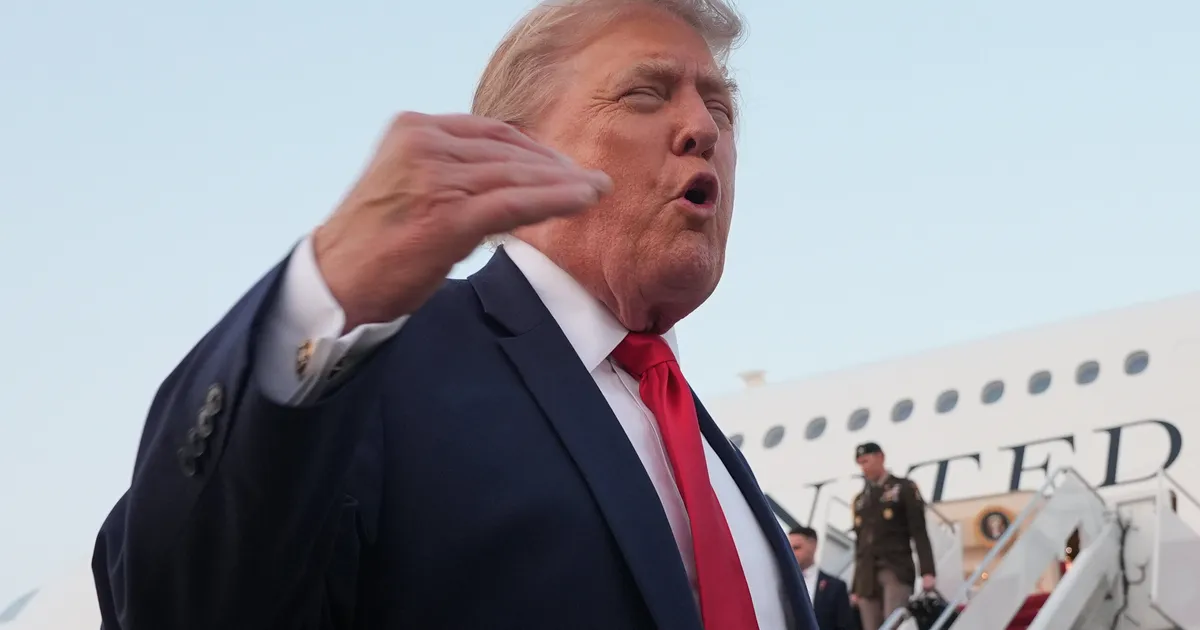
That would inevitably anger Trump, who yesterday insisted that Burnham would break with Starmer by “opening up” the North Sea.

In a post on his Truth Social account on Sunday, the US president said: “The People of Aberdeen, in Scotland, are dancing in the streets because the new Prime Minister, Andy Burnham, has stated that he will be opening up, all the way, the invaluable North Sea Oil!

““It is one of the Greatest Sources of quality Oil on Earth, has hundreds of years of Capacity left, with much not even found yet, and will make the United Kingdom, from a Poverty Stricken Disaster, to one of the Richest Countries anywhere in the World!

Advertisement

“Britain pays Norway Billions of Dollars a year to buy its Oil, which they get from a less valuable part of the North Sea — How ridiculous is that!”

Trump also claimed that Britain would move wind turbines near Aberdeen. “Word is that the UK is going to move the old and horrible looking windmills, which loom over and destroy the City of Aberdeen,” he said. “That will be a big day for the Country, and will be very much appreciated by everybody. Such great potential in the UK, but it all starts with OPENING NORTH SEA OIL.”

Starmer’s approach to the North Sea was one of the reasons why his relations with Trump collapsed during his time in office.

The US president was a regular critic of the outgoing PM’s refusal to allow new oil and gas fields in the North Sea to be explored as part of his government’s determination to achieve Net Zero by 2050.

Advertisement

Listen to Commons People, the podcast that makes politics easy. Every week, Kevin Schofield and Kate Nicholson unpack the week’s biggest stories to keep you informed. Join us for straightforward analysis of what’s going on at Westminster.

Source link

Advertisement
Continue Reading

Politics

Football Fans Couldn’t Let Trump Escape Boos During The 2026 World Cup Final

Published

on

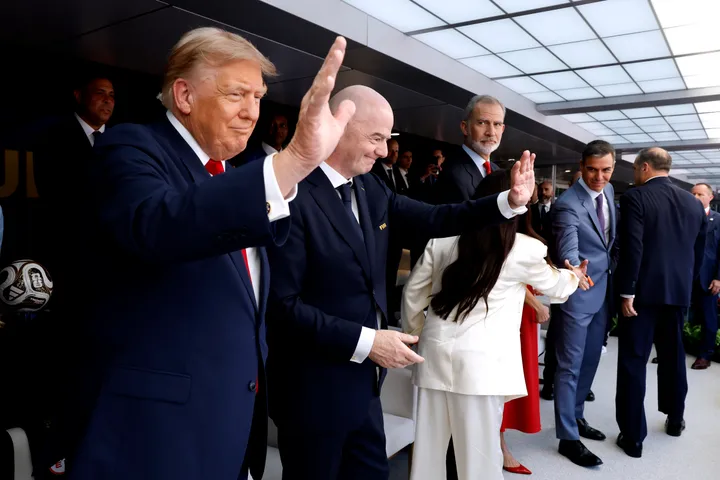
U.S. President Donald Trump waves at crowds with FIFA President Gianni Infantino during the FIFA World Cup 2026 Final on Sunday.

President Donald Trump couldn’t avoid public wrath while attending Sunday’s World Cup final between Spain and Argentina.

As singer Jennifer Hudson wrapped a stirring rendition of the US national anthem, the Jumbotron at New Jersey’s MetLife Stadium jumped to Trump, immediately inciting a blast of boos from the 82,500 other fans in attendance.

Verified by measurements shared with the presidential press pool, ambient crowd noise at the stadium clocked in around 78 decibels while jeers brought it to 84.

The US president was watching from a VIP suite along with his friend, FIFA President Gianni Infantino, first lady Melania Trump, and diplomatic rivals Prime Minister Mark Carney of Canada and Mexico’s President Claudia Sheinbaum.

Advertisement
U.S. President Donald Trump waves at crowds with FIFA President Gianni Infantino during the FIFA World Cup 2026 Final on Sunday.

Eva Marie Uzcategui – FIFA via Getty Images

Trump, who was on hand to present the winning team with the World Cup trophy, did not pick a favourite ahead of the game but did remark that it’d be difficult for Spain to reckon with Argentine star Lionel Messi’s talents.

Though the 2026 World Cup has been a historic success, drawing a record-breaking 6.6 million fans across 16 stadiums throughout North America’s three largest nations, the impact of the US president’s politics could not be avoided.

Scandal emerged over decisions to deny a respected referee from Somalia entry, as well as the US sharply curtailing visas for the Iranian delegation and forcing the team to keep their home base in Tijuana, Mexico.

Nevertheless, Trump celebrated the World Cup as an American success during a reception for FIFA at his New York City Trump Tower on Friday.

Advertisement

“It turned out we were a soccer country, and I think it’s going to remain,” he said of the once soccer-sceptical US. “This has really brought the world together.”

Source link

Advertisement
Continue Reading

Politics

How the NGO-industrial complex corrupts UK politics

Published

on

How the NGO-industrial complex corrupts UK politics

There’s a lot for British government ministers not to like about the Ethics and Integrity Commission’s recent report about shaking up the lobbying industry. The laws we have at present on professional sweet-talking are conveniently limited and easy to evade. Even where there is machinery for recording contact between government and lobbyists, it is so confusing that making sense of what is recorded is a nightmare for any journalist.

All this would change if the commission had its way. The report recommends that all lobbying of government ministers, aides and middle-ranking mandarins – from WhatsApp chats to meetings at party conferences – is publicly declared on an easy-to-read database. Even those who don’t lobby the state for money would have to sign up to a register. That also goes for charities and pressure groups seeking to influence policy.

The proposed new rules would hit Labour and progressive parties far more than the Conservatives, who have long been legally obliged to declare their contacts with advocates for the corporate world. Labour ministers and their departments constantly have their ears bent by the kinds of NGOs, pressure groups and the big campaigning charities that aren’t currently caught in the net, but they would be under the commission’s recommendations. If Amnesty International, the New Economics Foundation and the like want to continue setting up discreet workshops with Sir Humphrey’s top officials – or whispering in ministers’ ears about the beauty of open borders, wealth taxes or transgender activism – they would have to be open about it and have their meetings recorded for our benefit.

Advertisement

This would come as a shock to the current progressive establishment, whose members have long acted as if the lobbying threat comes solely from billionaires and shills for multinational conglomerates. But this is both misleading and outdated. Today’s super-rich are more likely to fund a think-tank, or an international institute campaigning for a particular worldview, than to nobble ministers over an expensive lunch. When it comes to lever-pulling, these organisations excel most in covert influence. It is the charity-industrial complex – comprising many NGOs that are now sophisticated multimillion-pound transnational operations – that lobbies hardest.

So this potential shake-up of the lobbying industry might actually help the public, drawing attention to the role played in our political system by charities and NGOs. But the Ethics and Integrity Commission could go further still in its recommendations.

Advertisement

Enjoying spiked?

Why not make an instant, one-off donation?

We are funded by you. Thank you!

Advertisement


Please wait…

Advertisement
Advertisement

The boundaries between government and private-sector activity are now more fluid than ever. Many charities and non-profits are only nominally independent. In reality, they receive a large proportion of their income from the government itself, officially to help deliver a particular policy, but often to direct and apply it, too. Many such charities have a distinctly activist bias. There is not much difference between such organisations and lobbyists as regards their potential for influence on ministerial policy – they push for the policies they want and get rewarded financially.

So ideally, we need a requirement for all campaigning organisations in receipt of any funds from government departments to register this fact. More importantly, they should have to record all contacts between themselves and ministers or departmental officials.

Advertisement

And what about public-sector bodies set up supposedly at arm’s length to advise ministers? The Ethics and Integrity Commission has airily dismissed any suggestion that they should be caught in the lobbying net. ‘Providing impartial, expert advice to government in the public interest is an integral part of their role and their governance’, the commission states.

If only. The idea that, say, Natural England or English Heritage are just groups of well-meaning boffins offering the government impartial advice is absurd. Both organisations see it as their function to put pressure on the government to promote a particular interest, and have no hesitation in doing so. And that’s before you get to bodies like the Equality and Human Rights Commission or the office of the Children’s Commissioner for England, which have no compunction in putting pressure on government in matters often at odds with voters’ wishes – such as in strengthening the power of the human-rights lobby or banning the smacking of children. These may or may not be good policies, but we have just as much of a right to transparency from such bodies as we have from any other group set up to promote a particular point of view.

We don’t know what the Labour government will say to this report. More likely than not, it will be buried in the upcoming parliamentary recess. But the opposition, from the Tories to Reform UK, should use it to promote genuine democratic scrutiny of an increasingly inscrutable progressive establishment. Daylight, as ever, remains the best disinfectant.

Advertisement

Andrew Tettenborn is a professor of commercial law and a former Cambridge admissions officer.

Source link

Advertisement
Continue Reading

Politics

LA’s next mega-event test: The coming climate Olympics

Published

on

LA’s next mega-event test: The coming climate Olympics

Los Angeles leaders are spending billions to make the 2028 Olympics a story of climate and environmental policy progress, reports Alex Nieves.

Transit and community groups want to know whether the investment will be part of the region’s Olympic legacy or just a flash in the pan.

The question of just how enduring their efforts will be was a throughline Tuesday and Wednesday at the Los Angeles Cleantech Incubator’s Road to 2028 summit — an event focused on leveraging the Olympic Games to accelerate clean energy and transportation development in the state’s most populous region.

The overall vibe of the conference was an optimistic one, as Los Angeles County and dozens of cities are hustling to secure hundreds of buses, plant trees and clean waterways before millions of people descend on the region in two years for the Games. But some attendees were already wondering what comes after the two-week mega event is over.

Advertisement

“When we look to the future, if once the games leave and we have not left communities better than the way we found them, then we have all lost,” said Cynthia Mitchell-Heard, CEO of the Los Angeles Urban League, speaking on a panel of grant recipients who’ve received funding from the LA Olympics organizing committee for environmental projects. (The Urban League received $100,000 to create a workforce development program for people affected by last year’s Altadena fire.)

Catherine Baltazar, associate director of advocacy and organizing at Climate Resolve, argued that throwing dollars at infrastructure projects won’t guarantee long-term progress in communities that have historically lacked resources and disproportionately borne the brunt of climate change.

“Investment should not end when the Games end,” Baltazar said. “We know that these communities will continue long after the Games, and so for me, that’s the legacy that I want.”

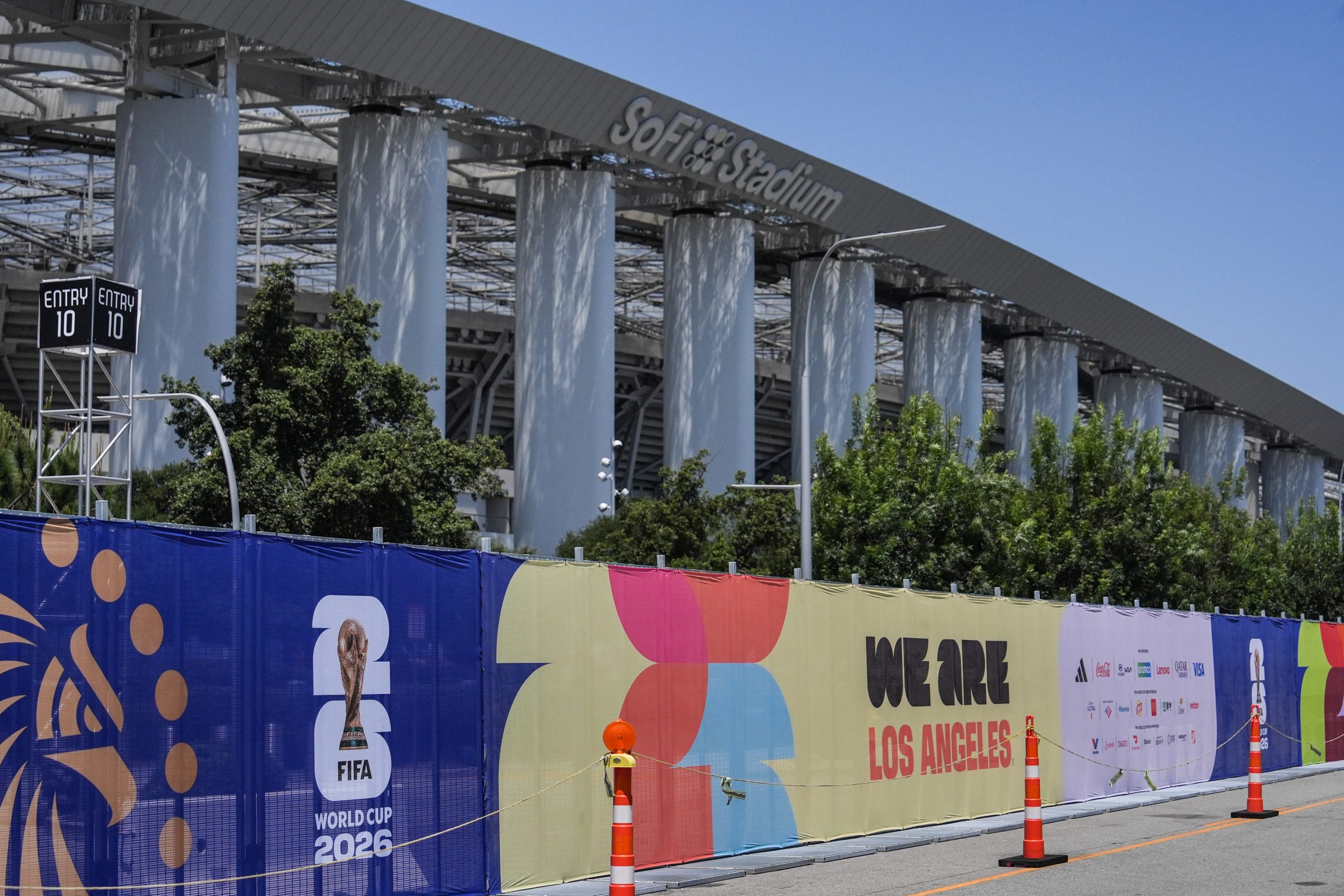
The focus on the post-2028 future comes in part because of what was seen as a successful test run during this summer’s World Cup. The region hosted eight matches at SoFi Stadium in Inglewood, avoiding any major snafus while seeing a significant spike in public transit use.

Advertisement

While the Olympics will be far larger than the World Cup, the region has structural advantages over many past Olympic host cities, including enough existing venues to house every sporting event. Much of the preparation now is centered on buying and leasing roughly 1,700 buses — including 500 electric school buses — to shuttle fans to and from venues that will be transit-only.

Transit advocates argue that those investments, including recent expansions of Los Angeles’ light-rail system, don’t solve for structural budget deficits that could threaten service cuts — as bus and rail operators have already warned about farther north in the Bay Area.

Los Angeles’ legislative delegation has failed the last two years to secure a boost in the state budget for systems like LA Metro, which faces a $2.3 billion deficit through 2030. Metrolink, a commuter rail line that serves six counties across Southern California, has indefinitely extended a 20 percent reduction in weekday service amid a $30 million deficit.

Matt Petersen, CEO of the Cleantech Incubator, told POLITICO the budget challenge has only intensified under a Trump administration hostile toward clean transportation.

Advertisement

“Local governments are struggling, states are struggling on how to put the resources where they’re needed,” he said. “I think the bottom line is: Without the feds, it’s super hard.”

But he said he still believes that Los Angeles is “well on the way to being ready” for the Games and to leave a lasting benefit for the community.

“That’s really what we’re here to do,” he said. “Ten years after the Games, what will we have seen manifest because of this moment?”

Source link

Advertisement
Continue Reading

Trending

Copyright © 2025