

Politics
If Burnham wants to get into No 10 contest, he must promise no EU return



Starmer mini-me Wes Streeting has turned on his former boss and confirmed his intention to stand to replace Keir Starmer in Downing Street. He has little prospect of winning — even Starmer would hammer him, according to the latest polling of Labour members. Greater Manchester mayor Andy Burnham has declared his intention of standing in the Makerfield by-election in the hope of getting into the contest. But Burnham faces the major hurdle of having to win a seat dominated by Reform in last week’s local elections.
But Streeting has — apparently unwittingly — opened a potential door for a Burnham win. Presumably in his desperation to improve his dire standing with party members, Streeting has told Europhile Labour right-wingers of the ‘Progress’ faction that he wants to take the UK back into the EU if he wins.
This will infuriate Makerfield Reform voters, who despise Starmer and want him gone but will not want to risk re-returning to the EU. But if they vote in a Reform MP, he (it will almost certainly be a man) will not be in a position to prevent Streeting carrying out his plan if Streeting manages to get into Downing Street. Burnham could. He is miles ahead of both Streeting and Starmer with Labour members — if he can get into Parliament to stand in the Labour leadership race.
Burnham — Two big gambles
Burnham has previously also mentioned rejoining the EU. But if Burnham he is serious about winning Makerfield, he needs to announce immediately that he will not attempt to rejoin the EU, at least in this parliament. Reform voters might then lend him their vote, especially if Burnham campaigns hard on Farage’s plans to replace the NHS with an insurance system. There are indications he or at least his advisers have realised this.
The big gamble then for Burnham would be that opposing re-entering the EU (the EU would be mad to accept us back anyway, mind) might put Labour members off him. But he is currently beating Starmer by 61%–28%, while Starmer is beating Streeting by 53%–23%.
He’s already taking a big risk by standing in a seat in which he’s a distant second favourite, when defeat will sooner or later cost him the mayoralty. Will he roll the dice to improve the odds in the first one?
Featured image via Gary Oakley/Getty Images
By Skwawkbox


The post Why does a Welsh police force have an Islamic blasphemy unit? appeared first on spiked.

Green activist and former Respect party parliamentary candidate Salma Yaqoob was the target of the arson attack in Birmingham that Skwawkbox reported earlier today, 5 June 2026.
The local Green party has issued a statement of solidarity with Yaqoob and her family:
Birmingham Green Party expresses solidarity with the Yaqoob family after the shocking arson attack on a car outside their family home.
Many of our councillors, activists and supporters know members of the family well and admire their commitment to equality, justice and peace.
The fact that nobody was injured is down to quick thinking by family members who were able to stop the fire spreading. This extremely dangerous act was caught on CCTV and we hope that West Midlands Police catch the perpetrators quickly before they are able to commit any further acts of violence.
Birmingham attack met with media indifference
Masked attackers smashed in the windows of Yaqoob’s car during the night and poured petrol over it before setting it alight. Quick action by family members stopped the blaze spreading to their home until firefighters arrived to extinguish it fully:
Like most Islamophobic and right-wing attacks, the arson has been largely ignored by the UK ‘mainstream’ media.
Featured image via BirminghamLive
By Skwawkbox

Israel might be training hundreds of participants in the dark arts of ‘offensive’ influence operations and propaganda each year. A military leak exposed details of how the settler-colonial state seeks to shape public consciousness. And some material is specifically for English speakers. It is the second major leak of its kind in 2026.
Israeli-based +972 magazine reported on 4 June:
Israel’s defense establishment is training soldiers and other defense officials to conduct psychological operations designed to “influence public consciousness” in Israel and abroad.
The courses, taught in Hebrew and English by academics who are not affiliated with the military, are intended for defense personnel based both domestically and overseas, as well as unspecified “foreign partners.”
Investigators at Hebrew-language outlet The Hottest Place in Hell also worked with +972 on a previous story about how the Israeli military seeks to dominate media narratives. A third influence operation was discovered by French and Israeli journalists on 19 May.
Courses in the new leaked documents teach would-be operatives:
how to use data to discretely shape the attitudes and actions of target audiences, intelligence gathering for such operations, and influencer training.
Most of the training is geared toward “offensive” influence operations aimed at:
actively disrupting or manipulating the beliefs, attitudes, and behaviors of target audiences rather than simply protecting an existing narrative. They include training in advertising and marketing content, alongside courses on cyber warfare and intelligence gathering on target audiences.
Black hat methods
The courses aim to teach so-called ‘black hat’ methods:
manipulation methods that circumvent tech platforms’ rules around cybercrime, cyber warfare, or other malicious activity.
One course teaches:
information operations for the purpose of influencing public consciousness in the local and international arena
Including how to:
craft and disseminate messages tailored to a target population, assess their impact, and apply the lessons to “future operations.”
The material makes it clear that training is conducted “at the [Israeli] government’s directive”. The documents describe a call for potential lecturers to teach the courses, the first of which was due to start in August 2026.
Teachers would need to have high-level academic qualifications in:
the fields of influence, consciousness, security and terrorism, mass communication, [or] digital and network communication.
And at least four years of “professional experience” in:
the fields of influence [or] influence intelligence in various security organizations.
Israel — Thematic clusters for influence operations
The material describes “thematic clusters”. These included teaching the:
fundamentals of psychological warfare, propaganda, deception, legitimacy and public diplomacy, and segmentation of target populations with emphasis on foreign audiences.
Which would include:
identifying adversarial influence efforts, narratives, and imagery, as well as deepfakes, psychological warfare, propaganda, deception, legitimacy, and public diplomacy.
Another cluster covered:
“campaign planning, execution, and evaluation,”
It sought to teach students:
the “considerations and expectations” of the political echelon, alongside “military intelligence,” “cultural intelligence,” and “intelligence collection and research capabilities for influence.”
Tailored for non-Israelis?
Significantly some courses were in English rather than Hebrew for “foreign partners” who were not identified:
For these participants, the Defense Ministry built a dedicated syllabus that includes study of “the American approach,” meaning U.S. perspectives and cultural norms, and conducting influence campaigns in the international arena.
Hilariously, an Israeli spokesman told investigators who contacted the defence ministry for clarification the training was:
an academic course for personnel engaged in the influence and consciousness effort in the IDF
The purpose of the courses, the spokesman added, was “personal enrichment.”
The overuse of terms like ‘psy-op’, ‘false flag’ and ‘influence operation’ — without evidence — has often muddied the waters around international politics. But this here is coming from the horse’s mouth. +972 Magazine and their colleagues at The Hottest Place in Hell have already produced two great reports on this topic in 2026. This is the kind of innuendo-free public service journalism which can actually put a dent in the settler-colonial war machine.
Featured image via Amir Levy/Getty Images
By Joe Glenton
Wings has today sent the following emails.
————————————————————————-
The Chief Constable
Police Scotland
5 Fettes Avenue
Edinburgh
EH4 1RB
6 June 2026
Thank you for your (very swift) reply to my letter. However, I am afraid that it leaves more questions than answers.
Firstly, you state that Police Scotland “have been advised” that the information provided had already been investigated. That is rather odd. Who “advised” Police Scotland of this, and why did Police Scotland need to be advised of something which they should already know?
Second, you say that if any new information should be received, “this will be assessed”. I have provided new information, in the form of what has been said, publicly, by the First Minister over the last few days.
That is clearly “new information”: neither he, nor anyone else within the SNP, had disclosed previously that the ring-fenced funds had been spent on other matters. On the contrary, they repeatedly, publicly and stridently argued otherwise. Police Scotland cannot possibly have investigated the legal consequences of the recent public pronouncements by the First Minister himself in the short time that has elapsed since then.
Indeed, it is simply chronologically impossible for the statement in your reply to be true: Police Scotland announced the completion of Operation Branchform on 25 May 2026. The First Minister made his statement on 3 June 2026. How could his comments have been investigated nine days before he made them?
Third, and following on from this, I have provided you with a detailed legal analysis of why there is clear evidence of the commission of one or more crimes. That is also “new information”, unless you saying that that analysis was already available to Police Scotland? That seems rather unlikely.
That legal analysis was based on legal advice, instructed on my behalf and provided by the Dean of the Faculty of Advocates. Doubtless he may have his citations wrong: even Homer nods, after all.
But if Police Scotland is going to decline to exercise its core responsibility for the investigation of crime in Scotland, at the very least one might expect an explanation of why the clear evidence of criminality and the accompanying legal analysis which I have provided is to be ignored.
The matter raised in my letter is of significant public interest. I quite appreciate that whether or not to prosecute is a matter for COPFS, and that their decision in that regard is (probably) not subject to judicial review.
However, an anterior refusal by Police Scotland to decline even to investigate evidence of criminality, at least in the absence of very good reason (and the only reason you have given, that you “have been advised this has already been investigated”, is plainly wrong) would be subject to judicial review. Given the level of public interest in this matter, I have little doubt that such a judicial review could and would be easily funded.
I look forward to hearing from you. Please feel free to take slightly longer to consider your reply this time: I would prefer a reasoned response to a rapid one.
Yours etc,
Rev Stuart Campbell

Crown Office and Procurator Fiscal Service
25 Chambers Street
Edinburgh
EH1 1LA
6 June 2026
Thank you for your (very swift) reply to my letter. However, I am afraid that it leaves more questions than answers.
It may, in the general run of things, be “for the police or other reporting agency to investigate allegations of criminal conduct”. However, and as I am sure you aware, that is not the end of the story. Crown Office always retains the power to direct the police to investigate. This is made clear by The Law of Criminal Procedure in Scotland (SULI), 1st Ed, at 8-019:
“The position in Scotland is quite different from that in England and Wales (and the US): as previously noted, the Chief Constable of Police Scotland is required by statute to comply with any lawful instruction from a procurator fiscal or the Lord Advocate. The latter can also issue instructions to the Chief Constable “with regard to the reporting, for consideration of the question of prosecution, of offences alleged to have been committed”.”
I have brought to your attention evidence of a crime. It is open to Crown Office to require an investigation. That is what I am asking you to do. If you decline, perhaps you could explain why.
You will be aware of the public interest in this matter, and the need to avoid any suggestion of anything other than the complete independence of Crown Office. Your telegraphic response to my detailed explanation of why (a) a crime seems to have been committed, and (b) the commission of that crime seems to have been admitted by the First Minister himself (by which I mean that his statements suggest a crime has been committed by someone: I know not who was responsible therefor) is unlikely to engender confidence in that independence.
My letter was prepared with legal advice, instructed on my behalf and provided by the Dean of the Faculty of Advocates. Doubtless he may have his citations wrong: even Homer nods, after all.
But if Crown Office is going to decline to exercise its core responsibility for the investigation and prosecution of crime in Scotland, at the very least one might expect an explanation of why the clear evidence of criminality and the accompanying legal analysis which I have provided is to be ignored.
I look forward to hearing from you. Please feel free to take slightly longer to consider your reply this time: I would prefer a reasoned response to a rapid one.
Yours etc,
Rev. Stuart Campbell

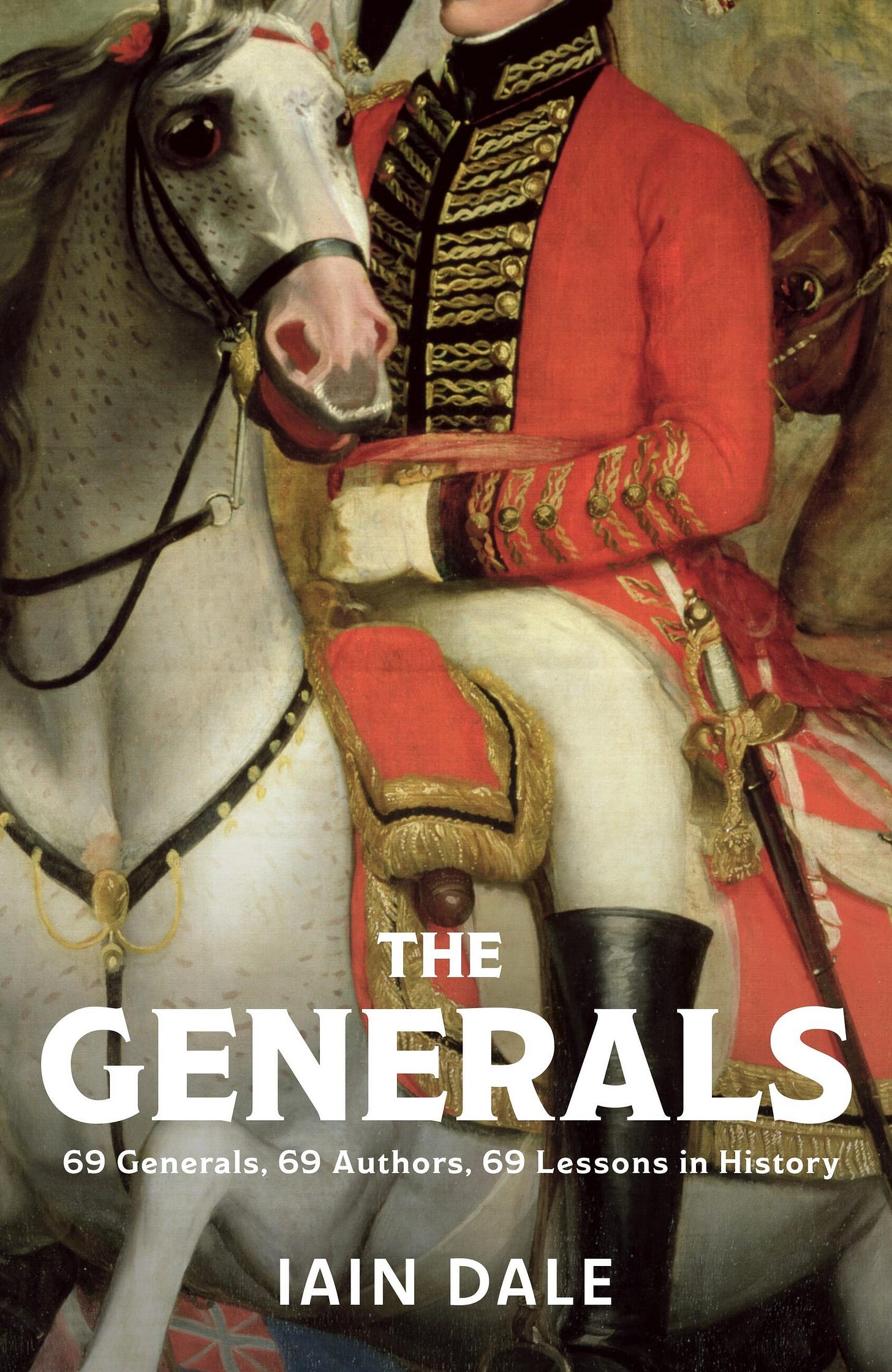
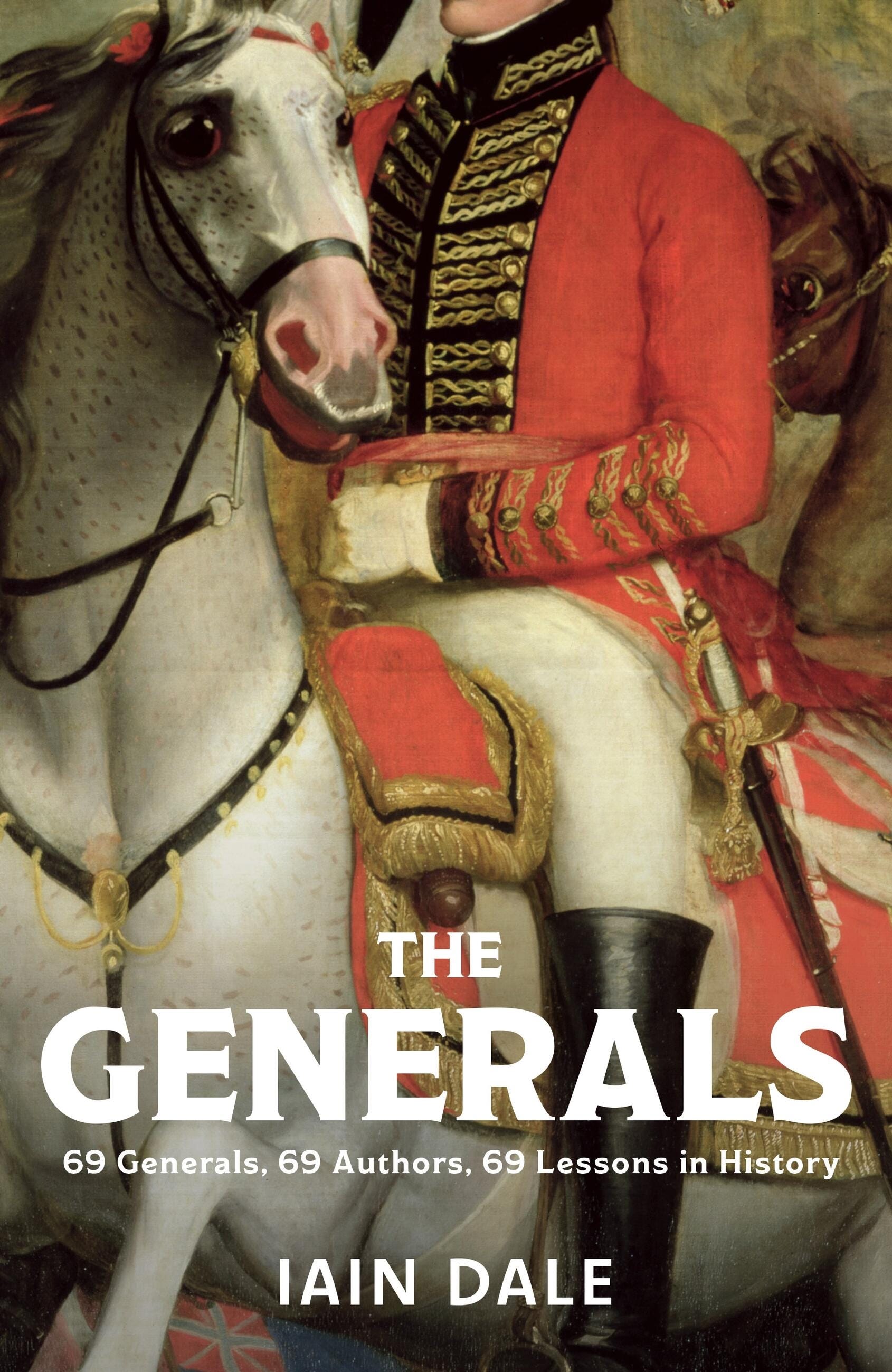
On Thursday, my new book, THE GENERALS was published. It seeks to give the reader an introduction to 69 of the most significan Generals in world history, through the eyes of 69 different authors. As a taster, I thought I would reproduce my introduction to the book here.
If you like what you see, do feel free to order a signed copy from Politicos.co.uk HERE, or an unsigned one from Amazon HERE. It’s also available as an Audiobook HERE.
The one theme that runs through the history of virtually every country in the world, right from the dawn of time, is war. Military history continues to be one of the most thriving genres in our non-fiction literature. Military strategy continues to fascinate, and yet for many it remains a mystery.
This aim of this book is to introduce 69 of the most important practitioners of the art of ‘generalship’ to an audience which may be familiar with many of the names and may know something of the wars and conflicts they took part in, but that is extent of their knowledge.
We may think we know what the world ‘General’ means and what a General actually does. But do we really?
The word General is defined in the Cambridge English Dictionary as
Noun: “an officer of very high rank, especially in the army”
This seems overly simplistic. Clearly it denotes the title and rank of a senior army officer, usually one who commands units larger than a regiment. However, a General can also be a staff officer who does not command troops but who plans their operations in the field.
Wikipedia tells us “that in the United States the rank of general ranks above a three-star lieutant-general and below the special wartime five-star ranks of General of the Army or General of the Air Force. Since the higher ranks of General of the Army and General of the Air Force have been reserved for significant wartime use only (in modern times were recreated for World War II), the rank of general is usually the highest general officer rank in the modern forces.”
Since General Bradley died in 1981 the United States hasn’t appointed any five-star generals.

Different countries’ armies have different ranks below General, and it is rare for someone to reach the rank with less than twenty years’ service. In the United States and the United Kingdom you must become a brigadier general then a major general then a lieutenant general before reaching the ultimate rank.
In the British Army the supreme rank is that of Field Marshal. The last Field Marshall to be appointed to the rank was Sir Michael Walker in 2003.
This is the eleventh book in the series, which started when I was at Biteback with THE HONOURABLE LADIES, two volumes of biographies of all the women elected to the House of Commons between 1918 and 2017. These were followed by THE PRIME MINISTERS, THE PRESIDENTS and KINGS & QUEENS, THE DICTATORS, BRITISH GENERAL ELECTION CAMPAIGNS 1830-2019 (Biteback), BRITISH BY-ELECTIONS (Biteback), THE TAOISEACH (Swift Press) and US PRESIDENTIAL CAMPAIGNS 1789-2024 (Biteback).
In the end you judge a book by its contents and I think every single one of the 70 contributors to this book has done a brilliant job. There is a consistency of style among the vast majority of essays, but I did give some latitude to those who had had some personal experience of the particular General they were writing about.
The 69 Geners featured in this book do not comprise a list of the 69 greatest Generals of all time. Such a list is almost impossible to compile. How do you compare the achievements of a commander in ancient Rome to those of a Second World War General? I venture to suggest it is impossible. That doesn’t mean people haven’t tried.
If you base the list purely on battles won, this would be the Top Ten General of All Time
1. Napoleon Bonaparte 56
2. Duke of Wellington 29
3. Khalid ibn al-Walid 26
4. Julius Caesar 23
5. Alexander the Great 23
6. Takeda Shingen 22
7. Oda Nobunaga 21
8. Maurice of Nassau 21
9. Cao Cao 20
10. Bernard Montgomery 19
Blake Stillwell published a Top Ten list based on statistical analysis on the WE ARE THE MIGHTY website in 2024,
1. Alexander the Great
2. Georgy Zhukov
3. Frederick the Great
4. Ulsysses S Grant
5. Hannibal Barca
6. Khalid ibn Walid
7. Takeda Shingen
8. Duke of Wellington
9. Julius Caesar
10. Napoleon Bonaparte
Within these pages you will find Generals from all around the world, although I do not pretend it is representative. Fourteen are from the World War II era, eight from World War I. Thirteen are from the United States, with 15 hailing from Britain. Four lived before the birth of Christ, with a further five living in the first millennium. Eight are from Asia, three from Africa. Eleven are from Prussia/Germany, with four each from Italy and France.
I started by compiling a shortlist of around 130 Generals, and intended to cut it down to fifty. This proved impossible, hence we end up with a list of 69. The selection was certainly more of an art than a science. I took advice from several expert military historians and some living Generals. I fully appreciate that I could have picked any number of other Generals, or left out some of those I did end up choosing. The selection is mine alone.
I selected the 69 Generals included in this book nearly four years before its publication. Are there Generals I now regret not including? Of course. Khalid abn Walid and Takeda Shingen, certainly. Although Alexander the Great was in THE DICTATORS, in hindsight I should have included him here too.
I won’t presume to impart my views on what makes a ‘good General’ as I am not qualified to do so.

Is Britain about to be plunged into even greater economic chaos? Pundits have highlighted a remark made by the supposed prime minister in-waiting, Greater Manchester mayor Andy Burnham, in an interview he gave to the New Statesman last year. The government, he said, had to ‘get beyond this thing of being in hock to the bond markets’. Understandably, the worry is that a Burnham – who, if successful in the upcoming Makerfield by-election, will likely replace Keir Starmer as prime minister – would water down Labour’s ‘non-negotiable’ fiscal rules to finance even more public borrowing.
Given that Britain is already paying significantly higher interest rates on long-term bonds than its peers, Burnham’s one-liner is easy to ridicule as infantile and financially illiterate. But it must be taken seriously, not least because a hostility to bond markets – a view also championed by Green Party leader Zack Polanski – is fast becoming the orthodox position on the political left.
This argument needs to be defeated once and for all. Our addiction to borrowing – a permanent feature of British politics since the Second World War – is at the root of three issues that have led us to the financial and social abyss we find ourselves in. Borrowing has become financially destructive, created a class of weak and dishonest politicians, and has entrenched a culture that has become increasingly dependent on handouts and subsidies. It must be ended.
Let’s start with our grim financial position. Britain’s national debt has grown from the equivalent of about one quarter of national output in the late 1980s, to two-thirds shortly after the 2008-09 financial-crisis bailouts, to around 100 per cent today. The interest on existing public debt now costs over £100 billion a year. This makes servicing the national debt the third largest source of government spending, after social security and health. About one in every £30 of new wealth being generated is used up servicing past profligacy. In the latest financial year, 2025-26, about six out of every seven pounds of new government borrowing went to paying the interest costs on existing debt. We are now borrowing to fund borrowing.
This profligacy has been as damaging politically as it has been financially. The ability to borrow at reasonable – though now rising – interest rates has been a boon for our new class of political managers, whose technocratic impulse is to avoid making hard choices. Rather than having to cut here in order to prioritise there, they have been able to spend more on everything – on education, health, welfare benefits and pensions, on public-sector employment and on private-sector subsidies. This attitude within the ruling echelons has shielded the voters from the hard truth that no society can live beyond its means forever.
The magic-money-tree approach to public spending underpins the third, and most debilitating, consequence of endemic public borrowing: the ubiquitous handout culture. This enfeebling form of modern-day alms has sapped incentives for people and businesses. It has dulled the traditional belief that progress and prosperity require a persistent effort to overcome challenges.
As the Stoic philosopher Seneca wrote, ‘difficulties strengthen the mind, as labour does the body’. But that notion that what doesn’t kill you makes you stronger has faded from contemporary life. Instead, the infantilising assumption has spread that in times of difficulty a state handout is always available, financed by borrowing.
Following decades of creeping welfarism, the extensive package of handouts during the Covid-19 lockdowns consolidated the practice of state dependence. Today, more than 24million adults – getting on for half the 55 million adult population – receive some form of welfare. Thirteen million are state pensioners, while 10million working-age people are claimants – nearly one in every four.
All these emergency rescues, public subsidies and handouts aren’t cheap. Sovereign borrowing has been a tremendous enabler of the ‘state can pay’ presumption. In contrast, a government courageous enough to eschew further state borrowing, and which argues that we need to live within our means again, would demonstrate its capacity to lead Britain’s national revival.
Critics of government borrowing generally run up against three words – John Maynard Keynes – which supposedly render their arguments obsolete. If the greatest economist of the 20th century championed government borrowing, they insist, who are you to contradict it? But this misrepresents Keynes.
Keynes’s theory was that governments should borrow temporarily during periods of economic contraction. Critically, he argued that they should run surpluses during the subsequent recoveries to pay off the debts previously incurred. The practice since the Second World War has been deficits financed by borrowing, even during times of economic expansion. In the four decades from 1945 to 1985, British governments ran budget surpluses in only seven years. Indeed, Margaret Thatcher’s single surplus year, in 1988-89, might not have happened without the wheeze of treating privatisation proceeds not as exceptional one-off revenues but as ‘negative expenditure’. Keynes would have viewed this addiction to borrowing as mad – as indeed it is.
There is one glimmer of reason in Burnham’s criticism of the bond market, although he almost certainly didn’t intend it. Contemporary politicians and commentators have become preoccupied by the ‘behaviour’ of financial markets, and modern political decision-making has become subordinate to what the markets will ‘tolerate’. This subservience explains why governments, going back to New Labour in the 1990s, have followed ‘fiscal rules’ to keep on the right side of the markets.
The tendency to anthropomorphise markets – to attribute them with human characteristics, emotions or intentions – has a long history. The original South Sea Company Bubble of 1720 was interpreted as a sign of undue market ‘optimism’ which was then shattered by a market ‘panic’. Ever since, people have resorted to attributing human feelings and characteristics to markets as a way of trying to make sense of economic and financial crises. Unable to fathom the underlying drivers of these events, viewing markets through the lens of human behaviour provides a language to describe what is happening. Markets are now regularly described as ‘exuberant’, ‘nervous’ or ‘gloomy’.
Talking about markets in human terms has become pervasive – even in times of relative economic stability. We hear it said that markets are ‘ignoring bad news’, or are ‘anticipating’ an AI-productivity revolution. This language can offer some assurance that an unpredictable world is not quite so incomprehensible. At least the ‘markets’ know what is happening.
All of this plays into the belief that markets control British politics. Burnham is right in saying that they shouldn’t. But he is wrong in his implication that they should, therefore, be ignored. If he doesn’t want the country to be ‘in hock’ to markets, then his first objective should be to stop borrowing from them.
That’s the challenge that any political leader needs to confront if they are to break free of managed decline. On their track record, neither Burnham nor any of the other existing Labour leadership candidates are up to this task.
Britain doesn’t need ever more borrowing to grow and prosper. What it needs most is a cultural shift to build personal and corporate self-reliance. Bond markets don’t create wealth or destroy it – our destiny is in our own hands.
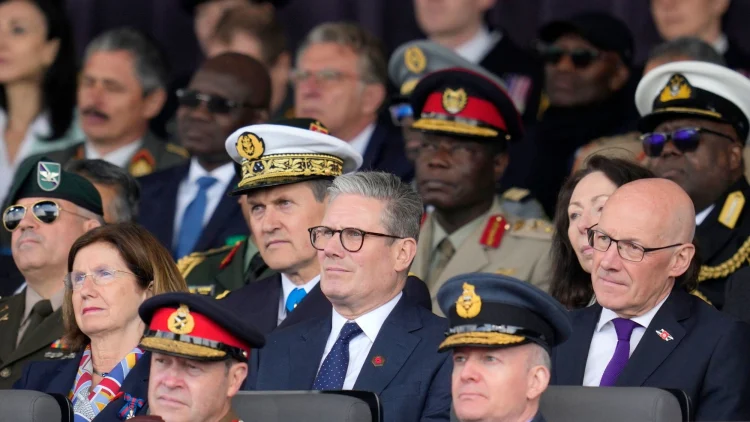
Keir Starmer at a D-Day national commemoration event in 2024 (Alamy)

4 min read
On the anniversary of D-Day, remembering the sacrifices of the past must go hand in hand with renewing our commitment to those who serve today.
Thirteen years ago, I was standing on a beach in Normandy, with my back to the sea, looking across the broad sands to the low hills and fields that lie near the city of Caen. I was there with my fellow officer cadets from the Royal Military Academy Sandhurst on a battlefield tour. Even to us at the start of our military careers, we could see just how hard a task it would be to land in the cold, knee-deep water, wade onto the soft sand, and assault up the beach towards the pitiless, ceaseless machine-gun positions of the Germans.
And yet, 82 years ago, on 6 June 1944, that is exactly what more than 156,000 Allied troops did to liberate Western Europe from Nazi occupation.
Many were still in their teens. Yet they faced danger with remarkable courage and, in doing so, helped to secure the freedoms we continue to enjoy today.
Days like today remind us not to take that freedom for granted. It was hard won by a generation who made extraordinary sacrifices, and we owe it to them to remember that.
Every anniversary of D-Day is a moment for remembrance. We remember those who never came home. We honour those who carried the scars of war for the rest of their lives. And we give thanks to a generation whose service changed the course of history forever.
But D-Day also reminds us that remembrance alone is not enough. If we are serious about honouring those who serve, then we must prove it in the way we treat today’s armed forces community.
From my own experience, I know that the transition back into civilian life is not always straightforward
As I experienced during my own years of service, I know that military life asks a great deal not just of military personnel, but of the families who stand behind them. I also know that while service brings a sense of belonging and purpose, it also demands sacrifices that can be felt long after a military career is over.
That is why the Armed Forces Covenant matters. It is built on a simple principle: that those who serve, or have served, and their families should face no disadvantage because of their service to our country.
At the general election just under two years ago, Labour promised to strengthen that Covenant and extend it across government. And through the Armed Forces Bill, we are delivering on that promise.
For the first time, the Covenant will apply across central government, devolved governments and local authorities. This matters because the challenges faced by military personnel, veterans and their families do not fit neatly into one department. They can involve housing, healthcare, children’s education, employment support and much more.
From my own experience, I know that the transition back into civilian life is not always straightforward, and I, alongside my colleagues, am steadfast in the belief that no veteran who has served our country should be left to navigate those challenges alone.
This change will mean public services are legally required to consider the unique circumstances of the armed forces community.
It will help deliver better support for tens of thousands of serving personnel, veterans and their families across the country, and I am proud to support it.
On D-Day, those who fought trusted that the country they served would prove worthy of their sacrifice. Today, our duty is to honour that trust – not only on anniversaries, but all year round.
So today, we pay tribute to the heroes of the past by renewing our commitment to the Armed Forces Covenant and to the armed forces community itself: a promise that your country will never forget the sacrifices you make, and that your service will never be taken for granted.
Louise Sandher-Jones MP is Labour MP for North East Derbyshire and Parliamentary Under-Secretary of State for Veterans and People
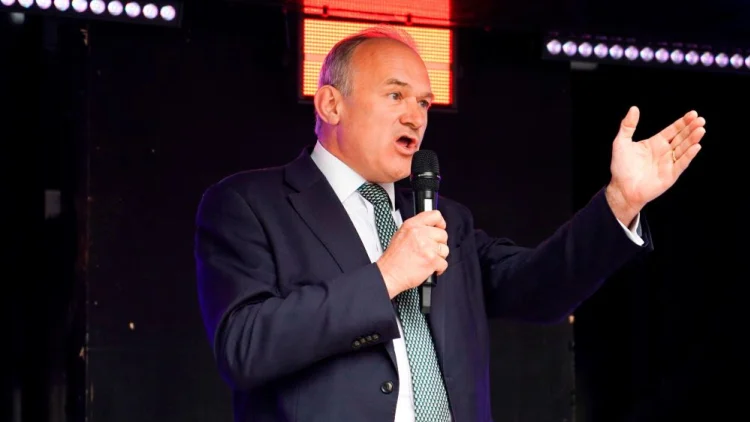

Ed Davey has served as leader of the Liberal Democrats since 2020 (Alamy)
8 min read
The Liberal Democrats are under pressure to remain relevant, with their own MPs publicly admitting there is frustration about the party’s lack of progress since the last general election. PoliticsHome can reveal that a strategy “rethink” is now underway at the top of the party.
In 2024, the Lib Dems achieved a record result with 72 MPs elected. It was a triumph for leader Ed Davey. Since then, however, there has been growing restlessness over what many of his MPs feel has been a failure to capitalise on that performance, and fears that the party risks being squeezed out of the political picture.
The local elections in May produced mixed results for the Lib Dems. The party made a net gain of 224 councillors and took three councils from other parties. It was able to fend off Reform UK challenges in areas like Portsmouth, where it seized control of the city council, and made gains outside its traditional strongholds in areas such as Rugby and Ealing.
However, the results also showed that on average, the Lib Dems’ support was down by three points compared to 2022 and 2024, and they largely failed to make inroads in urban areas such as London, where a surge in support for the Green Party ate into Lib Dem votes.
While the party leadership hailed the 7 May results as an overall success, PoliticsHome can reveal that there is an acceptance among senior Lib Dems that it is time to look at changing the approach. To that end, the party is undergoing a strategy and policy overhaul, with key areas of discussion including the economy, welfare, and, as the 10th anniversary of the Brexit referendum approaches, a bolder stance on the European Union.
Speaking to PoliticsHome, Lib Dem MP Tom Gordon said that while the results last month were generally positive for his party, losses in the North that weren’t seen during the coalition years rang “alarm bells” for him.
For Gordon, the results were a “warning sign” that the Lib Dems have been operating in “a very cautious way” so far.
“I don’t think it was necessarily the wrong approach, but just given the nature and the timeline of where we’re at in this parliament and the political events and that fragmentation, I think there is now a rethinking of what we do, what we offer, how we’re more punchy, how we’re bolder, and what the offer from us is,” he told PoliticsHome.
The Lib Dems have tried to be bold before. The party’s adoption of the slogan “Bollocks to Brexit” in 2019 was an attempt to harness the anti-Brexit vote. But it fell flat. Seven years on, in a UK that is no longer a part of the EU, one senior Lib Dem MP told PoliticsHome, “the economy is stagnating, the trend is mediocre.”
There’s definitely a frustration that it feels like we’ve been talking about the same things – social care and rivers – and that just felt like we weren’t really moving forward
They felt that the party would need to announce EU policies that would be “eye-catching and bold”, with all options being considered. One senior MP said the outcome of those discussions would likely come before conference season.
The MP said the party is “starting to think about the economy in a much more structural manner”, and the frontbench team had been “set a task of properly scrutinising departmental budgets, [looking at] where money is being spent”.
They added that the party needs to “make sure we are economically credible”, with there being more appetite from figures at the top of the party towards thinking about what the Lib Dem offering would be in a potential future coalition.
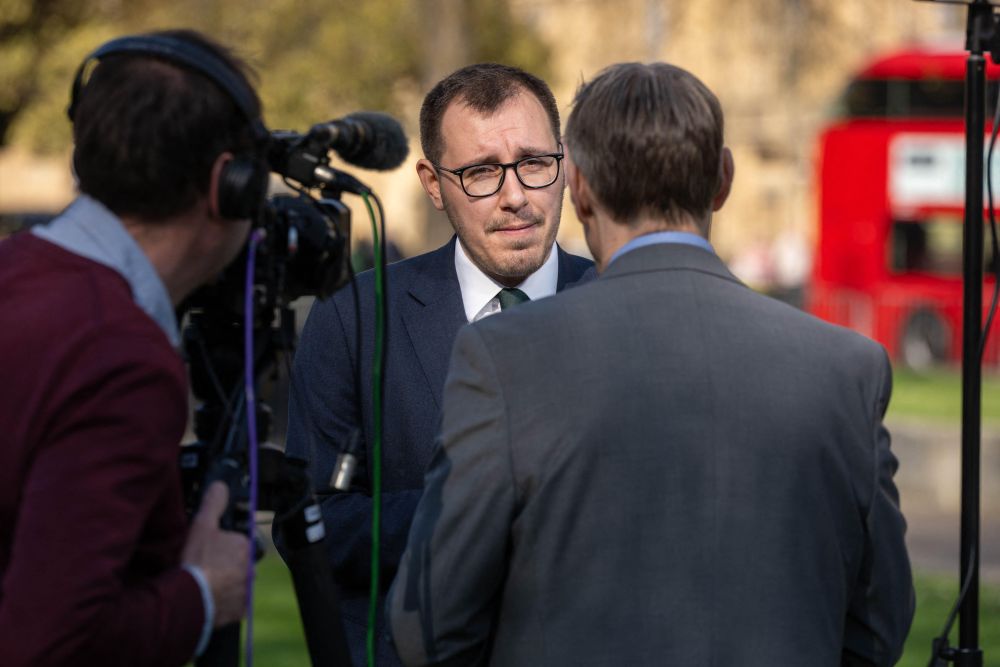
Lib Dem MP and chair of the Commons Health and Social Care Committee, Layla Moran, told PoliticsHome: “There’s definitely a frustration that it feels like we’ve been talking about the same things – social care and rivers – and that just felt like we weren’t really moving forward.
“So us evolving the position and being quite mindful about how we do that now is really important.”
She added: “There are a lot of Lib Dem MPs geeking out on how we fix the deep issues that the country’s got, and we are going to come up with something that is quite bold and exciting and coherent.”
While Lib Dems like Gordon describe the process as a “rethink”, others are more reluctant to adopt that label, instead suggesting it is a natural evolution.
Daisy Cooper, Lib Dem deputy leader and Treasury spokesperson, told PoliticsHome the party was now looking at seats to target beyond just the so-called ‘Blue Wall’ – historically Conservative constituencies that have switched to the Lib Dems in recent years.
“Now that we have consolidated our existing seats, really our plan is very much to go out and to win more, but it’s not a change in direction, it’s just the next step.”
Whatever the official label of the process inside the party, the question of how the Lib Dems can cut through and make an impact in an increasingly fractured party system is a key concern. “It’s a massive challenge”, one senior party member told PoliticsHome, explaining it is often hard to achieve cut through with the Lib Dems’ characteristically “nuanced” policies.
As populist parties garner support, Gordon said the party cannot stand still. “There are people who are really cheesed off who are looking for alternatives, and we can’t miss the boat on that.
“We will be doing ourselves a disservice as a party unless we look to try and build that big tent that has an overarching strategy for the entirety of the country.”
The Liberal Democrats are also planning to prioritise championing environmentalism, in order to move into a space they say Zack Polanski’s Green Party is starting to abandon, according to The Telegraph.
Moran put it frankly: “We need to respond. We recognise that the strategy that we went into the general election with in 2024 is not the right strategy for now. And there’s a broad understanding of that across the party.”
Ed could easily have chosen the very tempting option to go full Polanski and become the populist Farage of the left
One senior Lib Dem told PoliticsHome that there is also an acceptance that they will need to be more “radical” in their policy making and “thinking more about what people wouldn’t expect us to do”. There is a broad consensus too that how these policies are then communicated to the public is key, with multiple sources telling PoliticsHome that the party is growing its social media teams in a bid to boost its digital operation.
Moran admitted that the party needs to be “better at selling [policy]”.
“That’s not just Ed – it’s all of us. We all need to get literate on social media; we all need to make this sexy again. We all need to understand how to sell this stuff in 30 seconds.”
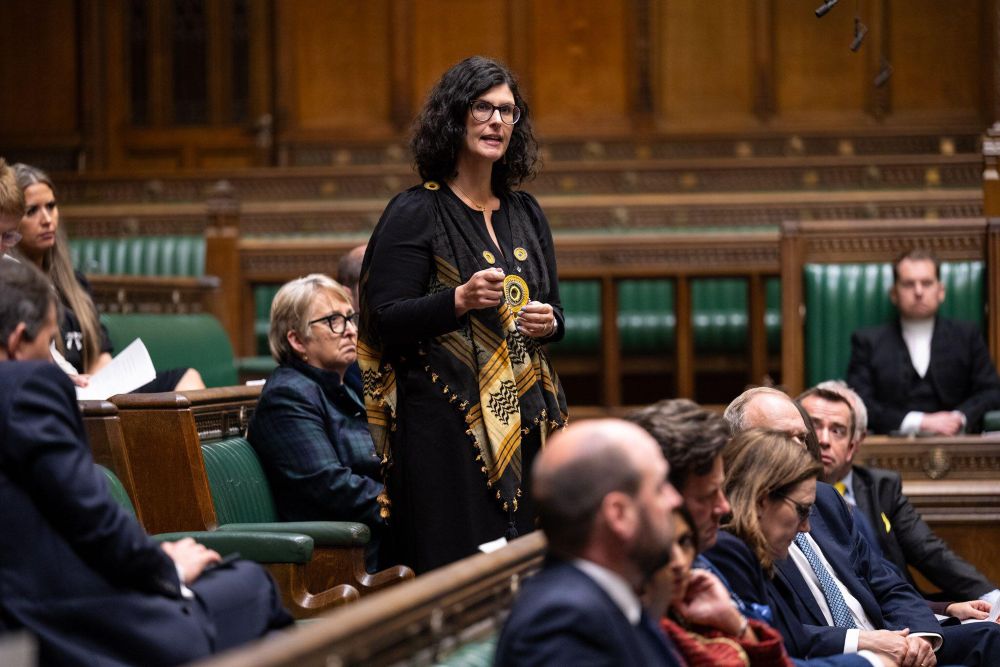
Gordon, along with other Lib Dems, emphasised the need for his party to be “bold” and “popular” – but that while they wanted to “offer an alternative”, they want to find a “way to frame that in a way like we don’t want to burn the system down”. For many Lib Dem MPs, this means they want to see Davey continue as leader up until the next general election, despite criticisms that he could have done more to cut through with the public.
Lib Dem MP and former party leader Tim Farron told PoliticsHome: “Ed could easily have chosen the very tempting option to go full Polanski and become the populist Farage of the left.
“But [he] wisely and morally opted to be the party for sensible people. That’s a harder sell, but it’s the right move, so it involves a lot more work on the ground. But we are really good at that, and getting even better.”
One Lib Dem MP from the 2024 intake who wished to remain anonymous said: “We’ve been quieter than many would want us to be so far.
“If we get bolder and louder now, particularly on the economy, that opportunity to break through is still there for us.”
Newer MPs told PoliticsHome that they felt the party leadership had been engaging on how to move the party forward by meeting with backbench MPs, and carrying out extensive research via polling and data analysis.
Gordon told PoliticsHome: “I can understand why some colleagues have been frustrated that they don’t feel that’s happened so far. I am cautiously optimistic that that has been heard, and there will be some efforts to try and make sure that we do better, quite frankly, on that front.”
While calling for the party to consider how it might be involved in a future Westminster coalition was once a sign of rebellion, that line of thinking is now becoming more commonplace.
Gordon told PoliticsHome it was “absolutely” important to start thinking about policies for a coalition, and that the party would have that conversation going forward while also involving its members and affiliated organisations.
However, there is seemingly still a divide on this point, with senior party figures telling PoliticsHome that laying out options for a future coalition would be “indulgent naval gazing” when a general election is potentially still three years away, and that they should instead be focused on “the issues that really matter to people right now”.
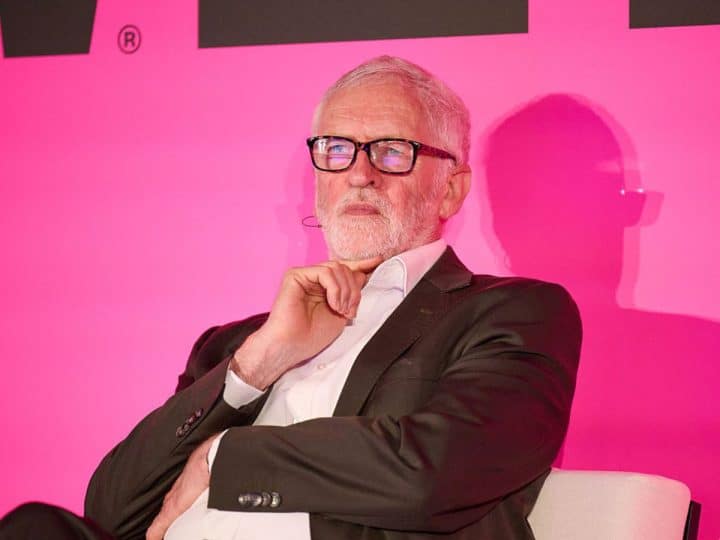
Your Party leader Jeremy Corbyn has told the Canary that the Filton 24 activists convicted of criminal damage must not be sentenced as terrorists.
The Starmer regime insisted on retrying six activists. The jury had refused at the first trial to convict them on any of the state’s charges relating to damage to an Israeli-owned weapons factory, after police and security guards’ claims didn’t match CCTV evidence. At the retrial, security service-linked judge Jeremy Johnson banned any mention of the fact that the activists carried out their action to prevent the slaughter of Palestinian civilians. He also banned even the media from reporting that the defendants might be sentenced under terror legislation, despite no terror charges being brought against them.
Despite the attempts to stack the trial in the state’s favour, two of the activists were acquitted on all charges. None were convicted of any violent intent. Yet at the sentencing hearing next Friday, 12 June, the government is pressing for terror-related sentencing. This would mean much longer prison time and draconian conditions imposed on the young activists for decades even after release. These could include having to register their phones with the authorities, report on any relationships and obtain permission to travel.
Corbyn condemns attack on democracy and justice
Starmer is waging war on UK citizens’ rights to protect Israel and its interests. Corbyn, like a handful of other MPs, has condemned this attack on democracy and justice:
View this post on Instagram
Sentences will be passed at Woolwich Crown Court and the group’s supporters have asked well-wishers to attend a protest outside the court to increase public awareness, and pressure on the authorities to do the right thing.
Featured image via Jordan Peck/Getty Images for SXSW London
By Skwawkbox

More than 3,000 people, including legal experts, have signed a formal complaint accusing the security service-linked presiding judge in the trial of six ‘Filton 24’ Palestine Action activists of bias and discriminatory conduct. The complaint comes in advance of a hearing on Monday 8 June on an application by the defendants for Jeremy Johnson’s removal from the case. Justice Jeremy Johnson on the grounds of apparent bias and abuses of process.
The jury had refused at the first trial to convict them on any of the state’s charges relating to damage to an Israeli-owned weapons factory, after police and security guards’ claims didn’t match CCTV evidence. At the retrial, security service-linked judge Jeremy Johnson banned any mention of the fact that the activists carried out their action to prevent the slaughter of Palestinian civilians. He banned lawyers from telling jurors of their legal right to acquit. Johnson even banned the media from reporting that the defendants might be sentenced under terror legislation — despite no terror charges being brought against them.
Despite the attempts to stack the trial in the state’s favour, two of the activists were acquitted on all charges. None were convicted of any violent intent. Yet at the sentencing hearing next Friday, 12 June, the government is pressing for terror-related sentencing. This would mean much longer prison time and draconian conditions imposed on the young activists for decades even after release. These could include having to register their phones with the authorities, report on any relationships and obtain permission to travel.
Filton 24 — “Manipulating the law”
The complaint signatories say the terror sentencing plan treats the defendants like Ahmed Hassan, the so-called “Parsons Green bomber”. Hassan is the only other person ever to be sentenced under UK law. Not charged with a terrorism offence yet sentenced as a terrorist. Hassan has received a life sentence in 2018 for a London Underground bombing that injured 51 people. The jury acquitted all the Filton defendants of any violent intent. The plan to sentence non-violent activists as terrorists “reveals [Johnson’s] loss of judgment and a discriminatory mindset towards the defendants”.
The complaint adds that by (unsuccessfully) prosecuting defence lawyer Rajiv Menon for contempt of court — Menon had defied Johnson’s restriction on what he could tell the jury — Johnson “had a prejudicial impact on the defendants”. Johnson also failed to deal with prejudicial statements by government ministers. Maud Dromgoole, who served as a juror in the first trial, said that the state was “manipulating the law” to make examples of the defendants.
The experts conclude that, added to Johnson’s “cruel and vindictive” treatment of the accused, his actions:
amount to a pattern of exceptional, biased and discriminatory conduct on the part of the judge.
Featured image via FiltonActionists
By Skwawkbox

2026 U.S. Women’s Open Saturday TV coverage: Watch Round 3

Bitcoin Falls To $60,000 As Zcash Bug Rocks Crypto

America Going BROKE! (Bitcoin Holders Are NOT Ready)



-

 Business5 days ago
Jade Biosciences, Inc. (JBIO) Discusses Positive Interim Results From JADE101 Phase I Healthy Volunteer Study and Development Plans Transcript
-

 Sports4 days ago
French Open 2026 results: Alexander Zverev beats Rafael Jodar and will play Jakub Mensik in semi-finals
-

 Fashion19 hours ago
Weekend Open Thread: Evereve – Corporette.com
-
 Crypto World23 hours ago
Jensen Huang Approves Samsung, SK Hynix, and Micron for NVIDIA (NVDA) HBM4 Memory Supply
-

 Tech4 days ago
CryZENx Releases Fresh Playable Content Deep Inside Jabu-Jabu for His Ocarina of Time Remake
-
 Business3 days ago
Trump Taps Housing Chief Bill Pulte as Acting Intelligence Director After Gabbard Exit
-
Crypto World1 day ago
LBank Surpasses 25 Million Users Worldwide as AFA Partnership Continues to Drive Global Growth
-
 Crypto World4 days ago
Seagate (STX) Stock Surges to Record High on AI Boom and Legal Settlement
-
 NewsBeat4 days ago
Republicans balk at Trump’s attempt to appoint a MAGA enforcer to lead National Intelligence
-
 Crypto World3 days ago
EU AI Data Center Project Faces Delays as Funding Gaps Grow
-

 Entertainment3 days ago
Did The Mandalorian And Grogu Already Ruin The Next Star Wars Movie?
-

 Business3 days ago
Aehr Test Systems Stock Soars 17% Amid Surging AI Demand and Conference Spotlight
-

 Business3 days ago
Relay Therapeutics Shares Surge 20% on ASCO Momentum for Zovegalisib Breast Cancer Program
-
Business7 days ago
Algoma Steel gains 63% as Fair Value models spot opportunity
-
 Business4 days ago
Claude AI Down Today Reason: Why Anthropic’s AI is not working today? What’s the latest quota update
-
 Crypto World23 hours ago
Merlin (MRLN) Stock Soars 32% on Major USSOCOM Autonomy Milestone
-

 Tech4 days ago
Instagram will stop bombarding teens with the same kind of obsessively unhealthy content
-

 Tech1 day ago
RCS Messages Between iPhone and Android Get End-to-End Encryption With iOS 26.5
-
Crypto World4 days ago
Tether Brings Google’s TurboQuant to Production, Unlocking Long-Context AI on Everyday Devices
-

 Business4 days ago
Dow Jones Climbs Near Record Highs as AI Optimism Offsets Geopolitical Risks
You must be logged in to post a comment Login