
Politics
Igor Merheim-Eyre: Why Brexiteers are now becoming like Euro-federalists


Dr Igor Merheim-Eyre is a political strategist and advisor who has worked with conservatives across the transatlantic space.
Having returned back to Blighty last year after ten years in Brussels, I’m increasingly shocked by the failures of Brexiteers to develop a positive vision for Britain as well as their readiness to avoid accountability by finding scapegoats.
Do not get me wrong, even in Brussels, I always sought to defend the democratic will of the British people, irrespective of how unpopular that opinion may have been or however many people it alienated. I wished nothing but a bright future for Britain as it was able to chart a new course outside the European Union. But it’s time to face an uncomfortable truth.
Attending a recent event with the Bruges Group, and reading posts, letters and columns of leading Brexiteers, I’m increasingly shocked by their failure to develop a positive vision of Britain.
Even worse, after winning an unexpected referendum victory in 2016, solidified with a historical General Elections win in 2019, they blew their chance at transforming Britain for the better, leaving it even more socially divided and economically weaker.
Lord Frost in a recent letter to the FT wrote that the current government’s efforts, instead of realigning with the EU, should be expended ‘on using the benefits of British national independence, while we still have it, to deregulate and improve the business environment here in the UK’. There’s little point at finger-pointing, but I had expected such government agenda from the Brexiteers, not from Labour. At least, to Lord Frost’s credit, he has been consistently critical of the Johnson Government’s delivery of post-Brexit ‘benefits’ such as net zero, overregulation, crippling taxation or the replacement of skilled nurses with Uber drivers.
The trouble is that Brexiteers had thirty years to develop a vision of Britain ‘the day after’ and they failed spectacularly. Moreover, where they spent thirty years blaming Britain’s ills on eurocrats in Brussels, they now found new scapegoats in the Whitehall bureaucracy. There is no self-reflection nor a long-term vision for Britain. There is only scapegoating and endless calls for an illusory ‘proper Brexit’ that would solve the country’s problems.
Ironically, in this, they are increasingly behaving like the euro-federalists they hate.
For euro-federalists, Europe’s problems can only be solved by a more Federal Europe: migration? More Europe; deindustrialisation? More Europe; housing crisis? More Europe. They never consider that some issues might be better solved at a national or regional level, let alone that they should be left up to individuals, civil society or markets. For euro-federalists, the failures lie with those who simply refuse to transfer an ever-growing list of competencies to Brussels and refuse the paradise of an ‘ever closer Union’; they engage in scapegoating on one hand, and conceptual day-dreaming on the other rather than securing borders or addressing economic woes.
I have studied European politics, taught European politics, worked with and in European institutions, which is why I find it curious to see that Brexiteers are, after all, increasingly behaving like euro-federalists. Perhaps, they even go further. Calling for a ‘proper Brexit’ after all those that have been tried and failed over the past decade, is reminiscent of those Marxists arguing that their ideology was never properly tried in practice and next time will be different.
I have bad news: it won’t.
The globalisation era of trade is over while the EU remains the UK’s largest trading partner by the very fact of geography. It’s also a fact that a bloc of 27 sets its own rules for trading with others, irrespective of whether we like it or not.
Lord Frost criticises the Labour government’s ‘reset’ with the EU as constituting ‘the partial re-entry to the EU’s single market…applying EU laws without any say in them, and paying for the privilege too.’ Well, yes. It should hardly come as a surprise to a man like Lord Frost who has spent considerable time in Brussels that, having left the EU, the UK is no longer able to influence key decisions.
Lord Cameron, for all his faults, already tried to explain in 2016 that the UK is too much of a large economy to be a norm-taker within a Customs Union. However, it is also not large enough to dictate to a simply larger bloc without being a full member.
Unfortunately, the Labour government is either naïve or disingenuous about this too. They cannot claim to be pursuing a membership of the EU’s single market while avoiding the freedom of movement. The EU’s four freedoms (of goods, services, capital and people) always go together, and the EU will insist on some form of free movement.
So, where does that leave Britain ten years after the Brexit referendum?
The UK now essentially has three choices: the status quo, joining the single market as a norm-taker and accepting the EU’s four freedoms, or return to full membership. This decision has to be made in a world that is once again moving towards protectionism and geopolitical blocs.
Brexiteers have proved that the status quo does not work, while a ‘proper Brexit’ is simply an illusion. They’ve had the chance to prove otherwise and they cannot hide behind Brussels or Whitehall. That leaves two other options, and I find it hard to believe that Britain, even under a Labour government lacking all ambition, would want to remain a simple norm-taker.
As for the third option, the conservative leaders of Germany and Italy are energetically pushing a new agenda that is reshaping the harmful net zero policies, cutting red tape and regaining control of external borders. Every step of the way they are proving the continued relevance of sovereign and confident states within the European Union. This will please neither Brexiteers nor euro-federalists.
Brexiteers have become like the euro-federalists they hate so much: dreaming of a fictional future without a vision for solving real-life problems, and quick to shift blame to avoid accountability. Perhaps, this should come as no surprise. Frost, Farage and Johnson are, after all, Brussels men.


About 40% of Brits hadn’t finished a book in the 12 months between 2024-2025, YouGov reported.
Of those who had, 30% listened to an audiobook; 18% had ticked titles off their list through headphones, without ever picking up a physical book.
Some people think that shouldn’t “count,” though. For instance, author Nathan Bransford said in his blog, “Consuming an audiobook is a fundamentally different activity than reading. We already have a word for it: LISTENING”.
He also argued that reading from a page engages the brain differently. But not everyone agrees.
What does science say?
In 2016, Dr Beth Rogowsky, a professor specialising in language learning styles from Bloomsburg University of Pennsylvania, co-authored a study comparing comprehension rates for people listening to audiobooks to those who read from an e-reader page and another group who did both.
It tracked how much they remembered right after taking in the information and two weeks later.
Speaking to NPR, Dr Rogowsky said, “We found that there was no significant difference between reading a book using a Kindle or listening to a book or doing both – listening and reading simultaneously.”
Of course, that was only for adults who already knew how to read; the professor said physical books might be more helpful to children who can’t yet read.
But, to be fair, the “do audiobooks count?” debate does not rage among three-year-olds so much as it does those with Goodreads accounts and access to Reddit.
OK, but what about the word “reading”?
Fine, you might take in information from listening to an audiobook. But that isn’t the definition of the word reading – is it?
Well, major dictionaries don’t seem to agree about that.
Merriam-Webster defines “to read” as “to receive or take in the sense of (letters, symbols, etc.) especially [but not exclusively!] by sight or touch”.
Another definition – “to learn from what one has seen or found in writing or printing” – does not technically preclude listening.
Cambridge Dictionary, however, puts the first definition as “to look at words or symbols and understand what they mean,” and Collins Dictionary puts “look” in their main definition too.
TBH – who cares?
A very compelling article, written by visually impaired author James Tate Hill for Literary Hub, reads: “It was hard to say if the words read with my ears reached my brain differently from everything I had read with my eyes”.
For instance, he said, the narration of audiobooks placed a new layer on top of the experience – but it took “minutes” for the author’s words to override the narrator’s voice.
He identified as a “reader” thanks to his love of audiobooks, and added it “didn’t matter if I was reading or listening” to his favourite titles; “the words in my ears were the same words other people saw when they held a book in their hands.”
I have to agree. The strongest argument I can find against calling listening to audiobooks “reading” is a (disputed) semantic nuance, but I don’t find that compelling enough to stop someone calling themselves a reader if they want to (side note: self-identifying as a reader is linked to increased happiness).
It’s true that you can’t fold laundry while you’re rifling through War and Peace, and accents and pace changes are more in your control when you read from a page.
But seeing as two in five people aren’t enjoying books in any form, that information seems to land similarly whether it’s read from a page or some headphones, and that reading is good for us, whether we listen or look, I’m not particularly fussed about how it’s done.

News that Israel have tortured a Palestinian baby have gone largely under-reported by a complicit Western media. It is a horror almost beyond comprehension; recent reports describe how a Palestinian father named Abu Nassar, has a one-year-old child was tortured in front of him during a 10-hour interrogation by the Israeli military. Salma Kaddoumi, a freelance video and photojournalist who interviewed Nasser’s family, later told the Canary that Nasser has not been heard from since.
Despite photographic evidence of the baby’s injuries trending on social media, and alarming claims of forced disappearance raised by Nasser’s family, Western media outlets have broadly failed to report on the incident. Unfortunately, at this point, few would expect them to. Nasser’s story is one more crime ignored amidst the gravest crimes against humanity seen this century.
Israel’s torture of Palestinian baby met with deafening silence
When Nasser’s story first broke on 24 March 2026, it was impossible to ignore the images of his baby on social media. We are all too used to encountering images of injured Gazan children in this way, often bloodied and covered in debris. What is so disturbing about the injuries suffered by Nasser’s child, however – two burns or punctures on each leg, in roughly the same place — is how deliberate they appear to be.
This story is different, making its absence across Western media all the more stark. Bogus claims about children caught up in the ‘realities of war‘ cannot be made here. This is a story about the Israeli state abusing a baby to extract a confession from the child’s father.
Stories about children who suffer abuse at home and abroad usually occupy Western news cycles for days, weeks, even years — so long as the children are white. Almost twenty years later, the BBC continues to report on the harrowing case of ‘Baby P’. Nasser’s baby, to the contrary, is outright ignored. What is the media afraid of? Having an emotional reaction in response to the suffering of the wrong kind of child?
Institutional racism
The reasons why the media is failing to report on this story are, by now, no doubt obvious. Institutional bias in favour of the Zionist regime, if not outright capture by its representatives, has led to a culture of silence where the horrors experienced by Palestinians are persistently absent from the news cycle.
This bias is compounded by racism, which leads to more scrutiny being applied to Palestinian civilian testimony than the claims of the Zionist regime itself. Whereas the media was more than happy to report on unverified claims of ‘40 beheaded babies’ on 7 October 2023, verified reports of beheaded Palestinian children, backed up by video footage, are left to the side.
We can imagine the excuses made by editors. Is the testimony provided by Nasser’s family members deemed untrustworthy? Is it too difficult to verify their accounts to report on them? Are the reports produced by freelance journalists on the ground, who continue to risk their lives to break through Israel’s blockade, not good enough for them?
A manipulated grey area of plausible deniability quickly amounts to a new form of censorship.
Citizen journalism sidelined
What a difference fifteen years makes. In 2011, the Arab Spring heralded a new era of ‘citizen journalism’. Mainstream media outlets were quick to fill their reports with footage captured by everyday people, who uploaded their testimony to the internet via smartphones.
But even at that time, the role of Big Tech companies in manipulating stories was becoming apparent. Haythem Guesmi, writing for Al Jazeera in 2021, showed how social media has since revealed itself to be a double-edged sword:
Big Tech companies have been allowed to be the ultimate arbiters on free speech online and a haven for hate speech and disinformation. They have piggybacked on the idea that they helped trigger the Arab Spring and are therefore a force for freedom and democracy.
Social media is seen as both a threat to and the last bastion of free speech. One side-effect of this contradiction is that citizen journalism is typically now confined to social media platforms, which are deemed lawless zones of misinformation. The disinformation pumped out by governments, however, is subject to less scrutiny than ever before. With citizen journalism maligned, the mainstream media defers unquestioningly to state power.
No accountability
As a result, we live in a dissonant world where those responsible for a genocide live-streamed across our smartphones avoid scrutiny and accountability. Stories like Nasser’s, quarantined on deregulated platforms, are both inescapable and ignored.
The fact that social media platforms are drowning in disinformation is self-evident to anyone with an Internet connection. But by placing all emphasis on the responsibilities of Big Tech companies, we let our legacy media off the hook.
In the same article for Al Jazeera, Guesmi reported how international civil rights organisations were calling:
on Big Tech companies to cease their unfair discriminatory practices, to invest in regional expertise of content moderation and become more transparent about policies and procedures.
In 2026, it is long past due that our legacy media organisations did the same. Until they do, they will continue to fail those who are subject to horrifying abuse at the hands of rogue states, like Nasser and his baby.
This would require media organisations disentangle themselves from their cozy relationships with state power first. Until that happens, we can expect them to remain complicit in state violence and racism through their unwillingness to report on the stories that matter.
Featured image via the Canary
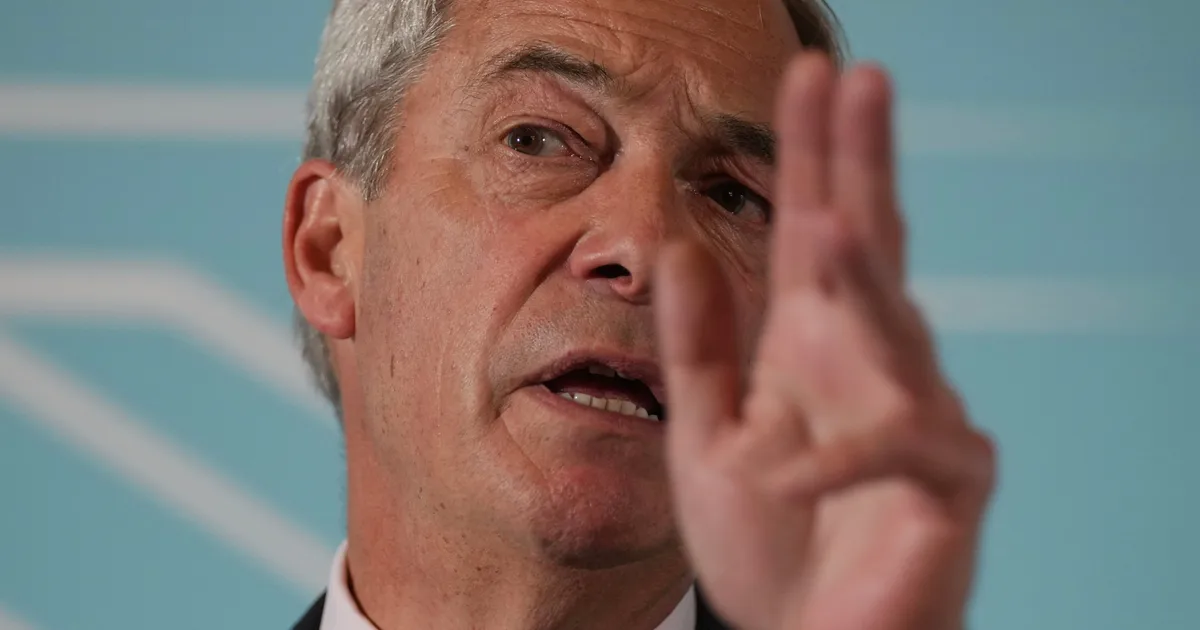
Nigel Farage dismissed a photo of a Reform UK candidate appearing to perform a Nazi salute by describing it as a “Fawlty Towers impression”.
Corey Edwards is Reform’s lead candidate for the Pen-y Bont Bro Morgannwg constituency in May’s Senedd election.
A photo of Edwards appearing to replicate the offensive salute recently resurfaced, though the date and location of the image are unknown.
While launching his party’s local election campaign, Reform Party leader told ITV News that his candidate was doing a “Fawlty Towers impression”.
He said: “The context I have been told, it was taking a Basil Fawlty sketch, and that’s why he did it. He’s a human being.”
Asked if Edwards would remain a candidate, he said: “I get the point – it looks terrible. Things in isolation often do. I wouldn’t approve of it.”
He then compared the incident to what he described “far more serious” case of a Plaid Cymru candidate withdrawing from the race over an offensive social media post from more than a decade ago.
Edwards also issued a statement saying the photo had been “misinterpreted” and that he had made “mistakes”.
“There is a clear distinction between ordinary use of the appalling gesture, compared with me imitating a Welsh footballer’s use of it, or indeed Basil Fawlty’s walk,” the Reform candidate said.
“The Nazi regime was the most barbaric ever and I’d never make light of nor dilute its seriousness.”
A Reform UK spokesperson also told ITV Wales: “We’re not willing to write people off forever because of mistakes they made when they were young.”
The incident is the latest drama threatening to overshadow Reform’s campaign in the run-up to the local elections.
Farage already had to publicly defend Reform’s Scottish leader, Malcolm Offord, after an offensive homophobic joke he made a rugby club dinner in 2018 resurfaced.
Offord later apologised and denied he was homophobic.
At his party launch in Sunderland this week, Farage said: “If we’re going to drum people out of public life for telling a joke at a boozy rugby club dinner that’s amongst friends, we’ll finish up with the dullest group of individuals, looking a bit like, sounding a bit like Keir Starmer.”
He added: “When you take something as it is, yeah, of course it looks awful.”
However Farage said Offord “probably regretted doing it” even on the night, and accused critics of adopting a “po-faced purism attitude”.
Reform also had to drop its mayoral candidate for the Hampshire and Solent 2028 election, Chris Parry, this week, after he compared a Jewish community group to “Islamists on horseback”.

At a certain age, you just have to accept you are officially too old for some things. Now firmly in my 30s, my previously cemented love of budget hostels has expired. Once upon my twenties, a broken night’s sleep thanks to an anonymous bunkmate’s snoring was simply a minor inconvenience; now it will ruin my entire next day. The gymnastics of shuffling in and out of clothes under a bunkbed’s duvet used to be a breeze; now I’d probably end up slipping a disc.
However, my budget doesn’t exactly stretch to my developed taste for ‘comfort over everything’. I’m firmly in my accommodation ‘inbetweener’ era and there aren’t a whole whack of digs that bridge the gap between boutique and budget.
This struggle becomes even more of an issue when you factor in an expensive travel destination like Iceland. A trip to ‘The Land of Fire and Ice’ notoriously comes with a serious price tag, and according to The Times, Iceland is facing a reduction in tourism as a result, with international visitors dropping by 6% last year.
So, how can I make a trip to the top destination of many a travel wishlist achievable on a budget, without compromising on comfort? Well, CityHub might just have the answer.
CityHub Reykjavik
Now, when I say ‘pod hotel,’ you need to immediately banish the thought of those tiny, coffin-sized capsules in Japan. Yes, while CityHub Reykjavik is technically a pod hotel, I can guarantee that you’ve never seen something quite like this before.
CityHub hotels (they also have locations in Amsterdam, Rotterdam and Copenhagen) blend private sleeping spaces with vibrant hangout areas and premium amenities at an affordable cost. A concept that is, quite frankly, music to my ears, back and bank account.
Their private, pod-esque if you will, sleeping areas are called Hubs and despite being small, they pack a big punch – we’re talking king-size beds, smart storage that doesn’t compromise on space, Bluetooth speakers, air con and heating. The best bit? You can enjoy this all without the fear of someone cracking the big light on at 3am.
The secret? Opting for an L-shaped pod over the stereotypical coffin. Hubs are a bit like a clever game of accommodation Tetris – one ‘up’ Hub is connected to a ‘down’ Hub, offering vertical space at the start of each that acts like a foyer.

CityHub invited me to try out their accommodation for myself and honestly, the biggest shock was the silence – I was so surprised at my inability to hear anyone in the adjoining Hub. I’m a tall gal and unlike other pod hotels I’ve been to, I could comfortably sit upright in bed without fear of a concussion. Even with a second person in the Hub with me (ooo-er), there was plenty of space for our suitcases and room to get changed in – we just had to take it in turns.
‘Shared bathrooms’ don’t exactly scream luxury (pause for flashbacks to the horrors of a hostel shower), but CityHub does things differently. You’d be forgiven for thinking that you were actually in a spa while popping to the loo – their Pinterest-worthy bathrooms boast warm terracotta walls and high pressure showers as well as complimentary towels and Rituals amenities.
As for the communal spaces, again, it’s a far cry from the hostel lounges and kitchens of yore. The Hangout (CityHub’s reception, bar and lounge area-in-one) features a self-service system in which guests can tap their own beers and refreshments using the digital wristband they’re given on checking in (which also doubles as your Hub key). Forget someone badly playing Oasis on a guitar in the corner – The Hangout is perfect for relaxing or even working in.

The real showstopper, though? CityHub Reykjavik’s rooftop hot tub. There really isn’t anything like soaking yourself in geothermally heated water while sub-zero Icelandic air whips around you – all with an incredible view of the night sky. If you’re lucky, sometimes it’s even possible to see the Northern Lights from the comfort of the tub.
Thought it couldn’t get any better? Buckle up, because the best bit of all of this? The cost. While the average hotel price in Reykjavik for April is hovering around £156 per night, you can snag a Hub for as little as £60 to £80 – and you could get this price even lower depending on what promotions and discounts are available.
CityHosts
Now, the issue with Iceland trips is that you only have to step outside your hotel and it suddenly feels like you’ve spent £20. It’s notoriously expensive and with endless guides online as to where you should and shouldn’t go, which tours you should and shouldn’t book, it can all be really overwhelming.
Enter the CityHosts – CityHub’s onsite concierge service that does a whole lot more than just check you in. As Reykjavik locals themselves, the hosts on duty will happily help you set up cost efficient tours to experience as much Icelandic culture as possible without the hefty price tag. After all, who actually knows the best spots better than people who live in Iceland all year round?
We were pointed toward a walking foodie tour that let us sample the most iconic Icelandic dishes from local businesses (although I still can’t say fermented shark is for me). And on one (utterly freezing) evening I fulfilled my dream of seeing the Northern Lights in all their glory after being sent out exploring with a pocket-friendly guide who knew the best viewing points. Another Iceland expert took us on a day trip around the country’s most famous natural landmarks and we knew we were guaranteed a brilliant meal afterwards thanks to the restaurant recommendations from the CityHosts.
So what exactly is the key to CityHub’s ability to provide accommodation that bridges the gap between budget and bougie? Well, it’s all in their very clever climate-friendly planning.
CityHub transforms empty urban buildings into hotels, avoiding new construction which as a result cuts CO₂ emissions per guest by 89% compared to the European hotel average. Their modular, recyclable rooms, in-house smart tech and harnessing of Iceland’s famous geothermal energy all add up to a model that’s efficient, scalable, and certified B Corp, a title held by just 0.1% of hotels globally.
I’m already planning a trip to Copenhagen purely based on the fact that there’s a CityHub there – because as someone’s outgrown dorms but not budget-friendly travel, I know I’m guaranteed the perfect fit.
To book a stay at CityHub visit: https://cityhub.com/reykjavik/

Dean Lewis has lost a Dutch court case against a former partner who claimed that the relationship was abusive on social media. Lewis demanded that ex-partner Sanne van Ooijen retract several statements she made about the nature of their two-and-a-half-year relationship.
At the heart of the case was the fact that Sanne van Ooijen had been in a relationship with Dean Lewis – the world-famous pop star and singer she had been a devoted fan of. She experienced this relationship as a victim, as she felt it had been abusive. She then shared her account of that relationship on her social media channels and in personal conversations with others.
This prompted the now disgraced singer to send multiple demand letters from his Australian lawyer. This was followed by a demand letter from his Dutch lawyer. On 25 February 2026, Dean Lewis then filed summary proceedings against Sanne van Ooijen before the Dutch court.
Ultimately, this culminated in summary proceedings on Friday, 27 March 2026.
Dean Lewis loses case
It was only after the relationship ended that Van Ooijen was able to reflect on it from a distance and with greater objectivity. During the hearing, she stated the following:
I came across so many different stories from other girls on social media sharing their experiences with Dean. And that’s when it really hit me — I wasn’t crazy, it wasn’t my fault. What he did to me is not okay, and I’m allowed to feel that way and talk about it, because that is how I experienced it. And it appears to be a pattern that repeats itself with him, based on what I’ve seen and heard.
The Dutch court case brought by Lewis was to:
1. To prohibit Van Ooijen from, regardless of the manner and via which medium, making statements public, and/or disseminating false accusations about Lewis via personal or group messages, or suggesting these, including in any case the accusations of having a narcissistic personality disorder, rape, the (sexual or psychological) abuse of women, or that Lewis has otherwise (rb: presumably meant otherwise) committed sexually transgressive behavior, or qualifications and/or terms of similar purport:
IE. To order Van Ooijen to, within 48 hours after service of this judgment,
a. remove all messages about or referring to Lewis and keep them removed from all social media pages of Van Ooijen, including TikTok, Instagram and YouTube (and subsidiaries)
However, the Dutch court ruled that what Sanne van Ooijen expressed falls well within the bounds of freedom of expression under Article 10 of the European Convention on Human Rights.
Therefore, the court dismissed all seven claims brought by Dean Lewis in their entirety. Sanne van Ooijen is also not required to issue any retraction. Additionally, Lewis is required to pay her legal costs in full.
The court considered:
The use of the word ‘abusive’ does not therefore (automatically) constitute an accusation of criminal conduct. The fact that Van Ooijen retrospectively described her relationship in those terms, as that is how she felt, is not unlawful.
A pattern
But Sanne van Ooijen was not the only one to speak out about her experience with Dean Lewis.
As the Canary has previously reported, many other young female fans have reported similar experiences with Lewis.
Hundreds more women and girls have come forward on social media with a wide range of abuse allegations against Lewis. From domestic abuse and sexual assault, to messaging underage girls with extreme content – it has become clear that Lewis has an ever-growing raft of allegations against him.
The Canary also previously reported on an alleged cover-up of Lewis’ behaviour by Island Records Australia.
Lewis then blocked journalists and refused to refund fans who no longer wanted to attend his shows. He even threatened the Canary.
Since then, the Canary has heard from many women about Lewis’ tirade of cease-and-desist letters and threats to sue unless they issue apologies. Of course, many of these young girls lack access to lawyers and have no choice but to comply.
Dean Lewis thinks he can throw his money, power, and weight around to get what he wants. From threatening young girls with legal action (because yes, Dean, 19-year-olds are still girls!) to sending journalists threatening emails, it has become clear that when the truth fails, powerful men believe that attempting to intimidate and scare people will get them what they want.
Merel Teunissen (Liaise Advocaten), Sanne van Ooijen’s lawyer, commented on the case:
I find it enormously courageous that Sanne refused to be intimidated by a world-famous pop star with deep pockets, who first instructed an Australian lawyer and later a Dutch lawyer to make far-reaching legal demands. A pattern he is now repeating with other women — women who, unfortunately, do not have access to legal assistance and therefore yield to those sweeping legal demands. Sanne chose not to be silenced and fought back through legal means. With success!
Featured image via Dean Lewis/YouTube
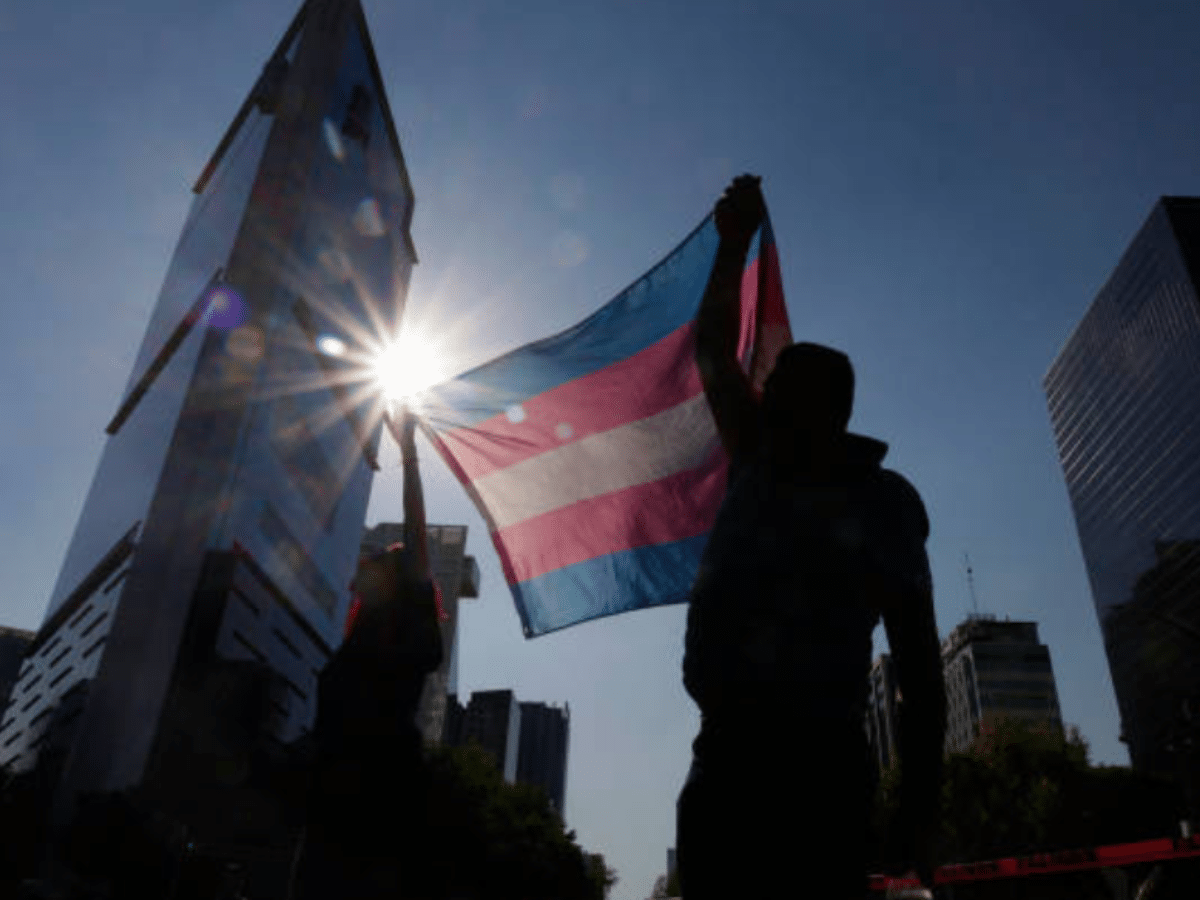
The International Olympics Committee (IOC) has announced its new ‘Policy on the Protection of the Female (Women’s) Category in Olympic Sport‘. It amounts to a total ban on trans women/transfeminine athletes, and a near-total ban on intersex athletes, competing in the women’s category.
Normally, we might argue with the science that the IOC used to make its decision. However, nobody has been allowed to see the science – though we’re assured it exists.
What we do know is that this latest ruling completely contradicts the IOC’s science from just five years ago, which stated that trans people “should not be deemed to have an unfair or disproportionate competitive advantage”.
We also know that this decision is not a reaction to an explosion of trans women winning in the female category at the Olympics. That’s because exactly one trans woman has competed at the Olympics, and she didn’t medal.
We’re not going to argue that this is a horrific roll-back of intersex and trans rights, or the basic concept of inclusion. (It is). Likewise, we’re not going to argue that this decision was politically motivated (although the science suddenly said the opposite of what it used to immediately after a leadership change at the IOC).
What we are going to argue is that this is that sex-testing in women’s sport is a disaster for privacy and women’s rights. That means cis women, trans women and intersex women, and whatever combination thereof – all women.
We know this because we’ve fucking been here before.
Olympics: IOC document
The IOC plans to introduce universal sex screening for the women’s category. It will achieve this through a one-time SRY (Sex-Determining Region) test. The SRY gene is usually present on the Y chromosome, and causes the development of testes during foetal development.
The IOC’s new document states that:
All Biological Female athletes screened will be negative and eligible, and virtually all athletes who screen positive will have testes/testicles that naturally produce testosterone at adult Male levels.
This is a deception. The document writers know that it’s a deception, because they include a carve-out:
Because a positive SRY Gene screen does not establish a specific DSD diagnosis, further evaluation should be made available to the athlete to determine whether they have CAIS or another rare XY DSD that precludes testosterone’s anabolic and/or performance-enhancing effects.
The DSD there stands for “differences/disorders of sexual development”. We will be using the term ‘intersex’. The number of intersex people among the general population varies according to the definition used, but it may be as high as 1.7%.
CAIS stands for Complete Androgen Insensitivity Syndrome. This means that the body doesn’t have the receptors to make use of the circulating testosterone.
However, beyond CAIS, levels of testosterone sensitivity can vary massively, i.e. Partial Androgen Insensitivity Syndrome. As such, that “testosterone at adult Male levels” tells us very little.
The document also states that:
XY Transgender athletes and athletes with certain XY differences/disorders in sex development (DSD) (as defined in Schedule 1) have anatomical and physiological advantages in line with being Male even as their legal sex, the manner in which they were raised, and/or their gender identity may vary.
The bit about legal sex and the “manner in which they were raised” is also significant. This is because many intersex people go their whole lives without learning that they’re intersex.
As such, some intersex athletes can find that they’re intersex for the first time due to a sporting test. This has happened before – and it’s a massive problem.
‘Scientifically and ethically unjustifiable’
The IOC previously instated universal sex testing back in 1968. At first, the tests consisted of having the women appear naked in front of a panel of judges. Later, the IOC moved on to more elaborate tests, such as the Barr body test.
The last universal sex testing at the Olympics took place in 1996, in Atlanta. At the time, eight women came up positive on the DNA-based test. As explained by rights organisation the International Commission of Jurists:
After the 1996 Olympic Games, the IOC voted to discontinue universal sex testing for being scientifically and ethically unjustifiable, since it was an inaccurate test of both sex and athletic advantage and was resulting in considerable harm to affected athletes. The United Nations High Commissioner for Human Rights, UN Women, the World Medical Association, American Medical Association and, most recently, a group of independent UN experts have long condemned sex testing and medically unnecessary interventions as discriminatory, unethical, and harmful.
Since then, decisions on sex testing were left with individual sporting bodies. Often, testing was weaponised against individual – often brown or Black – women like Imane Khelif and Caster Semenya.
The consequences of mandatory sex tests are often severe. Whilst being intersex is simply another variation of human existence, sex is given such a primacy by our society that learning one’s assumptions were wrong can be a severe shock.
Beyond the exclusion from an elite sport than the woman has worked her life towards, other harms can include severe sex and gender identity crisis, social isolation, demeaning reactions from the public, depression, and suicide.
Klobukowska, Patiño, Soundarajan
Competing in the Tokyo Olympics in 1964, Poland’s Ewa Klobukowska of Poland helped set a new 100m-relay world record. However, she submitted to sex testing after the media mocked her for her ‘masculine’ appearance:
The test results were never made public, but the IAAF ruled that Klobukowska had a chromosomal anomaly that disqualified her from competing in the female category. The organization publicly criticized Klobukowska for being a male imposter, and stripped her of her medals. After being disqualified from competing at the age of 21, she said, “It’s a dirty and stupid thing to do to me. I know what I am and how I feel.”
She had a son in 1968. Thirty-one years later, the IOC returned her medals.
Klobukowska never re-entered professional sport, and her records are remain largely unknown.
Another case in point is Maria José Martínez Patiño, a CAIS intersex woman and former Spanish hurdler. She fell victim to a sex chromatin test at the 1985 World University Games in Kobe, Japan. She was told to fake an injury and retire quietly, as was common practice.
However, she then went on to compete in the 1986 National Championships. Whilst she was told again to withdraw quietly, she refused. After winning her race, she was attacked in the Spanish press. She was expelled from her residence, and lost her scholarship, her records, and her fiance.
Another example is Santhi Soundarajan, who won silver in the women’s 800m race at the 2006 Asian Games. Soundarajan also has AIS, causing her to fall victim to a genetic screening test.
After being told she could no longer compete, and being stripped of her medal, Santhi fell into a deep depression and later attempted suicide.
‘Human dignity’
The IOC stated in its announcement that its related organisations should work to:
Ensure that the athlete’s human dignity, physical and psychological well-being, health and safety, and
right to privacy and confidentiality are respected.
It is also insisting that we perform these potentially life-upending tests “early in the athletic career”, with “age appropriate explanations” for minors.
However, this respect for their athletes’ human dignity and psychological well-being apparently doesn’t extend to the IOC restraining itself from calling these women “biological males” throughout the document, and insisting that “biological sex does not and cannot change”.
We have watched, over the last few years, our media, politicians and public figures hound and mock athletes they suspect of being intersex or trans. This cruelty is a direct consequence of the primacy we place on sex – and our rhetoric around that primacy is only becoming more extreme by the day.
The IOC insists that we need a hard border to “protect” women’s sport. Any border creates an ‘other’, and requires police to protect that border from the ‘other’. And policing, as we have seen time and again, begets violence. In this case, that violence is directed towards women – intersex, cis, and trans women.
Many are celebrating today, and many athletes among them – but this is no victory for women’s rights.
Featured image via the Canary
!function(n){if(!window.cnx){window.cnx={},window.cnx.cmd=[];var t=n.createElement(‘iframe’);t.display=’none’,t.onload=function(){var n=t.contentWindow.document,c=n.createElement(‘script’);c.src=”//cd.connatix.com/connatix.player.js”,c.setAttribute(‘async’,’1′),c.setAttribute(‘type’,’text/javascript’),n.body.appendChild(c)},n.head.appendChild(t)}}(document);(new Image()).src=”https://capi.connatix.com/tr/si?token=19654b65-409c-4b38-90db-80cbdea02cf4″;cnx.cmd.push(function(){cnx({“playerId”:”19654b65-409c-4b38-90db-80cbdea02cf4″,”mediaId”:”5421d25b-b70b-4170-8802-e39ea8a06346″}).render(“69c690ffe4b0a6ee60c464de”);});
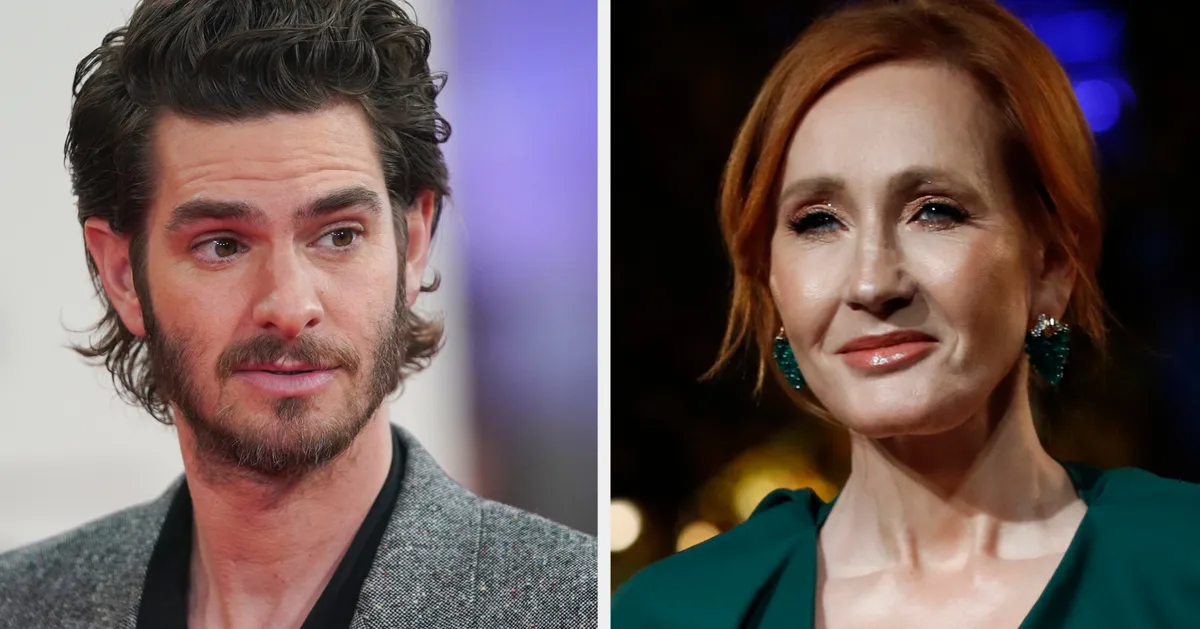
Andrew Garfield made his feelings about Harry Potter author JK Rowling clear during a recent conversation about the Wizarding World franchise.
The Oscar nominee recently took part in a video interview with Hits Radio where he praised the work of Daniel Radcliffe, who, of course, got his start playing the titular character in the Harry Potter movies.
“Daniel is so goddamn good,” he enthused of his fellow actor. “Honestly, I hadn’t watched the Harry Potter movies until recently. He’s really good in those movies.”
Andrew continued: “Those Harry Potter movies are really good. I know it’s controversial and we shouldn’t be putting money in the pocket of inhumane legislation right now through she that shall remain nameless.
“But the soul and spirit… the essence of the themes of those films and the kids and the artisans and the craft people.”
“You can’t throw the baby out of the bathwater,” he claimed. “There are so many beautiful artists that worked on those films.
“I have a newfound appreciation for all of the artists, and Daniel is great.”
It’s fair to assume that Andrew was referring to JK Rowling with his “she who shall remain nameless” remark, with the author having become a divisive figure in recent history due to repeated comments about the transgender community.
Notably, she also donated tens of thousands of pounds to the campaign group which raised the initial legal challenge that led to the UK Supreme Court’s ruling last year that the legal definition of a woman should include only those who were assigned female at birth, and shared a celebratory role when the decision was made.
Debate around the Harry Potter franchise has continued over the last few years as a result, with cast members from the upcoming TV adaptation, as well as a new Audible audiobook series, facing backlash due to their involvement in the projects.
Andrew has shown his support for the transgender community in the past numerous times in the past.
Back in 2017, he told BBC Newsbeat: “My only longing is to serve and to keep the world spinning forward for the LGBTQ community in whatever way I’m meant to. It’s important to a community that I feel so welcomed by.”
Watch Andrew Garfield’s full interview with Hits Radio here.
Help and support:
- The Gender Trust supports anyone affected by gender identity | 01527 894 838
- Mermaids offers information, support, friendship and shared experiences for young people with gender identity issues | 0208 1234819
- LGBT Youth Scotland is the largest youth and community-based organisation for LGBT people in Scotland. Text 07786 202 370
- Gires provides information for trans people, their families and professionals who care for them | 01372 801554
- Depend provides support, advice and information for anyone who knows, or is related to, a transsexual person in the UK

Italian Prime Minister Giorgia Meloni is lurching so far to the right that her friendship with Donald Trump and allied tech-bros may have cost her a key referendum.
Trump as “repellent”
In a referendum she called on judicial reforms, Italians vote 54% for the “No” campaign, while 46% supported the “Yes” vote Meloni backed.
The Conversation recently reported that any association with Trump now acts as a “repellent” for Italy’s political class. This doesn’t exclude the political right and is precisely the pathway that led to Meloni’s referendum defeat. The outlet also noted that Peter Thiel’s recent Rome visit sparked Catholic outcry, with Italians labelling Palantir CEO a heretic and an opponent of the Church doctrine. That didn’t go down well.
References to Trump now act as a repellent for the entire Italian political class, including the right. This factor played a role in the vote against the referendum, which is a major blow for Meloni. It is also worth noting that the visit of Palantir CEO Peter Thiel to Rome in March 2026 sparked both calculated political indifference and an outcry among Catholic circles: Thiel was labelled a heretic and an opponent of the social doctrine of a religious institution that remains steadfast in its defence of democracy.
This marks a sharp contrast with the warm welcome Meloni reserved for Elon Musk until 2024.
The FT reported that while Meloni’s friends include MAGA ideologue Steve Bannon and Thiel’s PayPal co-founder and longtime friend Elon Musk, Pope Leo XIV has warned of the dangers of AI.
According to MSNBC, Thiel sold out Rome to preach that Western civilisation is crumbling. He piled the blame on “people who strive for peace, work for justice, and want to embrace diversity.”
Starmer needs to pay attention
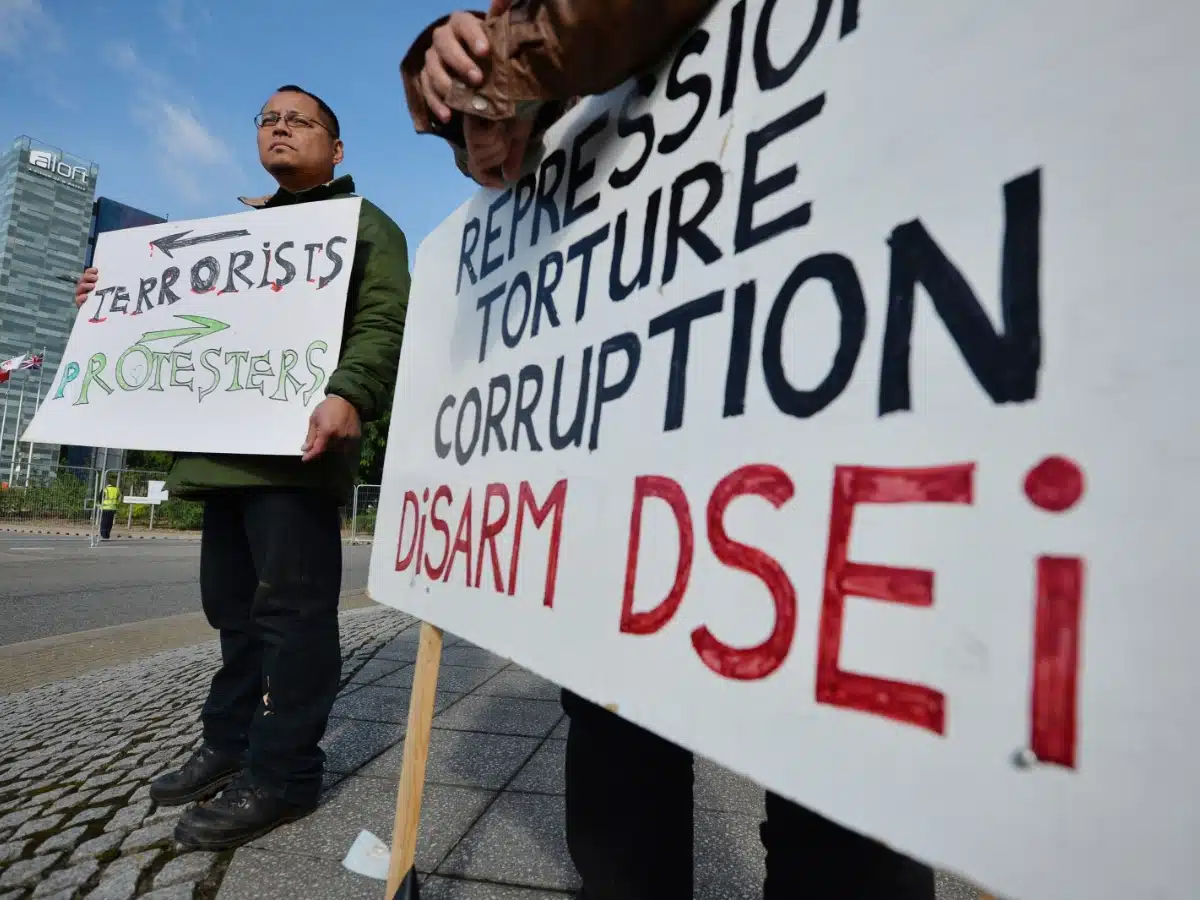
Testimony given to the Undercover Policing Inquiry this week has provided further details of systematic targeting against anti-arms trade campaigners, including Campaign Against Arms Trade (CAAT).
On 23 March, the inquiry heard from CAAT’s media coordinator, Emily Apple. She testified to the impact of undercover police spying on CAAT and other anti-arms trade and environmentalist groups.
HN3, an undercover Met police officer operating under pseudonym ‘Jason Bishop’, had been “authorised” to target CAAT as an organisation, the inquiry heard. Among other groups Bishop targeted were Disarm DSEI and protests at the RAF Fairford base.
Bishop had even managed to become a signatory to the Disarm DSEI bank account, managed its PO Box, and had access to the organisation’s email address.
An internal police report on Bishop’s undercover activities dating to 2003 shows that the Met police’s motivation to target DSEI protesters was borne out of concern that the protests:
could influence the financial wellbeing of the State.
139 undercover officers under examination
The inquiry is examining how 139 undercover police officers working for the Met police’s Special Demonstration Squad / Special Duties Squad (SDS) spied on over a thousand anti-war and environmentalist groups between 1968 and at least 2010.
The inquiry twice refused core participant status to CAAT, despite SDS targeting it. When the inquiry initially began in 2015, it argued there was no substantive proof that the SDS had spied on CAAT.
The inquiry rejected CAAT’s second application in 2024 on the grounds that reports on CAAT were due to ‘collateral intrusion’ – meaning consequential invasion of a third party’s privacy – arising from spying on Apple.
However, in her testimony, Apple pointed to a report by SDS manager, HN49, who confirmed that HN3 (Bishop) had been:
authorised to target CAAT because the group was known to hold protests and demonstrations, which had the potential to result in serious public disorder.
CAAT was also the victim of systematic corporate spying by Martin Hogbin, who infiltrated the organisation from 1997-2003 and provided information to BAE Systems.
CAAT has asked the inquiry to investigate the relationship between its undercover officers and corporate spies, and whether any of the information reported by Hogbin to BAE Systems ended up with the Met / SDS, since Hogbin and Bishop (HN3) knew one another.
A spokesperson from CAAT said:
The latest revelations from the Undercover Policing Inquiry provide yet more sordid details of the Met’s systematic, invasive and manipulative spying on anti-arms trade and environmentalist campaigners.
It is now abundantly clear that Met police undercover officers were explicitly authorised to target CAAT, in brazen contempt for our right to protest and campaign against a corrupt and destructive arms trade. This revelation further calls into question the inquiry’s refusal to include CAAT as a core participant.
Given the established links between corporate spies like Hogbin, and police spies like Bishop (HN3), it is high time the inquiry corrected course and examined the links between corporate spies and undercover police.
At a time when the British state is at its most authoritarian and repressive towards anti-war and anti-genocide campaigners, a full accounting of all skeletons in the Met’s closet is a must.
Featured image via the Canary
Retail FUD Sentiment Rises as Bitcoin Falls Below $70,000: What Are The Implications?

The Deleted Buffy Line That Predicted The Show’s Darkest Controversy

Henry Pollock makes big announcement and politicians celebrate WRU chief’s exit


-
 Crypto World7 days ago
NIO (NIO) Stock Plunges 6.5% as Shelf Registration Sparks Dilution Worries
-
 NewsBeat2 days ago
Manchester United reach agreement with Casemiro over contract clause amid transfer speculation
-

 Fashion7 days ago
Weekend Open Thread: Adidas – Corporette.com
-

 Politics7 days ago
Jenni Murray, Long-Serving Woman’s Hour Presenter, Dies Aged 75
-

 Crypto World6 days ago
Best Crypto to Buy Now: Strategy Just Spent $1.57 Billion on Bitcoin During Fear While Early Investors Quietly Enter Pepeto for 150x Potential
-

 Crypto World6 days ago
Bitcoin Price News: Bhutan Sells $72 Million in BTC Under Fiscal Pressure, but the Smart Money Entering Pepeto Sees What the Market Does Not
-

 News Videos2 days ago
Parliament publishes latest register of MPs’ financial interests
-

 Sports4 days ago
Remo Stars and Kano Pillars Strengthen Survival Hopes in NPFL
-

 Sports4 days ago
Gary Kirsten Accuses Pakistan Cricket Board Of ‘Interference’, Mohsin Naqvi Responds
-

 Business5 days ago
No Winner in March 21 Drawing as Prize Rolls to $133 Million for Next
-

 Tech5 days ago
Give Your Phone a Huge (and Free) Upgrade by Switching to Another Keyboard
-

 Sports7 days ago
2026 Kentucky Derby horses, odds, futures, preview, date: Expert who nailed 12 Derby-Oaks Doubles enters picks
-

 Tech5 days ago
AI enters the chat: New Seattle dating app relies on tech to facilitate meaningful human connections
-

 News Videos4 days ago
Ch 9 Financial Management Part 1 | Detailed One Shot | Class 12 Business Studies Boards 2026
-
Business7 days ago
Columbia Sportswear enters $500 million credit agreement with JPMorgan Chase
-

 Tech6 days ago
Today’s NYT Connections Hints, Answers for March 22 #1015
-

 Business20 hours ago
Instagram, YouTube Found Responsible for Teen’s Mental Health Struggle in Historic Ruling
-
 Crypto World7 days ago
Small-cap Russell 2000 enters correction territory
-

 Business5 days ago
Will Duke Basketball Win It All? Duke Basketball Enters Second Round as Third Favorite to Claim NCAA Title
-

 Sports5 days ago
2026 Kentucky Derby horses, odds, futures, preview, date: Expert who hit 12 Derby-Oaks Doubles enters picks
You must be logged in to post a comment Login