
Politics
‘Innocent’ Habits Grandparents Should Stop Doing, According To Therapists

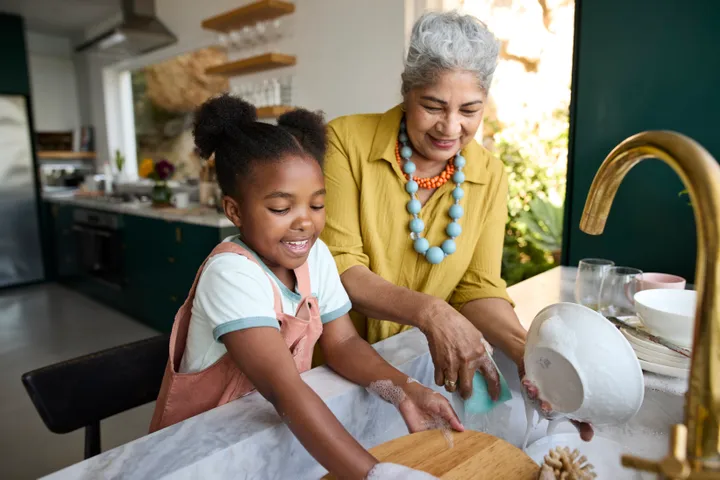
Regardless of their “grandparent style”, grandparents can be some of the most meaningful family members in a child’s life. They often provide a unique, warm love and care for their grandchild.
Grandkids often remember how their grandparents showed up for them, the stories they told and the yummy smells and tastes enjoyed at their home.
However, even the most well-meaning grandparents can make mistakes. Habits that seem “innocent” and “good” can actually be harmful, child therapists say.
If you’ve engaged in them without realising the problem, don’t beat yourself up. You’re far from alone, and you can fix things.
Ahead, child therapists share key examples of “innocent” habits that they actually want you to stop, plus why each one is harmful and the adjustment they’d make.
Encouraging kids to keep ‘secrets’
While you might say a phrase like “this is our little secret” or “don’t tell mum” to promote closeness, it’s “one of the most dangerous habits”, according to Jillian Amodio, a licensed mental health professional at Waypoint Wellness Center and founder of Moms for Mental Health. Even if the “secret” is just about having dessert before dinner or staying up past bedtime.
“Encouraging secret-keeping about small things opens up the door for predators to exploit the trust of a child and encourage them to keep unsafe behaviors or interactions from their parents,” she explained.
Do this instead: Amodio suggested reframing treats and “rule-bending” with a phrase like, “I know at home, Mom and Dad say no dessert before dinner, but at Grandpa’s house, I like to eat my ice cream first, if you want to join me.”

Klaus Vedfelt via Getty Images
Insisting the child gives them a hug or kiss
Wanting a hug or kiss from your grandchild is definitely understandable. However, forcing it (and the underlying message that can send) is the problem – especially if the child is pulling away or hesitating.
“When a kid says ‘no’ with words or body language and an adult overrides that, the child learns their discomfort does not matter when adults or social politeness is involved,” said Cory Reid-Vanas, the founder of Rocky Mountain Counseling Collective. “It teaches them they can’t control their own physical boundary.”
In the long term, the child may feel anxious about or guilty after setting boundaries or hesitant to trust their gut. They may start to believe that their body isn’t theirs to control, which can make them susceptible to manipulation and grooming.
“The message we are giving regarding boundaries should apply in every context, even with grandma or grandpa,” Reid-Vanas added.
Do this instead: To still show and receive some love, you can give the child options – such as a hug, a high-five or a wave – and respect their choice.
“Instead of saying ‘go hug Grandpa,’ let the kid decide what feels right,” Reid-Vanas said. “Reframe rejection as normal and not rude.”
You can also ask, “Can I have a hug?” Again, be OK with them saying no sometimes (or every time).
Undermining the parents’ authority
Even if you don’t agree with what your adult child is implementing in their child’s life, respect it.
“The most well-intentioned grandparents are guilty of undermining the parents’ authority,” said Caitlin Severin, a marriage and family therapist who specialises in working with teens and the co-founder of CultivaTeen Roots.
“The intention might be to build rapport, encourage connection between the grandparent and child [or] be the ‘fun’ one, but it might do more damage than intended.”
This habit might look like rolling your eyes when the parent says it’s time to put the iPads away, for example, or saying, “I used to have a beer every Friday night with my dad when I was in high school” after a parent reminded the teen of their family rules about substances.
Dr. Alexandra Foglia, a marriage and family therapist and the director of family programs at All in Solutions, agreed. “From a family systems point of view, these actions put the child in the middle of two authority figures,” she explained. “This causes the child to learn that there may be times when rules change depending upon what adult is present at the moment.”
Do this instead: Get on the same page with the parents on family values and expectations. This can “go a long way,” according to Severin.
Both Severin and Foglia suggested creating special, separate opportunities for the grandparent and grandchild to “indulge” with the parents’ buy-in.
Foglia shared some examples, such as a pancake breakfast every Sunday, a weekly game, a silly bedtime story to read together or another shared experience.
“This ultimately allows children to know that all of the adults who care about them are working towards the same goals for them,” she explained.

Ippei Naoi via Getty Images
Making comments about the grandchild’s body, weight, appetite or eating habits
Even if you intend these comments as compliments, they can have harmful effects. Avoid saying things like “You’re looking very thin,” “You eat so well” or “You certainly have your momma’s legs.”
“This type of dialogue lets kids know that their bodies are being looked at and judged,” said Dr. Wildaliz Caro, a licensed clinical psychologist and medical contributor at The Healing Center Cherry Hill. “Repeated body-obsessive comments may lead to self-shame, comparison and [an] unhealthy obsession over food and appearance.”
Do this instead: Rather than commenting on how their body looks, Caro recommended focusing on what they’re doing, learning, creating or enjoying. Tell them they’re funny, kind, curious, inclusive or persistent.
“Children should be able to come sit at a grandparent’s table without thinking they’re grading both their plate and body,” she added.
Speaking for grandchildren
When your grandchild is shy, it’s understandable that you may want to speak on their behalf to ease their anxiety or to continue the conversation. However, this isn’t helpful long-term.
“When grandparents frequently speak on behalf of their grandchildren, this can result in children being given less opportunity to develop the ability to communicate their own wants or needs by responding to questions and engaging in conversation with others,” explained Dr. Max Doshay, a licensed psychologist and the co-founder and chief executive officer at KMN Psych.
Do this instead: You can help in other ways. He encouraged giving the child additional time to respond and supporting communication development. This tells the child that their thoughts are important and you believe in them.
Again, if you’ve made these “mistakes,” try to not get too down on yourself – just be more mindful next time. Maya Angelou said it best: “I did then what I knew how to do. Now that I know better, I do better.”


Labour is on course to be the largest party in a general election, according to a new poll, leaving Reform UK a distant second.
The More in Common think tank has predicted Labour would win 250 seats in a hung parliament – 76 short of a majority – if Brits were to head back to the ballot box now.
Reform UK would win 147, the Conservatives 125, the Liberal Democrats 63 and the Greens just three.
The major MRP survey, which polled more than 15,000 British adults, will be a welcome boost to Labour just before its annual party conference in Liverpool begins.
The poll suggested Andy Burnham’s leadership had transformed Labour’s electoral chances since replacing Keir Starmer in July.
More in Common carried out a similar survey three months ago and found Reform would win 293 seats and Labour just 110.
The think tank found 214 seat projections – 143 of them to Labour – have changed since Burnham got the keys to No.10.
Labour appears to be recovering in Scotland too, as the poll shows it would win 18 seats up from just five.
However, More in Common did predict the SNP would remain the largest party with 27 out of 57.
And Labour is evidently not out of the woods yet, being still 161 seats down from their July 2024 landslide victory.
The survey found nearly half of all seats (48%) would be won by fewer than five points, making it an incredibly marginal election.
Even so, the poll also suggest Burnham’s focus on devolution has helped win over voters as Labour’s support has moved away from London.
In July, 44% of Labour’s projected seats were in the capital, but that has now decreased to 21% due to a surge in the North East, North West and Wales.
Meanwhile, Reform is struggling due to the split in the right-wing vote as splinter group Restore Britain takes crucial support, possibly costing Farage dozens of seats.
UK director at More in Common, Luke Tryl, said: “On the eve of last year’s Labour Party Conference, our MRP projected Reform could get close to a three figure majority, while both Labour and the Conservatives dropped to below triple figures.
“Fast forward to today, and it is clear the electoral landscape has transformed dramatically with Andy Burnham as prime minister. “
Tryl continued: “But far from representing a return to politics as normal, volatility has become the new watch word of our electoral system.
“The model projects that almost half of the seats would be won on margins of less than 5 per cent, meaning small swings in either direction could see any of the Tories, Reform or Labour ending up on top.
“And while the Labour advantage in seats is comfortable even on these numbers, they would still be forced into a multi-party coalition or arrangement to maintain power.”
Tryl added that Burnham’s decision to rule out an early election “is a sensible one”.
He said: “While Labour is off its death bed, the party’s recovery is far from complete.
“To call a poll the prime minister would have had to be willing to risk the careers of scores of his colleagues including his chancellor and foreign secretary, while even small shifts in the current numbers would have left him vulnerable to having a stint in Downing Street only longer than that of Liz Truss.”
Listen to Commons People, the podcast that makes politics easy. Every week, Kevin Schofield and Kate Nicholson unpack the week’s biggest stories to keep you informed. Join us for straightforward analysis of what’s going on at Westminster.
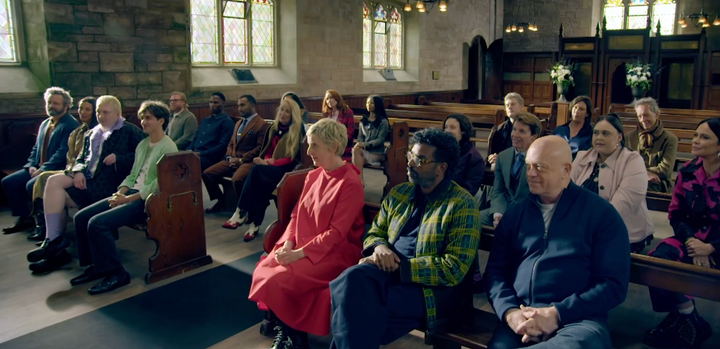
As the summer blends into autumn, and the days get shorter and darker, we’ve reached that stage of the year when loads of our favourite reality shows are up and running again, from Drag Race UK and Strictly Come Dancing to the Great British Bake Off.
But let’s face it, there’s one that’s about to blow them all out of the water.
The castle doors to The Celebrity Traitors are now less than a week away from opening up again to another exciting group of famous faces from the world of film, music, sport and beyond.
And if last year’s run is anything to go by, we’re in for some more TV gold.

While exact details of the series are being kept under wraps for now, the cast have slowly been teasing how they’re feeling about it all in interviews conducted before the action officially got underway.
To help prepare for what promises to be another gripping season, here’s a selection of what the new cast members have had to say about The Celebrity Traitors’ return…
Claudia Winkleman has claimed the new crop of contestants on The Celebrity Traitors are absolutely in it to win it
“They excelled at the missions,” Claudia Winkleman enthused, praising the group’s “amazing teamwork” and the fact they “just really wanted to build the prize pot” for their chosen charities.
Speaking more generally about the cast, she told the BBC she “couldn’t get over” the calibre of celeb contestants when she was first told about the cast.
“My bosses had to repeat the names at least three times,” she claimed. “We’re so lucky they said yes.
“Everyone taking part is fantastic. We are honoured they wanted to play the game.”
She also reckons the presence of so many comedians on the Celebrity Traitors line-up means we’re in for some real laugh-out-loud moments

BBC/Studio Lambert/Cody Burridge
Following Alan Carr’s victory this year, The Celebrity Traitors has brought together some of the biggest names on the comedy scene right now, from James Acaster, Rob Beckett and Romesh Ranganathan to Joe Lycett and Joanne McNally.
“They all made me laugh,” she admitted. “They are all utterly brilliant and the funniest people on earth.”
As for any scene-stealers to look out for, she teased that Rob Beckett “said something that made me hide in a bush until I composed myself”.
For James Acaster, though, all of those comics in the Celebrity Traitors castle gave him cause for ‘concern’ before the game had even started
“[That is] a concern,” he revealed. “There will be suspicions that it’s going to be at least one of these guys, that we might form an alliance if we’re not broken apart.”
James speculated: “I think we’re going to be the first ones under the magnifying glass being looked at. Particularly at the beginning when you have absolutely nothing to go on.
“And then, you consider that a comedian won last year with Alan Carr disarming everyone with jokes the whole time. He has tainted us all!”
“Hannah Fry [mathematician and fellow Celebrity Traitors star] will probably tell you that probability-wise, there’s most likely to be at least one comic chosen as a Traitor because there’s enough of us,” he went on to theorise. “Even though it could, obviously, easily be three people who aren’t comedians…
“I don’t know how it works out, but if maths turns against us we’re in big trouble.”

BBC/Studio Lambert/Cody Burridge/BBC Creative
If you were wondering how Romesh Ranganathan’s friendship with Rob Beckett is going to affect his Celebrity Traitors gameplay… so is he, apparently!
“Rob is one of my best friends, and we’ve worked together for a decade now,” Romesh explained. “But I still won’t be able to trust [him]. I mean, he’s just as easily going to be on my side as he is going to twist the knife in my back given the opportunity.”
He revealed: “ It’s going to be a weird thing where normally when we’re doing Rob And Romesh vs., we’ve got each other’s backs and are helping each other out. Whereas this time, he can’t be trusted.”
So, could Romesh see himself stabbing Rob in the back?
“In a heartbeat, yeah,” he quipped. “Yeah, I think I would. It’s all fair in Traitors, isn’t it?”

Joe Lycett reckons we could be about to discover a very different side to him on The Celebrity Traitors
Joe recalled: “When I started doing stand-up, my on and off-stage persona were quite similar. I showed off at parties because I wanted attention and then, gradually, as I got that attention through doing stand-up, I could calm down in real life.”
He continued: “When I’m not out on stage I’m very calm, thoughtful and peaceful. I think the comics know what I’m like on and off stage, but I think the others who, for the first time, will spend time with me not in ‘show mode’ might see that as suspicious.
“I definitely come across assumptions of ‘oh, he’s the gay comedian off the telly’ and I explain I’ve got a female partner and a son with said female partner. I’m really quite a tranquil individual when not in performance mode which may surprise some.”

BBC/Studio Lambert/Cody Burridge/BBC Creative
The same goes for Myha’la, best known for her work as the ruthless Harper Stern in Industry
“I am nothing like Harper!” she insisted. “I’m more of a ‘kill them with kindness’ kind of girl rather than a blatantly bullish bulldog.”
Because of this, Myha’la admitted she had “very deliberately planned the looks that I’m wearing” to “really separate” herself from Harper, “and be seen as me and not that character”.
“I’ve got my jewelry; my hair is different. I’ve really, really, really planned this,” she claimed. “I just decided to make everything lighter, gentle, feminine. Everything is soft and knitted and cosy and entirely unlike her.
“There are no shoulder pads, I’m not wearing any suiting of any kind. I’m trying to position myself as far away from Harper as possible. It’s also an exercise in me being quiet, which is really hard. It’s like so about my personality.”
“I’ll be interested to see how this one goes because I feel like I will be battling Harper’s persona and the perception of her,” she mused, before admitting: “All that said, I want to be a Traitor. Obviously!”

BBC/Bad Wolf Productions/HBO/Simon Ridgway
The Celebrity Traitors marks Miranda Hart’s return to TV after an extended period out of the limelight due to her chronic illness
Asked what inspired her to sign up for The Celebrity Traitors, Miranda Hart explained: “My decision making in life generally – and certainly [with] work – is ‘follow the joy’.
“I haven’t done much TV work for a long time, having only recently come out of long-term ill health issues, and when I was offered this, my whole body sort of relaxed. I smiled, and I just wanted to jump about like a schoolgirl with joy. It’s just fun. It’s outdoors, it’s games. All the stuff I love. It’s play basically.”
The Miranda star disclosed that she’s “still living with elements of ME”, which can bring “fatigue and pain to manage”, but added: “I’ve come to a point where I feel well enough to step out, and that’s also partly why I’m doing this. The joy of mucking about on television again will hopefully outweigh some of the challenges.
“And I think it will be challenging on my body, so it’ll be interesting, and it’ll take some courage as this is a big next step.
“When you live with a chronic illness, it’s invisible, so people don’t know that you’re sitting there in pain. But then it reminds you that everybody’s got their thing.
“So, I’m also really looking forward to making friends and looking after each other and hopefully they can carry me up a hill or whatever we’re going to have to do!”
And there’s one cast member in particular who’s excited to be in the Celebrity Traitors castle with Miranda Hart
Bella Ramsey said: “There are some real fans of The Traitors in my family.
“Seeing the cast list come out, there are people that my sister is so excited about, people that we watched growing up together.
“I’m very excited to play with Miranda. Her show was so brilliant, and I just love her so that’s really exciting.”
Professor Hannah Fry was already applying her Maths skills to strategise before filming on The Celebrity Traitors had even started

BBC/Curious Films/Rory Langdon Down
The mathematician and author claimed she was “here to fulfil the nerd quota for the year”, a “responsibility” she insisted she was taking “extremely seriously”.
“Have I gone back through the data of all the previous games and tried to find statistically significant patterns? Yes!” she said. “Are any of these going to help me? Honestly, who knows?!
“There is a pattern in the way that Traitors behave. For example, Traitors often do a burn vote in the first few episodes when they’re settling in. By that, I mean they just vote for somebody that nobody else has voted for. Cat [Burns] last year was a really good example of this…
“But across the board, the only problem with picking up on those signals is that the Faithfuls are such an absolute mess. They are so all over the place that it’s really hard to pick out what the signal is. That’s just one example of a little bit of Maths that I’ve got in my back pocket.”
“Whether it’s going to work or not, honestly, your guess is as good as mine!” she confessed. “I’ve got spreadsheets coming out of my eyeballs. I close my eyes and it’s like there are numbers tattooed on the inside of my eyelids at the moment for how much I’ve been looking at them.”
Hannah added: “I definitely have a public persona of being someone who is smart. I would say, people tend to think I’m smarter than I actually am, bluntly, and I don’t think that’s going to serve me particularly well as I may be seen as a bit of a threat.
“I might actually try and chuck out a few false theories, so I’m seen to be a bit of an idiot and not a threat at all.”
Hannah Fry isn’t the only Celebrity Traitors cast member who was going in hard on the preparation beforehand, though

BBC/Studio Lambert/Cody Burridge/BBC Creative
For Romesh Ranganathan, this prep included swotting up on “sports psychology books”.
“One of the things that I realised about this is the pressure really gets to you so that can throw your judgement off,” he suggested. “I want to remain completely cool and calm, so I’ve read some books about how to try and stay chilled in moments of pressure.
“I don’t really feel anything anyway, generally, but I think this is a specific thing.”
However, this is something he’s already found himself struggling with during his limited Celebrity Traitors experience.
Romesh recalled: “I was on The Jonathan Ross Show, and Joe Marler asked me if I was going to be on The Celebrity Traitors. I knew that I was, but I also knew that I couldn’t say. Even that felt really difficult.
“Up until that point, I thought I’d be alright at sort of lying, but now I don’t. That basically shook my confidence completely.”
As for Bella Ramsey, they already felt prepared when they got the call to join The Celebrity Traitors
“I’ve been playing a version of The Traitors since I was 10 years old when I joined The Television Workshop,” the two-time Emmy nominee claimed. “I’ve had game evenings and hosted them at my house and been to other’s evenings, so I’m familiar with the game.”
They enthused: “I love it so much, and that was really my reason [for taking part]. I was working on a production at the time of the last Celebrity Traitors – it’s called Maya which was filmed in Scotland, actually. We were all watching and so excited about it, and then we ended up playing a crew game.”
Bella continued: “I was playing a game as recently as two days ago. I was at my friend’s birthday, and we played.
“And a few weeks before that, I’d been hosting a game evening, so I’ve been playing it pretty regularly!”
“I do like games,” they continued. “I’m competitive to the level that I want to feel like I’ve done a good job. Not necessarily to win or triumph over others but to know I’ve played my best game. I feel the same about this. I want to stay in because I want to play the game. I just really enjoy it.”

BBC/Studio Lambert/Cody Burridge/BBC Creative
Similarly, Joe Lycett has been hoping to sign up for The Celebrity Traitors for a long time
“I’m going to say it – it’s the best show on TV,” the Bafta winner gushed. “The first series [of the regular Traitors] was just such phenomenally good television, and I didn’t think that it could be bettered, and then the celeb series came along
“The last episode was beautiful. That first year I sent a DM on Twitter, which was not responded to, to Studio Lambert to ask if they could send me all the rushes.
“I just was so hit by it and wanted more.”
He continued: “I am just thrilled to be part of the universe of The Traitors and to have been asked.
“I have no idea how to play it. I don’t think you can particularly. I think you just have to let it play itself a little bit.”
Romesh Ranganathan says that many of his loved ones will be surprised he said yes to The Celebrity Traitors
“A lot of my friends and family didn’t think I’d ever come on a show like this,” the comic said. “The truth is I didn’t think I would do this show because I really enjoy it.
“It’s one of those shows that’s a family event in our house, so we all sit down to watch it, and those things are few and far between now.”
“Contrary to popular belief, I do watch things and not ask to go on them!” he joked of his reputation for appearing on so many TV shows. “So, I was watching it, and we’re having a good time, and I’d never had any aspirations of being on the show, and then my youngest son was desperate for me to come on, so it’s kind of his fault.”

Miranda Hart is planning to bring one of her signatures to the Celebrity Traitors castle
She revealed: “When someone said on Instagram, ‘Oh, I hope you gallop in the castle’, I foolishly replied, ‘Right, I now take that as a dare’. So that was idiotic of me.
“I will have to at some point gallop down a corridor. I’ll gallop when no one’s watching…”
“Or who would be the best person to encourage to gallop? I don’t know,” she pondered. “I mean, Kenny probably doesn’t even know who I am. So, if I could get him to gallop… I could get a new generation galloping.”
Oh, and as for what we should expect from Claudia Winkleman in the fashion stakes this season…
“It went a little Artful Dodger for this series,” she teased. “I borrow a lot of the clothes and the shops/designers were horrified when I asked if we could dip the clothes in tea.”

Who is actually on the cast of The Celebrity Traitors season 2?
The full list of 21 celebrities on the line-up is as follows:
- Amol Rajan
- Bella Ramsey
- Professor Hannah Fry
- James Acaster
- James Blunt
- Jerry Hall
- Joanne McNally
- Joe Lycett
- Julie Hesmondhalgh
- Kenny Oghenovo “King Kenny” Ojuederie
- Leigh-Anne Pinnock
- Maya Jama
- Michael Sheen
- Miranda Hart
- Myha’la
- Richard E Grant
- Rob Beckett
- Romesh Ranganathan
- Ross Kemp
- Sebastian Croft
- Sharon Rooney
The Celebrity Traitors returns on Thursday 1 October on BBC One and iPlayer.

4 min read
The 18-34 age group looks ready to give Labour another chance.
Young adults have powered Labour’s electoral coalition for much of the past decade.
In 2024, 45 per cent of 18-34s voted Labour, but by the first half of 2026, the party’s support among young adults had fallen to 21 per cent. The Green Party overtook Labour, while Zack Polanski became the age cohort’s most popular political leader.
For Labour, this was more than a temporary problem. It raised questions about the future of an electoral coalition built partly on younger voters.
It is an issue we will explore further on Monday at our flagship Labour conference panel event in Liverpool: How can Labour win back Gen Z?
Our data shows signs that Burnham may quietly be starting to win back young people.
Many young adults turned away from Labour because they believed the government was failing on the issues that mattered to them. In June, 72 per cent of 18-34-year-olds said Labour had done a bad job reducing the cost of living, while 65 per cent said it had managed the economy badly.
Ipsos’ Economic Optimism tracker presents a similarly bleak picture. Economic sentiment among 18-34s in 2026 is as negative as at any point in recent decades, including during the 2008 financial crisis, the austerity years, and the post-pandemic cost-of-living squeeze.
Keir Starmer was also deeply unpopular. Between January and May 2026, his average net satisfaction rating among 18-34s stood at -51, placing him alongside Nigel Farage and Kemi Badenoch as one of the age group’s lowest-rated major political leaders.
The Green Party seized on this opportunity. Between January and May, the party averaged 33 per cent support among 18-34s, 18 points above its 2024 election result. Polanski also recorded a net satisfaction rating of +1, far ahead of the other major party leaders among young adults.
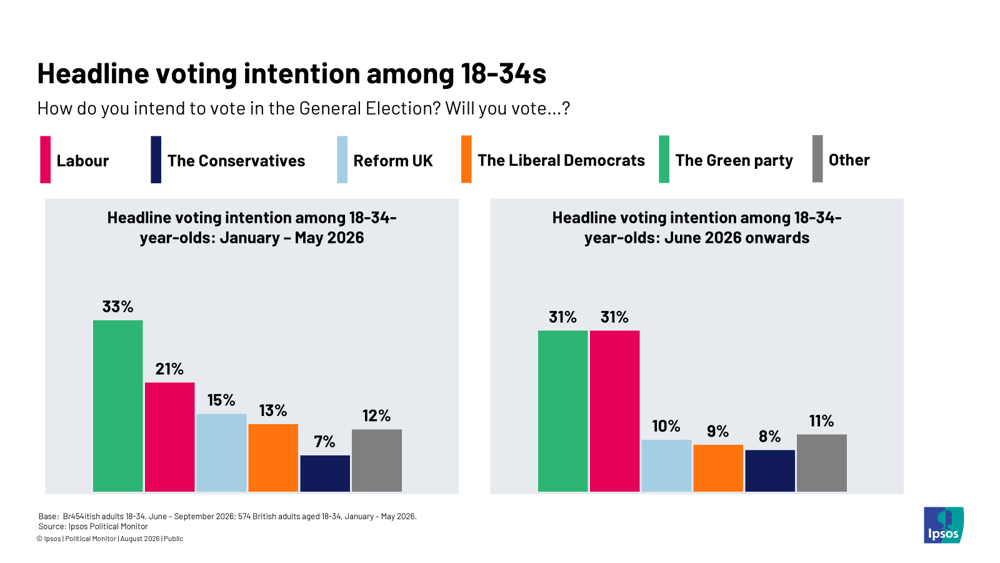
Labour’s position has improved since Starmer resigned. Across three subsequent Ipsos voting intention polls, the party has averaged 31 per cent support among 18-34s, ten points above its January-to-May average and level with the Green Party.
At the same time, Green support has barely moved. The aggregate figures suggest Labour’s recovery among younger voters may come partly from those who had considered Reform UK or the Liberal Democrats, rather than from voters returning directly from the Green Party, as well as those who had drifted away from Labour since 2024 but not found a new home.
Burnham also leads the other major party figures on personal ratings. Across Ipsos polling from July to September, he recorded an average net satisfaction rating of +7 among 18-34s, compared with -6 for Polanski. In August, half of young adults said they liked Burnham (25 per cent disliked him). By comparison, 38 per cent liked Polanski, and 37 per cent disliked him.
Part of Burnham’s appeal may simply be that he is not Starmer. But presentation definitely matters too.
Direct-to-camera videos, online trends, and influencer collaborations make his social-media output feel native to TikTok and Instagram rather than adapted from television or print. Savvy young Labour TikTokers have amplified that approach through fan edits and other promotional content.
The electoral effect is difficult to measure. But the strategy distinguishes Burnham from the Starmer government and allows Labour to enter younger voters’ feeds in a less formal political voice.
The Burnham government is barely two months old, and political honeymoons rarely last. Young adults will ultimately judge Burnham by what he delivers, not what appears in their feeds.
Expectations are high: 49 per cent of 18-34s expect a Burnham-led Labour government to look after young people’s interests. Housing, employment and student finance will provide lasting tests. Labour must also rebuild its youth vote without weakening the broader electoral coalition it needs to govern.
Labour has recovered ground, but 31 per cent would still match its weakest election performance among young adults since 2010. Ipsos’ How Britain Voted data, stretching back to October 1974, shows Labour recording a similarly low share at only two elections: 1983 and 2010.
Burnham has regained young voters’ attention. Now he must give them a reason to stay, beyond the reels.
Ben Roff is Senior Research Executive at Ipsos
Victory in the Holborn by-election may mislead Burnham into thinking he is doing just fine
Andrew Gimson
Labour is running a content-free campaign in North London, and has found a candidate with an enchanting smile, but shows no sign of recognising that tough decisions about welfare reform will be needed in order to win back the North of England from Reform UK.
—
They aren’t always very democratic or terribly liberal but see themselves as terribly nice – but what are they for?
Giles Dilnot
Gathered in Brighton two years on from the best result they’ve had those 72 MPs and many local councillors are starting to ask the question of themselves: What is the point of the Liberal Democrats, what are they for? And is it time to look elsewhere for leadership of their party?
—
The Tories are back. Please don’t blow it
Oliver Dean
But we mustn’t let that optimism cloud our judgement. If we take the foot off the pedal now, this will have all been for nothing. This is a party that has existed for close to two centuries, and, over the last 18 months, we have teetered on the edge of political extinction far more than I would have ideally liked. If we relax now, we risk that future.
—
It’s a long shot, but this is how Conservatives and Reform could still cooperate
Peter Franklin
I’m making a big assumption that Reform is interested in mutual benefit. It’s equally possible that they haven’t given up their ambition to kill us off — or that their primary objective at the next election is to replace us as the official opposition. In which case, they need to know that if they want all-out-war we will give it to them.
—
Are the Lib Dems coming for the Tory heartlands?
John Oxley
The Lib Dem conference may have been a third-order news story, but its message should still matter to the Conservatives. We continue to be squeezed from both sides of the electoral spectrum, and we don’t have the luxury of picking which opponent to fight.
—
More – not fewer – people should pay income tax
Miriam Cates
There will be a reckoning, whether by virtue of an economic catastrophe, war or a bond market crisis. Such a calamity could be avoided if the Prime Minister, guided by the long-term best interests of our nation, rather than the short-term demands of his political base, took decisive action to cut spending and incentivise growth. I for one am not holding my breath.
—
The Bank of England has lost the plot on inflation
John Redwood
The recent exchange of letters does not instil confidence in their policies and shows no understanding of the role domestic policies have played in driving prices higher. Once again they leave us well above the target they are meant to hit. Policy meanwhile drifts and the Chancellor fails to take action to rein in the cost of living pressures on a large enough scale to have a useful impact.
—
How the Local Government Association won over Reform UK
Harry Phibbs
I have asked all English local authorities, via a Freedom of Information request, for details of any efficiency savings in the past year due to LGA advice. None of them could think of a single one.
—
Britain doesn’t need to be everywhere but it does need to matter somewhere
Joel Hetherington
A navy that can’t keep one destroyer’s water system working through a routine deployment is not one that can generate its own carrier escort, let alone in the Euro-Atlantic and project into the Indo-Pacific. That gap will only be closed by matching ambition to reality in the one theatre where our contribution cannot be replaced.
—
Immigration reform must go beyond small boats
Blake Stephenson
As Parliament debates the Immigration and Asylum Bill, we must look beyond the immediate headlines and address the wider weaknesses that continue to undermine public confidence. The objective should not simply be to respond to today’s pressures, but to build an immigration system that is sustainable, trusted and fit for the decades ahead.
The post Our top ten picks of the week appeared first on Conservative Home.

It’s the most wonderful time of the year. Not Christmas, silly – Halloween!
While, sure, Christmas is a holiday to spend with family and being the cosiest you’ve ever been, Halloween is a time to dress up, get silly, and make your home look like a living nightmare.
Should you be hoping to save money on decorations this Halloween, Cricut has a ton of DIY Halloween decoration ideas to make on its machines – and honestly, it couldn’t be easier.
But, if you’re going all-out for Halloween this year, you’re in luck: ready to buy decorations have never been better.
Whether you’re going for a witchy and cobwebby Halloween, or to evoke a zombie apocalypse, there is an inflatable or animatronic out there for you.
We’reofficially in spooky season, so we’ve rounded up the very best Halloween decorations to shop now to get your house prepared… if you ever can be.

Despite popular perceptions of the ageing process, some research has found that improvement in either physical or mental health in later life is not only possible, but common.
One 12-year study found almost half of the 11,000+ seniors participating either got faster at walking (linked to better outcomes in older age) or performed better in cognitive tests more than a decade after their 65th birthday.
Which begs the question: can individual habits make improvement, or decline, more or less likely?
Of course, some conditions and health concerns are beyond people’s control. But speaking to HuffPost UK, endocrinologist Dr William Hsu, chief medical officer at L-Nutra, said there are a few habits which “consistently stand out”.
What habits separate those who improve with age from those who decline?
1) They don’t treat decline as inevitable
The study we talked about earlier found that typically, people who had a more positive view of ageing were more likely to see improvements after 65.
So, perhaps it’s not a surprise that Dr Hsu said: “One of the most important things I have observed is that the people who become healthier with age do not treat decline as inevitable.
“They pay attention to what their bodies are doing, make intentional changes, and measure whether those changes are working.”
2) They build and protect muscle
Strength training is a great way to protect your joints, muscles, and bones as you age, thus preventing the risk of falls and fractures.
And, Dr Hsu told us: “Muscle is not only important for strength and mobility. It is one of the body’s primary sites for glucose disposal and plays a central role in metabolic health.
“The people who remain strong as they age tend to prioritise resistance training, adequate protein, and regular daily movement.”
The expert added that challenging yourself with bigger weights or more intense workouts as you progress is key here.
3) They look at their overall health trends, rather than focusing on one isolated number
Dr Hsu said that people who improve with age usually “know their blood pressure, fasting glucose, hemoglobin A1C, cholesterol, waist circumference, and body composition, and they pay attention to how those markers change over time”.
That way, he stated, they can focus on their body’s overall trends rather than trying to rely on one specific marker.
“A result can fall within the ‘normal’ range while still moving in the wrong direction. The trajectory often tells us more than one snapshot,” he said.
4) They eat a lot of plants – and don’t overdo the protein
Diets rich in fruits, veg, nuts, pulses, beans, whole grains, and legumes and lower in processed and sugary foods and red meat have long been associated with a longer, healthier life.
“These foods support glucose regulation, cardiovascular health, the gut microbiome, and healthy ageing,” said the doctor.
And while you might have heard that protein is key for good health, the expert revealed: “The healthiest older adults consume enough protein to preserve muscle, but they do not allow a singular focus on protein to displace the plants and fiber that provide broader metabolic benefits.”
Indeed, one study found that too much protein seemed associated with negative health effects among sedentary older people.
“The point is not to minimise protein but to get enough of the right amino acids from plants, legumes, nuts, seeds, and whole grains, with fish or a modest amount of other protein where appropriate, so that muscle has the building blocks it needs without overshooting into growth signalling that accelerates ageing,” Dr Hsu clarified.
5) They’re smart about giving their body breaks
“Exercise is one example: the body becomes stronger in response to a manageable stress followed by adequate recovery,” the doctor said.
“Nutrition may also be structured this way,” he continued, pointing to the fasting mimicking diet (FMD), which has been shown to lower people’s biological age.
To be clear, Dr Hsu said, “this is not about chronically restricting food”.
“It is about using a defined, time-limited intervention and then returning to nourishing, sustainable eating,” he said.
Bear in mind, though, that not everyone is suited to this eating style. Frail, breastfeeding, or pregnant people, as well as those with some health conditions or who are on regular medications, are advised to avoid the pattern; speak to your doctor if you’re not sure.
And going too long without food (16-18 hours a day) is linked to a higher risk of gallstones. Longevity expert Dr Valter Longo said a 12-hour fasting/eating split is “very common among people who have record lifespans”, and “seems to match both science and tradition”.
6) They keep their brains busy
“Attention and cognitive capacity benefit from use. People who remain mentally engaged tend to keep learning, maintain meaningful relationships, protect their sleep, exercise regularly, and reduce the constant digital interruptions that fragment attention,” added Dr Hsu.
“The brain responds to many of the same inputs that support the rest of the body, particularly movement, metabolic health, sleep, and social connection.”
Reading and engaging with challenging brain puzzles have been associated with a lower dementia risk, while maintaining great relationships can help you live longer overall.
“Healthy ageing,” the doctor ended, “is not simply the absence of deterioration. I have seen people gain strength, improve blood sugar and cholesterol, reduce visceral fat, and become more physically capable later in life. The body retains a meaningful capacity to adapt.
“The goal is to give it the right inputs, assess the response, and continue adjusting over time.”
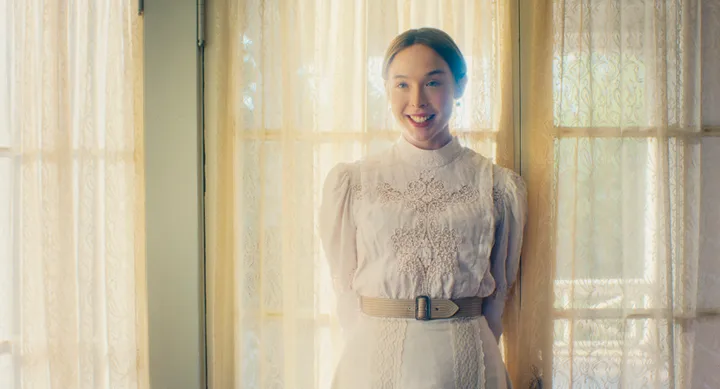
When Lizzie Borden’s father and stepmother were murdered with a hatchet in their Massachusetts home in 1892, the 32-year-old became the prime suspect.
Although Lizzie was later acquitted of her crimes, the case has continued to fascinate people, and is still being discussed more than a century later.
Now, Ryan Murphy and Ian Brennan’s Netflix anthology series, Monster, has brought Lizzie’s gruesome story to the forefront yet again – albeit with some creative license applied.
Starring Ella Beatty alongside Charlie Hunnam and Rebecca Hall, true crime fans have been tuning in to watch the fourth iteration of Monster, which explores themes of female rage and repression, in their droves.
But how did the Monster team go about bringing The Lizzie Borden Story to the small screen in all its gore-filled glory?
Here are 19 behind-the-scenes facts you probably didn’t know about Monster: The Lizzie Borden Story’s creation…
Everyone involved felt like season 4 was the right time for a female lead in Monster

After seasons following Jeffrey Dahmer, Lyle and Erik Menendez and Ed Gein, Monster’s showrunners felt like it was time for a woman to take centre stage.
“[It] just felt like we owed it,” co-creator Ian Brennan told People in August. “We’d sort of over-indexed on men for the series, and it just felt like this was the right time and the right subject to look at to look squarely at the idea of female rage.”
It didn’t take long for Lizzie Borden to emerge as producers’ top choice when looking at women they could hook a season of Monster on
After the team decided they wanted a woman to lead season four, they soon discovered they had a smaller pool of female killers to select from.
In the end, Ian said that he and his collaborators wound up settling on Lizzie Borden because, while she is “enigmatic as a historical figure” and the case of her family’s murders is infamous, little is really known about the woman herself.
“When we began to dig into the research, I was just immediately taken with how much I felt for her and how much I got why she did what she did,” he recalled.
“There was something that was really, really, very likable about her as a person despite the crime that I think she likely committed because she was sort of a caged animal.”
He added that Lizzie was a “product of a time [when] it was really difficult to be a young woman”.
There was a good reason why Elizabeth Báthory and Aileen Wuornos were also chosen to appear in Monster: The Lizzie Borden Story

The third season of Monster, The Ed Gein Story, jumped back and forth in time, connecting the killer to Nazi Ilsa Koch and the actor Anthony Perkins, who played a character inspired by Ed Gein in Psycho.
Similarly, while the fourth series of Monster centres mostly on Lizzie Borden, it does also feature two notorious female killers from very different eras.
The Lizzie Borden Story links its central figure, who was born in the 1800s, with Countess Elizabeth Báthory, a 16th-century noblewoman nicknamed the Bloody Countess, and Aileen Wuornos, a serial killer who murdered seven men between 1989 and 1990.
Ian felt that incorporating these two women into the story added a “third dimension”, telling People: “It just made it come alive all the more.”
Ella Beatty has also explained why the two unconnected murderers make an appearance in the series.
“The show is exploring a legacy of female rage and reaction to the set of circumstances that they are presented with,” Ella told Tudum, adding that the showrunners were keen to explore how female rage connected Aileen and Lizzie.
“Every season of Monster has been an exercise in understanding the person’s psychology. Are they born or are they made?” she added. “I knew from the beginning that Ryan Murphy and Ian Brennan were really interested in exploring what brings a woman to the point of violence.”
Co-creator Ian also highlighted the idea of female rage when talking about the show’s multi-generational subplots.
“We were able to look at rage, female rage, and women who kill as less of an aberration throughout time than actually a throughline and an aspect of our species and existence in society,” he told The Hollywood Reporter in September.
“The cages that we put women in and the things they will do to get out of those cages was really interesting.”
Sarah Paulson’s performance as Aileen Wuornos had the show’s director in tears on set

Regular Ryan Murphy collaborator Sarah Paulson was chosen to star as the real-life serial killer Aileen Wuornos.
“She’s an unbelievable actor who does so much preparation and physical work. It was my first time working with her and I was stunned by what happens when she comes out on set,” director Max Winkler told The Hollywood Reporter.
“My favourite scene that she did – because it really allowed her to improvise a lot – was the scene with her having her final meal,” the director admitted, revealing he cried when watching her perform Aileen’s sentimental last moments. “Just the mixture between protective strength and unbelievable vulnerability,”.
Sarah also already had a working relationship with Ella, having previously acted with her in Branden Jacobs-Jenkins’s play Appropriate, for which she won a Tony Award.
“We met doing a play together three years ago and became very close. She was such a part of the creative process for me from the very beginning,” Ella enthused to Tudum.
The Monster team knew almost immediately when they had found their Lizzie Borden in Ella Beatty

“We cast a super wide net and nobody could do it until we saw her,” co-showrunner Ian told Tudum.
He added: “They say you can tell within the first five seconds if the actor has the role, and that was completely the case here, after watching very good actresses try.”
Ella Beatty was already hard at work on her characterisation before she’d even been cast
The actor – who is the daughter of Hollywood icons Annette Bening and Warren Beatty – immediately felt connected with Lizzie Borden when the project first came her way.
“I remember making the audition tape and thinking, ‘I understand this person’,” she told Variety.
“When I found out that I had gotten the part, I was over the moon and also really scared. I felt a huge responsibility to the part, to the anthology, to the real person,” she added.
“I think immediately I just wanted to start working on it. How does she move? How does she dream? How does she think? How does she speak? How does she blink?”
There was one key thing Rebecca Hall was keen to avoid when playing Abby Borden

Little to nothing is known about Abby Borden, other than the fact she was killed by her stepdaughter more than 130 years ago.
Played in Monster by Rebecca Hall, Lizzie’s stepmother is portrayed in the series as deeply unhappy, displaying cruelty toward her stepdaughter and frustration in her marriage.
This characterisation was largely created by the writers, due to how little has been recorded about Abby Borden.
“There’s very little about her out there, and I could already tell from reading the script that Ian Brennan and Ryan Murphy had taken liberties and created a character that they were interested in for this show,” she told Collider. “So I felt like the only thing I could do was do the same thing,”
Rebecca admitted the lack of public information about her character gave her freedom to create something “unique and specific”, deliberately trying not to take inspiration from past depictions of “evil stepmothers” from fairytale lore.
Rebecca Hall was inspired by two Hollywood icons when deciding on her character’s voice
The Golden Globe nominee looked to Bette Davis and Joan Crawford to create Abby’s specific accent.
“When I was thinking about the accent, which I wanted to be not really from anywhere as much as just Abby, I kept thinking about those mid-Atlantic accents that actors created in the 1930s that didn’t actually exist but had this sort of affect of like, ‘I’m extremely posh and elitist’,” she added to Collider.
Monster’s showrunners weren’t ready to ‘say goodbye to’ Charlie Hunnam after season 3 – which is how he wound up being cast as Lizzie Borden’s dad

“We had such a great time working on the last season. It was just a joy,” Ian told People. “Charlie, you just can’t get enough of it. He’s so lovely and has such a great presence on set, and it just felt like, ‘Oh, this is perfect for him’.”
The showrunner was particularly impressed with Charlie’s range and ability to make any character sympathetic, no matter how evil they were.
“He just rounds out every character with this deep well of sympathy that really filled out what could otherwise be a stereotypical bad dad,” Ian added. “He really filled [the character] out in such beautiful detail.”
Like his co-star Rebecca, Charlie Hunnam felt liberated in playing a character that no one knows about in Monster season 4
While people already knew plenty about Ed Gein before Monster dedicated a season to him, comparably, the same could not be said for Andrew Borden.
However, this proved to be a positive thing for the actor playing him.
“[I was] liberated from the responsibility of playing a historical figure because there’s just not that much known, and so we were able to invent him to a certain degree,” Charlie told People. “It’s a real fertile playground for actors to come into this world.”
While there are no reports of Andrew Borden having had a stutter in real life, this was a trait that felt right to Charlie when he was reading the script.
“There’s one moment in the script that [the writer] wrote in that he sort of has a stutter, but it’s in a moment of sort of emotional duress,” he explained to CBR.
The Sons Of Anarchy actor explained that “that stutter in that voice just started to present itself to me” as he continued “running back” to the script and “exploring it further”.
Although set predominantly in Massachusetts, Monster: The Lizzie Borden Story was filmed in different locations around the globe

The cast and crew of Monster couldn’t film the show inside Lizzie Borden’s real home, as the rumoured haunted house is now a bed and breakfast in Fall River, Massachusetts.
“I couldn’t believe that,” Monster co-showrunner Ian Brennan admitted about the discovery of the house’s new lease of life as a B&B. “It’s stunning.”
As a result, the scenes set in her house were actually filmed on a purpose-made set in Los Angeles.
Meanwhile, the subplot involving Elizabeth Báthory was filmed in a castle in Rome, rather than Báthor Castle, where the countess lived in real life, about 170 miles from Budapest in a town called Nyírbátor.
“We had shot season four, most of it, in LA,” cinematographer Michael Bauman told CBR back in January. “But we have about five weeks of work [in] Rome. There are lots of castles here, and that’s mainly the reason [we filmed there].”
Vicky Krieps’ dual role casting in Monster season 4 was actually a last-minute choice

The team behind Monster loved Vicky Krieps so much in The Ed Gein Story, they cast her twice in the follow-up. She appears as both Bridget and Countess Elizabeth Báthory in season four of the anthology.
Vicky was chosen to play the rebellious maid who introduces Lizzie to hair dye and sex toys first.
“The way Ryan thought of it, she’s almost like a Mary Poppins that comes out of nowhere, who can be anyone from any time,” Vicky told Vanity Fair about Bridget. “Ryan said, ‘It’s women-driven, feminist, lesbian, dirty, unapologetic’.”
During filming, the show’s creator then offered her another role, as the bloodthirsty countess in the fantasy flashbacks.
“That was all shot in Italy, so we knew that that would be at the end of the schedule anyway, and we just couldn’t think of who would do it or who seemed right,” Ian explained to Tudum.
“It was Ryan’s idea. He pitched it to her and she loved it. Now it seems like such an obvious choice, but it actually came very late in the process.”
Vicky Krieps and Charlie Hunnam’s existing chemistry from the last iteration of Monster helped them push boundaries during filming of season 4

The new episodes of Monster reunited co-stars Vicky Krieps and Charlie Hunnam, who both starred in season three as Ilse Koch and Ed Gein.
Having worked together before, Vicky knew she could push Charlie in the scenes they shared.
“[We] joke a lot on set to make it fun or to just push each other in the scenes. Like, how far can we go? What can we do?” she told People at the New York City premiere last month. “We had a fight scene together, and he said, ‘You know, you can really go for it.’”
She recalled: “I’m saying, ‘But I’m really strong.’ He says, ‘That’s fine,’ and he’s really strong, so he doesn’t mind.”
Things escalated even further when Charlie fell to the floor, only for his co-star to spit on him.
“He gets up, he’s like, ‘What? What did you just do? You just spat on me. You can’t do that,’” she recalled.
Season 4 of Monster’s more comedic tone, in comparison to its predecessors, was an intentional choice

A miniseries about a young girl acquitted for the hatchet murders of her father and stepmother might not sound like a natural comedy, but Ryan Murphy wanted the tone of season four to be much lighter than Monster’s previous outings.
“I felt like the tone was slightly different from [The Ed Gein Story],” Charlie told Entertainment Weekly. “It was a little more irreverent, a little more sort of bonkers, theatrical, [a] little bit more comedy, tonally than the past season that I had done. So it just felt like a fun opportunity.”
Rebecca saw her role as the villainous stepmother as a chance to unleash her comedic side.
“I’ve never played a true out-and-out villain,” she told Variety. “I just loved on the page how funny she was. It just felt like such an opportunity to be both funny and scary at the same time, which is an interesting tonal challenge.”
Director Max Winkler also confirmed to The Hollywood Reporter that the show is intentionally comedic, which presented its own challenges.
“It was really challenging to make because a lot of it is comedic, with the insane way that people wrote and spoke and had expectations for women in that time period,” the Love Story director explained. “Which is not that long ago…”
He added: “1890 is so laughably insane, and the fact that there’s still some crossover to it today and that half of the internet thinks that we should go back to that way of life? It lends itself to make fun of it.”
Monster is full of blood splatter, and the makeup team went to great lengths to cover Ella Beatty and Vicky Krieps in it
“Sometimes the blood on my face was hand-painted with makeup brushes,” Ella told Tudum. “Sometimes it was literally poured onto me. Sometimes it came from what’s called a blood rig. So every time I would slam an axe onto the blood rig, fake blood would shoot out onto my face and body.”
Describing the process as both “realistic” and “messy”, she also shared a little behind-the-scenes hack for how they removed the blood with “a healthy dose of shaving cream”.

It wasn’t just fake blood that the cast of Monster season 4 had to contend with on set, though
When blood isn’t being splattered in Monster: The Lizzie Borden Story, the cast had puke and diarrhoea to contend with.
Most notably, the episode Strong Kitty is definitely not one for the squeamish – with Abby and Andrew Borden unknowingly sitting down for a meal of spoiled oysters, resulting in them projectile vomiting and running to the bathroom before long.
The crew spent much time and energy creating the gross scene, with director Max recalling to The Wrap: “That was a very messy, difficult day, but I am very pleased with how it turned out.
“Jack Price – our editor on that episode, was incredible in finding the musicality of it all.”
To make that gross scene as realistic as possible, they hooked Rebecca and Charlie up with subtly-disguised tubes, which the prop team filled with a disgusting orange liquid to recreate projectile vomiting.
Unfortunately, the cast found shooting this scene to be a particularly unpleasant experience

“Rebecca has a very hard time being around vomiting and said very early that she is inclined to vomit if she’s around it,” the director explained to The Wrap. “So that was my biggest fear, protecting Rebecca.”
In an interview with The Hollywood Reporter, he added: “Rebecca did one of the bravest things, because it’s a real thing, her thing.
“She was like shaking, so her courage to do that and to trust me… we tried to do it as quickly as possible, and it pays off because she’s so amazing in it. Intricate dinner scenes are always challenging.”
It wasn’t any easier for Charlie, who “ate the oysters that were canned because we needed them to be super big”.
“Charlie was a hero that day, but so was Rebecca,” Max said of his cast during his interview with The Wrap.
Charlie told Entertainment Weekly that he’s “kind of a germaphobe”, making the scene particularly unpleasant to film for him.
“Even if it’s fake vomit, being covered head to toe in vomit and diarrhoea for the day did not seem like a particularly enjoyable experience,” he shared. “And, indeed, it wasn’t.”
Luckily, Rebecca didn’t find it as bad as she was worried it would be.
“It was so funny and preposterous, and nothing was remotely like real vomiting, actually,” she told Entertainment Weekly. “It turned out that my biggest challenge was maintaining a straight face when the camera was on me, because I don’t think I’ve ever laughed more.”
Monster’s creators had long planned how the final episode of The Lizzie Borden Story was going to end

Season four’s final moments focus on Aileen Wuornos’ execution. As she sits in the electric chair, she sees Lizzie and Maggie beckoning her towards the light.
“I always knew the last shot was going to be Aileen’s body and the curtain closing to match the ornate beautiful curtain of the fairytale version of ‘Lizzie was this crazy person!’ and then the actual reality,” director Max told The Hollywood Reporter.
Meanwhile, Ian told Tudum: “In a way, Lizzie has a happy ending, and Aileen didn’t. She didn’t get away with anything. So it felt right to land on her and give her, if not a happy ending, one that is satisfying.”
There was a special meaning behind the closing song in Monster: The Lizzie Borden Story, too
As the show concludes, I Know by Fiona Apple plays. The director explained to The Hollywood Reporter why he felt the Grammy winner’s music was perfect for that final scene.
Describing the artist as “someone else who’s been objectified for being incredible and brilliant and talented”, and had a “back turned on her for being difficult or traumatised or whatever”, Max added: “That song, that moment of an artist I admire so much helped me kind of close the loop.”
Monster: The Lizzie Borden Story is available to stream on Netflix now.
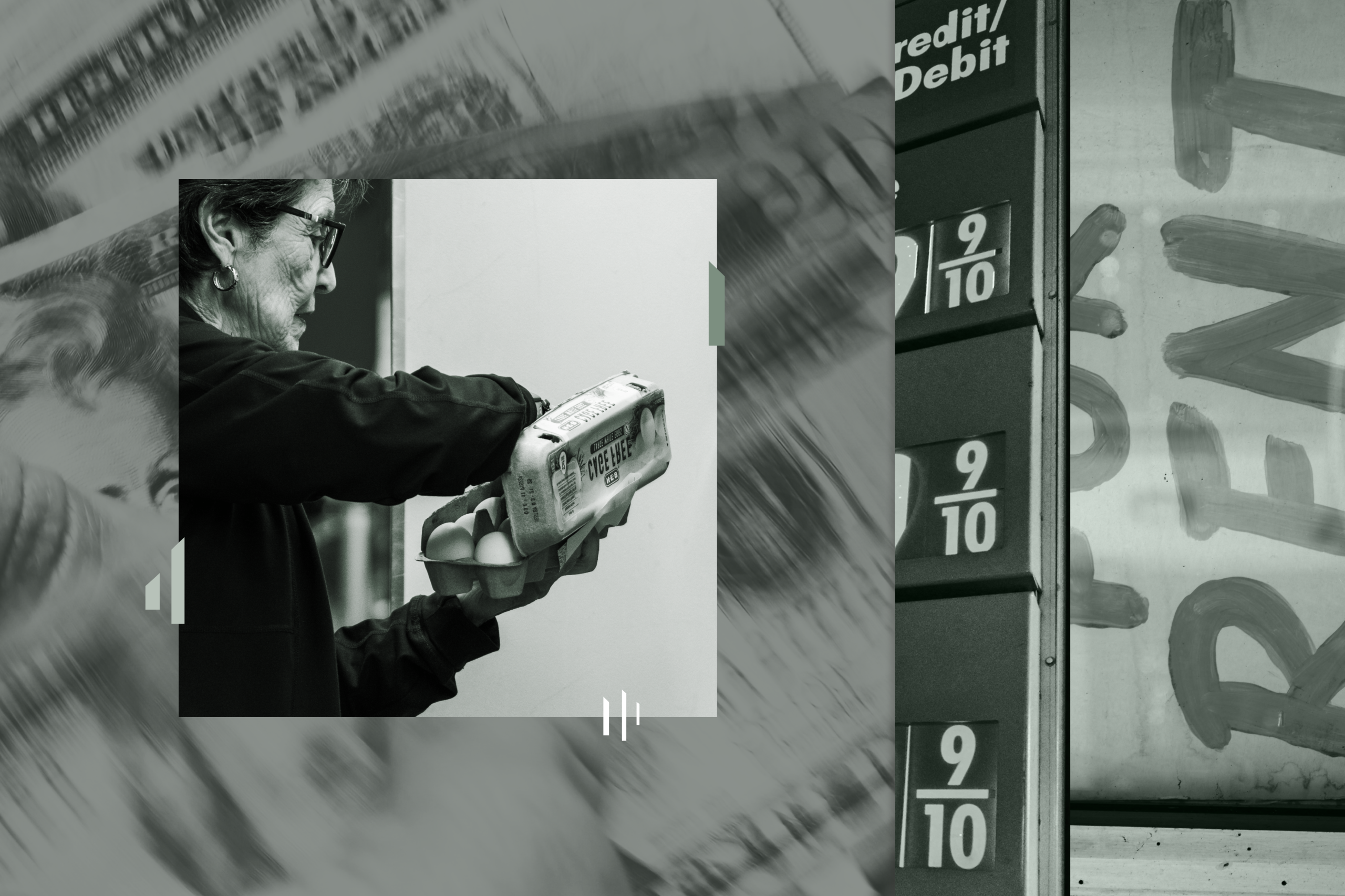

Not everyone thinks there’s an affordability crisis.
While many Americans say the cost of living is the top issue facing the U.S. more than any other, President Donald Trump’s MAGA base does not always agree, according to a new analysis of The POLITICO Poll. Just 28 percent of voters who self-identify as part of the MAGA movement say expenses have become less affordable since Trump took office.
In fact, MAGA voters are more likely to say things have gotten better rather than worse.
That’s a stark break from the rest of the country, including the voters who backed Kamala Harris in 2024 and those who voted for Trump but do not identify as part of the MAGA movement.
The POLITICO Poll results reveal a complicated challenge for Republicans: In an election all about the economy, cost of living concerns are reinforcing partisanship divides — entrenching Democrats’ opposition to Trump — while also driving a wedge among Republicans’ own base. Now, GOP candidates are facing frustrated voters from all sides.
Harris voters are far more likely than Trump voters to say groceries, gas and other expenses have gotten more expensive since the president took office, despite facing similar increases in household costs, according to a POLITICO analysis of cost of living data.
Democrats hope to ride that frustration to victory in November, and have made affordability their top messaging issue this fall. They’re poised to benefit from the backlash to Trump’s economic agenda — from his unpopular tariffs to an Iran war that’s raised gas prices — which politicians and strategists widely agree are helping motivate Democratic voters.
“Those Democrats are definitely going to go vote,” said Michigan-based GOP strategist Jason Roe. “And we’ve got some voters that are a little harder to get to the polls, and when they are mad, frustrated, disappointed, disillusioned, in disagreement, and we don’t have them motivated, that’s going to be a problem.”
Many of those disillusioned Trump voters, The POLITICO Poll suggests, are the ones who don’t identify as part of the MAGA base.
Consider the 52% of non-MAGA Trump voters who say the cost of living in their area is the “worst” it has ever been: Nearly half say they either wouldn’t vote for a Republican in the midterms or are still making up their minds.
But what is a boon to Democrats today could be a problem for them later. Partisanship also shapes how Americans remember the economy in years past, the poll results show.
Harris voters have a more favorable memory toward Democratic presidents and Trump voters have a more favorable memory toward Republican presidents, each saying life was more affordable when their party held the reins.
Democrats and Republicans simply don’t share an understanding of the economic reality — and without a common frame for the past, nor whether things are improving in the present, any party in power stands to lose its grip against an increasingly frustrated opposition when the economy is the key issue.
This year, that will be a major challenge for Republicans.
MAGA vs. Non-MAGA vs. Democrats
The POLITICO Poll asked adults across America last month about affordability in their area, including about local prices and their memory of when prices were more affordable in the past.
Across the board, Harris voters outpaced Trump voters in their pessimism about the economy. And among Trump voters, non-MAGA voters outpaced their MAGA counterparts.
For example, 70% of Harris voters and 52% of non-MAGA Trump voters say the cost of living is worse than they can “ever remember it being.” MAGA Trump voters disagreed — a 43% plurality said the cost of living today is bad, but they could “remember times when it was worse.”
The results are a warning sign about the Trump coalition: In question after question, the president’s most loyal base is still sticking with him, but among the non-MAGA voters he convinced to back him in 2024, their frustration more closely resembles how Harris voters feel.
“There will be voters who voted for Donald Trump in 2024 who know he’s made life more expensive and won’t vote for his party this time,” said longtime Democratic strategist Jesse Ferguson. “Some will vote for a Democrat, some won’t vote. But they won’t cast a ballot for a Republican who they blame for the high cost of living.”
Of the non-MAGA Trump voters who say the cost of living is the worst they’ve seen, just 53% say they would vote for a Republican if the midterms were held tomorrow. More than 25% would vote for a Democrat or third-party candidate. The rest say they would stay home or have not yet made up their minds.
Changes to family budgets are similar on average among those that voted for Trump and those who voted for Harris, according to a POLITICO analysis of data from the Living Wage Institute, a nonpartisan public benefit corporation that produces cost of living data. Across the country, family budgets have increased by 2.5 percent on average from early 2025 to early 2026, according to the Living Wage Institute.
But it is the concept of who is to blame that creates division among each voting bloc. Though each group is concerned about affordability — the cost of living is the most common concern for each — only MAGA Trump voters remain sympathetic to the current administration.
Young voters — and young men in particular — have also grown disillusioned with the Trump administration amid cost of living concerns, a warning sign for the GOP. Among those under the age of 25 who say the cost of living is the worst it’s ever been, 56% say they trust Democrats to bring down the costs. Just 20% trust Republicans to do the same.
“Young people feel like the system isn’t working for them,” said Joe Mitchell, a Republican running for Iowa’s open and competitive 2nd District. Mitchell, who is 29, would be the second Gen Z member to join the House if elected. “You see them being attracted to some of these DSA candidates like Zohran Mamdani. And they’re going to be attracted to these candidates if we don’t figure something out for them now.”
Partisanship even drives memory
Partisanship also colors how Americans see the past, making it difficult for any incumbent party to convince voters of plans for the future.
The POLITICO Poll asked respondents whether it was easier or harder to afford everyday items in years past compared to today in one of two ways: In one, they were asked about a specific calendar year, and in another, the presidential administration in power at the time.
For each question framed around a calendar year, Trump and Harris voters gave similar answers. But when asked to compare how easy or hard it was to afford things during a particular presidential administration compared to today, their answers split along party lines.
For example, just over a third of both Harris and Trump voters said it was “easier” to afford everyday items in 2024 compared to today. But when asked the same question about the “end of [former President] Joe Biden’s term,” 55% of Harris voters said everyday items were easier to afford, compared to 39% of Trump voters.
The results show that Americans lack a common frame of reference on the issue most people care about — the cost of living — creating a massive hurdle for politicians hoping to win over new voters who may not be willing to listen.
The same effect happens among Trump voters looking back on a Democratic administration. When asked about costs in 2010 compared to today, 63% of Trump voters said everyday items were easier to afford then compared to now. But when asked about costs during the “middle” of former President Barack Obama’s first term — or 2010 — only 36% of Trump voters said the same.
It’s only when a political party is attached that Americans’ version of the truth changes.
When POLITICO asked whether it was easier or harder to afford everyday items “just before the Covid-19 pandemic” or in “2019,” majorities from both parties said things were easier to afford then, and in both framings.
The challenge for both parties is that voters don’t know “who has a better plan for the future,” GOP communications strategist Kevin Madden said. “Instead, what you’re seeing is a gap — or a canyon — emerge between the rest of the country and Washington.”
He added: “When you see that gap emerge, watch out if you’re an incumbent.”
Alisa Vasquez and Andrew Howard contributed to this report.
Imagine someone had emigrated from Britain in the mid-1980s, and returned 20 years later.
That person would have had a clear sense of returning to a country that is much richer than the one they once left behind. They would not even need to know the macroeconomic figures. They would not need to know, for example, that real disposable incomes had gone up by 60 per cent in the meantime. They would just see the difference with the naked eye. They would notice within days, possibly hours, that there is more dining out, more travelling, more leisure industries, better cars, better household electronics and better products in the supermarkets.
Now imagine the same scenario, only 20 years later: somebody emigrated from Britain in the mid-2000s, and returns today.
That person would have no comparable sense of returning to a richer country. Sure, they might notice gentrification in selected areas. Of course they would notice that smartphones are now ubiquitous and that DVD rentals have disappeared. If that person is a beer connoisseur, they would notice that the beer selection in most pubs is vastly better than it was in their day, thanks to sneering pretentious hipsters (and three cheers for those!). If they are a ‘foodie’, they would notice a wider variety of dining-out options. But none of that changes the fact that the country, as a whole, is only marginally richer today than it was 20 years ago. Which is another way of saying that the British economy has barely grown for two decades.
This is extraordinary by the standards of the previous 150 years or so. The two decades of stagnation Britain has endured were not supposed to happen. Market economies are supposed to grow over time – that’s just what they do. Every generation is supposed to be tangibly better off than their parents’ generation, and since about the middle of the 19th century, that was indeed the normal, peacetime British experience. Until it stopped being so.
You could imagine a society where the vast majority of people are content with their lot and do not aspire to more. In such a society, economic growth could naturally come to a halt, and nobody would have a problem with that.
Britain, though, is very much not that society. Most economic policy debates these days revolve around distributional conflicts. We demand higher levels of public spending on all sorts of things, from pensions to healthcare to social care to defence, but we are not prepared to pay higher taxes for it. Hence the popularity of snake-oil salesmen like Zack Polanski and Gary Stevenson, who give people the impression that Britain could be the equivalent of a petrostate, just with billionaire wealth instead of oil wealth. It is why the two most popular fiscal measures of our time are the wealth tax and the mansion tax.
Stagnation in overall terms usually means that some things get actively worse, and in Britain, some have indeed. A clear example: the proportion of British adults in their 20s and 30s living with their parents has risen by over a third in two decades. It seems unlikely that this is because young Brits have suddenly developed the cultural preferences of southern Italy. Rather, this change in living arrangements has economic causes, and it explains a lot of the discontent that drove Corbyn mania in the last decade, and Polanski mania in this one. So what went wrong?
My colleague Daniel Freeman and I have just published a book on the subject, The Great Stagnation: Why Britain Stopped Growing, which looks at the main causes across several policy areas. I can’t go into all of these here, but suffice it to say that a large part of the answer is frustratingly simple. Britain has stopped growing because it is systematically denying itself the things that a growing economy needs, such as energy and homes.
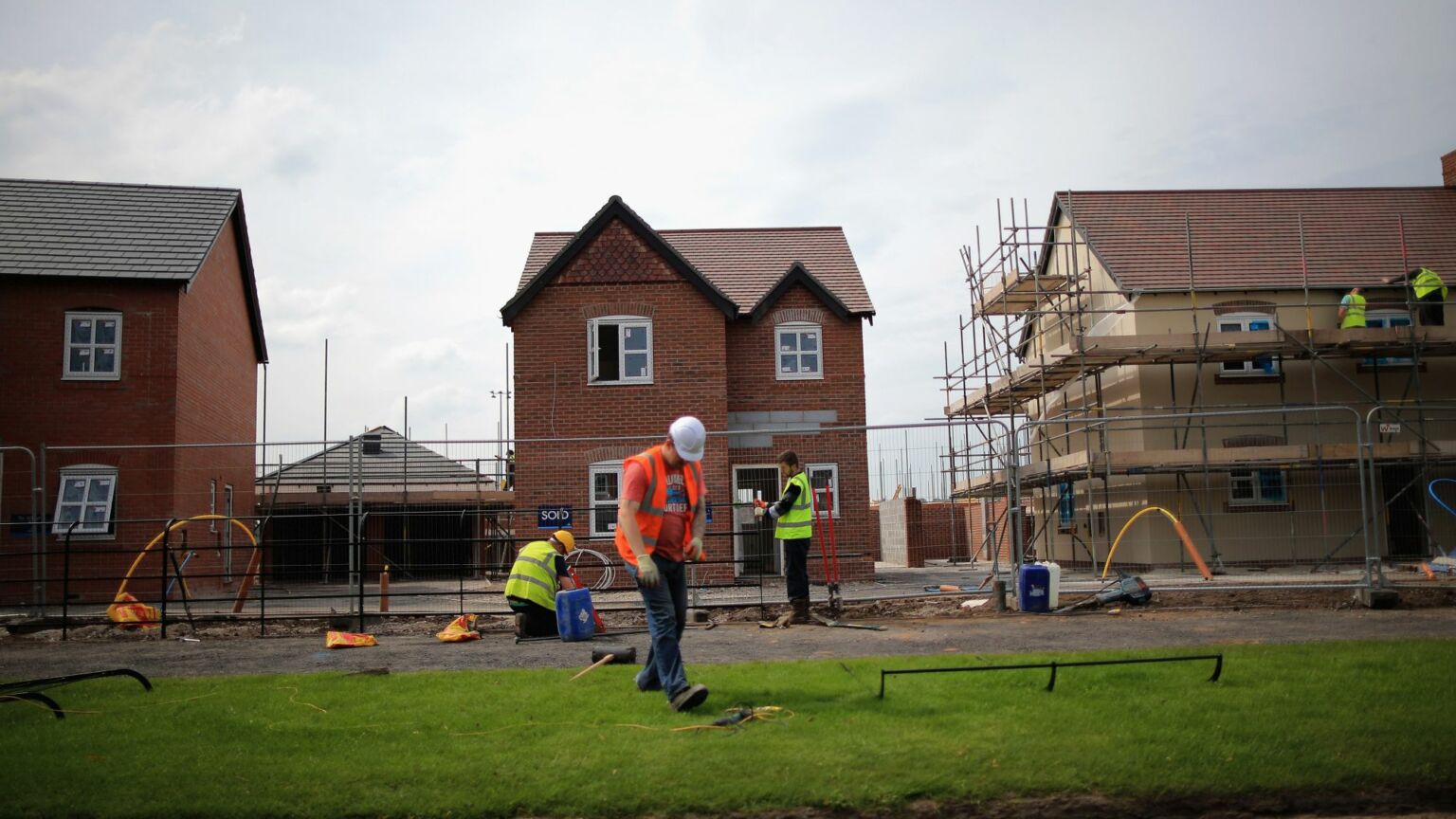
Britain has the lowest level of housing supply in the developed world, with fewer housing units than most OECD economies, which are also, on average, unusually small by international standards. We get a similar picture for office buildings, retail space and other business premises. Whether we look at the length of the road network or the volume of energy generation, Britain is well behind Western Europe and even further behind North America. We are trying to squeeze our economy into the built-up environment we inherited from previous centuries, a built-up environment that is increasingly inadequate for that purpose.
The most obvious example of this has to be Heathrow Airport, and the decades-long failure to build a third runway. Heathrow is a business that experienced phenomenal growth in the late 20th century, especially after its privatisation in the 1980s. But then at some point in the 2000s, its growth began to slow down – not because the market for air travel stagnated, but simply because the airport’s physical capacity constraints started to bite. Yes, it is possible to use technological and organisational innovations to use the existing runway space more efficiently. But at the end of the day, there are only so many take-offs and landings one can fit into two runways.
There are, of course, many other examples from economic history of a formerly successful economy suddenly experiencing prolonged periods of weak growth, stagnation or decline. But other such examples are at least intellectually interesting, because the reasons are not obvious, and people have competing theories about why it happened.
Nobody will ever win the Nobel Prize in Economics for writing about the causes of Britain’s economic stagnation. Because it’s really not that complicated. If you make it illegal to build anything without endless consultation processes, give NIMBYs de facto veto powers, and then demand impossible environmental and safety standards from the few projects that can be smuggled past the NIMBYs, then next to nothing will get built. And an economy that does not build does not grow.
Britain does not need ‘smart growth’. We don’t need to reinvent the wheel – we just need to give the wheels we already have the space to roll. Britain needs ‘stupid growth’. We need to do simple, unsophisticated things, like putting tarmac on the ground and putting bricks on top of other bricks. We don’t even need to ‘create’ growth – we just need to allow it to happen.
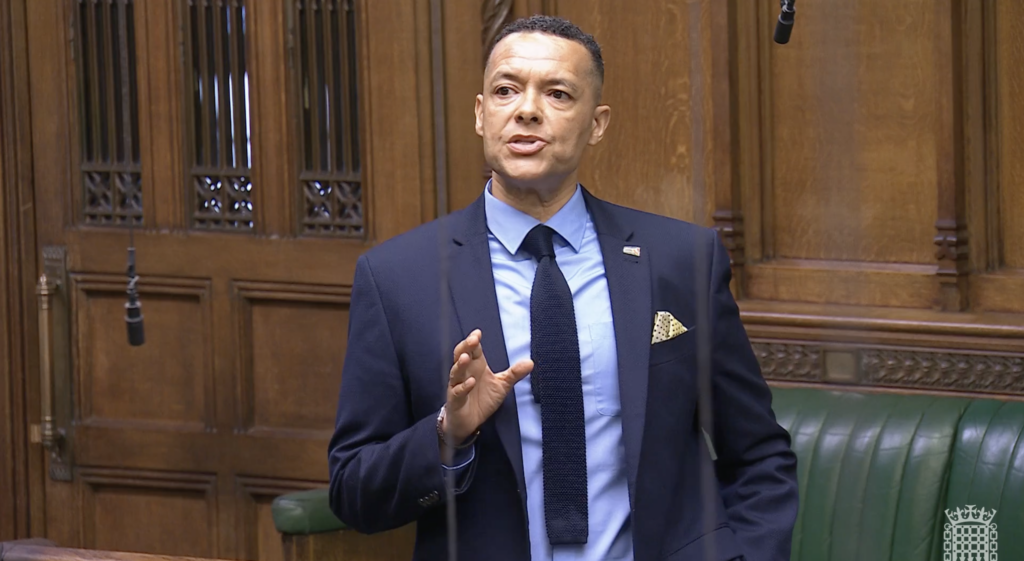
Clive Lewis has accused prime minister Andy Burnham of “ghosting” the Labour Party’s left flank.
Speaking on the Labour Left Podcast ahead of the party’s annual conference, the Norwich South MP did say the culture at the top of the party had improved since Starmer’s departure.
“Andy Burnham feels more tolerant”, Lewis said. “But I don’t want to be in a party where I’m tolerated. I want to be in a party where I’m an integral part of it, and our views are an integral part of it, and our values are an integral part of it. And I don’t think we’re there yet.”
Asked whether Labour was on track for a “reset”, Lewis said it depended “on how quickly you expected to see change” inside the party.
“I would say where we are at the moment: no”, he added.
Lewis said Burnham’s administration “isn’t a government of all wings of the party. The left were firmly kept outside of it.” But he referred to it as an “improvement”.
The Labour MP said that figures on the left had suspected Burnham “might not be everything that was on the tin”, but backed him because “we really did need to get rid of Keir Starmer and the people around him as quickly as possible.”
He added: “Andy Burnham was the best bet to do that. And I stand by that.”
He described Burnham reaching the door of Number 10 with the left behind him, only to be told he could come in but his allies must stay outside. “He’s gone, ‘all right, done’”, Lewis said. “We’re kind of at the door banging: ‘Andy, are you coming back out?’”
“Is that a terrible thing? Yes, it is. He’s ghosted us. But at the end of the day, mission achieved. Starmer has gone.”
He said: “I might be crying into my soup in a couple of years’ time, bemoaning the fact of what we did, but at the moment there are options on the table for us.”
In November 2025, Lewis reportedly became the first Labour MP to call on Keir Starmer to resign as prime minister. At the time, he urged Burnham, then the mayor of Greater Manchester, to return to parliament and “step up and become the next prime minister”.
Lewis subsequently suggested he would “give up” his seat to ensure Burnham could return to parliament.
Lewis is a member of Mainstream, a centre-left network within the Labour Party. The group was launched in September 2025 by the think tank Compass and the activist group Open Labour. It describes itself as a home for “Labour’s radical realists” and aims to influence the direction of the Labour government.
Speaking ahead of Labour conference, Lewis was also questioned about Burnham’s commitment to electoral reform and proportional representation (PR). The prime minister has long supported electoral reform, and spoke at a fringe event on proportional representation at last year’s conference.
Asked whether Burnham would deliver PR, Lewis answered: “The honest answer is I don’t know.”
He claimed some senior figures Burnham promoted are “not as hot on PR as him. In fact, they’re probably very cold on it.”
Lewis also warned against assurances from inside government that reform would simply appear in the manifesto. “That is a guarantee for it to be negotiated away, forgotten, pushed into the long grass”, he said. He called for an electoral reform commission to report before the next election.
Lewis is a member of the all-party parliamentary group (APPG) for fair elections – a cross-party group of MPs and peers that campaigns for electoral reform. In May 2026, he signed an amendment to the Representation of the People Bill, calling on the government to establish a “national commission on electoral reform”.

Labour On Course To Be Largest Party In A General Election, Dwarfing Reform

Saylor outlines bill of digital rights

Innocn E49M1R ultrawide monitor review





-

 Crypto World4 days ago
Goldman Sachs and Deutsche Bank Agree: The S&P 500 Rally Isn't Over
-
 Fashion2 days ago
Weekend Open Thread: J.McLaughlin – Corporette.com
-

 Tech6 days ago
Researchers escape OpenAI Codex sandbox to run commands on host
-

 Fashion3 days ago
8 iPhone Accessories That Add Personality
-

 Crypto World6 days ago
Who Needs CLARITY Anyway? ARB Could See 70X Increase: Hodler’s Digest
-

 Entertainment4 days ago
These 17 Fall Amazon Dresses Seriously Look Like Anthropologie
-

 Business6 days ago
Analog Devices (ADI) Bets $1.35 Billion on Chips that Let Machines Think for Themselves
-

 Crypto World6 days ago
Coinbase, Robinhood, Circle Seen as Tokenized-Stock Winners
-

 Crypto World4 days ago
This Bearish Netflix Stock Trade Can Cash In On Video Streaming Giant’s Woes
-

 Crypto World5 days ago
Trump-Xi Polymarket Odds for Handshake Hit 50%
-

 Tech6 days ago
Google’s $899 Googlebook is a bet that you’ll buy a new laptop for Gemini
-

 Crypto World3 days ago
Crude Oil Prices Pressured by Diplomatic Hopes in the Middle East
-
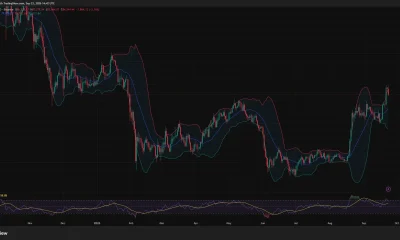
 Crypto World3 days ago
Bitcoin price tests $83,600 Supertrend support after $87K rejection
-
 Business4 days ago
Oil Price Today (September 23): Crude oil below $100 on hopes of US-Iran talks. What did Trump say?
-

 Crypto World3 days ago
Bitcoin Threatens Sub-$84,000 Breakdown as Long Liquidations Spike
-
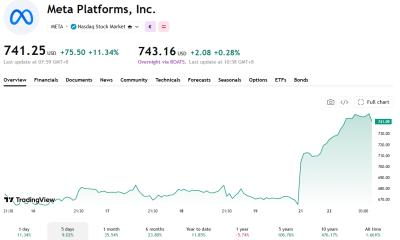
 Crypto World5 days ago
Meta Jumps 11% As Muse Shines and Investors Show an Appetite for Advancing AI
-
 Crypto World4 days ago
Did Jim Cramer Just Give GameStop Stock the Kiss of Death When He Said the Turnaround Is Working?
-

 Crypto World6 days ago
Bitcoin price holds above $81K as key catalysts line up
-

 Crypto World6 days ago
ARB Price Signals Spur Speculation of 70x Upside in Hodler Digest
-
 Crypto World5 days ago
Trump, Xi Meet on S&P 500's Best Day Since Early August: Will Markets Stay Bullish?
You must be logged in to post a comment Login