Politics
Inside The Wes Streeting Operation At The Department Of Health


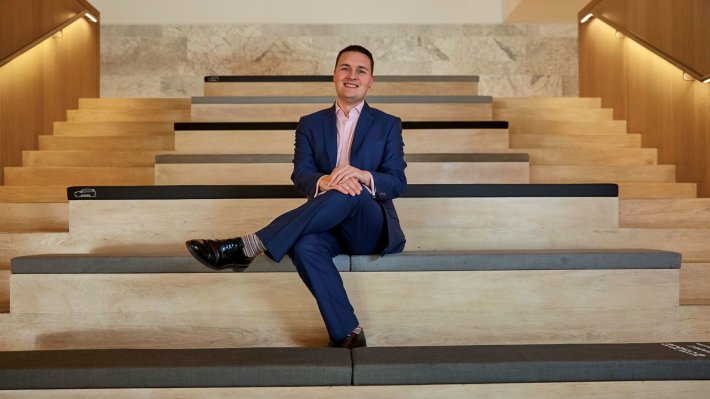
Wes Streeting (Photography by Baldo Sciacca)
17 min read
Is Wes Streeting a details man? What do his days look like? Who does he delegate to? Sienna Rodgers and Zoe Crowther explore how the Health Secretary runs his department
There’s more than one way to skin a cat, and there’s more than one way to run the Department of Health and Social Care.
Some secretaries of state for health have chosen to dive into the detail, immersing themselves in white papers and policy minutiae. Others have preferred to exert control through the press office, gripping the system via the grid.
The House has spoken to MPs, ministers, political advisers and civil servants, as well as health experts and officials, to get an understanding of how Wes Streeting runs his department.
The portrait that emerges is of an intensely political politician – the opposite of a micromanager or a technocrat lost in spreadsheets. Supporters say this has helped him in having a clear view of what needs to be done to transform the NHS. Critics argue he has been distracted by his own broader ambition.
Ready, set, go
Unlike many of his predecessors, Streeting knew he was going to be secretary of state for health for a good period – almost three years – before assuming the role. This gave him the chance, while still a shadow, to consult with previous secretaries of state and permanent secretaries.
“He used the access talks a lot,” says a source who works with Streeting, referring to meetings between the Civil Service and opposition party in the run-up to a general election.
“But when you go in the day after an election, it’s different. The thing he did to set his seal on day one was say: ‘The NHS is broken.’ That was a dramatic input, which nobody in the department expected to happen. And nobody had come in as secretary of state saying that before.”
Streeting was also confronted on his first day with a vastly different situation to that encountered by any previous Labour health secretary: the department he heads no longer runs the NHS – that is NHS England’s job. Those responsible for NHS waiting times, for example, are not found in the department.
“For every meeting he has with the department, he has to have another with NHSE – sometimes two separate meetings and sometimes he has to construct joint meetings. Over the first six months, he realised that was clearly not working,” recalls the same source.
So, with DHSC not able to pull levers in the way other departments of state can, unwinding the Lansley reforms became a priority for Streeting. This culminated in Keir Starmer’s March 2025 speech announcing that NHS England would be abolished and its responsibilities brought in-house over a two-year transition period.
Another well-placed source agrees that Streeting has found the “invisible barriers” to getting things done in government – the subject of complaints by former No 10 head of political strategy Paul Ovenden and other departing spads – “harder than most”.
“He has struggled to get his priorities through,” they say. “He’s a very sharp guy. But when he came in, after getting his own way on policy in opposition, he was shocked about needing Treasury sign-off… It was a rude awakening.”
Streeting had a difficult start in terms of Civil Service churn, the source points out, with long-serving permanent secretary Sir Chris Wormald being lost as he was chosen by Starmer to be cabinet secretary (before being forced out after just a year in post). Chris Whitty was an interim (“as brilliant a mind as that man has, he’s not a permanent secretary”), then Samantha Jones – formerly of Boris Johnson’s No 10 – became the permanent successor last year.
“It’s been a period of big and fast change. I don’t think he would see that as a bad thing but as necessary,” a source close to Streeting remarks.
Streeting welcomed a totally new leadership, including Alan Milburn as lead non-executive director of DHSC (referred to as “the brain of the department’s policy output” by one source), Sir Jim Mackey as chief executive of NHSE and Dr Penny Dash as chair of NHSE. “That has really helped turn things around – the right people in the right jobs.”
A day in the life
Every day in Streeting’s ministerial life is different, but it always begins bright and early. He gets the car in at 5.45am if he is going to the gym, or half past six if he is not. The red box is worked through in the back seat and again at his desk in Victoria Street.
Mondays are for planning the week ahead and delivery meetings. Performance data is reviewed with his private office, departmental officials and NHS leaders. Over the last few months, with pressures intensifying, there have been weekly winter sessions. If a target is off track, he wants to know why.
Tuesdays bring Cabinet and external meetings. Once a fortnight, Streeting blocks out time to meet what he calls “the victims of the NHS” – maternity campaigners, families caught up in care failures, relatives of patients who have died after systemic errors. A source close to Streeting says he was advised by the department not to meet with victims of the maternity scandal, nor to set up inquiries into such failings, on the basis that it would set an undesirable precedent, but he has gone ahead regardless.
Wednesdays are for the longer-term agenda, such as negotiations with the British Medical Association. On Thursdays, he tries to get out of Westminster, visiting hospitals, GP surgeries and dental practices. Fridays are for Ilford North – a constituency day, as is typical for all MPs at the end of the week. Weekends are often spent campaigning or attending regional party conferences.
The ‘vision thing’
Streeting’s allies say he is clear about what he sees as his job: set the vision and define broad outcomes, then ensure the system delivers it. He believes the department’s power lies in direction-setting and enforcement. His supporters also freely admit that he is intensely political, which shapes everything he does.
“He cares about the details, but he doesn’t let them get in the way of narrative, drive and direction,” says a staffer. “He paints a picture and then leaves it to the Civil Service to deliver – but that’s normal. That’s his job.”
“He is acutely aware of the political context that he operates in, which is really important for getting things through,” adds a different source.
Rarely, if ever, has the same been said about the Prime Minister, who is not deeply rooted in the Labour Party’s factional undergrowth, and is often criticised for his managerial instinct. This facet of Starmer’s style and background is blamed by many observers, near and far, for his problems in Downing Street today.
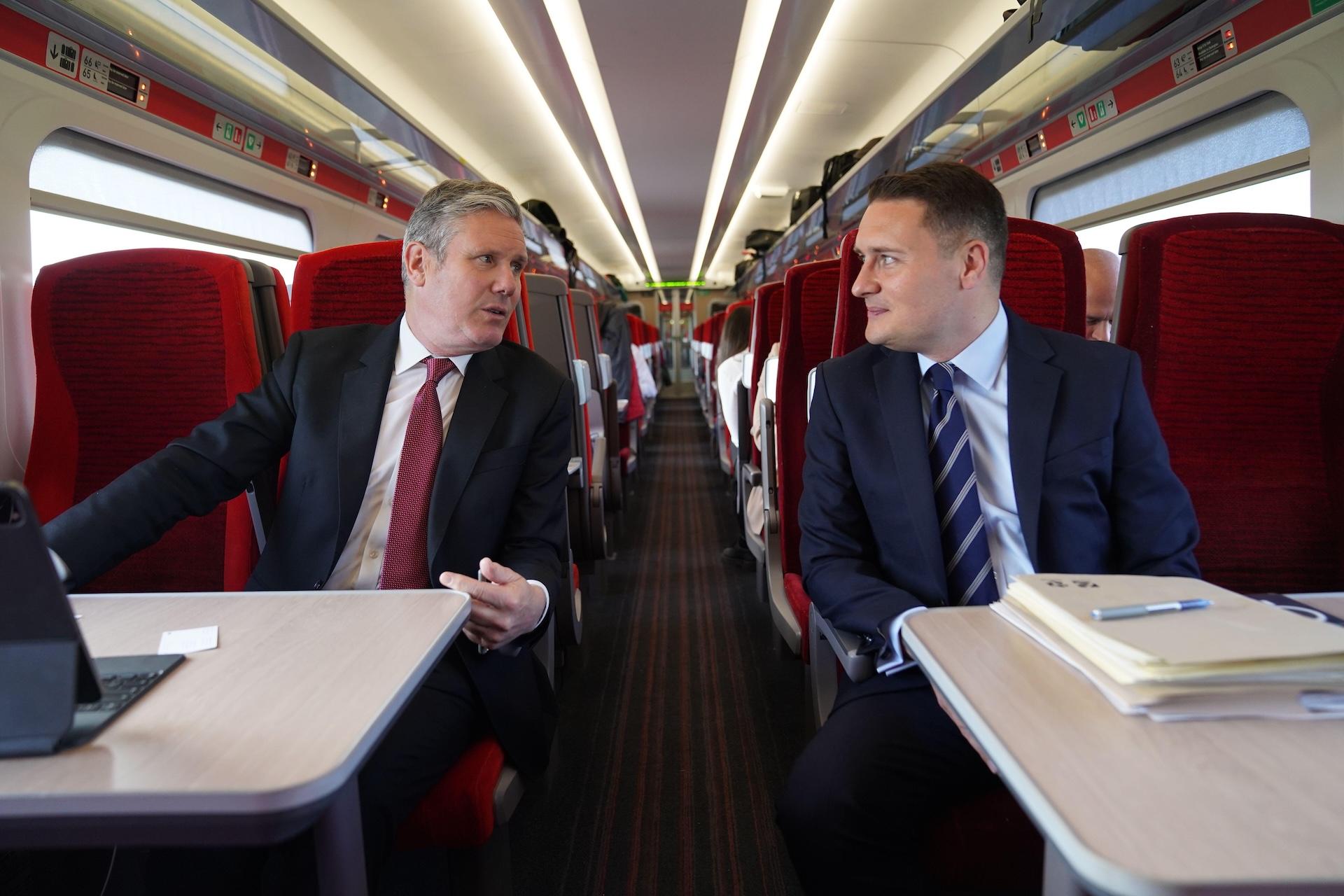

While Starmer seems irritated by Westminster, Streeting – who cut his teeth in student politics – is animated by it. “He’s political up to his eyeballs,” as one source puts it. This is not always taken as a positive.
Politics so shapes Streeting’s approach, one source tells The House, that he tends to hire politically sympathetic civil servants to his private office. This is disputed by a source close to him who points out that he has brought in people who have worked for Nick Clegg, Gordon Brown and David Cameron; plus Conservative MP Caroline Dinenage was appointed to lead a children’s cancer taskforce, and Tory peer Baroness Blackwood has been appointed to chair the Health Data Research Service.
Their framing is instead that he does not see the job as a technocratic exercise nor as a mathematical formula, but as a mission determined by his values. He has decided, for instance, that savings coming in from NHSE redundancies should be redistributed to health services in areas most in need – rather than to trusts who process patients quickly, which would cut waiting lists faster.
Some question whether Streeting lacks a ‘North Star’, while others say he has a (Michael) ‘Goveish’ focus on projects for short periods. Multiple sources who have worked with him and met him in his role as health secretary say he often does not give the impression he expects to stay in post for the long term.
One Labour source who used to work directly with Streeting when the party was in opposition says they are convinced that he never wanted the shadow health secretary role in the first place – likely preferring a job in which he could be more overtly political.
Labour MPs and health stakeholders describe the post as somewhat of a poisoned chalice. A senior health policy expert who has worked with Streeting and his team says it is “quite a hard bit of government to play politics in, because it’s really hard to secure quick wins”.
“It’s probably the hardest job of all secretary of state positions, because your level of control over things is very, very limited,” they add.
“He can be quite up and down with his satisfaction with how the department is performing, but I think that happens with any health secretary – the job is so stressful. I think it’s second only to chancellor in terms of cabinet positions, which are just the worst,” an insider agrees.
“You’re dealing with the largest employer in Europe, with a budget the size of a small country, and it feels like however much money you throw at it, there’s nothing you can do.”


The ally draws a comparison between the Health Secretary and Milburn, with neither coming from a privileged background. “Both are driven to improve services for real reasons.”
NHS waiting times are seen as a bureaucratic problem – but Streeting, the source continues, understands that it means millions not knowing what is going to happen to them and when, because the NHS is currently such a “passive” experience. “Politics is about changing the nature of public experiences. Wes has a strong North Star that the NHS is not good enough.”
They add that Streeting being intensely political should be taken as a positive: “We do need politicians to be good at politics. If a perm sec were good at politics, that would be a problem – but for a secretary of state, that’s a good thing!”
Soft landings
The charge that Streeting is “driven by press” surfaces repeatedly. In meetings, say those who attend them, he often reframes technical advice in political terms. If Chris Whitty explains a public health risk in dense epidemiological language, Streeting’s reaction is to test how it would sound on ITV’s evening bulletin.
“You’re sitting around a table talking to him about a complex bit of policy – like the neighbourhood health service – and he’ll start to develop a narrative. ‘How am I going to explain this?’ becomes an important part of forming it. I’ve never seen a secretary of state do that before,” says a source.
Most meetings, reports another insider, eventually circle back to the question: “How will this land?” Some will see this as cynical politicking, but it is not always cited as a criticism. “He knew that communication was half the battle, so it is justifiable from a policy perspective,” the source notes.
Streeting believes a big part of his role is translating expert advice into something the public can understand. As often the only elected politician in the room, surrounded by people explaining why X and Y isn’t deliverable and why Z is at risk of judicial review, it is his responsibility to consider the public’s view of policy and delivery. Taxpayers spend £200bn a year on the NHS – they deserve to know where it’s going, says a source close to Streeting.
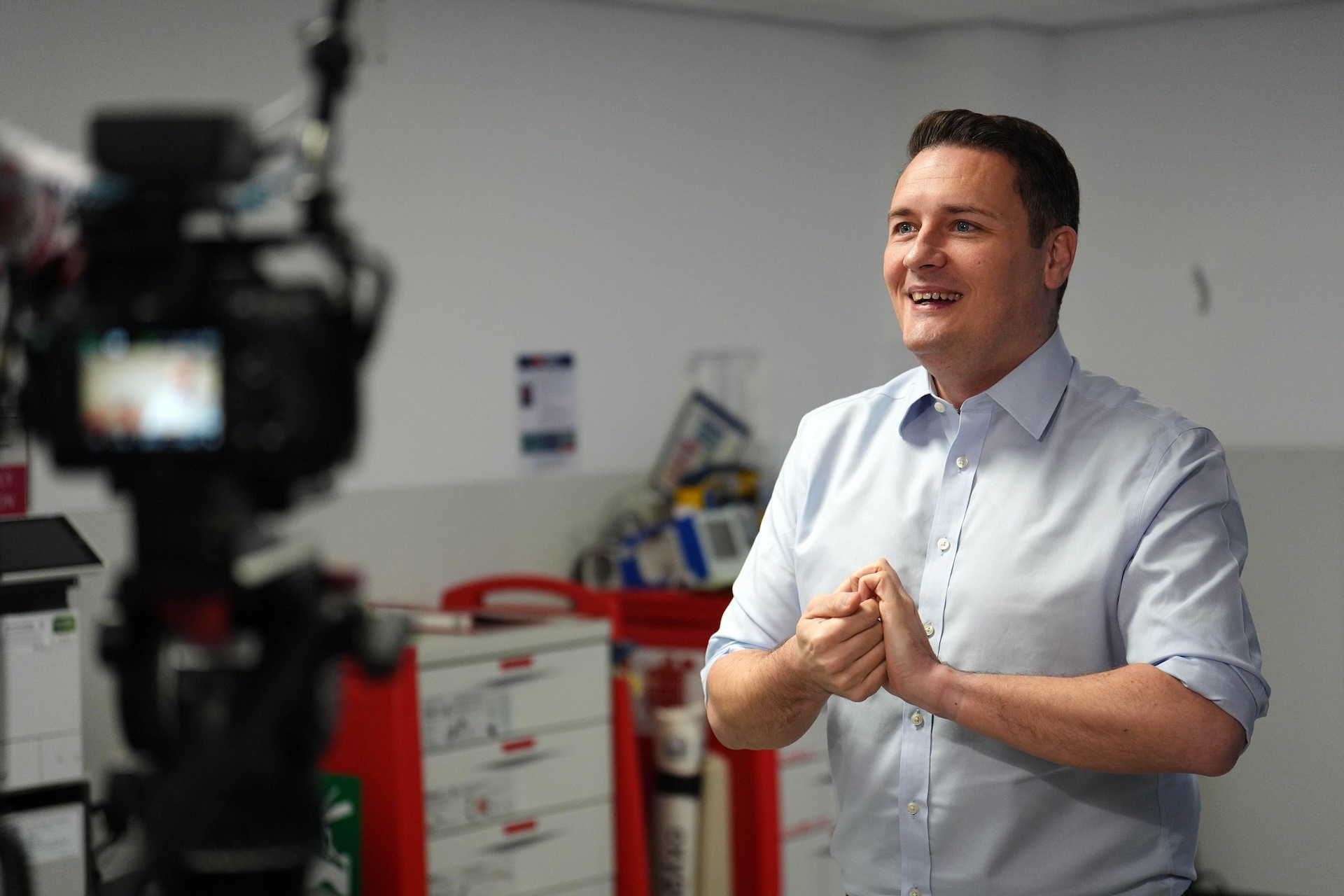
Sources say his interest in the media has produced tangible change, perhaps his most solid win so far: a transformed DHSC communications operation. It was “so inept, so stuck in the noughties”, says one, whereas it is now video-led, quicker off the mark and better at turning dense statistics into usable lines.
The Health Secretary has paired with celebrities, including Geordie Shore’s Vicky Pattison and Jade Thirlwall of Little Mix, wanting to raise the profile of certain health issues. “Getting the machine to put out stuff like that is a result of him and Will [Streeting’s spad] being relentless on comms. It’s made video a primary output, and the department is no longer doing government by press release – a real success,” the same source says.
A Labour MP’s staffer, who notes that Streeting has his own Health and Social Care WhatsApp group for MPs, praises the speed with which his spads reply and how health figures are made easy to translate for a wider audience.
There is a counter-argument, of course. In a department that is permanently firefighting, bandwidth is finite. Some question whether the relentless focus on presentation risks becoming a distraction.
Bonfire of the quango
Streeting’s vision is encapsulated in the 10-Year Health Plan, which is built around three shifts: hospital to community, analogue to digital, sickness to prevention. The Lord Darzi review formed the basis of this intellectual underpinning, particularly in its warning that the NHS lags badly behind the private sector in its use of tech, and it will take a decade for it to reach modern standards.
The Health Secretary wants the NHS app to become the front door of the service. He is hopeful that artificial intelligence tools will free up clinician time and the UK’s life sciences sector will be boosted when it can fully make use of the golden goose that is the UK’s universal health system of 60 million patients.
The biggest gamble of his tenure has been the decision to scrap NHS England and fold it back into the department.
Supporters say the old arrangement had become dysfunctional, with blurred accountability, blocking and leaking making ministers miserable. “Everybody hated it. Policy dreams went to die with NHS England,” says a source.
NHSE staff have been told they will need to apply for jobs in the merged workforce between January and March 2027. There is widespread scepticism about this timeline, however, with many believing it will be pushed back. Senior figures in NHSE are encouraging staff to refer to it as the “New Department for Health” in the meantime.
An NHSE source tells The House they believe energy that could be spent improving services risks being diverted into legislative wrangling and internal restructuring for the next two years.
Hugh Alderwick, director of policy and research at independent charity the Health Foundation, warns that large-scale reorganisations can distract local leaders from improving care.
He also says Streeting’s two major reforms – the NHSE restructure and the 10-Year Health Plan – could conflict with each other. The challenge is that the detail of what the plan means in practice and how it will be delivered is “still thin”, he adds, and “the resources to deliver those reforms are constrained”.
Alderwick believes pressure directly from Starmer to bring down waiting lists could push the Health Secretary towards focusing more on that than “bigger, more fundamental” reform of the health system.
Another looming question is what progress DHSC has made on social care. The government has set up an independent commission, led by Baroness Casey, to look at reform. According to Alderwick, although it could help to “set a vision”, there is a risk it is simply “another commission, which we’ve had a long line of before, that kicks questions of social care reform back into the long grass”.
On the view that Streeting has conflicting priorities, a source defending him responds: “Think tanks say the NHS can’t do two things at once. I find that a bit weird. If you change the machine, they think that’s getting in the way of making the machine work better.”
There are 7.3 million people on elective treatment waiting lists. If we want to reduce the flow in 2027-28, the source says, new tech will be helpful – 20 per cent of dermatological diagnostics can be done initially with a photograph rather than a face-to-face appointment, for example. “That’s a new model of care that can reduce waiting now, not in 10 years’ time.”
But so far, NHSE abolition has been little more than a job-cutting exercise, say critics. A source close to Streeting acknowledges the change has mostly been on headcount so far, but argues this is no bad thing given the level of duplication and how the two organisations were marking each other’s homework. “I’m sure there will be unhappiness. But was the relationship between the two working well beforehand?”
The risk for Streeting is that, by 2029, his major achievements could be seen to amount to having cut the waiting list to the trajectory that it was already being cut in the last months of 2023 under the Conservative government, and ditching a large administrative body whose role the public was unlikely to have recognised.
While the government has achieved a fall in NHS waits for elective care, experts warn that this could prove to be a complicated legacy for Streeting when waiting lists for other services remain high. There is little public understanding of the difference between different types of NHS waiting lists – for example, elective care, diagnosis, or specialist appointments.
What will Streeting’s legacy be? One health expert offers a damning verdict: “The picture will be a person who talked a big game about reform, and talked a big game about transforming the NHS, but didn’t really have the tenacity to see it through.”
A for ambition
Staff describe Streeting as an “empowering” boss. Those who work directly for him have “extreme loyalty” to him, says one: “People stay with him for years. He will always tap into them and work things through with them. That means everyone feels valued.”
They insist that the perception he is driven by ambition for his own career is not borne out by the facts: he has not run away from Ilford North, he has no plans to take out a sitting PM, and he has done the toughest press rounds when the government has been at its lowest.
But that in itself is seen by some as a negative for becoming a revolutionary health secretary.
“You can’t be the guy who shovels the shit for the government at the same time as being the person who is delivering a policy revolution in your department. One thing totally distracts the other,” says a source who knows Streeting well.
“Because he’s got political ambitions elsewhere, Wes has wanted to have views on everything from Palestine to social media bans. That implies to me that you’ve got a secretary of state who is much more interested in the wider political context the department operates in than the infinite number of problems at his doorstep. You only have so much bandwidth.
“I think he’d be the first to admit that he’s been too distracted by what’s going on elsewhere on Whitehall, and too eager to jump in and involve himself in the other stuff going on. But that’s because he’s ambitious – he’s got eyes on the prize.”
Additional reporting by Adam Payne
