

Politics
Inside The Wes Streeting Operation At The Department Of Health

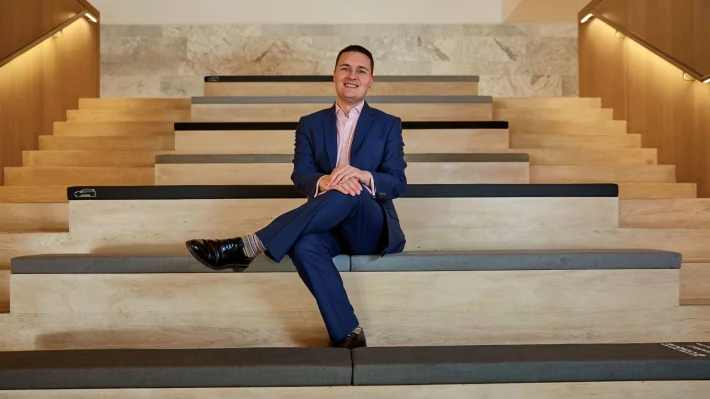
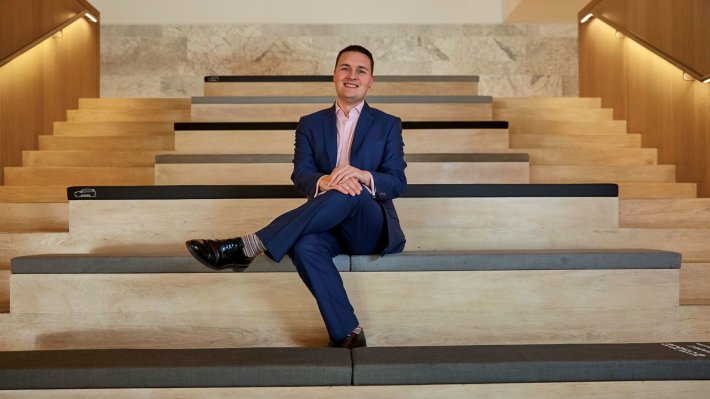
Wes Streeting (Photography by Baldo Sciacca)
17 min read
Is Wes Streeting a details man? What do his days look like? Who does he delegate to? Sienna Rodgers and Zoe Crowther explore how the Health Secretary runs his department
There’s more than one way to skin a cat, and there’s more than one way to run the Department of Health and Social Care.
Some secretaries of state for health have chosen to dive into the detail, immersing themselves in white papers and policy minutiae. Others have preferred to exert control through the press office, gripping the system via the grid.
The House has spoken to MPs, ministers, political advisers and civil servants, as well as health experts and officials, to get an understanding of how Wes Streeting runs his department.
The portrait that emerges is of an intensely political politician – the opposite of a micromanager or a technocrat lost in spreadsheets. Supporters say this has helped him in having a clear view of what needs to be done to transform the NHS. Critics argue he has been distracted by his own broader ambition.
Ready, set, go
Unlike many of his predecessors, Streeting knew he was going to be secretary of state for health for a good period – almost three years – before assuming the role. This gave him the chance, while still a shadow, to consult with previous secretaries of state and permanent secretaries.
“He used the access talks a lot,” says a source who works with Streeting, referring to meetings between the Civil Service and opposition party in the run-up to a general election.
“But when you go in the day after an election, it’s different. The thing he did to set his seal on day one was say: ‘The NHS is broken.’ That was a dramatic input, which nobody in the department expected to happen. And nobody had come in as secretary of state saying that before.”
Streeting was also confronted on his first day with a vastly different situation to that encountered by any previous Labour health secretary: the department he heads no longer runs the NHS – that is NHS England’s job. Those responsible for NHS waiting times, for example, are not found in the department.
“For every meeting he has with the department, he has to have another with NHSE – sometimes two separate meetings and sometimes he has to construct joint meetings. Over the first six months, he realised that was clearly not working,” recalls the same source.
So, with DHSC not able to pull levers in the way other departments of state can, unwinding the Lansley reforms became a priority for Streeting. This culminated in Keir Starmer’s March 2025 speech announcing that NHS England would be abolished and its responsibilities brought in-house over a two-year transition period.
Another well-placed source agrees that Streeting has found the “invisible barriers” to getting things done in government – the subject of complaints by former No 10 head of political strategy Paul Ovenden and other departing spads – “harder than most”.
“He has struggled to get his priorities through,” they say. “He’s a very sharp guy. But when he came in, after getting his own way on policy in opposition, he was shocked about needing Treasury sign-off… It was a rude awakening.”
Streeting had a difficult start in terms of Civil Service churn, the source points out, with long-serving permanent secretary Sir Chris Wormald being lost as he was chosen by Starmer to be cabinet secretary (before being forced out after just a year in post). Chris Whitty was an interim (“as brilliant a mind as that man has, he’s not a permanent secretary”), then Samantha Jones – formerly of Boris Johnson’s No 10 – became the permanent successor last year.
“It’s been a period of big and fast change. I don’t think he would see that as a bad thing but as necessary,” a source close to Streeting remarks.
Streeting welcomed a totally new leadership, including Alan Milburn as lead non-executive director of DHSC (referred to as “the brain of the department’s policy output” by one source), Sir Jim Mackey as chief executive of NHSE and Dr Penny Dash as chair of NHSE. “That has really helped turn things around – the right people in the right jobs.”
A day in the life
Every day in Streeting’s ministerial life is different, but it always begins bright and early. He gets the car in at 5.45am if he is going to the gym, or half past six if he is not. The red box is worked through in the back seat and again at his desk in Victoria Street.
Mondays are for planning the week ahead and delivery meetings. Performance data is reviewed with his private office, departmental officials and NHS leaders. Over the last few months, with pressures intensifying, there have been weekly winter sessions. If a target is off track, he wants to know why.
Tuesdays bring Cabinet and external meetings. Once a fortnight, Streeting blocks out time to meet what he calls “the victims of the NHS” – maternity campaigners, families caught up in care failures, relatives of patients who have died after systemic errors. A source close to Streeting says he was advised by the department not to meet with victims of the maternity scandal, nor to set up inquiries into such failings, on the basis that it would set an undesirable precedent, but he has gone ahead regardless.
Wednesdays are for the longer-term agenda, such as negotiations with the British Medical Association. On Thursdays, he tries to get out of Westminster, visiting hospitals, GP surgeries and dental practices. Fridays are for Ilford North – a constituency day, as is typical for all MPs at the end of the week. Weekends are often spent campaigning or attending regional party conferences.
The ‘vision thing’
Streeting’s allies say he is clear about what he sees as his job: set the vision and define broad outcomes, then ensure the system delivers it. He believes the department’s power lies in direction-setting and enforcement. His supporters also freely admit that he is intensely political, which shapes everything he does.
“He cares about the details, but he doesn’t let them get in the way of narrative, drive and direction,” says a staffer. “He paints a picture and then leaves it to the Civil Service to deliver – but that’s normal. That’s his job.”
“He is acutely aware of the political context that he operates in, which is really important for getting things through,” adds a different source.
Rarely, if ever, has the same been said about the Prime Minister, who is not deeply rooted in the Labour Party’s factional undergrowth, and is often criticised for his managerial instinct. This facet of Starmer’s style and background is blamed by many observers, near and far, for his problems in Downing Street today.
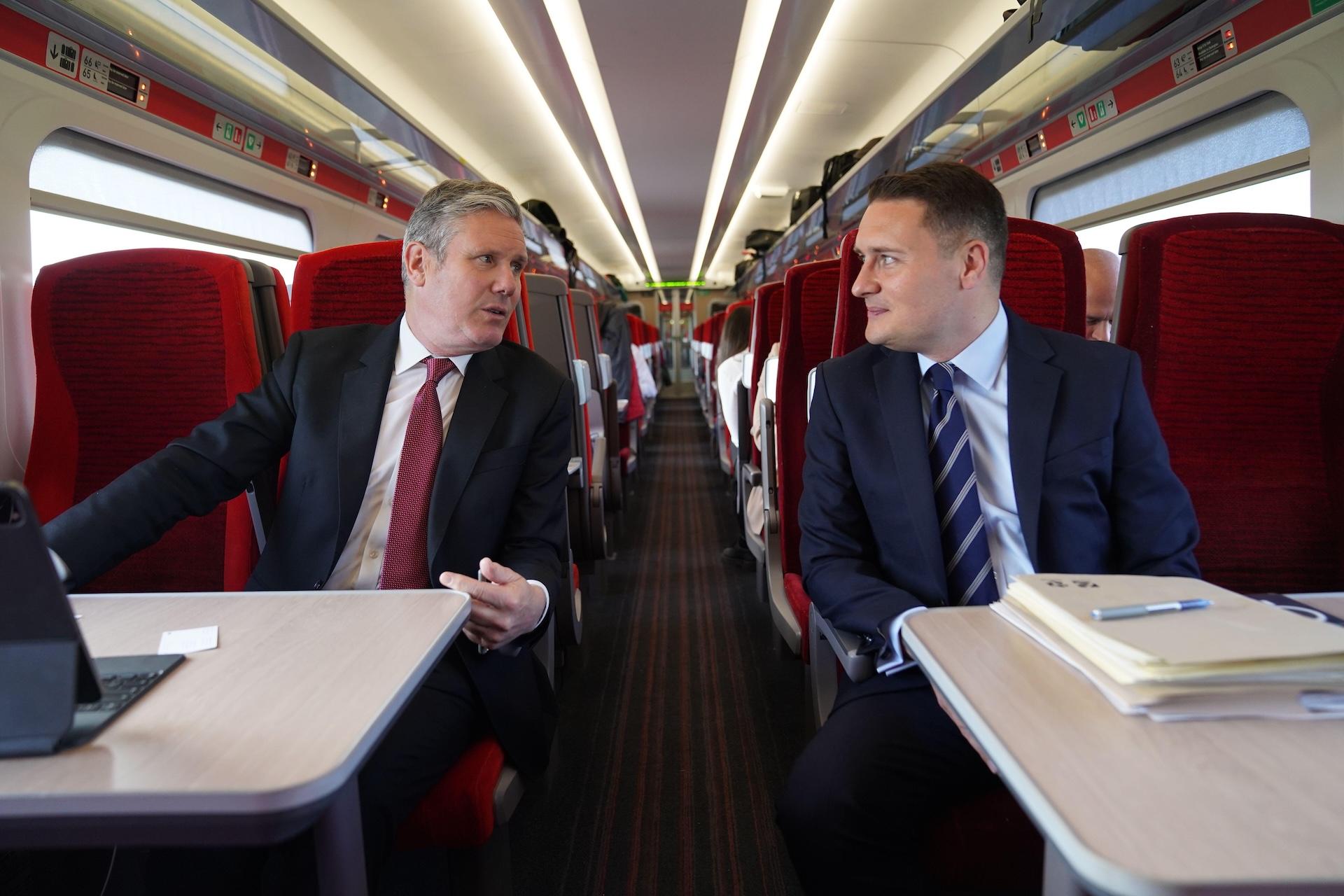
While Starmer seems irritated by Westminster, Streeting – who cut his teeth in student politics – is animated by it. “He’s political up to his eyeballs,” as one source puts it. This is not always taken as a positive.
Politics so shapes Streeting’s approach, one source tells The House, that he tends to hire politically sympathetic civil servants to his private office. This is disputed by a source close to him who points out that he has brought in people who have worked for Nick Clegg, Gordon Brown and David Cameron; plus Conservative MP Caroline Dinenage was appointed to lead a children’s cancer taskforce, and Tory peer Baroness Blackwood has been appointed to chair the Health Data Research Service.
Their framing is instead that he does not see the job as a technocratic exercise nor as a mathematical formula, but as a mission determined by his values. He has decided, for instance, that savings coming in from NHSE redundancies should be redistributed to health services in areas most in need – rather than to trusts who process patients quickly, which would cut waiting lists faster.
Some question whether Streeting lacks a ‘North Star’, while others say he has a (Michael) ‘Goveish’ focus on projects for short periods. Multiple sources who have worked with him and met him in his role as health secretary say he often does not give the impression he expects to stay in post for the long term.
One Labour source who used to work directly with Streeting when the party was in opposition says they are convinced that he never wanted the shadow health secretary role in the first place – likely preferring a job in which he could be more overtly political.
Labour MPs and health stakeholders describe the post as somewhat of a poisoned chalice. A senior health policy expert who has worked with Streeting and his team says it is “quite a hard bit of government to play politics in, because it’s really hard to secure quick wins”.
“It’s probably the hardest job of all secretary of state positions, because your level of control over things is very, very limited,” they add.
“He can be quite up and down with his satisfaction with how the department is performing, but I think that happens with any health secretary – the job is so stressful. I think it’s second only to chancellor in terms of cabinet positions, which are just the worst,” an insider agrees.
“You’re dealing with the largest employer in Europe, with a budget the size of a small country, and it feels like however much money you throw at it, there’s nothing you can do.”
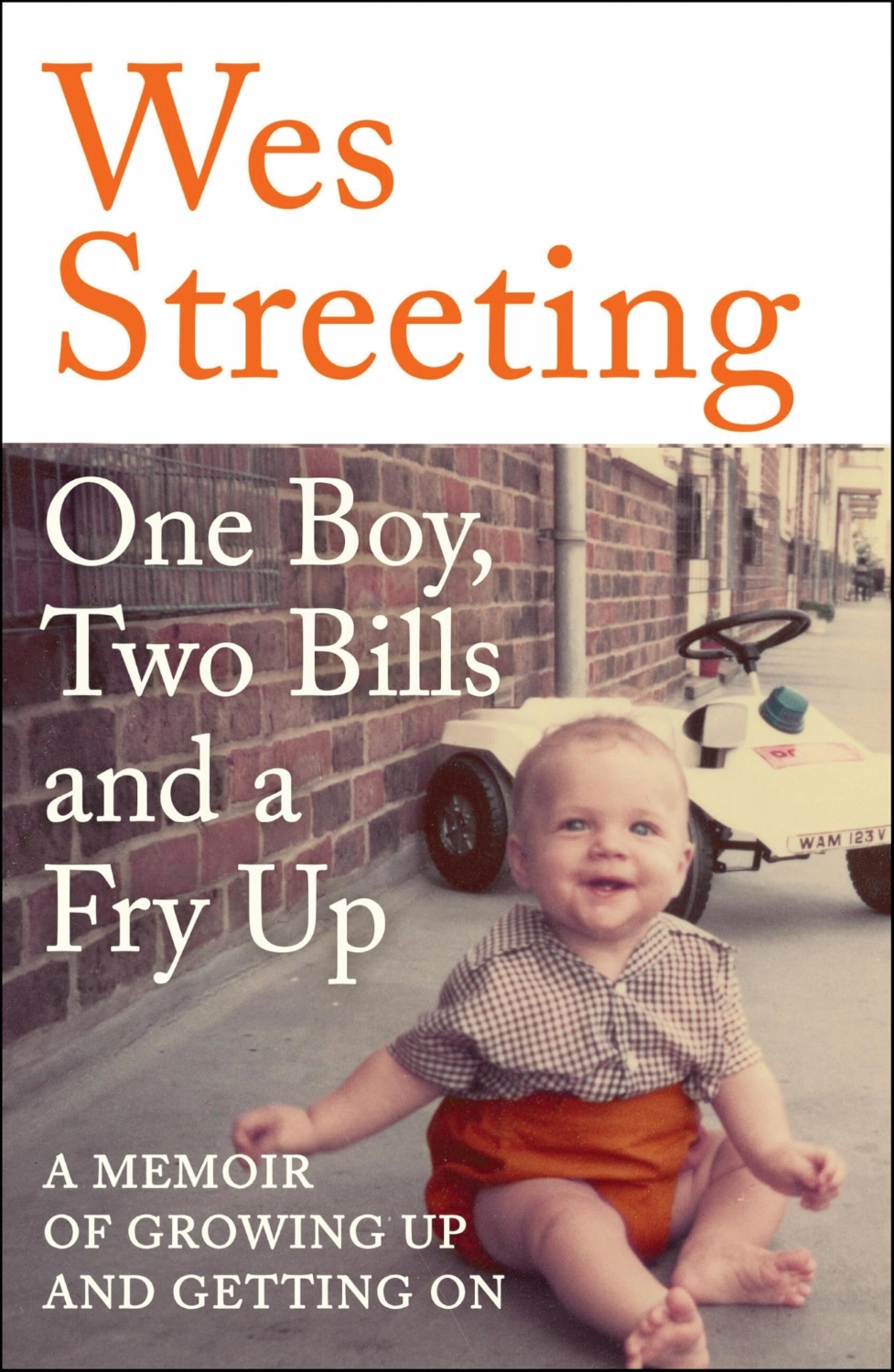 An ally of Streeting counters claims he lacks focus, saying: “Wes has got a North Star around inequalities and opportunities. His whole biography is about that.” (A longtime friend similarly mentions his East End memoir published in 2023, One Boy, Two Bills and a Fry Up, pointing to it as evidence that “his biography is not separate from his politics”.)
The ally draws a comparison between the Health Secretary and Milburn, with neither coming from a privileged background. “Both are driven to improve services for real reasons.”
NHS waiting times are seen as a bureaucratic problem – but Streeting, the source continues, understands that it means millions not knowing what is going to happen to them and when, because the NHS is currently such a “passive” experience. “Politics is about changing the nature of public experiences. Wes has a strong North Star that the NHS is not good enough.”
They add that Streeting being intensely political should be taken as a positive: “We do need politicians to be good at politics. If a perm sec were good at politics, that would be a problem – but for a secretary of state, that’s a good thing!”
Soft landings
The charge that Streeting is “driven by press” surfaces repeatedly. In meetings, say those who attend them, he often reframes technical advice in political terms. If Chris Whitty explains a public health risk in dense epidemiological language, Streeting’s reaction is to test how it would sound on ITV’s evening bulletin.
“You’re sitting around a table talking to him about a complex bit of policy – like the neighbourhood health service – and he’ll start to develop a narrative. ‘How am I going to explain this?’ becomes an important part of forming it. I’ve never seen a secretary of state do that before,” says a source.
Most meetings, reports another insider, eventually circle back to the question: “How will this land?” Some will see this as cynical politicking, but it is not always cited as a criticism. “He knew that communication was half the battle, so it is justifiable from a policy perspective,” the source notes.
Streeting believes a big part of his role is translating expert advice into something the public can understand. As often the only elected politician in the room, surrounded by people explaining why X and Y isn’t deliverable and why Z is at risk of judicial review, it is his responsibility to consider the public’s view of policy and delivery. Taxpayers spend £200bn a year on the NHS – they deserve to know where it’s going, says a source close to Streeting.
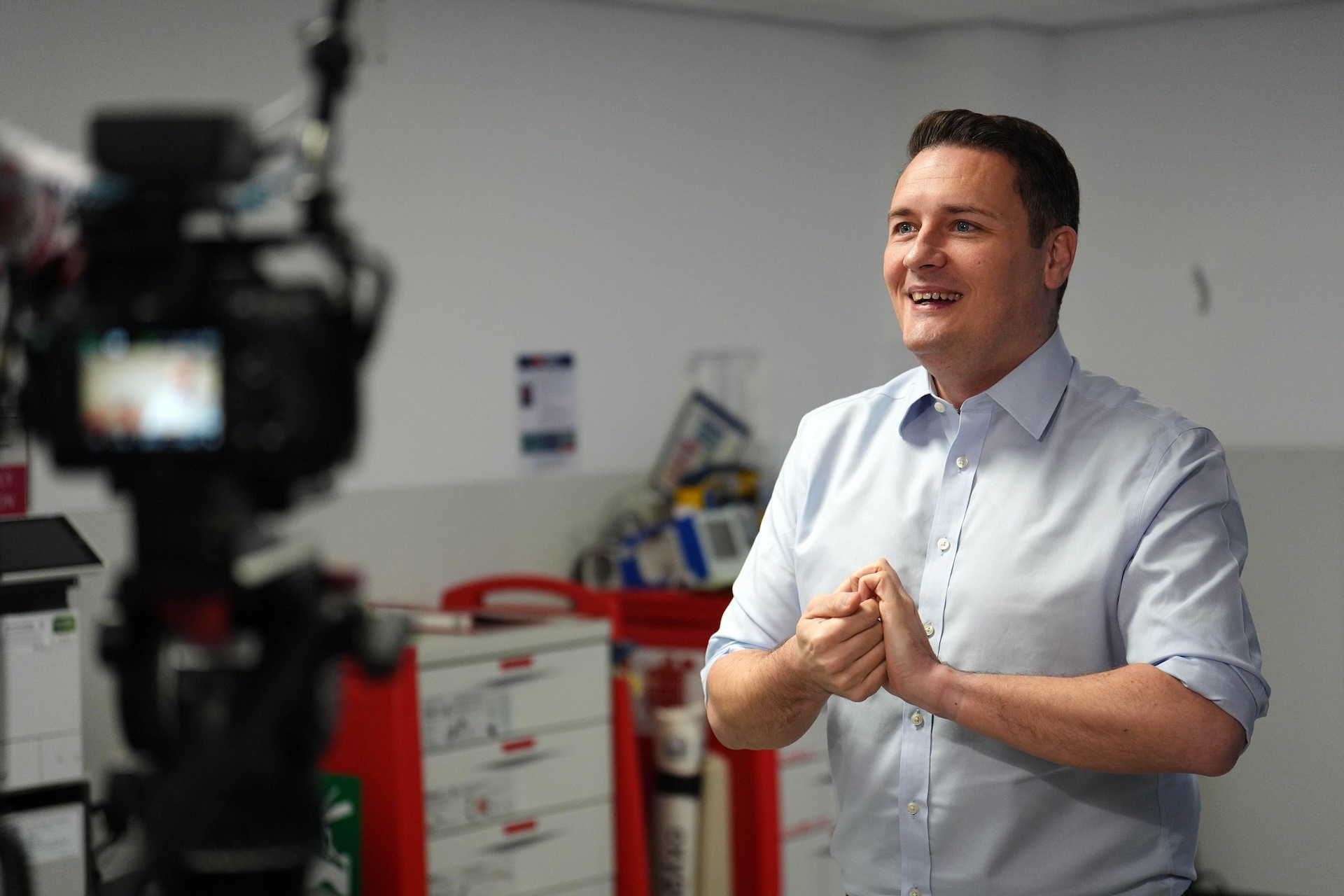
Sources say his interest in the media has produced tangible change, perhaps his most solid win so far: a transformed DHSC communications operation. It was “so inept, so stuck in the noughties”, says one, whereas it is now video-led, quicker off the mark and better at turning dense statistics into usable lines.
The Health Secretary has paired with celebrities, including Geordie Shore’s Vicky Pattison and Jade Thirlwall of Little Mix, wanting to raise the profile of certain health issues. “Getting the machine to put out stuff like that is a result of him and Will [Streeting’s spad] being relentless on comms. It’s made video a primary output, and the department is no longer doing government by press release – a real success,” the same source says.
A Labour MP’s staffer, who notes that Streeting has his own Health and Social Care WhatsApp group for MPs, praises the speed with which his spads reply and how health figures are made easy to translate for a wider audience.
There is a counter-argument, of course. In a department that is permanently firefighting, bandwidth is finite. Some question whether the relentless focus on presentation risks becoming a distraction.
Bonfire of the quango
Streeting’s vision is encapsulated in the 10-Year Health Plan, which is built around three shifts: hospital to community, analogue to digital, sickness to prevention. The Lord Darzi review formed the basis of this intellectual underpinning, particularly in its warning that the NHS lags badly behind the private sector in its use of tech, and it will take a decade for it to reach modern standards.
The Health Secretary wants the NHS app to become the front door of the service. He is hopeful that artificial intelligence tools will free up clinician time and the UK’s life sciences sector will be boosted when it can fully make use of the golden goose that is the UK’s universal health system of 60 million patients.
The biggest gamble of his tenure has been the decision to scrap NHS England and fold it back into the department.
Supporters say the old arrangement had become dysfunctional, with blurred accountability, blocking and leaking making ministers miserable. “Everybody hated it. Policy dreams went to die with NHS England,” says a source.
NHSE staff have been told they will need to apply for jobs in the merged workforce between January and March 2027. There is widespread scepticism about this timeline, however, with many believing it will be pushed back. Senior figures in NHSE are encouraging staff to refer to it as the “New Department for Health” in the meantime.
An NHSE source tells The House they believe energy that could be spent improving services risks being diverted into legislative wrangling and internal restructuring for the next two years.
Hugh Alderwick, director of policy and research at independent charity the Health Foundation, warns that large-scale reorganisations can distract local leaders from improving care.
He also says Streeting’s two major reforms – the NHSE restructure and the 10-Year Health Plan – could conflict with each other. The challenge is that the detail of what the plan means in practice and how it will be delivered is “still thin”, he adds, and “the resources to deliver those reforms are constrained”.
Alderwick believes pressure directly from Starmer to bring down waiting lists could push the Health Secretary towards focusing more on that than “bigger, more fundamental” reform of the health system.
Another looming question is what progress DHSC has made on social care. The government has set up an independent commission, led by Baroness Casey, to look at reform. According to Alderwick, although it could help to “set a vision”, there is a risk it is simply “another commission, which we’ve had a long line of before, that kicks questions of social care reform back into the long grass”.
On the view that Streeting has conflicting priorities, a source defending him responds: “Think tanks say the NHS can’t do two things at once. I find that a bit weird. If you change the machine, they think that’s getting in the way of making the machine work better.”
There are 7.3 million people on elective treatment waiting lists. If we want to reduce the flow in 2027-28, the source says, new tech will be helpful – 20 per cent of dermatological diagnostics can be done initially with a photograph rather than a face-to-face appointment, for example. “That’s a new model of care that can reduce waiting now, not in 10 years’ time.”
But so far, NHSE abolition has been little more than a job-cutting exercise, say critics. A source close to Streeting acknowledges the change has mostly been on headcount so far, but argues this is no bad thing given the level of duplication and how the two organisations were marking each other’s homework. “I’m sure there will be unhappiness. But was the relationship between the two working well beforehand?”
The risk for Streeting is that, by 2029, his major achievements could be seen to amount to having cut the waiting list to the trajectory that it was already being cut in the last months of 2023 under the Conservative government, and ditching a large administrative body whose role the public was unlikely to have recognised.
While the government has achieved a fall in NHS waits for elective care, experts warn that this could prove to be a complicated legacy for Streeting when waiting lists for other services remain high. There is little public understanding of the difference between different types of NHS waiting lists – for example, elective care, diagnosis, or specialist appointments.
What will Streeting’s legacy be? One health expert offers a damning verdict: “The picture will be a person who talked a big game about reform, and talked a big game about transforming the NHS, but didn’t really have the tenacity to see it through.”
A for ambition
Staff describe Streeting as an “empowering” boss. Those who work directly for him have “extreme loyalty” to him, says one: “People stay with him for years. He will always tap into them and work things through with them. That means everyone feels valued.”
They insist that the perception he is driven by ambition for his own career is not borne out by the facts: he has not run away from Ilford North, he has no plans to take out a sitting PM, and he has done the toughest press rounds when the government has been at its lowest.
But that in itself is seen by some as a negative for becoming a revolutionary health secretary.
“You can’t be the guy who shovels the shit for the government at the same time as being the person who is delivering a policy revolution in your department. One thing totally distracts the other,” says a source who knows Streeting well.
“Because he’s got political ambitions elsewhere, Wes has wanted to have views on everything from Palestine to social media bans. That implies to me that you’ve got a secretary of state who is much more interested in the wider political context the department operates in than the infinite number of problems at his doorstep. You only have so much bandwidth.
“I think he’d be the first to admit that he’s been too distracted by what’s going on elsewhere on Whitehall, and too eager to jump in and involve himself in the other stuff going on. But that’s because he’s ambitious – he’s got eyes on the prize.”
Additional reporting by Adam Payne


Medical advice provided by Dr Suzanne Wylie, a GP and medical adviser for IQdoctor.
From Japanese walking to retro walking, it turns out there are plenty of ways to enjoy the health benefits of a stroll without fixating on 10,000 steps (experts think 7,000 steps daily might do the job just as well, anyway).
And some research suggests that incline walking, or walking on a slope, could burn 7% more fat as a proportion of calories expended than running without placing as much strain on your joints.
But running does the job faster, meaning a 15-minute sprint will probably still burn more than a 15-minute incline walk. And that’s only one metric.
“Both incline walking and running can be excellent forms of exercise, and the question of which is ‘better’ really depends on the individual’s current health, fitness level and goals,” GP Dr Suzanne Wylie told us.
Here, the doctor shared the health pros and cons of both.
What are the benefits of incline walking?
“Incline walking, particularly on a treadmill or up hills outdoors, can significantly raise the heart rate while remaining low impact, which means it places less stress on the joints than running does,” Dr Wylie said.
A 2021 study found that walking on a treadmill with either a 10% or 16% incline (slope) engaged participants’ muscles and raised their heart rates more than walking at a 0% incline, or flat ground.
“For many people, especially those who are new to exercise, carrying excess weight, managing joint pain or recovering from injury, incline walking can provide meaningful cardiovascular benefit and muscle engagement, particularly in the glutes and calves, without the repetitive impact that running involves,” Dr Wylie told us.
“It can also help build lower body strength and endurance over time while being more sustainable for some individuals.”
What about running?
Running, the GP told us, “is generally more time efficient in terms of cardiovascular conditioning and calorie expenditure, and it can improve aerobic fitness more quickly in those who are able to tolerate it”.
And, Dr Wylie said, “It also places greater demand on the bones, which can be beneficial for bone density, and on the heart and lungs, which can improve overall stamina”.
For healthy people, the idea that running damages your joints may be a myth: the strain could actually make them stronger.
“However, it is not suitable for everyone, particularly those with certain joint conditions, significant obesity, pelvic floor concerns or a history of recurrent injuries,” the doctor said.
And in one study, almost a third of new runners gave up the more taxing sport within six months of picking it up.
So, which is best for me?
“In practice, I would encourage patients to choose the activity they are most likely to maintain consistently, because long-term adherence matters far more than whether one exercise burns slightly more calories than another,” Dr Wylie ended.
“For many people, a combination of both, adjusted to their ability and health status, can offer a balanced approach to fitness, strength and overall wellbeing.”
In case you needed any more motivation, recent research has suggested that a mixture of exercise – including cardio, strength training, and a range of activities from tennis to dancing – seems to be best for longevity.

Reform UK have unveiled their new multi-pronged pledge to ‘restore Britain’s Christian heritage’. The far-right party plans to introduce a ‘patriotic’ Christian curriculum, as well as attaching listed status to church buildings to prevent them being turned into mosques.
Quite apart from this pointless reactionary nostalgia, the plans would spell the death of those same churches that Reform claims to value. Which is unsurprising really, given that the pack of liars and conmen that make up the party couldn’t actually give a fig about Christianity – beyond its usefulness in stirring up Islamophobia, of course.
‘More things to take pride in’
Reform presented its plans through newly appointed home affairs spokesman Zia Yusuf, as his first speech in the new role. In an interview with the Times beforehand, Yusuf – himself a Muslim born to Sri Lankan immigrants – called Christianity:
core to the history and the DNA of the country.
However, he went on to complain of the UK losing its Christian values:
What we’ve seen is that sense of high-trust society eroded quite rapidly, actually, and that’s in no small part because of the vast numbers of people who have arrived over a short period of time from low-trust societies. Some people might wince at that phrase, but it’s just obviously true.
To counter this perceived issue, Yusuf declared that his party would institute a “patriotic curriculum” centered on Christianity. This, he argued, would give children “more things to take pride in again”:
I think if politicians play their part, then I’m optimistic that over time … they will have more things to take pride in as they are made to feel proud of their history again, rather than being taught that they should be ashamed of [it].
As such, this curriculum would presumably be incredibly restricted. If children are meant to take pride in patriotic Christianity, they’ll presumably have to skip over the litany of atrocities committed by the British church.
This includes, but is by no means limited to, the witch hunts, the forced indoctrination of colonised peoples (and the legacy of homophobia it left behind), numerous pogroms against Jewish people in the UK, and, of course, all those crusades against Muslim nations in the Middle East?
Actually, who am I kidding? Reform would probably think all of that shit was something to be proud of.
Listed status
Along with this festering lump of a policy proposal, Yusuf also stated that Reform would thrust automatic listed status onto church buildings. This would both require their upkeep and prevent changes in their use.
The home affairs spokesman explained that this would prevent churches from being turned into mosques. Yusuf claimed he’d received emails from “anxious residents” complaining about this very phenomenon, and said that:
Regardless of whether somebody is of faith or not, or which faith they follow, I think the Christian heritage of this country is very important and protecting our heritage and our culture is important, otherwise the country is not a country, it’s just an economic zone.
And so, as one step in pursuit of that, we will end the incendiary practice of converting churches into mosques or any other places of worship by granting listed status automatically to all churches and prohibiting that.
The problem here (or one problem at least) is that it’s a policy designed to whip up the idea of Muslims rocking up and turfing out a bunch of active Christians from an in-use church. This couldn’t be further from the truth.
In the last decade alone, over 3500 churches have closed their doors. In turn, they’ve become pubs, clubs, gyms, apartments, and yes – other places of worship. The reasons behind the closures include declining attendance, falling income, and, in particular, the high cost of building maintenance.
In the 2021 census, the number of self-described Christians in England and Wales fell by 13% compared to the previous decade. This meant that Christians made up less than half of the population for the first time in the history of the census.
Empty, expensive and unused
However, for anyone who has attended church regularly in the last few decades, that decline has already been plainly visible. Whilst just under half of the population identify as Christian, only around 5% actually attend church.
Churches are closing, not because of Muslims immigrating to the UK, but because the buildings are old, expensive, and empty. What’s more, I think any representative of the church could have told Reform that, if they’d bothered to ask
Instead, the far-right party plans to burden an already-failing institution with the financial costs of maintaining listed churches. All the while, the buildings still sit idle, when they could instead gain new life and new use in the community – as places of worship or otherwise.
The move marks another step in Reform’s descent into a grim imitation of US-style Christofascism, nakedly motivated by Islamophobia. It’s a vain attempt to appeal to an imaginary, idealised, bygone era of a more homogeneously (white) Christian UK.
Oh, and it would be utterly ruinous to the very institution that Reform is paying lip-service to, to boot.
Featured image via the Canary

!function(n){if(!window.cnx){window.cnx={},window.cnx.cmd=[];var t=n.createElement(‘iframe’);t.display=’none’,t.onload=function(){var n=t.contentWindow.document,c=n.createElement(‘script’);c.src=”//cd.connatix.com/connatix.player.js”,c.setAttribute(‘async’,’1′),c.setAttribute(‘type’,’text/javascript’),n.body.appendChild(c)},n.head.appendChild(t)}}(document);(new Image()).src=”https://capi.connatix.com/tr/si?token=19654b65-409c-4b38-90db-80cbdea02cf4″;cnx.cmd.push(function(){cnx({“playerId”:”19654b65-409c-4b38-90db-80cbdea02cf4″,”mediaId”:”5f98a39a-9e5c-4224-be4c-7eb3a92fe210″}).render(“699c7d2ee4b01da5015244ac”);});

The Polanski-led Green Party will soon be voting on whether they should embed support for Palestinian resistance in their politics.
While Palestine is a distant country, it’s suffering is the direct result of actions taken by a close UK ally. Never mind Balfour, Britain’s ongoing involvement – from arms deals, bilateral trade, and media endorsements of Israel – means it’s responsible for the violence Palestinians experience daily.
Now, Israel has responded to the Green Party’s vocal opposition to its genocide in Gaza, condemning its leader. And its leader Zack Polanski has now let them know exactly what he thinks:
For years we’ve seen an ongoing genocide.
It’s been backed by right wing papers, the US President and by this Labour Government. pic.twitter.com/ESynwd21Ct
— Zack Polanski (@ZackPolanski) February 23, 2026
Anti-Zionism
Pressure group Greens for Palestine is urging the Green Party to declare itself “an anti-Zionist party”. The group has issued a statement in support of a motion which it calls “groundbreaking”. The motion also supports the boycott, divestment and sanctions movement and calls for the de-proscription of Palestine Action.
The Green Party motion is ‘Motion A105: Zionism is Racism’, which calls for:
– The Green Party to declare itself an Anti-Zionist Party
– The Green Party rejects attempts to normalise the racist subjugation and oppression of Palestinians; to equate anti-Zionism with antisemitism; to deny or minimise Palestinian human rights; to create hierarchies of racism; and to normalise or attempt to justify apartheid, ethnic cleansing or genocide.
– To reject the IHRA and JDA definitions which have been weaponized to silence legitimate criticism of the state of Israel.
– Full Boycott and Divestment from Israel.
– The Green Party calls for the release of all Palestinian prisoners of conscience (including Marwan Barghouti)
– The Green Party to declare support for a single democratic Palestinian State with Jerusalem as its capital.
– The Green Party calls for the de-proscription of Palestine Action.
– The Green Party calls for the release of all political prisoners detained for non-violent direct action in support of Palestinian rights.
Independent journalist Matt Kennard has endorsed the motion:
Lubna Speitan—Palestinian Green Party member and a member of the Greens For Palestine Steering Group—has proposed this important motion for the Spring Conference.
I endorse all of it. It should all be Green Party policy. Basic stuff for a progressive party.
Motion A105:…
— Matt Kennard (@kennardmatt) January 26, 2026
The Zionist response
As reported by the Telegraph, Israeli foreign minister Sharren Haskel described the Greens’ proposal as “horrific”. They also called the Greens “a racist and hateful political party”, stating:
This Green Party motion is one of the most hateful and racist documents I’ve ever read. It calls for the destruction of Israel and seeks to justify terrorism against Israel.
Its intent is to justify the destruction of the Jewish homeland and deny the right of Jews to a national home. The double standards are extraordinary as they demand a national home for Palestinians but not Jews.
The other way to look at this is that the Greens aren’t calling for an end to Israel; they’re calling for an end to the Israel caging the Palestinians in an open air prison.
And as Polanski himself said, it’s hard to take the Israeli government seriously when we just watched them commit a genocide.
Featured image via the Canary

Conor Boyle is a young conservative and unionist from Northern Ireland, an Oxford graduate, and now works in the financial services sector.
How many items in Britain’s current economic policy, tax system, regulatory framework, and so-on, exist almost entirely for domestic short-term political consumption?
Of that, how many items are actually harming our economic performance?
You would have to conclude that the answer to both is: a lot.
What’s worse is that the short-term popularity of certain measures is derived from a belief that we are going to make the rich and successful pay more and atone for their greed and general ‘evilness.’
Of course, this view of the world runs contrary to basic economic literacy.
Money is mobile, and it goes where it’s best treated.
The ‘tax the rich’ mentality that this failing Labour government – and I’m afraid to say the previous Conservative governments also had in large part – is based on the fallacy that we’re going to phase out excessive wealth.
A realistic government should accept that wealth – including levels of which we may find excessive or distasteful – are always going to exist, and we should play our cards better to be a welcoming destination for it.
Creating economic conditions which are hostile to investment, business, finance and the likes is just a gift to the exchequers of our competitors. Countless examples, from Ireland’s low corporation tax regime to cutting the higher rates of Income Tax here in Britain, show beyond doubt, that creating a pro-wealth environment attracts more tax revenues.
To some, it’s counter-intuitive; you increase taxes to increase your revenue. But the most basic understandings of anything to do with economics or tax shows that’s very rarely the case, especially when dealing with the most mobile demographics of people. Thus, the basic political driver inherent in so much of our political discourse; love of the NHS; is improperly framed. Public services, the National Health Service, benefit most from making Britain a place to come and part with your money. It’s not a choice between the nurses and the rich, if we punish rich, they sod off to Dubai and the nurse becomes relatively “richer” in the eyes of the taxman, expected to contribute more as a result.
It struck me a few years ago that policies like the cap on bankers’ bonuses, the high rates of Income Tax, tax on second homes and landlords, the energy windfall tax, the surcharge paid by banks on top of their Corporation Tax, Corporation Tax itself being hiked to 25 per-cent, and other measures, not only don’t serve their stated purpose of financing our beloved public services, but they could be a barrier to a well-financed exchequer.
Take that bankers’ bonuses cap.
A typically populist move enacted after the 2008 recession. The political intuition is clear; banks bad, bankers bad, be seen to “make them pay”. But, as Kwasi Kwarteng pointed out as Chancellor, the cap didn’t cap the amount that bankers were being paid. They were simply paid more in basic salary to avoid is being counted as a bonus. Useless.
Worse than useless though. It’s fair to speculate that such a measure, while totally ineffective, sends out the message to any bank or financial firm around the world that Britain is a place that begrudges your financial success, and sees wealth as a dirty concept. Faced with the choice of New York, Dubai, Frankfurt, Doha, Dublin, even Paris, and very soon potentially Riyadh, many of whom are actively trying to woo new businesses to onshore, we are chasing them away.
Every business that doesn’t move jobs or activity to Britain is lost earnings to young British graduates and school-leavers, lost revenue to our retail and hospitality sector, and of course, lost revenue to the Exchequer, and added pressure on our saintly nurses, teachers and other public servants as a result.
At some level, you can’t blame politicians for their intentions. Many, you assume, mean well. That is, however, no substitute, and no excuse for implementing, cheering on and defending policies which make Britain poorer in the long run.
The same goes for the 45p rate of Income Tax. Part of the “pay their fair share narrative”, but when both Nigel Lawson and Gordon Brown – yes him – actually cut the higher rates, rather than losing money as was predicted, the Treasury received more in tax take. The truth is that the wealthy and successful are wealthy and successful for a reason. They’re smart enough to stay wealthy even when governments are hounding them. But they can be turned-off Britain as a destination for their capital with these envy-driven policies.
And without wanting to sound like a certain former Prime Minister, much of this is based on the fundamentally flawed way that our institutions forecast tax revenue. It’s assumed – seemingly – that tax cuts cannot be revenue-raising measures. As such, Chancellors appear to be cornered by their officials into these spiteful measures designed to squeeze more out of the productive actors in the economy in order to satiate a growing public sector and welfare state. It doesn’t, as we conservatives know well, work. So, the people are not, on average becoming better-off, and those who are; they’re upping sticks and leaving.
In-turn then, with people not being able to get ahead financially, and the feeling of stagnation setting in, the public animosity towards the rich increases. Rather than a virtuous cycle, we get more anti-wealth policies which just create a circle of doom, and the nation is as far away from prosperity as ever.
The state of Britain’s economy necessitates a pro-growth mentality now from government.
It’s easy to say – and has been now by both parties for a few years now – but the action (the bit that matters) is much more difficult. It requires a political spine of lead, and a sort of immunity from immediate bad headlines and the condemnation of a Question Time audience.
The reward will be success.
Success felt in the pockets of the British worker, the tills of the British shopkeeper and restaurateur, the efficiency and improvements in the British hospital ward and classroom and increasing sense of aspiration that comes with it all. Over a four- or five-year electoral cycle, we know which is more pertinent for voters in the long-run. And politics aside, the country needs to be more prosperous. Somebody needs to have the will to stand up and deliver it.
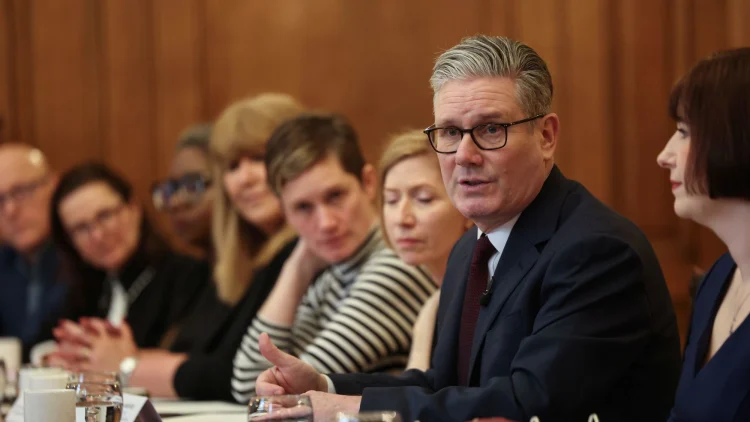
(Alamy)
2 min read
Keir Starmer is looking at asking his independent ethics adviser to investigate whether minister Josh Simons breached the ministerial code over his role in allegations surrounding the think tank that he used to head.
The Prime Minister is considering whether to ask Sir Laurie Magnus to assess whether rules have been breached by Cabinet Office minister Simons, who is currently the subject of an internal investigation by his department, PoliticsHome understands.
Simons, elected at the 2024 general election, is accused of asking a public affairs firm to investigate journalists writing about Labour Together while he was head of the Labour-aligned think tank.
Simons has said APCO Worldwide had “gone beyond” what it had been asked to do when it pursued “unnecessary” personal information about Sunday Times journalist Gabriel Pogrund.
The PR company had agreed to look at “the sourcing, funding and origins” of reporting by the newspaper about the think tank’s failure to declare political donations.
The Conservatives, Liberal Democrats and Reform UK have all called for Simons to resign from his ministerial position while he is being investigated.
Kevin Hollinrake, chair of the Tories, has said a Cabinet Office investigation into Simons is not sufficient because the department “cannot be left to mark its own homework”.
A group of Labour backbenchers had called on Downing Street to launch an independent investigation into the allegations.
When he ordered the Cabinet Office investigation, which is being led by the government’s propriety and ethics team, Starmer said he “didn’t know anything” about the APCO Worldwide report.
The Guardian later reported that Simons named Pogrund and fellow journalist Paul Holden to British security officials and falsely linked them to pro-Russia propaganda.
More follows…
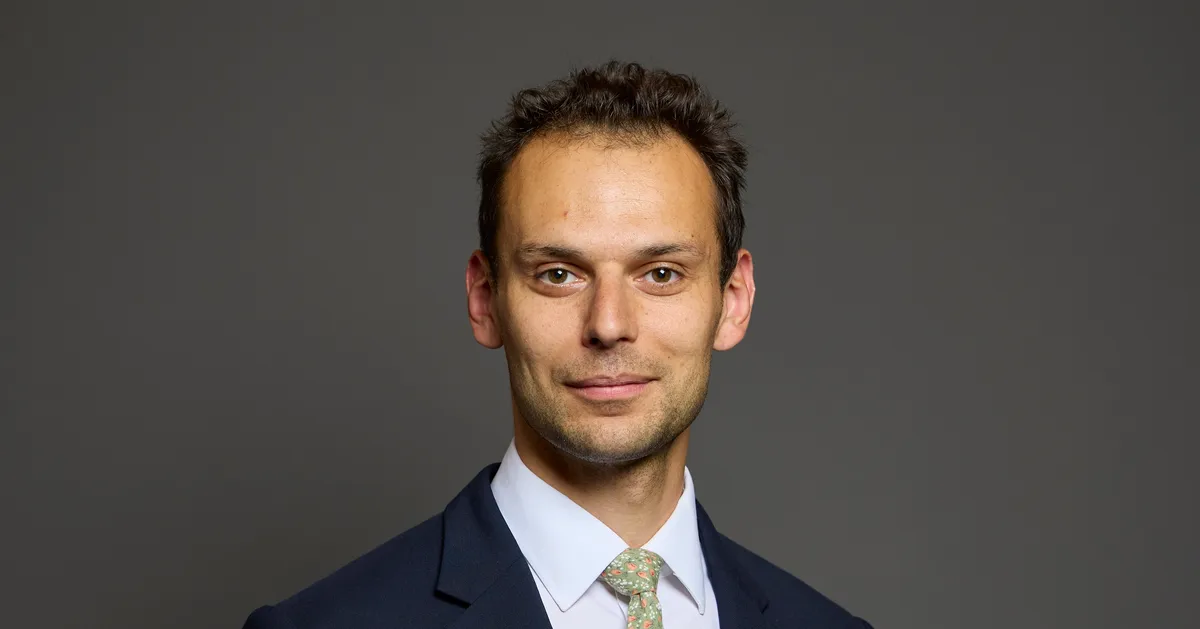
A government sleaze watchdog has launched a probe into a minister whose former think-tank allegedly ordered a smear campaign against journalists.
Josh Simons was the director of Labour Together in 2023 when it commissioned an investigation into the “backgrounds and motivations” of reporters who had written stories about it.
Simons was elected Labour MP for Makerfield the following year and is now a minister in the Cabinet Office. He has denied any wrongdoing.
HuffPost UK has learned that Keir Starmer has asked Laurie Magnus, the government’s ethics adviser, to investigate the accusations against Simons.
Downing Street has been approached for comment.
Labour Together is a pro-Starmer think-tank which was previously run by Morgan McSweeney, who quit as the PM’s chief of staff two weeks ago over the Peter Mandelson scandal.
Simons took over as boss of Labour Together in 2022, and was in charge when it commissioned PR consultancy Apco Worldwide to write a report which made false claims about two Sunday Times journalists investigating the think-tank.
That investigation examined “sourcing, funding and origins” of a November 2023 Sunday Times report into Labour Together’s funding, after it failed to declare £730,000 of donations between 2017 and 2020.
Its findings – which included allegations about Sunday Times’ journalists Gabriel Pogrund and Harry Yorke – were then shared informally with Labour figures.
Starmer confirmed last week that the Cabinet Office would carry out its own investigation into the controversy.
The PM’s decision to ask his ethics adviser to launch a separate investigate will pile further pressure on Simons.

Is it legal to preach Christianity in London? Apparently, the answer to this question isn’t obvious – at least to some residents of Whitechapel in east London.
Last week, a truly depressing video emerged. It showed a young, female Metropolitan Police officer, surrounded by Muslim men on a street in Whitechapel. They demanded to know why a Christian preacher, proselytising outside the nearby East London Mosque, had not been arrested.
To her immense credit, the officer did not allow herself to be cowed or intimidated. ‘In this country we have freedom of speech’, she told them forthrightly. ‘You guys don’t have to see eye to eye, you don’t need to agree, and you’re all more than welcome to stand here and have conversations with them’, she said.
But these men were not interested in ‘conversations’. They wanted the preacher to be punished – presumably for blasphemy, for daring to declare a belief in a faith other than Islam. One of the Muslim men said he called the police because he heard a man say ‘an offensive word about the religion’. According to the Daily Mail, one of the mob told the preacher not to ‘say Muhammed’. Another said, ‘Your God is a Jew’. When the policewoman arrived, a man implored her to recognise that ‘This is east London, this is Whitechapel – it’s a Muslim area’. Another chimes in to say the Christian preacher was ‘offending our prophet’. ‘I would recommend you just move away and don’t listen to him’, she said in response.
It was a relief to see a police officer actually upholding freedom of speech for once – particularly when faced with an intimidating mob. Nevertheless, it says something about how far free speech has been undermined in Britain that this is even worth commenting on. Indeed, the mob themselves appeared stunned by the fact that a police officer refused their orders to lock someone up on the basis that he had offended their religion.
And no wonder. Islamic sectarians have been remarkably successful in using the police for their own ends. Whether the police feel intimidated or simply believe it is their role to respond to the demands of certain ‘community leaders’, they have been more than willing to keep certain areas ‘Muslim’ at the behest of sectarian bigots. Just last month, the Met banned a ‘Walk with Jesus’ march, planned by UKIP, from going through Whitechapel on the grounds that it would be ‘provocative’ to local Muslims. Last year, West Midlands Police banned Jewish Israeli supporters from travelling to Birmingham to watch Maccabi Tel Aviv play Aston Villa, after learning that some local Muslims were arming themselves in preparation for the visit. Worse still, the police fabricated evidence to suggest the Jews were the group most likely to stir up trouble. They colluded in a lie to placate Islamic sectarians and to cover their violent intentions.
Appeasement of Islamic intolerance is now rampant in every arm of the state. Last year, a magistrate’s court convicted Hamit Coskun for burning a copy of the Koran during a protest outside the Turkish embassy in London. The fact he was attacked with a knife by a Muslim passer-by was held up as proof of just how inflammatory his blasphemous act was. Mercifully, he successfully appealed his conviction in the High Court on free-speech grounds. Yet shockingly, the Crown Prosecution Service is now appealing the acquittal, such is its determination to criminalise critics of Islam. The Labour government, meanwhile, remains committed to drawing up an official definition of ‘anti-Muslim hostility’, which will effectively institutionalise an Islamic blasphemy code within the public sector.
The viral video of the confrontation in Whitechapel has exposed the lie of British multiculturalism. In many areas of our major cities, we do not see people of different races and faiths getting along, living in harmony, showing tolerance and understanding. We see blatant religious sectarianism, which the authorities are usually only too happy to acquiesce to.
The policewoman who stood up to the mob should be commended for her courage, for her plain-speaking and for her defence of freedom of speech. But the crisis of multiculturalism that this viral confrontation exposed cannot be solved by one brave officer alone.
Hugo Timms is a staff writer at spiked.
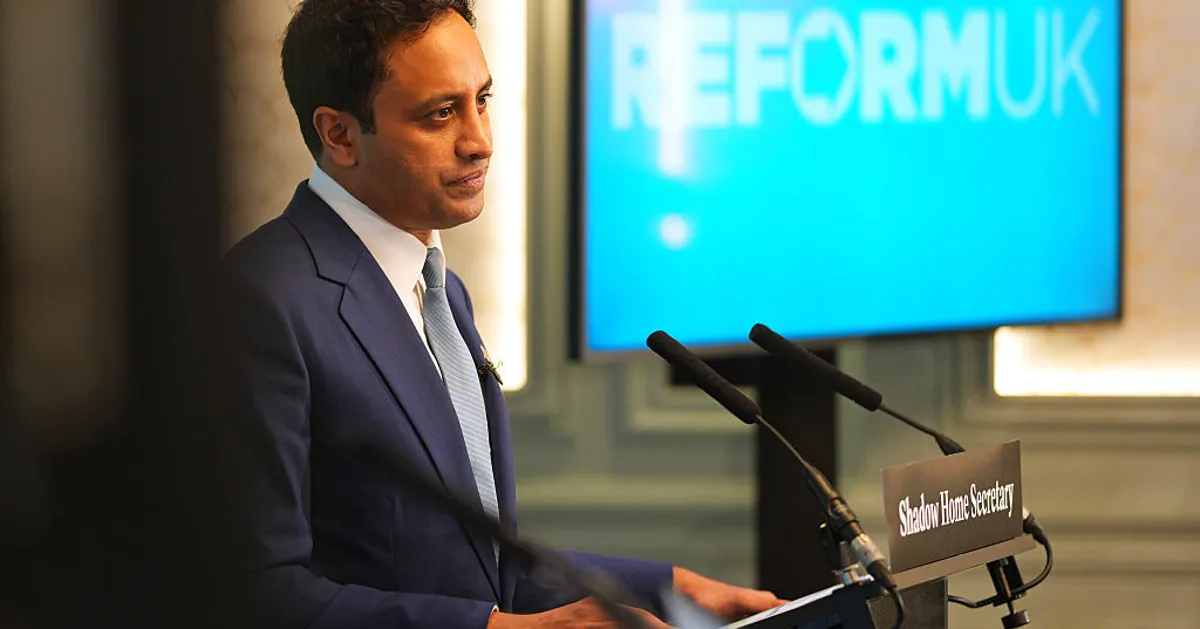
Reform UK have been condemned over plans to introduce an ICE-style body to detain and deport illegal immigrants.
Zia Yusuf, the party’s home affairs spokesman, said they would set up a new body called “UK deportation command” if they win the next general election.
He said it would “have just one mission – to track down and detain those in this country illegally”.
Yusuf said: “We will rapidly build detention capacity. No chance of bail, no chance of absconding. Detention will mean deportation.
“We will embark on the most audacious charter flight operation since World War 2, ramping up deportation flights to five departures every single day.”
A Nigel Farage-led government would also scrap indefinite leave to remain with a renewable five year work visa, Yusuf said.
Labour chair Anna Turley said: “Reform wants to divide our country, not deliver for the British people.
“Their plan to deport people who have followed the rules, worked hard and built their lives here – our friends, neighbours and colleagues – is a direct attack on settled families and fundamentally un-British.
“Britain is a proud, tolerant and diverse nation, which stands in opposition to the kind of divisive politics stoked by Reform.”
Social media users compared Reform’s “deportation command” plan to America’s controversial Immigration and Customs Enforcement (ICE) agency, whose officers have shot dead two protesters already this year.
Journalist Ian Dunt posted on Bluesky: “These people are poison. They will unleash racist thugs on the streets of this country and call it security. They will subjugate us to the US and call it patriotism. They must be stopped. There is no more important task in politics.”
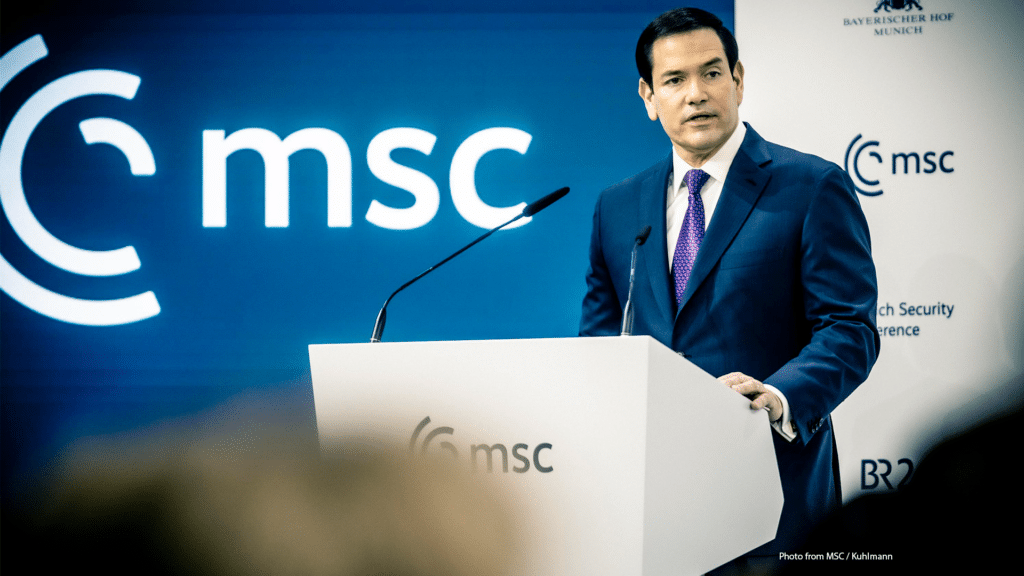
Ruth Deyermond looks at Marco Rubio’s speech at the Munich Security Conference and argues that the US is now an unreliable partner and that Europe must develop its own defence capabilities and architecture.
A seemingly unbridgeable gap now exists between the US and Europe on matters of security and politics; as a result, there is an urgent need to develop a European security architecture that does not depend on Washington. Ironically, what has made this gap impossible to ignore is US Secretary of State Marco Rubio’s attempt at the Munich Security Conference to repair some of the damage done a year ago.
Rubio’s remarks were notably different in tone from Vice President JD Vance’s hostile and inflammatory speech in 2025. This was greeted with relief by some; and many European diplomats claimed to be reassured by it. But while the tone was clearly intended to calm tensions, the content remained largely unchanged from Vance’s tirade.
The vision outlined in Rubio’s speech is one in which the US is not bound to NATO allies by shared liberal values like democracy and human rights or respect for the rule of law. Instead, what ties Europe and the US together is culture and heritage, Christianity, “ancestry”, and the superiority of what he calls Western civilisation, described by Rubio as “the greatest civilisation in human history”. These things, he claimed, are menaced by European weakness and by “the forces of civilisational erasure”.
European Commission Vice President Kaja Kallas was the clearest in pushing back against this vision, noting acerbically that “woke, decadent Europe is not facing civilisational erasure” and asserting that “European enlargement is vital for securing democracy and overcoming Europe’s own imperial history”.
Rubio’s speech confirmed the radical ideological gap that has now opened between the US and Europe. To a worrying extent, the US now represents precisely the things that post-1945 Europe organised to prevent: authoritarianism; aggression; might-makes-right; and the glorification of imperialism, driven by civilisational mythologising. It increasingly resembles not the ally that helped to foster liberal democracy in the aftermath of authoritarian destruction, but the dark Other of Europe’s past against which contemporary European identity has been built. In the medium- and long-term Europe – both the European Union as an institution and the democratic states inside and outside it – cannot maintain a close alliance with a state dominated by this ideology while preserving its identity and values.
The speech highlighted another point of rupture: the rejection of “the rules-based international order”. This seems to refer to what is often called “the International Liberal Order” that emerged in the moment of post-Cold War US dominance, and in which democracy, human rights, non-aggression, respect for international law, and economic liberalism were core principles (even if not always adhered to in practice). This is clearly an order that the Trump administration rejects – as does Russia.
But the term more properly describes another order, the one that is not shaped by shared values but by the rules: respect (in theory) for the primacy of state sovereignty; territorial integrity; and international law as embodied by the UN Security Council. These rules were an attempt to learn the lessons of World War Two, which made the consequences of rejecting these devastatingly clear.
Worryingly this order, too, is rejected by the Trump administration. Although Rubio advocated reform of the UN in his speech, he also criticised the “abstractions of international law” and praised lawless acts such as the targeted killings of alleged drug runners in the Caribbean. From the start, the current Trump administration has made it clear that it does not consider itself to be constrained by law or by the principles of state sovereignty and territorial integrity. These are the building blocks of a world without major war; if the world’s most powerful state knocks them down, it is creating a world in which disputes have to be resolved by force.
This rejection of the rules-based order is being directed, among many other targets, towards the US’s supposed allies in NATO, Denmark and Canada. A collective security alliance cannot survive as a meaningful organisation when the major threat to some of those inside it comes from its most powerful member.
Attempts to paper over Trump’s determination to seize Greenland were badly damaged by the insulting public comments of Senator Lindsay Graham, who asked the audience “who gives a s**t who owns Greenland?”, and his even more insulting comments in private to the Danish and Greenland prime ministers.
A third point of rupture is Ukraine and Russia. The Trump administration has split from its former allies in Europe in abandoning support for Ukraine and pressuring Kyiv to agree to a peace settlement that would mean capitulation. That, and the desire to develop economic ties with Russia and to rehabilitate it diplomatically – clear, for example, in the late 2025 US peace plan – stand in sharp contrast to European assessments of the growing threat from Russia and the importance of Ukraine to European security. Rubio made almost no mention of this in his speech but it was central to those of key European leaders.
The consequences of this split between Europe and the US are enormous, and will only grow. Behind the diplomatic affirmations of continued alliance, and despite their own deep reluctance, many Europeans are moving to greater security independence from the US. This will carry huge economic – and therefore probably, political – costs, but there is no realistic alternative.
The Trump administration, which seems to have assumed that Europe has no choice but to bend to Washington’s will, are angry to discover that disregard for international law and untrustworthiness as an alliance partner carries penalites. They were forced into a humiliating climbdown on Greenland by European pushback, and they have been unable to successfully pressure Ukraine in part because Europe has stepped up support. They are reportedly trying to stop the EU prioritising European arms manufacturers in defence procurement. And concerns about illegality appear to have led the UK government to block the use of UK air bases in an attack on Iran. The US is losing influence and money.
Marco Rubio’s Munich speech seemed designed to reassure while reasserting an ideology and a rejection of a rules-based order that leave the US and its former European allies further apart than at any point since the 1940s. It has not been enough to reverse the move towards some form of divorce, which is now necessary for European security and its political integrity. Both Europe and the US will be poorer and more insecure as a result.
By Dr. Ruth Deyermond, Senior Lecturer in Post-Soviet Security at King’s College London.

No. 6 Iowa State faces struggling Utah amid gauntlet of ranked foes

Is It Snowing Where You Are? I Hope You Have a Roof Rake

What Are the Top ISO Certification Providers?


-

 Crypto World6 days ago
Can XRP Price Successfully Register a 33% Breakout Past $2?
-

 Video4 days ago
XRP News: XRP Just Entered a New Phase (Almost Nobody Noticed)
-

 Fashion3 days ago
Weekend Open Thread: Boden – Corporette.com
-

 Sports7 days ago
GB's semi-final hopes hang by thread after loss to Switzerland
-

 Politics1 day ago
Baftas 2026: Awards Nominations, Presenters And Performers
-
 Tech7 days ago
The Music Industry Enters Its Less-Is-More Era
-

 Business6 days ago
Infosys Limited (INFY) Discusses Tech Transitions and the Unique Aspects of the AI Era Transcript
-

 Entertainment5 days ago
Kunal Nayyar’s Secret Acts Of Kindness Sparks Online Discussion
-

 Video6 days ago
Financial Statement Analysis | Complete Chapter Revision in 10 Minutes | Class 12 Board exam 2026
-

 Tech5 days ago
Retro Rover: LT6502 Laptop Packs 8-Bit Power On The Go
-
 Sports5 days ago
Clearing the boundary, crossing into history: J&K end 67-year wait, enter maiden Ranji Trophy final | Cricket News
-

 Business1 day ago
Mattel’s American Girl brand turns 40, dolls enter a new era
-

 Business1 day ago
Law enforcement kills armed man seeking to enter Trump’s Mar-a-Lago resort, officials say
-

 Entertainment5 days ago
Dolores Catania Blasts Rob Rausch For Turning On ‘Housewives’ On ‘Traitors’
-

 Business5 days ago
Tesla avoids California suspension after ending ‘autopilot’ marketing
-
 NewsBeat7 hours ago
‘Hourly’ method from gastroenterologist ‘helps reduce air travel bloating’
-

 Politics6 days ago
Eurovision Announces UK Act For 2026 Song Contest
-

 Tech24 hours ago
Anthropic-Backed Group Enters NY-12 AI PAC Fight
-

 NewsBeat23 hours ago
Armed man killed after entering secure perimeter of Mar-a-Lago, Secret Service says
-

 Crypto World5 days ago
WLFI Crypto Surges Toward $0.12 as Whale Buys $2.75M Before Trump-Linked Forum