
Politics
Iran school massacres done by ‘Epstein class’

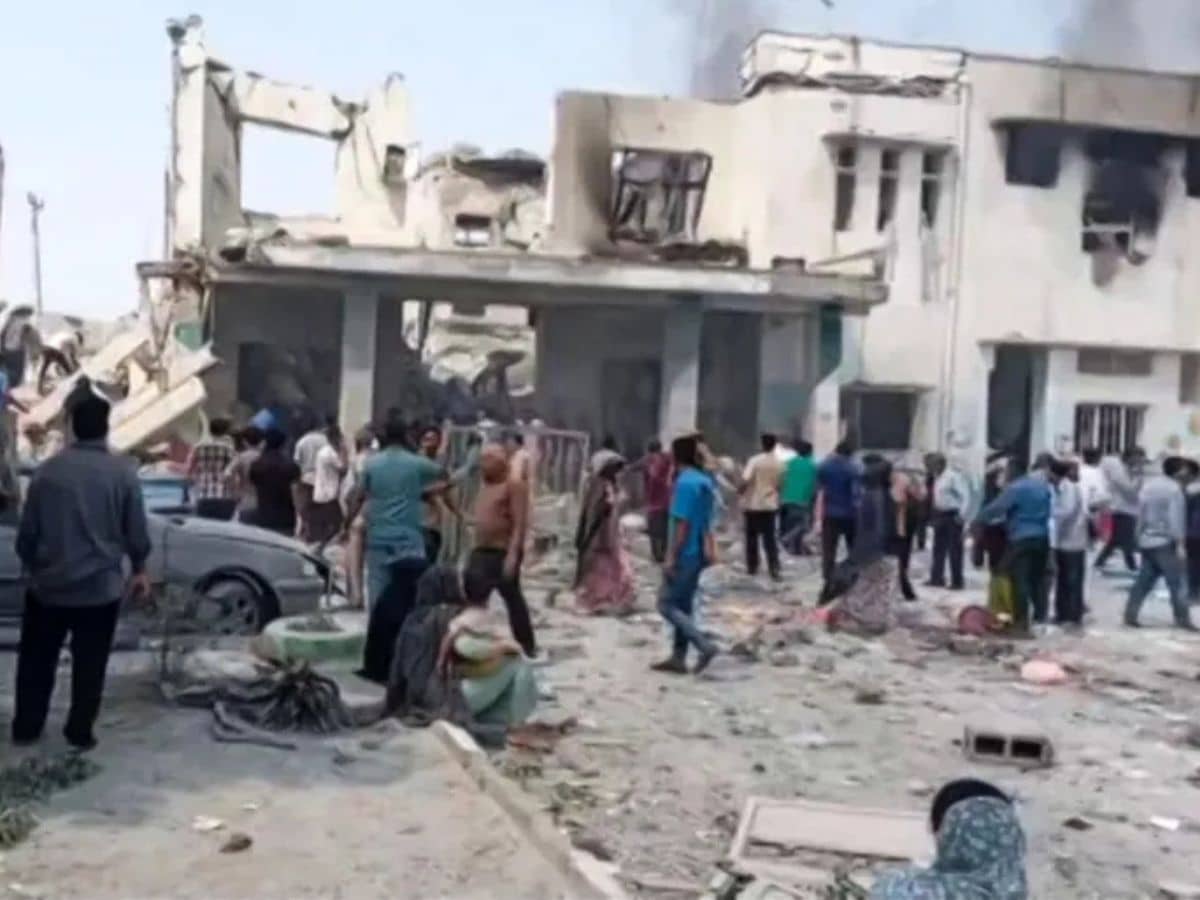
Zionist terrorists have already committed two brutal massacres of children in Iran, only hours into their colonial assault on the country. An “Israeli strike” slaughtered 85 people in a horrifying attack on an “elementary girls’ school in Minab“. Zionists murdered a further two students at a school in Tehran.
Speaking on Al Jazeera, Professor of North American Studies at Tehran University Foad Izadi said:
[Iranians] understand they are fighting the Epstein class that either rape little girls or bomb little girls.
He elaborated on how the brutality of the US/Zionist assault will show younger Iranians the reality of American lawlessness:
I think what will happen is that, even if the United States is able to kill illegally Iranian leaders, the next generation of Iranians, the Iranians that did not see American atrocities in Iran before 1979…that did not understand why their parents and grandparents were anti-American, those Iranians will take over.
Now they understand why American government is an imperialist, vicious government, and a government that attacks other countries and kills little children.
Trump the alleged child abuser now bombing more kids in Iran
There is undoubted overlap between those who feature prominently in the Epstein files and those now committing atrocities in Iran. US war-criminal-in-chief Donald Trump is accused of:
…orally raping a girl of 13–14 years old — then beating her after she bit him during the ordeal.
Trump’s abuse of children may go far beyond that. As reported recently by The Canary:
Dozens of FBI files that mention US President Donald Trump are missing from the vast Epstein releases.
The files also suggest that the thug squatting in the White House is “compromised by Israel“. This may partly explain his willingness to go along with fellow war criminal Benjamin Netanyahu’s desire to try and force regime change in Iran. Or it may simply be the case that Mafia Don wants to behave in the mode typical of US gangsterism, and punish Iran for disobedience.
The Zionist entity is a convenient tool for US empire, essentially operating as the main war crimes division of the US army. This allows US imperial aims to be facilitated with a brutality that might raise excessive opposition at home, but can be passed off as the West Asian settler-colony going rogue.
Other prominent Zionists featured heavily in the files include the Clintons, Alan Dershowitz, Elon Musk and former ‘Israeli’ prime minister Ehud Barak. It is likely Barak is the individual responsible for allegedly raping Virginia Giuffre “more savagely than anyone had before”.
Zionism, racism and cruelty to children are synonymous
Epstein himself was, of course, an ardent Zionist. He was pictured wearing an Israeli Genocide Forces sweatshirt, gave money to the genocidaires and was likely a Mossad agent, or at least an asset. The paedophile was, like Barak, a vile racist who believed Black people are less intelligent, and who wanted to carry out “Nazi-like” eugenicist programs to spread his own DNA, based on the deranged idea it was superior. He was a serial child rapist who groomed young girls, then allowed other powerful and sadistic Zionists to rape them.
The Zionist land theft project is a hub of child abuse. Israeli Occupation Forces routinely abduct, then molest, Palestinian children. The terror regime gives sanctuary to paedophiles, aided by senior government officials.
Epstein was able to operate with impunity. He had disdain for Black and Brown people, and his main pastime was destroying children’s lives. It is this same combination — impunity, racism and serial abuse of children — that the Zionist entity embraces when it carries out its atrocities in Palestine, and now Iran.
Featured image via Aljazeera

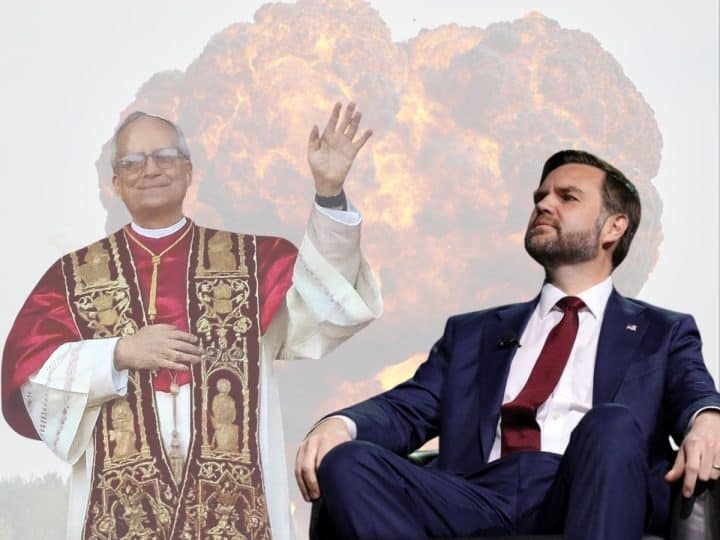

As we’ve reported, Donald Trump and vice president JD Vance have been laying into Pope Leo. This is because the Pope made the case that the US and Israel’s war on Iran goes against the teachings of Christ – an argument which is demonstrably obvious to everyone.
Now, a heckler has targeted Vance during the middle of his latest rant against the Pope:
View this post on Instagram
JD Vance gets schooled
The above video begins with a heckler shouting:
You’re killing children.
You’re bombing children.
Because he’s a disgusting human being with no morality, Vance smirked at this. He later argues that the warmongering US is more righteous than the Pope on the topic of States’ latest illegal war:
There are certainly things that the Pope has said in the last few months that I disagree with. Let me just take one very concrete example related to this conflict in Iran.
So the Pope said something where he said, and I’m going to try to remember the exact quote, but he said that God is never on the side of those who wield the sword. God is never on the side of those who wield the sword.
I’m pretty sure that he said that exact statement.
For clarity, this is precisely what Pope Leo said:
God does not bless any conflict. Anyone who is a disciple of Christ, the Prince of Peace, is never on the side of those who once wielded the sword and today drop bombs. Military action will not create space for freedom or times of #Peace, which comes only from the patient promotion of coexistence and dialogue among peoples.
He didn’t say it’s a sin for people to defend themselves; he said conflict is not blessed.
Back to Vance, he continued:
Now, on the one hand, again, I like that the Pope is an advocate for peace. I think that’s certainly one of his roles.
On the other hand… How can you say that God is never on the side of those who wield the sword?
Was God on the side of the Americans who liberated France from the Nazis? Was God on the side of the Americans who liberated Holocaust camps and liberated those innocent people from those who had survived the Holocaust?
I certainly think the answer is yes
In World War 2, it was the expansionist Nazis who started the war. Now, in 2026, the expansionist fascists running the US and Israel are dragging the world into another godforsaken conflict.
The reason Vance is going all the way back to the 1940s is because America itself has acted as the aggressor in the decades since.
In response to what Vance said, a heckler shouted:
Jesus Christ does not support genocide.
Vance said he agrees with this.
The problem is the US supported Israel’s genocide in Gaza, so clearly Vance and his government are not on the path of Christ.
Blessed be
Lest we forget, Pope Leo said that “God does not bless any conflict”. This is not the same thing as saying God condemns those who defend themselves.
Clearly there is an obvious difference between an action being justified and an action being blessed.
Raising the sword to attack Iran clearly wasn’t needed, and it certainly isn’t holy.
Featured image via Edgar Beltran (Wikimedia)
By Willem Moore
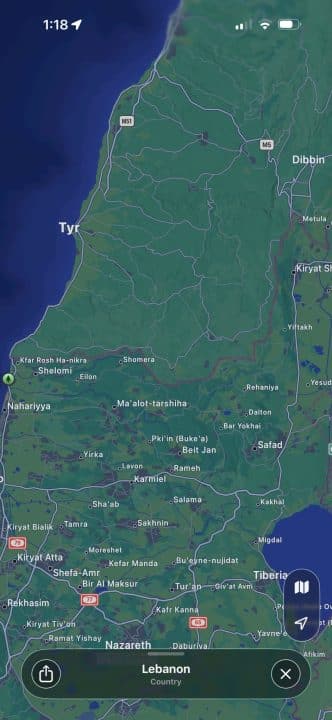

Apple Maps has drawn condemnation over its satellite software displaying vast blank areas across Lebanon and missing most Lebanese settlements.
Although apparently not a new feature, the discovery comes as Lebanon faces repeated Israeli bombings, ground invasions and an expanded genocidal assault on its civilian populations.
Apple: ‘rotten to its core’
A viral X post by American Christian “Truth Seeker”, Ethan Levins, claiming that “Apple has removed Lebanese village names in Southern Lebanon” sparked outrage.
Levins wrote:
As Israel invades, they are already setting the state to justify occupation. I’ve never seen something like this.
Apple has removed Lebanese village names in Southern Lebanon.
As Israel invades, they are already setting the state to justify occupation.
I’ve never seen something like this. pic.twitter.com/gKRcsmUjO3
— Ethan Levins
(@EthanLevins2) April 12, 2026
Levins’ remarks quickly spread and were reshared, gaining more than 15 million views between just two accounts. While two substantive aspects of this story appear untrue that doesn’t mean there’s no story.
Firstly, it’s not only the south of Lebanon that’s empty on Apple Maps: none of the country’s place names appear, regardless of zoom level.
Secondly, the names of towns, villages and streets haven’t been removed recently, according to Apple. They were actually never there to begin with.
Apple never featured most of Lebanon’s villages and towns on its Maps platform, making their suspected duplicity arguably more of a structural complicity.
Zionist crimes unfold in Lebanon
The Zionist imagination of West Asian territory, dating back to long before Israel existed, was of “a land without a people [Palestine], for a people without a land [diaspora Jews]”.
Now it appears that Zionist-aligned corporations like Apple are replicating this template as another Nakba-scale event sees more than a million Lebanese people displaced, and thousands murdered by Israel since 2023.
In one of the worst atrocities committed in decades, Israeli bombings of Beirut killed more than 350 civilians in under 10 violent minutes of bloodshed. As far as Apple is concerned, they weren’t there.
Lebanese officials dubbed the massacre “Black Wednesday” and multiple human rights organisations have condemned it among many Israeli war crimes.
Now, Israeli politicians are openly stating their plans to indefinitely occupy southern Lebanon, right up to the Litani River, in yet another flagrant violation of numerous international laws.
Zionist settlers are already sharing plans, based on purported “God-given” right, to settle southern Lebanon just as they’ve violently settled Occupied Palestine, the West Bank and Syria’s Golan Heights.
Rather than removing southern Lebanese villages from Maps specifically to aid Israel’s murderous 2026 assault on the country, the US mega-corporation arguably laid the groundwork long ago.
Instead, Apple did so by deciding never to host Lebanon’s civilian life on its platform in the first place.
The Israeli settlement of Shomera has less than 500 inhabitants, it appears on Apple maps. The Lebanese town of Ayta al-Shab, 5 kilometers away, has 5000 inhabitants, it does not appear on Apple maps. https://t.co/q291kqHXCE pic.twitter.com/1vAKCH2dZG
— B.M. (@ireallyhateyou) April 12, 2026
Apple’s bullshit ‘on background’
Journalist Carole Cadwalladr, who covers US tech oligarchy extensively at the Nerve, provided a stern rebuttal to Apple’s denial of the viral online story.
Cadwalladr reached out to Apple for comment on the story. Apple offered not a quote per se, but rather an ‘on background,’ non-quotable response to the circulating story.
‘On background,’ according to Apple, means that “information is provided on a non-attributable basis and should not be directly quoted or attributed to Apple”.
Cadwalladr described this ‘on background’ method as “tech PR bullshit”.
Is Apple deleting place names from its map of southern Lebanon?
I emailed Apple to fact check this viral claim & I’m publishing its bullshit response in full as a teachable moment.
This ‘on background’ crap is how tech companies avoid accountability.
1/ https://t.co/7VRCNSNdUj pic.twitter.com/jUuO0dovN3— Carole Cadwalladr (@carolecadwalla) April 13, 2026
‘On background,’ apparently, allows companies to launder corporate narratives through unscrupulous hacks, without journalists stating where their analysis or ideas originate.
Cadwalladr is scrupulous, however, and took the opportunity to expose Apple’s “bullshit” PR meandering with a direct screenshot of their otherwise unaccountable statement.
Cadwalladr pointed out that Apple’s ‘non’-statement that the newest version of Apple Maps “is not currently available in that region”, is demonstrably untrue.
Just south of the Lebanese border — internationally recognised yet repeatedly breached by Israel for decades— Apple Maps works very well, even for minor Zionist settlements.
Apple Maps also functions clearly and well in neighbouring Syria. As Cadwalladr wrote on X about Lebanon: “there’s lots of ‘detail’, just not the place names”.
Even more gravely, she highlighted Apple’s “major business interests in Israel” and the fact that “Israel is erasing Lebanese villages” on a multiple-daily basis.
Apple and apartheid
Apple’s embeddedness in the Israeli apartheid state is well-documented. For one thing, Apple’s second-largest R&D centre is based in Israel.
Since 2012, Apple has acquired multiple Israeli technology firms, with the most recent reported $2 billion takeover of Israeli spyware firm Q.ai in January this year.
Israeli start-up Q.ai’s flagship tech model reads facial movements and interprets non-verbal communication, allowing it to plausibly read minds and unspoken thoughts.
There’s no other way to dress it: Apple bought a Zionist-manufactured AI technology that’s as close to non-invasive, non-supernatural telepathy as currently possible.
According to Bloomberg, the facial cue tracking technology — based on visual capture — is supposed to help with audio products like AirPods and audio features like Siri.
Strangely enough, Bloomberg’s business promo piece does not explain how exactly the visual detection software is supposed to help with any audio output.
It gets worse, however. In June 2024 the Intercept reported that Apple whistleblowers decried the company for matching employees’ donations to illegal Zionist settlement projects in Occupied Palestine and to the IOF during the Gaza genocide.
So while Apple didn’t remove Lebanon from its Maps for Israel today specifically, the corporation’s longstanding ties to the Zionist project — which has consistently threatened Lebanon and its people —indicate that its ‘blank map’ still holds sinister intentions.
Technologies of erasure
Spatial data sciencist, Johara Meyer, at UCL shared her perspectives on Apple Maps with the Canary, leaning on her advanced critical studies in geography.
She said that mapping services like Apple’s — using detailed satellite imagery and speedy computing systems— have very effectively constructed a veneer of scientific objectivity.
But maps are never neutral representations or ‘mirrors’ of the world. Instead, they are de facto world-making technologies — rather, they are tools of power.
Meyer said:
Blank maps have long been used to foster myths of un-occupied and un-inhabited land to make settler colonial endeavours more imaginable, palatable, and possible.
She added:
Apple removing or even simply not displaying Lebanese places names is not a neutral act—it’s a colonial one. Removing the spatial signifier of the people and memories that live in these places constructs a blank-slate upon which imperial fantasies and geographies can more easily be imagined and imposed.
In geography we call this practice cartographic erasure, or silencing.
Thus we need to understand that Apple scratching Lebanese villages from the map is a threat. As we’ve seen in Gaza, places that are silently erased from the map become communities violently erased from the ground.
Meyer bluntly concluded:
The map of Lebanon isn’t blank; it’s been strategically erased. And the Apple isn’t bitten — it’s rotten to the core.
Featured image via X/ Villgecrazylady
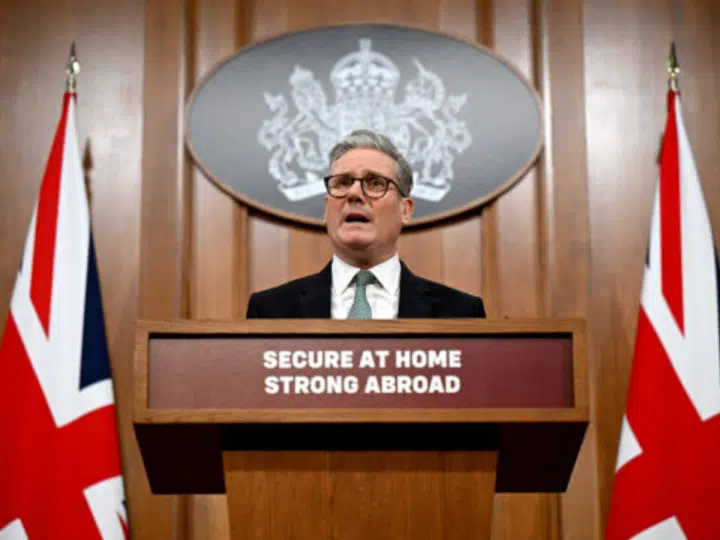

Keir Starmer has written some drivel about the future of UK security post-Iran. Published in the No. 1 paper of imperialist liberals, the Guardian, Starmer’s essay named some of the crises of recent years. Yet despite his article’s warlike undertones, various hawkish pro-war figures have slammed him since.
Why?
Well at the heart of this is a debate on war spending which has a familiar dynamic: it’s a row between members of the British establishment about how cutting welfare is justified to wage war. Starmer, who embodies middle class managerial politics, complained about middle class managerial politics in his 9 April article [emphases added]:
Britain has been buffeted by crises for nearly two decades now. And from the 2008 financial crash, through austerity, to Brexit, Covid, the Ukraine war and Liz Truss, the response from Westminster has always been the same. Manage the crisis, find a sticking plaster and then desperately try to reassert the status quo.
He added:
The war in Iran must now become a line in the sand, because how we emerge from this crisis will define all of us for a generation. And instead of hoping to return to the world of 2008, we will forge a new path for Britain – one that strengthens our energy, our defence and our economic security in a new age.
He was clearly teeing up his big plan to militarise the UK, which the legacy media duly picking up on 10 April 2026.
Starmer missing the basics
Several things stand out here. Firstly, Labour’s disastrous War on Terror interventions are missing from Starmer’s assessment. Secondly, it sounds like Starmer is teeing up a rejection of the status quo he represents. He then proceeds to accept the status quo more or less entirely under that favorite professional managerial class/NGO PowerPoint buzzword: resilience.
He said:
That’s why resilience has been at the heart of my government’s approach – our approach to the conflict in Iran, yes, but also our approach to preserving the national interest at home.
Needless to say ‘resilience’ is not an answer to the issues he has outlined. Focusing on building resilience is to accept that the problems of today are unchangeable. They are certainly not. And, in any event, the essay has done nothing to stave off criticism from his own party, former generals, and others.
‘Malnourished’ navy
Former British army general Richard Barrons was quick to put the boot in, saying that US defence secretary Pete Hegseth has been right to mock the Royal Navy recently:
Hegseth had said on 31 March:
Last time I checked, there was supposed to be a big, bad Royal Navy that could be prepared to do things like [clear the strait of Hormuz] as well.
Clearly Hegseth was smarting from the total failure of the US to beat Iran in it’s ridiculous war of choice. Nevertheless, Barrons said:
Like many others I hung my head in sorrow. But I couldn’t argue with him because although the Royal Navy and the Royal Air Force and the army are, in their bones, outstanding institutions, they are simply too small and too undernourished to deal with the world that we we now live in. And the review says this.
Interestingly, Barrons recently told an audience at the establishment thinktank Chatham House that increased US belligerence would now be the pattern in world affairs:
We’ve been wondering for a while what sort of world we were now living in because we understood we were not in the comfortable world of the post-cold war era and what we used to call the rules-based international order.
This US government, he added, would “do what it thinks it can” on the basis that it has “the power to do it”.
And there really aren’t too many other complications around that.
Former NATO chief
An ex-Labour defence minister and NATO boss is also taking a swipe at Starmer’s war spending habits – or lack of them. Lord George Robertson is said that Starmer is:
not willing to make the necessary investment.
And where, according to Robertson, should the money come from? You guessed it:
We cannot defend Britain with an ever-expanding welfare budget.
The BBC said Robertson pronounced:
There is a corrosive complacency today in Britain’s political leadership. Lip service is paid to the risks, the threats, the bright red signals of danger – but even a promised national conversation about defence can’t be started.
He also accused “non-military experts in the Treasury” of “vandalism”. Which sounds like a pitch for more military control of the economy.
The BBC reported:
Lord Robertson’s apparent suggestion that the government could find money by reducing the welfare bill may be one that is shared by the Chancellor Rachel Reeves.
Barron, Robertson and Dr Fiona Hill – a British-born former advisor to US presidents – whose comments are doing the rounds today were the joint authors of Starmer’s 2025 Strategic Defence Review (SDR).
There’s no doubt that the world is a dangerous place today. That is primarily because of the increasing belligerence of a fading US empire and its allies. But those problems are not impossible to solve. It will just take a bit more imagination than corporate waffle about ‘resilience’. And, this argument is one within the British establishment. It is about how – and to what degree – workers can be made to pay for war and military projects. And it should be seen as such.
Featured image via the Canary
By Joe Glenton
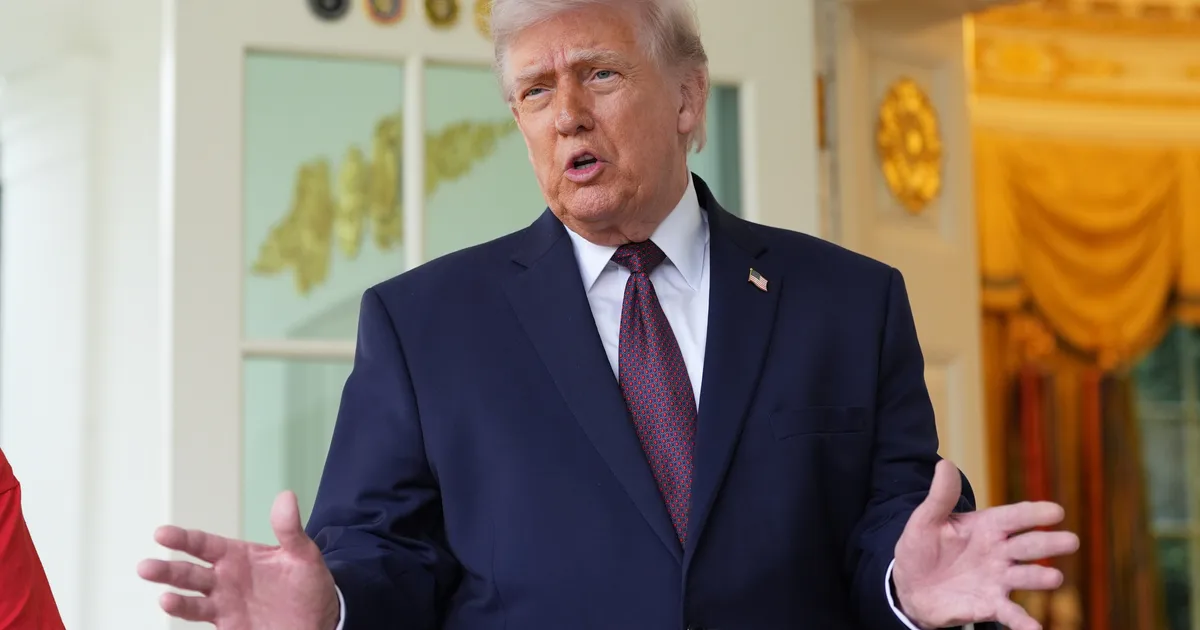
Donald Trump has slammed the UK for refusing to drill for more oil in the North Sea in a fresh takedown of the government’s “tragic” decision.
In a post on TruthSocial, the president took aim at Labour’s focus on renewable energy, writing: “Europe is desperate for Energy, and yet the United Kingdom refuses to open North Sea Oil, one of the greatest fields in the World. Tragic!!!
“Aberdeen should be booming. Norway sells its North Sea Oil to the U.K. at double the price.
“They are making a fortune. U.K., which is better situated on the North Sea for purposes of energy than Norway, should, DRILL, BABY, DRILL!!! It is absolutely crazy that they don’t… AND, NO MORE WINDMILLS!”
The US president keeps finding new ways to criticise Britain after prime minister Keir Starmer decided not to let American forces use UK military bases to launch pre-emptive strikes on Iran at the end of February.
Britain then refused to send its Navy to help keep the Strait of Hormuz open as the Iranian forces effectively closed the major oil shipping lane.
Now, after peace talks failed with Iran, Trump has decided to also blockade the waterway.
The chaotic conflict has had major economic consequences for the rest of the world as oil prices soar.
According to the International Monetary Fund (IMF), Trump’s war in Iran will damage the UK economy more than any other major country.
The Labour government is now scrambling to organise a contingency plan before the upcoming cost of living shock.
Starmer has made it clear the UK will not be “dragged” into the conflict while his chancellor Rachel Reeves lashed out at Trump for the “folly” of starting a war without any exit plan.
The president’s unprompted attack on UK energy is just his latest criticism of Britain.
He compared Starmer to former PM Neville Chamberlain – who championed the Nazi appeasement policy before World War 2 – and accused the UK of trying to join a conflict which the US had already won.
Subscribe to Commons People, the podcast that makes politics easy. Every week, Kevin Schofield and Kate Nicholson unpack the week’s biggest stories to keep you informed. Join us for straightforward analysis of what’s going on at Westminster.
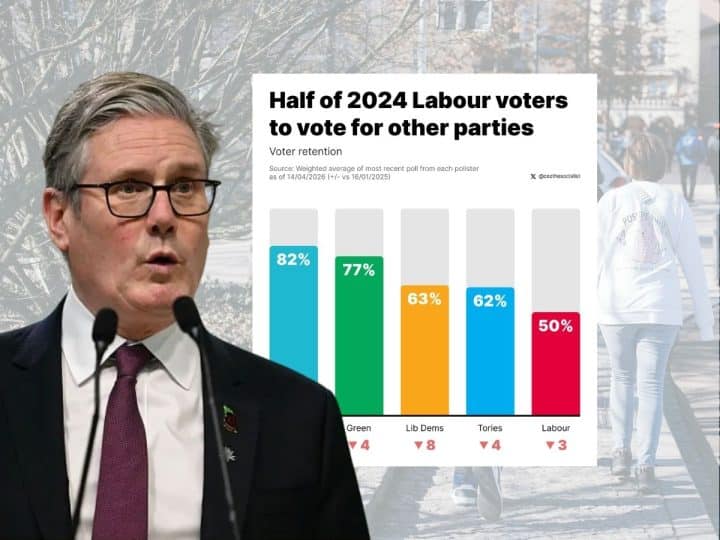

Keir Starmer has surpassed Tony Blair. After butcher of Baghdad Blair’s landslide victory in 1997, he went on to lose voters at each subsequent election. This saw him securing the following vote shares:
- 1997: 43.3%.
- 2001: 40.7%.
- 2005: 35.2%.
This slide demonstrated that Blair’s re-heated Thatcherite politics didn’t resonate with the British public. Bad as this was, however, it was nowhere near as dramatic as what Starmer has achieved:
Labour have lost half of their voters since the 2024 general election, and the Tories and Lib Dems have lost over a third each.
All the major parties have seen a fall in voter retention compared with 4 months ago. pic.twitter.com/xOUjaBvJs7
— cez (@cezthesocialist) April 14, 2026
Starmer breaking records
The two-party system of British politics has broken down. As this recent YouGov poll shows, we now have five parties within 10 percentage points of one another:
— Seats — Poll: @YouGov, 12-13 Apr (+/- vs 7 Apr) pic.twitter.com/m0PQxoBh26 — Stats for Lefties
 POLL | Reform lead by 5pts
 Ref: 24% (=)
 Con: 19% (=)
 Grn: 18% (+2)
 Lab: 17% (+1)
 Lib: 13% (=)
 Res: 4% (=)
 YP: 0% (-1)
Ref: 282 Grn: 91 Con: 83 Lib: 81
YP: 0% (-1)
Ref: 282 Grn: 91 Con: 83 Lib: 81 SNP: 47 Lab: 34

 (@LeftieStats) April 14, 2026
Starmer clearly bears responsibility for this, because he’s the man at the top. At the same time, Starmer didn’t introduce dishwater neoliberalism to the Labour Party; he simply ran with it.
Sooner or later, the public were going to wake up and realise there was no difference between the underlying politics of Labour and the Tories. Now that’s happened, Labour are losing voters, and they’re particularly losing them to the left:
According to the most recent YouGov poll, 40% of Labour voters are switching to further left parties and just 10% are switching to Reform. pic.twitter.com/NL8Wsvq2s0
— Stats for Lefties
Labour have bent over backwards to appeal to Reform voters, and this is the end result of that.
Predictable
The Canary and others warned Labour that copying the far-right wouldn’t help, but they wouldn’t listen.
For some voters, they saw Labour agreeing with Reform, and they decided this meant Nigel Farage was right along.
For many more, they saw Labour gleefully talking about deporting human beings, and they thought ‘fuck this‘.
Lab is now losing far more votes to Greens (7.4pts) than to Reform (3.6pts).
Overall, a majority of 2024 Lab voters are now backing other parties, and a whopping 70% of those are fleeing leftward.
Lab’s collapse is not the result of a right-wing surge, but of left-wing dissent. pic.twitter.com/OpdGfeLzw2
— Stats for Lefties
Starmer clearly can’t come back from this.
The question is whether the Labour Party can launch a comeback once he’s gone.
Featured image Cez the Socialist
By Willem Moore
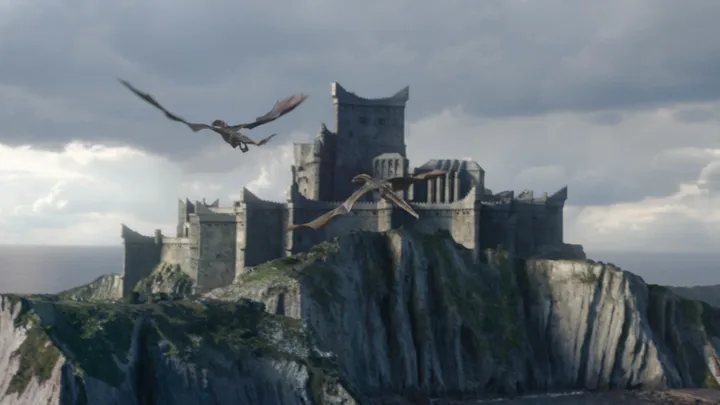
More details have been confirmed about the upcoming Game Of Thrones movie.
Last month, it was revealed that the world of Westeros was expanding even further, with the franchise’s first ever big-screen offering.
On Tuesday night, production company Warner Bros. shared new information about what fans should expect from the new movie spin-off at CinemaCon.
At the event, bosses confirmed long-held rumours that the film will be titled Game Of Thrones: Aegon’s Conquest.
Fans of the franchise will know already that this refers to Aegon the Conqueror, the first Targaryen King, from George R.R. Martin’s A Song Of Fire And Ice novel series.
Because of this detail, it can be deduced that the Game Of Thrones movie will be set 300 years before the events of season one, meaning it will serve as a prequel to both the main show and its popular spin-off House Of The Dragon.

Fans of the Game Of Thrones universe have plenty to look forward to in the near future.
The long-awaited third season of House Of The Dragon is due to premiere in June, with James Norton among the newcomers joining returning cast members Matt Smith, Emma D’Arcy, Olivia Cooke, Rhys Ifans and Ewan Mitchell.
Earlier this year, a new spin-off, A Knight Of The Seven Kingdoms debuted to generally positive reviews for its markedly different approach to other Thrones-based projects.
This was renewed for a second season by US broadcaster HBO before the first had even premiered.
George R.R. Martin teased in November 2025 that there were “maybe five or six shows” in development based on his characters, the majority of which would serve as prequels to the stories we already know.
He also has two more novels in the pipeline – though there’s no telling exactly when Game Of Thrones devotees can expect to get their hands on those.
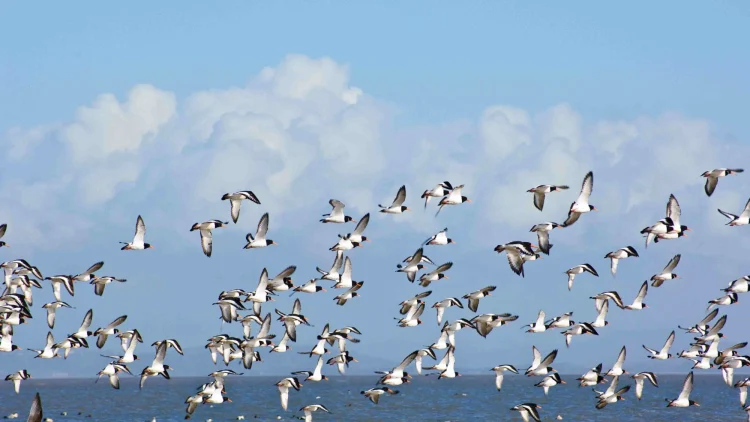

Flock of oystercatchers, Jon Sparks/Alamy
4 min read
Polling is rarely fun reading for Labour MPs at the moment, but a new poll last month proved particularly deflating.
It went beyond simply confirming the public’s overwhelming support for nature restoration – with 8 in 10 people saying it is an important priority for them personally. It also revealed that a resounding 6 in 10 believe the Government cares less about restoring nature than they do.
It wasn’t meant to be this way. I was proud to be elected on a manifesto that recognised nature loss to be one of our greatest challenges, promising ‘to restore and protect our natural world’. Over the course of 2025, this promise seemed forgotten.
Ministers have too often reached for easy scapegoats – blaming bats and newts for a lack of economic growth. Rather than confronting the reality of a broken model that rewards asset ownership over productive work, and an economy built to reward financial speculation and the extraction of value over the workers who create it.
In the absence of evidence for these claims, ministers resorted to a steady drumbeat of anti-nature rhetoric. In doing so, goodwill from millions of nature lovers across the country was needlessly eroded.
The views of well-funded lobbyists, keen to cut corporate costs through deregulation, seemed to carry more weight than the concern of millions of voters that, with each passing year, they were seeing less wildlife in gardens, parks and rivers.
This is why I kickstarted the Red Lines for Nature campaign this winter: to get Britain’s nature- loving majority off the backfoot and to break the doom-loop of the constant attacks on our wildlife habitats.
The campaign calls for an end to attempts to weaken environmental protections and environmental bodies. These are the red lines which, if passed, will accelerate nature decline towards the point of no return.
Crossing these red lines would signal a calamitous broken promise for our Labour Government, situating itself on the wrong side of a nature-loving electorate, and a disaster for the ecosystems we all need to survive.
It has been galvanising to see the nature sector rally so decisively around the Red Lines campaign; with dozens of organisations’ signing up; and ever-increasing support from colleagues on the backbenches in Westminster.
It’s no coincidence that our bold demand of a fully funded nature recovery plan has coincided with a welcome change in approach: both in language and actions from the government.
The tedious bat-bashing of 2025 has vanished from ministerial speeches and 2024 promises to save nature have returned.
Damaging proposals to gut nature protections, recommended by the Nuclear Regulatory Review, have been dropped. And Defra has announced a series of ambitious nature recovery policies, including the largest ever government investment in threatened species; supporting iconic birds like turtle doves and oystercatchers, as well as the reintroduction of golden eagles to England offering the hope of a trophic cascade that restores long-degraded ecosystems as their apex predators soar back into place.
This shows that when we are united, bold and clear in our demands, we can win. It is vital that we maintain the pressure through the Red Lines for Nature campaign across all its layers of support – from environmental organisations and their mass memberships to the nature-loving public, and its allies in Parliament.
In doing so, we can move beyond winning individual skirmishes and instead make it clear that the protection of nature is not, and should never have been, up for debate.
This policy shift has come just in time. Recent weeks have emphasised how important it is to prepare for future economic disruption, and to make sure the UK is well-prepared to weather economic storms. Nature-loss is the economic disruption we can see coming over the horizon. In January Defra published a new security assessment warning that ‘global ecosystem degradation and collapse threaten UK national security and prosperity’. We need to get ahead of this gathering crisis, by helping nature recover before it’s too late.
This is why colleagues and I, along with MPs from other parties, will be gathering in Westminster to hear the latest from nature experts about the scale of species loss, and what more needs to be done to halt it. We still have time, just, to back away from the red lines and to act on the priorities of the wildlife-loving British public.
The renewal of our nation’s squandered natural wealth could be the common endeavour that finally instils some optimism and unity into our politics, at a time when we all need hope. After all, More in Common polling for the National Trust found that nature is a major source of pride for the public, second only to the NHS.
Building on the recent policy shift to deliver an ambitious nature recovery plan would be hugely popular and would bring people together. This spring, its time embrace the pride and positivity of restoring nature, for everyone.
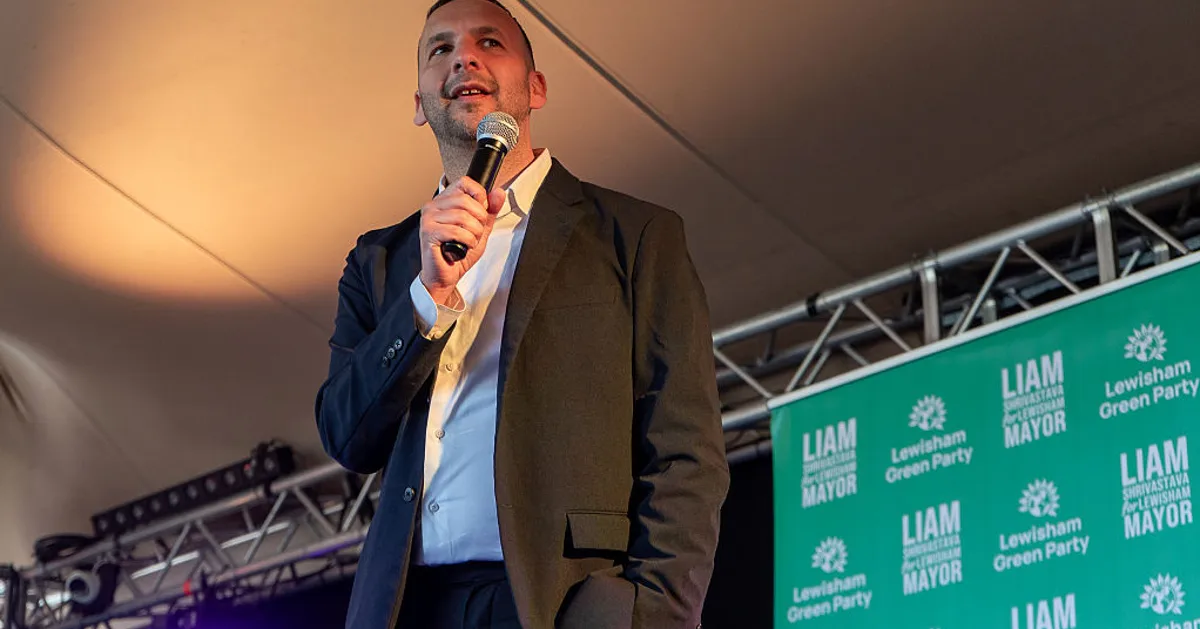
A cabinet minister has called on Zack Polanski to sack “racist” Green Party candidates standing at next month’s local elections.
Housing secretary Steve Reed hit out after a string of reports highlighting comments made by a number of the party’s activists.
Hau-Yu Tam, deputy leader of the Green group on Lewisham Council, called David Lammy and Priti Patel “coconuts”.
Mark Adderley, who is standing for the Greens in Croydon, south London, appeared to blame Israeli prime minister Benjamin Netanyahu for the recent attack on Jewish ambulances in Golders Green.
Aziz Hakimi, a Green Party candidate for Camden Council, also shared a post on Facebook claiming that the same attack was “a false flag”.
Speaking to HuffPost UK, Reed said the Greens had become a “safe haven” for antisemites who were kicked out of the Labour Party.
He said: “The Labour Party went through and cleared out the racists and the antisemites who had brought our party to its knees and ended up with the party being referred to the Equality and Human Rights Commission for racism.
“We kicked them out and they’ve been able to walk into the Green Party with no one checking their backgrounds.
“Now, a lot of those people are not only in the Green Party, they have been selected to stand as candidates in the local elections.”
Speaking to PoliticsHome earlier this month, Polanski said the Greens were dealing with an “immense amount of people very quickly” as it chose candidates to stand at the elections.
“I won’t be surprised if we have the odd candidate where we have to distance from them,” he said.
Reed said: “Zack Polanski has said he will disown candidates who are identified as racists, so he needs to sack them.
“He has got time to take away the Green Party’s endorsement of these individuals and that is exactly what he should do, and as quickly as possible.”
The minister added: “They’ve gone into the Green Party because they left the doors open and welcomed them in.
“They tried to take over the Labour Party, we kicked them out. They’ve tried to take over the Green Party and now the Green Party is riddled from top to bottom with racists and antisemites and they need to take action to kick these people out.”
A Green Party spokesperson accused Reed of “smears” ahead of the elections on May 7.
He said: “The Greens are proud to run a positive campaign that is focussed on tackling the cost-of-living crisis.
“It is very important that a clear distinction is made between vocal criticisms of Israel and antisemitism. Some of these posts were deleted as they do not reflect the views of the Green Party which is rooted in anti-racism and fighting for a better deal for working class communities.”
Subscribe to Commons People, the podcast that makes politics easy. Every week, Kevin Schofield and Kate Nicholson unpack the week’s biggest stories to keep you informed. Join us for straightforward analysis of what’s going on at Westminster.
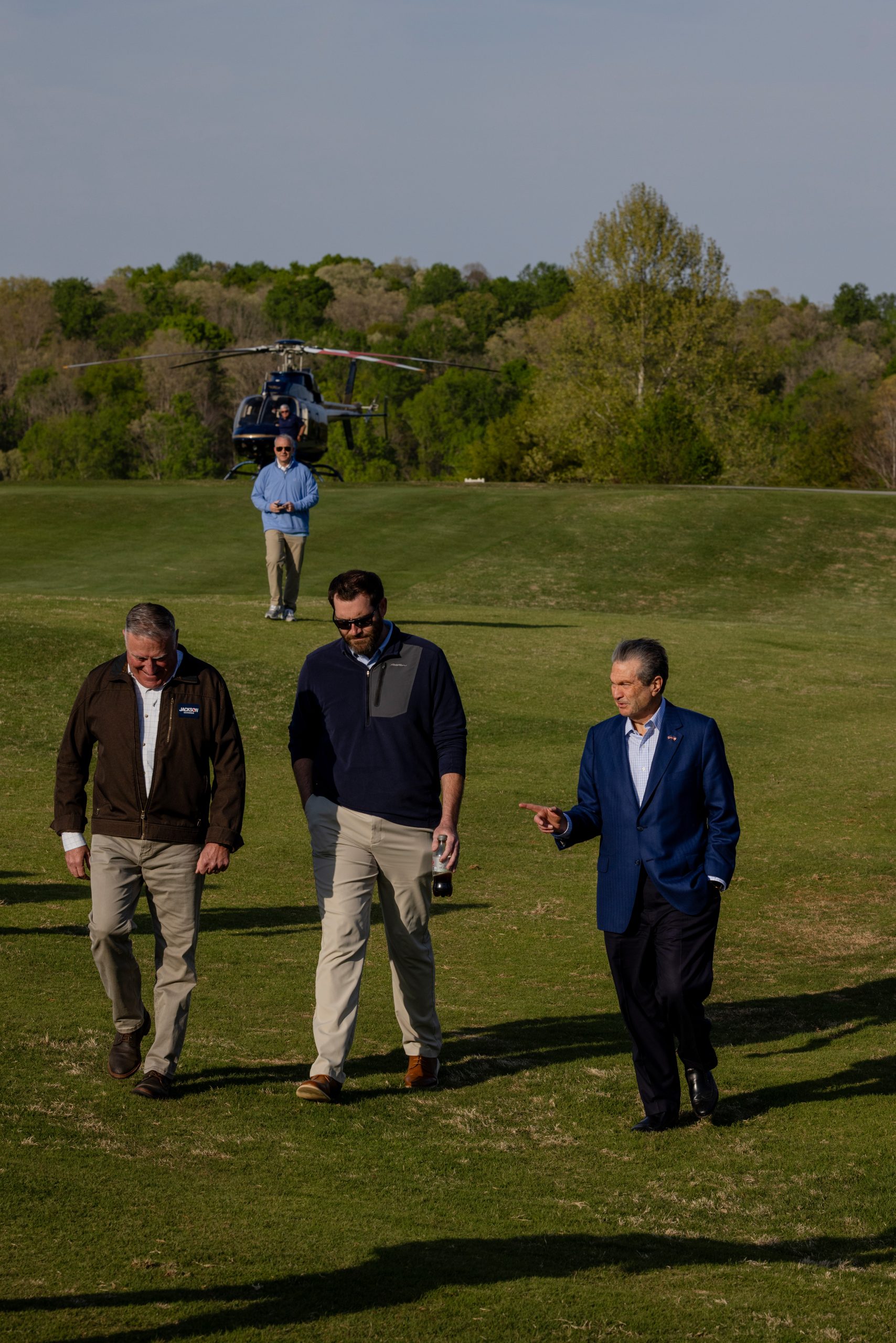
HOMER, Georgia — The last few players of the day were finishing their rounds at the Chimney Oaks Golf Club when a steady wind picked up by the practice putting green. Pin flags bent to a near snap. A sleek helicopter slowly descended onto the manicured lawn.
Rick Jackson had arrived.
The billionaire health care executive turned GOP gubernatorial candidate was making his grand entrance as a headliner for a recent event hosted by the Banks County Republican Party. In many ways, it mimicked the same disruptive force with which he entered the race two months earlier: loud, ostentatious and out of nowhere.
He rose from being a virtually unknown contender to a frontrunner in the polls by spending $50 million of his own money to flood the airwaves, social media and mailboxes with ads — nearly double the amount of all the candidates in both primaries for governor combined, according to an AdImpact analysis. He’s cutting into Trump-backed Lt. Gov. Burt Jones’ margins with ultra-conservative voters and he’s complicating Secretary of State Brad Raffensberger’s path to making the June run-off.

An already crowded race has become all about Jackson.
“Anytime you’ve got somebody spending $100 million on TV and mailers and everything else, obviously you’re forced to talk about him,” Jones said in an interview with POLITICO.
As Jackson has upended the governor’s race, he’s also taking up so much of voters’ attention that Georgia Republicans in other races are worried about their own chances of breaking through.
Voters and strategists alike say they just can’t avoid Jackson’s presence anywhere, not even at home. His media blitz is alarming fellow Republicans, half a dozen of whom told POLITICO that Jackson is endangering Republicans in down ballot races — and a critical Senate contest — that will likely be decided by razor-thin margins.
“Down the ballot, it’s going to be extremely difficult for candidates for the other constitutional offices to get any kind of media attention, which creates a scenario where many of these races are essentially crapshoots,” said Spiro Amburn, a longtime Georgia Republican strategist and statehouse official who is neutral in the race.

A Georgia-based Republican operative involved with the governor’s race suggested that Jackson is partly the reason for the GOP’s messy Senate primary because the candidates are struggling to “get traction” and make headway with paid media. Another GOP strategist said Jackson’s spending, particularly in a primary, has far surpassed any precedent: “I watched 30 minutes of TV the other day and had six Rick Jackson ads. It’s just on a different level.”
“He’s sucked up so much oxygen that it’s really hard for any other Republican to operate right now,” said a third GOP strategist involved in races up and down the ballot in the state.
Jackson, in an interview, said he had not considered how his spending might be affecting other races and said he’d ultimately help them across the finish line when he’s the GOP nominee.
“Anytime you have a lot of money on TV, it’s going to raise the bar for everybody. Unfortunately, it’s just a necessity,” he said unapologetically. Speaking with POLITICO after the Banks County event last week, Jackson shrugged off any concerns about his money and said he will do “whatever it takes” to win.
“When I win, that’s when I’m done,” he added.
Rick Jackson’s money vs. Burt Jones’ Trump endorsement
Perhaps the biggest target in the face of Jackson’s onslaught is Jones, who used to lead the governor’s race by most standards. He now finds himself neck and neck with the billionaire in recent polling, as Jackson sells himself as another Trump-aligned candidate — even though he and the president don’t have much of a close, personal relationship.
“He’s not portraying himself as what he really is,” Jones told POLITICO. “He’s not this hard-nosed conservative guy. He is somebody who’s dependent on state and federal contracts to make his living, and he’s trying to make himself out to be some outsider and doesn’t know how the political process works.”

Other Jones allies have been leaning hard into attacking Jackson as a big-spending outsider. At a fish fry last week in rural Atkinson County, state Rep. James Burchette encouraged voters to question why a candidate would spend so much money to “take control of the state of Georgia.” Sen. Russ Goodman warned that “all this stuff that you see in the mailbox — it’s nothing but a bunch of lies.”
But even with Jackson’s big-spending approach, Trump’s stamp of approval still holds immeasurable power with the MAGA base.
The president has reaffirmed his support for Jones: “All these guys are coming in now loaded up with some money. Who the hell knows how much money he’s got? But Burt Jones has been here and been with you and been with me right from the beginning,” the president said at an event in Rome, Georgia in February.
Parked outside the fish fry, Jones’ campaign bus was emblazoned with that reminder: “Trump Endorsed.”

Jackson is betting on voters like Bruce Brooker, a 72-year-old farmer from Atkinson County: intrigued by Jackson, but ultimately sticking with the lieutenant governor out of loyalty to the president.
“I would probably vote for [Jackson] if Trump had not endorsed Burt,” he said. “I like the fact that he started with nothing and crawled and climbed through like any. He knows what hard work is. I’m not being critical of him. I admire him.”
Jackson, meanwhile, is trying to prove his MAGA credentials to Georgia Republicans to siphon off enough of Jones’ voters to win. Over in Homer, where Jackson was addressing a crowd of about 200 voters at the country club, attendees peppered him with questions about his relationship with Trump.


One man in the crowd asked Jackson to explain why he had donated to former Rep. Liz Cheney (R-Wyo.) — a longtime Trump critic who voted to impeach the president during his first term. Another questioned why he had only donated to the president after the 2024 election.
“Just like JD Vance and Marco Rubio, I will admit I was late to the Trump Train. There’s no question about it,” Jackson responded. “But I gave a million dollars to him. That’s not an insignificant concept of supporting somebody.”
The non-MAGA candidates say they have an opening
Others in the governor’s race who are less interested in wooing the MAGA masses — including Raffensperger, who has rebuked efforts to overturn the 2020 election, and Attorney General Chris Carr — are not as concerned about Jackson undercutting their campaigns.
Carr campaign spokesperson Julia Mazzone said in a statement that Jackson’s entry into the race “devastates Burt Jones’ campaign, but it does not change the fundamentals for us.” The attorney general has a long-shot chance of advancing out of the primary, however, as polls show him in a single-digit fourth place.
A March 30 memo penned by Raffensberger’s campaign manager and obtained by POLITICO claimed that the Jackson-Jones cagefight has created an opening for other candidates to lead on policy substance. The secretary has avoided injecting himself into the MAGA mêlée, instead keeping his profile comparatively low as he travels the state to speak with voters.

“I have my own lane, and I feel good where we are,” Raffensberger said in an interview. “We travel all over the state, reaching voters, talking to people, making sure that people understand my message is about making sure we keep Georgia affordable and safe, and I’m best positioned to do that at the end of the day.”
After all, Raffensperger has a history of overcoming Trump-backed challengers and cruising to a general election victory.
“I’m going to be in the runoff,” he added, deflecting any and all concerns with finality.


Understanding the true essence of the current conflict in South West Asia requires grasping the geopolitical ambition of the Axis of Resistance, which aims for decolonisation and ‘the end of the colonial era’.
This process of decolonisation is only completed by uprooting the usurping entity as a settler colony and dismantling its ‘Siamese twins’ – the dynastic entities and sheikhdoms planted by colonialism in the Arabian Peninsula to safeguard its interests.
The geopolitical premise: decolonisation
Anyone who imagines that this historical objective of decolonisation can be achieved easily, quickly, or without a heavy price, is ignorant of historical and contemporary realities.
We are effectively discussing the undermining of a millennium-old empire, the roots of which trace back to 1095, when Pope Urban II called for the First Crusade.
This crusade established settler colonies on the eastern Mediterranean coast, forming the foundation for the second colonial phase at the end of the 15th century, which persists in various forms today.
The three-front strategy
The Axis of Resistance wages its battle on three integrated fronts:
- The Military Front: Focuses on seizing control of strategic straits – Hormuz first and Bab al-Mandab second – to exert total control over energy flows and vital derivatives (such as chemical fertilisers, helium, and sulphuric acid) from the Arabian Peninsula. This positions the Axis as the primary player in the global economy.
- The Economic Front: Utilises a mechanism of ‘precision calibration’ of supply flows to trigger structural socio-economic crises in target nations, specifically Western systems. This policy of ‘selective strangulation’ targets the economic stability and livelihoods of Western societies.
- The Psychological Front: Aims to inflict the necessary pain on the adversary to impose a new geopolitical reality. It seeks to force global societies and political leaderships to accept the demise of the old order.
Unlike previous wars (such as Korea, Vietnam, Iraq, or Ukraine), the majority of humanity will not merely watch from behind screens. Instead, they will feel the direct consequences in their daily lives – a necessary step towards the acceptance of this major geopolitical shift.
The time factor and the necessity of steadfastness
Time is the most fundamental element in this war, with its rhythm controlled by the intensity of field escalation and the pace of energy flow.
Strategically, this confrontation must continue until it achieves:
- A collapse of Western stock markets exceeding 70%.
- Inflation rates surpassing 15%.
- The imposition of forced energy and food rationing in Western countries.
These scenarios are unlikely to mature before the winter season of 2026–2027. Discussions of a ceasefire or ‘peace’ are merely public-relations manoeuvres to manage time and present the Axis as a seeker of stability to its people and allies.
Imperial erosion vs. Axis deepening
Doubting the Axis’s ability to withstand the ‘Empire’ is a form of intellectual folly.
If Gaza – with its limited area and suffocating siege – has stood firm for over two years, the Axis, with its expansive bases, can endure for decades. Conversely, the Empire’s ability to persist is questioned due to:
- Strategic Failure: The Western military system has proven incapable, trapped in a ’20th-century mindset’ while the Axis wages a ’21st-century war’.
- Industrial Base Erosion: Western armies lack the industrial capacity required for wars of attrition.
- Depleted Reserves: There is an acute exhaustion of air defence and, more importantly, long-range offensive missiles like TOMAHAWK and JASSM-ER.
- Structural Crises: Worsening economic and political problems within the Empire’s entities, from America and Europe to the usurping entity.
Strategic Balance of Power: Reflections on Phase One
The first phase of this confrontation has revealed a radical shift in global military doctrine.
Analysts acknowledge the superiority of Iran’s ‘Hybrid Warfare Strategy‘ over the structural flaws of the US strategy, which appeared prepared for a war of the past.
- The Winners’ Camp
- Iran: Achieved ‘comprehensive deterrence’ by neutralising US air and naval power. Its precision missiles shattered the myth of Western technical superiority. Economically, it leveraged high oil revenues and imposed ‘procedural sovereignty’ over the Strait of Hormuz. Politically, it became a global hub, with countries like France, Italy, Japan, and India seeking direct channels with Tehran.
- China: US failures against Iran confirmed the validity of Beijing’s strategy in East Asia, rendering US bases a strategic burden. Guaranteed energy security from Iran provides Chinese industry with a competitive edge over European and Asian rivals.
- Russia: The depletion of Western missile stocks in the south weakened support for Ukraine and curbed NATO’s recklessness against Moscow. Russia has converted global energy shortages into direct political influence over European capitals.
- The Impacted Camp
- The US and the West: Suffered the fall of military prestige alongside an economic earthquake of runaway inflation and unemployment.
- The Zionist Entity and Functional Sheikhdoms: The US-guaranteed security umbrella has collapsed, leaving the Zionist entity isolated and militarily deficient. For the dynastic sheikhdoms, they have lost their role as ‘rhythm keepers’ of the energy markets, becoming marginal players facing heavy economic losses.
Conclusion
The balance of steadfastness tilts towards those with the stamina and capacity for military and political innovation.
While the Empire suffers from strategic obsolescence and industrial decay, the Axis is seizing its sovereignty by controlling the artery of energy. The question is no longer ‘Will geopolitical change occur?’ but rather ‘When will economic collapses and social crises force the West to accept its defeat and recognise the new reality in South West Asia?’

Genocidaire JD Vance heckled while criticising the Pope

MEXC launches EMBLEM Launchpool with 5,000,000 EMBLEM in airdrop rewards

Apple Maps not featuring all of Lebanon is a ‘colonial’ act


-

 Politics5 days ago
US brings back mandatory military draft registration
-
 Sports5 days ago
Man United discover Nico Schlotterbeck transfer fee as defender reaches Dortmund agreement
-

 Fashion5 days ago
Weekend Open Thread: Veronica Beard
-

 Politics5 days ago
Malcolm In The Middle OG Turned Down ‘Buckets Of Money’ To Appear In Reboot
-

 Politics3 days ago
World Cup exit makes Italy enter crisis mode
-

 Crypto World6 days ago
Canary Capital Files SEC Registration for PEPE ETF
-

 Business5 days ago
Tesla Model Y Tops China Auto Sales in March 2026 With 39,827 Registrations, Beating Cheaper EVs and Gas Cars
-

 Crypto World2 days ago
The SEC Conditionalises DeFi Platforms to Be Avoided for Broker Registration
-

 Crypto World2 days ago
SEC Signals Exemption for Crypto Interfaces From Broker Registration
-

 Crypto World7 days ago
Bitcoin recovers as US and Iran Agree a Ceasefire Deal
-

 News Videos3 hours ago
Secure crypto trading starts with an FIU-registered
-
 NewsBeat3 days ago
Pep Guardiola and Gary Neville agree over Arsenal title problem that benefits Man City
-

 Business5 days ago
OpenAI Halts Stargate UK Data Centre Project Over Energy Costs and Copyright Row
-

 Business4 days ago
Ireland Fuel Protests Enter Day 5 as Blockades Spark Shortages and Government Prepares Support Package
-

 Politics5 days ago
LBC Presenter Mocks Trump Over Iran War Failures
-

 Crypto World4 days ago
Federal judge blocks Arizona from bringing criminal charges against Kalshi
-
 NewsBeat3 days ago
JD Vance announces ‘no agreement’ with Iran over nuclear weapons fear
-

 Tech6 days ago
A version of Windows 10 released a decade ago is now eligible for additional security patches
-

 Crypto World1 day ago
SEC Proposes Certain Crypto Interfaces Don’t Need to Register as Brokers
-

 NewsBeat1 day ago
Trump and Pope Leo: Behind their disagreement over Iran war
You must be logged in to post a comment Login