

Politics
Irish government votes against Israel sanctions bill while its own citizens are tortured

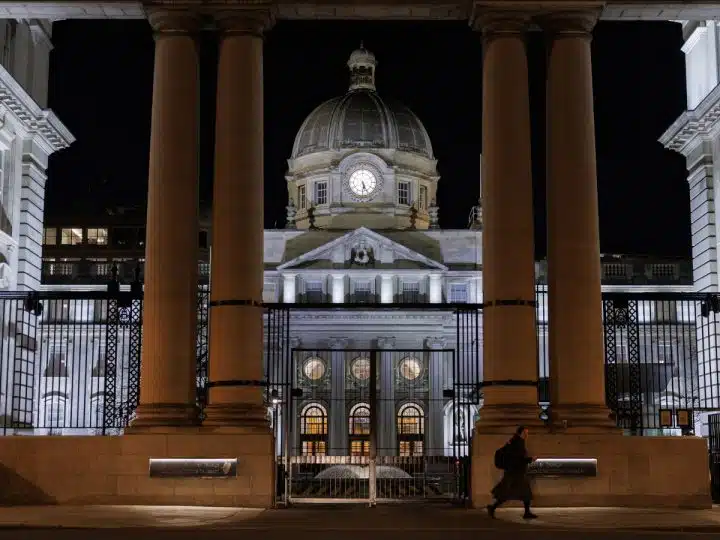

The coalition parties of Ireland’s government, Fianna Fáil and Fine Gael, have shamefully voted down a bill that would have imposed sweeping sanctions on the terrorist pseudo-state that uses the name ‘Israel’.
The Zionist mob running the Irish state were joined by allied Independent TD’s, resulting in a vote of 77–62 against the Sanctions Against the State of Israel Bill 2025.
Calls for ‘historical continuity’
Introduced in November 2025 by People Before Profit (PBP) TD Richard Boyd Barrett, the bill was at the second stage in the Dáil. It called for:
historical continuity with the previous application of economic sanctions against the apartheid state of South Africa.
This is in reference to the sanctions imposed by Ireland in 1987, which mandated a total ban on imports from the white-supremacist regime in South Africa.
The Zionist land thieves squatting on Palestine have gone far beyond even Pretoria’s crimes, with their genocidal assault on Palestinians, and killing sprees across West Asia. Yet the Irish government still refuses to sanction them.
Boyd Barrett’s proposals would have been similar to the legislation of 40 years ago, making it illegal to:
import goods or technology originating in the State of Israel
and to:
sell, supply, transfer or export goods or technology [to Israel].
Dealing in “transferable securities or money-market instruments” would have been forbidden, and no further technical assistance to the Zionist entity could have taken place.
Boyd Barrett challenges Martin’s cowardice
Boyd Barrett confronted Martin in the Dáil over his opposition to the bill, saying:
I’m getting reports from the flotilla organisers that Israel is shooting rubber bullets at boats, that there are Irish citizens on, who haven’t yet been kidnapped by this rogue regime.
Now, there would be uproar if Russia kidnapped people on the open seas, for example. We know there were sanctions immediately when they invaded Ukraine. There would be outrage, and yet this government hasn’t imposed a single sanction on the state of Israel, despite genocide, apartheid and now the seizure again of Irish citizens.
This is in reference to what can be seen in footage that the settler-colony’s thuggish security minister, Itamar Ben Gvir, has been proudly releasing. Ben Gvir has been a key architect of so-called ‘Israel’s’ rape and death camps, and the Gaza holocaust itself.
The footage It shows Ben Gvir taunting flotilla members now in ‘Israel’, who were abducted by the Israeli Occupation Forces (IOF). They are shown being tortured – held in stress positions outside in the hot sun, and in rooms under constantly flickering fluorescent lights. The IOF has kidnapped at least 11 Irish citizens.
One Irish woman, Catriona Graham, bravely shouts “Free, free Palestine” in the face of Amon Göth’s modern incarnation, only to be grabbed round the head and dragged to the floor.
Boyd Barret continued:
What crime does Israel have to commit before we’ll impose sanctions? Why is your government going to vote against the sanctions bill, when the flotilla organisers – and I’d say the majority of people in this country – are saying you should impose sanctions on this state for the crimes it’s committed.
Martin adopted his usual sulky, sullen demeanour when subjected to legitimate criticism, and claimed:
European sanctions against Russia are European. [They are not imposed by] individual member states. The same applies to Israel. What we haven’t been able to get is unanimity at European Union level in respect of Israel.
Zionists in Irish government failing flotilla heroes
The Taoiseach’s assertion is that Ireland, as an EU member state, cannot operate independently when it comes to economic measures against Tel Aviv. Instead, he says, the EU retains exclusive competence over commercial trade and international sanctions.
The much more convincing counter-argument is that Ireland’s obligations under the Genocide Convention trump EU law, meaning they must take all possible steps to prevent and punish genocide.
Whatever the risks involved for the Zionists occupying Ireland’s government, should they institute sanctions, they are nothing compared to those faced by the flotilla participants. These heroes sailed across 1000s of miles of treacherous waters, knowing they would almost certainly end up in the hands of genocidal torturers.
They did that to raise awareness of Palestinians’ plight. They did it to prove that Western governments care more about appeasing Zionist rapists and murderers, than they do about the wellbeing of their own citizens. By voting down the Sanctions against the State of Israel Bill 2025, Micheál Martin has given the best evidence yet of this fact.
Featured image via Dan Kitwood / Getty Images




Greece is emerging as a destination not just for tourists but for talent and investment
For years, Greece’s international reputation rested on an image of its recognisable coastlines and ancient ruins – a place people associated with escapism and holidays. Today, it is carving out a new image as a place of opportunity.
The numbers tell one part of the story. According to the Bank of Greece, the country welcomed 40.7 million inbound travellers in 2024 and generated €21.59 billion in travel receipts. Those figures confirm Greece’s position as one of Europe’s tourism powerhouses. Yet today, that is just one part of Greece’s story.
A decade ago, professionals largely followed jobs. Today, many jobs follow professionals. Technology has untethered millions of workers from a fixed location, creating a new class of internationally mobile talent with genuine freedom over where they base themselves. For these individuals, Greece has become an increasingly attractive proposition.
Its appeal is not difficult to understand. It combines a high quality of life with strong international connectivity, access to the Schengen Area, a favourable climate and a cost base that remains competitive compared with many Western European cities. For someone able to work from anywhere, those factors carry real weight.
The introduction of Greece’s Digital Nomad Visa in 2021 was an early recognition of this trend. More importantly, it signalled that policymakers understood a larger reality: attracting talent is becoming just as important as attracting tourists.
Recent decisions also demonstrate how seriously Greece takes its tourism sector. In response to concerns that the European Union’s new Entry/Exit System could create lengthy queues and disruption for travellers, Greek authorities moved to simplify arrival procedures for British visitors, one of the country’s most important tourism markets. The move reflected a broader willingness to prioritise visitor experience and maintain Greece’s competitiveness in an increasingly crowded international travel market.
Meanwhile, digital nomads are often dismissed as little more than holidaymakers with laptops. In reality, they can be something much more valuable. They rent apartments, support local businesses, build professional networks, and, in many cases, stay far longer than traditional visitors. Some eventually establish companies. Others invest in property. Many become repeat residents. In that sense, digital nomads sit at the intersection of tourism and investment. They are often the bridge between the two.
The same logic can be seen in Greece’s approach to investment migration. The country’s restructured Golden Visa programme, with investment thresholds of €800,000, €400,000 and targeted €250,000 options, reflects a shift away from volume and towards longer-term contribution. The objective is not simply to attract capital, but to attract people with a stake in Greece’s future.
What makes Greece particularly well-positioned is that these trends reinforce one another. Tourism creates familiarity. Familiarity encourages longer stays. Longer stays lead to investment and, in some cases, relocation. Few countries possess such a strong tourism brand while simultaneously offering pathways for residence, investment and remote work.
The relationship between tourism and mobility is becoming increasingly important. Millions of British travellers visit Greece every year, and policymakers understand that today’s visitor can become tomorrow’s remote worker, investor or resident. Measures designed to make travel smoother and more accessible help strengthen that pipeline, turning short-term tourism flows into longer-term economic participation.
Spain has built an impressive ecosystem for digital nomads. Portugal has long been a leader in international mobility. Italy continues to benefit from its cultural prestige and global appeal. Greece does not necessarily dominate any one category. Its advantage is that it performs strongly across all of them.
For decades, Greece’s reputation was built on what people came to see. Its future may depend just as much on the people who decide to stay.
Katie Lam is a shadow Home Office minister and MP for Weald of Kent.
In his farewell speech to the nation, Keir Starmer talked of “what [he’d] achieved in just two years”. You’d be forgiven for thinking that this was a bad attempt at a joke – but the outgoing Prime Minister seemed to be completely serious.
After nearly two years of Starmer, we’ve made little-to-no progress on the major problems facing our country. In fact, he’s made a lot of our existing issues worse, and created a whole host of new ones.
Take his talk of “an economy that is stronger, growing faster than our peers”. The British economy has in fact grown by just 1.1 percent a year since Labour came into Government – less than half of what the US has achieved. The latest quarterly national accounts data says that, on a per person basis, our economy is actually shrinking.
The Prime Minister says that we should be grateful for, “wages rising faster than inflation”. In July 2024, wages were growing at more than 5 percent a year, while inflation was at 2.2 percent (2.8 percentage points less). By this April, inflation was up to 2.8 percent, while wage growth was down to 3.4 percent — so the gap has shrunk to about half a percentage point. In short, it’s becoming more difficult for people to afford the essentials, just as their wages aren’t growing as fast as they were.
Starmer spoke of “investment secured, infrastructure being built”. That’s despite the fact that, in the first quarter of 2026, business investment was nearly 2 percent lower than a year before. Meanwhile, more than half of new infrastructure projects signed off by this Government have been delayed. The Cambridge Waste Water Treatment Plant was delayed by six months before being cancelled – but not before £80 million of taxpayer money was spent on planning.
Next came his appeals to the Labour left – “an end to austerity”. If by “an end to austerity”, he meant “putting up taxes, despite promising not to, to pay for more welfare”, he was right – thanks to Starmer, we’re spending billions more on people who don’t work.
Then he claimed to have overseen “the biggest improvement in rights for workers and renters in a generation” – but making it harder for people to get a job, or to find somewhere to rent, isn’t an “improvement” in anybody’s rights. Thanks to Labour’s changes, the number of job opportunities is at the lowest level since the pandemic, and rents continue to rise.
“The biggest uplift in defence spending since the Cold War” – despite the fact that his own Defence Secretary resigned just last week, saying that Starmer was “unwilling to commit the resources that the nation needs to defend the country”.
“Small boat crossings falling” – despite the fact that crossings have actually increased by nearly 10,000 people a year since he came into office.
“Asylum hotels closing” – but only because the Government is now pushing illegal migrants directly into our communities.
And then there are the things that Starmer didn’t mention. Scrapping jury trials, enabling vexatious prosecutions against Northern Ireland veterans, letting tens of thousands of criminals a year avoid prison, and taking the disastrous decision to appoint Peter Mandelson as US Ambassador. He let Bridget Phillipson wreck the curriculum, let David Lammy continue to inject group-based grievance politics into our judiciary, and let Ed Miliband blow up our homegrown oil and gas industry.
His record speaks for itself. Keir Starmer was a complete failure.
If there was a silver lining to Starmer’s tenure as Prime Minister, it was his weakness – which made it possible for Kemi Badenoch and the Conservatives to force him into u-turn after u-turn. He was dragged into holding a national inquiry into the grooming gangs, into watering down his family farm tax, and into scrapping his plans for digital ID.
Of course, Keir Starmer didn’t act alone. He was supported along the way by more than 400 Labour MPs, almost all of whom supported these changes. When they pushed back, it wasn’t because they recognised how terrible Starmer’s instincts were – it’s because they wanted him to double down. They rebelled when he tried to reduce the growth of the welfare bill – not the total amount, just the growth. As Labour’s own Welfare Secretary said, the first question raised by Labour MPs is always “who can we tax in order to pay benefits to others?”.
And so, while Starmer might be going away, the Labour Party isn’t. Their MPs will remain the same, and so will the challenges facing the country. Though much-touted as a fresh face, Andy Burnham is an establishment Labour man, through and through. He was first elected as a Labour MP in 2001, while I was still at primary school; he served in Gordon Brown’s Cabinet.
Regardless of the churn at the top, the fundamentals remain the same. Labour will not secure our borders, they will not cut our ballooning welfare bill, and they will not do what’s necessary to keep our country safe. They are simply not dispositionally or ideologically capable of making the trade-offs that we need to make in order to fix any of these problems.


Rep. April McClain Delaney won her bitter and expensive Democratic primary for Maryland’s 6th District on Tuesday, denying her predecessor, former Rep. David Trone, from making a comeback.
The race drew $23 million in TV spending, with much of that coming from the candidates directly, and became a microcosm of the Democratic Party’s clashes over President Donald Trump, money in politics and immigration.
McClain Delaney, who is serving her first term in Congress, had the backing of the rest of the state’s Democratic congressional delegation, along with Gov. Wes Moore.
Trone announced he would challenge McClain Delaney in December, citing in part her vote for the Laken Riley Act, a Republican-led immigration bill. McClain Delaney later said she regretted the vote, saying she hadn’t imagined “the horror” of Trump’s immigration enforcement would come to pass.
Trone almost entirely self-funded his attempt to return to Congress. He previously represented the 6th District for three terms but gave up his seat to run for Senate in 2024, losing in the primary to now-Sen. Angela Alsobrooks (D-Md.). McClain Delaney, who is married to former Rep. John Delaney (D-Md.), won an open primary and was elected to the seat that year.
The seat is considered safe for Democrats for the midterms. McClain Delaney won by a bit more than 6 points in 2024.
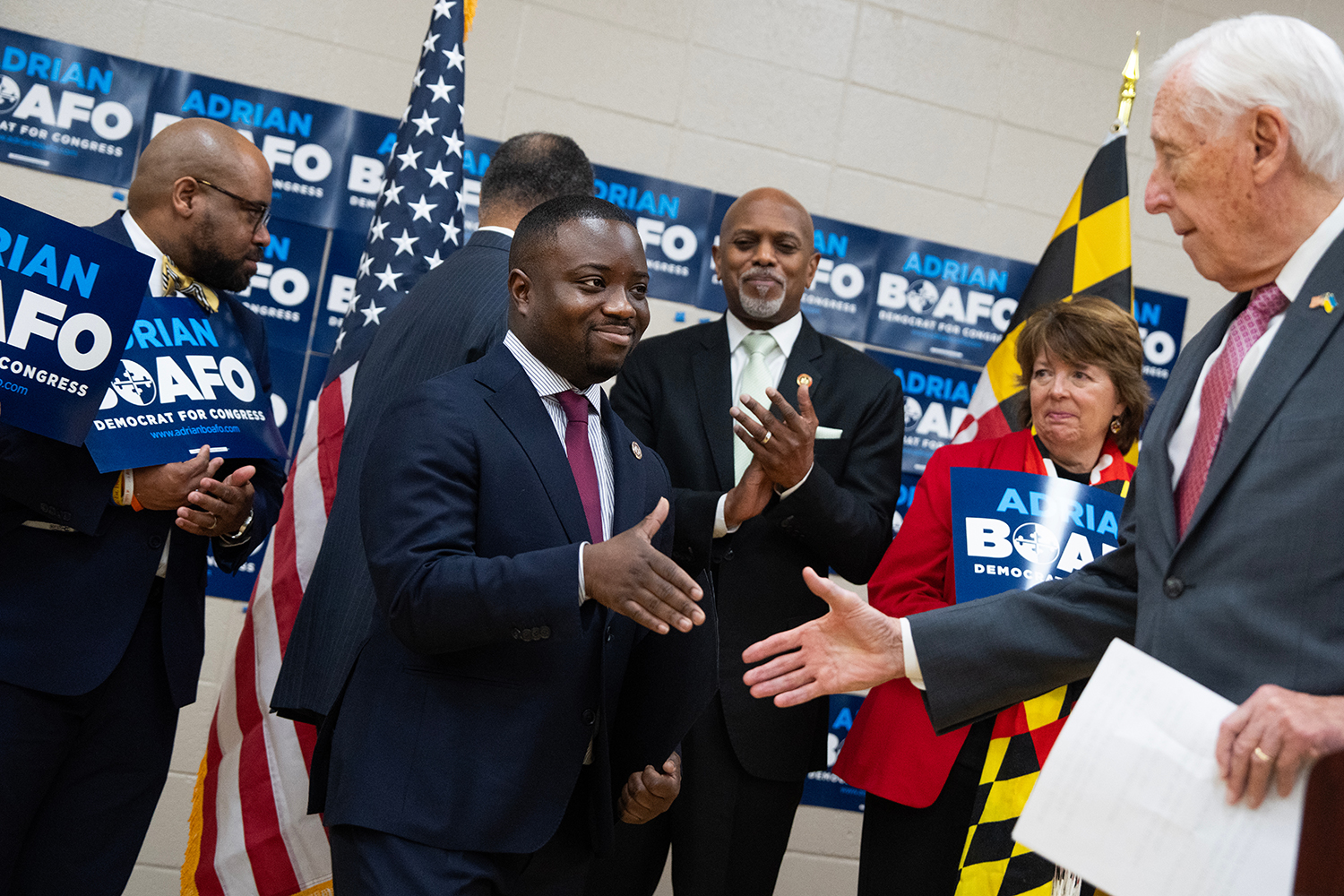

Maryland state Del. Adrian Boafo won the Democratic primary Tuesday to replace retiring Rep. Steny Hoyer in the 5th District, aided by $11 million from pro-crypto and pro-Israel groups.
Boafo was Hoyer’s preferred successor and his former campaign manager. The primary was marked by intraparty divisions over heavy outside spending and what may be the last intraparty fight between Hoyer and former House Speaker Nancy Pelosi, who endorsed a rival in the race.
United Democracy Project, a super PAC associated with the American Israel Public Affairs Committee, pumped $5.7 million into the race to promote Boafo, becoming the single biggest spender on the airwaves. Protect Progress, a super PAC aligned with the crypto industry, poured $5.5 million into the race, largely to benefit Boafo, a former federal lobbyist for the tech firm Oracle.
This spending in the crowded 24-candidate field drew the ire of many of Boafo’s rivals. Three of them — Harry Dunn, Rushern Baker and Quincy Bareebe — took the unusual step of jointly denouncing the interest groups’ efforts to influence the primary outcome. Sen. Chris Van Hollen (D-Md.), a potential 2028 presidential contender who did not endorse in the race, also accused the groups of trying to buy the seat.
Boafo’s victory now stands as a major win for the powerful arm of the pro-Israel lobby that’s drawn heavy scrutiny from some Democrats over its aggressive tactics in this year’s primary contests, as well as for Hoyer in getting his handpicked successor for his seat.
Hoyer has been a longtime AIPAC ally, and Boafo has called to strengthen the U.S.-Israel alliance, though he’s also been critical of Prime Minister Benjamin Netanyahu.
Boafo batted back the attacks over AIPAC and crypto spending by saying “big money has no place in politics.” Hoyer defended Boafo in an ad from United Democracy Project, saying the now-nominee has the “courage to stand up to any special interests.”
The messy primary had divided the state’s top Democrats and pitted two of the party’s most powerful leaders — Hoyer and Nancy Pelosi — against each other in perhaps the final clash of their decadeslong and sometimes rivalrous relationship. Hoyer was an early supporter of Boafo, while the former speaker and daughter of Baltimore sided with Dunn, a former Capitol Police officer whom she had grown close with in the aftermath of the Jan. 6 riot.
Boafo has a roster of high-profile Democratic backers that includes Gov. Wes Moore — another potential 2028 presidential candidate — as well as Sen. Angela Alsobrooks and Rep. Sarah Elfreth. He is all but guaranteed to win the seat in this deep-blue district in November.

spiked is funded by readers like you. Only 0.1% of regular readers currently support us. If just 1% did, we could grow our team and step up the fight for free speech and democracy.
Become a spiked supporter and enjoy unlimited, ad-free access, bonus content and exclusive events – while helping to keep independent journalism alive.
There is usually a very singular and overarching explanation from much of the British establishment when working-class communities express anger over such issues as immigration, crime or economic decline: they must have been manipulated into thinking that way. And when, after years of not having their voices heard, this anger bubbles up into rioting – never a good idea, never to be encouraged, but often understandable in its sentiment – the same explanation comes out again.
We’ve seen this over the past month or so, just as we’ve seen it repeatedly in recent years. When residents protested outside migrant hotels last year – in places as disparate as Epping, Rotherham, Falkirk and Norwich – there was plenty of commentary looking to explain away their concerns as the product of far-right agitation. Few people, it seems, want to ask why ordinary people were turning up in the first place – or, at least, they might have been asking why, but they certainly didn’t seem prepared to hear the answers.
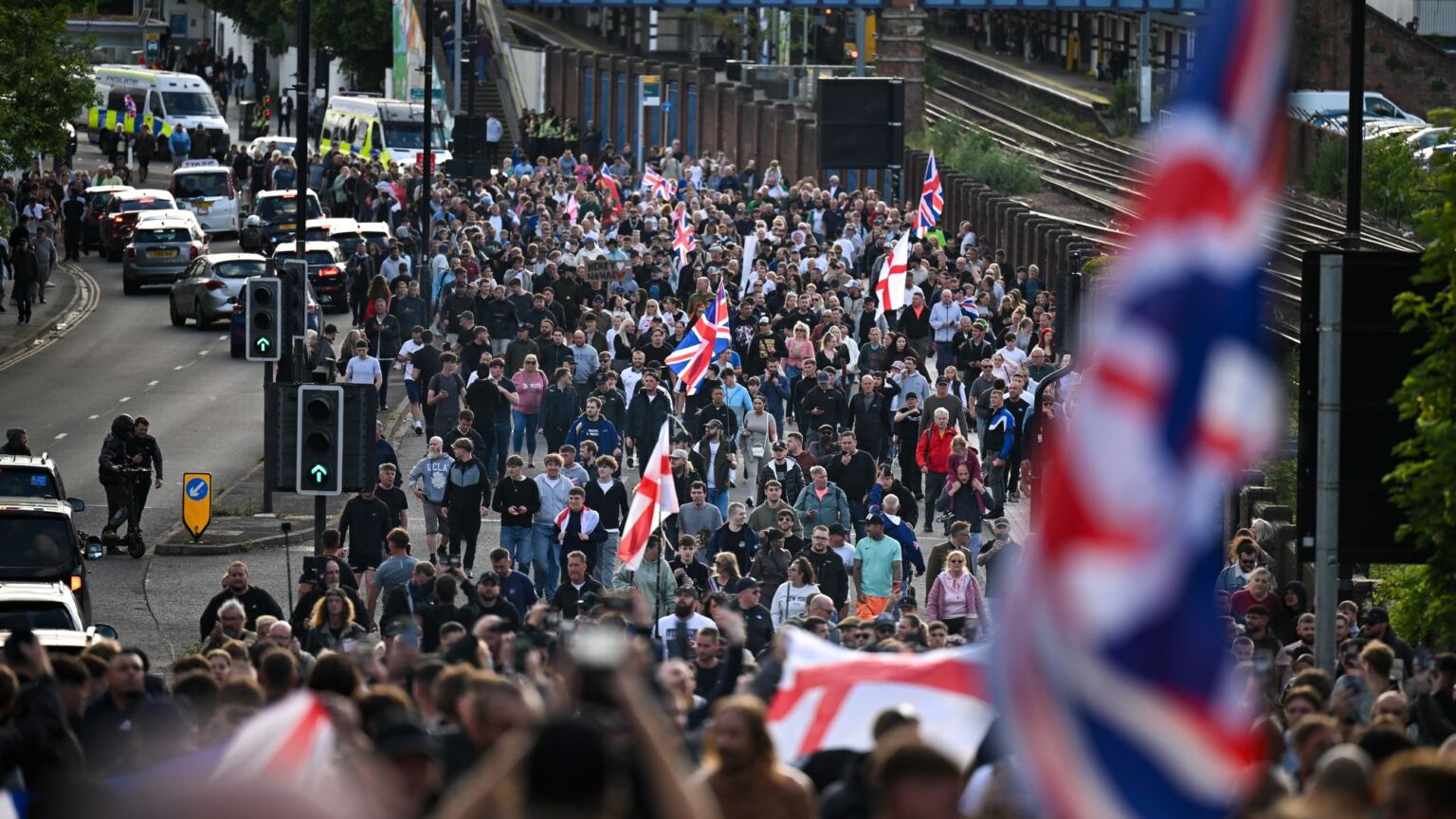
The recent unrest in Belfast – or the outright unconscionable violence in Belfast, to be fair – and demonstrations a few days before that in Southampton have been repeatedly viewed by the left through the same lens: as outbreaks of manipulation, misinformation or extremism.
This explanation often feels both suspiciously convenient and spectacularly patronising. It allows politicians and commentators to focus on who is supposedly influencing people, rather than on the grievances those people are expressing. The possibility that thousands of citizens might have arrived at similar views independently through their own experiences and observations – or, at least, that they might have parsed the media’s output and come to similar conclusions – seems to escape them. Or so they say.
Modern Britain is full of people who speak reverently about the importance of lived experience. We are constantly being told that people understand their own lives better than distant observers ever could. Fair enough, I suppose. Yet this principle seems not to apply when working-class people reach conclusions that the chattering classes dislike. Suddenly, lived experience becomes ignorance. First-hand observation becomes prejudice. Political disagreement becomes evidence of manipulation – a manipulation their own supporters would never fall prey to, to hear the Zack Polanskis of the world tell it. They are presumably too well-educated and / or virtuous for all of that. Some people are just better – you could see it as a modern Calvinism by the back door.
In this way, working-class members of the British electorate are treated more like patients than citizens, suffering from a condition that requires diagnosis and correction, both readily offered.
Of course, politicians, journalists and campaigners influence public opinion. They always have. So they should. Yes, Nigel Farage calling for ‘pure, cold rage’ after Henry Nowak’s murder trial would have been a red flag to many a bull. And yes, the political temperature has been climbing for some time now. But it is absurd to suggest that millions of people have arrived at similar conclusions purely because they have been whipped into a frenzy by demagogues.
They live in their communities, see things they don’t like, consistently vote against those things, and have their views ignored – just as they have been ignored for decades. So it doesn’t take much to mobilise them into the only action that will get them noticed.
People do not need a tabloid headline to tell them that their wages have stagnated, that they or their children cannot find jobs, that it’s taking two people’s full-time wages to fund a household that used to enjoy greater purchasing power on one. They do not need a populist politician to inform them that housing has become harder to access. They do not need a social-media influencer to notice that public services are under strain, that their town centre has deteriorated or that the character of their neighbourhood has changed dramatically over the course of a generation.
These are observations drawn from daily life. All the commentariat can do is gaslight them (as most are doing) or tell them that yes, they’re on to something (these are the ones usually accused of whipping people up, obviously).
Immigration provides perhaps the clearest example. It’s certainly the most tangible one at the moment – it’s in the air. For decades, opinion polls have consistently shown substantial public concern about immigration levels. Election after election, voters have backed parties promising tougher controls. In 2016, immigration was one of the central issues driving support for Brexit. Yet throughout this period immigration levels continued to rise to historically revolutionary levels – all across the country. Not since the Angles, Saxons, Jutes and Frisians argued over ancient Britannia have we seen such radical change.
People have noticed, and most people are unhappy about it – they just happen not to be the ones in power.
One need not oppose immigration to recognise the democratic significance of this fact. Millions of voters have repeatedly expressed a preference. Governments of various political colours have repeatedly failed to act upon it. To suggest that concern about immigration persists only because newspapers keep inflaming the issue is to ignore the obvious. People are concerned because they remain unconvinced that their views are being heard.
The same pattern applies to a host of other issues. Whether the subject is crime, anti-social behaviour, deindustrialisation or economic insecurity, ordinary people are often told that the problem lies not with the conditions they describe but with the information they consume. The diagnosis is always the same. The public is wrong. The public has been misled. The public requires re-education. This reveals a profound distrust of democracy itself.
In a healthy democracy – which, I am told, we used to be – citizens are free to reach conclusions disliked by their elected representatives. Disliked by anyone, really. They are free to hold and espouse views that academics, journalists and politicians consider mistaken or morally questionable. The answer is to listen to them and either argue the toss or (preferably) switch course, not to simply shout them down as stupid bigots.
Yet, increasingly, sections of the British commentariat appear unable to accept that voters may have arrived at their opinions honestly. They search endlessly for malign influences, foreign actors and populist agitators – of which, admittedly, there are and always have been plenty. But they are not scapegoats and their existence doesn’t delegitimise a whole body of people and their opinions.
There is a long tradition on the left of criticising the upper classes for assuming they know what is best for ordinary people. Yet much contemporary commentary reproduces exactly this attitude. It assumes that working-class voters are incapable of understanding their own interests and must therefore be guided towards the correct conclusions by enlightened professionals. It’s class prejudice of the worst kind, and it’s bloody hypocritical to boot.
James Dixon is a Glasgow-based novelist, poet and playwright.
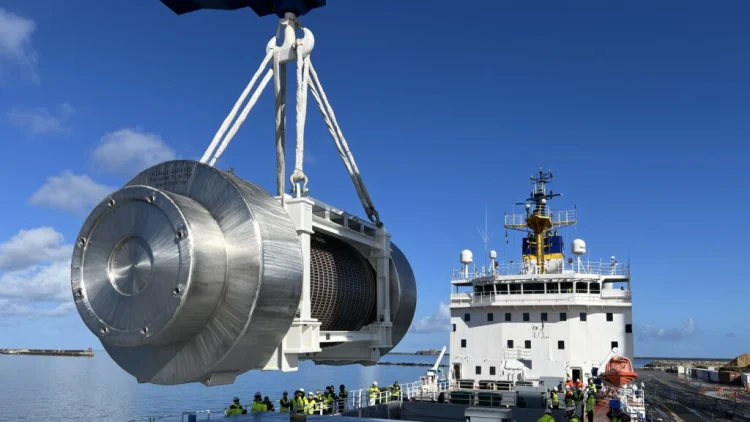

Nuclear Transport Solutions (NTS), the world’s leading nuclear transport specialists, has successfully evolved its shipping capability to transport a new nuclear flask, ensuring the safe and secure transportation of spent Mixed Oxide (MOX) fuel.
A new package was required to transport this material, and one of NTS’s specialist ships, Pacific Grebe, was the first in the fleet to be adapted to accommodate the new flask.
The engineering challenge of fitting the package, which is the largest ever transported by NTS, was undertaken by the organisation’s transport experts and specialist engineers.
An adapter plate was produced to ensure the cargo would securely fit within the ship’s hold. This required millimetre precision, along with the manufacture of a specialist tool to ensure the ship’s removable decks aligned perfectly with the new TN Eagle flask, which would carry the material.
Following initial trials at Barrow Marine Terminal, a full-scale test fitting took place in Cherbourg, France, using the specialist vessel operated by Pacific Nuclear Transport Limited (PNTL), NTS’s specialist shipping division.
The 150-tonne flask was successfully placed in the ship’s various holds to check compatibility, and the exercise proved an outstanding success.
Conner Love, NTS Director of Shipping, said: “This has been a fantastic collaborative effort between NTS and PNTL. It demonstrates the world-leading expertise we possess in nuclear shipping and engineering.
“We are proud to have worked on the successful completion of this project, but this is just the beginning as we embark on a series of vital spent fuel movements around the globe.”
Another of PNTL’s ships, Pacific Egret, will be adapted in the near future to transport the new flask.
Politics
Politics Home | NTS delivers landmark HALEU shipment, reinforcing global leadership in advanced nuclear fuels transport
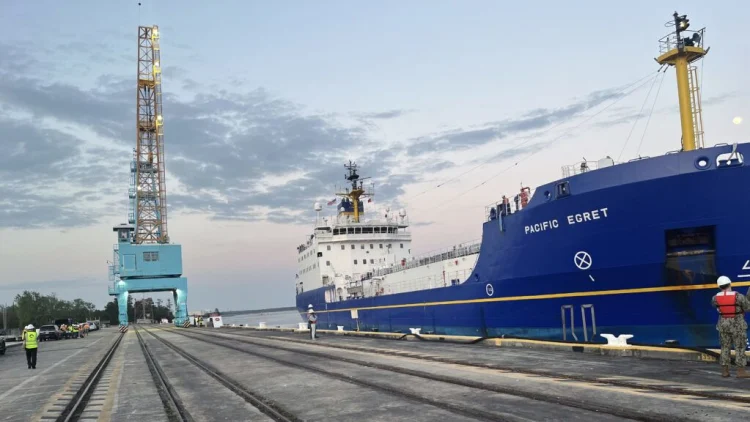

Nuclear Transport Solutions delivers landmark HALEU shipment, reinforcing global leadership in advanced nuclear fuels transport
Nuclear Transport Solutions (NTS) has successfully completed a major international shipment of high-assay low-enriched uranium (HALEU) fuel, supporting the safe, secure and reliable transfer of the material from Japan to the United States.
The operation was conducted in collaboration with the U.S. Department of Energy’s National Nuclear Security Administration (NNSA), Japan Atomic Energy Agency and the Japanese government – with 1.7 metric tons of HALEU transported, the largest single international shipment of uranium in NNSA’s history.
It demonstrates NTS’s unique expertise and capability in the transport of HALEU fuel, a material that is central to the deployment of advanced nuclear technologies and next-generation reactors.
The achievement also marks a significant step in NTS’s role in spearheading the UK’s HALEU transport capability, following its £10.5 million funding award from the UK government in 2024. By developing and delivering the specialist expertise required for HALEU movements, NTS is helping to position the UK as a critical international partner in enabling secure and resilient advanced nuclear fuel supply chains.
Ben Whittard, co‑CEO of Nuclear Transport Solutions, said:
“This operation clearly demonstrates NTS’s unique capability in the transport of HALEU fuel. We’ve brought together deep technical expertise, operational excellence and decades of global experience to deliver a highly complex shipment safely, securely and successfully.
“As HALEU becomes increasingly important to advanced nuclear programmes worldwide, NTS is proud to be at the forefront of providing the transport solutions that make this possible.”
Ciara Middlehurst, co‑CEO of Nuclear Transport Solutions, added:
“This is a powerful example of what can be achieved through strong international partnership. Working closely with our colleagues and partners in the United States and Japan, we’ve shown how trusted collaboration, shared standards and alignment of purpose can enable critical nuclear activities while upholding the highest security and non‑proliferation commitments.”
NTS’s growing collaboration and reputation across the international nuclear sector was highlighted earlier this year following the signing of a landmark Heads of Terms agreement with Westinghouse, at the British Embassy in Washington DC – reinforcing shared ambitions to support the emerging HALEU supply chain.
Politics
Politics Home | LLW Repository Environmental Safety Case submitted to the Environment Agency
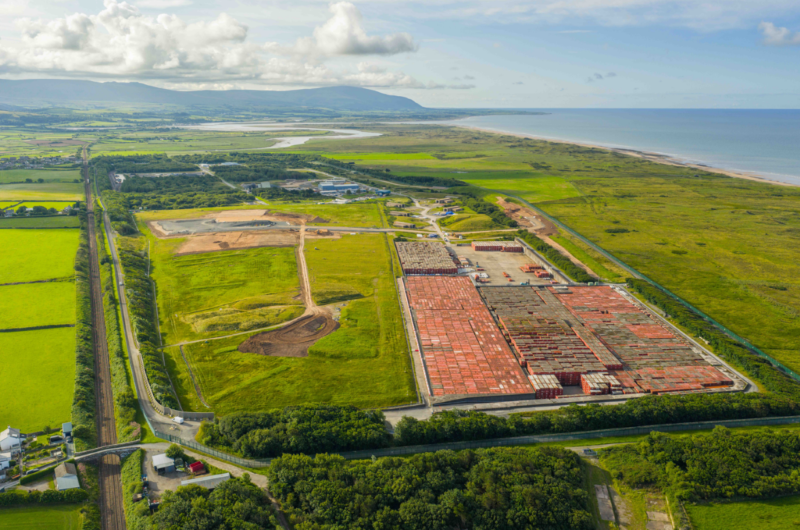
At the Low Level Waste (LLW) Repository, work is underpinned by a comprehensive and robust Environmental Safety Case (ESC); a rigorous set of reports which considers environmental safety now, and in the future at the LLW Repository.
After years of preparation, NWS submitted a major update to its ESC to the Environment Agency on 1 May 2026. The last major submission was 15 years ago and a lot has changed over that time, including operational experience, scientific understanding, regulatory feedback and our understanding of the waste inventory. The Environment Agency will now undertake an independent technical review of the 2026 ESC.
Sam Stead, NWS’ ESC Lead, said:
“We place a great deal of importance on the Environmental Safety Case. It requires rigour, transparency and a strong sense of responsibility, because it is fundamental to how we evidence safety and environmental protection over the long term at the Repository.”
The ESC is an essential part of how NWS shows it is meeting the highest standards of environmental protection at the Repository site. It demonstrates that the mitigations it has, and will, put in place do not detrimentally impact the area around the Repository site, including local water sources, air quality, wildlife, and the wellbeing of the community.
As the duty holder for the Repository site, and owner of the ESC, Mike Pigott, Executive Director of Sites and Operations, said:
“The ESC underpins our environmental permit and reinforces public and regulatory confidence, demonstrating how we are continuing to dispose of radioactive waste safely, both now and far into the future.”
You can read more about the ESC in our Guide to the Key Points

(Jeffrey Blackler / Alamy)
4 min read
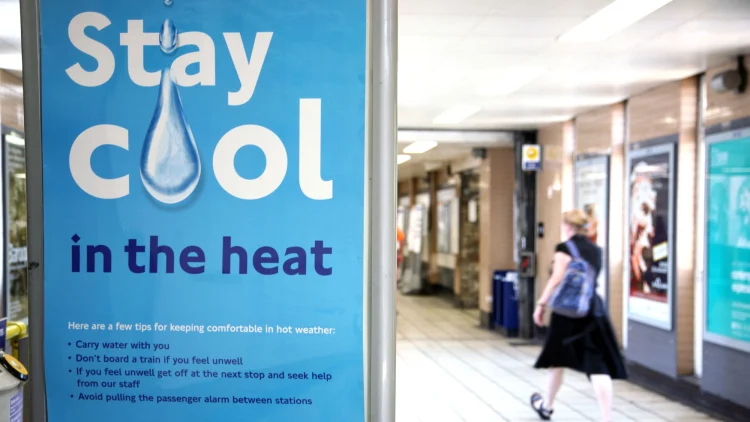
The UK is in the throes of our second significant heatwave of the year. It is still early summer. That fact alone ought to give us pause.
We are a country whose infrastructure, public services and daily rhythms were built for drizzle, not temperature spikes that strain hospitals, halt transport systems and leave elderly and vulnerable people at risk. And yet, these extremes are becoming familiar. The danger lies not only in the rising heat, but in the creeping normalisation that follows – the sense that this is simply our new weather, something to be endured rather than addressed.
This should not be the case. Moments like this should remind us that climate change is not an abstract, distant threat, but a reality shaping life here in Britain today. From parched fields in the East of England to overheating classrooms and overstretched water systems, the impacts are tangible and unevenly felt. Those with the least – poorly insulated homes, insecure work, fragile health – bear the brunt.
And yet, at precisely the moment when seriousness is most needed, there are growing calls to look the other way. To dilute commitments. To reframe climate policy as an optional extra rather than a central pillar of national resilience. This is simply not a grown-up response to a serious problem.
The role of government is not to chase the easiest argument or yield to the loudest pressure. It is to weigh evidence, act in the national interest, and take responsibility for the long term. Climate change tests all three of these duties. Because while it might sometimes be politically convenient to question the scale of the challenge, or to downplay the urgency of action, the consequences of doing so will not be distributed evenly – and they will not be undone easily.
There is a temptation, particularly in an overheated political environment, to frame climate action as a burden. That framing is as misleading as it is short-sighted. The real burden is the cost of inaction: the damage to infrastructure, the hit to productivity, the strain on public services, and, most importantly, the toll on human lives. There is no better example of this than our privatised water system. Successive governments have failed to grip the issue, trusting the market to take the reins and make long-term decisions for the benefit of the public. As a consequence, we are now dangerously exposed when it comes to water resilience and quality.
We need a government that understands that climate policy is economic policy, health policy, and security policy. That investing in the green transition is not simply a moral choice, but a practical one, shielding us from international shocks and creating jobs in communities that have too often been left behind.
This requires honesty. There will be trade-offs. There will be decisions that cannot please everyone. But leadership is about making those decisions anyway – with clarity, fairness and a sense of shared purpose.
We cannot afford any pretence that we can simply step back from climate commitments. Nor can we indulge the illusion that short-term political gain outweighs long-term national risk. Those urging such paths may offer simplicity, but it is a false simplicity: one that masks, rather than resolves, the challenges ahead.
People understand, instinctively, that the world is changing. They see it in the weather, in the news, and in their own lives. Last summer, the hottest on record, the country recorded more than 1,500 heat associated deaths. The public know they can’t ignore this. What they ask for, rightly, is a plan that matches the scale of the problem and distributes both the costs and benefits fairly.
This heatwave should serve as a reminder of what is at stake. A country that treats such warnings with complacency will find itself on the back foot, reacting to crises rather than preparing for them. A country that meets them with seriousness, however, has the opportunity not only to protect itself, but to lead.
Alistair Strathern is the Labour MP for Hitchin

Preston Davey killer Jamie Varley ‘sobbing’ on first night at HMP Wakefield

Congress sends anti-CBDC housing bill to President Trump’s desk

Politics Home Article | Greece: more than a holiday destination


-

 Fashion5 days ago
Weekend Open Thread: Miami – Corporette.com
-

 Entertainment3 days ago
Renter of Home in Anne Heche Crash Denies Settlement With Son
-

 Tech2 days ago
Microsoft accidentally kills epic Outlook email threads
-

 Business3 days ago
Soccer-U.S. defends Iran World Cup travel restrictions, says discussions ongoing
-
 Sports12 hours ago
Two goals and an assist by sheer aura: Cristiano Ronaldo just entered the World Cup chat
-
Crypto World3 hours ago
Bitcoin (BTC) Dips Below $62K, Ethereum (ETH) Plunges 6% Daily: Market Watch
-

 Politics5 days ago
BBC Reporter Discusses Cross Party Criticism Of Trumps Iran Deal
-
 Business4 days ago
Wall Street Week Ahead: Investors see Micron earnings as pulse check of AI rally momentum
-
Business6 hours ago
Entergy settles forward sale agreements, raises $672 million in cash proceeds
-

 Politics4 days ago
Andy Burnham and the meaning of Makerfield
-

 Tech6 days ago
AWS enters the context layer race with a graph that learns from agents, not manual curation
-
 Crypto World4 days ago
Can Charles Hoskinson Really Rescue Cardano?
-

 Crypto World4 days ago
HIVE shares jump as $220M AI deal speeds Bitcoin mining pivot
-

 Crypto World4 days ago
Jake Chervinsky accuses CME of protecting derivatives monopoly
-

 NewsBeat5 days ago
Keir Starmer Allies Question His Chances For No 10
-

 Tech1 day ago
Nearly 7,000 fake Amazon domains registered ahead of Prime Day 2026, researchers warn
-

 Business5 days ago
Brexit cost 6% of UK economy, Bank of England company data suggests
-

 Sports5 days ago
FIFA World Cup 2026: Canada beat 9-men Qatar 6-0 to register first ever win | FIFA World Cup 2026
-
 Tech3 days ago
Signal’s Meredith Whittaker says AI chatbots ‘are not your friends’ and calls Copilot agents a backdoor
-

 Entertainment4 days ago
Jose Alvarado Wants Taylor Swift at More Knicks Games
You must be logged in to post a comment Login