
Politics
Is a customs union worth it?


With debates about whether the UK should enter into a customs union with the EU resurfacing, Joël Reland explains what a customs union actually is and how one would, or wouldn’t, benefit the UK.
Brexit is back in political fashion. Three times last week the Prime Minister publicly bemoaned the costs of Brexit, after the Chancellor made similar remarks in the run-up to the budget. There are now even murmurs that some in No. 10 would like to pursue a customs union with the EU, to undo more of the economic damage which Brexit has created.
Many might welcome this. But a customs union is far from being a silver bullet for the UK’s economic woes, and it does have some potential downsides. A healthy dose of reflection would be welcome before any talk gathers steam.
A customs union, simply, would mean the UK charging the same tariffs on imports as the EU. If the EU slaps major tariffs on Chinese or American goods, the UK must do likewise. The main benefit is that a common ‘external tariff’ removes the need for goods traded within the customs union to prove where they come from.
This would eliminate a chunk – but by no means all – of the trade bureaucracy which Brexit has created. No longer would UK exporters have to prove that they meet complex ‘rules of origin’ to qualify for tariff-free trade with the EU, reducing administrative costs.
Proving compliance with these rules is estimated to add 2-8% to the cost of exporting goods, and some companies have stopped trading with the EU as a result, while a sizeable minority prefer to pay EU tariffs than absorb the admin costs. The burden is generally higher in heavy industry and lower for agrifoods.
A customs union does not, however, remove the need for border checks and other paperwork which stems from the UK being outside the single market. Rejoining the single market is the single-biggest lever the government could pull to boost economic growth – but a customs union is perhaps more politically viable as it does not (in principle) require accepting freedom of movement.
The precise economic benefits are hard to determine, because the UK would not – contrary to the widely-used phrasing – be rejoining the EU customs union. That club is only open to members of the single market (plus a couple of microstates and territories). The UK would instead have to follow the lead of Turkey, Andorra and San Marino by signing a customs union with the EU from scratch.
There is no off-the-shelf model to go for. Turkey, for instance, has harmonised its tariffs on most, but not all, goods (primary agricultural products, coal and steel are excluded) and aligned much of its technical goods regulation with the EU, removing most additional checks for industrial goods.
The UK would have to consider the scope of its own putative agreement. Does it want to cover all sectors? And should it also commit to regulatory alignment on goods? Which could significantly enhance the economic benefits but means more ‘rule-taking’ from Brussels.
The EU would also likely drive a hard bargain (as recent SAFE negotiations show) and could insist on conditions like budgetary payments or freedom of movement – even though they are not strictly necessary.
The one clear sacrifice is over trade policy. The government would have to review or unwind some – if not all – of the trade deals it has concluded since Brexit; as it could not offer more favourable tariff rates to partners than the EU does.
At the same time, the UK would not benefit from liberalised access to markets with which the EU signs a new trade deal – unless secures its own deal in parallel. The UK’s ability to negotiate new trade deals would largely be limited to mirroring what the EU does.
So, are those losses worth the gains? The widely–cited claim that a customs union would boost UK GDP by 2.2% should be taken with a pinch of salt, as this is in fact based on a scenario where the UK has ‘deep alignment on goods and services’ with the EU – an unrealistic option which is in effect the single market without freedom of movement.
Nevertheless, there would likely be a net economic benefit from a customs union. The new trade deals which the UK has signed since Brexit are estimated to add half a percent per year to UK GDP towards the end of the next decade. Meanwhile, pre-Brexit government analysis found that leaving the customs union would reduce long-run GDP by about 1%. So the (very rough) net customs union benefit might be 0.5% of GDP, or £15bn a year. A deal involving regulatory alignment on goods would provide a bigger boost.
For this Labour government, the key questions are whether those gains justify giving up control of its independent trade policy (of which it appears rather fond), and whether, if it is to take a political risk and breach its red lines, it should go for the relatively modest economic returns of a customs union, or for something more ambitious.
By Joël Reland, Senior Researcher, UK in a Changing Europe.


The I’m Every Woman singer was chatting to Jessie and Lennie Ware on their Table Manners podcast when Lennie asked her if she watched any British telly.
Lennie then pressed Chaka on what she was watching at the moment, to which she revealed: “You know what I love here is Chase, The Chase. I love something like that. I love to learn.”
But it’s not just Bradley Walsh’s quiz that Chaka is partial to.
It turns out the funk icon is also a fan of ITV’s arcade-inspired gameshow Tipping Point, hosted by Ben Shephard.
When Lennie jogged her memory on another of British TV’s quiz shows, she responded: “Oh I love that too! The thing that comes out… the thing… they slide down the end? Yeah, right, I like that too.”
The petition to get Chaka on Celebrity Gogglebox starts now.
Chaka isn’t the first American celebrity to fall in love with British TV, though.
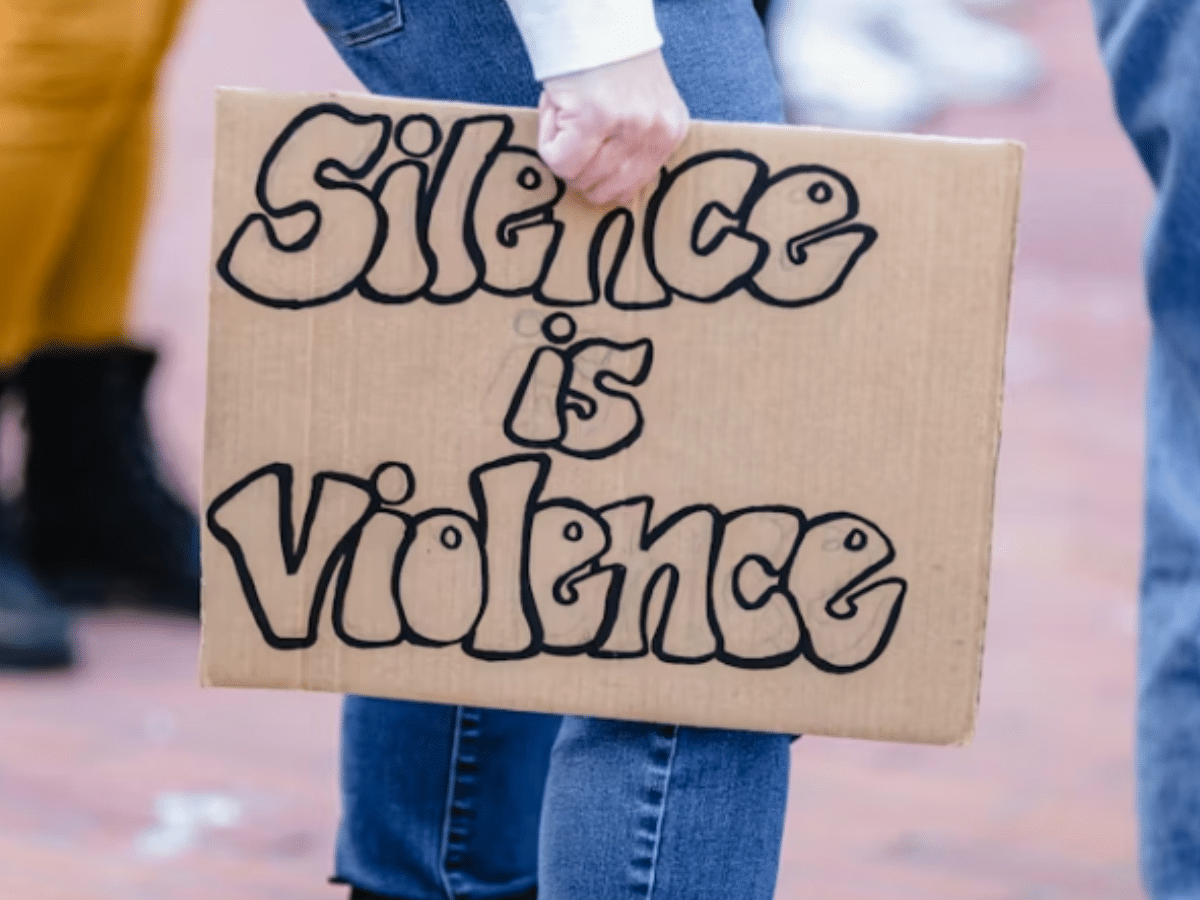
A Northern Irish politician, speaking on Good Morning Ulster, cited “precarious work” and “poverty wages” as issues. These contribute to North of Ireland having the worst rate of femicide across Britain and Ireland. During her television appearance, Sinn Féin MLA Deirdre Hargey said:
We need a different type of economy that actually supports women within the workplace, where there is well paid jobs and not precarious employment. Some of these women, they don’t have the finance, the independence, and that’s how some of these perpetrators try to encage them.
These issues have come to the forefront of public debate after two young women were murdered in March, as well as the conviction of a man who killed his pregnant partner in 2022.
Ellie Flanagan, 23 year-old, was murdered on 7 March by Martin McCarne—her mother’s husband. McCarney was charged with murder and “possession of an offensive weapon (three knives).”
The Police Service of Northern Ireland (PSNI) found 28 year old Amy Doherty murdered at an address in Derry on 21 March. They arrested a 30-year-old man arrested on suspicion of the crime.
Finally, on 23 March a jury determined that Stephen McCullagh had brutally killed partner Natalie McNally at her home in Lurgan three years ago. McCullagh stabbed, beat, and strangled McNally in a brutal attack. He attempted to conceal his crime by blaming it on Natalie’s ex-partner.
Hargey also discussed the issue of housing, with a lack of available properties ready for women wishing to escape domestic violence.
She urged solving:
…blockages in housing for women who are in situations where there is violence perpetrated against them.
Socialist feminist group ROSA North cited similar underlying causes leading to cruel and violent deaths of women and girls. They called for Stormont to focus on:
…ending poverty wages and rampant worker exploitation which disproportionately affects women.
Their statement referred to the need to challenge a capitalist system:
…which allows wealthy and powerful men to abuse ordinary people rampantly.
The group called for this as part of a broader cultural shift which:
…challenges the ideas, culture and norms underpinning the violence; that challenges the impunity abusers are imbued with [and] that challenges rape myths and culture…
The Six Counties (the de-colonial term used to refer to the North of Ireland) undeniably has a problem when it comes to ensuring the safety of women and girls. Official data from 2020 to 2025, shows that there were 30 cases of femicide. That’s a rate of 0.52 per 100,000 people for the period. In contrast, the rate is 0.45 in England and Wales, and 0.24 in Scotland. Most shocking is the comparison with the South of Ireland. There, the figure is 0.15.
For some reason Chief Constable of the PSNI Jon Boutcher thought the appropriate response to this was to defensively quibble over statistics. Rather than simply acknowledge the reality of the problem, he should pledge to improve the force’s approach to it.
On 26 March, Boutcher spoke of a statistical error in a 2019 BBC report that may have given a misleading impression regarding rates of domestic in the North of Ireland. Speaking before the Northern Ireland Affairs Committee in Westminster, he said that the BBC had cited 8 murders for the year 2017. In reality, only four murders had occurred.
That’s a moot point given the figures discussed above. Boutcher then went on to give a self-serving, rambling, and incoherent response to what the police might do to prevent femicide.
Boutcher instead focused on the rise of the manosphere — the cretinous online influencers who push a misogynistic worldview, instead of looking at the wholesale issue of femicide. While turds like Andrew Tate are undoubtedly a malign influence, their recent emergence doesn’t explain rising rates of domestic violence. Over the past 15 years rates remain appallingly high.
Hargey suggested the PSNI need to ask themselves:
Are we prioritising it as much as we could be?
She said it was “something we have been pushing the police on.” Like any social problem, the police are rarely the sole nor ultimate solution. They can however do more and invest greater funds to ensure women are protected.
Recognising the scale of the crisis, ROSA North called for everyone in society to be part of a movement combating gender violence. Citing MeToo, Ni Una Menos in Latin America, and Black Lives Matter, the group said:
Let’s look to them for the much needed inspiration to keep fighting for the radically different world we believe possible.
Featured image via the Canary

And a modified version of the approach, called the Mediterranean-DASH Diet Intervention for Neurodegenerative Delay or MIND diet, is designed to slow brain ageing in particular.
It’s been linked to a 53% lower risk of dementia among its strongest adherents, and a 35% reduced likelihood among moderate adherents.
It combines the Mediterranean diet, which focuses on heart-healthy foods like olive oil, fruits, vegetables, and fish, with the blood-pressure-friendly DASH diet (high in lean proteins, lower in salt, and also rich in fresh produce).
Generally, the MIND diet focuses on leafy greens, berries over other fruits, nuts, legumes, whole grains, fish, and olive oil.
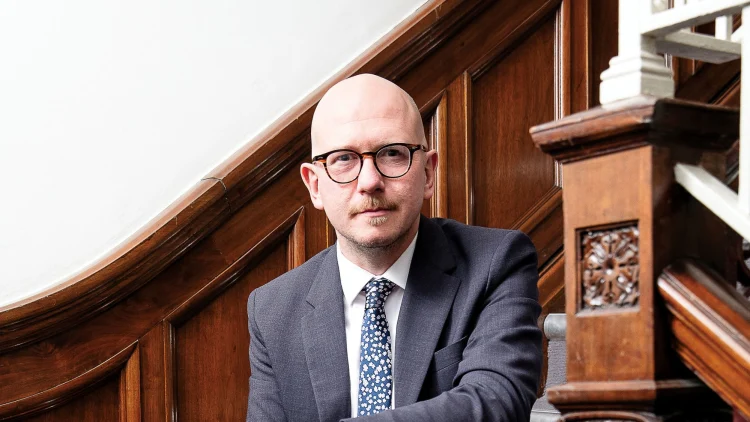
Brian Leishman MP (Photograph by Gemma Day)
8 min read
After a life in golf and football, Brian Leishman finds himself at the sharp end of the new government’s whipping operation. He speaks to Ben Gartside.
Brian Leishman excelled in golf, a sport which celebrates individualism like few others and was previously a goalkeeper, that most specialist and lonely of football positions.
Since winning Alloa and Grangemouth for Labour, the 43-year-old is learning the ways sports and politics are similar – and the ways in which they are very different.
“Golf was amazing, and it was my passion for an awfully long time, but it’s an individual sport. I’ve got a friend back home in Scotland who describes politics as a bunch of sole traders playing a team game. I understand that… Teams that I’ve played in for football, you have a cross section of life and it’s the exact same in a political party.”
He adds: “You have got some people in a football team that when the chips are down, you can look at them and you think, you’re 100 per cent with me.”
Jonathan Reynolds, the Chief Whip, may be forgiven for raising an eyebrow at that given the number of times Leishman has rebelled. He lost the Labour whip last July, only for it to be reinstated four months later. But Leishman might contend that he is loyal to his cause – and there are more ways to win than doing as you are told.
He is warm, even jovial, a tone honed from his time teaching golf across Scotland, including to celebrities as varied as Shakira, Gerard Butler and Ryan Giggs.
He played in goal for the Hibernian and then the Cowdenbeath academies before being released in 1999, while the team was managed by future Scotland boss Craig Levein, though Leishman is clear he was “nowhere near” Levein’s first team. After he was released, he dedicated himself to his other sport. He dropped out of Stirling University at the end of six weeks there, returning to his local golf course on a Friday night. After a conversation with his boss, the club swiftly offered Leishman the opportunity to be the golf pro from the following week. He remained one for the next 23 years.
Leishman struggles to approach the topic without a heavy dose of self-deprecation. “I was alright. I mean. I was okay. I’m still trying to find a sport I’m good at.”
For now, the wait will persist, as Leishman is speed-running a political career. He first joined Labour in 2016 under Jeremy Corbyn’s leadership, occasionally leafleting until Christmas 2021, when at 39 he decided to first stand for office.
Leishman had what he jokingly described as his “mid-life crisis”. “I’m not into sports cars, so I said to my wife: I might run for council. She said I should do it before I’m too old, so I put my papers in.
“Looking back, it was a bit of a box tick as they had six candidates for 12 [seats]. They played it super cool, before calling back in 20 minutes and asking what ward I fancied.”
Just over a year later, he stood to be the Westminster candidate for Alloa and Grangemouth, defeating the SNP incumbent, John Nicolson.
He narrowly avoided running out of money during the campaign after he underestimated the costs of electioneering full-time. He now jokes it’s “one of” the reasons he’d be unlikely to find himself a home in 11 Downing Street.
Since being elected to Parliament, Leishman has not tried to keep his head down. He became the first MP to call for the resignation of Morgan McSweeney, helped lead the revolt over the welfare bill and has pushed back on government plans for digital ID.
Although the government has ultimately followed Leishman’s lead on most of his rebellions, in July last year he was suspended for what the whips described as “persistent breaches of party discipline”. It seems the stick didn’t work: Leishman has remained outspoken.
He is deferential to other MPs in the party, though, and loath to criticise colleagues. He is currently making plans for his friend and fellow welfare rebel Neil Duncan-Jordan’s rock band to play in his constituency in the summer. He counts some members of the SNP as allies, and regularly plays snooker with their Westminster leader Stephen Flynn, though says they never discuss politics.
On the fight against the closure of the Grangemouth oil refinery, Leishman consulted Corbyn, who advised him to try to exhaust every possible political angle to get it on the national agenda.
While his views of other MPs regardless of background is considered, he is clear in his demands of party leadership.
“If you’re in leadership, if you’re around the Cabinet table, you can take the plaudits when things are good. Imagine being a secretary of state, and you implement a bit of legislation, and you’ve transformed someone’s life, like for example the Employment Rights Bill. You know what? Go home that night, crack open a beer, put your feet up, and reflect back and think that’s a job well done. That’s the good stuff. That’s leadership.
“But also you’ve then got to have the other side of that coin and say that, well, I don’t think if something isn’t living up to what I consider the Labour Party should be doing, then you’ve got to take that criticism, that’s part and parcel of being in leadership.”
Leishman’s frustration is chiefly reserved for issues of leadership – whether it be party management or errors of judgement – for example, around the latest scandal of Peter Mandelson.
“People were shocked at it – I’m not. Because let’s be honest, for the thick end of four decades, Peter Mandelson has been living in plain sight and telling everyone who he is, who he works for, what his vested interests are. People, surely, cannot be shocked and outraged at this. Well, they can be outraged, but they can’t be shocked at what happened.”
The Prime Minister… really needs to reassess his definition of what extreme left is
Similarly, Leishman’s response to the Gorton and Denton by-election defeat is not one of outcome, but of reaction to the result itself. In fact, his characterisation of Labour in comparison to the Greens and Your Party would not differ far from either Zack Polanski’s or Corbyn’s.
“We saw in Gorton and Denton, and we can see in Your Party, that there are other left-wing options for the electorate. The Labour leadership needs to appreciate that.
“The Prime Minister, if he describes what the Greens said in the campaign for Gorton and Denton as being of the ‘extreme left’, he really needs to reassess his definition of what extreme left is. What the Greens were saying about redistribution of wealth, improvement of public services – that’s basically Labour Party stuff.”
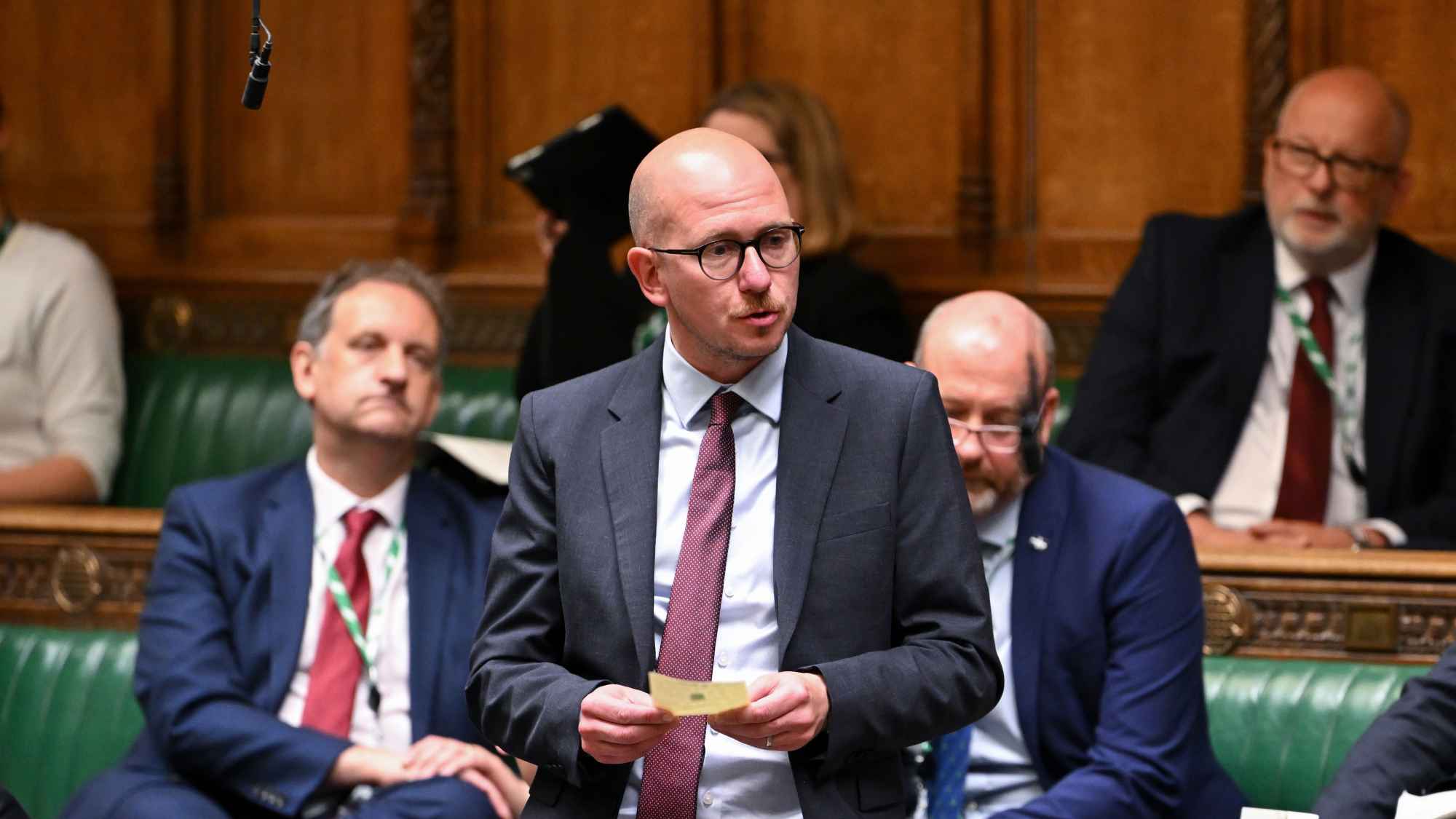
Having already had run-ins with the whips’ office, Leishman appears sanguine about the same happening again. Asked if Labour whips quite knew what they were letting themselves in for when a professional golfer from sleepy Clackmannanshire was selected, through what was otherwise a deeply factional process, Leishman pauses.
“I’ve never thought about it like that. I just want to come in, be representative of the people who put me here, and be representative of my own politics. It’s not a secret, it’s not a massive scoop for you to say I’m really not happy with the direction of the party. I don’t think it’s good enough. We’re miles off where a Labour Party should be.”
Either way, it doesn’t appear Leishman will die wondering.
“I don’t need to be emboldened, because it’s just what I’m going to do. I also look at it this way. Maybe this is a very, very black and white way of looking at it. But let’s say the next general election, whenever it would be, if I’m standing in Alloa Town Hall and the returning officer says that I haven’t won, that I’m out. I want to have a body of work I can look back on and say I’m genuinely proud.
“What’s an MP willing to sacrifice?” Leishman asks philosophically, considering his rebellions across the last two years, and the personal cost to him. “I don’t know how many times I’ve broken the whip – I’m not keeping count.
“We talked about Bromley versus Oldham earlier on, or Celtic and Aberdeen tonight. Like in football, you’ve got to take it one vote at a time.
“It’ll be interesting to see what happens next in regard to SEND,” he adds. “When we look at some of the sort of the immigration stuff that’s potentially coming down the line, I don’t agree with that. So, yeah, there’s more to come.”


As the MAGA faithful gather for another day of CPAC in Grapevine, Texas, they are openly celebrating what they believe is tantamount to a major midterms victory: keeping President Donald Trump from endorsing John Cornyn ahead of May’s GOP Senate primary runoff.
MAGA world is taking a victory lap — and fresh comfort — in the receipts: A lack of significant spending and polling so far by not only Cornyn’s campaign, but also the NRSC and One Nation, the Senate Leadership Fund-aligned nonprofit. It amounts to a pattern the MAGA cohort reads as Washington making peace with a matchup between Texas Attorney General Ken Paxton, their anointed candidate, and Texas Democratic state Rep. James Talarico.
“The grassroots stood in the breach and said a resounding ‘NO’ to Cornyn,” Steve Bannon, who has framed Paxton’s bid for the nomination as a battle for MAGA’s soul, told POLITICO. “Polling and spending indicates that the Republican DC establishment reluctantly concurs. This could be the victory that empowers MAGA through the midterms.”
Paxton, though, hasn’t rested his case. He traveled to Mar-a-Lago last Friday for a Palm Beach County GOP dinner, and was spotted speaking to Trump himself, according to three sources familiar.
Trump and Paxton were on the patio, one source added, with another saying the two discussed the runoff. “It was a positive meeting,” said yet another person. A Paxton spokesperson declined to comment on the meeting.
It’s the latest sign of a fierce and feverish effort to keep Trump from endorsing Cornyn.
Even when all signs pointed to a Cornyn endorsement following the longtime senator’s showing in the primary, MAGA faithful kept pressing for Paxton. Now they’re optimistic their guy can come out on top — and they’re still taking shots at Cornyn every chance they get.
“The Cornyn endorsement looks dead, but it’s Trump, so it’s never certain,” a person close to the White House said. “Cornyn sealed his fate by carrying Mitch [McConnell]’s water on that ridiculous gun grabbing bill. No one thought he would be dumb enough to run for reelection after that but here we are.”
Now, Trump may not give an endorsement at all. Or if he does, he may endorse Paxton after the SAVE Act debate in the Senate is over, three sources tell POLITICO.
“Nothing is dead,” said a source familiar with the president’s thinking. “It’s all just stasis at the moment.”
“It’s looking like he may not endorse at all,” another White House official said. “But it doesn’t seem like he has made up his mind.”
But the endorsement equation in Texas amid the SAVE Act saga is still very much vexing Trump, according to five Republicans in and around the White House. The president, who will not be in attendance at this year’s CPAC, is “being patient” and “trying to exact” a policy win, another person said.
“Trump isn’t going to endorse against Cornyn while the Save America Act is still being debated,” one White House ally said. “So for now I think he stays out, but if Thune files cloture and Paxton continues to lead in every poll then I could see him endorsing Paxton. No question Paxton wins if Trump stays out though.”
Every Republican who spoke to POLITICO cautioned that Trump could change his mind at any moment. It’s still early for the runoff, they said, with Election Day still nearly two months away. But the deadline for a candidate to drop off the ballot passed last week.
One person familiar told POLITICO that the Senate Leadership Fund and NRSC aren’t spending in order to conserve resources. “Not cause they are throwing in the towel,” this person said.
The campaign will be spending soon, a Cornyn spokesperson said. “Ken Paxton said he needed $20M to win this primary and he’s barely raised a quarter of that,” said Cornyn campaign senior adviser Matt Mackowiak. “His professional failures and indefensible personal conduct make GOP donors and Texas primary voters deeply uncomfortable.” He added: “We have a plan to win this race and we are executing it. Ken Paxton is busy whining and hiding.”
Chris LaCivita, one of Trump’s top campaign hands who works as a senior adviser for the pro-Cornyn super PAC Texans for a Conservative Majority, said the runoff boils down to a resource equation. “The question remains the same,” LaCivita said. “Does the GOP want to spend $150-200 million holding what should be a safe seat and giving up other opportunities to gain advantage?”
Joanna Rodriguez, a spokesperson for the NRSC, said it’s “been very clear that the fight to protect President Trump’s Senate Majority should not be fought in Texas, and John Cornyn is the only candidate who ensures that does not happen.”
When it comes to money, Republicans are planning for MAGA Inc. to be “responsible for resources needed in a general election if it’s Ken Paxton,” according to two GOP operatives briefed on strategy (one cautioned that “planning is probably more hoping.”). A MAGA Inc. spokesperson declined to comment.
On the sidelines of CPAC, where bedazzled and sequined conservatives gathered for the base’s annual pep rally, the overwhelming feeling was that most Texas GOP primary voters had already made up their minds — and a Trump endorsement in either direction wouldn’t make much of a difference. Some attendees said they viewed Trump’s silence as a nudge toward Paxton.
“Texans — we’re done,” said Gregorio Heise, a Paxton supporter and Republican running for Congress in Rep. Jasmine Crockett’s Dallas district. “It’s already showing, even in the polling. Cornyn doesn’t do what Texans want, and [Paxton] does.”
On Friday night at CPAC, attendees will hear from Paxton, who’s headlining the conference’s Ronald Reagan dinner. Cornyn isn’t planning to attend.
“It’s an opportunity to be able to, you know, share your vision and basically sell yourself to the crowd, to the Texas crowd,” CPAC host and organizer Mercedes Schlapp told POLITICO. “So Ken Paxton agreed to come, and he has a very high CPAC rating. And you know, we’ve invited Cornyn, and so we are still open. The invitation is still open for John Cornyn to come.”
Like this content? Consider signing up for POLITICO’s Playbook newsletter.
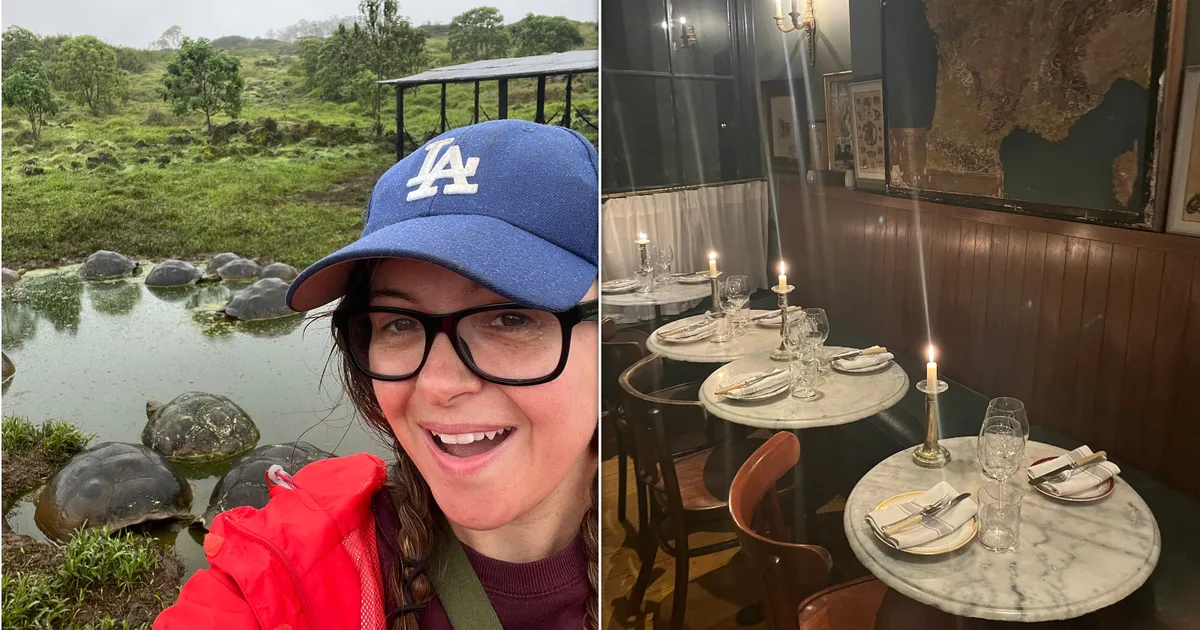
On Instagram, my relationship looked perfect.
There was us in Paris, in Athens, in New York. Out at another Michelin-starred restaurant. Smiling with our arms around each other on a mountain in Whistler. Celebrating his fortieth in a Scottish castle. There was me flashing my engagement ring, looking overjoyed.
But the reality was far from what I curated for Instagram. Each of those amazing trips had involved tears, fights, storming off, screaming.
I’d often not been able to eat my food at the fancy restaurant because I was crying, and he’d left me alone most of the week in Whistler while he went off with friends and abandoned me on the nursery slopes.
In truth my relationship was hell, with a partner who treated me with contempt, coldness, and cruelty. When it ended after three years, I was in bits, and had to find a way to put myself back together. I’d been treated for years like I was worthless, by someone who said I was the love of their life, and it had broken me.
So why did social media not reflect any of this chaos?
I’d never thought of myself as a dishonest person, but that’s what I was doing. I was creating an image of a perfect life, where I was loved and cared for, and where I actually enjoyed the expensive and exotic things we got up to, our multiple trips and bougie lifestyle.
People made jokes to me all the time about how I was always on holiday, and I’d just smile. It was true we went away a lot. But we’d always have at least one terrible row and I’d always cry a lot. Even as we got engaged and moved towards a picture-perfect wedding, things were getting worse and worse. My hair started to fall out from stress, and I couldn’t sleep.
Why didn’t I tell the truth? Partly I wasn’t telling the truth to anyone, including myself – if I’d admitted how bad things were, I would have had to leave him and call off the wedding, and I wasn’t prepared to do that.
When we fought, sometimes he would accuse me of just staying because I didn’t want to admit publicly to failure. I would hotly contest that – I loved him deeply – but perhaps he was right in a way.
Of course I didn’t want to contradict all the posts I had made about how happy we were. I had sunk a lot in creating a beautiful-looking life, and social media was a big part of that. He did it too, often posting about the wonderful time we’d had together, when I knew that wasn’t true at all. It’s actually a trend I have noticed, that the worse couples are getting on, the more vocal they are on social media about their love.
I’d even made jokes about how a loved-up post generally means divorce is imminent, but I closed my eyes to it when it happened to me. We aren’t always ready to face the truth.
It’s also the unspoken agreement we all made when social media came into our lives – we would only show a filtered, buffed, cropped version of reality. Not the sad and difficult and boring days, when we hate our partners and ourselves, when we feel ugly and like we’re failing. I worry that this is putting people under intolerable pressure.
With the clever use of angles, filters, and now AI, what we see online is often very far from the truth, manipulated and carefully chosen narratives that don’t reflect real life at all. But when we look at other people’s posts, we forget that, and feel bad. We think that we also need to have a flat stomach and cute kids and loving partner and very clean home (I can’t be the only person who’s gone down CleanTok rabbit holes).
So we feel inadequate, and spend money or download a dating app or book another holiday, and make some posts so people back home can see how happy we are, and the cycle continues.
One thing I began to do after my relationship fell apart was tell the truth. When people asked me, even casually, ‘how are you?’, I would give a real answer. This led to some amazing conversations, and finding out new things about people I’d known for years, plus new friendships and deepened connections.
Although I still post on social media, I try to be honest if I’m not having a good day, if I’m tired or sick or downhearted. I think this makes the happy posts all that more truthful, and I really value it if someone can be vulnerable and authentic online.
I try to do the same. It’s not always sunsets and meals out and clinked glasses of wine, but it is real.
I never want to go back to faking my life online – what I’ve learned is it only makes unhappiness worse to slap a nice filter on it.
Claire McGowan’s new novel The Other Couple explores what happens when the facade of a ‘perfect’ marriage finally shatters on a luxury holiday – you can get your hands on it here.
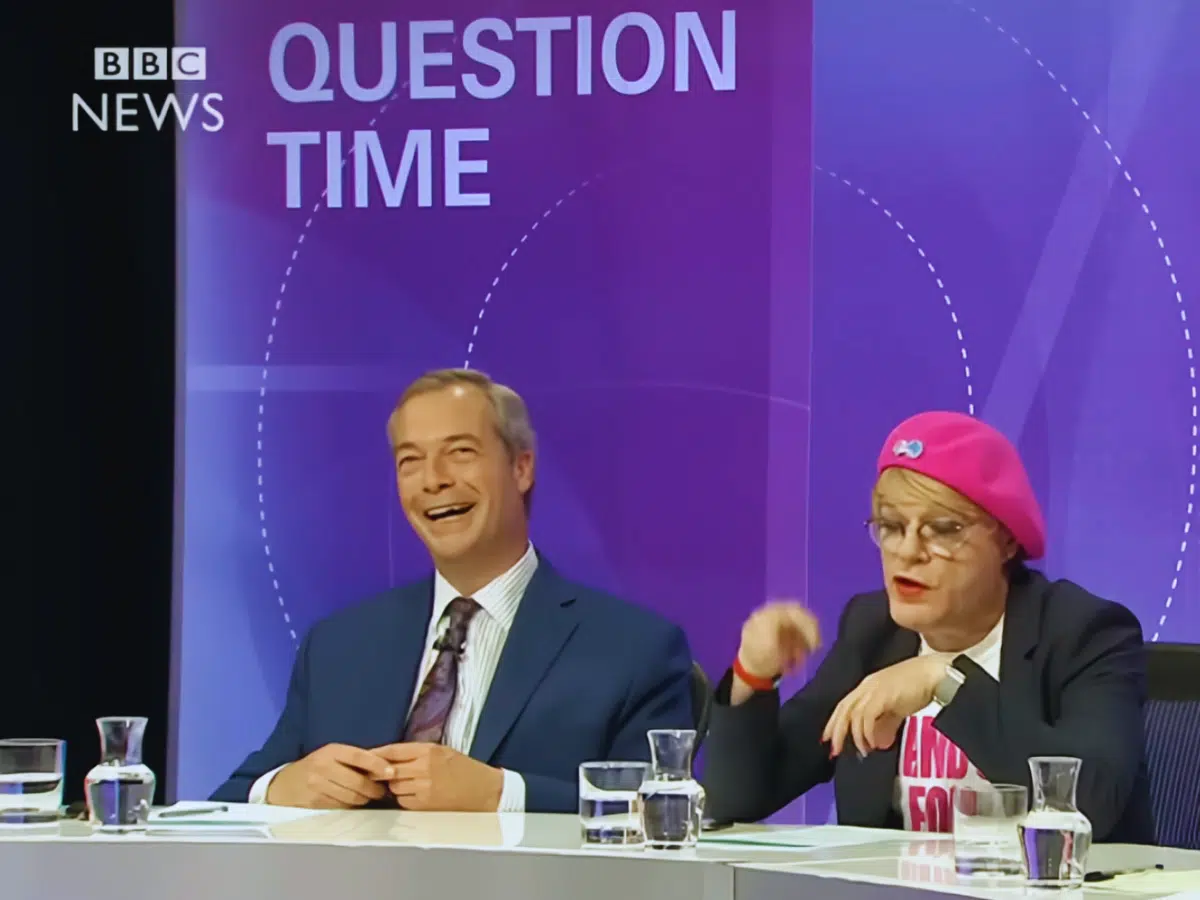
Nigel Farage did not appear on BBC Question Time on 26 March. This is despite the latest edition being filmed in ‘his’ Clacton-on-Sea constituency.
More lies from Farage
The excuse from Farage — now been exposed as a lie — was an alleged BBC policy forbidding the show from hosting MPs if the programme is held in their own constituency.
Skwawkbox found no supporting evidence for the claim that BBC Question Time bars MPs from appearing in their own constituencies.
This was confirmed by Starmeroid MP, Mike Tapp, who appeared on the show back in December 2025 when it was broadcast from his Dover constituency.
BBC Question Time’s racist darling
Farage has loomed over BBCQT like a Shakespearean ghost, even when he has not been physically present. The BBC has invited Farage onto the show 38 times, and accused of platforming his hateful, populist discourse, to drive engagement.
His absence was mocked by several users from Clacton. One user wrote:
Farage has been on Question Time more times than he has been at Clacton. At a rough guess probably 30 times.
In a simpler message, another clacton resident wrote:
He is called Nigel Mirage in Clacton.
“Nigel Mirage”
And it seems Farage, reeling from tumbling ratings for his party, was not open to the idea of putting forward a Reform MP for the show in his place.
I seem to remember being on Question Time, a few months ago, in Dover…my constituency.
You were too scared to even put a Reform MP up for tonight it seems.
Weak. https://t.co/ZgHOvF8puH
— Mike Tapp MP (@MikeTappTweets) March 26, 2026
The attempts by a few to defend Farage and his lies did not go well:
What’s your point? He was an MP on QT in his own constituency. This proves Farage is lying again.
— boatnoise (@boat_noise) March 26, 2026
Farage’s absence in Clacton isn’t exactly surprising, and the public reaction says it all. He’s usually absent from Clacton, and hardly ever mentions it in Parliament. Many angry constituents took to social media to express this and mock the bigoted Reform leader.
One user, responding to the question, would Farage “relish the chance to answer questions in his own electorate eh?” wrote:
Of course not. That would mean he’d have to actually go to Clacton.
Still, it’s nothing short of embarrassing to be caught out so quickly—though, honestly, what else could anyone have expected?
Featured image via the Canary
If you’re a fan of a binge-able series with a central mystery that slowly starts to unfold, Netflix has a new addition you’re going to love.
Something Very Bad Is Going To Happen is an unsettling new series directed by Haley Z. Boston (best known for her unsettling work in the horror genre) and executive produced by Stranger Things creators The Duffer Brothers.
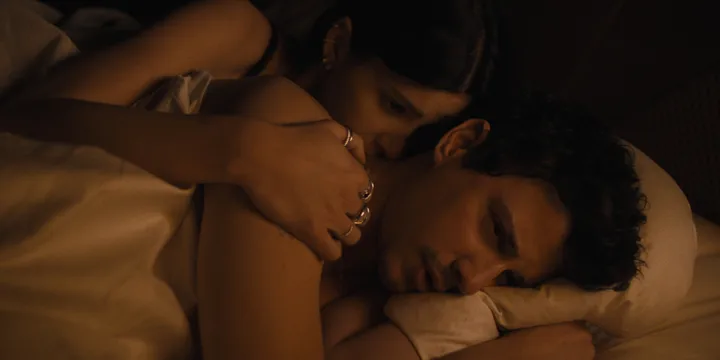
The show centres around a young couple – played by The White Lotus’ Adam DiMarco and Emmy nominee Camila Morrone – gearing up for their wedding, but as the big day approaches, a series of sinister events begins to unfold.
And that’s pretty much all the plot that the streaming giant wants us to know before settling down to watch the new series, which arrived on the platform on Friday.
Reviews so far have been pretty positive, with some of the more impressed critics calling the show “fresh and original”, a “masterclass” in tension and “one of the best Netflix horror shows of all time”.
The praise hasn’t been unanimous though, and while most would agree that it’s worth giving Something Very Bad Is Going To Happen a whirl if you’re intrigued by its premise, some have taken issue with the show’s pacing and the way it’s been shot.
Here’s a selection of what critics have said about the new miniseries…
“The plot is deftly crafted as it chronicles the tumultuous seven-day period before their vows, from unsettling beginnings through genuinely frightening revelations to a conclusion that will satisfy, although you may not want to watch with your dinner on your lap […] While those in the market for jump-scares galore may be disappointed by the relative restraint here, the show is a masterclass in slowly building a sense of tension and anxiety while not being afraid to bring in the blood and gore when required.”
“I am not good with horror. Either it is Too Much – too bloody, too insistent, too preposterous – in which case I roll my eyes and become irate, or it is Too Effective – too uncannily at odds with reality, too nicely judged, too convincing – in which case I end up hysterical on the sofa and unable to sleep for four days […] Something Very Bad Is Going to Happen has me firmly in the latter camp.”
“[A] thrillingly creepy romantic horror show […] The show excels at casting a spell through odd details, nasty red herrings, disturbing clues. And underlying them all is an unexpectedly sincere exploration of what true love can or should feel like, pitched right on the knife’s edge between sentimentality and cynicism.”

“Just about anyone who has experienced the build-up to a wedding ceremony knows that the final week can be exhilarating and hopelessly romantic—but also filled with anxiety, misgivings, and extended family drama. Something Very Bad… shines a blood-spattered spotlight on these rituals with precise and insightful cruelty.”
“It’s macabre and unsettling and filled with people dying in a particularly alarming way (if you faint at the sight of blood, give this a miss), but there’s a knowingness to it all, a gleeful smorgasbord of genre tropes.”
“Something Very Bad Is Going to Happen includes a well-crafted storyline packed with fun twists and shocking reveals. It makes a promise from the get-go that something very bad is going to happen, and it follows through. While I can’t reveal the specific ‘very bad’ thing, I can tell you it’s worth the wait […] Something Very Bad Is Going to Happen will go down in history as one of the best Netflix horror shows of all time.”
“Despite some flaws and untapped potential to push its impressive themes a little further, Something Very Bad Is Going to Happen brings something fresh and original that’s absolutely worth your time.
“Without going into specific details, so you can experience it for yourself, episode four is a game-changer and sets the stage for a truly gripping series of events that takes the show in a new and unexpected direction. The final episode is also phenomenal.”

“Ever witnessed a wedding where a happily ever after just doesn’t seem on the cards? Netflix’s blood-soaked new horror series takes that fear to the extreme, shouting from the rooftops with every title card, that Something Very Bad Is Going to Happen by the end of its eight episodes. You can’t say you weren’t warned…”
“Ultimately, I quite liked the show Something Very Bad becomes once Boston and her team put their cards on the table. But that show is different enough from the initial presentation, and takes long enough to reveal itself, that I’m not convinced Something Very Bad is best served by its chosen format.”
“By the third aimless episode, I felt more dread about having five more instalments to go than I did about anything that was happening to the characters […] The back half of the season is better overall. The ending isn’t revelatory, in the sense that it doesn’t quite complete Something’s thoughts on matrimony or family or inherited attitudes toward either, but it’s clever and kind of exhilarating.”
“There’s wit here. Some snappy edits draw out the specific horror of Rachel’s situation […] but the overwhelming feeling is frustration. Potential lost to plod. The percussive soundtrack – dum, dum, dum, what’s around the corner? Is it a scary nephew? – started to drive me crazy in a good way. The greige colour palette – I was watching under optimal conditions: in bed at night with my screen brightness all the way to 11 – started to drive me crazy in a bad way. It all makes for a very long engagement.”
“It’s a tedious axiom at this point to complain about Netflix’s allergy to good lighting set-ups […] But the drab and colourless look of Something Very Bad undermines everything else about it, neutering horror and drama alike.”
“Camila Morrone’s compelling performance in Something Very Bad Is Going To Happen isn’t enough for us to get past the cartoonish supporting characters, the foreboding with little payoff, and a plot that just seems to consist of little more than tense moments.”
All eight episodes of Something Very Bad Is Going To Happen are streaming on Netflix now.



4 min read
On this week’s episode of The Rundown, housing minister Matthew Pennycook talks about taking on nimbyism and how plans for seven ‘new towns’ will help hit ambitious housebuilding targets.
The government aims to add 1.5m new homes by the end of this Parliament, with Pennycook insisting that, despite a slow start, major changes to the planning system will lead to a ramping up of developments.
Speaking to host Alain Tolhurst about the new towns announcement, he said: “We know we’ve got an acute and entrenched housing crisis. We also know that lots of our towns or cities are constrained.”
Labour first announced plans to build “the next generation of new towns” in the run-up to being elected at its 2023 party conference. After entering office, it asked a task force to recommend a list of locations where new towns should be built. This week, the government whittled down that list of 12 places to seven.
They are Tempsford in Bedfordshire, Leeds South Bank in West Yorkshire, Crews Hill and Chase Park in north London, Manchester Victoria North, Thamesmead in south London, Brabazon and West Innovation Arc in Gloucestershire, and a site in Milton Keynes.
The government says these new towns will be designed for modern living, close to train stations and easy to drive around, with green spaces and vibrant high streets.
Speaking to PoliticsHome, Pennycook, who is the Labour MP for Greenwich and Woolwich, said many communities are “unable to realise their full economic potential” at the moment, arguing that the programme, which aims to get several schemes started ahead of the next election, will deliver a financial benefit, and a sense of place, as well as thousands of new houses.
Previous administrations have been stymied by groups campaigning against building, commonly known as nimbys, but Pennycook said that “we are taking it on” through “the full use of our intervention powers” in the government’s recently passed planning legislation.
“For example, when it comes to local plans, we’ve taken new powers to be able to call in applications where local authorities are minded to refuse them, and we want to take another look,” he said.
“There are powers that central government can use when it comes to the new towns. We’ve been really clear that in the final analysis, we’ll make decisions in the national interest.
“We want to bring communities along with us where possible. In the cases of the seven sites we’re proposing, and many others across the country, it wasn’t the case that communities were resisting. We had lots of appetite for new towns, places coming to us, not least in the call for evidence in the new towns task force’s own process, saying, ‘please consider us’.”
The minister acknowledged that there is a “small cohort of people” in the country who want “no kind of development anywhere near them of any kind”, but said there is a “much larger group that wants good development”.
“They don’t want bad development that’s not well planned, that doesn’t have that infrastructure, whether it’s GP practices, or new schools, all of that stuff that sometimes in the planning process can be an afterthought or delivered right at the end once the homes are in.
“We have a chance here to show that we can do really good development in a different way and ensure these are exemplary communities, and I think therefore we’ll reduce, not eliminate, but reduce, some of the opposition there.”
Later in the episode, a panel discusses a whole host of issues around these proposed settlements, featuring the Labour MP Sean Woodcock, who sits on the Commons housing select committee, alongside Vicky Spratt, housing and society correspondent at The i newspaper.
Joining them are Professor Susan Parham, director of the University of Hertfordshire Urbanism Unit, and Rico Wojtulewicz, head of policy and market insight at the National Federation of Builders.
The Rundown is presented by Alain Tolhurst, and is produced by Nick Hilton and edited by Ewan Cameron for Podot
- Click here to listen to the latest episode of The Rundown, or search for ‘PoliticsHome’ wherever you get your podcasts.
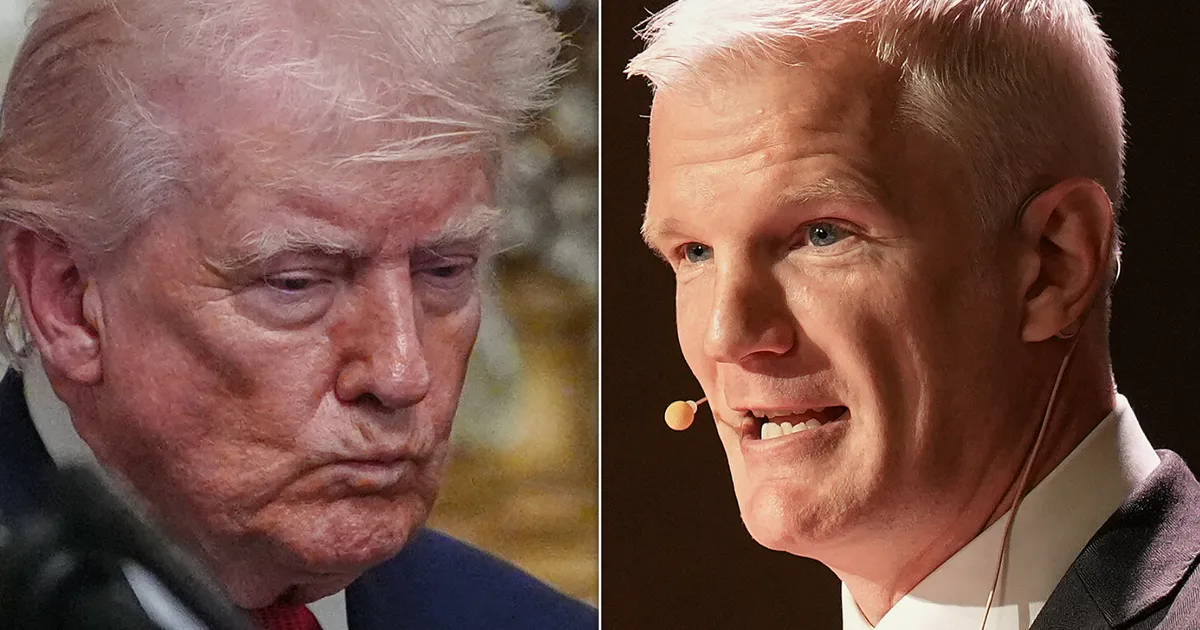
A minister has lashed out at Donald Trump after the president insulted British aircraft carriers by calling them “toys”.
The president slammed the UK once again on Thursday, claiming America “doesn’t need” the UK’s help in his war against Iran – even though he keeps attacking Keir Starmer’s reluctance to join the offensive.
Trump has been furious ever since the prime minister refused to let the US use British military bases for pre-emptive attacks on the Middle East.
On Thursday, he told the press: “We had the UK say that we’ll send our aircraft carriers – which aren’t the best aircraft carriers, by the way. They’re toys compared to what we have.
“We’ll send our aircraft carrier when the war is over. I said ‘oh that’s wonderful, thank you very much’. Don’t bother, we don’t need it. And we don’t need them.”
Al Carns, a former Royal Marines officer and current veterans minister, quickly defended the UK’s two £6 billion aircraft carriers, which are the largest warships ever build for the Royal Navy.
Speaking to Times Radio, Carns initially said: “I’m going to leave President Trump to say what he needs to say.”
But he then spoke to just how effective British carriers are, adding: “Let me tell you from my perspective, I was the chief of staff of the carrier strike force and was deployed on those carriers.
“They have formidable capabilities, and I’m deeply proud of them. I’m also deeply proud of Great Britain. I think it is great.
“We have a fantastic place in the world.”
He then tacitly criticised Trump’s war in Iran – which Starmer has called unplanned and unlawful – without directly mentioning the conflict.
He said his years in the military taught him: “One, you must have a legal mandate before you put people in harm’s way.
“The second is you must have a plan. And the third, you must think to the end. If you don’t have those three, we should not be putting people’s lives in harm’s way. We’ve done it in the past and it’s cost us dearly.
“I’ve been deployed on those operations and I don’t think that’s right.”
Carns went on to defend Nato, the defence alliance Trump falsely claims has “never come” to the US’s rescue – even though it did just that after the September 11 terror attacks on New York in 2001.
The minister pointed out that the only time Nato has ever invoked Article 5 of its constitution, which obliges all member states to help defend another if it comes under attack.
Carns said: “Nato is the most effective defensive alliance we’ve ever seen and the only time we’ve enacted Article 5 was to support America after 9-11, which then resulted in almost 20 years of continuous conflict where British soldiers, sailors and airmen and women have sacrificed their lives to protect not only Western freedom, but American freedom.
“I think we should be deeply proud of that.”
Senior UK government sources have previously claimed the US has never requested any aircraft carriers – and that Downing Street has never offered to send any, either.

Asia’s Largest 2,400 sqm Indoor Transparent Screen Illuminates Central World, Thailand

Market’s ability to forecast world in question

Chaka Khan Loves The Chase And Tipping Point And… Sorry, What?!


-
 Crypto World7 days ago
NIO (NIO) Stock Plunges 6.5% as Shelf Registration Sparks Dilution Worries
-
 NewsBeat2 days ago
Manchester United reach agreement with Casemiro over contract clause amid transfer speculation
-

 Fashion7 days ago
Weekend Open Thread: Adidas – Corporette.com
-

 Politics7 days ago
Jenni Murray, Long-Serving Woman’s Hour Presenter, Dies Aged 75
-

 Crypto World6 days ago
Best Crypto to Buy Now: Strategy Just Spent $1.57 Billion on Bitcoin During Fear While Early Investors Quietly Enter Pepeto for 150x Potential
-

 Crypto World6 days ago
Bitcoin Price News: Bhutan Sells $72 Million in BTC Under Fiscal Pressure, but the Smart Money Entering Pepeto Sees What the Market Does Not
-

 News Videos1 day ago
Parliament publishes latest register of MPs’ financial interests
-

 Sports4 days ago
Remo Stars and Kano Pillars Strengthen Survival Hopes in NPFL
-

 Sports4 days ago
Gary Kirsten Accuses Pakistan Cricket Board Of ‘Interference’, Mohsin Naqvi Responds
-

 Tech5 days ago
Give Your Phone a Huge (and Free) Upgrade by Switching to Another Keyboard
-

 Business5 days ago
No Winner in March 21 Drawing as Prize Rolls to $133 Million for Next
-

 Sports7 days ago
2026 Kentucky Derby horses, odds, futures, preview, date: Expert who nailed 12 Derby-Oaks Doubles enters picks
-

 Tech5 days ago
AI enters the chat: New Seattle dating app relies on tech to facilitate meaningful human connections
-

 News Videos4 days ago
Ch 9 Financial Management Part 1 | Detailed One Shot | Class 12 Business Studies Boards 2026
-
Business7 days ago
Columbia Sportswear enters $500 million credit agreement with JPMorgan Chase
-

 Tech5 days ago
Today’s NYT Connections Hints, Answers for March 22 #1015
-

 Business15 hours ago
Instagram, YouTube Found Responsible for Teen’s Mental Health Struggle in Historic Ruling
-
 Crypto World7 days ago
Small-cap Russell 2000 enters correction territory
-

 Business5 days ago
Will Duke Basketball Win It All? Duke Basketball Enters Second Round as Third Favorite to Claim NCAA Title
-

 Sports4 days ago
2026 Kentucky Derby horses, odds, futures, preview, date: Expert who hit 12 Derby-Oaks Doubles enters picks
You must be logged in to post a comment Login