
Politics
Israeli film crew attacked in Belfast, but they shouldn’t even be there

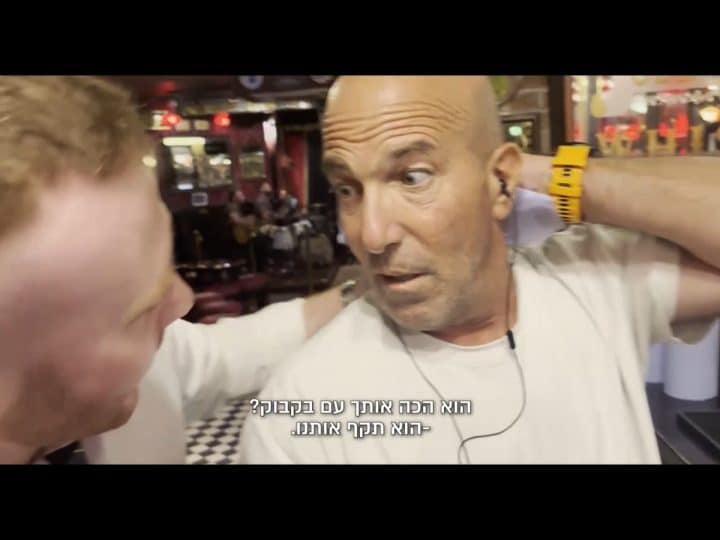

So-called ‘Israel’s’ i24 News, which spread genocide-boosting fictions about beheaded babies post-7 October 2023, has released footage of a man attacking their ‘journalists’ in Belfast. Since then, dishonest media and politicians have sought to falsely conflate the anti-Zionist attack with antisemitism, offering zero evidence for the presence of the latter.
Yet this should have all been avoided by the British government imposing proper sanctions on the settler-colony, including barring entry for all ‘Israeli’ media outlets.
The attack occurred earlier in August, when an ‘Israeli’ cameraman and reporter were preying on people in Belfast’s cathedral quarter, an area packed with pubs and music venues. i24 News claims:
…i24NEWS reporter Jonathan Roe and photographer Nadav Abs were filming a documentary series examining the rise of antisemitism in Europe.
Their reporter Yonatan Raveh told the Jerusalem Post:
He came over to us and started asking questions. We put the camera on him, and then he gave us the middle finger and shouted: “f*** Israel.
We were not looking for any trouble; we were trying to be as peaceful as we can get, and we just walked away. But he started to follow us.
i24 News Footage reveals lies of ‘Israeli’ hacks
However, i24 News’ footage directly contradicts this account. The man does appear to make some sort of gesture to the apartheid entity’s propagandists, but then walks away. The next clip reveals that actual events are the exact reverse of Raveh’s account. The Zionists did not “just walk away”; instead they followed the man and began filming him close-up.
The man can be heard repeatedly asking his harassers to delete footage of him, and to stop recording him. When they refuse these reasonable requests, he becomes aggressive, and finally throws a pint glass towards them.
Many online have seen through the fiction dreamt up by the provocateurs masquerading as journalists. One commenter on Belfast Live’s coverage remarked:
They intimidated a drunken man. He warned them and they antagonised him again.
Another said “Not all heroes wear capes”. Taking a very different take were the Democratic Unionist Party (DUP), whose leader Gavin Robinson sought to deceitfully imply an antisemitic motive:
If this attack was motivated by antisemitism, it must be recognised and condemned unequivocally. There must be no place for antisemitism or any form of intimidation on our streets.
The available footage shows the man making no antisemitic remarks. If he said “fuck Israel”, then a) good for him, and b) criticising a genocidal settler-colony is not remotely the same as demeaning all Jewish people. As we tire of saying, to conflate the two things is itself to be antisemitic. Implying Jewish people are somehow inherently linked to the vile West Asian land theft project is a horrible slur upon them.
Massive sanctions on the Zionist entity now, including its propaganda outlets
i24 News themselves chose to also run with suggestions of antisemitism, with the help of another DUP figure – David McIlveen, who founded DUP Friends of Israel. The Zionist propaganda outfit doesn’t need to confect new fantasies, given it still has the grotesque beheaded babies lies up on its website, years after actual journalists debunked the story.
Such disgraceful organisations simply shouldn’t be allowed to operate in the north of Ireland, or anywhere else. Barring entry for them would protect ordinary people from harassment, and would form what ought to be a comprehensive range of sanctions against all ‘Israeli’ institutions, be they military, political, academic, sporting, cultural, media or anything else.
Devastating restrictions that prevent this deeply abnormal and criminal entity from operating like a normal state are the only way to curb its murderous and racist policies. External pressure is essential, given there is zero current prospect of any internal shift.
The Palestinian-led Boycott, Divestment and Sanctions (BDS) movement, in its guidelines for dealing with ‘Israeli’ academic and cultural institutions, says:
As a general overriding rule, Israeli cultural institutions, unless proven otherwise, are complicit in maintaining the Israeli occupation and denial of basic Palestinian rights, whether through their silence or actual involvement in justifying, whitewashing or otherwise deliberately diverting attention from Israel’s violations of international law and human rights.
All such institutions must be boycotted, divested from and sanctioned. Logically, this ought to extend to media outlets too.
We don’t condone attacks on journalists, or even ‘Israelis’ pretending to be journalists, needlessly provoking people in the street. Yet the island of Ireland should never serve as a platform for those who benefit from a genocidal settler-colony, and seek to produce fresh fictions to justify its intolerable ongoing existence.
Featured image via screengrab

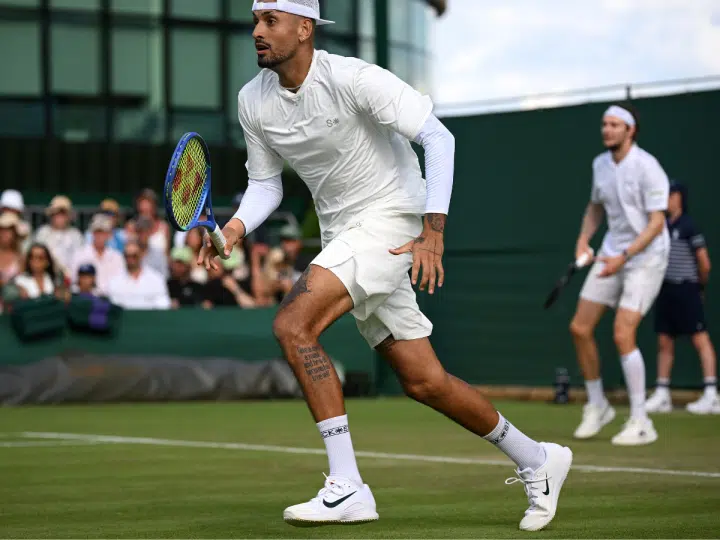

Nick Kyrgios’ stop‑start career has lurched into its most serious crisis yet after the Australian tested positive for Benzoylecgonine. A metabolite of cocaine was registered at an ATP tournament in Majorca in June. The International Tennis Integrity Agency (ITIA) confirmed on Wednesday 19 August that the 31‑year‑old has been provisionally suspended since August 4, ruling him out of all competition and barring him from attending tournaments while a tribunal assesses his case.
Kyrgios, once a Wimbledon finalist and one of the sport’s most mercurial talents, admitted to a “huge mistake” in an Instagram post, accepting full responsibility for the failed test and apologising to fans, family, sponsors and young followers who look up to him.
Kyrgios’s statement: ‘I take full responsibility’
The Australian did not attempt to deflect blame. Instead, he addressed the failed test head‑on, acknowledging the impact of his actions and the example it sets.
I made a huge mistake and I take full responsibility for it,” he wrote:
I’m sorry to my fans, my family, my sponsors and everyone close to me. Above all, I’m sorry to the kids who follow me. I know the example this sets and I’m deeply disappointed in myself.
Cocaine is banned in competition, and the positive test triggered an automatic provisional suspension. The ITIA confirmed Kyrgios has the right to appeal but “has not done so to date”.
Injuries, isolation and a career on decline
Kyrgios’ admission came with wider context about the physical and mental toll of the last four years. Since reaching the Wimbledon final in 2022 and losing to Novak Djokovic. He has played only twice in the main draw of a Grand Slam. Persistent injuries have reduced him to just four singles matches this season.
He described feeling “helpless and alone” during long spells on the sidelines, struggling with the reality that his body could no longer meet the demands of his mind.
“The last couple of years of injuries have taken a huge toll on me, both physically and mentally,” he said:
My body hasn’t been able to do what my mind expects it to do, and coming to terms with being near the end of my career has been harder than I ever imagined letting go of something that has been my whole life is one of the hardest things I’ve ever had to face.
He stressed that none of this excuses the failed test.
Kyrgios is currently ranked 919th in the world, a stark fall for a player who once threatened to reshape the sport with his explosive talent and unpredictable brilliance. His only appearance at Wimbledon this year came via a doubles wild card alongside Alexander Bublik, with the pair losing in the first round.
The suspension now leaves his future in limbo. Until the tribunal reaches a decision, Kyrgios cannot compete or attend tournaments. The length and severity of any sanction will depend on the panel’s findings, including whether mitigating factors are accepted.
What happens next to Kyrgios?
The ITIA’s process will determine whether Kyrgios faces a lengthy ban or a reduced sanction. For now, the Australian remains sidelined, unable to train or compete within the ATP environment. With injuries already limiting his schedule, the suspension threatens to accelerate the winding down of a career that has veered between brilliance and turbulence.
Kyrgios’ admission of responsibility and public apology may count in his favour, but the failed test marks a significant breach of tennis’ anti‑doping rules. His decision not to appeal so far suggests he is preparing to accept whatever outcome follows.
For a player who has long divided opinion, this episode lands at a moment when Kyrgios was already confronting the possibility of retirement. His Instagram post made clear the emotional strain of stepping away from a sport that has defined his life.
Whether he returns depends not only on the tribunal’s verdict but on his willingness and physical ability. A career rebuild after another setback will not be easy. For now, Kyrgios’ future remains uncertain, overshadowed by a suspension that has pushed him to the brink of the sport he once lit up.
Featured Image courtesy of The Independent
By Faz Ali
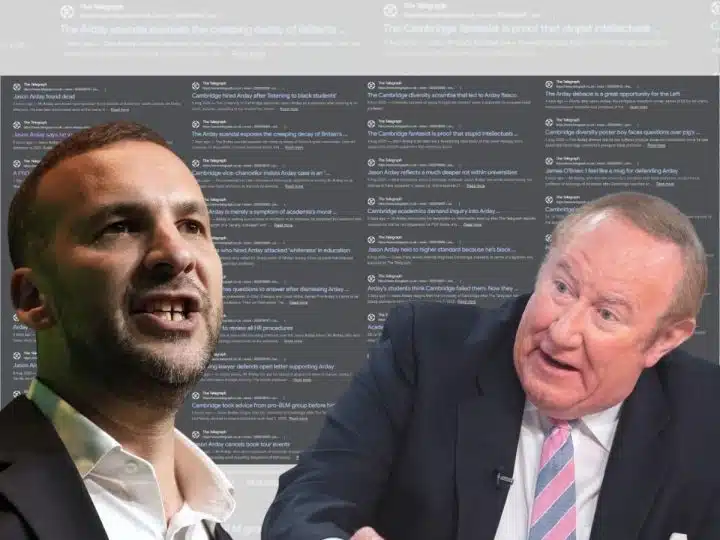

In the aftermath of the media witch hunt against Jason Arday, people are once again talking about the need for media reform. Unsurprisingly, the people saying we don’t need any further regulation are the hack journalists who’ve made a killing towing the establishment line – as Green Party leader Zack Polanski has highlighted:
Andrew Neil really having a meltdown in real time.
What is it about some actual press regulation that sends them like this?
A few billionaires owning the majority of the press and behaving however they want is not a free press. Change is coming. https://t.co/MaCurX0wn4
— Zack Polanski (@ZackPolanski) August 18, 2026
Polanski: change is needed
As Polanski notes, the big issue is that almost all of the British media is owned by a handful of billionaires. Of course this is going to result in bad outcomes.
In an article looking at alternatives to our bought-and-paid-for media, Reuters Institute interviewed several media companies with different structures. The story covered some local outlets:
Some media companies have decided to forge their own path in these countries, defying the traditional ownership structures of the news industry. But there is not a single model when it comes to journalist-owned media.
The West Highland Free Press became an employee-owned newspaper in 2009. After the original owners retired, they gave their employees an opportunity to take control of the company.
It also covered national outlets:
In… Uruguay, one of the most widely-read newspapers in the country is La Diaria, a profitable outlet with more than 21,000 subscribers in a country with a population of three million people. With 170 employees, La Diaria operates within the same cooperative model. After three months of working for the newspaper, employees have the choice to join the cooperative or simply be only employees.
When I asked editor-in-chief Natalia Uval why an employee would want to join the cooperative, she said that journalists are attracted to having decision-making power over the future of the newspaper.
“We haven’t distributed any dividends and we are not planning to do it in the short term,” she said. “If we make a profit, we want to reinvest it, or maybe generate a fund to support journalism. So the real benefit of being a shareholder is to be able to make strategic decisions for the company.”
Collective models won’t always ensure ethical journalism. At the same time, media concentration does seem to consistently produce journalism that benefits the wealthy owners.
Trouble ahead
Of course, it’s not wrong to argue that media regulation could go too far. In fact, Britain also has problems on that front – most notably with the government’s National Security (State Threats) Bill. As we reported in July:
Kim Johnson (Labour) and Jeremy Corbyn (Your Party) raised significant concerns about the legislation’s potential impact on journalists in the final debate on amendments.
Johnson warned that under the legislation as drafted, “journalists could still face a prison sentence of 10 to 14 years for working with or even approaching sources in hostile Governments.”
The absolute last thing we want is a situation in which actual news cannot be reported on. At the same time, it is possible for us to establish that certain behaviours fall outside of what could be considered ‘journalism’. The phone hacking scandal was one example of that. Pushing misinformation that genuinely puts lives at risk is another, although trickier to regulate, because consensuses can change.
Another thing to consider, of course, is the recent hounding of Jason Arday.
Jason Arday
One thing that’s clear about the Jason Arday story is that the primary driving force was racism. The campaign against him was started by known “race realist” Nathan Cofnas who believes there would be no Black people in academia if not for social engineering. The fact that some outlets chose not to make this clear suggests they’re sympathetic to Cofnas’s beliefs.
Another factor in the Arday story is the profit motive. Stories and social media posts about Arday clearly generated a lot of attention, and with that attention comes profit. Because media outlets are pretty much exclusively owned by billionaires who expect a return on investment, it’s not surprising that the people who get elevated to positions of power are those who think first and foremost about the bottom line:
"Combined, The Times and The Telegraph produced 87 articles in 22 days, and most of those came AFTER Jason Arday resigned on August 4th 2026…"
Well worth a read. https://t.co/m2G83wLfvD
— Lorna_TVeditor (@Lorna_TVeditor) August 18, 2026
This obscene desire to profit from Arday was most notable in Rupert Murdoch’s Times’ decision to use stories about him as part of an ad campaign:
Did @thetimes ever put an ad budget behind a story about British royal family member Prince Andrew Windsor fucking babies on Epstein Island? Did they spend money to boost a story about Peter Mandelson , Epstein's British bestie, and chase you around Twitter with it for days?… pic.twitter.com/8GUMBoPzSi
— David Hundeyin (@DavidHundeyin) August 15, 2026
We’re not noting the above to diminish the racism at the heart of the Arday story; we’re noting it to highlight that several things have gone wrong at once.
Of course, moving away from a billionaire-bought media ecosystem would not mean outlets could ignore the need to make money. At the same time, it would make two things less likely:
- Outlets primarily being driven by profit concerns.
- Outlets pursuing class warfare in a way that favours the billionaire class.
Change
In the UK, journalists are among the least trusted professions. This is obviously a huge problem, and one that needs to be tackled. While we certainly don’t think all regulation is good, we do need to be talking about how we can ensure our media is finally fit for purpose.
Featured image via PA / Channel 4
By Willem Moore


Another Filton trial jury has been discharged after refusing to return a verdict on charges against eight Palestine Action supporters. The group is accused of helping to organise an attack on a factory operated by Israeli weapons manufacturer Elbit in Filton, Bristol, even though they were not present during the raid.
Retrial for more Filton activists?
The prosecution will now decide whether to seek a retrial. The Filton defendants are:
Teuta Hoxha, 30, of Southwark
William Plastow, 35, of Manchester
Hannah Davidson, 53, of Edinburgh
Madeleine Norman, 31, also of Edinburgh
Ian Sanders, 47, of Leamington Spa
Aleksandra Herbich, 42, of Brent
Sean Middlebrough, 34, of Liverpool
Julija Brigadirova, 34, of Chorlton
All are accused of criminal damage; Plastow is also accused of violent disorder. They deny all charges. The jury gave up after thirty-seven hours of deliberations. The judge has set a next hearing in the case for 14 September.
Home secretary Shabana Mahmood’s record suggests the state will seek a retrial of the Filton activists in its eagerness to criminalise anti-genocide protest. Mahmood has also sought – in at least one trial successfully – terrorism sentences against activists even though they have not been charged with terror offences.
The Home Office is doing the same in the case of activists who threw paint on a Barclays Bank building for the bank’s ties to Israel. The judge in the case of Filton defendants sentenced as terrorists is trying to jail their lawyer for even informing jurors of their legal right to acquit. The same judge also ordered that jurors must not be informed that he would impose terror sentences if they returned a guilty verdict.
Featured image via the Canary
By Skwawkbox


Finding a single, definitive “best” site for booking flights isn’t about looking for a one-size-fits-all name, it’s about knowing what tools and guarantees a top platform must provide. While every traveler has unique destination goals and budgets, the ideal booking platform always shares core advantages: transparent pricing, extensive flight coverage, local payment options, and reliable support. Rather than pointing you to a single rigid choice, this guide will walk you through the essential features of a top-tier flight booking platform, empowering you with the knowledge to easily spot, compare, and book through the best site for your next trip.
The Challenges of Booking Flights
When you book a flight, you usually stay up late with fifteen tabs open on your computer, chasing a fantastic price, only to see it disappear on the checkout page. The total goes back and forth between seat selection and adding a bag. A 2026 review of major travel apps by Unstar found that these pricing inconsistencies and hidden checkout fees account for approximately one in five of all unfavorable customer reviews across leading booking platforms, just behind cancellation and refund disputes.
Travel hacks are filled with tips like deleting your cookies, booking only on a Tuesday, and utilizing incognito mode so sites can’t monitor you and bump up rates. These tactics don’t make any difference. Airline prices are based on demand, the number of seats left, and the departure time of the flight instead of looking at your browsing history. The answer to these travel fallacies is a single platform that shows the full, final price upfront. That way you don’t have to go to 10 different sites, all of which have a variety of fees hidden somewhere.
Understanding Your Flight Booking Options
To get the best airfare, you need to understand how booking systems function and where ordinary search platforms fall short vs integrated travel apps.
- Booking Directly Through An Airline (Single Carrier Websites)
You will obtain no route optimization when booking directly via a single airline’s website. You are locked into that carrier’s limited flight network and usual price, so if there is a cheaper ticket on a competitor airline only an hour later, you will never see it.
- Generic Flight Search Engines (Meta-Search Engines)
Popular search engines crawl the web, searching for tickets on hundreds of sites, then lead you to purchase the ticket elsewhere. They regularly exclude small, cheap regional airlines, and because they don’t have a direct checkout and they often send you to third-party, unverified merchants with horrible customer care.
- Standard Online Travel Agencies (Legacy Third-Party OTAs)
Standard international online travel agencies (OTAs) offer tickets directly on their own websites. Seems easy enough; however, these sites often hide international transaction costs and add on surprising luggage fees right at the checkout. If your flight is delayed, your sole customer support option is often some kind of computerized bot.
- All-in-One Regional Travel Apps (Integrated Market Leaders)
Booking platforms that provide all-in-one matching and combining flights from hundreds of airlines. They operate on native payment processing, thus they provide full pricing transparency, 24/7 customer support, and flexible local payments.
How to Spot the Best Flight Booking Site
There are four major requirements that a booking platform must achieve. If a site doesn’t have even one, find another.
- Inventory: The site should include the big international airlines as well as smaller regional low-cost carriers so that you can view all possibilities accessible to you for your journey.
- Transparency: You should notice regional taxes, luggage regulations and payment processing costs on the first screen. It’s annoying to find out about these expenses at checkout.
- Payments: The platform should be able to support your local payment networks. It helps if it also offers secure, interest-free installment tools for budgeting.
- Support: If your plans change or your flight is cancelled, you need to be able to contact solid human support 24/7 in your language.
Why Local Travel Apps Beat Global Search Engines
In the Middle East, local booking apps typically outperform generic search engines, as they are designed for the region.
- More Flight Choices and Split-ticketing
Top integrated platforms like Almosafer collect inventory from 450+ worldwide and regional carriers, thereby enabling “split-ticketing”. The platform can book an outward flight on a low-cost carrier and a return journey on a full-service airline. While major global search engines also identify mixed-carrier itineraries, integrated platforms often provide a more streamlined experience by allowing users to book these specialized combinations in a single transaction. This gives you three major advantages:
- Savings: Mix budget fares instead of paying for a premium round-trip ticket.
- Flexibility: Pick the exact flight times that match your schedule.
- Convenience: Fly light on the way out, and choose full-service with extra baggage for the trip home.
- Honest Prices with No Hidden Bank Fees
Global platforms often route payments through foreign acquiring banks and display prices in foreign currencies, triggering dynamic currency conversion and cross-border markups. Regional applications handle transactions locally; therefore, this pricing on the screen is the final price at checkout. Platforms like Almosafer process payments through local banking channels, so the fare you see when you search is the exact amount charged at checkout, with no last-minute conversion surprises on your statement.
- Easy Local Payments and “Buy Now, Pay Later”
Global search engines rarely integrate region-specific payment methods and local BNPL providers, so they can’t offer 0% installment plans or truly local checkout experiences that reduce friction and cost for Middle Eastern users. Local payment solutions such as Mada and Apple Pay on sites like Almosafer can reduce foreign banking expenses. Regional businesses such as Tamara and Tabby are also available to divide the cost of a flash sale into payments with 0% interest.
- Smart Mobile Apps and Real-Time Tracking
Almosafer app has over 10 million downloads with 4.7-star reviews on iOS and Android, and 85% of their transactions are on mobile. This is the first AI-powered platform in Saudi Arabia. The app offers real-time flight monitoring, adjustable date grid analysis and flash sales. It also connects you to bilingual customer service in Arabic and English so you can sort out a delay, cancellation, or booking change without a language barrier slowing you down. While generic search engines function mainly as discovery layers, not end-to-end booking and post-booking management platforms tuned to the region.
Quick Comparison: Which Platform is Better?
| What You Get | Single-Carrier Sites | Search Engines | Third-Party OTAs | All-in-One Regional Apps |
| Flight options | Just one airline | Booked on selected websites rather than the search engine. | Few regional airlines | Many airlines, bundled together for best price |
| Final price shown | Accurate | Can change at checkout | May hide extra fees | What you see is what you pay |
| Payment Options | Standard credit cards | Depends on the site you’re sent to | Basic cards only | Cards, local wallets, pay-in-installments |
| Extra bank charges | Rare | Common | Common | No hidden conversion fees |
| Help if something goes wrong | Only that airline can help | The user does not know if the website they are booking is legit or not. | Automated chatbots | 24/7 dedicated localized support |
Watch Out for the Checkout Trap
This section refers to global or generic travel platforms that lack regional authority and local payment infrastructure in the Middle East.:
- They may show pricing in your local currency, but the transaction is processed via a foreign bank, which might result in surprise cross-border credit card costs.
- On a generic site, a base cost of $60 frequently does not include basics. Add in a carry-on bag and required seat selection and the total may easily exceed $160.
- Most generic search engines send you to unknown third-party suppliers for the actual booking. The search engine does not assume responsibility if there is a problem with your flight and the vendor might be difficult to reach.
Final Thoughts: The Best Way to Book Your Next Flight
Switching between a dozen generic sites and single-airline websites rarely results in any real savings. When you book via a single platform such as Almosafer with millions of users and hundreds of thousands of 5-star reviews, you receive larger airline options, transparent pricing, and no bank costs. Also, these platforms provide 0% interest payment plans and 24/7 customer service in Arabic and English.
Disclaimer: Data validated in August 2026. All values are subject to real-time changes.
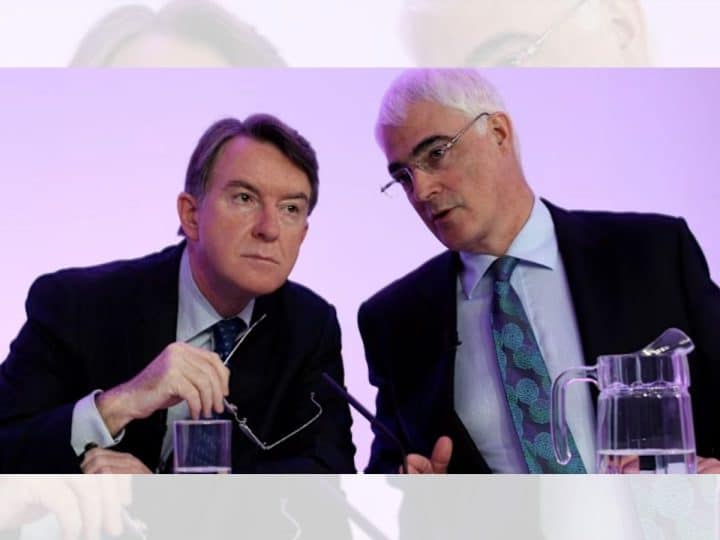

Earlier this year, we learned that Peter Mandelson had allegedly conspired with a US bank against UK interests. Specifically, he advised JP Morgan boss Jamie Dimon to ‘mildly threaten’ then-chancellor Alistair Darling. Now, that same banking boss is once again mildly threatening the UK over plans to raise taxes… unsurprisingly, the Mandelson and his sticky fingers continue to cast a long shadow.
JP Morgan CEO warns UK chancellor not to hike taxes on banks, could raise £19bn.
Says it would lose jobs.
From industry that has closed bank branches, profiteered, taken bailouts, sold dud products, engaged in frauds, facilitated illicit financial flows.https://t.co/PrHcwLUURi — Prem Sikka (@premnsikka) August 17, 2026
It’s yet another sign that the wealthy can get away with pretty much unlimited bad behaviour.
Mild threats
The Mandelson revelations came to us via the ‘Epstein Files’. As British economics journalist Faisal Islam reported in February:
For a decade and a half, I have wondered about a private conversation I had with the late Alistair Darling, Chancellor of the Exchequer under Gordon Brown, about the financial crisis.
Darling told me about a painful and angry telephone conversation he had with Jamie Dimon, chief executive of US banking giant JP Morgan, at the end of 2009 when the UK government announced plans to tax bankers’ bonuses.
Some of it had been reported at the time, such as a threat to pull plans for JP Morgan’s massive new headquarters in the UK.
But — to my utter astonishment – details of the background and the context to this call appear to be in the Epstein files released on Friday, and appear to have involved the unlikely combination of Peter Mandelson, Jeffrey Epstein and the suggestion of “mild threats” over the bonus tax.
It was Mandelson who advised Dimon to threaten the chancellor. And we know this because he later blabbed about it to the paedophile Jeffrey Epstein in an email.
Given this unseemly history, you’d think that Dimon would think twice about giving the appearance of threatening the UK. This would of course require the man to have some shame. And if he had that, he almost certainly wouldn’t still be running the bank more than a decade later.
In hock
Dimon had raised the fact that JP Morgan was one of the biggest purchasers of UK government debt, leaving the clear suggestion in Darling’s mind that America’s biggest bank could effectively stop lending to Britain.
While Darling refused to cave, he did recall that a number of bankers rang him up with what seemed like a script to complain about the bonus tax, urging a U-turn.
It occurred with such regularity that Darling started to tell them what they were about to say before they said it, having heard the words repeatedly.
How long can we continue to permit a system in which wealthy Americans tell us how we run our country? It would be one thing if the system we lived under provided stability and security; as we all now know, though, things are actually in a constant state of deterioration. On that note, Mandelson’s involvement in these ongoing machinations should not be forgotten.
Skipping forward to today, the Guardian has reported:
Jamie Dimon, the boss of the US bank JP Morgan, has urged John Healey not to use his first budget as chancellor to increase taxes on banks’ bumper profits.
Speculation has been growing that a windfall tax could be imposed on UK lenders to fund Andy Burnham’s cost of living agenda, with campaigners estimating such a move could raise £19bn.
Dimon told Healey in a phone conversation that higher levies could hit jobs, citing a fall in finance roles in New York that he blamed on the city’s tax regime.
Oh no, wherever would we be as a society without an excess of greedy bankers? Again, Mandelson’s shadow is never far from these financial narratives.
On and on
We live in a world in which no one ever seems to be punished and no one ever goes away. Peter Mandelson may be out of public life, but his recent sacking was the third time he was ejected from office in disgrace. Dimon, meanwhile, has continued at JP Morgan without pause.
The question now is whether Burnham plans to govern for the bankers or the rest of us. Ultimately, the Mandelson name serves as a reminder of how often elite figures resurface in the corridors of power.
Featured image via the Canary
By Willem Moore
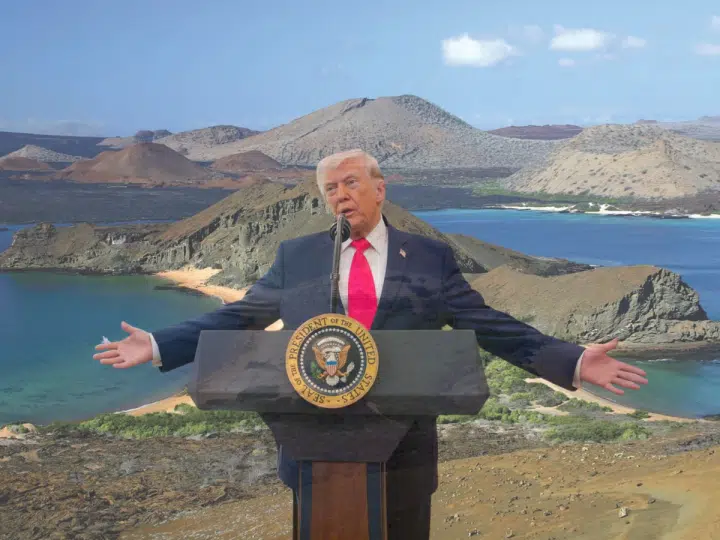

The US has been striking alleged ‘narcoterrorism’ boats in the Caribbean and east Pacific since September 2025. The Trump administration has been militarising the region, backing like-minded dictators and killing people ever since. They even kidnapped the Venezuelan president.
Now, new reporting suggests a parallel but separate operation carried out in March 2026 killed or kidnapped fisherman near the Galapagos islands. It is not clear if this operation was carried out by the CIA itself or private military contractors in its employ.
— Drop Site (@DropSiteNews) August 13, 2026
 According to new reporting from The Washington Post, the CIA was behind the secret attacks on three Ecuadorian fishing boats near the Galápagos Islands that Drop Site contributor Camila Lourdes Galarza first reported on in-depth in our April exposé.
 Drop Site uncovered NASA… pic.twitter.com/89E3ibJCIl
Either way, a new aspect of Trump’s shadow war in the Americas has been exposed. And yet huge questions remain unanswered.
Three ships are known to have been attacked in January and March 2026. The crew of the ship attacked in January has not been seen since. The crews attacked in March survived. The Washington Post reported:
The eight missing Ecuadorian nationals were aboard a 52-foot longline fishing boat called the Fiorella. The men on two boats that were struck in March, the Negra Francisca Duarte II and the Don Maca, all survived.
Survivors said:
that small quadcopter drones either dropped munitions on the vessels or detonated by crashing into them. The men said they were then taken aboard a nearby ship, hooded and cuffed by armed men, and transported to El Salvador — only to be returned later without explanation to Ecuador.
The New York Times reported on 12 August:
One fishing boat [the January attack] has been lost at sea since January, the U.N. says, with eight people still missing and presumed dead.
The survivors of two other vessels said they came under attack in March by English-speaking assailants wearing matching uniforms with American flag patches, but without any clear insignia to link them to an official government force.
Mysterious private jet overflew boats
Another part of the mystery involves a mysterious American-registered jet which left El Salvador in the direction of the ships on each occasion. It turned off its tracking transponder mid-flight and later disappeared.
Survivors said the plane:
followed and seemingly surveilled them before the strikes.
The NYT analysed:
flight data and found that a maritime patrol plane — based out of a military base in El Salvador — flew in the direction of all three boats in the days before they were attacked. The pilots onboard spoke English with American accents, according to air traffic control communication recordings.
The jet is registered to a UPS postbox in Virginia — the CIA’s backyard — but does not appear on the Pentagon’s public lists of aircraft.
The US authorities have openly gloated over strikes carried out as part of the US war on ‘narco-terrorists’. They even posted ‘snuff’ videos of the strikes. Yet they have offered no comment on the three Galapagos attacks.
Legal NGO, Just Security’s Brian Finucane told the NYT:
It would be one thing if the U.S. didn’t have an overt maritime strike campaign, but they do, and they’re posting snuff films of boats going up in flames regularly. And that’s what makes this even more squirrelly.
Who are these people that are operating, and under what authority? And they are using a UPS store as their company address? Come on.
The mysterious jet, which was modified with advanced surveillance equipment, flew out of:
Ilopango International Airport, a small airport that was a hub for covert U.S.-backed operations in Nicaragua in the 1980s.
A Trump-kowtowing, fascist Latin America?
El Salvador’s far-right president Nayib Bukele is a close ally of President Donald Trump. Ecuador’s president Daniel Noboa is also a Trump ally. Neither country has commented on the case. The US government has also refused to comment.
The Canary has written extensively on US operations in Latin America. This includes Trump’s plans for an Americas remade as a ‘homeland empire‘ in which the US calls the shots. We also reported Trump’s backing of Latin American leaders who align with his worldview.
A July piece published by Canadian socialist author Naomi Klein, but written by regional experts Verónica Gago and William Callison, does a good job of describing this process.
They asked:
What might an increasingly far-right hemisphere look like?
Their answer?
Modeled on Argentine President Javier Milei and Salvadoran President Nayib Bukele, and unfolding in the shadow of Donald Trump and Marco Rubio, it appears violent, chaotic, and yet also coordinated.
The details of this secretive mission in the Pacific are yet to emerge. But the operation is clearly part of a broader strategy in the Americas to consolidate US power through overt and covert means. The US is currently absorbed by its failed war in Iran. But sooner or later Trump’s war machine will turn its full attention back to the western hemisphere.
Featured image via the Canary
By Joe Glenton
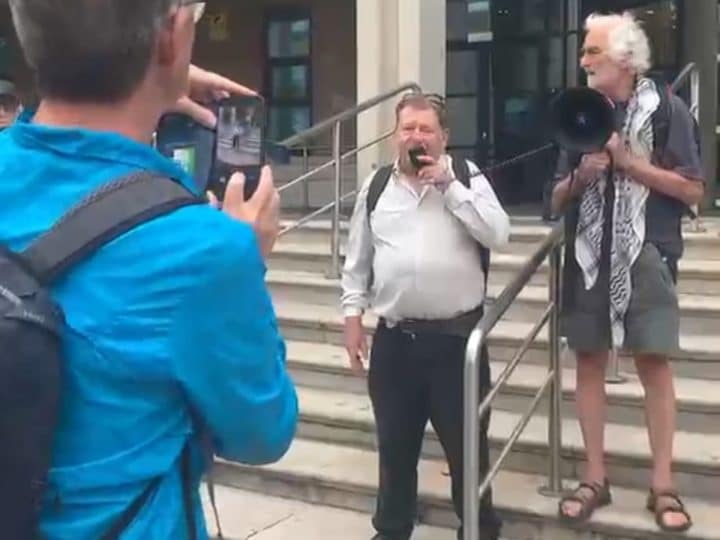

The trial of veteran Jewish anti-Zionist writer and activist Tony Greenstein opened today at Kingston Crown Court, where he faces prosecution under Section 12(1A) of the Terrorism Act 2000 over social media posts published in late 2023. Following preliminary legal submissions heard in the absence of the jury, the Crown opened its case to the panel of twelve jurors.
The Crown’s opening allegations against Tony Greenstein
Prosecuting counsel Kate Temple-Mabe outlined the charge, telling the court that Section 12(1A) makes it illegal to publish views supportive of an outlawed group without caring whether the post might encourage other people to support it. The prosecutor told jurors that the UK government banned Hamas in its entirety as a proscribed terrorist organisation in 2021.
Jurors were presented with a series of online exhibits, centring on an exchange dated 15 November 2023. The court heard that after another user prompted him to simply post “I support Hamas”, Tony Greenstein responded with qualifications and specific context, writing:
I support the Palestinians that is enough and I support Hamas against the Israeli army
The full context heard in court
To argue the defendant’s mindset, the Crown placed before the jury wider blog posts and tweets from October and November 2023. The prosecution’s case focused once again on isolating very specific phrases from these exhibits—notably Greenstein’s description of his initial reaction to the 7 October offensive as “elation not despair” and his posts titled “Full Support for the Gaza Ghetto Uprising”. The Crown argued that, taken on a plain reading, these words crossed the legal line into expressing and encouraging unlawful support for a banned entity.
However, the complete texts of the exhibits read out by the Crown in open court also placed on the record the wider historical context and specific arguments Tony Greenstein had incorporated into his writing:
Contextualising Armed Conflict, as Opposed to Organisation Loyalty: In the indicted 15 November exchange, the statement began with “I support the Palestinians that is enough” and strictly defined the support as being “against the Israeli army”.
Contextualising the Specific Armed Resistance Role: In an exchange with veteran human rights campaigner Peter Tatchell, the exhibit showed Tony Greenstein framing his support around the specific armed role of resisting military aggression, stating:
Whatever their faults Hamas is fighting Israel’s genocidal war whereas you’re criticising those laying down their lives.
Criticisms of Western Double Standards: The prosecution read extracts targeting Western political figures, in which Greenstein condemned what he termed the “nauseating hypocrisy” of US President Joe Biden and former UK Foreign Secretary James Cleverly (referred to as “Not So Cleverly”) for backing Ukrainian resistance while condemning Palestinian resistance.
Historical Analogies and Published Works: The blog posts shown to the jury framed events explicitly around the 1943 Warsaw Ghetto Uprising, comparing siege warfare and referencing Nazi commander Jürgen Stroop alongside Warsaw resistance leader Marek Edelman, rather than endorsing religious or political extremism. The exhibits also included a sidebar promoting Greenstein’s published book, “Zionism During the Holocaust: The Weaponisation of Memory in the Service of State and Nation”.
The 2014 Operation Protective Edge Context: The prosecution went through blog exhibits highlighting the 2014 war in Gaza, in which over 2,200 Palestinians, including 551 children, were killed. Jurors saw screenshots embedded in Tony Greenstein’s posts citing a July 2014 Guardian report by Harriet Sherwood, which documented Israeli civilians gathering on hilltops with armchairs to watch and cheer airstrikes on Gaza.
Political Criticisms of Regional Actors: The Crown’s exhibits included passages where Greenstein openly criticised Middle Eastern leadership, calling for the Arab masses to rise up and overthrow Egyptian President Abdel Fattah el-Sisi and Saudi Crown Prince Mohammed bin Salman (MBS) for their complicity in the siege of Gaza. He also dismissed the late Hezbollah leader Hassan Nasrallah as a “paper tiger” who was failing to assist Palestinians.
Online Reach: Exhibits presented by the Crown noted that the tweets in question had an extremely modest audience, recording view counts between 56 and 151 views.
The defence stance for Tony Greenstein
Tony Greenstein entered a plea of not guilty to the charge.
The prosecution’s opening case is ongoing, and the defence will present its formal evidence and arguments to the jury later in the trial.
The trial continues.
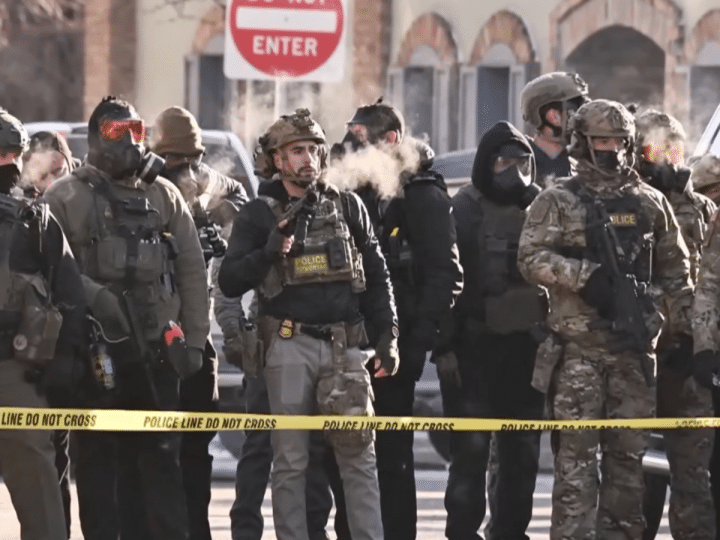

Cops willing to work with Trump’s violent Immigration and Customs Enforcement (ICE) thugs are being offered a new insurance scheme to protect them from misconduct charges. The scheme would cost officers $250 a year, but that cost would be reimbursed.
CNN reported on 18 August:
The agency is proposing to subsidize liability insurance for state and local officers who are trained and deputized to enforce federal immigration laws, according to a planning document published Friday.
It is hoped that the coverage would encourage police departments to join up with ICE in its often violent anti-immigrant operations:
ICE’s partnerships with local departments have soared since President Donald Trump returned to the White House last year and may get an additional boost with liability insurance by removing a hurdle that has made some local police departments reluctant to join.
The scheme would provide:
up to $500,000 in personal liability, which typically funds legal fees, settlements and judgments.
ICE’s accountability problem
Critics have warned this was another way to shield state agents from accountability. Cato Institute director of immigration studies David Bier told CNN:
The concern here is that ICE is going above and beyond to guarantee law enforcement does not have even the slightest risk of liability for violating Americans’ rights while helping ICE arrest people.
The relationship between the enforcement body and regional police forces has deepened in Donald Trump’s second term. ICE has offered:
generous financial incentives to participating local agencies, increasing the number who have partnered with the federal government, as well as the number of arrests.
CNN estimated:
Nearly 1,600 agencies in 32 states now have agreements to participate in ICE’s task force model, in which trained local officers can interrogate, arrest and charge people suspected of being in the country illegally, according to ICE data.
Federal officers (like the FBI) usually enjoy “legal immunities” and “government-funded defense” against lawsuits:
But those protections may not always apply to local officers, which has heightened their concerns over liability and the need for insurance.
The ICE-police planning document can be read here. It seeks:
to reduce the risk by saying local officers performing ICE-authorized functions are “acting under color of federal authority,” which would bar lawsuits against individual officers.
The authorities clearly hope this new scheme will see cops reinforcing ICE operations around the US. In effect, the Trump administration wants to use cops as a force multiplier in its mission to racially purify the United States. In that sense, the move is entirely in keeping with the Trumpian worldview.
Featured image via the Canary
By Joe Glenton
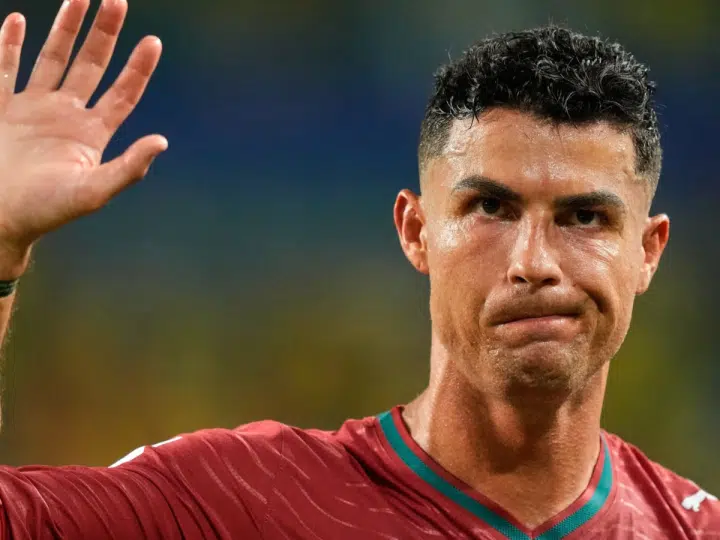

Cristiano Ronaldo has suggested he will retire at the end of the season, signalling the likely conclusion of one of football’s most decorated and scrutinised careers. The 41‑year‑old, who featured at his sixth World Cup this summer, told Vogue that this campaign “is probably my last year of football, and I want to leave a spectacular legacy.” It is the clearest indication yet that the Portugal captain is preparing to draw a line under more than two decades at the top of the sport.
Ronaldo had already confirmed ahead of the 2026 World Cup that the tournament across the USA, Canada and Mexico would be his final involvement on the global stage. Even then, he maintained his long‑held stance that he would decide the timing of his exit, insisting: “I will retire when I want to, not when you want.” But Portugal’s last‑16 defeat to Spain in July, which ended his World Cup career, has sharpened focus on what comes next.
World Cup farewell closes historic chapter
Portugal’s elimination brought down the curtain on Ronaldo’s record‑breaking World Cup journey. He became the first player to score in six editions of the tournament, finishing with 11 goals from 27 appearances. His presence at the 2026 competition was itself unprecedented, extending a run that began in Germany in 2006 and spanned two decades of international football.
The last‑16 exit to Spain was a subdued end to a World Cup career defined by longevity, consistency and relentless ambition. Yet even in the twilight of his playing days, Ronaldo remained central to Portugal’s campaign, carrying the weight of expectation that has followed him since his teenage breakthrough.
Al Nassr form remains prolific
Despite his age, Ronaldo has continued to score heavily for Al Nassr in the Saudi Pro League. His output has kept him within touching distance of the extraordinary milestone of 1,000 career goals—figure that once seemed unthinkable but now sits within reach as he approaches the final stretch of his playing life.
He is contracted to Al Nassr until 2027, but his comments suggest that he does not intend to see out the full length of that deal. Instead, he appears ready to bring his career to a close on his own terms, with one final season to shape the legacy he wants to leave behind.
Unrivalled honours
Ronaldo’s career is defined by an honours list that spans continents, competitions and eras. He has won five Ballons d’Or, five Champions League titles and league championships in England, Spain and Italy. His impact at Manchester United, Real Madrid and Juventus has left lasting imprints on each club, while his return to United in 2021 added another chapter to a career already overflowing with narrative.
At Real Madrid, he became the club’s all‑time leading scorer, amassing 450 goals in 438 appearances. This statistic is one of the most staggering in modern football. His rivalry with Lionel Messi shaped a generation, pushing both players to unprecedented levels of performance and consistency.
On the international stage, Ronaldo has delivered Portugal’s greatest triumphs. He lifted the European Championship in 2016 and the Nations League in 2019, anchoring a period of sustained competitiveness for a nation that had long hovered on the fringes of major tournament success. His 146 goals for Portugal make him the top scorer in men’s international football history, a record that may stand for decades.
Ronaldo’s legacy and longevity
Ronaldo’s career has been defined not only by trophies and records but by his ability to adapt. From explosive winger to penalty‑box predator, he has repeatedly reshaped his game to extend his dominance. His physical conditioning, professionalism and competitive drive have become reference points for aspiring players worldwide.
The decision to retire at the end of the season would mark the conclusion of a career that has spanned Sporting Lisbon, Manchester United, Real Madrid, Juventus, a second spell at United and now Al Nassr. Across each stop, he has remained a global figure whose influence stretches far beyond the pitch.
If this is indeed Ronaldo’s final campaign, it presents a rare moment of clarity in a career often defined by constant movement and reinvention. His goalscoring pursuit in Saudi Arabia, his leadership within Portugal’s evolving squad and his status as one of football’s most recognisable figures will all feed into the narrative of his final months as a professional.
The end of the season could bring a farewell befitting his stature. Possibly also a quieter exit shaped by his desire to control the terms of his departure. Either way, the significance of the moment will not be lost on the football world.
Era-defining figure prepares to step away
Ronaldo’s suggestion that he will retire underscores the inevitability that even the sport’s most enduring icons eventually reach their final chapter. His achievements, statistical, historical, and cultural, will place him among the most influential players the game has ever seen.
From his early days in Lisbon to his peak years in Madrid and his late‑career reinvention in Saudi Arabia, Ronaldo has remained a constant presence in football’s global conversation. His retirement, when it arrives, will mark the end of an era defined by extraordinary consistency, relentless ambition and a career that has rewritten the boundaries of longevity.
Football prepares for life after Ronaldo
As Ronaldo enters what he suggests will be his final season, the sport begins to contemplate a future without one of its defining figures. His departure will reshape Portugal’s national team, alter the landscape of global football and close a chapter that has spanned more than 20 years.
For now, he continues as he always has. Still scoring, still competing, still chasing milestones. But his words make clear that the finish line is approaching. So when it arrives, Cristiano Ronaldo will leave behind a legacy that few players in history can match.
Featured image via the Canary
By Faz Ali
Politics
Politics Home | Cross-Party Group Of MPs Write To Press Regulator Over Jason Arday Coverage
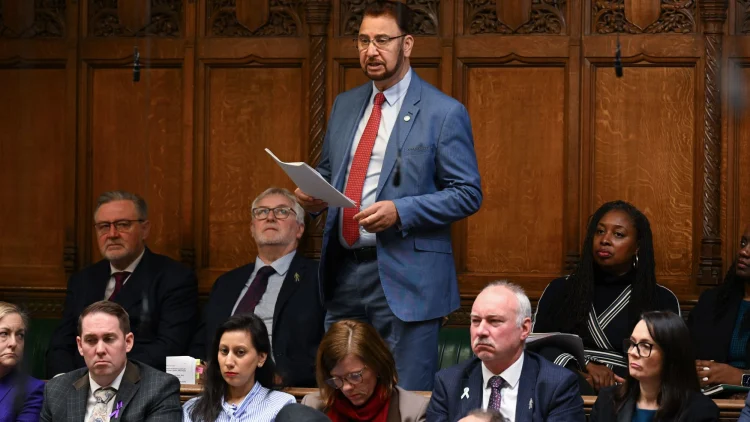

Cross-party MPs and peers have written a letter, organised by Labour MP Afzal Khan, to IPSO concerning the treatment of Professor Jason Arday. (Alamy)

4 min read
A cross-party group of MPs and peers has asked the Independent Press Standards Organisation (IPSO) to investigate media coverage of Jason Arday.
In a letter to IPSO Chief Executive Charlotte Dewar, organised by Labour MP Afzal Khan and seen by PoliticsHome, more than 50 parliamentarians say reporting on the former Cambridge academic before his death “reached far beyond what can reasonably be perceived as conducive to the public interest in relation to his alleged plagiarism”.
The letter argues it is “not unreasonable to suggest that the colour of Dr Arday’s skin was a contributing factor in garnering the level of media scrutiny he faced”, and that “Arday’s white counterparts at the University of Cambridge alone faced allegations that did not result in the same level of attention or affect.”
“His story went beyond the accusation of plagiarism and became one that critiqued him because he was Black,” the letter reads.
“Elements of the press repeatedly blamed diversity, equity and inclusion (DEI) policies as the reason he reached the status of professorship, and have hailed the allegations against him as to why promoting diversity leads institutions to failure.
“They framed the story of a single Black professor to discredit Black academia outright, suggesting that calls for diversity are leading institutions to prioritise the identity of an individual to be more important than their academic record. This is in spite of the fact that only one per cent of UK professors are Black.”
The letter adds that IPSO owes it to Arday’s family and people nationwide who have been “devastated” by his death to say whether it believes the media coverage was “proportional, justified, and motivated by any reason other than the accusations of plagiarism levelled against him”.
Signatories include Labour MPs Tulip Siddiq, Kerry McCarthy, Paula Barker and Tan Dhesi; Green MPs Sian Berry and Hannah Spencer; Plaid’s Westminster leader Liz Saville-Roberts; and former Labour Party leader Jeremy Corbyn.
Professor Jason Arday’s death has devasted millions of us across the country. He was relentlessly attacked for who he was and what he represented. Myself and 52 other Parliamentarians have written to the IPSO urging them to investigate the coverage of Professor Arday in the weeks before his death.
— Afzal Khan MP (@afzalkhanmcr.bsky.social) 2026-08-19T11:54:54.759Z
Khan, the Labour MP for Manchester Rusholme, told PoliticsHome the group decided to send the letter because “a vulnerable Black man is dead after a relentless attack on him as a person, for what he stood for, and for what he represented.”
“Letting the press off from being held accountable for what they’ve contributed towards is an invite to them to do it again,” he said.
“The press never fail to put clicks and views ahead of their ability to even think about the effects of their words and actions – this is yet another example. Each and every one of them who continued to attack Jason after they knew full well the effect it was having on him should be deeply ashamed.”
Arday, 41, was found dead at an address in south London on Friday following extensive media coverage of his academic and personal life following allegations of plagiarism.
The academic became the youngest black professor in Cambridge’s 800-year history when the University appointed him in 2023.
He stepped down from his professor role in early August amid allegations of plagiarism, which he denied, with Cambridge later opening an independent investigation into his appointment.
Liverpool John Moores University, which awarded Arday his PHD in 2015, had previously concluded that the academic had not plagiarised work.
The allegations prompted media coverage of his academic work as well as disputed claims he made about his life and achievements. For example, former schoolmates challenged Arday’s claim in his autobiography Great And Unfortunate Things that he was non-verbal until nearly 12 years old, though other former schoolmates provided accounts that supported it.
In his resignation letter, Arday said what he had experienced went “beyond scholarly disagreement” and that “the relentless accusations, speculation and public commentary have taken a profound toll on me and on those I love.”
He added that he had “reached the limits of what any person should reasonably be expected to endure”.
Dr Simon Baron-Cohen, Arday’s friend and director of Cambridge’s Autism Research Centre, publicly expressed concern about the behaviour of the media before Arday’s death. Posting on the social media platform X, Baron-Cohen said that Arday was autistic, that his own research found autistic people were at higher risk of suicide, and described “relentless bullying of a vulnerable autistic man” that “raises safeguarding issues”.
Prime Minister Andy Burnham said Arday’s death “was a tragedy, on so many levels”, and called for a “moment of reflection” to reflect on “how things came to this”.
A vigil was held for Arday in London’s Trafalgar Square on Monday, organised by Stand Up To Racism, with attendees including Arday’s constituency MP Bell Ribeiro-Addy and long-serving Labour MP Diane Abbott.

Five World Cup talents to watch in Serie A: Djed Spence, Donyell Malen and more

real man… #motivation #money #millionaire #success #shorts
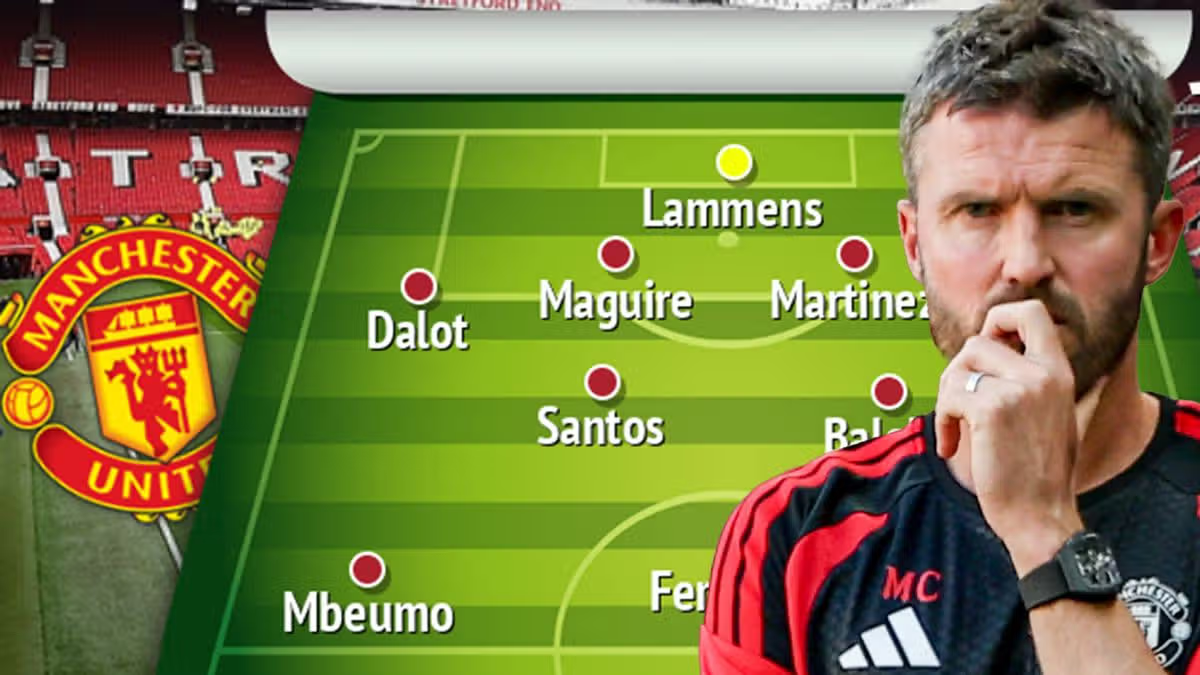
Four ways Man United can line up with Carlos Baleba as bid launched for Brighton star





-

 Fashion5 days ago
Weekend Open Thread: Ann Taylor
-
 Sports6 days ago
This U.S. Amateur is a glimpse into golf’s future in more ways than you think
-
 NewsBeat4 days ago
Myanmar says over 300,000 Rohingya refugees verified for repatriation as exodus enters ninth year
-

 Tech5 days ago
11 Ways to Rank Your Videos
-

 Sports4 days ago
Birmingham 2026: Day 6 Timetable for Irish Athletes
-

 Politics4 days ago
SEQ Code: The Three Letter Boarding Pass Code That Could Give You The Worst Seat
-

 Sports7 days ago
DeQuan Jones in ‘high spirits’ after successful leg surgery
-

 Tech6 days ago
DeepSeek Harness launches as open source rival to Claude Code, alongside V4-Pro on API with higher prices
-
 Crypto World7 days ago
Perplexity AI Predicts an XRP Scenario Few Analysts Are Discussing
-

 Crypto World2 days ago
OCC Greenlights Trump Family Crypto Firm for Trust Charter
-
 Entertainment7 days ago
2026’s Most Ambitious Fantasy Movie Officially Scores Sequel Update
-
 Entertainment7 days ago
All 10 Hayao Miyazaki Fantasy Movies, Ranked
-
 Entertainment7 days ago
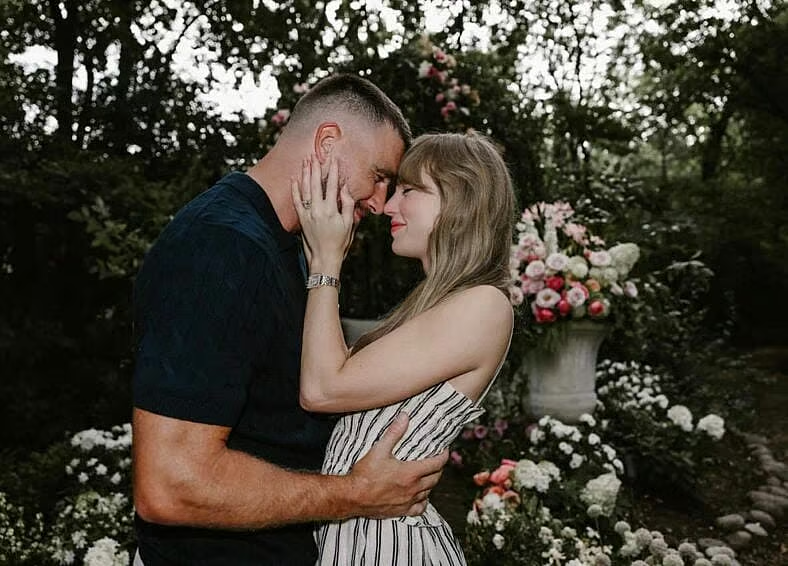
Travis Kelce Breaks Silence On ‘Crazy’ Taylor Swift Wedding
-
 Entertainment5 days ago
10 Netflix Shows That Quietly Became Modern Classics
-

 Fashion5 days ago
Weekly News Update, 8.14.26 – Corporette.com
-

 Tech1 day ago
Qwen3.8-27B runs frontier-class coding agents and reasoning locally, no cloud API required
-
 Business7 days ago
Nebius shares soar 22% as AI demand powers revenue beat
-

 Fashion6 days ago
The Details Do the Dressing
-

 Business4 days ago
Facebook Down Now? Users Report Login And Loading Problems As Outage Trackers Monitor Ongoing Issues
-
 Entertainment4 days ago
Marvel Studios Reveals New X-Men Cast Including Adam Driver and Sadie Sink
You must be logged in to post a comment Login