
Politics
Cristiano Ronaldo hints at retirement of era-defining career



Cristiano Ronaldo has suggested he will retire at the end of the season, signalling the likely conclusion of one of football’s most decorated and scrutinised careers. The 41‑year‑old, who featured at his sixth World Cup this summer, told Vogue that this campaign “is probably my last year of football, and I want to leave a spectacular legacy.” It is the clearest indication yet that the Portugal captain is preparing to draw a line under more than two decades at the top of the sport.
Ronaldo had already confirmed ahead of the 2026 World Cup that the tournament across the USA, Canada and Mexico would be his final involvement on the global stage. Even then, he maintained his long‑held stance that he would decide the timing of his exit, insisting: “I will retire when I want to, not when you want.” But Portugal’s last‑16 defeat to Spain in July, which ended his World Cup career, has sharpened focus on what comes next.
World Cup farewell closes historic chapter
Portugal’s elimination brought down the curtain on Ronaldo’s record‑breaking World Cup journey. He became the first player to score in six editions of the tournament, finishing with 11 goals from 27 appearances. His presence at the 2026 competition was itself unprecedented, extending a run that began in Germany in 2006 and spanned two decades of international football.
The last‑16 exit to Spain was a subdued end to a World Cup career defined by longevity, consistency and relentless ambition. Yet even in the twilight of his playing days, Ronaldo remained central to Portugal’s campaign, carrying the weight of expectation that has followed him since his teenage breakthrough.
Al Nassr form remains prolific
Despite his age, Ronaldo has continued to score heavily for Al Nassr in the Saudi Pro League. His output has kept him within touching distance of the extraordinary milestone of 1,000 career goals—figure that once seemed unthinkable but now sits within reach as he approaches the final stretch of his playing life.
He is contracted to Al Nassr until 2027, but his comments suggest that he does not intend to see out the full length of that deal. Instead, he appears ready to bring his career to a close on his own terms, with one final season to shape the legacy he wants to leave behind.
Unrivalled honours
Ronaldo’s career is defined by an honours list that spans continents, competitions and eras. He has won five Ballons d’Or, five Champions League titles and league championships in England, Spain and Italy. His impact at Manchester United, Real Madrid and Juventus has left lasting imprints on each club, while his return to United in 2021 added another chapter to a career already overflowing with narrative.
At Real Madrid, he became the club’s all‑time leading scorer, amassing 450 goals in 438 appearances. This statistic is one of the most staggering in modern football. His rivalry with Lionel Messi shaped a generation, pushing both players to unprecedented levels of performance and consistency.
On the international stage, Ronaldo has delivered Portugal’s greatest triumphs. He lifted the European Championship in 2016 and the Nations League in 2019, anchoring a period of sustained competitiveness for a nation that had long hovered on the fringes of major tournament success. His 146 goals for Portugal make him the top scorer in men’s international football history, a record that may stand for decades.
Ronaldo’s legacy and longevity
Ronaldo’s career has been defined not only by trophies and records but by his ability to adapt. From explosive winger to penalty‑box predator, he has repeatedly reshaped his game to extend his dominance. His physical conditioning, professionalism and competitive drive have become reference points for aspiring players worldwide.
The decision to retire at the end of the season would mark the conclusion of a career that has spanned Sporting Lisbon, Manchester United, Real Madrid, Juventus, a second spell at United and now Al Nassr. Across each stop, he has remained a global figure whose influence stretches far beyond the pitch.
If this is indeed Ronaldo’s final campaign, it presents a rare moment of clarity in a career often defined by constant movement and reinvention. His goalscoring pursuit in Saudi Arabia, his leadership within Portugal’s evolving squad and his status as one of football’s most recognisable figures will all feed into the narrative of his final months as a professional.
The end of the season could bring a farewell befitting his stature. Possibly also a quieter exit shaped by his desire to control the terms of his departure. Either way, the significance of the moment will not be lost on the football world.
Era-defining figure prepares to step away
Ronaldo’s suggestion that he will retire underscores the inevitability that even the sport’s most enduring icons eventually reach their final chapter. His achievements, statistical, historical, and cultural, will place him among the most influential players the game has ever seen.
From his early days in Lisbon to his peak years in Madrid and his late‑career reinvention in Saudi Arabia, Ronaldo has remained a constant presence in football’s global conversation. His retirement, when it arrives, will mark the end of an era defined by extraordinary consistency, relentless ambition and a career that has rewritten the boundaries of longevity.
Football prepares for life after Ronaldo
As Ronaldo enters what he suggests will be his final season, the sport begins to contemplate a future without one of its defining figures. His departure will reshape Portugal’s national team, alter the landscape of global football and close a chapter that has spanned more than 20 years.
For now, he continues as he always has. Still scoring, still competing, still chasing milestones. But his words make clear that the finish line is approaching. So when it arrives, Cristiano Ronaldo will leave behind a legacy that few players in history can match.
Featured image via the Canary
By Faz Ali



Finding a single, definitive “best” site for booking flights isn’t about looking for a one-size-fits-all name, it’s about knowing what tools and guarantees a top platform must provide. While every traveler has unique destination goals and budgets, the ideal booking platform always shares core advantages: transparent pricing, extensive flight coverage, local payment options, and reliable support. Rather than pointing you to a single rigid choice, this guide will walk you through the essential features of a top-tier flight booking platform, empowering you with the knowledge to easily spot, compare, and book through the best site for your next trip.
The Challenges of Booking Flights
When you book a flight, you usually stay up late with fifteen tabs open on your computer, chasing a fantastic price, only to see it disappear on the checkout page. The total goes back and forth between seat selection and adding a bag. A 2026 review of major travel apps by Unstar found that these pricing inconsistencies and hidden checkout fees account for approximately one in five of all unfavorable customer reviews across leading booking platforms, just behind cancellation and refund disputes.
Travel hacks are filled with tips like deleting your cookies, booking only on a Tuesday, and utilizing incognito mode so sites can’t monitor you and bump up rates. These tactics don’t make any difference. Airline prices are based on demand, the number of seats left, and the departure time of the flight instead of looking at your browsing history. The answer to these travel fallacies is a single platform that shows the full, final price upfront. That way you don’t have to go to 10 different sites, all of which have a variety of fees hidden somewhere.
Understanding Your Flight Booking Options
To get the best airfare, you need to understand how booking systems function and where ordinary search platforms fall short vs integrated travel apps.
- Booking Directly Through An Airline (Single Carrier Websites)
You will obtain no route optimization when booking directly via a single airline’s website. You are locked into that carrier’s limited flight network and usual price, so if there is a cheaper ticket on a competitor airline only an hour later, you will never see it.
- Generic Flight Search Engines (Meta-Search Engines)
Popular search engines crawl the web, searching for tickets on hundreds of sites, then lead you to purchase the ticket elsewhere. They regularly exclude small, cheap regional airlines, and because they don’t have a direct checkout and they often send you to third-party, unverified merchants with horrible customer care.
- Standard Online Travel Agencies (Legacy Third-Party OTAs)
Standard international online travel agencies (OTAs) offer tickets directly on their own websites. Seems easy enough; however, these sites often hide international transaction costs and add on surprising luggage fees right at the checkout. If your flight is delayed, your sole customer support option is often some kind of computerized bot.
- All-in-One Regional Travel Apps (Integrated Market Leaders)
Booking platforms that provide all-in-one matching and combining flights from hundreds of airlines. They operate on native payment processing, thus they provide full pricing transparency, 24/7 customer support, and flexible local payments.
How to Spot the Best Flight Booking Site
There are four major requirements that a booking platform must achieve. If a site doesn’t have even one, find another.
- Inventory: The site should include the big international airlines as well as smaller regional low-cost carriers so that you can view all possibilities accessible to you for your journey.
- Transparency: You should notice regional taxes, luggage regulations and payment processing costs on the first screen. It’s annoying to find out about these expenses at checkout.
- Payments: The platform should be able to support your local payment networks. It helps if it also offers secure, interest-free installment tools for budgeting.
- Support: If your plans change or your flight is cancelled, you need to be able to contact solid human support 24/7 in your language.
Why Local Travel Apps Beat Global Search Engines
In the Middle East, local booking apps typically outperform generic search engines, as they are designed for the region.
- More Flight Choices and Split-ticketing
Top integrated platforms like Almosafer collect inventory from 450+ worldwide and regional carriers, thereby enabling “split-ticketing”. The platform can book an outward flight on a low-cost carrier and a return journey on a full-service airline. While major global search engines also identify mixed-carrier itineraries, integrated platforms often provide a more streamlined experience by allowing users to book these specialized combinations in a single transaction. This gives you three major advantages:
- Savings: Mix budget fares instead of paying for a premium round-trip ticket.
- Flexibility: Pick the exact flight times that match your schedule.
- Convenience: Fly light on the way out, and choose full-service with extra baggage for the trip home.
- Honest Prices with No Hidden Bank Fees
Global platforms often route payments through foreign acquiring banks and display prices in foreign currencies, triggering dynamic currency conversion and cross-border markups. Regional applications handle transactions locally; therefore, this pricing on the screen is the final price at checkout. Platforms like Almosafer process payments through local banking channels, so the fare you see when you search is the exact amount charged at checkout, with no last-minute conversion surprises on your statement.
- Easy Local Payments and “Buy Now, Pay Later”
Global search engines rarely integrate region-specific payment methods and local BNPL providers, so they can’t offer 0% installment plans or truly local checkout experiences that reduce friction and cost for Middle Eastern users. Local payment solutions such as Mada and Apple Pay on sites like Almosafer can reduce foreign banking expenses. Regional businesses such as Tamara and Tabby are also available to divide the cost of a flash sale into payments with 0% interest.
- Smart Mobile Apps and Real-Time Tracking
Almosafer app has over 10 million downloads with 4.7-star reviews on iOS and Android, and 85% of their transactions are on mobile. This is the first AI-powered platform in Saudi Arabia. The app offers real-time flight monitoring, adjustable date grid analysis and flash sales. It also connects you to bilingual customer service in Arabic and English so you can sort out a delay, cancellation, or booking change without a language barrier slowing you down. While generic search engines function mainly as discovery layers, not end-to-end booking and post-booking management platforms tuned to the region.
Quick Comparison: Which Platform is Better?
| What You Get | Single-Carrier Sites | Search Engines | Third-Party OTAs | All-in-One Regional Apps |
| Flight options | Just one airline | Booked on selected websites rather than the search engine. | Few regional airlines | Many airlines, bundled together for best price |
| Final price shown | Accurate | Can change at checkout | May hide extra fees | What you see is what you pay |
| Payment Options | Standard credit cards | Depends on the site you’re sent to | Basic cards only | Cards, local wallets, pay-in-installments |
| Extra bank charges | Rare | Common | Common | No hidden conversion fees |
| Help if something goes wrong | Only that airline can help | The user does not know if the website they are booking is legit or not. | Automated chatbots | 24/7 dedicated localized support |
Watch Out for the Checkout Trap
This section refers to global or generic travel platforms that lack regional authority and local payment infrastructure in the Middle East.:
- They may show pricing in your local currency, but the transaction is processed via a foreign bank, which might result in surprise cross-border credit card costs.
- On a generic site, a base cost of $60 frequently does not include basics. Add in a carry-on bag and required seat selection and the total may easily exceed $160.
- Most generic search engines send you to unknown third-party suppliers for the actual booking. The search engine does not assume responsibility if there is a problem with your flight and the vendor might be difficult to reach.
Final Thoughts: The Best Way to Book Your Next Flight
Switching between a dozen generic sites and single-airline websites rarely results in any real savings. When you book via a single platform such as Almosafer with millions of users and hundreds of thousands of 5-star reviews, you receive larger airline options, transparent pricing, and no bank costs. Also, these platforms provide 0% interest payment plans and 24/7 customer service in Arabic and English.
Disclaimer: Data validated in August 2026. All values are subject to real-time changes.


Earlier this year, we learned that Peter Mandelson had allegedly conspired with a US bank against UK interests. Specifically, he advised JP Morgan boss Jamie Dimon to ‘mildly threaten’ then-chancellor Alistair Darling. Now, that same banking boss is once again mildly threatening the UK over plans to raise taxes… unsurprisingly, the Mandelson and his sticky fingers continue to cast a long shadow.
JP Morgan CEO warns UK chancellor not to hike taxes on banks, could raise £19bn.
Says it would lose jobs.
From industry that has closed bank branches, profiteered, taken bailouts, sold dud products, engaged in frauds, facilitated illicit financial flows.https://t.co/PrHcwLUURi — Prem Sikka (@premnsikka) August 17, 2026
It’s yet another sign that the wealthy can get away with pretty much unlimited bad behaviour.
Mild threats
The Mandelson revelations came to us via the ‘Epstein Files’. As British economics journalist Faisal Islam reported in February:
For a decade and a half, I have wondered about a private conversation I had with the late Alistair Darling, Chancellor of the Exchequer under Gordon Brown, about the financial crisis.
Darling told me about a painful and angry telephone conversation he had with Jamie Dimon, chief executive of US banking giant JP Morgan, at the end of 2009 when the UK government announced plans to tax bankers’ bonuses.
Some of it had been reported at the time, such as a threat to pull plans for JP Morgan’s massive new headquarters in the UK.
But — to my utter astonishment – details of the background and the context to this call appear to be in the Epstein files released on Friday, and appear to have involved the unlikely combination of Peter Mandelson, Jeffrey Epstein and the suggestion of “mild threats” over the bonus tax.
It was Mandelson who advised Dimon to threaten the chancellor. And we know this because he later blabbed about it to the paedophile Jeffrey Epstein in an email.
Given this unseemly history, you’d think that Dimon would think twice about giving the appearance of threatening the UK. This would of course require the man to have some shame. And if he had that, he almost certainly wouldn’t still be running the bank more than a decade later.
In hock
Dimon had raised the fact that JP Morgan was one of the biggest purchasers of UK government debt, leaving the clear suggestion in Darling’s mind that America’s biggest bank could effectively stop lending to Britain.
While Darling refused to cave, he did recall that a number of bankers rang him up with what seemed like a script to complain about the bonus tax, urging a U-turn.
It occurred with such regularity that Darling started to tell them what they were about to say before they said it, having heard the words repeatedly.
How long can we continue to permit a system in which wealthy Americans tell us how we run our country? It would be one thing if the system we lived under provided stability and security; as we all now know, though, things are actually in a constant state of deterioration. On that note, Mandelson’s involvement in these ongoing machinations should not be forgotten.
Skipping forward to today, the Guardian has reported:
Jamie Dimon, the boss of the US bank JP Morgan, has urged John Healey not to use his first budget as chancellor to increase taxes on banks’ bumper profits.
Speculation has been growing that a windfall tax could be imposed on UK lenders to fund Andy Burnham’s cost of living agenda, with campaigners estimating such a move could raise £19bn.
Dimon told Healey in a phone conversation that higher levies could hit jobs, citing a fall in finance roles in New York that he blamed on the city’s tax regime.
Oh no, wherever would we be as a society without an excess of greedy bankers? Again, Mandelson’s shadow is never far from these financial narratives.
On and on
We live in a world in which no one ever seems to be punished and no one ever goes away. Peter Mandelson may be out of public life, but his recent sacking was the third time he was ejected from office in disgrace. Dimon, meanwhile, has continued at JP Morgan without pause.
The question now is whether Burnham plans to govern for the bankers or the rest of us. Ultimately, the Mandelson name serves as a reminder of how often elite figures resurface in the corridors of power.
Featured image via the Canary
By Willem Moore


The US has been striking alleged ‘narcoterrorism’ boats in the Caribbean and east Pacific since September 2025. The Trump administration has been militarising the region, backing like-minded dictators and killing people ever since. They even kidnapped the Venezuelan president.
Now, new reporting suggests a parallel but separate operation carried out in March 2026 killed or kidnapped fisherman near the Galapagos islands. It is not clear if this operation was carried out by the CIA itself or private military contractors in its employ.
— Drop Site (@DropSiteNews) August 13, 2026
 According to new reporting from The Washington Post, the CIA was behind the secret attacks on three Ecuadorian fishing boats near the Galápagos Islands that Drop Site contributor Camila Lourdes Galarza first reported on in-depth in our April exposé.
 Drop Site uncovered NASA… pic.twitter.com/89E3ibJCIl
Either way, a new aspect of Trump’s shadow war in the Americas has been exposed. And yet huge questions remain unanswered.
Three ships are known to have been attacked in January and March 2026. The crew of the ship attacked in January has not been seen since. The crews attacked in March survived. The Washington Post reported:
The eight missing Ecuadorian nationals were aboard a 52-foot longline fishing boat called the Fiorella. The men on two boats that were struck in March, the Negra Francisca Duarte II and the Don Maca, all survived.
Survivors said:
that small quadcopter drones either dropped munitions on the vessels or detonated by crashing into them. The men said they were then taken aboard a nearby ship, hooded and cuffed by armed men, and transported to El Salvador — only to be returned later without explanation to Ecuador.
The New York Times reported on 12 August:
One fishing boat [the January attack] has been lost at sea since January, the U.N. says, with eight people still missing and presumed dead.
The survivors of two other vessels said they came under attack in March by English-speaking assailants wearing matching uniforms with American flag patches, but without any clear insignia to link them to an official government force.
Mysterious private jet overflew boats
Another part of the mystery involves a mysterious American-registered jet which left El Salvador in the direction of the ships on each occasion. It turned off its tracking transponder mid-flight and later disappeared.
Survivors said the plane:
followed and seemingly surveilled them before the strikes.
The NYT analysed:
flight data and found that a maritime patrol plane — based out of a military base in El Salvador — flew in the direction of all three boats in the days before they were attacked. The pilots onboard spoke English with American accents, according to air traffic control communication recordings.
The jet is registered to a UPS postbox in Virginia — the CIA’s backyard — but does not appear on the Pentagon’s public lists of aircraft.
The US authorities have openly gloated over strikes carried out as part of the US war on ‘narco-terrorists’. They even posted ‘snuff’ videos of the strikes. Yet they have offered no comment on the three Galapagos attacks.
Legal NGO, Just Security’s Brian Finucane told the NYT:
It would be one thing if the U.S. didn’t have an overt maritime strike campaign, but they do, and they’re posting snuff films of boats going up in flames regularly. And that’s what makes this even more squirrelly.
Who are these people that are operating, and under what authority? And they are using a UPS store as their company address? Come on.
The mysterious jet, which was modified with advanced surveillance equipment, flew out of:
Ilopango International Airport, a small airport that was a hub for covert U.S.-backed operations in Nicaragua in the 1980s.
A Trump-kowtowing, fascist Latin America?
El Salvador’s far-right president Nayib Bukele is a close ally of President Donald Trump. Ecuador’s president Daniel Noboa is also a Trump ally. Neither country has commented on the case. The US government has also refused to comment.
The Canary has written extensively on US operations in Latin America. This includes Trump’s plans for an Americas remade as a ‘homeland empire‘ in which the US calls the shots. We also reported Trump’s backing of Latin American leaders who align with his worldview.
A July piece published by Canadian socialist author Naomi Klein, but written by regional experts Verónica Gago and William Callison, does a good job of describing this process.
They asked:
What might an increasingly far-right hemisphere look like?
Their answer?
Modeled on Argentine President Javier Milei and Salvadoran President Nayib Bukele, and unfolding in the shadow of Donald Trump and Marco Rubio, it appears violent, chaotic, and yet also coordinated.
The details of this secretive mission in the Pacific are yet to emerge. But the operation is clearly part of a broader strategy in the Americas to consolidate US power through overt and covert means. The US is currently absorbed by its failed war in Iran. But sooner or later Trump’s war machine will turn its full attention back to the western hemisphere.
Featured image via the Canary
By Joe Glenton


The trial of veteran Jewish anti-Zionist writer and activist Tony Greenstein opened today at Kingston Crown Court, where he faces prosecution under Section 12(1A) of the Terrorism Act 2000 over social media posts published in late 2023. Following preliminary legal submissions heard in the absence of the jury, the Crown opened its case to the panel of twelve jurors.
The Crown’s opening allegations against Tony Greenstein
Prosecuting counsel Kate Temple-Mabe outlined the charge, telling the court that Section 12(1A) makes it illegal to publish views supportive of an outlawed group without caring whether the post might encourage other people to support it. The prosecutor told jurors that the UK government banned Hamas in its entirety as a proscribed terrorist organisation in 2021.
Jurors were presented with a series of online exhibits, centring on an exchange dated 15 November 2023. The court heard that after another user prompted him to simply post “I support Hamas”, Tony Greenstein responded with qualifications and specific context, writing:
I support the Palestinians that is enough and I support Hamas against the Israeli army
The full context heard in court
To argue the defendant’s mindset, the Crown placed before the jury wider blog posts and tweets from October and November 2023. The prosecution’s case focused once again on isolating very specific phrases from these exhibits—notably Greenstein’s description of his initial reaction to the 7 October offensive as “elation not despair” and his posts titled “Full Support for the Gaza Ghetto Uprising”. The Crown argued that, taken on a plain reading, these words crossed the legal line into expressing and encouraging unlawful support for a banned entity.
However, the complete texts of the exhibits read out by the Crown in open court also placed on the record the wider historical context and specific arguments Tony Greenstein had incorporated into his writing:
Contextualising Armed Conflict, as Opposed to Organisation Loyalty: In the indicted 15 November exchange, the statement began with “I support the Palestinians that is enough” and strictly defined the support as being “against the Israeli army”.
Contextualising the Specific Armed Resistance Role: In an exchange with veteran human rights campaigner Peter Tatchell, the exhibit showed Tony Greenstein framing his support around the specific armed role of resisting military aggression, stating:
Whatever their faults Hamas is fighting Israel’s genocidal war whereas you’re criticising those laying down their lives.
Criticisms of Western Double Standards: The prosecution read extracts targeting Western political figures, in which Greenstein condemned what he termed the “nauseating hypocrisy” of US President Joe Biden and former UK Foreign Secretary James Cleverly (referred to as “Not So Cleverly”) for backing Ukrainian resistance while condemning Palestinian resistance.
Historical Analogies and Published Works: The blog posts shown to the jury framed events explicitly around the 1943 Warsaw Ghetto Uprising, comparing siege warfare and referencing Nazi commander Jürgen Stroop alongside Warsaw resistance leader Marek Edelman, rather than endorsing religious or political extremism. The exhibits also included a sidebar promoting Greenstein’s published book, “Zionism During the Holocaust: The Weaponisation of Memory in the Service of State and Nation”.
The 2014 Operation Protective Edge Context: The prosecution went through blog exhibits highlighting the 2014 war in Gaza, in which over 2,200 Palestinians, including 551 children, were killed. Jurors saw screenshots embedded in Tony Greenstein’s posts citing a July 2014 Guardian report by Harriet Sherwood, which documented Israeli civilians gathering on hilltops with armchairs to watch and cheer airstrikes on Gaza.
Political Criticisms of Regional Actors: The Crown’s exhibits included passages where Greenstein openly criticised Middle Eastern leadership, calling for the Arab masses to rise up and overthrow Egyptian President Abdel Fattah el-Sisi and Saudi Crown Prince Mohammed bin Salman (MBS) for their complicity in the siege of Gaza. He also dismissed the late Hezbollah leader Hassan Nasrallah as a “paper tiger” who was failing to assist Palestinians.
Online Reach: Exhibits presented by the Crown noted that the tweets in question had an extremely modest audience, recording view counts between 56 and 151 views.
The defence stance for Tony Greenstein
Tony Greenstein entered a plea of not guilty to the charge.
The prosecution’s opening case is ongoing, and the defence will present its formal evidence and arguments to the jury later in the trial.
The trial continues.


Cops willing to work with Trump’s violent Immigration and Customs Enforcement (ICE) thugs are being offered a new insurance scheme to protect them from misconduct charges. The scheme would cost officers $250 a year, but that cost would be reimbursed.
CNN reported on 18 August:
The agency is proposing to subsidize liability insurance for state and local officers who are trained and deputized to enforce federal immigration laws, according to a planning document published Friday.
It is hoped that the coverage would encourage police departments to join up with ICE in its often violent anti-immigrant operations:
ICE’s partnerships with local departments have soared since President Donald Trump returned to the White House last year and may get an additional boost with liability insurance by removing a hurdle that has made some local police departments reluctant to join.
The scheme would provide:
up to $500,000 in personal liability, which typically funds legal fees, settlements and judgments.
ICE’s accountability problem
Critics have warned this was another way to shield state agents from accountability. Cato Institute director of immigration studies David Bier told CNN:
The concern here is that ICE is going above and beyond to guarantee law enforcement does not have even the slightest risk of liability for violating Americans’ rights while helping ICE arrest people.
The relationship between the enforcement body and regional police forces has deepened in Donald Trump’s second term. ICE has offered:
generous financial incentives to participating local agencies, increasing the number who have partnered with the federal government, as well as the number of arrests.
CNN estimated:
Nearly 1,600 agencies in 32 states now have agreements to participate in ICE’s task force model, in which trained local officers can interrogate, arrest and charge people suspected of being in the country illegally, according to ICE data.
Federal officers (like the FBI) usually enjoy “legal immunities” and “government-funded defense” against lawsuits:
But those protections may not always apply to local officers, which has heightened their concerns over liability and the need for insurance.
The ICE-police planning document can be read here. It seeks:
to reduce the risk by saying local officers performing ICE-authorized functions are “acting under color of federal authority,” which would bar lawsuits against individual officers.
The authorities clearly hope this new scheme will see cops reinforcing ICE operations around the US. In effect, the Trump administration wants to use cops as a force multiplier in its mission to racially purify the United States. In that sense, the move is entirely in keeping with the Trumpian worldview.
Featured image via the Canary
By Joe Glenton
Politics
Politics Home | Cross-Party Group Of MPs Write To Press Regulator Over Jason Arday Coverage
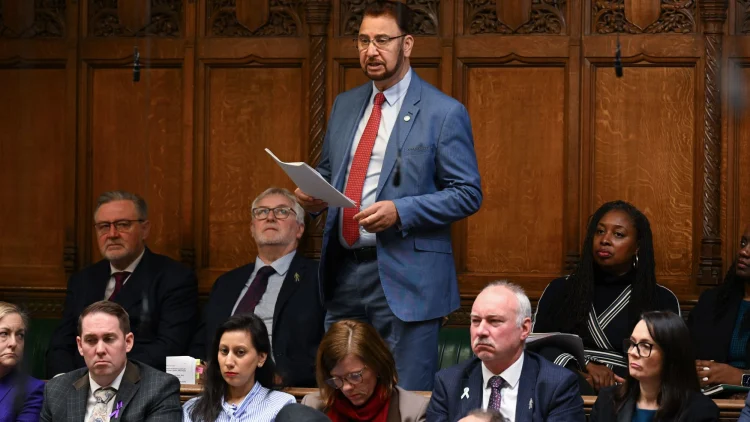

Cross-party MPs and peers have written a letter, organised by Labour MP Afzal Khan, to IPSO concerning the treatment of Professor Jason Arday. (Alamy)

4 min read
A cross-party group of MPs and peers has asked the Independent Press Standards Organisation (IPSO) to investigate media coverage of Jason Arday.
In a letter to IPSO Chief Executive Charlotte Dewar, organised by Labour MP Afzal Khan and seen by PoliticsHome, more than 50 parliamentarians say reporting on the former Cambridge academic before his death “reached far beyond what can reasonably be perceived as conducive to the public interest in relation to his alleged plagiarism”.
The letter argues it is “not unreasonable to suggest that the colour of Dr Arday’s skin was a contributing factor in garnering the level of media scrutiny he faced”, and that “Arday’s white counterparts at the University of Cambridge alone faced allegations that did not result in the same level of attention or affect.”
“His story went beyond the accusation of plagiarism and became one that critiqued him because he was Black,” the letter reads.
“Elements of the press repeatedly blamed diversity, equity and inclusion (DEI) policies as the reason he reached the status of professorship, and have hailed the allegations against him as to why promoting diversity leads institutions to failure.
“They framed the story of a single Black professor to discredit Black academia outright, suggesting that calls for diversity are leading institutions to prioritise the identity of an individual to be more important than their academic record. This is in spite of the fact that only one per cent of UK professors are Black.”
The letter adds that IPSO owes it to Arday’s family and people nationwide who have been “devastated” by his death to say whether it believes the media coverage was “proportional, justified, and motivated by any reason other than the accusations of plagiarism levelled against him”.
Signatories include Labour MPs Tulip Siddiq, Kerry McCarthy, Paula Barker and Tan Dhesi; Green MPs Sian Berry and Hannah Spencer; Plaid’s Westminster leader Liz Saville-Roberts; and former Labour Party leader Jeremy Corbyn.
Professor Jason Arday’s death has devasted millions of us across the country. He was relentlessly attacked for who he was and what he represented. Myself and 52 other Parliamentarians have written to the IPSO urging them to investigate the coverage of Professor Arday in the weeks before his death.
— Afzal Khan MP (@afzalkhanmcr.bsky.social) 2026-08-19T11:54:54.759Z
Khan, the Labour MP for Manchester Rusholme, told PoliticsHome the group decided to send the letter because “a vulnerable Black man is dead after a relentless attack on him as a person, for what he stood for, and for what he represented.”
“Letting the press off from being held accountable for what they’ve contributed towards is an invite to them to do it again,” he said.
“The press never fail to put clicks and views ahead of their ability to even think about the effects of their words and actions – this is yet another example. Each and every one of them who continued to attack Jason after they knew full well the effect it was having on him should be deeply ashamed.”
Arday, 41, was found dead at an address in south London on Friday following extensive media coverage of his academic and personal life following allegations of plagiarism.
The academic became the youngest black professor in Cambridge’s 800-year history when the University appointed him in 2023.
He stepped down from his professor role in early August amid allegations of plagiarism, which he denied, with Cambridge later opening an independent investigation into his appointment.
Liverpool John Moores University, which awarded Arday his PHD in 2015, had previously concluded that the academic had not plagiarised work.
The allegations prompted media coverage of his academic work as well as disputed claims he made about his life and achievements. For example, former schoolmates challenged Arday’s claim in his autobiography Great And Unfortunate Things that he was non-verbal until nearly 12 years old, though other former schoolmates provided accounts that supported it.
In his resignation letter, Arday said what he had experienced went “beyond scholarly disagreement” and that “the relentless accusations, speculation and public commentary have taken a profound toll on me and on those I love.”
He added that he had “reached the limits of what any person should reasonably be expected to endure”.
Dr Simon Baron-Cohen, Arday’s friend and director of Cambridge’s Autism Research Centre, publicly expressed concern about the behaviour of the media before Arday’s death. Posting on the social media platform X, Baron-Cohen said that Arday was autistic, that his own research found autistic people were at higher risk of suicide, and described “relentless bullying of a vulnerable autistic man” that “raises safeguarding issues”.
Prime Minister Andy Burnham said Arday’s death “was a tragedy, on so many levels”, and called for a “moment of reflection” to reflect on “how things came to this”.
A vigil was held for Arday in London’s Trafalgar Square on Monday, organised by Stand Up To Racism, with attendees including Arday’s constituency MP Bell Ribeiro-Addy and long-serving Labour MP Diane Abbott.
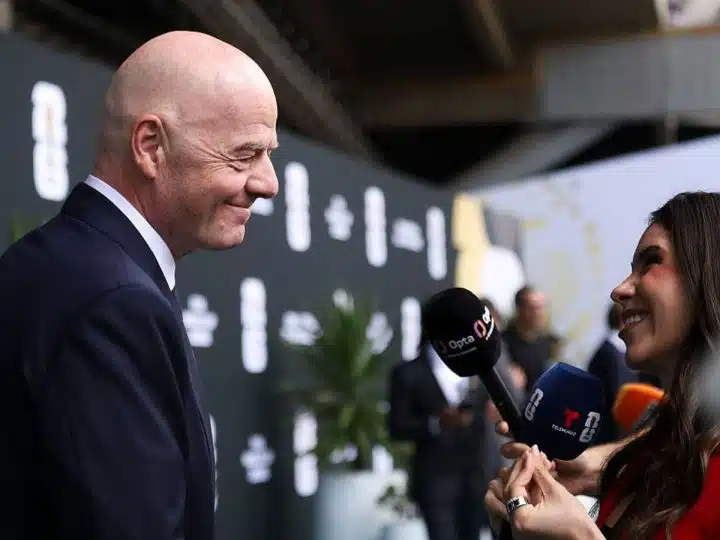
A senior FIFA official warned he was prepared to lose his job over Gianni Infantino’s controversial World Cup plan. Weeks later, he has.
He knew the risk
FIFA has ended its working relationship with Chief Operating Officer Kevin Lamour, weeks after he publicly criticised Infantino over plans to sell a stake in the World Cup’s commercial rights to outside investors.
FIFA confirmed that Lamour’s contract ended on 17 August, thanking him for his two years with the organisation but declining to comment further.
Lamour had made clear that he knew his criticism could cost him his job.
Speaking to the Associated Press on 31 July, he said the proposal “should not go ahead” and that football’s leaders needed to “ask the right questions and make the right decisions”.
And if that means I lose my job, then so be it.
Within weeks, Lamour was gone.
The straw that broke Infantino
The dispute centred on a proposal to create a FIFA subsidiary valued at around $20bn, which would control the commercial rights to the federation’s major tournaments, including the World Cup.
Under the plan, up to 20% of the subsidiary could have been sold to outside investors.
The proposal triggered opposition both inside and outside FIFA, with critics questioning whether investors from outside football should have a stake in the commercial rights to its biggest tournaments.
Lamour was not the only senior figure to object. Hours before his comments, Carlos Cordero, a chief adviser to Infantino, resigned over the proposal, calling it “a bad deal for football”.
Infantino’s FIFA headache
FIFA subsequently backed away from the plan amid the growing backlash. But the controversy has continued to reverberate inside the organisation.
Lamour’s departure now adds another remarkable twist to a proposal that was supposed to be a major financial move for FIFA.
Lamour joined FIFA as Chief Operating Officer in 2024 after spending years at UEFA, where he had served as Deputy General Secretary.
His exit also raises an obvious question about how much room senior FIFA officials have to challenge Infantino when they disagree with his plans.
Lamour effectively predicted the consequences himself. He said he would accept losing his job if that was the price of speaking out.
Weeks later, FIFA confirmed that his time at the organisation was over.
Featured image via the Canary
By Alaa Shamali


Premier League clubs have already spent £2.14bn this summer, widening the financial gulf with Europe.
Premier League spending through the roof
Premier League clubs have continued their record-breaking spending this summer, splashing around £2.14bn so far and closing in on the record set in 2025.
According to BBC figures, clubs would need to spend roughly another £1bn to match last summer’s total. With more than two weeks still remaining before the transfer window closes, however, another record remains within reach.
The scale of the spending is striking. The league has already surpassed the totals for several entire transfer windows, including £1.98bn in 2024, £1.94bn in 2022, £1.32bn in 2020 and £1.13bn in 2021.
Only the summers of 2023 and 2025 have seen more spending, at around £2.36bn and a record figure respectively.
With clubs still strengthening their squads, the £2.36bn mark could soon be within touching distance.
The money stays in England
The spending boom isn’t limited to players arriving from abroad. Premier League clubs have also been throwing huge sums at each other, with almost £785m spent on domestic transfers so far.
That offers another indication of the league’s financial muscle—clubs have enough money not only to shop abroad but to pay extraordinary fees for players already competing in England.
Morgan Rogers’ move from Aston Villa to Chelsea leads the domestic spending list at £117m, followed by Elliot Anderson’s £116m transfer from Nottingham Forest to Manchester City.
Sandro Tonali’s move from Newcastle United to Tottenham Hotspur cost £100m, while Matheus Fernandes joined Tottenham from West Ham for £85m. Bruno Guimarães’ move from Newcastle to Arsenal completes the top five at £75m.
Europe is struggling to keep up
The figures underline just how wide the financial gap between the Premier League and Europe’s other major leagues has become.
BBC described the difference as “as clear as day”, with Premier League spending now approaching the combined total spent by clubs in the other four major European leagues.
The disparity reflects the enormous commercial and broadcast revenues flowing through English football, giving Premier League clubs the financial muscle to keep spending even as transfer fees continue to soar.
With the window entering its final stages, the question is no longer whether Premier League clubs can spend at extraordinary levels. It’s whether they can break yet another record — and widen the gap with the rest of Europe even further.
Featured image via the Canary
By Alaa Shamali
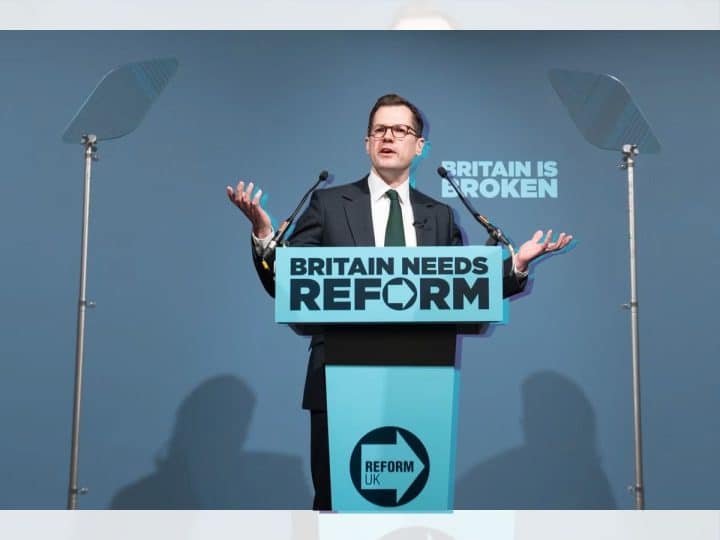

On Monday 17 August, Reform UK announced a suite of new policies designed to target and punish sick, disabled, and unemployed people. The party’s plan to target unemployed people is based on the idea that there’s a significant number of voters who are just ‘layabouts’. In reality, most of the people who don’t work can’t work, and the rest are facing a particularly tough market – as the latest job vacancies show:
all while every single major party says it’s going to cut benefits for people that “refuse to work” https://t.co/TsAZeBlXwb
— mike ☭

 (@__mike91) August 18, 2026
On the attack (and ignoring the job vacancies chaos)
Reform’s Making Welfare Work policy would completely abolish Personal Independence Payments (PIP). As we reported, this is an odd move for Reform to make, given that many Reform voters are PIP claimants. It’s one thing to pretend the system is full of ‘scroungers’ and to promise a crackdown; it’s quite another to directly target every PIP claimant in the country.
I canvassed a disabled voter in Crook recently who told me she was voting Reform because the first time she applied for PIP it was rejected. "I had to fight damn hard for my PIP" she told me, "but foreigners get it for nothing".
I hope people like her become better informed. https://t.co/l5emWDM0QD
— Sam Rushworth MP (@SamJRushworth) August 16, 2026
Predictably, Reform’s policy is likely to result in a massive increase in child poverty. PIP payments help sick and disabled people juggle part-time work with their ongoing health issues. Removing PIP might push some people into full-time work, but it will also force many into full-time unemployment.
The new policy will mandate that anyone who’s on Universal Credit for 12 months will have to complete 20 hours of community work a year. As the Standard reported:
Robert Jenrick, the party’s Treasury spokesperson, said the long-term unemployed would have to work 20 hours a week scrubbing high streets, carrying out minor repairs and “beautifying neglected places”.
The scheme would be run by local councils and those who do not accept work placements will have their funding cut.
This really betrays two things:
- It’s entirely possible to just create job vacancies – including jobs which benefit the local area.
- For whatever reason, some voters will only get behind such a move if there’s an element of punishment to it.
And all this is especially bad when you factor in the current unavailability of jobs.
There are now 2.5 unemployed people for every job opening in the UK. https://t.co/dAkoigaAgb pic.twitter.com/tKpis4jAmE
— Bull Theory (@BullTheoryio) August 18, 2026
 THIS IS INSANE
Job hunt
As the BBC reported, the number of job vacancies:
has fallen to its lowest level in more than five years as smaller businesses cut back on recruitment, official figures indicate.
Vacancy numbers fell over the May-to-July period to 707,000, according to the Office for National Statistics (ONS), which said small firms were citing labour and operating costs as reasons for scaling back hiring.
Energy costs have risen since the Iran war began, and companies have also said that increases in National Insurance and the minimum wage have made it more expensive to employ staff.

While it’s essential that the minimum wage rises to meet the cost of living, it can cause issues in a Cost-of-Living Crisis. The problem is that even with wages going up a bit, most people are still feeling the pinch. When that happens, people spend less; when people spend less, businesses attract fewer customers; when businesses attract fewer customers, they employ fewer people.
It’s a vicious circle, in other words. And it’s not one we’re going to get out of by punishing people who are out of work.
Reform says it will save £50bn a year by abolishing PIP. That’s £50bn which was being sent to PIP claimants who were in turn spending it on food, clothes, and essentials. Now ask yourself this: will pulling £50bn out of the economy be good for businesses who are already struggling, or will it be an absolute disaster?
Job seekers vs job vacancies
The BBC article carries the following interview with a job seeker:
Aaron Diangienda told BBC Newsbeat he has been looking for a role for more than a year.
“I’ve been trying my best, just making sure that I am finding the correct stuff to suit me and keeping on going with [the job hunt]”, he says.
Under Reform, Diangienda would have been put on the scheme to carry out labour for benefits – i.e. he’d be working for less than the minimum wage. Would that really help him find work?
Another job seeker said this:
For Jasmine Walker, it’s been a case of applying for jobs “literally anywhere and everywhere”.
The 24-year-old says she has been looking for marketing jobs since she graduated from university in July, and estimates she has applied for more than 300 roles so far.
“It’s a bit frustrating because you’re researching and practising how to make your CV and applications pristine, and yet you still can’t get anywhere with that,” says Walker.
Imagine if applying for 100+ jobs wasn’t enough, and suddenly you had to work 20 hours a week just to maintain your benefits – benefits which already failed to ensure any quality of life.
You can be mad about how things are, but you can’t pretend Reform’s plan will fix anything.
Farage wants 300k unemployed scrubbing the streets for free or starve. Call it community service. It’s the workhouse rebranded. Class war from the top. Always.
20 hours unpaid labour a week or lose your benefits. That’s Reform’s big idea. Taxpayers get paid. Claimants get… — Spirit Of Attlee (@SpiritOfAttlee) August 17, 2026
Costly
Another thing to note is that Reform’s plan is going to create whole new layers of bureaucracy and enforcement for local councils. Who’s going to pay for all this? Because the policy isn’t going to generate cash as far as we’ve been told. And this is supposed to be part of a plan to save money.
It’s almost like Reform hasn’t thought this one through.
Featured image via PA
By Willem Moore
Politics
Reform councillor quits Farage’s party saying new welfare policy will have fatal consequences


Reform’s John Bell has resigned as parish councillor for Mabe in Cornwall and quit Farage’s far-right party. Explaining his decision, Bell stated that he “cannot in good conscience” support the recently announced ‘Making Welfare Work’ policy.
Joining resounding criticism of the harmful policy, Bell says that Reform’s changes to welfare and Personal Independence Payments (PIP) will “cost lives of people, especially those who have suicidal ideation”.
This resignation comes in the wake of Jason Arday’s apparent suicide – a death likely caused by the immense, undue pressure and demeaning rhetoric the mainstream media directed at him. That same media has spent years demonising and belittling people who rely on welfare support, particularly those receiving PIP.
As a result, this intervention from Bell underlines the real-world danger of punitive policy changes that risk leaving vulnerable people even more isolated.
Today I have resigned from Reform UK and also I have resigned as a Councillor. I cannot in good conscience support the Making Welfare Work policy. These changes will cost lives of people especially those who have suicidal ideation.
— John Bell


 (@johngbell0) August 17, 2026
Reform to cut £50bn from support for disabled people
Reform’s latest harmful policy announcement proposes replacing PIP entirely with a new system, ironically called a ‘Health Security Allowance’, while claiming it could save the welfare system a staggering £50bn.
But the reality is rather different. Reform would effectively shift the cost of PIP onto employers, who it says would need to take out insurance to cover the additional costs. It then proposes offsetting that hit through lower national insurance payments.
As our own Willem Moore and others have pointed out, this is unlikely to go down well with either PIP recipients or business owners. And for good reason. PIP helps many disabled people meet the additional costs of living with a disability and, crucially, can help make employment possible for those affected.
Businesses also benefit from disabled people being able to participate in the workforce. Yet Reform’s proposal would saddle employers with additional costs at the same time as many businesses already complain they are being squeezed by government.
If that £50bn bill really is being shifted onto businesses, you might expect a revolt. Especially when so many businesses and wealthy donors have backed Reform. On the face of it, the policy risks alienating both voters and the very business interests the party claims to champion.
DWP PIP claimants are being tricked into voting Reform
Some PIP claimants believed that Reform was only going after 'fraudsters'; now the party has made it clear they're going for everyonehttps://t.co/xAc61sMw7Shttps://t.co/xAc61sMw7S
— Canary (@TheCanaryUK) August 17, 2026
But there is a much darker possibility
If employers face far higher costs when hiring disabled workers, what happens when they start factoring those costs into recruitment decisions? The risk is that disabled applicants become even less attractive to employers, whether openly or through discriminatory hiring practices.
That creates a perfect storm: disabled people could lose vital financial support while simultaneously finding it harder to get and keep work.
And that is why the potential consequences of this policy go far beyond a row over welfare spending. Strip away the rhetoric about ‘saving’ £50bn and the long-term impact could be devastating. A policy that removes income, restricts access to work and pushes already vulnerable people further into isolation could, in the worst cases, cost lives.
As the now-former Reform councillor above points out, those already experiencing suicidal thoughts could be among those most at risk. For those with any degree of moral conscience or decency would do as Bell has done and walk away from the party. For those who don’t, well that speaks volumes.
Grossly, one Reform supporter refutes Bell’s assertion that this policy would increase the risk of suicide. Instead, they argue that this saving would mean those who are suicidal would receive greater support from the state.
Although, it is worth pointing out that he clearly hasn’t thought this through as that number would surely only increase due to this harmful policy pushing people out of employment whilst taking away vital support:
Suicidal ideation is something a vast number of people suffer from at some point in their lives. Reform UK's plan to cut benefits for people who abuse the welfare system would actually free up more funds for those who briefly suffer from suicidal tendencies.
John Bell has not… https://t.co/SWdlESuLyE
— Joe
 Reform UK (@Verbal_Vortex) August 18, 2026
Cut costs to increase costs elsewhere?
Reform voters don’t tend to apply much logic to why they support the ultra-wealthy Farage and his billionaire funded party/business, so it should hardly be a surprise that Reform would introduce a policy which would hurt its own voter base.
As our own Willem Moore reported:
It’s important to understand that some of the people with a negative opinion about benefit claimants are benefit claimants themselves. These people have bought into the lie that there are a handful of deserving claimants (themselves and their friends) and millions of undeserving. This phenomenon is why UK political parties can bash benefit claimants while still winning votes from them.
It really does seem that some Reform supporters desperately want to believe they’re somehow ‘different’ from other benefit claimants. Perhaps attacking the ‘others’ receiving state support gives them a way to distance themselves from people they see as beneath them – even when they’re relying on the very same system.
But if a future Reform government actually implements this policy, the consequences could hit the public finances from both sides.
After all, push disabled people out of work and you shrink the income tax base. At the same time, removing the support that helps people manage independently risks pushing more people towards the NHS and other public services.
That means higher costs for the state, less tax coming in and even more pressure on an NHS already struggling under the weight of privatisation.
The rich, of course, will get richer under Reform
And here’s the real kicker: instead of helping disabled people live independently and contribute to their communities, that money could end up lining the pockets of private providers and shareholders as our NHS is carved up and sold off.
This, we suspect, is exactly what Farage and his super rich backers are counting on. The question for taxpayers, is whether they want to get value for money or whether they want that to be vacuumed up by the richest in society.
Or, as Bell has pointed out, it could lead to a significant number of PIP recipients choosing to take their own lives, due to the duress this policy would inflict.
This is a Dickensian reality which no decent person should accept, let alone vote for.
Featured image via the Canary

SAD GIRLZ LUV MONEY (Remix)

Roskam Foods centralizes cereal, granola manufacturing

Why the S&P 500’s Path to 9,000 Runs Into Trouble in 2027





-

 Fashion5 days ago
Weekend Open Thread: Ann Taylor
-
 Sports6 days ago
This U.S. Amateur is a glimpse into golf’s future in more ways than you think
-
 NewsBeat4 days ago
Myanmar says over 300,000 Rohingya refugees verified for repatriation as exodus enters ninth year
-

 Tech5 days ago
11 Ways to Rank Your Videos
-

 Sports4 days ago
Birmingham 2026: Day 6 Timetable for Irish Athletes
-

 Politics4 days ago
SEQ Code: The Three Letter Boarding Pass Code That Could Give You The Worst Seat
-

 Sports7 days ago
DeQuan Jones in ‘high spirits’ after successful leg surgery
-

 Tech6 days ago
DeepSeek Harness launches as open source rival to Claude Code, alongside V4-Pro on API with higher prices
-
 Crypto World7 days ago
Perplexity AI Predicts an XRP Scenario Few Analysts Are Discussing
-

 Crypto World2 days ago
OCC Greenlights Trump Family Crypto Firm for Trust Charter
-
 Entertainment7 days ago
2026’s Most Ambitious Fantasy Movie Officially Scores Sequel Update
-
 Entertainment7 days ago
All 10 Hayao Miyazaki Fantasy Movies, Ranked
-
 Entertainment7 days ago
Travis Kelce Breaks Silence On ‘Crazy’ Taylor Swift Wedding
-
 Entertainment5 days ago
10 Netflix Shows That Quietly Became Modern Classics
-

 Fashion5 days ago
Weekly News Update, 8.14.26 – Corporette.com
-

 Tech1 day ago
Qwen3.8-27B runs frontier-class coding agents and reasoning locally, no cloud API required
-

 Fashion6 days ago
The Details Do the Dressing
-

 Business4 days ago
Facebook Down Now? Users Report Login And Loading Problems As Outage Trackers Monitor Ongoing Issues
-
 Entertainment4 days ago
Marvel Studios Reveals New X-Men Cast Including Adam Driver and Sadie Sink
-
 Tech4 days ago
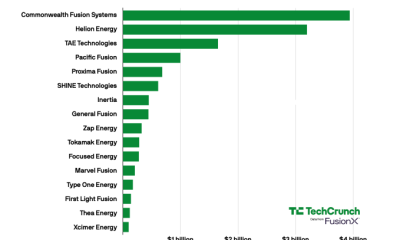
Every fusion startup that has raised over $100M
You must be logged in to post a comment Login