Politics
James Sweeney Interview: Twinless Director Talks Dylan O’Brien And Leaked Sex Scenes

Following rave reviews upon its release in the US towards the end of last year, which saw fans and critics celebrating its unpredictable twists, turns and deeply uncomfortable revelations, Twinless has finally made its way to UK cinemas.
At the centre of the film is the extremely impressive multi-hyphenate James Sweeney, on triple duty as the movie’s writer, director and star, alongside Dylan O’Brien in what could become a career-defining performance as a young man struggling with the aftermath of his twin brother’s death.
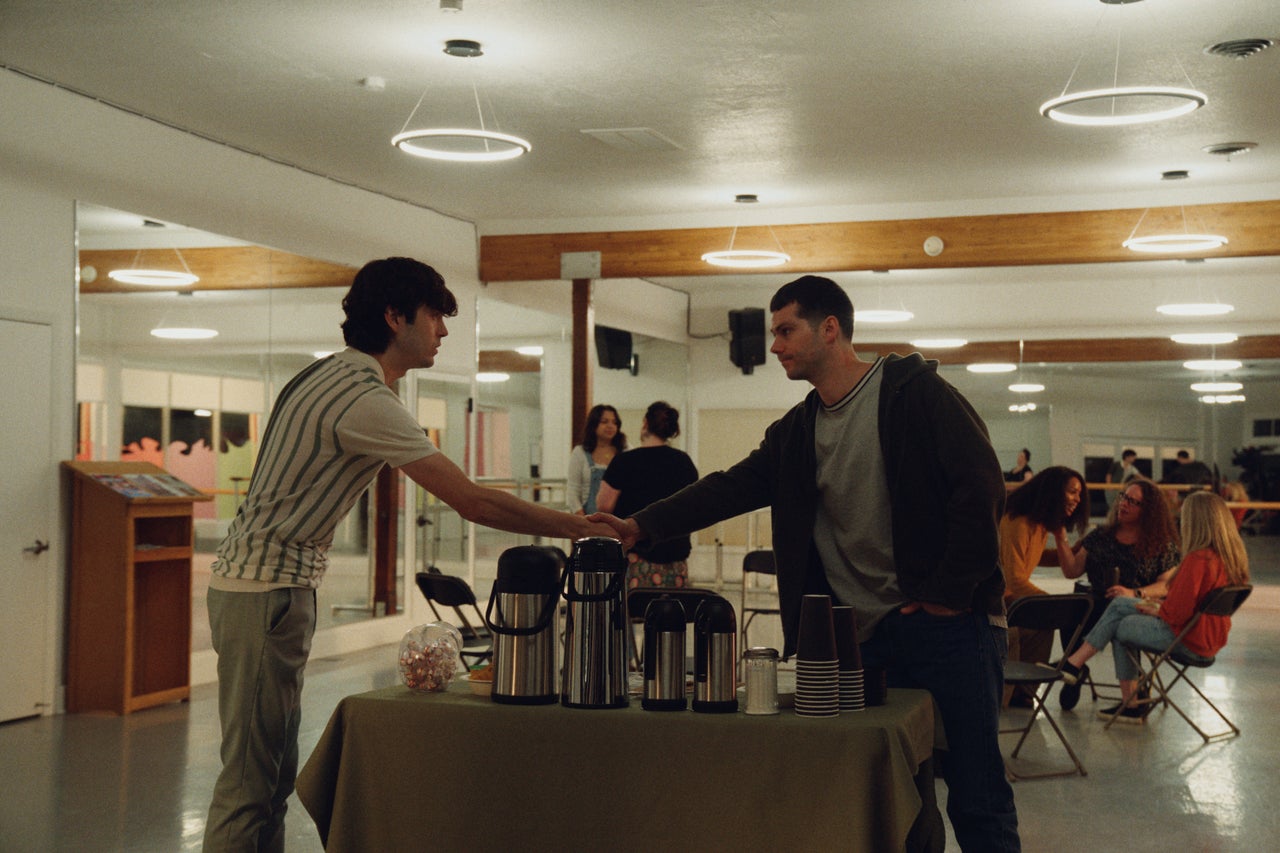
The film centres around Dennis and Roman, two people who strike up an immediate – and, indeed, completely codependent – friendship after meeting by chance at a bereavement group for twins who have lost their siblings.
However, as we quickly learn, things are never quite as they seem, and while Twinless is ultimately a dark comedy, it also manages to put you through a rollercoaster of emotions and twists that no one could have seen coming.
Ahead of the film’s UK release, we spoke to James about the long journey to get Twinless onto our screens, how he came to work with Dylan O’Brien, the film’s alternative ending that was pulled at the eleventh hour and how he really feels about those leaked sex scenes (and be warned, there are some spoilers ahead)…
What I wasn’t expecting about Twinless was how much it was going to remind me of those classic unhinged thrillers from the 90s – Fatal Attraction, The Hand That Rocks The Cradle, Single White Female – which I feel like are films that I could really imagine Dennis loving…?
You know what’s so funny, of those three, I’ve only seen Fatal Attraction. Single White Female is a reference that’s come up a lot for this film, and somehow, it’s escaped me.
I do love a stalker girl film, though, whether it’s Swimfan or Wicker Park. But I wouldn’t say those were overt influences.

What was the original idea for Twinless – did you want to make a film about twins, or unlikely friendships, or grief, or deception…?
I’d say the core of the story – the characters and the plot and thematics – was there from the inception. It was initially just the twin bereavement support group that was the initial kernel of the idea.
I started writing this in 2015, and I think it was more of an instinctual writing process. The biggest shift throughout the years was the structure of the film. It wasn’t always told non-chronologically, that was something that happened when I did a major rewrite in 2019, off the heels of my first film, just because you learn so much from doing a first go-around.
Dennis says early on in the film that he’s always been fascinated with twins – is that something that you can relate to?
As a child who grew up in what I believe was a generation of twin idolisation – between the Olsens, Sister Sister and The Parent Trap – there was something very fantastical, if not a bit ephemeral, about this idea of somebody who shares your face and you can share your life with, your thoughts, your clothes.
I was a military brat so I hopped around growing up, and I think there was something very appealing about that fantasy to me.
That sounds like what Dennis says in the film…?
And that is where the parallels end…
This film was greenlit immediately before the Hollywood strikes of 2023. How much was the film impacted by these delays?
We got to make exactly the film we wanted to make. It was just impeded by [the strikes].
I started working with David Permut, my producer, in 2019, and I met Dylan in 2020. It just took so long to get the financing. The deal that we had struck with Paramount, we started negotiating it a year before, in 2023, and then it just took so long to get it across the finish line.
Then, the official document signing was two weeks before the strike. That sucked [because] we were in purgatory for six months. We didn’t know what the state of the industry would be [when the strikes ended] – a lot of projects that were greenlit [around that time] fell apart, so I was just living in constant fear that this dream of mine was going to slip through my fingers. Again! Because it wasn’t the first time – Twinless had almost happened earlier, and then fell apart. This was – by far, it seemed like, the surest thing in terms of iterations of momentum, but it was terrible.
Also, my first film was released in theatres on 28 February 2020, two weeks before every theatre shut down in the United States. So, I felt like, “of course, this is my luck and timing”. So, now I’m like, “what will happen next time I make a movie?”. I feel like I’m owed a little karma.
With the film being so much about twins, and about twin bereavement, what was the research process like?
I was a research psych minor, and there are a lot of studies done on twins, so I am interested in twin psychology, and always have been. That’s part of what attracted me to this story to begin with.
But you know, being a twin, everyone has their own relationship with their twin, so I was trying to represent a [range] of [ideas] and trying to avoid tropes. So, I was talking to twin friends, reading books about twin psychology.
One takeaway, I guess, is that child rearing for the parents really affects twin relationships, because so much of twin identity is based on how much do you see yourself as an individual versus being ‘one of two’, and that really can be dependent on how much the parents encourage or discourage individuality between the two, and how much your social circle mirrors that.
Something else that I found really interesting was, especially with identical twins, there can be a very innate ease of intimacy because it’s something you’re born with. And that can put a different weight on how you approach intimacy in all relationships, and I think we see that permeate through Roman’s life and what he’s yearning for in the absence of his brother.
Have you had much feedback from actual twins?
I have! The fun thing about this film has been people who self-identify as twins and come up to me – a lot of times it’ll happen during the Q&A itself, or they’ll approach me after. I’ve had all the spectrum of reactions and it’s been… no offence to the singletons, but the twin vote is the one that means a lot to me.
When you were writing the character of Roman, what kind of actor were you envisaging, especially knowing it was someone who would also have to play Rocky, who such a completely different character?
Really, what I was looking for was somebody with a lot of versatility, and I don’t just mean in terms of physical or vocal, I also meant tonal. And that felt like such a hard thing to find.
It’s funny, I used to work in casting as my day job, and I really do believe that’s 98% of directing, and I just feel so lucky that the script landed in Dylan’s inbox and that he read it. I wasn’t 100% convinced – not that I didn’t have great admiration for him as an actor – but so much of casting is whether or not you can see it, and I initially had an easier time seeing him as Rocky than Roman.
But then meeting him was really what convinced me. He just was so clear in how he saw the character and how he expressed that to me. And that just gave me so much confidence as a filmmaker.

Did you have to give him much direction in playing a character like Rocky, who is very believably queer, without it feeling like a caricature?
You know, it was a delicate dance at first. It’s so funny now to see reactions of people being so blasé [about Dylan playing Rocky] and even about the voice that he puts on. I thought it was maybe going to be a bit more treading water a bit.
I was trying to push him in that direction without saying it fully outright. Really, all I had to do was give him permission, and then keep pushing him in that direction, but that’s all him. He’s just such a rare actor who has such a good ear for people’s voices, he does great impressions [of] people you wouldn’t think that anybody could do an impression of.
He can do it because he’s so observant and really good at capturing the essence of somebody, and I think that’s really the core of who he is as an actor, and why it doesn’t feel like he’s doing “a bit” [as Rocky] is because I think he finds a real emotional truth to the way that he accesses voice and character.
While we’re talking about Rocky, something I’m interested in is the reaction to the sex scenes, which leaked a little while before the film came out. How did you find the reaction to those, because on one hand people can be quite reductive when it comes to sex scenes – and in particular gay sex scenes. But on the other hand, they’re also really well-done scenes…
It’s a mixed bag. It’s hard because when you do a low-budget independent film, all you want is a moment that shines a light on the film. But you also want to protect the film, and you want it to be seen a certain way. And that piracy leak, it just kind of…
We didn’t know at the time how it would affect [the film’s release]… because we didn’t have distribution yet, we didn’t have the plan, we didn’t have a release date, and yeah, it just got out of our hands. And that felt really demoralising and violating.
And unfortunately, it’s still [what] a lot of people [associate with the film]. They’ve seen [the leaked scenes] and not seen the whole film, and think that they know what the film’s going to be about. Also, for me, that scene exists in a certain context. And so, it’s a lot of feelings.
Dylan kind of has encouraged me, “just stop talking about it, we’re just drawing more attention to it”, but I don’t know… I’m still wrestling with it. I do think the beauty of film is the multiple lives that it has, and I don’t know that that clip is going to be what outlasts the legacy of the film. But it wasn’t how personally I wanted it to be introduced to the world. The internet, you can’t control ’em, they’re just little children.

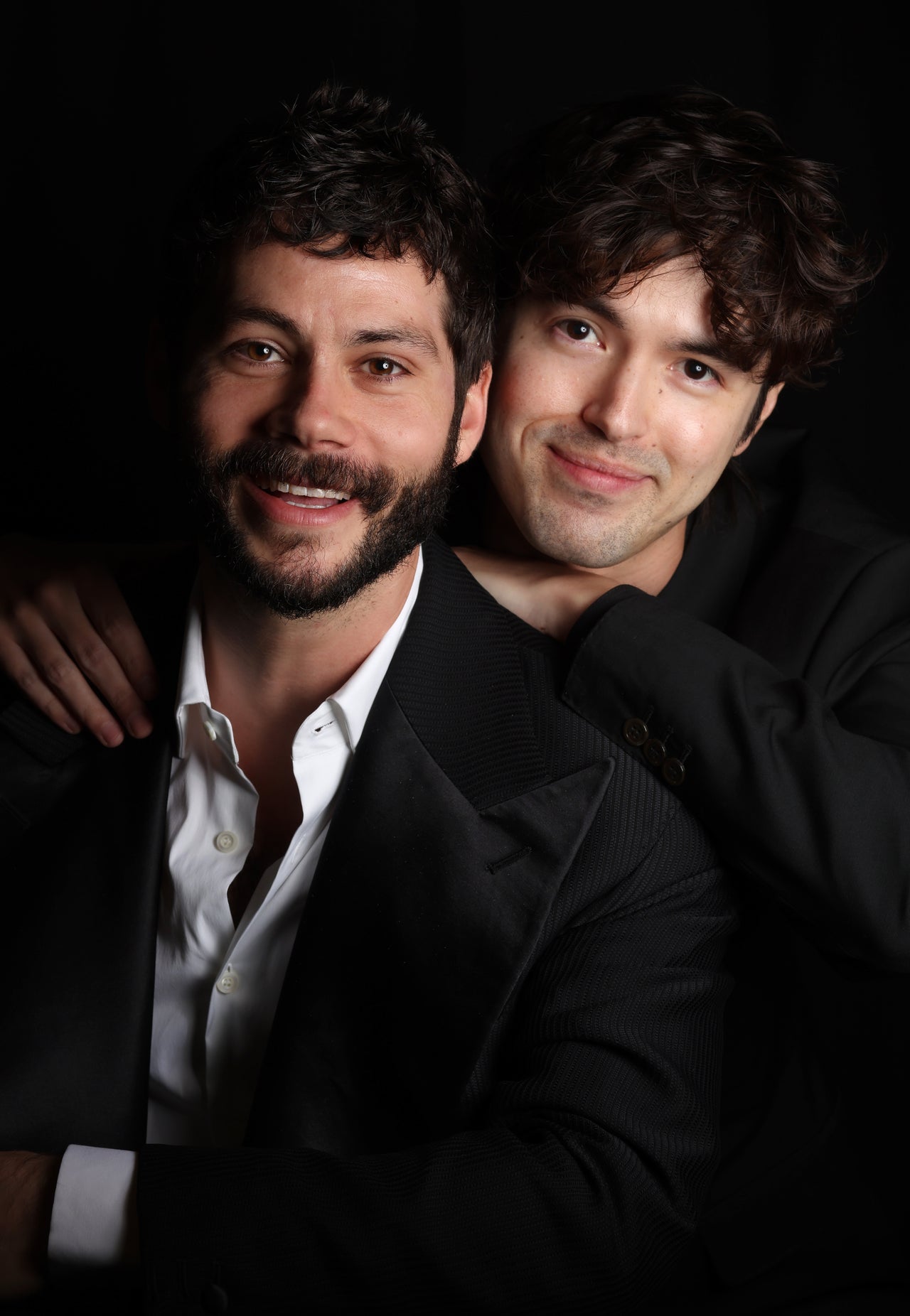
helsea Lauren/Shutterstock for ASTRA Awards
How far into the shoot were those scenes filmed? And did you use an intimacy coordinator?
The funny thing is, one of the first things Dylan advocated for when we met in 2020 was that he wanted to have time between [shooting his two characters’ scenes], and treat them separately, which I thought was a great idea.
At the time, I wasn’t sure we could afford this, so we really had to bend some things to make it happen, but I think it really paid off in dividends.
So, because we were waiting to see when the strikes resolved, we weren’t sure if we were going to shoot Roman first, or Rocky first. And the way it resolved, we shot Rocky right before the holidays, then used the holiday break for Dylan to put on some weight and do a visible transformation into Roman.
Rocky’s only in two and a half days of filming, so day one was the car cash, day two was the sex scene, so we started off hot and heavy – and, in retrospect, built a lot of trust really early on, and it gave us, I think, really great momentum going into the rest of principal photography.
And yes, we had two intimacy coordinators, one for that scene, and one for the other intimate scene [later in the film].
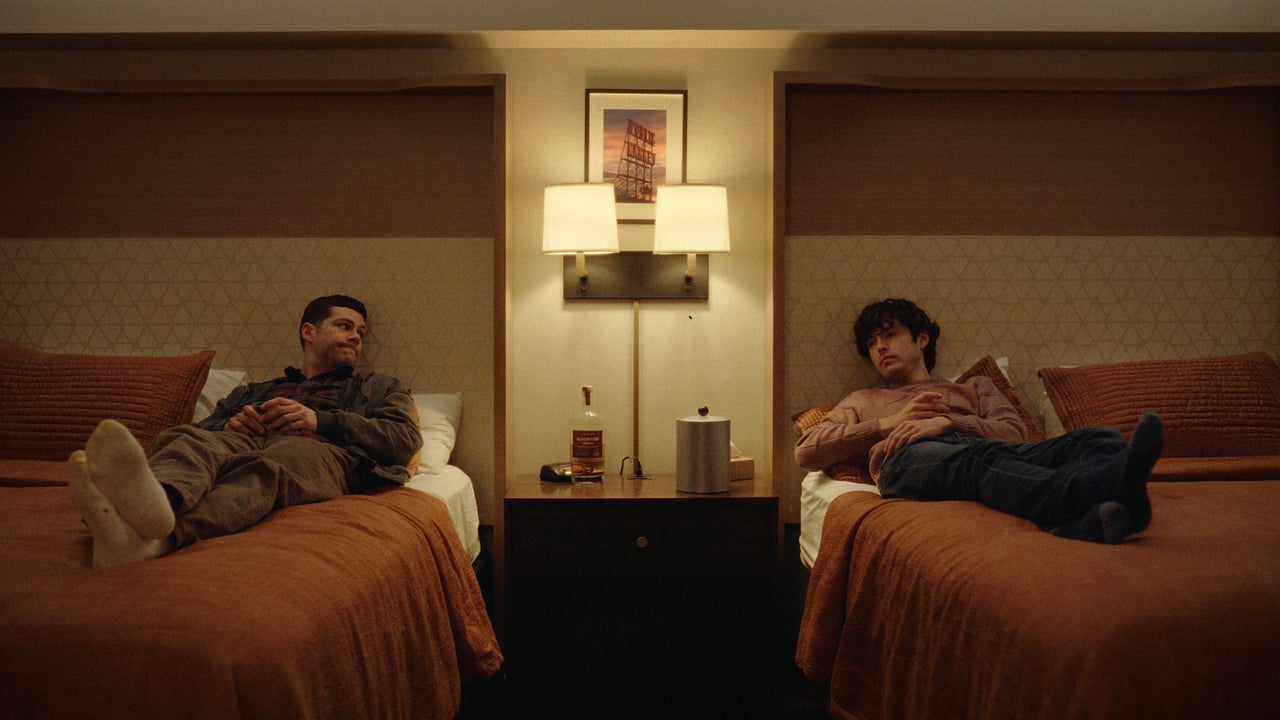
There is also another very different intimate scene later on between Dennis and Roman, involving a foot massage. How did shooting that differ to the scenes with Rocky?
We did not have a toe intimacy coordinator. It’s funny, I don’t think we ever even discussed that. We were doing a lot that day – it was a big shoot day and that was sort of the easier part of the day! The part that was really taking more brainspace [for me] was the confession. That was the most challenging thing for me in terms of compartmentalisation and juggling of my multiple responsibilities as director and performer.
There were other emotional scenes – obviously the other hotel room scene, but that one was more involved with me just reacting to his performance. And I had an easier time with that. I was also sort of rewriting the confession the day of, because I felt like I [hadn’t] quite [nailed it]… that was just a tricky one for me. And we shot the hotel room scenes back to back, because of the location.

Something I loved about Twinless is that it plays with how far you can stretch your empathy for someone, and how much you feel like you can forgive. Was that a fun concept to play with?
Oh… fun? I mean, empathy as a storyteller is my peak interest in how I approach my work. I find I’m often empathetic towards flawed characters and… I don’t know, I think that’s the beauty of film is that you get to live in the perspective of somebody you might not ever spend time with, or want to spend time with, in real life.
Throughout the years of trying to get this film made, I was aware of how people were receiving my character, which wasn’t always the most positive. If anything, I’d say the reception to the film – while not unanimous – has been less polarising than maybe we anticipated. It’s been really interesting to hear people be like “Dennis – evil” and not able to forgive him at all. And then I’ve heard other people say like, “you just can’t hate him no matter what he does!”. And I’m really getting the full spectrum of reactions. But I guess that is, to me, the fun part of it.
You’re really not sure how people are going to react, and I do think it is very much a mirror to people’s own relationship to forgiveness, and also the parts of themselves that they see reflected in Dennis, whether or not they want to admit that.
What about you, where do you fall on that spectrum?
I mean, I played with him, I’m biased. I do really care for Dennis, and I think he’s still a work in progress – which is also how I feel about myself.

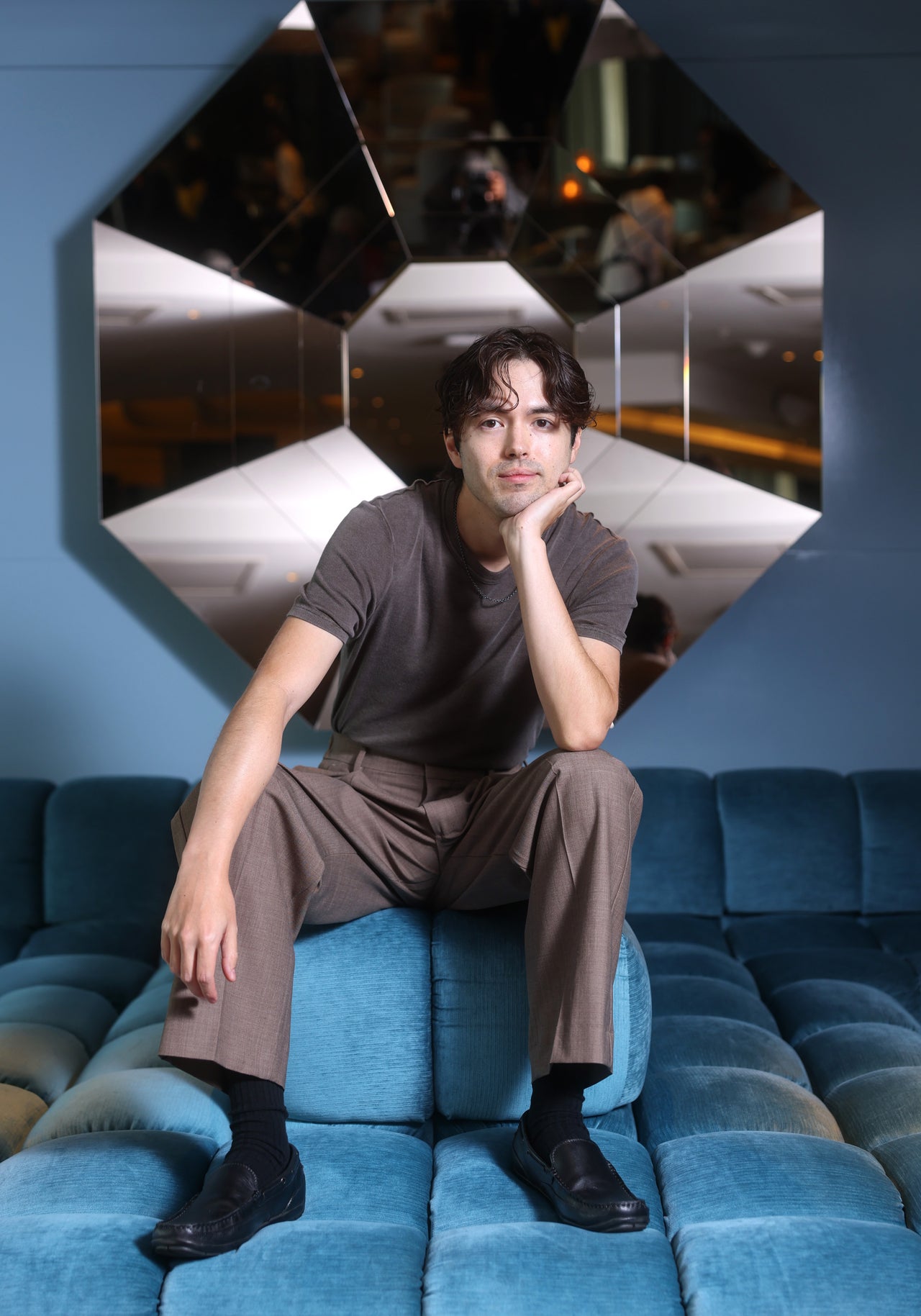
Shane Anthony Sinclair via Getty Images for BFI
I also loved the ending, as a writer how hard was that to land on?
There was a different ending in the screenplay. I’d say the two scenes that both Dylan and I had discussed rewriting the most were the under-the-covers scene with Rocky, which establishes the emotional stakes of the film, and the final scene in the diner. I always felt that could be where the film needed to end, and that’s what revealed itself to be the case when we were in post.
Also, I think we intentionally scheduled the diner to be one of the final days of filming, because we thought just the process of making this film might inform how we feel going into that. And it did, and I’m really glad we gave ourselves that gift. Speaking for myself and Dylan, we’re both really happy where we landed with the ending.
So, the original ending in the screenplay would have continued past that point…?
Yeah, there was a different scene. I think maybe one day I’ll reveal it, but [for now] I kind of just want the film to exist as it is.
Finally, how do you follow something like Twinless that you spent so many years working on?
I kind of want to keep making films that I want to see. I have a lot of ideas, so I feel very fortunate to be in a position where people are excited to see what I do next.
And I don’t think it will be like Twinless. I’m trying not to think about what people are expecting or not expecting from me, and just focus on telling a story that feels meaningful to me.
Twinless is in cinemas now.
You must be logged in to post a comment Login