
Politics
Kelly Osbourne Slams Comments About Her Brit Awards Appearance


Kelly Osbourne has responded to the “cruel” comments about her appearance in the wake of this year’s Brit Awards.
On Saturday night, Kelly and her mum Sharon Osbourne delivered a speech at the Brits in Manchester, where her late dad Ozzy Osbourne received a posthumous Lifetime Achievement prize.
However, after the event, the TV personality was forced to issue a statement in response to a wave of unkind comments about her appearance.
“There is a special kind of cruelty in harming someone who is clearly going through something,” she began, writing on her Instagram story.
“Kicking me while I’m down, doubting my pain, spreading my struggles as gossip, and turning your back when I need support and love the most.
“None of it proves strength; it only reveals a profound absence of compassion and character.”
Kelly – who has been vocal about her issues with body image throughout her time in the public eye, beginning with her time on The Osbournes as a teenager – pointed out that she is “currently going through the hardest time in my life”.
“I should not even have to defend myself,” she added. “But I won’t sit here and allow myself to be dehumanised in such a way.”
Days before the Brits, Kelly made headlines when she reposted a number of disparaging comments about her appearance, alongside the message: “Literally can’t believe how disgusting some human beings truly are! No one deserves this sort of abuse.”
Ozzy died in July 2025 at the age of 76, having spoken publicly about his health struggles – which included a Parkinson’s disease diagnosis – for several years prior.
Shortly before his death, Ozzy had appeared at what was billed as his last ever show, performing both solo and with Black Sabbath, as the headliner of the Back To The Beginning concert in his hometown of Birmingham.
Following Ozzy’s family members’ tribute speech, the 2026 Brits ceremony ended with a star-studded performance honouring his musical legacy, curated by Sharon and featuring Robbie Williams on lead vocals.



The Department for Work and Pensions’ (DWP) Access to Work (AtW) scheme has been referring people living with myalgic encephalomyelitis (ME) to organisations classifying the condition as a form of “acquired neurodivergence”.
Of course, ME is already a much-misunderstood syndrome, and it can be extremely difficult for people to get treatment. And, this shocking revelation comes as the DWP try to force disabled people into work, and strip back funding for AtW – making it even harder for disabled people to stay in work.
The implications for people living with ME could be catastrophic.
DWP Access to Work: ME as ‘acquired neurodivergence’?
A person living with ME has approached the Canary to whistleblow over their alarming experience engaging with AtW. Notably, DWP staff administering the scheme had directed them to organisations misrepresenting the condition as a form of neurodivergence.
Now, after investigating further, the Canary has discovered a number of AtW coaching providers specialising in support for neurodivergent employees are promoting their services for people living with ME.
The Canary has identified at least three peddling this:
- Creased Puddle
- Genius Within
- No Drama Llamas
Of course, ME is not a neurodivergent condition. The World Health Organization (WHO) has long recognised it as a neurological disease affecting the nervous system.
Despite this, these organisations have still been actively peddling the idea that ME is a type of “acquired neurodivergence”. This dangerously trivialises the lived reality of employees with ME. It’s also likely impacting the sorts of support the AtW scheme is prepared to offer them.
And this misrepresentation of the extensively debilitating condition is undoubtedly contributing to the punitive ‘back to work’ climate and vilifying culture rife at the DWP as well.
Out with the old psychologising, in with the new psychologising
The above organisations specialise in neurodivergence and seem to have started expanding their services to people with ME around 2020 and 2021. The reasons for this are likely twofold.
Firstly, this coincides with the rising cases of long Covid – many of which will meet the diagnostic criteria for ME. In a 2021 Returning to Work briefing, Creased Puddle’s CEO Caroline Turner said:
Our expertise lies in developing and supporting neurominorities, yet with COVID-19 we are seeing our services extending to other conditions such as Chronic Fatigue, Fybromyalgia and Depression.
Meanwhile, a webpage Genius Within created in September 2020 features a page on ‘Chronic neurological conditions’ where it classifies multiple sclerosis, “chronic fatigue syndrome”, and long Covid as a ‘neurotype’ called ‘acquired neurodivergence’.
The second reason for their emergence into employment support for people with ME could revolve around the 2021 updated National Institute for Health and Care Excellence (NICE) guidelines.
This finally dismissed the biopsychosocial lobby’s junk science around treatments psychologising ME. Of course, a core part of these psychosocial-wedded clinicians’ evidence base had been the disgraced PACE trial. The DWP had part-funded this – with an obvious agenda of trivialising the condition in order to force chronically ill patients into the low-waged capitalist workforce.
As the lobby’s grip on the condition’s consensus has gradually waned, it has taken new rebranding approaches to continue harmful psychologising treatments. While they can no longer outright label ME as psychological, ‘acquired neurodivergence’ could open up a new avenue to promote psychological interventions.
Acquired neurodivergence: not a new term
That said, the idea that ME is a form of acquired neurodivergence does not appear to be a new phenomenon. A 2017 report that the British Psychological Society (BPS) launched at the All Party Parliamentary Group (APPG) on Psychology categorised ME amid a group of neurological conditions it described as “acquired neurodiversity”*.
The report’s core thrust was largely about adaptations and interventions employers could put into place to support neurodivergent employees.
But the interventions involved some problematic suggestions for employees with ME, including:
- Formal coaching for “executive functions, communication skills, stress management and understanding own abilities.”
- Vocational rehabilitation and Individual Placement and Support (IPS).
In other words, all approaches that psychologise support – and with histories of harm to boot.
Perhaps most significant however is the fact that Genius Within’s founder and CEO Dr Nancy Doyle co-authored the report. And now, her organisation is among the handful pushing this ‘acquired neurodivergence’ paradigm. The support it offers to employees with ME is coaching for:
- Stress
- Time management
- Organisation
- Memory
- Listening and taking notes
- Verbal communication
So it’s evident Doyle’s approach has little changed since the 2017 BPS report. Because clearly employers simply need to coach the chronic multi-systems dysfunctions out of their employees with ME.
DWP: no training for Access to Work staff on ME
Through a Freedom of Information (FOI) request we sought to find out what training the DWP provides to its staff administering the AtW scheme.
The DWP has training guides and condition-specific insight reports for assessors overseeing Personal Independence Payment (PIP). It also separately holds these for Universal Credit’s health element. We have however highlighted some glaring issues with these.
But when it comes to AtW, no such training or guidance for staff appears to exist. The DWP responded to the FOI that:
the information you requested is not held by this Department.
This is concerning enough in itself. However, a recent revelation during a Public Accounts Committee (PAC) inquiry session on AtW highlighted that DWP staff making decisions around the scheme are not medically trained. Responding to a question on this, DWP director general on services and fraud noted only that there are doctors in the department that staff can go to for “advice”. Of course, the implication is that there’s no expectation on AtW staff to do that.
In essence, DWP AtW employees with no training, guidance, or knowledge around the condition are deciding what support people with ME need. And this will undoubtedly be the case across the board for all disabilities and health conditions.
DWP directing people to these organisations deliberately?
The Canary its findings with the ME Association. On reading them, honorary medical adviser to the ME Association Dr Charles Shepherd told the Canary:
The ME Association is aware of a number of people who have some form of neurodivergence as well as having ME/CFS. However, neurodivergent conditions are increasingly being diagnosed – so there are bound to be some people who have both conditions, and there is no research evidence to indicate that the two conditions are linked.
It is not therefore correct to classify ME/CFS as an acquired neurodivergent condition. Incorrect classification of ME/CFS as a neurodivergent disorder could also lead to inappropriate forms of symptom or support management being advised.
Overall, ‘acquired neurodivergence’ seems to be the new ‘psychosomatic’ for ME patients.
Where previously, the DWP benefitted from the trivialisation of ME as a mental health condition, now it can weaponise this idea that its neurological symptoms constitute neurodivergence developed from chronic illness.
The consequences of this are obvious. Because in turn, it means the government’s attack on neurodivergent people not in work will target people with ME too.
Set against its narrative on the so-called post-pandemic rise in neurodivergent people claiming health benefits and it’s clear where this leads. If the foremost scheme improving workplace accessibility for disabled employees is directing people with ME to organisations that treat their condition in neurodivergent terms, it also doesn’t have to provide the more expensive support workers, job aides, and workplace accommodations that people with ME actually need to re-enter and/or stay in employment.
That all likely suits a DWP that’s sneaking through devastating cuts to AtW behind closed doors. But overall, it’s risking coercing people with ME into work without the support they need to protect their wellbeing.
So once again, the department is failing people with ME. However, that will come as little surprise to a patient community it has long gaslighted and pushed to the margins.
Featured image via the Canary


A British general has tried to blame the UK military’s widespread sexual violence and deep-rooted misogyny on the so-called Manosphere. General Roly Walker said these issues were being brought into the army from outside.
SAS-trained Walker is the current head of the British Army. He was addressing a defence committee meeting on sexual violence in the ranks. Asked why sexual harassment was as widespread an issue in the army as it was five years ago, he responded:
My personal view is this gets harder before it gets easier, because of the trends in wider society.
The level of misogyny, the level of rancorous behaviour and belief systems, and the tension in wider society is something we have to accept as the environment from which we attract.
He even said he had been forced to deal with such issues in his domestic life:
I’ve got children in their early 20s. I’m well aware of what is going on with things like the manosphere and the sense of deepening rifts within young people, all of which is playing and accelerating through social media.
A lot of that generation are coming through into the Armed Forces.
Self-evidently, this was an attempt to externalise the military’s longtime issues with gender, sexual violence and abuse. But it isn’t going to cut it.
The Manosphere
The MPs and panelists at the committee session talked about the impacts of the Atherton report on bullying, harassment and discrimination (BHD) and sexual violence, which was published half a decade ago. That report found:
64 percent of female veterans and 58 percent of currently-serving women reported experiencing BHD during their careers.
And heard:
truly shocking evidence of the bullying, sexual harassment, sexual assault and rape experienced by servicewomen.
It also warned about issues with:
the military’s handling of sexual assault and harassment, which sometimes exacerbates trauma for victims.
Report author and former MP Sarah Atherton was at the session. She did not agree with Walker:
It’s obviously something that he felt quite awkward to say. It felt quite awkward to listen to. It’s obviously what the MOD are using as an excuse for this behaviour, and what he said actually normalised the problem.
Well done, general… You’ve pissed off the woman who wrote the proverbial book on this issue.
Externalising the problem
The UN defines the Manosphere as:
online communities that have increasingly promoted narrow and aggressive definitions of what it means to be a man – and the false narrative that feminism and gender equality have come at the cost of men’s rights.
Adding that:
These communities promote the idea that emotional control, material wealth, physical appearance and dominance, especially over women, are markers of male worth.
Think Joe Rogan, Andrew Tate and sundry other tawdry bullshit-peddling man-babies… But let’s cut to the chase: the British military’s issue with sexual violence predates our era of dodgy influencers.
Take the example of the inquiry into recruit deaths at Deepcut Barracks in the late ’90s and early 2000s. The inquiry alleged a widespread culture of “bullying, sexual assaults and rape”. The last death was in 2002, when Andrew Tate was an unknown 16 year old. How, then, could this possibly be related to the ghoulish spectacle of modern online misogyny?
What about the case of Danish tour guide Louise Jensen, raped and murdered by three soldiers in Cyprus in 1994? Or the sexual torture of Kenyan women suspected of ‘collaboration’ with the anti-colonial Mau Mau movement by the British colonial forces in the 1950s?
The list goes on…
Built-in violence
The truth is that many forms of violence are built into the military institution and the practice of warfare – and always has been. This includes sexual violence, which has been a feature of wars since time immemorial. The Bible even tries to give rape in war some legitimacy. And Israel’s use of systematic sexual violence as a tactic of occupation and genocide is just one of many modern examples.
This general’s comments betray a deep ignorance of the issue at hand. And it is worrying that such a powerful figure has the lives, health and safety of others in his hands. The truth is we need to examine, reform and perhaps even abolish – in part or in whole – the institutions of war if this issue is ever going to be seriously addressed.
By Joe Glenton


2008: ‘Country Club: Chicken Wire’ | Private Collection. © Hurvin Anderson. Image courtesy the artist and Thomas Dane Gallery. Photo: Richard Ivey.

3 min read
The intensity of the work of the contemporary British artist Hurvin Anderson must be experienced first-hand to be fully appreciated
From the start of this retrospective of 40 years’ work, it is clear that Hurvin Anderson’s main interest lies in his own upbringing and heritage, and how the different aspects of that heritage might fit together. What is fascinating is that they don’t: there is no resolution, rather different parts of that heritage sit awkwardly beside each other, or are layered on top of each other, in a kind of dualistic conflict.
Anderson, born in Handsworth, Birmingham, to Jamaican immigrants, grew up in what was both an English and multi-cultural environment. The earliest paintings – influenced by family photos – are largely black and white figurative studies, although he is already thinking about the Caribbean his parents left behind. An early breakthrough work is Ball Watching (1997), itself based on a photo he took of boyhood friends with their backs to us looking out at a lost football floating on the lake in Handsworth Park. But he has already turned the lake into a seemingly warm sea and put ships on the horizon, while the football itself has disappeared.

In another work looking back at this Birmingham childhood Grove Lane (2000), the swimming bath cubicle doors painted in artificial colours don’t erase the grimy grey of the concrete surroundings – just as lovingly rendered by the artist.
On a first visit to Jamaica, his reaction was one not of ‘homecoming’ but of dislocation. As Anderson says: “My struggle with Jamaica: I don’t know it and I know it. I have this romantic vision of it and a lot of my painting is fighting that romance.”
It is exciting to see the artist’s development
Interestingly, then, Anderson describes his painting process (which soaks up many influences from the LP covers of Jamaican artist Ras Daniel Heartman, to John Constable and Anderson’s mentor the British artist Peter Doig) as a search for what his autobiographical work “should be”. That “should” is instructive. For instance, Maracas III (2004), a painting of the popular beach spot in Trinidad (where Anderson had a residency) feels simultaneously like a fragmented memory, and – with its sketchy figures – an idealised projection into the future, like an architectural plan. Counterintuitively, too, our attention is, as with other of the Caribbean pictures, drawn away from the tourists’ beach to the lush island interior.
That interior is there too in the wonderful Limestone Wall (2020), where an abandoned Jamaican hotel (part of the colonial legacy) is gradually being swallowed up by the forest.

It is exciting to see the artist’s development, for instance from the more obvious geometric obstruction of what is felt to be unreachable (or out of bounds) as in Country Club, Chicken Wire (2008) to the subtle use of squaring-up lines which weave in and out of the painting, as in the brilliant Siding (2013) seen in the first room of the exhibition.
The accompanying catalogue has interesting essays, though not quite enough information about the individual works themselves. The illustrations, perhaps inevitably, do not do justice to the intensity of work that has to be experienced first-hand to be fully appreciated.
Earl of Clancarty is a Crossbench peer
Hurvin Anderson
Curated by: Dominique Heyse-Moore and Jasmine Kaur Chohan
Venue: Tate Britain until 23 August
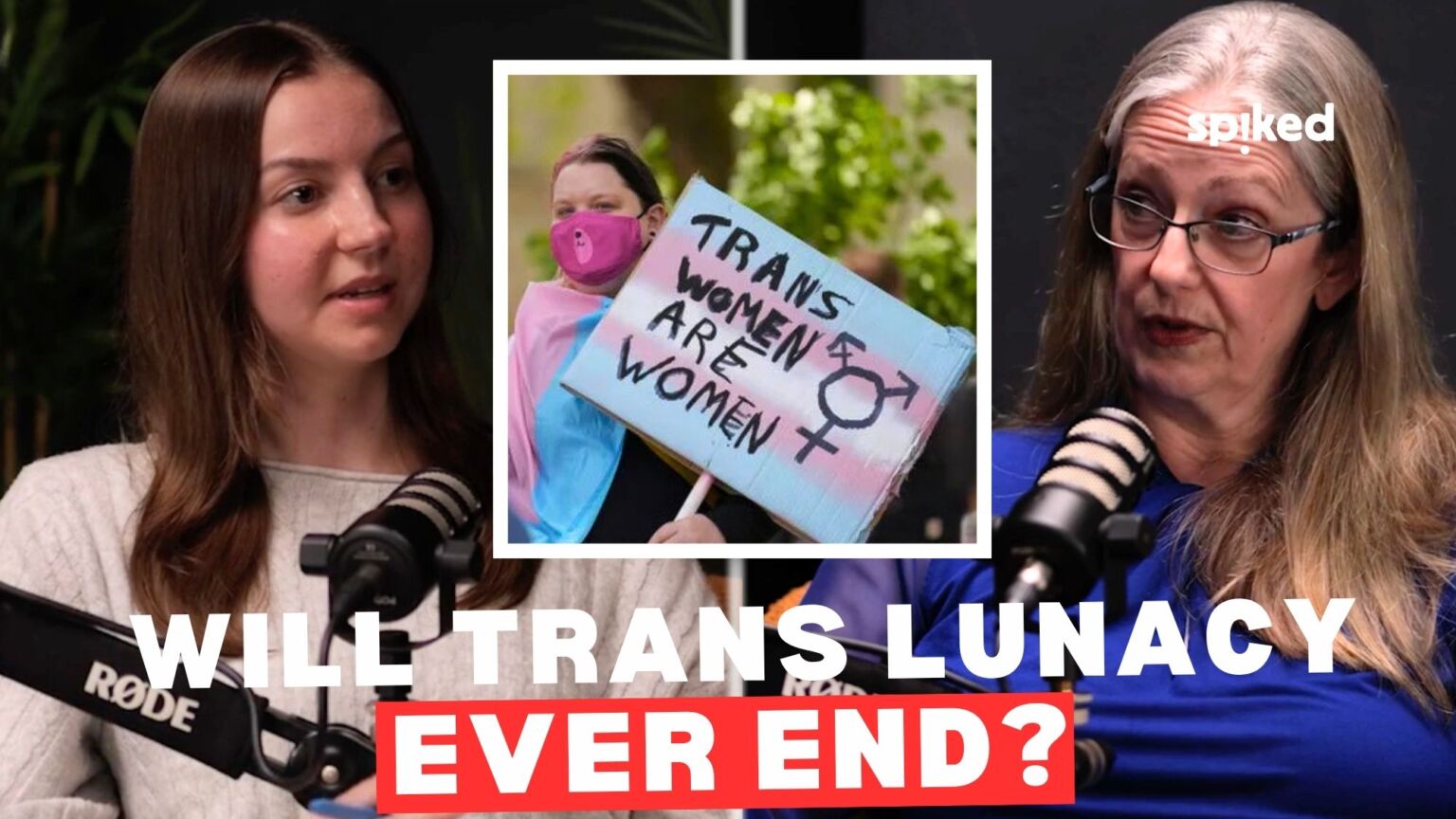
The post ‘The trans mafia won’t back down’ appeared first on spiked.


Housing minister Matthew Pennycook has told parliament that the Starmer government does not support rent controls. The reason was that doing so would “make life more difficult for renters”.
Since then, Pennycook has received the praise of – you guessed it – not renters:
Labour's housing minister's opposition to rent controls welcomed by the country's largest private landlord.
Who's side are Labour on? Renters or landlords. The answer is here. pic.twitter.com/olVzEIVTki — Zack Polanski (@ZackPolanski) April 15, 2026
Land of the landlords
The government does not support the introduction of rent controls, which we believe could make life more difficult for renters.
There is sufficient international evidence from countries such as Sweden and Germany, and from individual cities such as San Francisco, as well as the recent Scottish experience, to attest to the potential detrimental impacts of rent controls on tenants.
There are reasons why rent controls can make things worse. Mostly the issue is they make it harder for landlords to make obscene profits from renters, which forces them to throw their toys out of the pram.
In a nutshell, this is why something as essential as shelter shouldn’t be in the hands of money grubbers.
Pennycook also said:
I have looked at a wealth of evidence, particularly international evidence, of what the impact of first and second-generation rent controls are, as well as more subtle forms of rent control, which can have differential impacts on different groups.
Such controls typically benefit settled and better-off tenants more than those looking for a home or needing to move.
As Polanski noted, Pennycook’s inaction plan has gone down well with landlords:
Pennycook’s opposition to rent controls was welcomed by Kurt Mueller, director of corporate affairs and executive committee member at Grainger, Britain’s largest listed private landlord.
Mueller, highlighting the housing minister’s comments on the LinkedIn social media platform, said: “It’s good to see continued support from the UK Government for common sense with their steadfast commitment against rent controls and the damaging impact they would have for renters and the market generally.”
Not everyone agrees, though.
Living Rent
Living Rent have sought to dispel myths on this topic. They go into further detail on their site, but in a nutshell:
1) Isn’t the only problem supply?
Not really. Firstly, supply isn’t really as big of an issue as it’s made out to be – for instance, there is a higher proportion of empty bedrooms in the UK than at any time since the Great Plague (!). The ratio of rooms to people has never been higher in modern history. We’re not against new builds, especially not new social housing, but the supply question is kind of a red herring.
…
2) All landlords would leave the sector and tenants would have nowhere to live.
Landlords threaten to leave the sector if regulation is increased, but a quick glance across Europe is enough to dismiss this: the most heavily regulated private rented sectors are consistently the biggest. Germany, with the biggest PRS in Europe, is easily one of the most heavily regulated.
…
Lest we forget, we don’t actually need landlords to have houses.
These unnecessary middlemen offer nothing and take everything.
People claim that capitalism eliminates inefficiencies, but these people are waste personified.
Failures
Living Rent also noted:
3) Didn’t they fail when we had them last time?
Landlords insist that the various rent controls which existed in the UK between 1915 and 1988 were disastrous for tenants. They point out that, over those 70 years, we went from almost nine in ten people renting privately to fewer than one in ten. They claim this is proof that rent controls devastate the private rented sector (PRS).
Oh no, not the private rented sector – won’t somebody think of the landlords?
Living rent continued:
This argument, in fact, was a favourite of David Cameron, who told the House of Commons in 2013: “I do not support the idea of mass rent controls because I think we would see a massive decline in the private rented sector, which is what happened the last time we had such rent controls.”
But that change, by absolutely any measure, was an enormous success of public policy. The reduction in the private rented sector can be explained in three obvious – and positive – ways:
- Millions of council homes were built to give people a secure, safe, affordable place to stay outside the PRS.
- Millions of people were able to buy their own homes through real-terms increases in wages and the expansion of mortgage availability.
- Millions of the properties that landlords were renting out were demolished in slum clearances because they were, well, slums.
Without rent controls, it seems, slum-like conditions have once more returned. As writer Bob Lynn notes:
In 21st century Britain, a shocking reality lurks behind closed doors. Families are living in conditions that harken back to the squalor of Victorian slums — damp walls, mould-infested rooms, and overcrowded spaces unfit for human habitation. …
The word ‘slum’ conjures images of Dickensian London, with its overcrowded tenements and disease-ridden streets. Yet, for many low-income families today, this grim picture is not far from their daily reality. In 2022, around 3.8 million people in the UK experienced destitution, unable to afford basic necessities like food, warmth, and shelter. This figure has more than doubled since 2017, pointing to a rapidly worsening crisis.
But yes, the real crime would be if rent didn’t leap up by obscene amounts every year.
Do something
Living Rent finished:
4) All economists agree that rent controls are bad
You’ll often hear comments bandied around claiming that all economists agree rent controls are unambiguously bad. There is a grain of truth to this – a poll from 1992 showed a surprising degree of consensus that rent controls would have negative effects.
But here’s the hitch. Nobody is proposing the type of rent controls that this supposed unanimous opposition is directed at. During the first world war, what are now called ‘first generation rent controls’ were brought in across most countries involved in the conflict – these were blunt caps or freezes on rent, and are rightly criticised for having negative side effects. But now we have 70 years of evidence from across the world about how to implement rent controls without unintended consequences.
Now, as Housing Today have reported:
The Green Party said its members elected in May will “use their voice to pressure the Labour government to give local authorities the power to introduce rent controls to curb overheating rents in their area.” The party has also pledged to “totally” abolish leasehold and introduce rent controls nationally if it gets into government.
Leasehold (and the truth) is another sensitive area for Pennycook, as we reported:
Oh… right. https://t.co/orvrBLe28D pic.twitter.com/lYnHBtjJmV
— cladtrap (@cladtrap) March 27, 2026
Systems
Sometimes well-meaning ideas can have unintended consequences. The solution isn’t to give up on fixing things; the solution, like Polanski argued, is to adapt until you get the right results.
Labour’s solution to most issues is to bury their heads in the sand. The problem is that while they ignore the world and its problems, the world is moving on without them.
Featured image via Parliament
By Willem Moore

4 min read
The future of the power station need not be a headache for Ed Miliband.
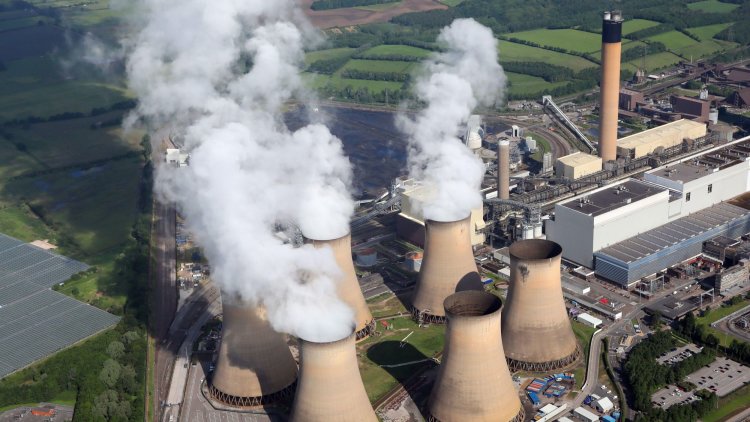
Drax’s story has long been contentious. The power plant in Yorkshire was once home to one of Europe’s largest coal furnaces, but since 2012 has burned millions of tonnes of wood pellets, mostly shipped from North American forests. It generates around four percent of the UK’s electricity, and because trees regrow, this form of generation is classed as renewable.
Successive Conservative administrations backed the project to the tune of £7bn in subsidies since it began burning wood, funded by UK billpayers. This despite a litany of concerns, ranging from unsustainable sourcing of wood and profiteering to health impacts on the communities near its US pellet mills. In the UK, the company is also under investigation by the Financial Conduct Authority, while ten lawsuits have been filed after cases of occupational asthma.
In that context, Ed Miliband deserves credit for beginning to reset the framework he inherited. His decision last February to cap subsidies for large biomass plants and limit Drax’s run-time from 2027 was welcome.
For years, Drax has pointed to Bioenergy with Carbon Capture and Storage (BECCS) to justify its long-term role. The proposition is straightforward: continue generating power from biomass, but capture and store the emissions, allowing Drax, in theory, to remove carbon from the atmosphere and position itself as essential to net zero.
It’s an appealing idea, but it has always raised difficult questions.
Scientific studies raise serious doubts that a model built on burning imported wood could ever deliver genuine climate benefits, given how long it takes for forests to regrow.
Then there’s the cost. Estimates suggest BECCS at Drax could require up to £43bn in public money over 25 years, a substantial sum to place on a single, unproven approach while billpayers struggle with the rising cost of living.
It’s no surprise that this is an issue of rare political consensus. It has united the Greens and Reform UK. Ed Davey – who signed off the scheme at Drax in the first place in the coalition government – has turned against the company. Even Claire Coutinho, the former Conservative energy secretary, has warned that “we cannot go green by burning trees at huge cost to the public” despite backing Drax whilst in office.
This reflects a broader shift, with the government’s own climate advisors scaling back expectations for BECCS and warning against relying on imported wood.
Crucially, Drax now appears to be responding. As reported in Politico, the company will commit only limited resources to BECCS in the near term and instead focus on renewables, battery storage, and a controversial data centre project.
That has been framed as a headache for Miliband, but in reality, it frees ministers from over-reliance on a costly and uncertain single project. The key question is not how to revive one project, but how to ensure the UK’s net zero plans are not beholden to a single company.
For years, BECCS at Drax has played an outsized role in official net-zero plans, a convenient way to balance the carbon books. But as Alan Whitehead recently argued in his independent Review of Greenhouse Gas Removals, relying too heavily on a single pathway, particularly on imported biomass, carries risks.
A stronger approach is to back a mix of solutions: speeding up proven clean power such as wind and solar, investing in a range of carbon removal options, and ensuring public money goes to schemes that are both credible and good value. Analysis from the Green Alliance suggests that it is achievable.
Drax’s change in direction should be seen in that light. It creates space for a more practical and flexible strategy. Moving away from a one-furnace future towards a broader mix of solutions is not a setback for government, but a step towards a more credible and deliverable plan.
Alex Mackaness is Programme Manager at the Labour Climate and Environment Forum


A coalition of anti-Zionist Jewish organisations in Germany have faced repression and backlash after a protest at the Buchenwald Memorial.
In 2025, attendees of a service commemorating 80 years since the liberation of the concentration camp were denied entry for wearing keffiyehs. They petitioned the German courts to overturn the decision, but were unsuccessful. The courts argued:
It is unquestionable that this would endanger the sense of security of many Jews, especially at this site.
Ahead of this year’s memorial event, the group once again petitioned the courts to overturn the ban, but it has been upheld.
Now, the group Kufiyahs at Buchenwald (KAB) have launched a campaign aiming to highlight the issue on an international stage.
Buchenwald memorial
In a press conference on 14 April 2026, Tair B., an organiser with Jüdische Stimme, explained how the German state “banned our vigil from being held … on the basis that the [Buchenwald Memorial] is an apolitical place.”:
We challenged this ban in court, but it was upheld [based on the claim that attendees] were hurting the honour of the victims [of the Holocaust] by drawing connections to current genocides and naming continuities.
We refuse to participate in this game.
Nevertheless, the German state has sought to crack down on their dissent.
German hypocrisy
Activists have since been fined for social media posts related to their banned vigil. Rachael Shapiro, a member of the International Jewish Anti-Zionist Network, discussed the penalties, adding:
It is not an arbitrary action. It’s part of the state’s campaign to further criminalize Jüdische Stimme in the context of them being an extremist organization because of the threat that anti-Zionist Jews pose to [the state’s] narrative.
Shapiro described the situation as one of blatant hypocrisy and antisemitism:
The children and grandchildren of Nazis are demanding payment of tens of thousands of Euros from the children and grandchildren of the Jews they slaughtered for opposing the exploitation of the place at which they slaughtered our families in order to maintain their ideological commitment to doing more genocide and punishing us for objecting to it.
Undeterred by state pressure, KAB will continue protesting the decisions of the German state, its courts, and the Buchenwald Memorial itself.
Three goals
Shapiro went on to explain the three goals of their campaign.
First, they are “protesting the ban on the kufiyah and symbols of Palestine solidarity.” Second, the group hopes to expose “the cynical weaponization of the Nazi genocide of European Jews.”
The Buchenwald Memorial and other German Zionist institutions are ferocious advocates of Holocaust exceptionalism … There can be no crime greater or comparable to that of German fascism. Any suggestion to the contrary is criminalized…
[This] allows Germans to dictate and have the final word on what commemoration means, who can perform it, how it can be performed, and where.
Shapiro said: “This absurdity is showcased in the hypocrisy of our intervention” – criminalizing German Jews for commemorating the Nazi Holocaust in the ‘wrong’ way.
The third goal of the protest is to bring the arguments used by “the Zionist management of the Buchenwald site, as well as the German authorities, out into the open” – that is, highlighting the issue internationally.
An international campaign
Shapiro explained the International Jewish Anti-Zionist Network wanted to assist the KAB campaigners in
making it very clear to the German state that there is an international watching, and not just in the popular sense, but in the fact that Germany is being brought before the ICJ by Nicaragua for support of Israeli genocide.
The world sees this sick hypocrisy and the racist backwardness of the German state, and it can no longer hide behind its philosemitic circus of ‘memory’ culture.
A spokesperson from the European Legal Support Center further offered their support to the campaign as well.
Over the years, we have observed how administrative, not necessarily legal, protocols, such as neutrality clauses and house rules … are drawn on specifically to exclude Palestine solidarity activists, cancel events and ban symbols.
These administrative acts are often legitimated by prior smear campaigns, declaring that these symbols are insulting or a sign of support for terrorism. Since 2023, we have witnessed an accelerated process of criminalizing Palestinian symbols in the public sphere.
Continuing a tradition of resistance
Both B. and Shapiro remain determined to resist the policing of their political positions and Jewish faith.
B. commented:
As a Jew who grew up in Germany, I’m being expected all the time to be a puppet of the German state and to give my identity … over to state interest … to be used to deepen racism and structures of power that are killing people.
Shapiro said that her dissention was a continuation of Jewish resistance during the Holocaust itself:
My family were survivors and victims of the Nazi genocide. My grandmother was a survivor and escaped Nazi Germany. Her cousins … were part of the Jewish underground resistance to the Nazis. It’s for that reason … that a lot of my organizing work has revolved around uplifting resistance, in all of its forms, to genocide and fascism.
Both see the Buchenwald Memorial as an affront to these histories, whilst claiming to commemorate them. Shapiro continued that the Memorial is:
an especially sour place to watch this sickening weaponization and instrumentalization of our histories, [which are being] used to not just deny the genocide in Palestine, but to criminalize those Palestinians and Palestinian forces who are resisting.
Honouring the dead
This history of resistance is explicitly tied to the Buchenwald Memorial. The memorial’s own website mentions how a commemorative address was written by inmates at the concentration camp, ending with a joint pledge known today at the Oath of Buchenwald:
The destruction of Nazism, down to its roots, is our motto. To build a new world of peace and freedom is our ideal.
Another speaker at the press conference was Peter Eisenstein, honorary president of the European Alliance in Defence of Palestinian Detainees. He said:
To me, Nazi ideology and Zionism are synonymous.
It is a view shared by many German Jews today. But unfortunately, the Buchenwald Memorial refuses to uphold the Oath of its former inmates when the atrocities of the state of Israel is concerned. If the genocide in Gaza makes them too uncomfortable, maybe they are unfit custodians to honour the Buchenwald dead.
Featured image via the Canary
By Em Colquhoun


Donald Trump has posted yet another rant to social media – this time ordering Starmer to drill for oil in the North Sea.
With a characteristic disconnection from reality, Trump also used the opportunity to complain about …Scottish windmills, of all things. We’re guessing he means turbines, but at this point, who bloody knows?
As ever, the USA’s own fascist-in-chief is telling you to do something, it’s a pretty strong indicator that you need to do the opposite. Of course, this is particularly true in the case of North Sea oil.
Experts recently issued a stark warning to the UK Labour government: opening up new fossil fuel fields in the North Sea could ruin international climate targets. Likewise, this terrible climate leadership from the UK would also embolden other countries to do the same, greatly magnifying the predicted negative impact.
Trump blusters: ‘NO MORE WINDMILLS’
Posting to his own personal Truth Social echo chamber, Trump wrote:
Europe is desperate for Energy, and yet the United Kingdom refuses to open North Sea Oil, one of the greatest fields in the World. Tragic!!! Aberdeen should be booming.
Norway sells its North Sea Oil to the U.K. at double the price. They are making a fortune. U.K., which is better situated on the North Sea for purposes of energy than Norway, should, DRILL, BABY, DRILL!!! It is absolutely crazy that they don’t… AND, NO MORE WINDMILLS!
This is such an impressive amount of shite to pack into 70ish words that we’re gonna need to break it down.
First and foremost, oil prices have soared precisely because of Trump and Netanyahu’s genocidal war on Iran. ‘You need to drill for oil’ is fucking rich coming from the dickhead who’s currently blockading the Strait of Hormuz.
Beyond that, the two greatest oil and gas reserves left in the UK-controlled North Sea are the notorious Rosebank and Jackdaw fields. However, even these are already over 90% depleted. As such, they’d require the use of extraction methods that are both energy-intensive and extremely costly.
Even after that, research has predicted that the two fields combined would only produce around 3% of the gas that the UK currently imports. The government’s own advisers have already admitted that:
Any increases in UK extraction of oil and gas would have, at most, a marginal effect on the prices faced by UK consumers in future.
‘Drill, baby, drill’
And then, of course, there’s the fact that the UK buys most of its oil from the fucking US, not Norway. Much as I enjoy watching Trump shoot himself in the foot, he can do that without the UK government’s help.
The US dictator’s use of ‘drill, baby, drill’ also highlights another fucking embarrassment for the UK. The phrase was originally a Republican campaign slogan from the late 2000s. Since then, Trump has reheated the slogan… followed by his faithful lapdogs in the Labour Party and Reform UK. Truly pathetic, that one.
Quite apart from the use of “windmills”, Trump’s side-swipe at Scottish renewables is bizarre for another reason. As of 2022, Scotland has generated more than 100% of its energy needs from renewable sources.
In fact, green energy sources are doing so well that Scotland has plans to export the excess power. In 2024, then-energy minister Neil Grey said:
Scotland has produced more renewable electricity than it consumed, demonstrating the enormous potential of Scotland’s green economy.
Scotland has the skills, talent and natural resources to become a global renewables powerhouse. Our ambition is not only to generate enough green electricity to power Scotland’s homes and businesses, but also export electricity to our neighbours, supporting jobs here in Scotland and the decarbonisation ambitions of our partners.
The transatlantic war criminal duo
Last, but by no means least, there’s one more problem with Trump’s post that I’ll mention. Namely, he’s voicing the same opinion as Tony ‘War Crimes’ Blair.
Last week, as the Independent reported, Blair and his pet Tony Blair Institute think tank called for expanded North Sea drilling. They argued that the Iran crisis exposed the UK’s vulnerability to global shocks in the oil market.
Of course, we could also mitigate this vulnerability by expanding electrification and renewable power generation. But then, that wouldn’t hasten the end of the world, so what do I know?
Unfortunately, Starmer and his excuse for a Labour Party are so pathetically easy for the right to influence that they’re already planning to roll over and drill at this point.
Again, if both Trump and Blair are telling the UK to drill, nothing could convince me faster that we need to be putting up wind turbines. Hell, or even windmills. I don’t care, I’ll turn the fucking crank myself at this point.
Featured image via the Canary


Hannah Spencer is campaigning to protect disabled children in school fires. Spencer shared on her Instagram that she is working with a young constituent to make schools safer for disabled children.
The new Green MP for Denton and Gorton shared the story of Lucas Vezza-O’Brien, a wheelchair user with cerebral palsy. Last year during a fire at his school Vezza-O’Brien was left behind as an assessment was made that the fire service and staff couldn’t get him out of the classroom.
Spencer said
He was left behind whilst alarms were ringing and the smell of smoke started to spread.
Being left behind during fires is reality for disabled people
This sounds like an absolutely terrifying and unimaginable situation, but for wheelchair users and other disabled people, it’s reality. In 2023, Dr Hannah Barham-Brown made headlines after she was left behind during a fire alarm at the Premier Inn she was staying in. Dr Barham-Brown had to be assisted out by friends, and if it had been a real fire she would’ve been left to die by the hotel staff.
We also learnt from Grenfell just how little housing associations and building companies give a fuck about protecting disabled people. 72 people died in the Grenfell tower block fire, many of whom were disabled and had their concerns ignored. Grenfell was an exercise in what happens when you neglect marginalised people and care more about taking their rents.
As Spencer shared, Vezza-O’Brien is campaigning to make sure that no other disabled school children face the ‘same horrendous experience’. The teenager has unpicked fire regulations for schools and started the #NoStudentLeftBehind campaign. His parliamentary petition got over 104,000 signatures. Spencer says she met with him as his MP and they will be attending a meeting with a government minister to ‘try and change the law’
Hannah Spencer is working for disabled people
Spencer and Vezza-O’Brien are both adamant in the stance that the schools or fire service ‘did nothing wrong’, but the law needs changing because there’s no requirement for schools to have evacuation chairs to get disabled people out in emergencies.
Spencer said
The law currently is too loose and vague. It needs changing. And thanks to Lucas, there’s now a lot of awareness and pressure building.
Of Vezza-O’Brien, Spencer said
It’s always very special to get to meet someone who clearly is a passionate activist – trying to challenge a complex legal and political system. But what I find most humbling here is that Lucas isn’t doing any of this for his own benefit, he’s doing it to make sure no other school pupil ever goes through the experience he had. He called his campaign #NoStudentLeftBehind and wants to stop this happening to anyone else.
Spencer said she is ‘honoured to play a very small part in this’ and hopes to help change the law so all pupils are safe in emergencies.
Though Spencer is just getting started as an MP, it’s clear she cares about disability rights. Something which we don’t see enough in Westminster. In her acceptance speech, Spencer was clear to state that she would serve all constituents, not just ‘taxpayers’ or ‘working people’.
She said
And I think that if you’re not able to work that you should still have a nice life. I think that absolutely everybody should get a nice life. And clearly, I’m not the only person who thinks that.
And in her maiden speech in parliament, she said she would work for:
the disabled people who can’t access the world because of structural inequality that is completely fixable.
It’s refreshing to finally have a politician who cares about actually fighting for disabled people, and not just when it’s gaining headlines. Let’s hope this continues with the Green Party’s rise
Featured image via the Canary


Pope Leo has used his visit to Algiers to lay a tribute to Algerian rebels who died fighting for Algeria’s independence from France. The Pope, in full regalia, solemnly laid a wreath at the FLN (National Liberation Front) monument in the city:
The tribute is a pointed reminder to today’s neo-imperial powers of the will for freedom among oppressed and colonised people. It is one that is even more powerful from a Pope who is US-born – and one very much in line with the liberationist ideals of Leo’s predecessor Francis. More powerful still in the wake of Leo’s condemnation of US thief-in-chief Donald Trump for his arrogance, warmongering and delusions of divinity. And it is a welcome evolution in Leo’s political presence after a much less than auspicious start.
Commentator @thatkid1871 probably put it best:
After Francis died, I admit I did not predict that less than a year later we’d have a Chicago pope paying respect to FLN martyrs in full Roman regalia https://t.co/HiJU3JlMiJ
— Jay
(@ThatKid1871) April 15, 2026

As icing on the cake, Trump’s sidekick JD Vance was heckled this week as he tried to criticise the Pope for condemning Vance’s boss.
Featured image via the Canary
By Skwawkbox

3000BC Mein Bitcoin ? #bitcoin #stonehenge #cryptocurrency #nft

Former Arsenal and Liverpool goalkeeper dies aged 48 in train crash

Mars, ofi to advance regenerative ag practices in Ecuador


-

 Politics6 days ago
US brings back mandatory military draft registration
-
 Sports6 days ago
Man United discover Nico Schlotterbeck transfer fee as defender reaches Dortmund agreement
-

 Fashion6 days ago
Weekend Open Thread: Veronica Beard
-

 Politics6 days ago
Malcolm In The Middle OG Turned Down ‘Buckets Of Money’ To Appear In Reboot
-

 Politics4 days ago
World Cup exit makes Italy enter crisis mode
-

 Business6 days ago
Tesla Model Y Tops China Auto Sales in March 2026 With 39,827 Registrations, Beating Cheaper EVs and Gas Cars
-

 Crypto World3 days ago
The SEC Conditionalises DeFi Platforms to Be Avoided for Broker Registration
-

 Crypto World3 days ago
SEC Signals Exemption for Crypto Interfaces From Broker Registration
-

 News Videos1 day ago
Secure crypto trading starts with an FIU-registered
-
 NewsBeat4 days ago
Pep Guardiola and Gary Neville agree over Arsenal title problem that benefits Man City
-

 Business5 days ago
Ireland Fuel Protests Enter Day 5 as Blockades Spark Shortages and Government Prepares Support Package
-

 Business6 days ago
OpenAI Halts Stargate UK Data Centre Project Over Energy Costs and Copyright Row
-

 Politics6 days ago
LBC Presenter Mocks Trump Over Iran War Failures
-

 Crypto World6 days ago
Federal judge blocks Arizona from bringing criminal charges against Kalshi
-

 NewsBeat2 days ago
Trump and Pope Leo: Behind their disagreement over Iran war
-

 Crypto World2 days ago
SEC Proposes Certain Crypto Interfaces Don’t Need to Register as Brokers
-
 NewsBeat4 days ago
JD Vance announces ‘no agreement’ with Iran over nuclear weapons fear
-

 Tech7 days ago
A version of Windows 10 released a decade ago is now eligible for additional security patches
-

 Business6 days ago
IMF retains floor for precautionary balances at SDR 20 billion
-

 Business6 days ago
Former Liverpool CEO eviscerates FIFA for World Cup ticket pricing
You must be logged in to post a comment Login