
Politics
Kristian Guise: A Tory revival lies in the centre-right not on the failing altar of the New-Right


Kristian Guise, is an undergraduate studying modern history and politics at the University of Southampton.
It’s been nearly two years since Starmer’s government won a landslide majority and eighteen months since the Conservative Party elected Kemi Badenoch as Leader of the Party.
Badenoch herself is a New-Right Tory and began by appointing vocal New-Right leaning members to His Majesty’s Loyal Opposition (e.g. yes, the now defector, Robert Jenrick, and still in post, Priti Patel) whilst those appointed members who’d come from a more one-nation background were far less forthcoming with their opinions.
This creates a problem for the Tories because, as the Party moves further to Right we leave more and more of our traditional One-Nation voters behind and fail to present ourselves as a political party with a broad vision. Failure to recognise this will not only cost us the next election but our hold on political relevance. As an 18-year-old member of the Party I believe the Tories should shift policies, rhetoric and vision to the centre-right to win the next General Election.
Since Brexit there has been a continuing movement of ideology and policy Right-ward, propelled by the rise of Reform – the recipients, now, of the services of the aforementioned Jenrick) The Conservative Party has begun to mimic not out-think Reform.
Take the issue of the European Union (EU) and Immigration.
Both policy issues were debated in the past in conversations that were much more constructive despite disagreements amongst members. However, in recent times, there has been a rapid conversion of the Tories to negativity within a focus on binary policymaking. Now there are few Tory MPs, let alone Shadow Cabinet members, who are willing to robustly debate EU and Immigration policy in the way the Party for so long espoused. Mrs Thatcher, for example, was, along with other members of her Cabinet, a Euro-sceptic. Yet this outlook did not prevent the inclusion of vociferous pro-European voices in her Cabinet (Geoffrey Howe was one who as Chancellor of the Exchequer resigned in 1990 over the issue of a single European currency) This shows, despite his resignation that even Thatcher’s government (seen, rightly or wrongly, as the Golden Age of Conservatism for many of today’s Shadow Cabinet members) had high-ranking Cabinet members with strongly held, pro-European sentiments.
That approach to Cabinet inclusivity contrasts with the way the Conservative Party has shifted in their tolerance of different views on the issues of the EU (and Immigration). This significant shift to the Right, I believe, has largely been brought about by a sense of apprehension about the rise of Reform. Where once there was no political alternative for Tory right-wing voters, now they find an option which not only competes but beats them in most instances with higher polling ratings amongst voters and success in local elections upon which Reform builds yet further support.
The Conservative Party’s wasteful mimicry of Reform to retain the support of right-wing voters has cost us, and will continue to cost us, votes. It is the opposite of what we need.
This is for one simple reason: we cannot out-Reform the Reform Party. They were founded on divisive, New-Right focused policies and values, the Tories were not. In an important contrast that should not be overlooked, our Party was founded in 1834 by Sir Robert Peel and a few decades later moulded by Benjamin Disraeli into a party of One-Nation principles and values. With this history in mind and our future in view I call for a return to the centre-right. Surely, we must accept mimicry of Reform is no substitute for originality. What is needed is for the members of today, younger and older, to rise up with vote-catching policies of positivity and pragmatism that offer hope for the UK’s over-taxed and under-rewarded people.
Another case for adopting centre-right policy and, as important, robust rhetoric is the electoral reality that our future majority will be found in the centre ground. The 2024 General Election taught us that. The Liberal Democrat Party (Lib Dems) achieved 72 seats in the House of the Commons. This is the biggest number of seats the party has won since being founded in 1988. This was achieved because they scooped up middle ground voters, including many One-Nation Tories.
One-Nation Tories and other middle ground voters gave their vote to the Lib Dems because they had had enough of the Tory Party and by July 2024 felt alienated. A key reason for such alienation was the poor economic performance that occurred under the Tories. Namely Liz Truss’ ‘Mini-Budget’ which devastated the £ and damaged the economy. Once again, a New-Right Conservative did not pay heed to One-Nation principles of pragmatism opting instead for unfunded, unplanned tax cuts that were unsustainable and, as Labour love to keep reminding the British public at PMQs, Truss “crashed the economy”[3].
This constant focus on New-Right policies has cost the Tory Party in recent years and is why it is imperative the Party return to the centre-right. Without this shift, millions of middle ground votes will continue to be cast for the Lib Dems. Out of the last three elections where the Conservative Party obtained a majority in the Commons, two were won on One-Nation principles and the other (under Boris Johnson) was also delivered by One-Nation policies.
Since the 1945 General Election there have been twenty-two General Elections, around half won by centre-right policies. This highlights how crucial a well-articulated, vocal and visible centre-right position is for winning elections and why the Conservative Party should adopt a centre-right approach to attract and regain the trust of middle ground voters to win the next General Election.
Embracing the centre-right improves our electability by shedding the baggage of the past 10 years since Brexit. Former Prime Minister David Cameron launched the EU Referendum in 2016 as an attempt to quell the growing tension within the Conservative Party, we have struggled because we have not adhered to our One-Nation roots haunted by the conflicts borne of Brexit. Just as Macbeth never rid himself of Banquo’s ghost, we shall never rid ourselves of the ghost of Brexit until we firmly and positively abandon New-Right principles.
First, accept Brexit’s failures, for without acceptance we can never win anything.
Secondly, make the evidently necessary decision to harness the Party’s policies to centre-right values. Our Party should celebrate young voices. Highlighting their 21st century vision of tomorrow. Unless there is radical change and a vocal, well-articulated move towards the centre-right my Party will fall into the abyss of political irrelevance until we find ourselves with little influence, a third party eking out a subsistence lifestyle.
The trifecta of challenges I outline (dangerous mimicry of Reform, majority of votes being in the middle ground and no policies of positivity to improve our electability) show the Party must shift towards the centre-right, adopt One-Nation principles and be seen and heard to do so!
Our next test comes in May when 32 London Boroughs, 32 Metropolitan Boroughs and 10 directly elected Mayoral offices go to the polls.
With May in the forefront of my mind I’d argue a Tory revival lies in the centre-right not on the failing altar of the New-Right.

!function(n){if(!window.cnx){window.cnx={},window.cnx.cmd=[];var t=n.createElement(‘iframe’);t.display=’none’,t.onload=function(){var n=t.contentWindow.document,c=n.createElement(‘script’);c.src=”//cd.connatix.com/connatix.player.js”,c.setAttribute(‘async’,’1′),c.setAttribute(‘type’,’text/javascript’),n.body.appendChild(c)},n.head.appendChild(t)}}(document);(new Image()).src=”https://capi.connatix.com/tr/si?token=19654b65-409c-4b38-90db-80cbdea02cf4″;cnx.cmd.push(function(){cnx({“playerId”:”19654b65-409c-4b38-90db-80cbdea02cf4″,”mediaId”:”c635653c-24a7-448a-bda5-ea21c4f1cd48″}).render(“69bc3d56e4b0bb6debb819d4”);});
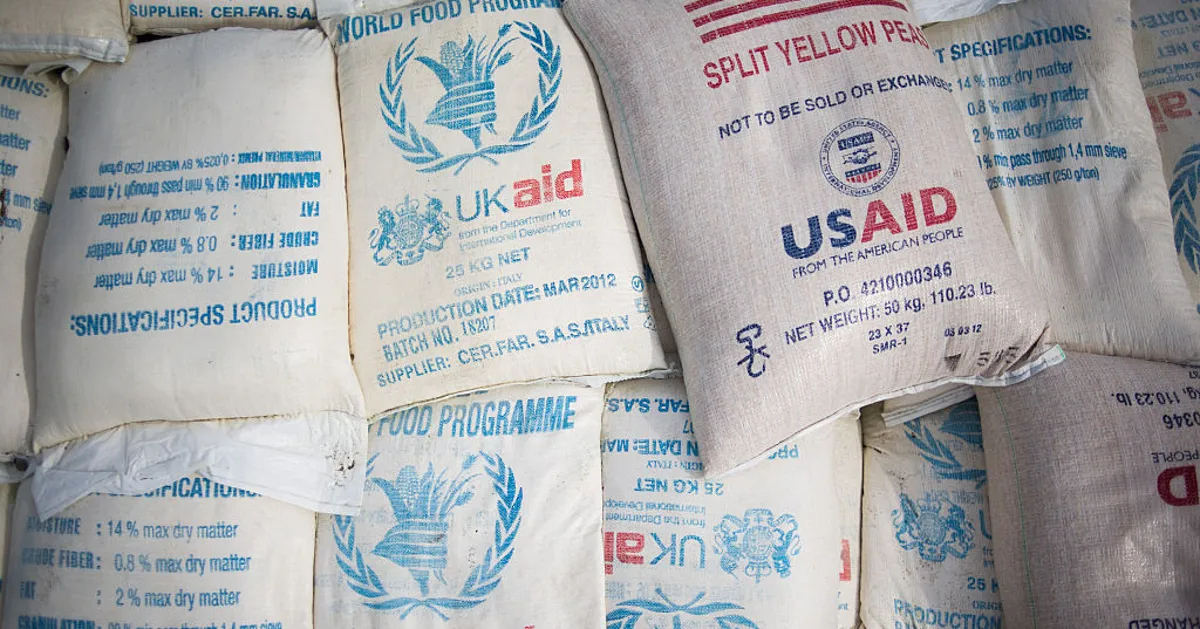
The foreign secretary’s statement on UK Official Development Assistance (ODA) allocations has been a year in the making.
I have been dreading this day since the decision last year by the prime minister and chancellor to cut ODA spending from 0.5 to 0.3% of gross national income.
Yvette Cooper’s words about UK values and “supporting those in conflict and extreme poverty” are welcome, but the reality of her statement reveals significant, real-life impacts.
Girls will leave schools and children will go hungry. We will damage our international reputation, increase migration and hinder progress towards self-sufficiency through economic development.
Sub-Saharan Africa is home to most of the world’s poorest countries, from the Democratic Republic of Congo to Malawi. It has a population of 1.3 billion people – and growing. Its land is degraded by climate change, many countries are ravaged by decades of conflict, and its population feels the impact of a volatile global economy far deeper than wealthy countries such as the UK.
Yet this Labour government has decided to disproportionately cut aid to the part of the world where it makes the biggest difference. And there is no clarity yet in what the cuts will mean for the building blocks of sustainable development, in particular education and skills development.
We know conflict flourishes where the population remains uneducated. And, keeping girls in school is one of the most straightforward ways of supporting a country’s development. All the evidence shows girls who complete secondary education are less at risk of teenage pregnancy, HIV and domestic violence.
Crucially, during their lifetime they will help boost their country’s national productivity and wealth, have fewer children, and raise healthier children who are far more likely to succeed at school.
There is some good news. Britain’s contribution to the Global Fund to fight Aids, TB and malaria has been prioritised, and aid to richer countries will be deprioritised. Spending on violence against women and girls, including the prevention of sexual violence in conflict, seems to have been protected.
But we await clarity on conflict prevention and governance programmes. We are currently witnessing how hard power is in danger of destabilising peace and the global economy. While we need strong defences, investment in soft power is how we will build a better world.
I have had my ups and downs with party policy over the years, but I never thought a Labour government would so dramatically slash UK
support for the world’s poorest people.
It is a mistake to cut vital support to people in sub-Saharan Africa and elsewhere at a time when UK aid is needed more than ever. And it is a matter of deep regret that it is a Labour government that has made this choice.
No one should be proud of cuts that are proportionately larger than Donald Trump’s cuts to US Aid.
A Labour government that – for the first time ever – spends less on the world’s most vulnerable than the Tories will be remembered for the wrong reasons.
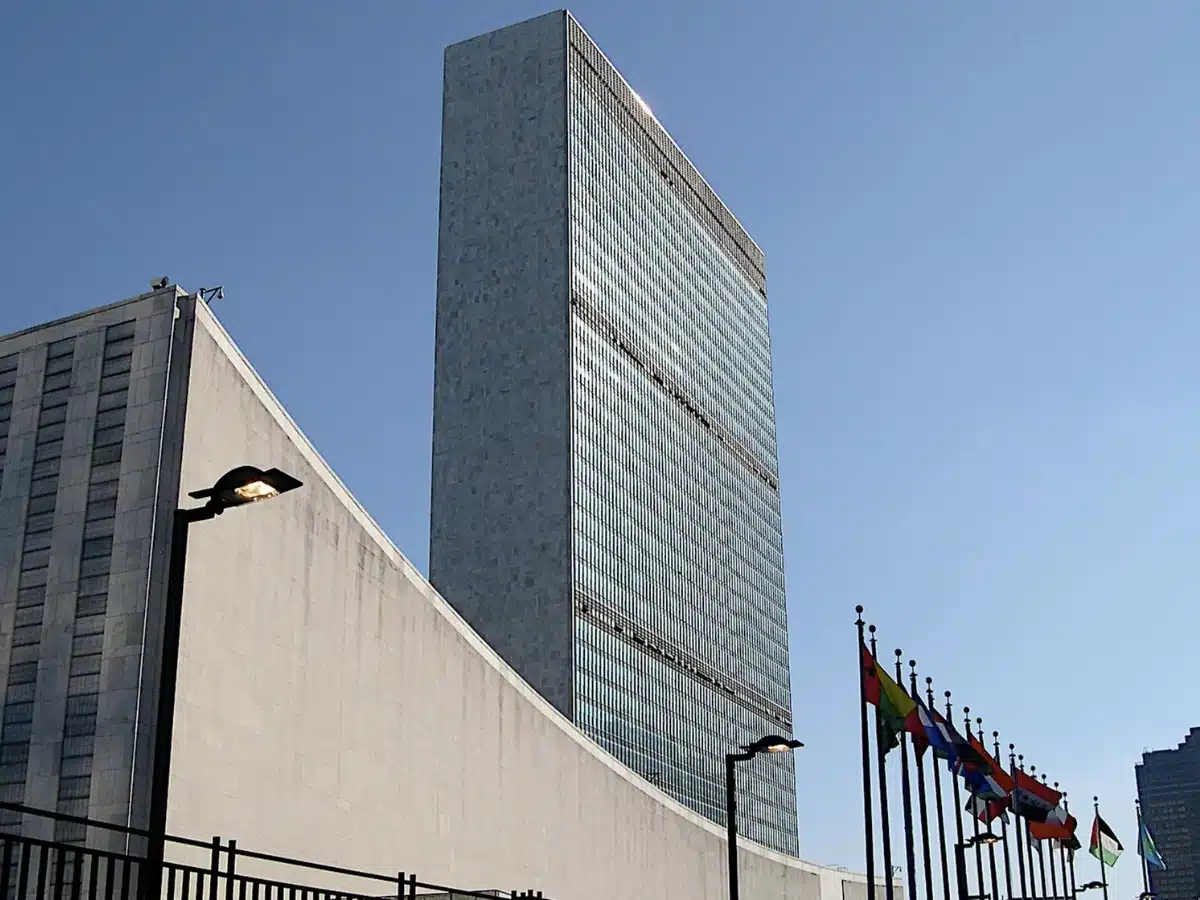
The intergovernmental UN Commission on the Status of Women (CSW) is the UN’s largest annual forum on gender equality. Its 70th session concludes on 19 March at UN HQ in New York. This year’s priority theme under discussion was:
‘Ensuring and strengthening access to justice for all women and girls, including by promoting inclusive and equitable legal systems, eliminating discriminatory laws, policies, and practices, and addressing structural barriers.’
“However”, said Shobha Shukla:
for the first time in the 70 years’ history of CSW, the outcome document was adopted via a formal vote rather than by consensus, thanks to the retaliatory stand taken by the US.
The US introduced 8 oral amendments aimed at altering the draft text to align with its own positions on issues including against abortion, gender identity, and diversity, equity and inclusion. But these 8 amendments proposed by the US were defeated by other UN Member States or countries (by a vote of 26 to 1, with 14 countries abstaining).
Shukla is the host of SHE & Rights (a campaign to advance gender equality and the human right to health). She’s also the founder executive director of CNS.
Shukla added:
Ultimately, the CSW70 document was adopted with 37 votes in favour and 1 against (the US), and 14 abstentions (including Nigeria, Egypt, and Saudi Arabia).
This rare break from consensus to a vote highlights widening global political divides over gender rights and is a sign of increasing pressure and pushback against existing human rights language, particularly regarding gender equality.
Is the outcome document of CSW70 good enough?
Maitree Muzumdar is co-founder of Feminist Manch and co-convener of the Young Feminist Caucus and the Women’s Rights Caucus. She agreed that CSW70 negotiations took place amid a global rollback of rights, shrinking civic space, rising authoritarianism and militarism, and deepening economic crisis.
Muzumdar lamented that:
Governments (UN Member States) approached access to justice as a technical issue rather than a political issue, focusing on procedural reforms without addressing the structural conditions that produce injustice. This allows governments to avoid confronting the political interests and power relations that sustain injustice.
In many contexts, governments themselves are responsible for serious human rights violations through misuse of security laws, policing, and impunity of armed forces used to justify repression and criminalisation against communities demanding justice.
These patterns of repression also appear in laws that criminalise LGBTQI+ communities, regulate women and gender diverse people’s bodies such as through restrictions on abortion, and render people illegal. The refusal to name discriminatory laws, dilution of commitments under sovereignty clause, and phrases like ‘as applicable’ allow existing social, political, and economic hierarchies to remain untouched.
Gender equality threatened by corporate capture
Commenting on the deliberations at CSW70, Mazumdar said:
There has also been reluctance to address the impunity of the private sector in the privatisation of essential public services, climate injustice, human rights violations, and development projects that deepen inequalities between countries and people.
These harms are closely tied to development models that prioritise economic growth and profit over people’s rights. Yet, these models remained unquestioned, making strong corporate accountability and reparative remedies essential.
These realities demand stronger accountability for human rights violations committed by both state and non-state actors. Justice cannot exist without democratising power and resources or confronting the systems that produce injustice.
Argentine feminist activist Josefina Sabate is part of the Political Advocacy unit at FUSA Asociacion Civil. She agrees the CSW70 process has taken place in a highly adverse political context and the outcome document is not as progressive as we might have wished. For her:
access to justice is not merely a technical matter. Women and girls face numerous obstacles – legal, financial, geographical, and institutional barriers – that hinder their access to justice, bodily autonomy, sexual and reproductive health services, and mechanisms for redress and reparation.
However, this agenda faces significant resistance in Latin America. Many countries in this region stand in opposition to this agenda. Colombia, fortunately, is one of the few nations in the region that continues to champion these rights.
Ayshka Najib is a climate and gender justice advocate and co-convener of the Young Feminist Caucus. Najib pointed out that:
justice for women and girls is systematically obstructed by patriarchal, militarised, and fascist systems manifested through war economies, arms trade, corporate capture, and fossil fuel-based extractive models that dispossess indigenous communities.
Achieving justice requires the dismantling of these systems, redistribution of power, demilitarisation, protection and expansion of civic spaces, and the meaningful leadership of feminist movements.
Lack of gender equality in systems of justice
Maluseu Doris Tulifau, a Samoan feminist and founder of Brown Girl Woke, shared the travails of Pacific women – women with disabilities, LGBT+ communities, migrants, and rural women – who continue to face multiple intersecting barriers to justice:
From a Pacific perspective, justice is not experienced through a single system. Women navigate a continuum of justice systems: formal courts, customary governance, faith-based authority, and family negotiation.
For most of the Pacific women, particularly in rural, remote, and outer island communities, customary and community-based justice mechanisms remain the primary entry point for justice.
But women are also clear-eyed about the limitations. In cases of family and sexual violence, customary processes often prioritise reconciliation or compensation over women’s safety and accountability for harm.
Family reputation, church authority, and social hierarchy frequently pressure survivors to remain silent about violence and this cultural silence protects the perpetrators.
Women also confront broader structural challenges. Climate change, rising seas, displacement, extreme weather conditions are intensifying poverty, insecurity, and violence against women and girls across small island countries.
Also, without economic security women cannot leave violent situations or pursue legal action. But decades of neoliberal economic policies across the Pacific have weakened the very systems that women rely on for protection and justice.
Technology-facilitated violence is yet another serious justice issue. Digital harassment, exploitation, and surveillance are increasingly affecting women and girls across the region.
Tulifau lamented that at the global level also, Pacific voices remain structurally excluded. Small island states and grassroots organizations face visa barriers, funding limitations, and structural exclusion from global spaces like CSW.
Social development specialist Asel Dunganaeva, from Kyrgyzstan, said:
Across Asia, justice systems remain inaccessible, under-resourced, and attacked by patriarchy and inequality. These systems often exist in law but not in lived experience.
Women may have rights on paper but face stigma, fear of retaliation, lack of legal aid, and economic dependency that prevents them from claiming those rights. Discriminatory laws and colonial legal legacies continue to control women’s bodies, restrict sexuality and identity, and criminalise marginalised communities.
Even when legal reforms exist, implementation remains weak. We are witnessing a disturbing rollback of women’s human rights and protections against gender-based violence are weakening.
Technology-facilitated gender-based violence has also become a powerful tool of control. Cyber-stalking, doxing, online harassment weaponises sexuality and identity to silence diverse women and girls.
Also, for millions of women across Asia, the first experience of injustice is not in a courtroom, it is in the economic systems in which women live. Debt-driven development, austerity policies, and economic inequality are driving public resources away from healthcare, education, and social protection, making justice even more inaccessible for women and communities already living on the margins.
Shrinking space for feminist voices of the global south
Despite civil society participation being central to the effectiveness and legitimacy of the CSW, many African women and girls face restrictive access to participation. Visa bans and visa denials based on age and location make it difficult for them to participate in UN processes like CSW. That’s the view of Michelle Anzaya, communications professional and feminist leader from Africa. She added:
For those who are able to travel, concerns around racial profiling, surveillance, and safety further undermine the ability of advocates to engage freely and safely in global policy spaces. We are also witnessing the growing influence of anti-rights actors within multilateral spaces.
This imbalance risks distorting participation and weakening the accountability that global gender equality processes depend on, and the global agenda risks being shaped without the voices of those who are most directly affected by inequality and injustice.
Anzaya shared that in response to these challenges, African feminist movements are building new spaces for engagement and solidarity:
Initiatives like ‘Africa Disrupts CSW’ demonstrate the power of African feminists to ensure that African realities and lived experiences inform global gender equality debates.
National and regional CSW hubs are also emerging, like in Uganda, Gambia, and Cameroon. By creating local spaces for engagement, these alternatives are democratising participation and strengthening feminist movement building across the continent.
Anzaya also highlighted the need for vigilance about broader challenges to women’s rights:
African feminists have raised concerns about proposals such as the draft African Charter on Family Values and Sovereignty, which risks undermining existing regional human rights protections (like the Maputo Protocol) and rolling back hard-won gains for women, girls, and marginalised communities.
Feminists call upon government leaders to deliver on gender equality and justice
Anzaya calls upon governments or UN member states, UN leadership, and the CSW Bureau to uphold meaningful, holistic, and inclusive participation as a core principle of CSW processes.
And she wants them to address the structural and systemic barriers that continue to limit the effective participation of women and civil society from the global south, including the restrictive visa regimes.
Also, any discussions on reforms to the UN system must reinforce and not weaken the global architecture for gender equality and ensure that CSW outcomes reflect the lived realities and priorities of women and girls across all regions.
Shiphrah Belonguel, global advocacy officer at Fòs Feminista, reiterates:
We are fighting for strong language on multiple and intersecting forms of discrimination that impact access to justice. We are fighting for sexual reproductive health and rights and bodily autonomy as central to access to justice.
We are emphasising that sexual and gender-based violence encompasses harmful acts rooted in structural gender inequalities and power imbalances. These are systemic injustices that justice systems must be equipped to confront.
Sai Jyothirmai Racherla is deputy executive director of the Asian-Pacific Resource and Research Centre for Women. She emphasises that human rights, equality and justice are core to sustainable development. We also need to look at redistributive justice- economic, gender, ecological accountability – and prioritise marginalised people and environmental sustainability over profit.
And as Dunganaeva remarked:
Justice demands redistribution of power and resources, demilitarisation of economies, and decolonisation of global governments. It requires dismantling systems of power that perpetuate inequality. Without transforming these structural conditions, access to justice cannot be realised.
Featured image via the Canary
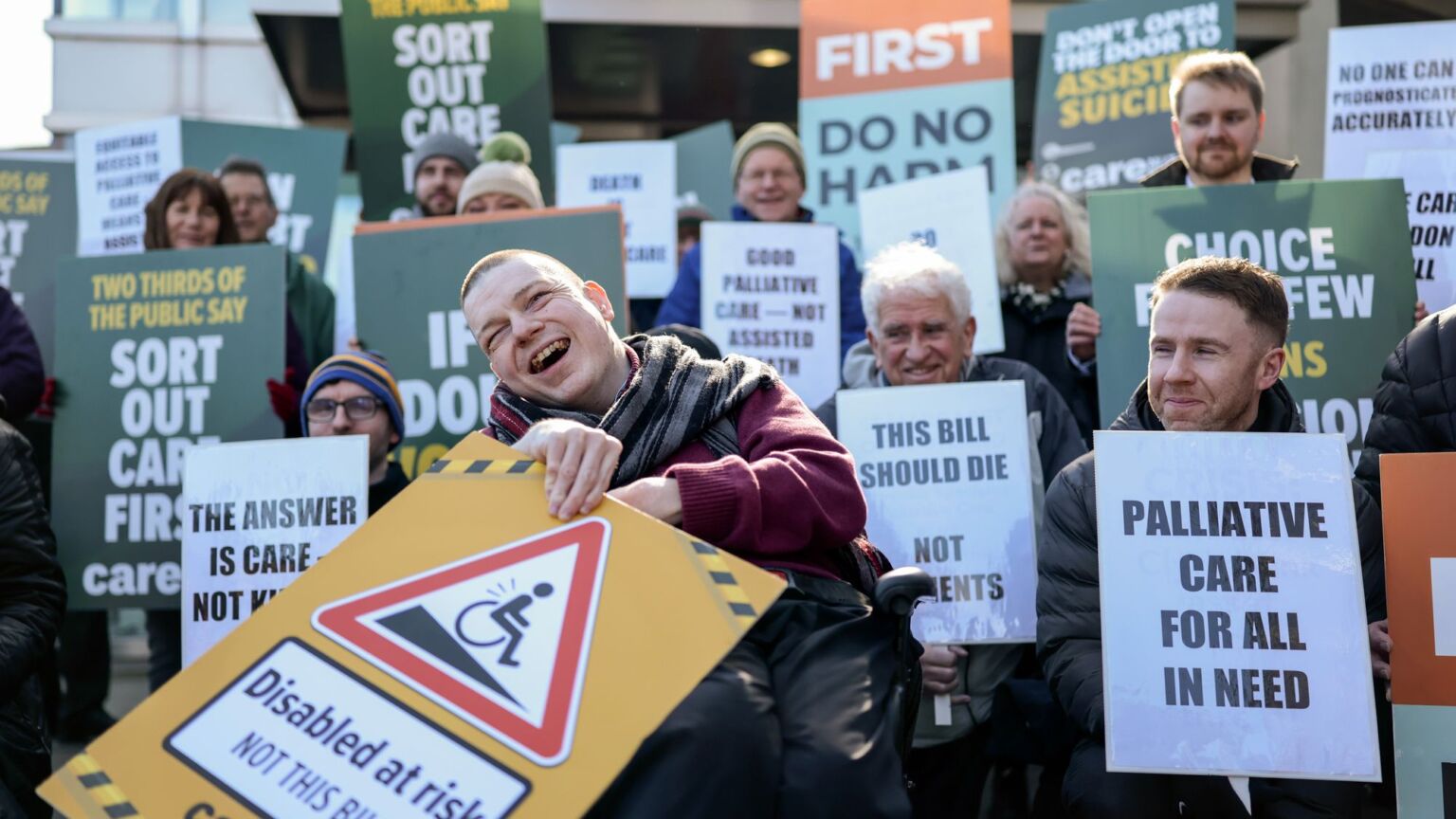
On Tuesday evening, the Scottish parliament voted 69 to 57 to reject the Assisted Dying for Terminally Ill Adults (Scotland) Bill. There was respect in Holyrood for the enormity of the question – and firm resolve when it came to answering it. The message sent by MSPs is one that every MP in Westminster needs to hear.
Scotland’s rejection of assisted dying is particularly significant considering the political makeup of its parliament. More than 70 per cent of seats in Holyrood are held by centre-left or left-wing parties, which tend to be more supportive of assisted suicide. Yet the bill was defeated across party lines, by MSPs who examined the evidence and concluded that no amendment had made it ‘safe’. It was a vote for our common humanity, for hope over despair.
What killed the bill was scrutiny. When it passed the committee stage last year, the margin was 70 to 56 in favour. Over the months that followed, as MSPs confronted the detail, support faded. By the final debate, the leaders of all three of Scotland’s largest parties opposed it. The pattern is clear: the closer you look at assisted-suicide laws, the harder they are to support.
Jeremy Balfour, an independent MSP who was born with no left arm and a right arm that ends at the elbow, gave one of the standout speeches of the evening:
‘Imagine being told by many people, including a number of politicians, that you are a burden on society, and the benefits that you rely on to survive could be better spent elsewhere. I want you to imagine that you’ve heard on numerous occasions the words, “I’d rather die than live like you”. How do you think you would feel watching this debate? I think you would rightly feel terrified.’
Balfour’s fear is not hypothetical. Supporters of Kim Leadbeater’s assisted-dying bill, which is currently being debated in the UK parliament, like to cite Oregon’s Death with Dignity Act as a model for Britain. This has now been in place for over 25 years. In its early years, around a third of assisted-suicide patients cited being a burden as a concern. By 2019, that figure had risen to nearly 60 per cent. In 2022, one third of Canadians who ended their lives under the country’s Medical Assistance in Dying law cited ‘being a burden’ as among their reasons. This is hardly evidence of autonomous choice. Vulnerability is driving these decisions.
The Scottish result reflects a trajectory we are seeing internationally. In Slovenia last November, voters who had backed assisted suicide in a 2024 referendum rejected the actual legislation once they saw what it contained. In Westminster, the Leadbeater bill passed the Commons, but it is now stalling in the Lords under growing opposition. The longest-serving MPs have tended to be the most consistently opposed to assisted dying. The more legislators learn, the clearer their opposition becomes to these laws.
The public polling that proponents of assisted dying lean on so heavily deserves the same scrutiny. Dignity in Dying has made much of polling that suggests a majority of Brits support assisted dying. But a different picture emerges when you dig into the data. More in Common found that, while only 13 per cent oppose assisted suicide in principle, 58 per cent are concerned that elderly people may seek it out because they feel like a burden, or because they are pressured into it. This reflects sympathy for an abstract idea that erodes when real consequences are exposed.
The Leadbeater bill now seems certain to run out of parliamentary time – there remain more than 850 amendments to be debated in only five allocated sitting days. Its supporters will no doubt blame the clock for its failure. But bills that command real confidence get moved through – indeed, it is telling that the Labour government has refused to allocate it anymore time. The Leadbeater bill is stalling because parliament is doing exactly what Holyrood did: examining the detail and finding it unsafe.
Scrutiny is what will kill assisted dying: the case against these laws only gets stronger the longer you look.
Robert Clarke is director of advocacy for ADF International. Follow him on X: @Rob_ADFIntl.
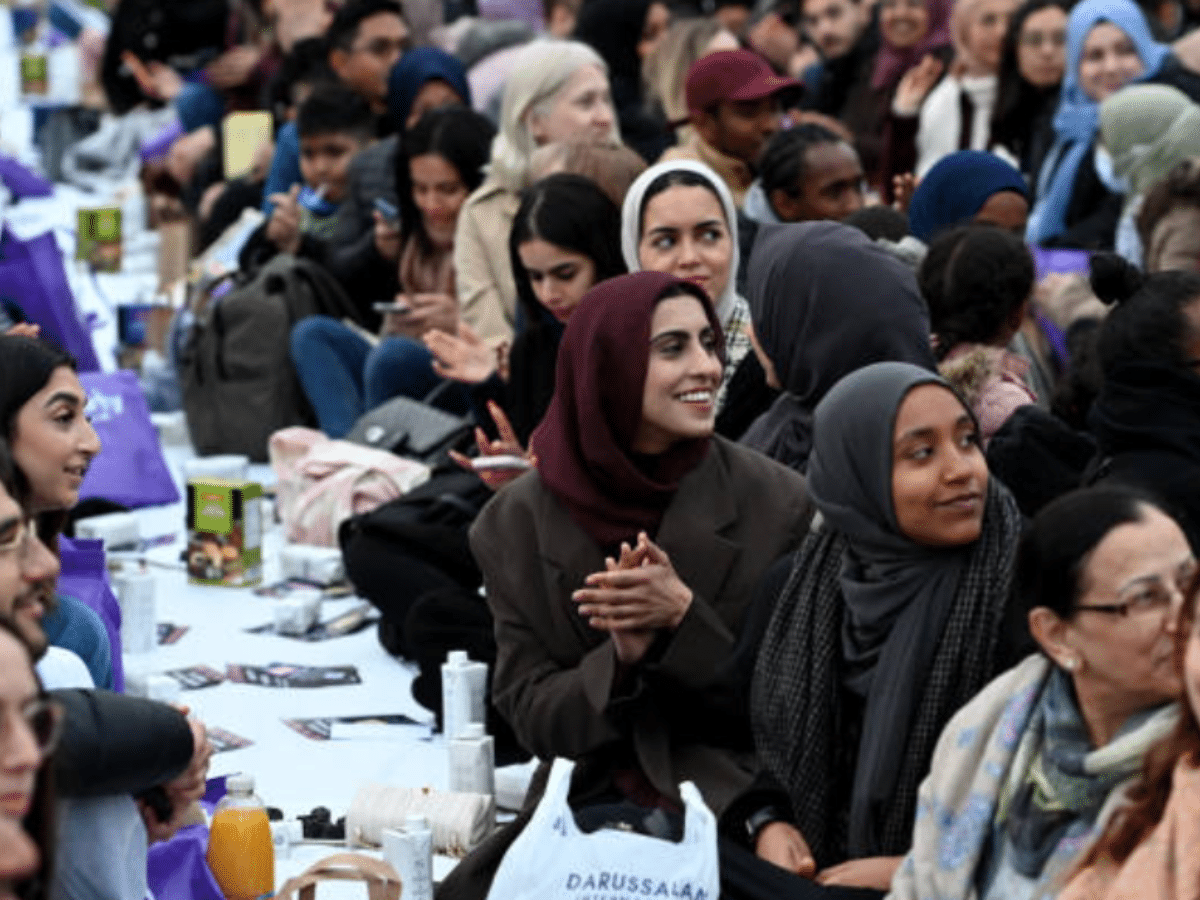
The Tories’ shadow justice minister, Nick Timothy, has shamefully called an iftar gathering in Trafalgar Square an “act of domination”. Party leader Kemi Badenoch then doubled down by stating that Timothy was “defending British values”. What, the values of Islamophobia and racism?
Starmer called the Conservatives out during PMQs, stating that the party has a “problem with Muslims”. This is obviously true, given that the Tories are made up of various stripes of raging bigot. However, it’s also deeply hypocritical coming from a Labour party that’s also got a clear Islamophobia problem.
Iftar: ‘there’s always a place at the table’
The 16 March event was organised by the Ramadan Tent Project charity, which seeks to improve relationships between communities. It was one of 18 ‘Open Iftar’ meals held across the UK.
Among the thousands who attended the Trafalgar Square event was London mayor Sadiq Khan, who took to Twitter to state that:
Community isn’t just where we live, it’s how we look after one another.
Tonight, people of all faiths, races and backgrounds came together in the heart of our capital to break their fasts at Ramadan Tent Project’s Open Iftar.
There’s always a place at the table in this city. pic.twitter.com/Zt5ubJDDRu
— Mayor of London, Sadiq Khan (@MayorofLondon) March 16, 2026
However, a charity bringing people together to share food for an iftar meal is apparently a step too far for Tory Nick Timothy. On the night of the event, the far-right gobshite logged on to Twitter to complain:
Too many are too polite to say this.
But mass ritual prayer in public places is an act of domination.
The adhan – which declares there is no god but allah and Muhammad is his messenger – is, when called in a public place, a declaration of domination.
Perform these rituals in… pic.twitter.com/PIfJAgb7Zk
— Nick Timothy MP (@NJ_Timothy) March 17, 2026
Note, in particular, Timothy’s use of ‘ritual’ here. Sure, depending on your theology, a prayer could be considered a ritual – but Timothy is trying to mystify the adhan to make it sound like some sinister cult practice.
Likewise, it’s also worth pointing out that the whole ‘there is no god but Allah‘ bit is, you know, kind of foundational for a monotheistic religion. It’s right there in the name. Likewise, it’s a belief shared by other dangerous Islamists like Charles III, the king of bloody Britain.
‘Utterly appalling’
Starmer took the opportunity to condemn Timothy’s nakedly Islamophobic rant in the Commons the next day. During PMQs, he called for Badenoch to sack her party member:
He said last night that Muslims praying in public, including the mayor of London practising his faith, are not welcome.
If he was in my team, he’d be gone. It’s utterly appalling. She should denounce his comments and she should sack him.
The Labour leader also drew a parallel between the shadow justice minister and fascist shit-stirrer Tommy Robinson:
Even Tommy Robinson, I can hardly believe I’m saying this, has said today that if the shadow justice secretary had made these hateful comments two years ago the Conservative Party would have kicked him out.
Tommy Robinson isn’t some sort of moral signpost, he was pointing out how much their party has changed. They’re more inclined to his views, and he’s right about that. The fact he’s sitting on her front bench shows she’s too weak and has got absolutely no judgement.
‘The Tory Party has got a problem with Muslims’
Later, Starmer went on to say that:
When I see religious events in Trafalgar Square, when I see Hindus celebrating Diwali, when I see Jews celebrating Chanukah live, when I see Christians performing the Passion of the Christ, or Muslims praying, that shows the great strength of our diverse city and country.
I’ve never heard her party call out anything other than the Muslim events. It’s only when Muslims are praying. The only conclusion is the Tory Party has got a problem with Muslims.
It’s true that Trafalgar is regularly used for religious events of all stripes. Sadiq Khan echoed a similar sentiment on Twitter, posting:
Here’s an Iftar on Trafalgar Square.
And here’s Easter, Diwali, Vaisakhi and Chanukah.
London is, and will always be, a place for everyone. #UnityOverDivision https://t.co/bqUNBaL0og pic.twitter.com/wm8tvEL6QQ
— Mayor of London, Sadiq Khan (@MayorofLondon) March 17, 2026
Likewise, as we stated earlier, the fact that the Tories are a bunch of Islamophobic bigots is a given. However, this attack from Starmer is bloody rich, given that his own party has massively ramped up its Muslim-bashing in recent years.
Just look at their abandonment of the term ‘Islamophobia’, their hierarchy of racism that repeatedly minimises attacks on Muslims, and the party’s inaction on Islamophobia in the NHS. And that’s not even mentioning Labour’s active participation in the genocide of the Palestinian people.
‘Defending British values’
In response to Starmer’s statements, Kemi Badenoch stated that Timothy was “defending British values”.
Now, this is true if – and only if – we hold that Islamophobia itself is a British value. The Tories clearly believe that – Timothy’s rant was an open attack on Muslims praying in public, and his party leader stood by it.
Timothy didn’t condemn Christian, Jewish or Hindu worshippers in the same setting. He singled out Muslims, because he and his party have a problem with Muslims.
However, that hatred of Muslims is, increasingly, becoming a British value. Along with it, racism, fascism and white-supremacist politics are being mainstreamed.
This vague appeal to ‘British values’ is a trap. ‘British values are multicultural’. ‘Christianity is a British value’. ‘Helping those in need is a British value’. ‘Pulling yourself up by the bootstraps is a British value’.
As Badenoch succinctly demonstrated, British values are a shifting, nebulous concept which allows politicians to make their appeals to whichever way public sentiment sways at the time.
If Timothy, Badenoch and their ilk are what British values look like, they can fucking keep them.
Eid Mubarak.
Featured image via the Canary

Contrary to US President Donald Trump’s expectations NATO has refused to join the US and Israel’s illegal war on Iran.
In usual ego-driven fashion, Trump is attempting to gaslight and shame NATO into submission. However, his cynical attempts are increasingly revealing just how embarrassing and pathetically childish the ‘leader of the Western world’ really is.
This will likely be restoring hope amongst Britons that there is a red line for European leaders when working with the US. A red line that many feared did not exist with its member states’ complicity in the genocide on Gaza, which has murdered tens of thousands of Palestinians since October 7th, 2023.
Pres. Trump said he believes NATO is making a “very foolish mistake” in not helping the U.S. in the war with Iran.
“I’ve long said that, I wonder whether or not NATO would ever be there for us. So, this was a great test. Because we don’t need them, but they should have been… pic.twitter.com/RaqKWq3XvA
— CBS News (@CBSNews) March 17, 2026
Trump in over his head
The US and Israel began waging their brutal war of aggression on Iran, and prolonged Israel’s invasion of Lebanon, at the end of February 2026. Since that attack, many have found relief in seeing NATO leaders largely refrain from giving their support to Trump, despite his protestations. Now Trump is threatening to leave NATO and take his funding with him, in a naked attempt to muster up support.
Attacks on oil infrastructure are hitting the world’s richest where it hurts. As a result, a potential world war looms as obviously the priority is private profits; not people. Nevertheless, the only way to reopen the Strait of Hormuz is to end the war of aggression which prompted Iran’s move to counterattack.
Until those calls come thick and fast, Iran is simply following Western precedents in using financial pain to defend its interests:
“This could be World War Three!”
Glenn Beck warns that if Trump and NATO do not manage to reopen the Strait of Hormuz soon, it “will collapse the economy of the West”.
📺https://t.co/aVEfspFSVf@piersmorgan | @glennbeck pic.twitter.com/377LYvoBpS
— Piers Morgan Uncensored (@PiersUncensored) March 18, 2026
Leavitt: “Trump calls out NATO for being what he believes is an unfair alliance for American people”
Trump thinks NATO is “unfair” for not joining his war for Israel. They’re not unfair-they’re just not dumb enough to die for a foreign country’s agenda. pic.twitter.com/HvFz7a6i23
— Ounka (@OunkaOnX) March 18, 2026
100,000 could lose their jobs in the UK
We have written extensively on the war on Iran given the mainstream media’s reluctance to provide neutral, unbiased and fair coverage on yet another illegal military operation in the Middle East. Not only does the war carry fatal consequences for innocent Iranian and Lebanese civilians, but it will also impact citizens at home in the UK. Our Alex/Rose Cocker wrote:
Trump and Netanyahu’s illegal war on Iran has sent energy prices skyrocketing. The effect on energy-intensive industries in the UK has been immediate and severe. And, as a knock-on effect, as many as 100,000 jobs could be lost across the UK.
Of course, we won’t shed a tear for the impact on highly polluting industries themselves. However, the situation is a striking illustration of the vulnerability created by the UK’s desperate reliance on increasingly volatile fossil fuels.
Thankfully, that resistance is being maintained, and Trump is being left to look like the deranged, sociopathic, self-interested leader that he is.
Despite pressure, the US is receiving a loud resounding ‘No’ apparently:
🚨 US President Trump has asked the world to help US and send warships to Strait of Hormuz to re-open it.
He didn’t get POSITIVE response. US closet NATO allies have also refused to send any warships to Hormuz.
🇬🇧 UK: NO
🇮🇹 Italy: NO
🇪🇸 Spain: NO
🇯🇵 Japan: NO
🇷🇺Russia: NO
🇫🇷…— South Asia Index (@SouthAsiaIndex) March 16, 2026
German 🇩🇪 Leader Alice Weidel:
“Trump now wants help for Iran, This suggests that they entered this mission without any brain, the Americans did not think about an exit strategy or how this is supposed to continue”
Every NATO member is grilling Trump 🔥pic.twitter.com/FfpPYX612I
— Roshan Rai (@RoshanKrRaii) March 18, 2026
This X account detailed how actions have consequences:
NATO wasn’t created to be a clean-up squad for the US.
Had Trump involved allies in planning and had he not spent the past few months trash-talking NATO, hitting allies with tariffs and threatening to annexe European territory by force, things might be different.
Nevertheless, it is worth pointing out that some within NATO appear to feel otherwise. Mark Rutte, Chief of NATO, recently gave the impression that the alliance is there to provide a ‘platform for the US to project power’. This highlights that NATO reluctance isn’t guaranteed; some within it are more than happy to prioritise power over people.
Q: “Trump didn’t consult NATO before the war. Why should they help now?”
Leavitt: “NATO allies benefit more from the Strait reopening than the US does.”
Trump launched a war for Israel. Now he’s asking NATO to clean it up. Because they “benefit.” Benefit from a war they never… pic.twitter.com/qNriAYpE9f
— Ounka (@OunkaOnX) March 18, 2026
More allies turning their backs on Trump by the day
Criticism of Trump is growing, with even those who have demonised Iranian people and denied their legal right to self-defence now holding the US president to account.
Former US Ambassador to Israel Dan Shapiro isn’t best pleased with Trump signaling his friends are turning on him:
Unjustified? So Iran has just to accept any atrocity and not hit back?
You are nuts.— Craig Murray (@CraigMurrayOrg) March 19, 2026
A recent Truth Social post suggests Trump knows he is losing control:
Trump moves to rein in Israel after IDF strikes South Pars gas field, sparking massive Iranian response on Qatari LNG
“Israel, out of anger for what has taken place in the Middle East, has violently lashed out at a major facility known as South Pars Gas Field in Iran.”
The man… pic.twitter.com/XqA89jTBFU
— HatsOff (@HatsOffff) March 19, 2026
Despite his best attempts, world leaders are increasingly turning their backs on bully Trump and the American empire:
The American empire is completely isolated. Trump threatened to literally invade a NATO ally just six weeks ago, never consulted them about attacking Iran, and is now crying that they won’t join his disastrous war. The world is turning its back on Washington. pic.twitter.com/KPGdo3ixnO
— Furkan Gözükara (@FurkanGozukara) March 18, 2026
Karma is a bitch, after all. Trump has long threatened the safety of apparent NATO allies, as this post from 2024 shows:
BREAKING: The NATO Secretary General says any attack will be met with “forceful response” after Donald Trump said he would encourage Russia to “do whatever the hell they want” if it attacked a NATO country that didn’t pay enough for defencehttps://t.co/PAiZ4D1jU3
📺 Sky 501 pic.twitter.com/2PANYPpFYA
— Sky News (@SkyNews) February 11, 2024
A red line finally appears for NATO
Trump has made endless protestations that other states aren’t spending enough on defence compared to the US, who have long been captured by the military industrial machine. He has gone so far as to withhold support from supposed “allies” unless they commit billions more to military spending. In practice, as with Israel, this approach suggests the US would grant Russia considerable freedom in waging its aggression if toddler-tyrant Trump doesn’t get what he wants.
Hardly a win for citizens across the entire world who fear this new world order of ‘might is always right’ will in time hurt their own families and communities when bombs and bullets fall further afield. A world order that our own leaders have been more than happy to bow down to.
Now it appears that NATO are leveraging their own power and influence, finally seeming to recognise the existence of international law, shocking millions. In contrast to the US demanding higher profits for the military machine, NATO states are now refusing to legitimise the US and Israel’s contravention of the rules-based order. Don’t get me wrong, they could do a hell of a lot more, but it’s a positive change of tack.
Nonetheless, two superpowers are going head-to-head, and we should not take that lightly.
Let’s hope this spoilt president can learn new tricks in his old age and finally understand the meaning of ‘no’. A skill his victims would likely dispute is possible.
Ultimately, the only solution is an urgent regime change in the West to stand the faintest chance of global peace and prosperity.
Featured image via the Canary

On 17 March 2026, students gathered outside Leeds University to protest their institution’s continued affiliation with the forces waging genocide in Gaza and the West Bank. Stationed in front of the student union, they basked in the spring sunshine, determined to make their voices heard.

A beautiful day to be in Leeds!
As I arrived I was surprised to find a hostile neighbourhood auditor skulking around. Another arrived shortly after.
A creep with a bad camera, watching live streams of young women on campus on a Tuesday lunchtime and stalking students on campus—is no one’s idea of normal. These people are fucking weirdos.

At one point, university security staff were seen chatting casually with auditors on camera for their live streams.
This was after one of the auditors had earlier attempted to intimidate a student.
Questions need to be raised about why they’re allowed to behave in such a manner on university grounds. Yet, even this couldn’t dampen the sunny spirits of the protesting students.
A university apparently wedded to Zionism
The protest was sparked by the university’s invitation to BlackRock Asset Management for an upcoming job fair. For those unaware, the company’s affiliate, Blackrock, is a major investor in defense and aerospace companies, with well-documented ties to Israel. Students have every right to question the inclusion of such a company in the event.
Blackrock, according to the UN, is best known as the largest investor in companies linked to, and complicit in the genocide in gaza. Blackrock and its affiliates are invested heavily in companies such as Lockheed Martin (7%) which create weapons that kill people. As well they hold stakes in companies such as Alphabet (6.6%). Palantir (8.6%), and Amazon (6.6%). Tech companies sell software and capabilities which are used by the IDF to target whoever they decide to call a terrorist today.
The normalisation of their presence at university events, despite their complicity in the ongoing genocide, has sparked anger on campuses across the country for years. These concerns have been reflected in demands made by students at various universities, both during and since the encampment movement.


A crisis of trust
This is not an isolated event. Leeds University has been embroiled in repeated accusations of platforming Zionists on campus.
In 2024 freedom of information requests revealed hundreds of thousands of pounds of investment into businesses directly contributing to apartheid and genocide in occupied Palestine. This happened despite the university’s 2018 declaration that it had divested from the companies enabling the Gaza genocide.
They have also been accused of sheltering a Chaplain who left the university to serve in the Israeli Defence Forces, whose war crimes have been live-streamed for the past two years. Rabbi Zecharia Deutsch was allowed to continue in his role as Chaplain when he returned from Israeli, and even after Jewish students complained about his extremist, Zionist posturing.
It has been a busy week for student activists who also disrupted Chancellor, Rachel Reeves’ visit to campus earlier in the week.

Not only has the university consistently failed to address students concerns properly, they have even gone so far as using the university’s disciplinary processes to repress student dissent on campus. Suffian, a masters student and local campaigner spoke to me about his experiences at the university.
Blackrock — frit!
University security were clearly rattled, calling the police and keeping their distance at the steps of the union. It turns out they weren’t the only ones. Blackrock decided to avoid any negative publicity and cancelled their planned appearance. Direct action works!
I’ve never understood people who think protest and reputational risk aren’t powerful tools. 


Universities across the UK are failing to live up to basic expectations held by their student population—the very students whose fees keep the lights on.
Our high streets host banks that profit when children die on the other side of the world. Fast food chains allow their franchisees in Israel to feed IDF soldiers—soldiers found by medics to be intentionally using children as target practice. Amazon vans roll around innocently, all while aiding the targeting of civilians in an illegal occupation, between deliveries. Where does it end?!
Universities have a responsibility to do better and we stand in solidarity with all students standing up for their rights on university campuses—both in Leeds and beyond.

Featured images via Barold

The crisis between Senegal and the Confederation of African Football (CAF) has entered an unprecedented phase of escalation after the Senegalese government demanded an international investigation into suspected corruption within CAF, following the decision to strip its national team of the 2025 Africa Cup of Nations (AFCON) title.
Reuters reported the official position of the Senegalese government after the CAF Appeals Committee ruled that the Senegalese team had forfeited the final match against Morocco by briefly leaving the field during stoppage time in protest against refereeing decisions, despite winning the match 1-0 after extra time.
The decision resulted in Senegal being declared the loser by default (3-0) and the title being awarded to the Moroccan national team, a move that sparked widespread controversy and official rejection in Dakar.
In a strongly worded statement, the Senegalese government described the decision as “blatantly illegal” and “unjust,” arguing that the circumstances of the case raise serious questions about the integrity of CAF’s administration and calling for an independent international investigation to uncover the truth.
Meanwhile, CAF has not yet issued any immediate response, while the Senegalese Football Federation has announced its intention to appeal the decision to the Court of Arbitration for Sport in Lausanne, asserting that what happened is “unprecedented and unacceptable.”
With the case now on the international legal track, all eyes are on the outcome of the anticipated confrontation, in a case poised to reignite the broader debate on governance for AFCON
Featured image via the Canary

The crisis surrounding the 2025 Africa Cup of Nations (AFCON) final is taking a more complicated turn, with increasing uncertainty surrounding the fate of the prizes awarded to the Senegalese national team. This follows the Confederation of African Football’s (CAF) decision to strip Senegal of the title and award it to Morocco in a controversial appeal.
The Senegalese team had won the final, held on January 18th at the Prince Moulay Abdellah Stadium in Rabat, with a 1-0 victory. They received the medals and celebrated with the gold trophy before the CAF Appeals Committee overturned the decision, declaring them the losers due to their withdrawal and awarding Morocco a 3-0 victory, based on tournament regulations.
AFCON reality hits hard
Despite the continental ruling, the championship trophy remains in the possession of the Senegalese Football Federation, which is currently refusing to return it, preferring to await the final ruling from the Court of Arbitration for Sport in Lausanne.
The Senegalese Football Federation is treating the matter as legally open, which explains why they are still keeping the trophy, which toured several cities across the country amidst public celebrations of the title.
The possibility of the trophy being displayed abroad also remains, given previous plans to showcase it during the upcoming match against Peru in Paris on March 28, the team’s first appearance since the final.
Gold medals
The fate of the medals awarded to the players and coaching staff after the victory are also up for debate. It is estimated that demanding their return from the Confederation of African Football (CAF) is difficult due to the legal and symbolic complexities surrounding such a move.
Financially, the winning bonus is at the forefront, after confirmations that CAF has already transferred $10 million to the Senegalese Football Federation’s account.
Despite the decision to withdraw the title, there are no indications that the money will be returned at this time, as the Senegalese side insists on awaiting the Court of Arbitration for Sport’s (CAS) decision before taking any official action.
Between a binding continental decision and anticipated legal action, all matters—from the cup to the prize money—remain pending, awaiting the outcome of the CAS hearing in one of the most complex cases in the history of AFCON.
Featured image via the Canary
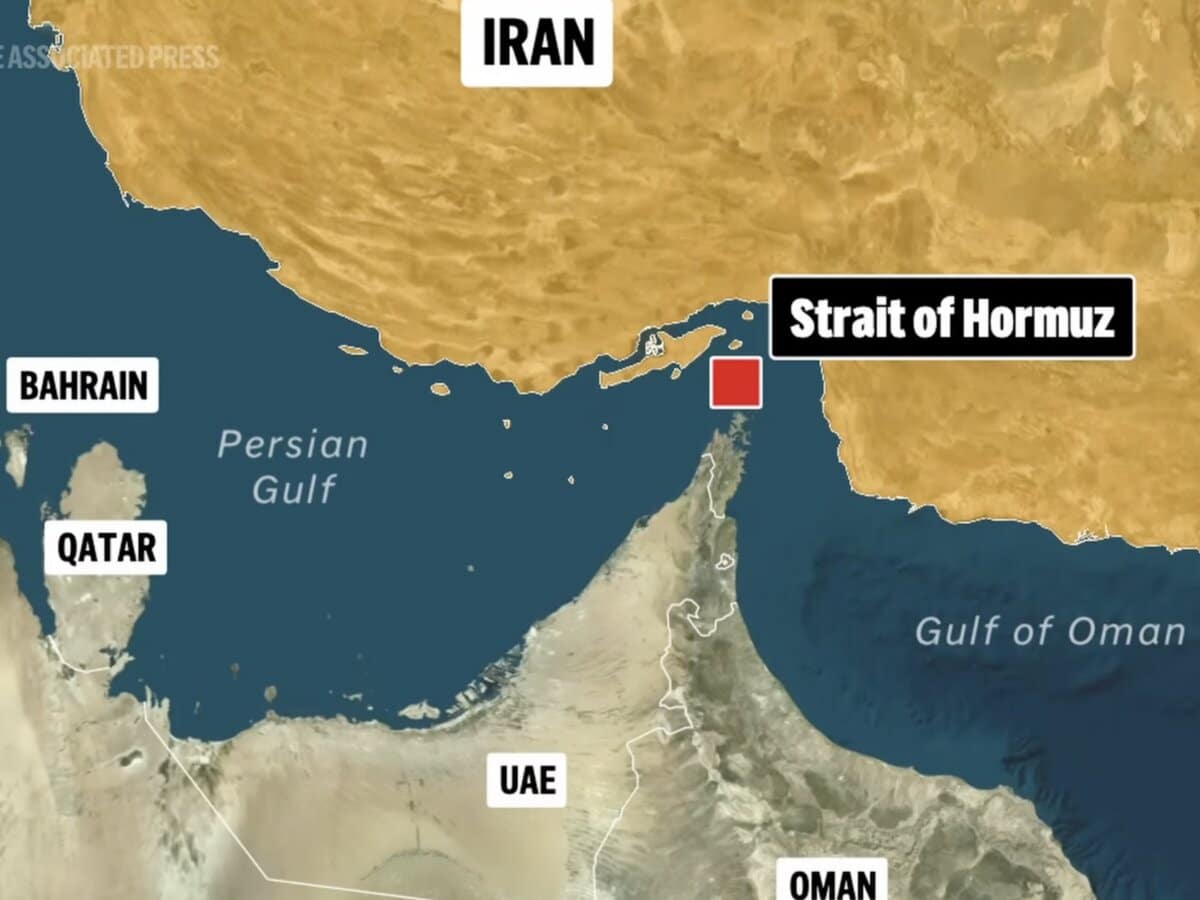
Iran is considering imposing a 10% toll on all ships passing through the Strait of Hormuz.
This would generate an approximate $73bn a year, which will immediately offset the cost of US sanctions, along with paying for all the damage from the US and Israel’s illegal attacks.
Did Donald Trump think he was the only one with the power to impose tariffs?
Brilliant move by Iran. They are planning to levy a 10% toll on all ships passing through the Strait of Hormuz. This will generate $73 billion a year, completely offsetting US sanctions and paying for war damages. Checkmate. pic.twitter.com/ahjNE3HUEr
— Furkan Gözükara (@FurkanGozukara) March 18, 2026
Is this one of Donald Trump’s great deals??? https://t.co/MDsV93OZyr
— Don Winslow (@donwinslow) March 18, 2026
The US has spent billions illegally blowing up Iran. Now it will also have to pay to fix it.
$11B spent blowing things up, AND we get to pay to fix what we destroyed. #WarWithoutAPlan#IsThisWinning https://t.co/nuIPZ7EhcM
— Jac 🇺🇸🇺🇦💙 (@JacDalAM) March 18, 2026
Trump is so concerned with breaking international law and ranting on Truth Social that he has forgotten to think through the consequences of his actions.
The previous US presidents that denied Israel’s requests to attack Iran all knew who they were fucking with. Trump was the only dumbass who did not 😂 https://t.co/CUzSWZGk43
— Pistachio 🇮🇷 🇵🇸 (@HarleyShah) March 18, 2026
Although that would rely on him having a brain.
This is what asymmetric strategy looks like. When you can’t control the system, you leverage the chokepoints the system depends on. Hormuz isn’t geography, it’s power.
— DialecticalX (@DialecticalX) March 18, 2026
Sanctions
The US has been imposing sanctions on Iran since 1980. Bill Clinton tightened these in 1995 and banned US companies from dealing with Iran. Congress also passed a law penalising foreign entities investing in the country’s energy sector or selling Iran advanced weapons. The US cited “nuclear advancement” and support of groups like Hezbollah, Hamas, and Palestinian Islamic Jihad.
Most of the West has labelled Hamas and Hezbollah as “terrorists”. But what the US never said out loud was that it was directly responsible for creating all three of those groups – meaning its sanctions are bullshit. The US has always offered Israel its unwavering support, and it has repeatedly called for both to disarm and disband. Meaning that is also the US’s goal
However, both only exist because of Israel’s repeated illegal invasions of sovereign nations, which the US has both directly and indirectly supported. Hezbollah was formed in 1982 after Israel illegally invaded Lebanon. Importantly, the US supplied Israel with the majority of its weapons for that invasion. Similarly, Hamas’s goal is to:
liberate Palestine and confront the Zionist project.
Hamas was founded in Gaza in 1987 shortly after the start of the first Intifada, an uprising against Israel’s occupation of Palestine. Once again, in 1987, the US supplied it with “advanced weaponry” to continue its system of apartheid and cruelty.
Importantly, armed resistance is not illegal under international law, no matter how many Western countries label you as a terrorist. So the US may have imposed sanctions in the name of ‘combating terrorism’ – but the reality was merely a resistance that the US itself had created.
Payback
Now, it seems the Iranians want well-deserved payback.
The Iranian authorities have stated that they are now applying the principle of “an eye for an eye.”
— Kevin Muruta (@KevinMuruta) March 18, 2026
To pay for the 47 yrs of illegal sanctions against Iran ~ This will be Justice for Iran 🇮🇷 https://t.co/9U6C6NJ4gA
— Dave Simpson (@DaveSim25817596) March 19, 2026
Trump and his cronies are getting exactly what they deserve. They may not be paying for their Epstein-related crimes against children, but they will hopefully now pay financially for their own stupidity.
The ability to think through your actions and their potential consequences usually develops during toddlerhood. Unfortunately, it seems that Trump missed this crucial developmental milestone.
Featured image via Associated Press/ YouTube

Sir James Dyson buys stake in Bath Rugby Group

Pardoned BitMEX founder funds UK right-wing political hub, report

Ari Fletcher Clears Her Name Amid Aspen Kartier, Summyah Fight

Smart energy pays enters the US market, targeting scalable financial infrastructure

Why Israel is blocking foreign journalists from entering

Bitcoin: We’re Entering The Most Dangerous Phase

19 March | NY Session | Forex and Crypto Live Market Analysis | #ForexLive #SwappyTrading #ICT

IRAN NEW PLAN : Financial War #iranupdate #usairanconflict #straitofhormuz #oilcrisis #gasshortage

The SIMPSONS Secret XRP Conspiracy: “Antikythera Mechanism” Activates the Great Reset in April 2026
-
 Crypto World6 days ago
HYPE Token Enters Net Deflation as HyperCore Buybacks Outpace Staking Rewards
-

 Tech4 days ago
Your Legally Registered ‘Motorcycle’ Might Not Count Under Proposed US Law
-

 Fashion6 days ago
Weekend Open Thread: Addict Lip Glow
-
 Tech2 days ago
Are Split Spacebars the Next Big Gaming Keyboard Trend?
-
Sports5 days ago
Why Duke and Michigan Are Dead Even Entering Selection Sunday
-

 Business4 days ago
Search for Savannah Guthrie’s Mother Enters Seventh Week with No Arrests
-

 Business5 days ago
US Airports Launch Donation Drives for Unpaid TSA Workers as Partial Government Shutdown Enters Fifth Week
-
Crypto World5 days ago
Coinbase and Bybit in Investment Talks: Could Bybit Finally Enter the US Crypto Market?
-

 Business3 days ago
Australian shares drop as Iran war enters third week
-

 Business5 days ago
Country star Brantley Gilbert enters growing non-alcoholic beer market
-

 Crypto World3 days ago
Crypto Lender BlockFills Enters Chapter 11 with Up to $500M in Liabilities
-

 Sports6 days ago
College Basketball Best Bets: Conference Tournament Semifinal Picks
-

 Politics1 day ago
The House | The new register to protect children from their abusers shows Parliament at its best
-

 Business7 days ago
Trump demands Powell cut rates as Iran conflict raises energy prices
-

 Fashion3 days ago
25 Celebrities with Curly Hair That Are Naturally Beautiful
-

 News Videos1 day ago
RBA board divided on rate cut, unusually buoyant share market | Finance Report | ABC NEWS
-

 Crypto World7 days ago
Senate Votes to Include CBDC Ban in Bipartisan Housing Bill
-

 NewsBeat7 days ago
Deane Road crash near Bolton colleges and university
-

 Crypto World1 day ago
Canada’s FINTRAC revokes registrations of 23 crypto MSBs in AML crackdown
-

 News Videos7 days ago
Tom Lee: The 100x Opportunity EVEN Bigger Than Bitcoin (New Ethereum Prediction 2026)


You must be logged in to post a comment Login