Connect with us

Politics

Labour bigwig says New Labour led to ‘perversion & paedophilia’

Published

on

Labour bigwig says New Labour led to 'perversion & paedophilia'

Lord Maurice Glasman is the party bigwig behind the Blue Labour movement. To be honest, we’re not much of a fan of his. Credit where it’s due, though; he’s delivered what may be the greatest MSM takedown of New Labour yet:

Please be aware that the above should read “perversion and paedophilia”, although it’s bad however you hear it.

Advertisement

It’s over

At this point, it seems that New Labour is finished as a viable political entity within the larger party. We say that because:

As if this wasn’t bad enough, party rivals have now branded Blairism as the political wing of international paedophilia.

There is no coming back from this.

Blue Labour

In 2020, Steve Topple described Blue Labour as follows:

Advertisement

a concept founded by Maurice Glasman based on socially conservative values of ‘family, faith and flag’ but more socialist economic policies. It is rooted in the values that Glasman perceived existed in the party pre-WWII.

On 6 February, Blue Labour put out the following statement:

This week exposed the moral and intellectual rot at the heart of our party. Glib arrogance, vicious court gossip and a culture of conformity. A willingness to look the other way for factional reasons, blind to how it looks to the outside world.

And for what? In the careerist scramble for a brief moment in the limelight all imagination and curiosity are crushed, and so we are left empty of ideas and empty of soul.

How far we have fallen as a party. This must be the end of New Labour.

At the same time, let’s be real; Blue Labour aren’t a viable alternative.

Advertisement

As activist Alan Gibbons highlighted, Glasman described Morgan McSweeney as “one of ours”. McSweeney is the worst of the worst, so if he’s one of theirs, that doesn’t say much about them.

Featured image via Sky

Advertisement

Source link

Continue Reading
Click to comment

Leave a Reply

Your email address will not be published. Required fields are marked *

Politics

Here’s What Your Preferred Plane Seat Says About You

Published

on

Your plane seat preference might reveal a lot about you, according to travelers and experts.

As I settled in for the 17-hour flight from Australia to the United States, I turned to the vacant seat between my wife and me and smiled. While other passengers might have thought it was a stroke of luck, they didn’t know this was deliberate. It was the result of my seat selection obsession.

The ritual starts the moment I book a flight: I check legroom measurements and read seat reviews, then study the airline’s seat map to predict which seats will stay open. There are rules: I go for an aisle seat on the right side of the aircraft, and on wide-body planes with a 3-3-3 configuration, I pick one in the middle section.

Even after I’ve locked in my seat, I can’t stop. In the days leading up to departure, I’m refreshing the “Manage My Booking” page, monitoring which seats fill up, debating whether to switch to 12D or stick with 11D.

Turns out, plenty of travelers have their own versions of this routine. Some travelers insist on the same side of the plane every time. Others will only sit in odd-numbered rows. A few refresh seat maps obsessively, fixated on bathroom proximity or meal service order.

Advertisement

Performance psychology specialist Sam Wones said this quirk runs deeper than seat preference. “It reflects a need for control in environments where individuals feel they lack it,” he explained. “Ritualistic actions like seat-map checking can reduce anxiety about the unknown.”

When everything about air travel feels chaotic, securing a specific seat sends a signal to your nervous system that something is manageable.

These rituals can be remarkably specific. Georgia Hopkins, a freelance travel writer, only sits in odd-numbered rows: 11A ideally, or 13A/15A if that’s taken. Rows 12 or 14 simply don’t exist in her world. “I can’t do even numbers. If not 11, I have to sit in an odd-numbered row,” she said. She also insists on a window seat as far forward as possible, so she boards earlier, exits faster and is served first.

Row 25. Always row 25. Amanda Kendle is so committed to this specific row that she will not change it, even if a better option opens up. Not because it has extra legroom or is closer to the exit, but because it is her lucky number.

Advertisement

“Some part of my anxious flyer mentality tells me if I change my seat, the plane will crash and my original seat would have been safer,” she explained. When traveling with her teenage daughter, who insists on a window seat, Kendle still claims row 25; she just takes the middle instead of the aisle. Her flexibility still operates within strict boundaries.

Your plane seat preference might reveal a lot about you, according to travelers and experts.

wera Rodsawang via Getty Images

Your plane seat preference might reveal a lot about you, according to travelers and experts.

These rituals feel personal, even irrational. Chris Lipp, a social psychologist at Tulane University who studies power dynamics, said they expose how confident we feel in public spaces.

“People who feel more powerful are less sensitive to sitting next to someone,” Lipp explained. “They’re comfortable with less interpersonal space, less worried about others encroaching on their space, and less vigilant because they don’t feel threatened by others.”

The dreaded middle seat, which most people avoid, illustrates this power dynamic. Lipp notes that powerful people can tolerate it. They will claim both armrests without hesitation, exuding a confidence that likely extends beyond the cabin. Anxious travellers either guard the armrest like a border wall or avoid it completely to prevent any contact.

Advertisement

Seat location also reflects travellers’ approach to control and efficiency, Wones says. Front-of-plane passengers want to disembark quickly and avoid feeling trapped, valuing efficiency and a faster process. Back-of-plane flyers operate differently. They’re more relaxed about waiting, less concerned with being first off the aircraft and often actively avoid the chaos of the front rows. Neither preference is inherently better, but they reflect different tolerances for waiting.

Beyond front vs. back, another choice reveals personality: window or aisle. Wones said introverts gravitate toward window seats for privacy and control, while extroverts prefer aisle seats for mobility and easier interaction.

Lisa Burns, founder of The Travel Photography Club, understands this completely. On a flight from Tokyo to Helsinki over the Arctic Circle, she ended up in an aisle seat with the window passenger asleep, shutter closed. “All I could imagine were icebergs and glaciers below,” she said. “I had to practice deep breathing because it took so much self-control not to lean across and look out the window.” For a travel photographer, being trapped on the aisle meant missing exactly what she needed to see.

I’m firmly in the aisle camp, though my reasons are less about interaction and more about autonomy. I can move whenever I want without performing a gymnastics routine to climb over a sleeping passenger or getting the side-eye when I’m up and down for the third time in an hour. On a long flight, this freedom matters. Maybe it makes me someone who needs to feel in charge of something, even if it’s just bathroom breaks. Or perhaps I just drink too much water.

Advertisement

My right-side preference has a practical foundation. Analysis of Air Canada and American Airlines seat data shows passengers disproportionately choose the left side, which means the right side offers better odds of an empty seat beside me.

Wones said that once you unconsciously favour one side, your brain locks onto it. “Some people unconsciously favour one side due to how their brain processes spatial awareness or comfort,” he explained. Maybe it felt slightly better once, or you had a good flight on that side. The reason doesn’t matter. Once the pattern exists, you stick with it, even when both sides are identical. It becomes less about logic and more about what feels right.

If you’re reading this thinking, who obsesses over seats?, that reaction itself reveals something, according to Wones. Strategic planners are highly conscientious and prefer control. Acceptors are more adaptable, with lower anxiety and a higher tolerance for uncertainty.

When my wife catches me refreshing the seat map days before a flight, she thinks I’m ridiculous. She’s probably right. But 17 hours squeezed into economy with an empty seat next to us? That’s when ridiculous becomes genius.

Advertisement

Source link

Continue Reading

Politics

Why Israel is blocking foreign journalists from entering

Published

on

Why Israel is blocking foreign journalists from entering

Since the start of the war on Gaza in October 2023, Israel has enforced an unprecedented media blockade. Foreign journalists and international media outlets have been barred from entering the Strip.

This policy has become one of the longest media blackouts in a modern conflict. It raises urgent questions about Israel’s motives and objectives.

Gaza — controlling the narrative and obscuring the truth

The ban on foreign journalists does not appear to be a temporary security measure. Instead, it functions as a systematic policy aimed at controlling the narrative of events in Gaza. Without independent international reporting, official Israeli accounts circulate with little scrutiny. This limits accountability and obscures the scale of destruction and civilian suffering.

In a war that has killed and wounded tens of thousands, the absence of international media has distorted global understanding and weakened factual reporting.

Advertisement

An intentional media vacuum

The ban on foreign journalists coincides with the direct targeting of Palestinian reporters inside Gaza. Together, these actions create a deliberate media vacuum. This severely limits source diversity and restricts reporting to a narrow range of perspectives. It prevents independent investigations based on eyewitness testimony and on-the-ground verification.

Observers argue this vacuum is deliberate, designed to reduce coverage and limit international accountability.

Obstructing documentation and legal accountability

Human rights and press freedom organisations warn that blocking media access hinders documentation of violations against civilians.

Without international journalists present, collecting the visual and forensic evidence needed for legal cases becomes far more difficult. This weakens prospects for accountability in international courts.

Advertisement

The media blackout is therefore seen as a tool to delay justice and entrench impunity. Israel cites security concerns to justify the ban. However, international press organisations—including the Foreign Press Association—say no credible security rationale exists.

The controversy has deepened due to the Israeli Supreme Court repeatedly postponing rulings on petitions demanding media access. These delays rely on classified evidence that cannot be challenged.

Journalists view this as a continuation of the ban under a legal veneer.

Gaza — a clear violation of press freedom

Press unions and human rights groups say the ban violates Article 19 of the Universal Declaration of Human Rights and the International Covenant on Civil and Political Rights.

Advertisement

Both guarantee freedom of expression and the right to receive and impart information without restriction.

Media experts warn that normalising such bans sets a dangerous precedent for future conflicts. With Gaza still closed to foreign journalists, the conflict extends beyond military force into media, legal, and ethical realms. The blackout is not incidental. It is a central mechanism to conceal the war’s consequences and keep cameras away from one of the worst humanitarian disasters of modern times.

As more than 2.4 million Palestinians remain trapped in Gaza, calls are growing to break the blockade. Allowing journalists in is now seen as a moral and professional imperative—to ensure the world sees Gaza without filters or omission.

featured image via EBU

Advertisement

Source link

Continue Reading

Politics

18 Most Shocking Super Bowl Halftime Show Moments Ever

Published

on

18 Most Shocking Super Bowl Halftime Show Moments Ever

You really know you’ve made it as an A-list music star when the NFL invites you to perform during the Super Bowl Halftime Show.

In the past few years alone, massive names as varied as The Weeknd, Jennifer Lopez, Usher, Kendrick Lamar and, of course, Rihanna have all wowed with their performances – but there have been a fair few shocking moments along the way.

This year, the honour falls to music superstar Bad Bunny, fresh from his Album Of The Year win at the 2026 Grammys, and the world is sure to be watching to see what he pulls out of the bag on one of the world’s most-watched music events.

Indeed, as history has proved time and time again, the Super Bowl Halftime Show hasn’t always been just about the music – with plenty of shocking and headline-grabbing moments taking place at the annual sports event.

Advertisement

As we get ready for what could easily become one of the year’s biggest nights in music, here are 18 more of the biggest Super Bowl shockers from years gone by…

18. Blackout Bowl (2013)

Jamie Squire via Getty Images

This shocking moment didn’t come during Beyoncé’s Halftime Show but shortly after it, with the football game that followed (snooze…) having to suspend play for a full 34 minutes due to a power outage.

Evidently, the power of the Queen Bey is so strong, it can even plunge an entire stadium into darkness. Bow down, bitches indeed.

Advertisement

Watch the full performance here.

17. Usher Bowl (2024)

Christopher Polk via Getty Images

Usher’s jam-packed set included powerful vocals, surprise A-list guests and impressive choreo.

Looking back, though, we think this impromptu shirtless moment is probably what we think of most when we reflect on the Burn singer’s Super Bowl appearance…

Advertisement

Watch the full performance here.

16. #LeftShark Bowl (2015)

She’s not always the first person you think of when it comes to great live performers, but Katy Perry proved a massive point when she really brought it at the Super Bowl.

Over the course of her Halftime Show, Katy entered atop a giant lion, floated through the air while singing Firework, introduced Missy Elliott and convincingly rocked out to I Kissed A Girl with Lenny Kravitz.

Advertisement

And yet… the next day all anyone seemed to want to talk about was the “Left Shark” incident, when one of her dancers lost their way in the middle of a routine, while dressed as a shark.

It’s a pity, really, because Katy’s was one of the most impressive and elaborate Super Bowl shows of the 2010s.

But also… what was that shark doing?!

Watch the full performance here.

Advertisement

15. Madonna Bowl (2012)

PictureGroup/REX/Shutterstock

There were plenty of shockers during Madonna’s Super Bowl show (one of which we’ll get to a bit later on in this list).

Her entrance? Iconic. Her guest performers? Alarming. Her choreo? Near perfect, even if she did trip just a little bit while shuffling with LMFAO.

Luckily, this would be the last time Madonna ever had to worry about a slip-up on live television. Apart from this, of course. Oh, and this.

Advertisement

Watch the full performance here.

14. Hip-Hop Bowl (2022)

Kevin C. Cox via Getty Images

If nothing else, the 2022 Halftime Show will be remembered for the epic level of stars that took part, with singer Mary J Blige and rappers Kendrick Lamar, Eminem and 50 Cent among those sharing the stage in a celebration of hip-hop music throughout the years.

There were some big headline-grabbing moments, too – not least when 50 Cent recreated his upside down entrance from his In Da Club music video, and Eminem made a show of solidarity by taking the knee in the middle of the performance.

Advertisement

Watch the full performance here.

13. Boss Bowl (1996)

Diana Ross’ Super Bowl performance was jam-packed with hits, dating back from the music legend’s days in the Supremes right through to her solo success.

Arguably the most iconic moment of the lot came right at the end, though, when she left the field in a helicopter. There’s travelling in style, and then there’s this…

Watch the full performance here.

Advertisement

12. Prince Bowl (2007)

Frank Micelotta/REX/Shutterstock

Nobody would question that Prince is one of the greatest live performers in pop history, but he really cemented this at the 2007 Super Bowl. As well as covering tracks by Queen, Foo Fighters and Bob Dylan, he effortlessly performed his own songs Let’s Go Crazy and Baby I’m A Star.

He closed the show with a version of his signature hit, Purple Rain, made all the more significant by the literal downpour that accompanied it – the real shocker being that Prince still managed to retain his cool throughout. What a man.

Watch the full performance here.

Advertisement

11. Disney Bowl (1991)

Gin Ellis via Getty Images

If you want to talk about shockers, just wait.

Before it was so commonplace for huge musicians to perform at the Halftime Show, organisers used to think a little more outside the box. That’s why in 1991, they handed over the reins to the Walt Disney Company.

Disney’s show is not one that’s looked back on particularly fondly, with a wave of local child performers sharing the stage with the company’s iconic characters (as well as New Kids On The Block, for some reason), while also somehow shoehorning in a tribute to those fighting in the Gulf war, and a message from then-president George Bush.

Advertisement

Fortunately for everyone involved, this was also the year Whitney Houston blew everyone away with her rendition of the National Anthem, which is what most of us remember about the Super Bowl that year.

Watch the full performance here.

10. Gaga Bowl (2017)

Known for making a statement in some way or another whenever she performs live, we were curious to see how Lady Gaga would kick things off when given the massive platform of the Super Bowl Halftime Show.

Advertisement

And really, what better way is there to make an entrance than a pre-recorded patriotic tune sung from the top of a stadium, before leaping off it to perform your hits on the field below?

Watch the full performance here.

9. Timberlake Bowl (2018)

Icon Sportswire via Getty Images

After a great run of successive mega-stars performing at the Super Bowl , beginning with Madonna and ending with Lady Gaga, the stakes were high when it was announced that Justin Timberlake would be taking the stage for the first time since 2004.

Advertisement

Regrettably, his performance didn’t quite live up to expectations, with many criticising his unusual fashion choices, as well as the decision not to invite Janet Jackson to perform with him following their ill-fated performance more than a decade earlier (more on that later, unsurprisingly).

Watch the full performance here.

8. Diva Bowl (2020)

Focus On Sport via Getty Images

In 2020, the NFL lined up two legendary artists to share top billing with Jennifer Lopez and Shakira teaming up for the Halftime Show.

Advertisement

The pair’s performance was packed full of memorable moments, with Shakira showing off her famous belly-dancing skills, crowd-surfing and paid homage to both her Colombian and Lebanese heritage.

Meanwhile, J-Lo sneaked in a cameo appearance from her teenager Emme, and turned her hit Let’s Get Loud into a unifying (and surprisingly effective) protest anthem.

However, some more conservative critics took issue with the star when she showed off some of the pole-dancing skills she’d honed while making the film Hustlers. There’s clearly just no pleasing some people…

Watch the full performance here.

Advertisement

7. Weeknd Bowl (2021)

Kevin C. Cox via Getty Images

Given that The Weeknd’s Halftime Show performance came pretty much slap-bang in the middle of the pandemic, there was a big question mark over exactly how he would be able to pull it all off.

True to form, he managed just fine.

Embodying the “lounge lizard” character that he took on while promoting his After Hours album, the singer put an unusually eerie spin on the Super Bowl Halftime Show, at one point getting lost in a creepy maze before heading out onto the pitch, where he was met by an army of identically-dressed backing dancers in facial bandages.

Advertisement

Watch the full performance here.

6. Kendrick Bowl (2025)

Kendrick Lamar during a memorable moment in his 2025 Super Bowl routine

It’s tough to know quite where to start with Kendrick Lamar’s performance from 2025.

One of the best showman of his generation, it says something that above all of that, what we best remember Kendrick holding court at the centre of it all.

Watch the full performance here.

Advertisement

5. Rihanna Bowl (2023)

Rihanna performing at the Super Bowl in 2023

Focus On Sport via Getty Images

Having been away from the stage for a number of years, the world was waiting with baited breath for Rihanna’s Super Bowl performance, which she’d previously teased would include a mysterious surprise guest.

What no one could have anticipated, though, was that Rih was talking about her unborn child, not least because she’d welcomed her son RZA only a few months earlier.

Reports claimed that the chart-topping star even managed to conceal her pregnancy from almost everyone involved in putting the performance together – which made it almost using the Super Bowl Halftime Performance as her way of announcing to the world she had another baby on the way all the more surprising.

Advertisement

She has since welcomed a second son, Riot, with her partner, fellow musician A$AP Rocky.

Watch the full performance here.

4. Reunion Bowl (2013)

It had been one of the worst kept secrets in music, but we still did a little squeal when the other two members of Destiny’s Child popped up during Beyoncé’s Super Bowl performance (and what a pop up it was, we could happily watch Michelle Williams finding her feet after shooting up from the floor for a good two hours without getting bored).

Advertisement

The trio whizzed through Bootylicious and Independent Women before joining Beyoncé for Single Ladies, complete with the video’s original choreo.

Watch the full performance here.

3. Middle Finger Bowl (2012)

Madonna was the main event during the 2012 Halftime Show, but it was M.I.A. who wound up generating the most headlines.

Advertisement

Upon finding out that her pre-recorded vocals would be cutting out the word “shit” as she appeared during Give Me All Your Luvin’, the British rapper decided to take matters into her own hands, or rather fingers, by flipping off the camera at the end of her part of the performance.

Although the incident only lasted a split second, it had big repercussions for M.I.A., who wound up facing a lawsuit for millions of dollars from the NFL over the unplanned incident.

Watch the full performance here.

2. Formation Bowl (2016)

Advertisement

Thearon W. Henderson via Getty Images

Beyoncé had already begun addressing social issues, specifically feminism, on her self-titled album at the end of 2013, but she cranked things up a good few notches when she kicked off the Lemonade era.

This stage of her career began with a guest spot during Coldplay’s Super Bowl show, where her first ever live performance of Formation wound up creating a buzz thanks to its allusions to Malcolm X, the Black Panthers and the Black Lives Matter movement.

Beyoncé’s fans lapped it up, and her empowering Super Bowl performance built anticipation for when Lemonade arrived a few months later, following similar themes.

Watch the full performance here.

Advertisement

1. Hey Jude Bowl (2005)

Brian Bahr via Getty Images

1. Janet Jackson Bowl (2004)

“Play at the Super Bowl,” they told Janet Jackson. “Invite Justin Timberlake along,” they told Janet Jackson. “This will give your career a massive boost,” they told Janet Jackson.

The story goes that Justin went to tear off the front of Janet’s outfit at the end of their performance, but also wound up ripping her lace bra too, exposing her breast, which was covered by a nipple shield.

Although the so-called “wardrobe malfunction” didn’t even last a full second, it had the power to bring Janet’s career to a temporary halt, and while she’s certainly enjoyed success since, we can’t help but wonder how far the talented and unique star could have gone had this scandal not defined her for so many years.

Advertisement

In more recent years, Janet and Justin’s Super Bowl performance has been used as an example of gender double standards in the entertainment industry.

Janet had her performance at the 2004 Grammys – which took place just seven days after the Super Bowl – unceremoniously dropped in the fallout. Justin, meanwhile, not only performed during the show but took home Album Of The Year, even cracking a joke about the Super Bowl during his acceptance speech.

Jeff Kravitz via Getty Images

In early 2018, Justin disclosed that he and Janet were on good terms despite the scandal, but sadly those “good terms” didn’t extend to an invitation to join him on stage, which is unfortunate, because that would certainly have livened up what was ultimately a fairly poorly-received performance.

Three years later, Justin publicly apologised to both Janet and his ex-girlfriend Britney Spears, stating (in a since-deleted Instagram post): “I care for and respect these women and I know I failed”.

Advertisement

He added: “The industry is flawed. It sets men, especially white men, up for success. It’s designed this way. As a man in a privileged position I have to be vocal about this. Because of my ignorance, I didn’t recognise it for all that it was while it was happening in my own life but I do not want to ever benefit from others being pulled down again.”

Watch the full performance here.

Source link

Advertisement
Continue Reading

Politics

Wings Over Scotland | Echoes of history

Published

on

The Sunday National’s front page today elicited a sigh of “So what?” from most.

We’ve already GOT a “pro-indy” majority at Holyrood and have done for the last 10 years, for all it’s been worth. But there was a paragraph in the article that at least raised an eyebrow.

Because, y’know, that doesn’t seem very likely.

The Greens trailed in a very distant 4th in the seat in 2021, despite a relatively well-known candidate (the current Presiding Officer, in fact), and since they’d likely need at least a 300% jump in their vote to stand a chance – something not suggested by any polling anywhere – we’re not quite sure how the analysis has come to that rather startling conclusion.

Advertisement

(It would seem to us somewhat more feasible that Reform could cannibalise the collapsing Tory and Labour votes to emerge as the main challenger, though they’d still be quite an outside bet in the unusually affluent seat.)

But something rang a bell as we read those lines. And then we remembered.

In 2016, an “analysis” from Cutbot, a company run by poisonous and creepy Scottish Greens activist James Mackenzie, had also predicted the Greens capturing the seat from the SNP. The reality proved somewhat different.

Alison Johnstone came a distant 4th again, but her 4,644 votes were enough to let Ruth Davidson sneak through and pip the SNP candidate by 610, with almost twice as many votes as the Cutbot analysis had predicted. We wonder what ever became of Alison Dickie.

Advertisement

The predictions (which were widely covered by a gullible Scottish media) are still worth a chuckle almost a decade later. Cutbot’s website no longer exists and its Twitter account last tweeted just three weeks after the 2016 election. So we’re not sure what it is about Edinburgh Central that appears to disrupt people’s brainwaves.

If anyone thinks the analysts have got it right this time, though, we’re happy to accept any wagers made by readers who think Lorna Slater will capture the seat in three months’ time. Just let us know how much you want to bet in the comments.

Source link

Continue Reading

Politics

Reform councillor dramatically quits over council tax betrayal

Published

on

Reform councillor dramatically quits over council tax betrayal

A Reform UK councillor in Worcestershire has dramatically quit the party. Councillor David Taylor made the decision as a result of the party’s plan to raise council tax — something which the far-right party previously stood against:

Gone

Taylor told the BBC:

I walked in here today as a Reform county councillor – I won’t be leaving this studio as a Reform county councillor.

As from today, I will be an independent councillor.

He added that his constituents won’t be able to afford a “massive upheaval in council tax” and that:

Advertisement

What will happen is they’re going to pay more and receive less

Also:

I think we could have made decisions sooner and I think leaving it this late in the day to make cuts and to expect people who are already not doing so well… to expect them to pay more council tax, I just don’t think I can support that.

As we’ve covered, the trend of Reform councils raising council tax has happened despite the following:

Reform — Bankruptcy

This isn’t the end of the bad news for Worcestershire, either; the Council is also facing bankruptcy. And it isn’t the only Reform council facing this problem:

To be ever so slightly fair to Reform, this chaos of councils going bankrupt is a product of successive Tory governments. The austerity ideologues purposefully underfunded local areas, and predictably everything went to shit.

Advertisement

But to be fair to reality, meanwhile, this is happening under Reform’s watch. They need to own it.

And also, there’s zero reason to think that they will undo the underfunding problem if they form a government. In fact, it’s likely that the billionaire-backed party will only make it worse.

Featured image via BBC

Advertisement

Source link

Continue Reading

Politics

Anti-corruption measures are actually anything but that

Published

on

Anti-corruption measures are actually anything but that

Anti-corruption is widely treated as an unambiguous public good. Investigations, prosecutions, commissions, and transparency initiatives are assumed to weaken entrenched power by exposing wrongdoing. Yet in practice, anti-corruption often functions in the opposite direction. Rather than dismantling corrupt systems, it fragments and neutralises public scrutiny. Corruption is continuously exposed in pieces but never confronted as a structure.

The defining feature of modern anti-corruption is not silence but saturation. The public is presented with a constant flow of scandals, inquiries, indictments, and document releases. This produces an atmosphere of apparent vigilance. But it also overwhelms any attempt to form a coherent picture of how power actually operates. Corruption becomes ubiquitous in discourse while remaining largely intact.

Anti-corruption: fragmentation instead of accountability

Anti-corruption operates through fragmentation. Individual cases are isolated from one another. Responsibility is narrowed to specific actors. Timelines are truncated. Structural continuity is excluded from the frame. Each scandal is treated as a self-contained deviation rather than part of a durable system of power.

This approach has predictable effects. It prevents cumulative understanding. It makes it difficult to identify persistent networks, institutional protection mechanisms, or long-term patterns of accumulation. The public is invited to react repeatedly, but never to connect.

Advertisement

The legal form of anti-corruption reinforces this logic. Prosecutorial standards require narrow evidentiary thresholds. Journalistic coverage mirrors these constraints. What cannot be proven in court or documented in a single file is treated as speculative, even when the broader pattern is clear. As a result, systemic corruption in practice is rendered episodic in representation.

The Epstein case and managed disclosure

The ongoing fallout from the Jeffrey Epstein scandal illustrates how anti-corruption can generate exposure without consequence. Since Epstein’s death, a steady stream of court documents has been released, heavily redacted and carefully staged. Names appear without context. Associations are hinted at but rarely examined. The public receives information, but not an explanation.

Epstein’s wealth, protection, and extraordinary access were not accidental.

For decades, he operated at the intersection of elite financial, political, and intelligence-adjacent environments. These conditions could not have existed without some degree of institutional tolerance. Yet anti-corruption mechanisms have focused almost entirely on individual criminality rather than systemic facilitation. They have also undoubtedly ignored the very-real human cost of Epstein’s depravity – the countless victims and survivors of his horrors.

Advertisement

Yet, the role of financial institutions, intelligence agencies, and our own political class remains marginal to the official narrative. Instead, the case is repeatedly reopened through partial disclosures that generate periodic outrage without a comprehensive resolution for either the victims and survivors or the public.

This is not a failure of transparency. It is a controlled version of it. Redaction, selective release, and procedural delay ensure that attention is constantly renewed while structural accountability is indefinitely postponed, never to actually fruition. The scandal remains alive, but its implications remain contained in perpetuity.

Post-communist transitions and elite continuity

The same logic is visible in post-communist Eastern Europe, where anti-corruption discourse was embedded into the language of democratic transition. Romania provides a particularly clear example.

After 1989, Romania formally abandoned one-party rule but did not dismantle the elite structures that sustained it. Political authority, bureaucratic expertise, and security networks were preserved and reconfigured. Under the leadership of Ion Iliescu, the state adopted democratic forms while maintaining deep continuity in personnel and power.

Advertisement

Privatisation in the 1990s did not disperse economic power. It concentrated it, with state assets transferred through opaque processes to politically connected actors, many of whom had direct ties to the former regime. This was not corruption occurring within a democratic transition. It was corruption in the constitution of the transition itself.

Anti-corruption initiatives emerged after these processes had already been consolidated. Investigations focused on marginal figures or later abuses, not on the foundational redistribution of property. The most consequential decisions were rendered historical, legalised, and therefore untouchable.

By the time anti-corruption became institutionalised, the core structure of elite power had already been stabilised, and the same equally corrupt figures were making theatre, publicly denouncing practices they themselves relied upon and profited from, and staging prosecutions that carefully avoided the architects of the system. Anti-corruption became a self-purification ritual performed by elites who had already secured their positions and insulated themselves from scrutiny. Corruption was acknowledged in abstraction, while its material foundations were rendered permanent and untouchable.

Moralisation and depoliticisation

A central feature of anti-corruption discourse is moralisation. Corruption is framed as a personal failure: greed, immorality, and a lack of ethics. This framing is politically useful. It allows condemnation without a broader critique of the system, which cultivates corruption, under which it operates and thrives.

Advertisement

Once corruption is moralised, it is depoliticised. Questions of class power, ownership, foreign influence, and intelligence involvement are displaced by narratives of individual wrongdoing. The solution becomes better oversight, stronger laws, or cleaner politicians, rather than heralding a social and political transformation capable of dismantling the networks and interests that corruption serves.

Anti-corruption enforcement is inherently selective. Not all corruption is prosecuted. Not all actors are equally vulnerable. Decisions about whom to investigate, when, and how are political decisions, even when framed as technical or legal ones.

Selective enforcement serves an important function. It demonstrates activity while preserving stability. By prosecuting certain figures, the system signals seriousness. By protecting others, it preserves continuity. The appearance of accountability is maintained without threatening core interests.

This is particularly evident in cases involving intelligence services, large financial institutions, or strategic political actors. These domains are consistently under-investigated, despite repeated indications of involvement in corruption scandals. Anti-corruption stops where power becomes too concentrated.

Advertisement

Corruption as a structural condition

The assumption underlying most anti-corruption discourse is that corruption is a deviation from an otherwise functional system. In reality, corruption is often a structural condition of state formation, economic transition, and imperial power.

Where states are built through rapid privatisation, geopolitical pressure, or security-driven governance, corruption is not incidental. It is the mechanism through which authority is converted into ownership and influence into wealth.

Anti-corruption initiatives that ignore this reality cannot succeed. At best, they manage public perception. At worst, they legitimise the very systems they claim to oppose.

The function of noise within anti-corruption

Anti-corruption campaigns generate a constant churn of investigations, indictments, headlines, commissions, and moralistic discourse. This creates the appearance of transparency while overwhelming the public with fragmented scandals.

Advertisement

The result is paradoxical: corruption is everywhere talked about, but nowhere fully mapped; reframed as periodical episodes of outrage targeting “bad apples”, obscuring the structural depth of corruption rather than confronting it.

As a result, anti-corruption is merely a tool for the stabilisation of the system, absorbing dissent, managing outrage and converting structural problems into a sequence of oversimplified scandals that liberal democracies can contain via formal and legalistic measures.

These gestural anti-corruption measures actually reinforce the system of corruption by allowing people to experience the moral outrage and catharsis of seeing the system supposedly hold people accountable, channelling public anger into formal, bureaucratic or judicial channels and thus rendering it impotent.

But most importantly, state-mandated anti-corruption measures fail to bring justice for any of us – not least in the case of Epstein the victims and survivors of his systemic web of abuse.

Advertisement

Featured image via the Canary
Source link

Advertisement
Continue Reading

Politics

the Palestinian neighbourhood subject to ethnic cleansing

Published

on

the Palestinian neighbourhood subject to ethnic cleansing

Jawad Siam is an activist and a resident of Silwan, a Palestinian neighbourhood in occupied East Jerusalem next to the old city. As we sit drinking coffee, he points to a plot of land adjacent to his home.

No justice within the Israeli ‘legal’ system

He tells the Canary:

Settlers took this in June 2017. My father, grandmother and grandfather all lived here in this house. According to my family tree, my family came here at least 400 years ago. We tried to do something. We went to court, but it’s an Israeli court and an Israeli judge. It’s not possible to win any cases today. I had to pay approximately 800,000 Israeli Shekels (£200,000). The Israelis do this with many families in East Jerusalem, not only in Silwan. They claim this land belonged to them in biblical times, 3000 years ago. They create stories, saying that for 100 years Jews have been living in the area, and things like that.

Since ‘Israel’ occupied East Jerusalem, in 1967, Jewish organisations have aimed to establish a Jewish presence in the neighbourhood. In an attempt to get Palestinians to leave their homes, Siam explains that settlers offer Silwan residents large sums of money to sell up. But although people do not have much money, they still do not sell their homes. Siam says he was offered $3m, and his neighbours were offered more, but they refused.

He says:

Advertisement

Any person in Silwan, in a minute, can be a millionaire and leave. But the people are stubborn. An old man here was offered $8m but he wouldn’t sell.

Illegal Jewish settlers call Silwan “Ir David”- the City of David

These settlers are all armed. They are supported by the occupation’s government and belong to the Ir David Foundation-  known as Elad.

Elad operates in East Jerusalem, and calls Silwan “Ir David’ , meaning City of David in Hebrew. As well as trying to acquire Palestinian homes, Elad also runs the City of David Archaeological Park.

Silwan

This major tourist attraction has been built by the occupation in the middle of a residential area in Silwan. It aims to promote the Jewish link to the area, while intentionally erasing Palestinian history, culture, and identity, and the community fabric of Silwan. Many Palestinian homes are being demolished for this park, and international tourism is allowing this to happen.

According to Siam, most houses taken by settlers in Silwan are left empty. Their real project is not about bringing settlers into the neighbourhood, but ethnically cleansing the area of its Palestinian population. He says the occupation dreams of having Jerusalem empty of Palestinians, and are doing their best to connect East and West Jerusalem, while only showing and talking about Jewish heritage.

Advertisement

As well as offering to pay vast sums of money for Palestinian homes, there are also other mechanisms in place, to ensure the population’s displacement from Silwan and other East Jerusalem neighbourhoods. Palestinians have their land confiscated and are also evicted from their homes.

Many mechanisms to ‘legally’ displace Palestinians

In 1881 Yemeni Jews came to Palestine. Siam says they were promised they could live in West Jerusalem, but when they arrived they were not welcome. Instead, the people of Silwan, in the Batn al- Hawa area of the neighbourhood, welcomed them.

When the Jews left in 1928, they left the people of Silwan a letter, thanking them for their hospitality. But thanks to an Israeli occupation law, passed in 1970, any property that belonged to Jews before 1948 can now be claimed by settlers. 34 families, around 130 people, are now expecting imminent eviction after the Supreme Court’s  recent decision on a decades long legal case, to dismiss an appeal by residents against their forcible displacement.

The Absentee Property Law, enacted by the occupation in 1950,  is also used to transfer Palestinian homes to settlers. The occupation’s discriminatory planning policies are also used to drive Palestinians from Silwan. They are denied building permits, and so live with the constant threat of having their homes demolished.

Advertisement

Sari Kronish is an architect and urban planner. She is also Director of the East Jerusalem department of Bimkom, an organisation which works at the intersection of urban planning and human rights.

Planning system used for political gains, to ensure a Palestinian minority and the Judaisation of Jerusalem

She says as a result of ongoing neglect by the Israeli regime, since 1967, there is a drastic need for improvement in East Jerusalem neighbourhoods. The planning system is being used as a tool for political ends, to ensure Jerusalem is a Jewish city, the Jewish capital.

The urban planning policy is being used in a way that discriminates to achieve the political ends- to restrict when it comes to Palestinian communities, and provide when it comes to Jewish Israeli communities.

Kronish tells the Canary:

Advertisement

Planning should be free of that, but here there is a demographic driver to the planning policy. That’s what creates the discrimination. And the legal structures and laws in place that have been set up by Israel are allowing for this to happen. It’s completely in contradiction to international law, but in terms of Israeli law there are legal cover ups to everything that’s going on. Nothing is in favour of the Palestinians.

But Siam does not believe the occupation has been successful in its project so far. There are still around 60,000 Palestinians in historic Silwan, and there are a total of 1500 settlers.

He says:

We were supposed to be the minority by now, and Jews the majority. They have everything- the army, the power, and the weapons. Although we’ve tried our best, we haven’t been able to stop them. So the way for us to do this is to stay here. They thought they can easily force Palestinians to leave their land, if not using power, by using money. But this hasn’t happened.

Siam, like most Palestinians, sees the double standards of the West. Hamas is labelled a terrorist movement, But Ben Gvir, and the right-wing in Israel are not.  who kill and imprison innocent Palestinians on a daily basis. But while he does not believe in Western governments, be still trusts in the various Western movements that could bring about change.

Siam: “It’s a Western project here”

It’s a Western project here, and we know what kind of democracy Western countries want. We saw it when they talked about the Palestinian free election,  which they said was democratic, and was watched  by the whole world. But when the results came out, they said it wasn’t the democracy they wanted to see, because Hamas had won.

Palestinians have paid a high price in order to open eyes. It’s not only about the Palestinian cause. A lot of injustice is hidden by the Western governments, inside their countries. We saw it in places such as the UK, with Palestine Action. You cannot express what you want to say. And all the time they’re talking about human rights. But what about the eight million Palestinian refugees all over the world?

Advertisement

Siam helps run Silwan’s Wadi Hilweh Information Centre, which informs about the problems faced by the residents. It also documents the occupation’s human rights violations in the surrounding area. But this centre now has demolition orders, which are expected to be carried out any day now.

Most Palestinians demolish their own buildings to save a demolition fee, which can total the equivalent of £25,000. But Siam has refused.

Silwan

Another way the occupation makes life as difficult as possible for Palestinians in East Jerusalem is through education. Siam argues the school system for Palestinians here is the worst, not only inside Palestine but also in the Palestinian refugee camps in Syria and Lebanon.

This is because Palestinian education in Jerusalem is completely controlled by the Israeli occupation. Palestinians are not allowed to teach their own history or literature to children at school. If schools do not teach the Israeli system, they are closed down.

Advertisement

The Israeli occupation uses education as a tool of oppression in Silwan

Siam says:

Palestinians are the most educated society in the Arabic world. Before the education system was destroyed, Gaza’s school system was much better than here. But Israel does its best to stop Palestinians going to school, and tries to make Palestinians uneducated in East Jerusalem. This is one of the tools they use to turn Palestinians into simple workers, for example, working for them in the Israeli factories.

The occupation has now shut down all UNRWA facilities in the occupied Palestinian territory, and Silwan’s UNRWA school closed in June 2025. Most children in Silwan do not have a long term place in a school. Parents struggle to provide education , and around 40% of children have to leave the village to attend school.

Despite the relentless pressure, Siam and those in his community remains defiant. They continue their lives in Silwan, heavily surveillance, threatened with dispossession by settlers, and demolition orders by the occupation. Children go to overcrowded classrooms, not knowing if it will be standing the following day.

Existence is resistance in Palestine, and Silwan is no exception.

Advertisement

Featured image and additional images via the Canary

Source link

Advertisement
Continue Reading

Politics

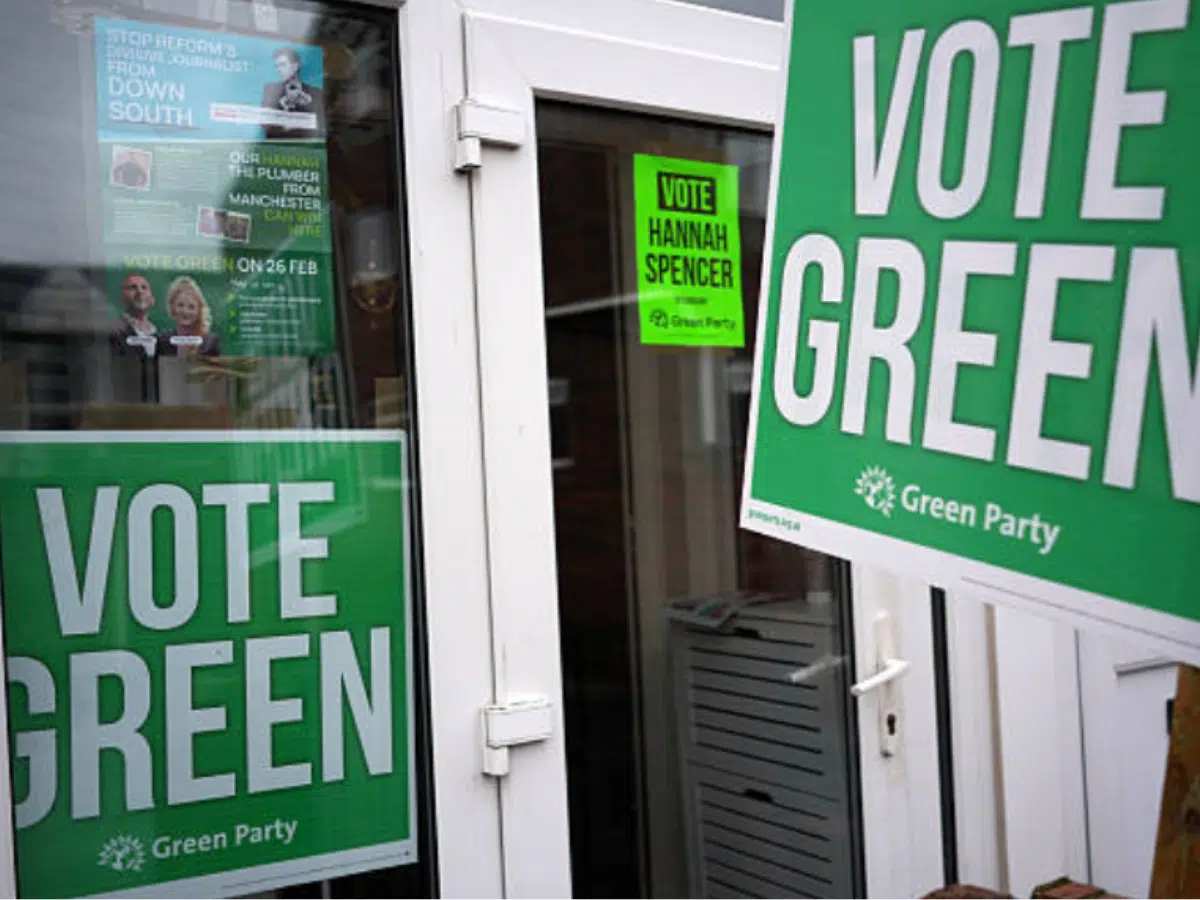
Greens Criticise Labour Over Disputed By Election Poll

Published

on

The Labour Facebook ad

Labour has been criticised by the Green Party for using an opinion poll dismissed as “bullshit” by Alastair Campbell in a by-election advert.

The party posted the results of the Find Out Now survey of just 51 people in Gorton and Denton.

Voters in the constituency will go to the polls on February 26 in what is a three-way fight between Labour, the Greens and Reform.

According to the poll, Reform are on 36%, Labour are on 33% and the Greens are on 21%.

Advertisement

The Labour ad says: “This by-election is a fight between Labour and Reform. The Greens can’t win here.”

The Labour Facebook ad

In a statement following criticism of the poll, Find Out Now said: “We apologise for any confusion or misinterpretation caused by the way these results were reported, and for any impression that the data was more precise than it could be, given the small sample size.

“Although the poll suggests the race is likely to be close, it should not be analysed beyond that (for example, as indicating that one party is in the lead).”

In response, former Labour spin doctor Campbell said: “Any media who covered this BS (bullshit) pro-Farridge poll should likewise apologise and stop using BS polls as part of their coverage.”

A Green Party source said: “Labour is using a poll in its adverts that even Alastair Campbell says is bullshit.

Advertisement

“All of the available data points strongly to the Greens being the only one’s that can stop Reform, a leaked internal poll from Reform, our own doorstep data and the bookies, are all pointing in one clear direction. Labour’s vote has collapsed.”

A Labour source said: “There’s a clear choice facing voters in Gorton and Denton on Thursday February 26. A choice between the toxic politics of Reform’s Tommy Robinson-backed candidate and Labour’s Angeliki Stogia who will bring our communities together and tackle the cost of living.

“A vote for the Green Party just risks letting Reform in through the back door.”

Advertisement

Source link

Continue Reading

Politics

The Health Dangers Of Browning Your Food

Published

on

"From a cancer-prevention perspective, grilling any animal protein can lead to the formation of carcinogens," explained Milette Siler, a registered dietitian.

The flames leapt higher as smoke billowed across the backyard. I told my father the meat was ready. “Just a few more minutes,” he said, surveying the charcoaled steaks. For him, well done meant the fire brigade was on its way.

My dad taught me to love grilling, and despite his questionable doneness preferences, I inherited his passion for it. These days, I fire up the grill a few times a week, convinced it’s one of the healthier ways to cook — it requires less oil than pan frying, uses fresh ingredients and just feels more satisfying to sizzle protein over an open flame.

Turns out I need to rethink that. Research shows that high-heat cooking creates harmful compounds linked to cancer, diabetes and accelerated aging. Everyone knows deep-frying isn’t ideal, but the concern extends to methods most people consider healthy. Grilling, roasting, broiling and even air-frying all trigger the same chemical reactions.

The Science Behind Browning

Advertisement

The golden colour and crispy texture many cooks aim for come at a cost. At temperatures above 280 degrees Fahrenheit / 137.7 degree Celsius, sugars and proteins in food react to create compounds called AGEs that build up in the body over time. “The accumulation of AGEs has been associated with aging and the development of chronic diseases such as cardiovascular disease and Type 2 diabetes,” explained Sharon Collison, a registered dietitian at the University of Delaware.

"From a cancer-prevention perspective, grilling any animal protein can lead to the formation of carcinogens," explained Milette Siler, a registered dietitian.

Joey Ingelhart via Getty Images

“From a cancer-prevention perspective, grilling any animal protein can lead to the formation of carcinogens,” explained Milette Siler, a registered dietitian.

Any cooking method that browns food triggers this reaction. If it’s golden and crispy, AGEs have formed. That includes the caramelised crust on roasted vegetables, the char on grilled chicken and the crispy coating from an air-fryer.

Grilling adds a second risk. When fat drips onto flames or hot coals, the burning fat creates smoke that carries carcinogens called PAHs back onto the food. “Grilling can increase total carcinogenic risk from PAHs by three- to fivefold,” said Dr. Michael Ednie, a physician and registered dietitian at Bespoke Concierge MD. Fattier cuts may add more taste but result in more dripping and greater exposure.

Even air fryers, considered a healthy alternative, have some risks. They avoid the fat-dripping problem, so they don’t create PAHs. But browning still occurs, and browning means AGEs. “Unfortunately, air-frying and grilling meats produces AGEs,” Collison said. So while air fryers are better than deep-frying and avoid grilling’s smoke problem, they’re not risk-free.

Advertisement

What You’re Cooking Matters, Too

The cooking method is only part of the equation. What you’re cooking amplifies the risk. “From a cancer-prevention perspective, grilling any animal protein can lead to the formation of carcinogens,” explained Milette Siler, a registered dietitian who co-founded the culinary medicine program at UT Southwestern Medical Center. “Processed meats are the worst, followed by red meat.” Chicken and fish are safer choices, though not entirely risk-free.

Even vegetables produce these compounds when roasted at high temperatures. “High-heat roasted vegetables produce more of these compounds than when vegetables are cooked in water or with acids added,” Collison said. But meats produce far higher levels at the same temperatures, making vegetables the safer choice when you want that roasted flavor.

Vegetables don't produce as many AGEs as fatty meats, since they don't drip fat onto the cooking surface.

istetiana via Getty Images

Vegetables don’t produce as many AGEs as fatty meats, since they don’t drip fat onto the cooking surface.

The frequency matters, too. Cooking meat at high temperatures every other day was linked to a 28% higher risk of Type 2 diabetes compared to once a week. That’s the difference between firing up the grill as a weeknight default versus saving it for weekends. “How often we consume grilled food does matter, but every person needs to look at their overall diet quality,” Siler said.

Advertisement

Your Diet Alone Doesn’t Determine Your Cancer Risk

For anyone who loves weekend barbecues, the convenience of air-frying or the caramelised edges of a roasted dinner, this research might have you worried. But before you rethink your entire cooking routine, the experts offer some reassurance.

“The research does not show that grilling occasionally, or even regularly, automatically leads to cancer,” Siler said. “Cancer risk isn’t driven by one meal or one method. It’s shaped by what you do most days, over many years.”

Risk increases when multiple factors combine: eating red or processed meat frequently, charring food until it blackens, relying on processed foods, which manufacturers cook at high heat to extend shelf life. Any single habit is manageable. It’s stacking all of them that compounds the problem.

Advertisement

Small Changes To Your Cooking Routine Can Lower Your Risk

Simple adjustments to your cooking routine reduce exposure significantly. An easy solution is to use acidic marinades. “Marinating meats in vinegar, lemon juice, wine or yogurt before cooking at high temperatures can significantly reduce production of AGEs,” Collison said. Fifteen minutes is enough. One warning, though. Sugar feeds the reaction. “Marinades with high sugar content, such as barbecue sauce, can increase production of AGEs,” she added.

Time on the heat matters, too. “Long cooking times and heavy charring increase exposure,” Siler said. Cutting meat into smaller pieces speeds up cooking and reduces compound formation. Another option that may surprise you: Start cooking in the microwave. A few minutes of precooking means less time over the flames and fewer harmful compounds formed.

Gentler methods avoid the problem entirely by staying below that 280 F /137.7 C-degree threshold. “Alternative cooking methods such as braising, steaming, poaching, stewing and microwaving minimise production of carcinogenic chemicals,” Ednie advises. Slow cooking and sous vide also qualify. Microwaving may seem out of place alongside slow-cooking methods like braising and stewing, but it keeps temperatures low, and there’s no flame for fat to drip onto.

Advertisement

If you love using your grill or air fryer, these steps help reduce your risk.

  • Choose vegetables, fish and chicken over red meat
  • Skip processed meats entirely
  • Pick lean beef cuts (look for “round,” “loin” or “flank”)
  • Marinate in acidic liquids for at least 15 minutes
  • Avoid sugar-based sauces
  • Use moderate heat and flip often
  • Trim visible fat before cooking
  • Scrape off char before eating

My father was right about one thing: Cooking over fire makes food taste better. I’m keeping the grill, just using it smarter. Chicken and fish have replaced hot dogs and burgers, and every piece of meat gets an acidic marinade. I always take the meat off when it’s medium, not when it looks like it survived a house fire. Sorry, Dad.

“The goal isn’t perfection,” Siler said. “It’s stacking the odds in your favour by choosing better foods and better methods most of the time.”

Source link

Advertisement
Continue Reading

Politics

Palantir / Mandelson softball session on the BBC

Published

on

Palantir / Mandelson softball session on the BBC

The recent Epstein Files revealed a lot of disturbing new information. This included fresh revelations about the close relationship between Jeffrey Epstein and Palantir boss Peter Thiel. Combined with other factors, this has got many people questioning why our current Labour government has given Palantir so many contracts. It’s especially alarming, because Plantir is deeply enmeshed with the US and Israeli spy networks.

It’s not just the government who have given Palantir an easy ride, either, as journalist Carole Cadwalladr pointed out:

Palantir and Mandelson

Louis Mosley is the head of Palantir in the UK & Europe. He’s also the grandson of the notorious British fascist, Oswald Mosely.

Louis Mosley spoke favourably of “the return of Donald Trump” in February 2025. In the same speech, he spoke of the need for “free speech”. Mosley also said:

In the US, we are seeing innovation and reform that will change lives in that country for the better.

There’s no reason we cannot have the same in Britain – and elsewhere across Europe.

Since Mosley said this, the Trump administration has launched a crackdown on free speech and civil liberties which are unprecedented in American history. ICE are instrumental to Trump’s plan, with Palantir serving as a key partner to the enforcement agency.

Advertisement

As Cadwalladr rightly points out, the BBC had no business treating Mosely as if he’s just some pundit. He and his company have skin in the game. And if British politics goes the way they want it to, these people stand to make billions.

On 4 February, Ed Sykes wrote for the Canary:

Palantir has latched onto the US imperial project and is now a prominent part of it. By extension, this means entering junior partners in the UK and Israel too. And apparent intelligence assets like Epstein helped to ensure companies like Palantir become part of this system of racist brutality and dominance.

The other factor to consider is the link between Peter Mandelson (another Epstein associate) and Palantir:

The seedy connections between Labour and Palantir go much deeper too:

Thiel and Epstein

As noted, the latest Epstein Files have exposed how close Palantir founder Peter Thiel was with the dead paedophile:

Do we really want someone who wishes to destabilise the world to be in charge of our NHS data? We don’t know if Thiel knows this, but we did the whole ‘destabilise the Middle East’ thing already, and it led to death, mayhem, and blowback.

Epstein and Thiel also discussed destabilising Europe, which is a little closer to home:

There’s also this:

And Thiel isn’t the only billionaire who was in bed with the degenerate Epstein:

Get them out

Zack Polanski is among those calling for the government to cut ties with Palantir:

As is Labour’s Ian Byrne:

At this point, it’s unclear what the argument is for maintaining a relationship with Palantir.

Featured image via Gage Skidmore (Flickr) / Alexander Svensson (Wikimedia)

Advertisement

Source link

Advertisement
Continue Reading

Trending

Copyright © 2025