

Politics
Labour ‘s answer to the energy crisis? Corporate welfare


Labour’s answer to the energy crisis, spurred on by the war on Iran, is to subsidise the profits of fossil fuel companies. According to the Times, only households on benefits will receive the money that helps prop up energy companies.
Instead, Labour should bring energy into public ownership, while transitioning to a Green New Deal to address not only the climate crisis, but volatile international markets and sky high costs, in one fell swoop.
Corporate stranglehold
While energy is privatised, companies have a stranglehold on individuals in our society. The free market is supposed to be about an individual choice, but everyone needs energy so there is no choice but to purchase it from a provider. Households and businesses’ costs may deviate across companies, but publicly owned energy could provide the absolute cheapest through wholesaling renewables for the entire country.
Labour has so far announced a £53 million support package for “vulnerable” households who use heated oil.
Labour — welfare for large companies
Again, the market is supposed to be ‘free’, yet corporations receive huge benefits from the government. 22% of The Union of Shop, Distributive and Allied Workers receive universal credit (UC). That means the public purse is significantly subsidising the profits of companies like Tesco, which makes £6,150 of profit per employee.
Direct subsidies is another way the public purse delivers corporate welfare. The government is providing £2.5bn to the steel industry this parliament, without taking a stake in steel companies that would provide public monetary benefit.
This is a continuation of the Conservative agenda. In the 2023/24 year, some of the government’s subsidies to corporations amounted to a whopping £32bn. The year before, they were £53bn because gas inflation not only increased bills but also the government increased corporate handouts to profiteering fossil fuel companies. And now Starmer has announced a further £22bn bung to the fossil fuel sector for carbon capture projects that don’t work.
Government intervention appears to be focused on benefiting corporations, rather than the whole of society.
Featured image via the Canary

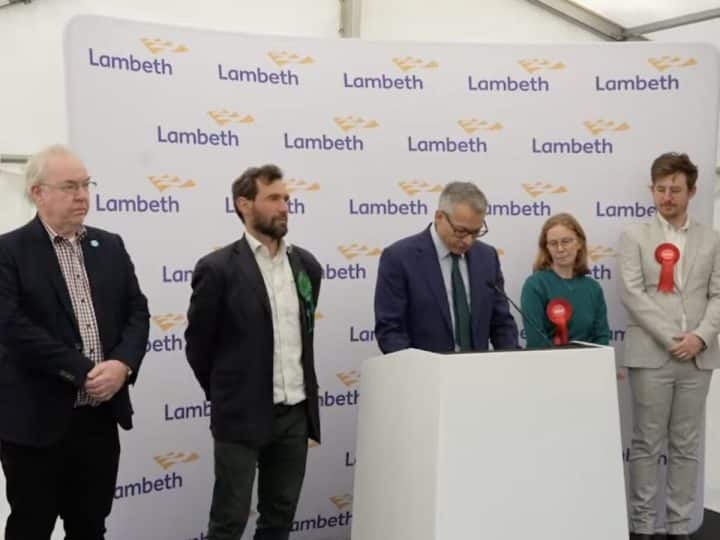

Labour has lost control of Lambeth council for the first time in 20 years.
The Greens are now the largest party; however, no party gained overall control of the council.
Lambeth goes from Labour -> No Overall Control (NOC).
Check out all of the election results by ward with our ward and council-level maps over at: https://t.co/QXT1tzrRXB pic.twitter.com/e8s1KiHxeW
— Election Maps UK (@ElectionMapsUK) May 9, 2026
According to the BBC:
Labour has controlled Lambeth since 2006. After the 2022 elections, Labour had 54 seats with the Greens and Lib Dems both on four.
The Green Party gained 27 seats, taking their new total to 29. This is up from four at the last election.
The Green Party go from 2 seats to 28 in Lambeth – and Labour lose control!
This is happening in our cities and in many of our rural targets too.
People voting Green Party councillors to help end Rip Off Britain!https://t.co/0qbagSvIYp https://t.co/rymnuWMQnX pic.twitter.com/yyxpggAW2s
— Zack Polanski (@ZackPolanski) May 9, 2026
Hilariously, Labour lost 32 seats, leaving the party with only 26.
The Liberal Democrats won eight seats.
This is yet another example of the Labour vote collapsing in former strongholds.
The Labour leader of the council, Claire Holland, managed to keep her seat, but so many others didn’t.
It’s a shame the leader of the council managed to keep her seat but so many other cllrs didn’t.
I’ve written in about countless residents over the years in lambeth and she’d never even acknowledge the emails let alone respond

Welp.
— KWAJO- Social Issues Campaigner (@Kwajotweneboa) May 9, 2026
Labour together?
Lambeth is also where Morgan McSweeney, enemy of the Canary and Starmer’s former right-hand man, helped to run a successful Labour campaign to retake it in 2006.
McSweeney resigned as Starmer’s chief of staff in February over the shocking appointment of Lord Mandelson as US ambassador.
Similarly, it was also the training ground for now-MP Steve Reed. He was the leader of Lambeth Borough Council from 2006 to 2012. He is now the MP for Streatham and Croydon North.
Lambeth council was a training ground for both Morgcn McSweeney and Steve Reed. Two of the architects of Labour Together. https://t.co/jaBm6hEWux
— Samantha Asumadu (@SamanthaAsumadu) May 9, 2026
Both were architects of Labour Together — which seems to be falling apart.
However, this makes the loss even more symbolic and will hopefully hit Starmer right where it hurts.
Feature image via Lambeth Council/YouTube
By HG
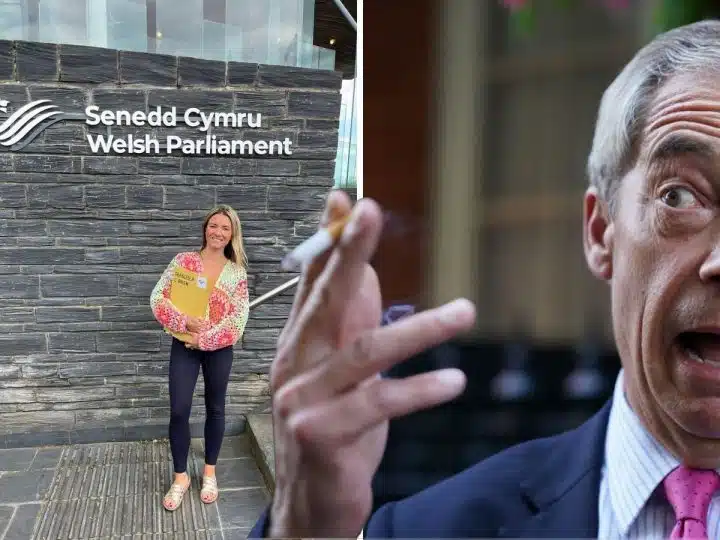

Reform UK councillor Francesca O’Brien posted that she’s completed her Senedd member induction. The fact that she’s taken her seat as a Reform politician shows her party really doesn’t care what its candidates say about people.
Reform UK’s new MS, the same Francesca O’Brien who defected to Reform UK from the Conservatives saying it was a ‘gamble’ (because it’s not about principles).
Oh, and she once said people on benefits should be “put down”. https://t.co/qXACxRZban
— Reform Party UK Exposed
 (@reformexposed) May 10, 2026
Reform councillors treat people as less than human
O’Brien is far from the only Reform member the party has turned a blind eye to, as the Canary reported:
Ben Rowe posted Islamophobic, antisemitic and racist memes. Reform said it was 'investigating', so how come he's now a sitting councillor?
Via @willem_moore_uk https://t.co/xKyGhLh6TI
— Canary (@TheCanaryUK) May 10, 2026
Reformed Tories
As Reform Exposed highlighted, O’Brien began her political career as a Tory. She unsuccessfully ran to be the MP for Gower in 2019, before successfully becoming a councillor for Mumbles in 2022.
O’Brien would later switch to Reform in 2025, telling Wales Online:
For me it’s very much a gamble. Reform are very good at engaging with people across all ages, particularly the younger generation and I think it’s really important to get younger people into politics.
I’ve never seen a party that engages like this across generations and wherever you sit demographically. I want to be part of that, get involved and help fine-tune some of the policies.
This is how Reform Exposed interpreted what O’Brien said:
Reform UK’s new Councillor Francesca O'Brien has described her defection as "a gamble".
It’s just a game to them, she doesn’t have principles, just a will to power, or else it wouldn’t be a gamble, it would be a principled stand…https://t.co/CSQWFn5pBh
— Reform Party UK Exposed
(@reformexposed) August 19, 2025
At the same time, Wales Online reported:
And although the mother-of-two said she lived and breathed being a councillor in Mumbles, she said “speaking off the top of my head” she would be keen to stand at next year’s Senedd elections if the opportunity arose.
This year O’Brien did indeed run to join the Senedd (Welsh parliament), and she was successful. So why is this a problem?
It’s a problem because she’s previously made comments like the following:
Benefit Street..anyone else watching this?? Wow, these people are unreal!!!”
She also said:
My blood is boiling, these people need putting down.
Generally, you don’t want people in positions of power to hold opinions which can accurately be described as ‘Nazi-like’.
Benefits Street
If you’re unfamiliar with Benefits Street, this is what Canary founder, Kerry-Anne Mendoza, wrote about the show:
One of the most insidious developments during the prime ministership of David Cameron was the rise of poverty porn – television shows like Benefits Street, which turned poverty and destitution into cheap thrill entertainment.
She added:
Benefits Street was just one in a long and sad list of poverty-porn programming aired during Cameron’s tenure. Channel 4 also brought us Skint, Benefit Busters, How to Get a Council House, and Benefits Britain. The BBC even chipped in with We All Pay Your Benefits.
This list is not even exhaustive. Just some of the lowlights, if you will.
All of these shows, intentionally or otherwise, feed into a myth that the UK is some sort of paradise for benefit cheats.
It’s a tried and tested technique to focus on the small number of ‘badly behaving’ people in a minority group to suggest that the entire group behaves like that. To their eternal shame, Channel 4 and the BBC functioned as the propaganda wing of David Cameron’s austerity-pushing coalition government on this one.
In the current day, the media and political spheres spend more energy demonising migrants than poor people (which isn’t to say they don’t demonise people on benefits). The reason for this is obvious.
Following years of austerity, more people than ever are claiming in-work benefits. As such, it’s harder to form a majority consensus around the idea that all benefit claimants are evil.
The Conservatives, Labour, and Reform do still demonise claimants, of course, but if you look at the polling, none of them are majority parties.
{ Seats } Poll: @LordAshcroft, 23-27 Apr (+/- vs 30 Mar) pic.twitter.com/QjevEqb8SJ
— Stats for Lefties
 POLL | Reform lead by 1pt
 Ref: 21% (-)
 Con: 20% (-1)
 Grn: 20% (-1)
 Lab: 18% (+1)
 Lib: 11% (+2)
Ref: 170 Con: 161 Grn: 109 Lib: 73 Lab: 52
Lib: 11% (+2)
Ref: 170 Con: 161 Grn: 109 Lib: 73 Lab: 52 SNP: 48

 (@LeftieStats) May 3, 2026
Myth making
Speaking more on the myth of the greedy benefit claimant, Mendoza wrote:
In reality, according to the government’s own figures, benefit fraud amounts to just 0.7% of all claims. The total cost of benefit fraud is £1.2bn a year – this is less than half the annual cost to the Department for Work and Pensions of administrative errors.
In short, the government spends twice as much money fixing typos than it does on fraudulent benefit claims. But you wouldn’t know that from watching these shows. Far from it. You would be left with the impression that Britain was facing a benefit fraud epidemic.
To be entirely fair, a lot of people fell for the anti-benefits propaganda in the 2010s. The problem is we know O’Brien is still a believer because she’s joined Reform — a party that attempts to draw a line between ‘good workers’ and ‘bad claimants’.
My party is the party of alarm clock Britain.
— Nigel Farage MP (@Nigel_Farage) November 3, 2025
In line with the shifts we talk about, Reform now puts more emphasis on the people who aren’t on benefits (the ‘alarm clock’ Britons) rather than the people who are. The point is the same, though. The party wants you to think some people are ‘strivers’ and others are ‘scroungers’.
This is all very ironic when you consider that Farage has barely bothered to show up to do his job since he became an MP:
'Skive Minister' Nigel Farage is getting away with the equivalent of only working 7 days a month while earning millions from side hustles
By @willem_moore_uk https://t.co/CTE8RxUIGK
— Canary (@TheCanaryUK) May 7, 2026
Perhaps when O’Brien reads about Farage’s attendance record she’ll also call for the UK to put him down?
Featured image via the Canary
By Willem Moore

Keir Starmer’s attempt to save his premiership with a make-or-break speech went down like a lead balloon on Monday.
He pledged to rebuild the UK’s ties with the EU after Brexit and insisted he would put the country “at the heart of Europe”.
The PM also confirmed plans to nationalise British Steel.
Amid mounting speculation that he will face an imminent leadership challenge, Starmer said: “I know people are frustrated by the state of Britain, frustrated by politics, and some people, frustrated by me.
“I know I have my doubters and I know I need to prove them wrong, and I will.”
However, the initial reaction to the speech was overwhelmingly negative, with one former minister telling HuffPost UK it was “utterly inadequate”.
Other responses on social media were similarly unforgiving.
Subscribe to Commons People, the podcast that makes politics easy. Every week, Kevin Schofield and Kate Nicholson unpack the week’s biggest stories to keep you informed. Join us for straightforward analysis of what’s going on at Westminster.

May’s a bit of a funny month. Though it’s definitely more bountiful than austere winter, there’s a gap: wild garlic flowers, bluebells, and daffodils start to die down, while the likes of wisteria and roses are preparing their earliest blooms.
That means your garden might feel strangely low on flowers in an otherwise-bustling month. The phenomenon is sometimes referred to as the “May flower gap,” though it can extend into June, too.
But according to gardening expert Monty Don, such missed stops are avoidable. The “Chelsea chop”, the green-fingered guru explained, can help to give you a glorious garden long into the summer.
What is the Chelsea chop?
It’s a type of pruning designed as a “way of extending the flowering season of late-flowering herbaceous perennials,” Monty Don said.
BBC Gardener’s World added that it can delay their flowering period by about four to six weeks, leaving you with riotous displays all summer.
The Chelsea chop got its name because it’s best done around the time of the iconic Chelsea Flower Show, which typically runs in the third week of May.
Which plants benefit from the Chelsea chop?
- Heleniums,
- Sedums,
- Lysimachia,
- Solidago,
- Phlox,
- Achillea,
- Penstemons,
- Campanulas,
- Asters,
- Echinacea,
- Rudbeckias,
- Penstemons.
But, the Royal Horticultural Society (RHS) said, “Many other summer- and autumn-flowering perennials can be treated similarly.”
How can I do the Chelsea chop?
It depends on how your perennials grow.
“If you have several clumps of these plants, then cut one of them about halfway up the existing growth,” Monty Don advised.
That way, half will bloom during their natural season, while the other half will be delayed. That means your flowers will be continuously present for longer.
Another option is to cut all of the plants by about a third, which suits better if they’re growing in a single, large clump.
“The result will be that the pruned section will produce side shoots bearing extra flowers which will bloom a few weeks later than the uncut growth and extend the display,” even as late as early autumn.
The RHS stated, “The degree of cutting back is specific to each species, but the closer to flowering time you prune, the greater the delay in flowering.”
Use sharp, clean secateurs for the job, and cut at a slope just above a “node” (the point out of which a leaf grows).
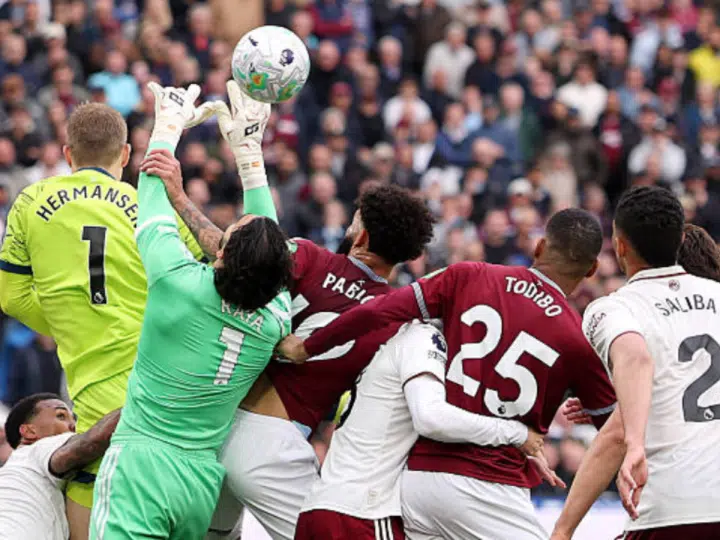

Arsenal left the London Stadium with a 1-0 win, after a real dog fight of a match. A smash and grab if you like, but also a controversial decision that will dominate the week. Leandro Trossard’s 83rd-minute finish proved decisive, but the real drama arrived in stoppage time when Callum Wilson’s late leveller was ruled out after a VAR review for a foul on goalkeeper David Raya.
Arsenal: cometh the hour, cometh the man
Trossard’s strike came after a period of pressure and a string of near-misses from Arsenal. The goal arrived from a tidy move involving Martin Ødegaard, who created the chance for Trossard to curl the ball in at the near post and send the travelling fans into life. David Raya had earlier produced a couple of crucial saves to keep Arsenal level before the breakthrough.
Arsenal’s lead in the title race widened as a result. Had Wilson’s stoppage-time finish stood, the gap at the top would have been cut and Manchester City could have moved back above Arsenal with a game in hand. Instead, the Gunners left with a five-point cushion and two matches remaining.
VAR in the spotlight
The disallowed goal unfolded like this, a West Ham corner was spilled by Raya, Wilson reacted quickest and bundled the ball home, but VAR intervened, the video assistant flagged contact, Pablo’s arm across Raya’s neck as the goalkeeper attempted to claim the ball, and referee Chris Kavanagh was sent to the monitor. After watching multiple replays, which for the fans in attendance felt like an age, the goal was chalked off. The whole process, from ball over the line to final decision, stretched over four minutes, unusually long for a decision of this nature.
That sequence will be dissected from every angle, supporters and pundits split along familiar lines, some saw a clear foul on the keeper, others argued the contact was part of normal aerial tussle. What’s indisputable is the scale of the moment, a decision that effectively shaped the title race and left West Ham still in relegation trouble.
Tactical snapshot
Mikel Arteta’s side started strongly but were unsettled by a series of substitutions that disrupted their rhythm. Ben White’s injury forced reshuffles, and Arteta’s mid-game changes, including bringing on Martin Zubimendi and later reversing that move, made for a stop-start afternoon. Still, Arsenal created the better chances and relied on Raya’s shot-stopping and Trossard’s composure to secure three points.
Nuno Espirito Santo’s team grew into the match and had their moments, notably when Mateus Fernandes broke through only to be denied by Raya. The late corner that produced Wilson’s disallowed goal showed West Ham’s persistence, but the result leaves them perilously close to the drop zone.
Fallout
Arsenal now sit with a comfortable lead and two fixtures left to close out a first Premier League title in 22 years. The margin is not yet decisive, but momentum and the psychological lift of surviving a late scare matter. West Ham, meanwhile, must regroup quickly; their survival hopes hinge on points that have to come fast.
If the VAR decision is the lasting image from this match, it is because it encapsulates modern football’s contradictions: razor-sharp technology applied to human moments, and the uneasy mix of relief and resentment that follows. For Arsenal, huge relief, but for West Ham, raw heartbreak. For everyone else, another chapter in the VAR story.
This could become the biggest VAR decision in Premier League history. With 60,000 people inside the stadium, and millions around the world, all holding their breath at once, truly extraordinary scenes.
Featured image via the Canary
By Faz Ali
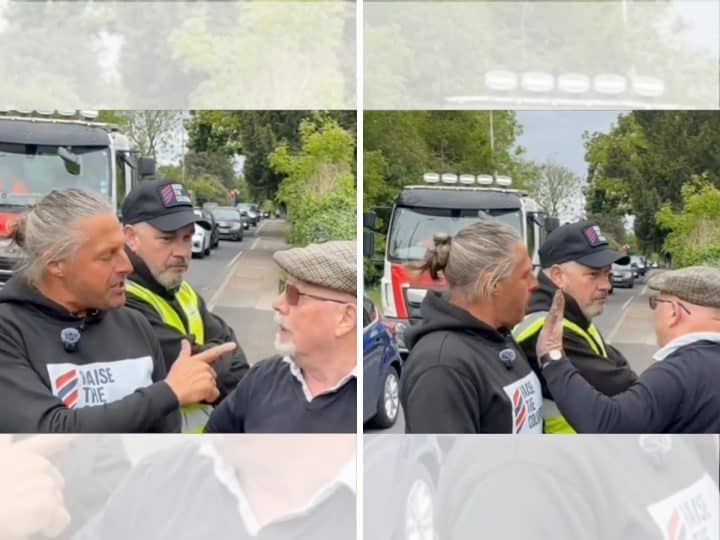

While it’s died down a bit, a wave of ‘flag mania’ struck Great Britain in 2025. The people responsible for it operated under the name ‘Raise the Colours’, with the group being made up of notorious racists from Britain’s far right.
One of the infamous shitbags in question is Ryan Bridge, who you can see here bullying an older man.
Ryan Bridge from Raise The Colours and his goons bullied an elderly man. pic.twitter.com/FoA42dNEPZ
— Mukhtar (@I_amMukhtar) May 10, 2026
Full respect to him, the older man refused to back down despite Bridge having a team of goons with him.
Flag group members are disgusting
This is what Hope not Hate wrote about Operation Raise the Colours:
HOPE not hate can reveal that the co-founder and organiser of the group is longtime Stephen Lennon (AKA Tommy Robinson) ally Andrew Currien (AKA Andy Saxon). Formerly a key member of the English Defence League’s leadership bodyguard team, and now running security for the far-right party Britain First, Currien has previously been jailed for his part in a racist death. He was one of six men convicted in 2009 after a 59-year-old man was crushed to death by a car following a violent brawl.
Bridge is another key member of the operation and he’s also linked to a £40 million fraud scandal, the Mirror reported in 2018.
Ryan Bridge, the guy behind the Raise the Colours, faces eight years in prison if convicted. pic.twitter.com/mRmu8HwCmF
— Mukhtar (@I_amMukhtar) November 30, 2025
Hope not Hate additionally reported:
Across the country, many of the small groups that have come together to raise the flags are being organised by well-known far-right extremists.
The group added:
Similarly, the far-right group Britain First claims to have provided many of the flags in the North West. “Britain First has, so far, donated 75% of its flag stock to local teams in Manchester and the West Midlands for ‘Operation Raise The Colours’,” tweeted leader Paul Golding.
A Bridge too far
The video at the top begins with Bridge shouting:
Do you understand?
The man, who seems to be outside his own home, answers:
No, I don’t understand.
Bridge yells in response:
Because you’re thick, that’s why.
He then says:
So let me educate you, old man.
In response, the older man says:
No, you won’t educate me.
He then puts a hand up to Bridge’s face before holding his arms up like a gorilla in front of one of the goons. After this, he pokes then goon in the chest and gives him a telling off.
While this is going on, Bridge is repeating, “Listen, listen, listen”, over and over, becoming increasingly whiny as he does so. The older man doesn’t listen, though and walks off down the driveway.
In the end, the only colours raised were the flushes of red in Bridge’s cheeks.
Intimidation tactics
It’s unclear what Bridge wanted to educate the man on, but we can guess. Given that Bridge was wearing his Raise the Colours uniform, we can assume he was out and about shagging flags. Because he doesn’t have much in the way of common sense, he didn’t realise it’s a bad look to be shouting down local residents on the street.
Accordingly, we suggest that Bridge abandons the flag stuff and gets back to his day job (if he gets off with the alleged fraud, obviously).
Featured image via X/ Mukhtar
By Willem Moore

Imagine a photograph of your child taken on sports day. They’re laughing, probably slightly out of breath, wearing their school kit.
It’s the kind of image that ends up in the school newsletter, on the website, shared with pride by staff who want to show what school life looks like.
Now imagine that same photograph being found by a criminal who lifts the face of the child in seconds and, using freely available AI tools, turns it into something so harmful I am not going to describe it in detail here.
That image is then sent to the school with a demand: pay up, or it goes online.
This is not a hypothetical. The scale of child abuse imagery has grown from fewer than 10,000 images 25 years ago, to tens of millions today.
This has happened to schools in the UK, and most schools have no idea it is possible.
I know that’s uncomfortable to read. Though, as the mother of two teenage daughters, I strongly believe that all parents deserve to know the internet where their children’s photographs are being uploaded is not the same internet that schools developed their safeguarding policies for.
I didn’t come to this issue as a parent whose child was affected. I came to it as someone who has run branding agencies for the last two decades, sitting in a meeting with a school I had been working with on a rebrand – a school I knew well, whose team I respected.
It was during that work it came to light that a number of the school’s pupil photographs had been stolen, turned into deepfake abuse material, and that the school had been sent a ransom demand.
I sat there and listened to what had happened to those children. And my first thought – before anything to do with technology, platforms, or solutions – was simple: I never want this to happen to my daughters.

I have spent my entire career working in branding, working with businesses, charities and organisations, of all sizes, to tell their stories through imagery. I understand better than most what those photographs mean and why they matter, not least for schools.
The school newsletter, sports day, the nativity play – these are not trivial things, they are how schools communicate joy, build community and celebrate the children in their care.
Schools should not have to stop celebrating their pupils or sharing moments with their communities, but they do need tools designed for the internet those images now live in.
The consent form most parents sign at the start of each school year was written for a different world. It was designed to address whether your child’s image could be used – shared in a newsletter, published on a website, posted on social media.
It was not written to address what happens once that image is publicly accessible online. Because when those consent forms were first written, what is now possible simply wasn’t.
AI tools that can take a child’s face from a school website and generate abusive content from it are not hypothetical. They are freely available, require no technical expertise, and the safeguarding gap they have created is one that almost no school in the country has a policy to address.
New research that we commissioned found that while 85% of UK teachers are aware that AI criminals are targeting school photographs, fewer than one in three have any AI or deepfake-specific policies in place, and nearly a quarter said their school has already been targeted.
This isn’t about stopping schools from sharing images. It’s about understanding what those images are exposed to once they’re online.
Before any parents sign that consent form, they should be asking their child’s school so many more questions – from what happens to images once they are online; whether their photography policy has been updated to reflect the risks of generative AI; to what protection they have in place for pupil images shared on public-facing channels.
These are not unreasonable questions and are simply the ones that every parent of a school-age child should now be asking, and that every school should be ready to answer.
But let’s be clear, schools are not to blame for this.
They shared those photographs in good faith, as they always have. It’s just the world those images are being shared into has changed, and the frameworks most schools rely on have not yet caught up.
Consent forms, GDPR policies, online safety training: none of these protect a child from a criminal who takes their image without asking. AI criminals don’t need permission. They take images directly from school websites and social media without ever making contact.
What’s needed now isn’t less sharing, but safer sharing. That’s the problem I set out to solve when I built Aidos – a safeguarding platform that makes every pupil in a school photograph permanently unidentifiable before the image is shared online.
Not blurring, not pixelation, but a full replacement of every child’s face with a realistic AI-generated substitute, so that the image can never be traced back to a real child.
Schools can keep sharing everything they have always shared. The difference is that those images can no longer be used to harm the children within them.
Protecting children’s digital identities is becoming one of the defining safeguarding challenges of the AI era. Schools shouldn’t have to face it alone, but as parents we have a role too and it starts with asking the question.
So, before you sign that consent form this September, ask your school what they have in place. They may not yet have the answer, but the fact that you’re asking means they’ll need to find one.
Carole Osborne is the founder and CEO of Aidos, an AI safeguarding platform that makes pupils in school photographs permanently unidentifiable before they are shared online.
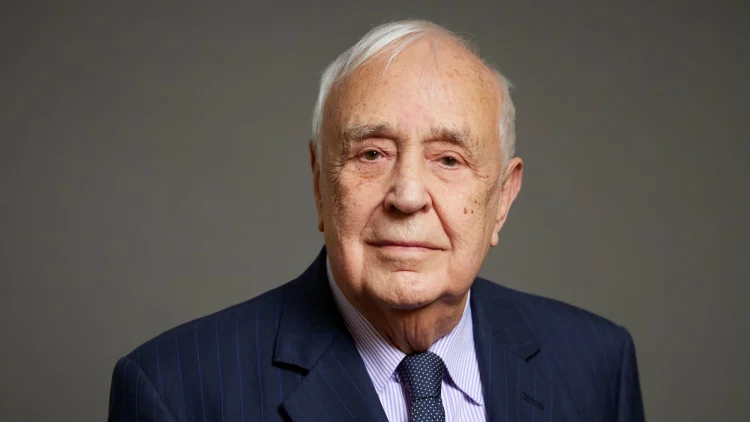
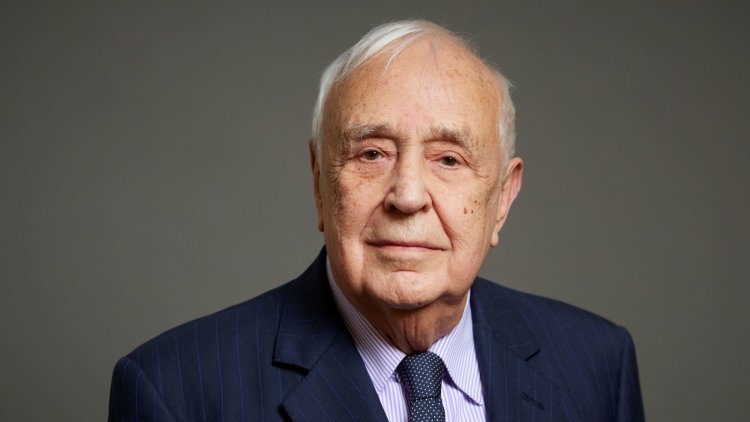
Lord Skidelsky of Tilton: 25 April 1939 – 15 April 2026 | Image courtesy of UK Parliament

4 min read
A towering economic historian with a nomadic political career, and author of acclaimed studies of Keynes, what set Robert Skidelsky apart was not just his sense of mischief or his clarity of thought but his insistence on an ethical approach to economics
Robert Skidelsky who died on 15 April 2026 will be remembered as a towering economic historian, a public intellectual, and a politician who was never afraid to speak or to change his mind.
In his political career he was something of a nomad, apparently uncomfortable with the constraints of politics. He left Labour in 1981 to become a founding member of the SDP. Appointed a life peer in 1991, he took the Conservative whip from 1992, briefly becoming a shadow culture, then Treasury, minister. In 2001 he crossed the floor to become a formidable crossbench peer from where he would interrogate ministers for their dependence on Treasury orthodoxy – whether applied to budgets, or the fallacies of austerity. In recent years he became a more controversial figure for his views on the Russia-Ukraine conflict.
Robert was born in Harbin, China, shortly before the start of the Second World War, the son of wealthy British citizens of Russian ancestry. Interned by the Japanese but released during a prisoner exchange, the family came to Britain where he was educated. (Brighton College and then Jesus College, Oxford.) He remained engaged in the teaching and learning of history and economics and related controversies all his life, including a memorable spat with the revised GCSE history syllabus in 1990. In 2006 he retired from the University of Warwick after 28 years as professor, first of international studies and then of political economy.
His intellectual life was much more consistent than his political journey and more celebrated. His magisterial biography of John Maynard Keynes, without doubt one of the greatest biographies of the last century, was originally intended for publication in 1972 as a modest volume. The first volume was published in 1983. The last of the trilogy was published – to enormous public acclaim – in 2000. It was described by then-chancellor Gordon Brown, himself a man of ideas, as “masterful”.
Most biographers grow to loath their subject. Even the keenest biographers draw the line at moving in with them. Robert revelled in it. He, Augusta, his beloved wife of over 55 years, and their three children, lived for many years In Tilton, where Keynes himself had lived from 1925-46, a stone’s throw from the Bells at Charleston Farmhouse where, in 1919, Keynes had written much of The Economic Consequences of the Peace.
His intellectual life was much more consistent than his political journey and more celebrated
Even fewer biographers go on to apply their subject’s special subject to solve the problems of a contemporary world. Robert did. He re-introduced Keynes to a new generation facing a global economic challenge in 2008 and showed how when financial crises occur, Keynesian economics, as now prime minister Gordon Brown was to prove, would be critical to restoring economic stability in the place of free market chaos.
Robert drew all the lessons from this. His brilliant analysis of the credit crunch in Keynes: The Return of the Master (2009) was described as “righteous in [its] thunder”.
Robert was no abstract academic. What set him apart was not just clarity of thought and language (woe betide the sloppy generalisation or the misplaced allusion) and his sense of mischief, but also his insistence on the ethical foundations of economics and its human impacts. He was a cartographer of shifting ideas as much as a biographer. In his book How Much is Enough?,
co-authored with his son Edward in 2012 and which decried the obsession with growth, he described his own discipline – economics – as “absurdly narrow”.
His final speech in the House of Lords, on 17 March, railed against youth unemployment. Ending with a 1933 quote from Keynes, it serves as Robert’s valedictory: “‘Look after unemployment, and the budget will look after itself.’ That may be too bold for our rulers today, but I say to the Chancellor that if one wishes to gain anything then one needs to dare in order to gain something.”
Robert dared to think and dared others to do so as well. That is his legacy.
Baroness Andrews is a Labour peer


A Palestinian lawyer, who is an Israeli citizen, has been beaten to a pulp by police in Israel after they invaded his apartment in Be’er Sheva.
Saleh Khalil Faisal Na’ama‘s attack comes amid rampant and escalating Israeli violence and land theft perpetrated on Palestinians under the apartheid occupation.
Israel’s daily newspaper Haaretz got hold of body-worn camera footage from police during the illegal raid, which was triggered by a complaint from an off-duty cop about noise from the apartment.
The instigator of the complaint and two police officers forced their way into Na’ama’s apartment in southern Israel. They attacked him and his relatives, a doctor and nurse, it was reported.
Na’ama suffered serious injuries to his eyes, kidneys and nose, and underwent surgery.
Israel is a racist, terror state.

Featured image via Haaretz
By Skwawkbox
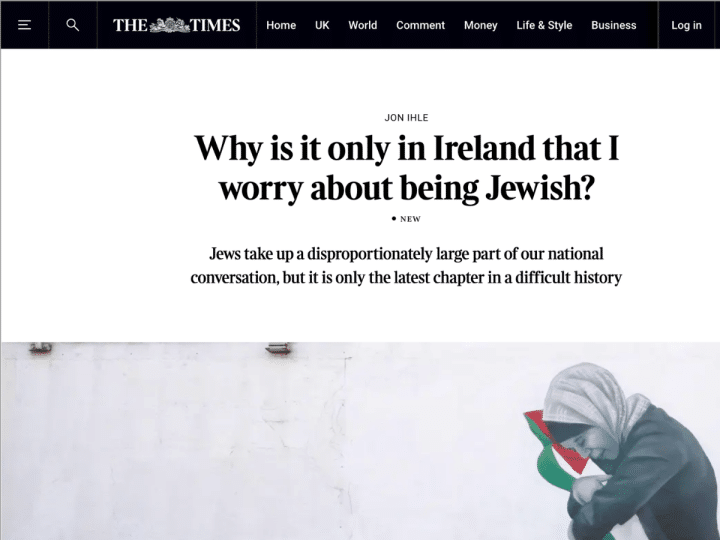

The Times has continued its decline as a place with zero editorial standards by printing evidence-free anti-Irish shite that ought to have been thrown in the bin with a giant red ‘Citations Needed’ stamped across its face. The piece by Jon Ihle claims that the country is unique among European nations in its hostility towards Jewish people. He says:
…when I travel around Europe on my Irish passport, whether to Rome, Paris, Amsterdam or Cologne — every one of which was a site, within living memory, of Jewish persecution — I don’t worry at all.
Yet at home in Dublin, I do worry.
In fact, in deeply irresponsible fashion, Ihle goes on to engender fear in Ireland’s 2,000 member Jewish community by suggesting there are antisemitic child murderers waiting to strike at any moment:
I worry every time I attend a Jewish community event that this will be the time someone gets through the many layers of security to attack us. I worry that my partner, who is publicly visible as a Holocaust education activist and a Jewish business owner, will be targeted. I worry that when I bring my six-year-old son to places where other Jews are present, I’m putting him in danger.
The writer spends the best part of a dozen or so paragraphs providing precisely zero meaningful evidence to support this suggestion. His best attempt is – and you’ll be shocked – that strong pro-Palestine sentiment in Ireland is evidence of burning hatred of Jews. He pursues the smear beloved of those seeking to crush Palestine activism by conflating:
….a context of relentless protest against Israel and a boycott movement that is trying to isolate the country from the community of nations…
with “violence against diaspora Jews…around the world”. The latter is a real issue, and should be taken seriously. Notice, however, that Ihle is talking globally. There is no indication that Jewish people are under violent threat in Ireland.
We may have said this before – protesting ‘Israel’ isn’t antisemitic
Furthermore, the idea that it is linked in any way to the overwhelmingly peaceful Palestine solidarity demonstrations that often contain large Jewish contingents is a total fiction. Ihle goes on to claim an:
…atmosphere in Ireland [that] is almost febrile at times.
This is as he adds to his above comments by mentioning the campaign to stop the Ireland vs ‘Israel’ football match, and Ireland’s withdrawal from Eurovision.
It is entirely appropriate for so-called ‘Israel’ to be relentlessly protested and ostracised – this is the only meaningful way of holding the genocidal terror project to account. Especially in the absence of continued failure to act by governments across the world, including Ireland’s own complicit Taoiseach Micheál Martin.
Yet more egregiously, The Times’ own human reality distortion field generator proceeds to claim that “Irish Jews end up as collateral damage” through actions like the call for Herzog Park to be renamed.
Ihle says:
Before he was president of Israel, Chaim Herzog was an Irish Jew…
This is indeed correct. However, and significantly more pertinently, he was also a fucking war criminal piece of shit. As pointed out by the Canary, this brutish coloniser:
…served in the Zionist Haganah paramilitary group, which carried out atrocities in the years leading up to the Nakba, and during the mass ethnic cleansing process itself. Following this, he is described as having “built and led the establishment of IDF Military intelligence”. In 1967 he became military governor of occupied East Jerusalem and the West Bank, and was integral in the ethnic cleansing of Jerusalem’s Mughrabi Quarter, calling the area a “toilet” that the Zionists “decided to remove”.
No one in Ireland is objecting in the least to the park being named after another Irish Jewish person. Jews for Palestine Ireland backed the campaign to get rid of the Herzog stain, and replace it with one of:
…many worthy names to choose from – Harry Kernoff, Estella Solomons, Con Leventhal, David Marcus, and Robert Briscoe, to name just a few options.
The Times printing racist clairvoyance masquerading as fact
Ihle continues his descent by engaging in mindreading, saying:
If “horror in Gaza” is the first thing that springs to mind when you hear “Jew in London”, you should ask yourself some hard questions about why.
You should indeed, but given this is a rather over-ambitious attempt to engage in telepathy, we don’t have any actual – here’s that word again – EVIDENCE, to suggest such thinking is occurring. Apparently Ihle the Celt Whisperer has established that it is, however. Perhaps he can get his calipers out and instruct us that it’s the unique structure of the Irish skull that allows his brain waves to penetrate our feeble defences.
Ihle proceeds, further sans citations, through more fictions about supposed widespread latent Irish antisemitism on social media. So widespread apparently that he can’t find a single example to substantiate his case.
We then get a telling paragraph on so-called ‘Israel’ and Palestine, in which Palestinians are merely the “perceived underdog”. You know the ones who have had the equivalent of over six nukes dropped on them by Zionist butchers over the past two and a half years? Yeah, our mate Jon’s still on the fence about who’s the underdog there. Meanwhile, the Zionist entity’s indisputable status as a “colonial occupier” gets scare quotes.
So yeah, several hundred words, and nothing of any substance, amounting only to an anti-Irish diatribe. File this as case #20,231,007 under “more rubbish intended to smear Palestine activism via conflation with antisemitism”.
Featured image via the Canary

SEC Order, DOJ Indictment, and Now Civil Litigation: The Documented Anatomy of the Short-and-Distort Scheme That Targeted Barry Honig

Hims & Hers Health (HIMS) Q1 Earnings Preview: What Investors Need to Know

Labour lose control of Lambeth council for first time in 20 years

Manchester United reach agreement with Casemiro over contract clause amid transfer speculation

US brings back mandatory military draft registration

Steven Gerrard disagrees with Gary Neville over ‘shock’ Chelsea and Arsenal claim | Football

RIPPLE XRP TEAMS UP WITH BLACKROCK?! TOKENIZATION BOMBSHELL #xrp #crypto #bitcoin

The most EXPENSIVE financial mistake you’re making

How a 3% Mortgage Became a Financial Prison #businesssecrets #corporatestrategy #motivation
-
 Crypto World3 days ago
HarrisX Poll Found 52% of Registered Voters Support the CLARITY Act
-

 Crypto World4 days ago
Upbit adds B3 Korean won pair as Base token gains Korea access
-

 Fashion3 days ago
Weekend Open Thread: Marianne Dress
-

 Tech7 days ago
Image AI models now drive app growth, beating chatbot upgrades
-
 NewsBeat4 days ago
NCP car park operator enters administration putting 340 UK sites at risk of closure
-

 Politics2 days ago
Politics Home Article | Starmer Enters The Danger Zone
-
 Business2 days ago
Ignore market noise, India’s long-term story intact, say D-Street bulls Ramesh Damani and Sunil Singhania
-

 Tech4 hours ago
GM Agrees To Pay $12.75 Million To Settle California Lawsuit Over Misuse Of Customers’ Driving Data
-

 Crypto World6 days ago
UAE Free Zone Deploys Blockchain IDs to Verify Registered Firms
-
 Sports7 days ago
2026 NHL playoff picks: Second-round predictions, series odds, Stanley Cup bracket
-

 Tech1 day ago
Auto Enthusiast Carves Functional Two-Stroke Engine from Solid Metal
-

 Crypto World5 days ago
BlackRock CEO Larry Fink Discusses a New Asset Class
-

 Crypto World4 days ago
Robinhood says Wall Street is building onchain
-
Entertainment6 days ago
Serena Williams hits Met Gala in metallic dress after GLP-1 reveal
-

 Tech5 days ago
Apple and Samsung are dominating smartphone sales so thoroughly that only one other company makes the top 10
-

 Entertainment7 days ago
Skai Jackson Responds To AI Baklash After Viral Snapchat Photos
-

 Politics6 days ago
Met Gala 2026: Madonna’s Dramatic Red Carpet Look Steals The Show
-

 Tech5 days ago
I tested the Xiaomi 17 Ultra’s camera and I don’t think I’ll ever go back to an iPhone
-

 Fashion5 days ago
The Best Work Pants for Women in 2026
-
 Sports7 days ago
Hearts v Rangers LIVE: Prediction, team news and line-ups as Scottish Premiership title rivals meet at Tynecastle
You must be logged in to post a comment Login