

Politics
Let’s explore why central bankers’ top reserve asset is not US debt anymore


Globally, central banks now hold 27% of their reserve assets in gold, surpassing US dollar Treasuries at 22%, and just a year ago this was 20% gold versus 25% Treasuries, according to the latest report by the European Central Bank.
In 2023, gold’s share was just 16%.
Since the Russia-Ukraine war in 2022, China has purchased over 350 tonnes of gold, followed by Poland (320 tonnes), Türkiye (220 tonnes) and India (130 tonnes), according to the ECB, as geopolitical tensions continued to drive strong central bank demand for gold.
According to the FT:
The shifting composition of reserve assets — highly liquid holdings that central banks use to support their currencies, meet international payment obligations and provide liquidity in times of financial turmoil — reflects an attempt by many countries to seek alternatives to the US dollar, the world’s de facto reserve currency.
Those efforts have accelerated since 2022, when Washington used sanctions to freeze Russia’s dollar reserves over the full-scale invasion of Ukraine
Result of increasing sanctions, i.e., weaponisation of the US dollar
Most countries are aware of how the US can and will weaponise the US dollar by using sanctions.
A Chatham House study shows the number of sanctions imposed by countries and multilateral organisations nearly doubled between 2001 and 2023 — the majority created by the US.
Sanctions criminalise or penalise anyone who uses the dollar, financial institutions with a legal presence in the US, or the international payments system (SWIFT), which is owned by a consortium of US banks.
This use of the dollar’s hegemony by imposing sanctions has triggered other nations — especially BRICS — to look for alternative currencies.
The ECB’s report noted that on 1 February 2026, Chinese President Xi Jinping called for the renminbi to become a global reserve currency, in “one of his clearest statements yet of China’s ambition to strengthen the international role of its currency.”
They also reported that activity in China’s Cross-Border Interbank Payment System (CIPS) “increased by more than one-third in the days surrounding the outbreak of the war in the Middle East.”
They noted:
Industry experts have suggested that the conflict could serve as a catalyst for an expansion of the renminbi’s role in the global oil markets. Notably, reports indicate that some ships made payments in renminbi via CIPS or in crypto-assets to transit through the Strait of Hormuz in March and April 2026
However, a bigger joint BRICS effort at dedollarisation is facing issues.
Inertia of US dollar dominance
Kristin J. Forbes, Professor of Global Economics, MIT — Sloan School of Management, said recently that the news of the death of the dollar had been “greatly exaggerated”, as the “dollar is still the most liquid market by far.”
She said at the recent World Economic Forum, a gathering of billionaires.
She said:
Look at the dollar share of FX transactions. It’s about 88% of FX transactions.
About 54% of global trade, it is still invoiced and settled in dollars, about 60% of all international loans and deposits are denominated in dollars, as is 70% of international bond issuance, according to Moneyweek.
A decolonial explanation
The US’s war on Iran, Lebanon, and Gaza can, therefore, be connected to the US’s desire for oil control, dollar seigniorage, and the preservation of the imperial rent extracted from global dollar holdings.
Kadri’s logic was also explained by no other than Jamie Dimon of JPMorgan Chase, a prominent US billionaire.
While praising Trump’s war on Iran, Dimon said,
If we’re not the preeminent military and the preeminent economy in the world in 30 years, we will not be the preeminent reserve currency. They actually go hand in hand.
Breaking point
So will the dollar remain the reserve currency despite its weaponization and ballooning US debt? Is there a breaking point?
Even Forbes conceded at the World Economic Forum that demand for dollar debt has decreased.
She said the convenience yield on US dollar debt has fallen quite a bit, and “people don’t put much value in the liquidity it provides. But financial market indicators have not seen the same move out of dollars.”
There is a disconnect between a dollar and dollar debt; she, in fact, emphasized and wonders out loud if it can hold.
Guneet Dhingra, head of U.S. rates strategy at BNP Paribas, told Reuters that 30-year yields lost their projected ceiling after crossing the 5% threshold: “Now that we have no anchor, what stops bond yields from going up in a world of high inflation, ever-rising deficits and global bond yield pressure?”
The Trump administration is set to increase the US military spending from $1 trillion annually to $1.5 trillion.
So here lies the contradiction. The US will need more debt-financed military spending to maintain dollar hegemony, but such fiscal overspending will come with higher yields on US Treasuries.
At the same time, there is no guarantee that petrodollars will be recycled into US Treasuries like they were before the war. Demand by central bankers for Treasuries might continue to fall.
We really are in an interregnum.
Featured image via SimpleImages – Getty Images
By Nandita Lal


Donald Trump is “losing support all the time” from American voters and his political allies as the Iran war drags on, according to a BBC expert.
Sarah Smith, the broadcaster’s North America correspondent, said the public’s patience was wearing thin as the cost of petrol continues to rise.
She said the Republican Party is set to pay the price at November’s midterm elections unless a peace deal can be reached soon.
The US military launched another wave of air strikes on Iranian targets overnight as it tries to stop ships using the Strait of Hormuz from being attacked.
That is despite a ceasefire being agreed between Iran and the US in April.
On Radio 4’s Today programme this morning, Smith said: “We are in a position now where the president is getting close to full scale conflict once again with Iran, when the majority of Americans are not in support of this, they never were from the beginning.
“He’s losing support all the time as prices are going up and the ever-present problem of the price of petrol back over $4 a gallon, is the tipping point at which voters do not like what is happening.
“Whilst Donald Trump’s base are still very supportive of this … that’s not what the majority of Americans think, and Donald Trump knows that going into midterm elections in just three months time with this kind of economy is going to be very very difficult for his Republicans.
“He’s losing support in Congress as a result of that, where Republicans are deeply worried about the political situation.
“So when you hear travel warnings like that, it’s just one more reason for Americans to wonder what on earth the president, who promised that he would keep them out of forever wars, is doing.
“It may not be a forever war yet, but it’s one that one cannot see the end of easily.”
Listen to Commons People, the podcast that makes politics easy. Every week, Kevin Schofield and Kate Nicholson unpack the week’s biggest stories to keep you informed. Join us for straightforward analysis of what’s going on at Westminster.
We hope you love the products we recommend! All of them were independently selected by our editors. Just so you know, HuffPost UK may collect a share of sales or other compensation from the links on this page if you decide to shop from them. Oh, and FYI — prices are accurate and items in stock as of time of publication.
Remember #TheDress? In case you (somehow) missed it, someone posted a photo of (you guessed it) a dress in 2015, and the internet collectively lost its mind about colour theory by debating whether it was truly black and blue or gold and white.
Well, the brand behind it has just launched a new collection that will redefine your wardrobe in an entirely different way.
Similar to the likes of M&S and Tu, Roman has just launched a new collection that makes luxury fashion affordable and accessible.
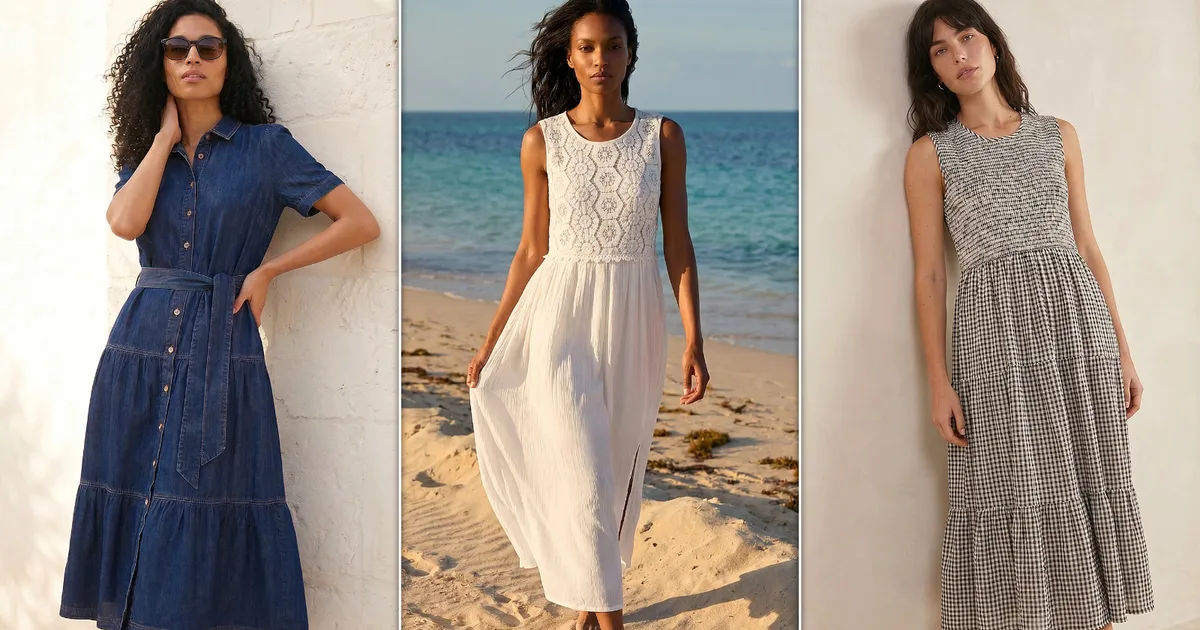
Priced below £50, the collection is made up of everything from floaty summer dresses, to shorts, cotton tops, and even cute co-ords.
Best of all, it’s all designed to be completely multi-generational, so you can share with your daughter or rest assured it’ll get the seal of approval at the family gathering, just as much as it will on holiday or at the office.
Don’t worry, we’ve already trawled the Roman webite for the best picks we think will level up your summer wardrobe, whether you’re going for business casual, bohemian, or beach babe.

The race to fill Lindsey Graham’s seat has created a new test of President Donald Trump’s power. South Carolina Republicans aren’t sure Trump will pass.
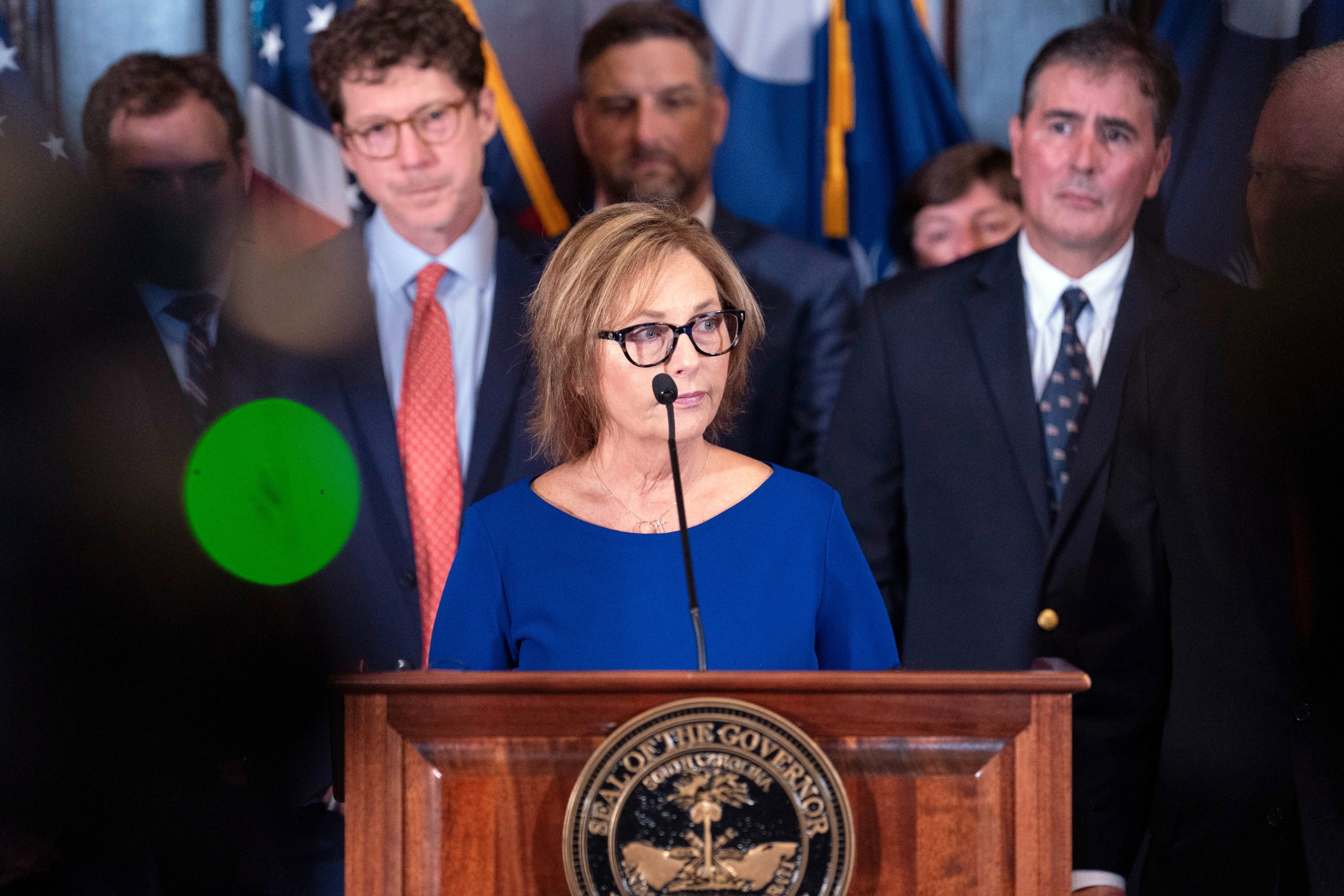
Sen. Darline Graham, who was appointed last week to fill the remainder of her late brother’s term, announced Monday she will seek a full term for her brother’s old seat. Her decision came after winning Trump’s backing, and his endorsement of the political newcomer had the potential to scare away challengers.
But other Republicans are still charging forward, seeing an opening in a race with a highly untested candidate. Their determination is a signal that challenging a Trump-backed candidate may no longer be the career-ender it once was within the party.
“Even folks that didn’t like Senator [Lindsey] Graham or didn’t vote for him in the primary were pretty happy about the appointment, as a tribute to Senator Graham,” said CJ Westfall, chair of the Dorchester County GOP. “But once we saw the president jump in and support her, 95 percent are saying, ‘What the hell are we doing here? We don’t know how she votes. We don’t know what she believes.’”
“People that were excited about the appointment are now skeptical of the endorsement,” Westfall said.
Rep. Russell Fry, one of Trump’s most loyal congressional allies, announced earlier Monday he was jumping in. He joins Rep. Ralph Norman, who declared his own candidacy over the weekend, along with self-funding businessman Mark Lynch, who lost to the former senator in the primary. A number of other Republicans are mulling runs as well, including former Gov. Mark Sanford and Lt. Gov Pam Evette, who lost her own bid for governor a few weeks ago in spite of Trump’s endorsement.
While Trump’s endorsees have largely won their primaries, Evette’s recent loss isn’t his only setback. His picks lost in the Iowa and Georgia gubernatorial races.
“I think people saw [Trump’s] endorsement of Pam Evette and her terrible performance and know this race could be up for grabs like the gubernatorial was,” said a Republican operative unaffiliated with race who was granted anonymity to candidly discuss the landscape.
While Graham’s candidacy will test the power of Trump’s direct endorsement, there’s no question the MAGA movement is still the dominant force in South Carolina politics: All Republicans in the race are running as unapologetic supporters of the president, competing among themselves to prove who is the most authentic champion of Trump’s agenda — a dynamic that has defined GOP primaries across the country this year.
Norman told reporters on Monday that Trump’s endorsement “helps a great deal.” “That’s why I ask[ed] him for it,” he added. “I’d rather have it, but it’s up to the people.”
In Fry’s launch video, he presented himself as a Trump-aligned “MAGA warrior” — and included pictures of him grinning alongside the president.
In a statement, Fry campaign spokesperson Luke Byars noted Fry has “been honored to receive President Trump’s endorsement” in his previous elections.
“Our focus for the next three weeks remains ensuring South Carolina has a conservative fighter in the United States Senate who will advance the President’s agenda and deliver real results for South Carolina families,” Byars said.
Some Republicans said Graham’s lack of prior elected experience and the original expectation that she would only serve the remainder of her brother’s term have kept the field open.
“There is a desire to avoid yet another bruising Republican primary, right after we had a pretty contentious one for governor,” said Joel Sawyer, a longtime GOP strategist in South Carolina who’s not involved in the race. “But I don’t think that’s going to be the case.”
Trump’s endorsement of Graham gives her instant credibility despite her lack of electoral experience. But her campaign announcement on Monday was met with surprise and confusion by many across the state.
Most saw her appointment as a respectful gesture to the Graham family, and she was expected to be a caretaker who would hold the seat until the end of her brother’s term in January. Her interest in running for a full term even caught South Carolina party brass off-guard: Drew McKissick, chair of the South Carolina Republican Party, told POLITICO Friday he thought Graham told Gov. Henry McMaster she’d “accept the appointment to fill the rest of the term, not to be a candidate for it.”
A South Carolina GOP rule adopted earlier this year requires candidates for office to have voted in at least two of the past three statewide GOP primaries.According to local political outlet FITSNews, Graham voted in the 2024 GOP runoff but neither the 2022 nor 2024 GOP primaries. Whether Graham qualifies depends on whether, alongside her vote last month, her 2024 runoff vote counts as a primary vote under the new rule. The Dorchester County Republican Party announced it was formally requesting the state party’s rules committee review Graham’s eligibility.
McKissick, the state party chair, said Monday he hadn’t taken a look at the issue yet since the filing window doesn’t open until midday Tuesday, so no one had officially filed to run.
“As a result I haven’t seen information from any candidates yet,” he told POLITICO. “But suffice it to say that we will look at all of the various candidates’ information and official voting records from the state election commission when they do.”
A spokesperson for Graham’s campaign said she meets the state GOP’s primary voting requirement to file as a Senate candidate and is “qualified to run because she has real experience leading.”
“As to why she is running, it’s quite simple: she is a strong conservative who wants to build upon her brother’s legacy. There were never any conversations surrounding her appointment that were contingent upon serving only the remainder of Senator Lindsey Graham’s term,” Abby Zilch, a spokesperson for Graham’s campaign, said in a statement.
Trump’s endorsement power has been decisive across contested Republican primaries over the last several months, repeatedly propelling his favored candidate across the finish line. But his track record in South Carolina is murkier. After backing Evette early in the gubernatorial race only to see her struggle in the runoff, Trump offered a last-minute dual-endorsement to also back Attorney General Alan Wilson. Wilson ultimately beat Evette in the runoff by more than 30 points.
“I think it’s a nice sentiment,” said another GOP strategist of Trump’s endorsement granted anonymity to speak openly. “But at the end of the day she has no record, nor a right to the seat all because her brother held it. This is up to the people of South Carolina to decide.”
On Capitol Hill, Senate Majority Leader John Thune said he would stay out of the August 11 special election. Thune, who was close friends with Lindsey Graham, called his sister a “strong candidate” but said “I’ll let voters in South Carolina decide it.”
Other senators are diving in. Sens. Mike Lee (R-Utah) and Rick Scott (R-Florida), staunch allies of the president, announced their support for Norman over the weekend, publicly bucking Trump to back one of the House’s most conservative members. Both Lee and Scott specifically cited Norman’s support for the Save America Act, the election reform bill that has been a central focus for Trump in recent months. Norman also earned the nod of Turning Point Action.
Meanwhile, Norman — who passed on another term in the House to make an unsuccessful run for governor — has suggested Fry, his House colleague, could jeopardize Republicans’ House majority. If Fry wins the special election for Graham’s seat, the state would have to call a special election to fill his House seat, potentially leaving it empty for months.
“I respect Russell Fry and I have enjoyed serving with him in the House, but the reality is, his candidacy could leave his seat vacant until May 18th,” Norman wrote Monday.
GOP Rep. Nancy Mace announced Monday she would not enter the race.
The candidate filing window closes on July 28. Election Day is just two weeks later. The breakneck speed could play to Graham’s favor: She has the benefit of her brother’s campaign apparatus, which mobilized to win a primary outright last month while many of the state’s other contested races went to runoffs. And the memorial services for Lindsey Graham — scheduled for July 28 in Washington and July 29 in South Carolina — will shrink the calendar further.
“We say it’s a three-week campaign, but really it’s a two-week campaign after the funeral,” said Tyson Grinstead, an RNC committeeman and Richland County GOP chair. “I’m sure there’ll be ads and stuff, but it’s going to be hard for everybody to focus on campaign rallies and make a decision on this, in terms of voters, until after the funeral.”
If no candidate reaches 50% of the vote, a runoff election would be held in late August.
“We don’t always understand what’s going on in D.C.,” said Jeff Green, the GOP chair in Greenville County. “We try to give the president a lot of grace on these things. Would I have picked, you know, another Graham to replace Lindsey Graham? Probably not.”
“We don’t know her yet,” Green added. “But we’re open and trusting in what the president and his team are doing.”
Katherine Tully-McManus contributed to this report.

Christopher Nolan has claimed that fans could be in for a bit of a wait before he next makes a film.
Three years after the release of his Oscar-winning historical epic Oppenheimer, Nolan’s new adaptation of The Odyssey hit cinemas last week, and has already been a huge hit with critics and at the box office.
While promoting The Odyssey, the director and its stars have made no secret of the fact that the on-location shoot was an especially gruelling one, with leading man Matt Damon previously sharing that Nolan threw himself into the experience as much as his cast.
“When you’re uncomfortable – and you are most of the time, physically, just by nature of what’s required to get these shots – if you turn and look over your shoulder, he’s no more than five feet away and doing the same thing without complaint,” he told Time magazine.
“There’s something really nice about being a soldier in the foxhole and looking over and the general is right next to you.”

During a recent interview about the film on Today, Nolan admitted: “I definitely hit the limits of my own stamina and everybody’s stamina, I think.
“I mean, it’s The Odyssey – of course it should be difficult. We’re not doing the job right making a film of The Odyssey if it doesn’t seem difficult.”
As a result, he said he intends to take a break from filmmaking before getting behind the camera again.
When asked if he’d be following his usual pattern of waiting three years between releases, Nolan responded: “Oh, at least.”
Earlier this month, the British director opened up about how his latest film wrapped filming both ahead of schedule and under budget.
“We [scheduled for] 100 days. And by day 91, we couldn’t have taken another step. So we finished,” he told The Daily Show.
Nolan stated that filming “finished at the right time”, pointing out that “everybody was done”.
“People were just exhausted,” he recalled. “They’d been through it. So, it took the right time to make the film. We had enough time to make it.”
The Odyssey is in cinemas now.
Robbie Williams is clarifying exactly what was going on in a recent viral video taken behind the scenes of the World Cup final.
On Sunday night, Robbie was one of the performers at Fifa’s World Cup final pre-show, where he was joined on stage by Pussycat Dolls star Nicole Scherzinger and Italian pop star Laura Pausini.
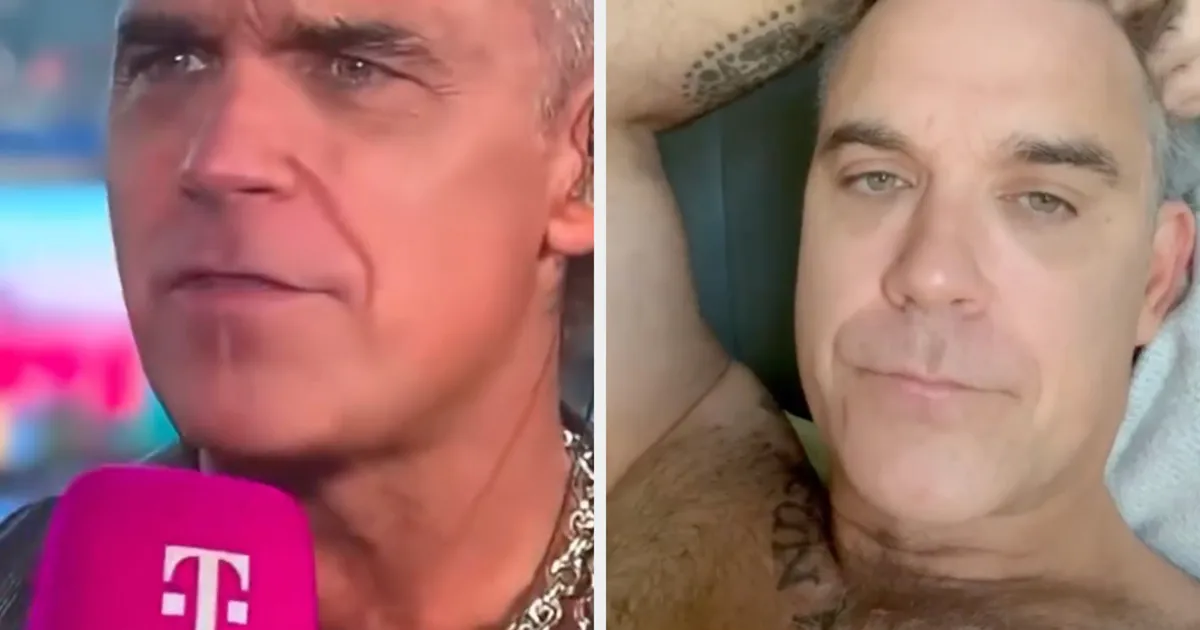
Before the game, the Let Me Entertain You singer and football superfan spoke to German TV channel Magenta Sport – and inadvertently sparked a viral moment, when something appeared on the mic in front of him while he was speaking.
He then promptly removed it without comment, leaving many curious as to exactly what had gone down.
As footage of the incident racked up views on social media, an undiscosed “source” told The Sun that it was actually a semi-chewed Nicorette mint that had fallen from Robbie’s mouth, which he confirmed to be the case in an Instagram video.
“I’d just like to apologise for the object that fell onto the microphone yesterday,” he deadpanned. “I was deeply unprofessional and people worried about me. But it’s OK, because I had several more.”
Following this, the Brit Award winner opened his mouth with a laugh, to reveal he was chewing on two more of the mints in question.
In addition to Robbie, Nicole and Laura’s performance, the World Cup final also featured Fifa’s first ever halftime show, which was met with a somewhat muted response.
The World Cup halftime show got off to a strong start with a (mostly pre-recorded) rendition of Music by Madonna, with some iconic football cameos.
Following this, its star-studded line-up included the South Korean boyband BTS, Canadian chart-topper Justin Bieber and Grammy winner Shakira, who teamed up with Burna Boy for a performance of their World Cup anthem Dai Dai.
Other guests included The Muppets and Jason Sudeikis, performing a short skit in character as Ted Lasso ahead of the award-winning sports comedy’s return next month.

(Aldo Ciarrocchi/Alamy)

11 min read
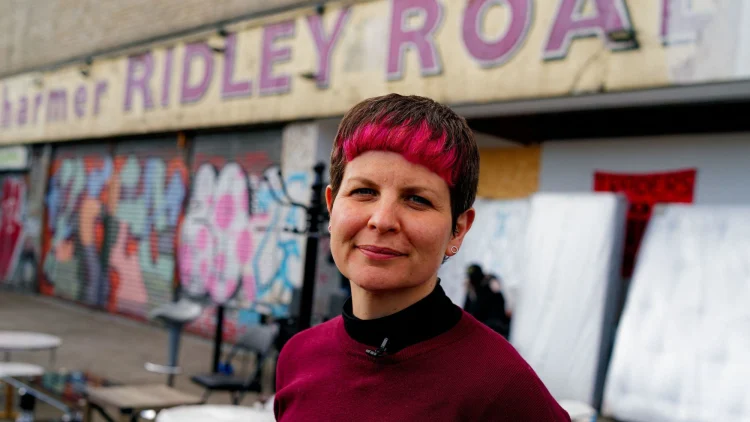
Hackney’s new Green mayor Zoë Garbett talks to Noah Vickers about winning a Labour stronghold, taking Sir Sadiq Khan to court and why she wants Andy Burnham ‘to succeed’
Zoë Garbett had expected a good showing for the Green Party in May’s local elections, but the scale of her victory in the Hackney mayoral race came as something of a shock.
“I kept saying before the election, ‘This is going to really change politics in London,’ but I had no idea I’d be sitting here with the majority we got,” says the 39-year-old mayor.
The Greens had war-gamed for several scenarios as they sought to wrest control of the Labour stronghold, including some where they won a majority of councillors without also taking the mayoralty, which is separately elected.
“We really were planning for all eventualities. At our worst prediction, we thought we’d have 10 councillors.”
In the event, the party went from winning two of the borough’s 57 seats in 2022 – of whom Garbett was one – to 42 in 2026. Labour were reduced to nine seats, down from the 50 they won four years ago.
Garbett, raised in Somerset by teacher parents, worked in public health at Labour-run Barking and Dagenham council and later in an officer role at Conservative-run Barnet council. Non-clinical posts in the NHS followed, including in children’s mental health and as an assistant director for health inequalities.
In 2024, she took voluntary redundancy to focus on her campaign against Sir Sadiq Khan in that year’s London mayoral race. While she lost the contest by a wide margin, Siân Berry’s unexpected departure from City Hall opened up a vacancy for her on the London Assembly, where she spent the last two years with Green leader Zack Polanski.
A Green member since 2013, Garbett was an early supporter of Greens Organise, a group seeking to “build the left within the party”, which shared activists and an ethos with Polanski’s leadership campaign.
Khan texted Garbett his congratulations following her victory in Hackney. But within weeks of taking office, she is already on the warpath against him, as she has joined a legal challenge against City Hall.
Working with Lewisham’s Green mayor Liam Shrivastava and Tower Hamlets mayor Lutfur Rahman – who leads his own Aspire Party – the three borough leaders are applying for a judicial review in the High Court. Their aim is to overturn Khan’s decision last year to temporarily reduce London’s affordable housing requirements.
Previously, all major developments on private land in London needed to include at least 35 per cent affordable housing in order to be ‘fast-tracked’ through the planning system, but in October 2025 Khan agreed with the government to slash the requirement to 20 per cent.
With London housebuilding having reached record lows in recent years, the change was agreed as part of a wider “emergency package” of measures to help the construction industry, which has struggled with inflated costs, high interest rates and new regulations.
Khan and the government argue that lowering the threshold will allow more affordable homes to be built, following the maxim that 20 per cent of something is better than 35 per cent of nothing.
But Garbett says there should have been more focus on building already-consented homes first.
“There’s loads of planning applications that have been approved that haven’t been built out. I think it’s thousands across London, a few hundred in Hackney. What are we doing to make sure those are being delivered?”
She’s also unconvinced that reducing the threshold to 20 per cent will actually result in more affordable homes getting started, saying: “It did very much feel like it was just developers pushing for it and it wasn’t in conversation with local authorities.”
Labour lost Hackney partly due to anger from some in the borough over the impact of Low Traffic Neighbourhoods (LTNs), where roads are closed to through-traffic to discourage car use. Hackney Greens have had to walk a delicate line on the issue, with their manifesto noting the “hard truth” that LTNs “have not yet delivered fair outcomes everywhere”.
The party said that “while rollout of recent schemes by the Labour-led council has been rushed, reactively scrapping schemes can recreate the original problem – bringing rat-running and road danger back”. Instead, the Greens pledged to take a fresh approach to new LTNs, with “community-led design, fair impact assessments, full data transparency, and scheme-by-scheme decisions”.
Hackney’s Labour administration, Garbett says, talked about LTNs as a way of improving air quality, but she believes road safety has been overlooked as an “absolutely paramount” factor.
“If you speak to people who are upset about some of the road changes, if I say, ‘Yeah, but school streets are all about children being able to walk to school,’ most people say they can understand that.
“We need to do some work to really be transparent about the evidence, where things are working and not working, and where we’re collectively measuring what that looks like.”
The installation of a bus gate on Chatsworth Road has proved especially controversial among locals, who made their feelings known to Garbett during the campaign.
“We had some quite robust challenge from people about the [Greens’] approach,” she admits, “but, as I said, people can find commonality around road safety.
“People do feel like it’s connected to a push against people’s freedoms to move around, and I do really hear that, so we need to really make sure that alternatives are there.”
Garbett is also pushing for a “pause” in the use of Live Facial Recognition in the borough by the Metropolitan Police. In Hackney, Garbett says the technology – which has sparked concerns about civil liberties and racial biases – is usually found in busy retail areas like the Narrow Way and Ridley Road.
“Traders report that less people come. A van sits there with its engine on for six hours, with its cameras pointed around,” she says. “Yesterday I went up to the Narrow Way and I think at one point there were 12 officers. It’s such a heavy police presence.”
In the north of the borough, Stamford Hill is home to Europe’s largest population of Charedi Orthodox Jews. The mayor says she is “really proud” of the community and has already met with its leaders a number of times.
But amid media reports of alleged antisemitic comments made by some Green candidates and councillors elsewhere in the country, did Garbett in her new role as mayor feel the need to give them any kind of assurance?
“Yes,” she says. “I did a little speech with some of the community leaders and they kind of looked a bit perplexed. They were like ‘We know that you’re local, we know that you care about our community’…
“It was interesting, because I did just want to put it on the table. I want people to talk to me – I don’t want you to feel that you can’t.”
“I had no idea I’d be sitting here with the majority we got”
In March, the Greens’ spring conference looked set to discuss a motion titled ‘Zionism is racism’, though it was not ultimately debated. Former Green leader Caroline Lucas recently told The House she was “not sure it’s a very helpful debate” as “Zionism can be interpreted in so many different ways”. Does the subject need more nuance?
“Motions are brought to conference and get debated, which is the beauty of the Green Party in the sense that any members can bring anything they want to discuss,” replies Garbett. “I think there’s been some feedback on the motion as it was written, to make sure that it’s as helpful and practical as possible.”
Would she say, straightforwardly, that Zionism is racism?
“Well, I think the framing is…” she says, finding her words. “It depends on context and who you’re speaking with and what our aim is. I think our aim has to be bringing people together and focusing on a solution.
“Like here in Hackney, we’re doing as much as possible to divest our pension funds [from companies complicit in territorial human rights violations]. That process was started off last week, which is really exciting. We know it’s going to be a long road.
“So, I think anything that helps us be practical, but I know that that framing is really important to people who are Palestinian or have family in the area, so I think it’s important that we’re able to, you know – we need to listen to them.”
Garbett speaks to The House the day after Andy Burnham has given his speech in Manchester promising “the biggest rebalancing of power our country has ever seen” through a sweeping devolution programme.
“The proof’s going to be in the pudding,” says Garbett, adding: “There is some nervousness about some of his rhetoric around moving money out of London, because I’d like there to be a focus on the issues. What are we doing about children with SEND needs? What are we doing about child poverty?
“People have got this perception that London is rich and we’re all living the best life, but 50 per cent of children in Hackney live in poverty.”
She also urges the next PM to empower her and other mayors to set rent controls on private tenancies.
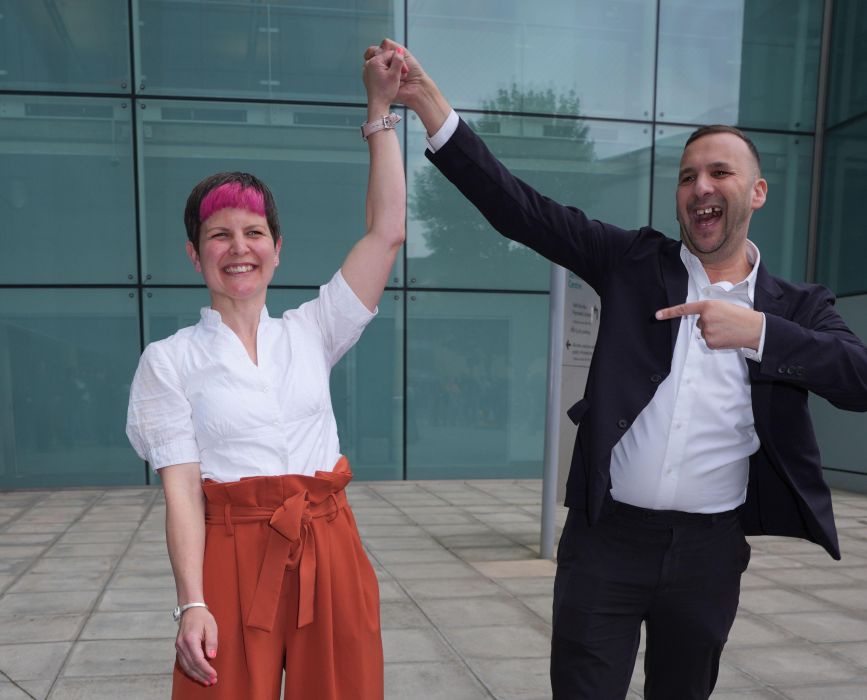
“I think it would make such a huge difference,” she says, pointing out that as long as rents remain as high as they are, billions of pounds will continue to be transferred from the government to private landlords every year in housing benefit. Notably, Burnham himself called for the then-Tory government to freeze private rents in 2023.
Nor should Burnham’s devolution vision be limited to metro mayors alone, Garbett warns.
“We don’t want the powers to just go to the Mayor of London. There needs to be powers coming to [borough] authorities.”
Garbett brushes off concern about Burnham winning back disaffected Labour voters who have drifted to the Greens.
“A lot of people support the Greens because we are pushing for things like rent controls, because we are very bold against the complicity in the genocide. We want climate action and I know he’s already making some mutterings about gas and oil drilling, and migration – him sticking to some of the horrendous migration laws… I think it will be that first 100 days, about what decisions he prioritises.”
There will remain enough distance between the parties, then, for him not to threaten the Greens?
“This is really difficult, because I don’t want people to continue to suffer,” she replies. “I want him to succeed in doing things like nationalising the railways so that people can get around more cheaply, making energy cheaper, making food cheaper. I really want to see him making those good decisions.”
While Polanski’s arrival as leader saw the Greens enjoy a sustained surge in the polls, their standing in opinion surveys appears now to be ebbing. Garbett doesn’t seem sure why.
“I don’t know what’s going on,” she says. “I’ve been very focused on Hackney, where we’ve had the most amazing election, and that is in part [thanks] to Zack’s leadership. But I think it’s just changing times as well, like what happens with Andy Burnham.”
Will Polanski face a challenge in keeping the party’s momentum going?
“He’s suffered a huge amount of scrutiny. The press have been through his bins and calling everyone he’s ever known. I think that has been really difficult.
“He’s apologised where he’s needed to. Some of it wasn’t even a story, but obviously the headlines run away, don’t they. He has been really under attack recently.”
The Greens have now set their sights on the Greater Manchester mayoral by-election. Can the party win there, even with the change back to the supplementary vote system?
“No,” she blurts out, before moderating her answer: “Well, it’s a big step up, isn’t it?”
The party is pleased, she says, that the government has ditched first-past-the-post in favour of a more democratic system for mayoral contests.
“It’s going to be a big-scale [election], we’re just going to do as best as we can. It’s like here – we tried our best,” she laughs. “The polls didn’t look good for us a year ago.”
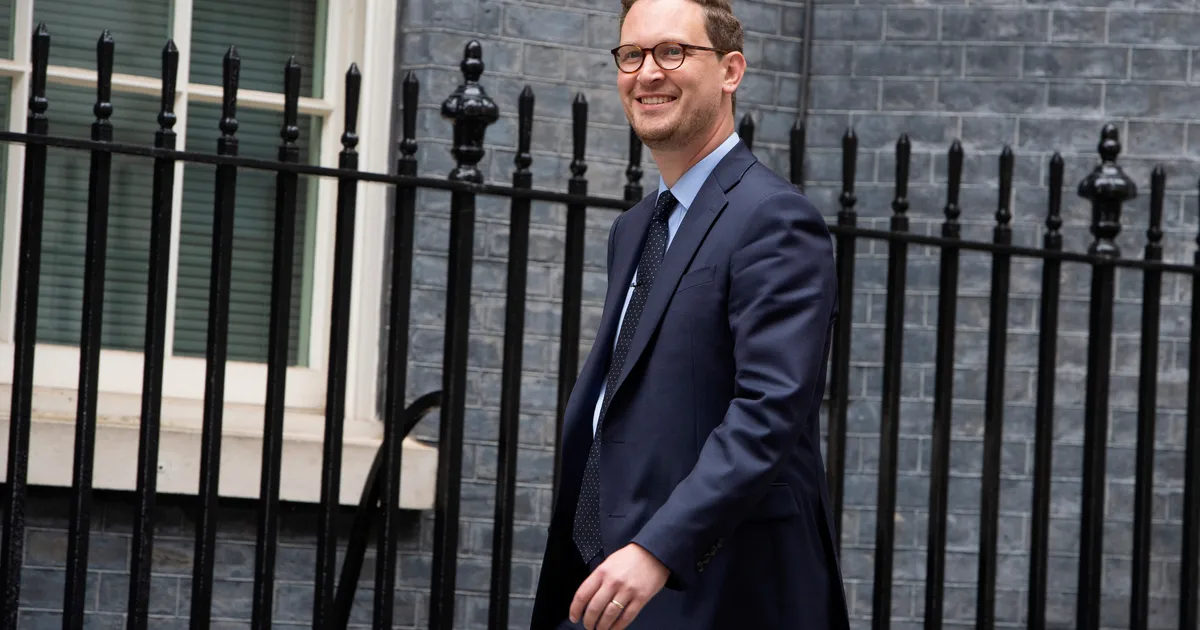
A close ally of Keir Starmer who was sacked by Andy Burnham on his first day as prime minister has hit out as his decision to cut VAT from electricity bills.
Darren Jones, who was chief secretary to the prime minister in Starmer’s cabinet, said the policy was “unfunded”.
Burnham announced on Tuesday morning that VAT on electricity bills would be reduced from 5% to zero from October 1, saving householders around £45 a year.
He said the £850 million cost of the policy would be covered by his decision to axe Starmer’s digital ID scheme.
According to the Office for Budget responsibility, that project was due to cost £1.8 billion over three years.
But in a post on X, Jones, who was responsible for promoting the digital ID scheme, said: “Good news that VAT will be cut on electricity bills. It’s a simple way for families to save a few quid, and to mechanically help to keep inflation that little bit lower.
“But the Digital ID program was unfunded. The government will have to set out how it will pay for its new policies at the Budget.”
A source close to Burnham said the proposed cost of digital ID was “in government spending” and therefor was not unfunded.
In a post on X, shadow chancellor Mel Stride said: “It’s falling apart already. Labour say they will fund a VAT cut to energy bills by scrapping their proposed digital ID cards. But the cuts to the digital ID card budget are not real because the money was never provided for in the first place.
“As the OBR stated in November last year, the annual £600 million cost was unfunded as the government was relying on absorbing the provisional spend across departments without specifying where the savings would be made.
“We are only one day in and already Labour are playing fast and loose with the public finances. Labour should be doing what the Conservatives called for months ago – taking VAT off energy bills in a fully funded way by scrapping net zero subsidies.”
Listen to Commons People, the podcast that makes politics easy. Every week, Kevin Schofield and Kate Nicholson unpack the week’s biggest stories to keep you informed. Join us for straightforward analysis of what’s going on at Westminster.
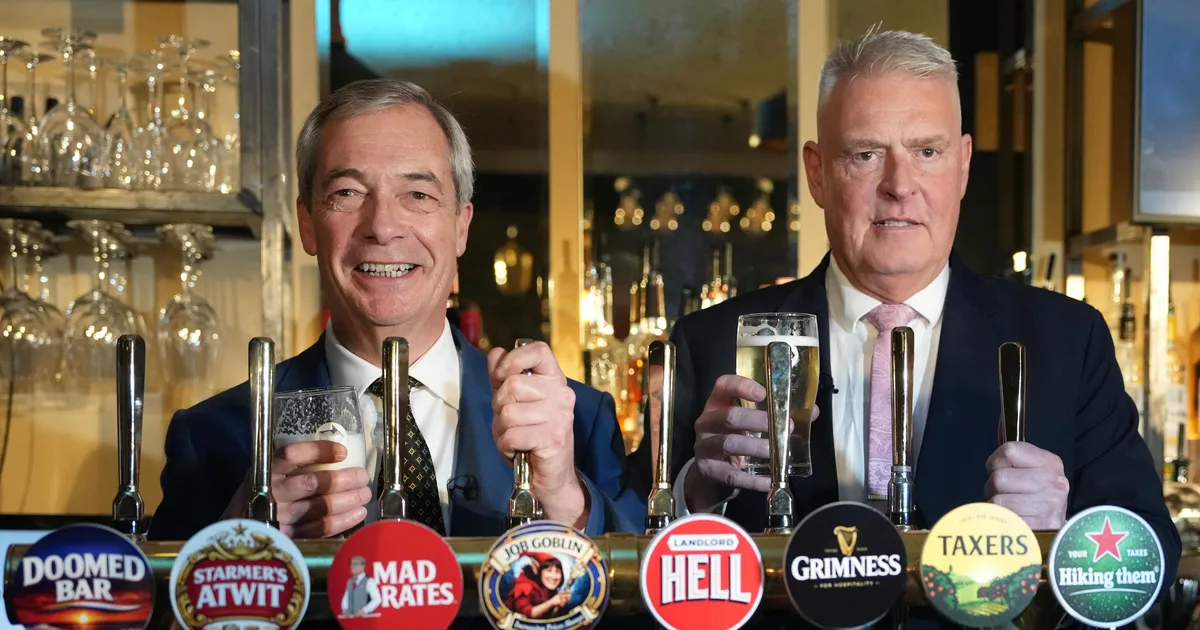
Reform’s Lee Anderson furiously rebuffed fresh questions about Nigel Farage’s finances when pressed on live radio.
The Ashfield MP was asked about last week’s Guardian report that the Reform leader told party colleagues in March 2024 he would need £5 million to stand as an MP to compensate for lost earnings.
Farage received a £5m lump sum from crypto billionaire Christopher Harborne shortly before he ran to be an MP in May 2024, which he failed to declare to parliament once elected.
Farage claims he has not done anything wrong and that the gift was personal, not political, so did not need tell parliament about it.
After a parliamentary probe was launched into the undeclared sum, Farage stood down as an MP earlier this month to trigger a “people versus the establishment” contest in his constituency of Clacton.
He is now running to be elected again but all other main parties have pulled out of the race – meaning he is only in a fight for votes against comedy candidate Count Binface.
Harborne’s lawyers told the Guardian the billionaire “expected nothing in return” for the money.
On Times Radio, Anderson was asked about the new claims Farage wanted £5m to run as an MP.
“Is it a lie Lee, is it a smear?” Presenter John Pienaar asked.
The Reform MP replied: “John, I was invited on this interview today to talk about Andy Burnham’s speech. What’s this got to do with Andy Burnham’s speech?”
Pienaar said they were talking about politics and Reform’s relative position to the new prime minister.
Anderson repeated his complaint, adding: “What’s this last question got anything to do with that? It’s got absolutely nothing to do with that.”
“It bears on the standing of your leader,” Pienaar replied.
Anderson angrily hit back: “You’re talking absolute nonsense, John, for the third time, I came on this interview today, you asked me to come on to talk about Andy Burnham’s speech today, what you’re saying now has nothing to do with that.”
Listen to Commons People, the podcast that makes politics easy. Every week, Kevin Schofield and Kate Nicholson unpack the week’s biggest stories to keep you informed. Join us for straightforward analysis of what’s going on at Westminster.

On the steps of Downing Street yesterday, we heard a clear call to turn the page on forty years of economic mismanagement. Our country’s reckless experiment in extreme deindustrialisation is at the heart of this broken paradigm. As the prime minister put it, “large parts of the country de-industrialised, and they still haven’t recovered.”
That is why we are proud to serve as officers to the newly formed Reindustrialisation Research Group. Our ambition is bold but simple: create one million jobs in production over the next decade and ensure that every part of Britain has a stake in making things again.
While it’s important to measure economic success through national GDP, let’s also not overlook where that growth happens, who benefits from it, and whether it creates the kind of lives people actually want. We need to ensure that jobs are secure, not concentrated in a handful of places or industries, or disconnected from the communities that need them most.
That’s why production is an inherently Labour project. It’s about ensuring that the entire country can play a part in our national story – not just a sliver of places. As the prime minister has said, it has to reach every postcode, not just our biggest cities. Expanding production means good jobs: skilled jobs, well-paid jobs, secure jobs and, where workers choose, unionised jobs. It means apprenticeships, career progression and dignity at work. This is True Labour.

MDU warns Chancellor clinical negligence system ‘not fit for purpose’

Northern Ireland RE curriculum is ‘indoctrination’ – Supreme Court
Reindustrialisation is also critical for political reasons. Labour needs a second term – previous transformative governments have almost always depended on them to deliver real change. It will certainly be essential to deliver the prime minister’s new ten-year plan for Britain – which we expect reindustrialisation to be at the heart of. Many of the constituencies that will determine whether Labour governs after the next election are the very places that once made Britain’s steel, chemicals, buses, machinery and advanced components.
They are coastal towns, former industrial communities and manufacturing centres where people are less interested in abstract economic statistics than in whether their children can find a skilled, well-paid job without moving away. The phrase “red wall” isn’t always useful as the areas the phrase was used to describe are far from uniform, and it also excludes parts of the United Kingdom that share its industrial past, but there is nevertheless a clear overlap between many of Labour’s key electoral battlegrounds and the areas shaped by Britain’s industrial past.
That means reindustrialisation is an electoral strategy just as much as it is an economic one. If people can see new factories opening, apprenticeships expanding, colleges teaching the skills employers actually need, and secure, unionised jobs returning to their communities, then they will have tangible evidence that government is making a difference. If growth remains something that happens somewhere else, measured in spreadsheets rather than pay packets, we should not be surprised if voters conclude that nothing has really changed and they roll the dice again on a different type of government.
This is why an ambition to create one million new jobs in production matters so much. It speaks directly to the question many voters are asking: not “Is UK plc growing?” but “Is my town benefiting?” and “Will my family be better off?” This sort of framing is a far more powerful political test than GDP alone, and one that any successful Labour government must be prepared to meet.
The lesson from Joe Biden’s Inflation Reduction Act is instructive. The IRA succeeded in attracting enormous private investment into new industries. Successful economies, though, need more than just investment in the abstract. If people don’t see better jobs in their own towns, if wages don’t rise, if supply chains remain overseas, and if local people aren’t equipped with the skills to fill those new roles, then political goodwill quickly evaporates. The Democrats, as we know, failed to win the presidency in 2024. Britain has the chance to learn from that experience.
Alongside a long-term vision, there are practical steps the new government could take. First, introduce targeted fuel duty support for the minerals sector, recognising the combined impact of the removal of the red diesel rebate in 2022 and recent global instability of fuel costs. Red diesel fuel duty reductions were welcome for the agricultural sector, but we must support the sectors driving our housebuilding agenda.
Second, make greater use of national security designations where strategically important industries are being undercut by unfair international competition. Bus manufacturing is one obvious example where new registration electric buses are now majority foreign-built. If we want resilient domestic supply chains, government should be prepared to defend them.
Third, accelerate the introduction of the Carbon Border Adjustment Mechanism for the refining sector. British industry should never be penalised simply for producing to higher environmental standards than its overseas competitors. The Tories’ inaction on this lost us Grangemouth and had been a barrier to investment in biorefining. We can and must expedite this.
Reindustrialisation is about so much more than mere sepia-tinged nostalgia. It’s about facing up to the challenges of the future. It’s about making sure that when Britain grows again, working people grow with it. That is the kind of economic mission the country has been waiting for. We look forward to supporting the prime minister to deliver it.
Politics.co.uk is the UK’s leading digital-only political website. Subscribe to our daily newsletter for all the latest news and analysis.
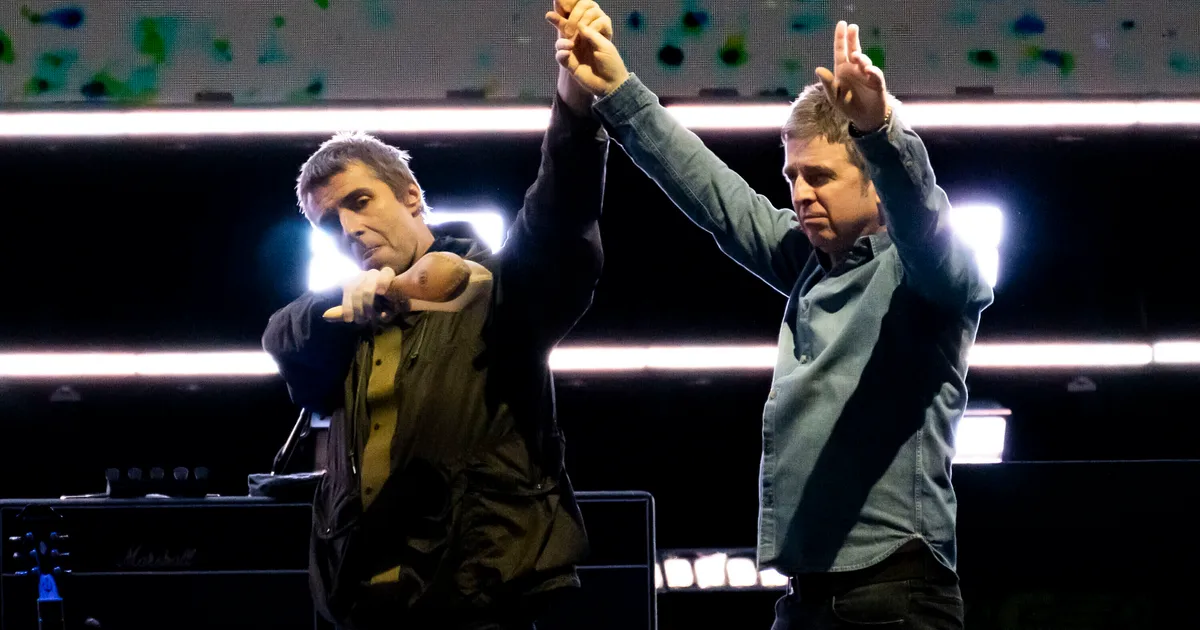
Between last year’s sold-out stadium tour and their current chart resurgence off the back of the World Cup, it seems that Oasis are as hot a property as ever, despite not having released any new material for the better part of 20 years.
And while many fans are hoping that, now the Gallagher brothers have put their differences aside, they might be able to create more music together, this evidently isn’t something people should be holding their breath for.
Responding to one fan on X about the prospect of a new Oasis album, frontman Liam Gallagher responded: “NO, I’m just not prepared for the criticism if it doesn’t sell 100 million copies in the first hour, cure bad breath and constipation for the nation, if it doesn’t turn back time for Cher and some other shit…”
He insisted: “Let’s just [do] some gigs and be happy, thank you.”
Since Oasis parted ways, both Liam and Noel Gallagher have continued to release and record music.
Liam released two albums with his group Beady Eye, before embarking on a solo career, releasing four number one albums between 2017 and 2024.
Noel has also enjoyed success with his group Noel Gallagher’s High-Flying Birds, releasing four albums between 2011 and 2023.
The first three of these all reached number one in the UK, while the group’s latest offering Council Skies peaked at a still-extremely-respectable number two, held off the top spot by fellow rock group Foo Fighters.
Earlier this year, Noel weighed in on rumours claiming that he and Liam would be writing the next James Bond theme, when the franchise is finally revived.
“Of course, it would be an absolute honour,” he told TalkSport, insisting that “those kinds of things should be done by Brits and not Yanks”.
Liam had joked on X weeks earlier: “It’s happening you wait till you hear it it’s the best BOND tune ever.”

Ant International secures $1.2 billion Series A backed by Alibaba and Ant Group

Simpsons Social Media Teases Long-Awaited Return Of Cancelled Fan-Favorite Character

Man City make transfer statement as 23 players spotted in training


-
 NewsBeat5 days ago
London Mayor Sadiq Khan handed a peerage by Keir Starmer alongside 15 other Labour figures… just days before the PM leaves No10
-

 Fashion4 days ago
Weekend Open Thread – Corporette.com
-

 Politics3 days ago
The House | The City of London can help the new chancellor deliver growth in every postcode
-

 Politics6 days ago
Young campaigners urge incoming PM to act on outdoor junk food ads
-

 Crypto World5 days ago
CFTC blocks Kalshi from unwinding Michigan trades after court order
-
 Crypto World4 days ago
Two July Windows Left: The CLARITY Act’s Senate Fight and What Failure Means
-

 Crypto World3 days ago
Ripple Payments Joins MiCA With 14 Firms, Does It Mean Anything For XRP?
-

 Business5 days ago
Nvidia Stock Slips After Big Tuesday Rally as Huang Confirms Vera Rubin Chip Is Now in Production Today
-

 Politics2 days ago
Democrats look to World Cup watch parties to register thousands of voters
-
 Entertainment6 days ago
Disney’s Most Ambitious Failed Star Wars Attraction Is Coming to SDCC
-

 Crypto World4 days ago
Ripple wins EU-wide access as ESMA adds it to MiCA register
-

 Crypto World5 days ago
Injective Submits SEC Transfer-Agent Registration to Onchain Ownership Records
-

 Business5 days ago
Palantir Shares Rise After Expanded Nvidia Partnership and Fresh Analyst Upgrades Ahead of Earnings Day
-

 Tech10 hours ago
Sail Virtually Aboard The “Itanic” With IA-64 Emulator
-
 Tech7 hours ago
Turtle Beach Command Series KB7 review: a nifty screen-equipped gaming keyboard
-

 Tech7 days ago
Dark Secrets Emerge When Jailbreaking LLMs
-

 News Videos7 days ago
XRP BOMBSHELL… XRP OMBOARDED FOR TRANSACTIONS!!!
-

 NewsBeat4 days ago
Registration is now open for March for Men with Kev 2026
-

 NewsBeat23 hours ago
Unregistered fitter used Gas Safe logo on business flyers
-
 Sports6 days ago
New Cornerback Enters Vikings Trade Rumor Mill
You must be logged in to post a comment Login