

Politics
Luke Graham: Gorton’s lesson is not to take the easy negative option but the harder positive opportunity


Luke Graham was the Conservative Member of Parliament for Ochil and Perthshire South from 2017 to 2019, the candidate in Perth and Kinross-shire in 2024, and a former head of the Downing Street Union Unit.
While Iranian airstrikes and the latest developments in the Epstein files continue to dominate headlines, the result of the Gorton & Denton by-election deserves a second glance, looking beyond the Green’s headline victory.
This by election was not merely a local contest. It offered a snapshot of the unsettled and volatile condition of British politics in 2026 — and a warning about the direction of our modern election campaigns.
The Green Party’s victory was undeniably striking. Labour, despite clear voter frustration, still mobilised close to 10,000 votes. Reform UK, which had publicly signalled strong confidence of victory, secured just over 10,000 but fell short. The Conservatives and Lib Dems were never really contenders for this seat. Taken together, the numbers suggest three important conclusions.
First, Reform’s support, though real, may well have reached a ceiling. National polling continues to show Reform ahead, yet the party has now underperformed in successive by-elections and has fallen more than eight points from its November high-water mark. By-elections are imperfect barometers, but they do test GOTV ability and voter motivation. Reform’s difficulty in converting polling strength into parliamentary wins raises a serious question about whether it really can covert high polling percentages into a large swathe of seats in the House of Commons.
Second, Labour’s position is fragile but not collapsed. Even amid significant dissatisfaction with the government, Labour retains an organisational machine capable of turning out votes. That matters in marginal contests.
Third — and most troubling — the manner of this campaign may prove more consequential than the result itself.
The Gorton & Denton contest was bruising.
Personal accusations surfaced early. Nigel Farage publicly alleged links between the Conservative candidate and an LGBT charity in a manner that was, at best, misleading. The Reform candidate faced allegations of misconduct and locally Labour and the Greens went heavy on the doorsteps.
But it was the Green Party’s campaign tactics that marked a potentially more significant shift. A targeted Urdu-language video featuring images of Kier Starmer alongside Indian Prime Minister Narendra Modi was plainly designed to target a local Muslim community. The advert urged voters to “punish” Labour for its stance on Gaza, implicitly suggesting sectarian alignment. This was not accidental phrasing. It was calculated messaging.
There is nothing new with political parties tailoring communications to different communities. However, what makes this case distinct is the explicit framing of electoral choice along ethnic and religious lines, particularly in the context of an international conflict. This is not merely sharper campaigning; it is the normalisation of targeting voters along ethnic and religious grounds.
This kind of approach by the Greens would have been unthinkable under Caroline Lucas, who’s leadership of the Green Party focused on the climate, tackling inequality and pro-EU arguments. The tactics deployed in Gorton & Denton represent a departure from that tradition. They move the Green party into terrain historically occupied by more overtly nationalist movements — including elements of SNP and Plaid Cymru strategy — where identity becomes the organising principle of electoral competition.
This shift should concern us as Conservatives not simply because it benefits a rival party, but because of its broader implications for our democracy. Just as the 2014 Scottish and 2016 EU referenda became totemic political moments, reshaping party alignments and entrenching identities for years, religious campaigns risk creating similar hardened blocs within constituencies. Short-term gains can produce long-term fractures and build political tribalism.
Although the Greens are guilty in this instance, it’s important to remember that it was only a few months ago that Robert Jenrick turned up on a street in Birmingham, far from his constituency, to use local deprivation as a backdrop and evidence for divisive rhetoric. Ambitious politicians of all political stripes are not immune from the temptation of this kind of “emotion first” politics.
But this is what happens when a political system has been as battered as ours; selfish politicians have used national strife and instability as political opportunity, acting in recklessly unprepared way with poor results. When voters lose faith in large national projects — large scale infrastructure, productivity growth, defence renewal, or economic transformation — campaigns increasingly pivot toward emotional mobilisation. Outrage substitutes for vision.
This is the deeper lesson of Gorton & Denton. The volatility of Reform’s vote share, Labour’s fragility, and the Greens’ resort to identity-based messaging all point to a political environment hungry for conviction but starved of credible national direction.
For Conservatives, this presents both a danger and an opportunity.
The danger is obvious: fragmentation of the centre-right vote, further erosion of civic cohesion, and a political culture driven by grievance rather than aspiration. Reform’s rhetoric thrives where voters feel unheard. Identity politics flourish where national purpose is absent.
The opportunity lies in rebuilding something more durable.
Having been humbled in the 2024 General Election, our party has the rare political space to reconstruct its offer. The task is to articulate a compelling national project — one that addresses economic dynamism, defence resilience and social mobility without resorting to sectarian shortcuts.
As developments in the United States and elsewhere demonstrate, it is possible to win power and simultaneously deepen division. Britain, at a moment of international instability and economic uncertainty, cannot afford to further fracture our people or state.
Gorton & Denton was a by-election. Its parliamentary arithmetic is minor. Its cultural implications are not. If politics continues to descend into ever narrower identity politics and escalating grievance, the fragmentation of our party system will accelerate.
Any politician knows the importance of winning an election – if you don’t win, you’re not in. But in the rush for victory, all parties should consider the profound and lasting impact of their campaigns on our communities – we should not abandon the key tenants of our culture and democracy to win individual battles, but ultimately lose the war for the soul and cohesion of our country.

Politics
Raye’s This Tour May Contain New Music Review: Escapism Singer Continues To Level-Up As An Artist

It’s well-documented that Raye’s ascent from struggling singer-songwriter to chart-topping household name was not a straightforward one.
Back in 2021, dejected and broken-hearted at the way she was being treated and the musical direction she was being pushed in by her then-record label – who she claimed refused to release an album despite signing her seven years earlier – the British performer took matters into her own hands.
Apparently “done” being “a polite pop star”, she fired off a series of tweets laying out her situation, and calling for her label to allow her to release the music she wanted, or drop her.
Her posts received an industry-wide outpouring of support, with Raye eventually being released from her record deal, to go it alone.
What came next was an extraordinary and inspiring example of the underdog triumphing over adversity that no one could have predicted.
First, her 2023 Glastonbury set proved to be one of festival-goers’ surprising highlights of the festival, and after winning praise for her first few independent releases, Raye had a breakthrough when her 070 Shake collaboration Escapism began making its way up the charts.
Eventually, in what felt like sweet poetic justice, it became her first number one, with her ensuing album My 21st Century Blues reaching the same lofty peak.
After that, Raye only continued to evolve, transitioning from underdog status to one of the brightest stars on the UK music scene.
Suddenly, along came those record-breaking seven Brit Award nominations (followed by an incredible six wins in one night), Mercury Prize recognition, an epic solo show at the prestigious Royal Albert Hall, international acclaim, a performing slot on Saturday Night Live and, eventually, Grammy nods, including in the coveted Best New Artist category.
The fact that this all happened to an artist who had begun to fear that her voice would never be heard just makes Raye impossible not to want to root for.

A decade on from her very first breakthrough moment as a featured artist on Jax Jones’ You Don’t Know Me, Raye’s latest impressive accolade is her This Tour May Contain New Music world jaunt, which includes a whopping six sold-out shows at the O2 Arena in her home town of London, in support of the second solo album that’s sure to become one of the year’s most talked-about releases.
These London concerts got underway last week, with a show that represents how far she’s come in the last few years, and how much she only continues to level-up as an artist.
Of course, the first thing worth mentioning is the music itself. As anyone who watched her Brit Awards performance over the weekend will attest, Raye’s voice is something to behold, but there’s something about being in the room with her – backed by a live orchestra, no less – that really drives home even more what an amazing (and underrated) vocalist she is.
The stage itself is somewhat stripped back compared to your average pop show, but makes use of some truly enormous screens ensuring you don’t miss anything happening on stage, regardless of where you are in the venue.
As a result, the show flips effortlessly between feeling more intimate and jazz club-esque, and an enormous festival-sized show depending on the songs being performed, which is ideal for an arena-scale tour.
Raye’s setlist mixes the songs you already know – her recent chart-topper Where Is My Husband! gets things going fairly early on, while Escapism brings the night to an end with an arena-wide sing-a-long – with a hefty dose of new material.

Harvey Aspell/Shutterstock
Artists debuting new music in their live shows is always going to be a risk, but for Raye, she and her team have used their imagination to make the new tracks as captivating as possible.
For the inevitable future hit The Winter Woman, the relatable lyrics flash up on screen throughout, to hold the audience’s attention, while on the triumphant Joy, she performs alongside her sisters, fellow singers Amma and Absolutely, who are also the night’s support acts.
Meanwhile, the brilliantly-titled Beware The South London Lover Boy makes use of those oversized screens, as well as a cameo from the titular lothario himself, who is positioned as a hapless Batman villain for the Hinge generation.
On that note, Raye’s sense of humour is another of the well-honed tools in her arsenal that might come as a bit of a surprise to those less familiar with the artist behind the hits.
Clearly completely at ease on stage, she has no issues bantering with her band, her backing singers and even her audience, and her quick responses and witty back-and-forths feel particularly refreshing given how many of her contemporaries are somewhat lacking on the charisma-front.

That the show itself is so full of joy is particularly impressive considering Raye is not afraid to touch on dark subject matter in her material. Over the course of the show, she also speaks passionately on subjects like suicide prevention and sexual assault. With the latter, she manages to bring the entire O2 to a standstill with a rendition of her powerful Grammy-winning ballad Ice Cream Man – no mean feat considering how vocal her fans can become at other moments in the show, and a testament to the command she holds as a performer.
As the night progresses, she even dedicates an entire section to those EDM and dance hits released during those years in limbo at her old label.
Her ability to turn these songs, which must have their own painful connotations for Raye on some level, into joy speaks exactly to what she’s all about as an artist – not to mention her versatility as a performer. Who else from Raye’s peer group would be able to flawlessly cover Fly Me To The Moon in a jazz club setting, and be raving it up under lasers and confetti less than an hour later?
Jarring? Hmmm… only if you allow it to be.

Harvey Aspell/Shutterstock
Watching her performing the music that at one point she was effectively forbidden from pursuing, alongside brand new material that allows her to only grow her artistry, Raye is living proof of the good that can come from backing yourself, staying true to who you are and calling out when you’re not being treated fairly.
Her new tour encompasses this perfectly, cementing her spot as one of the UK’s most exciting talents today – and there’s no one in the pop space right now who deserves it more.
Raye’s This Tour May Contain New Music continues at London’s O2 Arena on Monday night, ahead of two more shows at the same venue on 19 and 20 May.
HuffPost UK attended the show as a guest of Nordic Spirit. Nordic Spirit nicotine pouches are a smoke-free alternative for existing nicotine users aged 18 and over. These nicotine pouches are one hundred percent tobacco-free, with no smoke or vapour. Existing adult nicotine users aged 18 can find out more info here.

Good nutrition is a cornerstone of health at every age. It supports immune function, energy levels, recovery after illness, and overall well‑being. Yet for many people, access to structured nutritional care through traditional healthcare settings isn’t always straightforward. Barriers like limited appointment availability, geographical distance, cost considerations, and time constraints can make it difficult for patients to get personalised dietary guidance from dietitians or nutritionists.
That’s where alternative and accessible options play an increasingly important role. Today, many online platforms allow people to find nutritional products, supplements, and support tailored to specific needs. For example, individuals seeking therapeutic nutrition options — whether for recovery, weight maintenance, or chronic conditions — can explore products such as fresubin, which provide ready‑to‑use formulas designed to support diverse nutritional goals. These options add convenience and broaden access beyond traditional clinical channels.
Why nutritional care matters beyond the clinic
Traditionally, nutritional advice is delivered through appointments with healthcare professionals, such as general practitioners or registered dietitians. While this model works well for many, not everyone has easy access to these services. In rural areas, clinic schedules may be full, and specialised dietetic services might be limited. Even in cities, waiting lists can be long, or consultations can be expensive for those without comprehensive insurance coverage.
Beyond access, people’s lives are fast‑paced. Many juggle work, family commitments, travel, and social obligations, leaving little time for in‑person visits. The result is that individuals may struggle to implement nutrition plans or find interventions in a timely way when they need support most — such as during recovery from illness, managing a chronic condition, or adjusting diet for aging‑related needs.
Digital solutions for nutritional support
In response, digital and online services have made it easier to take proactive steps toward better nutrition. These services come in many forms, including:
- Online educational resources, such as articles, videos, and guides that explain nutritional principles and healthy eating habits;
- Virtual dietitian consultations, allowing people to discuss dietary concerns without traveling;
- Home delivery of targeted nutrition products, such as high‑calorie supplements, fortified drinks, and specialised formulas suited to individual requirements;
- Apps and tracking tools that help users monitor their diet, nutrient intake, weight changes, or food reactions.
This flexibility means that nutritional support is no longer limited to traditional appointments — it can be woven into daily life in manageable, practical ways.
The role of convenience and personalisation
One of the key drivers of online nutritional care adoption is convenience. Rather than spending hours researching which products might help or traveling to a store only to find limited stock, people can browse trusted platforms from home, read product descriptions, compare ingredients, and order what they need for delivery.
Customising nutritional care doesn’t stop at product choice. Many online services provide personalised recommendations based on age, health status, dietary restrictions, and lifestyle factors. Such tailored approaches help people feel more confident in their decisions and more engaged with their own health outcomes.
Nutrition in everyday life
While specialised formulas and supplements are useful tools, good nutrition is ultimately rooted in daily habits. Understanding balanced meals, portion sizes, and nutrient diversity is important for everyone, not just those with specific conditions. Online platforms often offer educational content and meal planning ideas that help users integrate healthy eating practices into their routines.
By having both educational resources and easy access to targeted products, individuals can build a foundation of sound nutrition while addressing specific needs as they arise. This dual approach makes nutritional care more attainable for a wider audience.
Supporting caregivers and families
Access to nutritional care isn’t just about individual needs — it also benefits families and caregivers. Parents managing children’s dietary needs, adult children supporting aging parents, or caregivers assisting individuals with chronic conditions all gain from having easy, reliable access to both information and products.
Rather than juggling multiple physical trips to pharmacies or relying solely on memory of product names, caregivers can use online services to reorder familiar items, track delivery dates, and ensure that nutritional support is consistent and reliable. This peace of mind can significantly reduce stress and improve the quality of care provided at home.
Looking ahead
The trend toward improved access to nutritional care online is likely to continue as technology evolves and consumer expectations shift. Key developments may include:
- More interactive virtual consultations with nutrition professionals;
- AI‑assisted recommendations based on uploaded health metrics;
- Seamless integration between online platforms and clinical records;
- Expanded educational libraries tailored to diverse health conditions.
These innovations will support a future where nutritional well‑being is more integrated, accessible, and actionable for people in all walks of life.
Conclusion
Accessing nutritional care outside traditional healthcare systems has transformed how individuals and families approach diet, wellness, and recovery. Online resources, targeted products, and flexible delivery options help people meet their nutritional needs even when in‑person options are limited. By combining education, personalisation, and convenience, online nutritional support empowers individuals to take charge of their health in practical and meaningful ways — ensuring that good nutrition remains a cornerstone of well‑being across different stages of life.

Expert comment provided by BACP-accredited counsellor Natasha Nyeke and BACP-accredited therapist Lisa Gates.
If you’ve read, watched, or heard any relationship advice in the past few years, chances are you’ve heard of “attachment styles”.
These are part of attachment theory, which was developed by psychoanalyst John Bowlby. He thought that the way our parents interacted with us as children affects how they get close to, or drift apart from, others as adults.
Broadly, these have been split into four groups: secure, anxious, avoidant, and disorganised.
An avoidant attachment style is associated with avoiding intimacy, dismissing others, running from relationships that feel too close, and struggling with commitment issues.
But it turns out that not all avoidantly attached people have “overt”, or clear, avoidance tactics. Nope – sometimes, counsellor Natasha Nyeke and therapist Lisa Gates told us, the signs of “covert” avoidance can be so hard to spot, they appear like devotion.
What is “covert avoidance”?
“When people think of avoidance in relationships, they often picture someone pulling away, working longer hours, drinking more, staying out late, shutting down or becoming defensive during difficult conversations. That’s overt avoidance. The distance is visible,” Nyeke said.
But with covert avoidance, that gap can be a lot more subtle.
Nyeke says that the person may look “present, committed, even devoted” while feeling a growing distance between themselves and their loved ones, the counsellor explained.
“Covert avoidance is hidden and indirect [and] is often internalised,” Gates agreed.
What are the signs of “covert avoidance”?
One of the reasons it can be so hard to spot is that many of the signs are internal and almost look like extreme dedication on the outside.
“The person may look present, committed, even devoted,” Nyeke said.
“They might lean in harder, taking on more, over-preparing, or becoming indispensable, but underneath, in both cases, they are struggling to tolerate feelings of vulnerability, helplessness or uncertainty.”
And, Gates stated, a person may replay “fearful scenarios in relationships that shift the focus away from real-life exposure and taking action,” or “use coping strategies such as rumination, dissociation, or quietly withdraw from a distressing situation.”
Gates also explained,“Procrastination and cognitive distortions that delay having challenging conversations, such as wanting the ‘right time’ to occur, mean the individual does not engage in the actions they need to take.”
Sometimes, they have an “fantasise about the success or failure of communicating with another person without acting on these fantasies in the real world. Other patterns are not making eye contact, or chronic worry or apprehension about something unrelated that masks the real distress.”
What should I do if I notice “covert avoidance”?
If this sounds like you, both of the experts say help is at hand.
“At its core, this often links back to self-esteem. If someone doesn’t fully trust that who they are, without over-performing or withdrawing, is enough, vulnerability can feel risky. Avoidance becomes a way of staying safe,” Nyeke told us.
“Avoidance isn’t a character flaw; it’s a protective strategy. The work in therapy is gently building the confidence that being emotionally honest doesn’t equal being rejected, and accepting that who you are is enough.”
And Gates thinks that staying mindful in times of avoidance can be helpful. Thinking things like “I notice I’m avoiding talking to that person, even though I want a connection,” can make you more aware of your behaviour and help you to identify patterns.
Then, she says, consider a positive first step, such as: “I’ll explore this collaboratively with a trusted friend using non-blaming communication for 10 minutes and then reassess.”
Be honest about your own feelings, and try grounding techniques if you’re feeling out of control or distressed.
“Therapists may use ACT, Exposure therapy or Psychodynamic methods to explore covert avoidance.”
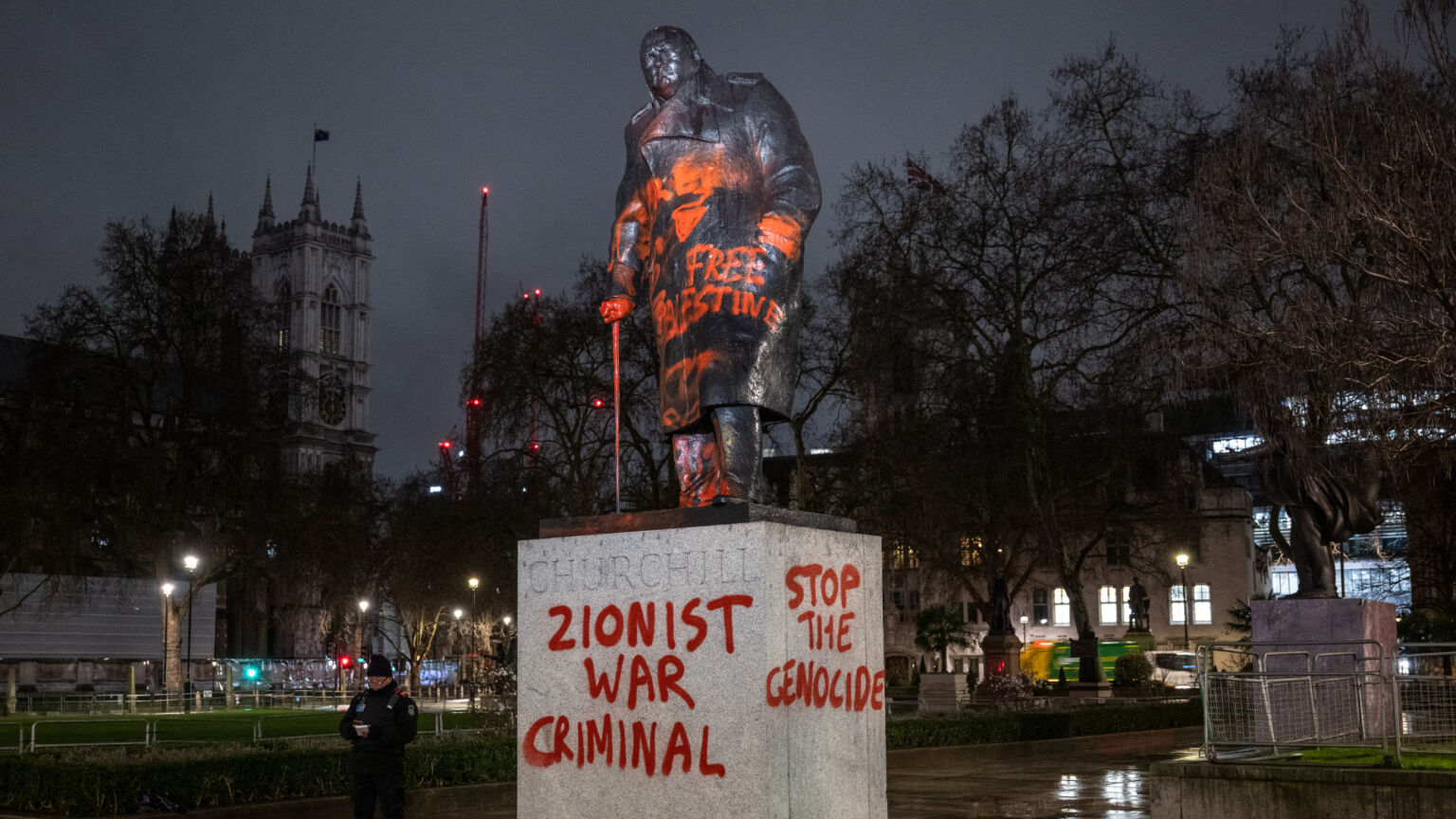
Once again, the statue of Sir Winston Churchill in Westminster’s Parliament Square has been vandalised. On Friday, red graffiti was sprayed on the memorial of Britain’s wartime leader, stating, ‘Never Again is Now’, ‘Free Palestine’, ‘Zionist War Criminal’ and ‘Globalise the Intifada’. According to the Metropolitan Police, a 38-year-old man has been arrested on suspicion of racially aggravated criminal damage.
Churchill’s statue has been a favourite target for culture warriors for some time. Back in June 2020, it was vandalised by Black Lives Matter protesters. Last October, an Extinction Rebellion demonstrator defaced the statue by painting ‘racist’ on its plinth during a climate protest. Such has been the regularity of the vandalism that in May 2025, the government announced that it will add Churchill’s statue to the list of monuments it is a crime to climb, with offenders facing up to three months in prison and a £1,000 fine.
The constant targeting of Churchill’s statue is symptomatic of a wider campaign designed to render the reputation of Britain’s heroic leader toxic. A veritable anti-Churchill crusade now envelops schools and universities. Numerous academics cannot resist the temptation of depicting Churchill’s ideals as similar to those of Adolf Hitler.
You don’t need to look far. In 2018, the historian David Olusoga blamed Churchill for war crimes in Africa as well as the Bengal famine of 1943-44 in India. A few years later, academic and professor of postcolonial studies at Cambridge University, Priyamvada Gopal, wrote, ‘[J]ust because Hitler was a racist does not mean Churchill could not have been one. Britain entered the war, after all, because it faced an existential threat – and not primarily because it disagreed with Nazi ideology.’ Numerous books, such as Tariq Ali’s Winston Churchill: His Times, His Crimes (2022), present Churchill as a racist criminal, whose crimes were comparable to those of the Nazis. With a stroke of pen, the man who played a central role in the defeat of Nazi Germany is turned into an admirer of the despicable ideology peddled by Hitler.
One consequence of the campaign of vilification targeting Churchill is that young people in Britain have been systematically miseducated about his accomplishments. An unforgettable example of this happened on Remembrance Day in 2021. Visitors to London’s Imperial War Museum, to mark the sombre occasion, were taken aback by a rap song performed by a group of teenagers. One girl shouted:
‘Why, when some remember, do they see the same faces, the white faces from Western places. This was the Second World War, yet how many remember that it wasn’t only Churchill who fought. The same man who had a hand in famine in 1943, wiping out three million Bengalis, denial, displacement, malnutrition, starvation, without any apologies.’
For culture warriors, Churchill is big game. If they can take down the wartime leader, then nothing can seemingly stand in the way of their ultimate goal: destroying the moral authority of Britishness itself. It isn’t enough to dishonour the reputation of one man – the collective spirit of the people Churchill symbolised must be discredited, too.
It goes without saying that Churchill made many mistakes throughout his long political career. His unwavering support for British imperialism – Churchill notoriously opposed Indian independence – is rightly questioned. But whatever his faults, more than any individual in the modern world, Churchill exemplified the historical significance of moral courage. He became prime minister of Britain in 1940, in what was the darkest hour of his nation’s history. The British army had suffered a series of defeats, and it seemed that it was only a matter of time before the German military would occupy Britain. In what many saw as a hopeless situation, Churchill refused to yield to powerful pressure to sue for peace with Hitler. Instead, he decided to carry on the fight against the Nazis. As historian John Lukacs observed, ‘then and there he saved Britain and Europe, and Western civilisation’.
At a time when the historical legacy of Britain and of European civilisation is constantly attacked by the decolonising brigade and the cultural elites, upholding the reputation of Churchill is more important than ever.
Back in the 1930s, Churchill recognised the importance of not giving up on the values that underpinned European civilisation without a fight. Other members of Europe’s ruling classes did not. It is fair to say that the same spirit of compromise and equivocation dogs Europe’s cultural and political institutions today.
Above all, Churchill understood that the fight against Nazism wasn’t just a war for territory. It was a war for a civilisation. In a 1947 speech at the Royal Albert Hall, Churchill praised a piece written by journalist Gordon Sewell in the Southern Daily Echo. Quoting Sewell, Churchill said:
‘In the rich pattern of [European civilisation] there are many strands; the Hebrew belief in God; the Christian message of compassion and redemption; the Greek love of truth, beauty and goodness; the Roman genius for law. Europe is a spiritual conception. But if men cease to hold that conception in their minds, cease to feel its worth in their hearts, it will die.’
‘These are not my words, but they are my faith’, Churchill added.
He had no doubt about the unique contribution that Western civilisation made to the welfare of humanity. It was this ‘faith’ that provided him with the moral resources needed to challenge those who would appease Hitler, and which gave Churchill the power to forge ahead on the long and difficult road that led to the defeat of Nazi Germany.
That is why it is so important to stand up to the anti-Churchill vandals. It isn’t just about upholding the reputation of a national icon – it is also about protecting the soul of Europe and its civilisational accomplishments.
Frank Furedi is the executive director of the think-tank, MCC-Brussels.

State-run QatarEnergy has announced it is shutting down its production of liquefied natural gas (LNG) after Iran’s retaliation to US-Israel attacks. The US-Israel axis has murdered Iranian leader Ali Khamenei and his family, along with more than 150 schoolchildren, as well as attacking Iranian hospitals and infrastructure.
QatarEnergy’s Ras Laffan and Mesaieed facilities supply 20% of global LNG. Gas prices in Europe have rocketed.
Along with other Gulf states housing US military facilities, Iran has hit Qatar – including destroying a power plant water tank in Mesaieed and an energy facility in Ras Laffan. No casualties were reported in either attack.
Saudi Arabia has also announced a partial shutdown of its Ras Tanura oil refinery, one of the world’s largest oil processing facilities. This announcement comes as Iran hit a second oil tanker for ignoring its closure of the vital Hormuz Strait. Oil prices have also soared as a result.
This is not the first time US warmongering has put the global – and particularly the European – economy into crisis. The Biden regime is now widely recognised to have destroyed the Nord Stream gas pipelines, allowing oil companies to enrich themselves with massive energy price rises that impoverished millions. Western media continue to ignore investigative journalist Seymour Hersh’s exposé.
Qatar, Bahrain, Jordan, Saudi Arabia, and the UAE all joined Keir Starmer and Donald Trump in condemning Iran for daring to retaliate to an unprovoked attack.
Featured image via the Canary

Labour home secretary Shabana Mahmood has announced a plan to limit refugee stays to 30 months. Instead, they intend to force people to reapply for the right to remain every two and a half years. This cruel policy mirrors the hostile environment Labour has created and will leave thousands of already traumatised people in a never-ending limbo.
In sickening remarks, Mahmood said:
We must ensure our asylum system is not creating pull factors that draw people on dangerous journeys across the world.
Mahmood has purposely got this wrong; she knows full well that refugees are created not because of where they flee to, but where they are fleeing from.
Labour enacting a racist regression of refugee rights
Labour is framing this cruelty as a way to manage the asylum system. However, Mahmood is effectively ending any kind of sanctuary desperate people can find in the UK. This is a massive regression that sees human beings as temporary burdens, rather than actual living, breathing humans running from the worst kind of tragedies. Tragedies we are most often implicated in. Under these ridiculous rules refugees will never truly be able to build a life and put down roots. How the fuck are people meant to ‘assimilate’ if they’re eternally wondering if they’re going to be kicked out?
Mahmood continued her depraved comments:
Genuine refugees will find safety in Britain, but we must also reduce the incentives that draw people here at such scale, including those without a legitimate need for protection. So, once a refugee’s home is safe and they are able to return, they will be expected to do so.
This use of language suggests that some survivors of war and persecution are inherently a suspicious and deceiving. This creates a vile hierarchy of suffering that serves the vile right-wing rhetoric that Labour has been leaning into. By using this framing the government is openly validating the prejudices of the far-right.
And, for many refugees there is no way for them to return to their countries of origin; it will never be safe. And, expecting it to be so is another tactic Labour is using to make asylum cruel and unforgiving.
State sponsored cruelty for cheap political points
Refugee charities were quick to condemn the move as inhumane and unworkable. The Refugee Council warns that temporary status prevents vulnerable people from healing from trauma. When you’re constantly looking over your shoulder, wondering if you’re going to be deported, it’s nothing but state-sponsored psychological torture.
Mahmood is turning a blind eye to the actual plight of refugees to appease a hostile press and people. Shockingly, it’s not the first time she’s done it. This cruel policy will do nothing but lead to more poverty, more homelessness, and crushing mental health problems for people who have already been to hell and back.
At the end of December 2025, 64,426 people were still awaiting an initial asylum decision and of these, 35% had already been waiting for more than a year. And I really doubt that Labour are going to sort out these processing issues before they roll out this policy.
Labour have gone full right-wing
The Ministry of Justice is now following the same path as the Tories. Instead of actually fixing the backlog, Labour is creating a fucking nightmare. The UK already has some of the most restrictive asylum laws compared to our European counterparts. And, we have some of the lowest rates of immigration compared to them too.
This move will hit Black, Brown and other marginalised communities the hardest. Roughly 75% of people seeking asylum are granted protection on their first application. These people have had to fight to get here, travel thousands of miles and they’ve been through untold trauma. Historical data shows average wait times for initial decisions can be over 449 days. Can you imagine waiting that long after literally running for your life? After having to abandon everyone and everything you know just to survive?
The Labour party is now choosing to ignore human dignity for the sake of a few more fucking votes.
A future with no stability
We must ask what kind of a nation treats survivors of the worst kind of horrors as nothing more than temporary visitors. Do we really want to be seen as that cruel? This policy will tear apart families and leave children in permanent instability. Research shows that 61% of asylum seekers experience serious mental distress.
If the government continues down this disgusting path, the UK will become a place where safety and stability are a luxury. We can’t stand by and let this happen whilst the state turns its back on the most vulnerable.
It is time to demand a system which treats people with respect and kindness, not fear and suspicion.
Featured image via the BBC

Keir Starmer has hit back at Donald Trump after the US president criticised the UK for not initially helping America bomb Iran.
Trump said he was “very disappointed” in the prime minister for refusing the US permission to use the Diego Garcia military base to launch air strikes against the regime in Tehran.
He told the Daily Telegraph it “sounds like” Starmer was “worried about the legality” of using the base.
But in a Commons statement on the conflict, the PM said: “We believe that the best way forward for the region and the world is a negotiated settlement in which Iran agrees to give up any aspirations to possess a nuclear weapon and ceases its destabilising activity across the region.
“That has been the longstanding position of successive British governments.
“President Trump has expressed his disagreement with our decision not to get involved in the initial strikes.
“But it is my duty to judge what is in Britain’s national interest. That is what I’ve done, and I stand by it.”
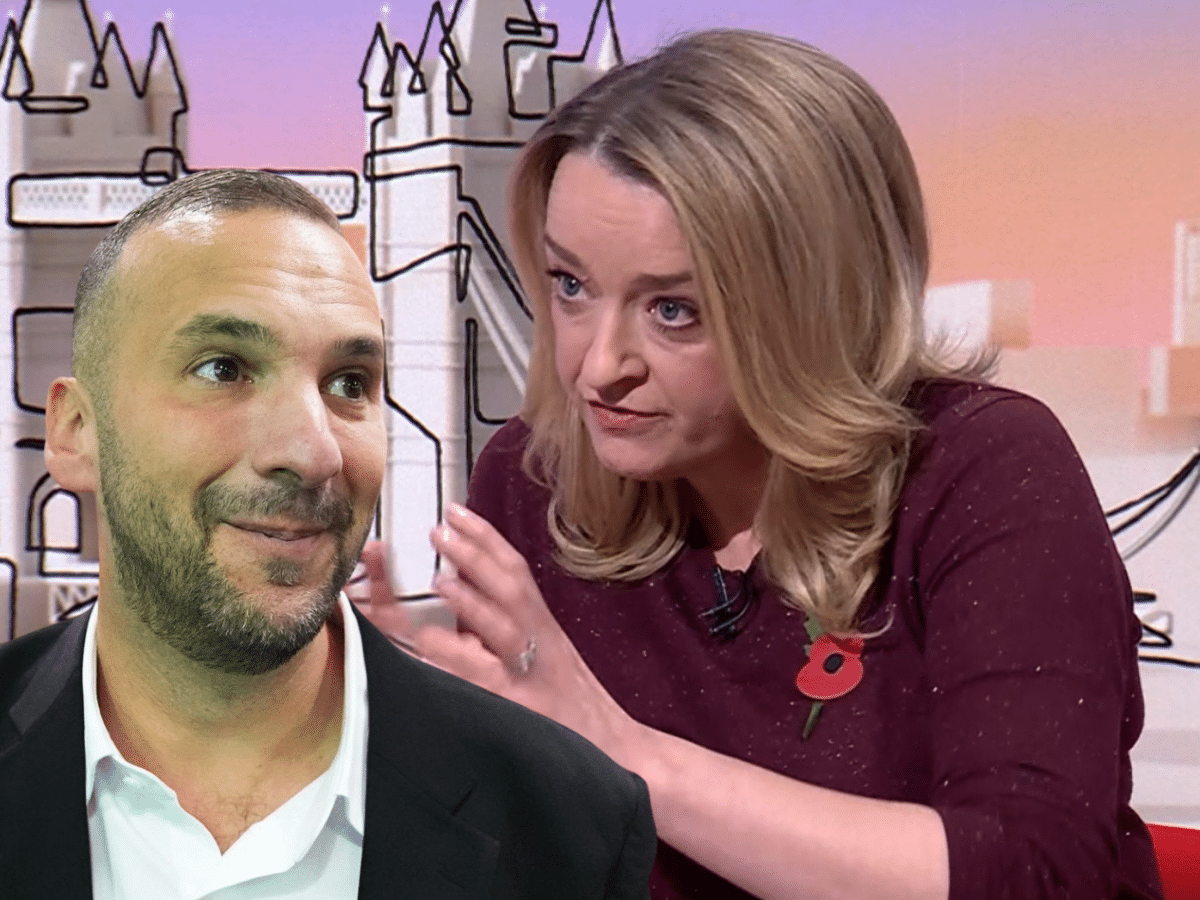
Over the weekend, on 28 February, BBC News published an article about how Zack Polanski and Nigel Farage are actually quite similar. If you think about it. Honest.
The Laura Kuenssberg-penned ‘in-depth’ article ran with the headline:
Polanski and Farage don’t agree. But they have more in common than you might think.
Any long-time readers or, indeed, casual observers will know that we at the Canary aren’t exactly massive fans of Kuenssberg. You know, what with her being a mouthpiece for lowest-common-denominator state propaganda and all. However, this article in particular really did take the absolute piss.
Let’s take a read, shall we?
Poor Polanski gets the Kuenssberg treatment
Kuenssberg starts off strong in her introduction, setting the tone for the piece:
Before you scream, burst out laughing, or think I have lost my marbles, of course, there are very big differences between them.
The Greens talk about a climate emergency. Reform UK calls the government green plans, “net stupid zero”.
Are we genuinely saying ‘a climate emergency now? I wonder which climate emergency he’s talking about? Might the overwhelming scientific consensus back him up in talking about it?
We then move on to one of the key parts of Kuenssberg’s argument:
Both parties have been growing incredibly quickly, attracting thousands upon thousands of new members.
In an era when many members of the public are sick of politicians, they are both doing something right, and pulling people in.
They’re… both successful leaders for alternative parties. My Lord, the BBC is really bringing out the big guns. This is the kind of insightful political analysis I don’t pay my TV license for.
Shock links of politics and media
We really get into the thick of it when Kuenssberg notices that politics and the media are closely related:
Having seen them both with members of the public, not just in the TV studio or in Parliament, both men appear to enjoy campaigning. […]
Conveniently for the politicians (and not true for all), they both appear to rather like the attention.
They are both nimble on social media, and their parties spend huge amounts of time and effort on making sure their feeds are pumped full of fresh content.
Sure, I suppose not all politicians enjoy the limelight. However, manipulating that media attention is what being a politician… is. They’ve also learned to do it on the computer, in a way that was only invented three decades ago. Admittedly, that’s fairly quick, in political terms.
Sordid pasts
Both politicians also have histories with other parties:
Both Farage and Polanski like to be seen as disrupters, intent on shaking things up.
But it’s worth remembering they both have histories with other political parties that go back some years.
Once upon a time, Nigel Farage was a Conservative, although he disputes whether he was offered a safe Tory seat or, as others recall, went on the hunt for one.
Zack Polanski wanted to stand as a Lib Dem MP, and was cross when he wasn’t put forward.
See now, this is an interesting point. It’s a shame it wasn’t really enough to create an article without a bunch of pointless filler.
It’s also a shame that Kuenssberg didn’t manage to examine that Farage (and most of his party) came from the same establishment party he’s now criticising. Oh, and then the ruinous UKIP after that, and then the Brexit Party (before the name-change).
Meanwhile, Polanski is at least trying to be an alternative voice – even as part of a bunch of wet Lib Dems.
The apocalypse and immigrants: basically the same
However, it’s when we get to the causes behind the Greens and Reform that Kuenssberg really hits a new low:
And while they’ve both been rapidly building new political forces, they’ve both been based on old architecture that grew out of a single cause.
Again, the Green’s ‘single cause’ is preventing global annihilation. That’s a pretty big one, if you ask me – global, even. Meanwhile, Reform’s (and UKIP’s) centerpiece policies have always revolved around immigrant-bashing.
These two things are not even in the same league.
Beyond that, Kuenssberg tries to equate Reform’s repeated racism and Islamophobia with the Greens statements of fact:
And both Reform and the Greens are willing to push the conventions of what traditional UK politicians would find acceptable – or what they believe would make them electable. […]
That might be Reform talking about wanting a return to what they describe as the UK’s “Judaeo Christian heritage”, one of their MPs Sarah Pochin complaining about TV adverts being “full of black people, full of Asian people”, or focusing on grooming gangs at the start of last year. […]
For Polanski, it’s talking about legalising and regulating hard drugs, or speaking out against Israel’s military action in Gaza, and accusing Labour of being “complicit in genocide”.
So, both parties are handling sensitive issues, are they? On the right, we have some absolute bile about there being too many brown faces on telly. Oh, and hammering the racist conflation of organised rape with migrant communities. Meanwhile, Reform’s treasurer was busy palling around with Epstein.
And on the left, we have… policies based on solid evidence that drug legalisation and regulation will save lives. Then, there’s also the simple acknowledgement that Israel is committing genocide, and Labour are complicit.
These are facts. Unfortunately, BBC News hasn’t really been bothering with facts in recent years, has it?
We sign off with a final damning indictment:
But Nigel Farage and Zack Polanski have one last thing in common: they are not out to just compete alongside their traditional rivals.
It might sound a stretch, but both say they intend to replace them for good.
Knock me down with a fucking feather, would you?
Featured image via the Canary

A reporter told an Israeli spokesperson his country does not have the “moral high ground” following the joint Israel-US strikes on Iran.
Israel said the attacks were “pre-emptive” to stop Iran acquiring nuclear weapons and firing at their own country.
Meanwhile, when he announced the bombing over the weekend, US president Donald Trump said his objective was to “defend the American people by eliminating imminent threats from the Iranian regime”.
The strikes took out Iran’s supreme leader Ayatollah Ali Khamenei. Iran has since launched retaliatory strikes on Israel and US bases across the Middle East.
Standing outside one of the targeted buildings in Tel Aviv, Israel’s foreign affairs spokesperson Oren Marmorstein began criticising the Iranian attacks.
But reporter Secunder Kermani from Channel 4 News said: “Khamenei, the Iranian regime, have clearly done terrible things, particularly to their own people, but your prime minister is a wanted war criminal.”
The International Criminal Court issued an arrest warrant for Benjamin Netanyahu in late 2024, saying he was a co-perpetrator for war crimes including starvation and crimes against humanity in Gaza.
So Kermani put it to Marmorstein: “You don’t have the moral high ground here at all.”
“This is a war crime,” the spokesperson replied, pointing to the destroyed buildings. “Targeting civilians. The Iranian regime is targeting not only us in Israel, they are targeting the entire region.”
“What about the hundred of so schoolgirls in Iran killed in a strike?” Karmeni replied.
Iranian state media reports that 148 people at a girls’ school in southern Iran were killed by the attacks.
“This must stop, this is what we are trying to do,” the spokesperson said. “Next question, please.”
Kermani’s challenge comes after the BBC’s international affairs editor Jeremy Bowen called Trump and Benjamin Netanyahu’s strikes “a war of choice”.
He said: “The Islamic regime is certainly their bitter enemy. But it is hard to see how the legal justification of self-defence applies given the huge disparity of power between the US and Israel on one side and Iran on the other.”
Israel has escalated its attacks on Lebanon. Much of the media has framed the renewed strikes as a response to Hezbollah attacks on Sunday 1 March 2026. But, Israel has been regularly attacking Lebanon – particularly in the south of the country – since the 2024 ‘ceasefire’.
Hezbollah reportedly expects a ground invasion. The fact 100,000 Israeli reservists have been called up suggests their fears may be well founded. It also said it seeks to restore the regional balance of power as Israel and the US wage war on Iran – killing hundreds so far. The UK has now entered the war too.
France 24 reported on 2 March:
Israeli strikes on Lebanon killed at least 31 people on Monday, authorities said, following rocket fire from Tehran-backed militant group Hezbollah after the killing of Iran’s supreme leader.
The Washington Post’s Tel Aviv reporter posted on X:
In a news briefing, @IDFSpokesperson said Israel struck Hezbollah targets in Beirut and elsewhere in Lebanon that morning after the group claimed responsibility for a rocket and drone attack on Israel. “We targeted dozens of headquarters and senior commanders of the…
— Lior Soroka (@liorsoroka) March 2, 2026
He confirmed Israel had also called up a large number of reserves:
He also said the IDF called up nearly 100,000 reserve troops but refused to say whether the Israeli military was preparing for ground operations in Lebanon.
Hezbollah operations
The Hezbollah-aligned Al Ameen Network said:
Why did the resistance enter the war today of all days?
In short, Israel’s mobilization of 100,000 reserve soldiers indicates a plan for a ground invasion of Lebanon. This number of troops is not typically associated with a war with Iran, which is primarily characterized by air and missile strikes.
They said Israeli PM Benjamin Netanyahu was shaping to attack the south:
The mobilization of such a large Israeli ground force reflects Prime Minister Benjamin Netanyahu’s inclination to launch a ground operation inside Lebanese territory.
And that Hezbollah, an Iranian ally, would fight to restore the ‘defence equation’ and halve Israeli attacks:
Conversely, Hezbollah’s entry into the conflict alongside Iran strengthens its chances of restoring the deterrence equation it considers lost, and aims to halt the Israeli attacks that have continued since the ceasefire.
You can read months worth of reporting and analysis from the Canary here. It covers Israel’s colonialist water wars, illegal spraying with cancer chemicals, bombings, drone strikes and far-right settler incursions in detail.
Israel evidently wants to expand into Lebanon, whose territory its most fanatical citizens claim as their own.
Featured image via the Canary
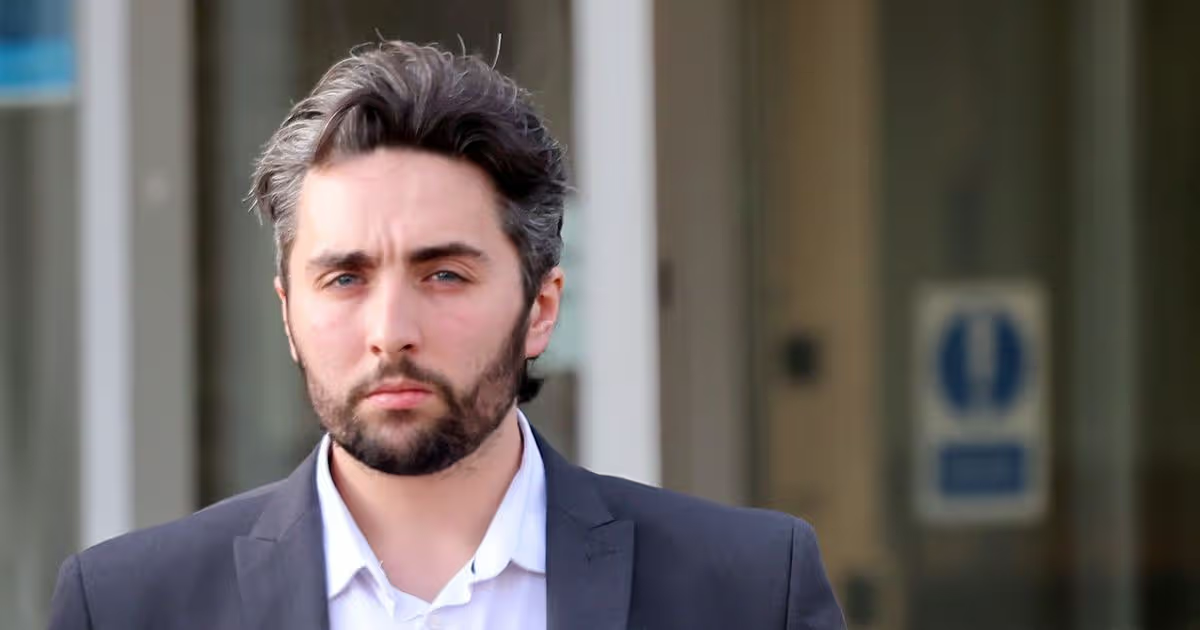
Man accused of rape at Green Man Festival sobs as jury delivers verdict

XOM Shares Reach Record Peak Amid Escalating Middle East Tensions

Raye’s This Tour May Contain New Music Review: Escapism Singer Continues To Level-Up As An Artist


-

 Sports7 days ago
Women’s college basketball rankings: Iowa reenters top 10, Auriemma makes history
-

 Politics7 days ago
Nick Reiner Enters Plea In Deaths Of Parents Rob And Michele
-

 Fashion3 days ago
Weekend Open Thread: Iris Top
-

 Business6 days ago
True Citrus debuts functional drink mix collection
-

 Politics4 days ago
ITV enters Gaza with IDF amid ongoing genocide
-

 Tech2 days ago
Unihertz’s Titan 2 Elite Arrives Just as Physical Keyboards Refuse to Fade Away
-
Sports3 days ago
The Vikings Need a Duck
-

 Crypto World6 days ago
XRP price enters “dead zone” as Binance leverage hits lows
-

 NewsBeat5 days ago
Cuba says its forces have killed four on US-registered speedboat | World News
-
 NewsBeat2 days ago
Dubai flights cancelled as Brit told airspace closed ’10 minutes after boarding’
-

 Tech6 days ago
Unsurprisingly, Apple's board gets what it wants in 2026 shareholder meeting
-
 NewsBeat5 days ago
Manchester Central Mosque issues statement as it imposes new measures ‘with immediate effect’ after armed men enter
-
 NewsBeat2 days ago
The empty pub on busy Cambridge road that has been boarded up for years
-

 NewsBeat1 day ago
‘Significant’ damage to boarded-up Horden house after fire
-

 NewsBeat2 days ago
Abusive parents will now be treated like sex offenders and placed on a ‘child cruelty register’ | News UK
-
 NewsBeat6 days ago
Police latest as search for missing woman enters day nine
-

 Entertainment9 hours ago
Baby Gear Guide: Strollers, Car Seats
-

 Business5 days ago
Discord Pushes Implementation of Global Age Checks to Second Half of 2026
-

 Business4 days ago
Only 4% of women globally reside in countries that offer almost complete legal equality
-
 Tech3 days ago
NASA Reveals Identity of Astronaut Who Suffered Medical Incident Aboard ISS