
Politics
Mandelson emails won’t come quick, Starmer now says


Despite pressing public concern, Keir Starmer is saying the ‘materials’ linked to the thrice-disgraced Peter Mandelson will not come quickly. And as you might expect, people are not happy:
He will try to buy time and get this kicked into the long grass with investigations and enquiries reporting years hence. And even then likely delayed until a summer recess in years time. This is what all guilty PMs do.
— Freamon’s Burner (@FreamonB) February 6, 2026
Mandelson cover up?
On 6 February, Skwawkbox reported for the Canary that the police raided Mandelson’s properties. If you’re a longtime Mandelson disliker, it will warm your heart to see the following image (although we would have preferred riot cops booting down his doors):
BREAKING: police raid Mandelson’s properties in Epstein hit
Police have raided two properties belonging to disgraced former Starmer adviser Peter Mandelson over his Epstein linkshttps://t.co/0xerIGeX6S
— Canary (@TheCanaryUK) February 6, 2026
God knows what the police will uncover in Mandelson’s lair.
At the same time, the security services are looking into Starmer’s decision to make Mandelson the ambassador to the US. As Sky News reported above:
We’re hearing that Sir Keir Starmer has warned a very significant volume of material will likely need to be reviewed in relation to Lord Mandelson’s appointment as ambassador to the US. But the Prime Minister said the government wanted to ensure that Parliament’s instruction is met with the urgency and transparency it deserves. That’s coming in a letter to the intelligence and Security Committee this evening.
So, the Prime Minister warning that a significant volume of material will have to be reviewed in relation to that appointment of Lord Mandelson as ambassador. And the government wants to ensure that Parliament’s instruction is met with the urgency and transparency it deserves.
The first thing to point out is that when Starmer made Mandelson the ambassador to the US, he knew that the guy had maintained a relationship with Jeffrey Epstein after the paedophile was convicted for sex crimes.
This, by itself, should be enough for Starmer to resign.
Last September, Keir Starmer told the Commons that he had “full confidence” in Peter Mandelson.
Well, the public has no confidence in him.
He must resign. pic.twitter.com/h5YbuhL1I3
— Zarah Sultana MP (@zarahsultana) February 6, 2026
And as we’ve highlighted over and over again; it wasn’t just Starmer who knew — everyone knew. The reason it wasn’t a scandal then is because the British media is a freakshow with a selective memory:
This article came out in the FT over a year before Starmer appointed Mandelson
Starmer knew everything
Another powerful man who failed Epstein’s victims because he didn’t care
Starmer has to go. Now https://t.co/aSYRHCPbLk pic.twitter.com/ICn9OUWsX0
— Matt Kennard (@kennardmatt) February 5, 2026
People are worrying that these Mandelson Files will be full of unjustifiable redactions:
Right from the Trump playbook. https://t.co/BMLe5Piuec
— Tammy Twotone (@TheTammyTwotone) February 7, 2026
As we’ve covered, this is precisely what’s happening with the Epstein Files (although even then, enough got out to finish Mandelson; imagine what we’d know about him without all those black bars).
How long can this drag on for?
There could be good reason for security services to spend time vetting these files. The problem for Starmer is that no one trusts him, so this all just looks like a cover up.
If Starmer remains in position, he’s going to suffer months of devastating new revelations which further dent his rock-bottom popularity. Labour MPs know that; the question is do they have the backbone to give Starmer the boot before he can inflict maximum damage?
Featured image via Epstein Files


The US navy is to blockade the Strait of Hormuz to all ships after talks to end the Iran war collapsed, Donald Trump has announced.
In a post on Truth Social, the US president accused Tehran of “extortion” for charging tolls for oil tankers to use the vital waterway.
Any ships which have paid money to Iran in order to safely sail through the strait will also be hunted down, Trump said.
His comments came after his vice-president JD Vance said that talks between US and Iranian officials in Pakistan had broken down without a peace deal being agreed.
Trump insisted the talks “went well”, but had broken down over Tehran’s refusal to give up its ambitions to build a nuclear bomb.
He said: “Effective immediately, the United States Navy, the Finest in the World, will begin the process of BLOCKADING any and all Ships trying to enter, or leave, the Strait of Hormuz.
“At some point, we will reach an “ALL BEING ALLOWED TO GO IN, ALL BEING ALLOWED TO GO OUT” basis, but Iran has not allowed that to happen by merely saying, “There may be a mine out there somewhere,” that nobody knows about but them.
“THIS IS WORLD EXTORTION, and Leaders of Countries, especially the United States of America, will never be extorted. I have also instructed our Navy to seek and interdict every vessel in International Waters that has paid a toll to Iran. No one who pays an illegal toll will have safe passage on the high seas.”
Trump said the US navy will destroy any mines which have been laid in the strait, and warned that “any Iranian who fires at us, or at peaceful vessels, will be BLOWN TO HELL”.
“As they promised, they better begin the process of getting this INTERNATIONAL WATERWAY OPEN AND FAST,” he added.
In a separate post, he went on: “Iran will not be allowed to profit off this Illegal Act of EXTORTION. They want money and, more importantly, they want Nuclear.
“Additionally and, at an appropriate moment, we are fully “LOCKED AND LOADED,” and our Military will finish up the little that is left of Iran!”
Subscribe to Commons People, the podcast that makes politics easy. Every week, Kevin Schofield and Kate Nicholson unpack the week’s biggest stories to keep you informed. Join us for straightforward analysis of what’s going on at Westminster.
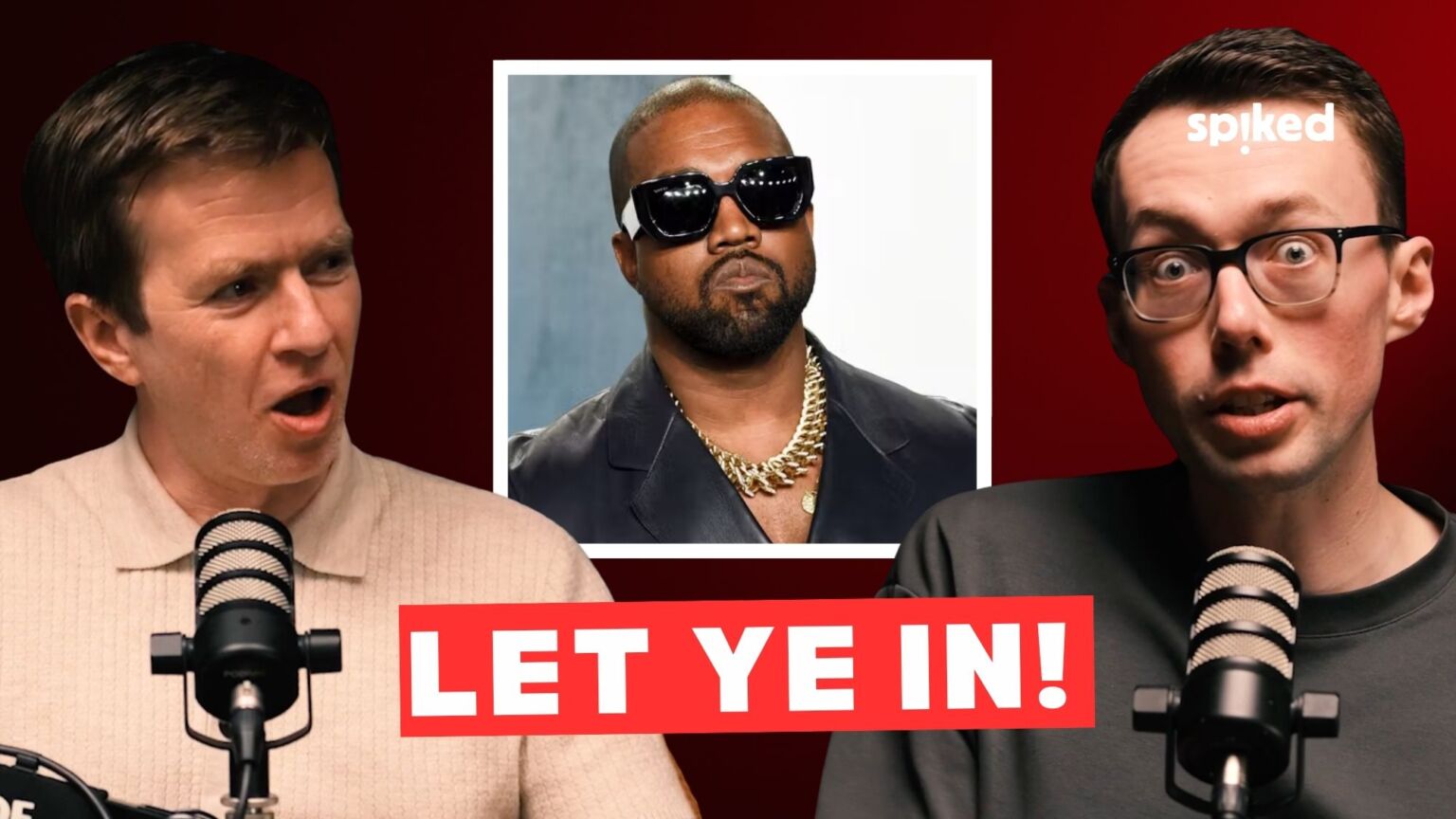
The post The hypocrisy of Britain’s ban on Kanye West appeared first on spiked.

When you have a bad boss keeping you down, your best way to fight back might be to try “malicious compliance,” according to a growing online movement of disgruntled workers.
For them, a maliciously compliant act is a creative form of resistance against their boss’ marching orders. You might fulfill what you’re asked in order to stay employed, but your actions will not be exactly what the person wanted.
Servers say they do it to fight back against entitled customers. If a rude customer asks for extra butter, they’ll bring back a ridiculous amount of butter to the table, for example.
According to the subreddit that documents acts of malicious compliance, it involves any act when people are “conforming to the letter, but not the spirit, of a request.” Popular examples include: If a boss asks you to dress better without specifying what that means, you wear a suit. Or if a boss orders you to be the only team to work in the office on Fourth of July, you expense a barbecue feast costing thousands of dollars.
But if you decide to try this yourself, proceed with caution. Career and legal experts say this can help you survive under a bad boss –– or it can spectacularly backfire.
For micromanagers, malicious compliance can give them a taste of their own medicine.

Yana Iskayeva via Getty Images
Micromanagers can often be insecure, rigid bosses who need constant unwarranted check-ins for reassurance that you’re working.
“Malicious compliance can work well against an insecure manager,” said Ryan Stygar, an employment attorney and author of the upcoming book, Get It in Writing: The Ultimate Guide to Your Rights at Work.
In this case, your malicious compliance is going above and beyond to comply with a micromanager’s demands. If they want a list of your daily tasks, you send long, bulleted emails.
“When you follow their instructions exactly, it exposes how inefficient those instructions really are,” he said. “For example, if they want to approve every email, their inbox quickly becomes a mess. I compare this [as] holding up a mirror to the micromanager. Once they see how burdensome the micromanagement has become, they typically back off.”
It helps to confirm that this is what they wanted. You might reply to a micromanager with, “Thank you for your instructions today. This confirms I will submit every client-facing email to you for approval before sending,” Stygar said. This response works because it “creates a paper trail,” he said. “It also locks in their expectations…It prevents them from ‘moving the goalposts’ and claiming you did not comply with their orders.”
“Now there is no confusion. If work slows down, you have proof showing why its not really your fault. With a reasonable manager, this may get them to back down,” Stygar said. “With a toxic one, it may not. But it will make it much harder for them to twist the facts either way.”
And if timing matters, mention that you sent their request by noon, per their last email, in your malicious compliance. “Now any delay is clearly tied to the process the micromanager imposed on you — not your performance,” Stygar said.
And this kind of strategic resistance might not be so malicious after all. If you do go above and beyond for a micromanager it might actually be “exuberant compliance,” said Mary Abbajay, president of leadership development consultancy Careerstone Group and author of Managing Up: How to Move Up, Win at Work, and Succeed with Any Type of Boss. “Exuberant compliance is when you’re giving them what they want and it’s not reflecting on your work,” she said.
For toxic bosses, it can be a protective response – but it can also have consequences.
Bad bosses can be difficult, but a toxic boss is a dismissive, demeaning boss that is trying to ruin your mental health.
A toxic micromanager, for example, is “trying to control you,” Stygar said. “They’re probably hoping you make a mistake so they can enjoy the power trip of jumping all over you.”
Typically, in these cases, malicious compliance is when you know what you’re doing will lead to a less efficient, more chaotic outcome for your team, but your preferred alternatives got rejected by your boss. If your horrible boss has a new workflow that is doomed to fail, you follow it because you had no choice, for example.
In these cases, your malicious compliance might actually be “protective compliance,” Abbajay said. “All you can do is survive a toxic boss. And if…giving them what they want is going to protect you until you can get yourself out of there, then I’m all for it.”
Ideally, you only do this kind of protective compliance while you actively job hunt for a better opportunity, because if you keep doing this, “you are never going to actually thrive, and you’re never going to get to find out your full potential,” Abbajay said.
But don’t be snarky about it or this defiance will backfire.
People who need to resort to malicious compliance to push back against their boss’ orders are not happy employees. They’re often scared, overworked employees who are just trying to get through each day. But don’t let your negative emotions seep into your malicious compliance. Stygar said that “malicious compliance works best as a defensive measure, not a revenge tactic.”
In his view, the “deadly sins” of malicious compliance are if you’re sarcastic in your response, if you purposefully slow work down, and if you try to embarrass or mock your boss.
“A toxic manager is often looking for ‘insubordination,’” Stygar said. “If you give them that opportunity, even by accident, they will take it.”
Instead, the safer but tedious approach is to maintain a neutral tone and document what nonsense your boss is asking you to do in case you need to prove yourself later.
“Keep copies of these exchanges for yourself. Build a record that shows exactly what they told you to do and how you followed it,” Stygar said.
And don’t do malicious compliance that makes it seem like you’re not good at your job.
“If your malicious compliance is delivering substandard work, then that actually isn’t going to reflect very well on you, because it’s still your work and your name is attached to it,” Abbajay said.
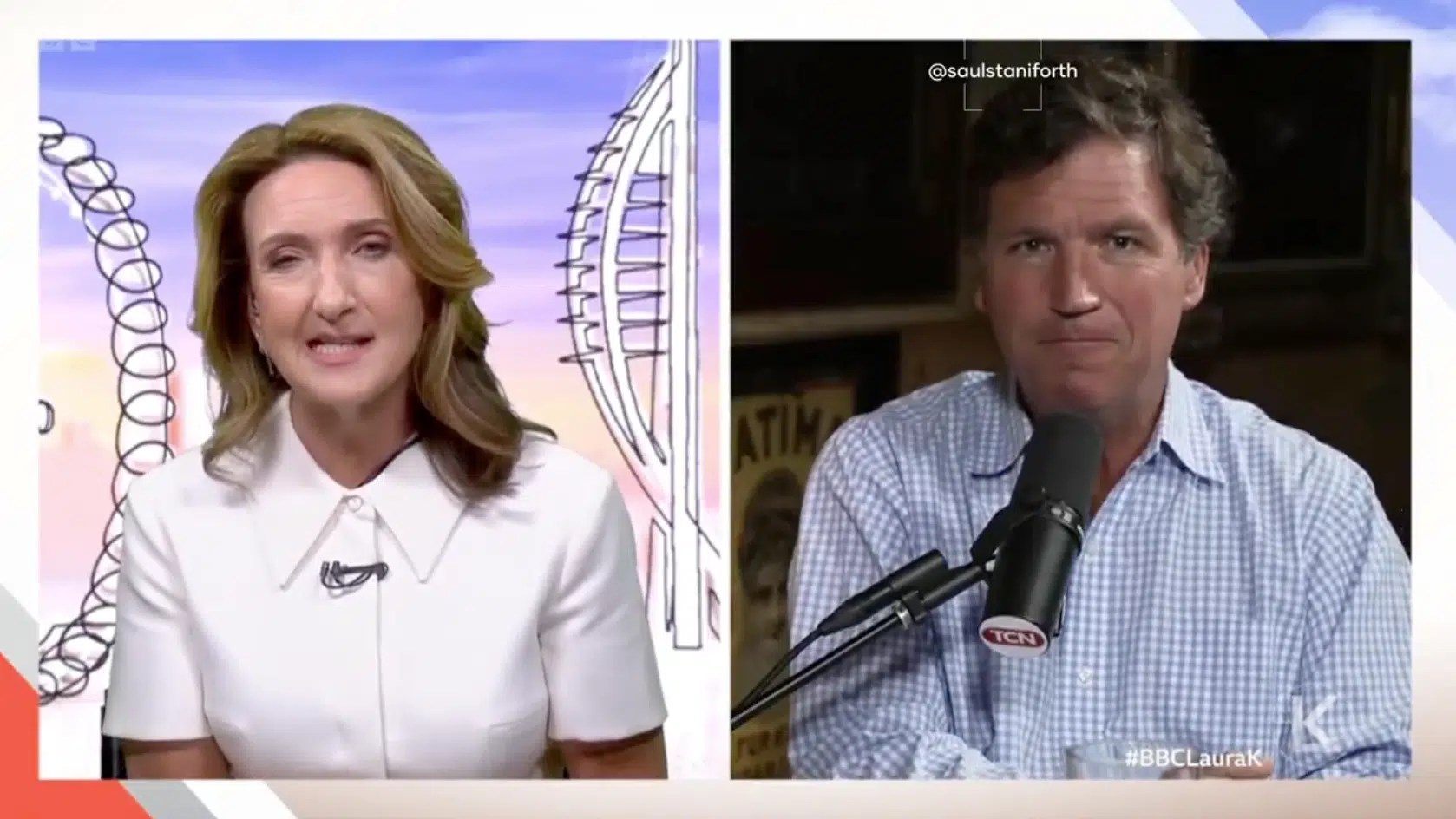
Palestine Action — On Sunday 12 April, Victoria Derbyshire interviewed Tucker Carlson on the BBC. At one point, Carlson suggested it’s a crime to criticise Israel in the UK. While this isn’t strictly true, it’s certainly the case that Keir Starmer’s government have limited the ways in which Britons can oppose Israel’s genocide.
He also made an absolutely brutal point that the BBC couldn’t answer: if not to suppress free speech, why did the government ban Palestine Action?
Carlson: “it is a crime for which you can be arrested.. criticising Israel. You say you’re for Palestine Action, you can be arrested..”
Derbyshire: “That is not true..”
“What is not true about that?”
“Palestine Action is a proscribed group. It is banned”
“Why is it banned?” pic.twitter.com/wHpB1wjXJd
— Saul Staniforth (@SaulStaniforth) April 12, 2026
Suppression
In the clip above, Derbyshire asked Carlson about the US and Israel’s war on Iran:
Do you think Keir Starmer has made the right calls in this war?
Carlson responded:
I don’t think Keir Starmer makes any calls about anything.
It’s a fair point.
Starmer has denied dragging us into the war while simultaneously allowing the US to use our bases. In other words, we’re in Trump’s war, and we’re in it because Starmer was too weak to say no.
Carlson later said:
It is a crime for which you can be arrested in Britain right now – criticizing Israel. If you say you’re for Palestine Action, you can be arrested. A lot of people have been arrested. So in other words, it is not legal in Britain to criticise another country.
Derbyshire responded:
That is not true-
Derbyshire attempted to steer the conversation back to the war, but Carlson said:
I’m sorry, but what is not what is not true about that?
Derbyshire could have acknowledged that the government has indeed clamped down on free speech related to Israel. Instead, she flat out denied what Carlson said. This was a problem, because part of what he said was “if you say you’re for Palestine Action, you can be arrested” – an undeniable fact.
Carlson continued:
Have people not been arrested in Britain for criticising Israel? They certainly have been. There’s a videotape of it
Derbyshire noted that Palestine Action is a proscribed group, to which Carlson asked:
Why is it banned?
Exactly — why is it banned?
Carlson added:
It’s banned because the Israeli government wanted it banned.
How did the Palestine Action ban happen?
While we’re certain that the Israeli government was happy about the Palestine Action ban, we can’t say it happened because Benjamin Netanyahu gave the order.
At the same time, we can say that Israeli arms company Elbit Systems influenced the decision, as Channel 4 reported and Jonathan Cook summarised:
The four main takeaways from Channel 4’s documentary on Palestine Action last night:
1. It reminded us that the Starmer government’s proscription of the group as a terrorist organisation was done at the behest of Elbit Systems – the Israeli arms firm making killer drones used in Gaza targeted by Palestine Action.
Government officials regularly met with Elbit. A 2023 internal Home Office email, two years before proscription, states: “Reassure Elbit Systems UK and the wider sector affected by Palestine Action that the government cares about the harm the group is causing the private sector [arms industries].”
2. A senior official told the film-makers there was widespread belief among Home Office staff that the government was “wrong” to proscribe Palestine Action, and there was “disquiet” that the government was using Palestine Action as a way to curtail rights to protest and speech more generally.
3. The government’s terrorism adviser, Jonathan Hall KC, made clear that there was zero evidence of any links between Palestine Action and Iran – a claim leaked to the press by government officials on the same day Palestine Action was proscribed. Private Eye had already reported in November that the claim was concocted by a PR firm for Elbit Systems.
4. Additionally, Lord Walney, the government’s former “independent” adviser on political violence, who has been at the forefront of demanding even more draconian legislation to ban protest in relation to Israel and its genocide, struggled through his interview.
It was only too clear that his views on the subject had nothing to do with the public good but were shaped by his ties to the arms industries and his role as an Israel lobbyist.
What the programme made clear was that Starmer’s government made the unprecedented decision to declare Palestine Action a terrorist organisation not because the group is a terrorist organisation but because large corporations – arms firms like Elbit – have captured the UK government.
Oh, and for further evidence for how cucked the UK is by the US and Israel:
Surreal moment after the Tucker Carlson interview in which the former head of the UK intelligence services insists that Trump is being a “traditional” US president by “intervening in the Middle East, hanging out with Israel, and doing wars” 🫢 pic.twitter.com/QUPR05f6fI
— Nicholas Guyatt (@NicholasGuyatt) April 12, 2026
Shifting tides
In the US, Democrats and commentators have argued that Carlson is attacking Israel for cynical reasons. We’re sure that Carlson is thinking about his own career first and foremost, but that doesn’t change the fact that many of his criticisms about Israel and its relationship with the US are correct.
The dam of public opinion on Israel has burst at this point. Politicians can deal with that reality and join us on the right side of history, or they can get washed away.
Make no mistake; the proscription of Palestine Action was and always has been an attempt to limit criticism of Israel.
We oppose genocide, and we support all those who are saying the same thing.
Featured image via the BBC

Morgan McSweeney is the man who manoeuvred Keir Starmer into power. At one time, this was something McSweeney could brag about; now it’s like admitting to being the guy who shat in the pool.
Not satisfied with bringing his own party to the point of electoral oblivion, McSweeney is now rumoured to have his sights set on Ukraine:
EXC w/@Gabriel_Pogrund
Morgan McSweeney will attend a security conference in Ukraine this month as he considers his post-Downing Street career
He is understood to be compelled by the question of how AI will affect the next election in Ukraine, which he believes will be one of…
— Lara Spirit (@lara_spirit) April 11, 2026
Haven’t the people of Ukraine suffered enough?
Morgan McSwAIny
The above post finishes:
He is understood to be compelled by the question of how AI will affect the next election in Ukraine, which he believes will be one of the most consequential in recent European history
Friends believe he is interested in helping Zelensky in any future contest
Oh, we’re sure McSweeney is interested in how AI will affect the Ukrainian election. And by that, we mean we’re sure the wretched, little weasel will be the one using AI to affect the Ukrainian election.
McSweeney, 48, is particularly interested in the role AI could play in elections in Ukraine. According to the International Panel on the Information Environment, an independent group of Swiss-based scientists, AI was used in more than 80 per cent of elections in 2024, when a record number of countries held contests.
It’s difficult to understand what this means, because there are multiple technologies we now refer to as ‘AI’. The reality is it’s probably closer to 100%, because Western politicians are inherently lazy and feckless people, which means many of them are using ChatGPT to write emails and respond to constituents.
The Times added:
Russia, along with China and Iran, has a well-documented history of using the technology to disrupt elections, particularly using “deepfake” videos and bogus images, which the average voter may find difficult to identify.
Russia, China, and Iran, is it?
Is there another country which has famously leaned into AI?
— The White House (@WhiteHouse) May 3, 2025

The Trump regime have also used AI to present a false impression of its political enemies:

AI is definitely a problem, but let’s be real; that problem isn’t limited to the countries that the newspaper people tell us to be scared of.
Morgan McSweeney’s History
The Times added:
In 2024 a Russian operation used AI and other tools to mount a disinformation campaign in Romania, leading a court to nullify the results of the first round. A Russian campaign also created fake videos in last year’s presidential elections in Poland that suggested Ukrainian refugees were planning to disrupt voting.
Give McSweeney’s record, do you think he’ll be countering disinformation, or do you think he’ll be generating his own?
If you’re unfamiliar with said record, here’s what Paul Holden wrote in The Fraud:
McSweeney joined Labour in the mid-1990s as a receptionist and then a member of the party’s media operations. During the 2001 election he was given the task of feeding data into Peter Mandelson’s famed Excalibur computer that stored information to be used by the party’s rebuttal unit.
He was storing information to use against political enemies, in other words — using cutting edge technology to enact Mandelson’s ‘dark arts‘.
Is this the guy we want to be experimenting with how to use AI in elections?
Holden also wrote:
McSweeney is a long-time protégé of Peter Mandelson, the architect of New Labour who, in February 2017, publicly bragged that he was “working every day” to bring down Corbyn’s elected leadership. That doesn’t sound very unifying. Mandelson has been quoted saying of McSweeney:
“I don’t know who and how and when he was invented, but whoever it was . . . they will find their place in heaven.”
If Peter Mandelson or Morgan McSweeney make it to heaven, we’re pretty sure that means all known religions are wrong, because clearly righteousness was never the point.
Holden additionally noted:
McSweeney explained that the Labour Together Project had two missions: first, it had to prepare for when Corbyn eventually stepped down, identifying and developing a candidate who could swoop in to take Corbyn’s place. This role would eventually be played by Keir Starmer. …
Second, Labour Together had to “ensure” that Corbyn “lost badly”, according to Maguire and Pogrund. Only Corbyn’s resounding defeat in a general election would remove him from the scene and trigger a new leadership contest.
That’s correct; Labour bigwig McSweeney sought to ensure Labour lost a general election.
How could anyone could trust this rat to help them fight an election campaign?
Featured image via Kremlin (Wikimedia)

Victoria Derbyshire has slapped down Tucker Carlson after he claimed it was “not legal” in the UK to criticise Israel.
The right-wing podcaster made the bizarre allegation as he admitted Britain has “been shafted” by Donald Trump’s administration.
He had earlier accused the US president of being “a slave” to Israel over the Iran war.
Carlson, a former close ally of Trump, made his comments during an appearance on BBC 1′s Sunday with Laura Kuenssberg programme.
He said: “It is illegal, it is a crime for which you can be arrested in Britain right now criticising Israel.
“If you say you’re for Palestine Action you can be arrested, a lot of people have been arrested, so in other words it is not legal in Britain to criticise another country.”
Derbyshire interrupted to tell him: “That is not true.”
Carlson replied: “I’m sorry, what is not true about that? Have people not been arrested in Britain for criticising Israel? They certainly have been. There’s video tape of it.”
But Derbyshire hit back: “Palestine Action is a proscribed group, it is banned.”
Carlson said: “Why is it banned? It is banned because the Israeli government wanted it banned. I often criticise Britain, but I love Britain. I have family there and I don’t think Britons understand just how badly they have been shafted by the United States, and I am ashamed of that.
“I hope that our next president strikes a far more conciliatory tone with Britain and tries to help Britain because there are a lot of problems that will be incredibly obvious by the time of the next presidential election.”
Subscribe to Commons People, the podcast that makes politics easy. Every week, Kevin Schofield and Kate Nicholson unpack the week’s biggest stories to keep you informed. Join us for straightforward analysis of what’s going on at Westminster.
I have to be honest here. I couldn’t ever imagine the possibility of the Green Party leading an opinion poll.
Ever.
I would’ve bet my vital organs on Liz Truss returning to Number 10 in a blaze of glory before a load of sensible tree-huggers topped any UK opinion poll.
But the Green Party has quite clearly changed and it looks far closer to the broad church that Labour once claimed to be.
If the Green Party continues to open its doors to people from across the left, its chances of winning some form of power increase tenfold.
The Green Party surge
Labour is now a fully-fledged centre-right government, and it has narrowed its base considerably. This is why the Green surge is happening.
So, where is the ceiling for the Greens? If we use a national projection of the upcoming local elections, could we get an idea of where and how the Greens can make serious inroads into Labour heartlands?
And where does Your Party fit in to all of this? Or are they still electing a steering group to form a committee to vote on the best method of having a vote on something that needs a committee to vote for?
Don’t fucking ask me. I know nothing.
Just for one moment, take a look at where we are, and I will tell you why I think Britain needs the Green Party.
Back in April, last year, YouGov asked Britons where they would place themselves on the political spectrum.
About 29% identify on the left (including “slightly/fairly/very left-wing”), 26% on the right, 22% in the centre, and the rest, amusingly, don’t actually know. That’s nearly a third of the electorate that claim to be a lefty.
For arguments sake, let’s split that 22% that describe themselves as centrists, straight down the middle. This would take the left vote to around 40% and pretty much in-line with Jeremy Corbyn’s 2017 general election vote share.
Reinvigorating the left
Britain needs the Green Party.
With the painfully slow emergence of new left projects, some on the left have already moved to the Greens under its recent “eco-populist” shift. This really shouldn’t be seen as a problem because this pluralism strengthens the broader movement.
The Greens provide an organised, electorally viable home for eco-conscious socialists who want to fight Labour’s shift to the right and the dark forces of capitalism without waiting for the perfect socialist vehicle.
Importantly, the Greens stop the left from being reduced to a single personality or party, and they demonstrate that left ideas can win, quite comfortably, outside of the Labour brand.
Britain needs the Green Party.
I get why some people might view the Greens as insufficiently class-focused or too liberal on certain issues. I have voiced my own concerns in the past.
But the dominant view today — reflected in calls for tactical co-operation — is that Britain’s dire situation requires every left force pulling in the same direction, particularly where policies overlap.
The Greens are not the main engine of socialist transformation, but they are an essential part of the ecosystem that will make it possible. Without them, the left would be narrower, and considerably easier for centrists and the right to dismiss as outdated or unrealistic.
Humiliating Labour
Britain needs the Green Party.
Keir Starmer’s Labour has purged the left, worshipped fiscal rules, ramped up arms spending, and turned foreign policy into whatever Trump demands, but with added ‘principles’.
The Greens continue to humiliate Labour in councils and by-elections, forcing the centrists to pretend they care about Palestine, poor people, or those who aren’t in focus groups.
Jeremy Corbyn’s given them the nod because he knows without that constant pain in the arse on their left flank, Labour would sprint right so fast they’d overtake the Tories and start privatising the NHS for “efficiency savings”.
Britain needs the Green Party.
Let’s be completely honest here. Some corners of the left treat just transition like that awkward relative at Christmas — mentioned once then ignored.
The Greens have been banging on about fracking, airport expansions, and a world without nukes for decades. And right now, they are the reason we can’t just slap a red rosette on endless growth and call it socialism.
Plus, they do actually win on local stuff — cycle lanes, council housing, community energy — while the rest of us are still arguing about manifestos from 2019 and socialist purity.
The Green Party is like that friend who actually brings reusable carrier bags to the revolution.
They’re certainly not perfect and some of their activists do treat lentils as a personality trait, but they’re well organised, they win seats, and they help keep the broader left ecosystem alive.
We need the Green Party
Britain needs the Green Party.
Love him or not, Mr Polanski has become the necessary voice reminding us that when the sea levels rise, it won’t just be the Tories getting wet — we’ll all be in it together, up to our fucking necks in Thames Water sewage.
I believe we need to have some proper Greens in the mix rather than watch Starmer and Farage try, and fail to negotiate with the tide.
In my humble opinion, Britain needs the Green Party.
Featured image via the Canary
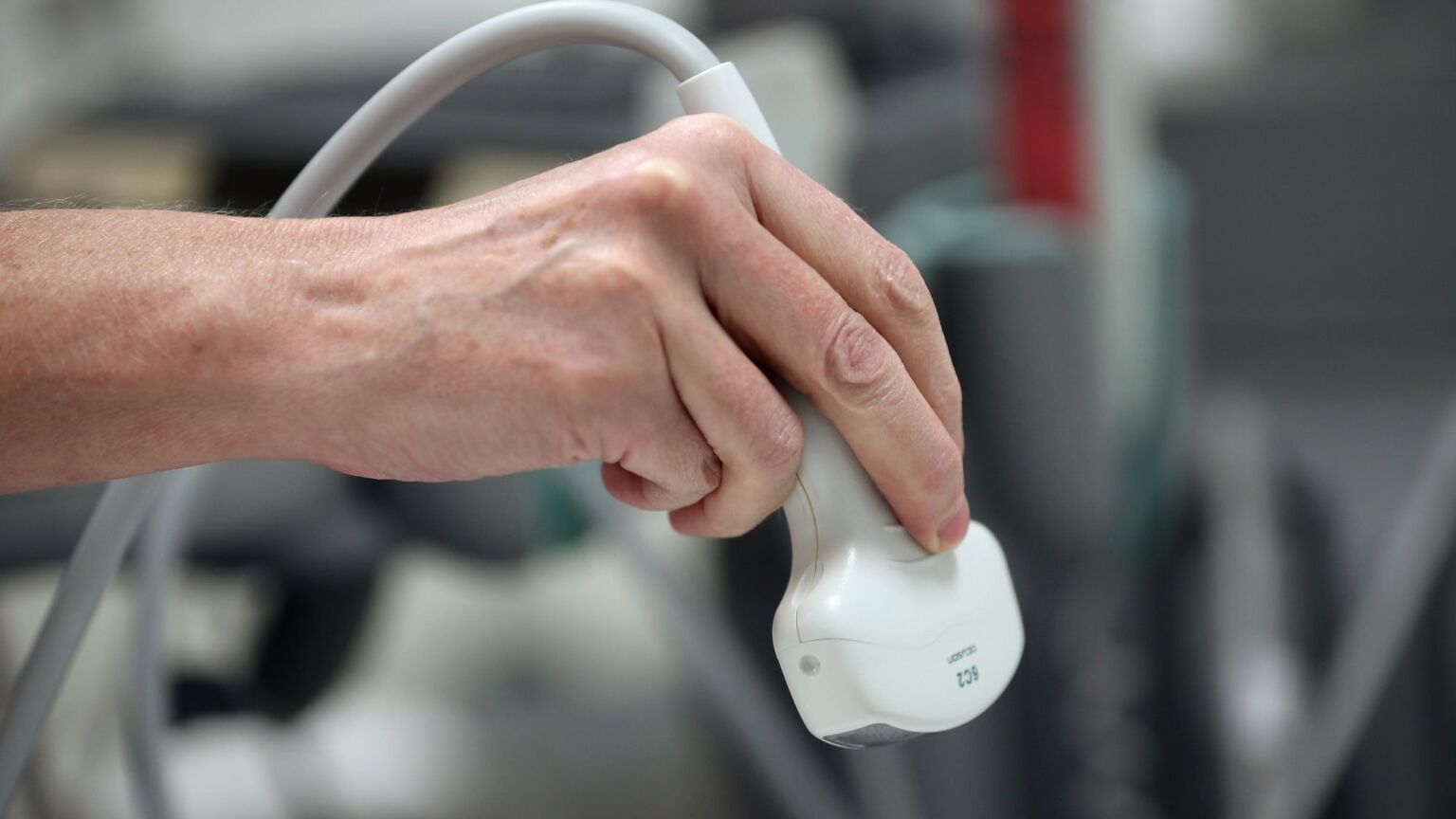
‘End Medical Misogyny’ is the title of a new campaign by Mumsnet, the women’s internet forum. It is based on a comprehensive study into the chronic dismissal of women who seek medical assistance from the NHS – particularly for conditions that solely affect females, such as polycystic ovary syndrome, endometriosis and adenomyosis.
The study examined more than a decade’s worth of posts from Mumsnet users. Close to 100,000 posts to the forum between 2015 and 2025 contain language consistent with women experiencing ‘dismissal, disbelief or de-prioritisation’ in the public-healthcare system. The stories range from being gaslit about the presence of symptoms to being left with debilitating uterine pain for years without answers.
Half of those surveyed believe they have been ‘dismissed, ignored or not believed by an NHS professional because of their sex’. Sixty-four per cent said they have been ‘explicitly told their pain or symptoms were “normal” or “in their head”’. A further 68 per cent believed the NHS fails to take women’s health concerns seriously. Disregard of pain was described as a ‘dominant feature’ among women in the dataset. Many report being treated as if their pain was ‘tolerable, expected or insufficiently urgent’.
I spoke to Elle, 33, whose experience mirrors these findings. ‘I first noticed symptoms when I was 16’, she said of her adenomyosis, a condition that causes the uterus to swell to up twice its normal size, and is often accompanied by excessive bleeding and severe pain.
‘When I was 19, I was told the contraceptive pill would help with my heavy periods, but the pain part was ignored entirely. When I was 30, a shortage of the pill meant I could no longer get it, and all of the symptoms returned tenfold once I stopped. For two years, I went to the doctors again and again, only to be given different types of contraception. Every time I asked if we could get to the root of the issue and fix it, I was ignored.’
Though adenomyosis affects up to 35 per cent of women, Elle had never heard of it. Her story reflects that of many young women for whom hormonal contraception – due to its effect of masking certain symptoms – is presented as a ‘fix-all’ solution, while the possibility of an underlying issue is waved away. By the time Elle managed to procure a pelvic ultrasound, she had been living with chronic pain for 16 years.
The experience of having to ‘fight’ for a diagnosis was shared by 31-year-old Nicole. Nicole only recently discovered she has hypothalamic amenorrhoea (HA), a hormonal condition which prevents ovulation. Every time she came off birth control, she would lose her period, sometimes for up to nine months at a time. ‘I was told it was “normal”’, she tells me.
‘But years passed, and I was still being told to “wait and see”. Advice was always “if you’re not trying to conceive right now, just go back on the pill”. I had never heard of HA and only came across it through doing my own research. Even when I was telling doctors I believed I had HA, I really had to fight to see an endocrinologist who could confirm. If I hadn’t been so insistent, I might still be living in the dark with no idea my condition is actually reversible.’
The Mumsnet study compiles many experiences like Elle and Nicole’s. Those who did receive treatment hardly fared any better: some describe being left ‘screaming’ in pain during unauthorised internal examinations, crying for anaesthesia during cervical cautery, and being told to stop ‘making a fuss’ while suffering an internal haemorrhage. In a first-world country, it should be absurd to hear of such things. Yet in the NHS, such stories are routine.
Predictably, since the report’s emergence, the phrase ‘medical misogyny’ has been parrotted with fervour, including by health secretary Wes Streeting. ‘Medical misogyny has no place within our NHS’, he promised.
One has to wonder, though, if this misses the point. Misogyny denotes an ingrained prejudice. This is not to say women haven’t encountered male doctors who were genuinely sexist – one participant in the study described being asked by a male gynaecologist (on the morning of her operation, no less) if she was sure the pain wasn’t just in her head. He even asked her husband for consent before sterilising her. But it doesn’t appear that the majority of such cases, whether in the Mumsnet study or elsewhere, can be easily blamed on malice towards women.
This is demonstrated by the crisis engulfing NHS maternity services. Despite over 99 per cent of midwives in the UK being female in March 2017, NHS England has had a £27 billion legal bill for negligent maternity treatment hanging over its head since 2019. In these instances, mothers were denied pain relief, subjected to unnecessary procedures and neglected after surgery – almost exclusively by other women.
Of course, if it’s an example of real misogyny we seek, we need look no further than the medical world’s ongoing failure to confirm what a woman even is. For years, the NHS assigned trans and nonbinary individuals (ie, men) to wards based on their ‘gender identity’. Meanwhile, Endometriosis South Coast, a charity claiming to support women with the painful and life-altering condition, just appointed a biological male as its parliamentary representative. UN Women, an organisation with the power to impact women’s health policy around the globe, selected a biological male – transgender model Munroe Bergdorf – as its first UK champion. I won’t linger too long on these stupidities, however – for once, it would be nice to talk about women’s issues without having to make reference to the men who pretend to be them.
British women clearly require a much higher standard of care than they’re getting. For my part, I’d like to see this remedied not only with much-needed improvement in ‘bedside manner’, but also by affording uterine conditions the level of research that their prevalence warrants. It is inexcusable that there have been more studies into male pattern baldness than into endometriosis, an incurable condition that can cause severe pain and infertility.
The NHS has been failing the British public for years. But the systemic neglect of women’s health is a new low. This is a scandal we must not stand for.
Georgina Mumford is a content producer at spiked.
On Saturday 11 April, the Independent published what may be an alarming headline to some:
Labour faces a green apocalypse at the local elections
By ‘some‘, we of course mean ‘the Starmer loyalists and councillors who are about to lose their jobs‘. And for them, the following message from the Green Party’s Zack Polanski almost certainly hasn’t helped:
Yes. That’s the plan.https://t.co/0qbagSvIYp pic.twitter.com/TSWfw2AKof
— Zack Polanski (@ZackPolanski) April 11, 2026
Starmergeddon coming from Polanski
The piece Polanski was responding to was written by the Independent’s chief political commentator John Rentoul. The Independent was considered left-leaning back in the day, but has never recovered that reputation since it backed the Tory-Lib Dem coalition in the 2015 election.
In his piece, Rentoul wrote:
I suspect that the commentary will overshoot, in that one two-party system, Tory vs Labour, will not be replaced overnight by another, Reform vs Green. As I wrote last week, both Reform and the Greens have ceilings to their support. Farage’s party is not considered respectable and Polanski’s is not considered realistic by enough people to make the total eclipse of the old parties possible yet.
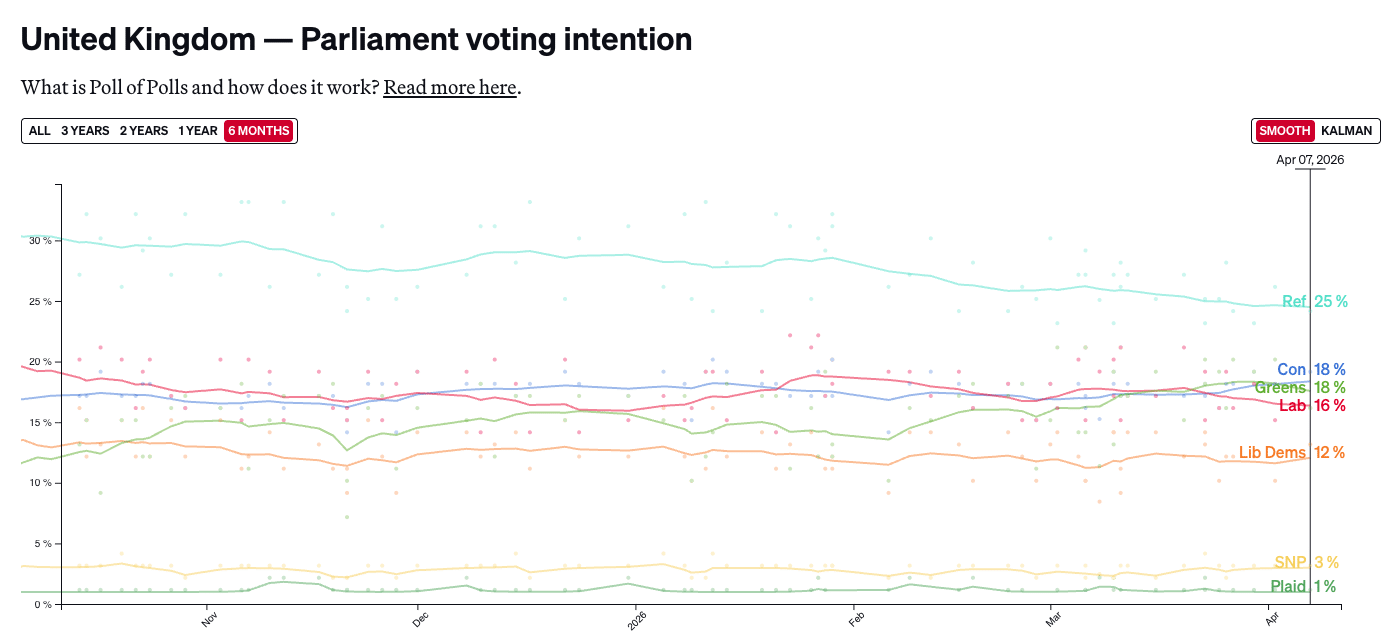
We’ve certainly seen evidence of Reform having a ceiling. The party rose to 30%+ in the polls, but has dipped below that since it accepted a mass exodus of ex-Tories:

The truth about the Greens under Polanski is it’s difficult to say where their ceiling is.
Let’s be real; until about six months ago, we all thought their ceiling was something like 10%. The fact that they’re now leading in some polls means we have to reconsider everything:
‼️BREAKING | Greens surge into LEAD (1st!!)
🟢 Grn: 21.4% (+2.1)
➡️ Ref: 20.9% (-1.4)
🔵 Con: 20.5% (+0.2)
🔴 Lab: 17.0% (-0.4)
🟠 Lib: 9.2% (-1.9)Poll: @LordAPolls, 26-30 Mar (+/- vs 19-23 Feb) pic.twitter.com/oDVw4cDaFC
— Stats for Lefties 🍉🏳️⚧️ (@LeftieStats) April 5, 2026
Rentoul also said of Polanski and the Greens’ surge:
How should Labour respond? There are two possible answers that will dominate the discussion on 8 May, which I think are both mistaken. One is to replace Starmer. That will have to be done at some point, but as long as the most likely replacement is Angela Rayner I do not think it would help. The other is to copy the Green Party’s policies.
Rentoul went on to say:
Instead of panicking and indulging in a leadership crisis or lurching to the left, Labour needs strategic patience, dealing with the difficult world situation as best it can, explaining the trade-offs and compromises needed. Reform has already peaked in the opinion polls, and the limits of the promises that won it control of several councils last year are becoming more evident. If the Greens win control of councils with a slate of untried paper candidates, they, too, will come up against the constraints of power.
The Greens are not ready to replace the Labour Party yet.
Labour and the UK at large are in a moment of crisis, in which it’s become clear to everyone that the longstanding ways of doing things don’t work; that the system we live under exists solely to direct wealth upwards, and that there’s very little wealth left to be lost.
As you’d expect, then, a UK political commentator is advising that the party of government should simply fiddle while Rome burns.
The status quo is dead
Our political leaders and commentators can bury their heads in the sand all they like, but the rest of us don’t have that choice.
We’re forced to confront the world as it is because the world is a confrontational force that demands our attention.
We feel it every time our bills increase; we feel it when our retirement age slips further and further away; we feel it when our loved ones suffer as they wait for hospital appointments which may never come.
At the same time, we do hope Labour listen to Rentoul over Polanski. It’s horrible advice, of course, but it will at least ensure it’s clear to everyone what Labour actually stand for.
Because let’s be real; Labour will never deliver actual change, but there is a risk they’ll offer enough phony to promise to retain what’s left of their dwindling vote share.
Featured image via Canva

Tucker Carlson has said Donald Trump is a “slave” to Israel over his decision to go to war in Iran.
The right-wing podcaster’s comments came as talks between the US and Tehran aimed at ending the conflict broke down without agreement.
Carlson, a former close ally of Trump, said the war was “the single biggest mistake that any American president in my lifetime has made”.
The US president, alongside Israel, launched military action against Iran on February 28.
Despite declaring victory on numerous occasions since then, the regime in Tehran remains in place, and has triggered a global economic crisis by effectively blockading the Strait of Hormuz.
On BBC 1′s Sunday with Laura Kuenssberg programme, Carlson said: “The whole thing is a fantasy. The United States went to war in Iran in order to effect regime change, to throw out the people who run the country and collapse it, at the behest and then the demand of Israel, and that’s a demand the Israelis have made of the US government for decades.
“President Trump fell for it, did it, and I think he recognised immediately that it was a mistake and that it is very difficult to extricate yourself from a war like this once it has begun.
“I think the net effect, and I think the president himself has said this, is at best to leave the regime in place, give that regime control over commodities that flow through the Strait [of Hormuz], in effect to make Iran more powerful than it was on February 27.”
Asked by presenter Victoria Derbyshire what his relationship is like with Trump now, Carlson said: “I feel sorry for him, as I do for all slaves. He is not free in this moment at all to do what is best for himself or his country.
“He’s not free and we learned that yesterday when Donald Trump announced a ceasefire, clearly with relief, and made its terms public and then that ceasefire ended within two hours because Israel potentially violated the terms by attacking not just southern Lebanon but the city of Beirut.”
Derbyshire then asked him: “Are you saying he’s a slave to Benjamin Netanyahu?”
Carlson replied: “I don’t think it’s as simple as he’s under the control of Netanyahu, but you could summarise it that way and you wouldn’t be totally inaccurate.
“We know this because the single biggest mistake that Trump or any American president in my lifetime has made was going to war with Iran in an effort to change its regime.”
Elsewhere in the interview, Carlson also denied that he is an anti-semite.
He said: “Unlike the UK, we have a first amendment. So if I was an anti-semite I guess I would just say so at this point, I don’t know why I would lie about it.
“But I have opposed it in public consistently for my entire public life.”
Carlson added: “Doubtless there are anti-semites who don’t like Israel. I’m not an anti-semite, I don’t hate Israel.
“The Israeli government steered the United States into a war that hurts the United States and the world. I’m offended by that, I didn’t want it and I’m mad about it now.
“I have every right to feel that way, that does not make me an anti-semite.”
Subscribe to Commons People, the podcast that makes politics easy. Every week, Kevin Schofield and Kate Nicholson unpack the week’s biggest stories to keep you informed. Join us for straightforward analysis of what’s going on at Westminster.

Lyons gang ‘dismantled’ after arrest of ‘key member’ of Kinahan cartel in Spain

D-Street week ahead: Q4 earnings, Iran-US talks outcome to drive markets in truncated trading week

OKX CEO Rips CZ Bitcoin Story as Dispute Escalates

Why Israel is blocking foreign journalists from entering

Bitcoin: We’re Entering The Most Dangerous Phase

Alan Cumming Brands Baftas Ceremony A ‘Triggering S**tshow’

bitcoin explained in hindi – bitcoin account kaise banaye | bitcoin kaise kharide aur beche | zebpay

Stephen Miller Faces $3.8B Financial Allegation Debate in US | PakCan News

NUR NOCH 30 STUNDEN! Trump droht Iran – Bitcoin vor dem Crash? (Ich sichere mich ab)
-

 Business7 days ago
Three Gulf funds agree to back Paramount’s $81 billion takeover of Warner, WSJ reports
-

 Politics2 days ago
US brings back mandatory military draft registration
-

 Fashion2 days ago
Weekend Open Thread: Veronica Beard
-

 Tech5 days ago
How Long Can You Drive With Expired Registration? What Florida Law Says
-

 Fashion6 days ago
Massimo Dutti Offers Inspiration for Your Summer Mood Board
-
 Sports2 days ago
Man United discover Nico Schlotterbeck transfer fee as defender reaches Dortmund agreement
-

 Crypto World3 days ago
Canary Capital Files SEC Registration for PEPE ETF
-

 Fashion5 days ago
Let’s Discuss: DEI in 2026
-

 Business2 days ago
Tesla Model Y Tops China Auto Sales in March 2026 With 39,827 Registrations, Beating Cheaper EVs and Gas Cars
-

 Crypto World4 days ago
Bitcoin recovers as US and Iran Agree a Ceasefire Deal
-

 Politics2 days ago
Malcolm In The Middle OG Turned Down ‘Buckets Of Money’ To Appear In Reboot
-

 Business2 days ago
OpenAI Halts Stargate UK Data Centre Project Over Energy Costs and Copyright Row
-

 Business22 hours ago
Ireland Fuel Protests Enter Day 5 as Blockades Spark Shortages and Government Prepares Support Package
-

 Tech6 days ago
Italian court says Netflix must refund customers up to $576 over price hikes
-

 Tech6 days ago
Gamer Restores the Original PlayStation Portal From Two Decades Ago
-

 Tech6 days ago
Haier is betting big that your next TV purchase will be one of these
-

 Tech6 days ago
The Xiaomi 17 Ultra has some impressive add-ons that make snapping photos really fun
-

 Tech6 days ago
Samsung just gave up on its own Messages app
-

 Politics2 days ago
LBC Presenter Mocks Trump Over Iran War Failures
-

 Tech6 days ago
Save $130 on the Samsung Galaxy Watch 8 Classic: rotating bezel, sleep coaching, and running coach for $369
You must be logged in to post a comment Login