
Politics
Mitchell Foyle-York: Jenrick is the internet’s latest right-wing casualty

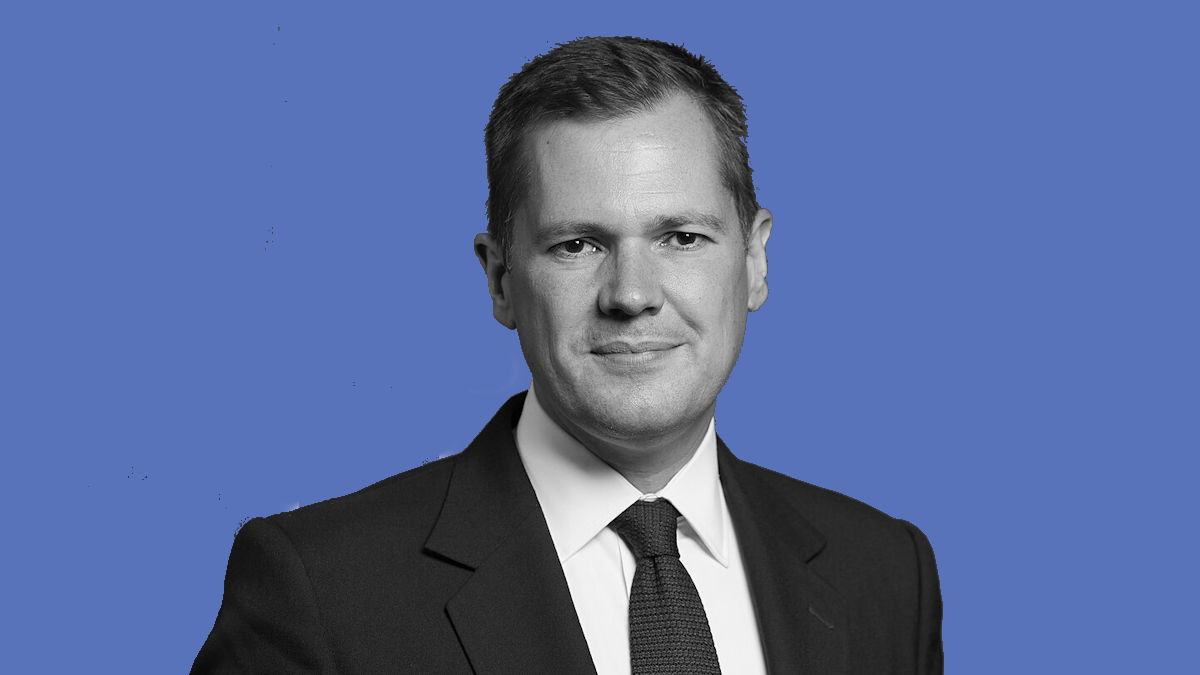
Mitchell Foyle-York-York is a freelance writer and works for the Roger Scruton Legacy Foundation.
In his first speech after defecting to become a Reform MP, given alongside Nigel Farage in a room jammed with bustling journalists, Robert Jenrick struck a consistent chord: vanity. Jenrick not only spoke of the need to “unite the right” but that he was the figure by which the right could be united.
His speech implied that a Tory Party without Jenrick lacked any serious right-of-centre coherence, and that his defection would be the final nail in the coffin for the Tories, paving the way for Reform to scoop up the right-of-centre vote. But don’t just take it from me. It was revealed in a leaked document that Jenrick’s own team had assured him that he would arrive on the Reform scene as “the new sheriff in town”. But has this proven to be the case? Is Jenrick really as influential and as popular as he likes to think?
There is still a long way to go until the next general election, but the (early) indicators are not good for Jenrick. In a YouGov poll, published the day after Jenrick’s defection was announced, it was recorded that Jenrick’s popularity rating sat at just 11 per cent, with 41 per cent of people polled saying they had an “unfavourable” view.
The same YouGov poll shows a somewhat similar trend among Tory and Reform voters (the people Jenrick was claiming to “unite”), with 39 per cent of Tory and 22 per cent of Reform voters having an “unfavourable” view of Jenrick. Furthermore, recent general election polling indicates either no gain or a small loss for Reform in national polls. As I have said, there is a long way to go, but all recent polling data suggests that Sherriff Jenrick is more Milky Bar Kid than John Wayne.
Jenrick’s opinion of himself and his political prospects may be a delusion, but delusions come from somewhere. How, even after losing the last Tory leadership election, has Jenrick been able to convince himself that he is one of the political heavyweights of our age? A clue lies in David Scullion’s review of Jenrick’s leadership campaign, published in The Critic in November 2024. In interviews with Jenrick’s own campaign team, Scullion reports that Jenrick’s spin-doctors had developed an “obsession with tweets… Everything had to go viral.” Herein lies the cause of Jenrick’s delusions: the internet.
If you were to look at Robert Jenrick’s X account, especially from the time of his leadership campaign, you might be forgiven for thinking that Jenrick was/is a very popular figure. After all, he gets plenty of ‘likes’ and ‘reposts’. The problem, however, is that the internet is not real life. Once you subtract bots and non-UK residents out of those social media engagements, what remains is barely enough engaged floating-voters to win you a seat on the local council, let alone a leadership contest!
The reality is that most people who engage feverishly with such online political content are usually ideologues with strange, niche, and sometimes even extreme, interests. They rarely reflect a significant chunk of the electorate, let alone the majority of it. Jenrick – as well as his team – appear to have been trapped inside an internet echo chamber… and it is clearly having some very damaging effects on his popularity and prospects.
The obsession with tweets, and the self-delusions the social media can cause, is certainly not limited to Jenrick. As many of us who have worked in small-c conservative politics know all too well, there is an increasing and worrying obsession with pleasing internet mobs. The internet and social media are certainly growing and important influences in modern politics, but its instant self-gratification and illusions of popularity does not warrant that we take leave of our senses and responsibilities.
Obsessions with silly pranks and videos for retweets, catering communications to a niche online crowd, or posting misleading clickbait to drive up engagement and traffic to Crowdfunders, can become a giant obstacle to undertaking serious, meaningful work that invokes the kind of change we want to see in politics.
Robert Jenrick’s defection, and how it went down with the public, offers a broader lesson for conservatives. Namely, that we should not go running to the enticing siren call of the political echo chambers of the internet right. Jenrick appears, as things stand, to have made himself unpopular by becoming so obsessed with catering to online audiences. But worse than unpopularity, he has also abandoned his own principles and conscience.
Once very much a figure on the left of the Tory Party, he now appears to simply go along with every frenzied fad of the populist right, who (by no coincidence) have a strong online presence. Many other politicians, commentators, and organisations on the right have followed a similar pattern. If this trend continues, if this prioritisation of social media clout over principle and serious work cements itself as the norm on the right, conservatives will find themselves in a very dark place indeed. We do not have to follow Robert Jenrick up the online garden path. Let us pave our own way that is grounded in dignity, principle, and a connection to reality.


The Eurovision Song Contest has been divisive for years. Initially this was a matter of taste. Some regarded it as a cavalcade of unlistenable cheese while others embraced it as a joyous celebration of cynicism-free good vibes.
Geopolitical much?
There was also always a body of opinion that felt the contest was little more than a forum for countries to act out their geopolitical loyalties or vendettas. The perpetual cliche sees countries with absolutely rotten songs getting full marks from nations under their thumb.
While, for example, shouting out “Greece!” before Cyprus announces its jury winner is a relatively harmless parlour game, there’s long been genuine disquiet over the role of Israel in Eurovision. Even though people have been saying “I didn’t know Israel was in Europe” every year, it’s been taking part since 1973. Under various names (currently Kan) the Israeli public broadcaster has been a member of the European Broadcasting Union since 1957.
In 2019, Israel hosted Eurovision. This was controversial, due to Israel’s ongoing abuses of the Palestinian people. Amid calls for viewers to boycott the show, many countries reported lower TV audiences.
Since Israel’s descent into full-blown genocide, the pressure has increased on Eurovision to kick Israel out. By May 2024, there were protests both outside the venue in Sweden and onstage from performers like Ireland’s Bambie Thug. Critics pointed out the inconsistency of Eurovision’s ban on Russia and embrace of Ukraine with its welcome for Israel and repression of Palestinian solidarity.
By 2025, Israel’s participation was turning in to a PR nightmare as the showrunners frantically edited out boos and some national broadcasters blanked Israel’s performance. It also emerged that Israel and its supporters were seemingly manipulating the public vote. This meant the Israeli entry nearly overtook Austria’s JJ. Eurovision has announced a raft of measures to counter vote rigging for the 2026 event.
However, Eurovision has failed to exclude Israel as a participant. As a result, Spain, Ireland, Slovenia, the Netherlands and Iceland have all withdrawn in protest.
The UK’s Eurovision entry
So far, the UK has shown no sign of following those countries. So the Palestine Solidarity Campaign has created a petition appealing directly to the UK’s contestant.
Sam Battle performs as Look Mum No Computer. He creates music using synths he’s built himself. Having contacted the UK Eurovision team to offer songwriting services, he was somewhat surprised to find himself as the UK entry.
The petition addresses Battle, beginning:
We, the undersigned, ask you to heed the Palestinian call to withdraw from Eurovision, to avoid being part of an event providing cover for Israel’s genocide, military occupation and apartheid against Palestinians.
In an email to supporters, the Palestine Solidarity Campaign explains the reasoning behind its call:
Whilst Palestinians are still facing Israel’s genocide against them, it’s obscene for events like Eurovision to include Israel, giving it a stage to conceal its atrocities.
Palestinians have called on us to boycott the Eurovision Song Contest over its inclusion of Israel.
Nicola, join us in calling on the UK contestant, Sam Battle, to heed the call from Palestinians and withdraw from the competition.
Just last week the Israeli government passed a hideous law introducing the possibility of the death penalty as a punishment for imprisoned Palestinians. In the West Bank, Israeli settlers continue to violently attack Palestinians, raiding villages and forcing them from their homes.
In this context, we are calling on Sam Battle to follow the lead of the five countries that have pulled out of Eurovision this year, and many thousands of artists, cultural workers and queer organisations who have called for a boycott.
It is now more than five months since the so-called ceasefire was declared, yet Israeli airstrikes are still killing Palestinians in Gaza. Just last week an airstrike on Khan Younis killed and injured dozens. Palestinians in Gaza are still facing starvation due to Israeli restrictions on access to aid.
Israel’s public broadcaster KAN, which participates in Eurovision, has repeatedly justified and incited this genocide on air, including by publishing a video of Israeli children singing “we will annihilate them all [Palestinians in Gaza].” This is who the European Broadcasting Union, and all the artists who perform in Eurovision, are choosing to stand alongside.
Palestinians are clear in their demands: we must boycott Eurovision until it stops being used to art- and pink-wash genocide.
We owe it to the thousands of incredible Palestinian musicians, artists and performers who have been injured, murdered, imprisoned and oppressed by Israel’s regime of apartheid and genocide. Join us to press the UK contestant to do the right thing and withdraw.
Featured image via the Canary
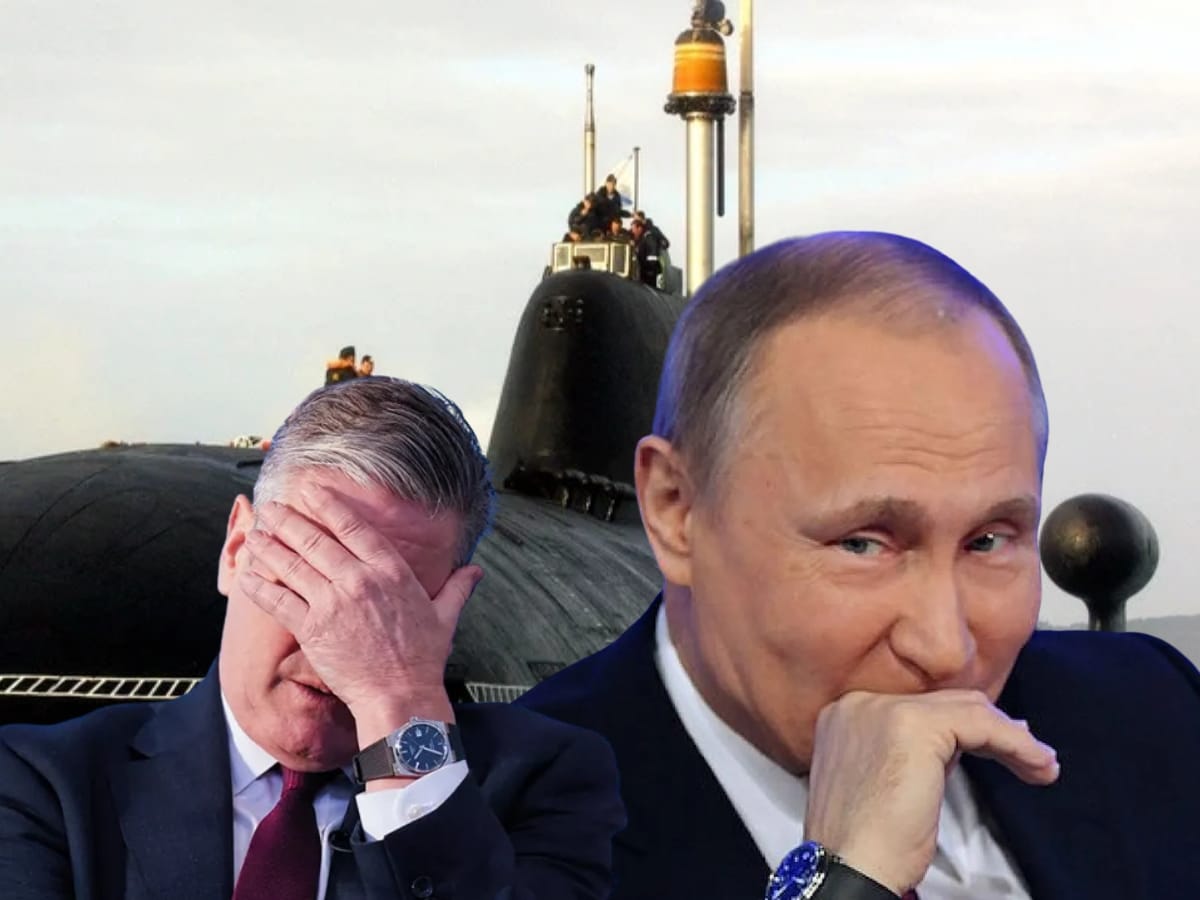
Defence secretary John Healey has claimed Russian submarines have been spying on UK underwater infrastructure. Healey held a special 9 April press conference to announce a month-long operation against UK underwater pipes and cables had been foiled. Without presenting any supporting evidence, he also claimed that too much focus on Iran was letting Russia’s president Vladimir Putin operate more freely.
Russia on the move (if you believe Labour)
Healey claimed the Russian mission had failed, but provided little firm detail on the location or nature of the operation – or the UK response.
I’m proud of our UK Armed Forces, who left these Russian vessels with no doubt.
Their movements were not covert as Putin planned.
Their attempted secret operations were exposed.
And they have now retreated. https://t.co/8L3XkjbM0O
— John Healey (@JohnHealey_MP) April 9, 2026
The Guardian said:
Declining to reveal precisely where the operation took place, Healey said it did not happen in UK territorial waters but in the exclusive economic zone that extends up to 200 nautical miles from the UK coastline, or where it meets the boundary of other nations’ zones.
The Russians reportedly used three submarines:
The submarines were a Russian Akula class nuclear-powered vessel and two deep-sea submarines from Russia’s directorate for deep sea research (Gugi), he added.
The alleged Russian spy ship Yantar, a regular sight in UK waters, was also involved.
Healey also commented:
The Russian action took place “while the eyes of many were trained on the Middle East”, because of the US-Israeli attack on Iran.
He said no damage had been detected to UK pipes or cables, but the navy would check.
Undersea drones
The last incident involving the Yantar was reported on 19 November. On 20 November, Healey was at the opening of a new underwater drone warfare factory in Plymouth.
This was the new UK headquarters of Helsing, an AI arms firm. As the Canary reported at the time:
They’ll be making unmanned submersible ‘gliders’. Powered by AI, the SG-1 Fathom will “deliver persistent underwater surveillance, detecting enemy activity to protect our sea lanes and undersea critical national infrastructure”.
Healey told the BBC at the time:
As we look to defend ourselves, seas and protect our cables, the uncrewed submarines or underwater gliders have the potential for playing a big part in the future,
It allows us to extend the range of how we can detect, how we can deter and if necessary, deal with any aggression that we face.
A number of Helsing staff, as we reported, also have past associations with the global tech firm Palantir — as well as BAE and Airbus.
And, as Drone Wars told the Canary in early November 2025:
Helsing is a new AI-focused military corporation, funded by Spotify’s Daniel Ek, and keen to gain a slice of the UK government’s promised £5 billion spending on drones, AI and other emerging technology.
It is not clear if Helsing technology was deployed to deter the alleged Russian operation. For a man who called a major press conference, Healey was very stingy with specifics. However, what may be significant about this ‘operational update’ is his attempt to re-focus the press and public away from the UK’s role in the disastrous war in Iran. And back on the more comfortable terrain of a much-hyped but nebulous Russian threat.
Featured image via the Canary
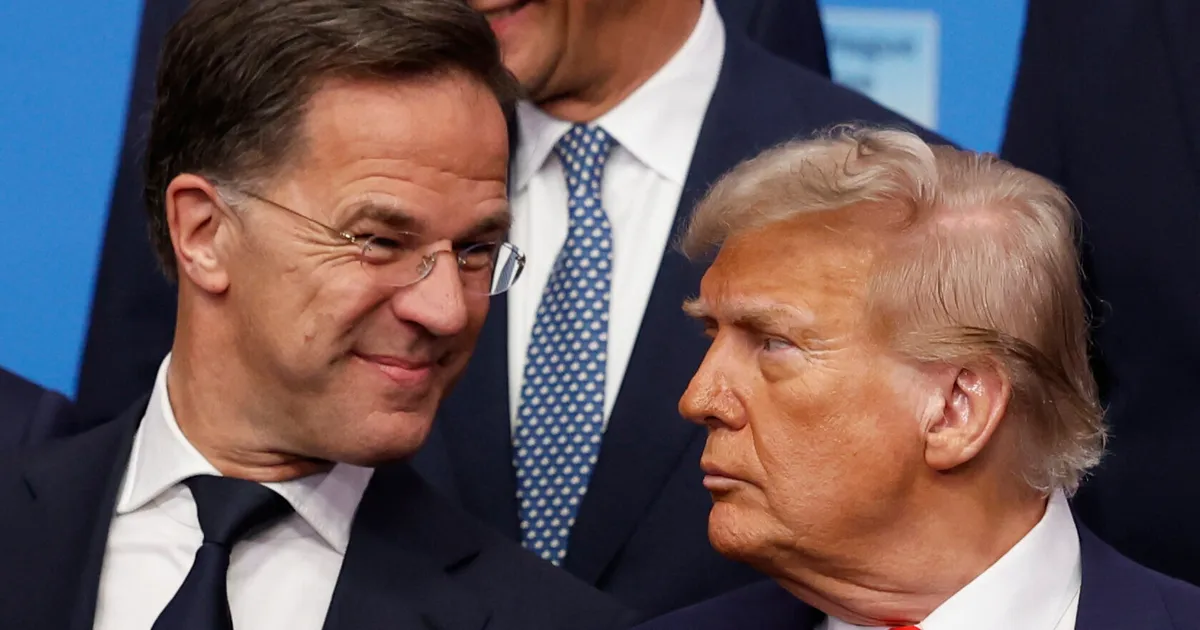
Mark Rutte has finally explained why he controversially described Donald Trump as “daddy” during a toe-curling joint appearance last year.
Nato’s secretary-general went viral when he used the bizarre term of endearment for the US president in June.
Trump at the time told reporters that warring nations Israel and Iran were like “two kids in a schoolyard”, fighting.
Rutte, who consistently turns the charm offensive on for Trump to try to dissuade him from leaving Nato, replied at the time: “Daddy has to use tough language.”
During an appearance at the Ronald Reagan Institute on Thursday, Rutte was asked by a reporter if he still thought of Trump as “daddy” even as the president continues to accuse Nato of not supporting the US in its war against Iran.
The Dutch politician immediately said the “daddy” drama stemmed from a “language problem”, adding: “It follows me a little bit, I can assure you.”
He continued: “In Dutch, you would say – the translation of your father is daddy – and I said, ‘sometimes daddy has to be angry’.
“So I was not calling him my daddy.
“But of course, daddy has all sorts of special connotations, and now I have to live with it for the rest of my life.”
He laughed, adding: “And I own it. And the president owns it. He brought out t-shirts, he made a movie, ‘Daddy is home’, when he returned to the United States. This is why I like him so much.
“You make mistakes, and this is when you are not a native speaker – sorry for that.”
The secretary general had a private conversation with Trump in the White House on Wednesday evening.
While it’s not known what they discussed, the president accused Nato of not being “there when we needed them” on TruthSocial.
But Rutte has played down speculation that he had a falling out with Trump.
He insisted that they had an “open conversation” between friends, but that Trump was “clearly disappointed” at the lack of support from allies.

Last year, the Canary reported how Daniel Harvey, activist and campaigner for disability justice, was denied access to Parliament on International Day of Persons with Disabilities, despite making all of the necessary arrangements.
Below, Daniel writes about his experiences and the lack of resolution, months later. In particular, he describes the lack of support offered by Scope, the charity for which he is an assembly member.
Approached for comment, James Taylor, executive director of strategy at Scope, said:
We are sorry for the experience Daniel had when he attended one of our events in Parliament last year and are grateful for his feedback. We have continued to engage with him since the event last December and with Parliament. We know there is more to do so that Parliament does not repeat the same mistakes. And we will look to improve our process for future events.
We are currently working to improve the experience our members have with Scope.
Our members are hugely valued and important to us, and we are currently engaging with all members to understand how we can improve their experience.
Dear Scope
When giving up your time to support one of the UK’s biggest disability charities, you would expect a sense of co-production.
I am currently an elected assembly member for Scope. We are involved in influencing Scope and how they connect with its members and the general public. During my time, I have entered two meetings: one centred around an icebreaker; the other on disability awareness training. The vast majority of us were already familiar with the latter, due to lived experience.
So, technically speaking, I haven’t actually achieved anything.
When I was invited to Parliament for a Scope event, I was denied entry. This was despite having clearance and an official invitation. Due to a governmental error, my invite and clearance was hidden from view. I was told by police officers at the gate that I had to try and resolve this amongst the hustle and bustle of Metropolitan London.
I made the decision to leave after an hour of attempting to call every staff member I could from Scope.
Experts in the systems that hurt us
I’ve received no agreeable resolution. Instead, the expectation was for me to work for free by providing my knowledge and insight to strengthen the government’s accessibility policy.
I am personally fed up with hearing that age-old narrative where disabled people, who have experienced a barrier, are then expected to volunteer their expertise exploitatively. It’s an existential crisis that leaves a bitter taste to those of us who don’t have a choice in becoming experts in the systems that hurt us.
Our insights and experiences are extremely valuable, and to see this poor trend continue within a charity that I deeply respected has saddened me.
Silenced, not empowered
Scope has made multiple errors around supporting and safeguarding its assembly members. Staff members have left without reason. Changes have been made without our acknowledgement. Our current means of communication in WhatsApp has disappeared. Scope has now changed the platform without consulting us to Microsoft Teams, which is atrocious for accessibility amongst our community.
I am shocked by Scope’s approach and their lack of accountability. I’ve had informal meetings with various staff members, but it hasn’t gone anywhere. This isn’t the picture of inclusion I had in mind. Scope is meant to empower disabled people, but somehow I feel silenced.
The lack of communication from a disability charity that supposedly champions inclusion and accessibility has ironically created some very big barriers. There has been no paid staff member monitoring communications, which helps with safeguarding its members. We are also restricted when reaching out to the management team or board of trustees for support, due to a lack of engagement.
Undemocratic
Being an assembly member involves being able to share your perspective on any proposed changes. Instead, we are expected to legitimise the obstacles we are experiencing. That isn’t democracy.
I didn’t agree to sit in spaces where you feel unable to challenge. I am tired of being told to hold my tongue or be grateful when the very things we fight for daily are happening right in front of us. I will not be complicit with Scope if they cannot recognise the value of this assembly.
I spoke with another assembly member, Damian Bridgeman, for his perspective:
My relationship with Scope goes back to childhood. I re-engaged at a governance level where I went back onto the council as a volunteer. I gave up my skills freely.
Damian was later encouraged to become a trustee.
I went through the process despite inaccessible forms. Then I was told my skills didn’t fit the board’s matrix.
Still he remained…
‘Control dressed up as inclusion’
During his involvement with the council, Damian grew aware of proposed charity shop closures. He wrote a 13-page turnaround plan to help. However, he was told that his plan didn’t stack up.
In my career, I’ve developed assistive technology which is now being used by 250 million people globally. I knew I could deliver that turnaround.
Damian’s conclusion is extremely unambiguous:
We are being kept close enough to be visible, but not close enough to have real influence. That’s not inclusion. Instead, that is control dressed up as inclusion.
That last line in particular has hit me. For so many of us, we fight for change in a world where we come face-to-face with health battles, discrimination, physical and environmental barriers and economic exclusion.
Disabled people shouldn’t be expected to sit still with their feelings like it’s some performative act. We shouldn’t ever discourage anyone from the opportunity to engage and make change especially when it’s in reach.
Opportunities like being in the assembly were meant to be that for me. Unfortunately, it has turned out to be a story of deep disappointment.
Please do better.
Featured image via the Canary
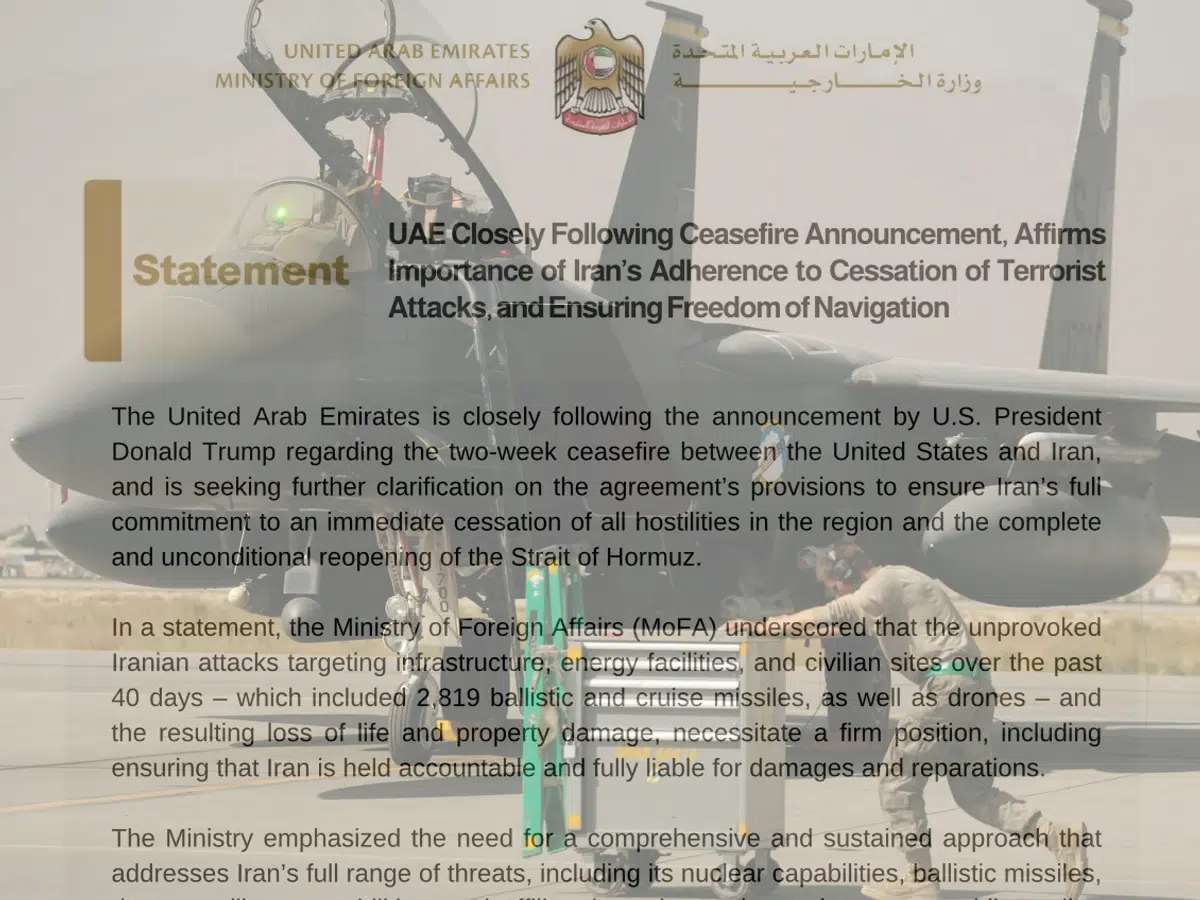
The United Arab Emirates (UAE) government has said it wants compensation from Iran for Iran’s supposedly “unprovoked” attacks.
The UAE can whistle
In a statement, the UAE’s foreign ministry says that it also wants full assurances from Iran that the Strait of Hormuz will remain open and all hostilities will cease.
The foreign ministry even claims that it is “not a party” to the US-Israel war of aggression:
UAE Closely Following Ceasefire Announcement, Affirms Importance of Iran’s Adherence to Cessation of Terrorist Attacks, and Ensuring Freedom of Navigation
The United Arab Emirates is closely following the announcement by U.S. President Donald Trump regarding the two-week ceasefire between the United States and Iran, and is seeking further clarification on the agreement’s provisions to ensure Iran’s full commitment to an immediate cessation of all hostilities in the region and the complete and unconditional reopening of the Strait of Hormuz.
In a statement, the Ministry of Foreign Affairs (MoFA) underscored that the unprovoked Iranian attacks targeting infrastructure, energy facilities, and civilian sites over the past 40 days -which included 2,819 ballistic and cruise missiles, as well as drones -and the resulting loss of life and property damage, necessitate a firm position, including ensuring that Iran is held accountable and fully liable for damages and reparations.
The Ministry emphasized the need for a comprehensive and sustained approach that addresses Iran’s full range of threats, including its nuclear capabilities, ballistic missiles, drones, military capabilities, and affiliated proxies and terrorist groups, while ending threats to freedom of navigation, as well as economic warfare and piracy in the Strait of Hormuz. The Ministry expressed hope for achieving sustainable peace for all countries in the region.
The UAE reaffirmed that it is not a party to this war and had undertaken intensive diplomatic efforts to prevent its outbreak, including through bilateral channels and initiatives within the Gulf Cooperation Council (GCC). Furthermore, the UAE underscored that it has firmly safeguarded its sovereignty, security, and national achievements, and stressed the need for Iran’s full compliance with United Nations Security Council Resolution 2817 (2026), adopted on 11 March 2026, which condemned the Iranian attacks and demanded their immediate cessation.
The UAE hosts at least 5,000 US troops and the Al Dhafra US airbase, as well as allowing US warships to use its Jebel Ali port. The US has used Al Dhafra in its operations against Iran and has – or had – advanced missile warning radars stationed at the base. As well as attacking the US base and the port, Iran has struck hotels housing US military and CIA personnel moved there from its bases to hide – using other guests as ‘human shields’.
International law expert and foreign policy analyst Reza Nasri explained why the UAE has no grounds for complaint and has collaborated with the US and Israel – and why Iran has acted entirely within its legal rights:
The UAE now demands compensation for what it calls “unprovoked Iranian attacks” on its territory.
Iran stands ready to present clear, verifiable evidence — including precise targeting data, timelines, numbers of strikes, and the specific means and munitions employed — proving… pic.twitter.com/d6TgYJ10Ij
— Reza Nasri (@RezaNasri1) April 8, 2026
The UAE now demands compensation for what it calls “unprovoked Iranian attacks” on its territory.
Iran stands ready to present clear, verifiable evidence — including precise targeting data, timelines, numbers of strikes, and the specific means and munitions employed — proving UAE complicity in US-Israeli aggression.
Iran exercised its inherent right to self-defense under Article 51 of the United Nations Charter in response to armed attacks originating from UAE territory.
By contrast, the UAE actively facilitated and collaborated with the aggressor. It knowingly permitted the United States to use UAE territory as a launchpad and staging ground for strikes against Iran, despite being fully aware that these operations constituted an act of aggression in flagrant violation of the UN Charter.
The United States had no valid claim of self-defense, no imminent armed attack to repel, and no authorization whatsoever from the UN Security Council.
Furthermore, the UAE demonstrated its unwillingness to take any measures to prevent or terminate the United States’ use of its territory once it became apparent that the US-Israeli campaign was predicated on the systematic commission of war crimes.
The UAE’s complicity was publicly acknowledged and expressly thanked by President Trump.
How dare they speak of “unprovoked Iranian attacks”?
Regardless, the UAE is whistling in the wind. Iran has re-closed Hormuz and continues to retaliate after Israel immediately collapsed Donald Trump’s claimed ‘two-week ceasefire’ by perpetrating mass attacks on Lebanon, and the US justified the attacks by denying that peace for Lebanon was part of the agreed conditions.

France and India have responded to the “geopolitical risks” posed by Donald Trump’s aggression and instability by repatriating massive gold reserves from the US. In France’s case, it has taken back its entire US-held reserve – and made a huge profit in the process. The gold had been there since WWII.
Gold out of America
France used a ‘sell-rebuy’ manoeuvre to offload 129 tonnes of gold held at the US Federal Reserve in New York and used the funds to immediately buy new gold at a profit of almost €13bn. India, which had already started the process in 2025 has physically moved another 64 tonnes just since the beginning of 2026.
Although the French government claimed the repatriation was “technical”, the moves come against a background of a flailing Trump threatening to punish countries he feels have not been supportive enough of his disastrous and illegal war of aggression, alongside Israel, on Iran.
Other central banks are considering following suit, including Germany’s Bundesbank, which currently holds a huge 1,236 tonnes of gold in the US. It fears that Trump has his eyes on it and that even if he does not try to grab it directly his unpredictability and his international aggression make it unsafe. Michael Jäger, head of the German Taxpayers’ Federation, which represents wealthy and tax-averse members and would normally be aligned with Trump’s focus on the wealthy and corporations, said German gold is “no longer safe” under Trump:
Trump is unpredictable, and he does everything to generate revenue. That’s why our gold is no longer safe in the Fed’s vaults.
The withdrawal of gold reserves is a further blow to Trump, who has spent hundreds of billions attacking Iran only to be forced to concede most of Iran’s demands in his desperate search for an off-ramp from his and Israel’s illegal, losing war.
Featured image via the Canary
On 8 April, the Nursing and Midwifery Council announced plans to embed “anti-racism principles” in midwifery teaching across UK universities. The move forms part of an effort to tackle the health crisis among Black and brown individuals during childbirth.
As part of its announcement, the Nursing and Midwifery Council acknowledged recent, shocking figures from campaign group Mothers and Babies: Reducing Risk through Audits and Confidential Enquiries across the UK (MBRRACE-UK). They stated that:
Black women are three times more likely to die during pregnancy or in the immediate postnatal period, and maternal mortality rates for Asian women are 1.3 times as high compared with White women. The figures also show that Black babies are over twice as likely to be stillborn as white babies – with Asian babies 50% more likely to be stillborn.
Interim Amos report
These results were further supported by similar findings from the Health and Social Care Committee, Five x More and Birthrights. Likewise, back in June 2025, the government announced an independent, national investigation into NHS maternity and neonatal services.
Valerie Amos, a Labour member and baroness of the House of Lords, is chairing the inquiry. Amos’ interim report, published in February, was damning in terms of structural racism, discrimination, and inequalities, causing a “notably higher risk of adverse outcomes” for Black and Asian parents.
This discrimination against racialised parents is hardly new information. However, Amos shed light on just how little improvement there has been in this regard, reporting that:
Babies of Black ethnicity are more than twice as likely to be stillborn, and are at increased risk of preterm birth and neonatal admission at term when compared with White babies. Neonatal mortality rates are also higher for Black and Asian babies compared with White babies, and there is variation in neonatal care delivery between ethnic groups.
Stereotyping from clinical staff was also a frequent issue. Black patients reported being treated as though they were tolerant to pain due to their “tough skin”. Meanwhile, Asians were stereotyped as “princesses” who were too demanding and unable to handle pain.
‘A national emergency’
Paul Rees, the Nursing and Midwifery Council’s interim CEO and registrar, explained:
Black and Asian women are more likely to die during pregnancy or in the immediate postnatal period, and their babies are more likely to be stillborn.
The situation is totally unacceptable and is a national emergency.
To help tackle the Black maternal health crisis we’re calling on our education partners to embed the new principles which will enable us to embed anti-racism, bias awareness and cultural curiosity, safety and respect across all midwifery education in the four countries of the UK.
We hope that this initiative will make a real difference, meaning that Black, Asian and minority ethnic mothers, babies and families have a far better experience of maternity care across the four countries of the UK.
Although individual universities design their own curricula for midwifery, they have to conform to the Nursing and Midwifery Council’s standards. As such, the council approves and keeps watch on training programs across the UK.
As part of its new push to improve outcomes for Black and Brown people during childbirth, the Nursing and Midwifery Council has stated that it will:
work with all universities delivering midwifery education, to make anti-racism, bias awareness and cultural curiosity, safety and respect more explicit in their curricula.
The council plans to publish the final version of its new guidance later in the spring. Over the coming weeks, it will workshop the document with the help of Black and Brown people with “lived experience of poor outcomes” in maternity services.
‘An urgent priority’ for the Nursing and Midwifery Council
The Royal College of Midwives (RCM) Nursing and Midwifery Council is also supporting the in its endeavor, alongside running its own ‘Race Matters’ campaign. The initiative’s stated aim is to “dismantle systematic racism within the midwifery profession”.
Gill Walton, chief executive of the RCM, said:
That Black, Asian and minority ethnic women continue to face such stark inequalities in maternity care is a disgrace and tackling this must be an urgent priority for the whole profession. The NMC’s new anti-racism principles are a vital step in the right direction.
This initiative builds on work the RCM has already been doing. In 2023 we launched our Decolonising Midwifery Education Toolkit – the first of its kind, co-created with educators, students and service users – to address the continuing legacy of colonialism within midwifery training. We subsequently developed our Decolonising Midwifery Practice position paper, setting out clear asks for government, NHS Trusts and Health Boards and individual practitioners.
Whilst the Nursing and Midwifery Council’s move toward actively anti-racist teaching is a welcome one, the findings of the interim Amos report show starkly and clearly that midwifery has a long way to go to correct its shocking racial biases.
This must form the foundation for a revolution in the practice, to avoid further prolonging the scandal of Black and Brown peoples’ deaths and serious harm during childbirth.
Featured image via the Canary
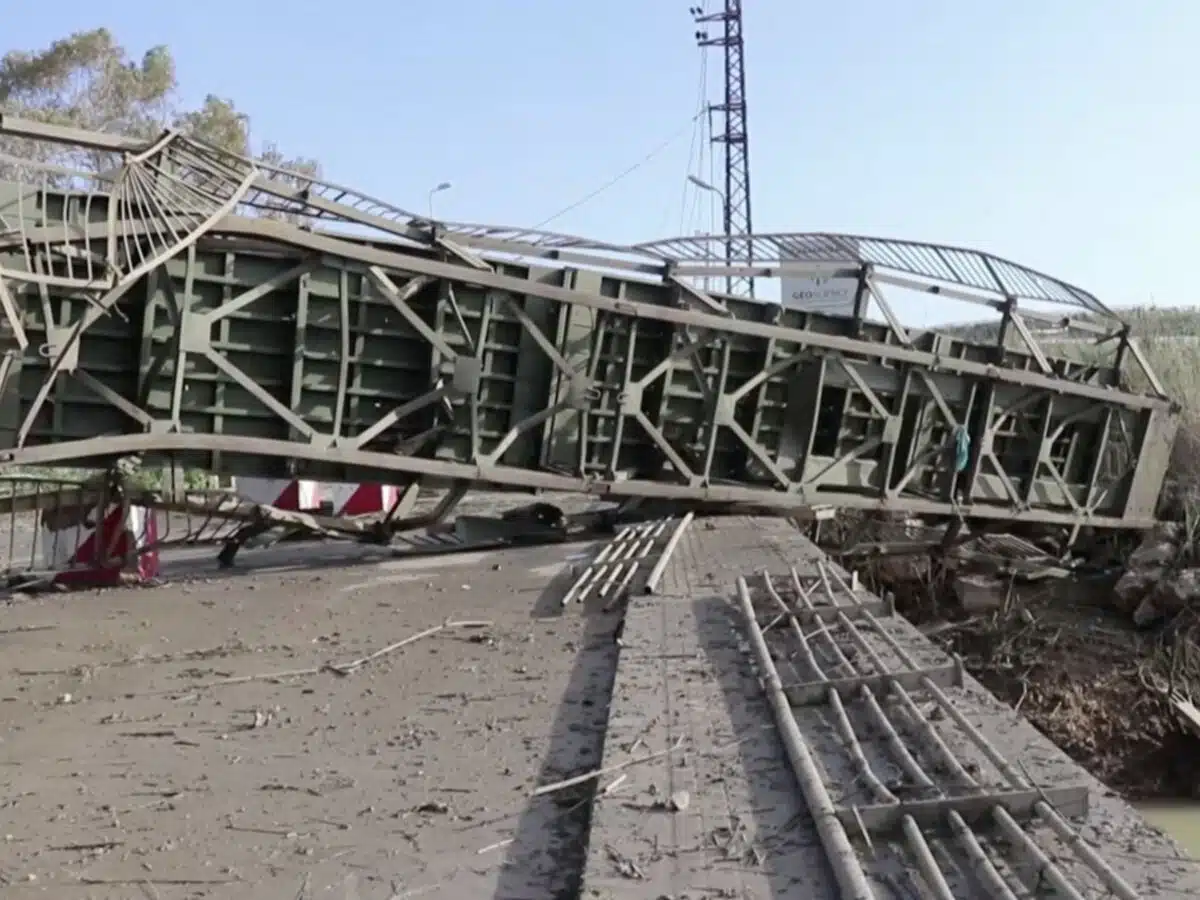
Israel has bombed the Qasmiyeh bridge over the Litani River in Lebanon, in an attempt to cut off a key route between Tyre and Sidon.
The Israeli army has bombed the Qasmiyeh bridge, which connects the cities of Tyre and Saida. The south is now almost completely cut off from the rest of the country. This will cause a humanitarian disaster.
— courtneybonneauimages (@cbonneauimages) April 8, 2026
Israel failed to destroy the bridge. This would have further disconnected Southern Lebanon from Beirut and the rest of the country.
🌲 – 🇱🇧 Lebanese Army reopened traffic on the Qasmiyeh coastal bridge after clearing debris caused by last night’s Israeli strikes.
Families south of the Litani River appeal for evacuation after the area was effectively isolated following its destruction. pic.twitter.com/bjhVxrHXht
— Lebanon News & OSINT (@LebOSINT) April 9, 2026
آثار الغارة التي استهدفت جسر القاسمية البحري ليل أمس.
ــــــــــ pic.twitter.com/DNemSzqWAu— ألأحداث ألإيرانية بالعربية (@iranin_arabic) April 9, 2026
Now, Israel is threatening to bomb the bridge again. Its destruction would cause an even greater humanitarian disaster.
🌲 – 🇱🇧🇮🇱 Mayor of Tyre: Israel is threatening to strike what remains of the Al-Qasmiyeh Bridge, which was attacked and partially damaged last night. https://t.co/uyChoPKGo0
— Lebanon News & OSINT (@LebOSINT) April 9, 2026
War crimes by Israel again
The Qasmiyeh bridge is the last bridge linking the north and south of the Litani River in the Tyre area. Despite Israeli warnings to evacuate, thousands of families are still in the area.
There’s no way to explain the suffering the destruction of this bridge will cause without sounding hyperbolic and the fact that it was intentional should lead to an indictment of war crimes for everyone involved. https://t.co/e1uTlapZfd
— Shane Proteus (@shaneproteus) April 8, 2026
Complete destruction of the bridge would isolate huge parts of southern Lebanon from the capital and the rest of the country. This would make it much more difficult for Lebanon to deliver humanitarian aid to the south. It would also undermine resistance fighters’ ability to travel and defend their sovereign territory.
Of course, this is part of the Israeli Occupation Forces’ (IOF) illegal plan to occupy and depopulate the south.
Northern and southern Lebanon are almost completely disconnected as part of the Israeli military’s plan to occupy and depopulate the south. https://t.co/L5sah174Zj
— Nicola Perugini (@PeruginiNic) April 8, 2026
As always, the end goal is ‘Greater Israel‘, which Israel first mentioned as far back as 1967.
Israel’s goal is the creation of Greater-Israel. They will not stop until they have achieved this goal. They are going to ethnically cleans and occupy whole of Lebanon. This is not about Hezbollah or security, it’s about murdering, expelling people and conquering more land for… https://t.co/UB1pWz3wYq
— Burim Bajrami (@BurimBajrami) April 8, 2026
It is used to refer to the territories Israel illegally stole in 1967: the Palestinian territories, the Golan Heights in Syria, and Egypt’s Sinai Peninsula.
However, Zionists have also referred to it as including all of Palestine, Lebanon and Jordan, along with significant parts of Syria, Iraq, Egypt and Saudi Arabia.
How many genocides does Israel want to add to its scorecard?
They’re about to commit a 2nd genocide. https://t.co/u25ufE1rvX
— Mack V. 실험ᵥᵢᵢᵢ 🟡⚙️ VTuber (@TheMackV) April 8, 2026
What does the international community expect when it has allowed Israel to systematically carpet-bomb Gaza, without repercussions?
I fear we are about to witness another genocide.
Israel has not been held accountable for Gaza, and now we might be witnessing a repeat in Southern Lebanon. https://t.co/aUvVOZ7ezn— Constantine Valdor -The King in Yellow (@Griffinstreaks) April 8, 2026
You have to sanction Israel @UN
It doesn’t matter if USA vetoes – every country must commit. USA can’t punish everyone. https://t.co/6eCkmVPNCL— aharring (@aharring) April 9, 2026
Israel has already displaced over 1.1m people in Southern Lebanon, and killed thousands. But humanitarian disasters are its speciality, and just like in Gaza, it has now created another one in Lebanon.
Israel is a US-backed colonialist project that gets off on killing brown people. Meanwhile, the majority of Western governments continue to whitewash their war crimes in the name of ‘defeating terrorists’. We all know it’s bullshit, but unfortunately, until the international community grows a collective backbone, Israel will continue to get away with committing multiple genocides at the same time.
Feature image via AFP News Agency/ YouTube
Exercise seems to help to manage some of the symptoms of menopause. One study found that women with high and moderate levels of physical activity tended to experience less severe signs than their inactive peers; yoga appears to be one of many great options.
And some research from the University of Exeter has found that Pvolve, an exercise routine that partnered with Friends star Jenifer Aniston in 2023, is linked to better hip function, lower body strength, lean muscle mass, full-body flexibility, balance, mobility, and stability (phew).
That’s key for those facing menopause as these often wane during this life stage.
What is Pvolve?
It’s a form of low-impact resistance training. It uses tools like resistance bands, gliders, ankle weights, and light dumbbells to apply force without straining joints.
These are combined with stability training, including single-leg balances, and bodyweight exercises, like hip hinges and planks.
Sessions last about 35 minutes each.
Resistance training is linked to better bone health, which is crucial for menopausal women, as the changes to their hormones can decrease their bone density.
That leaves you at greater risk of falls and broken bones.
What did the researchers find?
The University of Exeter study involved 72 pre-, peri-, and post-menopausal women. They were all active.
Half of them completed 150 minutes of exercise per week, while the others completed a 12-week Pvolve training plan which increased in intensity over time.
Afterwards, they found that those who did the Pvolve Method had the following advantages over the people doing 150 minutes of exercise:
- 19% increase in hip function and lower body strength
- 21% increase in full-body flexibility
- 10% increase in dynamic balance, mobility, and stability
- Increase in lean muscle.
Speaking to the University of Exeter, the study’s lead author, Professor Francis Stephens, said: “Women often see a decline in their muscle strength and balance shortly before, during and after the menopause. This ultimately increases the risk of falls and fractures later in life, particularly of the hip, which is why it’s so important to find a way for women to maintain that strength and balance as they get older.
“The great thing about these simple resistance exercises is they can easily be performed at home, and we’ve now shown they’re effective at improving strength and balance in women during and post-menopause. In fact, some measures of balance appeared to increase to a greater degree in post-menopausal women, suggesting that these exercises are not hindered by the menopause transition.”


2 min read
Years of decline can’t be undone overnight. But we are making progress.
Before entering Parliament, I worked for the Crown Prosecution Service, building cases against those who had committed serious crimes.
In that role, I saw first-hand the impact crime has on victims, families and communities, but also how much of that harm could have been prevented if the right policing had been in place earlier.
It’s something I hear about constantly from my constituents in Amber Valley, people frustrated by shop theft, anti-social behaviour, and the sense that too often nothing is done. That’s why neighbourhood policing matters so much.
Under the Tories, it was hollowed out. Officers were taken off the streets, neighbourhood teams were cut back, and communities were left to deal with the consequences.
We have all felt the impact of these policy decisions. Shop theft has surged, anti-social behaviour has become a daily frustration, and phone snatching and street crime are increasingly common.
That is the reality this government inherited, and it’s why rebuilding neighbourhood policing has been a clear priority for this government from day one.
This week’s milestone shows what that looks like in practice. More than 3,000 additional neighbourhood police officers and PCSOs are now in place — two months ahead of schedule — and we’re on track to deliver 13,000 more by the end of this Parliament.
Crucially, we’re already seeing the difference this makes.
I’ve been out on patrol with our safer neighbourhood teams in all three of my towns in Amber Valley and I know many of my colleagues have done the same in their constituencies. I saw the value of the relationships the officers and PCSOs have built up with members of our community. It reminded me of so many cases I prosecuted throughout my career where the offender had only been identified and subsequently brought to justice because people had the confidence to speak to their local police teams about what had happened.
Over just two months this winter, increased patrols led to nearly 18,000 arrests across more than 600 towns and cities. Many of those arrests were for the kinds of crimes people deal with every day: retail theft, street crime, anti-social behaviour. Offences that might not always make headlines but have a huge impact on how safe people feel.
I know that none of this is a quick fix. Years of decline can’t be undone overnight. But after 14 years of neglect, we are finally turning things around.
Linsey Farnsworth is Labour MP for Amber Valley

CCTV footage of incident at Radcliffe Central Snooker Club

York Space Systems Stock Soars 16% as Defense Contracts and Sector Momentum Drive YSS Past $32

Petition demands the UK Eurovision contestant drops out

Why Israel is blocking foreign journalists from entering

Bitcoin: We’re Entering The Most Dangerous Phase

Alan Cumming Brands Baftas Ceremony A ‘Triggering S**tshow’
![Tom Lee & Raoul Pal: "Don't SELL Your Ethereum Before Watching This" | [2026 Crypto Prediction]](https://wordupnews.com/wp-content/uploads/2026/04/1775752451_maxresdefault-80x80.jpg)
Tom Lee & Raoul Pal: “Don’t SELL Your Ethereum Before Watching This” | [2026 Crypto Prediction]

XRP The NEW Oil *Change Now*

5 Smart Money Rules You Must Follow | Tamil Financial Tips to Save & Grow Wealth#moneytips #shorts
-

 NewsBeat7 days ago
Steven Gerrard disagrees with Gary Neville over ‘shock’ Chelsea and Arsenal claim | Football
-

 Business7 days ago
No Jackpot Winner and $194 Million Prize Rolls Over
-

 Fashion6 days ago
Weekend Open Thread: Spanx – Corporette.com
-

 Business5 days ago
Expert Picks for Every Need
-

 Business4 days ago
Three Gulf funds agree to back Paramount’s $81 billion takeover of Warner, WSJ reports
-

 Sports5 days ago
India men’s 4x400m and mixed 4x100m relay teams register big progress | Other Sports News
-

 Tech2 days ago
How Long Can You Drive With Expired Registration? What Florida Law Says
-
Business4 days ago
No Jackpot Winner, Prize to Climb to $231 Million
-

 Fashion3 days ago
Massimo Dutti Offers Inspiration for Your Summer Mood Board
-

 Fashion2 days ago
Let’s Discuss: DEI in 2026
-
Politics6 days ago
Wings Over Scotland | The quality of mercy
-

 Business5 days ago
Akebia Therapeutics, Inc. (AKBA) Discusses Pipeline Progress and Strategic Focus on Kidney Disease Treatments at R&D Day – Slideshow
-

 Fashion7 days ago
Statement Sunglasses: The Accessory Shaping Modern Fashion
-

 Crypto World1 day ago
Bitcoin recovers as US and Iran Agree a Ceasefire Deal
-

 Politics7 days ago
East Jerusalem Palestinian families eviction orders
-

 Fashion7 days ago
Coffee Break: Santa Croce Tote
-

 Fashion7 days ago
For Love & Lemons’ Spring 2026 Line is for the Romantics
-

 Politics6 days ago
Why so many children are now classified as ‘disabled’
-

 Politics7 days ago
Nuclear rockets, moon bases and NASA’s Mars plan
-

 Tech6 days ago
The Threadless Ball Screw Never Took Off, But Don’t Write It Off
You must be logged in to post a comment Login